“Epigrams of a Cynic” — Ambrose Bierce

“Epigrams of a Cynic” by Ambrose Bierce

If every hypocrite in the United States were to break his leg to-day the country could be successfully invaded to-morrow by the warlike hypocrites of Canada.

To Dogmatism the Spirit of Inquiry is the same as the Spirit of Evil, and to pictures of the latter it appends a tail to represent the note of interrogation.

“Immoral” is the judgment of the stalled ox on the gamboling lamb.

In forgiving an injury be somewhat ceremonious, lest your magnanimity be construed as indifference.

True, man does not know woman. But neither does woman.

Age is provident because the less future we have the more we fear it.

Reason is fallible and virtue invincible; the winds vary and the needle forsakes the pole, but stupidity never errs and never intermits. Since it has been found that the axis of the earth wabbles, stupidity is indispensable as a standard of constancy.

In order that the list of able women may be memorized for use at meetings of the oppressed sex, Heaven has considerately made it brief.

Firmness is my persistency; obstinacy is yours.

A little heap of dust, A little streak of rust, A stone without a name—Lo! hero, sword and fame.

Our vocabulary is defective; we give the same name to woman’s lack of temptation and man’s lack of opportunity.

“You scoundrel, you have wronged me,” hissed the philosopher. “May you live forever!” Continue reading ““Epigrams of a Cynic” — Ambrose Bierce”

W.G. Sebald’s Former Students Share His Writing Advice

In the fall of 2001—only a few months before his too-early death—W.G. Sebald taught a fiction workshop at the University of East Anglia. Two of the students from the workshop, David Lambert and Robert McGill have revisited their notes from that workshop and have compiled Sebald’s writing advice into a fascinating document, posted at Richard Skinner’s blog.

My favorite section:

On Reading and Intertextuality

  • Read books that have nothing to do with literature.
  • Get off the main thoroughfares; you’ll see nothing there. For example, Kant’s Critique is a yawn but his incidental writings are fascinating.
  • There has to be a libidinous delight in finding things and stuffing them in your pockets.
  • You must get the servants to work for you. You mustn’t do all the work yourself. That is, you should ask other people for information, and steal ruthlessly from what they provide.
  • None of the things you make up will be as hair-raising as the things people tell you.
  • I can only encourage you to steal as much as you can. No one will ever notice. You should keep a notebook of tidbits, but don’t write down the attributions, and then after a couple of years you can come back to the notebook and treat the stuff as your own without guilt.
  • Don’t be afraid to bring in strange, eloquent quotations and graft them into your story. It enriches the prose. Quotations are like yeast or some ingredient one adds.
  • Look in older encyclopaedias. They have a different eye. They attempt to be complete and structured but in fact are completely random collected things that are supposed to represent our world.
  • It’s very good that you write through another text, a foil, so that you write out of it and make your work a palimpsest. You don’t have to declare it or tell where it’s from.
  • A tight structural form opens possibilities. Take a pattern, an established model or sub-genre, and write to it. In writing, limitation gives freedom.
  • If you look carefully you can find problems in all writers. And that should give you great hope. And the better you get at identifying these problems, the better you will be at avoiding them.

(Via Conversational Reading; via Richard Skinner’s blog)


Connoisseurs of Books — Nikolay Bogdanov-Belsky

connoisseurs-of-books-knowledge-is-power

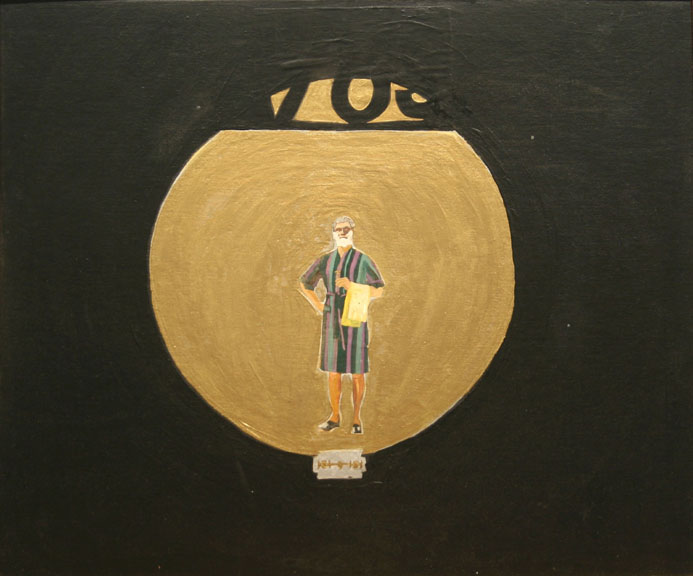
God Shaves — Rosalyn Drexler

god-shaves-1961

“Blueberry Boat” — The Fiery Furnaces (Live)

Yoko Ogawa’s Revenge (Book Acquired, 1.12.2012)

20130115-175629.jpg

Revenge is Yoko Ogawa’s new collection of short tales (new from Picador). Their blurb:

An aspiring writer moves into a new apartment and discovers that her landlady has murdered her husband. Elsewhere, an accomplished surgeon is approached by a cabaret singer, whose beautiful appearance belies the grotesque condition of her heart. And while the surgeon’s jealous lover vows to kill him, a violent envy also stirs in the soul of a lonely craftsman. Desire meets with impulse and erupts, attracting the attention of the surgeon’s neighbor—who is drawn to a decaying residence that is now home to instruments of human torture. Murderers and mourners, mothers and children, lovers and innocent bystanders—their fates converge in an ominous and darkly beautiful web.

Revenge is translated by Stephen Snyder, who also translated Hotel Iris—which I really dug. From my review of that book:

Hotel Iris recalls the dread creepiness of David Lynch, as well as that director’s subversion of fairy tale structures (perhaps “subversion” is not the right word–aren’t fairy tales by nature subversive?). There are also obvious parallels between Mari’s story and The Story of O andPeter Greenaway’s fantastic film The Cook, the Thief, His Wife, & Her LoverBut these are perhaps lazy comparisons–I should talk about Ogawa’s deft writing, her supple, slippy sentences, her sharpness of details, the exquisite ugliness of her depictions of sex and eating. She’s a very good writer, and translator Stephen Snyder has done a marvelous job rendering Ogawa’s Japanese into smooth, rhythmic sentences that resist idiomatic placeholders.

Revenge seems just as creepy. You can read the first story “Afternoon at the Bakery” in full at Macmillan/Picador’s site; a few sample sentences to entice or repel you:

He died twelve years ago. Suffocated in an abandoned refrigerator left in a vacant lot. When I first saw him, I didn’t think he was dead. I thought he was just ashamed to look me in the eye because he had stayed away from home for three days.

“Cinema Is a Foreign Language” — Leos Carax

Hello, I’m Leos Carax, director of foreign-language films. I’ve been making foreign-language films my whole life. Foreign-language films are made all over the world, of course, except in America. In America, they only make non-foreign-language films. Foreign-language films are very hard to make, obviously, because you have to invent a foreign language instead of using the usual language. But the truth is, cinema is a foreign language, a language created for those who need to travel to the other side of life. Good night.

Director Leos Carax accepts his award from the Los Angeles Film Critics Association for best-foreign language film for Holy Motors. (Here’s my review of Holy Motors, by the way).

“The sight of stairs moves me so today” (Kafka)

k

Wonder Woman — Gilberto Hernandez

10_GilbertHernandez

“Birth of Wainamoinen” (Rune I of The Kalevala)

“Birth of Wainamoinen” — Rune I of The Kalevala, translated by John Martin Crawford

  In primeval times, a maiden,
Beauteous Daughter of the Ether,
Passed for ages her existence
In the great expanse of heaven,
O’er the prairies yet enfolded.
Wearisome the maiden growing,
Her existence sad and hopeless,
Thus alone to live for ages
In the infinite expanses
Of the air above the sea-foam,
In the far outstretching spaces,
In a solitude of ether,
She descended to the ocean,
Waves her coach, and waves her pillow.
Thereupon the rising storm-wind
Flying from the East in fierceness,
Whips the ocean into surges,
Strikes the stars with sprays of ocean
Till the waves are white with fervor. Continue reading ““Birth of Wainamoinen” (Rune I of The Kalevala)”

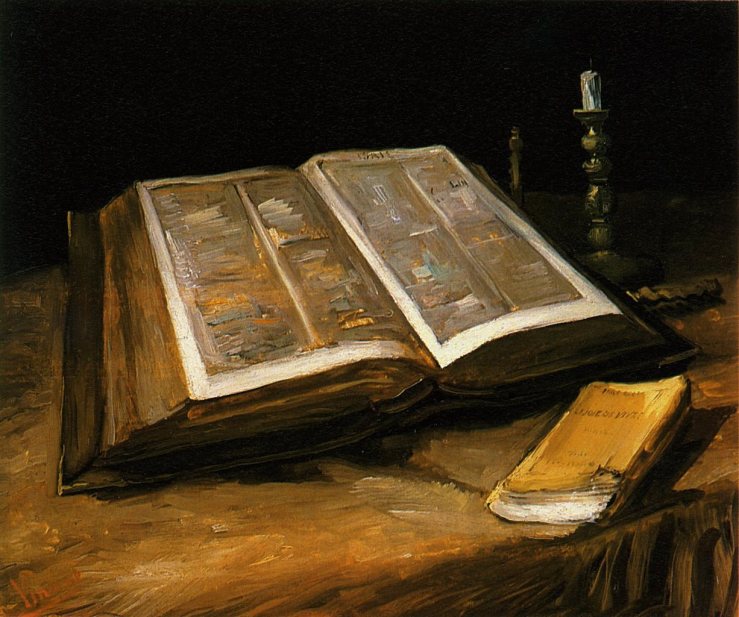
Still Life with Bible — Vincent van Gogh

vvg-still-life-with-bible

Ben Marcus’s The Flame Alphabet (Book Acquired, 1.11.2013)

20130115-162753.jpg

Ben Marcus’s The Flame Alphabet is newish in trade paperback from the nice people at Vintage. I’ve been wanting to read it after absorbing Marcus’s The Age of Wire and String last year. I hear that The Flame Alphabet is more conventional than that earlier work, although a breakfast-menu-as-novel would be more conventional, really. Anyway, this one is up on deck, so no blurbage this time.

In place of the normal blurb I offer with these “book acquired” posts, here’s Marcus on David Markson (from “The Genre Artist,” published in a 2003 issue of The Believer):

 . . . when, for example, David Markson, an expository novelist who fired the starting gun for fictions of information and proved that pure exposition can be alarmingly moving, who purposefully tells instead of shows, is dismissed in The New York Times for failing to provide a story in his novel Reader’s Block, no discussion follows about why, exactly, fiction must have one (at 150 words in the book review, how could any discussion follow?). Nor do we learn what a story might have looked like in such an exquisitely felt book that, to summarize, catalogs the various ways historical figures have hated whole races of people and/or died by their own hands. (Yes, you should read this book.)

Markson should have presumably, under the fiction-must-have-a-story criteria, zeroed in on one of his hundreds of characters and gone deep, doing that good old-time psychological work, the person-making stuff, dramatizing how such an interesting fellow had gone on to hate Jews and/or kill himself. Markson should have used more words like “then.” He should have sequenced. He seems to have forgotten that literature is supposedly a time-based art.

Markson’s amnesia is one of the happy accidents of the last decade of fiction writing. By eschewing a fetishistic, conventional interest in character, or a dutiful allegiance to moment creation, to occurrence itself, Markson accomplishes what a story, slogging through time and obedient to momentum, arguably could not: a commanding, obsessive portrait of single behaviors throughout history, a catalog of atrocity that overwhelms through relentless example. In truth, it’s a novel that can be read as an essay, but unlike most essays, it’s lyrically shrewd, poetry in the form of history, and it’s brave enough to provide creepy, gaping holes where we normally might encounter context (the burden of the conventional essayist).

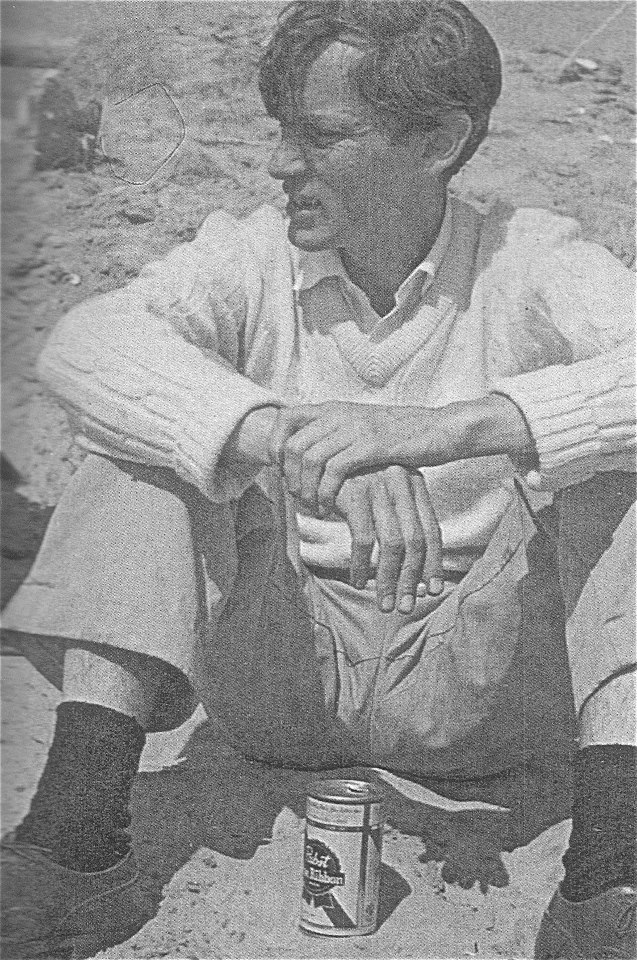
William Gaddis Cold Kickin’ It on the Beach with a Can of PBR

gaddis-beach-pbr

Hipster. (Via The Dalkey Archive’s FB page, via Tiffany Gibert’s Twitter).


“Fear” — Thomas Bernhard

tbf

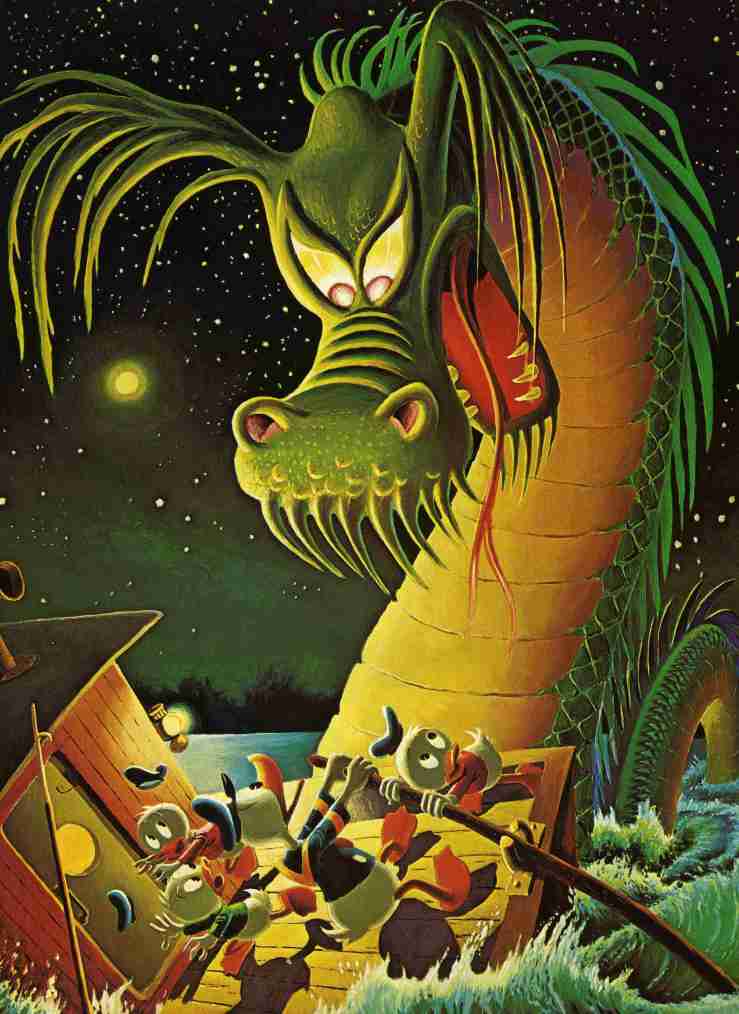
Sea Monster — Carl Barks

dd-sea-monster-comp080

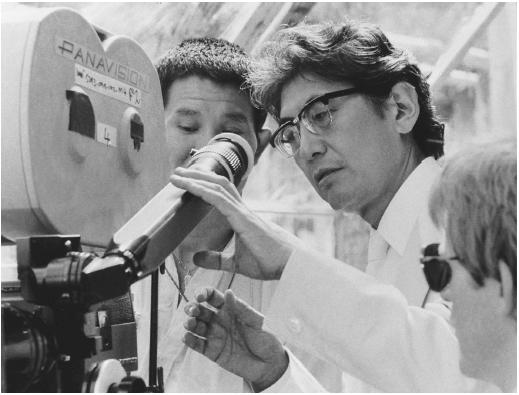
RIP Nagisa Oshima

sjff_02_img0791

RIP Japanese filmmaker Nagisa Oshima, 1932-2013

(Guardian obituaryAV Club obituary)

Diary of a Shinjuku Thief — Nagisa Oshima (Full Film)