A Young Woman Reading — Rembrandt

Book Shelves #24, 6.10.2012

20120610-104319.jpg

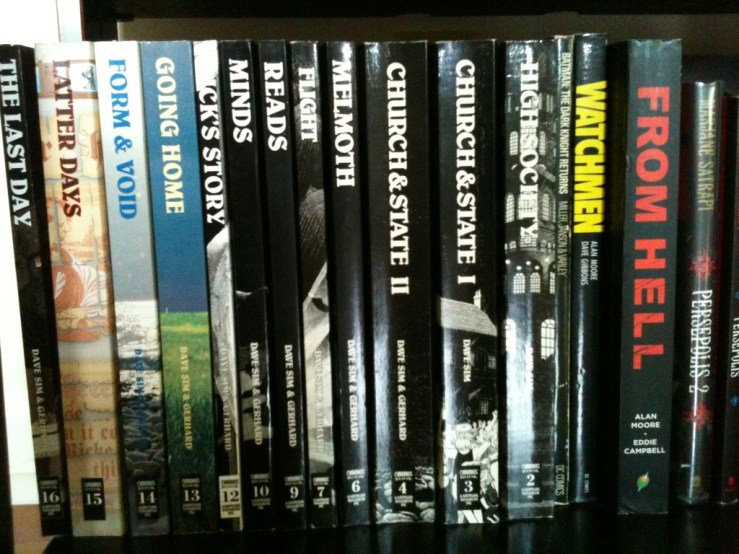
Book shelves series #24, twenty-fourth Sunday of 2012: In which we glance at canonical comics.

So we’ve hit the last shelf in a series of triplets; next week: new room.

This shelf holds graphic novels, including stuff by Alan Moore, Marjane Satrapi, David Mazzucchelli, Jeff Smith, Art Spiegelman, and Chris Ware. There’s also most of Dave Sim’s epic series Cerebus here.

20120610-104325.jpg

I wrote about Dave Sim and Cerebus back in week 6 of this project, when I looked at the actual comic books I owned in the series. From that post:

 I bought issues of Cerebus intermittently for years at a time, usually getting frustrated and then waiting for the “phone book” graphic novel editions of the series. Sim, along with background artist Gerhard, produced 300 issues of Cerebus over 25 years. The issues from the early ’80s to the early ’90s are brilliant; eventually Sim cracked though and went on an insane, reactionary (and arguably deeply misogynistic) bent. He created his own religion, a mix of hardline Judaism, Islam, and Christianity, and the later books in the series suffered greatly, as the book detoured to chronicle projects that seemed far outside its original scope (including strange, long satires of Hemingway and Fitzgerald).

These are the phone books I referenced. Looking over them again, I keep reminding myself to try and reread the last two books to see if I missed anything.

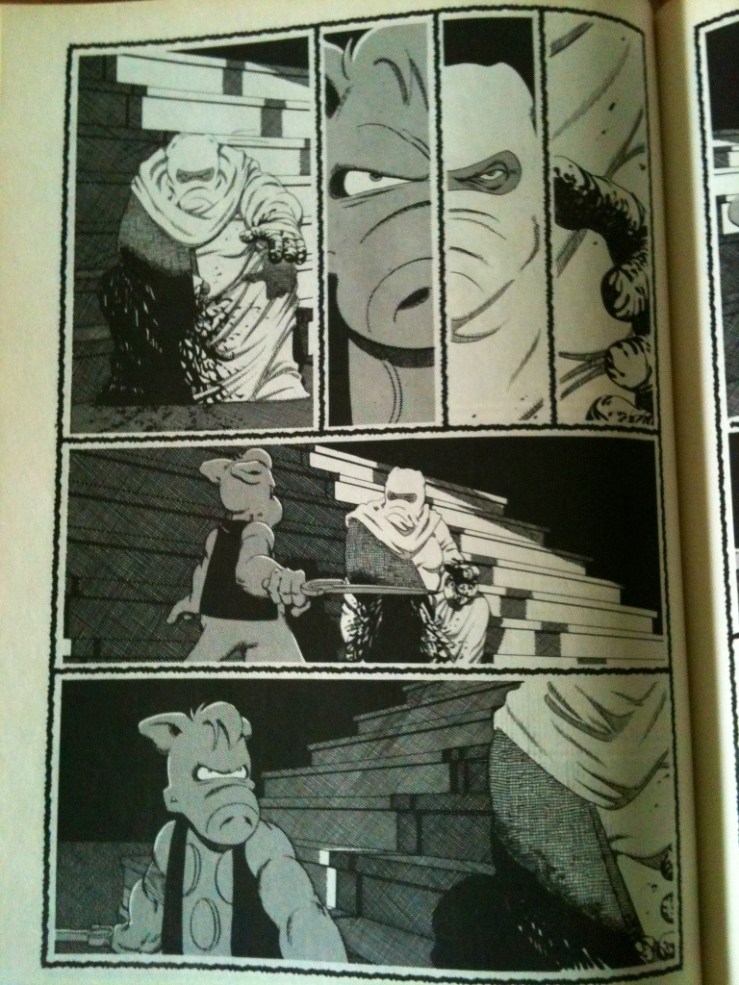
Somewhat at random, I opened Reads, the novel that signaled the beginning of Sim’s estrangement from sanity. It opened to this page, part of a climactic scene between Cerebus and Cirin, leader of the matriarchy that will rule Iest (don’t ask):

20120610-104334.jpg

“Give me half a bottle. Justice reigns” — Charles Olson in The Paris Review

Charles Olson’s interview with The Paris Review is one of the best things I’ve read in ages. Here’s a nice big chunk from the beginning:

CHARLES OLSON

Get a free chair and sit down. Don’t worry about anything. Especially this. We’re living beings and forming a society; we’re creating a total, social future. Don’t worry about it. The kitchen’s reasonably orderly. I crawled out of bed as sick as I was and threw a rug out the window.

INTERVIEWER

Now the first question I wanted to ask you. What fills your day?

OLSON

Nothing. But nothing, literally, except my friends.

INTERVIEWER

These are very straight questions.

OLSON

Ah, that’s what interviews are made of.

INTERVIEWER

Why have you chosen poetry as a medium of artistic creation?

OLSON

I think I made a hell of a mistake. That’s the first confidence I have. The other is that—I didn’t really have anything else to do. I mean I didn’t even have enough imagination to think of something else. I was supposed to go to Holy Cross because I wanted to play baseball. I did, too. That’s the only reason I wanted to go to Holy Cross. It had nothing to do with being a priest.

INTERVIEWER

Are you able to write poetry while remaining in the usual conditions of life—without renouncing or giving up anything?

OLSON

That’s the trouble. That’s what I’ve done. What I’ve caused and lost. That describes it perfectly. I’ve absolutely.

INTERVIEWER

Are the conditions of life at the beginning of a work . . .

OLSON

I’m afraid as well at the end. It’s like being sunk in a cockpit. I read the most beautiful story about how Will Rogers and Wiley Post were lost; they stomped onto a lake about ten miles from Anchorage, Alaska, to ask an Indian if Anchorage was in that direction and when they took off, they plunged back into the lake. The poor boy was not near enough to rescue them, so he ran ten miles to Anchorage to get the people to come out. He said one of the men had a sort of a cloth on his eye and the guy then knew Post and Rogers were lost. Wiley Post put down on pontoons; so he must have come up off this freshwater lake and went poomp. Isn’t that one of those great national treasures. I’ll deal you cards, man. I’ll make you a tarot.

INTERVIEWER

Does poetry constitute the aim of your existence?

OLSON

Of course I don’t live for poetry; I live far more than anybody else does. And forever and why not. Because it is the only thing. But what do you do meanwhile? So what do you do with the rest of the time? That’s all. I said I promised to witness. But I mean I can’t always.

INTERVIEWER

Would you say that the more you understand what you are doing in your writing, the greater the results?

OLSON

Well, it’s just one of those things that you’re absolutely so bitterly uninterested in that you can’t even live. Somehow it is so interesting that you can’t imagine. It is nothing, but it breaks your heart. That’s all. It doesn’t mean a thing. Do you remember the eagle? Farmer Jones gets higher and higher and he is held in one of the eagle’s claws and he says you wouldn’t shit me would you? That’s one of the greatest moments in American poetry. In fact, it is the great moment in American poetry. What a blessing we got.

INTERVIEWER

Does Ezra Pound’s teaching bear any relevance to how your poems are formed on the page?

OLSON

My masters are pretty pertinent. Don’t cheat your own balloon. I mean—literally—like a trip around the moon—the Jules Verne—I read that trip . . . it is so completely applicable today. They don’t have any improvements yet.

INTERVIEWER

Do you write by hand or directly on the typewriter? Does either method indicate a specific way in which the poem falls on the page?

OLSON

Yeah. Robert Duncan is the first man to ask me the query. He discovered when he first came to see me that I wrote on the machine and never bothered to correct. There’s the stuff. Give me half a bottle. Justice reigns.

Claude Monet Reading — Pierre-Auguste Renoir

And I Only Am Escaped Alone to Tell Thee About Ridley Scott’s Prometheus

Prometheus, a big summer popcorn flick is the latest from Ridley Scott, the visionary auteur who gave us Kingdom of HeavenBody of Lies, Robin Hood, and G.I. Jane.  Okay, forgive the sarcasm—Scott is also responsible for some fine films, including Blade Runner and Alien, which Prometheus is most decidedly a prequel to, despite the early incoherent maybe-it-is-maybe-it-isn’t buzz from the studio. I list some of Scott’s recent (and not-so-recent) films as a reminder of what many film fans might be happy to overlook: Ridley Scott may have a keen sense of style and a competent grasp on storytelling and emotion, but he’s essentially a hired gun who happens to make better-than-average genre flicks. Prometheus is another entry in his middling non-canon.

Obligatory plot summary (no spoilers):

At the end of the 21st century, two archaeologists find a series of apparent star maps at ancient sites. Positing these maps as an invitation from “Engineers” — clearly, an alien species who created human life (how they make this inductive leap is never made quite clear) — the archaeologists head to the outer limits of the universe in the spaceship Prometheus. Along for the ride are a host of expendables, a skeptical Captain Janek (Idris Elba), ice-queen/corporate rep Vickers (Charlize Theron), and David (Michael Fassbender), an android who has apparently mastered Proto-Indo-European, the language these alien astronauts presumably speak (again, why this should be is never explicated). The Prometheus’s crew follow the star maps to an Earth-like moon and land near a giant temple, where they discover the remains of the Engineers, as well as some vases filled with black ooze. Being reasonable folks, they break quarantine and bring samples back on the Prometheus (recall now how Ripley tries so hard to prevent Dallas from bringing Kane back aboard the Nostromo in Alien). All proverbial hell breaks loose, and Prometheus begins to rack up a predictable body count as it slowly settles on archaeologist Shaw (played by an excellent Noomi Rapace) as its heroine.

Along the way, Prometheus gloms clumsily on to questions about creation and origin, but these questions lack real depth. The filmmakers rely heavily on clichés, hackneyed dialogue, and overdetermined images to present their creation theme, and the effect is largely divorced from the visceral spirituality we might otherwise associate with such a grand subject. Fassbender’s android is perhaps the clearest symbol of creation, a robot boy with daddy issues. (David’s creator Weyland, portrayed by Guy Pearce, foots the bill for space exploration because, of course, he’s searching for immortality. Quick aside: Why in the fuck is Pearce, a man in his forties, cast as a dying elderly man?). While Fassbender does a marvelous job as David the android, his performance retreads familiar territory (nods to Data and HAL 9000). David’s motivations are never entirely clear, and while some may argue this makes for a more interesting film, the lack of clarity is ultimately part of the film’s deflections. In Prometheus, the refusal to telegraph clear meaning isn’t subtle ambiguity, it’s the mark of empty spectacle, of filmmakers who aren’t entirely sure if they have a thesis or not.

This isn’t to say that there aren’t some fantastic moments in Prometheus. The film is beautiful, the designs impeccable, and Noomi Rapace’s Shaw emerges as an enthralling heroine, a final girl to rival Ripley. The film is at its finest when it focuses its energies on Shaw, as in a bizarre alien-abortion scene, probably the most thrilling segment of Prometheus. However, most of the marginal plots fail to coalesce. Charlize Theron’s Vickers could just as easily have been written out of the film, for example. Also, we’re told at the beginning that there are 17 crew members on Prometheus, but the body count here is so nebulous that it becomes impossible to keep track of who’s dead and who’s alive, let alone care. Ultimately, it’s the mishmash of mythologies that muddies Prometheus: Is this Pandora’s Box? Pinocchio? The Fountain of Youth? Genesis? The Book of Revelation?

Prometheus is all contours and surfaces, roomy, spacious, and slick. Near the end of the film, when one character, dying, announces “There is nothing . . .” it feels like a fairly concise summary of the film’s spiritual program. I suppose I’ve devoted so many words to Prometheus simply because I fear that it’s one of those popcorn flicks like Avatar or Inception that people will try to pretend are deep or meaningful or clever. In his glowing review, Roger Ebert suggests Prometheus is “all the more intriguing because it raises questions about the origin of human life and doesn’t have the answers.” Ebert’s analysis fails to leave out that the film doesn’t even try to answer—at best, it offers a smug shrug, a winking nihilism, pure cinematic spectacle as a substitution for meaning, gussied up in the robes of inquiry.

There is a moment though when Prometheus manages to synthesize its elegant bombast with the existential questions it wishes to pose. The end of the movie—yes, there are potential spoilers ahead—follows the same curve of self-annihilation that we see in Alien, with Ripley, final girl, safe but traumatized, a survivor who may now bear witness. In what I take to be the grandest shot in the film, a terrified Shaw gazes up at the alien spacecraft as it crashes down. The spacecraft recalls an ouroboros, the snake that eats its own tail, symbol of self-reflexivity, death-in-birth: it recalls too, both thematically and physically, the shapes of the reptilian aliens that haunt the rest of the Alien franchise. Watching the wreckage of ships, I was instantly reminded of the final chapter of Moby-Dick. In the epilogue, Ishamael tells us, “The Drama’s Done. Why then here does any one step forth? – Because one did survive the wreck.” The chapter begins with a quote from Job: “And I only am escaped alone to tell thee.” Whether or not Prometheus is actively alluding to Moby-Dick is beside the point. What both narratives do well is explore the capacity for survival, illustrating what it means to witness catastrophe on a cataclysmic scale. While Prometheus hardly explores its metaphysical questions with the depth or aplomb of Melville, it does tap into the same impulse that makes Alien such a great film, illustrating the Darwinian competition that underwrites existence.

If it seems I’ve been too hard on Prometheus, it was not my intention to declare it a bad or stupid or graceless film—again, it’s a good summer popcorn flick, filled with spectacle and thrills. I should point out that my wife and I caught the matinée, had a nice dinner, and then came home and watched AlienPrometheus actually does a remarkable job of answering to some of the mysterious imagery that dominates the planetoid scenes in that film, but it ultimately suffers by comparison with Alien. Prometheus is too antiseptic and spacious, with none of the gritty, grimy, cramped corners that makes Scott’s earlier film so scary and paranoia-inducing. Prometheus also lacks the naturalistic performances and dialogue of Alien, which I suppose is more an issue of how much film has changed since the 1970s than anything else. On the whole though, Prometheus isn’t a bad summer flick—it just can’t live up to its marketing buzz, let alone its own metaphysical posturing.
Maurice Sendak: “Herman Melville is a god”

Herman Melville is a god. … I cherish what he did. He was a genius. Wrote Moby-Dick. Wrote Pierre. Wrote The Confidence-Man, wrote Billy Budd. … Oh, yes — look at him. … Scares the bejesus out of people and makes them hate him. Because he’s so good. Claggart has him killed in that book. Claggart has his eye on that boy. He will not tolerate such goodness, such blondeness, such blue eye. Goodness is scary. It’s like you want to knock it. You want to hit it.

Maurice Sendak from his 2004 interview with Bill Moyers.

Sendak also references Melville’s idea that artists must “take a dive” into the deep in this beautiful short film:

Paul Alexis Reading a Manuscript to Emile Zola — Paul Cezanne

“Don’t Fence Me In” — David Byrne

David Markson’s Malcolm Lowry Study (Book Acquired, 6.05.2012)

20120607-133715.jpg

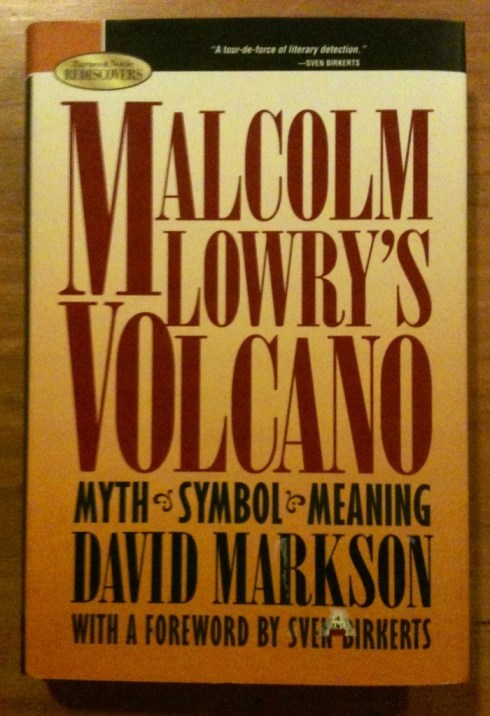
Yet another Markson book with a hideous cover. The cover for Markson’s study of Lowry’s Under the Volcano is truly terrible though: it looks like a fucking diet book or something. Great work, Barnes & Noble! Obviously I’ll shed the dust jacket; here’s what’s underneath:

20120607-133722.jpg

Much better. Anyway, what really counts is what’s inside, of course. I could probably have used this last year when I was reading Under the Volcano, but I feel I handled it okay. I’m more interested in Markson, and even more interested in Markson’s relationship with Lowry, chronicled in a brief chapter in the back that I’ve already read and will report on in more detail in the future.

Nathaniel Hawthorne on Herman Melville: “He can neither believe, nor be comfortable in his unbelief”

Melville, as he always does, began to reason of Providence and futurity, and of everything that lies beyond human ken, and informed me that he “pretty much made up his mind to be annihilated”; but still he does not seem to rest in that anticipation; and, I think, will never rest until he gets hold of a definite belief.

It is strange how he persists — and has persisted ever since I knew him, and probably long before — in wandering to-and-fro over these deserts, as dismal and monotonous as the sand hills amid which we were sitting. He can neither believe, nor be comfortable in his unbelief; and he is too honest and courageous not to try to do one or the other.

If he were a religious man, he would be one of the most truly religious and reverential; he has a very high and noble nature, and better worth immortality than most of us.

From Nathaniel Hawthorne’s journal entry for November 20, 1856; I encountered the quote in Charles Olson’s study of Melville, Call Me Ishmael.


Leo Tolstoy Reading — lya Repin

“Lazuli” — Beach House

“Birthday” (Live in ’89) — The Sugarcubes

Ben Marcus on David Markson’s Reader’s Block

 . . . when, for example, David Markson, an expository novelist who fired the starting gun for fictions of information and proved that pure exposition can be alarmingly moving, who purposefully tells instead of shows, is dismissed in The New York Times for failing to provide a story in his novelReader’s Block, no discussion follows about why, exactly, fiction must have one (at 150 words in the book review, how could any discussion follow?). Nor do we learn what a story might have looked like in such an exquisitely felt book that, to summarize, catalogs the various ways historical figures have hated whole races of people and/or died by their own hands. (Yes, you should read this book.)

Markson should have presumably, under the fiction-must-have-a-story criteria, zeroed in on one of his hundreds of characters and gone deep, doing that good old-time psychological work, the person-making stuff, dramatizing how such an interesting fellow had gone on to hate Jews and/or kill himself. Markson should have used more words like “then.” He should have sequenced. He seems to have forgotten that literature is supposedly a time-based art.

Markson’s amnesia is one of the happy accidents of the last decade of fiction writing. By eschewing a fetishistic, conventional interest in character, or a dutiful allegiance to moment creation, to occurrence itself, Markson accomplishes what a story, slogging through time and obedient to momentum, arguably could not: a commanding, obsessive portrait of single behaviors throughout history, a catalog of atrocity that overwhelms through relentless example. In truth, it’s a novel that can be read as an essay, but unlike most essays, it’s lyrically shrewd, poetry in the form of history, and it’s brave enough to provide creepy, gaping holes where we normally might encounter context (the burden of the conventional essayist).

From Ben Marcus’s essay “The Genre Artist,” published in a 2003 issue of The Believer.

Kurt Vonnegut Interview (Video/1991)

Portrait of a Reading Man — Hans Memling

Books Acquired, Sometime in the Past Two Weeks

20120606-120050.jpg

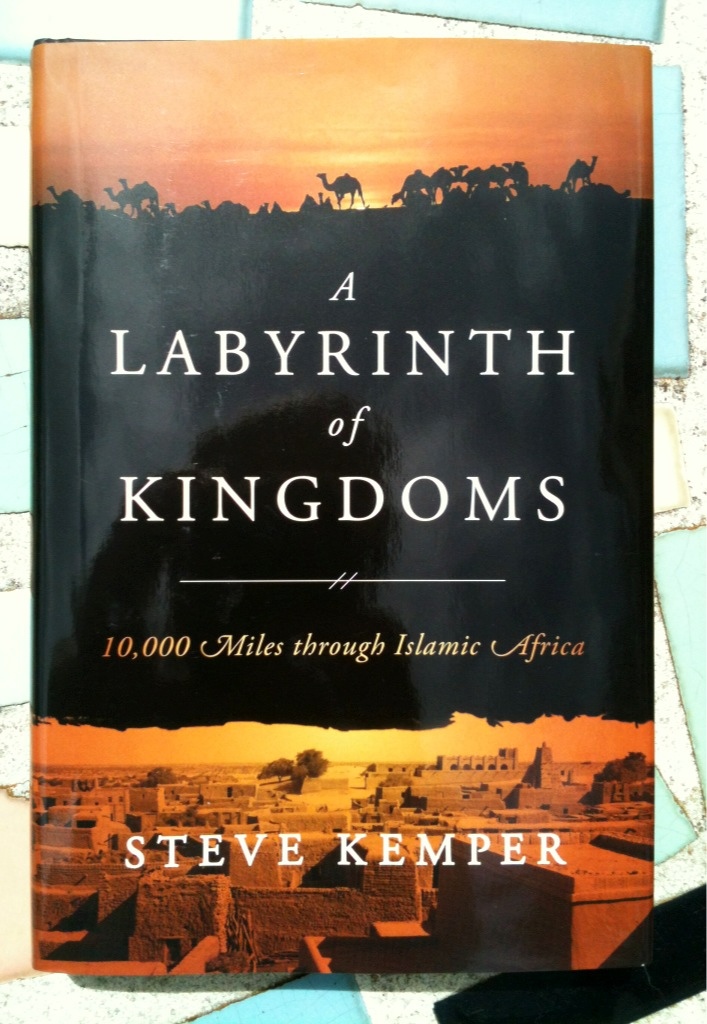
Steve Kemper’s Labyrinth of Kingdom looks pretty cool. Here’s publisher Norton’s write up:

In 1849 Heinrich Barth joined a small British expedition into unexplored regions of Islamic North and Central Africa. One by one his companions died, but he carried on alone, eventually reaching the fabled city of gold, Timbuktu. His five-and-a-half-year, 10,000-mile adventure ranks among the greatest journeys in the annals of exploration, and his discoveries are considered indispensable by modern scholars of Africa.

Yet because of shifting politics, European preconceptions about Africa, and his own thorny personality, Barth has been almost forgotten. The general public has never heard of him, his epic journey, or his still-pertinent observations about Africa and Islam; and his monumental five-volume Travels and Discoveries in North and Central Africa is rare even in libraries. Though he made his journey for the British government, he has never had a biography in English. Barth and his achievements have fallen through a crack in history.

20120606-120043.jpg

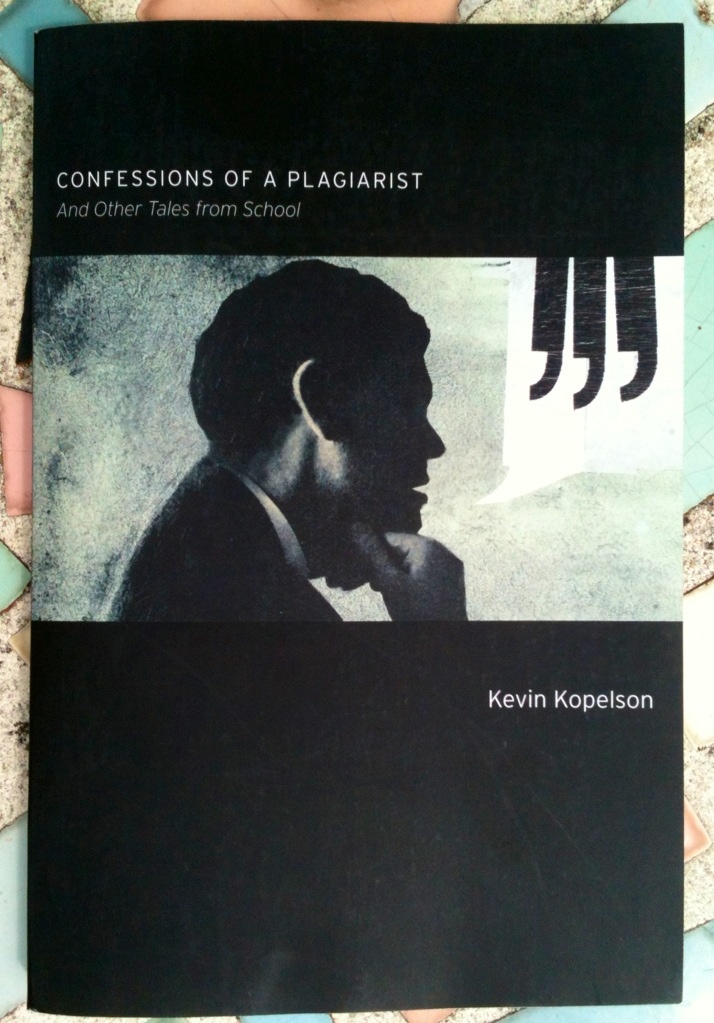
Kevin Kopelson’s Confessions of a Plagiaristnot really sure what to make of this one. Publisher Counterpath’s blurb:

In college, Kevin Kopelson passed off a paper by his older brother Robert as his own. In graduate school, he plagiarized nearly an entire article from a respected scholar, and then later, having met her and been asked if he would send something for her to read, sent that essay he had plagiarized from her work. This is not to mention the many instances in which he quoted others extensively, not passing their work off as his own, but substituting it for his own words when his words were what were called for. Until recently, such plagiarisms and thefts had been his most shameful secret, shared only with a trusted few. But then Kopelson—now an English professor and the author of a number of respected books, most recently 2007’s Sedaris—wrote an essay entitled “My Cortez,” which was published in the London Review of Books in 2008. It was a satirical literary confession, an exploration of Kopelson’s personal and professional life via his various acts of plagiarism. From that jumping off point and exploring also his other vices, Confessions of a Plagiarist is the compelling and clever retelling (not to mention renovation) of Kopelson’s life, one transgression at a time.