Teju Cole’s Open City Is a Strange, Marvelous Novel That Captures the Post-9/11 Zeitgeist

“And so when I began to go on evening walks last fall . . .” begins Julius, the perspicacious narrator of Teju Cole’s admirable and excellent début Open City. That opening “And” is significant, an immediate signal to the reader that this novel will refuse to align itself along (or even against) traditional arcs of plot and character development. We will meet Julius in media res, and we will leave him there, and along the way there will be learning and suffering and compassion and strange bubbles of ambiguity that threaten to burst out of the narrative.

As noted, Open City begins with Julius’s peripatetic voyages; he walks the night streets of New York City to ostensibly relieve the “tightly regulated mental environment of work.” Julius is completing his psychiatry fellowship at a hospital, and the work takes a toll on him, whether he admits it or not. In these night walks—and elsewhere and always throughout the novel—Julius shares his sharp observations, both concrete and historical. No detail is too small for his fine lens, nor does he fail to link these details to the raw information that rumbles through his mind: riffs on biology, history, art, music, philosophy, and psychology interweave the narrative. Julius maps the terrain of New York City against its strange, mutating history; like a 21st century Ishmael, he attempts to measure it in every facet—its architecture, its rhythms, its spirit. And if there is one thread that ties Julius’s riffs together it is the nightmare of history:

But atrocity is nothing new, not to humans, not to animals. The difference is that in our time it is uniquely well organized, carried out with pens, train carriages, ledgers, barbed wire, work camps, gas. And this late contribution, the absence of bodies. No bodies were visible, except the falling ones, on the day America’s ticker stopped.

Open City is the best 9/11 novel I’ve read, but it doesn’t set out to be a 9/11 novel, nor does it dwell on that day. Instead, Cole captures something of the post-9/11 zeitgeist, and at the same time situates it in historical context. When Julius remarks on the recent past, the concrete data of history writhes under the surface. He remarks that the 9/11 attack on the World Trade Center “was not the first erasure on the site,” and goes on to detail the 1960s cityscapes that preceded the WTC. Before those, there was Washington Market. Then Julius embarks, via imagination, into the pre-Colombian space of the people we now call Indians or Native Americans. “I wanted to find the line that connected me to my own part in these stories,” he concludes, peering at the non-site that simultaneously anchors these memory-spaces.

Julius’s line, like the lines that comprise New York City (and perhaps, if we feel the spirit of its democratic project, America itself) is a mixed one, heterogeneous and multicultural. Julius’s father, now dead, was an important man in Nigeria, where Julius enjoyed a relatively privileged childhood. Julius’s mother—they are now estranged—is German. He remarks repeatedly about his German grandmother’s own displacements during WWII, reflecting at one point that, from a historical perspective, it was likely impossible that she escaped Cossack rape.

Even though he sometimes seems reticent to do so, Julius delves into the strange violence that marks his lineage. He recalls a childhood fascination with Idi Amin; as a boy, he and his cousins would watch the gory film The Rise and Fall of Idi Amin repeatedly: ” . . . we enjoyed the shock of it, its powerful and stylized realism and each time we had nothing to do, we watched the film again.”

Fascinated horror evinces repeatedly in Open City. In just one example, Julius believes he sees “the body of a lynched man dangling from a tree”; as he moves closer to inspect, he realizes that it is merely canvas floating from a construction scaffold. Perhaps so attuned to history’s grand catalog of spectacular atrocity, Julius finds it lurking in places where it does not necessarily evince.

In turn, despite his profession as psychiatrist, Julius is wary of human sympathy. Throughout the novel, dark-skinned men engage him by calling him “brother.” He almost always deflects these attempts at connection, and internally remarks them as fatuous, or naïve, or false. This is not to say though that Julius doesn’t make significant (if often transitory) connections.

One of the organizing principles of Open City comes in the form of Julius’s infrequent visits to the home of his former English professor, Dr. Saito, who is slowly dying. Saito’s own memories float into Julius—this technique repeats throughout the novel—and we learn that he was interned as a young man during WWII; the sad fact is another ugly kink in the line of American history that Julius attempts to trace.

Julius also befriends Dr. Maillotte, an aging surgeon on a flight to Brussels, where he spends a few weeks of Christmas vacation, ostensibly looking for his oma (a task he performs half-heartedly at best). As Julius daydreams, Dr. Maillotte, European émigré, finds a place within his vision of family members and friends:

I saw her at fifteen, in September 1944, sitting on a rampart in the Brussels sun, delirious with happiness at the invaders’ retreat. I saw Junichiro Saito on the same day, aged thirty-one or thirty-two, unhappy, in internment, in an arid room in a fenced compound in Idaho, far away from his books. Out there on that day, also, were all four of my own grandparents: the Nigerians, the Germans. Three were gone by now, for sure. But what of the fourth, my oma? I saw them all, even the one I had never seen in real life, saw all of them in the middle of that day in September sixty-two years ago, with their eyes open as if shut, mercifully seeing nothing of the brutal half century ahead and better yet, hardly anything at all of all that was happening in their world, the corpse-filled cities, camps, beaches, and fields, the unspeakable worldwide disorder that very moment.

In Brussels, Julius meets Farouq, an angry young man with intellectual, Marxist tendencies. Farouq believes in a theory of “difference” and finds himself at odds with both the dominant Belgian culture and with Western culture in general. Julius’s conversations with Farouq are a highlight of the novel; they help to further contextualize the drama of diaspora in the post-9/11 world. Later, Julius finds a counterweight to some of Farouq’s extreme positions over a late lunch with Dr. Maillotte, who suggests that “For people to feel that they alone have suffered, it is very dangerous.” There’s a sense of reserved moderation to her critique—not outright dismissal nor condemnation, but simply a recognition that there are “an endless variety of difficulties in the world.”

Julius seems to tacitly agree with Maillotte’s assessment. His reluctance to accept brotherhood based on skin color alone speaks to a deeper rejection of simplicity, of tribe mentality, of homogeneity; it also highlights his essential alienation. At the same time, he’s acutely aware of how skin color matters, how identity can be thrust upon people, despite what claims to agency we might make. In search of the line that will connect him to his part of the American story, Julius finds unlikely “brothers” in Farouq, Maillotte, and Saito.

But let us not attribute to Julius a greater spirit than Cole affords him: Open City is a novel rich in ambiguity, with Julius’s own personal failures the most ambiguous element of all. While this is hardly a novel that revolves on plot twists, I hesitate to illustrate my point further for fear of clouding other readers’ perceptions; suffice to say that part of the strange, cruel pleasure of Open City is tracing the gaps in Julius’s character, his failures as a professional healer—and his failures to remark or reflect upon these failures.

But isn’t this the way for all of us? If history is a nightmare that we try to awake from—or, more aptly in a post-9/11 world, a nightmare that we awake to, to paraphrase Slavoj Žižek—then there is also the consolation and danger that time will free us from the memory of so much atrocity, that our collective memory will allow those concrete details to slip away, replaced with larger emblems and avatars that neatly smooth out all the wrinkles of ambiguity. “I wondered if indeed it was that simple, if time was so free with memory, so generous with pardons, that writing well could come to stand in the place of an ethical life,” Julius wonders at one point; later, Saito points out that “There are towns whose names evoke a real horror in you because you have learned to link those names with atrocities, but, for the generation that follows yours, those names will mean nothing; forgetting doesn’t take long.” Julius’s mission then is to witness and remark upon the historical realities, the nitty-gritty details that we slowly edge out of the greater narrative. And Cole? Well, he gives us a novel that calls attention to these concrete details while simultaneously exploring the dangerous subjectivity behind any storytelling.

If it needs to be said: Yes, Open City recalls the work of W.G. Sebald, who crammed his books with riffs on history and melancholy reflections on memory and identity. And yes, Open City is flâneur literature, like Sebald (and Joyce, and Bolaño, perhaps). But Cole’s work here does not merely approximate Sebald’s, nor is it to be defined in its departures. Cole gives us an original synthesis, a marvelous and strange novel about history and memory, self and other. It’s a rich text, the sort of book one wants to immediately press on a friend, saying, Hey, you there, read this, we need to talk about this. Very highly recommended.

Open City is new in trade paperpack from Random House.

Gertrude Stein Next to Her Portrait (Portrait by Picasso; Photo by Man Ray; Commentary by David Markson)

In The Last NovelDavid Markson offers the following citations re: Picasso, Stein, Man Ray (citations not in Markson’s (anti-)order):

Gertrude Stein once delighted Picasso by reporting that a collector had been dumbfounded, years afterward, to hear that Picasso had given her her portrait as a gift, rather than asking payment.

Not understanding that that early in Picasso’s career, the difference had been next to negligible.

Among the many paintings in her Paris flat, Gertrude Stein had two exceptional Picassos.

If there were a fire, and I could save only one picture, it would be those two. Unquote.

Picasso. Cézanne. Matisse. Braque. Bonnard. Renoir.

All of whom painted portraits of Ambroise Vollard.

Cartier-Bresson. Brassaï. Man Ray. Lee Miller. Robert Doisneau. Robert Capa. David Douglas Duncan. Cecil Beaton.

All of whom photographed Picasso.

Book Acquired, 2.15.2012

20120218-101830.jpg

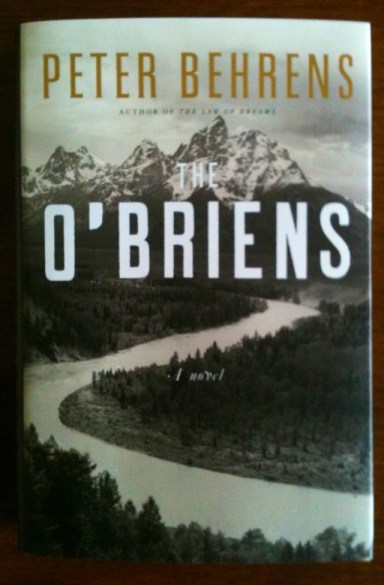
Peter Behren’s The O’Briens. 

An unforgettable saga of love, loss, and exhilarating change spanning half a century in the lives of a restless family, from the author of the acclaimed novel The Law of Dreams.
 
The O’Briens is a family story unlike any told before, a tale that pours straight from the heart of a splendid, tragic, ambitious clan. In Joe O’Brien—grandson of a potato-famine emigrant, and a backwoods boy, railroad magnate, patriarch, brooding soul—Peter Behrens gives us a fiercely compelling man who exchanges isolation and poverty in the Canadian wilds for a share in the dazzling riches and consuming sorrows of the twentieth century.

When Joe meets Iseult Wilkins in Venice, California, the story of their courtship—told in Behrens’s gorgeous, honed style—becomes the first movement in a symphony of the generations. Husband and wife, brothers, sisters-in-law, children and grandchildren, the O’Briens engage unselfconsciously with their century, and we experience their times not as historical tableaux but as lives passionately lived. At the heart of this clan—at the heart of the novel—is mystery and madness grounded in the history of Irish sorrow. The O’Briens is the story of a man, a marriage, and a family, told with epic precision and wondrous imagination.

Teddy Roosevelt on The Simpsons

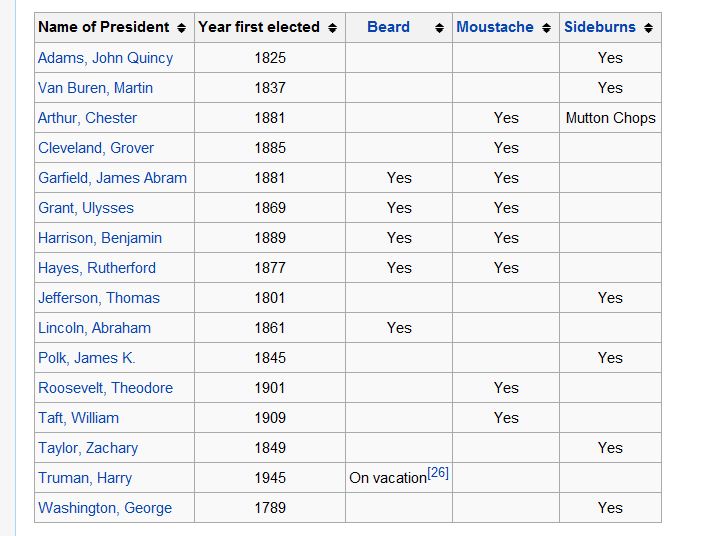
A Chart of U.S. Presidents Who Sported Facial Hair

(From Wikipedia, natch).

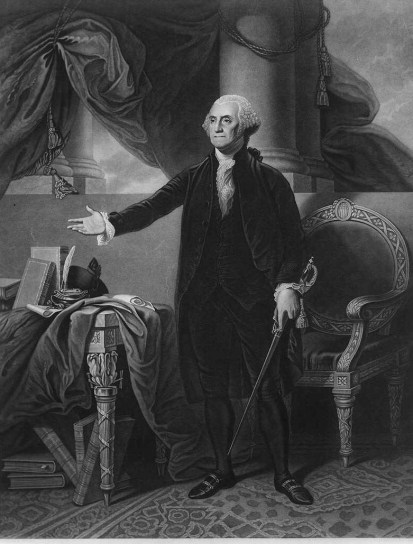
George Washington Was A Biblioklept

George Washington was a biblioklept. MobyLives hipped us to Ed Pilkington’s Guardian article. From the article:

Founder of a nation, trouncer of the English, God-fearing family man: all in all, George Washington has enjoyed a pretty decent reputation. Until now, that is.

The hero who crossed the Delaware river may not have been quite so squeaky clean when it came to borrowing library books.

The New York Society Library, the city’s only lender of books at the time of Washington’s presidency, has revealed that the first American president took out two volumes and pointedly failed to return them.

At today’s prices, adjusted for inflation, he would face a late fine of $300,000.

The library’s ledgers show that Washington took out the books on 5 October 1789, some five months into his presidency at a time when New York was still the capital. They were an essay on international affairs called Law of Nations and the twelfth volume of a 14-volume collection of debates from the English House of Commons.

The ledger simply referred to the borrower as “President” in quill pen, and had no return date.

Lincoln — George Boorujy

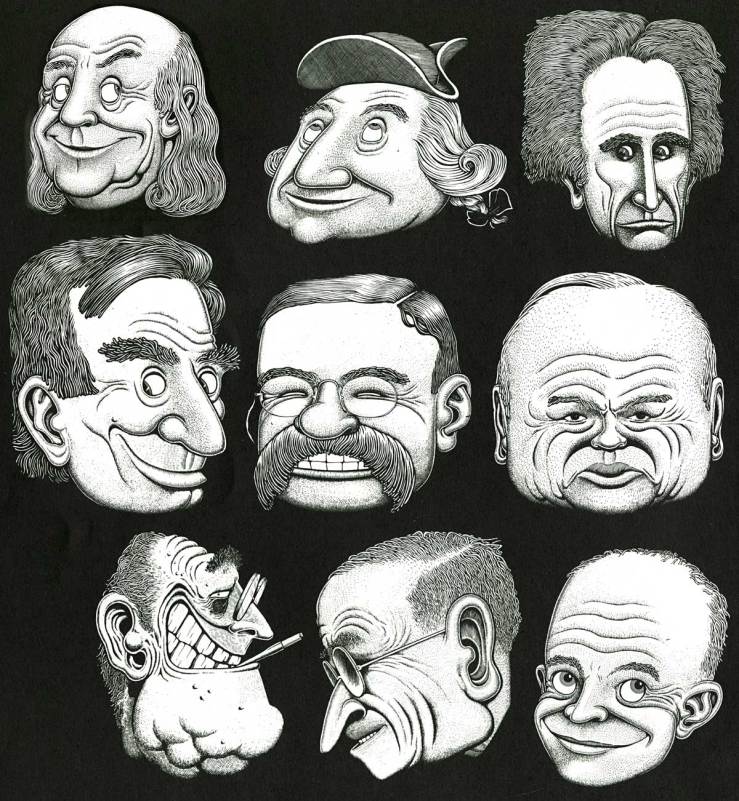
Happy President’s Day from Basil Wolverton

Book Shelves #8, 2.19.2012

20120219-125815.jpg

Book shelves series #8, eighth Sunday of 2012. This is likely the most boring post in this series (at least I hope it is). I keep books that folks send me that I intend to review but haven’t gotten to yet in this magazine stand thing; it abuts the sofa in the sitting room. Some of the books in here came in last summer. So, out of shame alone, I won’t be yanking any out for individual pics. Next week, we’ll get a gander at some of the finer shelves in the house.


Edward Albee Talks About Carson McCullers (Video)

“The Jockey,” A Short Story by Carson McCullers

“The Jockey” by Carson McCullers

The jockey came to the doorway of the dining room, then after a moment stepped to one side and stood motionless, with his back to the wall. The room was crowded, as this was the third day of the season and all the hotels in the town were full. In the dining room bouquets of August roses scattered their petals on the white table linen and from the adjoining bar came a warm, drunken wash of voices. The jockey waited with his back to the wall and scrutinized the room with pinched, crêpy eyes. He examined the room until at last his eyes reached a table in a corner diagonally across from him, at which three men were sitting. As he watched, the jockey raised his chin and tilted his head back to one side, his dwarfed body grew rigid, and his hands stiffened so that the fingers curled inward like gray claws. Tense against the wall of the dining room, he watched and waited in this way.

He was wearing a suit of green Chinese silk that evening, tailored precisely and the size of a costume outfit for a child. The shirt was yellow, the tie striped with pastel colors. He had no hat with him and wore his hair brushed down in a stiff, wet bang on his forehead. His face was drawn, ageless, and gray. There were shadowed hollows at his temples and his mouth was set in a wiry smile. After a time he was aware that he had been seen by one of the three men he had been watching. But the jockey did not nod; he only raised his chin still higher and hooked the thumb of his tense hand in the pocket of his coat.

The three men at the corner table were a trainer, a bookie, and a rich man. The trainer was Sylvester — a large, loosely built fellow with a flushed nose and slow blue eyes. The bookie was Simmons. The rich man was the owner of a horse named Seltzer, which the jockey had ridden that afternoon. The three of them drank whiskey with soda, and a white-coated waiter had just brought on the main course of the dinner. Continue reading ““The Jockey,” A Short Story by Carson McCullers”

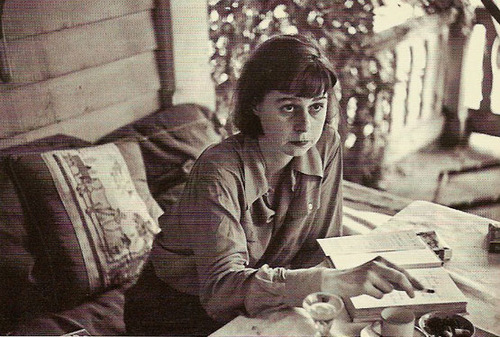
Just a Bunch of Pics of Carson McCullers Smoking

This slideshow requires JavaScript.

When I put together this post of writers smoking, I knew I wanted a pic of Carson McCullers; a basic image search evinces that most pictures of McCullers feature her smoking, or at least posing with a cigarette (also drinking). On one hand, this is a hoary old trope, the hard smoking writer; on the other hand, it’s entirely likely that McCullers was never far from a smoke. NB: The man pictured by McCullers in one of the images is the playwright Edward Albee.

Biblioklept Talks to Poet Bobbi Lurie About Her New Collection, Grief Suite

Bobbi Lurie is the author of three poetry collections: Grief Suite, Letter from the Lawn, and The Book I Never Read. In addition to being a writer she has worked as a teacher, editor, therapist, visual artist, muralist and printmaker. She was kind enough to talk to me about her work via a series of emails.

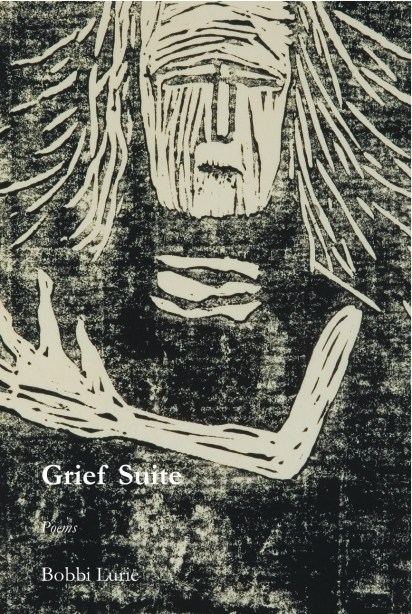
Biblioklept: I want to start with the cover of your book, which I like very much. It’s a woodcut that seems to depict a woman in pain or suffering; the image sets the tone for Grief Suite, in a way. You did the woodcut yourself, right? Did you make it before or after putting the collection together? Can you tell us a about this process?

Bobbi Lurie: I made that particular woodcut a long time ago; long before I called myself a printmaker, long before I thought of writing as an art form.I was in love with Japanese woodcuts, and I appreciated the discipline of it.

The main thing to know, for those who care about ownership of their images, is that the image is reversed in the process of making a woodcut.  Once the “art” “idea” has met the gouging, repetitious sense of self embodying the role of a woodcarver, there can be no clinging to ownership. One works for hours within the process and hopes for the best.

Woodcuts are a relief printing technique in which the parts to be printed (the parts which will receive the ink and become the positive image) remain level with the surface where the rice paper meets it. The image is rubbed onto the paper’s surface. The first look at the printed image is always exciting, whether there is disappointment or joy. Regardless, I think it is dishonest for someone who makes woodcuts to take ownership completely. I bow to the process. I feel that way with every form of art.

The areas meant to show “white” are cut away with a knife or chisel.

Woodcuts can be made in multiples. I only had one copy of this particular woodcut, though. Had I printed multiples, every print would have been different. Whatever expression you see on the face of this woodcut, it would have appeared differently had it been printed at another time.

I consider this woodcut to be the first poem of the book.

Biblioklept: I like the idea that the cover of a book is part of the content of the book, that it was created by the author of the book.

I know that most of the poems in your collection were published in different places; they are also stylistically varied. Did you always see them as a cohesive work?

BL: When  I’m working on a poem, I never think of it as anything but its individual self. But, just as the cover woodcut is the first poem, the book, as a whole, is the last poem. This book reflects my particular process (at that time) of layering poems. It is a feeling which is, basically, “musical,” for me. Each poem is a note and the manuscript, when it’s finished, is a song.
I order the poems into a narrative. That is important to me. It can be surprising at first: going through poems, discovering a pattern of memories and ideas, looked at as a whole. The pattern is created long after the poems have been made. Seeing a whole new entity emerge is very exciting. Keeping to it, building on it, having the right tone, the right music, is very challenging.

You ask about varying styles on the page. The page is very important to me. Poems, for me, are as visual as my etchings were. I think of the visual layout of a poem first. I am still a visual artist, regardless of words.

Biblioklept: I’m curious then — does the idea for the poem come first, and then you think of its form on the page, and then think about the words and the arrangement of the words? I think about the title of a poem in the collection here: “Feeling Finds Pattern in Language” . . . 

BL: I think I feel images rather than think ideas. Also, sound is very important to me. And the rhythm of words. There is a sense of something and then there is the sound of the words coming through. I don’t think I write things volitionally, or, at least, never entirely. There is the first sound and then there is the  juxtaposition of other sounds, other words, like colors used in an attempt to communicate an image.

The poem “Feeling Finds Pattern in Language” is a visual memory of the sun setting, while sitting in a cafe, beside the ocean,  watching two lovers at the next table. He was holding her hands. Her coffee sat there, untouched, for a long time. I’m sure it turned cold. I was the one who was drawing on the napkin. That moment felt significant. I knew I would always remember it. We all have significant moments like those, which stay with us, I think. The first words of the poem came there, in the cafe, and I wrote it on the napkin I had been drawing on. I put the napkin away. It stayed as a single line for a long time. This is a poem I worked and re-worked. I wanted it to be twelve lines. It could have been three stanzas of four lines each, representing a three part progression in their relationship, as I imagined it. But only the first stanza ended up with the four line format I started with. The second stanza is seven lines because I felt it added a sense of speed and density, in the way that action is swift, yet dense, affecting the physical world, unlike thought. It requires more description than the image of someone being very still, deciding whether to act or not. That image of hesitation is the first stanza. The last line is separate, the end result, the secret not said, not seen by me, but imagined and, therefore, in parentheses, as if the speaker is the only one who knew what happened after or as if it the speaker found out how things played out beyond that scene. For me, the format of the poem is similar to a musical score, a sense of time and pauses. In screenwriting, the word “beat” is placed where the action stops; where there is a pause. I see the blank space between stanzas as a pause and so I placed a pause between the 7 line stanzas and the last line. The last line my way of showing the future).

The title was the process. I felt something very tender, watching these two lovers. I wanted very much to put that  tenderness I felt into words. And the feeling found a pattern (in language). The title of that poem came to me from the process of putting that poem together. A lot of it was influenced by the beauty of the sky, the fact that I was traveling and would be leaving the next day…a sense of brevity.

“Feeling Finds Pattern in Language” 

her hands are wings he takes them into his

presses them with the map he drew on the napkin where they meet

where the coffee sits cold

because they cannot drink

suffering like a saint she takes the cold cup

lifts it to her lips

the tender touch of porcelain

the bitter tip of tongue

the sun already set

reflects a sacred filament of light

reaching out to the street where they sit

(later she takes communion with the sacredness of his kiss)


Biblioklept:
As I’ve already remarked, the poems in Grief Suite vary stylistically; I’m curious, in light of your last explication, about “Purity Becomes a Kind,” which features elements of what appears to be html code . . .

BL: I saw a fragment of html and it reminded me of hieroglyphics, something I’ve always loved, visually. Although poets who identify themselves as being visual poets might not call this a visual poem, for me it is just as much a visual poem as a language poem in the sense that it must be looked at, seen as an image; it cannot be experienced through sound alone. A lot of the poetry world believes in reading poems out loud. Many feel that the performance of the poem, or reading of the poem, is of major significance. I think of my poems as being more visual and silent. “Purity Becomes A Kind” is the third piece in the book. I placed it there because I felt I needed a transition, a place of seeing, as well as hearing, of sight, as well as language, or sound. It is placed here because I wanted to give the reader a break from narrative. The poem which follows this is “Feeling Finds Pattern In Language.” I wanted something unobtrusive, in terms of narrative, to precede that poem. I am suggesting something about “purity” here and the poem which follows deals with the hesitation a woman has in committing to love. I wanted to express that hesitation before it even happened. I wanted to express an incoherent, deeper voice, which is vague, not yet formed into language, into thought, or action, something existing before consciousness of a thought takes place. That is why this piece is placed previous to it.  It works, for me, as a transition, a moment to pause and look, as well as read.

> purity becomes a kind
> > of holy innocence wronged by everyt=

hing in the world
> that stands in its way.
> >  Perhap=

s &quot;The girl whose flesh was dreamed&quot;<br>>

are you?<br>

<br>

<br>

Biblioklept: Do you read your poems aloud—publicly, I mean?

BL: I suppose this is one of the most important questions you could ask me.

I’ve stuttered all my life. As a child, I said things I didn’t mean because I chose my words according to which words were easier to say without stuttering.

I do read my poems out loud but not as often as a lot of other poets do. For me, reading out loud is a performance. It takes me weeks to prepare for a poetry reading/ performance. Since stutterers don’t stutter when they sing, I choose poems I can sing, or, flow with, through speech, trying my best not to make it seem like I’m singing, though, for me: they are songs. I write them out as a type of musical score, with specific notations to keep the flow going. I record the way I recite them, thinking of them as music, judging them accordingly, changing organization and speed to accommodate my stuttering. Sometimes I surprise myself and don’t stutter at all during a reading. Sometimes I stutter a few times, sometimes more.

The point for me is that I am not thinking of the poems as much as I am thinking of speech itself. I often pull it off quite well. But it is difficult for me to reconcile what I write, from within myself, with performing it outwardly.

Biblioklept: Have you ever stolen a book?

BL: No, I never stole a book. I’ve spent more money on books than on anything else in my life. I’d be rich had I not bought all those books. When people come into my house, they are usually shocked at how books take up most of my living space. I need to move now and am in the process of deciding which books I’m willing to let go of in order to live in a smaller place. It’s quite a challenge to make the decision to give books away. It’s like redefining who I am as a person and, because of this, the books I feel I cannot let go of are all the more precious to me.

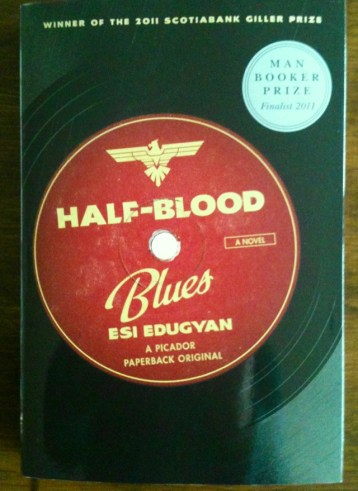
Esi Edugyan’s Half-Blood Blues (Book Acquired, 2.10.2012)

20120218-101808.jpg

I try to spend 10 or 20 minutes with every book that comes in to Biblioklept World Headquarters—assessing plot and prose, trying to get a sense of the potential audience for each volume, etc. Sometimes this task is difficult, and especially difficult when I find myself with too much to read, yet intrigued by the book at hand.

This is a lot of hemming and hawing leading up to: I very much enjoyed the first fifty or so pages of Esi Edugyan’s Half-Blood Blues. Here’s a plot description from the Man Booker Prize website:

‘Chip told us not to go out. Said, don’t you boys tempt the devil. But it been one brawl of a night, I tell you…’ The aftermath of the fall of Paris, 1940. Hieronymous Falk, a rising star on the cabaret scene, was arrested in a cafe and never heard from again. He was twenty years old. He was a German citizen. And he was black. Fifty years later, Sid, Hiero’s bandmate and the only witness that day, is going back to Berlin. Persuaded by his old friend Chip, Sid discovers there’s more to the journey than he thought when Chip shares a mysterious letter, bringing to the surface secrets buried since Hiero’s fate was settled. In Half Blood Blues, Esi Edugyan weaves the horror of betrayal, the burden of loyalty and the possibility that, if you don’t tell your story, someone else might tell it for you. And they just might tell it wrong…

Edugyan writes in an energetic colloquial syntax, one that matches–and embodies—the spirit of the jazz musicians at the forefront of her narrative.  So far, great stuff.

Picador has picked up the book and given it a wider distribution in the US. Check it out.

“A Toad, can die of Light” — Emily Dickinson

“A Toad, can die of Light,” a poem by Emily Dickinson:

A Toad, can die of Light —
Death is the Common Right
Of Toads and Men —
Of Earl and Midge
The privilege —
Why swagger, then?
The Gnat’s supremacy is large as Thine —

Life — is a different Thing —
So measure Wine —
Naked of Flask — Naked of Cask —
Bare Rhine —
Which Ruby’s mine

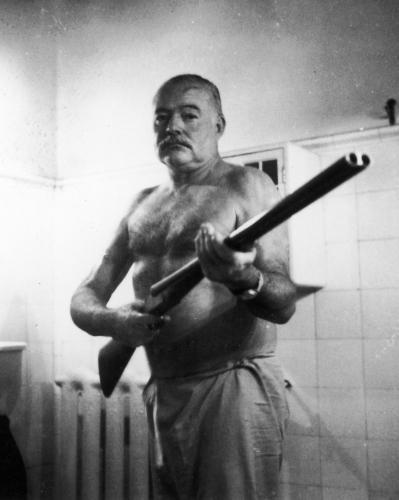
Topless Hemingway, Part III

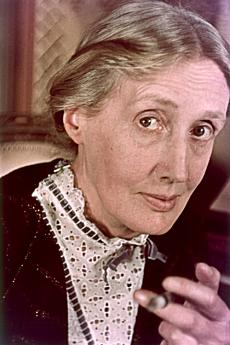
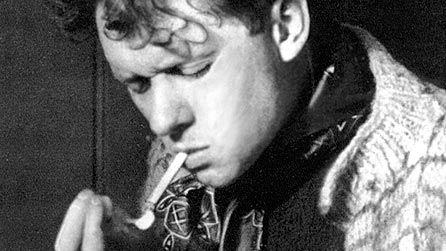
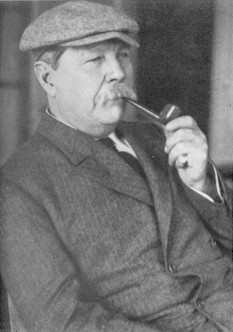
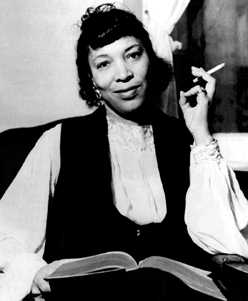
Smoking Makes You Look Cool, Part II (More Pics of Writers Smoking)

Zora Neale Hurston
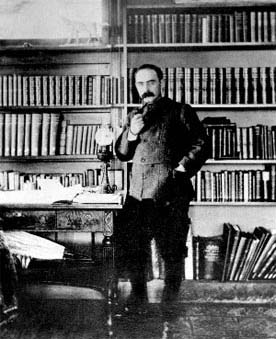
Rudyard Kipling
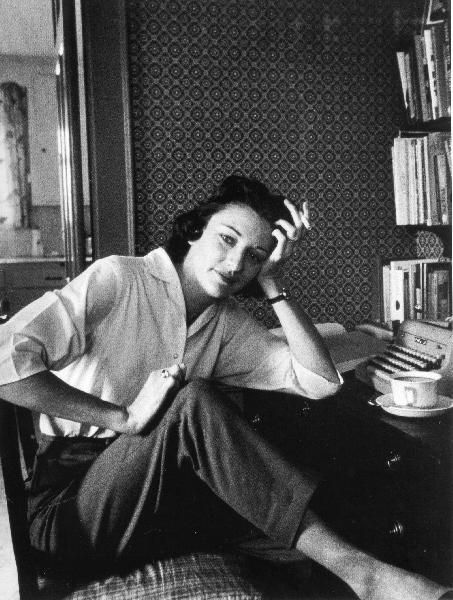
Anne Sexton 
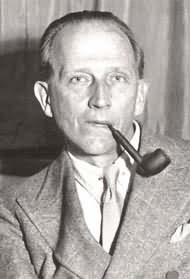
A.A. Milne
Virginia Woolf
Carson McCullers
Dylan Thomas
Arthur Conan Doyle
Lillian Hellman
Raymond Carver

(For more pics of writers smoking, check out our first gallery—and don’t worry, people already expressed their hatred for what they perceived to be our endorsement of smoking there).