“Nietszche” [sic] by Lydia Davis, from Varieties of Disturbance, and reprinted in The Collected Stories of Lydia Davis—
Oh, poor Dad. I’m sorry I made fun of you.
Now I’m spelling Nietszche wrong, too.
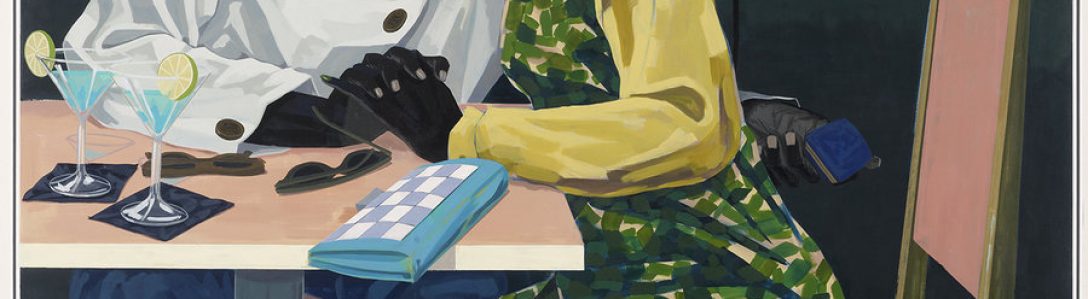
“Nietszche” [sic] by Lydia Davis, from Varieties of Disturbance, and reprinted in The Collected Stories of Lydia Davis—
Oh, poor Dad. I’m sorry I made fun of you.
Now I’m spelling Nietszche wrong, too.
“Self Portrait at Twenty Years,” a poem by Roberto Bolaño, from Laura Healy’s translation of The Romantic Dogs—
I set off, I took up the march and never knew
where it might take me. I went full of fear,
my stomach dropped, my head was buzzing:
I think it was the icy wind of the dead.
I don’t know. I set off, I thought it was a shame
to leave so soon, but at the same time
I heard that mysterious and convincing call.
You either listen or you don’t, and I listened
and almost burst out crying: a terrible sound,
born on the air and in the sea.
A sword and shield. And then,
despite the fear, I set off, I put my cheek
against death’s cheek.
And it was impossible to close my eyes and miss seeing
that strange spectacle, slow and strange,
though fixed in such a swift reality:
thousands of guys like me, baby-faced
or bearded, but Latin American, all of us,
brushing cheeks with death.
Several Paul Auster interviews for those inclined. Also, read our review of his new novel Sunset Park.
Auster on NPR’s Marketplace with Kai Ryssdal.
And, on a video interview with Borders, Auster leaves his shades on for the duration of the interview, perhaps commenting on the brightness of his future.
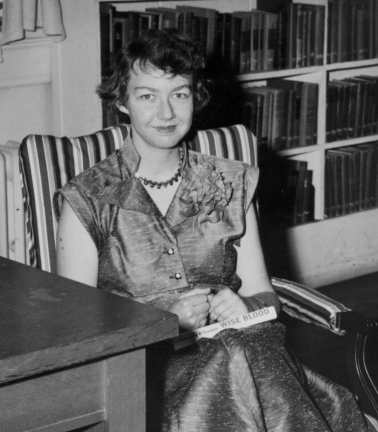 From Flannery O’Connor’s 1960 lecture, “Some Aspects of the Grotesque in Southern Fiction“—
Whenever I’m asked why Southern writers particularly have a penchant for writing about freaks, I say it is because we are still able to recognize one. To be able to recognize a freak, you have to have some conception of the whole man, and in the South the general conception of man is still, in the main, theological. That is a large statement, and it is dangerous to make it, for almost anything you say about Southern belief can be denied in the next breath with equal propriety. But approaching the subject from the standpoint of the writer, I think it is safe to say that while the South is hardly Christ-centered, it is most certainly Christ-haunted. The Southerner, who isn’t convinced of it, is very much afraid that he may have been formed in the image and likeness of God. Ghosts can be very fierce and instructive. They cast strange shadows, particularly in our literature. In any case, it is when the freak can be sensed as a figure for our essential displacement that he attains some depth in literature.
Hear O’Connor read a version of her lecture here.
 Dinaw Menestu’s new novel How to Read the Air tells the story of a family over two generations. The novel opens in the 1970s as Mariam and Josef, a young married couple from Ethiopia, take a road trip through the American heartland. The pair has been separated for over three years–after just one year of marriage–and they hope that the trip will help renew their bonds and in some way forge their new identities as Americans. But they don’t really know each other, and perhaps they can’t; the violence they sought to escape in Ethiopia’s communist revolution recapitulates in their own marriage, eventually sundering it. Nearly 30 years later, their son Jonas–the introspective, sensitive, and inventive narrator of this novel–tries to come to terms with his own crumbling marriage, job, and identity, by re-examining the past. By literally recreating his parents’ journey, Jonas tries to convert his father’s pain and fear into a stable identity in this moving novel about family, place, and the need to move both our bodies and our souls. How to Read the Air is new in hardback from Riverhead Books.
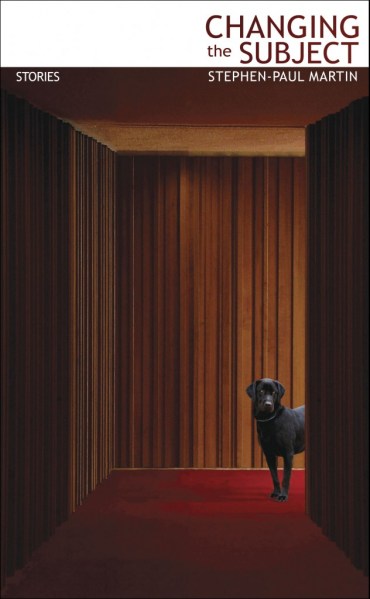 There’s a thread of vengeful anger that runs through Stephen-Paul Martin’s new collection of stories, Changing the Subject. Although a tidy portion of that anger is reserved for George W. Bush and his nefarious gang (the stories seem to have been composed under last decade’s regime), Martin’s various characters also aim their anger at scientists, whalers, cell phones, born-again Christians, college students, journalists, fast food restaurants, Americans, and all the people of the world. That anger works best when working in a reflective mode, especially when Martin blends his vitriol with humor. The opening paragraph of the first story “Safety Somewhere Else” provides a nice illustration of Martin at his finest–
The greatest mistake of all time took place thousands of years ago, when God let Noah’s family survive the flood. God’s plan was to start a new human race with a man he though he could trust, but the limits of Noah’s moral awareness were obvious right from the start. No sooner had God’s rainbow vanished into the clouds than Noah was getting drunk and cursing his grandson, declaring that Canaan’s descendants–one-third of the human race–would be the lowest of slaves, a monstrous over-reaction that would have tragic consequences for countless generations of innocent people. Clearly, Noah wasn’t the man God thought he was.
 The story then shifts into a bizarre picaresque involving revenge against a scientist who uses animals as research subjects (there’s also an attack on a whaling vessel, a fascinating reading of The Odyssey, and a woman whose son was consumed by a bear). Great stuff, but I think I would have been just as happy to hear more of Martin’s thoughts (or, his narrator’s thoughts, to be fair) on the Old Testament. Changing the Subject is new in trade paperback from Ellipsis Press.
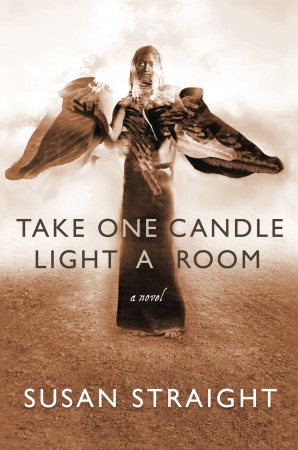
Susan Straight’s new novel Take One Candle Light a Room explores the physical and psychic traumas that evince from America’s long, painful, complicated history of race relations. FX Antoine, the novel’s narrator, is an LA-based travel writer who found herself, as a young girl, transplanted from rural Louisiana to California at the end of the fifties, in order to escape the rapes perpetrated by a local plantation owner on three of her sisters. In 2005, FX–Fantine to her friends and family–watches over Victor, her godson, a recent community college graduate. Fantine encourages Victor to expand his unlikely success (he is the son of a crack-addicted murder victim, one of Fantine’s childhood friends) by applying to four-year schools; however, after Victor is implicated in a shooting (wrong place, wrong time), he runs away to Louisiana. Fantine follows, attempting to save the young man and find some sense of personal redemption as well. The novel’s climax is set against the devastating backdrop of Hurricane Katrina. For more on Take One Candle, read Francesca Mari’s review at The New York Times. Take One Candle Light a Room is new in hardback from Pantheon Books.
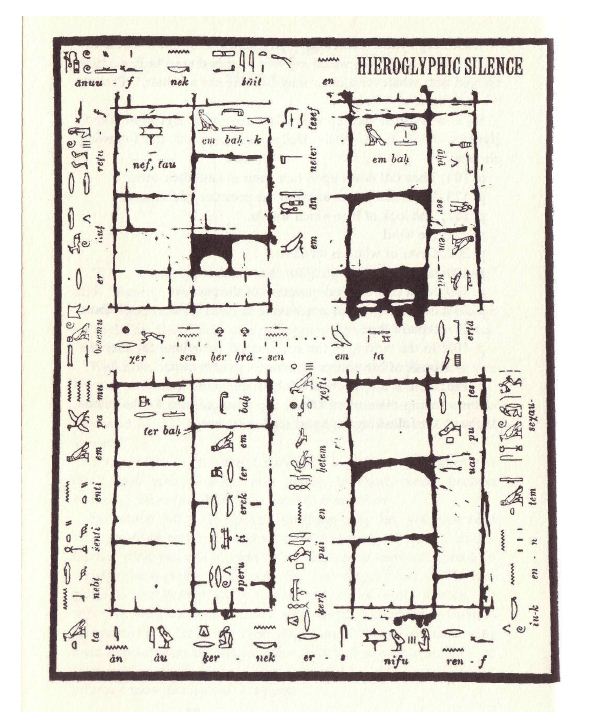
The following selection is from William S. Burroughs’s “Hieroglyphic Silence,” collected in the totally out-of-print volume The Third Mind, a book of cut-ups Burroughs co-authored with Brion Gysin (you can access the book here via extralegal means). From “Hieroglyphic Silence”–
“I am the Egyptian,” he said, looking all flat and silly, and I said: “Really, Bradford, don’t be tiresome.”
All right, let’s put it apple-pie simple with a picture of a wedge of apple pie there, containing fifty-three grams of carbohydrates.(See the L-C diet.)
Well now, if you don’t know the word for apple pie where you happen to be and want it, you can point to it or you can draw it. So, when and why do you need a word for it? When and why do you need to say, I want apple pie, if you just don’t care how fat you get?
You need to say it when it isn’t there to point to and when you don’t have your drawing tools handy\ In short, words become necessary when the object they refer to is not there.
No matter what the spoken language may be, you can read hieroglyphs, a picture of a chair or what have you; makes no difference what you call it, right? You don’t need subvocal speech to register the meaning of hieroglyphs. Learning a hieroglyphic language is excellent practice in the lost art of inner silence. “It would be well, today, if children were taught a good many Chinese ideograms and Egyptian hieroglyphs as a means of enhancing their appreciation of our alphabet.” If you are able to look at what is in front of you in silence, you will be able to write about it from a more perceptive viewpoint.
What keeps you from seeing what is in front of you? Words for what is in front of you, which are not what is there. As Korzybski pointed out: whatever a chair may be, it is not a “chair.” That is,it is not the label “chair.”So, now try this: pick up your Easy Lessons in Egyptian Hieroglyphics, by Sir E. A. Wallis Budge, and copy out the following phrases:
p. 104; They fall down upon face their in land their own.
p. 173; Stood the prince alone in the presence of the gods.
p. 181; The lock of hair which was in.
p. 79; the wind
p. 202; Giver of winds is its name.
p. 190; coming forth waiting for thee from of old
p. 200; night that of the destruction of the enemies
p. 208; come thou to us not having thy memories of evil come thou in thy form
p. 103; In the writing of the god himself he writeth for thee the book of breathings with his fingers his own.
p. 195; Shall it be that thou wilt be silent about it.
Now, having memorized the above passage, turn to the hieroglyphs on the following page and read in silence.

In 200 black and white archival photos with accompanying captions by historian Mike Cox, Historic Photos of the Old West winds its way through almost two centuries of American history, tracing the exploration of the West from its earliest pathfinders like Lewis and Clark, through later generations who mythologized the practitioners of Manifest Destiny. Along the way, we’re treated to photos of lawmen and settlers, civilizers and politicians, along with plenty of roustabouts, rustlers, and rascals (admittedly, some of these “heroes” had no problem slipping from the former category to the latter and back). There are all the famous names you’d expect to see in here–Wild Bill Hickok, Calamity Jane, Pat Garrett, the Earp brothers, just to name a few–but its photos like this one, below, of a pioneer family in Nebraska that signal the less sensational (and perhaps more human) side of the Western migration.

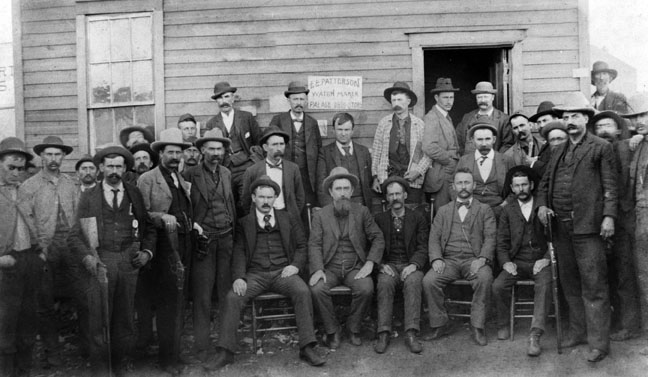
Of course, those settlers needed land when they arrived out West, as well as protection from the Indians who had been there first (not to mention each other). The picture below shows the bureaucrats of the U.S. Land Office who doled out Indian land to white people, along with the armed U.S. marshals who enforced these actions. Are they heroes?
The following picture depicts a company of Texas Rangers, posing with their Winchesters in South Texas in the mid 1880s. Some tough-looking hombres.

Historic Photos of Heroes of the Old West, available now from Turner Publishing, makes a nice companion piece to Historic Photos of Outlaws of the Old West.
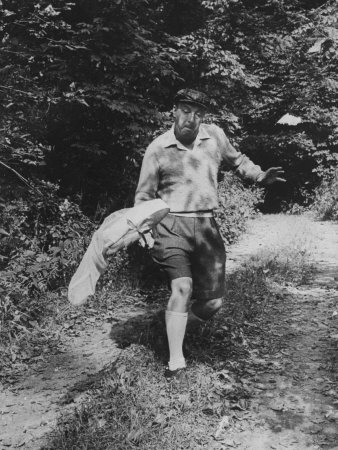
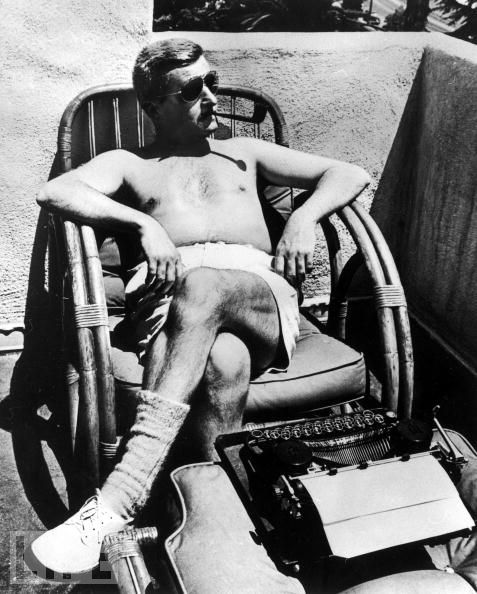
Oh my god. Look at that poise. That athleticism. That self-assurance. That spark of incandescent grace vibrating through his form. The lower lip lunging over the upper. The short pants. Vladimir Nabokov, hunting butterflies. See the whole set.

Robert Crumb and his daughter Sophie Crumb spoke with Neal Conan on on NPR’s Talk of the Nation program today to discusses her art, her new book, Evolution of a Crazy Artist, and her relationship with her parents. From the web edition’s write-up:
Sophie Crumb grew up in a family of artists — her parents, Robert Crumb and Aline Kominsky-Crumb, are two of the most famous graphic artists in the world. So it’s only natural that she found herself gravitating toward their profession as early as the age of 2.
Her new book, Sophie Crumb: Evolution Of A Crazy Artist, is a collection of her work up to age 28. She and her father tell NPR’s Neal Conan about collaborating on her book and life in the Crumb household.
Sophie Crumb features a comprehensive collection of Sophie’s drawings, and that was no accident.
“My dad is a compulsive archivist,” she says. “He was into them, so I kind of did them to make him laugh.”
Sophie Crumb grew up in a family of artists — her parents, Robert Crumb and Aline Kominsky-Crumb, are two of the most famous graphic artists in the world. So it’s only natural that she found herself gravitating toward their profession as early as the age of 2.
Her new book, Sophie Crumb: Evolution Of A Crazy Artist, is a collection of her work up to age 28. She and her father tell NPR’s Neal Conan about collaborating on her book and life in the Crumb household.
Sophie Crumb features a comprehensive collection of Sophie’s drawings, and that was no accident.
“My dad is a compulsive archivist,” she says. “He was into them, so I kind of did them to make him laugh.”
(Via).
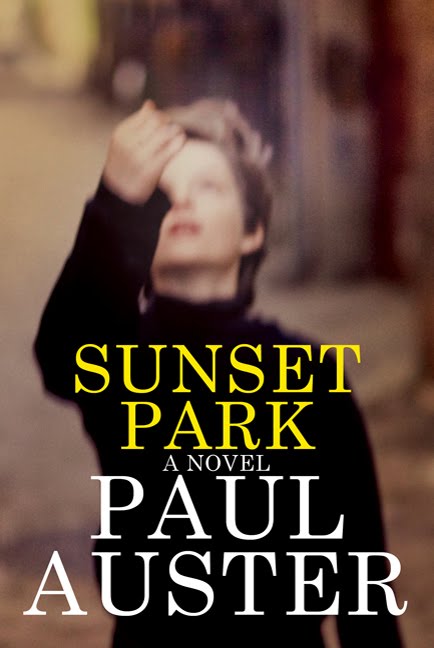
At the end of Paul Auster’s new novel Sunset Park, the narrative inhabits the mind of young protagonist Miles Heller. Riding in the back of a cab through Brooklyn, Miles’s thoughts glide through a slippery tangle of ideas. In a long sentence that runs on for almost two pages, Miles’s consciousness shifts from his own physical pain to a character in the movie The Best Years of Our Lives, a soldier named Homer who returns home with hooks for hands. This thought blends into a riff on the poet Homer, which in turn leads Miles, long estranged from his family, to figure himself a Telemachus now reunited with his father. And yet the homecoming cannot be; thoughts of Homer slip into thoughts about homelessness, his own homelessness, his friends’ homelessness, not metaphorical but literal. He then thinks about the homeless and displaced people across the country (Sunset Park is set square in the middle of the recent Great Recession), causing his mind to move back to the beginning of the novel, when he worked “trashing out” foreclosed homes in South Florida. The idea of “home” transmutes finally to “hope” as the cab crosses the Brooklyn Bridge–yet the idea (and the novel) is suspended in a strange, sad limbo.
I begin my review with Auster’s final sentence because it delineates many of Sunset Park’s themes, settings, and motifs. At its core–if such a novel can be said to have a core–Sunset Park asks its readers what “home” might mean. Is home a geographic location, a center that resonates with personal and cultural significance? Is home a place with a person you love? Can home be in your head? Is home where your family is? And, even more problematic, what exactly constitutes a family?
The founding trauma of the book, which is to say Miles’s founding trauma, is a radically ambiguous moment of violence: as a teenager, in a heated fight with his step-brother on a country road, Miles pushes the boy. At the same moment, a car flies down the road and kills him. Did Miles mean to kill his brother? At the moment of his anger, how could he not psychologically, if only temporarily, wish for the young man’s death? Did he know the car was coming? Miles cannot deal with the trauma and soon drops out of college and drops out of life. Unlike the biblical Cain, Miles’s exile is self-imposed. He breaks contact with his parents and thus breaks a family that was already twice broken; first, in his parents’ divorce and his mother’s move across the country to California; and second, in the death of his step-brother. Miles relegates himself to hard and unrewarding manual labor, wandering aimlessly around the country. It’s only after he meets a young girl named Pilar that he is able to reconstitute the idea of a family–of a self who can be in a family.
Pilar is a high school student. She is a minor. Auster does little to justify the social acceptability of Miles’s love for (and sodomy of) Pilar; instead, he repeatedly invokes the idea that other characters see the “truth” of the love by simply watching the pair. This is easily the book’s greatest weakness. Auster wants to communicate the idea that in loving Pilar, Miles is able to love a young version of himself–and thus forgive his young self (significantly, Pilar is the same age that Miles was when he pushed his step-brother)–yet the essential predatory narcissism of this “love” remains largely unremarked upon. Even Pilar’s caretaker, her oldest sister, is amenable to the romance–that is, until Miles refuses to keep bringing her high-end items that he recovers from the foreclosed homes he’s “trashing out.” Miles is again exiled, this time from his makeshift home with Pilar. He returns for the first time in seven years to New York City to stay in a squatter’s house with three other twentysomethings.
There’s a kind of silly Bohemian romanticism to the squat in Sunset Park. The project is helmed by would-be avant-jazzman, Bing Nathan, a notorious ranter who improbably subsists on funds he obtains from running his store, the Hospital for Broken Things, where he repairs typewriters and other antique artifacts. Bing thinks his friend Miles will be a perfect fit in the house–and he’s right: the other squatters love him. There’s Ellen, a skittish realtor (!) who aspires to become a pornographic painter, and Alice, an ABD trying to finish her doctoral thesis (on The Best Years of Our Lives, of course). Both women fall for Miles in different ways, although Auster’s writing never once shows why this might be.
Bing has other reasons for getting Miles back to NYC–he wants to reunite the Heller family. He’s been secretly communicating with Miles’s father Morris for years. Morris, who runs his own literary publishing house, is easily the most achieved character in Sunset Park, or at least its most realistic. Although the plot gets bogged down with his own marital difficulties (and other sundry tragedies that echo the “loss of children” theme), Morris’s narrative is the most focused and convincing section of the novel. His sad tone moves beyond melancholy but halts at bitterness, even as he reflects upon the myriad regrets of his life and the fearful future that yawns ahead (things are going badly with his wife; the publishing industry is in peril). Although Miles’s mother Mary-Lee figures less in the novel, she is also a more convincing and sympathetic character than the young people who squat in Sunset Park. Like Morris, she’s reflective, distanced enough from the young self who abandoned her only son, yet analytical enough to comprehend its traumatic effect. Mary-Lee and Morris, with their regrets and fears and hopes are far more aesthetically concrete and satisfying than the novel’s twentysomethings, who at times seem like caricatures or puppets or placeholders.
In Auster’s hands, the Sunset Park gang reflects an unrealistic idealization of youthful and artistic resistance to a predatory capitalist culture. Still, they provide him occasion for some of Sunset Park’s finest riffs, whether he’s ventriloquizing Bing (rage, rage against the lies of the man) or exploring Ellen’s enchanting perversions. Alice’s thesis on The Best Years of Our Lives (a film that somehow everyone in the book has not just seen but seen repeatedly and even analyzed) gives Auster ample material to explore how different generations face trauma, whether it’s the alienation experienced by WWII soldiers returning to a world that seems to have left them behind, or the crises of young people trying find homes in an America tottering on financial collapse.
With its ironic title, The Best Years pairs nicely with the other narrative that informs Sunset Park, Samuel Beckett’s play Happy Days-–a play that Mary-Lee just happens to be performing on Broadway at the time of Miles’s return. Auster–through his erudite characters–riffs frequently and wisely on both the film and the play, and these are some of the finer moments of Sunset Park; one almost wishes that Auster would have abandoned the conceit of a novel completely and just write some kind of essay with his material. Sunset Park repeats the themes of alienation, loneliness, separation, and stasis that we find in Happy Days and The Best Years, yet it veers closer to the film’s melodrama than Beckett’s absurdity. Perhaps this is a fault of form: overloaded with characters, Sunset Park sags at times, asking its reader to care about yet another over-educated, privileged New Yorker whose artistic ambitions have stalled out. A concession to Beckett’s minimalism would have done wonders, and perhaps deflated some of Sunset Park’s murky self-seriousness.
The highlight of the novel is Auster’s syntax. His keen sentences, often unfurling for pages at a time, move from concrete to abstract, to present to past to future, to inside and outside, with a precision and skill that is admirable to say the least. Sure, he hits the occasional clunker–some of the book’s early dialog in Florida is particularly painful, as is a moment late in the book when Morris refers to his wife and friend as “the walking wounded,” a cliché that neither Morris or Auster should let slip–but there’s a smoothness of vision that unites the book from sentence to sentence.
Still, syntax is not content, and Sunset Park left me wanting something–more? Something different? I’m not sure what that something is, which is a precarious criticism at best. Auster’s vision of stasis, of limbo, of the impossibility of a real homecoming runs deeply contrary to the traditions and conventions of Western story-telling: in short, we are trained to desire and look for resolution. Auster’s observations–a continuation of Happy Days and The Best Years, in this sense–are precisely the right kind of psychological dissatisfaction we must experience for this novel to be “true” in an artistic sense. However, the aesthetic dissatisfaction I experienced at the end of the book seems of a separate nature. Chalk it up to too many characters and subplots, perhaps. In any case, Sunset Park made me think and made me feel, which is really the job of art–even if those thoughts and feelings are often negative and unpleasant. Perhaps it’s my own critical failing, but in the end I wanted a light to lead me out of the Auster’s limbo.
Sunset Park is new in hardback this month from Henry Holt.
At Penguin Classics on Air, David Simon explains how Stanley Kubrick’s film Paths of Glory—and the Humphrey Cobb novel it was based on–influenced his epic crime drama The Wire. (Via).
Vodpod videos no longer available.
Dick Flash (jeez, what a great name) of Pork Magazine (another great name) interviews mad genius Brian Eno:
 Biblioklept