
For the next few weeks, thousands, hundreds of thousands, possibly millions will remember, laud, argue over, and grieve Michael Jackson. His death, like his life, was utterly mediated–broadcast live on national television, Twittered, Facebooked. We were able to follow the accretion of details and speculations (facts?) in real time, as the status of Jackson’s body was updated (he was dead, he was rushed to the hospital, he was in a coma, no, he was dead). His death even precipitated a rush of other celebrity death notices, hoaxes that mutated across the internet. That Jackson’s death should precipitate so much confusion and rumor is commensurate with his strange life.
Jackson was probably the first person in the world to live a truly mediated life. From the age of eleven, Jackson’s image, voice, and dancing body became the communal property of the modern (industrialist, capitalist) world. Written roughly the same time as young MJ’s rise to national prominence, Guy Debord’s The Society of the Spectacle opens with the following salvo: “In societies where modern conditions of production prevail, all of life presents itself as an immense accumulation of spectacles. Everything that was directly lived has moved away into a representation.” What was Michael Jackson’s life but a series of transmogrified spectacular representations? Not only did we hear the development of modern music through his records, or watch fashions change through his bizarre styles, but, most significantly, we saw in Jackson a mapping of spectacle culture on to the very body itself. Like his character who mutates in the iconic “Thriller” video, or the faces at the end of his “Black or White” video, Michael Jackson’s body slowly morphed before our collective eyes, mediated in print and video, discussed and mocked and puzzled over. A full accounting of Jackson’s eccentricities is neither necessary or possible here, but it’s worth pointing out that the man’s level of estrangement was of such an acute degree that, beyond attempting to remap the world (turn it into a Neverland) and reconfigure the flow of time (an attempt to reach an imaginary past), he remapped his whole body.
While he wasn’t the first celebrity whose body became a site of/for spectacle culture (Marilyn Monroe springs immediately to mind), Jackson’s corpus is undoubtedly the signal symbol of the mediated American Dream, the most hyperbolic example how the human body might mediate consumerist desires. As Debord also pointed out in Society, “The spectacle is not a collection of images, but a social relation among people, mediated by images.” The death of Michael Jackson is precisely not the death of Michael Jackson’s body, which will continue to live on, like one of the “Thriller” zombies, a spectacle absorbed and batted about by the spectacle culture. It will continue to exist as a rarefied nostalgic currency, for if we grieve the death of Michael Jackson, what precisely are we grieving if not a spectacular reflection of our own (mediated) development? Michael Jackson’s body (of work) will always be resuscitated as a nostalgic marker for at least three generations of Americans (and the rest of the world, really). I do not believe that most of us mourn the death of Michael Jackson; instead, we continue to participate in his spectacle (or, rather, the spectacle of him) as a means of prolonging our own vitality and placating our own sense of self. It is not the loss of Jackson that we might acutely feel but instead a demarcation upon our own mortal bodies, for if a changeling like Jackson cannot escape bodily death, what hope do we have? At the same time, paradoxically, participating in the spectacle of the death of Michael Jackson’s body partially alleviates (even as it subtly calls attention to) these anxieties. By affording Jackson (the illusion) of a certain immortality, we retain our own developmental, life-long investments in his spectacle, and, in turn, hope to secure our own bodies against the ravages of age, disease, decay, accident, gravity.
But what are the long-term costs of maintaining such grand illusions? As our society becomes increasingly mediated, are we arcing toward a more democratic and enriching series of personal connections, or are we fragmenting and disassociating into solipsism and self-reflexivity? Or, to return to Jackson, does his music represent personal connection and the transmission and articulation of genuine sentiment, or is it simply the glamorous reduction of crass popular culture? Is it possible to feel genuine empathy toward Jackson? Or has the spectacle of Michael Jackson’s body infiltrated our culture to the point at which any real, unmediated human response to his passing become an impossibility, an articulated fiction masking narcissistic nostalgia? Although these are not intended as rhetorical questions, I don’t suppose there are simple answers for them either. Ultimately, I think as long as our spectacle society exists, Michael Jackson’s body will continue to exist. And probably, as our culture ages–and this is scary–it will become a relic or monument to a simpler time.
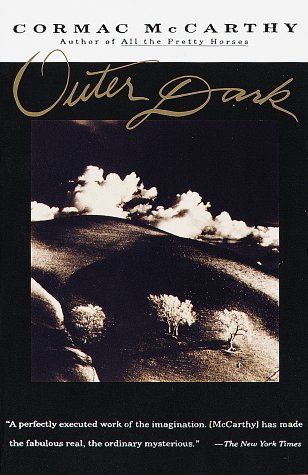

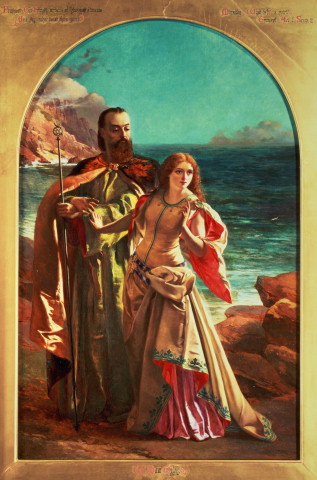



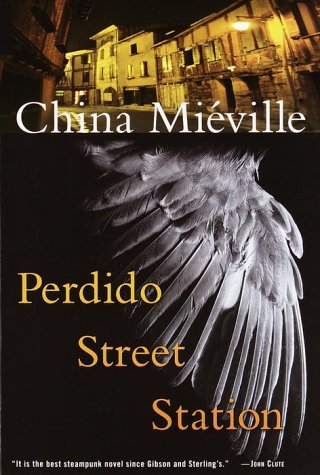
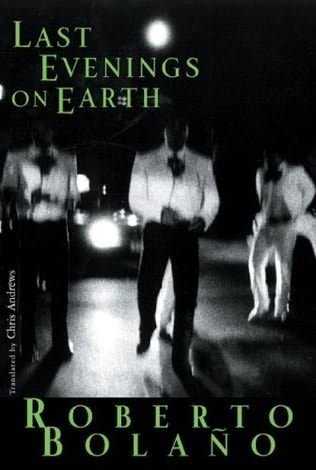



 Okrent, after explaining her fascination with invented languages, or “conlangs,” more or less uses Wilkins as a starting place, using his massive project as a measuring stick for all the invented languages that followed it. While detailing the history and implementation of Esperanto, Charles Bliss’s language of symbols, and the logical logjammin’ of Lojban, Okrent balances the erudition of complex linguistics with a humorous, human tone. In the Land of Invented Languages is filled with tree diagrams and symbol charts that will not be wholly unfamiliar to those who studied a little linguistics back in college (or even those who, like the Biblioklept, changed their major from linguistics to English when they discovered they’d have to take, gasp!, statistics). These visuals are both fun and stimulating, and help to explicate what can be pretty heady stuff at times.
 We’re big advocates of audiobooks here at Biblioklept. A good audiobook helps the most mundane of chores zip by, making you a more educated, conscientious, and cultured person in the process (probably). Audiobooks are also essential to any road trip, and the good folks at Random House’s Listening Library labs have a new contest to help encourage parents and their kids to listen to audiobooks this summer. The contest, open to teens ages 13 to 18, is to create a video that addresses the following prompt: “If you could go on a road trip with a character from your favorite audio series, where would you go? What would you do along the way? How would you travel?” The winner will get an 8GB iPod Touch, as well as signed copies of audiobooks by the contest judges authors Libba Bray, Tamora Pierce, and Rick Riordan, all accomplished writers of young adult fantasy series. Get full details of the contest at
 More
More 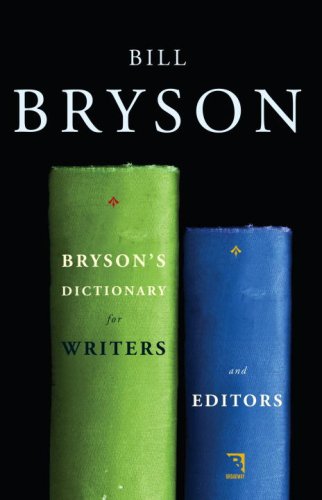 Bryson’s title here is pretty honest; he’s made a dictionary of hard-to-remember/easy-to-forget words, including plenty of commonly misspelled words. In the age of spell-check, it’s not so much Bryson’s spellings that are essential as it is the context in which he puts his words. For instance, do you know the difference between “gabardine” and “gaberdine”? (“The first is a type of worsted cloth, the second a long cloak”). Bryson goes further (not farther!) than mere distinctions between words like “creole” and “pidgin” or “bravado” and “bravery”: he actually gets into the fray of how one ought to use words. Consider the entry on “past”:
 Biblioklept