Charles Burns Enriches His Wonderfully Weird Trilogy with The Hive

20121104-183159.jpg

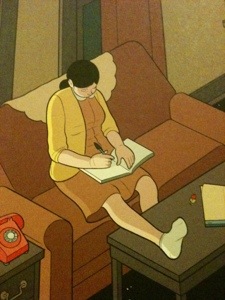
In X’ed Out, Charles Burns created a rich and strangely layered world focusing on Doug, a confused and injured young man. In his parents’ suburban basement, Doug parcels out the last of his late father’s painkillers, slipping from haunted memories of his relationship with Sarah into fevered nightmares of abject horror and then into a wholly other world, a realm that recalls William Burroughs’s Interzone. In this alien world, Doug takes on the features of Nitnit (an inversion of Tintin), the alter-ego he adopts when performing spoken word cut-ups as the opening act for local punk rock bands. What made X’ed Out so compelling (apart from Burns’s thick, precise illustration, of course), was the sense that this Interzone was a reality equal to Doug’s own “real world” — that it was somehow more real than Doug’s dreams.

20121104-165518.jpg

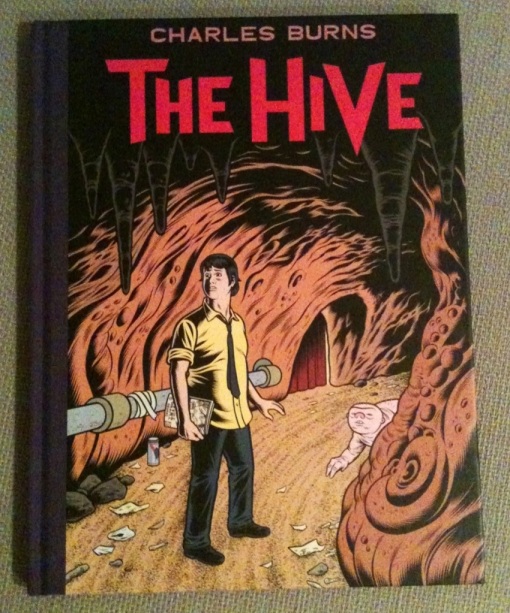
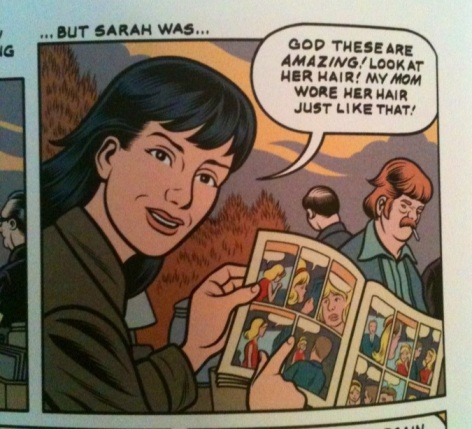
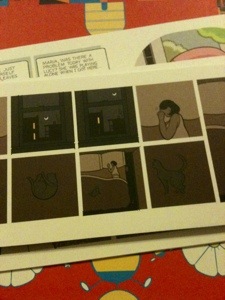
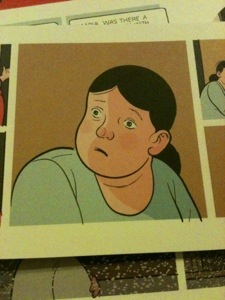
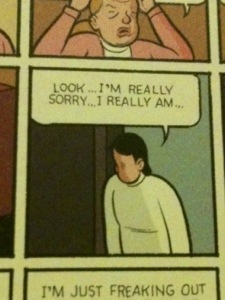
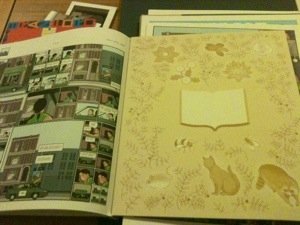
The Hive (part two of the proposed trilogy) deepens the richness and complexity of the world Burns has imagined. The title refers to a location in Interzone. Doug (or Nitnit) has found employment in The Hive as a kind of mail clerk or janitor. His primary role though is secret librarian, catering to the reading needs of the breeders of The Hive. One breeder seems to be a version of Doug’s ex-girlfriend; the other is a double of Sarah, who asks Doug/Nitnit to bring her romance comics—which he does—only he skips a few issues. These missing issues stand in for the information Doug (and Burns) withholds from the reader, the missing fragments that have been x’ed out.

20121104-165548.jpg

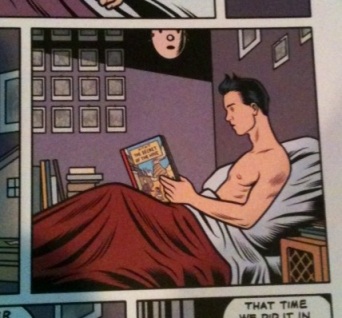
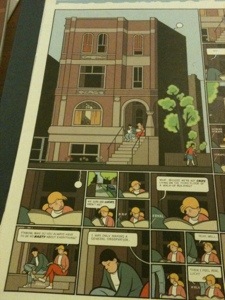
Burns uses romance comics as a framing or organizing device, a motif linking the disparate worlds of his narrative. In the “real world” — which is to say the world of Doug’s memory — we learn that he buys a stack of old romance comics for Sarah on their first date.

20121104-165537.jpg

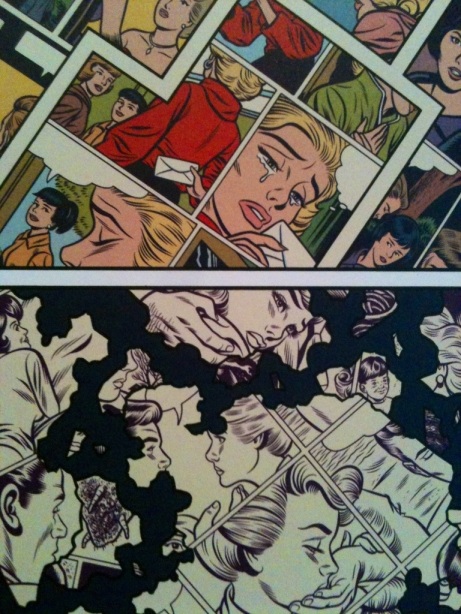
Throughout the narrative, Burns plays his characters against the extreme, often hysterical dramas of 1950s and ’60s romance comics; his strong lines and heavy inks readily recall the early works of Simon and Kirby, but more precise and careful—something closer to Roy Lichtenstein, only more sincere, more emotional.

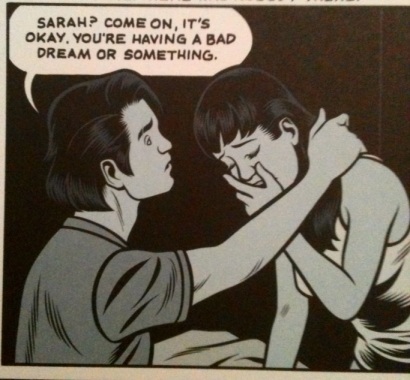
In The Hive, we learn more about Doug’s troubled relationship with Sarah, who has problems out the proverbial yingyang (not the least of which is a violent psychopathic ex-boyfriend).

20121104-165554.jpg

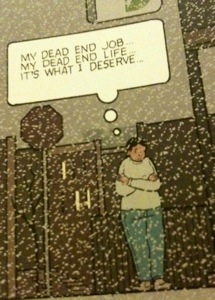
Burns weaves the story of Sarah and Doug’s relationship into the fallout of Doug’s father’s death—a death Doug was completely shuttered to, we realize. Doug’s drug-dreams dramatize the missing pieces of these narratives, and the Interzone set-pieces propel the mystery aspects of the narrative forward, as Doug’s alter-ego plumbs the detritus of his psychic fallout. Through the metatextual motif of reading-comic-books-as-detective-works, Burns explores themes of trauma, abjection, and distance. Images of pigs and cats, freaks and punks, portals and holes litter The Hive.

20121104-165603.jpg

Burns has always been a perfectionist of dark lines and strange visions, and his last full graphic novel Black Hole was a triumph of atmosphere and mood. With the first two entries of his trilogy, however, Burns has showed a significant maturation in storytelling, characterization, and dialogue. I often thought parts of Black Hole seemed forced or rushed (no doubt because Burns faced daunting production troubles during the decade he worked on the novel—including his original publisher Kitchen Sink folding). With X’ed Out and now The Hive we can see a more patient artist, working out an emotionally complex and compelling story in rich, symbolic layers.

I reread X’ed Out and then read The Hive in one greedy sitting; then I went through The Hive again, more slowly, more attendant to its details and nuances. We had to wait two years between X’ed Out and The Hive—and it was worth the two year wait. So if we must wait another two years—or more—for the final entry, Sugar Skull, so be it.

Reading Chris Ware’s Building Stories / September 23rd, 2000

20121101-205324.jpg

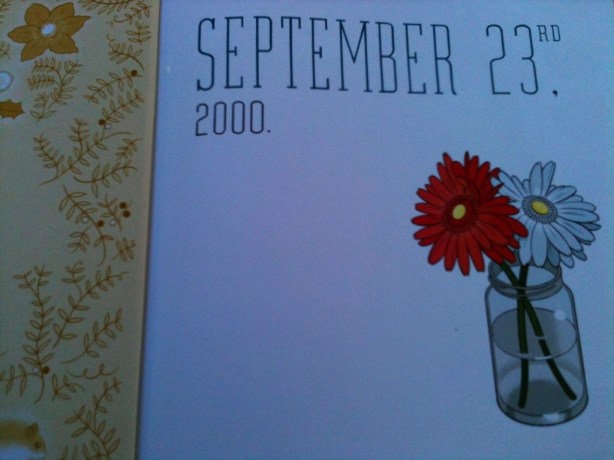
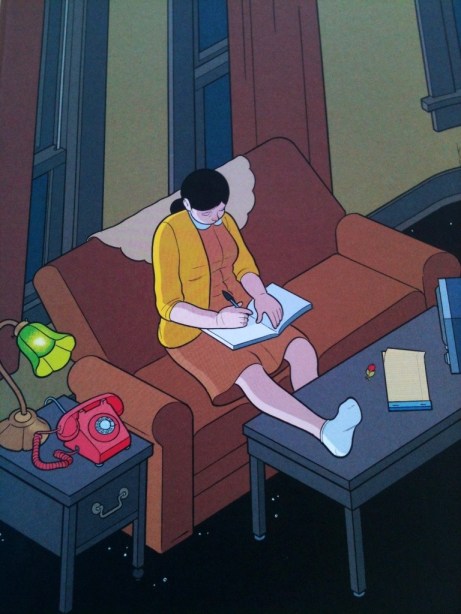
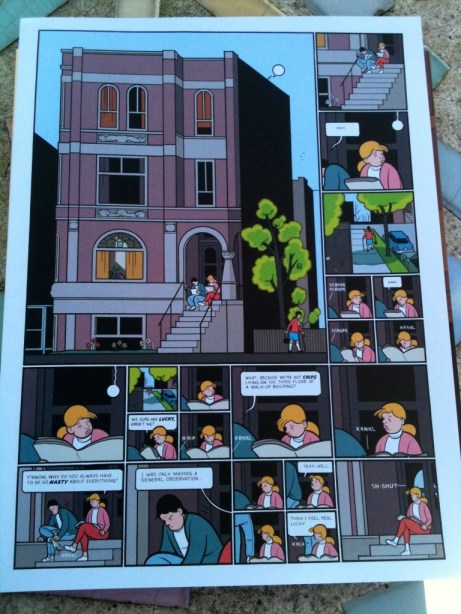
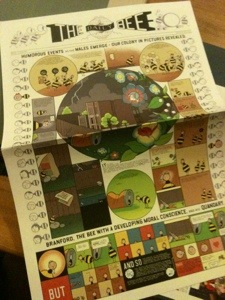
September 23rd, 2000 is one of the longer pieces in Chris Ware’s box set, Building Stories. Part of the joy and frustration of Building Stories is its free form—the possibility of reading one piece before another, of getting one tale or perspective before another. I started with Branford, which seems in retrospective a fairly neutral opening—it introduces many of the themes that develop in Building Stories but none of the major characters. I then read I just met, which introduces a couple suffering a sour relationship.

September introduces (to me, anyway), two major “new” (again, “new” to me; these characters appear central in other books and pamphlets of the collection and obliquely in others): The “lonely girl,” a would-be artist sporting a prosthetic leg, and the “old lady,” landlord of the building. Most of September takes the form of lonely girl’s diary entries.

20121101-205339.jpg

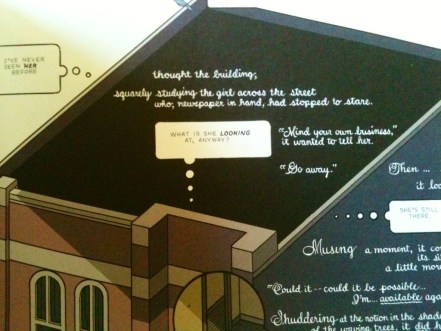
I noted two characters (again, new to me), but the building itself also gets a voice and prominent role in September; its thoughts and memories frame the narrative:

20121101-205351.jpg

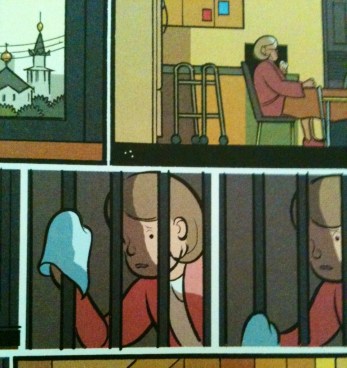
September frames the repetitions, the loops, the patterns that undoubtedly will resurface throughout Building Stories. We get access to the characters dreams, which seem to overlap and echo each other—and then repeat in real life, albeit in other forms. The landlady, recalling her youth, seems to echo the loneliness and despair of the lonely girl, as well as the pain of the woman in the sour relationship. We see that the building has in fact been a kind of prison for her, preventing her from forming real relationships:

20121101-205408.jpg

Other echoes are more subtle—a close up of a bee, for instance, either foreshadows or calls back to (or both, of course) Branford, the Best Bee in the World.

20121101-205429.jpg

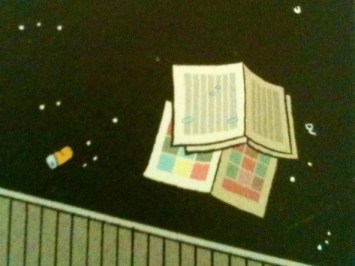
We can see the Branford episode again, here in the tiny detail of a soda can, a major setting for that episode. I was more fascinated by the newspaper though, particularly the colorful squares of a comics section, a reference Ware’s medium and perhaps a visual suggestion of Building Stories itself. The detail is tiny, but meaningful:

20121101-205421.jpg

In a later part of September, we see a direct reference to the end of I just met:

20121101-205436.jpg

I imagine that there were other references, call backs, and echoes in September that I won’t get until later.

The story—well, it’s beautiful, a perfect short story, self-contained but thematically resonant with the larger project. The ending is so damn sweet and perfect that it brought a little tear to my eye. And yet: Was that the ending? Of course not. The sense of rhetorical resolution—that is to say the so-called happy ending—will almost surely be punctured, deflated, or otherwise complicated by one of the next texts I read. More to come.

Charles Burns’s The Hive (Book Acquired 10.15.2012)

20121030-155650.jpg

For some reason—some reason founded on no reason at all but rather superstitious suspicion—I didn’t believe Charles Burns would follow up X’ed Out, the first chapter of a proposed trilogy. I suppose X’ed Out had unresolved cult classic written all over it (written metaphorically, of course).

X’ed Out was one of my favorite books of 2010. From my review:

In Black Hole, Burns established himself as a master illustrator and a gifted storyteller, using severe black and white contrast to evoke that tale’s terrible pain and pathos. X’ed Out appropriately brings rich, complex color to Burns’s method, and the book’s oversized dimensions showcase the art beautifully. This is a gorgeous book, both attractive and repulsive (much like Freud’s concept of “the uncanny,” which is very much at work in Burns’s plot). Like I said at the top, fans of Burns’s comix likely already know they want to read X’ed Out; weirdos who love Burroughs and Ballard and other great ghastly fiction will also wish to take note. Highly recommended.

20121030-155702.jpg

So, of course I was stoked when Burns’s sequel The Hive showed up a few weeks ago—in fact, the only thing that got in the way of me reading it immediately was that it showed up in a package along with Chris Ware’s Building Stories (this is, without question, the best package I’ve received in six years of doing the blog).

20121030-155714.jpg

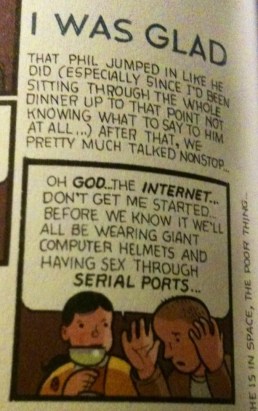
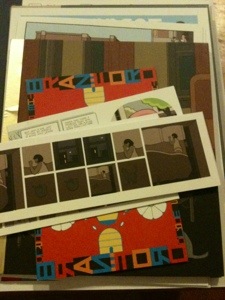
Anyway, I’ll be revisiting X’ed Out and then reviewing The Hive in the next week or so. For now, a few pics. Two from the interior above. And our hero Doug, in his alter-ego/costume Nitnit (inverse Tintin):

20121030-155722.jpg

I dig this panel in particular: A take on Roy Lichtenstein via Raymond Pettibon via the romance comics those pop artists were riffing on:

20121030-155729.jpg


Reading Chris Ware’s Building Stories / I just met

Continuing kinda sorta where we left off

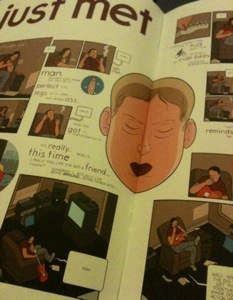
Not sure of the name of this episode, but I’ll refer to it as I just met, a phrase that repeats twice in a huge headlinish font that seems to suggest, y’know, title:

20121021-201130.jpg

I just met uses a few pages to tell the story of a deteriorating relationship—what happens when two twenty-somethings turn into two mid-to-late-thirtysomethings?

The comic opens with an establishing shot of what I take to be the building in Building Stories; we also get a glimpse of what I assume will be another character, the beehive, and a few other details that surely will attach themselves to these panels in future readings. We also get the general bitter tone of the couple’s relationship:

20121021-201139.jpg

He was one of those dudes who was once in a band; she was one of those chicks who thought guys in bands were cool.

The romance of their initial hookup is summed up neatly in the pic below; knowing Ware’s spare, precise style, the trash on the floor seems to scream symbolic detail!

20121021-201147.jpg

The hurt and disappointment in I just met unfolds over just a few painful pages—painful mostly in their concrete reality.

We know who these people are, even if we’re lucky enough not to be them.

Just as in  Branford, the Best Bee in the World , which I read earlier (although, to be clear again, there are no reading directions or prescriptions for Building Stories), there’s a theme of eternal recurrence, of mistakes playing out again and again in a painful, recursive loop.

Just when Ware threatens to overstate the mundane repetitions his principals suffer, he pulls off a daring and effective move, transposing his characters into the psychic collective memory of a future that’s in many ways already familiar. The effect is simultaneously jarring and oddly reassuring—the promise that our capacity for human connection and deep empathy will never buckle under the threat of drastic technological change, but also suggesting that the cost of maintaining this emotional constant is deep, ugly pain.

20121021-201154.jpg

I Open Chris Ware’s Building Stories, Share Some Photos, and Riff a Little (Book Acquired, 10.15.2012)

20121015-203618.jpg

Thrilled today to get Building Stories, Chris Ware’s latest.

Thrilled here is no hyperbole—I can’t remember being so excited to open a book in quite some time.

But Building Stories isn’t really a book.

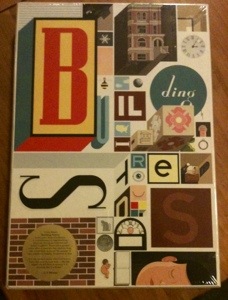
First, it comes in this big box—like a board game.

Here:

20121015-203630.jpg

I show it set against The Catcher in the Rye in mass market paperback and a glass of red.

(The Catcher in the Rye + glass of red is the international standard for items used to show relative dimensions of size).

(Also, don’t worry about the wine ring—still shrinkwrapped at this point).

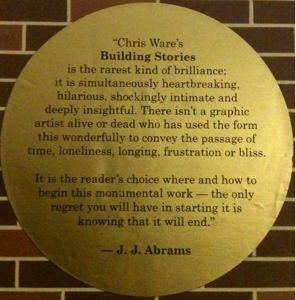
And on that shrinkwrap blazons a blurb by some guy named J.J. Abrams:

20121015-203639.jpg

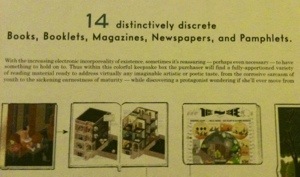
A description of the formal elements of Building Stories from the back of the box:

20121015-203649.jpg

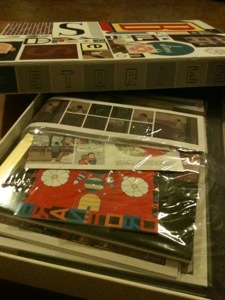
I open the box:

20121015-203659.jpg

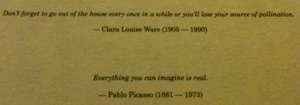
From the inside of the top of the box:

Not sure if that second quote shows here, but:

Pablo Picasso suggests that, Everything you can imagine is real.

20121015-203710.jpg

The package:

20121015-203722.jpg

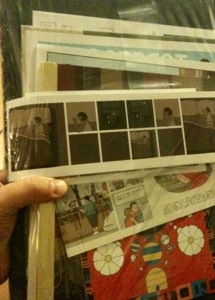
Strips and papers and books.

Shots as I go through it:

20121015-203734.jpg

Stack: The shorter/smaller stuff is on top—a suggestion to read it first? / Probably not.

Probably more a packing issue.

20121015-203744.jpg

I remember a professor in grad school musing about where a book begins.

The title page?

The cover?

20121015-203813.jpg

How and where does a book begin?

20121015-203824.jpg

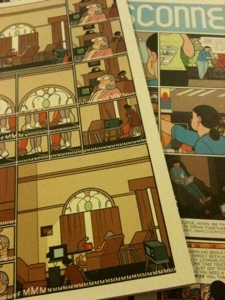
Chris Ware’s Building Stories: a kind of Möbius strip,

20121015-203834.jpg

crammed with ideas,

20121015-203843.jpg

illustrations,

20121015-203852.jpg

writing,

20121015-203900.jpg

stories . . .

20121015-203920.jpg

Little golden book

20121015-203929.jpg

. . . and broadside.

20121015-203937.jpg

. . . so many faces . . .

20121015-203946.jpg

. . . layers . . .

20121015-203954.jpg

. . . and layers . . .

20121015-204003.jpg

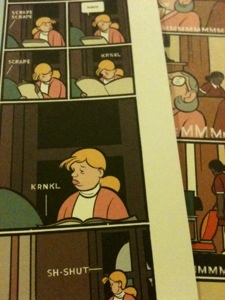
Ware’s transitions:

20121015-204011.jpg

(They always remind me of David Foster Wallace, who I know Ware read).

20121015-204017.jpg

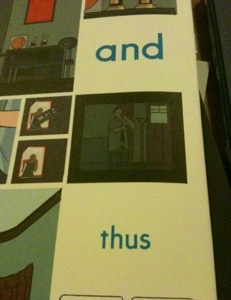
And thus so well . . .

20121015-204023.jpg

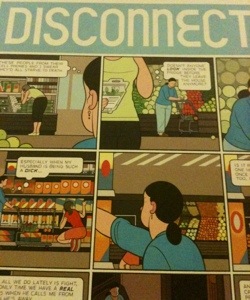
Disconnect?

20121015-204032.jpg

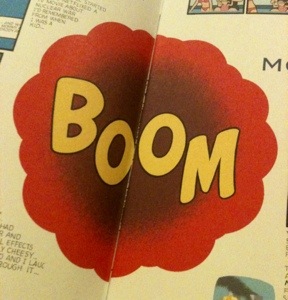
Boom!

20121015-204039.jpg

I should’ve busted out the wine glass or the Salinger here to show the scale of this marvelous painting, better than anything I’ve seen in contemporary art in ages. It tells all the story. (Wait, you (maybe) say, have you actually read the story yet?)

20121015-204045.jpg

No.

But who hasn’t felt:

20121015-204054.jpg

And

20121015-204100.jpg

Thus

20121015-204107.jpg

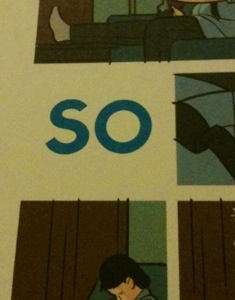
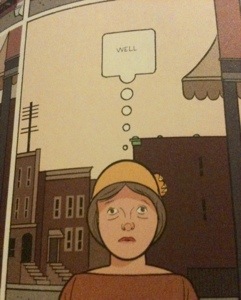
So

20121015-204114.jpg

Well . . .

20121015-204123.jpg

[Insert ideas about malleability of form, sequence, narrative, idea—riff on discursive-novel-as-future-novel, etc.]

End riff/now look, read, absorb.

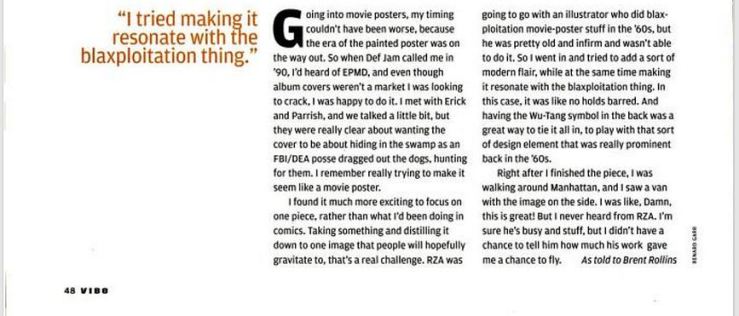
Bill Sienkiewicz Profile in 2004 Issue of Vibe

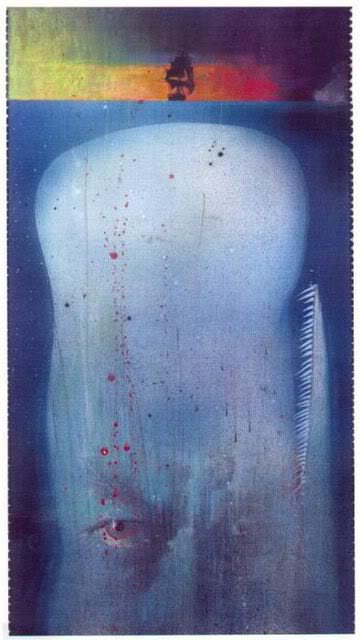
Moby-Dick Illustration — Bill Sienkiewicz

I Review City of Glass, A Comic Book Doppelgänger of Paul Auster’s Postmodern Detective Novel

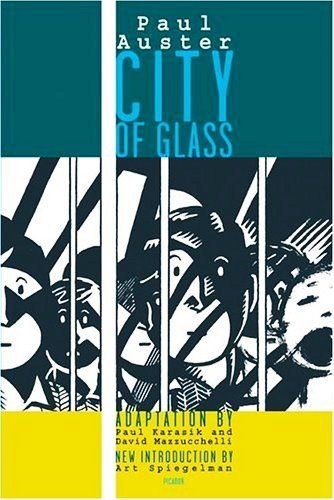
Paul Auster’s 1985 novel City of Glass explores doubling, shadowing, and what it means to wear another person’s skin, so it’s fitting that the book has its own doppelgänger in the form of a graphic novel by Paul Karasik and David Mazzucchelli (maestro Art Spiegelman served as catalyst and counselor). I should admit upfront that although I’ve read a few of Auster’s books, I haven’t read City of Glass, considered by many to be his masterpiece. I have read Mazzucchelli’s excellent novel Asterios Polyp (and plenty of stuff by overseer Spiegelman), so the adaptation intrigued me. I wasn’t disappointed. I read Karasik and Mazzucchelli’s City of Glass in one brisk sitting and thoroughly enjoyed it. What’s it about?

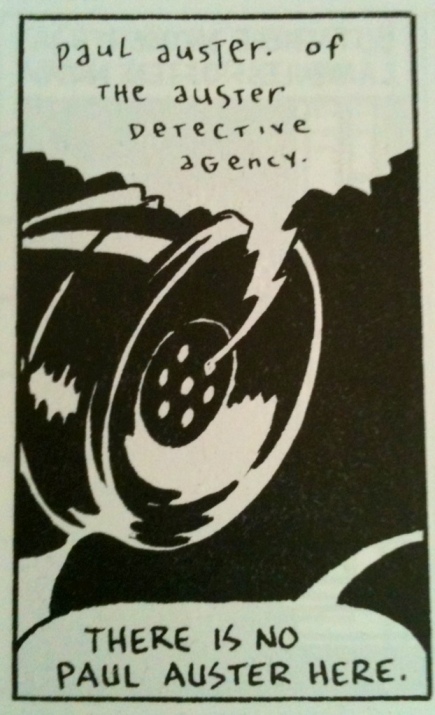
Okay, so there’s this novelist, Quinn (“rhymes with twin”), who, after the death of his wife and son, takes up writing boilerplate detective novels under the pseudonym William Wilson. Late in the book, Quinn (if he’s still Quinn at that point, which I’ll get to) identifies the pseudonym with the “real” name of NY Mets center fielder (and future coach) Mookie Wilson—but savvy readers will also recognize “William Wilson” as the name of an Edgar Allan Poe story about a man haunted by a doppelgänger of himself to the point that he goes insane. In the Poe story, Wilson and his doppelgänger (whose name is, of course, William Wilson as well) share the same birthday, January 19th, which also happens to be E.A. Poe’s birthday (and my brother’s too, although that is not germane to this review). Auster is clearly working from Poe’s story, although he never announces this explicitly (at least not in the comic-bookization). Arthur Hobson Quinn, for example, wrote an exhaustive biography of Poe (published in 1941). Crossing from the real to the fictional, from authorial to character, Auster inserts himself into the story from its outset. At the beginning of the book, protagonist Quinn gets a mysterious call, like something out of the noir novels he writes:
20120728-125217.jpg

Bored, or perhaps ventriloquized by a force he doesn’t understand, Quinn takes up the identity of detective Paul Auster and agrees to take on a case for Peter Stillman, a man who, as a boy, suffered feralization at the hands of his insane father, who hoped to discover the Ur-language of god through the boy. Stillman’s monologue is one of the highlights of the book, showcasing the malleability of language—and also, significantly, the malleability of speakers:
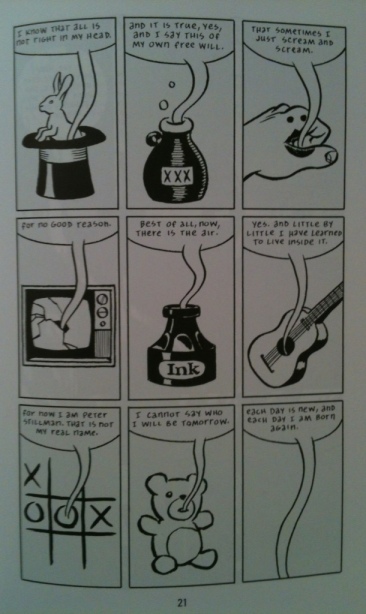
20120728-125225.jpg

Stillman hires Quinn/Auster to track his father, also named Peter Stillman (Peter is also the name of Quinn’s dead son). Actually, it’s Stillman the Younger”s wife/speech pathologist who hires Quinn/Auster; she’s certain that Stillman the Elder, freshly released from a mental asylum, will return to harm his son.

Quinn/Auster slides into the role of Max Work, his noir novel protagonist—or, perhaps more accurately, William Wilson’s noir protagonist—and begins tracking Stillman the Elder (or a version of Stillman the Elder—I won’t spoil the novel’s strangest, most maddening metaphysical gambit here). And, predictably, as Quinn/Auster/Wilson/Work  shadows Stillman Sr., he morphs into yet another doppelgänger:
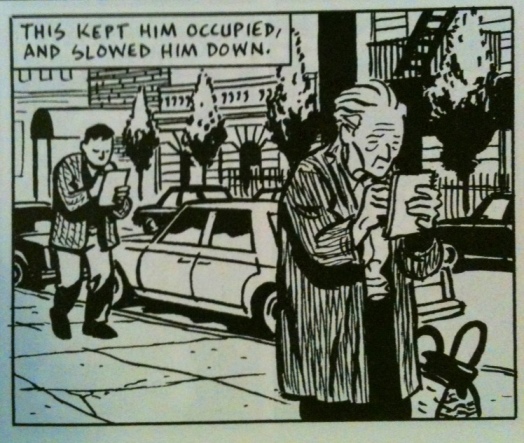
20120728-125233.jpg

Quinn/Auster/Wilson/Work eventually confronts Stillman, and the pair have a series of fascinating conversations about language, Milton, Humpty Dumpty, and the Tower of Babel. The motifs and themes are telegraphed fairly straightforward here, but also communicated through a lens of madness that comes to dominate the book’s third act—an act that initiates in a meeting between Q/A/W/W and the “real” Paul Auster, a writer who’s working on an essay about the authorship of Don Quixote. The Don Quixote conversation is perhaps too overt, the sort of postmodern cleverness that I increasingly find a big turnoff, but it’s not clumsy or awkward. Still, there’s something mildly irritating about an author tipping his hand and then showing you how he’s tipping his hand.

The third act of City of Glass feels compressed, rushed even, and will definitely disappoint readers who wandered in for a detective stories, hoping for concrete answers and a neat and tidy plot. However, the book’s themes of fantasy and reality, play and work, sanity and madness, and character and author are rich if frustrating in their circuitousness. Mazzucchelli’s art is evocative and fitting, recalling at times the rough-hewn pop art of Raymond Pettibon and the traditional prowess of masters like Kirby and Eisner. (I’ll bring up Spiegelman again too, who introduces the volume. A friend of Auster’s, he brokered the project and oversaw its development, and his work as a creative director here is evident in the book’s cohesion). I imagine fans of Auster’s New York Trilogy, of which City of Glass is the first book, will be interested in checking this one out. Having come first to the graphic novel, I now look forward to reading its doppelgänger, Paul Auster’s City of Glass. Good stuff.

Books Acquired, 6.02.2012 (Comix + Angela Carter)

20120611-142705.jpg

Little Lit: Strange Stories for Strange Kids is a collection of comix (and other oddities) for kids, edited by Art Spiegelman and his wife artist/publisher Françoise Mouly. I saw at random and picked it up for my daughter, whose birthday was the next day. She loves, loves, loves this book, spending hours poring over all its weird images and picture games. Cover is by the great Charles Burns; there are also comics by Spiegelman, the late great Maurice Sendak—

20120611-142717.jpg

—a weird search picture by Martin Handford (here’s a detail)—-

20120611-142725.jpg

—and comics by other notables like David Sedaris, Paul Auster, Claude Ponti, Jules Feiffer, and Kim Deitch. The endpapers — “Strange Cartoon Lessons” are by Kaz:

20120611-142742.jpg

I also picked up Burning Your Boats, which collects all of Angela Carter’s short stories:

20120611-142812.jpg

I was looking for her dystopian novel The Passion of New Eve, but no go. Of course, I couldn’t pass up this volume, which comprises four collections, as well as early and uncollected stuff.
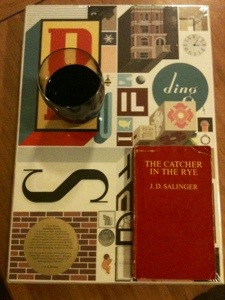
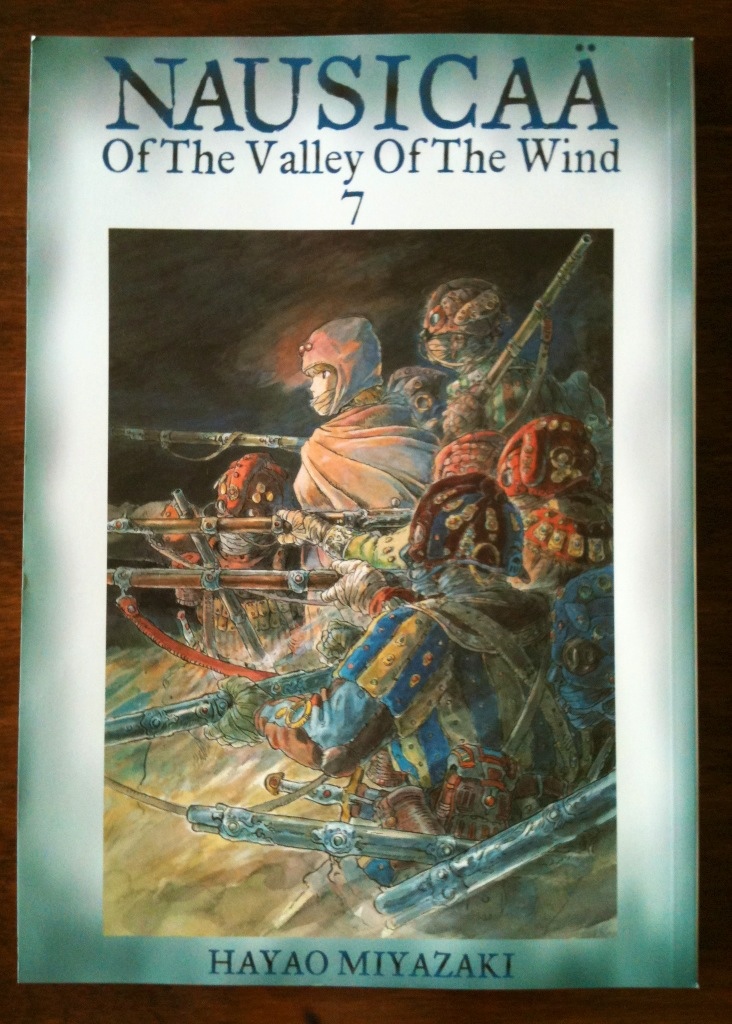
Nausicaä of The Valley of the Wind, Vol. 7 (Book Acquired, 6.07.2012)

20120611-155316.jpg

A birthday gift from my daughter. I got volumes 4-6 for Valentine’s Day from my darling wife, but have held off on reading them because I didn’t have the final volume, which is this one, volume 7.

Book Shelves #24, 6.10.2012

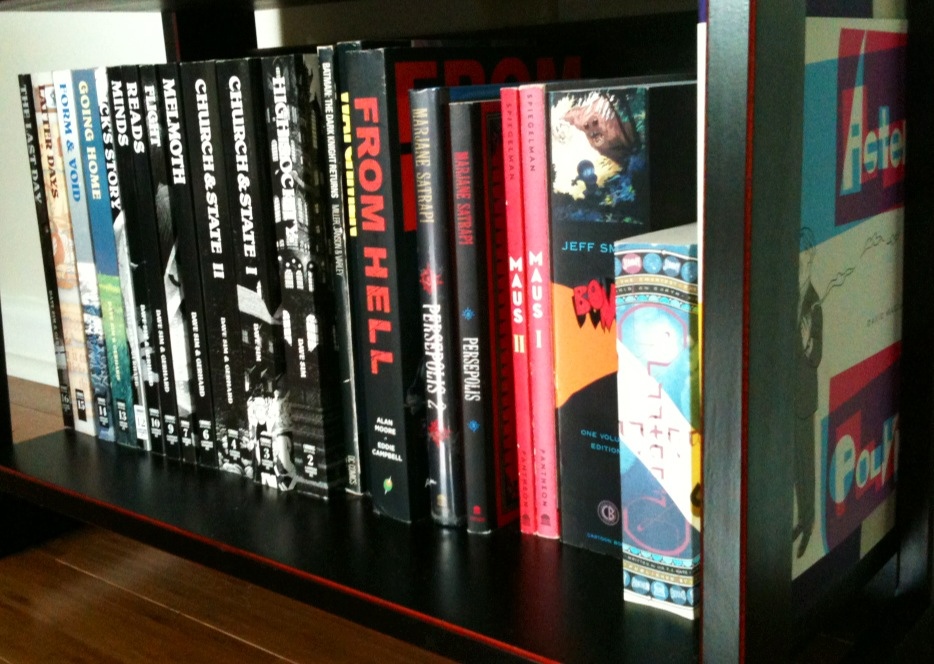
20120610-104319.jpg

Book shelves series #24, twenty-fourth Sunday of 2012: In which we glance at canonical comics.

So we’ve hit the last shelf in a series of triplets; next week: new room.

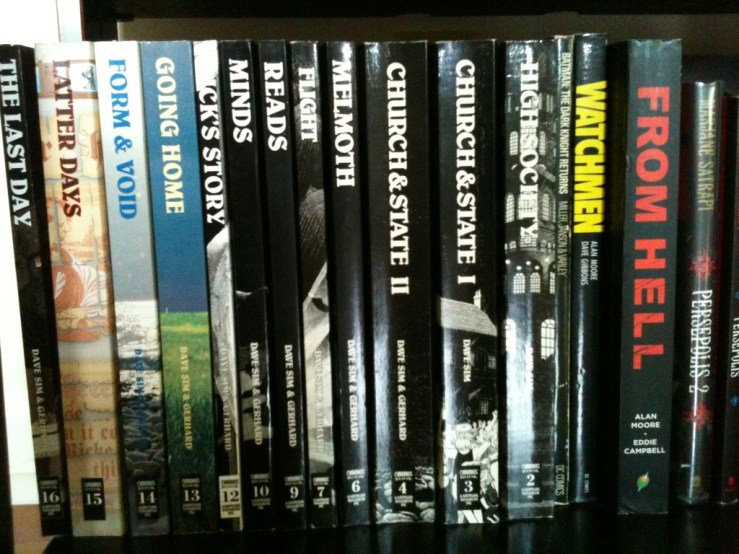
This shelf holds graphic novels, including stuff by Alan Moore, Marjane Satrapi, David Mazzucchelli, Jeff Smith, Art Spiegelman, and Chris Ware. There’s also most of Dave Sim’s epic series Cerebus here.

20120610-104325.jpg

I wrote about Dave Sim and Cerebus back in week 6 of this project, when I looked at the actual comic books I owned in the series. From that post:

 I bought issues of Cerebus intermittently for years at a time, usually getting frustrated and then waiting for the “phone book” graphic novel editions of the series. Sim, along with background artist Gerhard, produced 300 issues of Cerebus over 25 years. The issues from the early ’80s to the early ’90s are brilliant; eventually Sim cracked though and went on an insane, reactionary (and arguably deeply misogynistic) bent. He created his own religion, a mix of hardline Judaism, Islam, and Christianity, and the later books in the series suffered greatly, as the book detoured to chronicle projects that seemed far outside its original scope (including strange, long satires of Hemingway and Fitzgerald).

These are the phone books I referenced. Looking over them again, I keep reminding myself to try and reread the last two books to see if I missed anything.

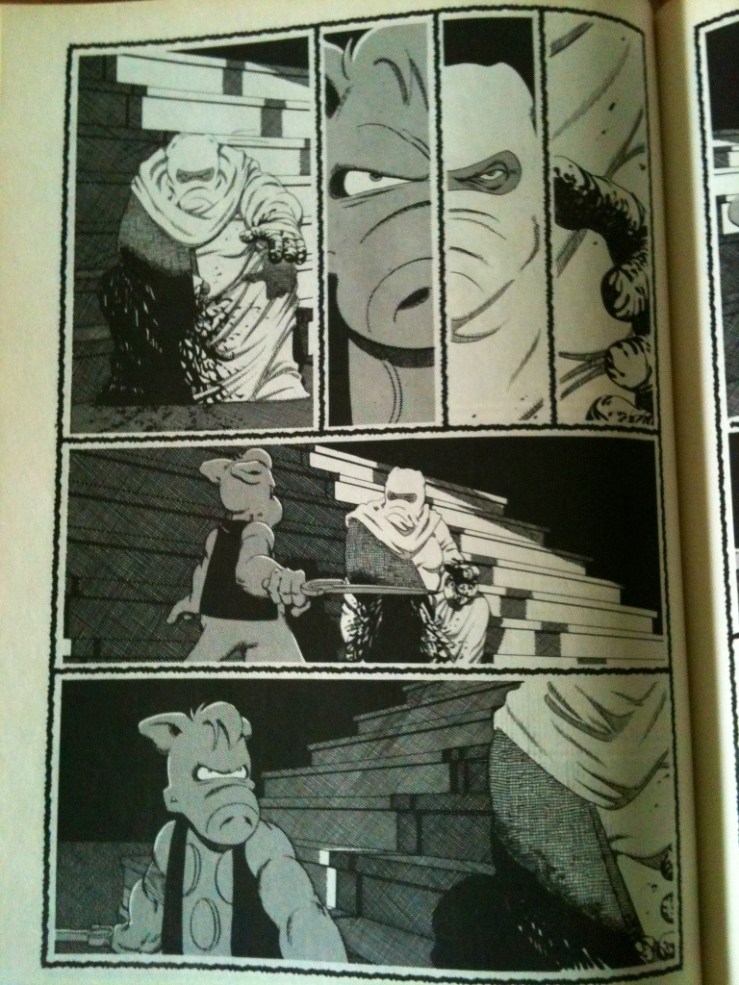
Somewhat at random, I opened Reads, the novel that signaled the beginning of Sim’s estrangement from sanity. It opened to this page, part of a climactic scene between Cerebus and Cirin, leader of the matriarchy that will rule Iest (don’t ask):

20120610-104334.jpg

The St. Louis Refugee Ship Blues — Art Spiegelman

Book Shelves #18, 4.29.2012

20120429-131113.jpg

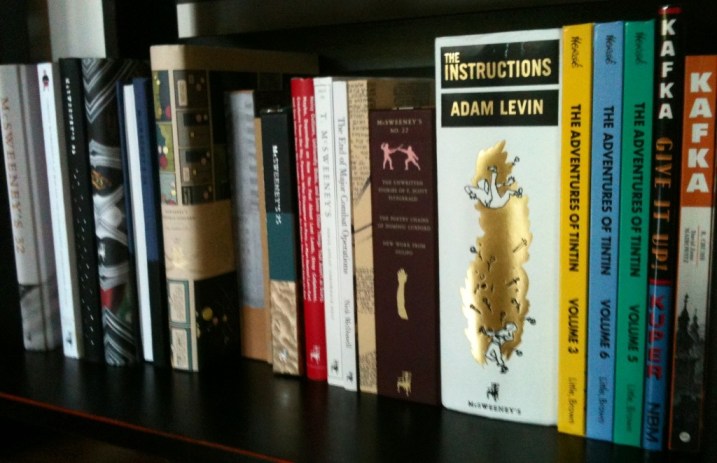
Book shelves series #18, eighteenth Sunday of 2012.

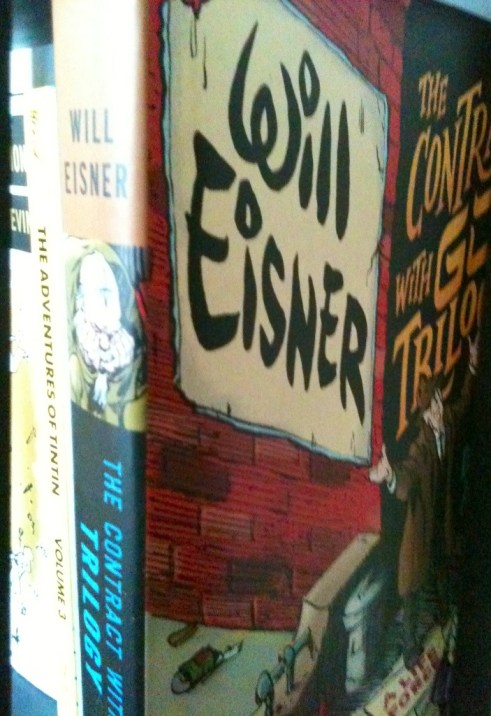
Lots of issues of McSweeney’s on this shelf. I abandoned The InstructionsSome Tintin omnibuses. Crumb-illustrated Kafka bio. Bookended by Will Eisner’s masterwork A Contract with God:
20120429-131124.jpg

A Chris Ware comic from McSweeney’s #13:

20120429-131132.jpg

Diogenes and Plato — Paul Ollswang

(Read Paul Ollswang’s fantastic comic Cynicism here)

Moebius Penciling and Inking Blueberry (Video)

Alan Moore Talks Apocalypse (Video)

Book Shelves #6, 2.05.2012

Book shelves series #6, sixth Sunday of 2012: In which we dig into the comix inside the book shelf we looked at last week.

20120205-102013.jpg

When I was 13, I sold a fairly large collection of superhero comic books and earned enough money to buy an electric guitar—a weird mutant by Fender called the Bullet—and a small practice amp. It was the early nineties, and Marvel was about to burst the comic book bubble big time by flooding the market with gimmicky covers, hologram cards, and other nonsense.

I continued to buy comics (or comix, if you prefer) over the years, although eventually economic concerns led me to just wait for graphic novel editions. Anyway, the book shelf above now contains most of the “underground” comix that I own. A few samples:

20120205-102552.jpg

20120205-102601.jpg

20120205-102611.jpg

Most of the comix in this unit though are issues of Dave Sim’s epic (and insane) series Cerebus. I bought issues of Cerebus intermittently for years at a time, usually getting frustrated and then waiting for the “phone book” graphic novel editions of the series. Sim, along with background artist Gerhard, produced 300 issues of Cerebus over 25 years. The issues from the early ’80s to the early ’90s are brilliant; eventually Sim cracked though and went on an insane, reactionary (and arguably deeply misogynistic) bent. He created his own religion, a mix of hardline Judaism, Islam, and Christianity, and the later books in the series suffered greatly, as the book detoured to chronicle projects that seemed far outside its original scope (including strange, long satires of Hemingway and Fitzgerald). Anyway, some issues:

20120205-102641.jpg

Cerebus Jam, a one-off collaboration with a cover by one of my favorite artists Bill Sienkiewicz (I still have his entire run on Marvel’s The New Mutants in a box somewhere):

20120205-102651.jpg

A panel from the issue’s collaboration with comic book legend Will Eisner, featuring his seminal character The Spirit:

20120205-102658.jpg