John Huston directs Under the Volcano

A riff on J.G. Ballard’s superb degenerate satire High-Rise

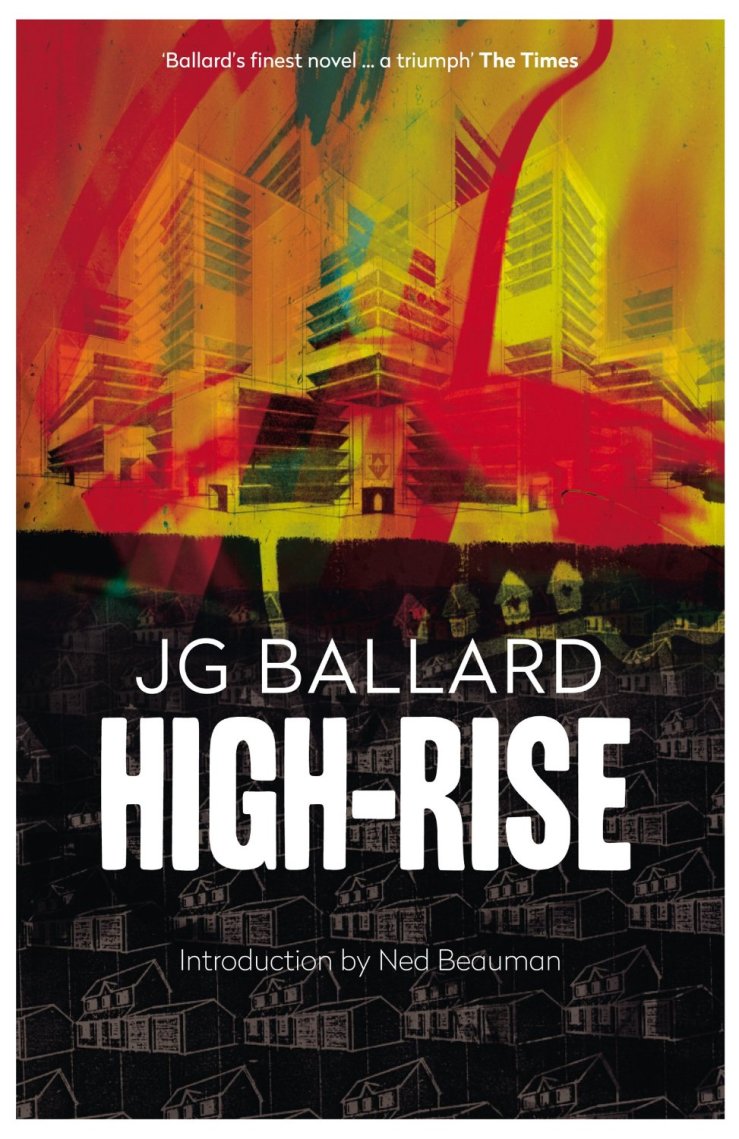
  1. Ballard-High-RiseWith the bad taste of a recentish YAish post-apocalyptish novel in my brain, I riffled through some old sci-fi titles, hoping to find something to hit “reset.” J.G. Ballard’s 1975 novel High-Rise—which I hadn’t read since I was a teenager—wrapped me up immediately with its opening  sentence:

    Later, as he sat on his balcony eating the dog, Dr Robert Laing reflected on the unusual events that had taken place within this huge apartment building during the previous three months.

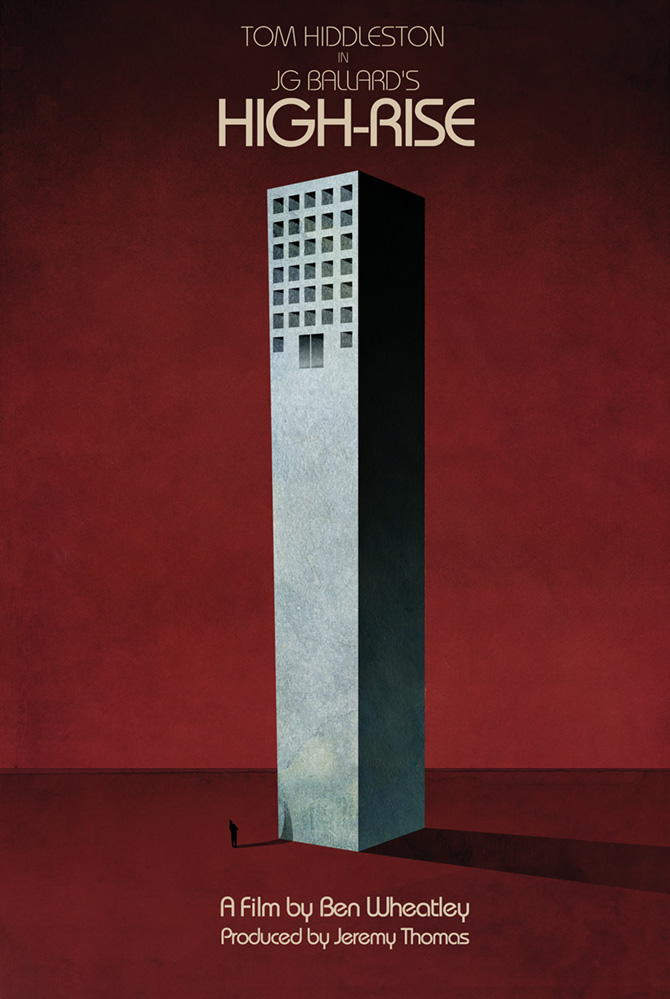
  2. (If the promise of that first line doesn’t intrigue you, High-Rise isn’t for you. Maybe you’ll enjoy all the old High-Rise covers I couldn’t help but to scatter through this riff).
  3. The first chapter of High-Rise is aptly titled “Critical Mass.” This is a book where things, uh, escalate quickly, if you’ll forgive my indulging in the parlance of our times. Ballard dispenses with any simmering in his tale of depraved debauchery (or is that debauched depravity?). He gets that pot boilin’.ballard-high-rise
  4. Depravity. Debauchery. Degeneration. The boiling pot of late-20th century consciousness.
  5. So, what is High-Rise about? Like, the plot, man? Class-war in a high-rise condo: A self-contained society that fails, its id overspilling into sex and violence: The veneer dissolved in piss and spite. And the best part? Ballard dispenses with any sort of explanation whatsoever. We begin at critical mass. He counted on his late-20th-century reader to intuit the whole damn deal (or throw down the book in defensive disgust).
  6. Ballard structures the book around three anti-heroes, who represent, probably, id, ego, and superego—or rather, what I mean to say is ironic send-ups of id, ego, and superego—with the high-rise itself a kind of consciousness in crisis.6001572752_4a601a081e_b
  7. From the middle-class (and perhaps ego)—the 25th floor—there’s Dr. Robert Laing—not really a practicing doctor, no, but he works at a teaching hospital. Ballard tricks us into thinking he’s the protagonist—which I guess he is!—by which I mean audience surrogate, and also typical Ballardian hero (divorced; mama issues; a drinker). His name may recall to you the (anti-)psychiatrist R.D. Laing (as well as, perhaps, Language).
  8. We might find a tidy—as in sanitary–summary of High-Rise in this brief excerpt, where our ego hero Laing packs away his tools and totems of the old world in anticipation of the new one to come:

    In this suitcase-sized cavity he hid away his cheque book and insurance policies, tax returns and share certificates. Lastly, he forced in his medical case with vials of morphine, antibiotics and cardiac stimulants. When he nailed the floorboards back into place he felt that he was sealing away for ever the last residues of his previous life, and preparing himself without reservation for the new one to come.

  9. The phrase “to come” — as in a future to come — repeats throughout High-Rise—a kind of irony, ultimately, that I shouldn’t step all over here. I’ll get back to that momentarily, but—
  10. Ballard soon trips us up by shifting his free-indirect style from Laing to Richard Wilder of the 2nd floor. A bestial brawny brawly dude (and the only father in this trio of anti-heroes) Wilder (c’mon with that name man!) is id id id all the way down (up). Wilder’s also a filmmaker, a camera in his hand, a sensing thing all the way down (up). He causes some problems.
  11. (The idea that a middle-class man like Wilder might represent the proletariat here is addressed in more (although oblique) depth in Ballard’s 2003 novel Millennium People).
  12. And then the super-ego/upper crust: Anthony Royal (O! c’mon with that name dammit!) of the penthouse. He’s the literal architect of the high-rise, which makes him possibly maybe probably responsible for its many, many design flaws, which boil down to intake, outtake, and power, but look like parking, garbage, and electricity.High-Rise
  13. And so Ballard shuttles us between these three consciousnesses, like the elevators that symbolically anchor this novel. (Anchor is a terrible verb for these mobile metaphors. Or maybe it’s the precise verb).
  14. Like I said in point 5, Ballard doesn’t really bother to foreground the causes for the high-rises’s society’s degenerate descent (ascent?)—instead, he offers concrete contours and psychological descriptions. Like this one, when a psychiatrist (yep) offers this analysis to Laing (and the reader, of course):

    I had a bucket of urine thrown over me this afternoon. Much more of that and I may take up a cudgel myself. It’s a mistake to imagine that we’re all moving towards a state of happy primitivism. The model here seems to be less the noble savage than our un-innocent post-Freudian selves, outraged by all that over-indulgent toilet-training, dedicated breast-feeding and parental affection — obviously a more dangerous mix than anything our Victorian forebears had to cope with. Our neighbours had happy childhoods to a man and still feel angry. Perhaps they resent never having had a chance to become perverse . . .

  15. (“Perverse” is a term that repeats throughout High-Rise, and I had to leave in those bucket of urine and cudgel details).
  16. The concrete contours, the description, the late-20th century analysis—that’s the reason to boil along with High-Rise. The book is fucking fun in its thrilling awful decadence—it’s Lord of the Flies for adults, with the spiritual mumbo-jumbo replaced with psychiatric mumbo-jumbo. Or Salò.
  17. Back to that future to come thing, here’s another citation, at some length (enjoy those concrete contours), but with my emphasis in boldface if you’re in some big fucking hurry:

    Still uncertain how long he had been awake, or what he had been doing half an hour earlier, Laing sat down among the empty bottles and refuse on the kitchen floor. He gazed up at the derelict washing-machine and refrigerator, now only used as garbage-bins. He found it hard to remember what their original function had been. To some extent they had taken on a new significance, a role that he had yet to understand. Even the run-down nature of the high-rise was a model of the world into which the future was carrying them, a landscape beyond technology where everything was either derelict or, more ambiguously, recombined in unexpected but more meaningful ways. Laing pondered this — sometimes he found it difficult not to believe that they were living in a future that had already taken place, and was now exhausted.

  18. Ballard’s describing the late 20th century there, but perhaps he intuits the beginning of the 21st as well.91ihsrhnexl-_sl1500_
  19. —Or maybe those are the same thing, I suppose—I mean, High-Rise was published in 1975, four decades ago, but doesn’t feel that old. For some perspective, Karel Capek’s War with the Newts was published in 1936, almost forty years before High-Rise, and that novel doesn’t feel horribly dated either, a tribute to its sharp satire.
  20. —Which is my way of transitioning to the probably completely non-controversial idea that High-Rise is wonderful dark satire. Ballard ushers our consciousness to the high-rise’s summit through surrogate Laing, the limited concrete prose focused on the failed doctor’s misperception of transcendence. Laing perceives himself as the conquering brute, alpha male par excellence, inheritor not only of the falling high-rise, but also its female cohort, his harem in a future to come, his genealogical generativity restored. Laing can’t see that he’s been x’ed out of this equation, the failed phallic figure jutting impotently into mother sky.
  21. So you know that High-Rise is going to be a movie? A Major Motion Picture? Starring Tom Hiddleston? As cynical as I am, I think the book should make a fine film—it’s adaptable, yes. It could even be a great video game. A video game where you eat a dog. A video game where you think you win, but you don’t.

Film Poster for The Warriors — Tomer Hanuka

warriors_650

Strange to Meet You (Coffee and Cigarettes)

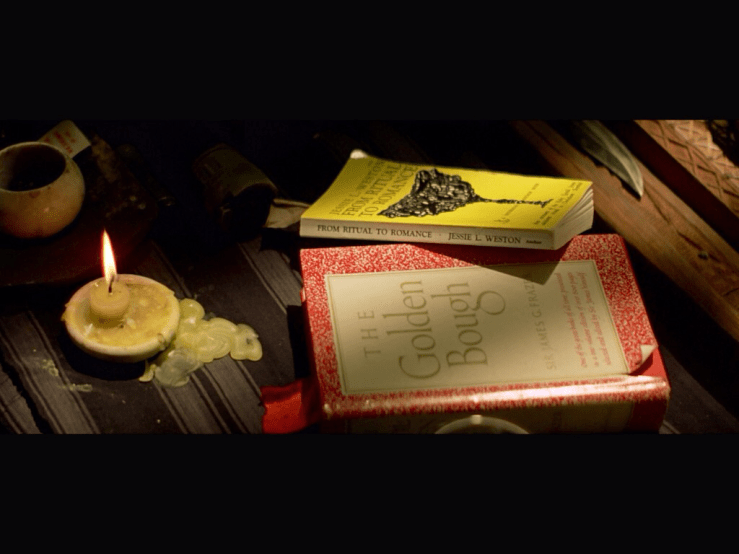
Colonel Walter E. Kurtz’s bedside reading

IMG_0280

From Apocalypse Now (1979); dir. Francis Ford Coppola with cinematography by Vittorio Storaro.

Watch Harry Nilsson and Ringo Starr in Son of Dracula (or don’t, it’s pretty terrible)

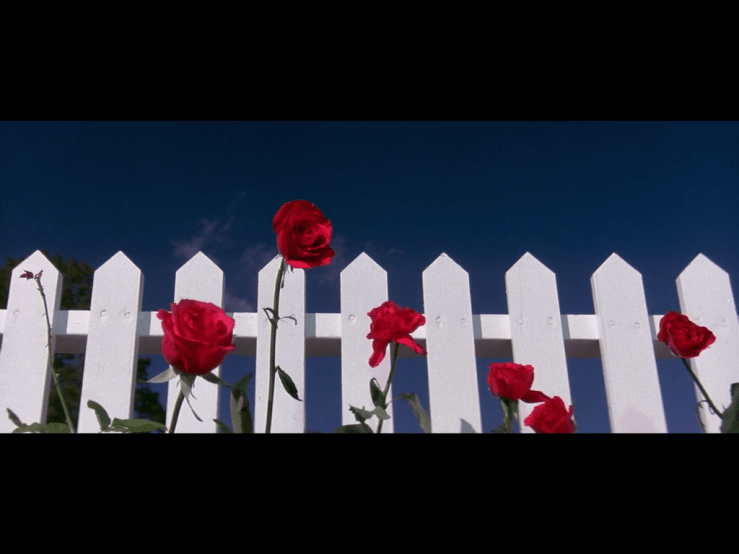
Red White and Blue Velvet

IMG_0272

A still from the opening of David Lynch’s film Blue Velvet. Frederick Elmes was the film’s cinematographer.

Bob Rafelson and Jack Nicholson on the diner scene in Five Easy Pieces

Phil Spector talks about “Be My Baby,” Scorsese’s Mean Streets, Brian Wilson, etc.

Pasolini’s Decameron

Watch a 1977 PBS adaptation of Flannery O’Connor’s story “The Displaced Person” (featuring a young Samuel L. Jackson)

The Medusa v. The Odalisque (Infinite Jest)

But this one other short high-tech one was called ‘The Medusa v. The Odalisque’ and was a film of a fake stage-production at Ford’s Theater in the nation’s capital of Wash. DC that, like all his audience-obsessed pieces, had cost Incandenza a real bundle in terms of human extras. The extras in this one are a well-dressed audience of guys in muttonchops and ladies with paper fans who fill the place from first row to the rear of the balcony’s boxes, and they’re watching an incredibly violent little involuted playlet called ‘The Medusa v. The Odalisque,’ the relatively plotless plot of which is just that the mythic Medusa, snake-haired and armed with a sword and well-polished shield, is fighting to the death or petrification against L’Odalisque de Ste. Thérèse, a character out of old Québecois mythology who was supposedly so inhumanly gorgeous that anyone who looked at her turned instantly into a human-sized precious gem, from admiration. A pretty natural foil for the Medusa, obviously, the Odalisque has only a nail-file instead of a sword, but also has a well-wielded hand-held makeup mirror, and she and the Medusa are basically rumbling for like twenty minutes, leaping around the ornate stage trying to de-map each other with blades and/or de-animate each other with their respective reflectors, which each leaps around trying to position just right so that the other gets a glimpse of its own full-frontal reflection and gets instantly petrified or gemified or whatever. In the cartridge it’s pretty clear from their milky-pixeled translucence and insubstantiality that they’re holograms, but it’s not clear what they’re supposed to be on the level of the playlet, whether the audience is supposed to see/(not)see them as ghosts or wraiths or ‘real’ mythic entities or what. But it’s a ballsy fight-scene up there on the stage — having been intricately choreographed by an Oriental guy Himself rented from some commercial studio and put up in the HmH, who ate like a bird and smiled very politely all the time and didn’t have even a word to say to anybody, it seemed, except Avril, to whom the Oriental choreographer had cottoned right off — balletic and full of compelling little cornerings and near-misses and reversals, and the theater’s audience is rapt and clearly entertained to the gills, because they keep spontaneously applauding, as much maybe for the film’s play’s choreography as anything else — which would make it more like spontaneously meta-applauding, Hal supposes — because the whole fight-scene has to be ingeniously choreographed so that both combatants have their respectively scaly and cream-complected backs 155. to the audience, for obvious reasons… except as the shield and little mirror get whipped martially around and brandished at various strategic angles, certain members of the playlet’s well-dressed audience eventually start catching disastrous glimpses of the combatants’ fatal full-frontal reflections, and instantly get transformed into like ruby statues in their front-row seats, or get petrified and fall like embolized bats from the balcony’s boxes, etc. The cartridge goes on like this until there’s nobody left in the Ford’s Theater seats animate enough to applaud the nested narrative of the fight-scene play, and it ends with the two aesthetic foils still rumbling like mad before an audience of varicolored stone. ‘The Medusa v. The Odalisque’ ’s own audiences didn’t think too much of the thing, because the film audience never does get much of a decent full-frontal look at what it is about the combatants that supposedly has such a melodramatic effect on the rumble’s live audience, and so the film’s audience ends up feeling teased and vaguely cheated, and the thing had only a regional release, and the cartridge rented like yesterday’s newspapers, and it’s now next to impossible to find.

155. The Medusa wears a kind of chain-mail backless evening gown and Hellenic sandals, the Odalisque a Merry Widow.

From David Foster Wallace’s novel Infinite Jest.

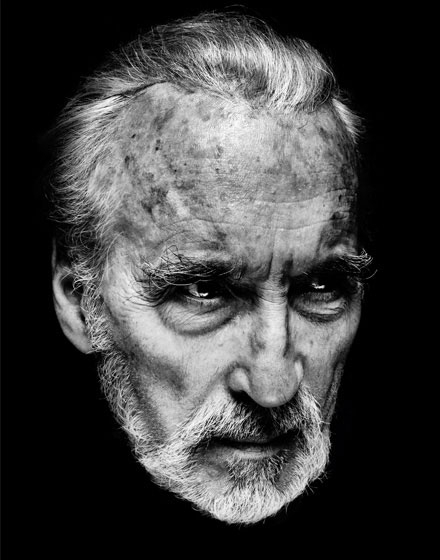
RIP Christopher Lee

Christopher-Lee-christopher-lee-17378721-440-560

RIP Christopher Lee, 1922-2015

Watch Guilty as Charged, a documentary about Harry Crews

They Live — Jason Edmiston

They-Live-final

A last riff (for now) on Gravity’s Rainbow (and Disney’s Fantasia)

Screenshot 2015-04-24 at 9.27.30 PM

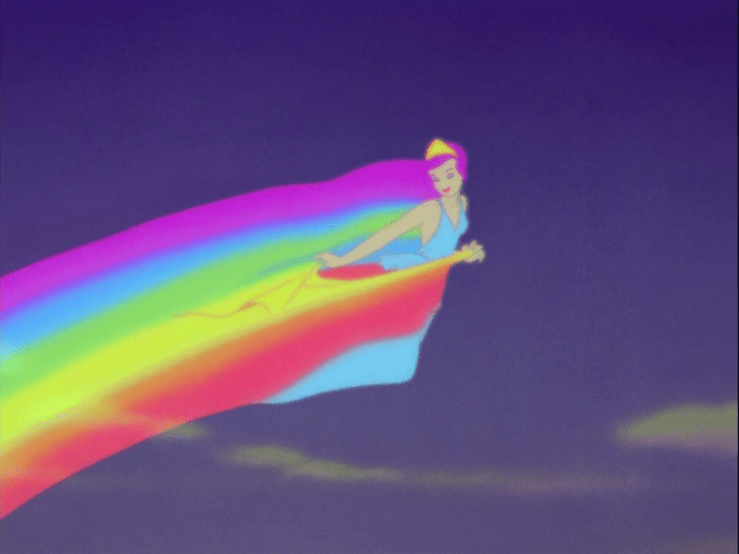
Disney’s Fantasia is one of the better film adaptations of Thomas Pynchon’s novel Gravity’s Rainbow. 

At least this thought zipped into my head a few weeks back, as I watched the film with my wife and kids. I was in the middle of a second reading of the novel, an immediate rereading prompted by the first reading. It looped me back in. Everything seemed connected to the novel in some way. Or rather, the novel seemed to connect itself to everything, through its reader—me—performing a strange dialectic of paranoia/anti-paranoia.

So anyway, Fantasia seemed to me an adaptation of Gravity’s Rainbow, bearing so many of the novel’s features: technical prowess, an episodic and discontinuous form, hallucinatory dazzle, shifts between “high” and “low” culture, parodic and satirical gestures that ultimately invoke sincerity, heightened musicality, themes of magic and science, themes of automation and autonomy, depictions of splintering identity, apocalypse and genesis, cartoon elasticity, mixed modes, terror, love, the sublime, etc.

(There’s even a coded orgy in Fantasia).

But Fantasia was first released in 1940 right, when Pynchon was, what, three or four? And Gravity’s Rainbow was published in 1973, and most of the events in that novel happen at the end of World War II, in like, 1944, 1945, right? So the claim that “Fantasia is one of the better film adaptations of Gravity’s Rainbow” is ridiculous, right?

(Unless, perhaps, we employ those literary terms that Steven Weisenburger uses repeatedly in his Companion to Gravity’s Rainbow: analepsis and prolepsis—so, okay, so perhaps we consider Fantasia an analepsis, a flashback, of Gravity’s Rainbow, or we consider Gravity’s Rainbow a prolepsis, a flashforward, of Fantasia…no? Why not?).

Also ridiculous in the claim that “Fantasia is one of the better film adaptations of Gravity’s Rainbow” is that modifier “better,” for what other film adaptations of Gravity’s Rainbow exist?

(The list is long and mostly features unintentional titles, but let me lump in much of Robert Altman, The Conversation, Richard Kelly’s Southland Tales, Paul Thomas Anderson’s The Master, that Scientology documentary Going Clear, a good bit of stuff by the Wachowksis, The Fisher King (hell, all of Terry Gilliam, why not?), the Blackadder series, which engenders all sorts of wonderful problems of analepsis and prolepsis…).

Gravity’s Rainbow is of course larded with film references, from King Kong and monster movies to German expressionism (Fritz Lang in particular), and features filmmakers and actors as characters. The novel also formulates itself as its own film adaptation, perhaps. The book’s fourth sentence tells us “…it’s all theatre.” (That phrase appears again near the novel’s conclusion, in what I take to be a key passage). And the book ends, proleptically, in “the Orpheus Theatre on Melrose,” a theater managed by Richard M. Nixon, excuse me, Zhlubb—with the rocket analeptically erupting from the past into “The screen…a dim page spread before us, white and silent.” Indeed, as so many of the book’s commentator’s have noted, Pynchon marks separations in the book’s sequences with squares reminiscent of film sprockets —  □ □ □ □ □ □ □. Continue reading “A last riff (for now) on Gravity’s Rainbow (and Disney’s Fantasia)”

Inherent Vice Film Poster — Steve Chorney

Inherent-Vice-Poster-comp-Small