Mom and Pop are Zombies!–The Infanticidal Structure of 28 Weeks Later

As that most sacred of holidays, Halloween, draws closer, Biblioklept begins our annual celebration with a review of 28 Weeks Later, the sequel to future cult classic 28 Days Later. Look forward to all kinds of horror for the rest of the month!
28wks.jpg

At Sam Kimball’s talk at UNF last week, he put forth several ideas that would not be wholly unfamiliar to students and former students of his, or to anyone who’s read his book, The Infanticidal Logic of Evolution and Culture. Just a few of these ideas: cultural and biological evolution rests on an encoded infanticidal threat that no one wants to own up to, existence costs, and the ability of humans to smile represents a Darwinian miracle. The first two of these ideas provide an excellent lens from which to examine 28 Weeks Later; however, I’m not going to strain myself looking for smiles or hope in this awfully bleak, absolutely horrific movie.

It’s instructive to begin with a paraphrase of the infanticidal logic Kimball suggests underpins social order, and I think that can be done best by using Kimball’s own re-reading of the Oedipus story. The story of Oedipus, who outwits the Sphinx, kills his father, marries his mother, brings a plague to his city, and then stabs out his eyes, is–and here comes an understatement–a story foundational to psychoanalysis. In most readings, Oedipus is the tragically flawed hero who brings shame, disease, sin, and death to an entire society through his multiple transgressions. Kimball points out that most readings of this story focus on Oedipus’ relationship with his mother and father (sex and death), and that little attention is paid to the very beginning of the story. Recall now that the infant Oedipus is cast by his royal parents (metonymy for all parents), feet bound, into the wilderness to die, for fear that he will bring about chaos and death. The story is thus initiated in an infanticidal gesture, the willingness to kill a child for the good of the family, the tribe, the kingdom (see: Abraham and Isaac, Saturn gobbling his kids, Noah and flood, the crucifixion of Christ, etc. etc. etc.). Kimball sees structural infanticide as the blame for sin and corruption and death being put on the child; Oedipus is not the sinner in this reading, but the one who has been wronged from the beginning. Let’s see if we can’t apply some of this to a zombie flick. And, uh, a SPOILER WARNING is in order, I suppose (although I don’t think anything I’ll write can really spoil this film).

saturngoya450w20q.jpg

28 Weeks Later opens up with a last supper, the communion of a childless, makeshift family who’ve managed to avoid the infected zombies that plague Britain, spreading murder and chaos wherever they go. The communion is interrupted by a child who bangs on the door. After some indecision, he’s admitted by the wary adults, who ask him, of course, “What happened?” “My parents…they tried to kill me,” he answers. Within minutes of his arrival, the zombies are at the door, ready to spread their infection, annihilating the dinner party: the child, on the run from his infanticidal parents, brings disease and death to the community. Only Don (Robert Carlyle) escapes, and he does so by abandoning his wife, who clings to the newly arrived child.

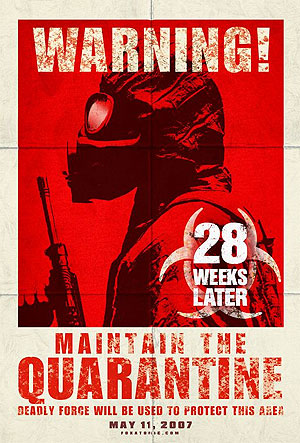
Twenty-eight weeks later, the US military has quarantined part of London, and begun the repatriation of British citizens, including Don’s son and daughter, Andy and Tammy (played by the improbably named Mackintosh Muggle and Imogen Poots). Chief medical officer, Major Ross is deeply upset when she sees the children disembark the plane, declaring that the Green Zone the US military has established is not equipped for kids. Furthermore, she points out that they know little about the disease, and that kids might actually facilitate spreading it. Sure enough, Andy and Tammy run away from the Green Zone, heading back to their apartment, where they find Mom, who’s gone feral. Their Mom has some kind of genetic resistance to the effects of the disease (figured in her mismatched brown and blue eyes, a trait shared by Andy); she exhibits mild symptoms and is a carrier. This is discovered by Major Ross when the trio are forcibly returned to the Green Zone. Don, swamped in guilt, sneaks in to see his wife. He kisses her, immediately gets the disease, then goes on a murderous rampage. The US military, in a moment of shining brilliance, move all the non-military personnel to a locked basement. Don gets in nonetheless, the infection spreads like a dirty rumor, and the army begins killing everyone indiscriminately. Again, the children bring the infection to the community, and the entire society must pay with wholesale apocalyptic genocide, ultimately figured in the firebombing of the city.

28-wks-2.jpg

Andy and Tammy escape this fate when Major Ross and Sergeant Doyle, a kindly sniper, escort them out of the city. Ross and Doyle symbolize a set of “good parents,” in direct opposition to Don, a rampaging zombie who somehow singles out his children in particular. Just like the child at the beginning, the two are on the run from not just the patriarchal US army “protectorate,” now annihilating everything that moves, but also their own biological father. In the course of aiding the children’s escape, both Ross and Doyle meet grisly yet heroic ends. Believing that the children may carry a genetic clue to a vaccine for the virus, the “good parents” give their own lives to save the children. Still, the children are the cause of their death. Don eventually catches up with his kids and bites Andy, before he’s shot to death by Tammy. Andy, like his mom, doesn’t go nuts when he gets infected, but he’s still a carrier. Doyle’s buddy, helicopter pilot Flynn, transports the kids across the English Channel (that is, after making the tough decision not to just kill them). The movie ends with shots of rampaging zombies near the Eiffel Tower: a child has again carried infection, disease, and death to a once-pure, contained area, continental Europe.

28_3.jpg

Upon its theatrical release earlier this year, most critics focused on 28 Weeks Later as an allegory of US military involvement gone awry, a thinly-disguised critique of the Iraq invasion. And while many arguments could be made for this analysis, I think its important to realize that the actions of the US military in the film are not ultimately the cause of the apocalyptic genocide at its center; rather, the military responds appropriately to contain the very real threat of contagion, the risk of total death figured in the disease the zombies carry. The cost of continued existence here is the realization that everyone in the Green Zone must die. The movie invites us to see both the military and the zombies as the bad guys, but ultimately the movie blames the children for the downfall of mankind: the army is just trying save the rest of the world, making a calculated cost analysis (albeit, one measured in human lives); the zombies are, well, uh, mindless rampaging zombies–animals, running ids with teeth, but not really evil. No, it’s the kids here who bring about sin and shame, death and disease. The infanticidal structure of the film argues for the execution of children, those dirty little harbingers of contagion. Paradoxically, the film hides this gesture under the heroic self-sacrifice of the “good parents,” Ross and Doyle, who give up their lives to save the kids. The audience is invited to empathize and identify with Ross and Doyle, who reject both the patriarchal authoritarianism of the US military (despite the fact that they are both military officers) as well as the mindless entropy of zombism. In the end though, their self-sacrifice is pointless–Andy spreads disease into another “pure” area, putting the entire world at risk. Flynn should have executed the children, like he was supposed to. The movie thus acts as a warning against the dangers of sin and infection that are presented in the children, and in turn, 28 Weeks Later upholds patriarchal, sacrificial, infanticidal values.

In my ranting and raving and raging and rampaging, I forgot to point out that I enjoyed the movie very much: it was truly terribly awfully bloodily unceasingly horrific.
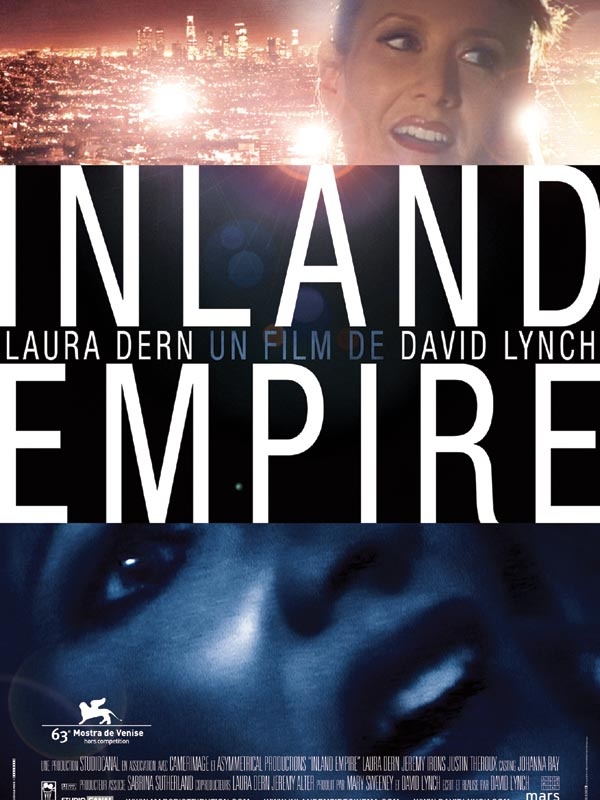
INLAND EMPIRE–David Lynch

inland-empire.jpg

There’s so much going on in David Lynch’s INLAND EMPIRE that I’ll give you the quick review up front: if you like David Lynch films (I do), you’ll love this film (I did)–it’s arguably his most ambitious to date and belongs in the canon of great Lynch films along with Blue Velvet and Mulholland Dr. Get a hold of it and watch it right away. If you don’t like David Lynch films, you won’t like INLAND EMPIRE–but you already knew that, didn’t you?

Contrary to some of the internet rumors and poorly conceived reviews out there, INLAND EMPIRE actually does have a plot, complete with an honest-to-goodness resolution full of redemption and love. However, the fragmentary and elliptical nature of the film will no doubt confound anyone who tries to actively resist it: like Mulholland Dr. before it, this is one you need to just let happen to you. Attempts to impose your own system of narrative logic will probably result in headaches and frustration. You see, INLAND EMPIRE is really a time-travel movie, and time-travel movies–the good ones–are always resistant to narrative logic (see the Grandfather Paradox, etc.).

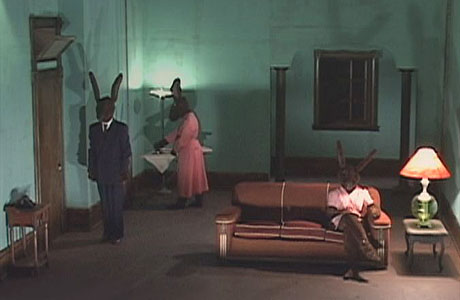
The story begins with a gypsy-witch’s curse: she visits actress Nikki Grace (played by Laura Dern who appears in almost every scene of the movie, and is truly fantastic) and warns her about the coveted film role she’s about to land. It turns out that the film, On High in Blue Tomorrows, is a remake of a Polish film called 49 that was never finished because the two leads were murdered. “If it was tomorrow,” the gypsy croaks, pointing across the room, “you would be sitting over there. Do you see?” And Nikki does see: the rest of the film may or may not be a vision prompted by the gypsy. However, my phrase “The story begins” at the beginning of this paragraph was not entirely accurate: before we even meet Dern’s character, we see a light projection and a phonograph needle, a weeping woman trapped in a room watching a chilling sitcom starring bunny people (INLAND EMPIRE thus gets to go on a special list of movies featuring scary rabbits, including favorites Donny Darko and Sexy Beast), and a strange scene with a Polish prostitute.

inland460.jpg

So there are plenty of frames to this frame-tale, and the narrative only continues inland as the movie progresses, exploring a multiplicity of spaces and times. Dern’s Nikki morphs into new and different characters–housewives and hookers–even as she passively stands on the wall, a frightened voyeur robbed of all agency. And in many ways this is the major theme of the movie: how to find agency and self-determination in a world where time and place–context–are the main components and constituents of identity. INLAND EMPIRE breaks down the lines between actors and prostitutes and really any other job, suggesting that perhaps we all have some identity as a whore, an identity thrust on us by location and time, an identity that we are always struggling against.

But this is really just one of many themes in the movie. The usual Lynch tropes are here: pop nostalgia with a sinister tinge, stilted dialog, lush red curtains, characters that seem of vital importance who never show up again, cryptic symbols that may or may not be symbols at all, etc. etc. etc. Despite its three hour running time, INLAND EMPIRE never lags or sags, in large part because so much weird stuff is going on, but also because in many ways this movie is a distillation of every other Lynch film: we get the murder mystery of Twin Peaks, the abuse-of-women theme inherent in Blue Velvet, the Wizard of Oz riffing from Wild at Heart, the voyeur-terror of Lost Highway, the Haunted Hollywood and doppelganger mindfuck of Mulholland Dr., and the general creepy weirdness that’s underscored every Lynch film since Eraserhead.

gross_lynch.jpg

INLAND EMPIRE is shot entirely on digital video, a format that Lynch swears is the future of cinema. I’m not sure about that–although his movie is a beautiful masterpiece of textured light and composition, not all directors are painters like Lynch; in someone else’s less-gifted hands this movie could’ve been, visually speaking, a muddled mess. Still, it seems for now Lynch is determined to continue shooting on DV.

A couple of days before I saw INLAND EMPIRE, I heard most of an interview with Lynch on NPR’s Talk of the Nation. Neil Conan asked him what the last great movie he saw in the theaters was, and, to my surprise, he said that it was The Bourne Ultimatum, a movie he touted as being “excellent” or “perfect” or something like that. At first this struck me as odd–Lynch going to see a pretty straightforward–albeit smart–action movie? But on further reflection there’s nothing odd about this. I think that Lynch sees his films not as outsider films or art films per se, but as something more akin to the Hollywood tradition–I’m sure he’s not deceived that his films are as accessible as the Bourne films, but I do believe that he is a pop artist (or Pop Artist, if you prefer)–he had a huge hit television show, didn’t he? And INLAND EMPIRE not only fits in with Lynch’s growing pop art legacy, it could be the masterpiece of his oeuvre. Let’s hope that that legacy continues to grow; INLAND EMPIRE suggests an artist in his prime who will continue making great films.

Superbad:Supergood

superbad_bigposter.jpg

Superbad is really, really funny; funny like funny-from-beginning-to-end funny, funny like out-of-shape persons like myself will feel laughter fatigue after leaving the theater type funny. The film has been plenty hyped, and for good reason; it doesn’t disappoint. My tendency is to judge a film’s greatness on the last 30 minutes–plenty of films deliver a solid opening based on an interesting premise that eventually falls flat. Superbad resuscitates a hackneyed premise, injecting it with genuine heart and soul, plenty of jokes, and, magically, an ending that doesn’t make you go “meh.”

I won’t bother going over the details of the plot: it’s essentially the same as any other teen sex comedy (think Porky’s and American Pie). Heroes Michael Cera, Jonah Hill, and Christopher Mintz-Plasse shine as the freaks and geeks trying to score some booze in the hopes of getting laid, and SNL’s Bill Hader and screen writer Seth Rogan play two rotten cops who balance the young trio’s misguided attempts to navigate the adult world.

superbad1.jpg

Underneath the rough profanity and crass humor of Superbad is, of course, a tender spirit of love and comradery tempered by the requisite sense of loss that attends the ending of any era (in this case, the end of high school). Homosociality dominates the film in every aspect, figuring most strongly in the changing relationship between Evan (Michael Cera), who’s off to Dartmouth next year, and Seth (Jonah Hill) who’s bound for “State.” The homosocial undercurrent is most neatly summed up in the penis motif that runs through the film, although an especially tender scene between Evan and Seth near the end also stands out as a perfect evocation and identification of platonic male love. While other teen sex comedies fall into gay-panic jokes (American Pie again), Superbad presents homosociality as unthreatening, even when it falls out of the culturally normative balance. And by the end of the movie, Seth and Evan do manage to reach a culturally normative balance, sundering their codependency in order to try meaningful relationships with girls. It’s a happy ending.

Like American Grafitti, Fast Times at Ridgemont High and Dazed and Confused before it, Superbad is a teens-growing-up comedy that transcends its genre; undoubtedly it will be revered for years to come. Besides, it’s really fucking funny. Highly recommended.

Rescue Dawn–Werner Herzog

rescuedawn2.jpg

So my uncle and I went to see Rescue Dawn, the new Werner Herzog film. Rescue Dawn is the true story of Dieter Dengler (not a porn name), an Air Force pilot who crashed his plane during a mission over Laos in 1966. Dengler was captured, held as a POW, and tortured by his captors. Dengler organized and executed a daring escape, leading the other prisoners out of the camp. In 1997 Herzog made a documentary about Dengler’s story called Little Dieter Needs to Fly. I have not seen that film.

My expectations for Rescue Dawn were high–I love Herzog’s films, which mix high adventure with a sense of naturalistic realism and psychological surrealism–and I love Christian Bale, he of American Psycho fame, who plays Dengler. I suppose my expectations were too high, because Rescue Dawn wasn’t nearly as good as I thought it would be. My uncle was also slightly disappointed. It was by no means bad, but it wasn’t nearly as good as its reviews would make it seem; additionally, it’s practically a Hollywood action movie (complete with the big happy ending in front of an assembled audience of cheering extras)–something I wouldn’t have expected from Herzog. Bale is excellent though, as is co-star Steve Zahn, and the setting and pacing of the film make for an exciting afternoon. Then again, so does Missing in Action.

I may be going a little rough on Rescue Dawn–it’s better than 99% of the schlock out there, and in a summer crowded with franchise sequels, I think that moviegoers (i.e. people who go to the movies every week) should go check it out. Chalk my disappointment up to high expectations. Netflix addicted hermits like myself should probably just wait for the DVD.

No Country for Old Men

I’ve been reading a lot of Faulkner lately. This has nothing to do with me liking Faulkner (I don’t) or thinking that he’s an American master (at this point, I’m convinced that he’s not. Rather, it seems that a few critics–notably Malcolm Cowley and Cleanth Brooks–decided either that a. Faulkner is really great and/or b. America needs a new master of literary fiction, and it might as well be Faulkner. It seems amazing to me that these two critics conned a whole generation into believing that someone whose books were so unbelievably poorly written was actually, like, a totally awesome and important writer). I’m taking a class that requires me to read Faulkner.

Anyway, over the course of my reading, I got to thinking that the Coen brothers, two guys that have made some of the best American films ever (masterful films, certainly) are fond of Faulkner: the flood in O Brother Where Art Thou? hearkens to Faulkner’s novella Old Man (as does the whole milieu of that film really), the slow southern grotesque of Blood Simple is pure Faulknerian, ditto the gloomy doom of The Man Who Wasn’t There, and the failed screenwriter W.P. Mayhew in Barton Fink is essentially a caricature of Faulkner during his days in Hollywood.

So well and anyway, the Coens have a new movie coming out, No Country for Old Men, based on the Cormac McCarthy novel of the same name. Cormac McCarthy is often compared to Faulkner, though I have no idea why. They’re American? That’s it. They’re American. Like I said though, No Country for Old Men. Early reviews suggest that this is a return to form for the Coens, who have either been stumbling or just lazily cashing in lately (see: Intolerable Cruelty; The Ladykillers)–but we’ll have to wait until November to find out. For now, check out the trailer:

Seven Films That Do Shakespeare Right

1. Titus (1999; directed by Julie Taymor)

Titus Andronicus, one of Shakespeare’s most overlooked plays, comes to lurid, gory glory in this late nineties adaptation. Gang rape, incest, and mutilation mark Titus as one of the downright nastiest Shakespearean works. Throw in a Thyestean banquet, and you’ve got the makings of a nightmare. The villain Aaron is on par with Iago as one of the bard’s greatest baddies.

This trailer makes the movie seem way cheesier than it really is. Trust me.

2. Romeo + Juliet (1996; directed by Baz Luhrmann)

Baz Lurhmann’s take on the ultimate boy-meets-girl story dazzles viewers in a cacophony of glitter and fireworks that captures the sheer silliness of adolescence–the real theme of Romeo and Juliet. Despite a myriad of critical naysayers, I believe Lurhmann’s hypercolor vision far superior to Zeffirelli’s 1968 version (“the one with the boobies”) so often thrust on high school kids. I actually used this version when I used to teach 9th graders. They loved it. I love it too, particularly John Leguizamo’s standout turn as Tybalt.

The first 10 minutes are excellent, if you don’t recall.

3. Macbeth (1972; directed by Roman Polanski)

Another one I show to my students. Polanski’s Macbeth is one of my favorite films, Shakespeare aside. Filmed relatively shortly after Polanski’s wife Sharon Tate was horrifically stabbed to death by the Manson family, Macbeth captures a forbidding spirit of bloody doom, sexual violence, and inescapable guilt. Beautifully shot and superbly acted, every other attempt has paled in comparison.

4. Looking for Richard (1996; directed by Al Pacino)

Wow. What a film. Pacino leads a group of thespians who try to reclaim Shakespeare “from the academics,” as one actor puts it. There’s a problem though: they’re not really sure how Richard III should go. This film captures the pre-production process for a staging of one of Shakespeare’s greatest history plays, revealing a fascinating aspect of adaptation.

This clip sums it up much better than I could:

5. Ran (1985; directed by Akira Kurosawa)

Kurosawa’s take on King Lear proves that the work of one master can be translated into something new and marvelous when placed in the hands of another master. Ran transfers the Lear story to a feudal Japan rife with warring samurai. Ran is at once an epic action film as well as a philosophic meditation on aging, a commentary on gender roles as well as a study on familial duty and love. Again, a Biblioklept fave.

This is one of the best scenes in the film, or any film, really:

6. Henry V (1989; directed by Kenneth Branagh)

Branagh has given the world more filmed adaptations of Shakespeare than would seem possible for someone to do in one lifetime, and the man is still relatively young. That said, at times his work can be stodgy, if not downright plodding. Henry V is not for everyone. This is a very, very long film, and although the battle scenes are exciting, those unfamiliar with the play will no doubt have a hard time following it–particularly the scenes in French which lack subtitles. Still, if you’re studying the Henry tetralogy, or Shakespeare’s English histories in general, then there really isn’t a better supplement. In some ways Henry V is one of the most textually faithful adaptations of a Shakespeare play I can recall. Fans of Braveheart should also note that Mel “Sugartits” Gibson essentially ripped-off large sections of Henry V when crafting that turgid turd.

A famous speech:

7. Prospero’s Books (1991; directed by Peter Greenaway)

One of the Biblioklept’s favorite directors Peter Greenaway (8 1/2 Women; The Cook, the Thief, His Wife, and Her Lover) adapted one of the Biblioklept’s favorite plays, The Tempest, into a very weird, very surreal film called Prospero’s Books. As the title suggests, this is a movie very much about the act of writing itself (a theme Greenaway also explored in his unfortunate fiasco The Pillow Book); more poignant however are the themes of forgiveness and the letting go of the desire for revenge–aspects central to the original play.

Unfortunately, for some reason Prospero’s Books is still not available in DVD, and I have located no news of plans for that to happen any time soon. So, until that time, taste a little sample:

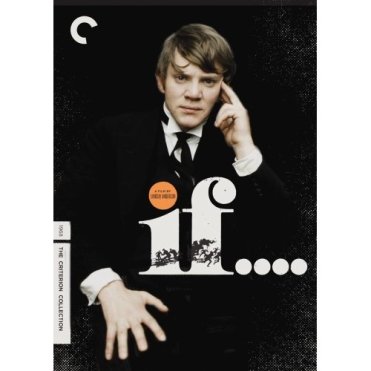
if…. — Lindsay Anderson

41ahznwegjl_ss500_.jpg

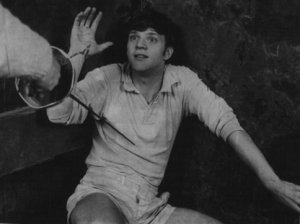
Criterion has finally given Lindsay Anderson‘s 1968 classic if…. a proper DVD release. if…. is one of my all time favorite films. Mick Travis (played with savage aplomb by a very young Malcolm McDowell) leads “The Crusaders,” a band of rebels who defy “The Whips,” the cruel upperclassmen who mete out harsh punishments at their stringent English boarding school. “What I want to know is when do we live?” asks restless Mick. However, the life of individual freedom that he wants to live is so suppressed by the cruel and dominating hierarchy of his school (a microcosm of British society) that he must take liberty by force. In one scene, the Crusaders playfully fence with each other, declaring “Death to all tyrants!” The playfulness quickly slips into violence, as the repressed urges of these would-be revolutionaries flare up. When Mick is cut, he shows his wounded hand and declares with pride “Blood! Real blood!”

if1.jpg

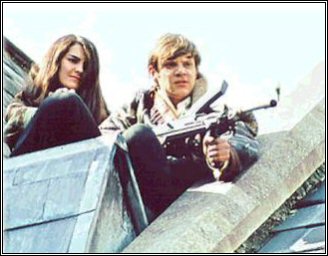
Anderson loads if…. with myriad revolutionary images that foreshadow the film’s shocking ending, at the same time tempering if…. with a surrealist sense of humor that satirizes the inherent dangers in institutionalized education and groupthink in general. if…. is bitingly funny, oddly sexy, and unlike any other film I’ve ever seen. The new edition looks great (much better than my VHS dub) and sounds great, and the commentary track provided by Malcolm McDowell and film critic David Robinson is insightful and surely a must for fans of the film. But who am I kidding, if you’re a fan of this film you’ve already seen the release and listened to the commentary–right?

if.jpg

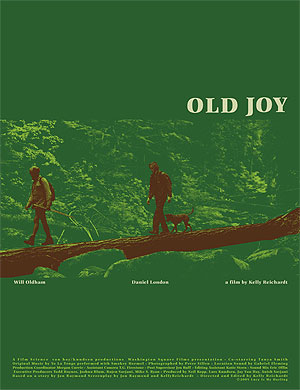
Old Joy

old-joy-poster.jpg

There’s a scene in Adaptation (dir. Spike Jonze, 2002), where “real life” screenwriter Charlie Kaufman (played by Nick Cage) delivers a railing lament that he can’t create the film he wants to–a film like “real life,” a film where people don’t face huge crises, where people don’t change, where nothing much happens. Adaptation unravels into a farce on Hollywood as Charlie’s twin brother Donald takes over the movie, clumsily forcing sex, drugs, and violence into a story frame that wasn’t meant to bear such themes. Perhaps last year’s Old Joy is the movie Charlie Kaufman would have wanted to make, if he could have.

I picked up Old Joy for two simple reasons: 1) the AV Club seemed to love it and 2) Will Oldham is one of the two leads (digression: a few years ago my wife and I saw Oldham perform on the tour supporting the Superwolf record. Oldham was drunk and somewhat lascivious, prompting my wife to announce that he would “never be allowed in our house.” That cracks me up to this day for some reason).

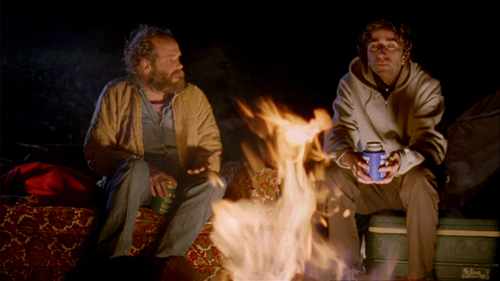
I didn’t expect to like Old Joy nearly as much as I did. The story is very simple: two aging hipsters go on a weekend camping trip in the Oregon Cascades in search of an isolated hot spring. They get a little lost the first night, camp near the road, and get back on track the next day, finding the springs without incident. Then they go home. No crises, no conflict, no life-changing events, right? Well, not necessarily. This movie is subtle. Crisis and conflict are never stated or overt, but there is definitely tension between these two old friends.

Aspects of Mark (Daniel London) and Kurt (Will Oldham) remind me of both myself and just about all of my friends. Mark’s wife is very pregnant; faced with imminent fatherhood, he is more conventionally “responsible” than Kurt, who apparently doesn’t have a permanent job or residence. Kurt gets the pair lost the first day of the trip, and while Mark pores over a map looking for some directions, Kurt carelessly rolls and smokes a joint. The tension between the two is largely implicit, and the only time the movie’s crisis–are these two still friends?–rears its head is over a campfire scene, when, after many several beers, Kurt breaks down and admits that there’s “something” between the two of them, and that their relationship has somehow changed. Mark swears that everything is fine and the issue is more or less dropped, at least in dialog. However, that conversation lingers wistfully over the rest of the film and perhaps remains unresolved.

oldjoypic.jpg

But dialog is not what this film is about. The real star of this film is director Kelly Reichardt’s lush footage of the verdant forests and streams of the Cascade Mountains. Paired with the more mundane shots of the countryside-as-seen-from-a-moving-car, these “nature shots” standout in their dreamy beauty. Reichardt’s pacing is lovely; he allows the camera to rest on still moments of tranquility, producing a soothing tone and mood that contrasts uneasily with the unspoken tensions between Mark and Kurt. Reichardt allows the forest’s own soundtrack of running water and singing birds to do much of the talking in this film, using Yo La Tengo’s beautiful soundtrack sparingly but to great effect. And at just 76 minutes, the film is a perfect length–the shots are profound at times, but never ponderous.

The overall experience of Old Joy is a mix of ineffable loss and stunning but calming beauty, perhaps best expressed in a line from Kurt. “Sorrow is just worn out joy,” he tells Mark, relating a dream he recently had. And it’s that kind of paradox that informs the film–that merging of beauty and loss and beginnings and endings. In the end, we don’t get answers, and if the characters change, those changes are understated and incremental. In Charlie Kaufman’s terms, this is a film about “real life,” and no doubt many viewers will see aspects of themselves haunting the screen.

End of the Century–The Heartbreaking Story of the Ramones

If you love the Ramones, you really shouldn’t watch the 2003 documentary film End of the Century–it will only break your heart.

logo_ramones1.jpg

I love the Ramones; I’ve loved the Ramones since I was a kid. I was lucky enough to see them in concert about twelve years ago (even then we were hip to the fact that the Ramones without Dee Dee–the C.J. version of Ramones–was not really the real Ramones). My favorite memory of the show was Joey saying that the venue of the show was built on top of a pet cemetery. Then they played “Pet Cemetery.” Genius.

So well and anyway. End of the Century. This is an excellent music documentary, a standout in a genre which is generally hit or miss. Unlike weaker films that rely on narrators or musicians influenced by the subject*, End of the Century is composed entirely of interviews (both archival and original to the film) with the Ramones themselves (Dee Dee, Tommy, Joey, Johnny, Marky, Richie (Richie wears a conservative suit in his interview, and mostly complains about not getting a taste of “that T-shirt money”) and C.J. (C.J. comes across as naive, energetic, and wholly endearing, making me feel kind of bad about my previous opinions of him). In addition to the Ramones’ first-hand accounts, there are plenty of interviews with managers and friends and family and roadies and so on–eyewitnesses who candidly relate the good, the bad, and the ugly in excruciating detail (there is plenty of ugly). Raw live footage dating back to the early 70s brings to life the sheer volume and bizarre intensity of a Ramones show.

So why so heartbreaking? Well, here’s the deal. We know that the John and Paul didn’t like each other. We know that Mick and Keith bicker. We know that bands have “creative differences” and egos get bruised and so and so on. But with the Ramones, well, I guess I always thought of them, as well, cartoons of themselves. But End of the Century makes it very clear that these guys were very, very serious about themselves and what they did. They were in no way cultivating an image: the Ramones really were what you thought they were. And they hated each other. Like, years-of-not-talking-to-each-other hatred, right up until their retirement. They were bitter–they really wanted to be successful. Now, I always thought of the Ramones as legendary, as huge, as the original punk band. But they wanted to be huge, huge like the Beach Boys or the Beatles. Hits on the radio huge (a quick aside: the accounts of working with Phil Spector on the 1980 album End of the Century, in the hopes of gaining a top 10 hit, are hilarious. Apparently Phil held the band plus entourage at gunpoint, threatening to shoot them if they returned to the hotel. The reason for Phil’s hostage-taking: he wanted them to hang out and watch movies. But I’m sure Spector’s like, totally not guilty of murdering that chick in his house). So a lot of the movie is the Ramones lamenting that they “never made it” (again, to me this was ludicrous). But really it’s the hatred, the meanness of their interviews, their complete dismissal of each other that I found most disconcerting (particularly heartbreaking is hearing Johnny’s non-affected nonchalance over Joey’s relatively recent (to the time of the movie’s shooting) death from lymphoma). Maybe I’m just a foolish fan who wanted my cartoons.

The film ends by noting that Dee Dee died of a heroin overdose two months after the film finished shooting. Johnny Ramone died in 2004. The principal members of the band all died within a few short years of each other, like married folks often do.

To end on a lighter note, check out this footage from the film, featuring Dee Dee’s rap project, Dee Dee King’s “Funky Man” (listen for this embarrassing nugget: “I’m a Negro too!”)

* There are one or two very brief interviews (like one or two sentences) with famous fans, including, of course, Thurston Moore, who is contractually obligated to appear in any film about any musician. Check out his prolific (and incomplete–unless my memory fails me he’s also in the 1995 Brian Wilson documentary I Just Wasn’t Made for These Times) filmography here.

Shining

Last week we caught Children of Men at the lovely San Marco Theater. You should go see this movie posthaste. One of the best movies I’ve seen in a long, long time. Babies are special.

Before the movie, SMT ran a trailer for The Shining, their midnight movie that night. This trailer is brilliant–check it out!

Graham Greene and Donnie Darko

The Portable Graham Greene, ed. Philip Stratford. I haven’t read a single story in this beautiful Viking Portable Library edition, save “The Destructors,” (full text here) (sorry, the page is no longer up [3/07]. Ed.) which I only read because it was referenced in one of my favorite movies, Donnie Darko.

I found this one in another teacher’s classroom. My uncle Lee had just given me a copy of Greene’s The Quiet American, which I finished in a weekend; it’s a slim, spare novel, and I enjoyed it quite a bit, despite the fact that Brendan Fraser was on the cover (the book was re-released to coincide with a film adaptation that I never saw). Anyway, I’d just read TQA, and I saw this beautiful Viking Portable Library edition (I’m a big fan of VPL), so I surreptitiously absconded with it only to never read it. A meaningless theft?

Anyway, last year a new director’s cut of Donnie Darko came out; the wife and I saw it at the San Marco Theater, I was reminded of the book, and read “The Destructors.” “The Destructors” is a simple story about a teenage gang that destroys a beautiful old house from the inside to the outside. “The Destructors” functions as an abyss structure or reading rule that informs the text-proper of Donnie Darko (it’s assigned reading from an English teacher). If you’re a fan of this movie (and if you’re not, why not?!) check out this story; it’s short and to the point. Flipping through it again, I realize that I should probably put The Portable Graham Greene back on the “To Read” stack.

If you haven’t seen Donnie Darko, enjoy the following review courtesy The Comic Critic.

Rear Window

I promise I’ll return this one.

This book makes a great introduction to film writing, although I’m not sure it’s necessarily for film fans — more of a theory book, really. This book is from my uncle’s library; for years now, whenever I visit my aunt and uncle down in the Gulf Coast, I pick this book up and read from it. My uncle also has a fantastic book of essays on Lynch’s Blue Velvet. The essays in Alfred Hitchcock’s Rear Window (ed. John Belton), written largely in the deconstructionist, post-Derrida vein, did much to influence my own college tries at film writing. I realize now that I learned more about contemporary theory (Lacanian psycholinguistics, Mulvey’s “the gaze,” etc) through these essays than I ever did in a classroom lecture. 

I didn’t mean to take this book; I’ll blame this one on the wife. Last time we stayed down in St. Pete Beach, I guess I had left the book out and she simply packed it up. We’re supposed to go down there this weekend; again, I promise to return it.

rear.jpg

Nietzsche at the Movies


Nietzsche often gets used in popular culture as a kind of shorthand for dark mysterious anger and brooding solipsistic intellect. I take this to be a serious misunderstanding of this fundamentally life-affirming philosophy. Nietzsche’s work was infamously first misappropriated by the Nazis (with the guidance of N’s conniving sister). The Nazi’s misreading of N’s concept of the superman helped gird a genocidal machine with the false semblance of ‘philosophical’ armor.

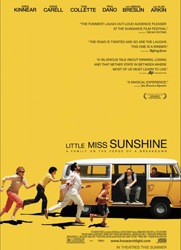
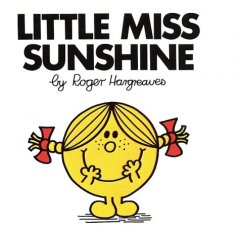
This weekend the wife and I saw and thoroughly enjoyed Little Miss Sunshine (this is not to be confused with the Roger Hargreaves epic from the Mr. Men and Little Miss series)

lilmiss.jpg

 This movie depicts the bizarre odyssey of the dysfunctional Hoovers as they try to get little Olive Hoover (charmingly acted by Abigail Breslin) to the “Little Miss Sunshine” pageant all the way in California.

 Olive’s angry, intense teenage brother Dwayne has not spoken for over 9 months. He communicates only through sullen glares and written notes (sample — “I hate everyone!”)

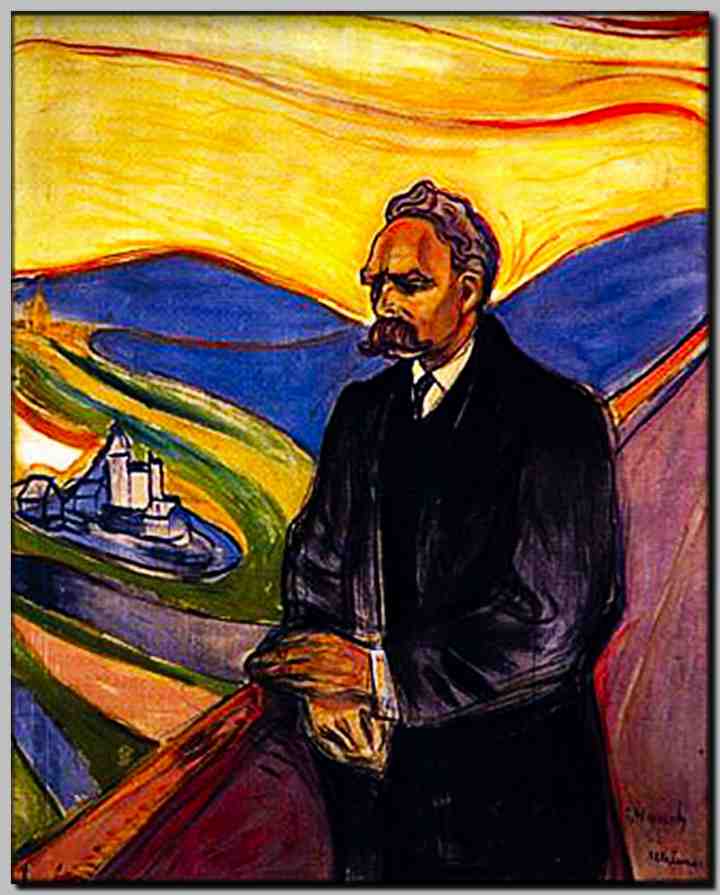
Dwayne is inseparable from his battered copy of Thus Spoke Zarathustra. He also has a huge banner with an imagistic drawing of Nietzsche (with a powerful mustache) hanging on his wall. A strange moment occurs when suicidal Uncle Frank (Steve Carell) looks at the banner and nonchalantly avers: “Nietzsche, huh?” Frank later claims to be America’s pre-eminent Proust scholar.

I haven’t read Proust.

I liked the movie a lot, and of course I love literary references. But Nietzsche is my favorite philosopher and I hate to see him misrepresented as a humbug or a misanthrope or a miscreant of any sort. Nietzsche wanted people to think for themselves and avoid the static slavery of indoctrination (“the herd”). In this sense, N’s ideas do inform Little Miss Sunshine‘s heroes, the bizarre, nonconformist Hoovers. But N’s work also warns against easy symbols and singular readings, while stressing the importance of embracing life. Nietzsche’s writing is not the mute echo of anger and resentment and hate; Nietzsche’s wiritng is the booming voice of joy and movement and life. And maybe sunshine.

nietzsche courtesy munch