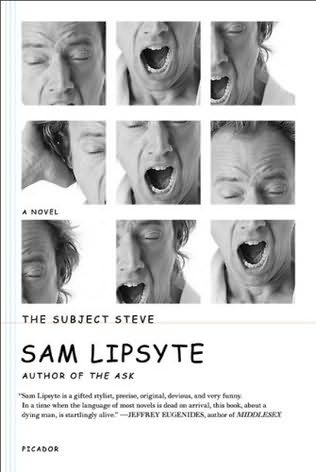
The Subject Steve — Sam Lipsyte

A few years ago, I wrote about cult novels, and, in trying to define them, I suggested that “a cult book is not (necessarily) a book about cults.”  Sam Lipsyte’s first novel The Subject Steve is a cult novel about a cult, or at least heavily features a cult. Like many cult novels, there’s an apocalyptic scope to Steve, one in this particular case (or subject, if you will), that extends from the personal to the universal.

I’ll let Lipsyte’s compressed acerbic prose spell out the book’s central conflict—

The bad news was bad. I was dying of something nobody had ever died of before. I was dying of something nobody had ever died of before. I was dying of something absolutely, fantastically new. Strangely enough, I was in fine fettle. My heart was strong and my lungs were clean. My vitals were vital. Nothing was enveloping me or eating away at me or brandishing itself towards some violence in my brain. There weren’t any blocks or clots or seeps or leaks. My levels were good. My counts were good. All my numbers said my number wasn’t up.

The problem of death, or the problem of how to live a meaningful life against the specter of death, is of course an ancient conceit, and Lipsyte makes it the core of his book, upon which he hangs an often shaggy picaresque plot. The Subject Steve is post-modernist caustic satire in the good old vein of Candide; put another way, it’s just one damn thing happening after the next.

So, what are some of those things that happen? Steve (not his real name) is condemned to die of a disease with no name; he tries to make contact with his estranged wife and not-quite-a-genius daughter; he blows his life savings on hookers and blow; he heads upstate to a cult’s compound in the hopes of finding a cure to his unnamed (unnameable) disease; he suffers the cult’s sadistic practices; he escapes the cult’s sadistic practices; he reunites with his wife and daughter; he abandons his wife and daughter; he reunites with a new version of the cult somewhere in the Nevada desert; he becomes enslaved by the cult in the Nevada desert; he escapes the cult; &c. And he reflects on his life (and his death) repeatedly. I’ll let Steve reflect on his life at length, if for no other reason than to share more of Lipsyte’s marvelous prose—

And I was still dying, wasn’t I? Who would note? What had I ever noted? I’d taken my pleasures, of course, I’d eaten the foods of the world, drunk my wine, put this or that forbidden particulate in my nose until the room lit up like a festival town and all my friends, but just my friends, were seers. I’d seen the great cities, the great lakes, the oceans and the so-called seas, slept in soft beds and awakened to fresh juice and fluffy towels and terrific water pressure. I’d fucked in moonlight, sped through desolate interstate kingdoms of high broken beauty, met wise men, wise women, even a wise movie star. I’d lain on lawns that, cut, bore the scent of rare spice. I’d ridden dune buggies, foreign rails. I’d tasted forty-five kinds of coffee, not counting decaf.

I love this passage. In almost any other book I can think of, the final detail about coffee would puncture the passage’s inflation, serve as a comic anti-climax. In Lipsyte’s phrasing it’s both tragic and triumphant.

I don’t mean to gloss over the plot of The Subject Steve, but the book’s narrative, its sense of time, is so radically compressed (again, I think of the compression of Candide) that reading it is more like experiencing a rapid series of scenarios. I’m particularly fond of books like this, that seem to ramble and erupt in strange and unexpected moments. I think of Ellison’s Invisible Man or Woolf’s Orlando, but there’s also something of Aldous Huxley in Steve, that apocalyptic-comic axis, the satire of despair. The book is one of those pre-9/11 novels (forgive the phrase) that seems utterly prescient. Take the following observation for example—

Someday sectors of this city would make the most astonishing ruins. No pyramid or sacrificial ziggurat would compare to these insurance towers, convention domes. Unnerved, of course, or stoned enough, you always could see it, tomorrow’s ruins today, carcasses of steel teetered in a halt of death, half globes of granite buried like worlds under shards of street. Sometimes I pictured myself a futuristic sifter, some odd being bred for sexlessness, helmed in pulsing Lucite, stooping to examine an elevator panel, a perfectly preserved boutonniere.

The language here anticipates the Dead America that Lipsyte explores in his latest novel, The Ask, and reinforces a general argument I’d like to make, which is that Lipsyte is at heart a writer of dystopian fictions, fictions so contemporary that their dystopian nature becomes effaced.

These dystopian tropes coalesce in the frantic, hyperbolic ending of Steve, where our subject becomes the object of a bizarre cult’s ritual sadistic practices, all available via the panopticon of the internet. Lipsyte’s vision is of a post-human existence, a radical otherness of degradation through technological alienation. At this late moment in the book, the satire is so black that even Lipsyte’s tightest, pithiest sentences fail to elicit a laugh or a smile — indeed, I am almost certain that they are not intended to do so. Instead we are immersed in the apocalyptic horror of dehumanization (the book here reminded me of Hunter S. Thompson’s Fear and Loathing, of all things, both in its desert location and in its gradual movement from sardonic humor to vivid terror).

Like any cult novel, or destined cult novel, The Subject Steve is Not For Everyone. Those looking for plot development and tidy endings will not find them here, and, if the tone of this review has not already made it clear, the book is extremely dark. But it’s also very, very funny, and there are few stylists working today who can match Lipsyte’s mastery of the sentence. Highly recommended.

The Subject Steve is now available in trade paperback from Picador.

Home Land — Sam Lipsyte

[Editorial note: Biblioklept ran a version of this review last year; we run it again in the spirit of Sam Lipsyte Week].

In Sam Lipsyte’s 2004 novel Home Land, minor loser Lewis Miner sends missives to his high school alumni newsletter, Catamount Notes, about his awful, sad misadventures in small-time drug use, petty copy-writing, itinerant busboyism, and chronic masturbation (he has a strong erotic disposition toward leg warmer porn. If this idea repels you (with no reciprocal attraction) this book is not for you). Miner wants to be sweet but he can be mean. He’s obsessed with the past–and who can blame him? His nickname in high school was Teabag, an appellation literally thrust upon him by the dumbest of jock-bullies. He carries this kernel of spite for years like a pebble in the sock, one that rubs up a giant blister–Miner is all blister. Writing ostensibly to his former classmates, but really just for himself, another form of masturbation:

It’s always been this way, as many of you might recall. Somebody chucks a snowball, I’m scouring the school yard for rocks. The bully just wants to shove sadness around, shake me down for spare change, I’m looking to scrape out his eye. I lack a sense of proportion. I have no sensitivity to sport. I’m the aggrieved rider on the grievous plain. I’m still pissed about the parade.

For all his anger though, Miner is an engaging, preternaturally sensitive voice. Along with his best friend/foil Gary, he muddles through a wretched life, finding solace (and an outlet for an outsized comic voice) in his letters to Catamount Notes–even if disgraced Principal Fontana won’t publish them. Despite his censorious discretion, Fontana reignites a downright silly mentorship with Miner. Fontana, a man after Holden Caulfield’s heart who calls everyone a “phony,” plays a weird father-figure to our favorite loser (even though Lewis’s own “Daddy Miner” is an ever-present terror in this tragicomedy).

Fontana, Daddy Miner, and the other characters in Home Land often feel like props rather than fully-drawn beings. Take the aforementioned Gary, for example, flush with cash after suing the hypnotherapist who convinced him that his parents sexually abused him repeatedly as part of elaborate Satanic rituals. His ridiculous past is par for course in the book. Such characters are the stock-in-trade of Home Land; they are, paradoxically, both its strength and weakness, beings who seem to speak entirely in misplaced metaphors and fucked-up aphorisms. There are too many of them for the book’s 200 pages. The fast writing never sags under the huge cast, but, nonetheless, its spine, its plot, its quick rhythm can’t bear their weight. There’s a much bigger novel here, but I don’t think I’d want to read it. Even Lipsyte’s normals are grotesques–or maybe it’s just Miner’s bilious perspective. In any case, sympathy is in short supply in Catamount country.

None of this is meant to disparage the reading experience of Home Land, which is marvelous, quick, funny, and a little bit gross (in a good way). Lipsyte crafts his sentences with a concrete, witty excellence that is near unrivaled in contemporary lit. It’s true that he sacrifices the depth of his characters here from time to time, and then includes passages that add nothing to the plot as a whole, like this one:

An older shapely woman swerved past on rollerblades. Bronzed, undulant in black Lycra, she clutched a pack of menthol cigarettes, danced on her wheels to something pumped through headphones. It was an admirable kind of ecstasy, hard-won. I wanted her for a lewd aunt.

That last line, of course, tells us so much about Lewis Miner and is also indicative of his overall method of storytelling. Not that he sees his letters to his alumni newsletter as part of a larger narrative–indeed, he’s to be forgiven all his esoterica, his mean, incisive commentary on contemporary life that doesn’t add up. Halfway through the book he tells us:

It occurs to me, Catamounts, sitting here composing this latest update, that someday, if and when the collected works of Lewis Miner ever see the light of day, some futuristic editor-type might attempt to assemble these dispatches in a certain manner, to, for example, tell a story, or else effect some kind of thematic arrangement of interwoven leitmotifs: Work, Love, Masturbation, Gary.

This would be a mistake. There are no leitmotifs. There is no story.

Miner then goes on to makes a pretty convincing case against stories (or at least against narrative arcs) and, tellingly, Home Land is better as a series of ugly, gross, hilarious anecdotes than it is as a novel with a traditional character arc. Which it is–a novel with a traditional character arc, climax, all that good stuff. Strangely, this is the book’s biggest failure. But that failure doesn’t get in the way of what is a pretty great and often very funny reading experience. Miner’s voice is a pleasure to inhabit for a while, a postmodern Falstaff heavy on the self-loathing. Home Land is a quick, easy read, a novel destined for cult-status, and Lewis Miner’s pathetic ironic braggadocio will hit home for many folks. Recommended.

Home Land is available in trade paperback from Picador.


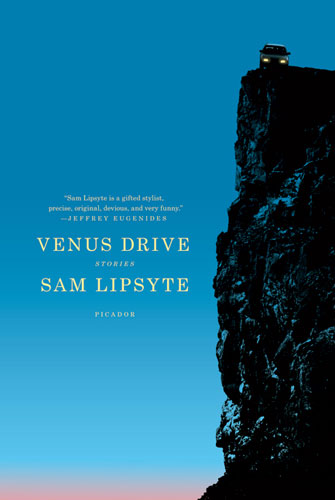
Venus Drive — Sam Lipsyte

[Editorial note: Biblioklept ran a version of this review last year; we run it again in the spirit of Sam Lipsyte Week].

The thirteen stories in Venus Drive compose a sort of novel-in-stories. The title of the collection takes its name from a banal suburban street mentioned in a few of the stories, and many of the characters seem like iterations of the same type or voice. There are washed up would-be indie rock stars, small-time coke peddlers, and underemployed and overeducated addicts. There are deviants and perverts and outsiders. There are bullies. There are dead or dying mothers, dead or dying sisters. In short, Venus Drive is its own tightly-drawn, tightly-coiled, and highly-compressed world.

As the plot points double and re-double in these stories, so do the themes. “Our culture is afraid of death, and considers it something we must wage battle against,” says Tessa, a pain specialist, a peripheral character in “Cremains.” She continues: “I say, surrender, submit. Go gentle. Terminal means terminal.” Death informs almost all of these stories in some way, and Tessa’s commentary presents the problem with death, or at least the problem these characters have with dealing with death: it’s not easy to go gentle. It goes against our culture and our nature to surrender. If she’s presented as a voice of wisdom, she’s also an ironic character, one of the many would-be authorities Lipsyte’s weirdos and outsiders can’t help but mock. “The Drury Girl,” part-suburban satire and pure pathos, posits a pre-pubescent narrator obsessed with his teenage babysitter; his dad’s cancer plays second fiddle to his lust. Thus the story neatly ties together the overarching themes of Venus Drive, sex and death. Admittedly, these are probably the only real themes of proper literature, but Lipsyte does it so damn well and lays it all out so bare and does so in such humor and grace that it really sticks. It’s good stuff.

That humor is desert-dry, of course, and succeeds so well because his characters are so endearing in their pathetic pathologies. The antiheroes of “Beautiful Game” and “My Life, for Promotional Use Only,” are also-rans in the sordid history of underground rock, addicts approaching washed-up (Are they the same person? Maybe. They have different names, of course. Doesn’t matter). A scene from “Beautiful Game” shows the ambivalence at the core of many of these characters: “At the bank machine, Gary doesn’t check the balance. Better to leave it to the gods. Someday the bank machine will shun him. Why know when?” Gene, the ex-rocker in “My Life, for Promotional Use Only” now suffers the indignities of working for his ex-girlfriend. Everyone in the story is an ex-something, everyone is growing up and leaving art (or is it “Art”?) behind. In a poignant and funny and cruel scene, familiar to many of us, Gene sees some of himself in a waitress:

Rosalie calls over the waitress and they talk for a while about somebody’s new art gallery. The waitress is famous for a piece where she served the Bloody Marys mixed with her menstrual blood. Word had it she overdid the tabasco.

I wait for the moment when our waitress stops being a notorious transgressor of social mores and becomes a waitress again, look for it in her eyes, that sad blink, and order a beer.

Gene, a former “notorious transgressor of social mores” himself feels both sorrow and hate for the waitress. He sees her job as menial and pathetic — just like his own. He doesn’t seem to think much of her art, either. Lipsyte telegraphs so much there with so few words, his sentences clean, spare, precise, and rarely of the compound variety. There’s a truncated, clipped rhythm that Lipsyte builds over the thirteen-story run that helps propel the immediacy of his tales. The stories are short, too; the longest is sixteen pages and most run to eight or ten. Lipsyte’s rhetorical gift is to shine the grubby and, at times, his sentences can feel almost too perfect, too-fussed over–but this (minor) complaint, it must be noted, comes from someone who admires occasional ambiguity or incoherence. Lipsyte removes his own authorial voice and thus achieves lucidity in his characters’ voices; somehow, though — and paradoxically — these voices bear the ghostly trace of his absence. But that seems like a silly conversation, and certainly not one for this post.

Venus Drive reminds me very much of one of my favorite books, Denis Johnson’s Jesus’ Son, which I would also call a novel-in-stories, also a spare and precise collection, also a study of weirdos and addicts and outsiders. Jesus’ Son is something of a standard in creative writing workshops (or at least it used to be) and a sensible teacher would add Venus Drive to her syllabus as well. Finally, like Jesus’ Son, Lipsyte’s book is seething, funny, and poignant, with characters tipped toward some redemption, awful or otherwise, for all their myriad sins. The book might take its name from a geographic location, but the “Venus drive” is also a spiritual inclination toward love and hope. Highly recommended.

Venus Drive is available in trade paperback from Picador.

Airships — Barry Hannah

In his 1978 collection Airships, Barry Hannah sets stories in disparate milieux, from the northern front of the Civil War, to an apocalyptic future, to the Vietnam War, to strange pockets of the late-twentieth century South. Despite the shifts in time and place, Airships is one of those collections of short stories that feels somehow like an elliptical, fragmentary novel. There are the stories that correspond directly to each other — the opener “Water Liars,” for instance, features (presumably, anyway), the same group of old men as “All the Old Harkening Faces at the Rail.” The old men love to crony up, gossip, tell tall tales. An outsider spoils the fun in “Water Liars” by telling a truth more terrible than any lie; in “Harkening,” an old man shows off his new (much younger) bride. These stories are perhaps the simplest in the collection, the homiest, anyway, or at least the most “normal” (whatever that means), yet they are both girded by a strange darkness, both humorous and violent, that informs all of Airships.

We find that humor and violence in an outstanding trio of Civil War stories (or, more accurately, stories set during the Civil War). The narrator of “Dragged Fighting from His Tomb,” a Confederate infantryman relates a tale of heroic slaughter with a hypberbolic, phallic force. Observe—

I knew the blueboys thought they had me down and were about ready to come in. I was in that position at Chancelorsville. There should be about six fools, I thought. I made the repeater, I killed four, and the other two limped off. Some histrionic plumehead was raising his saber up and down on the top of a pyramid of crossties. I shot him just for fun. Then I brought up another repeater and sprayed the yard.

Later, the narrator defects, switches to the Union, and claims he kills Jeb Stuart, a figure that towers over the Civil War tales. The narrator of “Dragged Fighting” hates Stuart; the narrator of “Knowing He Was Not My Kind Yet I Followed” is literally in love with the General. In contrast to the narrator of “Dragged Fighting,” the speaker in “Knowing” — an avowed “sissy” whom the other soldiers openly detest — hates the violence and madness of war—

We’re too far from home. We are not defending our beloved Dixie anymore. We’re just bandits and maniacal. The gleam in the men’s eyes tells this. Everyone is getting crazier on the craziness of being simply too far from home for decent return. It is like Ruth in the alien corn, or a troop of men given wings over the terrain they cherished and taken by the wind to trees they do not know.

He despairs when he learns of Jeb Stuart’s death. In the final Civil War story, “Behold the Husband in His Perfect Agony,” a Union spy is given the task to communicate news of Stuart’s death through enemy lines. Rather than offering further explication, let me instead point you, dear reader, to more of Hannah’s beautiful prose, of which I have not remarked upon nearly enough. From “Behold the Husband” —

Isaacs False Corn, the Indian, the spy, saw Edison, the Negro, the contact, on the column of an inn. His coat was made of stitched newspapers. Near his bare feet, two dogs failed earnestly at mating. Pigeons snatched at the pieces of things in the rushing gutter. The rains had been hard.

The short, descriptive passage rests on my ears like a poem. Hannah, who worked with Gordon Lish, evinces in his writing again and again that great editor’s mantra that writing is putting one sentence after another.

Although set in the Vietnam War, “Midnight and I’m not Famous Yet” seems an extension of the Civil War stories. In it, an officer from a small Southern town goes slowly crazy from all the killing, yet, like the narrator of “Dragged Fighting,” he presents himself as a warrior. Above all though, he laments that the war has robbed him of some key, intermediary phase of his late youth, a phase he can’t even name—

The tears were out of my jaws then. Here we shot each other up. All we had going was the pursuit of horror. It seemed to me my life had gone straight from teen-age giggling to horror. I had never had time to be but two things, a giggler and a killer.

This ironic sense of a “pursuit of horror” pervades Airships, particularly in the collection’s most apocalyptic visions. “Eating Wife and Friends” posits an America where food shortages and material scarcity leads people to eating leaves and grass — and then each other. In “Escape to Newark,” the environment is wildly out of balance—

In August it’s a hundred fifty degrees. In December it’s minus twenty-five and three feet of snow in Mississippi. In April the big trees explode.

A plan is made to “escape” these conditions via a rocket, but of course there’s not enough fuel to get past Newark. In Airships, modes of flight are transcendent but ultimately transient. Gravity’s pull is heavy stuff.

Just as Hannah’s war stories are not really war stories, his apocalypse tales are really about human relationships, which he draws in humor, pathos, and dark cynicism. In “Green Gets It,” an old man repeatedly attempts his suicide, only to fail again and again. His suicide note, written to his daughter, is scathing and shocking and sad and hilarious and wise–

My Beloved Daughter,

Thanks to you for being one of the few who never blamed me for your petty, cheerless and malign personality. But perhaps you were too busy being awful to ever think of the cause. I hear you take self-defense classes now. Don’t you understand nobody could take anything from you without leaving you richer? If I thought rape would change you, I’d hire a randy cad myself. I leave a few dollars to your husband. Bother him about them and suffer the curse of this old pair of eyes spying blind at the minnows in the Hudson.

Your Dad,

Crabfood

Although Hannah explores the darkest gaps of the soul in Airships, he also finds there a shining kernel of love in the face of waste, depravity, violence, and indifference. This love evinces most strongly perhaps in Airships trio of long stories. These tales, which hover around 30 pages, feel positively epic set against the other stories in the collection, which tend to clock in between five and ten pages. The first long story, “Testimony of Pilot,” details the development of a boyhood friendship over a few decades. It captures the strange affections and rivalries and unnameable bonds and distances that connect and disconnect any two close friends. The second of the long tales is “Return to Return,” a tragicomic Southern drama in the Oedipal vein (with plenty of tennis and alcoholism to boot). As in “Testimony of Pilot,” Hannah finds some measure of redemption, or at least solace, for his characters in their loving friendship, yet nothing could be more unsentimental. The final long story, which closes the collection, is “Mother Rooney Unscrolls the Hurt,” a daring work of stream of consciousness that seems to both respond to — and revise — Katherine Anne Porter’s “The Jilting of Granny Weatherall.” The story concludes (and of course concludes the volume) with a vision of love that corresponds to the imagery of The Pietà, a kind of selflessness that ironically confirms the self as an entity that exists in relation to the pain of others.

I could keep writing of course — I’ve barely touched on Hannah’s surrealism, a comic weirdness that I’ve never seen elsewhere; it is Hannahesque, I suppose. Nor have I detailed Hannah’s evocations of regular working class folk, fighting and drinking and divorcing and raising children (not necessarily in that order). Airships is a world too rich and fertile to unpack in just one review, and I’ve already been blathering too long, I fear, when what I really want  to do is just outright implore you, kind reader, to find it and start reading it immediately. Very highly recommended.

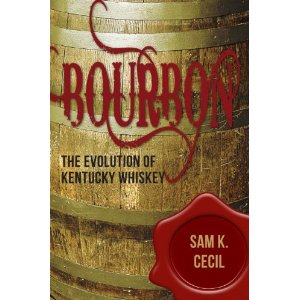
Bourbon — Sam K. Cecil

Hey. Do you like bourbon? I like bourbon a lot. It’s always been of a mild shame to me that the men in my family prefer the smoother stylings of Canadian whiskeys to the more robust corn-fueled liquors we produce here in the south. Now, as to whether Kentucky or Tennessee makes the finer product, I abstain from any definitive opinions (although a particular favorite brand of mine comes from Kentucky) because, as Sam K. Cecil’s book Bourbon: The Evolution of Kentucky Whiskey shows, there are many, many, many distilleries of bourbon (and that’s just in Kentucky alone).
Cecil’s book aims to be a comprehensive cataloging of every bourbon distillery in Kentucky, and he devotes over 200 pages to brief histories of these distilleries — a full two-thirds of the book. And while his stories are hardly dry, I found myself thirsty for more of what leads the book, an overview of the history of corn alcohol in the South that winds through days of yore to prohibition problems, from running moonshine under the Volstead act to the brass tacks of bourbon business after the repeal. Cecil incorporates many images in this section, including pictures of the distilling process, excited drinkers, and more than one vaguely racist advertisement. It’s a fun, snappy summary, delivered with love. As the bulk of the book — the detailing of Kentucky distilleries, county-by-county — attests, Cecil knows his stuff. Bourbon is hardly the kind of gimmick book that one often encounters when alcohol is the subject, nor is it for casual fans of the brown stuff. Serious drinkers only. Bourbon is new in trade paperback from Turner Publishing.

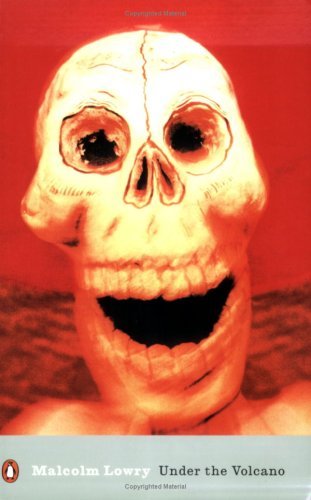
Under the Volcano — Malcolm Lowry

Most of Malcolm Lowry’s dense, depressing novel Under the Volcano takes place over the course of November 2nd, 1938, the Mexican Day of the Dead. Like a reticent, dour Virgil, Lowry guides the reader through the day’s tragic arc, floating between the minds of his novel’s three protagonists: Geoffrey Firmin, his half-brother Hugh, and Geoffrey’s estranged wife Yvonne. Geoffrey is British Consul to Mexico — ex-Consul, really, as British-Mexican relations sour against the backdrop of Spanish fascism and the rise of nationalism in Mexico — but he is almost always referred to as “the Consul,” a blackly ironic title. See, the Consul bears little authority aside from an extreme expertise on how to stay drunk (or “drunkly sober un-drunk”) 24/7. He’s ambassador to bar stools, a manager of mescal and little else (certainly not his own life; certainly not diplomatic affairs). The Consul is a wreck, an alcoholic to put Hemingway and Fitzgerald’s (and even Bukowski’s) alter-egos to shame.

After a first chapter that seems to derail all but the most patient readers, the narrative conflict arrives when Yvonne returns to Quauhnahuac, Mexico, a year after leaving (and divorcing) the Consul. She arrives to find the Consul (“Geoffrey,” as he’s called when the free indirect style inhabits her mind) drinking whiskey in a hotel bar in order to sober up (yep). It’s not immediately clear why Yvonne has returned to the Consul, but it seems that she hopes to save him from drowning in a drunken downward spiral. As the pair walks to the Consul’s house, they pass numerous advertisements for a boxing match; a child’s funeral proceeds down the avenue. These motifs of fighting, death, and futility permeate the novel.

During the walk we learn that Yvonne is not the only one concerned about the Consul’s health; his (much) younger brother Hugh has come to stay with him in the hopes of sobering him up. (Hugh employs a revolting and unsuccessful “strychnine cure”). That Hugh has also returned doubly complicates the plot. Much of Under the Volcano remains implicit, unnamed, hinted at, and this seems especially true of the implication that Yvonne cheated on the Consul with Hugh in the recent past (this implication may have been stated conclusively at some point in the novel, but I’ve only read the book once, which is perhaps like not having read it at all). What’s certainly clear is that Yvonne cheated on the Consul with a French filmmaker, Jacques Laruelle, a man whom the Consul, through sheer bizarre coincidence (but of course it isn’t sheer bizarre coincidence), spent a childhood summer with, and experience which bonded them as brothers in an Edenic holiday that eventually (inevitably) soured.

Despite her infidelities, Yvonne is generally present (I choose the verb “present” over “presented as” to highlight Lowry’s impeccable Modernist style) as a sympathetic character. Still, it is hard not to identify with the Consul (with “Geoffrey,” I suppose, if we are going to be familiar), the dark soul of this novel, and his complicated, painful feelings for Yvonne form the core of Volcano’s tragedy. He longs for her, pines for a complete life with her, yet resents her, cannot forgive her, hates her. For what? For leaving him. For betraying him. But perhaps foremost, he despises her inability to understand his alcoholism (he is particularly upset when she refuses to share a morning libation with him when they meet for the first time in a year). I’ll quote a passage at length now, one that showcases Lowry’s free indirect style, and one that reveals the strange indignities of the Consul’s sense of his own alcoholism. For context, dear reader, you must only know that Yvonne has suggested that she and the Consul might make long-term plans when he is sober “in a day or two”—

The Consul sat perfectly still staring at the floor while the enormity of the insult passed into his soul. As if, as if, he were not sober now! Yet there was some elusive subtlety in the impeachment that still escaped him. For he was not sober. No, he was not, not at this very moment he wasn’t! But what had that to do with a minute before, or half an hour ago? And what right had Yvonne to assume it, assume either that he was not sober now, or that, far worse, in a day or two he would be sober? And even if he were not sober now, by what fabulous stages, comparable indeed only to the paths and spheres of the Holy Cabbala itself, had he reached this stage again, touched briefly once before this morning, this stage at which alone he could, as she put it, “cope,” this precarious precious stage, so arduous to maintain, of being drunk in which alone he was sober! What right had she, when he had sat suffering the tortures of the damned and the madhouse on her behalf for fully twenty-five minutes on end without having a decent drink, even to hint that he was anything but, to her eyes, sober? Ah, a woman could not know the perils, the complications, yes, the importance of a drunkard’s life! From what conceivable standpoint of rectitude did she imagine she could judge what was anterior to her arrival? And she knew nothing whatever of what all too recently he had gone through, his fall in the Calle Nicaragua, his aplomb, coolness, even bravery there—the Burke’s Irish whiskey! What a world! And the trouble was she had now spoiled the moment.

The “fall in the Calle Nicaragua” the Consul references is quite literally a drunkard’s blackout (followed by the aforementioned fortifying whiskey, courtesy of a tourist), but it — falling — is perhaps the dominant motif in a novel crammed with motifs. In allegorical terms, if we want to ruin a good book (I don’t recommend this, of course), Volcano is pure Faust-stuff: end of innocence, fall of man, intractability of the human condition, ethical peril, moral inertia. While the Consul’s fall dominates the novel, Lowry brings this decline into dramatic relief in a late, climactic episode when his (anti-)heroic trio encounter a dying (dead?) man on the side of the road. Hugh tries to help, but the Darwinian venality of Mexican commonplace law makes his attempt impotent. Yvonne and the Consul are basically paralyzed.

Hugh’s attempt to save the man is a desperate call to action, an endeavor to perform some good in a world dominated by war and fascism. Hugh’s character fascinates. We learn of his past in one of the novel’s most intriguing episodes, a mini-bildungsroman that finds young Hugh working in the merchant marine as a calculated ploy to lend romance to his persona — he longs to prevail as a songwriter. He returns to find that no one cares about — has even heard — his guitar compositions; his publicity stunt fails. Although Hugh is only twenty-nine, he already seems himself as a failure, a fallen hero; he obsesses over the Battle of Ebro, daydreaming of helming a ship laden with hidden arms that he will deliver to the Loyalists who oppose the Fascists. Hugh’s greatest pain — and perhaps (only perhaps) Lowry’s greatest cruelty — is the awareness that the idealism of romantic heroism is intrinsically bound to a kind of selfish egoism. Hugh, perhaps with the visceral signal of his half-brother as a kind of radical prescience, can already see his own fall; his parts in Volcano are in a sense a constant meditation on falling. Hugh tries to save the dying man on the road, the cold double of his brother, whom he also tries to save — and yet it is all to little avail.

In Lowry’s world, in the volcano-world, there is only expulsion from the Eden. Lowry spells out this theme near the middle of his novel in a strange episode. The Consul wanders into his neighbor’s garden and reads a sign —

¿LE GUSTA ESTE JARDÍN?
¿QUE ES SUYO?
¡EVITE QUE SUS HIJOS LO DESTRUYAN!

The Consul stared back at the black words on the sign without moving. You like this garden? Why is it yours? We evict those who destroy! Simple words, simple and terrible words, words which one took to the very bottom of one’s being, words which, perhaps a final judgement on one, were nevertheless unproductive of any emotion whatsoever, unless a kind of colourless cold, a white agony, an agony chill as that iced mescal drunk in the Hotel Canada on the morning of Yvonne’s departure.

Significantly, either the sign is posted with improper punctuation, or (and?) the Consul’s translation is wrong — in either case a meaningful misreading occurs. We later receive the “proper” version of the sign: “¿Le gusta este jardín, que es suyo? ¡Evite que sus hijos lo destruyan! – “Do you like this garden that is yours? See to it that your children do not destroy it!”  The Consul’s first reading is a corruption, a cruel misreading that questions humanity’s right to happiness, and, tellingly, he connects the sign to the end of his relationship with Yvonne. The second version of the sign, while still foreboding, perhaps signals a kernel of hope in Lowry’s bleak work — the idea that a garden might be preserved, might be tended to; that children might be raised who do not kill, cheat, steal, rape, enslave, or otherwise prey on each other. Still, Lowry refuses to imagine what such a world might look like for us. Did I mention that Volcano is really, really sad?

For all its bleak, bitter bile, Volcano contains moments of sheer, raw beauty, especially in its metaphysical evocations of nature, which always twist back to Lowry’s great themes of Eden, expulsion, and death. Lowry seems to pit human consciousness against the naked power of the natural world; it is no wonder then, against such a grand, stochastic backdrop, that his gardeners should fall. The narrative teems with symbolic animals — horses and dogs and snakes and eagles — yet Lowry always keeps in play the sense that his characters bring these symbolic identifications with them. The world is just the world until people walk in it, think in it, make other meanings for it.

In many ways, Under the Volcano is an antipodal response to Joyce’s Ulysses. Both novels stream through a number of consciousnesses over the course of one day; both novels invert and subvert mythical frameworks against diurnal concerns; both novels point to the ways that the smallest meannesses — and kindnesses — can color and affect our lives. And while there are many divergences (chiefest, I believe, the spirit of redemption in Ulysses that seems entirely absent from Volcano), the greatest similarity may be their difficulty. Simply put, Lowry, like Joyce, throws his readers into the deep end. The first chapter of the novel inhabits the mind of Jacques Laruelle and takes place exactly one year after the events of the rest of the novel. It is both overture and context for all that follows, and yet it is radically alienating; indeed, it only fully makes sense after one finishes the novel and goes back and reads it again, realizing it is the rightful coda, the sad epilogue of a sad story. Lowry leads with his conclusion, show us the fall-out up front, the splinters and shards of the narrative to come. Picking up these pieces is hardly easy and never joyful, but it is a rewarding experience. Very highly recommended.

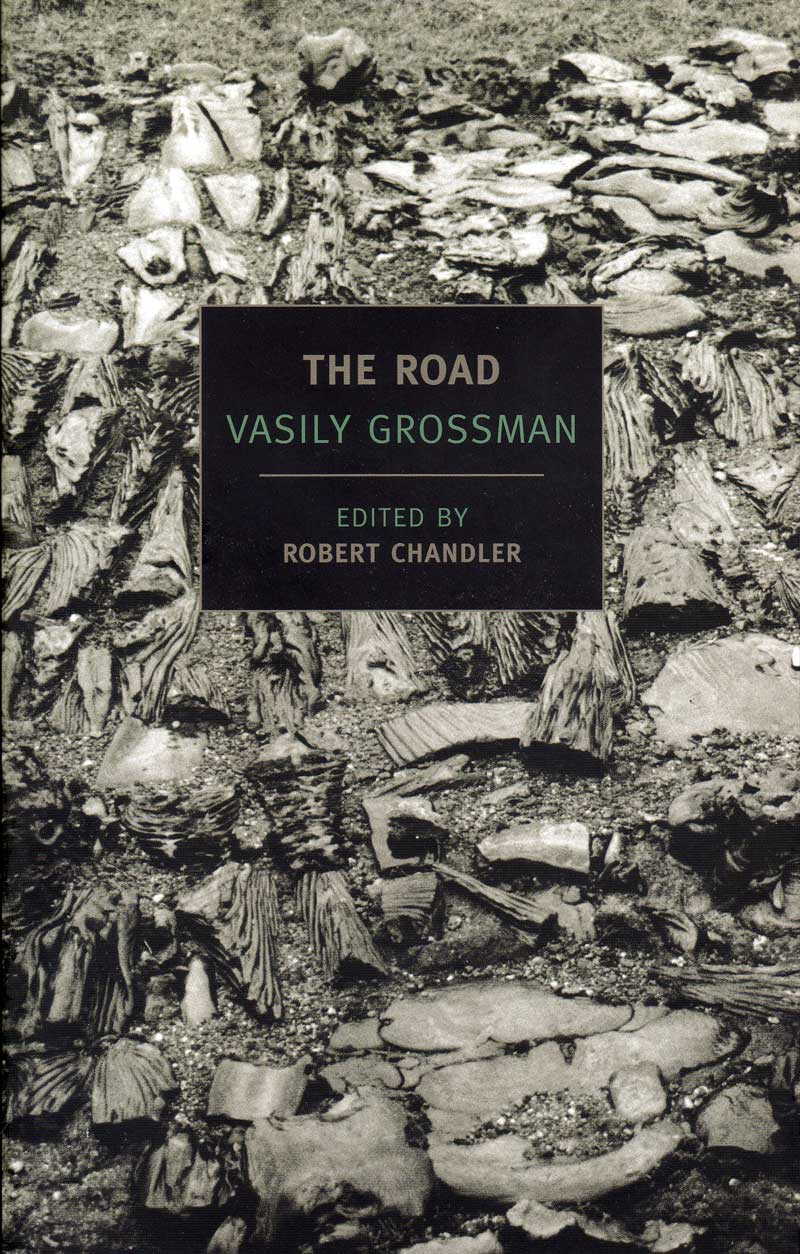
The Road — Vasily Grossman

I’d never heard of Vasily Grossman until Timothy Snyder referred to him, briefly, as a Soviet journalist who published some of the first unflinching reports of atrocities committed by Nazi soldiers and Hitler’s secret police during their conquest of eastern Europe. In Bloodlands, Snyder lauded Grossman as a reporter guided by a clear moral vision and a keen understanding of the tenuousness of human life.  A Ukrainian Jew who rhapsodized the Red Army’s defense of Stalingrad and then followed it all the way to Berlin, he built a literary career under the Soviet system before passing away with little fanfare. Although his early novels sold in the millions, at the time of his death in 1964 his reputation in his homeland was shattered, his health had deteriorated, and his final novels were blacklisted.  He could count himself lucky to have lived through a number of purges of the U.S.S.R.’s literary elite.  Edited and compiled by Robert Chandler for the impressive New York Review Books imprint, The Road collects of a number of his short stories, essays, letters, and articles in one well-curated volume, an excellent introduction to an important but neglected voice.

Organized chronologically, Grossman’s stories are separated by brief biographical notes thoughtfully included by Chandler. Although the selections fall into early, middle, and later works, it becomes clear that Grossman’s life as a man and as a writer (at least how it is presented here) can be broken up into distinct periods marked by increasing dissatisfaction with life under Soviet rule. Chandler labels the periods, from earliest to latest: “The 1930s,” The War, The Shoah,” and “Late Stories.”  The works in this collection are sad—truly sad—but throughout he returns to remembrances of love and small gestures of tenderness.  He is marked by the excesses of the totalitarian regimes he waged war upon and lived under. As a result, his writing demonstrates an appreciation of kindness that could only arise from a true comprehension of both humanity’s potential for cruelty and the limitless power of an autonomous mind.

The first short section, “The 1930s,” collects three concise stories concerning the creation and dissolution of family bonds.  “A Small Life” describes a couple that decides to foster a child from their village orphanage who ultimately finds them weird and boring, while in “In the Town of Berdichev” a rough female commander in a military unit must take a forced leave when her pregnancy makes it impossible for her to fulfill her duties to her company. She fondly remembers the father who was shot down in battle, but struggles to balance her duty to protect her child against her duty to protect her county.  Perhaps the most striking of the three stories is the last, titled “A Young Woman and an Old Woman.” The title characters are both rewarded by their state employers with a free trip to a seaside resort and share a train cabin as they journey to the coast.   They talk.  The young woman, enjoying her rise through the Soviet system, befriends the older woman who has been saddened by the surprising detention of her daughter and her own stalled professional ambitions. These two subtly drawn characters never fully understand the hidden mechanisms behind their fleeting instances of happiness. Perhaps these mechanisms have been hidden by the totalitarian state or, maybe because they’re people, they will always be doomed to wonder.

As the book transitions to its second section, Grossman seems torn between his duty as a reporter to inspire his fellow citizens to sacrifice for the greater good and his need to rail against the injustices perpetrated by warring totalitarian regimes. Like “In the Town of Berdichev,” “The Old Man” finds Grossman adopting a tone that might almost be described as propagandistic. A quiet old man, a beekeeper whose livelihood requires patience and silence, overcomes a lifetime of reticence by braining a German soldier with a shovel.  Much better is “The Old Teacher,” a story about a village’s elderly teacher, a Jew.  Distraught by what he sees as Nazi soldiers advance on his town—long simmering feuds settled by prompt denunciations, families thrown out of houses, all sorts of groveling and obsequiousness—the old man reflects on his failings and his fleeting successes.  The teacher and the town’s other Jews are forcefully marched to a ravine.  There they are made to lie down and wait for the firing squad, positioned above them on a hill, to reload.  The victims, in their last moments, see brave assertions of individual dignity, dole out small kindnesses, and console each other with the hope that others will not suffer similar fates. “The Hell of Treblinka” and “The Sistene Madonna” close this section. The former is Grossman’s terrible and moving account of the discovery of the death camp at Treblinka, written while reporting the westward march of the Soviet Red Army. The latter is an attempt to explain the power of Raphael’s rendering of The Sistene Madonna. The Madonna and her child symbolize the universal mother’s struggle to  protect a child —  a child she must relinquish to the world. For Grossman,  the mother and son are recurring historical figures who reappear wherever human life is reduced to a simple mathematical calculation: at the death camps; in blackened cities throughout Europe; in the famine-ravaged Ukraine; at Hiroshima. Freedom requires individuals to confront existential fears — “Their human strength triumphed over the violence. The Madonna walked toward the gas chamber, treading lightly on small bare feet. She carried her son over the swaying earth of Treblinka.”

The final section contains a number of staggering stories, the type you shove into a stranger’s hand with a wild look in your eye. These are stories that remind you of the masters of the form, writers like Hemingway, Chekov, Eudora Welty, and Cortazar. “The Elk” is a fantastic rumination on illness, love, and political repression. “The Road” is written from the vantage point of an Italian mule conscripted into the war on the side of the Axis powers. As he is forcefully marched through northern Africa and then the Russian steppe strapped to heavy artillery he forgets the pleasure taken from green shoots and visions of young mares. His indifference permits his survival. In “Mama,” one of Stalin’s top advisers adopts the orphaned child of parents he may have had a hand in killing. Grossman gives his readers a glance of the luxurious and precarious lives of those residing at the very top of the Soviet system. Even Isaac Babel makes an appearance (read Red Calvary if you haven’t already).

The Road brings together a number of works by an artist who deserves greater recognition. Grossman witnessed some of worst atrocities of the twentieth century, and his writing demonstrates a need to speak out against a particular brand of cruelty.  His writing in The Road is brave not only because a number of these stories could probably have led to his imprisonment, exile, or condemnation, but also because he utilizes terrible situations to illustrate humanity’s best qualities. Without being obvious, he champions mercy, understanding, and unconditional love. Beautiful stuff. Pick it up if you can.

Romantic Remixes: We Look at Jane Goes Batty and The Raven’s Bride

In the past few years we’ve seen a spate of books where public domain characters and historical figures feature in supernatural tales, usually written in an ironic, or at least parodic mode. It seems like a heavy percentage of these books are mixed up somehow with Jane Austen, whose legacy has become grist for a literary cottage industry, with a new “re-imagining” of Pride and Prejudice or Sense and Sensibility coming out every season. Last year, Michael Thomas Ford offered the public the mix of Jane Austen and vampires we had been so desperately clamoring for, Jane Bites Back. By way of a little more context (and pure laziness), I’ll quote Biblioklept’s review of Ford’s novel–
Jane Bites Back reveres its subject, Jane Austen, even as it blatantly cashes in on the very trend that it satirizes. The book’s program shouldn’t be confused with the absurdity behind Sense and Sensibility and Seamonsters (which we liked) or the wackiness of Pride and Prejudice and Zombies (which we didn’t like), but it does adhere to the same sense of fun. Ford seems to delight in corny, over the top passages, and we’ll take it for granted that his literary tongue is in his cheek . . .

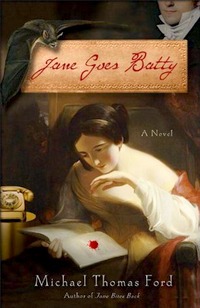
Ford’s inevitable sequel Jane Goes Batty arrives this month, and showcases a willingness to take vamp-camp into new directions. Plot: big time Hollywood folks are out to “sex up” Jane’s latest manuscript; Jane’s editor decides to become an agent and leaves her with Jessica Abernathy (evil nemesis in Batty); Jane has to run constant interference on her wacky/charming friend Lord Byron (also a vampire, of course); etc., etc., etc. The most ridiculous/campiest plot device of all though is that Jane is converting to Judaism to please her boyfriend Walter’s judgmental mom. Yes. That’s right. We also learn that Jane played Magenta in a traveling production of The Rocky Horror Picture Show in the seventies, a minor detail to be sure, but one that seems to reinforce Ford’s whimsical kitsch. Batty aims for a kind of sassy brevity in its scene constructions, and while its certainly not a book for me, I think that those who want to see Jane Austen as a 21st century vampire will probably enjoy it quite a bit. Jane Goes Batty is new in trade paperback from Ballantine.
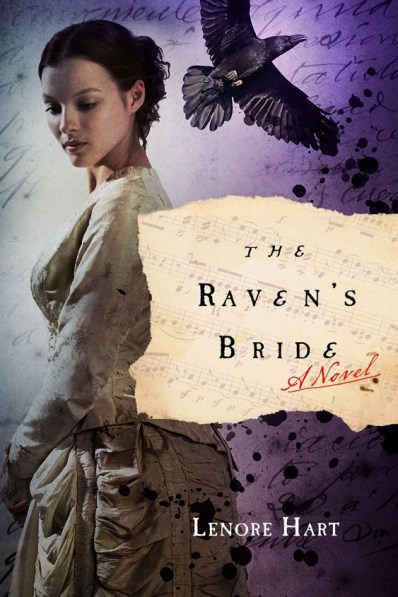
Lenore Hart’s novel The Raven’s Bride tells the story of the marriage of Edgar Allan Poe from the viewpoint of his child-bride/cousin Virginia “Sissy” Clemm. The decidedly tragic arc of their union is set against a supernatural backdrop — and an often morose tone. While The Raven’s Bride takes liberties with history, it seems well-researched and faithful enough to its subject. Compared to Ford’s campy take on the supernatural, Hart’s novel seems a bit too self-serious, but again, I’m hardly the audience for this book. Still, I suppose the tale of an alcoholic horror writer’s incestuous/underage marriage might have been easy fodder to exploit, yet Hart focuses a keen sensitivity on her characters, particularly her narrator Sissy, Poe’s muse demystified. While Poe buffs will know how the story turns out, those interested in reviewing Poe’s marriage through a new perspective may want to check out The Raven’s Bride, new in trade paperback from St. Martin’s Griffin.

The Clown — Heinrich Böll

The titular figure in Heinrich Böll’s 1963 novel The Clown is Hans Schnier, a man whose personal and professional life is burning down around him as he howls in (often hilarious) despair. During a performance at a third-rate venue, Hans purposefully injures his knee and retreats to Bonn, where he holes up in his small apartment and makes angry desperate phone calls (and tries not to drink too much brandy) as he reflects on his past.
His common-law wife Marie has returned to the conservative Catholicism she was raised on, and subsequently left Hans; even worse, shes’ taken up with a bourgeois hack named Zupfner. Marie and Hans initially came together as teens, sexing it up in their provincial German town. After scandalizing all the decent ex-Nazis in town, they retreat to the comparatively cosmopolitan city of Bonn and begin a life (in sin) together, traveling from venue to venue and performance to performance as Hans’s career grows.

It becomes clear through the course of The Clown — which is essentially Hans’s long, angry rant against complacent conformity — that Marie is merely an object for Hans, a romantic idealization. He repeatedly tells us that she doesn’t get his art–

I don’t believe there is anyone in the world who understands a clown, even one clown doesn’t understand another, envy and jealousy always enter into it. Marie came close to understanding me, but she never quite understood me. She always felt that as a “creative person” I must be “deeply interested in absorbing as much culture as possible.” She was wrong.

Hans is always the outsider, even to the woman he loves. Still, Marie represents both comfort and some sense of continuity for this traveling artist whose life is basically a series of hotels, train rides, and performances. Without her, Hans is lost, adrift without an anchor, pure vitriol aimed at a society he rebukes at every turn. Consider his parents, for instance, rich Protestants with a penchant for providing patronage to middling writers — Hans’s hate for them is almost metaphorical, a hate that extends to their religion and their complicity in the evils of WWII. While The Clown is a highly personal story, the tale of an artistic soul tortured in the absence of his love, it’s also an indictment of postwar Germany, a milieu all-too ready to whitewash its sins in the easy absolution of cheap religion.

At times the nuances of The Clown’s argument against the conformist postwar German culture were lost on me. Hans’s many references to the particular rhythms and contrasts of Teutonic Protestants and Catholics were beyond my ken. Still, this rarely detracted from my enjoyment or involvement in the novel. Its caustic bite and extreme depression is tempered by ironic humor and expansive knowledge. Here’s an early passage in the book that I think shows off these attributes and obsessions while highlighting a bizarre metaphysical conceit that I don’t know how to properly work into this review–

I felt sick. I forgot to say that not only do I suffer from depression and headaches but a I also have another, almost mystical peculiarity: I can detect smells over the telephone.  . . . I had to get up and clean my teeth. Then I gargled with some of the cognac that was left, laboriously removed my makeup, got into bed again, and thought of Marie, of Christians, of Catholics, and contemplated the future. I thought of the gutters I would lie in one day. For a clown approaching fifty there are only two alternatives: gutter or palace. I had no faith in the palace, and before reaching fifty I had somehow to get through another twenty-two years.

So we learn that our hero is only in his late twenties, yet already romanticizes a dramatic life of failure; he sees himself as the failed artist down in the gutter, perhaps dreaming of the stars. And he can smell through the phone!

At its core, The Clown is a searing attack on hypocrisy, one grounded in a sense of time and place. And it’s this grounding that gives the book the weight — the concreteness of truth — to transcend its postwar setting and remain relevant today in a world where language, religion, and custom all provide societies and their institutions a kind of metaphysical escape hatch to avoid squarely assessing the gaps between mantra and action. Hans shows us that it takes a jester to truthfully comment on the absurdity of modernity; it’s the trickster whose pantomimes tap into the most mundane gestures to expose the intricate ways these gestures might disguise ugly, banal, or even evil intentions. Great stuff.

The Clown is new in print again from Melville House.

The Skating Rink — Roberto Bolaño

The Skating Rink was the first novel Roberto Bolaño published, a murder mystery in Spanish, all the way back in 1993.  It’s a short novel, but full of devices and ideas that readers will recognize from the late Chilean master’s later and better-known works. Characters who populate the novel recount events as if speaking extemporaneously to a reporter or a detective and discuss ideas and themes that the author would return to again and again:  obsession, alienation, lack of national identity, underappreciated poets, homelessness, and homicide.  The Skating Rink is a brief novel at 179 sharp and engaging pages. It wouldn’t be incorrect to call it a minor novel, but it would be a mistake to consider it merely a warm-up for the more intricate routines that the writer would perfect in the future.

The novel is about the construction and existence of a clandestine ice rink built in a deserted mansion on the cliffs of a seaside resort town in Catalonia, Spain. Erected to please Nuria Marti, a beautiful figure skater cut from the Spanish Olympic team, the rink and its inspiration are reserved and glacial while the locals who populate the seasonally bustling city are, with varying degrees of success, just trying to hold everything together. When the body of an itinerant singer is discovered in the middle of the ice deep within the labyrinthine halls of the decaying house, everything the characters have strained to preserve begins to fall apart.

The book is narrated by three men who represent different strata of Spanish society. Enric Rosquelle is an outwardly arrogant bureaucrat in charge of the city’s various social service agencies whose desperate need for love leads him to embezzle the funds  in order to build the skating facility for the athlete he knows will never return his feelings. Gaspar Heredia is an illegal Chilean immigrant who works in a campground for tourists and falls for a homeless woman who never relinquishes the kitchen knife she keeps tucked in her jeans.  Remo Moran, a legal arrival from Chile, has enjoyed success as a businessman and as a poet and is anxious about his own precarious sexual relationship with Nuria. Each man is more or less aware of his shortcomings and they utilize similar Bolañesque (Bolañan?) digressions to explain their motivations and feelings. They come to know and discuss each other in their retelling of events and so become interesting, sympathetic, and full characters.  Enric is jealous of Remo and suspicious that South Americans in general trade in filth and drugs.  Gaspar relies on his old friend Remo for his job and secretly watches Enric coaching Nuria.

The sense of loneliness and the failure to take advantage of fleeting opportunities are palpable. In a number of places, the narrative and the novel’s setting evoke a Wong Kar-wai movie. In slow motion, men follow women through cobblestone streets, not quite able to grasp that thing they desire. Hang-gliders dance in the sky and while everyone else is watching the fliers against the cool blue sky, we’re being told about how she’s just disappeared through a door down a side street. Solitary women stroll up cliff-side highways while our narrators limp behind. I almost expect Gaspar to sit down next to Tony Leung while cellos or Chinese versions of well-known pop tunes play from a nearby jukebox.  Unlike Wong Kar-wai though, Bolaño sees the single-minded pursuit of unrequited love as pathological and often a precursor to violence. The men in The Skating Rink, like any number of other men who populate Bolaño’s novels, are unable to resist the wills of the women they love or submit to personally or professionally. Two men here are willing to sublimate their own wishes for those of Nuria, whose choice of profession illustrates her own desire to overcome the normal limitations of geography, climate, and national history. As they seek her favor, they find themselves acting in unfamiliar ways, on uncertain paths and  unconcerned with appearance or ethics.

Like most of Bolaño’s work, endings (and beginnings and middles) are ambiguous. Readers are left unsure as to what has actually happened and the murder remains (I think) unsolved.  The Skating Rink could serve as an easy introduction to the writer’s more complex creations because it deals with time and plot in a relatively conventional manner. The characters get to say proper good-byes and reflect on the things that have happened to them. Like a standard mystery, most of the knots have been untangled.  But because real understanding sits just outside of consciousness, this reader is still waiting for the feeling that my task is complete. There are occasional missteps, like when Bolaño compares an elderly woman’s voice to a locker room, but passages lodge in your head like slow songs on repeat in dark comfortable places. Like those jams, The Skating Rink might be a masterpiece or something to be forgotten when something better comes along.  It’s short, so listen to it a couple times and decide for yourself.

I Super Hated Gary Shteyngart’s Super Sad True Love Story

At a certain point, I was inclined to write a thoughtful review of Gary Shteyngart’s much-lauded, truly awful novel Super Sad True Love Story, the kind of review that might try to weigh Shteyngart’s choked May-December romance against its dystopian background. That was a few chapters in, a point at which I’d gotten past the realization that Shteyngart was going to do nothing new with the dystopian genre I so love, yet still early enough for me to think that he might have something to say about American culture and politics in the early 21st century. There’s nothing there, though — Super Sad True Love Story subscribes to the normal dystopian program of synthesizing 1984 and Brave New World through a contemporary lens, yet what we’re left with is Shteyngart’s observation that people might not like to read as much as they used to.
Obligatory plot summary: it’s America a few decades down the line–not enough to account for the change that Shteyngart proposes–an America under Bipartisan rule, a country without an elected President, at war with Venezuela, heavily indebted to China, and essentially ruled by a corporatocracy. People no longer read, they only scan data from their ever-present “äppäräti,” screen media devices they are addicted to through which they shamelessly broadcast every last piece of personal data. Sound familiar? Sure. (Those damn kids with their Facebooks!)

Shteyngart’s hero is Lenny Abramov, son of immigrant Russian Jews. Lenny works for Post-Human Services, a company that aims to extend human life indefinitely– as long as you’re very, very rich. This is Lenny’s obsession. For some reason, never fully explained (although painfully and boringly explored) Lenny wants to live forever. I suppose Shteyngart is trying to parody America’s obsession with youthfulness, only the parody is not funny and never insightful. Lenny meets a Korean-American girl named Eunice Park while spending some Bohemian time in Italy. Eunice is twenty years his junior, yet Lenny falls madly for her right away, for no good reason, at least not for any reason that we, the readers, are given to understand. It’s real old-white-boy-meets-young-Asian-girl-territory, which Shteyngart seems to understand yet seems too embarrassed (rightfully) to properly remark upon.

The backdrop of this romance is an American dystopia that Shteyngart wishes was as affecting as Alfonso Cuaron’s Children of Men. Hey, you know what? Watch Children of Men again instead of reading Shteyngart’s super boring book. And I think I won’t waste anymore time detailing Shteyngart’s super boring plot, a plot that seems to have no idea where its going, yet is, at all turns, overwhelmingly self-satisfied (and derivative). Shteyngart wants to write an end-of-America epic, yet nothing he says is worth re-remarking upon — yes, it seems like people are increasingly facile; yes, young people seem increasingly willing to forsake traditional ideas of privacy; yes, we owe the Chinese government some money. Sam Lipsyte does it all way better in The Ask, a book that doesn’t have to borrow its plot from every dystopian that came before it.

That Shteyngart has written a poor dystopian novel offends me at a literary-type level, but I’m also offended by his myopic regionalism, which, as I just mentioned, he tries to pass off as Americanism. For Shteyngart, New York City is America, and the (relatively) newly immigrated populations he places in his fictionalized NYC are far-more American than anyone else, particularly the dumb-ass-hick-redneck-Southerners he throws into the city as transplanted bad guys. Shteyngart’s Southern grotesques are mere props, barely thought out stereotypes that offend me as both a reader and a Southerner — and yet, they are just as facile as his leads.

Speaking of offensive and facile, there’s a moment at the end of the book when a critic takes the time to reflect on the publication of Lenny’s diaries and Eunice’s emails (not called “emails,” but Jesus Christ I’m not going to waste more time explaining the book’s silly recoding of contemporary culture) — it’s surreal in its tackiness, an overt act of literary criticism upon the rest of the book, one which attempts to focus a specific viewpoint upon the narrative proper. Like the rest of the book it fails miserably, and yet is indicative of Shteyngart’s needy, whiny program.

But why end negatively? There are plenty of great dystopian novels out there — Margaret Atwood’s Oryx and Crake and The Year of the Flood, almost anything by William Burroughs, Disch’s Camp Concentration, Aldous Huxley’s sorely under-read Ape and Essence, Cormac McCarthy’s Blood Meridian, which understands that it’s always the end of the world, more or less all of Philip K. Dick, Riddley Walker, Cloud Atlas, shit, even Roberto Bolaño. Just don’t waste your time with Shteyngart’s super sorry book.

The Instructions — Adam Levin

Adam Levin’s début novel The Instructions is long. It’s very long. It’s too long.

Or, more to the point, it’s too long to be so mediocre.

This is not a fair criticism, especially considering that I have only read about 35.5% of the book. 8 chapters. 366 pages. I have no conclusive evidence that the next 664 pages won’t be the kind of mind-blowing read that can justify taking up over a thousand pages. Significantly though, there’s nothing in the first 366 pages that especially compels me to continue reading. I give up. I abandon it. Although reading is hardly a quantitative experience — reading and digesting a page of Melville requires more sustained concentration and energy than a page of, say, Bukowski — it stands to reason that I can read two or three novels in the time it would take finish The Instructions. And if I spend my (limited, I am a human and am going to die at some point) reading time reading three novels instead of finishing Levin’s book, it’s likely that at least one of them might be good, even great, while I’m pretty sure that The Instructions is going to continue its middling trajectory.

So what’s it about? It must have had an interesting premise for me to read 366 pages, right?

Gurion ben-Judah Maccabee is a 10 year-old seventh grader (he’s been promoted, sort of) who is forced to attend a special program called “The Cage” after being expelled from his first three schools for various violent acts. Gurion is a hyper-intelligent, budding rabbinical scholar with serious Torah-interpreting skills. He’s also pretty much the toughest kid at Aptakisic Junior High, where, despite being only ten, he kicks ass left and right (his mom is a former Israeli commando). The novel takes place over four days in 2006, as Gurion declares his love for June Watermark, meets a new friend, and begins to rally the behavioral disorder kids against The Cage’s totalitarianism.

The opening scene of the novel is an engaging piece — Gurion and two friends take turns simulating water boarding on each other during a gym class held in a pool. Then, in the locker room, a fight. Gurion loves to fight, despite his inkling — or, at least the inkling of others — that he may be the potential messiah. This obsession with Jewish (“Israelite,” Gurion would correct me) identity seems to be the main thrust of the novel. Gurion, who is the “author” of the novel (which he refers to as “scripture”) speaks authoritatively and eruditely about Torah and religious philosophy. In fact, he speaks like a fully matured scholar who has taught and studied religious philosophy for decades. One can allow this conceit of the novel: sure, Gurion is special, he can fight, he’s a genius, sure, that’s what drives the plot–but Levin wants to extend this genius, or at least rhetorical flair, to almost every other character.

The effect is by turns grating and numbing, as we are subjected to page after page of dialog that is meant to sound witty or empathetic or just plain flavorful but is more often silly or inauthentic or, at worst, too fucking precious for words. The cartoonish dialog, rife with fake slang that no middle school kids ever used, wouldn’t be so bad on its own; in fact, it seems to go hand in hand with Levin’s goal, which appears to be slapstick of some kind. Only he (or Gurion) repeatedly calls attention to the slapstick, commenting on it, even pointing out how the reader should appreciate it.

This meta-textual attention is at work at all times. In particular, it’s there in the long (oh my god are they long) descriptions of each and every action that takes place in the prose. Gurion feels the need to analyze every last little detail, to load it with preternatural significance; these lengthy passages scream for an editor. The arrangement of the text is of course meta-textual as well: it purports to be a work of Gurion’s authorship, and includes a variety of texts from his “personal file” including emails, detention records, essay assignments, and, in one glaring case of squandered potential, a psychological report. And yet in all these documents, there does not seem to be any perspective outside of Gurion’s; when Gurion’s therapist comments on his behavior we learn nothing new, nothing different — we only see a confirmation of Gurion’s highly perceptive intelligence. It is grand solipsism on the largest of scales.

Which brings me to the David Foster Wallace comparisons, which are probably what got me interested in The Instructions in the first place. Granted, The Instructions may have facile similarities to Infinite Jest, but the books differ tremendously in how the reader must engage them. IJ is pluralistic and heteroglossic; The Instructions is essentially a monologue. IJ invites the reader to play, to pursue mystery; The Instructions, despite its volume, seems to contain just one mind. And maybe that’s the problem. Reviewers have compared Gurion to Hal Incandenza — and it’s true, both are bright, troubled young men — but The Instructions seems to be lacking a Don Gately.

Looking over my comments, they seem harsher than I perhaps intended. I believe that Levin has great talent and is surely a keen intellect with stories worth sharing. More to the point, I think that there might be a good novel somewhere inside of The Instructions — only I’m pretty sure it’s much, much shorter.

The Instructions is new in hardback from McSweeney’s.

Two Tales of the Tudors: The Tudor Secret by C.W. Gortner and Death and the Virgin Queen by Chris Skidmore

It’s been nearly half a millennium since a Tudor held the British throne, yet narratives of Tudor exploits seem to proliferate at an exponential rate. The primary reason may be that these monarchs — Henry VIII and Elizabeth I in particular — were such strong characters, people whose fascinating qualities extended beyond their world-changing edicts. And it’s not just the monarchs, of course, who draw our attention, but the characters around them — the Boelyns and the Cromwells, Thomas More and William Shakespeare (the latter was tangential and late, to be sure, but hardly an insignificant figure of the Elizabethan era). We identify in the Tudors a certain sexiness (one milked shamelessly by Showtime’s silly series), as well as its corollary intrigue: personal scandal for these royals was politicized; what happened in the bedroom affected the public sphere. There is something strikingly modern about this fact, which perhaps also makes us turn our attention to the Tudors again and again.
C.W. Gortner delves into the conflict between the political and the private in his historical novel The Tudor Secret. He plants his fictional hero Brendan Prescott into Dudley Castle, where the young man grows up bullied by Lord Robert Dudley –who will later become an “intimate familiar” of Queen Elizabeth. In the summer of 1553, however, Elizabeth is still Princess; her brother Edward VI is king. Around the same time Brendan is brought to court to squire for Robert Dudley, Edward falls gravely ill and then disappears. Princess Elizabeth soon enlists Brendan’s aid as a spy, a situation that quickly becomes more complicated when he finds himself having to serve as a double agent for William Cecil, Elizabeth’s adviser, an employee of the Duke of Northumberland who meanwhile plots to raise Jane Grey to the throne (a move that would cut Elizabeth out of succession). The Tudor Secret is a tightly-plotted, quick-paced read, stuffed with animated historical characters buzzing around in a world of espionage and intrigue. Setting the stage for the ascendancy of a crafty Elizabeth I, the book is the first in a planned series called the Elizabethan Spymaster Chronicles.
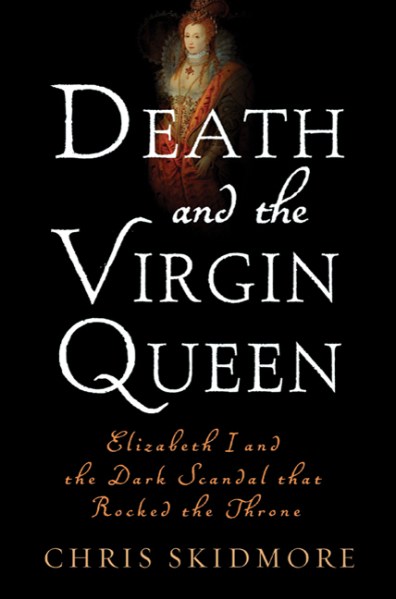
Chris Skidmore’s Death and the Virgin Queen will also be of great interest to those fascinated by the darker side of the Tudors. Skidmore’s book is essentially a forensic analysis of the events of September 8, 1560, when the body of Amy Robsart was found dead in Cumnor Place, her neck broken after an apparent fall down the stairs. The problem: Rosbart was the wife of one Lord Robert Dudley (hey, remember him from before?); with Rosbart out of the way, Elizabeth might be free to marry the man she was scandalously close to. Even after the death was ruled an accident, a cloud of suspicion and rumor about the issue hung over Elizabeth’s reign. Skidmore digs into the issue, outlining the motives of possible parties and detailing likely suspects. Skidmore also explores why, even with Rosbart out of the picture, Elizabeth’s advisers would never allow a marriage to Dudley — and how Dudley worked to prevent the queen from marrying another. Death and the Virgin Queen is a nice parallel to The Tudor Secret; both are written in a popular style for a general audience, both are clearly well-researched, and both should satisfy those thirsting for more details about the still-bewildering world of the Tudors.

Death and the Virgin Queen is new this month in hardback from St. Martin’s Press. The Tudor Secret is new in trade paperback February 1st from St. Martins’ Griffin.

The Lost Art of Reading — David L. Ulin

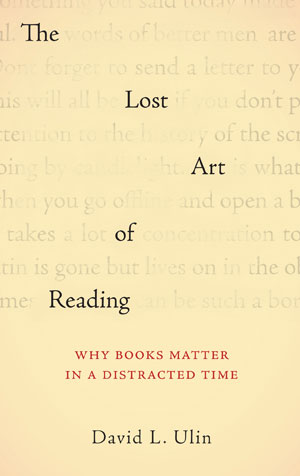
“One evening not long ago, my fifteen-year-old son, Noah, told me that literature was dead,” begins David L. Ulin’s new book-length essay, The Lost Art of Reading. Noah is not enjoying The Great Gatsby; or, perhaps more accurately, he’s not enjoying how his English teacher is having him analyze the book. Noah’s experience with Gatsby is probably not too different from many young readers who are told that they must appreciate a book, break it down, reckon and account for all of its subtleties — all in the context of a classroom, for a grade. Reading literature is just a means to an end then, a way to pass a class; unlike Ulin, who “frame[s] the world through books,” Noah’s “inner-life is entwined within the circuits of his laptop.” Noah’s pronouncement that literature is dead is fraught with cultural and technological significance. And while such declarations are hardly new, the idea that books — literary works in particular — not only do not hold the place they once did in our society, but now cannot hold a place of significance seems to hold more water than it did even ten years ago. Books are no longer the dominant media. Discourse is frenetic, fractured, shallow. Accordingly, Ulin subtitles his book Why Books Matter in a Distracted Time.

Gatsby — and Ulin’s conversations with his son about it — become organizing touchstones throughout the essay, along with Frank Conroy’s memoir Stop-Time, Faulkner’s obsession with time, and Thomas Paine’s Common Sense — a tract that Ulin points out might be “the most important book ever published in America.” It’s this consideration of Common Sense, along with his son’s declaration that lit is dead, that prompts Ulin to ask, “Could a book, any book, have this kind of impact in contemporary society? What about a movie or a website?” The questions continue–

How do things stick to us in a culture where information and ideas flare up so quickly that we have no time to assess one before another takes place? How does reading maintain its hold on our imagination, or is that question even worth asking anymore?

Ulin sets out to address these questions, drawing examples and analyses from a dizzying pool of books, websites, movies, and other media to do so. One of the highlights of The Lost Art of Reading is its confidence in defining reading as a meaningful art. Ulin tells us that–

Reading is an act of contemplation, perhaps the only act in which we allow ourselves to merge with the consciousness of another human being. We possess the books we read, animating the waiting stillness of their language, but they possess us also, filling us with thoughts and observations, asking us to make them part of ourselves.

And a few pages later–

This is what literature, at its best and most unrelenting, offers: a slicing through of all the noise and the ephemera, a cutting to the chase. There is something thrilling about it, this unburdening, the idea of getting at a truth so profound that, for a moment anyway, we become transcendent in the fullest sense. I’m not talking here about posterity, which is its own kind of fantasy, in which we regard books as tombstones instead of souls. No, I’m thinking more of literature as a voice of pure expression, a cry in the dark.

And yet Ulin admits to becoming, increasingly, a distracted reader, a reader who too quickly puts down his book to pick up his laptop or smart phone. This distraction seems endemic, environmental, even professionally necessary — and admittedly very, very familiar. The costs are also familiar–

. . . to read, we need a certain kind of silence, an ability to filter out the noise. That seems increasingly elusive in our overnetworked society, where every buzz and rumor is instantly blogged and tweeted, and it is not contemplation we desire but an odd sort of distraction, distraction masquerading as being in the know. In such a landscape, knowledge can’t help but fall prey to illusion, albeit an illusion that is deeply seductive, with its promise that speed can lead us to more illumination, that it is more important to react than to think deeply, that something must be attached to every bit of time. Here, we have my reading problem in a nutshell, for books insist we take the opposite position, that we immerse, slow down.

It’s key to note that Ulin is hardly a Luddite or a reactionary; when he writes “my reading problem” this is not a generalization — he is referring to his first-person experience as a reader. He is also open to the ways in which new media enhances literature. He writes, for example, of the ways in which Facebook and other websites create virtual platforms in which to honestly engage literature. He also discusses times when one habit of distraction — stopping to reference what he’s reading on YouTube or elsewhere on the net (a habit I fully identify with) — genuinely enriches his reading. However, Ulin’s greater fear is not so much his own personal distraction, but the costs of a permanently distracted populace–

This is how we interact now, by mouthing off, steering every conversation back to our agendas, skimming the surface of each subject looking for an opportunity to spew. We see it on blogs and in e-mails, on television talk shows, in public meetings and community forums; we are a culture that seems unable to concentrate, to pursue a line of thought or tolerate a conflicting point of view.

Wallowing through the comments section of any politicized news story is pretty much a recipe for depression, or at least a loss of faith in Americans’ ability, as Fitzgerald says ” to hold two opposed ideas in the mind at the same time, and still retain the ability to function.”

I should admit my bias — Ulin had little work to do to convince me that a decline in “deep” reading — and meaningful, reflective discussion about that reading — can only further contribute to an increasingly shallow, trivial, and openly anti-intellectual society. So what is at stake here?–

Stories, after all — whether aesthetic or political — require sustained concentration; we need to approach them as one side of a conversation in which we play a part. If we don’t, we end up susceptible to manipulation, emotional or otherwise. In February 1946, Hermann Goering told the judges of the Nuremberg tribunal, ‘Naturally the common people don’t war . . . But, after all, it is the leaders of a country who determine policy, and it is always a simple matter to drag people along, whether it is a democracy, or a fascist dictatorship, or parliament, or a communist dictatorship. All you have to do is tell them they are being attacked, and denounce the pacifists for lack of patriotism and exposing the country to danger. It works the same in every country.’ Such a statement is chilling on all sorts of levels, but nowhere more than in its recognition of the fact that we are complicit in our fate.

One solution for Ulin (and I’m apt to agree) is reading, “an act of resistance in a landscape of distraction, a matter of engagement in a society that seems to want nothing more than for us to disengage.” Best of all, Ulin’s book is the act of criticism — both cultural and literary — that makes one want to read. He reminds us that the currency of ideas is always open to us if we put in the effort, and that the moments of enlightenment, of transcendence that we might gain from literature are part of what makes a life worth living. Recommended.

The Lost Art of Reading is available now from Sasquatch Books.

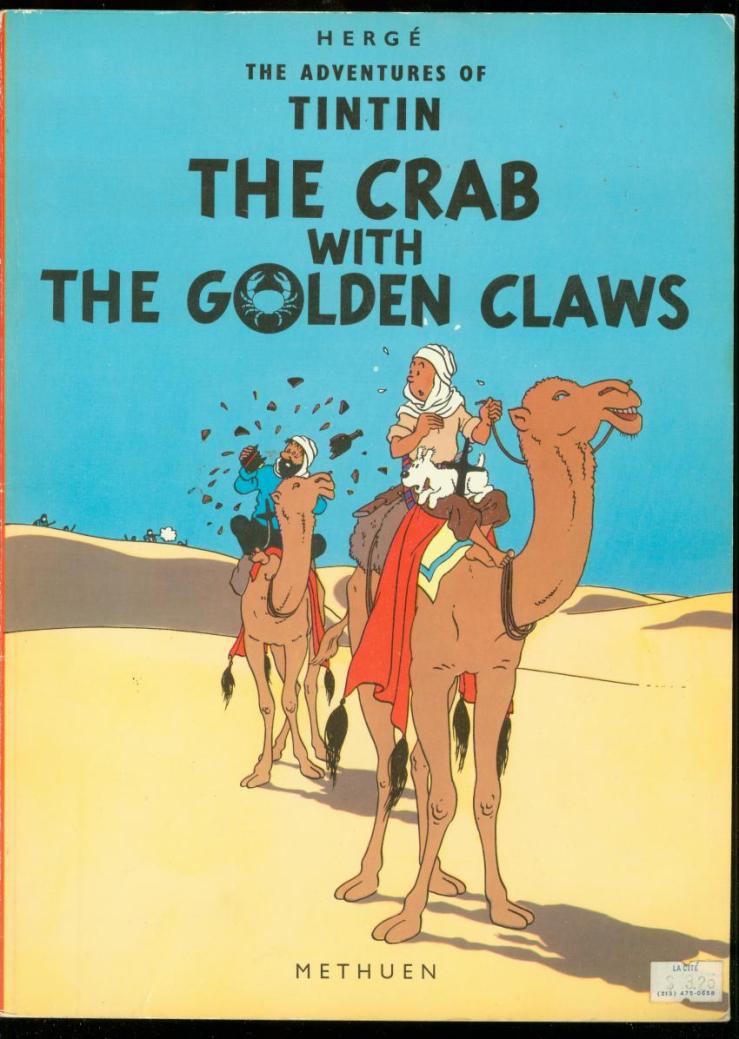
The Adventures of Tintin, Vol. 3 — Hergé

I’ve long been interested in Hergé’s Belgian comic series Tintin, which chronicles the adventures of Tintin, boy reporter, and his faithful dog Snowy. When a batch of hardback three-in-one editions showed up at my favorite used book store I picked up Vol. 3, which collects The Crab with the Golden Claws, The Shooting Star, and The Secret of the Unicorn. I read The Crab with the Golden Claws in one pleasant sitting that night and finished the other two adventures in similar fashion. Then I went back to the bookshop and picked up the other four three-in-one editions they had in stock.
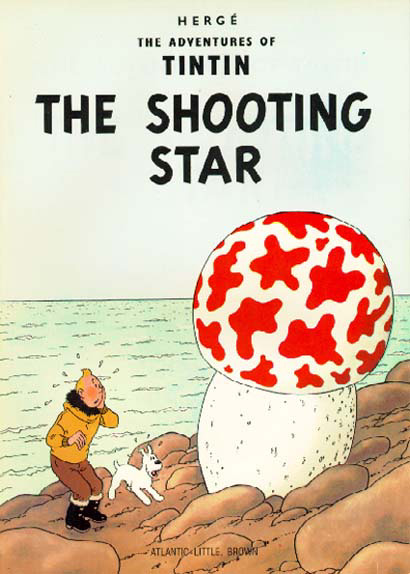
It’s hard to divide the tales, which are all fun adventures in the high style of boy-adventuring, but I think Crab was my favorite of the three. It involves a drug smuggling ring and a trip to the Sahara desert. It also introduces Captain Haddock, an alcoholic lummox who tips into a verbose stream of insults whenever he’s in a rage (he merely stutters when in his cups). Haddock is Tintin’s unlikely (but totally likely) sidekick in the other tales in the volume, and he shows up in the other books I bought as well. The Shooting Star is a bit more sporadic in its plot–it begins with the end of the world (by asteroid!) and when that doesn’t pan out, moves into an ocean race to recover a meteorite. Unicorn also boasts a nautical theme; Tintin finds part of a treasure map in a model ship and fights against antique-collecting brothers to recover the booty (Keno Bros. beware). These adventure stories share more in common with Indiana Jones and Edgar Rice Burroughs than Marvel or DC comics; there’s a prevalent sense of danger, fun, and mystery that underscores the series.

Hergé’s clean, efficient style evokes beautiful and strange worlds. His economy of storytelling is simply brilliant; he knows how to connote his characters’ movements–including some sweaty action sequences–and he also knows how to move the plot forward without resorting to talking heads (although you will find the occasional expository-friendly radio broadcast pop up in a Tintin comic). It’s when Hergé drops a luscious market scene or a crowded basement-dungeon larded with antiquities that the art in Tintin shines. Hergé’s great talent is to evoke a startling sense of place for each setting in his comics, a fully-realized set that creates a sort of visual (and emotional) baseline for the reader. This allows for the cleaner, crisper panels to relay action without clutter. Hergé’s knack for storytelling cannot be underestimated either. He blends high adventure with slapstick and verbal comedy, much of it courtesy Tintin’s foils: the Thompsons, bungling detectives, precisely, who provide Tintin with many of his cases; Haddock; and Snowy, of course.
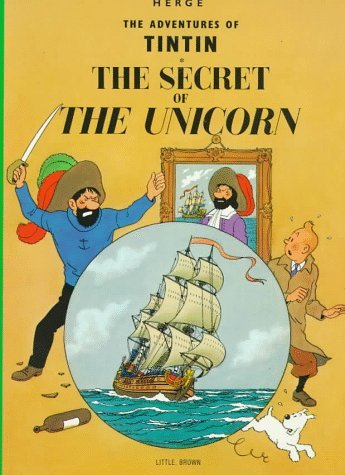
If you know a bit about Hergé’s Tintin series, you may know that its depiction of non-white and non-European characters has come under attack in recent years; Tintin in the Congo has been singled out in particular. I haven’t read Congo, but Crab’s representation of  Arabs (and Asians) is riddled with all kinds of wrong–at least when viewed from a PC postmodern post-colonialist post-whatever perspective. Hergé’s comics reveal at times a particularly suspect Western European ideology, one that privileges white male authority in the form of white male adventure. We can see the same colonialism and Orientalism at work decades later in the Indiana Jones movies (particularly Temple of Doom). This comparison is not meant to indict Indy (or Spielberg, rather) or excuse Tintin (and Hergé); instead, I’m merely pointing out that adventure tales that feature white heroes exploring–and dominating–the Other are hardly new; nor have they disappeared. The big mistake would be not to read Hergé’s work for fear of tripping over politically-correct mores. Banning a book is never a smart practice.
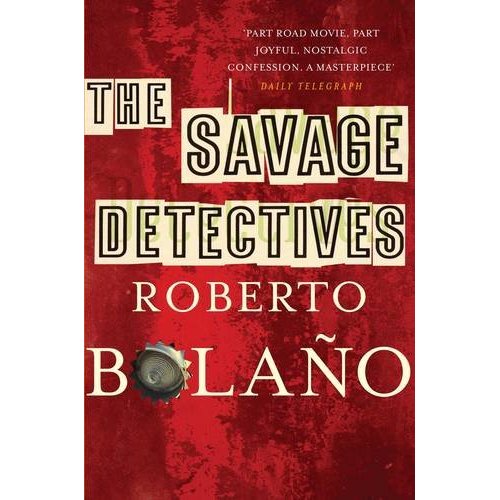
Far better is Charles Burns’s recent Tintin revisionism in X’ed Out: he moves his inverted hero Nitnit to a bizarro world version of the Saharan market, a place teeming with strangeness that is also largely indebted to William Burroughs’s Interzone. The inversion reverses Tintin’s a priori white male domination into an equally fantastic (but far more horrific) vision of confrontation with radical Otherness. Shit gets weird (as alien encounters should). Nitnit is not in control, not the master of this domain, which is plainly not his. Burns’s Tintin revision saliently calls attention to the ways that the best in art might be transformed and reinterpreted. It points toward the subconscious inheritance intrinsic to art.

But back to the book I am ostensibly reviewing. The Adventures of Tintin, Vol 3 seems to me as good a place as any to start with Tintin, and those interested should dig in. These three-in-one editions are smaller than the traditional oversized format, but you can compensate by holding the book closer to your face (ah, intimacy). Lovely stuff.

The Savage Detectives — Roberto Bolaño

Roberto Bolaño’s “other” masterwork The Savage Detectives has been previously reviewed on this website, but my view is that the previous writeup was unfair and premature.  Perhaps those of us who love this book are not “serious” readers.

The plot was accurately diagrammed in the earlier post. The Savage Detectives is made up of three sections. The first section consists of the diary of seventeen year-old Visceral Realist poet Juan Garcia Madero, his record of his literary ambition and dawning appreciation of beauty and words. The second, lengthy section is a series of interviews, seemingly conducted by a single, unknown interviewer in an attempt to uncover the history of the Visceral Realist movement, a group of iconoclastic poets that lived in Mexico City in the early part of the 1970s. The third section revisits Garcia Madero’s diary as he and Arturo Belano and Ulises Lima, the nominal leaders of the Visceral Realists, scour the unforgiving Sonora desert in search of their own lost heroes.

Bolaño revisits familiar themes in this novel by asking what drives people to create, and what happens to those people when the things they create are pushed, like themselves, to the margins of society.  Garcia Madero’s drive to write forces him to confront his everyday existence as he attempts to shed his innocence.  He loses friends, quits school, moves in with a waitress, falls in love, has his heart broken.  He writes when he eats, he writes when he should be doing something else, he writes about writing.  He assumes that he and his comrades are on the verge of fame and that others are aware that everything the Visceral Realists do is bold and profound.  Why then, Bolaño asks, is Garcia Madero satisfied with reading his poems to others when he dreams of placing his work in well-regarded anthologies?  What happens when we realize that immortality is ultimately an illusion?  Where does the spirit go when the ghost leaves only a sheet behind?

The answers to the questions posed in the first book are addressed in the second, but there is no sense that the unknown interviewer is close to mythologizing the Visceral Realists in the same manner as the scholars who made a hero of Hans Reiter in the first book of 2666.  At least at the time the interviews were conducted, the Visceral Realists’ body of work is unknown to most, but to those with knowledge of their oeuvre, the Visceral Realists are remembered as hacks or kids from the wrong side of the tracks who preferred the commission of petty misdemeanors to dedication to their craft.  The reality, as usual, is located somewhere in the middle. The Visceral Realists are shown to be like any other group of talented, excitable and intelligent young people because they’re bound to be disappointed.  Their failure of their movement can be blamed on their own choices as well as on barriers erected by those ensconced in the Mexican literary establishment whose notions of where ideas ought to come from are not easily refuted.  Especially by those demanding entry to their small but exclusive club.

Mr. Biblioklept’s first review was essentially right when he stated that The Savage Detectives “is an epic about the banal, ordinary things that fill our lives: jobs and eating and getting to places and having one’s friendships sour and being disappointed and so on.”  Yes, sadness pervades the book.  The Visceral Realists put down their pens, or they move to America, or they run and hide from the things that they cannot control at home.  The Visceral Realists succumb to disease, lose their minds, attempt to cope, and they die.  An early friend of Arturo Belano’s recounts–

I imagined him lost in a white space, a virgin space that kept getting dirtier and more soiled despite his best efforts, and even the face I remembered grew distorted, as if while I was talking to his sister his features melded into what she was describing, ridiculous feats of strength, terrifying, pointless rites of passage into adulthood so distant from what I thought would become of him.

Although the young poets suffer defeat, they enjoy small but significant triumphs, the most important of which is the existence of the book being argued about in this space.  For Bolaño, whose business is the veneration of creators and their creation, the perseverance of the questions raised by the mere existence of the Visceral Realists and their permanent embodiment in a physical object capable of transmission in perpetuity is the ultimate victory. If the author is right that “the search for a place to live and a place to work [is] the common fate of all humanity,” then the young poets transitioning to adulthood don’t fare so poorly.  Most of them, despite their backgrounds, become citizens with some stake in the places they live.  They find work, they have children, they find adventure.  Some, like Arturo Belano, continue to write at an immense personal cost.  A man without a country, he’s the shadow who forms the substance of the book and allows his alter ego to demonstrate his remarkable narrative powers.

But what makes The Savage Detectives a complete work is that, like the characters of Borges and Cortazar, who so many in this novel profess to admire, the poets realize, sometimes too late, that brief and startling connections between people are always possible and love may be found anywhere.  La Maga and Oliviera meet on strange bridges in Paris, condemned men revisit their lives in the moment between gunshot and blackness, and poor, unlettered poets will continue to read, and despite derision and hardship, will continue to express their own vision of hope and possibility.

Suttree — Cormac McCarthy

In his 1992 interview with The New York TimesCormac McCarthy said, “The ugly fact is books are made out of books. The novel depends for its life on the novels that have been written.” McCarthy’s fourth novel, 1979’s Suttree is such a book, a masterful synthesis of the great literature — particularly American literature — that came before it. And like any masterful synthesis, Suttree points to something new, even as it borrows, lifts, and outright steals from the past. But before we plumb its allusions and tropes and patterns, perhaps we should overview the plot, no?

The novel rambles over several years in the life of Cornelius Suttree. It is the early 1950s in Knoxville, Tennessee, and Suttree ekes out a mean existence on the Tennessee River as a fisherman, living in a ramshackle houseboat on the edge of a shantytown. This indigent life is in fact a choice: Suttree is the college-educated son of an established, wealthy family. His choice is a choice for freedom and self-reliance, those virtues we like to think of, in our prejudicial manner, as wholly and intrinsically American. Suttree then is both Emersonian and Huck Finnian, a reflective and insightful man who finds his soul via a claim to agency over his own individuality, an individuality poised in quiet, defiant rebellion against the conforming forces of civilization. These forces manifest most pointedly in the Knoxville police, a brutal, racist organization, but we also see social constraint in the form of familial duty. One thinks of the final lines of Huckleberry Finn: “I reckon I got to light out for the Territory ahead of the rest, because Aunt Sally she’s going to adopt me and sivilize me and I can’t stand it. I been there before.”

Like Huck, Suttree aims to resist all forces that would “sivilize” him. His time on the river and in the low haunts of Tennessee (particularly the vice-ridden borough of McAnally) brings him into close contact with plenty of other outcasts, but also his conscience, which routinely mulls over its place in the world. Suttree is punctuated by–perhaps even organized by–several scenes of hallucination. Some of these psychotrips result from drunkeness, one comes from accidentally ingesting the wrong kind of mushrooms (or, the right kind, if that’s your thing), and the final one, late in the novel, sets in as Suttree suffers from a terrible illness. In his fever dream, a small nun–surely a manifestation of the guilt that would civilize us–accuses him–

Mr. Suttree it is our understanding that at curfew rightly decreed by law in that hour wherein night draws to its proper close and the new day commences and contrary to conduct befitting a person of your station you betook yourself to various low places within the shire of McAnally and there did squander several ensuing years in the company of thieves, derelicts, miscreants, pariahs, poltroons, spalpeens, curmudgeons, clotpolls, murderers, gamblers, bawds, whores, trulls, brigands, topers, tosspots, sots and archsots, lobcocks, smellsmocks, runagates, rakes, and other assorted and felonious debauchees.

The passage is a marvelous example of McCarthy’s stream-of-consciousness technique in Suttree, moving through the various voices that would ventriloquize Suttree, into the edges of madness, strangeness, and the sublimity of language. The tone moves from somber and portentous into bizarre imagery that blends humor and pathos. This is the tone of Suttree, a language that gives voice to transients and miscreants, affirming the dignity of their humanity even as it details the squalor of their circumstance.

It is among these criminals and whores, transvestites and gamblers that Suttree affirms his own freedom and humanity, a process aided by his comic foil, Gene Harrogate. Suttree meets Harrogate on a work farm; the young hillbilly is sent there for screwing watermelons. After his release, Harrogate moves to a shantytown in Knoxville. He’s the country mouse determined to become the city rat, the would-be Tom Sawyer to Suttree’s older and wiser Huck Finn. Through Harrogate’s endless get-rich-quick schemes, McCarthy parodies that most-American of tales, the Horatio Alger story. Simply put, the boy is doomed, on his  “way up to the penitentiary” as Suttree constantly admonishes. In one episode, Harrogate tries to buy arsenic from “a grayhaired and avuncular apothecary” to poison bats he hopes to sell to a hospital (don’t ask)–

May I help you? said the scientist, his hands holding each other.

I need me some strychnine, said Harrogate.

You need some what?

Strychnine. You know what it is dont ye?

Yes, said the chemist.

I need me about a good cupful I reckon.

Are you going to drink it here or take it with you?

Shit fire I aint goin to drink it. It’s poisoner’n hell.

It’s for your grandmother.

No, said Harrogate, craning his neck suspectly. She’s done dead

Suttree, unwilling father-figure, eventually buys the arsenic for the boy against his better judgment. The scene plays out as a wonderful comic inversion of William Faulkner’s “A Rose for Emily,” from which it is so transparently lifted. McCarthy borrows liberally from Faulkner here, of course, most notably in the language and style of the novel, but also in scenes like this one, or a later episode that plays off Faulkner’s comic-romantic story of a man and a woman navigating the aftermath of a flood, “Old Man.” Unpacking the allusions in Suttree surpasses my literary knowledge or skill, but McCarthy is generous, if oblique, with his breadcrumb trail. Take, for example, the following sentence: “Suttree with his miles to go kept his eyes to the ground, maudlin and muttersome in the bitter chill, under the lonely lamplight.” The forced phrase “miles to go” does not immediately present itself as a reference to Robert Frost’s famous poem, yet the direction of the sentence retreats into the history of American poetry; with its dense alliteration and haunted vowels, it leads us into Edgar Allan Poe territory. Only a few dozen pages later, McCarthy boldly begins a chapter with theft: “In just spring the goatman came over the bridge . . .” The reference to e.e. cummings explicitly signifies McCarthy’s intentions to play with literature. Later in the book, while tripping on mushrooms in the mountains, Suttree is haunted by “elves,” the would-be culprits in Frost’s poem “Mending Wall.” The callback is purposeful, but tellingly, McCarthy’s allusions are not nearly as fanciful as their surface rhetoric might suggest: the goatman does not belong in Knoxville–he’s an archaic relic, forced out of town by the police; the elves are not playful spirits but dark manifestations of a tortured psyche.

Once one spots the line-lifting in Suttree it’s hard to not see it. What’s marvelous is McCarthy’s power to convert these lines, these riffs, these stories, into his own tragicomic beast. An early brawl at a roadhouse recalls the “Golden Day” episode of Ralph Ellison’s Invisible Man; a rape victim’s plight echoes Hubert Selby’s “Tralala”; we find the comic hobos of John Steinbeck’s Cannery Row–we even get the road-crossing turtle from The Grapes of Wrath. A later roadhouse chapter replays the “Circe/Nighttown” nightmare in James Joyce’s Ulysses. Ulysses is an easy point of comparison for Suttree, which does for Knoxville what Joyce did for Dublin. Suttree echoes Ulysses’s language, both in its musicality and appropriation of varied voices, as well as its ambulatory structure, its stream-of-consciousness technique, its rude earthiness, and its size (nearly 600 pages). But, as I argued earlier, there’s something uniquely American about Suttree, and its literary appropriations tend to reflect that. Hence, we find Mark Twain, Herman Melville, Ernest Hemingway, Walt Whitman, Emerson and Thoreau, Emily Dickinson, and William Carlos Williams, to name just a few writers whose blood courses through this novel (even elegant F. Scott Fitzgerald is here, in an unexpected Gatsbyish episode late in the novel).

Making a laundry list of writers is weak criticism though, and these sources–all guilty of their own proud plagiarisms–are mentioned only as a means to an end, to an argument that what McCarthy does in Suttree is to synthesize the American literary tradition with grace and humor, while never glossing over its inherent dangers and violence. So, while it appropriates and plays with the tropes of the past, Suttree is still pure McCarthy. Consider the following passage, which arrives at the end of a drunken, awful spree, Suttree locked up for the night–

He closed his eyes. The gray water that dripped from him was rank with caustic. By the side of a dark dream road he’d seen a hawk nailed to a barn door. But what loomed was a flayed man with his brisket tacked open like a cooling beef and his skull peeled, blue and bulbous and palely luminescent, black grots his eyeholes and bloody mouth gaped tonguless. The traveler had seized his fingers in his jaws, but it was not alone this horror that he cried. Beyond the flayed man dimly adumbrate another figure paled, for his surgeons move about the world even as you and I.

Suttree’s dark vision points directly toward the language of McCarthy’s next novel, 1985’s Blood Meridian, roundly considered his masterpiece. Critics who disagree tend to point to Suttree as the pinnacle of McCarthy’s writing. I have no interest at this time in weighing the books against each other, nor do I think that doing so would be especially enlightening. For all of their sameness, they are very different animals: Suttree provides us intense access to its hero’s consciousness, where Blood Meridian always keeps the reader on the outside of its principals’ souls (if those grotesques could be said to have souls). And while Blood Meridian does display some humor, it is the blackest and driest humor I’ve ever read. Suttree is broader and more compassionate; it even has a fart joke. Blood Meridian, at least in my estimation (and many critics will contend this notion) has no flawed episodes; much of this results from the book’s own internal program–it resists love, compassion, and even human dignity. In contrast, Suttree is punctuated by two deaths the audience is meant to read as tragic, yet I found it impossible to do so. The first is the death of Suttree’s child, whom he has abandoned, along with its mother. As such, he is not permitted to take part in the funeral, observing the process rather from its edges. The second tragedy is the death of Suttree’s young lover in a landslide. The book begs us to empathize with Suttree, just as he often empathizes with the marginal figures in the novel, but ultimately these tragedies are a failed ploy. They underwrite a sublime encounter with death for Suttree, an encounter that deepens and enriches his character while paradoxically freeing him from the burdens of social duty and familial order. McCarthy is hardly alone in such a move; indeed, it seems like the signature trope of American masculine literature to me. It’s the move that Huck Finn wishes to make when he promises to light out for the Territory to escape the civilizing body of Aunt Sally; it’s the ending that Hemingway was compelled to give to Frederic Henry at the end of A Farewell to Arms; it’s all of Faulkner, with his mortification of fatherhood and the dramatic responsibility fatherhood entails. It is a cost analysis that neglects any potential benefits.

But these are small criticisms of a large, beautiful, benevolent novel, a book that begs to be reread, a rambling picaresque of comic and tragic proportions. “I learned that there is one Suttree and one Suttree only,” our hero realizes, but this epiphany is set against a larger claim. Near the end of the novel, Suttree goes to check on an old ragman who he keeps a watchful eye on. He finds the man dead, his shack robbed, his body looted. Despairing over the spectacle’s abject lack of humanity, Suttree cries, “You have no right to represent people this way,” for “A man is all men. You have no right to your wretchedness.” Here, Suttree’s painful epiphany is real and true, an Emersonian insight coded in the darkest of Whitman’s language. If there is one Suttree and one Suttree only, he is still beholden to all men; to be anti-social or an outcast is not to be anti-human. Self-hood is ultimately conditional on others and otherness. To experience the other’s wretchedness is harrowing; to understand the other’s wretchedness and thus convert it to dignity is life-affirming and glorious. Suttree is a brilliant, bold, marvelous book. Very highly recommended.