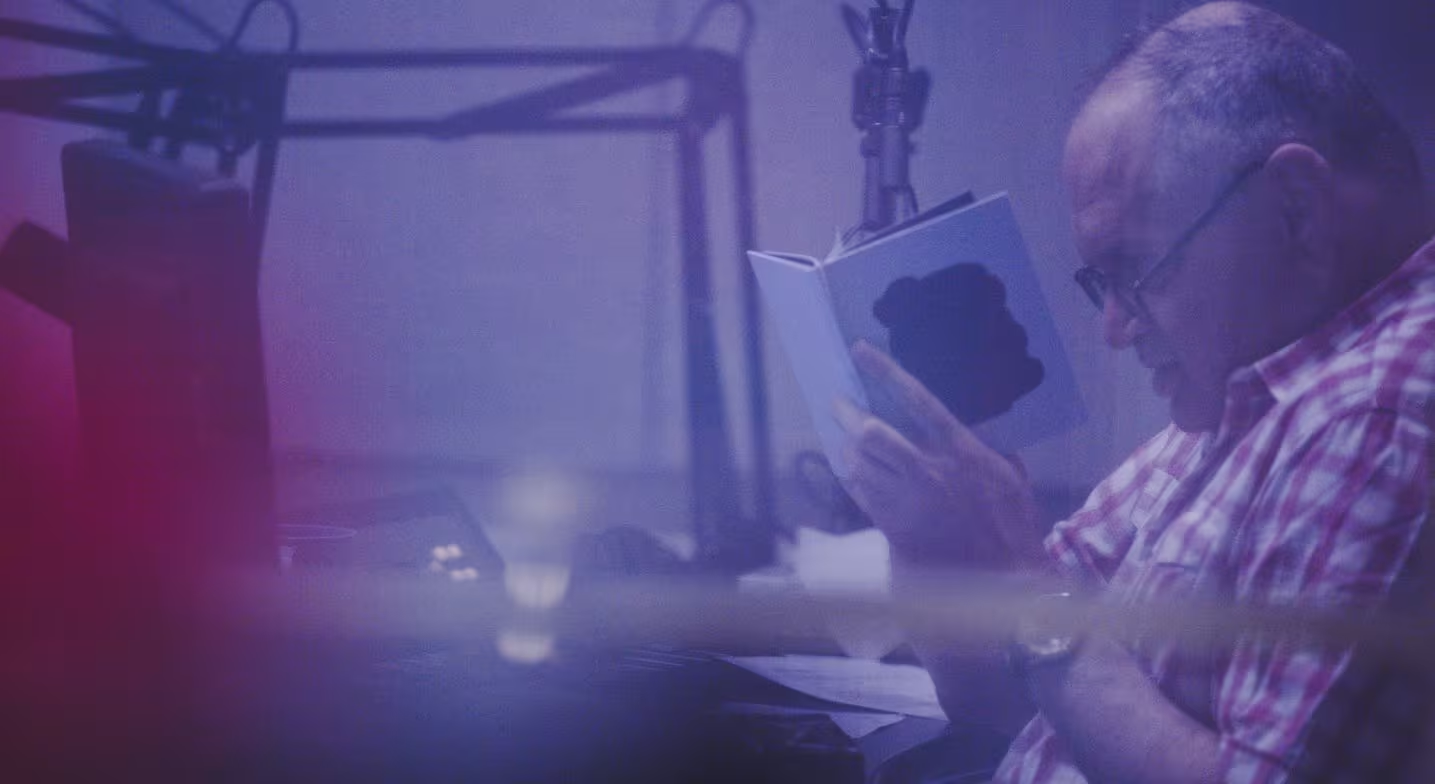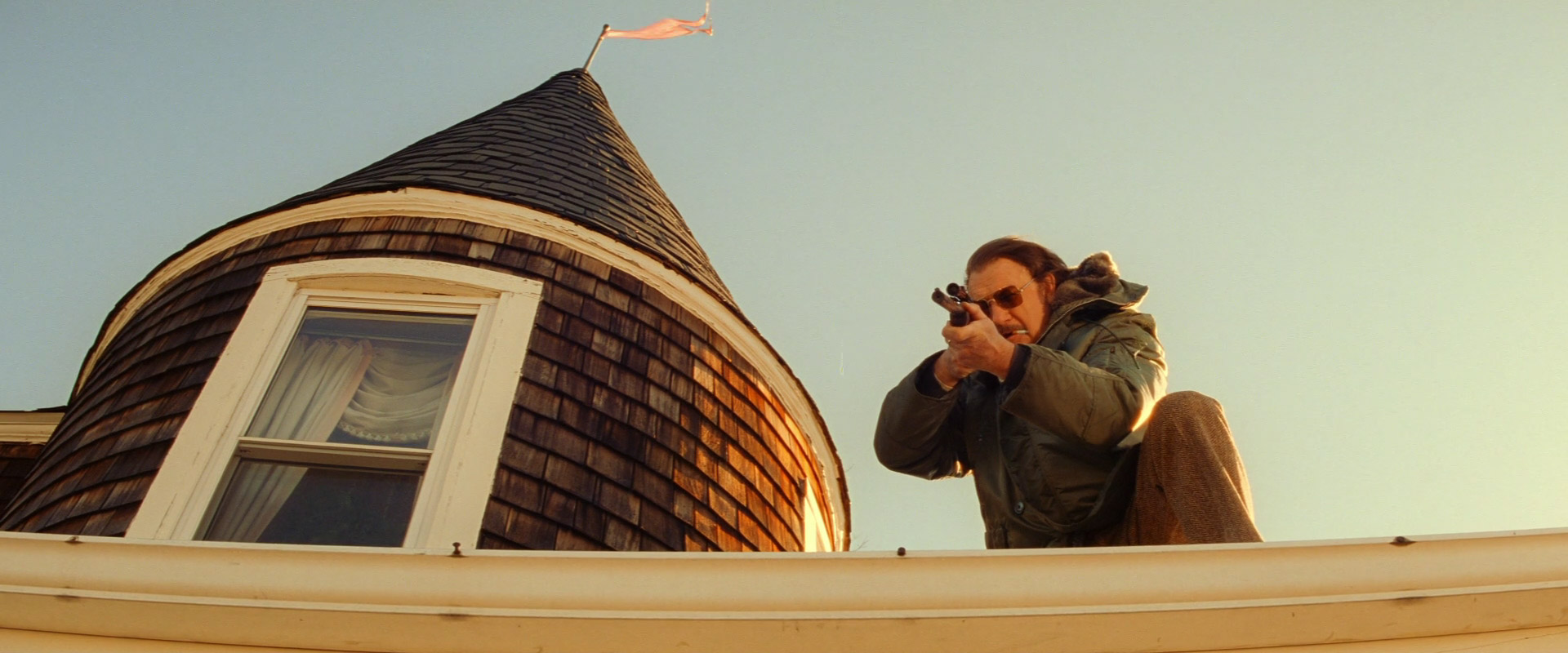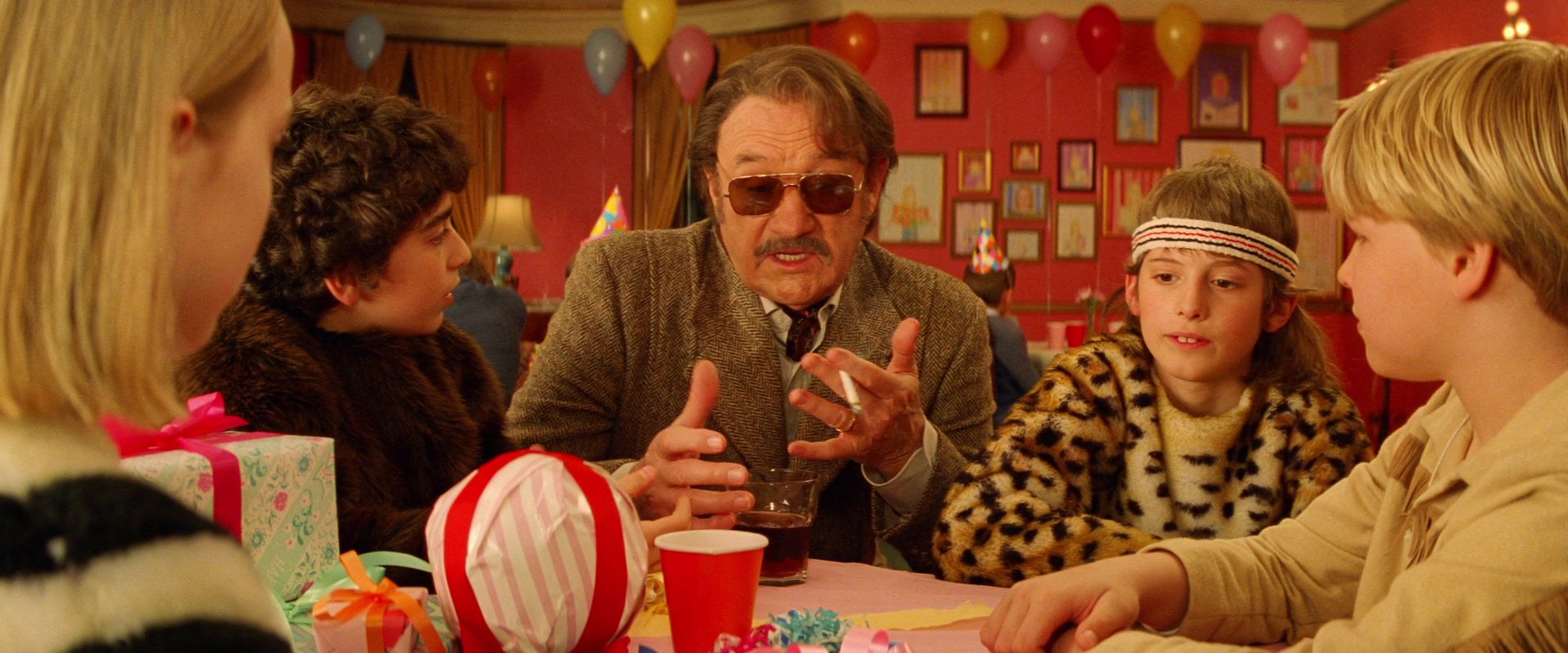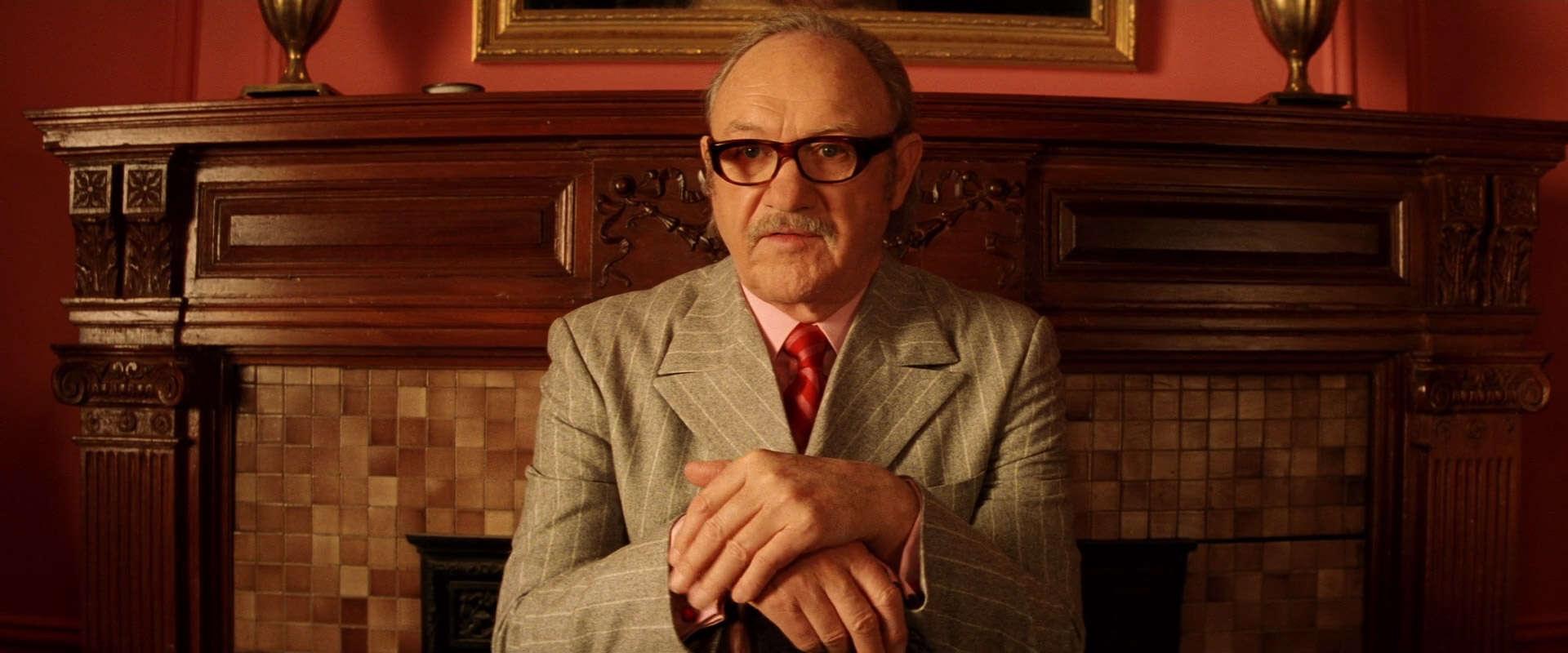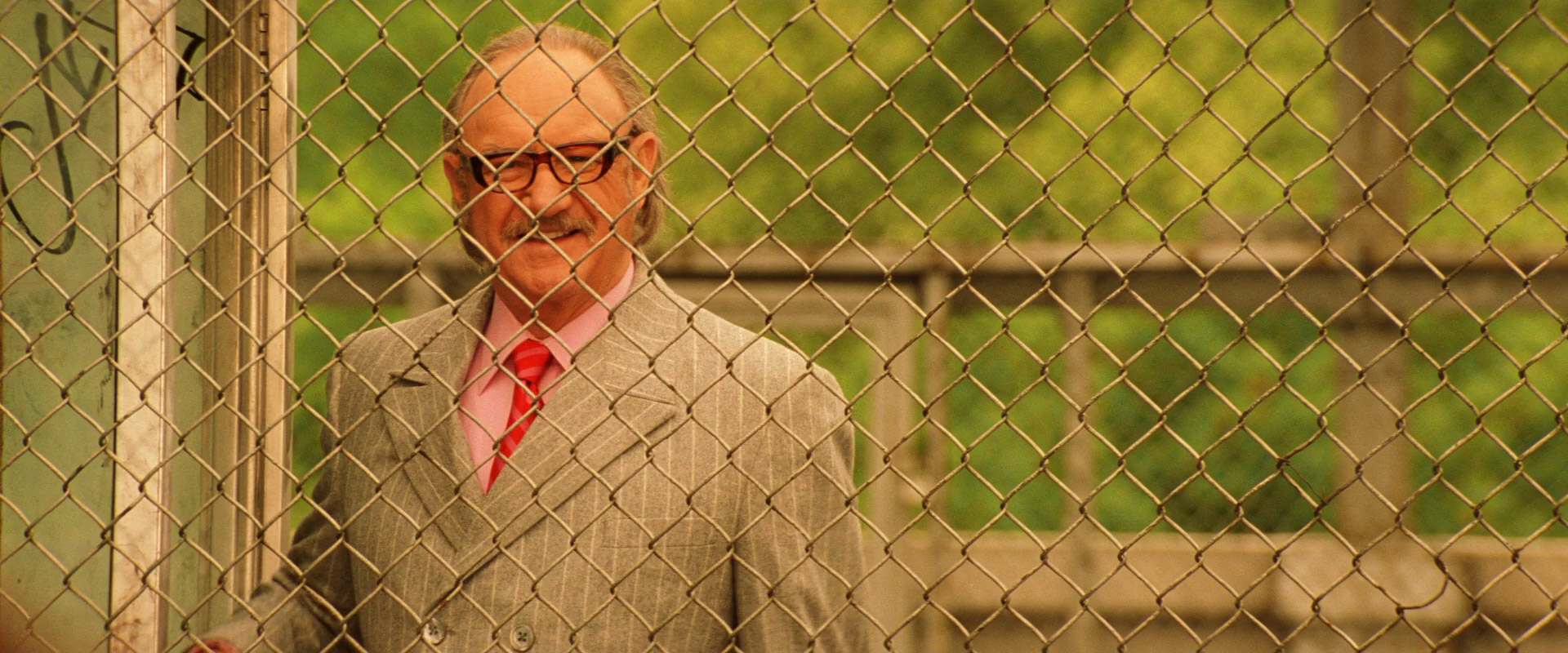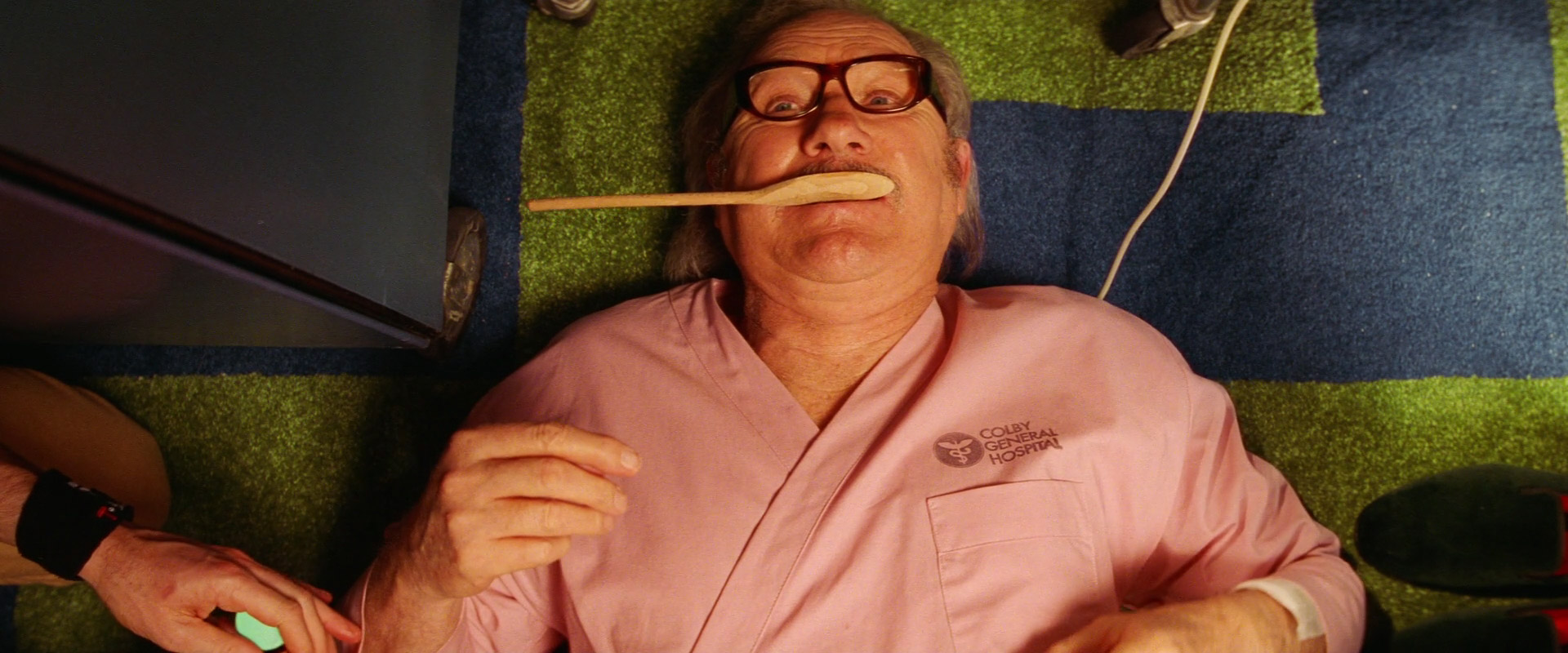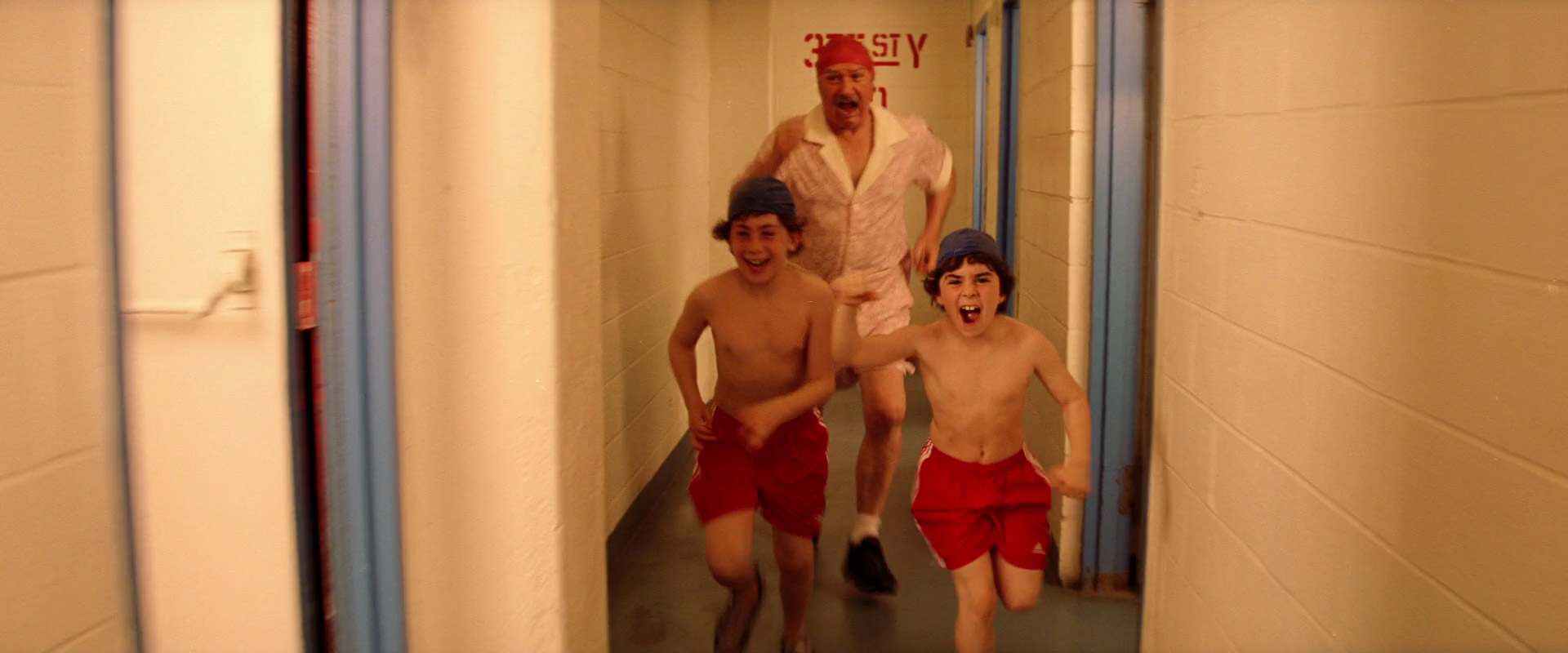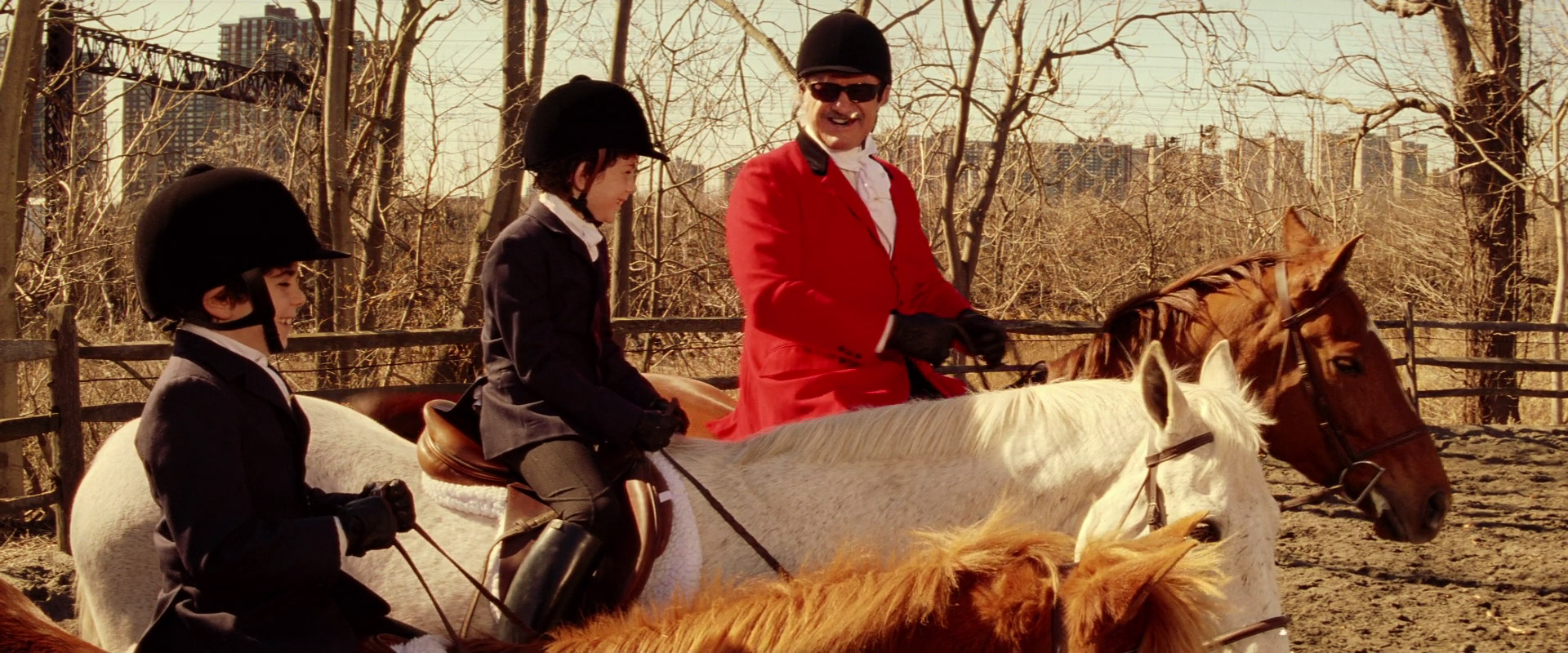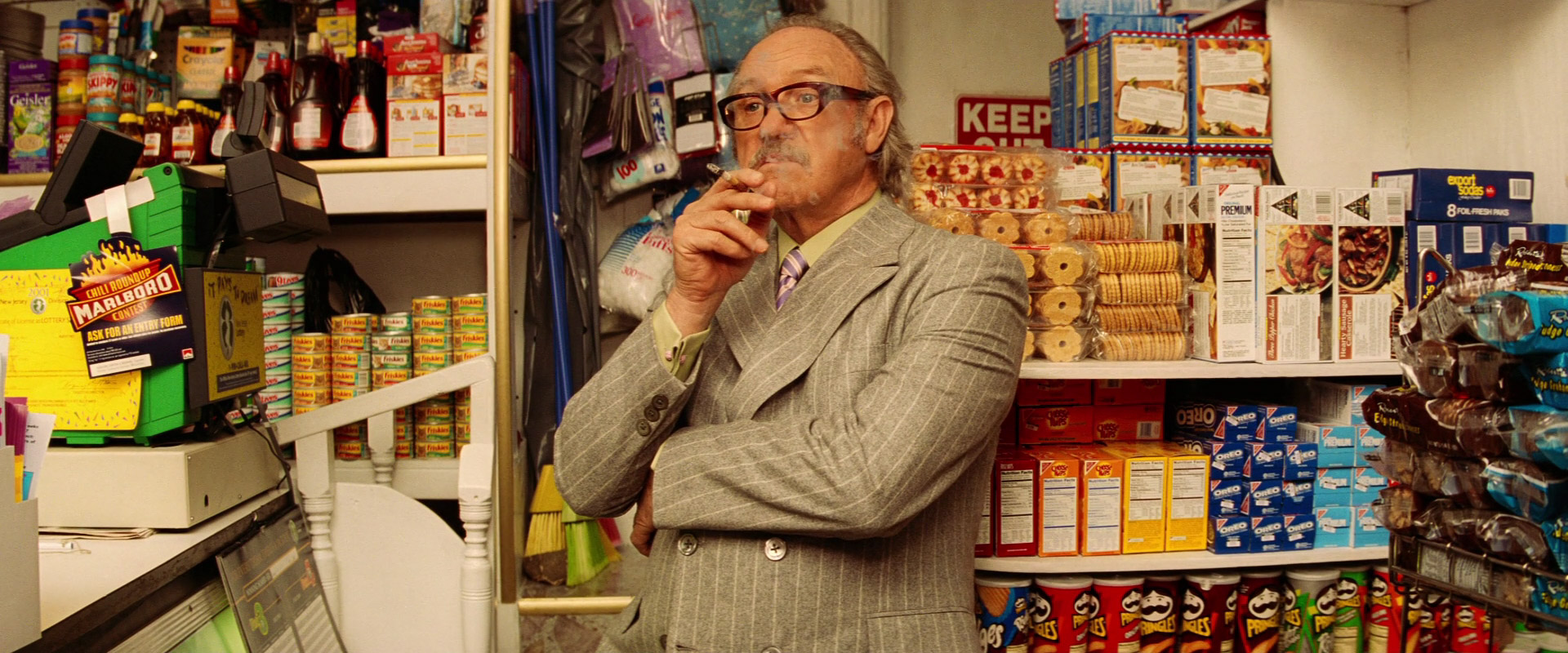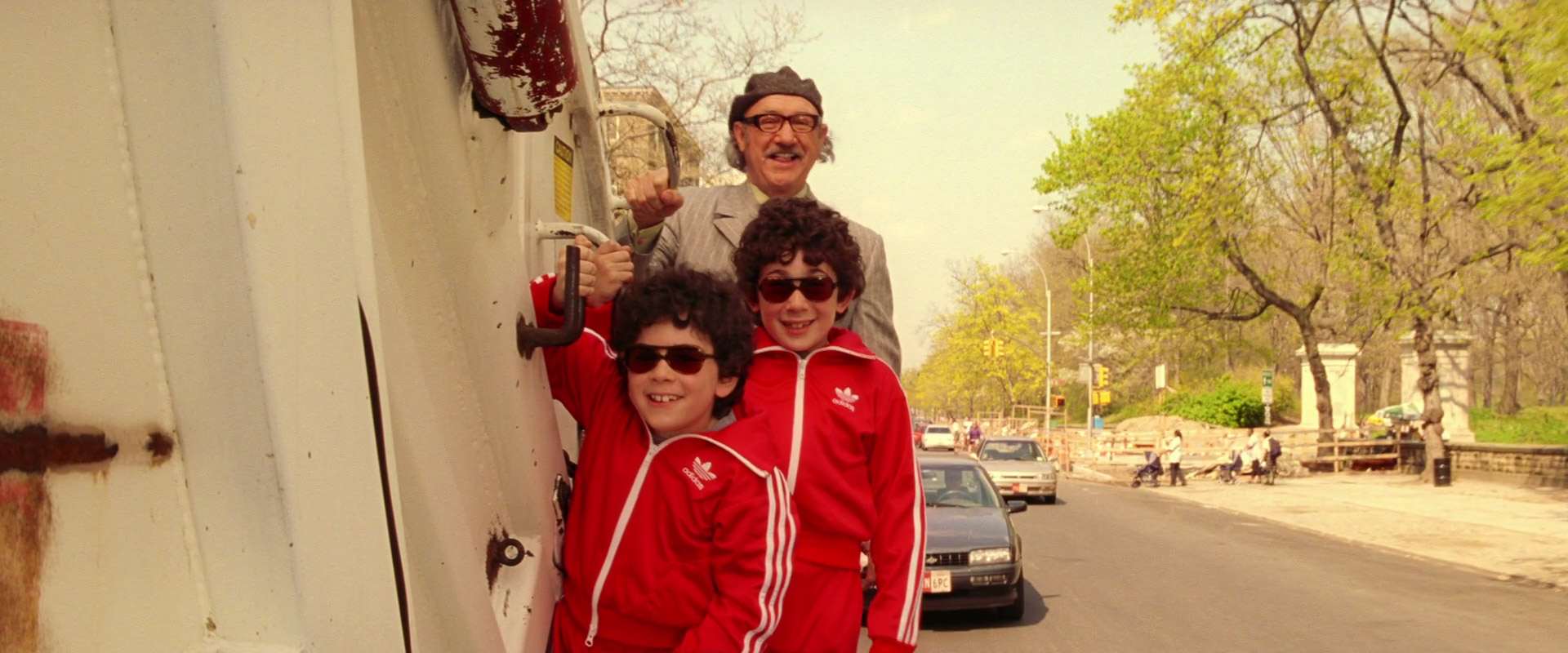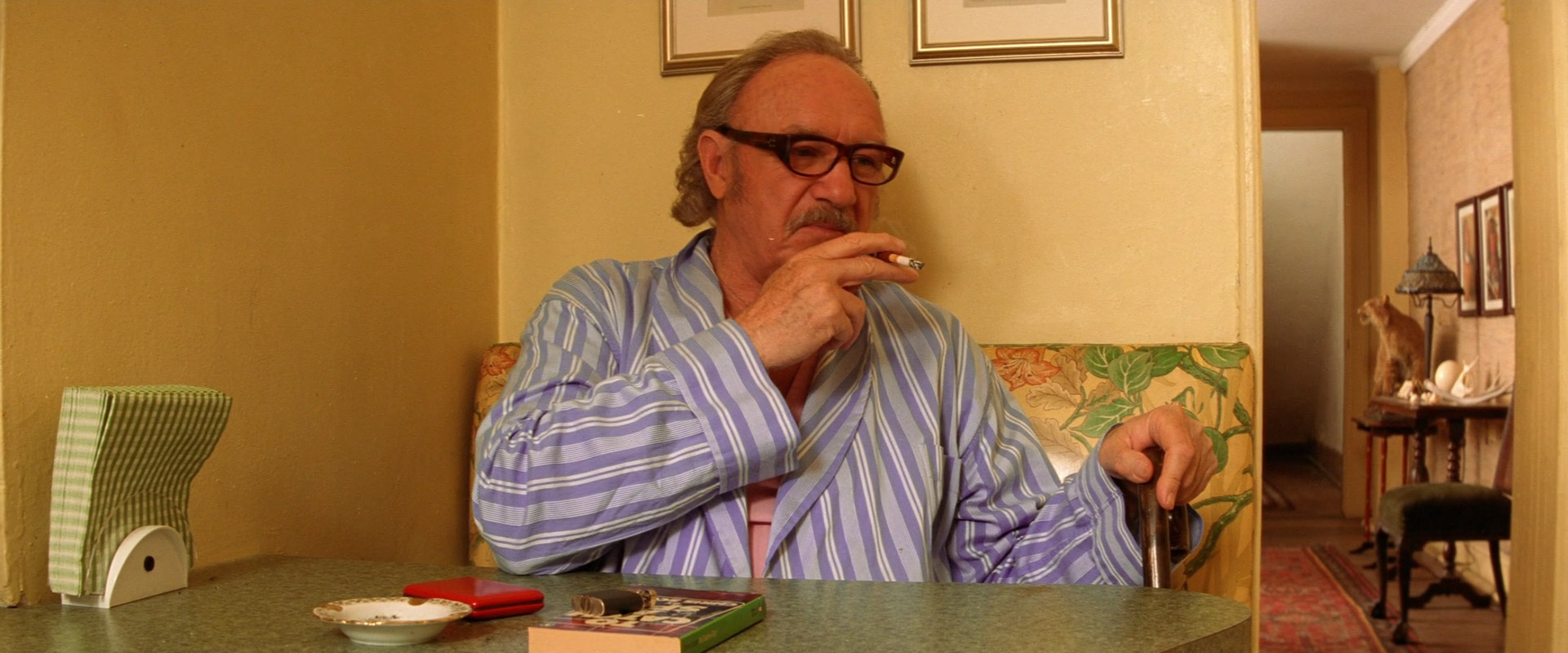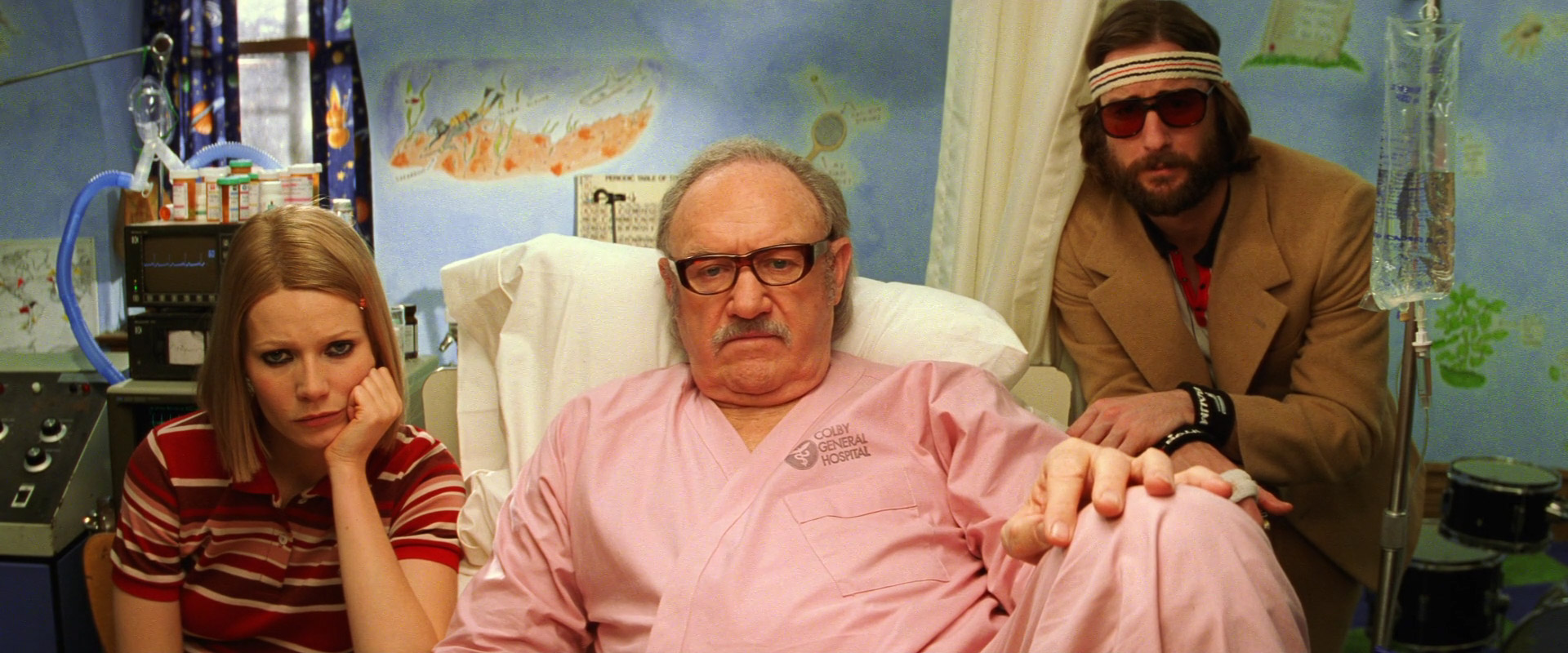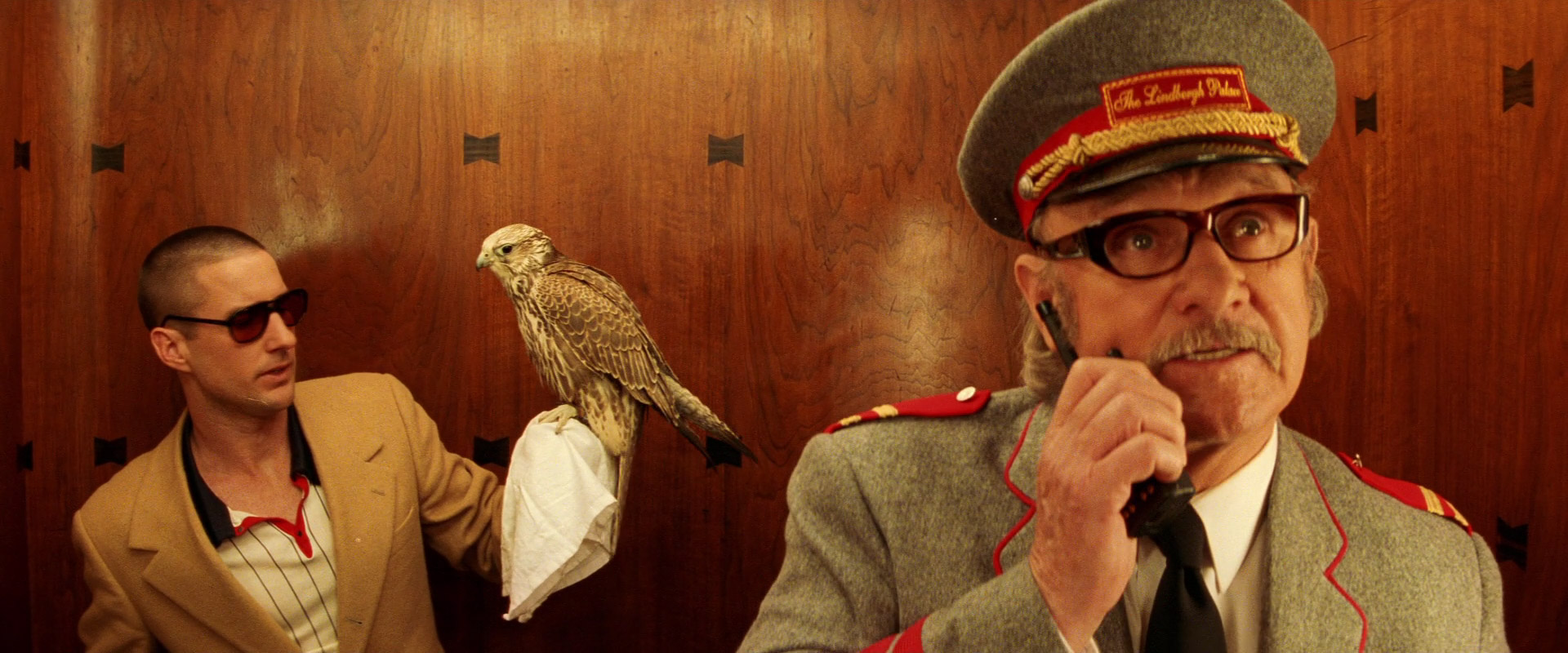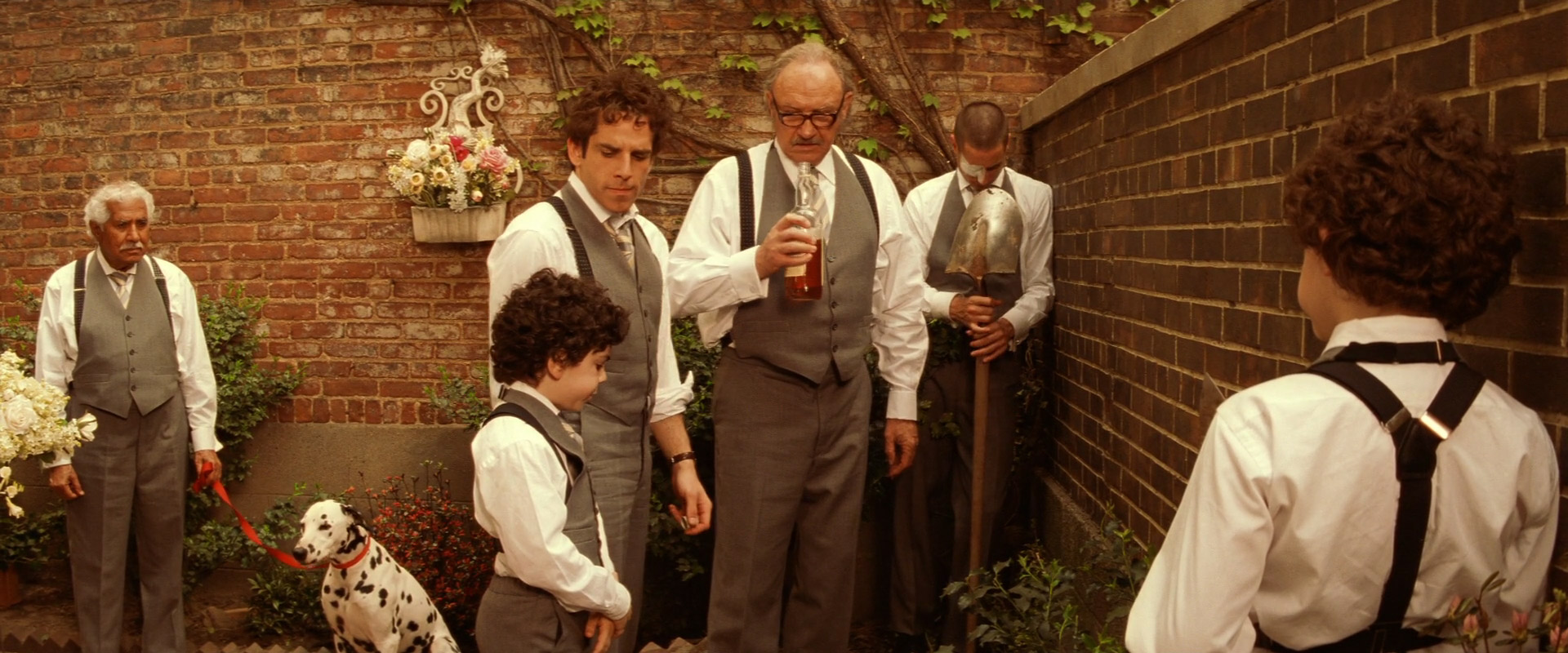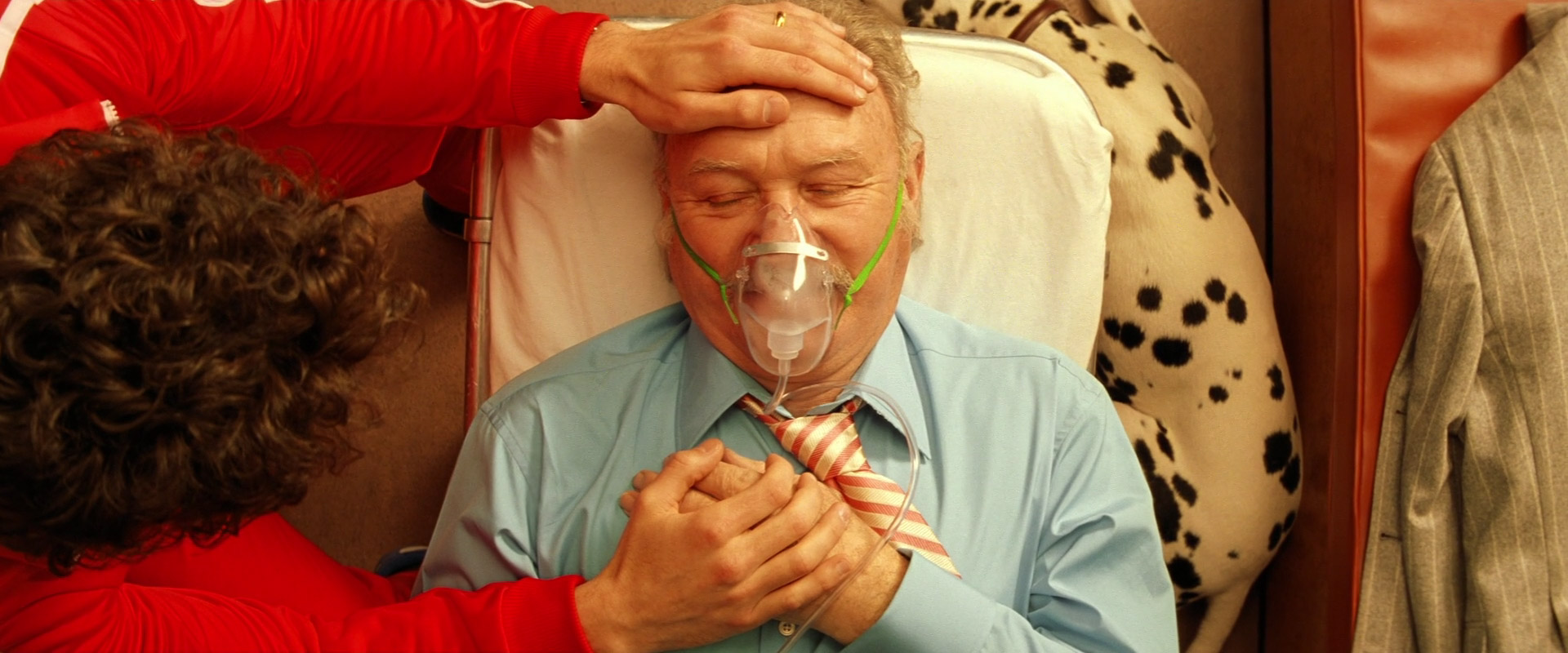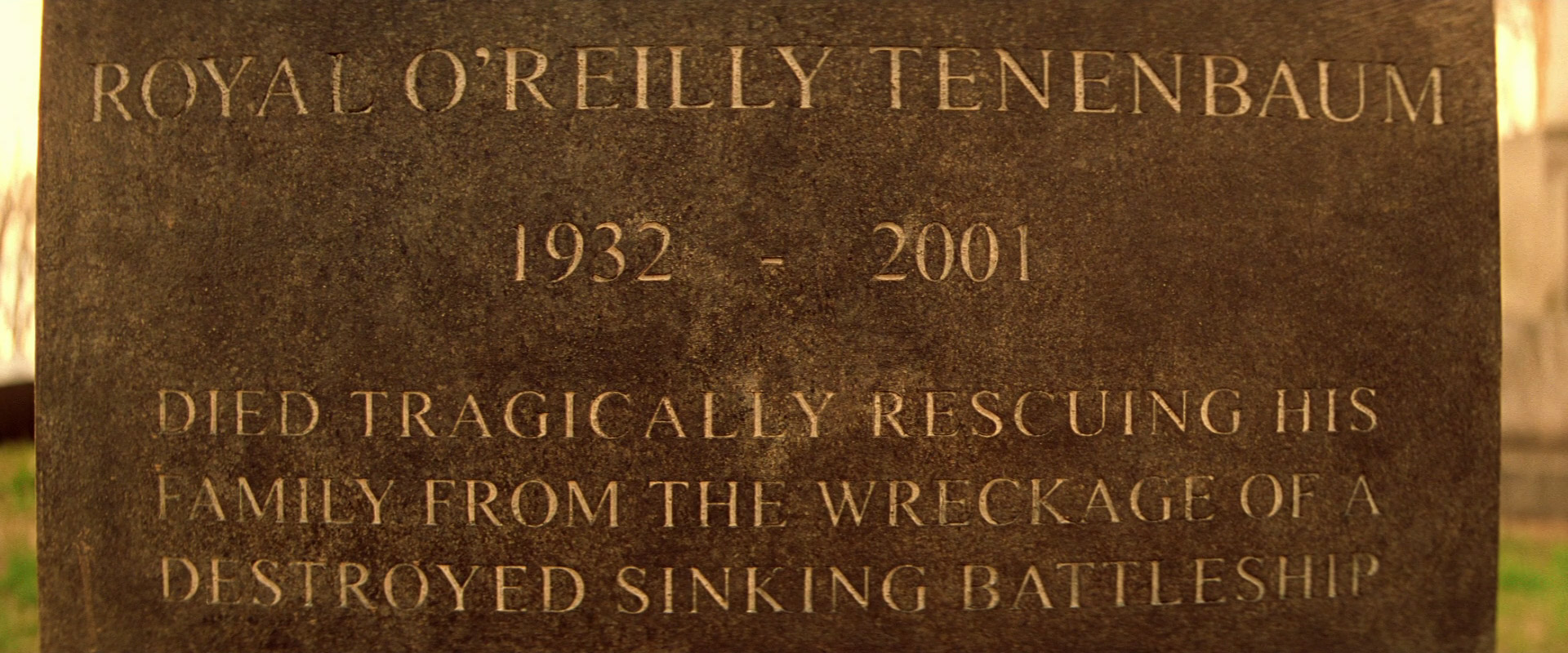
Twenty frames from The Royal Tenenbaums

From The Royal Tenenbaums, 2001. Directed by Wes Anderson. Cinematography by Robert D. Yeoman. Via Screenmusings. RIP Gene Hackman.

Thank you David Lynch

RIP David Lynch, 1946-2025

We weirdos lost a spiritual uncle today.

Lose isn’t exactly the right word–the work is still there, the tremendous body of works, the films and images that I’ve returned to for so much of my life, films and images my fourteen-year-old son has recently been drawn to himself, wholly independent of me, getting there through his own weird back channels, my son who asked me just the other day if we could watch Eraserhead, and I said, Not yet, although I was the same age as he is now when I watched Eraserhead and let it do something weird to me. Maybe we’ll start with The Elephant Man instead, let it break his heart a little. Keep him away from Fire Walk With Me until he can handle it (you can never really handle it). I saw them all too young. Was way too young when my older cousin showed me Blue Velvet; I think it imprinted on me. Rewatching it (for the fifth? tenth?) time a decade and a half later, I realized I was Kyle M’s Jeffrey Beaumont peering through the closet in horror at the Adult World. Maybe I wasn’t too young. But I’ve loved them all, again and again—Lost Highway, the first one I got to see in a theater, Mulholland Dr. (the best one?), Inland Empire (really the best one). Even Dune, the first one I saw, perplexed as hell. My parents let us watch it again and again on VHS and it always refused to cohere. I think they thought it was like Star Wars, which it both was and very much wasn’t. Even the straight one he made for the normies (especially the one he made for the normies–although I don’t know if they appreciated it). But really, especially, when he Got the Old Gang Back Together for Twin Peaks: The Return—it was such a gift, a gift that seemed to come out of nowhere, unexpected, but I think even then we could recognize what a beautiful gift it was — even if it broke my heart all over again at the end, in the best possible way (“What year is this?” / “Laura!” / HOWL). I think we all knew to say Thank you then; I think we showed our love in return for the artist’s gifts. I’m thankful now, sad, selflishly sad that there won’t be one more gift, one more vision that could never come from another mind. But thankful.

RIP Robert Coover, Prince of American Metafiction

RIP Robert Coover, 1932-2024

Robert Coover passed away a few days ago at ninety-two years old. In his decades-spanning career, Coover published twenty-one novels, four plays, and four short story collections. He also published dozens of (as-yet) uncollected stories, essays, and a host of so-called “electronic fiction.” A fifth short story collection, 2018’s Going for a Beer, collected some of Coover’s greatest hits, and is generally an excellent starting place for those interested in Coover’s metatextual fabulism.

Coover didn’t start out as a metatextual fabulist. His first novel, 1966’s The Origin of the Brunists, is vivid, humanist realism with the slightest tinges of magic brightening its edges. 1968’s follow-up, The Universal Baseball Association, Inc., J. Henry Waugh, Prop., strays much deeper into the pop-myth fantasies that Coover would perfect in his mature career.

Coover’s 1969 collection Pricksongs & Descants shows a remarkable shift into postmodern metafiction. Pricksongs features some of his better stories, like “The Brother” (told from the point of view of the biblical Noah’s brother), “The Elevator,” and “The Magic Poker,” which begins with the sentence “I wander the island, inventing it” — a tidy encapsulation of Coover’s growing motif of the self-creating story. At times, this metatextual motif can exhaust the reader, as in Pricksongs’ capper “The Hat Act.” However, the collection features one of Coover’s best stories, “The Babysitter,” in which the titular character serves as a locus for a mundane suburban community’s collective repressed anxieties of sex and violence.

Coover would continue to explore such themes throughout his career, refining and sharpening his metatextual hat act in standout novels like Spanking the Maid (1982), Gerald’s Party (1986), and 1977’s The Public Burning—arguably Coover’s most important novel. It’s easy to think of The Public Burning as the last part of a loose postmodern American trilogy of large daring novels, the first two parts comprised of Pynchon’s Gravity’s Rainbow (1973) and William Gaddis’s J R (1975).

Indeed, Coover was regularly grouped with a (very white, very male) clique of postmodern American writers. In his 1980 essay “The Literature of Replenishment,” John Barth halfheartedly counted up the members: “By my count, the American fictionists most commonly included in the canon, besides the three of us at Tubingen [William H. Gass, John Hawkes and Barth himself], are Donald Barthelme, Robert Coover, Stanley Elkin, Thomas Pynchon, and Kurt Vonnegut, Jr.”

There was some chatter on social media that Coover’s passing left just Pynchon–and maybe Don DeLillo and Joseph McElroy–as the last living luminaries of twentieth-century US American postmodernist fiction. Of course, Pynchon really wasn’t a member of this or any other clique (he declined an invitation to Donald Barthelme’s so-called “postmodernists dinner“), and, as is too often the case with such groupings, Ishmael Reed’s contribution to American postmodernist fiction continues to be marginalized.

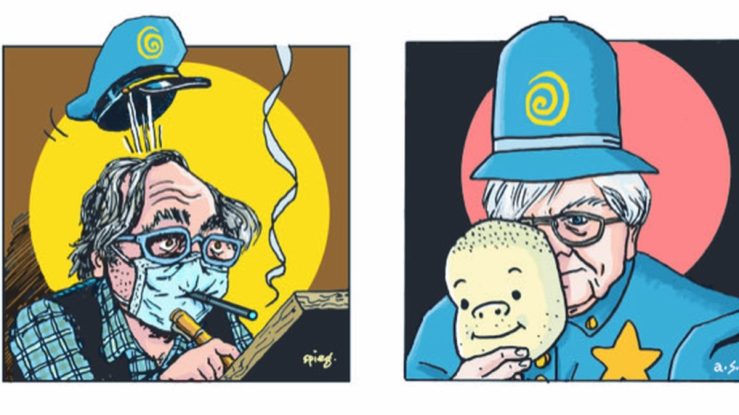
Let it stand then that Robert Coover, despite whatever connections and friendships he held with other writers and artists, was his own special self-made creation. He was prolific, especially later in life, publishing nine novels in the twenty-first century. One of these was The Brunist Day of Wrath (2014), a sequel to his debut; he also collaborated with comix artist Art Spiegelman on the graphic novelette Street Cop (2021) and even found a sliver of mainstream readers with Huck Out West, his wonderful 2017 “sequel” to Adventures of Huckleberry Finn. Coover’s latest novel Open House was published just over a year ago.

Clearly, Coover leaves behind a large body of work, and we’ll likely see more of his work collected and published over the next decade. I won’t pretend to have read most of what he’s written, but I’ve loved a lot of it—particularly Pricksongs & DescantsHuck Out WestSpanking the Maid, and Briar Rose, which, as far as I can recall, is likely the first thing I read of his (my girlfriend at the time’s sister had to read it in college; she professed that she hated it but thought I’d like it). The aforementioned 2018 collection Going for a Beer is a nice starting place for Coover; those more interested in novels might like Spanking the Maid. Or jump into one of his later short novels, like 2004’s Stepmother or 2018’s The Enchanted Prince, both of which exemplify his metamagicianist mode. Or hell, just go for the big boy, The Public Burning. Ultimately, Coover leaves behind a trove of trembling, writhing, vividly-living words, an oeuvre that will continue to engage readers fascinated by a certain stamp of so-called experimental literature–and for that I thank him.


Mass-market Monday | Robert Coover’s The Origin of the Brunists

The Origin of the Brunists, Robert Coover. Banatm Books Edition (1978). No cover designer credited. 534 pages.

This Bantam reprint of Coover’s first novel coincided with their mass-market paperback publication of The Public Burning.

I wrote a bit on The Origin of the Brunists a few years back. From that riff:

Coover’s metafiction always points back at its own origin, its own creation, a move that can at times take on a winking tone, a nudging elbow to the reader’s metaphorical ribs—Hey bub, see what I’m doing here? Coover’s metafictional techniques often lead him and his reader into cartoon landscapes, where postmodernly-plastic characters bounce manically off realistic contours. The best of Coover’s metafictions (like “The Babysitter,” 1969) tease their postmodern plastic into a synthesis of character, plot, and theme. However, in  large doses Coover’s metafictions can tax the reader’s patience and will—the simplest example that comes to mind is “The Hat Act” (from Pricksongs & Descants, 1969), a seemingly-interminable  Möbius loop that riffs on performance, trickery, and imagination. (And horniness).

I’m dwelling on Coover’s metafictional myth-making because I think of it as his calling card. And yet Origin of the Brunists bears only the faintest traces of Coover’s trademark metafictionalist moves (mostly, so far anyway, by way of its erstwhile hero, the journalist Tiger Miller). Coover’s debut reads rather as a work of highly-detailed, highly-descriptive realism, a realism that pushes its satirical edges up against the absurdity of modern American life. It reminds me very much of William Gass’s first novel Omensetter’s Luck (1966) and John Barth’s first two novels, The Floating Opera (1956) and The End of the Road (1958). (Barth heavily revised both of the novels in 1967). There’s a post-Faulknerian style here, something that can’t rightly be described as modern or postmodern. These novels distort reality without rupturing it in the way that the authors’ later works do. Later works like Barth’s Chimera (1973), Gass’s The Tunnel (1995), and Coover’s The Public Burning (1977) dismantle genre structures and tropes and rebuild them in new forms.

RIP Michael Zulli

RIP Michael Zulli, 1952-2024

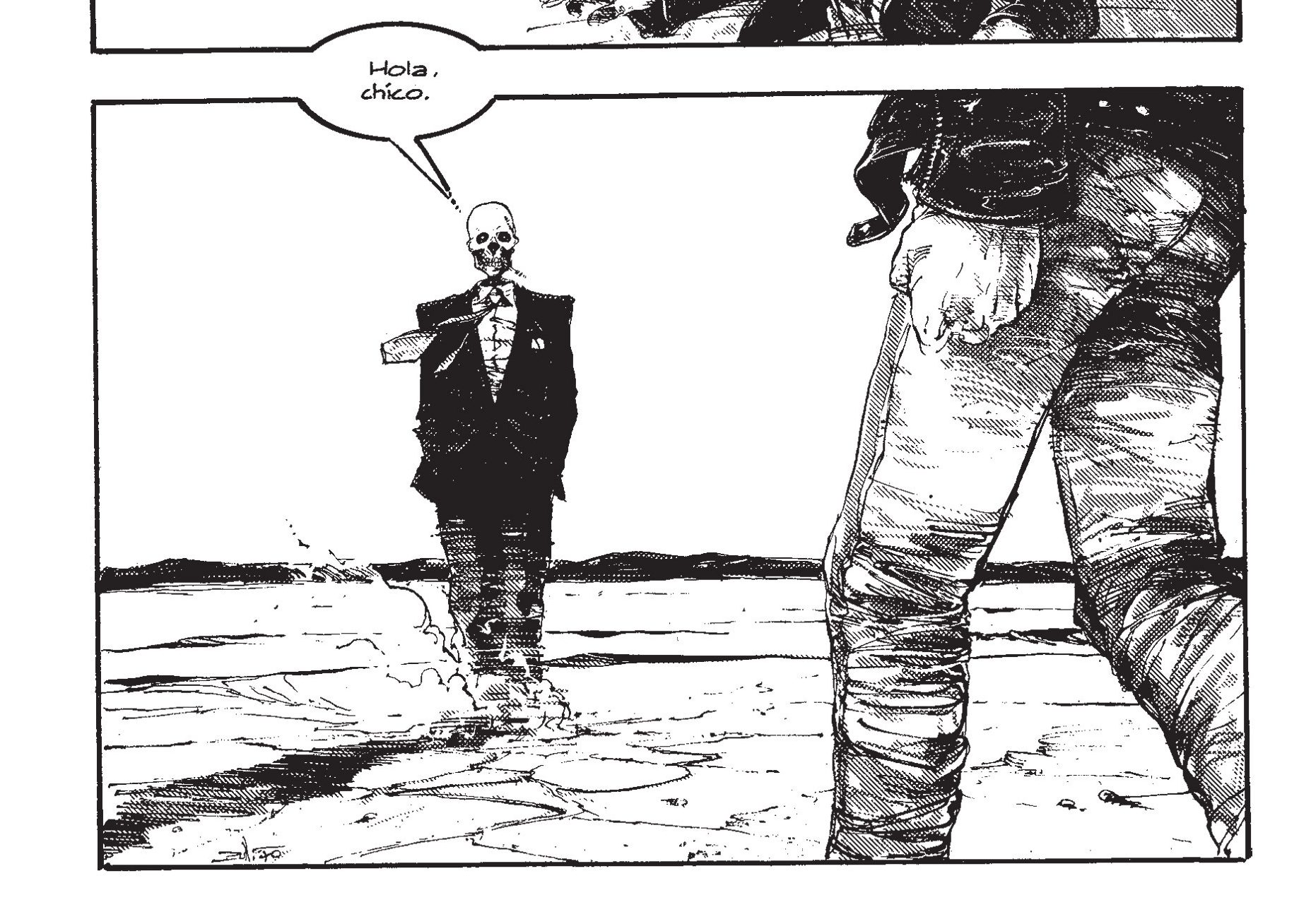
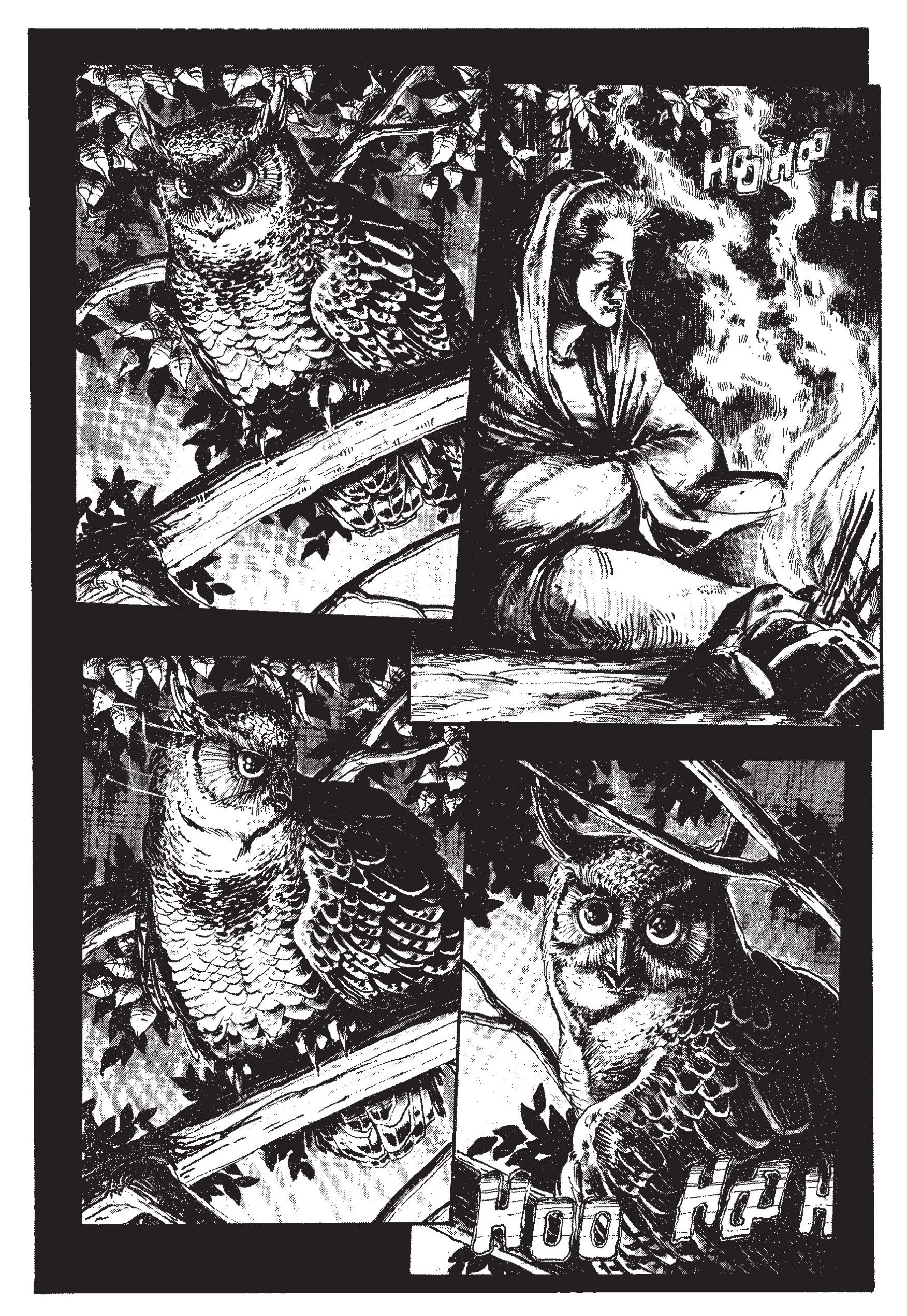
Comics artist Michael Zulli passed away this week at the age of 71. While Zulli was likely most known for his work on Neil Gaiman’s The Sandman comic (as well as an unpublished comic where Swamp Thing meets Jesus Christ), it was his work on The Puma Blues that really sank into my spirit as a kid.

I came to The Puma Blues in the very early nineties via the proselytizing of Dave Sim in Cerebus comics; I managed to a hold of a handful of back issues from very late in the comic’s run. I of course had no idea what was going on, but that didn’t matter. Working from Stephen Murray’s enigmatic script, Zulli crafted a post-apocalyptic dreamscape, an evocation in black and white. His wild animals always seemed more detailed, more pure, more real than the humans who walked through the world he’d conjured in black and white.

I quit regularly visiting comic shops by the mid-nineties, but if I ever happened to be adjacent to one I’d pop in to look for back issues of The Puma Blues (and a handful of other indie titles). It wasn’t until a decade or so later that (with the extralegal help of the internet) I was able to read the entire series. Great stuff—baffling, evocative, Zulli and Murray’s series ran on its own aesthetic logic.

In a 2016 interview at The Comics Journal to mark the publication of a complete volume of The Puma Blues, Zulli spoke on the work as an act of ecological witnessing:

The nature drawings in Puma especially, but so much of the detail in the book feels like an act of witness.

It is. It’s an idea that we’re surrounded in what scientists call the ecosphere, for lack of a better word. It’s this incredibly beautiful and sophisticated system and somehow we think we’re separate from it? I don’t think so. We are not superior to it, we are a part of it and we should take care of it because in doing so we take care of ourselves as a species, too. If not for nature and the earth’s own sake, do it at least for your sake and your children’s sake. That’s all we have got. One day somebody could stop your electricity. What are you going to do? You’re completely unprepared to think about life without your support systems. I don’t mean to be excessively grim. I see a lot of hope. I cling tenaciously to it, but at the same time, Puma is sort of a shot across the bow to wake the fuck up. Take a real good look around you and see what’s really there. Participate in it. Because like it or not you are part of it.

RIP John Barth

img_4537

RIP John Barth, 1930-2024

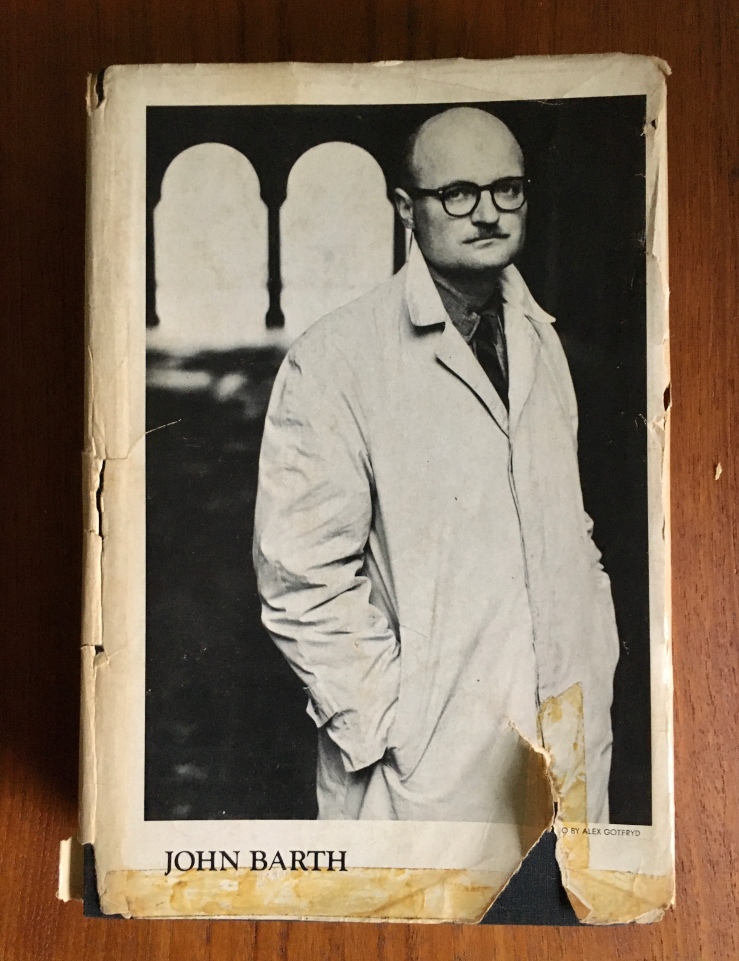
John Barth died yesterday at the age of 93. Between 1956 and 2011, he published thirteen novels and four short story collections. He also published a quartet of nonfiction books—his “Friday” books—that collected the many essays, introductions, lectures, and other pieces he wrote in his life time. The title of the last collection of nonfiction, 2022’s Postscripts (or Just Desserts): Some Final Scribblings, consciously pointed to the end of his road.

Barth will most likely be remembered for the novels and stories he published in the 1960s and 1970s, when he began practicing the metaficitonal arts. Critics and reviewers have alternately accused Barth of being a fabulist, an anti-novelist, a black humorist, a goddamn nihilist (or at least a creator of nihilist fiction), but most predominately, as a postmodernist.

Barth’s run from 1960-1972 is particularly impressive: The Sot-Weed FactorGiles Goat-BoyLost in the Funhouse, and Chimera. In these works, Barth helped to create a new postmodernist tradition in U.S. fiction. Like most postmodern practitioners of his era, he was ambivalent and perhaps suspicious of the term postmodern. But Barth’s 1967 essay “The Literature of Exhaustion”, oft-cited as a postmodernist manifesto, called for a new literature in the face of “the used-upness of certain forms or exhaustion of certain possibilities,” which he cheerfully noted was “by no means necessarily a cause for despair.” (It’s a fine read, but not really a manifesto so much as a love letter to his hero Jorge Luis Borges.)

Many readers have interpreted “The Literature of Exhaustion” as a rebuke to realist fiction; Barth’s first two novels, The Floating Opera (1956) and The End of the Road (1958) are thus surprisingly realistic, at least for the reader who finds himself coming to them after, say, the metafictional fireworks of Lost in the Funhouse or Chimera (that reader was me, reader). 1960’s The Sot-Weed Factor marked a massive shift for Barth–in tone, complexity, structure, themes, and, quite frankly, length.

Interestingly, Barth claimed in his introduction to the 1987 reprint of Giles Goat-Boy that he regarded his first three novels “as a loose trilogy,” noting that in producing The Sot-Weed Factor,

I had put something behind me and moved into new narrative country. Just what that movement was, I couldn’t quite have said; today it might be described as the passage made by a number of American writers from the Black Humor of the Fifties to the Fabulism of the Sixties. For four years, writing Sot-Weed, I’d been more or less immersed in the sometimes fantastical documents of U.S. colonial history: in the origins of “America,” including the origins of our literature. This immersion, together with the suggestion by some literary critics that that novel was a reorchestration of the ancient myth of the Wandering Hero, led me to reexamine that myth closely: the origins not of a particular culture but of culture itself; not of a particular literature, but of the very notion of narrative adventure, especially adventure of a transcendental, life-changing and culture-changing sort.

Barth above offers a concise description of the trajectory of the next few decades of his writing.

In my memory, I’m most fond of The Sot-Weed Factor, a sprawling satire of American colonialism and storytelling itself, simultaneously rich and bloated. In my memory, I think of it as a companion to and forerunner of Pynchon’s masterpiece Mason & Dixon. Revisiting my review earlier today—composed nearly thirteen years ago—I see that I was quite unkind to the novel at times, describing it at one point as “the literary equivalent of a very bright writer jacking off to his own research.” Ah well. I was no doubt exhausted by the assy-turvy thing’s 800 pages.

Giles Goat-Boy (1966) is also very long—Barth would go on to write many long novels—and I think it’s probably the consensus favorite of Barth acolytes. Barth described Giles Goat-Boy as “the adventures of a young man sired by a giant computer upon a hapless but compliant librarian and raised in the experimental goat-barns of a universal university, divided ideologically into East and West Campuses.” Like The Sot-Weed Factor, Giles Goat-Boy is a parodic picaresque of displaced identity. It’s in Giles Goat-Boy that Barth begins his life-long practice of metafiction.

Barth’s metafiction evinces in more bite-sized doses in the collection Lost in the Funhouse (1966). This was the first Barth I read, sometime in the 1990s, and I suspect many readers found their way to it the same way I did, via David Foster Wallace; specifically, through Wallace’s novella Westward the Course of Empire Takes Its Way, an intertextual response to FunhouseLost in the Funhouse is the perfect starting place for anyone interested in Barth’s metafictional postmodernism (and it might also be the last stop for some readers).

I think the next one I read was Chimera (1972), a book that daunted me so much when I was younger that I broke into sweats reading it. Revisiting a few years ago I found it far funnier, sillier, and comprehensible than I would have thought. At the outset of Chimera, Barth inserts himself as a somewhat-feckless genie who appears before Scheherazade and Dunyazade and, in a wonderful time-loop conceit, gives Scheherazade the “1001 Nights” gambit of story-telling-as-a-method-to-stave-off-rape-and-murder. Barth inserts himself into a frame tale around a frame tale around a frame tale. A reread of Chimera’s initial frame tale reveals realistic autofictional tinges into Barth’s metafictional gambit. The Genie–Barth–laments that “At one time…people in his country had been fond of reading; currently, however, the only readers of artful fiction were critics, other writers, and unwilling students who, left to themselves, preferred music and pictures to words.” Barth’s Genie has writer’s block, but he’s unsure “if his difficulty might be owing to his own limitations, his age and stage and personal vicissitudes; how much to the general decline of letters in his time and place; and how much to the other crises with which his country (and, so he alleged, the very species) was beset.” Modernist existential despair was never really exhausted, right? It just found new forms.

I’ll admit that I didn’t read much of Barth’s post-1970’s work, aside from the occasional essay or short story. I didn’t make any kind of dent into the near-800 pages 1979’s LETTERS (in fairness, I find even short epistolary novels tedious), and the last one I took a crack at was 1987’s The Tidewater Tales, making it somewhere farther into its near-700 pages before turning my poor attention elsewhere.

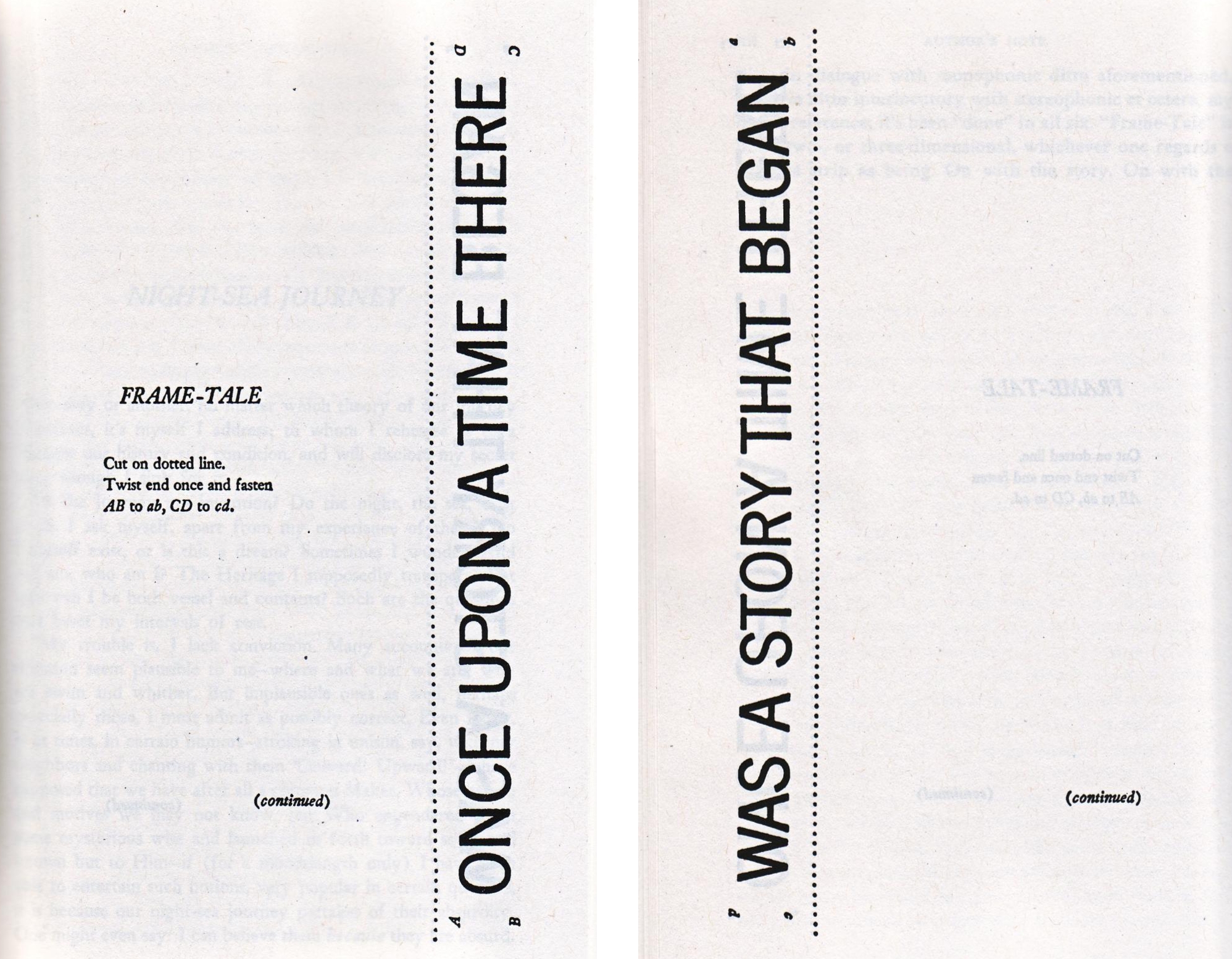
Like many readers, Barth’s 1960s and 1970s was a gateway drug for me to postmodernist writers like William Gaddis, Thomas Pynchon, William Gass, and Robert Coover. Most of that generation of American postmodernists are gone, but I like to think that their stories will go on. I’ll leave it with the opening piece from Lost in the Funhouse, “Frame-Tale.” The story never ends.

I feel pretty in the chimney, I feel

RIP Damo Suzuki, 1950-2024

Riff on the death of Cormac McCarthy

We were about an hour north of the border, driving a rented car from Quebec City to a hiker hostel our friends own in Maine, when I got a text from my uncle: “It seems your favorite author has died…” (The ellipses were part of his text.)

At first, I thought he meant Thomas Pynchon, who is 86, which is pretty old. I opened Twitter and realized he meant Cormac McCarthy, who is also my favorite author, who died at the age of 89 about a week ago.

It may be unseemly to bring up another author, Pynchon, in an ostensible eulogy for McCarthy (to be clear, this is not a eulogy, this is a riff)—but I found my reactions to the non-news of Pynchon’s non-death and the true-news of McCarthy’s true-death revealing, insomuch as my reactions revealed how I thought about these two writers’ latest and last works. Simply put, I felt a sharp, ugly pang at the thought that there might not be one last Pynchon novel in the author’s lifetime, one last big, baggy, flawed, majestic synthesis of the artist’s oeuvre to capstone the grand career.

Cormac McCarthy published his big, baggy, flawed, majestic capstone last year and titled it The Passenger. It confused and irritated many reviewers and readers, who were likely expecting something other than a sprawling and elliptical summation of the philosophical and aesthetic preoccupations of McCarthy’s previous work. (I made an indirect argument for The Passenger as the elliptical summation of the philosophical and aesthetic preoccupations of McCarthy’s previous work in a series of riffs.) The subsequent release of Stella Maris, a short, spare novella composed entirely in dialogue further befuddled many readers. Neither sequel nor coda, Stella Maris is a cold satellite orbiting The Passenger’s strange sun. Or maybe Stella Maris is The Passenger’s incestuous sibling; the very nature of its publication as a separate text deliberately invites us to read the novels intertextually. And then to read the sibling novels intertextually with/against the McCarthy family of novels.

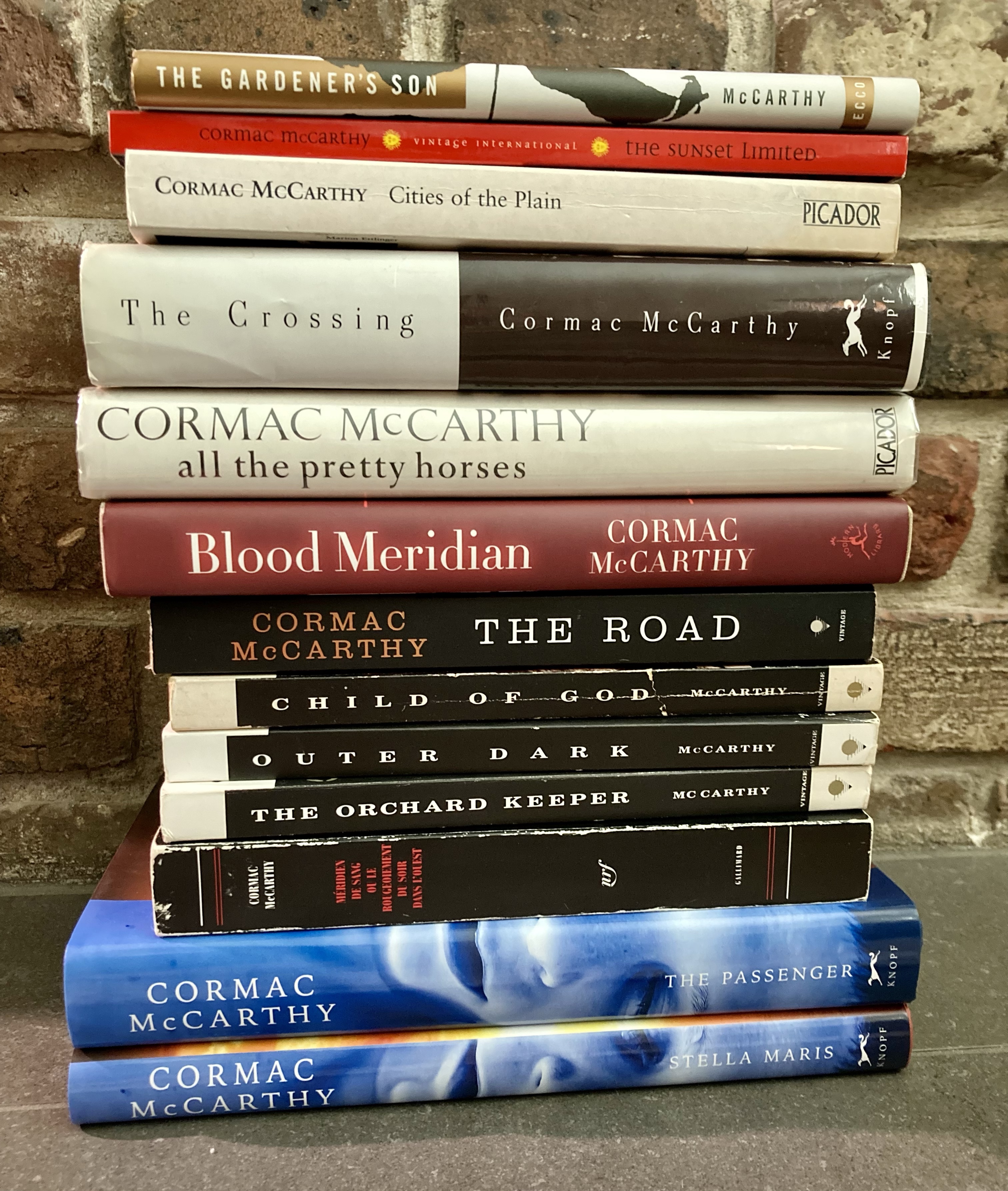
A proper eulogy (which this riff is not) would remark at some length on the McCarthy family of novels. Such a eulogy might demarcate the novels by both time and location, perhaps separating the early Southern novels (The Orchard Keeper, 1965; Outer Dark, 1968; Child of God, 1973; Suttree, 1978) from the later Westerns (1985’s Blood Meridian up through No Country for Old Men, 2005). Such a eulogy might also point to the commercial success and film adaptations of All the Pretty Horses (1992), No Country for Old Men, and 2006’s The Road. There’s even a segue there, I suppose, to mention McCarthy’s own efforts at screenwriting (The Gardener’s Son, 1976; The Counselor, 2013) and stage writing (The Stonemason, 1995; The Sunset Limited, 2006). Another segue presents itself: one might suggest that these screen and stage efforts need not be situated in McCarthy’s oeuvre. The eulogist might then attend himself to sorting McCarthy’s work into tiers: Blood Meridian and Suttree; The Crossing and The Passenger; everything else. But this riff is not a eulogy.

A eulogy, which this riff is not, should ideally contain a kernel of grief. Like most of his readers, I did not know Cormac McCarthy except through his work, and I feel gratitude for that work—for Blood Meridian and Suttree in particular, but also for The Passenger, which, as I’ve stated above, serves as a perfectly imperfect final marker for a fantastic and rightfully-lauded career. There’s no grief then; McCarthy wrote everything he could possibly write.

He was still writing at the time of his death, of course. Director John Hillcoat revealed just a few weeks ago that he was co-writing the screenplay for a Blood Meridan adaptation with McCarthy. Hillcoat, who adapted The Road into a 2009 film, did know McCarthy, and was working with him, again, and thus might feel a grief personal and professional, a grief and love that licensed him to author a eulogy for his friend, which he did here. I have no such license.

As my wife finished the drive from Quebec to Maine, I scrolled through Twitter, where readers and authors shared their thoughts on McCarthy’s passing. We soon arrived at our friends’ hostel, a large, comfortable old house not too far from the Appalachian Trail’s northern terminus. Years ago, one of these friends became infected with Blood Meridian, obsessed with its bombastic language. I spied his worn copy on the shelf, next to the copy of Suttree I had given him, which he still hasn’t finished. I vaguely recall toasting “Cormac” over some too-strong IPAs that night.

We drove back to Quebec City the following afternoon. (It is nice to visit one’s friends and see the hiker hostel they operate, but a hiker hostel is not a comfortable place for a family who is not hiking.) A day or two later we strolled Rue Saint-Jean outside of the Old City, where I visited four used bookstores. I can’t really read French, but I enjoy looking at book covers and simply looking at what’s in stock at a particular place. I ended up buying a used copy of François Hirsch’s French translation of Blood Meridian that I found for about eight U.S. dollars. I read the “legion of horribles” passage in Hirsch’s translation, and while my French vocabulary is awful, I know the book well enough to have enjoyed the experience. “Oh mon Dieu, dit le sergent” even made me crack up.
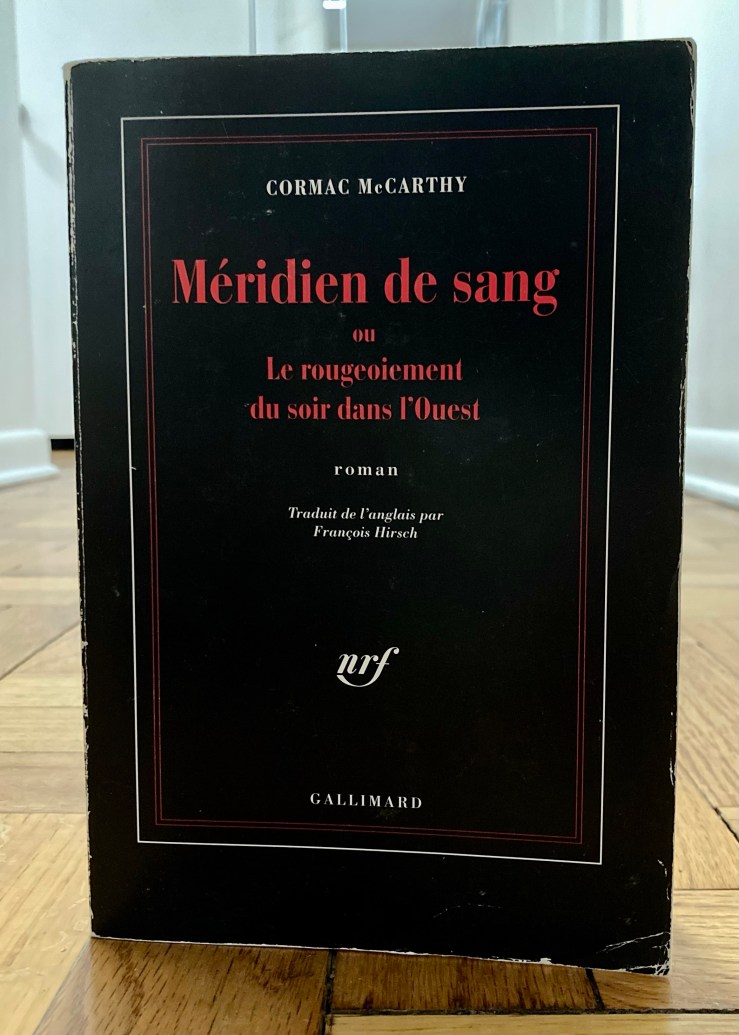
I was far from Florida and my home and my laptop in my home, so I did not write any riff on the death of Cormac McCarthy. I recycled old posts I’d written, reading and editing them from my phone, finding some of my early reviews pretty callow. My 2008 first-read review of Blood Meridian is particularly bad; the book clearly overwhelmed me. I’ve read it many, many times since then. The “review” I wrote of No Country back in 2007 is so bad I won’t even link to it. Like most great writers, McCarthy’s work is best reread, not read.

And I reread so much of his work this year. The Passenger left me wanting more McCarthy–not in an unsatisfied way, but rather to confirm my intimations about its status as a career capstone. I reread All the Pretty Horses in the lull before Stella Maris arrived. I went on to reread The Crossing (much, much stronger than I had remembered), Cities of the Plain (weaker than I had remembered), The Road (about exactly as I remembered), Child of God (ditto), and The Orchard Keeper (as funny as I had remembered but also much sadder than I had remembered).

This riff has been too long and too self-indulgent; it was not (as I promised it would not be) a eulogy for the great dead writer, but rather blather on my end—a need to get something out of my own system. If I were younger and more full of foolish energy, I’d probably take the time to rebut McCarthy’s detractors, critics who take to task both his baroque style and dark themes. The truth is I don’t care—I’ve got the books, I’ve read them and reread them, and I know what’s there and how it rewards my attention.

I’ll end simply by inviting anyone interested in McCarthy’s work to read him. And then I’ll really end, here, now, end this riff, with a Thank you to the void.

Moonlight web, goodbye arms, so long head

RIP Tom Verlaine, 1949-2023

RIP Low’s Mimi Parker

https://www.youtube.com/watch?v=LvaqUYqrghk

Pitchfork and other media sites have reported the death of Mimi Parker. Parker was diagnosed with ovarian cancer in late 2020, and I’d hoped that she would recover. She was 55.

Along with her husband Alan Sparhawk, Parker was the core at the heart of the long-running band Low. She was the primary percussionist for the band, and traded vocals with Sparhawk to create slow, haunting, and deceptively simple songs.

I have intense memories of listening to Low’s 1994 debut I Could Live in Hope on repeat on my Walkman (but only in the winter). I loved their 1995 follow up, Long Division (somehow darker and crueler than the first record), but it’s 1996’s The Curtain Hits the Cast that will probably always be the definitive Low album for me. The dark opener “Anon” slides into two perfect, restrained pop songs — “The Plan” and “Over the Ocean,” a track carried by Parker’s perfect harmonies and spare percussion. The album’s penultimate track, “Do You Know How to Waltz?” is definitive slowcore noise, ambient and menacing and thrilling and hypnotic. (It was probably around this time that I made the Low t-shirt my wife later adopted, and then my daughter took up.)

I got to see Low play on the tour for their next album, Songs for a Dead Pilot. It was at a goth club in Orlando, on a small stage. I recall their being kids dancing to stuff like KMFDM in the main part of the club, and the sound drifted over. Everyone sat down. My friend Scott laid down and slept. It was wonderful. I got lost driving home to Gainseville and got home when the sun was coming up.

In 1999, Low released the perfect Christmas EP. Their original track “Just Like Christmas” is our favorite Christmas song in my household, and I know when we break it out in a few weeks I’ll feel like crying. There’s something perfect about how Parker characterizes a Scandinavian tour: “By the time we got to Oslo / The snow was gone / And we got lost / The beds were small / But we felt so young / It was just like Christmas.”

I got to see Low again, sometime around the summer of 2000. They played a small record store that I had ostensibly been working at (really, we used the space upstairs to rehearse our own band), and the owner offered a chance to meet them. I declined. The Canadian band Godspeed You! Black Emperor opened for them. There seemed to be no room for their ensemble and the audience to watch. The Low trio sat in the audience with us. Their set was like comedown music. Ethereal.

Things We Lost in the Fire came out in the spring of 2001. It was recorded by Steve Albini and it soundtracked a lot of my last year in college, which was often confusing and depressing and scary. Parker’s vocal on “In Metal” still destroys me.

In 2000s, I stopped keeping up with many of the nineties acts that I’d loved. With a handful of exceptions (the most notable being Lambchop), most indie acts were doing the same thing again and again, just not as well as they had once done. Low were different though. 2005’s The Great Destroyer, while not perfect, featured faster, poppier songs like “California.” The 2007 follow up, Drums and Guns is one of Low’s harshest, meanest, and best albums—a perfect response to the venomous Bush years. 2011’s C’Mon pushed their sound even further, while still holding on to their melodic core, as we can hear in a song like “Especially Me.”

Low’s 2015 record Ones and Sixes pointed to yet another direction—noisy, angular, chromatic. Low used the studio and self-sampling to create strange beauty. The trend continued on 2018’s Double Negative, where the band took the production techniques even farther, but it was last year’s 2021 that really saw the fruition of those experiments on HEY WHAT, an album that captures the weirdness and beauty of isolation, of unrelieved tension that folds into itself. Parker’s voice gliding through the digital noise and haze at the end of “Hey” is as wonderful as ever. Thank you so much for the gift of your music, Mimi.

Peace and happiness through all the land | Pharaoh Sanders

RIP Pharaoh Sanders, 1940-2022

Thanks for the music.


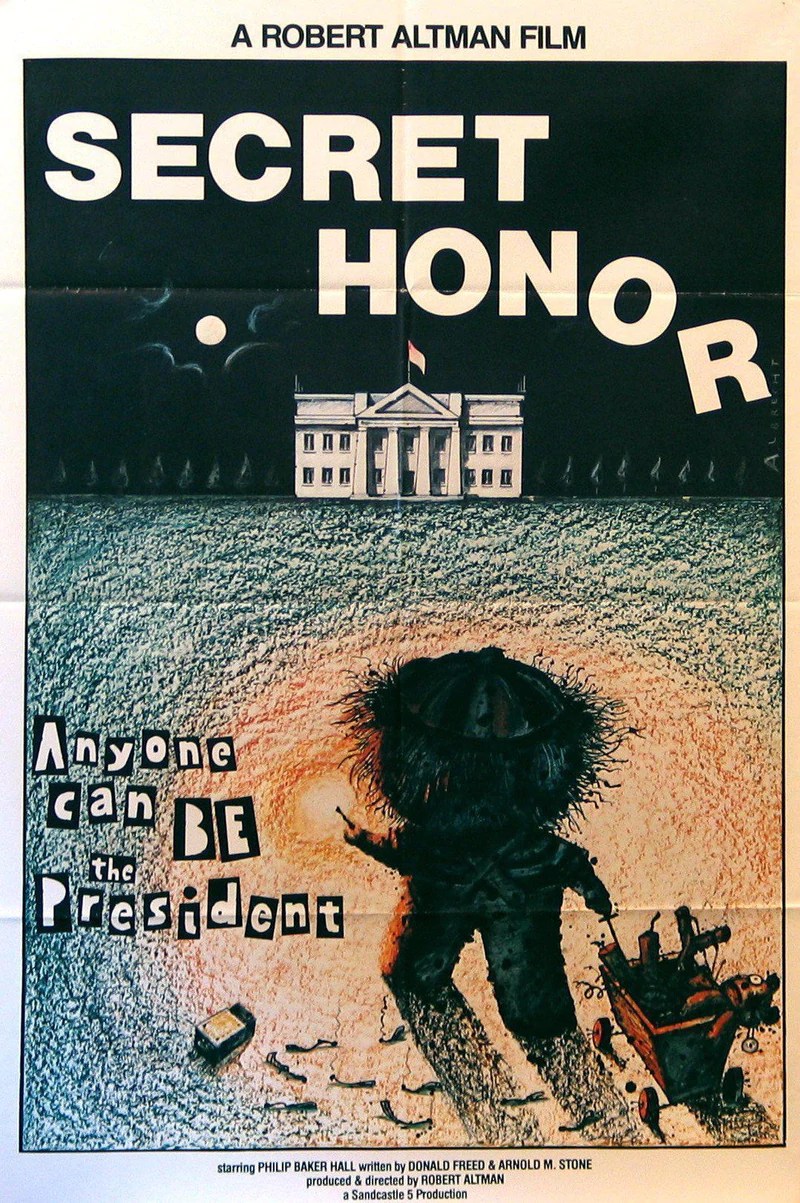
Philip Baker Hall is Richard Milhous Nixon in Robert Bernard Altman’s Secret Honor

RIP Philip Baker Hall, 1931-2022

Tell your heart

RIP Julee Cruise, 1956-2022

RIP Paula Rego


The Artist in Her Studio, 1993


RIP Paula Rego, 1935-2022

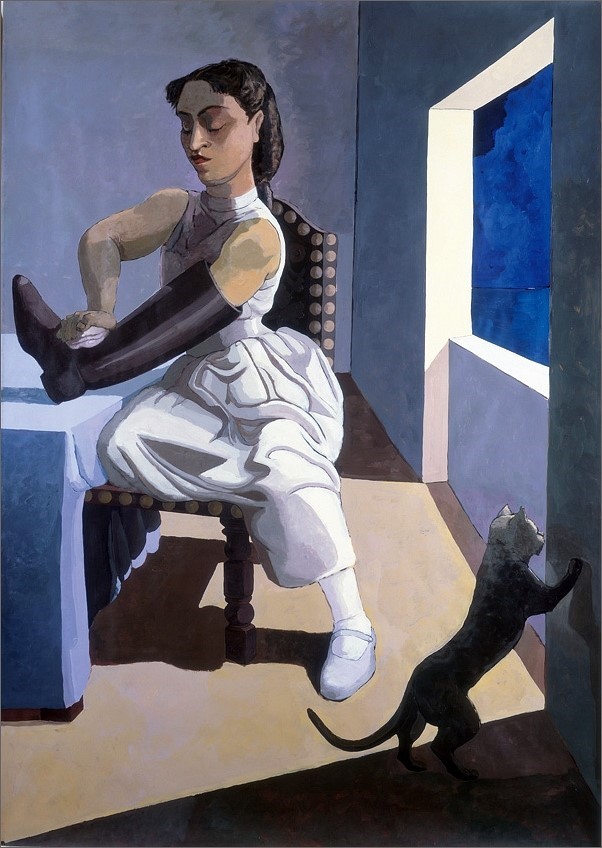
Paula Rego was one of the great figurative painters of the late-twentieth and early twenty-first centuries. Born in Portugal, Rego lived and worked most of her life in England. She first began exhibiting her work in the early 1960s with The London Group, and over the decades, her paintings were recognized for their haunting power in a series of career retrospectives at major museums, including the Tate Britain. She was also the first Associate Artist of the National Gallery in London.

Paula Rego portrait by Chris Garnham, 1988

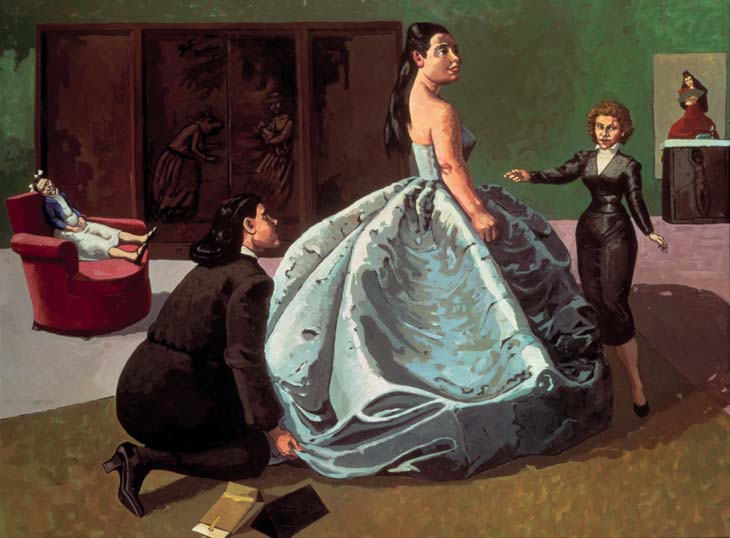
Rego’s paintings are strange and disturbing, evoking the psychosexual tumult that underwrites Western myths and fairy tales. Obliquely feminist, Rego’s images conjure a counternarrative to patriarchal domination. As Whitney Chadwick put it in her book Women, Art, and Society, Rego’s paintings were part of “the figurative tradition of history painting but used heroic scale, harsh lighting, and theatrical compositions to present a pantheon of female figures traditionally suppressed in accounts of male exploits . . .[her] works propose a new iconography for the female heroine.”

Snow White Swallows the Poisoned Apple, 1995

I’m pretty sure it was in Chadwick’s Women, Art, And Society that I first saw a reproduction of The Family, a painting that shocked me, and reminded me of the work of one of my favorite painters at the time, Balthus, as well as the films of David Lynch.

The Family, 1988

The Maids, 1987

There’s an uncanny mix of humor and paranoid terror in much of Rego’s work, and her feminist reimagining of folk tales and myths has much in common with the work of writers like Angela Carter and Anne Sexton.

little murderess
The Little Murderess, 1987

20091202023111_paularegofitting
The Fitting, 1989

1-1
The Policeman’s Daughter, 1987

A strong advocate of women’s rights, in 2019 Rego called out the increasingly-draconian anti-choice laws being acted in America, telling The Guardian, “It seems unbelievable that these battles have to be fought all over again. It’s grotesque.”

In 1998, Rego, who spoke publicly about her own abortions, created a series called The Abortion Pastels. The series depicted the reality of unsafe illegal abortions, and was a response to a failed referendum to legalize abortion in her native Portugal.

Untitled No.1 (from The Abortion Pastels), 1998

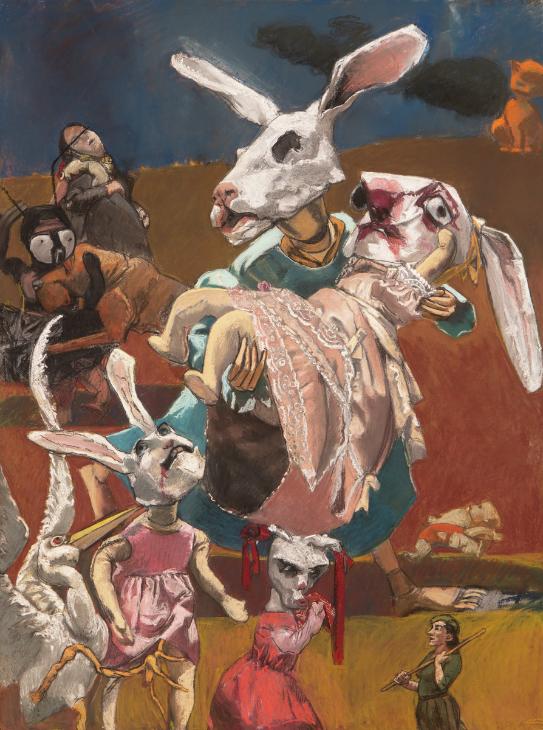
Rego’s work also addressed human trafficking, so-called “honor killings,” and war in an oblique, surreal-tinged style that transcends the limits of social realist figurative art.

Human Cargo, 2008

Two Women Being Stoned, 1995

War, 2003

And while Rego’s art addressed sociocultural ills, and in doing so was often shocking and disturbing, it is nevertheless beautiful—she was a fantastic painter and left a strong, large body of work that will, I suspect, feel even more relevant as the twenty-first century careens into fascism and fear.

Once, I was talking to Herman Melville. He said, “I’m writing book called Moby-Dick” | Gilbert Gottfried

RIP Gilbert Gottfried, 1955-2022

RIP Peter Bogdanovich

RIP Peter Bogdanovich, 1939-2022

Peter Bogdanovich died today at the age of 82.

Bogdanovich was an actor, writer, producer, and film critic, but will most likely be remembered as a film director.

The first Bogdanovich film I saw was Mask (1985) starring Eric Stoltz and Cher. I was probably eight or nine, and I did not know it was a “Peter Bogdanovich film.” Mask was one of the many films my grandfather taped from HBO, Disney, or Cinemax, and mailed to my family on VHS cassettes, little bundles of cinema my brother and I consumed repeatedly and indiscriminately in our remote village in the highlands of Papua New Guinea. Mask is one of the first films I ever saw that genuinely hurt my feelings.

Years later I’d see Bogdanovich’s most celebrated film, The Last Picture Show (1971), and it would also hurt my feelings. I was maybe eighteen or nineteen and the film just shattered my stupid heart (Cybill Shepherd as Jacy Farrow did something very particular to me, forever). This was the first time I knew I was watching a “Peter Bogdanovich film”—I’d learned about the New Hollywood guys and even seen some of the film stuff he’d written. (It would be years later until I realized that he was behind Noises Off (1992), which I’d watched as a VHS rental with my grandmother one Saturday night.)

Paper Moon (1973), starring real-life father and daughter Ryan and Tatum O’Neal is the sweetest (yet still a little heart-breaking) film I’ve seen by Bogdanovich, and maybe the best starting place for anyone interested in his work. There’s a touch of De Sica’s The Bicycle Thief in it–a kind of gritty neorealism that hums alongside the film’s tender core.

I found some of Bogdanovich’s films less successful. His adaptation of Henry James’s novel Daisy Miller (1974) doesn’t work and the screwball farce What’s Up Doc? (1972) is never as good as the films it pays homage to. (Avoid Texasville (1990), the sequel to The Last Picture Show, at all costs. It’s like The Two Jakes, by which I mean, a bad sequel to a great film, and it should never have happened.) But even his failures are far more interesting than most basic Hollywood fare.

Bogdanovich was also great in bit parts in film and TV. His perhaps most notable performance was playing Dr. Melfi’s therapist Dr. Kupferberg on The Sopranos. He was also the voice of the DJ in Tarantino’s Kill Bill films, perhaps a nod to his voiceover work in The Last Picture Show, where he also played a DJ.

For me though, Bogdanovich’s most significant acting role is that of director Brooks Otterlake in Orson Welles’ film The Other Side of the Wind (2018). I wrote “Orson Welles’ film” in the previous sentence, but that’s not quite true–The Other Side of the Wind is a bizarre beautiful mess of cinema spanning four decades. It’s a film about film (about film about film…), and Bogdanovich was instrumental in getting it finally released a few years ago.

Bogdanovich’s work in finally bringing Welles’ lost classic to screens is emblematic of his filmmaking career—a filmmaker in love with film, an artist enamored of film as art who came to prominence during the New Hollywood movement that rejected film as commerce. While so much of what makes it to theaters (and streaming platforms) today is simply “content,” or established “intellectual property” that execs know will do numbers, Bogdanovich’s spirit (and the New Hollywood DNA) inheres in current filmmakers who bear his influence, like the Safdie brothers, Sofia Coppola, Noah Baumbach, Wes Anderson, and Quentin Tarantino. That influence will continue to ripple forward, and I hope that we get more films that will disturb us, hurt our feelings, and break our hearts.


Go to sleep, everything is alright