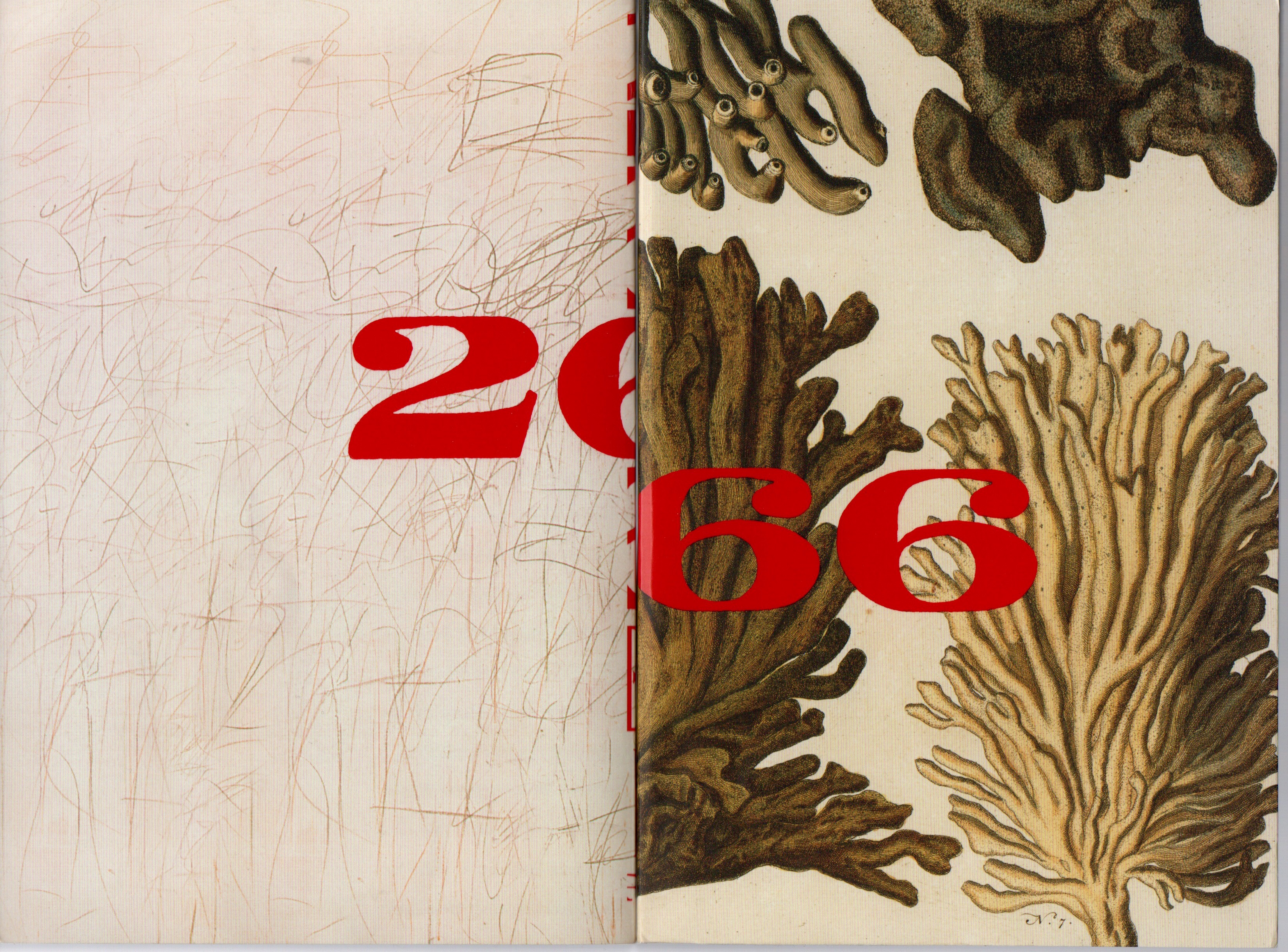

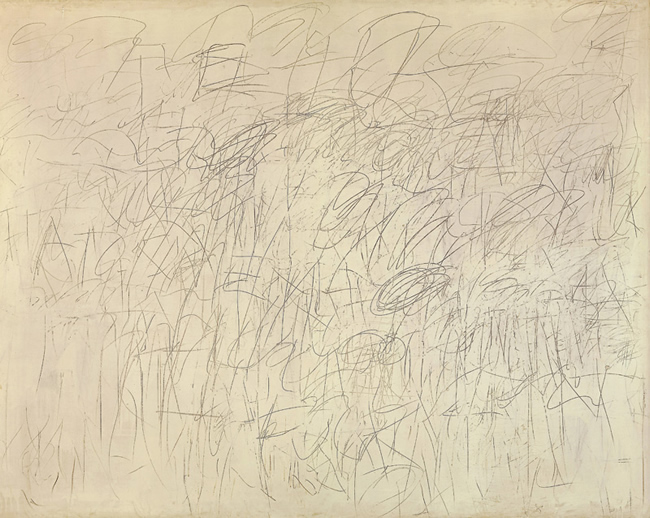
2666 by Roberto Bolaño. English translation by Natasha Wimmer. First edition three-volume slip case edition from FS&G. Design by Charlotte Strick. The image on volume one is a detail from Gustave Moreau’s Jupiter and Semele; on volume two, Academy by Cy Twombly; on three, a detail of a page on sea sponges from Albert Seba’s Cabinet of Curiousities. I’ve posted the images below for reference.
As I come near the end of this year-long Three Books thing, I find that I can’t not include Roberto Bolaño’s novel 2666, which is probably my favorite novel of the last twenty years. I initially resisted including it in one of these Three Books posts simply because it is, sort of, one book—and this particular edition is in a more readable three-volume set. But it’s also, maybe, five books—five “parts” anyway, which work together intertextually to tell a grand epic of love murder terror war reading writing etc. Too big to pin down in this puny post. I seem to be always reading the thing, or always wanting to read it. In any case, I’m almost positive it’s the book I’ve written the most review for on this site. A lazy edit from the Biblioklept “Reviews” page:
True Detective, Bolaño’s 2666, Werewolves, Etc
Wherein I Suggest Dracula Is a Character in Roberto Bolaño’s Novel 2666
Intertexuality and Structure in Roberto Bolaño’s 2666
Roberto Bolaño’s Powers of Horror
Roberto Bolaño’s 2666 Revisited
(The intertextuality is probably the least bad of those reviews, maybe).
Normally I just scan the covers for these Three Books posts, but when I unshelved and unslipcased 2666, I found that it was more…fun? natural? (those aren’t the right words)…it seemed better to put the books next to each other. Intertextuality by osmosis.
I have a vivid memory of buying this book at Green Apple Books in San Francisco in December of 2008 and then starting it on the plane ride home and then just sort of, I don’t know, consuming it, sucking it down like candy poison wine (these are bad metaphors). I’ve read it in full a few times since and it’s like an infection, it’s under my skin. I want to read it again, of course.







 On Avenida Juárez, across from the Alameda in Mexico City, sits an unassuming little bookstore, three steps below street level. It was here at the Librería del Sótano where Roberto Bolaño would buy novels or poetry books or, when he was short on cash (which was often), just pocket them. For centuries Latin American literature belonged not to those passionate, young biblioklepts like Bolaño but to affluent property owners who dabbled in writing the way they might take up equestrianism or falconry. Some time in the 1960s the roles reversed and the middle class became the seedbed of national literature. Bookstores, libraries, and the literary life prevailed in the cultural scene of Mexico City and Buenos Aires just as much as they did in Paris, New York, or London. This bibliophilia, this bibliomania, this passion for the literary life binds the world together in a global industry that sadly still remains separated by language barriers and a lack of curiosity.