Crews, Gaddis, Lish, Mutis (Books Acquired Late Last Week)

20120410-204343.jpg

I picked up Harry Crews’s novel The Knockout Artist, which I hadn’t read, after his recent death. I was not the only person to pick up Crews books: the Crews section of my favorite used bookstore, once swollen is now depleted (the omnibus and collections all snapped up).

William Gaddis’s last novel Agapē Agape was my occasion (as if I needed one) for visiting said store; I ordered it after finishing The Recognitions. I managed to bend the cover badly in the first five minutes of ownership. I started it over the weekend and then got distracted by a friend calling me to meet at a bar. I started it again last night and got about a third of the way in. Full review on the horizon.

I have no idea why I picked up Lish’s novel other than the fact that Lish is awesome; it’s a first edition paperback and the cover is awesome. Maybe that’s why. I have no idea when I’ll get around to reading it. Compulsive behaviors.

The Mutis novel, or collection of novellas, is half of the book that Dave Cianci aka Noquar reviewed on this blog  a few months ago. I wanted the full version, which collects six novellas, but I’ll settle for this (it’s used; I have store credit, etc.). Anyway, Noquar’s review made me want to read it, so I’ve slated it for summer reading (May?).

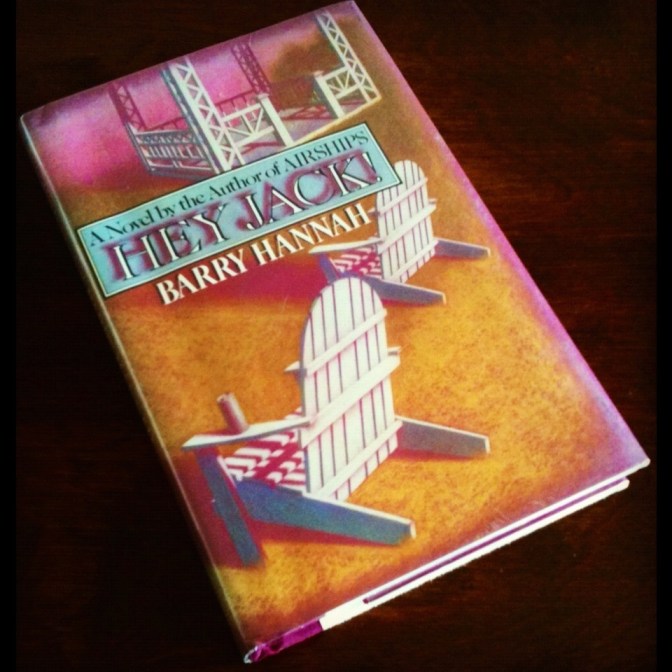
Barry Hannah’s Novella Hey Jack! Is a Loose, Hilarious Tragedy

20120410-174027.jpg

The loose, brief breeziness of Barry Hannah’s 1987 novella Hey Jack! belies the terror and rage at the heart of this hilarious tragedy. It’s a slim volume—133 pages in my hardback copy—with the same rambling flightiness that characterizes Hannah’s better known 1980 novel-in-vignettes, Ray.

Hey Jack! bears many comparisons with Ray: Like Ray, this novel is told from the perspective of a war vet (Korea this time, not ‘Nam); like the eponymous speaker of Ray, the narrator of Hey Jack!, Homer, finds himself frequently besotted, binged out, or horny; like Ray, Homer tries to make a marriage work; like Ray, Homer comes into conflict with a poor white trash family.

And like Ray, Hey Jack! tests the boundaries of what is and is not a “novel.” Hey Jack! is discontinuous and meandering; there’s a plot, sure, but Hannah’s apt to jump over place and time freely, tripping over months at a time, sparing not even a sentence to cue his readers in the right direction. No exposition here, folks. I suppose I should summarize the plot though: Homer, passing middle age, takes up a friendship with Jack, an older man, a former sheriff and fellow Korean War vet who runs a coffee shop popular with the college kids. Together, the pair (sort of) face off against Ronnie Foot, a local boy turned rock star who has the gall to begin an affair with Jack’s forty-year old daughter:

Ronnie Foot, the rock star had her. Or Jack thought he had her, he was sure he had her. Jack was mumbling. Jack was talking about ingratitude and pride and scum hanging on meat, things of that nature. It was astonishing to see him creep and rise suddenly, like a crazy old man. . . . “Nobody ever had a daughter like me. You want me to just her go, like a fart?” He was fingering the gun again.

Jack, once the lone bastion of sanity and order in Homer’s small, chaotic Mississippi town, begins to slide into the insanity and violence that marks the rest of the populace. Jack’s stability is the closest thing Hey Jack! offers as a slice of normalcy (to be clear though, Hannah’s characters skew grotesque, not quirky).

What unites the volume isn’t Jack’s slow slide to the dark side, but rather the narrative’s distinctive, ornery voice. It’s worth quoting Homer at length; here he condenses several of the novel’s themes in the sort of crazy-or-wise? rant indicative of the novella’s tone and rhythm:

In love, in love, in love. A mule can climb a tree if it’s in love. A man like me can look himself in the mirror and say, I’m all right, everything is beloved, I’m no stranger to anywhere any more. I’m a man full of life and a lot of time to kill, shoot every minute down with a straight blast of his eye across the bountiful landscape, from the minnow to the Alps. Something looks back at you with an eye of insane approval. Something looks back at you; out of belligerent ignorance of you it has come to a delighted focus on you and your love, together, sending up gasses of collision that make a rainbow over the poor masses who are changing a tire on the side of the road on a hot Saturday afternoon, felling like niggers. There is a law that every nigger spends a quarter of every weekend changing tires, my friend George, the biochemist, says. What do we know? What do we mere earthlings, unpublished and heaving out farts like puzzled sighs, know, but what is in our blood? I had broken up once with a woman who was in Europe, and coming out of the mall movie (I don’t even remember the movie) I gave out this private marvelous fart that was equal to a paragraph of Henry James, so churned were my guts and so lingering. And I was free. Free to discuss it. Delighted in the boundless ignorance and destruction that lay out there under the dumb lit cold moon. Enough about me and my poetry.

There’s so many shifts here. Hannah’s Homer comes off like a besotted barstool philosopher, gazing at his navel through an empty tumbler and finding both gut and abyss. We see the casual racism that so many of Hannah’s characters dip into; we see the conflation of art, spirit, and expulsion. Need I comment on the fart joke? It’s worth just repeating: “I gave out this private marvelous fart that was equal to a paragraph of Henry James” — if you don’t like that you’re not going to like Hey Jack!

Beyond that voice, there’s little to organize Hey Jack!—it’s a riff, sometimes a howl, often a jape, a joke, sometimes a verbal slap. This isn’t to say there isn’t a trajectory to the novella or a payoff at the end. Hannah seems unable to resist a tragic arc, the same one he pulls through the whiskey haze of  Ray. Perhaps he takes his cues from Edgar Allan Poe’s essay “The Philosophy of Composition“: ” . . . the death, then, of a beautiful woman is, unquestionably, the most poetical topic in the world.” (To be fair Poe is hardly the first fella to find a dead beauty such a worthy topic; also, I’ve never really been sure how to measure the tone of his essay—I can’t help but think he’s being somehow simultaneously tongue-in-cheek and deadly earnest. But enough about Poe).

But arcs be damned. The best bits of Hey Jack! are the stray little paragraphs that erupt from nowhere either to fizzle out or burn up in a bang. At its best, the novella offers bizarre little stories piecemeal that read equally absurd and true. To wit:

I began hollering at my wife for her shortcomings. She left the house, 11 P.M. I’d quit drinking and smoking. She brought me back a bottle of rye and a pack of Luckies, too. I hadn’t smoked for two weeks. I must have been a horrible nuisance.

I took a drink and a smoke.

Then I was normal. My lungs and my liver cried out: At last, again! The old abuse! I am a confessed major organ beater. I should turn myself in on the hotline to normalcy.

I hope by now that you have a sense of whether or not Hey Jack! is for you. It’s probably not going to gel with most readers: Too ugly, too loose, too nihilistic, perhaps; at heart a sloppy affair . . . but I loved it—it was the perfect book to riffle through over a few Saturday or Sunday afternoons on my back porch, its pages blotting up the condensation from a glass of sangria or can of beer, Homer’s consciousness as loose and discontinuous as my own. Not the best starting place for those interested in Hannah—that might be Airships—but great stuff.

“I’m Just Really Concerned About Dying in the Fire” (Synecdoche, New York)

Barry Hannah Fragment

From Barry Hannah’s novel Hey Jack!:

I began hollering at my wife for her shortcomings. She left the house, 11 P.M. I’d quit drinking and smoking. She brought me back a bottle of rye and a pack of Luckies, too. I hadn’t smoked for two weeks. I must have been a horrible nuisance.

I took a drink and a smoke.

Then I was normal. My lungs and my liver cried out: At last, again! The old abuse! I am a confessed major organ beater. I should turn myself in on the hotline to normalcy.

Lot and His Daughters — Otto Dix

“How few of the tales we listen to can lay any claim to originality!”

How many brothers, sisters, uncles, aunts, and cousins of all degrees a little story has! And how few of the tales we listen to can lay any claim to originality! There is scarcely a story which I hear which I cannot connect with some family of myths, and whose pedigree I cannot ascertain with more or less precision.

Shakespeare drew the plots of his plays from Boccaccio or Straparola; but these Italians did not invent the tales they lent to the English dramatist. King Lear does not originate with Geofry of Monmouth, but comes from early Indian stores of fable, whence also are derived the Merchant of Venice and the pound of flesh, ay, and the very incident of the three caskets. But who would credit it, were it not proved by conclusive facts, that Johnny Sands is the inheritance of the whole Aryan family of nations, and that Peeping Tom of Coventry peeped in India and on the Tartar steppes ages before Lady Godiva was born?

If you listen to Traviata at the opera, you have set before you a tale which has lasted for centuries, and which was perhaps born in India. If you read in classic fable of Orpheus charming woods and meadows, beasts and birds, with his magic lyre, you remember to have seen the same fable related in the Kalewala of the Finnish Wainomainen, and in the Kaleopoeg of the Esthonian Kalewa. If you take up English history, and read of William the Conqueror slipping as he landed on British soil, and kissing the earth, saying he had come to greet and claim his own, you remember that the same story is told of Napoleon in Egypt, of King Olaf Harold’s son in Norway, and in classic history of Junius Brutus on his return from the oracle . . .

From Sabine Baring-Gould’s indispensable work Curious Myths of the Middle Ages (1866).

House Burning (Scene from Tarkovsky’s Film The Sacrifice)

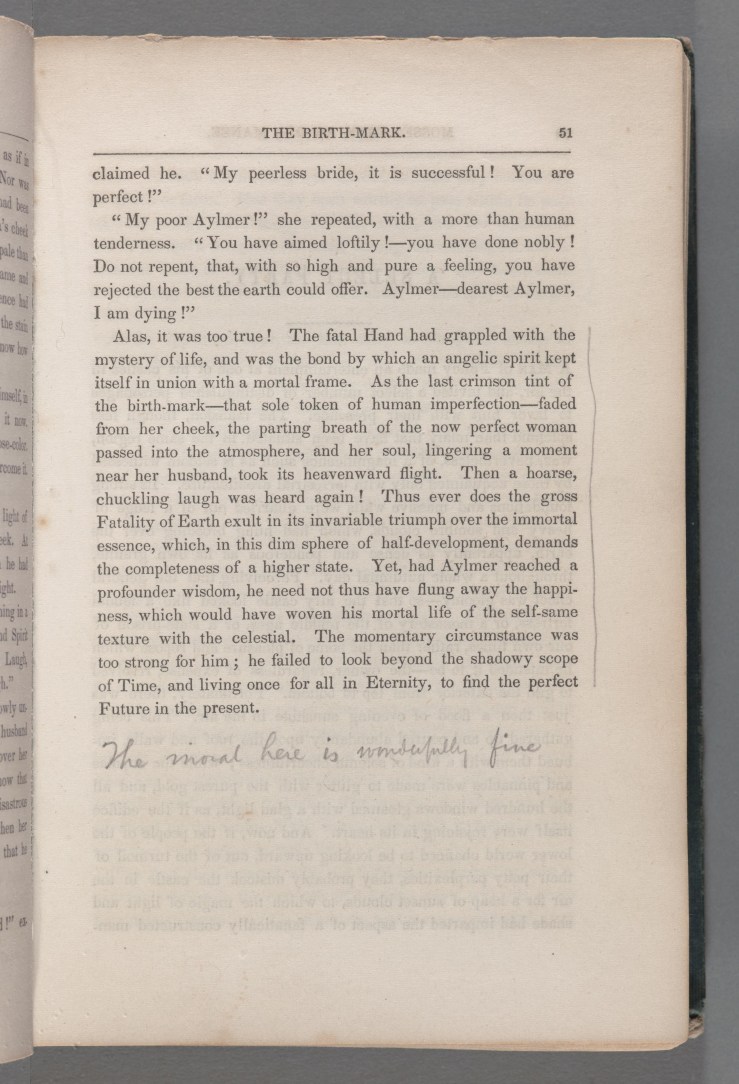
“The Moral Here Is Wonderfully Fine” — Melville Annotates Hawthorne

Herman Melville’s markings and annotations on the last page of Nathaniel Hawthorne’s short story “The Birth-mark.” From Melville’s Marginalia Online.

“A Good Book Needs Time” — Nietzsche

153. A Good Book Needs Time. —Every good book tastes bitter when it first comes out, for it has the defect of newness. Moreover, it suffers damage from its living author, if he is well known and much talked about. For all the world is accustomed to confuse the author with his work. Whatever of profundity, sweetness, and brilliance the work may contain must be developed as the years go by, under the care of growing, then old, and lastly traditional reverence. Many hours must pass, many a spider must have woven its web about the book. A book is made better by good readers and clearer by good opponents.

—Friedrich Nietzsche, Human, All Too Human, Part II.

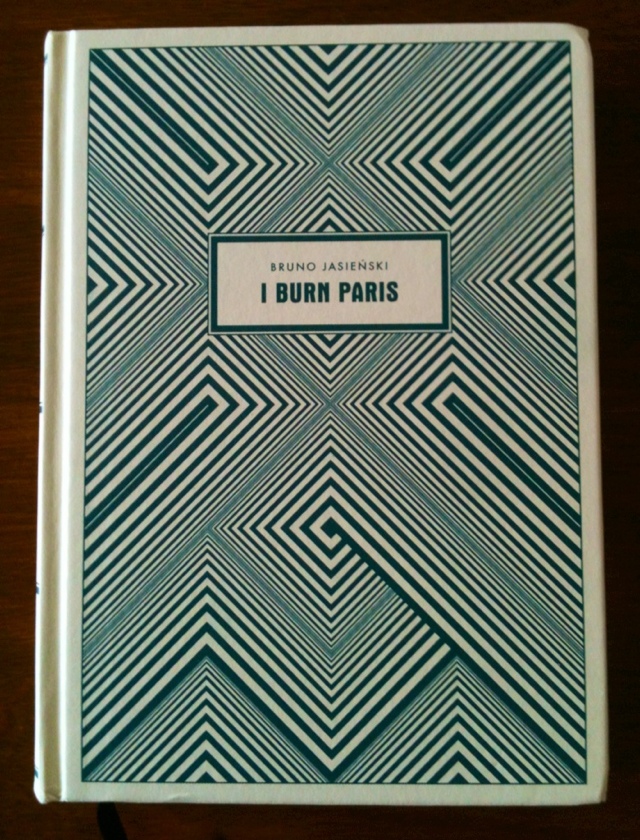
I Burn Paris (Book Acquired, Some Time Last Week, Or Maybe Late the Week Before)

20120403-153842.jpg

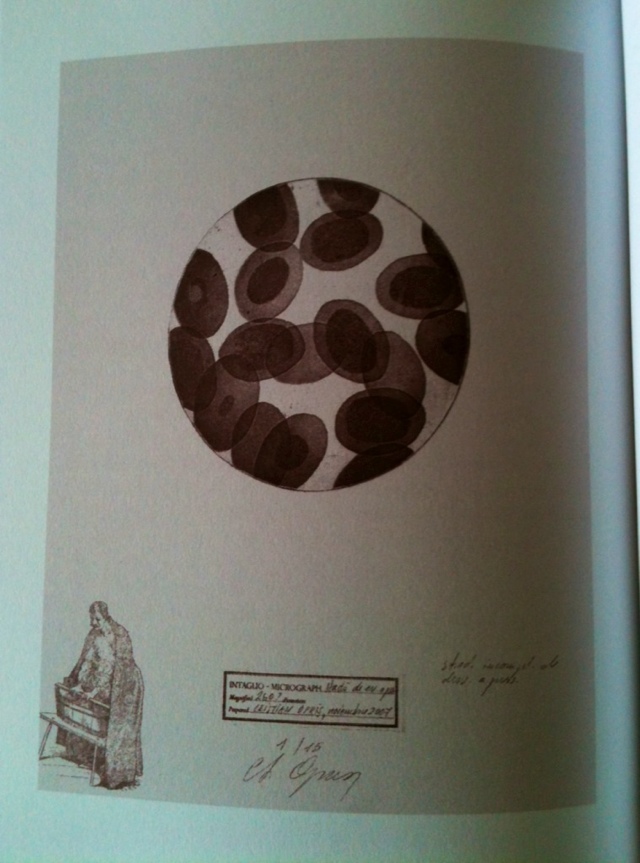
Bruno Jasieński was one of the leaders of the Polish Futurist movement, and his novel I Burn Paris looks fascinating. It’s also a beautiful looking book — publisher Twisted Spoon has done a lovely job here — an embossed hardback with no superfluous jacket, and even a nice lace bookmark (doesn’t show up in my photo). There are also illustrations by Cristian Opris.

20120403-153853.jpg

I’m hoping to get into this this weekend, but for now, here’s publisher Twisted Spoon’s description:

I Burn Paris has remained one of Poland’s most uncomfortable masterstrokes of literature since its initial and controversial serialization by Henri Barbusse in 1928 inL’Humanité (for which Jasienski was deported for disseminating subversive literature). It tells the story of a disgruntled factory worker who, finding himself on the streets, takes the opportunity to poison Paris’s water supply. With the deaths piling up, we encounter Chinese communists, rabbis, disillusioned scientists, embittered Russian émigrés, French communards and royalists, American millionaires and a host of others as the city sections off into ethnic enclaves and everyone plots their route of escape. At the heart of the cosmopolitan city is a deep-rooted xenophobia and hatred — the one thread that binds all these groups together. As Paris is brought to ruin, Jasienski issues a rallying cry to the downtrodden of the world, mixing strains of “The Internationale” with a broadcast of popular music.

With its montage strategies reminiscent of early avant-garde cinema and fist-to-the-gut metaphors, I Burn Parishas lost none of its vitality and vigor. Ruthlessly dissecting various utopian fantasies, Jasienski is out to disorient, and he has a seemingly limitless ability to transform the Parisian landscape into the product of disease-addled minds. An exquisite example of literary Futurism and Catastrophism, the novel presents a filthy, degenerated world where factories and machines have replaced the human and economic relationships have turned just about everyone into a prostitute. Yet rather than cliché and simplistic propaganda, there is an immediacy to the writing, and the modern metropolis is starkly depicted as only superficially cosmopolitan, as hostile and animalistic at its core.

This English translation of I Burn Paris fills a major gap in the availability of works from the interwar Polish avant-garde, an artistic phenomenon receiving growing attention with recent publications such as Caviar and Ashes.

RIP Cynthia Dall

Pitchfork has reported the death of singer-songwriter Cynthia Dall. Dall was a frequent collaborator with fellow Drag City musician Bill Callahan, who sang and played on her 1996 album, which is now called Untitled, but was simply known as that record with the awesome cover and strange awesome songs when it came out: there was no attribution, although it clearly bore the mark of Callahan and fellow Drag City wunderkind Jim O’Rourke. Untitled was the strange hazy soundtrack for my last teenage years; Dall’s songs are still in my blood and brain. Her young death—she was only 41—feels surreal. Dall released Sound Restores Young Men in 2002, and was apparently working on demos for a new album at the time of her death.

From the Drag City website:

We are shocked and deeply disappointed to post this notice: Cynthia Dall passed away at her home in Sacramento last Thursday.

Cynthia was a muse that crossed over into actual-artist-dom. Her self was her original art, a spirit and image that was inspirational on first sight. The ’90s were a great time to start playing music when you didn’t really know the first thing about it other than you liked it, andCynthia was able to use her unique abilities along with her incredible energy to inspire those around her to help her make two really great albums.

It hasn’t sunken in yet that we won’t be hearing from Cindy again. Though she hadn’t released a new album in ten years, she called in regularly, sometimes to talk about her music and plans, sometimes to talk about everything BUT music and plans. She was an enormous fan of the world, and there were few topics that didn’t engage her in some way. Even outrage was conveyed with an enormous vivacity that could not be suppressed. It was this energy that lifted her up above the melancholy that infused her songs, and the devastating visions they often conveyed.

When Cynthia rang us the week before last with an update on the progress of new demos, we were glad to know it; glad to think of her getting her music together and to think of another chapter in the Dall Saga. It is stunning not merely because of the loss of that vision and that unheard record; more stunning and hurtful is to know that we will won’t be talking to her anymore. A light has gone from this world — and we hope you will join us in hoping that it has gone to place of greater peace.

Goodbye Cynthia — we’ll carry your love and joy and sorrow with us until we too are gone.

Dr. Seuss Portrait — Bill Sienkiewicz

(Via Hey Oscar Wilde!)

Slavoj Žižek Riffs on Kung Fu Panda

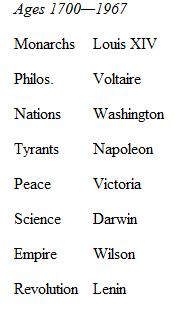
“Ages 1700-1967” — F. Scott Fitzgerald

From F. Scott Fitzgerald’s Notebooks.

The Resurrection — Andrea Mantegna

Book Shelves #15, 4.08.2012

20120407-140053.jpg

1st Gent. How class your man? – as better than the most,

Or, seeming better, worse beneath that cloak?

As saint or knave, pilgrim or hypocrite?

2nd Gent. Nay, tell me how you class your wealth of books

The drifted relics of all time.

As well sort them at once by size and livery:

Vellum, tall copies, and the common calf

Will hardly cover more diversity

Than all your labels cunningly devised

To class your unread authors.

—George Eliot, Middlemarch, epigraph to Chapter 13

Book shelves series #15, fifteenth Sunday of 2012

A new book-case this week; the shorter triplet of the twin ladders seen here. What do the volumes on this top shelf hold in common? They are hardback. That’s about it. Yes, I actually go through The Riverside Shakespeare every now and then, especially when sparking new ideas for class lectures. The Balthus memoir is pretty good. No, I never finished Godel, Escher, Bach. It’s not hardback, come to think of it. The Fallada books are good stuff. Will Dylan ever finish up the Chronicles? Probably not. Maybe so. Who knows? We all love Shel Silverstein, of course.

“I Created the Truth out of What People Needed” — Paul and Jesus (From Scorsese’s The Last Temptation of Christ)