Spectrum Appearance of Banquo — Gustave Doré

Cordelia’s Portion — Ford Madox Brown

Novels That Will Be Considered the Most Important Literary Works of the Twentieth Century in the Year 2100 (According to Dalkey Archive)

Novels That Will Be Considered the Most Important Literary Works of the Twentieth Century in the Year 2100

Nightwood, Djuna Barnes
Malone Dies, Samuel Beckett
Molloy, Samuel Beckett
The Unnamable, Samuel Beckett
The Lime Works, Thomas Bernhard
Nostromo, Joseph Conrad
JR, William Gaddis
The Recognitions, William Gaddis
Ulysses, James Joyce
One Hundred Years of Solitude, Gabriel Garcia Marquez
At Swim-Two-Birds, Flann O’Brien
The Inquisitory, Robert Pinget
Remembrance of Things Past, Marcel Proust
Gravity’s Rainbow, Thomas Pynchon
Mulligan Stew, Gilbert Sorrentino

Speculative list from the Dalkey Archive (from an issue of their journal Context; compiled from responses  of “advisors at universities and bookstores”). I’m sure the fact that they publish several of these titles has nothing to do with these books’ inclusion. I’ve read all of seven of these, some of five of these, and none of three of these.

Ideal Portrait of Shakespeare — Angelica Kauffman

“The Bottle Imp” — Robert Louis Stevenson

“The Bottle Imp” by Robert Louis Stevenson

There was a man of the Island of Hawaii, whom I shall call Keawe; for the truth is, he still lives, and his name must be kept secret; but the place of his birth was not far from Honaunau, where the bones of Keawe the Great lie hidden in a cave.  This man was poor, brave, and active; he could read and write like a schoolmaster; he was a first-rate mariner besides, sailed for some time in the island steamers, and steered a whaleboat on the Hamakua coast.  At length it came in Keawe’s mind to have a sight of the great world and foreign cities, and he shipped on a vessel bound to San Francisco.

This is a fine town, with a fine harbour, and rich people uncountable; and, in particular, there is one hill which is covered with palaces.  Upon this hill Keawe was one day taking a walk with his pocket full of money, viewing the great houses upon either hand with pleasure, “What fine houses these are!” he was thinking, “and how happy must those people be who dwell in them, and take no care for the morrow!”  The thought was in his mind when he came abreast of a house that was smaller than some others, but all finished and beautified like a toy; the steps of that house shone like silver, and the borders of the garden bloomed like garlands, and the windows were bright like diamond; and Keawe stopped and wondered at the excellence of all he saw.  So stopping, he was aware of a man that looked forth upon him through a window so clear that Keawe could see him as you see a fish in a pool upon the reef.  The man was elderly, with a bald head and a black beard; and his face was heavy with sorrow, and he bitterly sighed.  And the truth of it is, that as Keawe looked in upon the man, and the man looked out upon Keawe, each envied the other.

All of a sudden, the man smiled and nodded, and beckoned Keawe to enter, and met him at the door of the house.

“This is a fine house of mine,” said the man, and bitterly sighed.  “Would you not care to view the chambers?”

So he led Keawe all over it, from the cellar to the roof, and there was nothing there that was not perfect of its kind, and Keawe was astonished.

“Truly,” said Keawe, “this is a beautiful house; if I lived in the like of it, I should be laughing all day long.  How comes it, then, that you should be sighing?”

“There is no reason,” said the man, “why you should not have a house in all points similar to this, and finer, if you wish.  You have some money, I suppose?”

“I have fifty dollars,” said Keawe; “but a house like this will cost more than fifty dollars.”

The man made a computation.  “I am sorry you have no more,” said he, “for it may raise you trouble in the future; but it shall be yours at fifty dollars.”

“The house?” asked Keawe. Continue reading ““The Bottle Imp” — Robert Louis Stevenson”

A Week of Kindness Illustration (Woman with Book and Dragon) — Max Ernst

Tim O’Brien Documentary

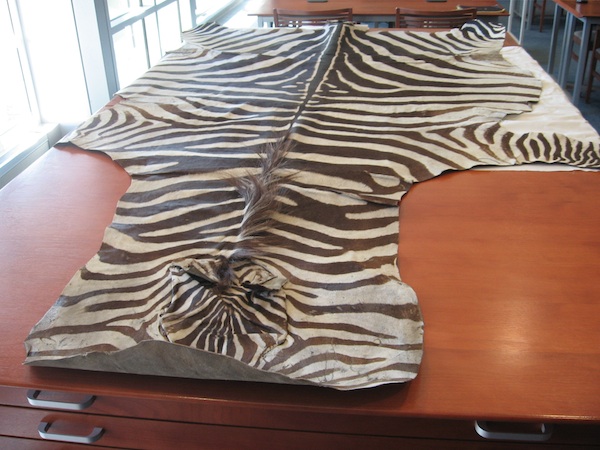
William Gaddis’s Zebra Skin

zebraskin

From Matthew Erickson’s article “Mysterious Skin: The Realia of William Gaddis” at The Paris Review. From the article:

What the researcher, or even the dilettante, might want to know is how an author’s material surroundings and posthumous personal effects might distill and leak into their work. Most often, the realia from a literary archive are the typical objects that we would associate with the physical act of writing, such as it is: fountain pens, stationery, reading glasses, ashtrays. Essentially, these objects are to dead authors what the items in Hard Rock Cafe display cases are to dead rock stars: memorabilia. Hendrix’s famous acid-soaked headband or Faulkner’s famous tin of beloved pipe tobacco, take your pick. This fact makes an author’s nonwriterly objects stand out and seem more significant, more imbued with potential coded meaning. Indeed, zebras and their skins do make appearances within Gaddis’s fiction, so the poor beast in the special collections isn’t entirely irrelevant when considering his corpus. A rolled-up zebra skin appears midway through Carpenter’s Gothic (“He’d kicked aside a cobwebbed roll of canvas, the black on white, or was it white on black roll of a hide …”), sporadically emerging from the silent background and into the incessant stream of dialog that makes up the majority of the text. In JR, the downtrodden composer Edward Bast is commissioned to write a score of “zebra music” for a documentary being made by the big-game hunter and stockbroker Crawley, in a lobbying effort to convince Congress to introduce various African species, zebras included, into the U.S. National Parks system…

“Sing to It” — Amy Hempel

“Sing to It”  by Amy Hempel

At the end, he said, No Metaphors! Nothing is like anything else.

Except he said to me before he said that, Make your hands a hammock for me. So there was one.

He said, Not even the rain—he quoted the poet—not even the rain has such small hands. So there was another.

At the end, I wanted to comfort him. But what I said was, Sing to it. The Arabian proverb: When danger approaches, sing to it.

Except I said to him before I said that, No metaphors! No one is like anyone else. And he said, Please.

So—at the end, I made my hands a hammock for him.

My arms the trees.

The Inferno, Canto 13 — Gustave Doré

How I love the dying words (Henry Miller)

milleraquinas

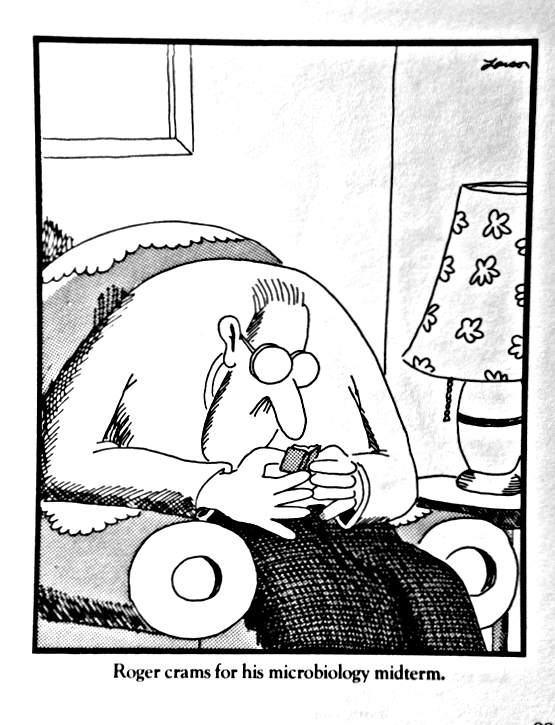
Finals Week

20130417-170538

“Yellow Coal” — Sigizmund Krzhizhanovsky

“Yellow Coal” by Sigizmund Krzhizhanovsky

1
The economic barometer at Harvard University had continually pointed to bad weather. But even its exact readings could not have predicted such a swift deepening of the crisis. Wars and the elements had turned the earth into a waster of its energies. Oil wells were running dry. The energy-producing effect of black, white and brown coal was diminishing yearly. An unprecedented drought had swaddled the sere earth in what felt like a dozen equators. Crops burned to their roots. Forests caught fire in the infernal heat. The selvas of South America and the jungles of India blazed with smoky flames. Agrarian countries were ravaged first. True, forests reduced to ashes had given place to ashy boles of factory smoke. But their days too were numbered. Fuellessness was threatening machines with motionlessness. Even glacier snow-caps, melted by the perennial summer, could not provide an adequate supply of waterpower; the beds of shrinking rivers lay exposed, and soon the turbine-generators would stop.

The earth had a fever. Flogged mercilessly by the sun’s yellow whips, it whirled round like a dervish dancing his last furious dance.

If nations had ignored political strictures and come to each other’s aid, salvation might have been theirs. But adversity only exacerbated ideas of jingoism, and soon all the New and Old World Reichs, Staats, Republics and Lands — like the fish on the desiccated bottoms of erstwhile lakes — were covered with a viscous sheath, swathed in borders like the filaments of cocoons, and raising customs duties to astronomical levels.

The one agency of an international sort was the Commission for the Access of New and Original Energies: CANOE. To the person who discovered a new energy source, a motive power as yet unknown on earth, CANOE promised a seven-figure sum.

2
Professor Leker was too busy to notice people. Blinkered by diagrams, thoughts, and pages from books, his eyes had no time to reflect faces. A frosted screen before the window shielded him from the street; the black case of an automobile, window curtains drawn, did likewise. Until a few years ago Leker had taught, then gradually given it up to devote himself full-time to his research into quantum theory, ionization, and the vicariate of the senses.

Thus Professor Leker’s twenty-minute stroll, his first in ten years, was pure accident. Leker set out in the company of his thoughts, without noticing places or faces. But the very first crossroad threw him into a quandary. The scientist was obliged to lift his head and gaze about to get his bearings. And here, for the first time, the street grated against his pupils.

A dingily bilious sun suffused the air through a tent of black clouds. Spitefully elbowing elbows, passers-by rushed along the pavement. People converged in the doorways of shops, tried to pummel their way through and stuck fast, faces flushed with rage and exertion, teeth bared.

The steps floating along the tram tracks were jammed with passengers: chests tried to climb up on backs; but the backs, flicking spiteful shoulder blades, would not budge; hands all in a tangle gripped the vertical handrails with rapacious vigour — like flocks of carrion crows fighting over prey.

The tram passed by, and behind it, as behind a curtain drawn back, a new scene unfolded across the street: two fist-shaking men were verbally assaulting each other; a circle of gloating pupils instantly formed round them and circling the circle another circle and another; while above the melee of shoulders raised sticks hovered.

Looking about him, Leker walked on. Suddenly his knee knocked into an outstretched hand. Protruding from dirty rags, the hand was demanding a donation. Leker dug in his pockets: he had no money on him. The open palm continued to wait. Leker again searched himself: nothing except a notepad. Without taking his gaze off the beggar, he stepped aside: the cripple’s eyes, half blind with pus, oozed with slime and an insatiable, impotent spite.

With greater and greater misgivings, Professor Leker scrutinized the street, gnashing with steel rims and humming with anxious human swarms. The people changed, yet remained the same: jaws clenched, foreheads butting the air, elbows endlessly elbowing their way. The famous physiologist first raised his eyebrows in astonishment, then knit them together the better to contain the thought fluttering behind them. Leker slowed his step and opened his notepad, searching for the exact words. Suddenly the stab of someone’s elbow deep in his ribs sent him staggering sideways: he hit his back against a post and dropped his slips of paper. Yet even the pain could not stop Leker smiling: his thought, tightly tied with associative threads, had been flung to the bottom of his brain. Continue reading ““Yellow Coal” — Sigizmund Krzhizhanovsky”

The Temptation of St. Anthony — David Teniers the Younger

Fighting Seekentauren — Albrecht Dürer

Hiroshima Mon Amour — Alain Resnais (Full Film)

Another paradox (David Foster Wallace)

This is another paradox, that many of the most important impressions and thoughts in a person’s life are ones that flash through your head so fast that fast isn’t even the right word, they seem totally different from or outside of the regular sequential clock time we all live by, and they have so little relation to the sort of linear, one-word-after-another-word English we all communicate with each other with that it could easily take a whole lifetime just to spell out the contents of one split-second’s flash of thoughts and connections, etc. — and yet we all seem to go around trying to use English (or whatever language our native country happens to use, it goes without saying) to try to convey to other people what we’re thinking and to find out what they’re thinking, when in fact deep down everybody knows it’s a charade and they’re just going through the motions. What goes on inside is just too fast and huge and all interconnected for words to do more than barely sketch the outlines of at most one tiny little part of it at any given instant. The internal head-speed or whatever of these ideas, memories, realizations, emotions and so on is even faster, by the way — exponentially faster, unimaginably faster — when you’re dying, meaning during that vanishingly tiny nanosecond between when you technically die and when the next thing happens, so that in reality the cliché about people’s whole life flashing before their eyes as they’re dying isn’t all that far off — although the whole life here isn’t really a sequential thing where first you’re born and then you’re in the crib and then you’re up at the plate in Legion ball, etc., which it turns out that that’s what people usually mean when they say ‘my whole life,’ meaning a discrete, chronological series of moments that they add up and call their lifetime. It’s not really like that. The best way I can think of to try to say it is that it all happens at once, but that at once doesn’t really mean a finite moment of sequential time the way we think of time while we’re alive, plus that what turns out to be the meaning of the term my life isn’t even close to what we think we’re talking about when we say ‘my life.’ Words and chronological time create all these total misunderstandings of what’s really going on at the most basic level. And yet at the same time English is all we have to try to understand it and try to form anything larger or more meaningful and true with anybody else, which is yet another paradox.

From David Foster Wallace’s short story “Good Old Neon,” collected in Oblivion.

I read “Good Old Neon” first back when Oblivion came out in hardback. It was good then, but it seemed more poignant and deeper after Wallace’s suicide. I reread it again last night, and I’m convinced it’s his finest discrete piece, and rivals some of the strongest sections of Infinite Jest and The Pale King. Anyway, I encourage doubters to check it out if they haven’t read it.

I’ll close by suggesting that in some way I think the story works through an idea from Ludwig Wittgenstein:

Death is not an event in life: we do not live to experience death. If we take eternity to mean not infinite temporal duration but timelessness, then eternal life belongs to those who live in the present. Our life has no end in the way in which our visual field has no limits. (Tractatus Logico-Philosophicus, 6.4311).