Opening of the Picasso Retrospective at the Tate Gallery, 1960 — Burt Glinn

The Powder of Sympathy

“The Powder of Sympathy”

from

THE SEVEN FOLLIES
OF SCIENCE

A
POPULAR ACCOUNT OF THE MOST FAMOUS
SCIENTIFIC IMPOSSIBILITIES
AND THE ATTEMPTS WHICH HAVE BEEN MADE TO SOLVE THEM.

To which is Added a Small Budget of Interesting
Paradoxes, Illusions, and Marvels.

BY
JOHN PHIN


This curious occult method of curing wounds is indissolubly associated with the name of Sir Kenelm Digby (born 1603, died 1665), though it was undoubtedly in use long before his time. He himself tells us that he learned to make and apply the drug from a Carmelite, who had traveled in the east, and whom he met in Florence, in 1622. The descendants of Digby are still prominent in England, and O. W. Holmes, in his “One Hundred Days in Europe,” tells us that he had met a Sir Kenelm Digby, a descendant of the famous Sir Kenelm of the seventeenth century, and that he could hardly refrain from asking him if he had any of his ancestor’s famous powder in his pocket.

Digby was a student of chemistry, or at least of the chemistry of those days, and wrote books of Recipes and the making of “Methington [metheglin or mead?] Syder, etc.” He was, as we have seen in the previous article, a believer in palingenesy and made experiments with a view to substantiate that strange doctrine. Evelyn calls him an “errant quack,” and he may have been given to quackery, but then the loose scientific ideas of those days allowed a wide range in drawing conclusions which, though they seem absurd to us, may have appeared to be quite reasonable to the men of that time.

From his book on the subject,we learn that the wound was never to be brought into contact with the powder. A bandage was to be taken from the wound, immersed in the powder, and kept there until the wound healed.

This beats the absent treatment of Christian Science!

The powder was simply pulverized vitriol, that is, ferric sulphate, or sulphate of iron. Continue reading “The Powder of Sympathy”

St. John Devouring the Book from the Apocalypse — Albrecht Durer

Video for Joanna Newsom’s “Sapokanikan” (directed by Paul Thomas Anderson)

The Search for Truth — Rene Magritte

Is it true that Nabokov called Hemingway and Conrad “writers of books for boys”?

IMG_7929

From a 1964 Playboy interview. Republished in Strong Opinions.

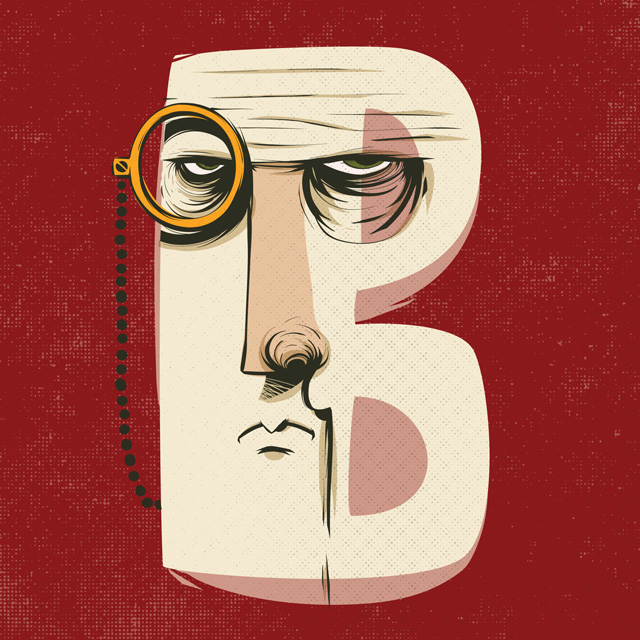
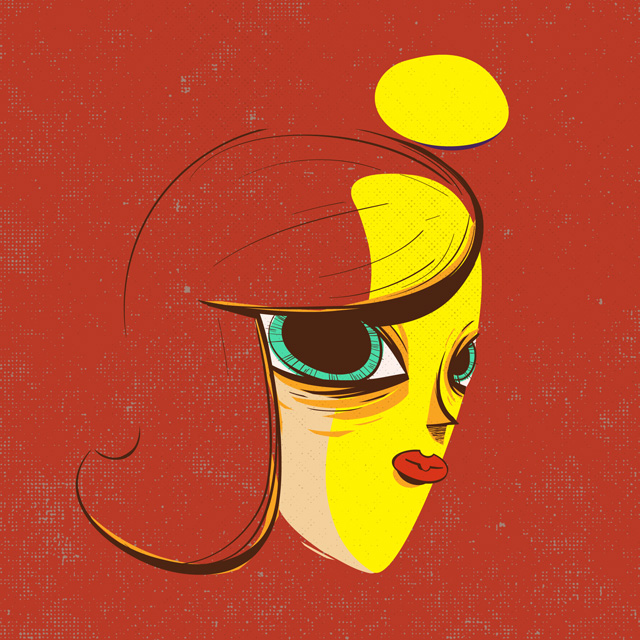
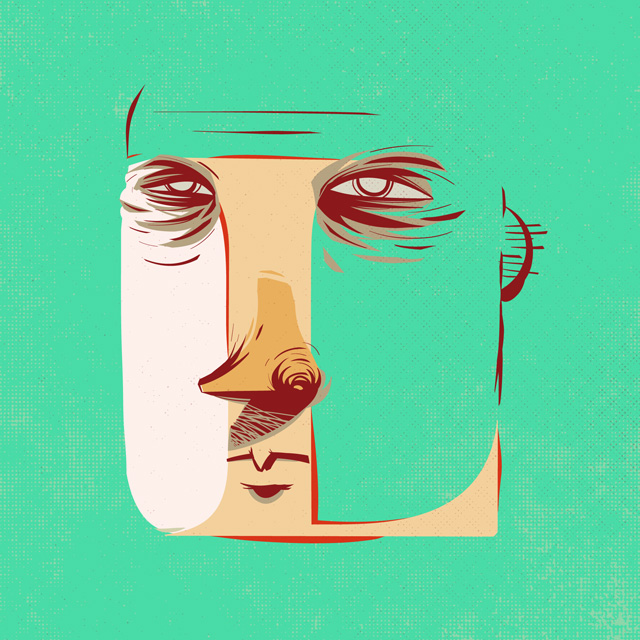
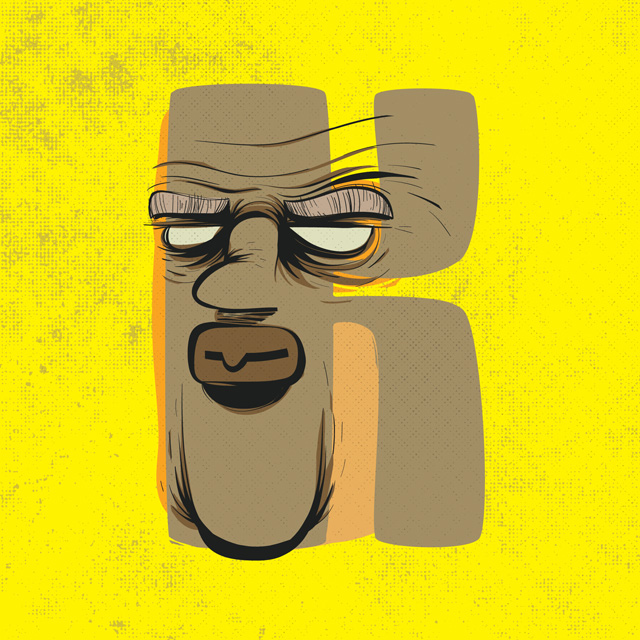
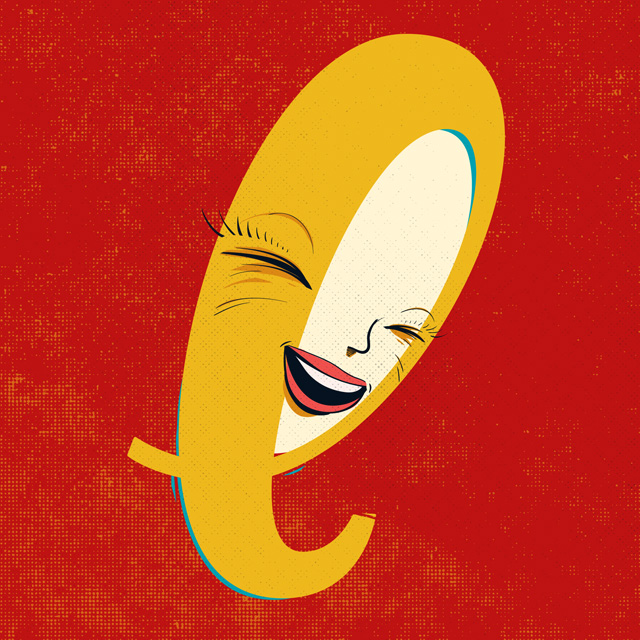
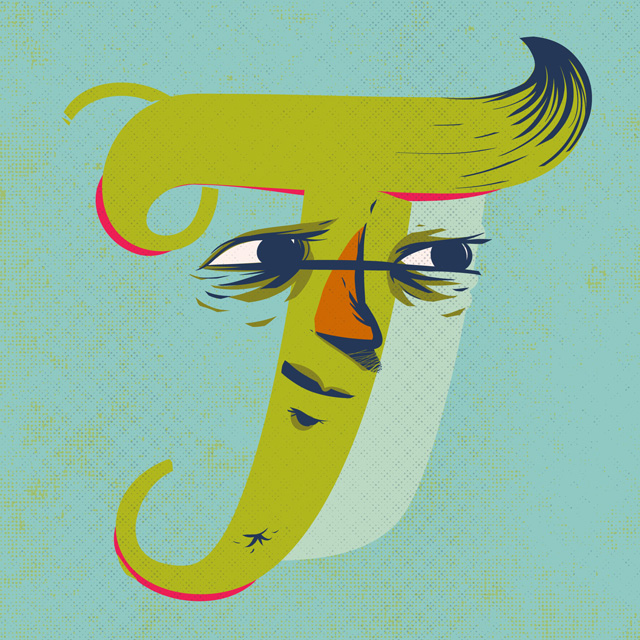
Letter Faces by Caio Beltrão

I love Caio Beltrão’s charming “Letters and Numbers Faces” series.

BibLINeonMob_LetterFaces_O_NeonMob_LetterFaces_K_lNeonMob_LetterFaces_E_NeonMob_LetterFaces_pNeonMob_LetterFaces_T_ 

New American Stories, a collection edited by Ben Marcus (Book acquired, 8.04.2015)

IMG_7908

New American Stories is an anthology out now in enormous paperback from Vintage. The collection was collected by collector Ben Marcus. An excerpt from his introduction:

Language is a drug, but a short story cannot be smoked. You can’t inject it. Stories don’t come bottled as a cream. You cannot have a story massaged into you by a bearish old man. You have to stare down a story until it wobbles, yields, then catapults into your face. And yet, as squirrely as they are to capture, stories are the ideal deranger. If they are well made, and you submit to them, they go in clean. Stories deliver their chemical disruption without the ashy hangover, the blacking out, the poison. They trigger pleasure, fear, fascination, love, confusion, desire, repulsion. Drugs get flushed from our systems, but not the best stories. Once they take hold, you couldn’t scrape them out with a knife. While working on this book, I started to think of a it as a medicine chest, filled with beguiling, volatile material, designed by the most gifted technicians. The potent story writers, to me, are the ones who deploy language as a kind of contraband, pumping it into us until we collapse on the floor, writhing, overwhelmed with feeling.

You actually can smoke a short story, but to do so is inadvisable.

I’ll be riffing on the book over the next few weeks with our Correspondent in Colorado, Mr. Ryan Chang.

Here’s the tracklist:

Said Sayrafiezadeh, Paranoia

Rebecca Lee,  Slatland

Jesse Ball, The Early Deaths of Lubeck, Brennan, Harp, and Carr

Deborah Eisenberg, Some Other, Better Otto

Anthony Doerr, The Deep

Yiyun Li, A Man Like Him

George Saunders, Home

NoViolet Bulawayo, Shhh

Maureen McHugh, Special Economics

Sam Lipsyte, This Appointment Occurs in the Past

Lydia Davis, Men

Donald Antrim, Another Manhattan

Zadie Smith*, Meet the President!

Denis Johnson, The Largesse of the Sea Maiden

Joy Williams, The Country

Christine Schutt, A Happy Rural Seat of Various View Lucinda’s Garden

Don DeLillo, Hammer and Sickle

Mathias Svalina, Play

Lucy Corin, Madmen

Mary Gaitskill, The Arms and Legs of the Lake

Wells Tower, Raw Water

Rachel Glaser, Pee on Water

Tao Lin, Love is a Thing on Sale for More Money than There Exists

Rebecca Curtis, The Toast

Robert Coover, Going for a Beer

Charles Yu, Standard Loneliness Package

Deb Olin Unferth, Wait Till You See Me Dance

Kyle Coma-Thompson, The Lucky Body

Rivka Galchen, The Lost Order

Donald Ray Pollack, Fish Sticks

Kelly Link, Valley of the Girls

Claire Vaye Watkins, The Diggings

*Isn’t she English? I guess it’s the stories that are American.

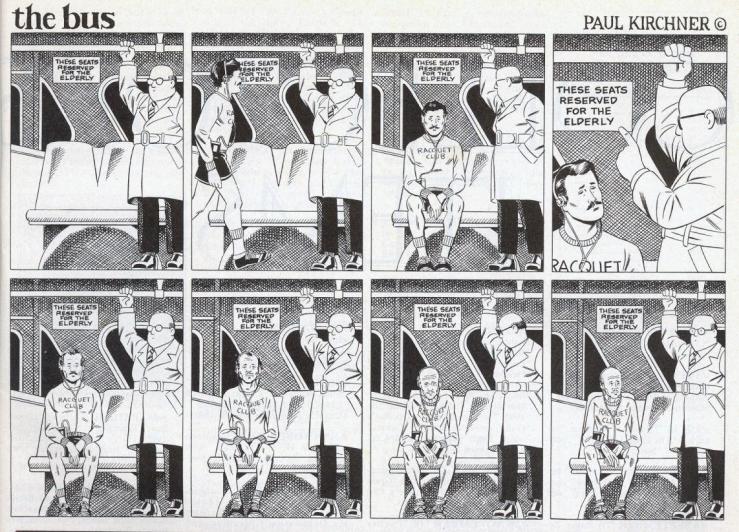
The Bus — Paul Kirchner

WRlC2fu - Imgur

A riff on True Detective Season 2’s neon noir satire

maxresdefault

  1. The final episode of the second season of True Detective airs on HBO tomorrow tonight [9 Aug 2015]. Popular and critical consensus seems to decree that this finale can only redeem Nic Pizzolatto’s supposed sophomore slump. I’m very much looking forward to the episode, as I’ve looked forward to each episode this season.
  2. Season 2 of True Detective is a much, much better show than its many noisy naysayers might maintain. It’s a neon noir satire, a potboiler bubbling over with lurid, sticky flux. It’s hilarious and anxious and abject. I riff more on it in point 10 if you want to jump down there now. (Or indulge my anxieties, if that’s your deal).
  3. A friend of mine pointed out over drinks a few weeks back that this season of the show will be reevaluated in a few years, after the True Detective serials have run their course. We agreed that the season will likely be reconsidered in a far more positive light. (Think season 2 of The Wire, if you will).
  4. Re: point 3—I’ve talked about the show all season long with friends—texted about it, etc. There’s something still vital there, no matter how much it may seem to curdle compared to season one. Maybe you’ve talked about it with your friends too, no?
  5. And re: point 4: I’ve had more people email or tweet me asking me to write about True Detective than anything ever. So, like, I’m trying, here.
  6. And re: point 5: I’m guessing folks wanted me to write about this season maybe because I wrote about it so damn much last year: About its agon with consciousness, its dreams and nightmares, its literary touches, its weakest episode, and its werewolves. And then I kind of failed to write, at least immediately, about the finale, and when I did write about it, I buried it in a riff on things I wish I’d written about, writing:

    …I could not bring myself to write about the ending, in part because of the (perceived) negative backlash the conclusion received. I felt the need to address haters and doubters, when what I really wanted to comment on was the sheer beauty of the episode—its aesthetics, its greenness. Critics emphasized the bromantic ending, or the moment where Cohle seems to retreat (uncharacteristically) to metaphysics, but for me the signal moment was achieved when Hart is asked by his ex-wife and children, who attend him in his hospital bed, if he is alright. This question links back to a domestic lull in the middle of episode four. We see Hart and Cohle as roommates, as Lucinda Williams’s gentle song “Are You Alright?” plays. This is the middle of the series, and also the central question of the series: Are you alright? At the end of the series, Hart attempts to affirm that he is alright, but it is clear to everyone—audience, family, and Hart himself—that he isn’t.

  7. In that big fat quote above, I wrote that “I felt the need to address haters and doubters” about the end of season one; similarly, part of the anxiety of writing about season 2 is that one falls into the position of having to address the “discussion” — almost all negative chatter — about season 2 — instead of, you know, discussing the mood, aesthetics, and tone.
  8. And of course season 2 was born into a kind of Oedipal anxiety over its progenitor. Season 1 seemed to come from nowhere, black, electric, crackling with the charisma of its two leads.
  9. (I’m such a nerd that I had a dream a few weeks before the début of the second season where I dreamed I saw the second season and it wasn’t nearly as good as the first. Inside the dream, I knew that this was my subconscious helping to deflate anxieties. And over a fucking TV show! What’s wrong with me?) Well let’s get to whatever point I might have:
  10. The second season of True Detective can be read as a satire—on noir, on L.A. stories, on hardboiled pulp, on masculine anxieties. Yes: But it also plays as a satire on television itself, on viewer expectations even. Sincere satire never fully announces itself as such. This second season of True Detective is sincere satire.
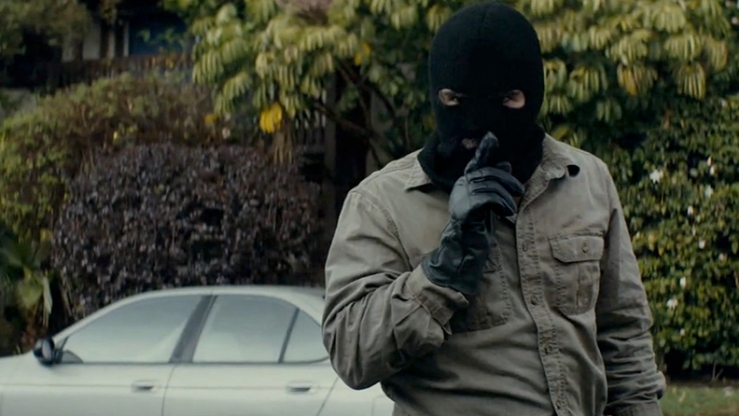
  11. true-detective-western-book-deadOne satirical reading rule for True Detective Season 2 is introduced in the first episode, “The Western Book of the Dead.” In one of its more memorable sequences, Ray Velcoro dons a mask before beating up an Los Angeles Times reporter who was working on an “eight-part series” to expose corruption in Vinci. The scene reads as a metatextual prick at viewers hoping to have this eight-part series laid out neatly for them.
  12. The lurid violence here succeeds by connecting to a kernel of pathos for its perpetrator, Ray Velcoro (Colin Farrell). Velcoro is surely the reason to watch this season. He anchors the satire in sincerity.
  13. We can find similar sincere satire in True Detective season 2’s superior cousin, Paul Thomas Anderson’s film adaptation of Inherent Vice. There are plenty of plot convergences between these two, but the tonal overlap is more interesting to me.
  14. Well, plot of course—
  15. —but wait a moment with plot: Mood. Ambiance. Tone. —Of course they are linked, plot and feeling—but this season has done a marvelous job evoking the dreadnights of David Lynch (and if the directors seem to borrow a bit heavily from Mulholland Drive or Lost Highway, so much the better). And The Long Goodbye. And Chinatown (talk about Oedipal anxieties!). But also Kiss Kiss Bang Bang (why not?). Or even The Big Lebowski.
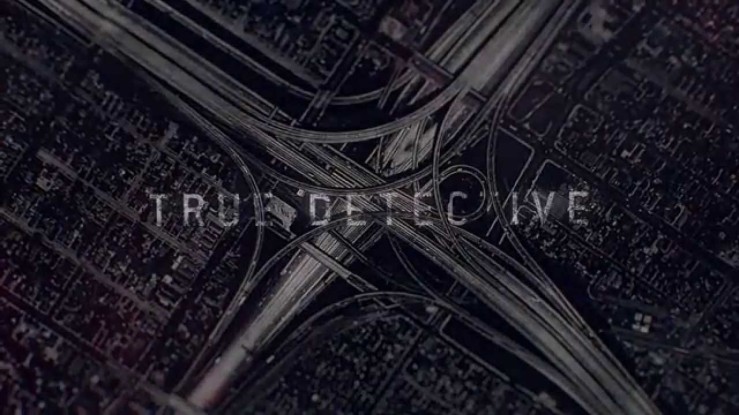
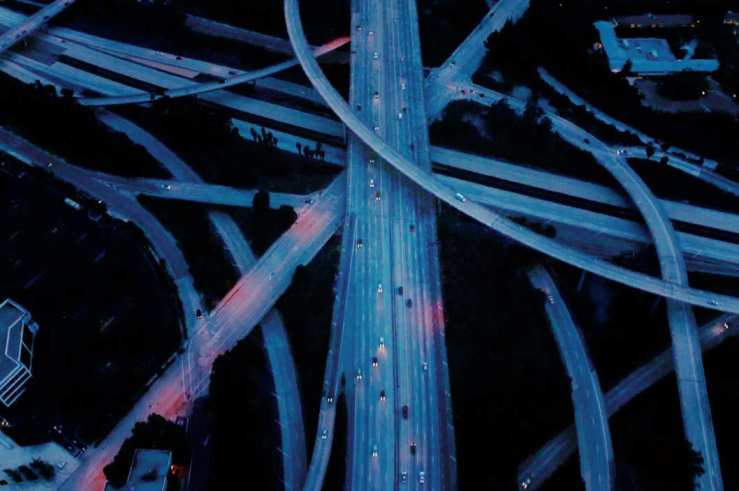
  16. 09-true-detective.w529.h352.2xAnd the plot? What? Another reading rule, indulge me, indulge me, comes in the series’ overuse of aerial shots of L.A. freeways—big converging loops, sometimes black white gray, but often glowing lurid neon at night. The plot is easy to write off as a shaggy dog mess (see also Inherent Vice, Twin PeaksThe Big Lebowski), but it’s not. It does fit together (just like the plots of those examples I proffered parenthetically). You can even have someone explain the plot to you if you like. Ascending from the confusing and abject trenches, the looping freeways’ tangled violence resolves into a beautiful, complete, pulsing picture.
  17. And there are other reading rules that guide a viewer toward TD2’s satire—the bizarre cliffhanger “death” of Velcoro at the end of only the second episode, for example. The scene was thoroughly convincing in its morbidity and illogic, an illogic predicated on its audience’s intimate relationship with hoary TV tropes of yore.
  18. Or the insane gunfight at the end of the fourth episode (an answer, we know—and not a full answer, just a different one—to the famous thrilling single-take shot at the end of the fourth episode of the first season). The scene begins with nonchalant swagger and escalates into Michael-Bay-on-the-cheap territory. The hyperbole untethers from reality—it really gets out of hand fast—delivering an overabundance of violent spectation. The satire punctures any veneer of reality—but only momentarily. The end of the scene finds our detectives realizing how awful things went.
  19. Or? Or the body of our (ostensible) murder victim, Ben Caspere, chauffeured about a la Weekend at Bernies? Or the scene at the Chessani estate? Or Woodrugh’s cheeks flapping in the wind? Or the saloon that Velcoro frequents, with a witch guitarist on retainer? Or the Elvis impersonator? Or the Good People commune? (Reminds me that I forgot to namedrop The Source Family in points 15 or 16). Or the garbage apocalypse movie? Rick fucking Springfield? The masks? The dildos? The knives? The teeth? The eyes? Or the fucking orgy scene, with its wonderful syrup soundtrack?
  20. The satire overwhelms, I mean, re: point 19. The satire normalizes, elides its own satirical contours. L.A. and Environs of TD2 is absurd, abject, and surreal. It’s fun stuff.
  21. And this, re: point 20, is what maybe fails to connect with so many viewers who’ve been so critical of the season—It takes itself too seriously! is a common accusation. But no, I don’t think it does, not a bit.
  22. This isn’t to say that the actors aren’t acting so seriously—sometimes to the point that they appear to be in entirely different series from each other. Vince Vaughn is an easy example here. He’s not just playing against type as Frank Semyon, he’s playing against strength. And common sense. And maybe even good taste. (Although I don’t think good taste has anything to do with TD2). Vaughn’s Semyon occasionally comes to life when he’s back in his rough-and-tumble element, but for the most part, his character seems to be one long deadpan (emphasis on dead) satire of audience expectations.
  23. Let me anticipate: Look, pal, are you saying that Vince Vaughn is bad on purpose in True Detective? No. That’s not what I’m saying. I’m saying that he was a bad but interesting bet for the role, and I think he was cast as a satirical jab at audience expectations.
  24. And but still, re: point 22, re VV’s Semyon: When, on his revenge kick in ep 5, he delivers the simile “It’s like blue balls in your heart,” what other option is there but to laugh hysterically? I mean, spit out your precious bourbon even, if it’s in your mouth! Blue balls in your heart is a satirical metaphor, the punchline to the series’ set-ups of masculine anxieties. It’s an especially excellent example of one of many, many lines in TD2 that oozes pulp. The audience is to chew that pulp and like it. (Or do a spit-take).
  25. 25 points seem like too many points in a riff, as these things go, and too much has been written about True Detective Season 2 anyway—which attests maybe to its zeitgeistiness, if not its greatness. I’ve enjoyed the season very much, and I do not care at all if its loops cohere into some greater picture in the finale. I’ll happily settle for some ridiculous hardboiled neon noir satire.

Cradle — Bo Bartlett

1999-cradle-lg

A probably incomplete list of books I’ve read so far this year

The Crying of Lot 49, Thomas Pynchon

Dockwood, Jon McNaught

A German Picturesque, Jason Schwartz

Inherent Vice, Thomas Pynchon

Two Serious Ladies, Jane Bowles

Flee, Evan Dara

Birchfield Close, Jon McNaught

Signs Preceding the End of the World, Yuri Herrera

Infinite Fictions, David Winters

Syrian Notebooks, Jonathan Littell

Girl in a Band, Kim Gordon

Can’t and Won’t, Lydia Davis

Gravity’s Rainbow, Thomas Pynchon

Gaha: Babes of the Abyss, Jon Frankel

The Spectators, Victor Hussenot

Mumbo Jumbo, Ishmael Reed

Infinite Jest, David Foster Wallace

The Wallcreeper, Nell Zink

Cess, Gordon Lish

Station Eleven, Emily St. John Mandel

High Rise, J.G. Ballard

Millennium People, J.G. Ballard

Pale Fire, Vladimir Nabokov


Updating the reviews page to this blog today (a chore! a bore!) I realized just how many books I’d read this year and failed to write about…so far, anyway. The list above is probably incomplete, and only includes books I read cover-to-cover (or in a few cases audited on mp3)—so stuff like essays by William Gass and collections like Vollmann’s Last Stories and William T. Vollmann: A Critical Companion (etc.) I left off. And yes, I’m aware that the list is heavy on white guys.

The Sun in His Wrath — William Blake

“The Stolen Body,” a weird short story by H.G. Wells

“The Stolen Body”

by

H.G. Wells


Mr. Bessel was the senior partner in the firm of Bessel, Hart, and Brown, of St. Paul’s Churchyard, and for many years he was well known among those interested in psychical research as a liberal-minded and conscientious investigator. He was an unmarried man, and instead of living in the suburbs, after the fashion of his class, he occupied rooms in the Albany, near Piccadilly. He was particularly interested in the questions of thought transference and of apparitions of the living, and in November, 1896, he commenced a series of experiments in conjunction with Mr. Vincey, of Staple Inn, in order to test the alleged possibility of projecting an apparition of one’s self by force of will through space.

Their experiments were conducted in the following manner: At a prearranged hour Mr. Bessel shut himself in one of his rooms in the Albany and Mr. Vincey in his sitting-room in Staple Inn, and each then fixed his mind as resolutely as possible on the other. Mr. Bessel had acquired the art of self-hypnotism, and, so far as he could, he attempted first to hypnotise himself and then to project himself as a “phantom of the living” across the intervening space of nearly two miles into Mr. Vincey’s apartment. On several evenings this was tried without any satisfactory result, but on the fifth or sixth occasion Mr. Vincey did actually see or imagine he saw an apparition of Mr. Bessel standing in his room. He states that the appearance, although brief, was very vivid and real. He noticed that Mr. Bessel’s face was white and his expression anxious, and, moreover, that his hair was disordered. For a moment Mr. Vincey, in spite of his state of expectation, was too surprised to speak or move, and in that moment it seemed to him as though the figure glanced over its shoulder and incontinently vanished.

It had been arranged that an attempt should be made to photograph any phantasm seen, but Mr. Vincey had not the instant presence of mind to snap the camera that lay ready on the table beside him, and when he did so he was too late. Greatly elated, however, even by this partial success, he made a note of the exact time, and at once took a cab to the Albany to inform Mr. Bessel of this result. Continue reading ““The Stolen Body,” a weird short story by H.G. Wells”

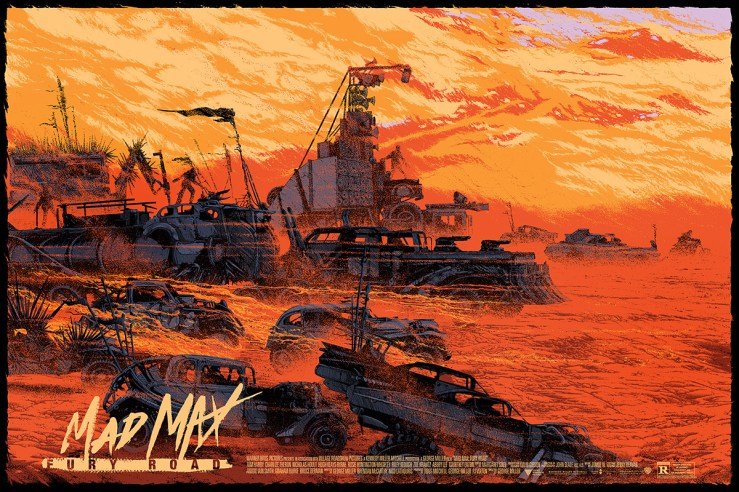
Mad Max: Fury Road film poster by Kilian Eng

tumblr_no7a7gVl3W1qbluruo1_1280

Struggle (Wittgenstein)

Screenshot 2015-08-07 at 4.26.38 PM

From Culture and Value.

The Laundress, Blue Room — Felix Vallotton