
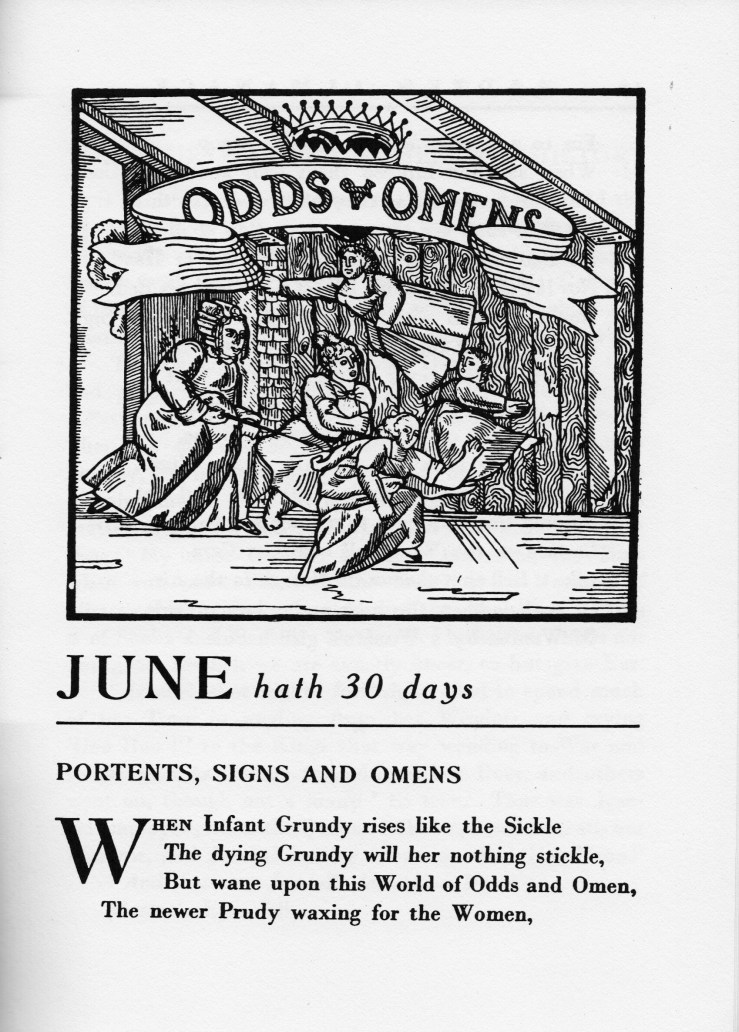
From Joseph T. Shipley’s The Origin of English Words: A Discursive Dictionary of Indo-European Roots.

From Joseph T. Shipley’s The Origin of English Words: A Discursive Dictionary of Indo-European Roots.

Like for months in the spring semester of Y.D.P.A.H. she referred to her own program as ‘Madame’s Downer-Lit Hour’ and read depressing book after depressing book — Good Morning, Midnight and Maggie: A Girl of the Streets and Giovanni’s Roomand Under the Volcano, plus a truly ghastly Bret Ellis period during Lent — in a monotone, really slowly, night after night.
From David Foster Wallace’s Infinite Jest (hyperlinks are my attempt at oblique (non)annotation and obviously not part of the original text).

…Faust was an actual person. Somewhere between 1510 and 1540 this “wandering conjurer and medical quack” made his travels about the southwest German Empire, telling people his knowledge of “secret things.” I always puzzled over why such a legend was so basic to the Western mind; but I’ve thought about it and now I think I know the answer. Can’t you imagine this man traveling about with his bad herbs, love philters, physicks and potions, charms, overcharging the peasants but dazzling them with his badly constructed Greek and sometimes labeling his “wonder cures” with gibberish titles like “Polyunsaturated 99½% pure.” Hocus-pocus. He makes a living and can always get a free night’s lodging at an inn with his ability to prescribe cures and tell fortunes, that is, predict the future. You see he travels about the Empire and is able to serve as a kind of national radio for people in the locales. Well 1 day while he is leeching people, cutting hair or raising the dead who only have diseases which give the manifestations of death, something really works. He knows that he’s a bokor adept at card tricks, but something really works. He tries it again and it works. He continues to repeat this performance and each time it works. The peasants begin to look upon him as a supernatural being and he encourages the tales about him, that he heals the sick and performs marvels. He becomes wealthy with his ability to do The Work. Royalty visits him. He is a counselor to the king. He lives in a castle. Peasants whisper, a Black man, a very bearded devil himself visits him. That strange coach they saw, the 1 with the eyes as decorations drawn to his castle by wild-looking black horses. They say that he has made a pact with the devil because he invites the Africans who work in various cities throughout the Empire to his castle. There were 1000s in Europe at the time: blackamoors who worked as butlers, coachmen, footmen, pint-sized page boys; and conjurors whom only the depraved consulted. The villagers hear “Arabian” music, drums coming from the place but as soon as the series of meetings begin it all comes to a halt. Rumors circulate that Faust is dead. The village whispers that the Black men have collected. That is the nagging notion of Western man. China had rocketry, Africa iron furnaces, but he didn’t know when to stop with his newly found Work. That’s the basic wound. He will create fancy systems 13 letters long to convince himself he doesn’t have this wound. What is the wound? Someone will even call it guilt. But guilt implies a conscience. Is Faust capable of charity? No it isn’t guilt but the knowledge in his heart that he is a bokor. A charlatan who has sent 1000000s to the churchyard with his charlatan panaceas. Western man doesn’t know the difference between a houngan and a bokor. He once knew this difference but the knowledge was lost when the Atonists crushed the opposition. When they converted a Roman emperor and began rampaging and book-burning. His sorcery, white magic, his bokorism will improve. Soon he will be able to annihilate 1000000s by pushing a button. I do not believe that a Yellow or Black hand will push this button but a robot-like descendant of Faust the quack will. The dreaded bokor, a humbug who doesn’t know when to stop.
From Ishmael Reed’s novel Mumbo Jumbo.

“The Terminal Beach”
by
J.G. Ballard
The Terminal Beach
At night, as he lay asleep on the floor of the ruined bunker, Traven heard the waves breaking along the shore of the lagoon, like the sounds of giant aircraft warming up at the ends of their runways. This memory of the great night raids against the Japanese mainland had filled his first months on the island with images of burning bombers falling through the air around him. Later, with the attacks of ben-ben, the nightmare passed and the waves began to remind him of the deep Atlantic rollers on the beach at Dakar, where he had been born, and of watching from the window in the evenings for his parents to drive home along the corniche road from the airport. Overcome by this long-forgotten memory, he woke uncertainly from the bed of old magazines on which he slept and went out to the dunes that screened the lagoon.
Through the cold night air he could see the abandoned Superfortresses lying among the palms beyond the perimeter of the emergency landing field three hundred yards away. Traven walked through the dark sand, already forgetting where the shore lay, although the atoll was little more than half a mile in width. Above him, along the crests of the dunes, the tall palms leaned into the dim air like the symbols of a cryptic alphabet. The landscape of the island was covered by strange ciphers.
Giving up the attempt to find the beach, Traven stumbled into a set of tracks left years earlier by a large caterpillar vehicle. The heat released by the weapons tests had fused the sand, and the double line of fossil imprints, uncovered by the evening air, wound its serpentine way among the hollows like the footfalls of an ancient saurian.
Too weak to walk any further, Traven sat down between the tracks. Hoping that they might lead him to the beach, he began to excavate the wedge-shaped grooves from a drift into which they disappeared. He returned to the bunker shortly before dawn, and slept through the hot silences of the following noon.
The Blocks
As usual on these enervating afternoons, when not even a breath of on-shore breeze disturbed the dust, Traven sat in the shadow of one of the blocks, lost somewhere within the centre of the maze. His back resting against the rough concrete surface, he gazed with a phlegmatic eye down the surrounding aisles and at the line of doors facing him. Each afternoon he left his cell in the abandoned camera bunker among the dunes and walked down into the blocks. For the first half an hour he restricted himself to the perimeter aisle, now and then trying one of the doors with the rusty key in his pocket – found among the litter of smashed bottles and cans in the isthmus of sand separating the testing ground from the air-strip – and then inevitably, with a sort of drugged stride, he set off into the centre of the blocks, breaking into a run and darting in and out of the corridors, as if trying to flush some invisible opponent from his hiding place. Soon he would be completely lost. Whatever his efforts to return to the perimeter, he always found himself once more in the centre.
Eventually he would abandon the task, and sit down in the dust, watching the shadows emerge from their crevices at the foot of the blocks. For some reason he invariably arranged to be trapped when the sun was at zenith – on Eniwetok, the thermonuclear noon.
One question in particular intrigued him: ‘What sort of people would inhabit this minimal concrete city?’
Continue reading “Read J.G. Ballard’s story “The Terminal Beach””
From an article in LAist:
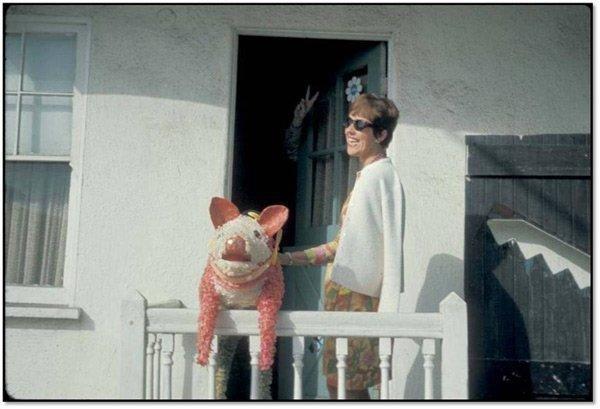
A photograph on the back cover of a memoir by Phyllis Gebauer, a close friend of Pynchon’s, shows the author’s hand extending out of the door of his apartment giving a peace sign with a pig piñata named Claude and Gebauer in the foreground. In 2011, Gebauer donated her rare collection of signed Pynchon novels to UCLA.
I seem to recall mention of this pig piñata in A Journey into the Mind of P (but I could be wrong).

Reviews and riffs, May 2015
In which I read Playboy for the Pynchon article.
This is not a review of Lydia Davis’s Can’t and Won’t.
What the hell is Pynchon in Public Day?
A review of Jim O’Rourke’s new record Simple Songs.
Han Kang’s The Vegetarian reviewed.
A somewhat contrarian take on Mad Max: Fury Road.
Gravity’s Rainbow and Disney’s Fantasia.
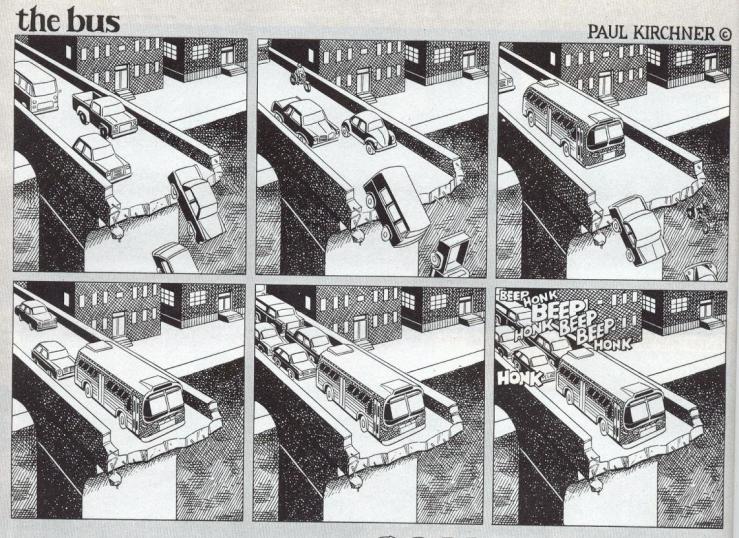
Unrelated owl by Durer:



Disney’s Fantasia is one of the better film adaptations of Thomas Pynchon’s novel Gravity’s Rainbow.
At least this thought zipped into my head a few weeks back, as I watched the film with my wife and kids. I was in the middle of a second reading of the novel, an immediate rereading prompted by the first reading. It looped me back in. Everything seemed connected to the novel in some way. Or rather, the novel seemed to connect itself to everything, through its reader—me—performing a strange dialectic of paranoia/anti-paranoia.
So anyway, Fantasia seemed to me an adaptation of Gravity’s Rainbow, bearing so many of the novel’s features: technical prowess, an episodic and discontinuous form, hallucinatory dazzle, shifts between “high” and “low” culture, parodic and satirical gestures that ultimately invoke sincerity, heightened musicality, themes of magic and science, themes of automation and autonomy, depictions of splintering identity, apocalypse and genesis, cartoon elasticity, mixed modes, terror, love, the sublime, etc.
(There’s even a coded orgy in Fantasia).
But Fantasia was first released in 1940 right, when Pynchon was, what, three or four? And Gravity’s Rainbow was published in 1973, and most of the events in that novel happen at the end of World War II, in like, 1944, 1945, right? So the claim that “Fantasia is one of the better film adaptations of Gravity’s Rainbow” is ridiculous, right?
(Unless, perhaps, we employ those literary terms that Steven Weisenburger uses repeatedly in his Companion to Gravity’s Rainbow: analepsis and prolepsis—so, okay, so perhaps we consider Fantasia an analepsis, a flashback, of Gravity’s Rainbow, or we consider Gravity’s Rainbow a prolepsis, a flashforward, of Fantasia…no? Why not?).
Also ridiculous in the claim that “Fantasia is one of the better film adaptations of Gravity’s Rainbow” is that modifier “better,” for what other film adaptations of Gravity’s Rainbow exist?
(The list is long and mostly features unintentional titles, but let me lump in much of Robert Altman, The Conversation, Richard Kelly’s Southland Tales, Paul Thomas Anderson’s The Master, that Scientology documentary Going Clear, a good bit of stuff by the Wachowksis, The Fisher King (hell, all of Terry Gilliam, why not?), the Blackadder series, which engenders all sorts of wonderful problems of analepsis and prolepsis…).
Gravity’s Rainbow is of course larded with film references, from King Kong and monster movies to German expressionism (Fritz Lang in particular), and features filmmakers and actors as characters. The novel also formulates itself as its own film adaptation, perhaps. The book’s fourth sentence tells us “…it’s all theatre.” (That phrase appears again near the novel’s conclusion, in what I take to be a key passage). And the book ends, proleptically, in “the Orpheus Theatre on Melrose,” a theater managed by Richard M. Nixon, excuse me, Zhlubb—with the rocket analeptically erupting from the past into “The screen…a dim page spread before us, white and silent.” Indeed, as so many of the book’s commentator’s have noted, Pynchon marks separations in the book’s sequences with squares reminiscent of film sprockets — □ □ □ □ □ □ □. Continue reading “A last riff (for now) on Gravity’s Rainbow (and Disney’s Fantasia)”

 Biblioklept