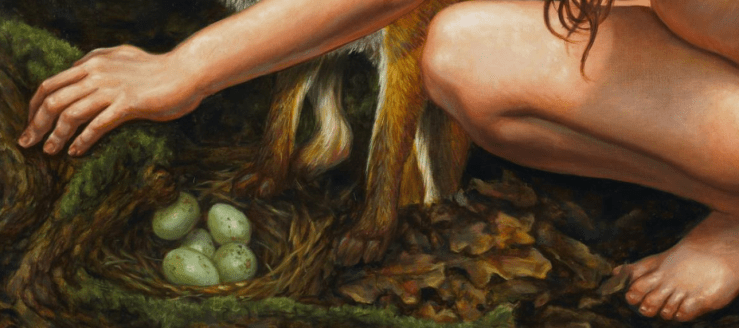
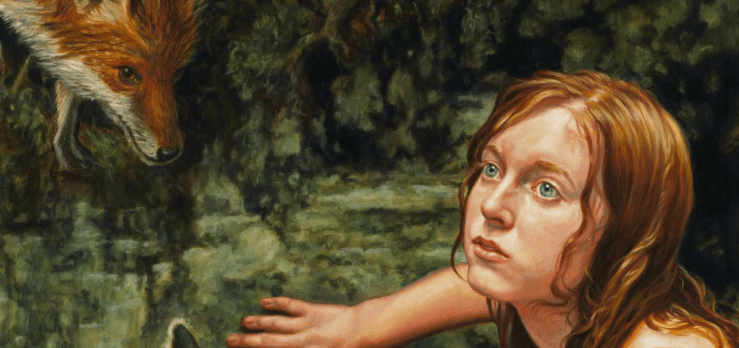
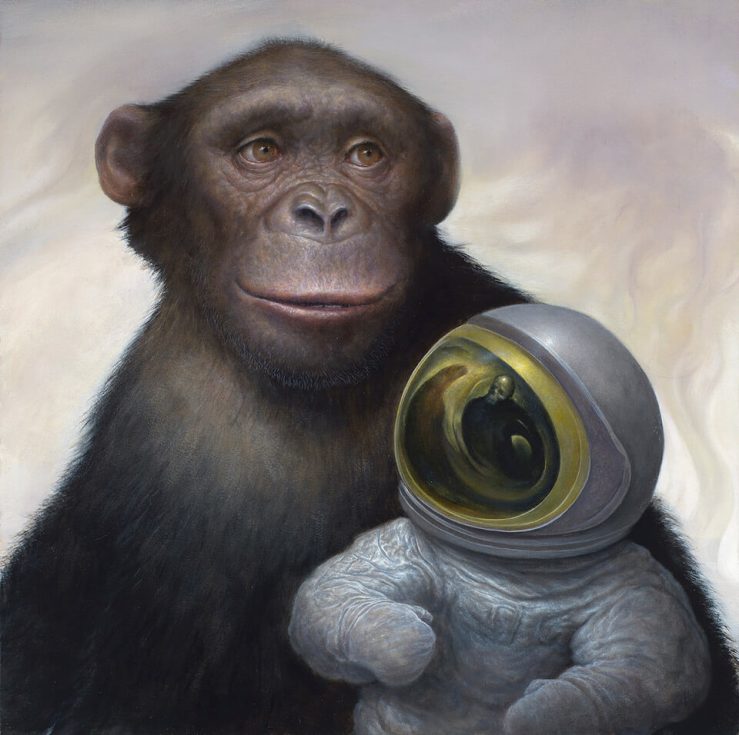
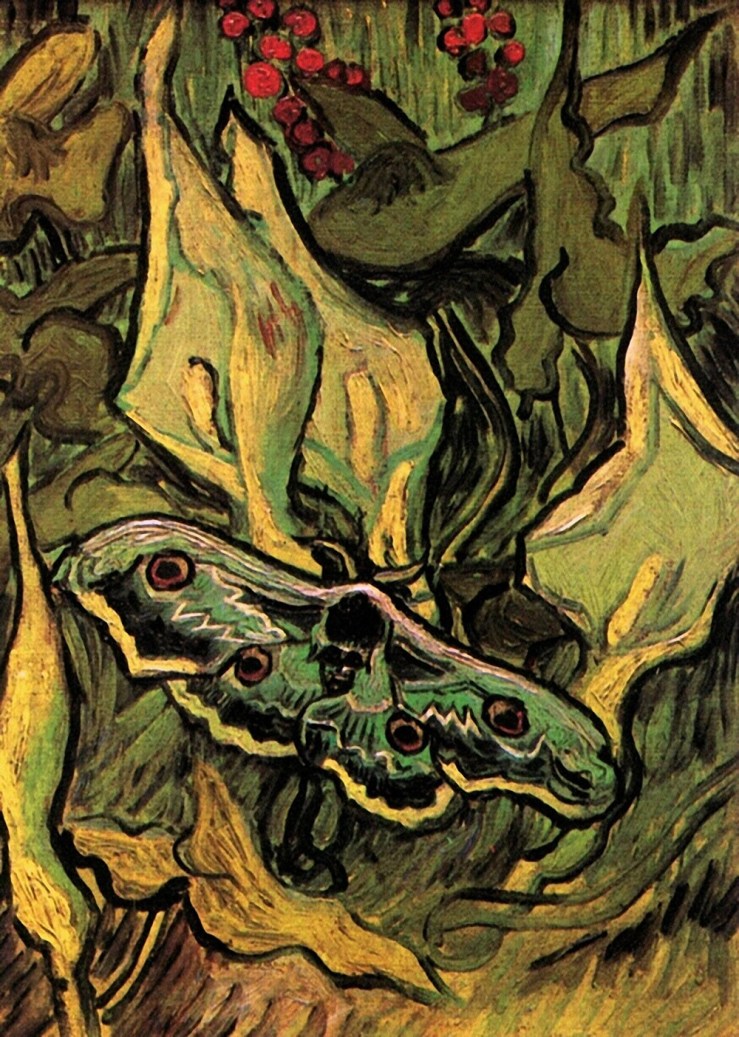
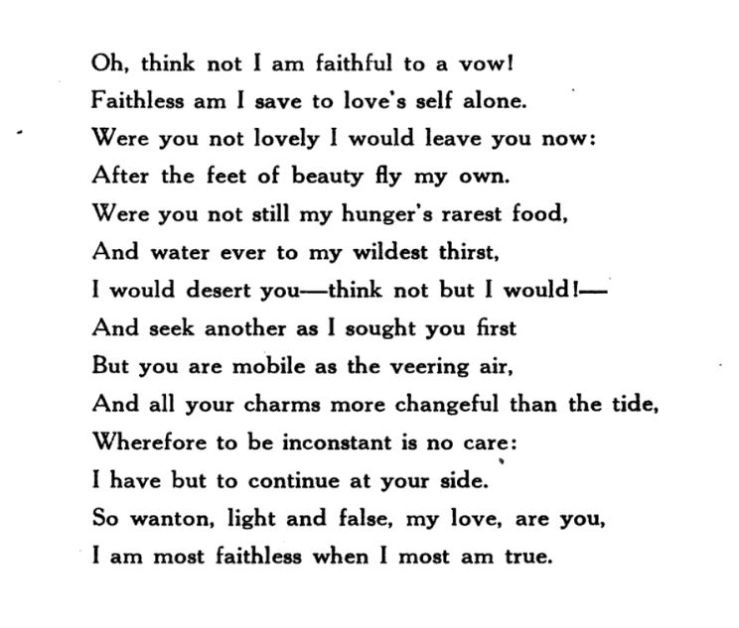
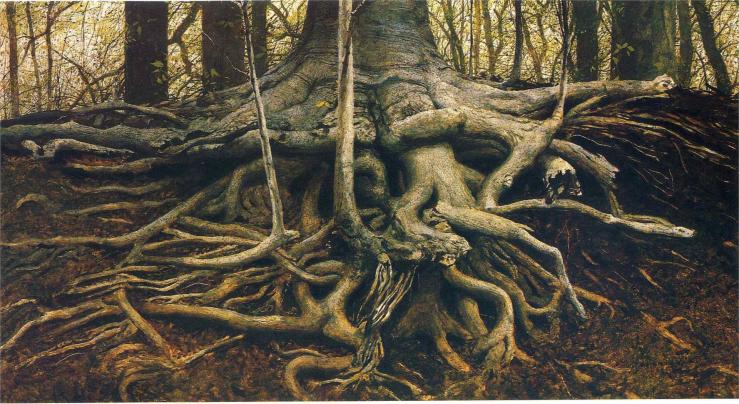
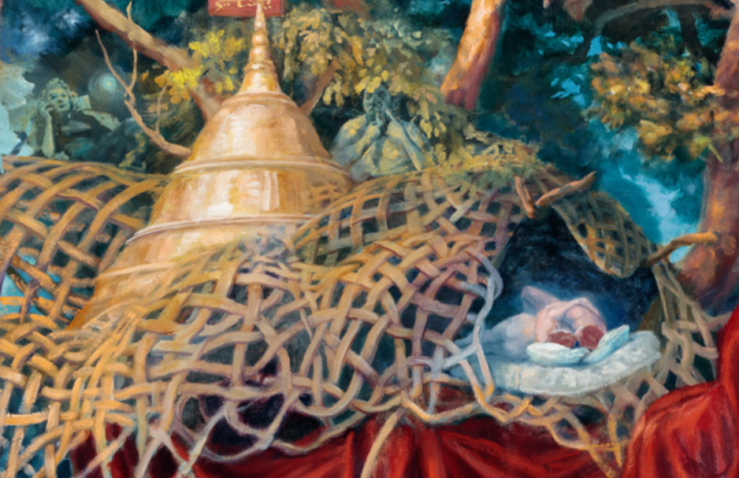
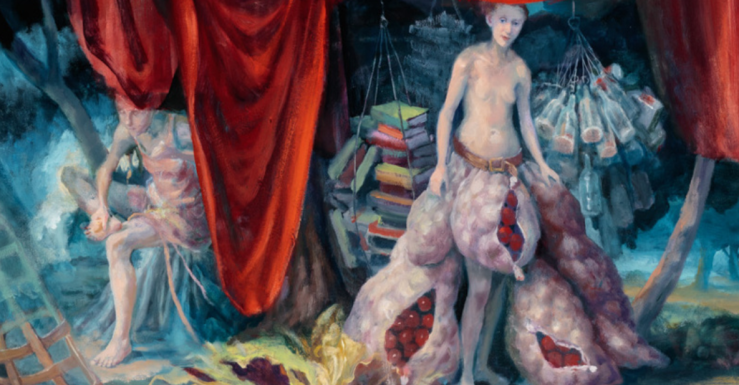
Fall — Martin Wittfooth

fall

Fall, 2016 by Martin Wittfooth (b. 1981)

George Saunders wins the 2017 Man Booker Prize for Lincoln in the Bardo, a novel I couldn’t finish

George Saunders has won the 2017 Man Booker Prize for Fiction for his first novel Lincoln in the Bardo. He is the second American (in a row) to win this British prize after the prize’s rules were changed in 2013 to allow U.S. authors. (Paul Beatty’s The Sellout won last year).

I’m a fan of many of Saunders’s short stories, especially those in CivilWarLand in Bad Decline, which I did not review on this website, unlike the collections Pastoralia and Tenth of December, which I did review on this website.

really, really, really wanted to love Lincoln in the Bardo, but I didn’t. I tried to read it at least three times earlier this year and failed to make it past the halfway mark.

I first tried via the audiobook, a gimmicky affair that caught my interest. I’m a fan of audiobooks and like most humans I crave novelty. The Lincoln audiobook features 166 readers over a relatively slim seven and a half hours, and is led by the capable Nick Offerman, along with David Sedaris, George Saunders, Carrie Brownstein, Miranda July, Lena Dunham, et. al. I quit the first time maybe only an hour in, assuming that the chorus of narrators was throwing me off. But then I thought, Shit, Ed, it’s not even eight hours, just knock it out. After three hours I found that I genuinely hated it. So I picked up a physical copy from the library and tried again—maybe the audiobook was the wrong media—maybe I needed to see it on the page? But: Nope.

Lincoln in the Bardo might be a really good novel and I just can’t see it or hear it or feel it. I see postmodernism-as-genre, as form; I read bloodless overcooked posturing; I feel schmaltz. I failed the novel, I’m sure. I mean, I’m sure it’s good, right? The problem is me, as usual. I’m tempted here to launch into a long rant about how little contemporary fiction seems to do for me lately, but why? Why rant?

(The last really really great contemporary American novel I read was Atticus Lish’s Preparation for the Next Life, a novel that does everything I think Lincoln wants to do with a real raw precise blood-coursing intensity that I’ll never forget. And (I know this because I used my Twitter timeline as a reference just now) I just realized that I picked up Preparation for the Next Life on the same day that I downloaded the audiobook of Lincoln in the Bardo—so I was reading/auditing the novels at pretty much the exact same time. Look, let me very strongly recommend Atticus Lish’s novel Preparation for the Next Life).

In the second paragraph of this silly riff I wrote the words “I’m a fan of many of Saunders’s short stories.” One of those stories is a perfect two-paragraph joint, “Sticks,” which he included in Tenth of December. As I wrote in my review of that collection,

…the short, visceral two-paragraph perfection of “Sticks”…seems freer, sharper. At fewer than four hundred words it’s easily the shortest piece in the collection (and the shortest thing I’ve read by Saunders). “Sticks” condenses the harried middle class hero of almost every Saunders tale into one ur-Dad, stunning, sad, majestic. It’s also the oldest story in the collection, originally published by Harper’s in 1995, which means it predates the publication of all his other collections.

I figure out a way to insert “Sticks” into pretty much any literature class I teach—I love sharing it with students so I’ll share it with you:

Every year Thanksgiving night we flocked out behind Dad as he dragged the Santa suit to the road and draped it over a kind of crucifix he’d built out of metal pole in the yard. Super Bowl week the pole was dressed in a jersey and Rod’s helmet and Rod had to clear it with Dad if he wanted to take the helmet off. On Fourth of July the pole was Uncle Sam, on Veterans Day a soldier, on Halloween a ghost. The pole was Dad’s one concession to glee. We were allowed a single Crayola from the box at a time. One Christmas Eve he shrieked at Kimmie for wasting an apple slice. He hovered over us as we poured ketchup, saying, Good enough good enough good enough. Birthday parties consisted of cupcakes, no ice cream. The first time I brought a date over she said, What’s with your dad and that pole? and I sat there blinking.

We left home, married, had children of our own, found the seeds of meanness blooming also within us. Dad began dressing the pole with more complexity and less discernible logic. He draped some kind of fur over it on Groundhog Day and lugged out a floodlight to ensure a shadow. When an earthquake struck Chile he laid the pole on its side and spray-painted a rift in the earth. Mom died and he dressed the pole as Death and hung from the crossbar photos of Mom as a baby. We’d stop by and find odd talismans from his youth arranged around the base: army medals, theater tickets, old sweatshirts, tubes of Mom’s makeup. One autumn he painted the pole bright yellow. He covered it with cotton swabs that winter for warmth and provided offspring by hammering in six crossed sticks around the yard. He ran lengths of string between the pole and the sticks, and taped to the string letters of apology, admissions of error, pleas for understanding, all written in a frantic hand on index cards. He painted a sign saying LOVE and hung it from the pole and another that said FORGIVE? and then he died in the hall with the radio on and we sold the house to a young couple who yanked out the pole and left it by the road on garbage day.
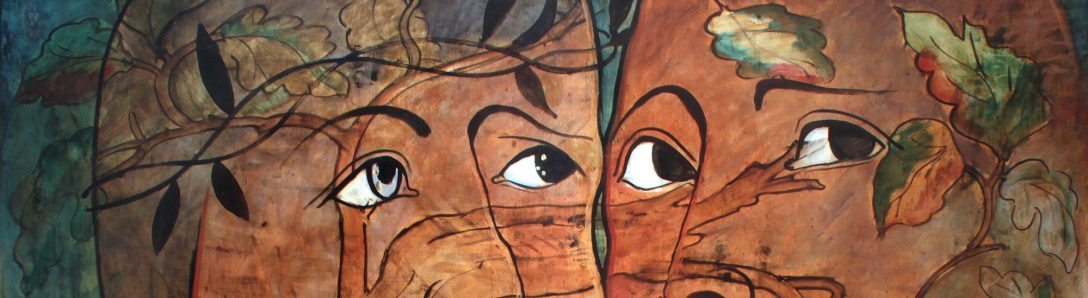

 

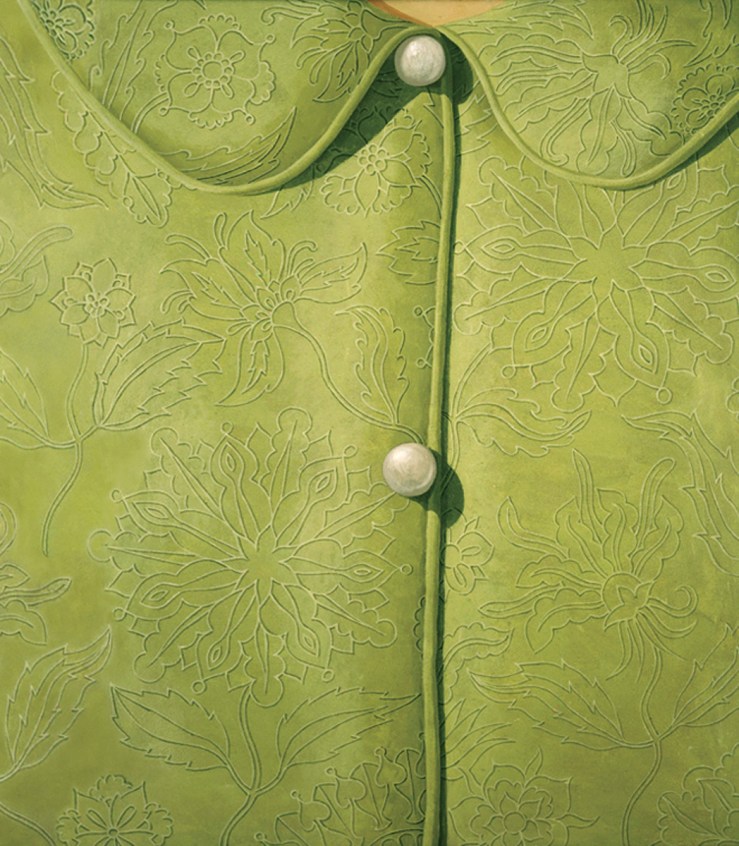
Chemisette Verte — Domenico Gnoli

1-domenico-gnoli_155459209676

Chemisette Verte, 1967 by Domenico Gnoli (1933-1970)

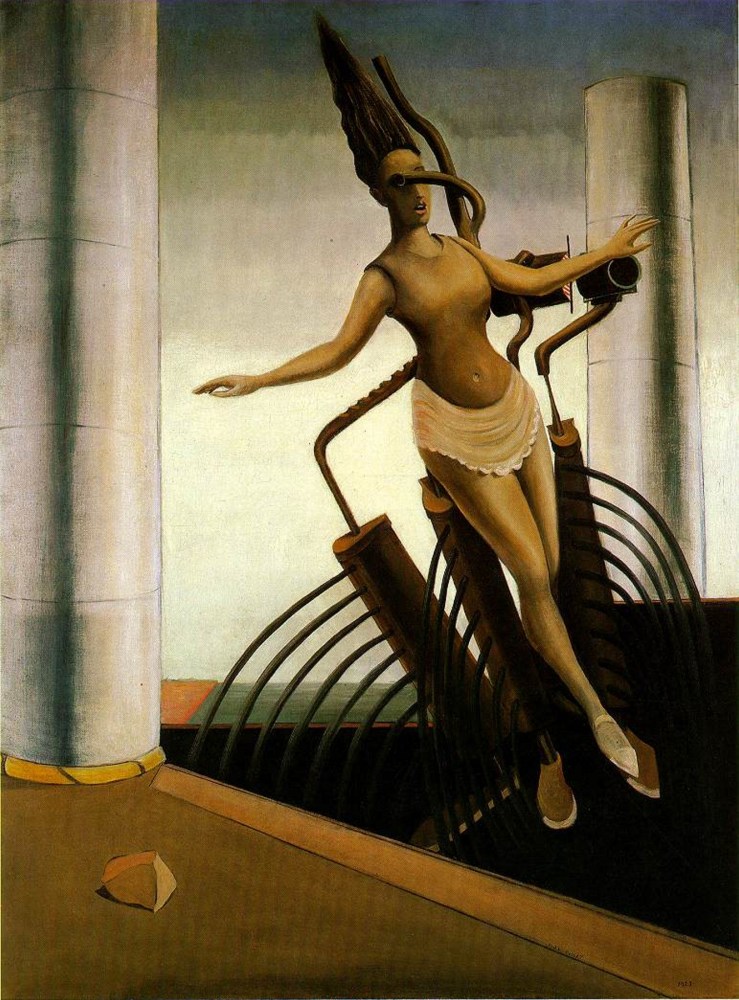
The Wavering Woman — Max Ernst

10226

The Wavering Woman, 1923 by Max Ernst (1891-1976)

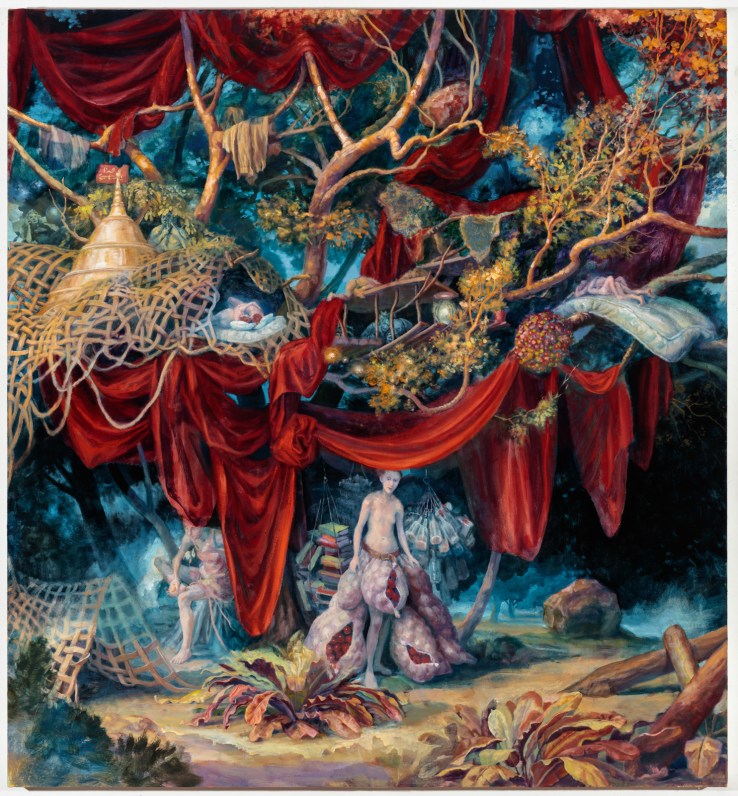
Self Portrait in a Red Tent — Julie Heffernan

f777b39f3143ce76-jh-6276-web

Screenshot 2017-10-15 at 8.13.04 PMScreenshot 2017-10-15 at 8.12.47 PMScreenshot 2017-10-15 at 8.12.32 PM

Self Portrait in a Red Tent, 2017 by Julie Heffernan (b. 1956)

“The Wedding-Knell,” a short tale by Nathaniel Hawthorne

“The Wedding-Knell”

by

Nathaniel Hawthorne


There is a certain church, in the city of New York which I have always regarded with peculiar interest on account of a marriage there solemnized under very singular circumstances in my grandmother’s girlhood. That venerable lady chanced to be a spectator of the scene, and ever after made it her favorite narrative. Whether the edifice now standing on the same site be the identical one to which she referred I am not antiquarian enough to know, nor would it be worth while to correct myself, perhaps, of an agreeable error by reading the date of its erection on the tablet over the door. It is a stately church surrounded by an enclosure of the loveliest green, within which appear urns, pillars, obelisks, and other forms of monumental marble, the tributes of private affection or more splendid memorials of historic dust. With such a place, though the tumult of the city rolls beneath its tower, one would be willing to connect some legendary interest.

The marriage might be considered as the result of an early engagement, though there had been two intermediate weddings on the lady’s part and forty years of celibacy on that of the gentleman. At sixty-five Mr. Ellenwood was a shy but not quite a secluded man; selfish, like all men who brood over their own hearts, yet manifesting on rare occasions a vein of generous sentiment; a scholar throughout life, though always an indolent one, because his studies had no definite object either of public advantage or personal ambition; a gentleman, high-bred and fastidiously delicate, yet sometimes requiring a considerable relaxation in his behalf of the common rules of society. In truth, there were so many anomalies in his character, and, though shrinking with diseased sensibility from public notice, it had been his fatality so often to become the topic of the day by some wild eccentricity of conduct, that people searched his lineage for a hereditary taint of insanity. But there was no need of this. His caprices had their origin in a mind that lacked the support of an engrossing purpose, and in feelings that preyed upon themselves for want of other food. If he were mad, it was the consequence, and not the cause, of an aimless and abortive life.

The widow was as complete a contrast to her third bridegroom in everything but age as can well be conceived. Compelled to relinquish her first engagement, she had been united to a man of twice her own years, to whom she became an exemplary wife, and by whose death she was left in possession of a splendid fortune. A Southern gentleman considerably younger than herself succeeded to her hand and carried her to Charleston, where after many uncomfortable years she found herself again a widow. It would have been singular if any uncommon delicacy of feeling had survived through such a life as Mrs. Dabney’s; it could not but be crushed and killed by her early disappointment, the cold duty of her first marriage, the dislocation of the heart’s principles consequent on a second union, and the unkindness of her Southern husband, which had inevitably driven her to connect the idea of his death with that of her comfort. To be brief, she was that wisest but unloveliest variety of woman, a philosopher, bearing troubles of the heart with equanimity, dispensing with all that should have been her happiness and making the best of what remained. Sage in most matters, the widow was perhaps the more amiable for the one frailty that made her ridiculous. Being childless, she could not remain beautiful by proxy in the person of a daughter; she therefore refused to grow old and ugly on any consideration; she struggled with Time, and held fast her roses in spite of him, till the venerable thief appeared to have relinquished the spoil as not worth the trouble of acquiring it. Continue reading ““The Wedding-Knell,” a short tale by Nathaniel Hawthorne”

Stolen Feast — F. Scott Hess

hess032

Stolen Feast, 1999 by F. Scott Hess (b. 1955)

The Store — Neo Rauch

neo-rauch-021

Der Laden (The Store), 2005 by Neo Rauch (b. 1960)

Pie Fight Interior #8 — Adrian Ghenie

tumblr_nj7k8eonpj1r380buo1_1280

Pie Fight Interior #8, 2012 by Adrian Ghenie (b. 1977)

Friday the 13th film poster by Francesco Francavilla

francavilla-friday-the-13th


Your Good Taste Is Showing — Robin F. Williams

2017_yourgoodtasteisshowing_72x72_0

Your Good Taste Is Showing, 2017 by Robin F. Williams (b. 1984)


The cawing of the crow resounds among the woods | Nathaniel Hawthorne’s journal entry for October 12th, 1841

October 12th.–The cawing of the crow resounds among the woods. A sentinel is aware of your approach a great way off, and gives the alarm to his comrades loudly and eagerly,–Caw, caw, caw! Immediately the whole conclave replies, and you behold them rising above the trees, flapping darkly, and winging their way to deeper solitudes. Sometimes, however, they remain till you come near enough to discern their sable gravity of aspect, each occupying a separate bough, or perhaps the blasted tip-top of a pine. As you approach, one after another, with loud cawing, flaps his wings and throws himself upon the air.

There is hardly a more striking feature in the landscape nowadays than the red patches of blueberry and whortleberry bushes, as seen on a sloping hill-side, like islands among the grass, with trees growing in them; or crowning the summit of a bare, brown hill with their somewhat russet liveliness; or circling round the base of an earth-imbedded rock. At a distance, this hue, clothing spots and patches of the earth, looks more like a picture than anything else,–yet such a picture as I never saw painted.

The oaks are now beginning to look sere, and their leaves have withered borders. It is pleasant to notice the wide circle of greener grass beneath the circumference of an overshadowing oak. Passing an orchard, one hears an uneasy rustling in the trees, and not as if they were struggling with the wind. Scattered about are barrels to contain the gathered apples; and perhaps a great heap of golden or scarlet apples is collected in one place.

Nathaniel Hawthorne’s journal entry for October 12th, 1841. Collected in Passages from the American Note-Books.

Ideal Life — Leonor Fini

ob_59a9e6_la-vie-ideale-vue-par-leonor-fini

Ideal Life, 1950 by Leonor Fini (1908-1996)

Hermit of Peking (Book acquired 28 Sept. 2017)

img_8122

My daughter asked to go to our favorite used bookstore a few weeks ago, and while she was milling around the children’s section, I dipped through the adjacent biographies area, an area I admit I seldom visit. Hugh Trevor-Roper’s Hermit of Peking was literally lying on the floor. The Arcimboldosque cover (by Peter Brookes—the political cartoonist?) caught my eye. The blurb, which notes that Sir Edmund Backhouse was “one of the most outrageous forgers, confidence trickster and eccentrics of the century” intrigued me; I posted the pic on Twitter and a good source vouched for Hermit. I picked it up. Read more about Backhouse’s frauds and schemes here.


Big Bad Wolves: Chapter 6 — Mu Pan

wolve5_fb

Big Bad Wolves, 2017 by Mu Pan (b. 1976)


The Wild Bunch (Hole in the Wall Gang) — Ivan Albright

029

The Wild Bunch (Hole in the Wall Gang), 1951 by Ivan Albright (1897-1983)

The Big Dory — George Bellows

the-big-dory-1913

The Big Dory, 1913 by George Bellows (1882-1925)