
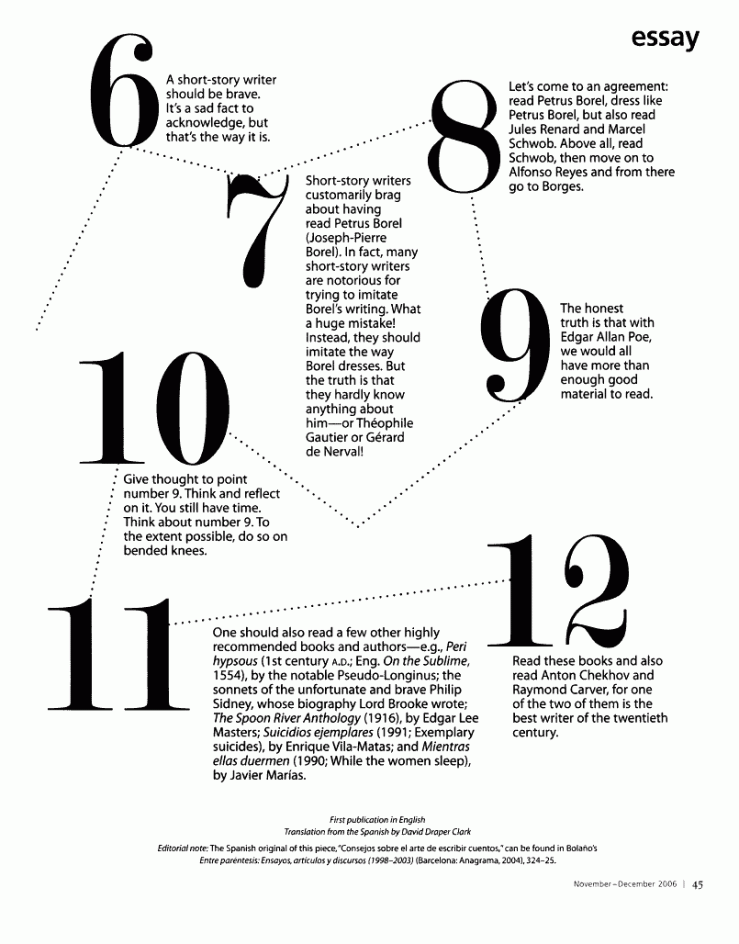
Originally published in World Literature Today. Images via Defining Myself Secondhand.

Originally published in World Literature Today. Images via Defining Myself Secondhand.
The New Yorker has published a new short story by Biblioklept fave Wells Tower. It’ called “The Landlord” and would have fit fine in Tower’s collection Everything Ravaged, Everything Burned. An excerpt from the story–
My daughter has come from Los Angeles to live with me. Rhoda is thirty-one, and she used to work in advertising, but now she’s a painter and a maker of other art that I’m not sure how to describe. Her field is bummers. Rhoda’s past exhibitions include leukemia-cluster art, floating-yuan art, water-rights art, and mental-health-funding-cuts art, which was piles of clothes painted bronze and rigged up with speakers that yelled. She has also made a lot of hand art and hair art. Eight years ago, shortly into her new career, while getting the hang of a radial-arm saw, Rhoda severed the index, middle, and ring fingers of her left hand. The surgeons reattached them, and Rhoda recovered nearly complete range of motion, but the shock of the injury caused some of her hair to fall out. She keeps her head shaved close now, a style that improves the plainness of face she inherited from me. Bald, she looks about fifteen years older than she is, but also terrifyingly smart and owlish, Lady Malcolm McDowell.
Read Howard Zinn on The Ludlow Massacre. Happy Labor Day!

Welcome to Biblioklept’s 777th Post Spectacular*
*Not guaranteed to be spectacular.
777 seems like a beautiful enough number to celebrate, and because we’re terribly lazy, let’s celebrate by sharing reviews of seven of our favorite novels that have been published since this blog started back in the hoary yesteryear of 2006. In (more or less) chronological order–
The Children’s Hospital–Chris Adrian — A post-apocalyptic love boat with metaphysical overtones, Adrian’s end of the world novel remains underrated and under-read.
The Road — Cormac McCarthy — That ending gets me every time. The first ending, I mean, the real one, the one between the father and son, not the tacked on wish-fulfillment fantasy after it. Avoid the movie.
A Mercy — Toni Morrison –Slender and profound, A Mercy should be required reading for all students of American history. Or maybe just all Americans.
Tree of Smoke — Denis Johnson — Nobody knew we needed another novel about the Vietnam War and then Johnson went and showed us that we did. But it’s fair to say his book is about more than that; it’s an espionage thriller about the human soul.
2666 — Roberto Bolaño — How did he do it? Maybe it was because he was dying, his life-force transferred to the page. Words as viscera. God, the blood of the thing. 2666 is both the labyrinth and the minotaur.
Asterios Polyp — David Mazzucchelli — We laughed, we cried, and oh god that ending, right? Wait, you haven’t read Asterios Polyp yet? Is that because it’s a graphic novel, a, gasp, comic book? Go get it. Read it. Come back. We’ll wait.
C — Tom McCarthy — Too much has been made over whether McCarthy’s newest novel (out in the States next week) is modernist or Modernist or post-modernist or avant-garde or whatever–these are dreadfully boring arguments when stacked against the book itself, which is complex, rich, enriching, maddening.
The AV Club interviews Jonathan Franzen. Topics include his new book Freedom, posterity, Glenn Beck, Ian McEwan, and why Franzen still has an AOL account. Here’s Franzen, from the interview, discussing contemporary references in his books–
I’m not too concerned what happens to my books after I’m dead. And I am very concerned by what’s going on with the culture of reading and writing now. So I would not wrap myself in a toga and speak of timelessness regarding my work. It’s my experience that reading Dostoevsky, say, or reading Balzac—the books are full of these contemporary references, and there are feuds going on, and names are dropped, and you know that they’re significant. If you have a good edition, it’ll have six pages of notes at the back explaining what the reference is, because some good scholar has actually looked all of the stuff up. But I don’t really feel like it detracts from my reading of that, and in a perverse way, it actually makes it feel… [Pauses.]
I want to say something can’t become timeless unless it had first inhabited its own time. Undoubtedly, we only get 70 percent of Shakespeare, because the other 30 percent is references that are just completely lost. There are all of these in-jokes, these insider references and contemporary references. We’re so removed from that culture, we don’t even know they’re there. But he was having so much fun writing those plays, and part of the fun was putting all this other stuff in—all of the wordplay, taking a jab at this actor and that theater. He was having so much fun that it just became inseparable from the general fun of those plays, and reading them, and going to performances of them. And he maybe needs those little references to make it fun for him. Not to compare myself to Shakespeare. [Laughs.] But any writer nowadays, I think… I don’t think the book is about those references. It’s not a collection of in-jokes. It’s not some snarky contemporary satire. It’s no dis-fest. It’s about other things, and those things are there for the enjoyment of people who might get them.

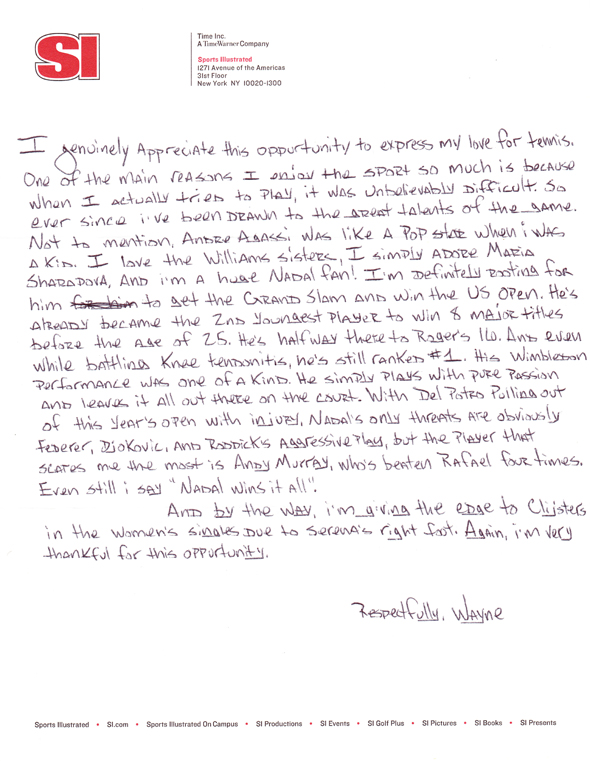
At BlackBook, Adam Wilson pits two literary luminaries against each other on the subject of tennis: Lil’ Wayne vs David Foster Wallace. From Wilson’s piece–
On Understanding Limitations
Lil Wayne: “One of the main reasons I enjoy the sport so much is because when I actually tried to play, it was unbelievably hard.”
David Foster Wallace: “I thus further confess that I arrived in Montreal with some dim unconscious expectation that these professionals—at least the obscure ones, the nonstars—wouldn’t be all that much better than I. I don’t mean to imply that I’m insane: I was ready to concede that age, a nasty ankle injury in 1988, and a penchant for nicotine (and worse) meant that I wouldn’t be able to compete physically with a young unhurt professional, but on TV (while eating junk and smoking), I’d seen pros whacking balls at each other that didn’t look to be moving substantially faster than the balls I’d hit. In other words, I arrived at my first professional tournament with the pathetic deluded pride that attends ignorance. And I have been brought up sharply. I do not play and never have played even the same game as these qualifiers.”Winner: Wallace. Though Weezy is once again clear and concise, Wallace wins for honesty and breadth of experience.
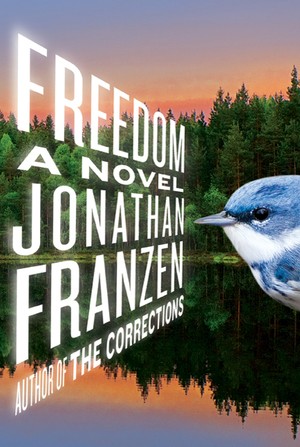 So, Jonathan Franzen’s Freedom is out today. The follow-up to 2001’s The Corrections was already in a second printing before its release today, pretty much pointing to the book being “the literary event” of 2010 (whatever that means). I haven’t read Freedom yet so I don’t have an opinion about it–but it’s hard to not have an opinion about the opinions about Freedom, at least if you follow literary-type news. The reviews have been overwhelmingly positive, even when they can find something to nitpick or quibble with. Obama picked up a copy last week on vacation. In an act of hyperbole so ridiculous as to turn comical, The Guardian’s Jonathan Jones called it “the novel of the century.” (Nevermind that the century isn’t even a decade old). But it’s probably the fact that Franzen appeared on the cover of Time magazine–the first writer in a decade to do so (the last was Stephen King)–that’s caused some professional jealousy and a backlash against Franzen. Again, this is all before the book has been released.
Yes, Franzenfreude. Authors Jodi Picoult and Jennifer Weiner felt the need to speak out against coverage of Freedom, crying foul that their books were not receiving the same critical attention as the “white male literary darling.” You can read an interview with the pair here, where their position seems to be that their work, frequently on the bestseller lists, is dismissed as genre fare. I don’t know Weiner’s stuff but Picoult’s novels strike me as the sort of maudlin crap that get turned into Lifetime movies (which they do). Picoult and Weiner don’t just play the gender card though. No, they also whip out a populist argument, the idea that literary critics ought to give more weight to “what people actually read.” In a series of recent columns on the attention Freedom has garnered, Lorin Stein pointed out that “It has become immensely hard to get a “literary” writer the attention he or she deserves.” (The comments section of Stein’s posts showcase a remarkable debate about just what “literary fiction” is).
Stein is absolutely right of course. (Weiner and Picoult will have to console themselves by sobbing into their piles of money). Franzen’s Freedom has become an opportunity for those who love literary fiction–which might be an endangered species–to call attention to the fact that novels are important, that they can somehow diagnose and analyze the spirit of an age. In his article for The Guardian, William Skidelsky strips the rhetoric away and gets to the point–
Underneath the words “Great American Novelist”, Time‘s strapline ran: “He’s not the richest or most famous. His characters don’t solve mysteries, have magical powers or live in the future. But in his new novel, Jonathan Franzen shows us all the way we live now.” It isn’t hard to unpick the subtext here: “Remember, folks, there’s such a thing as serious literature; it has little to do with Dan Brown or Harry Potter, and these days most of us tend to ignore it, but it’s actually kind of important.”
At The Faster Times, Lincoln Michel is even brassier–
There has always been a segment of the population that does not like it when intelligent artistic work gets praise. These people cry foul when an Academy Award goes to a well-crafted film with limited distribution instead of the latest Hollywood blockbuster, they moan when magazines cover innovative indie musicians instead of the most recent Nickelback CD, and you better believe they can’t stand it when that elitist literary fiction gets awards and coverage that should be reserved for books that people are “actually reading.”
Much of the critical reception of Freedom, then, is more about how the public–the reading public–is to connect with and interact with novels in an age of new media, in an age where some like to pretend the literary novel has lost its relevance, in an age where bozos go around declaring manifestos against novels. While Freedom need not be the novel to “save” the novel, it also shouldn’t be an occasion for backbiting, jealousy, and backlash. Maybe everyone should just calm down and read the damn thing.
[UPDATE: Read our obligatory review of Freedom].
Tao Lin’s novel Eeeee Eee Eeee, adapted by librarian Kacper Jarecki and friends. More info here and here. The trailer is sort of like a sweded version of a nonexistent studio version of Eeeee Eee Eeee.

Read more about Walt Whitman’s death mask here. Read Whitman’s poem “Starting from Paumonak,” where he claims “I will show that nothing can happen more beautiful than death.”
 If you listen to NPR, you’re likely familiar with Scott Simon, host of Weekend Edition. In his new memoir Baby We Were Meant for Each Other, Simon shares his own experiences adopting two girls from China, his daughters Elise and Lina. In addition to sharing his own story, Simon highlights moving tales from a dozen other families, including sportswriter Frank Deford and Freakonomics author Steve Levitt. Simon mixes pathos and humor and his detailed, unflinching narrative is deeply emotional without ever coming across as maudlin or mawkish. While an argument for adoption seems to be relatively common sense, Simon reveals that the process is declining in America, largely because of advances in fertility science. He also makes an impassioned case against China’s one-child policy as a human rights crime against women. In a recent profile at Bookpage, Simon said “The Chinese permit an astonishingly small percentage of orphaned and abandoned children to be adopted. To me, that is absolutely flabbergasting. The government policy on adoption is addressing political, economic and social goals that have almost nothing to do with the best interests of children. Now that we have two little girls from China who are part of our family, we need to speak out about it.” At first glance Simon’s memoir will likely resonate mostly with those who’ve experienced adoption first-hand, but a closer look reveals a narrative that taps into an experience that we all share–what it means to part of a family. Baby, We Were Meant for Each Other is new in hardback from Random House.
I called the Dove World Outreach Center this afternoon to find out some details about their upcoming book burning.
The woman who answered the phone seemed tense but polite, wanting to know what organization I was with. I told her that I just wanted to find out a few simple facts about the book burning. First, I wanted to confirm that the church still plans to burn copies of the Qur’an on September 11th, 2010. In a New York Times article from August 25th, the church’s pastor Terry Jones avowed that the book burning would still take place, despite the Gainesville Fire Department denying them a permit. The woman I spoke to confirmed that the book burning will still take place.
I wanted to know where the Qur’ans that were to be burned were coming from. I asked if they belonged to the church. The woman was genuinely confused at this. “No, we’re a church. We don’t have any Qur’ans.” I clarified my question. “They’ve been donated to the church,” she replied, and wouldn’t elaborate. The conversation was getting a bit tense.
I asked her if people should bring their own Qur’ans to the book burning to burn. This again seemed confusing. “No, the event is closed to the public,” she explained. The police advised the church, for “security reasons” to restrict the book burning to only church members. I asked if this means that I couldn’t attend the burning if I was not a church member. She explained that I would be able to see the burning from the side of the road from behind a fence, but that nonmembers could not attend.
I then asked how the books would be burned. Again, a pause; perhaps confusion. I felt like I was about to get hung-up on. “Just wood, I think, is my understanding,” she said. “No gas?” I asked. “I’m not sure,” she replied. “So, you’ll burn them like, bonfire-style? A pyre? No pit?” A longer pause. “I’m not really sure,” she finally said. “And people can witness that from the road, but not up close?” I asked. “Yes.”
So I’ll admit it: I’m a lousy reporter. I didn’t get that much info. I set out to find out some very basic, concrete information about the logistics of a book burning in 2010. Where do you get the materials? How do you burn them? I suppose my efforts and my aim to be objective obscured, at least for a moment, the fact that there are few things as ignorant and idiotic as a book burning. Any group of yokels could undertake such an operation. It really doesn’t need much practical forethought. You just need some wood (and possibly gasoline). And a Facebook page. And a willingness to engage in a special kind of evil. No wonder my questions were met with terse confusion.
I didn’t aim to compete with the NYT article, which does a pretty good job of painting the scene in Gainesville, FL, interviewing Jones, along with local Muslims, people who live near the church, and local Christian leaders. There seems to be unanimous disgust with the book burning. I lived in Gainesville for four years while I attended the University of Florida. I still live very close to it. Jones and his organization do not represent the values of the people who live in Gainesville or the people of Florida; nor do they represent American values.
The nineteenth-century German poet Heinrich Heine famously said that, “Where they burn books, they will ultimately also burn people” — and then they did, in twentieth-century Germany. I toyed with the idea of titling this post something like “Ignorant Yokels Plan Book Burning” but that seemed too dismissive, too snarky (even if perhaps true). (Also, Michael Moore has already used the poetic and appropriate title “Fahrenheit 9/11”). I’m not arguing for Jones and his ilk to be mocked (although thinking people will do so). And I wouldn’t demand that outside forces stop the church from performing this evil ritual on their own private property. Rather, I believe we must point to Dove World Outreach Center’s book burning as an example of the worst of human thinking and action, and agree that it exists outside the bounds of our culture and our society. We must recognize that book burning is inherently anti-human.
More Intelligent Life interviews Tom McCarthy about his new novel C. From the interview–
MIL: It seems many avant-garde works rely on a single conceit. “Tristam Shandy” used lies, “Motherless Brooklyn” used a tourettic narrator. Must avant-garde literature have a single mechanism to be intelligible to its readers?
TM: What’s the conceit of “Finnegans Wake” then? I’m not sure “Tristram Shandy” has a single conceit. I suppose there’s an inversion of the ‘Life and Adventures of’ tradition into ‘The Life and Opinions of—plus an obvious refusal of certain narrative conventions, for example in Tristram’s inability to get himself born for the first third of his own book. But Shakespeare’s “Hamlet” is equally full of such refusals: it subverts just about every dramatic convention that it purports to buy into. I’m suspicious of the term ‘avant-garde’. I think it should be restricted to its strict historical designation: Futurists, Dadaists, Surrealists etc. “Tristram Shandy” and “Motherless Brooklyn” aren’t avant-garde novels; they’re novels. And very good ones too!
Checkout this great cover gallery archiving over 150 covers of Vladimir Nabokov’s masterpiece Lolita. A few favorites–
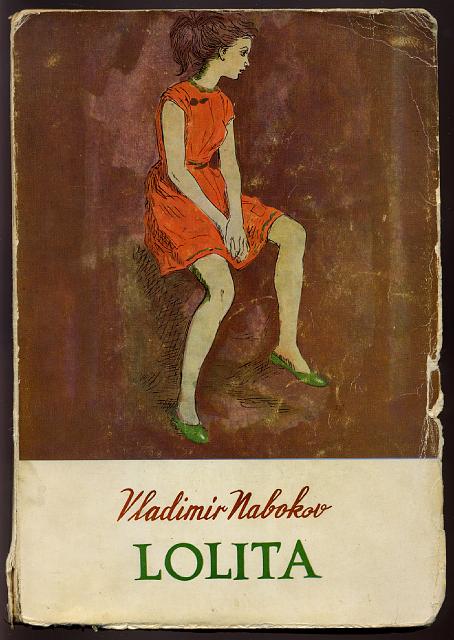
This 1957 Swedish cover is a pretty subtle/creepy upskirt.
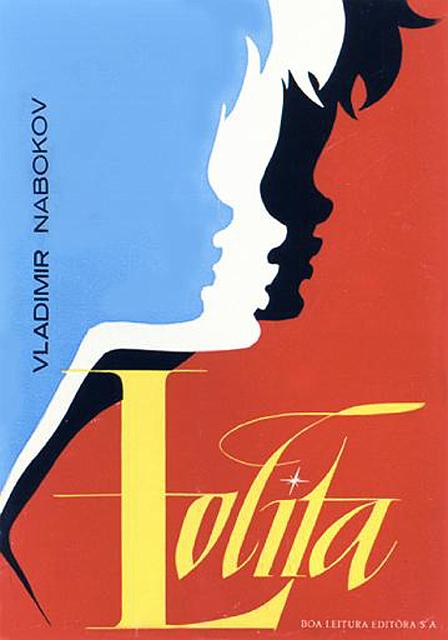 1962, Brazil.
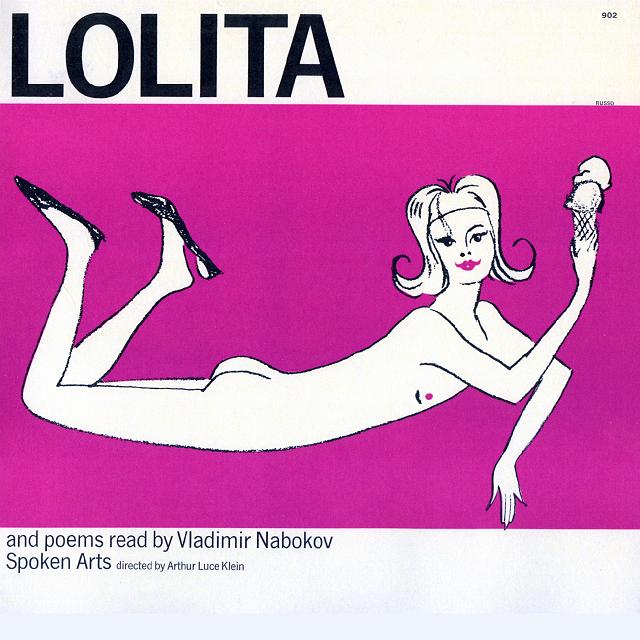
A 1964 LP with Pop Art undertones–seems a little too frank.
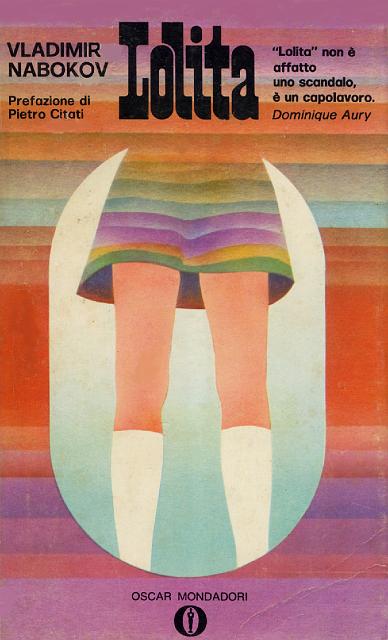
This 1970 Italian cover seems to be the earliest “girl in socks” theme that pops up again and again in the archive.

This 1972 Norwegian cover picks up the voyeur theme again, but it seems awfully goofy.
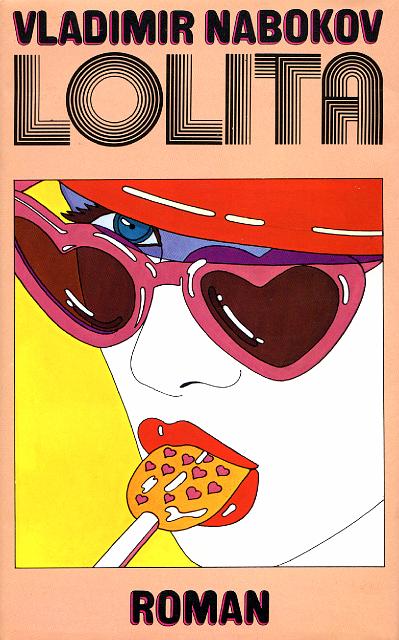
The poster for the Stanley Kubrick film adaptation inspired a rash of bad covers, but I think that this 1977 German cover works really well.
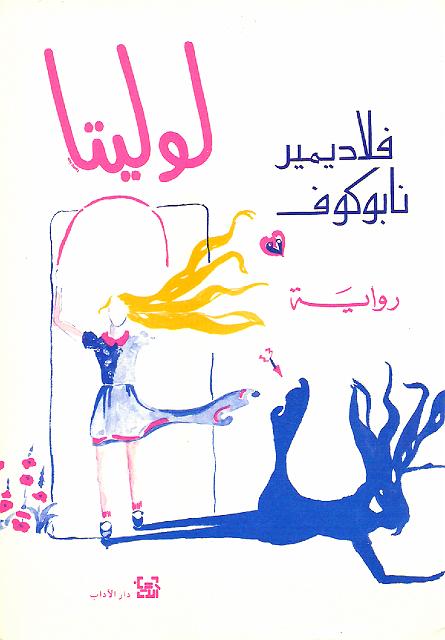
A Lebanese edition from 1988. Pretty and simple.
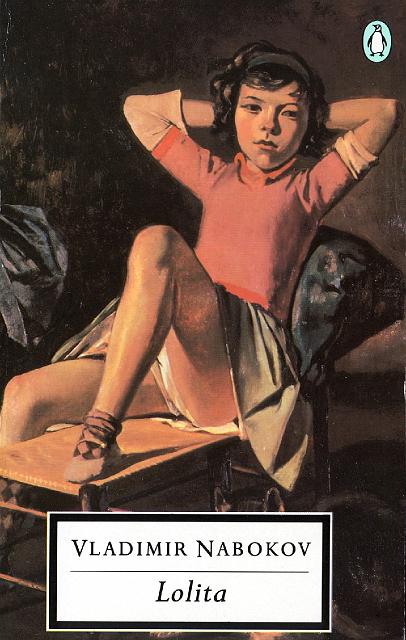
Balthus and Lolita seem like a natural fit, if a bit too obvious. I counted two other covers sporting Balthus paintings in addition to this 1995 English edition.

This Polish cover from 1997 is nine kinds of creepy.
Tin House #45, out in September, focuses on “Class in America.” You can read Gerald Howard’s essay from that issue, “Never Give an Inch,” in full now. The essay discusses shifting ideas of the social class of the American novelist, with an emphasis on “working class” writers. Howard discusses Raymond Carver and Russell Banks at some length, as well as Richard Price and Dorothy Allison (he also mentions Gilbert Sorrentino, whose work seems to be enjoying a late reappraisal). From the essay–
I don’t suppose anyone has ever done an in-depth study of that interesting form of literary ephemera, the author dust jacket biography. But if they did, I’m sure they would notice a distinct sociological shift over the past decades. Back in the forties and fifties, the bios, for novelists at least, leaned very heavily on the tough and colorful professions and pursuits that the author had had experience in before taking to the typewriter. Popular jobs, as I recall, were circus roustabout, oil field roughneck, engine wiper, short-order cook, fire lookout, railroad brakeman, cowpuncher, gold prospector, crop duster, and long-haul trucker. Military experiences in America’s recent wars, preferably combat-related, were also often mentioned. The message being conveyed was that the guy (and they were, of course, guys) who had written the book in your hand had really been around the block and seen the rougher side of life, so you could look forward to vivid reading that delivered the authentic experiential goods.
It’s been a long time since an author has been identified as a one-time circus roustabout. These days such occupations have become so exotic to the average desk-bound American that they serve as fodder for cable television reality shows—viz., The Deadliest Catch, Dirty Jobs, and Ice Road Truckers. Contemporary dust jacket biographies tend to document the author’s long march through the elite institutions, garnering undergraduate and postgraduate and MFA degrees, with various prizes and publications in prestigious literary magazines all duly noted. Vocational experiences generally get mentioned only when pertinent to the subject of the novel at hand—e.g., assistant DA or clerk for a Federal judge if the book deals with crime or the intricacies of the law. Work—especially the sort of work that gets your hands dirty and that brands you as a member of the working class—no longer seems germane to our novelists’ apprenticeships and, not coincidentally, is no longer easy to find in the fiction they produce. Whether one finds this scarcity something to worry about or simply a fact to be noted probably says a lot about one’s class origins and prejudices.
 Biblioklept