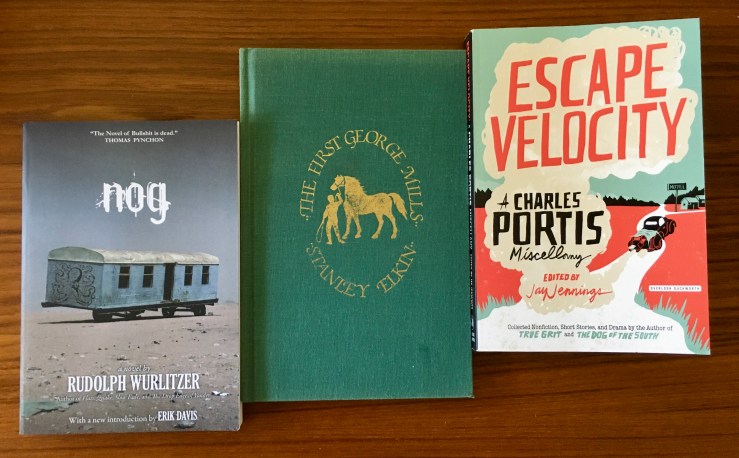
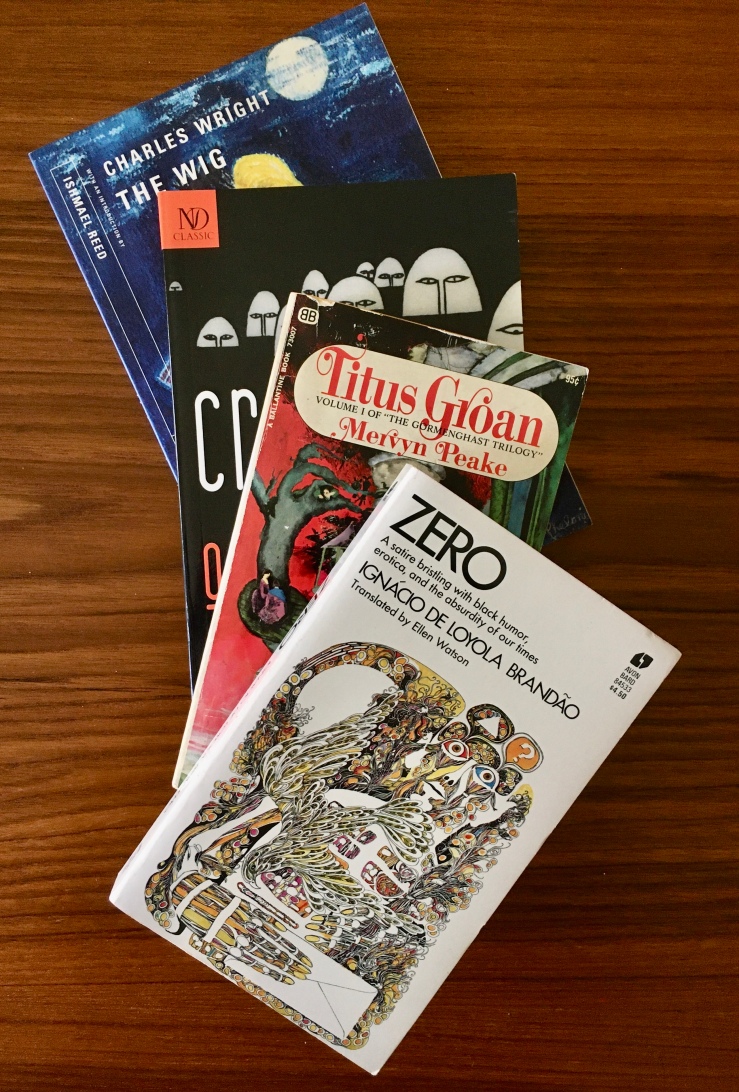
A Charles Portis miscellany, a signed Stanley Elkin oddity, and Rudolph Wurlitzer’s cult novel Nog (Books acquired, 21 Feb. 2020)

img_5024

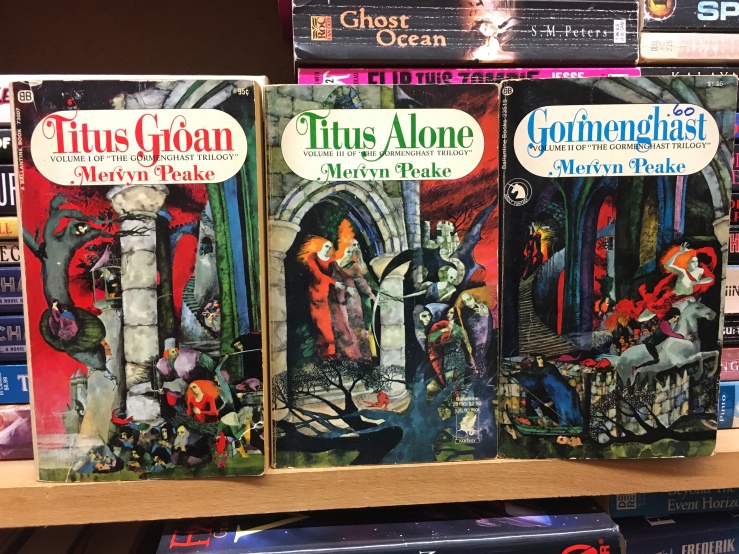
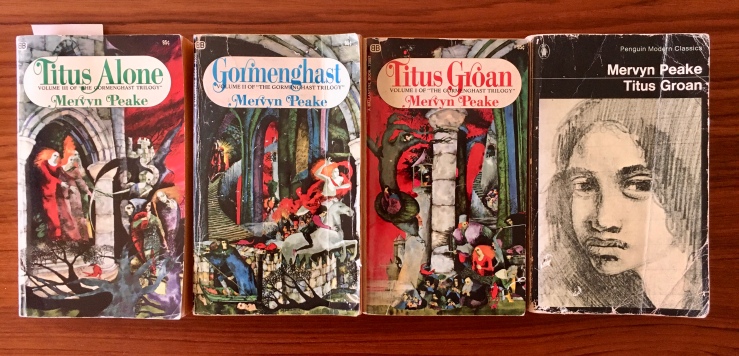
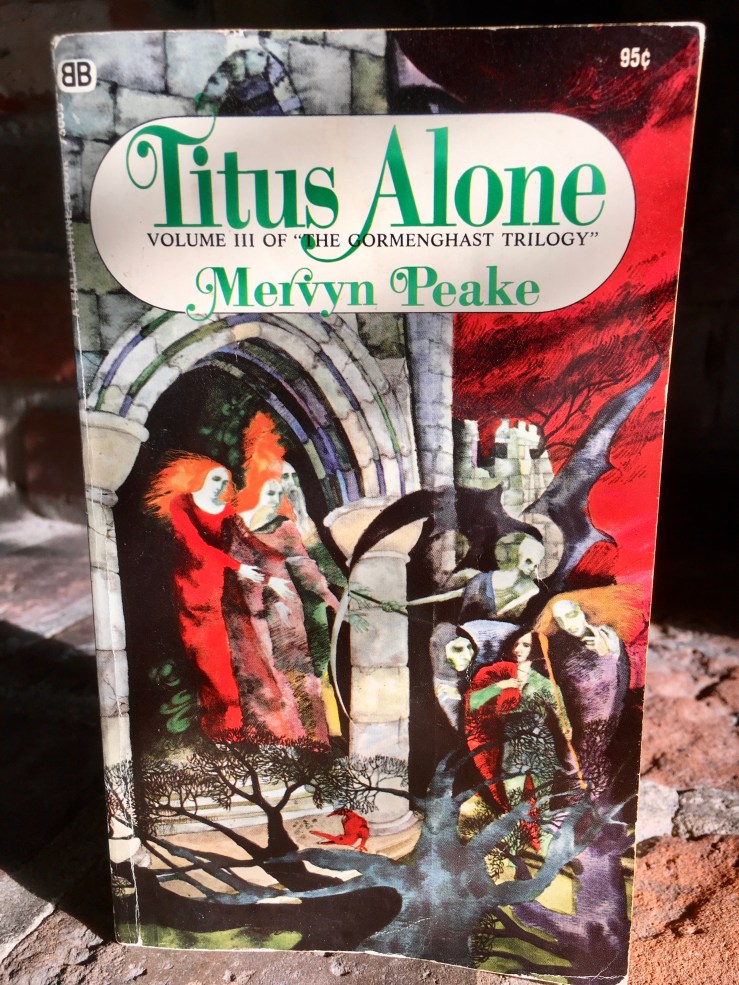
I went to my beloved used bookstore the first three Fridays in February, searching for a few things: novels by Rudolph Wurlitzer (no luck); Titus Alone, the last novel in Mervyn Peake’s “Gormenghast” trilogy (no luck; might have to order it); the penultimate Harry Potter novel (for my nine-year-old; plenty of copies—apparently his sister never made it that far).

did pick up Escape Velocity, a compendium of the late great Charles Portis’s journalism, essays, and short stories. There’s also a three-act play, Delray’s New Moon, which The Arkansas Repertory Theatre performed in 1996, and a 2001 interview with Portis that was part of The Gazette Project, which comprised a series of interviews with staff of the now-defunct Arkansas Gazette.

Portis worked for the Gazette early in his career, but it’s Civil Rights reporting for The New York Herald Tribune that’s more immediately compelling. Stories on the Klan rallies, Birmingham terror, and the assassination of Medgar Evers seem to add a new complexity and dimension to the South of Portis’s novels Norwood and The Dog of the South.

The essays in Escape Velocity seem especially promising, and also seem to inform the novels—at least the first one I read, “That New Sound from Nashville,” did. There’s something almost-gonzo about Portis’s technique (some of his early journalism vibrates with local color and ironic editorializing, too).

I’ve only read two of the five short stories in the collection. All are quite short, and the two I read feel like sketches, to be honest. Still, I’m interested in the fiction that Portis produced after his last novel Gringos, and three of the stories are from that era, along with the play Delray’s New Moon, which I hope will be richer than the stories I’ve read so far.

img_5025

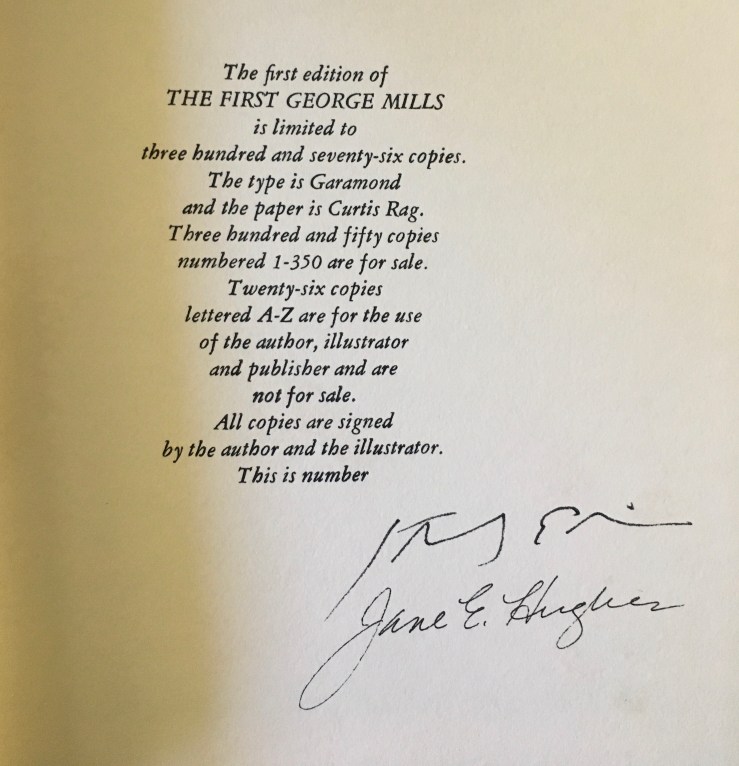
At the bookstore, I spied the gilt spine of The First George Mills, a 1980 oddity that comprises the first part (roughly 50 pages) of Stanley Elkin’s 1982 novel George Mills. The spine struck me as odd—so thin, so irregularly-shaped, etc. The book itself seemed like a novelty almost, and I was surprised to find Elkin’s signature at the end. I was even more surprised to find the signature of Jane Hughes, the apparent illustrator of this volume, whose illustrations do not appear in my copy. A bit of internet browsing seems to suggest that Hughes’s illustrations—of horses—were glued insets. Still, I was happy to forgo five bucks of my trade credit for Elkin’s signature.

When I got home from the bookstore a copy of Rudolph Wurlitzer’s cult classic 1969 novel Nog had arrived in the mail from Two Dollar Radio (along with a sticker and a bookmark and a thank you note—godbless indie publishers). I will be reading this book next, starting tonight. Here is the Thomas Pynchon blurb that made me interested in Wurlitzer:

Wow, this is some book, I mean it’s more than a beautiful and heavy trip, it’s also very important in an evolutionary way, showing us directions we could be moving in — hopefully another sign that the Novel of Bullshit is dead and some kind of re-enlightenment is beginning to arrive, to take hold. Rudolph Wurlitzer is really, really good, and I hope he manages to come down again soon, long enough anyhow to guide us on another one like Nog.

I did not go to the bookstore on this day, the last Friday of February 2020. I finished Gormenghast instead.

Two Books (Books acquired, 7 and 14 Feb. 2020)

2020-02-23_113226

Robinson by Muriel Spark. Penguin Books, 1964. Cover drawing by Terence Greer.

I have not yet read Muriel Spark, but I’ve noted she’s been compared to Ann Quin and Anna Kavan. Robinson looked more interesting to me (and shorter) than her more famous novels The Prime of Miss Jean Brodie and Memento Mori, and I love this cover.

2020-02-23_113226_1

Alchemy by Titus Burckhardt. Penguin Books,1974. Cover design by Walter Brooks, using a drawing from Basilius Valentinus’s “Aurelia Occulta Philosophorum” in Theatrum Chemicum, Argentoratie, 1614. vol. IV. Chocked full of glorious black and white images.

Two by Dmitry Samarov (Books acquired 7 Feb. 2020)

2020-02-16_114625

2020-02-16_114625_1

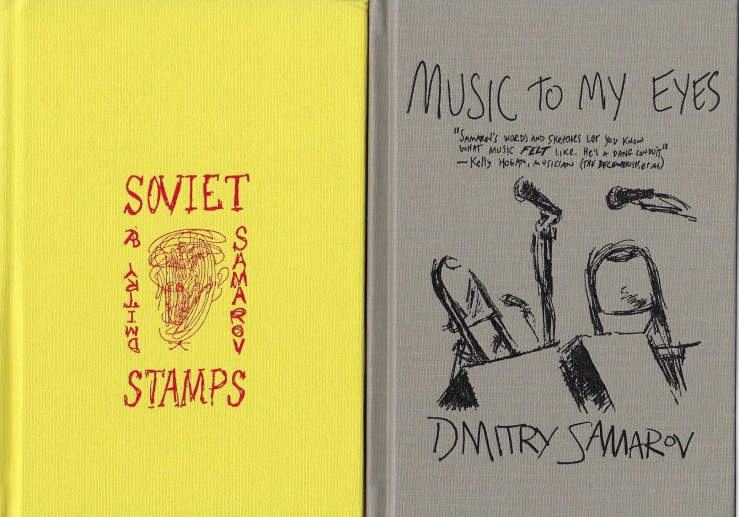
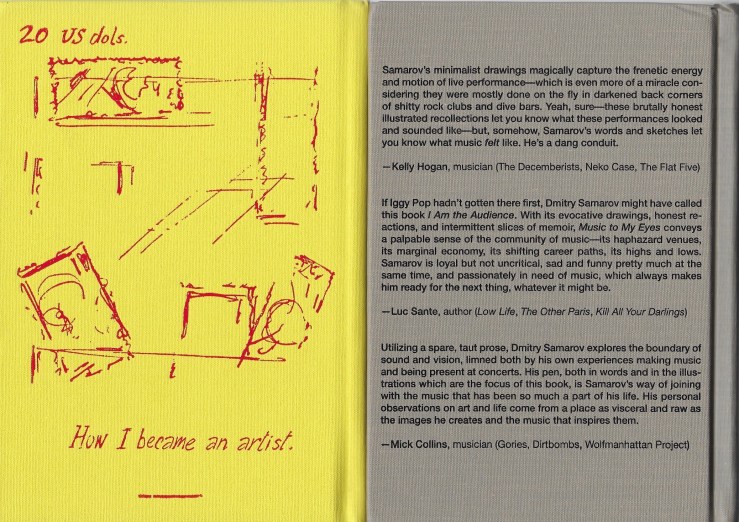
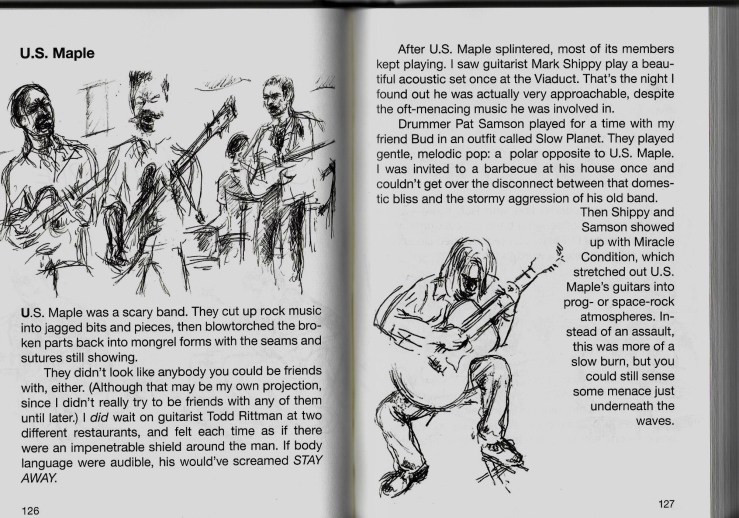
Copies of Dmitry Samarov’s latest books, Soviet Stamps and Music to My Eyes showed up at Biblioklept World Headquarters the other week. I started in on Music to My Eyes, a kind of fragmentary memoir told in sketches (both verbal and literal) of the Chicago music scene. The determiner “the” in the previous sentence is wrong, of course, as is the singular noun “scene” — Samarov’s book shows the diversity of the city’s music, even if fans will be able to connect the dots between bands like Eleventh Dream Day, Mekons, and Brokeback. There are stories that float around Nick Cave, Arto Lindsay, Neko Case, and many, many others. Samarov’s brief chapter on the Silver Jews ends with an anecdote about not getting to meet Berman in 2018. The final lines are heartbreaking: “Maybe there’ll be more songs. Then I could stop being mad at him for walking away too soon.”

Here’s Samarov on U.S. Maple, who made some of the strangest music ever during that weird slice of time from the mid-nineties to the mid-aughts. U.S. Maple is by far the most confounding live band I’ve ever seen; it’s easy to throw around the word deconstruction, but their live performances were deconstructions of rocknroll:

2020-02-16_114625_2

Read my 2012 interview with Dmitry Samarov.

S.D. Chrostowska’s The Eyelid (Book acquired, 23 Dec. 2019)

img_4876

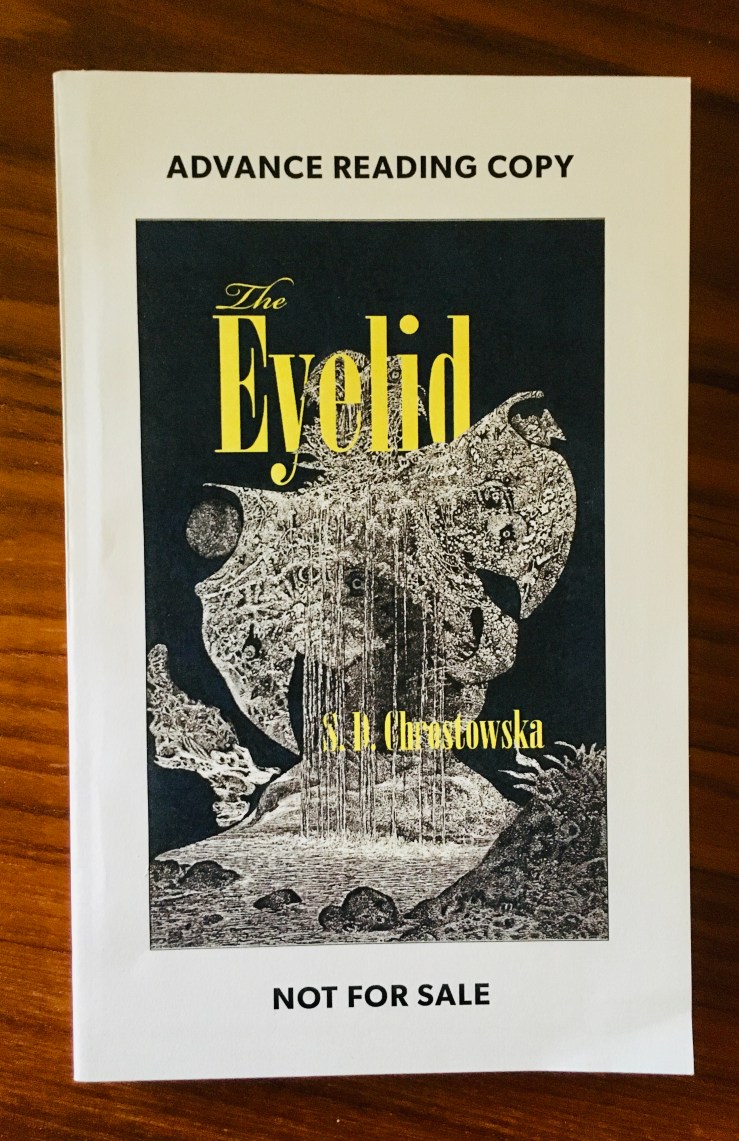
An AR copy of S.D. Chrostowska’s novel The Eyelid showed up at Biblioklept World Headquarters a few days before Xmas. I was inundated with books, both review copies and gifts and gifts to myself, but still excited—I think Chrostowska’s novel Permission is great. (I was lucky enough to interview Chrostowska about the novel, too.)

The book’s blurb points to a kind of sci-fi or dystopian plot that I wouldn’t necessarily have expected from Chrostowska (all the better):

In the near future, sleep has been banned. Our unnamed, dream-prone narrator finds himself following Chevauchet, a diplomat of Onirica, a foreign republic of dreams, to resist the prohibition. On a mission to combat the state-sponsored drugging of citizens with uppers for greater productivity, they traverse an eerie landscape in an everlasting autumn, able to see inside other people’s nightmares and dreams. As Comprehensive Illusion — a social media-like entity that hijacks creativity — overtakes the masses, Chevauchet, the old radical, weakens and disappears, leaving our narrator to take up Chevauchet’s dictum that “daydreaming is directly subversive” and forge ahead on his own.

In slippery, exhilarating and erudite prose, The Eyelid revels in the camaraderie of free thinking that can only happen on the lam, aiming to rescue a species that can no longer dream.

The Eyelid is forthcoming from Coach House Proof in April of this year.

(Two illustrated) Books acquired, 24 Jan. 2020

img_4843

Like the seventh-graders before her, my daughter has to read Ray Bradbury’s somewhat over-rated novel Fahrenheit 451 this year. I gave her my copy, a 1980 edition that I stole from my cousin, who is ten years older than I am, like a quarter-century ago. (I would share a pic of this edition, but my daughter took it to school and left it there, because she is irresponsible. It looks like this though.) So she needs the 60th-anniversary edition, apparently, so I head to the local used bookstore I love to browse on a Friday afternoon, where they have about a bajillion copies of F451, bu not this ugly-assed big-assed new trade paperback.

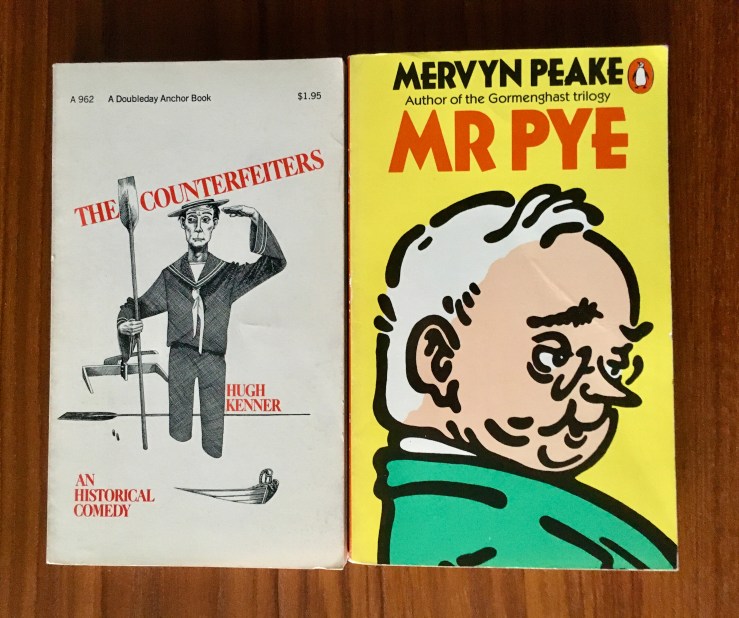
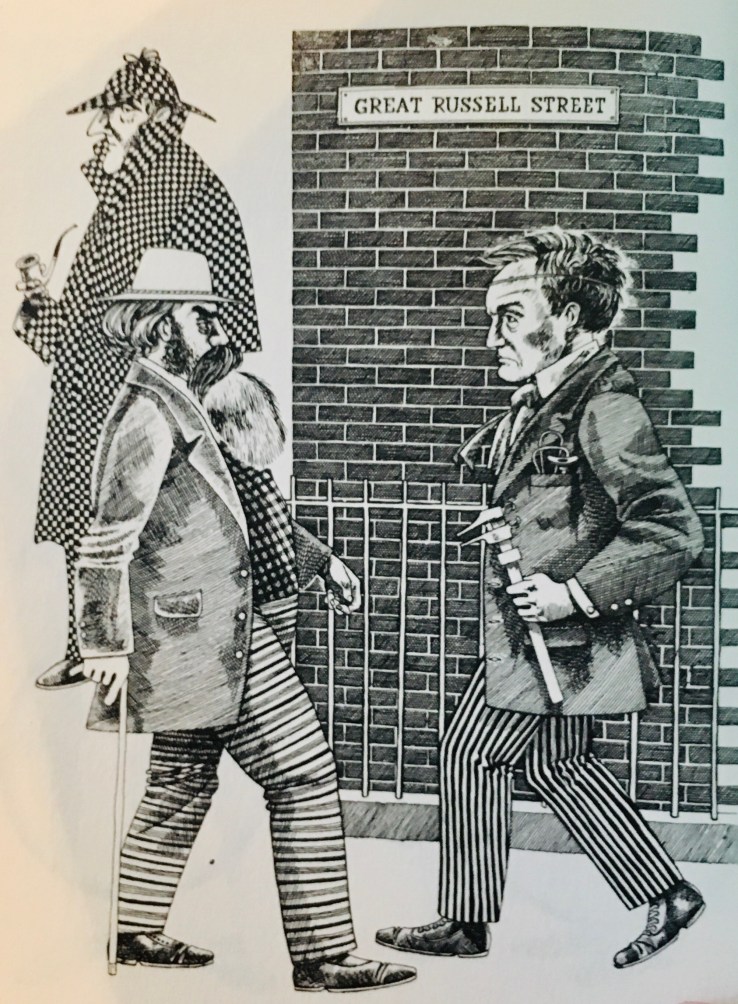
did by way of random wondering come across the very unusual volume The Counterfeiters by Hugh Kenner though. Its spine called to me–the title, the font. The cover, quite strange. And Kenner, of course, the Joyce scholar who mentored the dude who I took a life-changing Joyce class in grad school. The Counterfeiters features art by Guy Davenport, including this piece, entitled Citizen Marx and Mr. Babbage Observed in Their Courses:

img_4845

Other illustrations include Turing, Warhol, and Yeats, all subjects of the essays here.

I picked up a mass-market 1973 paperback copy from Doubleday, but here’s Dalkey Archive’s blurb for their 2005 reprint:

Wide-ranging enough to encompass Buster Keaton, Charles Babbage, horses, and a man riding a bicycle while wearing a gas mask, The Counterfeiters is one of Hugh Kenner’s greatest achievements. In this fascinating work of literary and cultural criticism, Kenner seeks the causes and outcomes of man’s ability to simulate himself (a computer that can calculate quicker than we can) and his world (a mechanical duck that acts the same as a living one).

This intertangling of art and science, of man and machine, of machine and art is at the heart of this book. He argues that the belief in art as a uniquely human expression is complicated and questioned by the prevalence of simulations—or “counterfeits”—in our culture. Kenner, with his characteristically accessible style and wit, brings together history, literature, science, and art to locate the personal in what is an increasingly counterfeit world.

The contemporary 1972 New York Times review of the book, by the like-totally-unbiased illustrator Guy Davenportconcludes thus:

It is therefore perhaps too early to re view The Counterfeiters. It looks like science fiction to the half‐educated and like fiction to the conservative scholar. A generation (when? where?) that doesn’t know that literary criticism is supposed to be dull and flat‐footed will embrace it as a magic book.

I picked up another illustrated book too, Mr. Pye by Mervyn Peake. After picking up the first two books in Peake’s Gormenghast trilogy earlier this month, and loving the first one, which I’ve almost finished, I scouted for the third—no luck—but I’m a sucker for Penguin Editions, and Mr Pye seemed too hard to pass up for two bucks. Peake illustrates:

img_4844


The Complete Gary Lutz (Book acquired, 6 Jan. 2020)

img_4705

My dad slipped me a Barnes & Noble giftcard on Christmas Day; his sister had given it to him. “Never happen,” he said. “You’ll use it.” I’m pretty sure I used it that very night, after some drinks. I got a cookbook my wife had been wanting that was pretty expensive, a Joy Williams novel I still haven’t done a book acquired post on, and The Complete Gary Lutz.

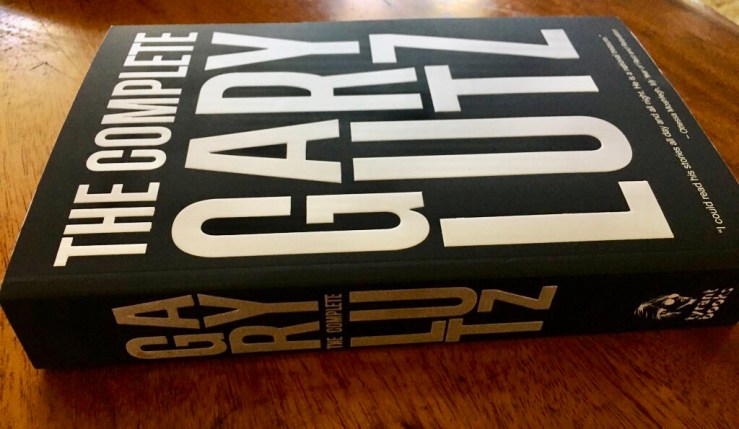
New from indie TyrantThe Complete Gary Lutz collects all five of Lutz’s story collections to date, including Partial List of People to Bleach, the only one I’ve read. How long will the title of the book remain true? Will Lutz bow out? How long until this is The Incomplete Gary Lutz?

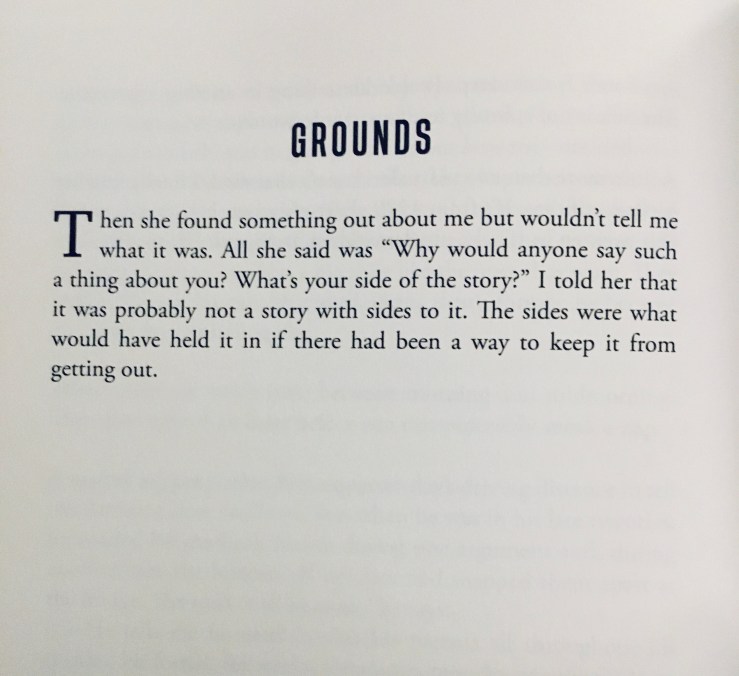
The collection is about 500 pages, and I’ve been dipping into randomly, reading one or two of the shorter stories a day, like “Grounds”:

img_4732

Tyrant’s blurb:

For nearly three decades, Gary Lutz has been writing quietly influential, virtuosic short fictions of antic despair. In barbed sentences of startling originality, Lutz gives voice to outcasts from conventional genders and monogamies—and even from the ruckus of their own bodies. Making their rounds of daily humiliations, Lutz’s self-unnerving narrators find themselves helplessly trespassing on their own lives.

This omnibus volume, with an introduction by Brian Evenson, gathers all five of Lutz’s sometimes hard-to-find collections and features sixty pages of previously uncollected stories—including his two longest.

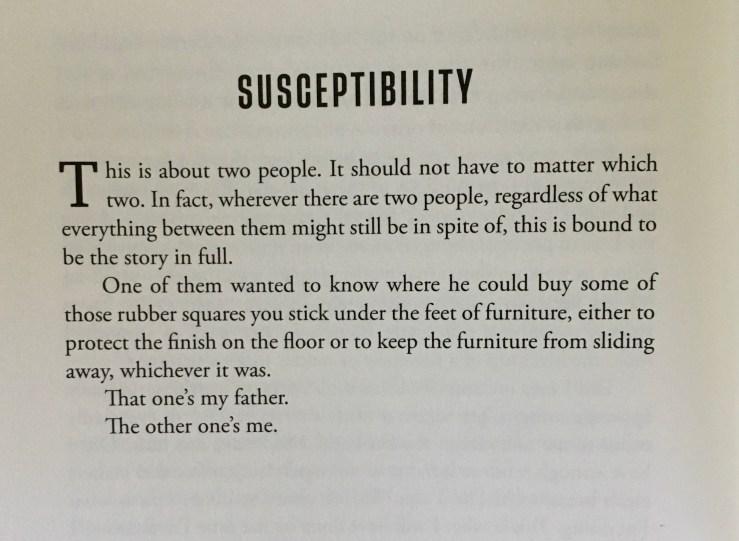
Another shorty:

img_4833

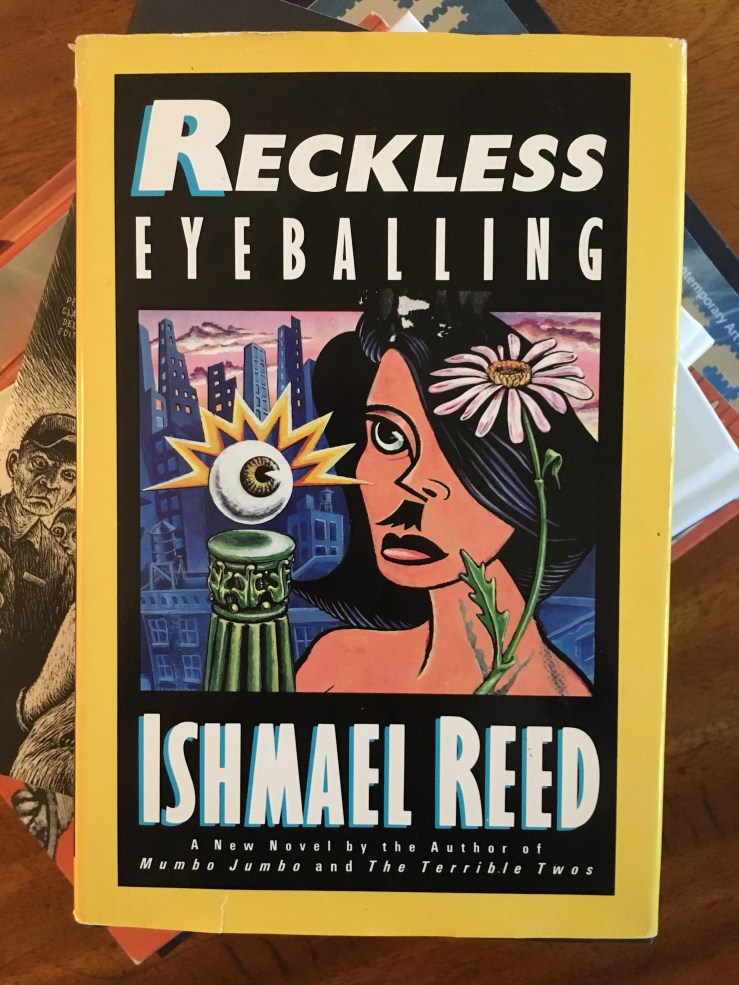
Ishmael Reed’s Reckless Eyeballing (Book acquired 13 Jan. 2020)

img_4728

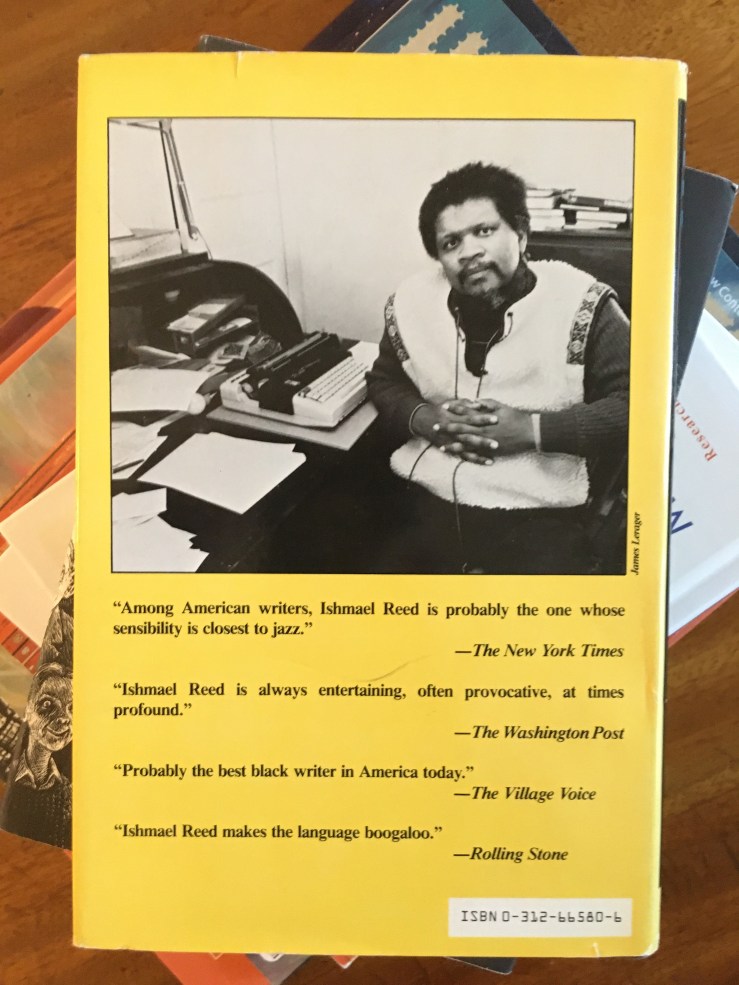
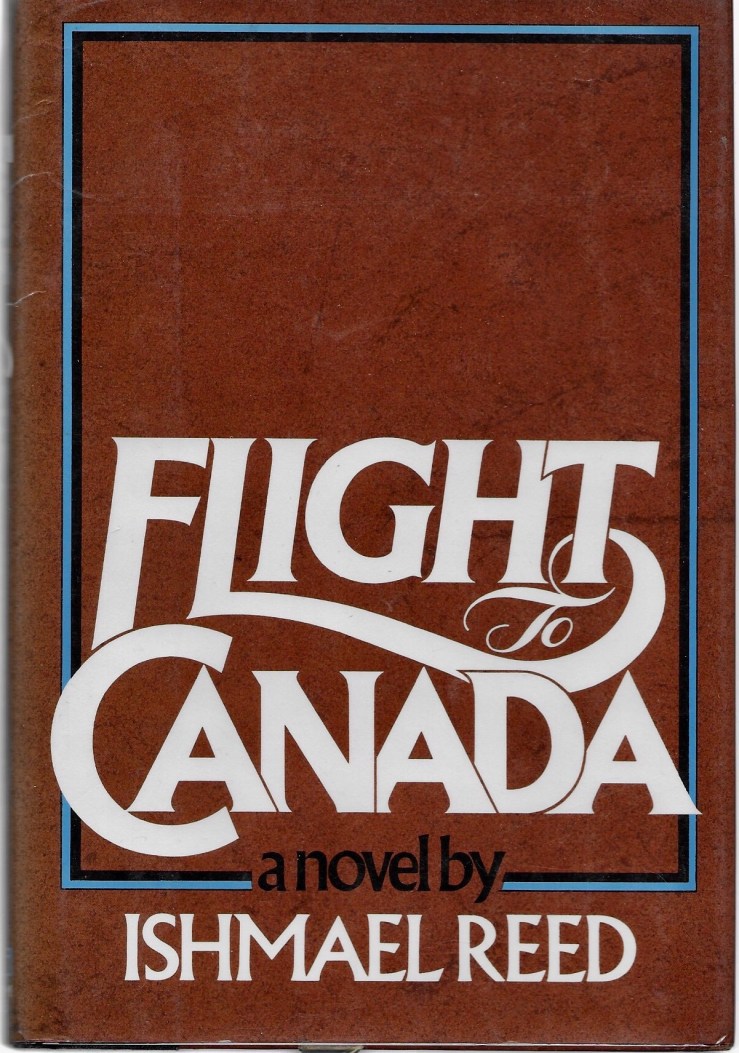
I got an email from an independent bookseller a few days ago confirming that I bought a copy of  Ishamel Reed’s 1986 novel Reckless Eyeballing. I had no recollection of purchasing the novel online, although this kind of thing has happened more than once. It was a Saturday night; I may or may not have had a few tumblers of scotch, and was probably jonesing for more Reed after having finished Flight to Canada. Anyway, it showed up today. Here is the back cover:

img_4730

And here is the first paragraph of Larry McCaffery’s contemporary review of the novel in The Los Angeles Times:

Early on in “Reckless Eyeballing,” one of the book’s many beleaguered black men observes that “throughout history when the brothers feel that they’re being pushed against the wall, they strike back and when they do strike back it’s like a tornado, uprooting, flinging about, and dashing to pieces everything in its path.” This passage provides a perfect entryway into Ishmael Reed’s latest novel, for like many other black men, Reed obviously feels that “the brothers” are catching it from all sides–and not just from the usual sources of racial bigotry, but from ‘60s liberals now turned neo-conservatives, from white feminists who propagate the specter of the black men as phallic oppressor, from other racial minorities anxious to wrest various monkeys off their own backs.

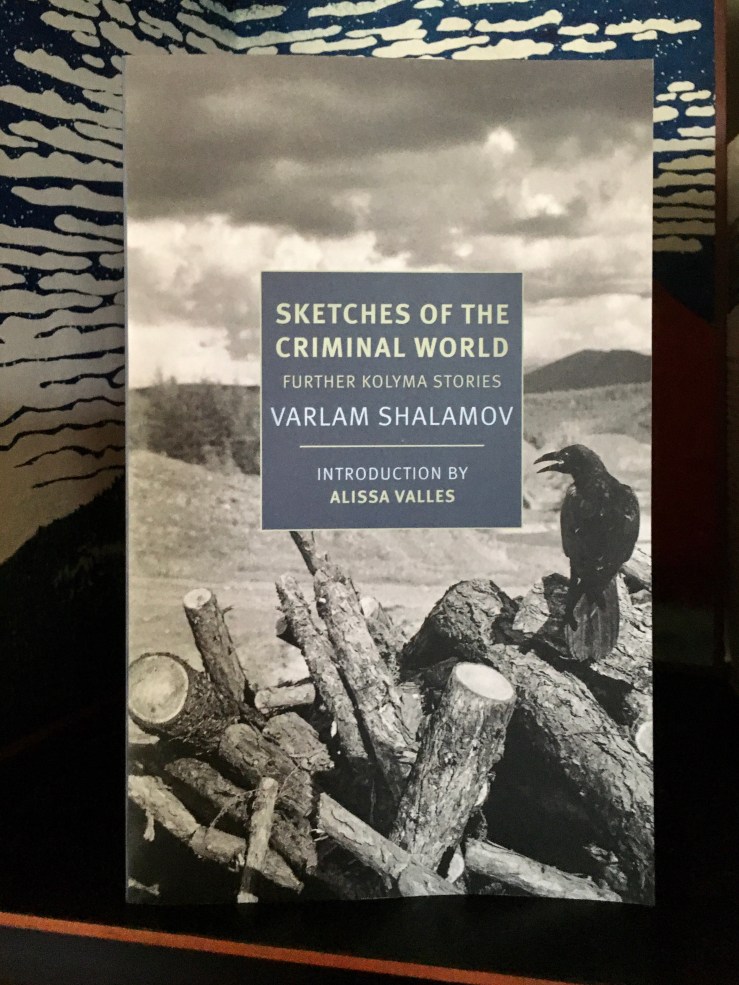
Varlam Shalamov’s Sketches of the Criminal World (Book acquired sometime in Dec. 2019)

img_4720

A collection of Varlam Shalamov’s work, called Sketches of the Criminal World, is new from NYRB this week (translated by Donald Rayfield). I finally had a chance to dip into some of Shalamov’s Gulag tales this afternoon, and it’s probably not the right comparison at all, but something about what I read reminded me of Roberto Bolaño’s fiction, or some of his fiction. NYRB’s blurb:

n 1936, Varlam Shalamov, a journalist and writer, was arrested for counterrevolutionary activities and sent to the Soviet Gulag. He survived fifteen years in the prison camps and returned from the Far North to write one of the masterpieces of twentieth-century literature, an epic array of short fictional tales reflecting the years he spent in the Gulag. Sketches of the Criminal World is the second of two volumes (the first, Kolyma Stories, was published by NYRB Classics in 2018) that together constitute the first complete English translation of Shalamov’s stories and the only one to be based on the authorized Russian text.

In this second volume, Shalamov sets out to answer the fundamental moral questions that plagued him in the camps where he encountered firsthand the criminal world as a real place, far more evil than Dostoyevsky’s underground: “How does someone stop being human?” and “How are criminals made?” By 1972, when he was writing his last stories, the camps were being demolished, the guard towers and barracks razed. “Did we exist?” Shalamov asks, then answers without hesitation, “I reply, ‘We did.’”

The Journal of David Foster Wallace Studies, Vol. 1, Issue 2 (Book acquired, 9 Dec. 2019)

img_4711

I finally had a bit of time to properly dip into the second issue of The Journal of David Foster Wallace Studies this afternoon. (I brought it to work with me and read from it between classes.)

This issue essentially came out of a 2015 conference at the University of Bristol called David Foster Wallace and the Short Things. Issue 2 contains six essays on Wallace’s “short things” — short stories, sure, but also the vignettes and bits and pieces and fragments that make up The Pale King (and Infinite Jest).

After skimming around a bit, I read the last one, Jeffrey Severs’ “‘Listen’: Wallace’s Short Story Endings and the Art of Falling Silent.” Severs explores Wallace’s endings as a kind of series of revisions to the conclusion of Wallace’s first novel, The Broom of the System (Wallace later called the ending “shitty and dissatisfying”). Severs discusses Girl with Curious Hair extensively, but also touches on The Pale King and Infinite Jest. (And Wittgenstein, silence, and meditative listening.)

There are also two reviews of recent books on Wallace in this issue, just as in the previous issue, one for Marshall Boswell’s The Wallace Effect: David Foster Wallace and the Contemporary Literary Imagination, and one for Ralph Clare’s The Cambridge Companion to David Foster Wallace.

A few of the other essays piqued my interest; Tim Groenland has a thing on fragments, The Pale King, and ancient Rome, and Pia Masiero has a thing on Brief Interviews with Hideous Men, which is maybe my favorite Wallace book.


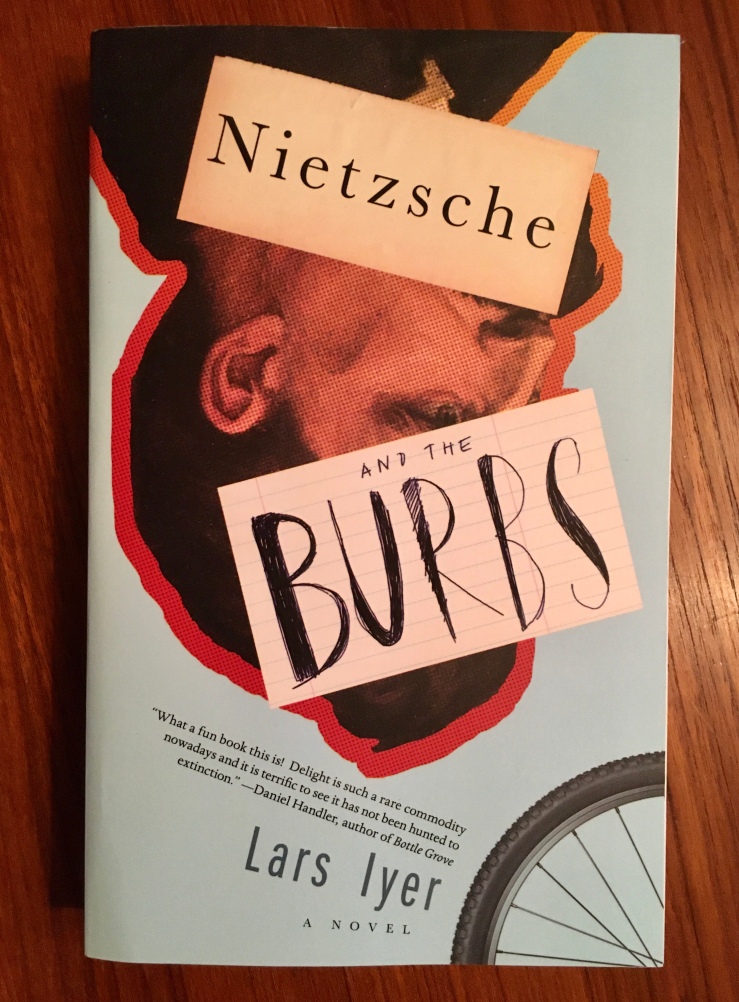
Lars Iyer’s Nietzsche and the Burbs (Book acquired, sometime in Dec. 2019)

img_4709

Lars Iyer’s latest is Nietzsche and the Burbs, out now from Melville House. Their blurb:

In a work of blistering dark hilarity, a young Nietzsche experiences life in a metal band & the tribulations of finals season in a modern secondary school

When a new student transfers in from a posh private school, he falls in with a group of like-minded suburban stoners, artists, and outcasts—too smart and creative for their own good. His classmates nickname their new friend Nietzsche (for his braininess and bleak outlook on life), and decide he must be the front man of their metal band, now christened Nietzsche and the Burbs.

With the abyss of graduation—not to mention their first gig—looming ahead, the group ramps up their experimentations with sex, drugs, and…nihilist philosophy. Are they as doomed as their intellectual heroes? And why does the end of youth feel like such a universal tragedy?

And as they ponder life’s biggies, this sly, elegant, and often laugh-out-loud funny story of would-be rebels becomes something special: an absorbing and stirring reminder of a particular, exciting yet bittersweet moment in life…and a reminder that all adolescents are philosophers, and all philosophers are adolescents at heart.


Blog about Ishmael Reed’s 1976 neo-slave narrative Flight to Canada

2020-01-03_152112

I read Ishmael Reed’s 1976 novel Flight to Canada over the last few days of 2019. I enjoyed the book tremendously, even as it made me dizzy at times with its frenetic, zany  achronological satire of the American Civil War.

What is it about?

Flight to Canada features a number of intersecting plots. One of these plots follows the ostensible protagonist of the novel, former slave Raven Quickskill, who escapes the Swille plantation in Virginia. Along with two other former slaves of the Swille plantation, Quickskill makes his way far north to “Emancipation City” where he composes a poem called “Flight to Canada,” which expresses his desire to escape America completely. The aristocratic (and Sadean) Arthur Swille simply cannot let “his property run off with himself,” and sends trackers to find Quickskill and the other escapees, Emancipation Proclamation be damned. On the run from trackers, Quickskill jumps from misadventure to misadventure, eventually reconnecting his old flame, an Indian dancer named Quaw Quaw (as well as her husband, the pirate Yankee Jack). Back at Swille’s plantation Swine’rd, several plots twist around, including a visit by Old Abe Lincoln, a sadistic episode between Lady Swille and her attendant Mammy Barracuda, and the day-to-day rituals of Uncle Robin, a seemingly-compliant “Uncle Tom” figure who turns out to be Reed’s real hero in the end.

(And oh, Quickskill makes it to Canada in the end. Now, whether or not he wants to stay there after he gets there…)

There’s a whole lot more in the book, too. It’s difficult to summarize—like the majority of the other seven novels I’ve read by Reed, Flight to Canada isn’t so much a work of plot and character development as it is a jazzy extemporization of disparate themes and motifs. Reed’s novel is about slavery and freedom, war and aesthetics, perspective and time, and how history gets told and taught to future.

As a means to satirize not just the Civil War but also how we read and write and portray the Civil War, Reed collapses time in Flight to Canada. As novelist Jerome Charyn points out in his contemporary review of the novel in The New York Times,

Reed has little use for statistical realities. He is a necromancer, a believer in the voodoos of art. Time becomes a modest, crazy fluid in Reed’s head, allowing him to mingle events of the last 150 years, in order to work his magic. We have Abe Lincoln and the Late Show, slave catchers and “white ‐ frosted Betty Crocker glossy cake,” Jefferson Davis and Howard K. Smith. Every gentleman’s carriage is equipped with “factory climate‐control air conditioning, vinyl top, AM/FM stereo radio, full leather interior, power‐lock doors, six‐way power seat, power windows, whitewall wheels, door‐edge guards, bumper impact strips, rear defroster and softglass.”

Reed’s achronological gambit allows him to bring figures from any time period into the narrative, no questions asked. Edgar Allan Poe is there, even though he died over a decade before the war began. No matter. Our narrator claims early on that Poe was “the principal biographer of that strange war…Poe got it all down. Poe says more in a few stories than all of the volumes by historians.” Lord Byron shows up too, as do Charles I of England and the Marquis de Sade. There are contemporary figures of the Civil War era there too, of course—Harriet Beecher Stowe (whom Reed takes to task repeatedly), Frederick Douglass, and the writer William Wells Brown, whom Quickskill meets in a surprisingly moving scene (Quickskill says that Brown is his hero and that his novel Clotel was the inspiration for “Flight to Canada”). The fictional characters of Flight to Canada discuss or interact with these historical figures in such a way to continually critique not just the words and deeds of the historical figures, but the very way we frame and narrativize those words and deeds.

2020-01-03_152112_1The technological anachronisms of Flight to Canada also serve to critique our framing of history. Our American Cousins plays live on broadcast TV, assassination and all:
Booth, America’s first Romantic Assassin. They replay the actual act, the derringer pointing through the curtains, the President leaning to one side, the FIrst Lady standing, shocked, the Assassin leaping from the balcony, gracefully, beautifully, in slow motion. They promise to play it again on the Late News. When the cameras swing back to the Balcony, Miss Laura Keene of Our American Cousins is at Lincoln’s side “live.” Her gown is spattered with brain tissue. A reporter has a microphone in Mary Todd’s face.

“Tell us, Mrs. Lincoln, how do you feel having just watched your husband’s brains blow out before your eyes?”

(In a very Reedian move, the live assassination plays out during a sex scene between Quickskill and Quaw Quaw. The TV is always on in America, even during sex.)

Reed’s rhetorical distortions in depicting the Lincoln assassination are both grotesque and comic. Not only can we imagine a reporter doing the same in 1976, when Flight to Canada was published, we can imagine the same crass, exploitative handling today. Technology might have changed but people really haven’t

In his review, Jerome Charyn, begins by pointing out that 1976 is the American Bicentennial, something that simply did not entire my mind while reading Flight to Canada. Reed’s novel’s publication is appropriate and timely, and breaks “through the web of historical romance” (in the words of Charyn) that hangs over the “chicanery, paranoia and violence underlying most of our ‘democratic vistas.'”

Concluding his review, Charyn writes,

Flight to Canada could have been a very thin book, an unsubtle catalogue of American disorders. But Reed has the wit, the style, and the intelligence to do much more than that. The book explodes. Reed’s special grace is anger. His own sense of bewilderment deepens the comedy, forces us to consider the sad anatomy of his ideas. Flight to Canada is a hellish book with its own politics and a muscular, luminous prose. It should survive.

Books don’t survive of course; rather, they are always in the process of surviving. Books are either read, or not read. Flight to Canada should be read because it is witty and angry and unique and smart, and its critique of American history (and how we narrativize and aestheticize American history) is as vital and necessary today as it was nearly a half century ago.

img_4558


Blog about the first books I bought in 2020 (Books acquired, 2 Jan. 2020)

img_4686

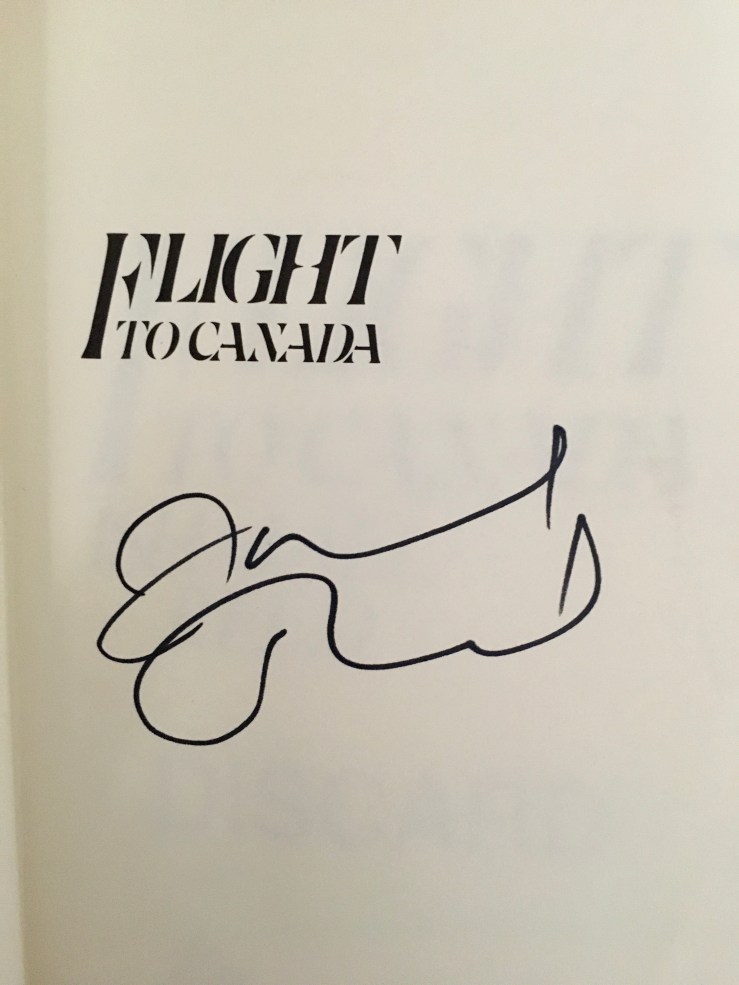
Since the last time I’ve done one of these stupid “books acquired” posts, I’ve had at least six review copies show up at Biblioklept World Headquarters, Joy Williams’ 1988 Florida Keys novel Breaking and Entering, and a signed first-edition hardback copy of Ishmael Reed’s 1976 neo-hoodoo novel Flight to Canada—which I finished yesterday morning—and I’ve yet to do one of these stupid “books acquired posts” on any of them.

I had intended to do write about Flight to Canada today—a very Reedesque romp, overstuffed with characters and capers and motifs and themes, a zany satire of not just the Civil War, but also the American 1970s. Anyway, I’d intended to write about it today (or maybe riff on Greta Gerwig’s Little Women, which I saw last night and adored), but I ended up having to do a bunch of post-Xmas chores. The last few weeks have been busy.

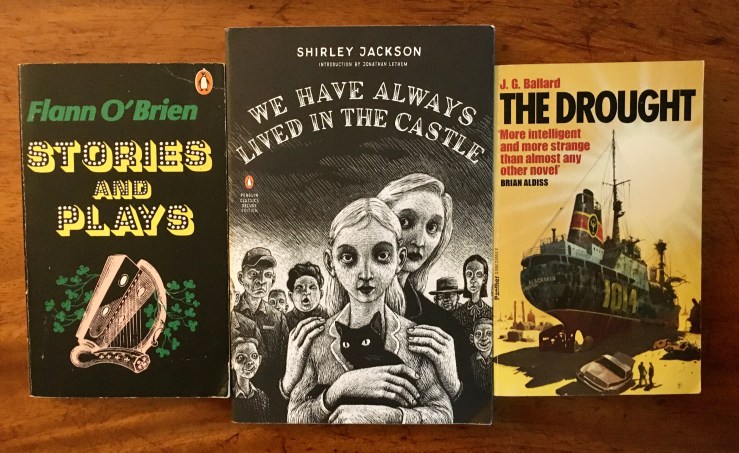
In between post-Xmas chores, I dropped my daughter off at my in-law’s, which necessitates driving past my favorite used bookstore. I couldn’t resist stopping by, even though I need another book like I need another hole in my head. I mean, I had intended to start Charles Portis’s latest (and hopefully not last!) novel Gringos today. Instead, I started Shirley Jackson’s We Have Always Lived in the Castle.

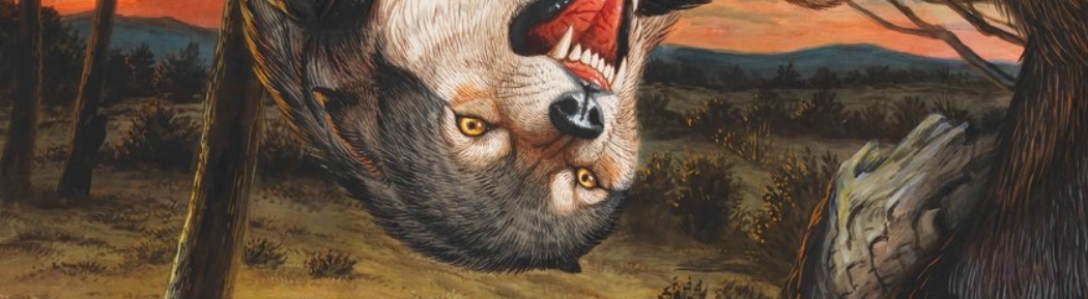
Jackson’s novel The Haunting of Hill House was an unexpected highlight for me in 2019—I’ll admit I’d never really thought to read anything of hers after filing her under Eighth grade lit after reading “The Lottery” (I made a similar stupid mistake with William Golding (filed under Tenth grade lit), corrected by good people who told me to read The Inheritors). I didn’t really know anything about We Have Always Lived in the Castle until today, but I love the title and really dig this Penguin edition’s cover (by comix artist Thomas Ott). Like Hill House, Castle also has a fantastic opening paragraph:

My name is Mary Katherine Blackwood. I am eighteen years old, and I live with my sister Constance. I have often thought that with any luck at all I could have been born a werewolf, because the two middle fingers on both my hands are the same length, but I have had to be content with what I had. I dislike washing myself, and dogs, and noise. I like my sister Constance, and Richard Plantagenet, and Amanita phalloides, the death-cup mushroom. Everyone else in my family is dead.

The first sentence is a bit banal, a little bit of exposition, right? And then by the time you get to the “I could have been a werewolf,” well, what the hell? And then there’s a because, lovely, before a nice lists of dislikes (first!) and then likes (including a deadly mushroom, which Jackson’s narrator Mary (purposefully?) misnames as the “death-cup” instead of the death cap. The last line is a hell of a zinger.

I skipped Jonathan Lethem’s introduction of course, but I did have to go figure out if he also wrote the introduction to the edition of Hill House I read last year. (He didn’t Jonny Lethe wrote the intro to the copy of Anna Kavan’s Ice that I read last year. I’ll read J-Lethz intro after I finish.)

I also picked up a 1973 Penguin edition of a collection of Flann O’Brien’s stories and plays. (Neil Stuart’s cover was worth the two bucks.) The bulk of the collection is devoted to an unfinished novel called Slattery’s Sogo Saga and a play called Faustus Kelly, attributed to O’Brien’s pseudonym Myles na gCopaleen (rendered in this edition as Myles Na Gopaleen—Flann O’Brien was actually a pseudonym too, for Brian O’Nolan).

Like the O’Brien collection, picking up a clearly-unread pristine massmarket paperback edition of J.G. Ballard’s 1965 novel The Drought was more an I have to type situation than anything else, although I’m sure I’ll read it this year (I’m always looking to scarf down a Philip K. Dick or Ballard I haven’t read, and I haven’t read The Drought). Initially, I was perplexed—I thought I knew all Ballard titles, even the ones I haven’t read—but it turns out that The Drought was initially published in 1964 as The Burning World (which I was aware of). In any case, The Drought is probably horrifyingly prescient novel as we enter the New Twenties. Happy New Year!

Two Sublunary Editions (Books acquired, 16 Dec. 2019)

img_4545

I was pysched to get to Sublunary Editions titles the other week.

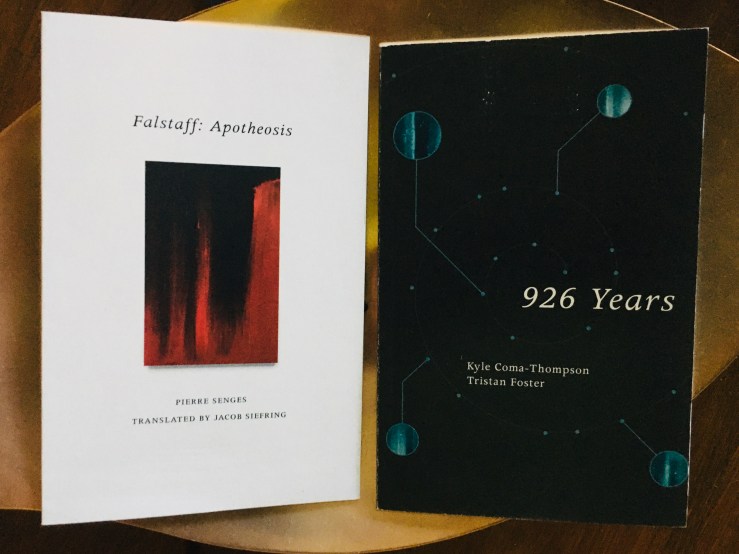
I read the chapbook Falstaff: Apotheosis on 19 Dec. 2019. The story, a wonderful riff on Henry IV Part I, V.iv—the part where Falstaff flops on the battlefield, faking his death in an act of cowardly heroism—is by the French author Pierre Senges. It is the third translation of Senges’ work by Jacob Siefring that I’ve read, and I enjoyed it very much, reading it surreptitiously on the back of the dais, cloaked by my colleagues during our fall commencement. (I had to tune out the ramblings of the commencement speaker, a local judge afflicted with a conservative streak.) Here’s novelist S.D. Chrostowska’s blurb:

Like Falstaff’s coffin in Orson Welles’s Chimes at Midnight, Pierre Senges’s erudite fragments are broader than most, their depth befitting Shakespeare’s original. Here’s Falstaff the master thespian, never wiser or more human than when he plays dead to save his skin and takes a nap. Well-served by this limpid translation, Senges resurrects him as a hero for our time. Bravo!

I also got 926 Years, and intriguing title by Tristan Foster and Kyle Coma-Thompson. Here’s Sublunary’s blurb:

Through twenty-two linked stories, Tristan Foster and Kyle Coma-Thompson explore the creative potential of people’s native estrangement from themselves and each other. Two writers who have never met, who live on opposite sides of the globe—one in Australia, the other in the United States—tracking the pattern of probable lives and fates that co-exist between them, from Korea to England, Senegal to Argentina. Their conclusion/suspicion: imagination is stronger, and subtler, than God, and offers more than mere consolation for the difficulties of living.

And here’s what novelist Gary Lutz has to say:

The intimate, globe-spanning microportraits of human crisis in 926 Years are at once sobering and uplifting, clarifying and mystifying. Tristan Foster and Kyle Coma-Thompson’s collaboration is a nonpareil of short-form virtuosity.

More thoughts forthcoming!


Blog about Ishmael Reed’s novel Juice! (Book acquired, 10 Dec. 2019)

img_4550

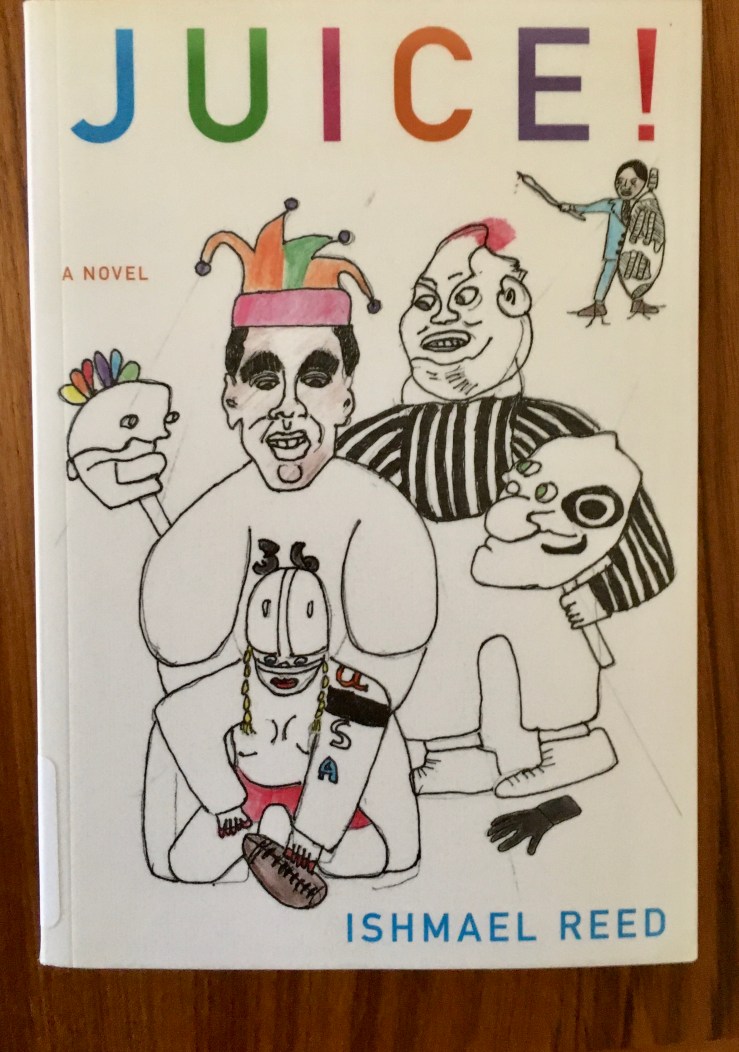
I was having a hard time getting into any of the books piled up around my house after I finished Paul Beatty’s fantastic and scathing satire The Sellout a few weeks ago, so I picked up Ishmael Reed’s 2011 novel Juice! It did the trick.

Here’s Reed describing the novel in a short Paris Review interview he did to promote the novel:

I began this one as soon as I heard about the murders. I was vacationing in Hawaii, and the murders ruined my vacation. The media went berserk over the murder of Nicole Simpson, the kind of ideal white woman—a Rhine maiden—one finds in Nazi art and propaganda, murdered allegedly by a black beast. It was a story that reached into the viscera of the American unconscious, recalling the old Confederate art of the black boogeyman as an incubus squatting on top of a sleeping, half-clad white woman. It was also an example of collective blame. All black men became O. J. The murders ignited a kind of hysteria.

Juice! is told in first-person by an aging cartoonist who goes by “Bear” whose obsession with the O.J. Simpson case(s) begins to cost him his friends, family, and career. Reed’s narrator bears more than a passing similarity to Reed himself, and the style of Juice! is decidedly different from Reed’s earlier, zanier novels like Yellow Back Radio Broke-Down and The Terrible Twos. However, the novel, like every novel I’ve read by Reed, diagnoses and dissects the American zeitgeist with howling humor and wild anger. There’s something of a reactionary flavor to Juice! though—its aging narrator has an ugly misogynistic/homophobic/transphobic streak, which the other characters, as well as the narrative construction, continually critique. Juice! creates a strange space of self-satire and self-critique that’s really…ugly—but also reflective and even elegiac in a way. Our narrator “Bear” paces through the realizations of someone whose ideological complaints remain unanswered, outpaced. His story is a howl against a system that, by design, cannot amend itself with its own tools.

While “Bear” is certainly a version of Reed, he is not Reed (an “Ishmael Reed” actually shows up late in the novel, in fact). “Bear” may in fact be a cartoonized Reed, Reed’s self-caricature. Supposedly-well-meaning white women are a favorite target in Juice! In his short Paris Review interview, Reed addressed accusations against him of sexism:

In the 1960s, when black nationalism was in vogue, all black characters had to be portrayed in a positive way, and when the feminist movement was born out of black nationalism, so did all black women. Since the mid-1970s, white feminists have had great influence over which black fiction gets marketed. I’ve gotten a lot of heat from some women in parts of academia, publishing, and book reviewing. On some occasions, they’ve censored my work. The late Joe Wood asked me to write a piece about Oakland politics for The Village Voice. He said that a feminist editor at the time wouldn’t even read it on the grounds that I was a “notorious sexist.”

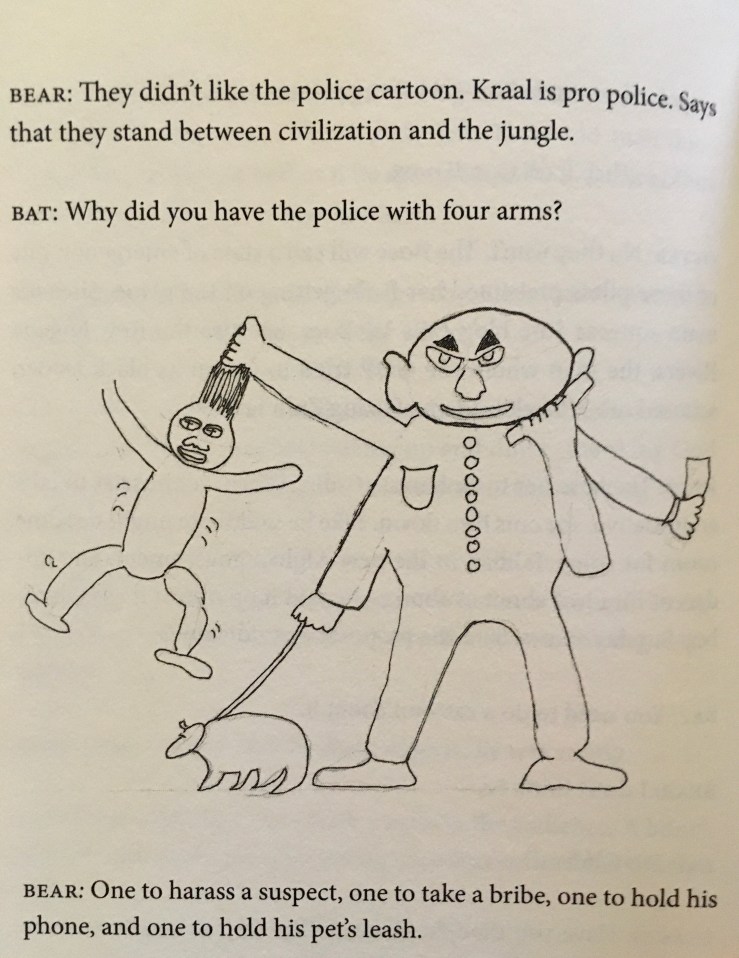
In that same interview, Reed discussed the cartoons he did (as “Bear”) for Juice!–

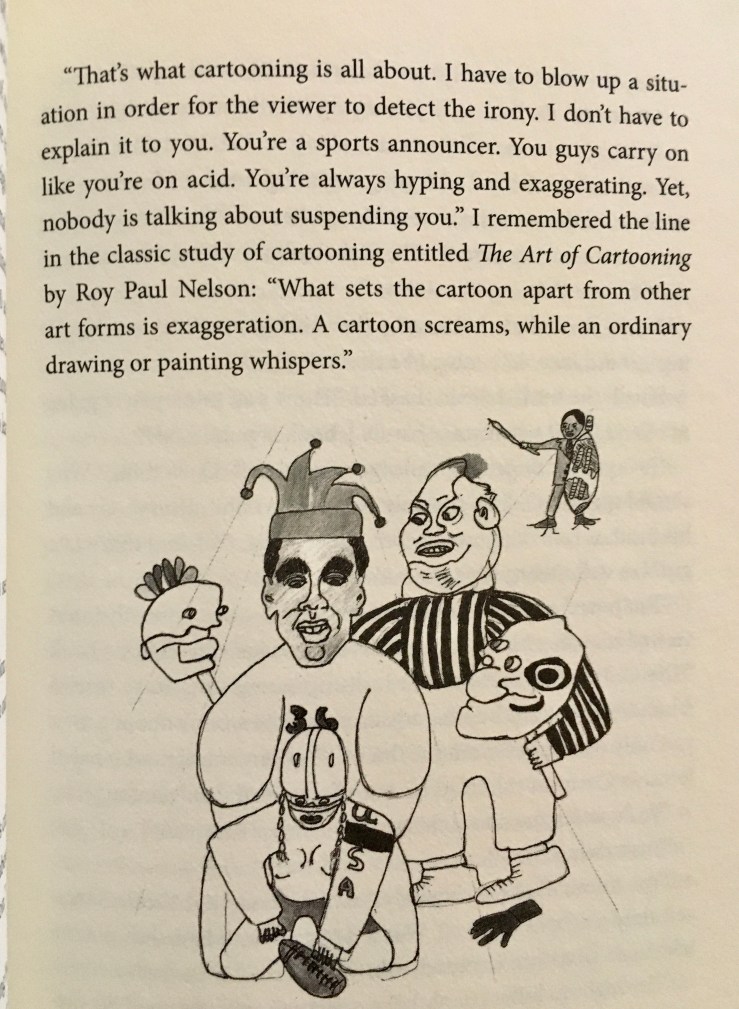
A publisher wanted to publish Juice! but decided that the cartoons weren’t up to par. So, at the age of seventy, I studied at the Cartoon Art Museum of San Francisco…

img_4553

Reed’s cartoons are sharp and grotesque, and several of them are major plot points in the novel. One of the cartoons (also the novel’s cover illustration), featuring O.J. Simpson taking a direct snap from the US of A (a blonde, natch) is misunderstood—or perhaps understood too well—and Bear nearly loses his job.

img_4554

I haven’t finished Juice! yet—I’m about 50 or so pages from the end—but it’s fascinating both in its structure (discursive, achronological reportorial collage) and its tone (a kind of push-pull of an aging obsessive in crisis). Juice! isn’t my favorite Reed novel, but I’m thankful for this late work’s diagnosis of the Clinton years and beyond.

Jonathan Buckley’s The Great Concert of the Night (Book acquired, sometime early December 2019)

img_4539

Jonathan Buckley’s novel The Great Concert of the Night is forthcoming from NYRB early next year (like, in a few weeks). NYRB’s blurb:

David has just spent New Year’s Eve alone, watching Le Grand Concert de la Nuit, a film in which his former lover Imogen starred. In the early hours of the new year, consoled and tormented by her ethereal presence, he begins to write. What follows is a brilliantly various journal, chronicling a year in the life of a thinking man. David works as a curator at the ailing Sanderson-Perceval Museum in southern England, whose small collection of porcelain, musical instruments, crystals, velvet mushrooms, and glass jellyfish is as eccentric and idiosyncratic as the long-dead collectors’ tastes. David himself is a connoisseur of the derelict and nonutilitarian, of objects removed from the flow of time. Refusing the imposed order of a straightforward chronology, his journal moves fluidly back and forth in time, filled with fragments of life remembered, imagined, and recorded, from memories of his past life with Imogen or with his ex-wife, Samantha, to reflections on the lives and relics of female saints or the history of medicine. There are quotations from Seneca, Meister Eckhart, and the Goncourt brothers mixed in with the equally compelling imagined words of fictional film directors, actors, and, always, the fascinating Imogen, who is alive now only “in the perpetual present of the sentence.” In The Great Concert of the Night, Jonathan Buckley expertly interweaves sexual despair, cultural critique, the plot lines of one man’s quietly brilliant life, and the problems and paradoxes of writing, especially writing about and to the dead.

John Barth’s Giles Goat-Boy (Book acquired, 30 Nov. 2019)

img_4536

I couldn’t pass up on this used first edition of John Barth’s 1966 novel Giles Goat-Boy when I visited Haslam’s Book Store in downtown St. Petersburg over the Thanksgiving break. Here’s the back cover:

img_4537

From Eliot Fremont-Smith’s 1966 review of Giles Goat-Boy in The New York Times:

There follows the novel proper, which tells how George Giles was born (possibly a computer accident) into a goat herd, made his way into New Tammany College (the world of men), became Grand Tutor and prophet of the West Campus (the Western world as opposed to the Eastern) and, like Don Quixote, Candide, Leopold Bloom, etc., sought the meaning of good and evil, innocence and existence, action and identity, passion and thought.

The message of the syllabus is ambiguous — except perhaps that absolutes are noncognizable, that thinking is a passion and most passionately expressed in humor, and that, except for these, the world is going to hell. Fortunately, it won’t get there because — Mr. Barth proves once more — old jokes never die, they just lie in wait for resurrection. The jokes here — sexual, scatological, gastronomical, existential, political, linguistic, literary conventions and parodies — can be traced to Rabelais, “Tristram Shandy,” Lewis Carroll, Joyce, Nabokov, the Beatles and Bennett Cerf, among others, which should given an idea of the truly astonishing flavor of this lemon meringue pie of a book.

Robert Musil’s Agathe, or The Forgotten Sister (Book acquired like probably the last week of November 2019)

img_4474

In his introduction to Robert Musil’s Agathe, or The Forgotten Sister, NYRB editor Edwin Frank writes that,

Essay, in this quintessentially essayistic novel, is the mode for depicting a mind so active that it nearly constitutes a character independent of the man whose mind it is. That man is a thirty-two-year-old Austrian mathematician known to the reader only by his first name, Ulrich, who, disillusioned in his quest for intellectual glory after reading a newspaper about a racehorse of genius, decides to take a year-long ‘vacation from life,’ which he conceives of as an experiment in pure philosophic contemplation — ‘living essayistically,’ he calls it — in the hope of perhaps, by that pathless route, discovering an occupation better suited to his abilities. If he does not find it within a year, he will put an end to his life, because, to his fanatically logical and consequent mind, an unjustified life is not worth living.

I’ll confess I’ve never read Musil, despite two lukewarm milquetoast attempts, but I liked Frank’s introduction. Seems like I need to read The Man without Qualities before this. Here’s the NYRB blurb:

Agathe is the sister of Ulrich, the restless and elusive “man without qualities” at the center of Robert Musil’s great, unfinished novel of the same name. For years Agathe and Ulrich have ignored each other, but when brother and sister find themselves reunited over the bier of their dead father, they are electrified. Each is the other’s spitting image, and Agathe, who has just separated from her husband, is even more defiant and inquiring than Ulrich. Beginning with a series of increasingly intense “holy conversations,” the two gradually enlarge the boundaries of sexuality, sensuality, identity, and understanding in pursuit of a new, true form of being that they are seeking to discover.

Robert Musil’s The Man Without Qualities is perhaps the most profoundly exploratory and unsettling masterpiece of twentieth-century fiction. Agathe; or, The Forgotten Sister reveals with new clarity a particular dimension of this multidimensional book—the dimension that meant the most to Musil himself and that inspired some of his most searching writing. The outstanding translator Joel Agee captures the acuity, audacity, and unsettling poetry of a book that is meant to be nothing short of life-changing.

Agathe’s English translation is by Joel Agee.