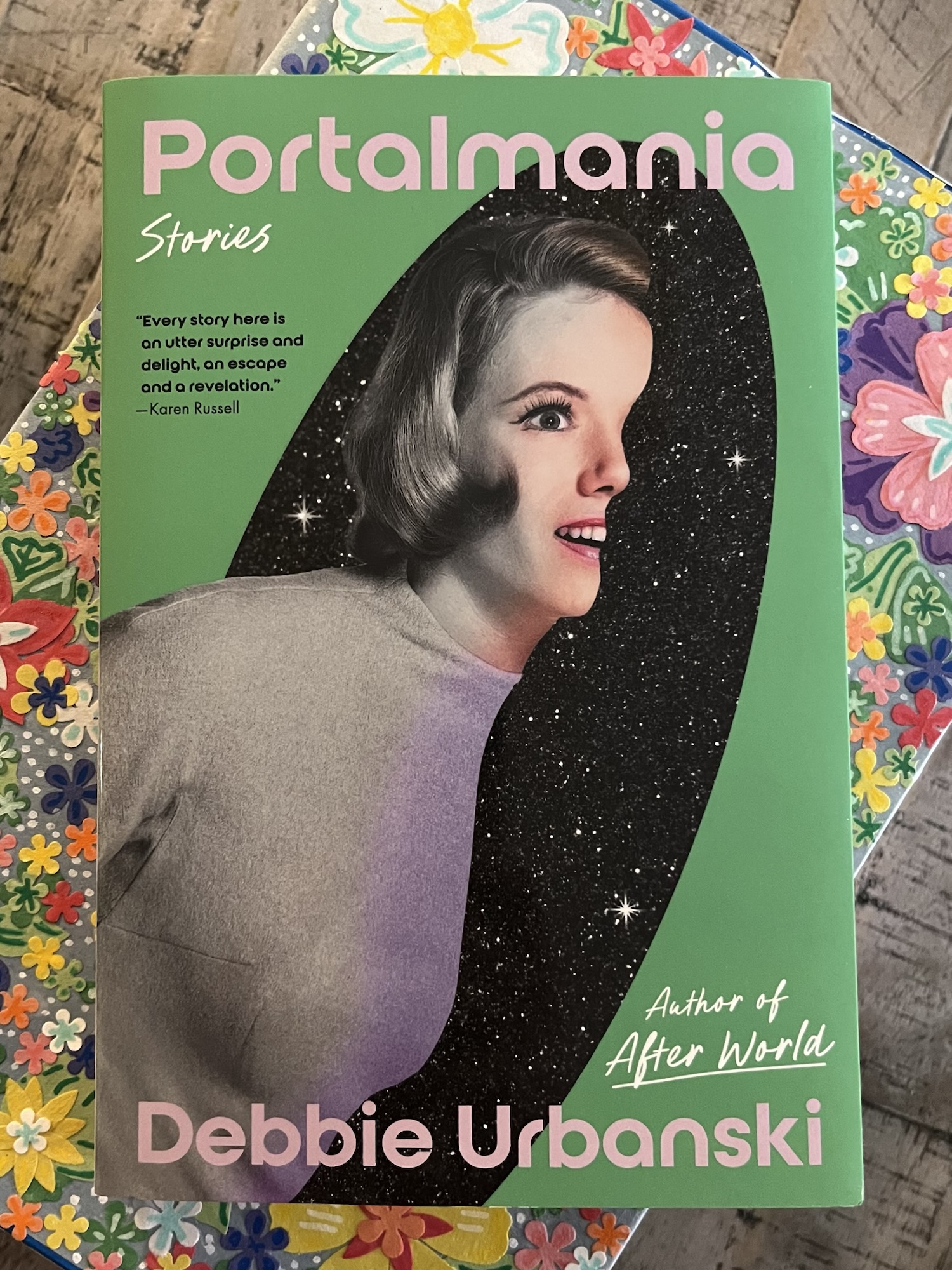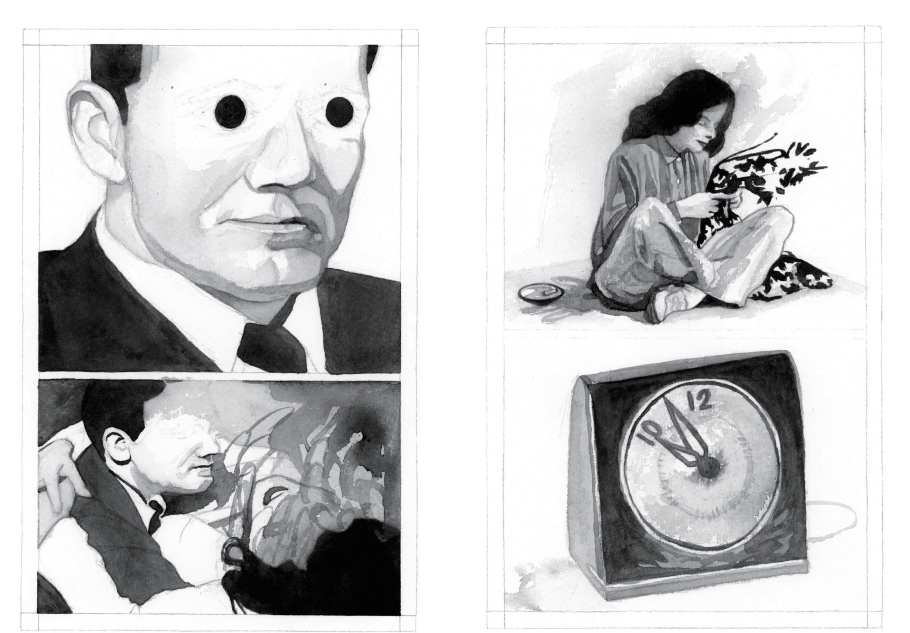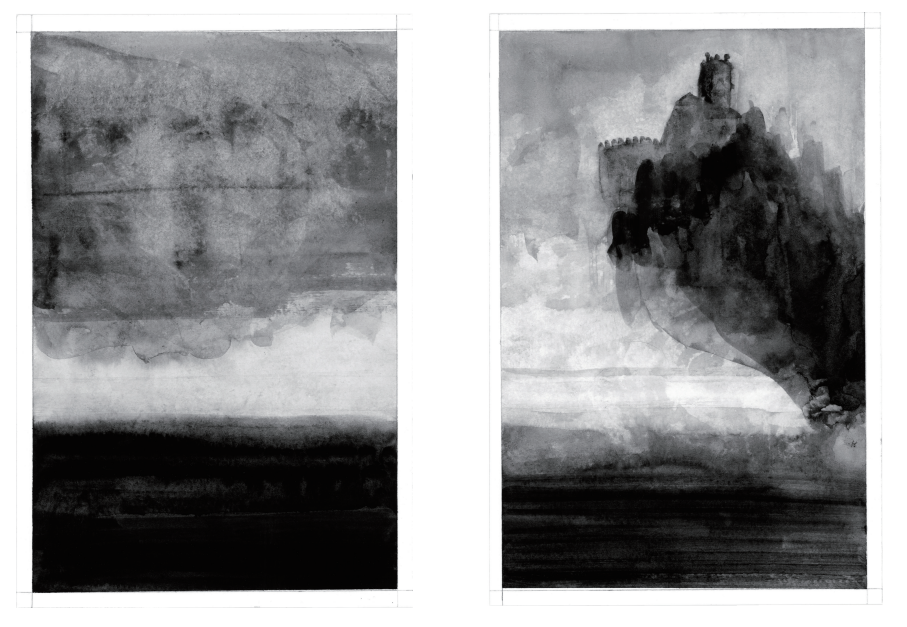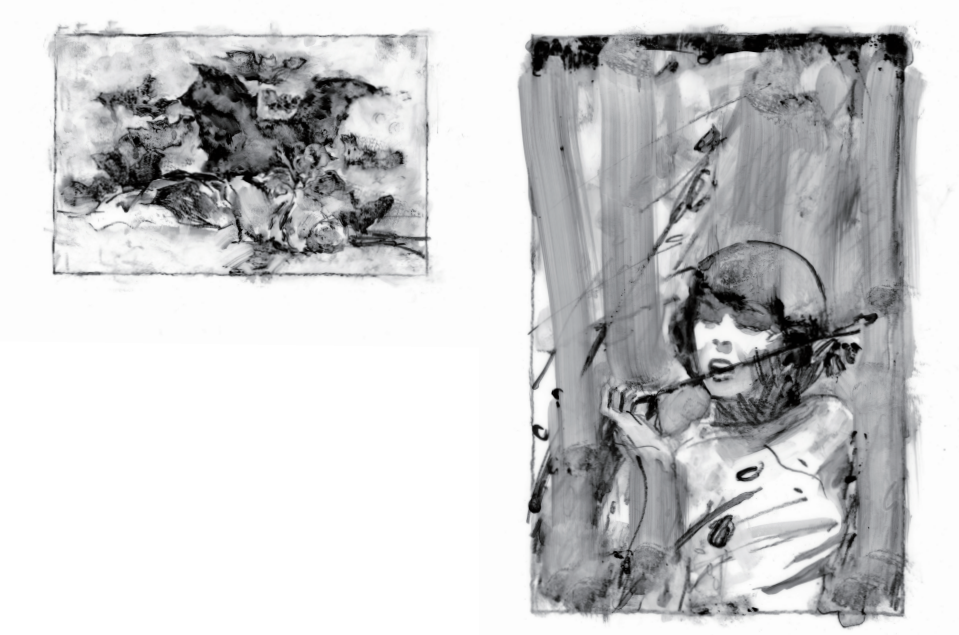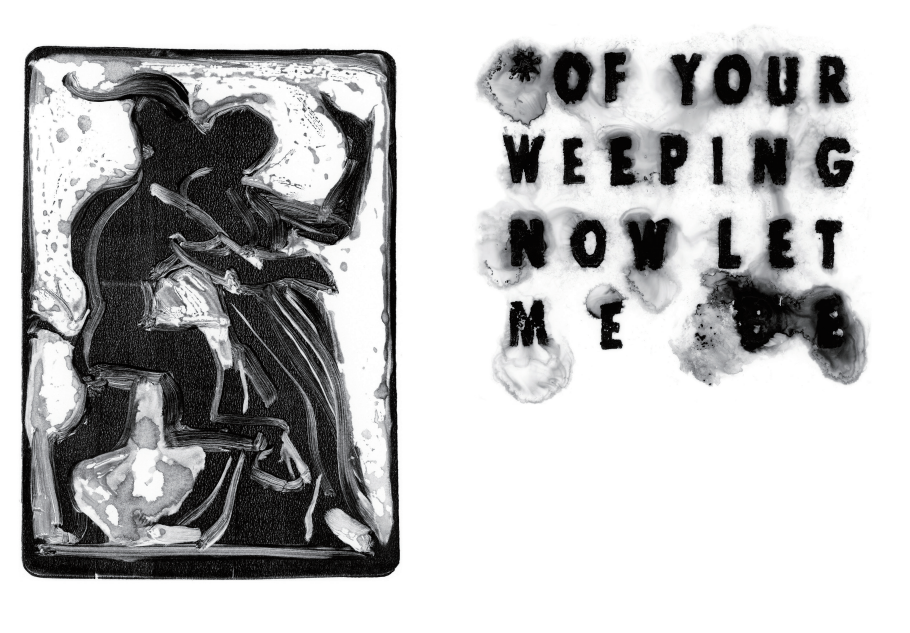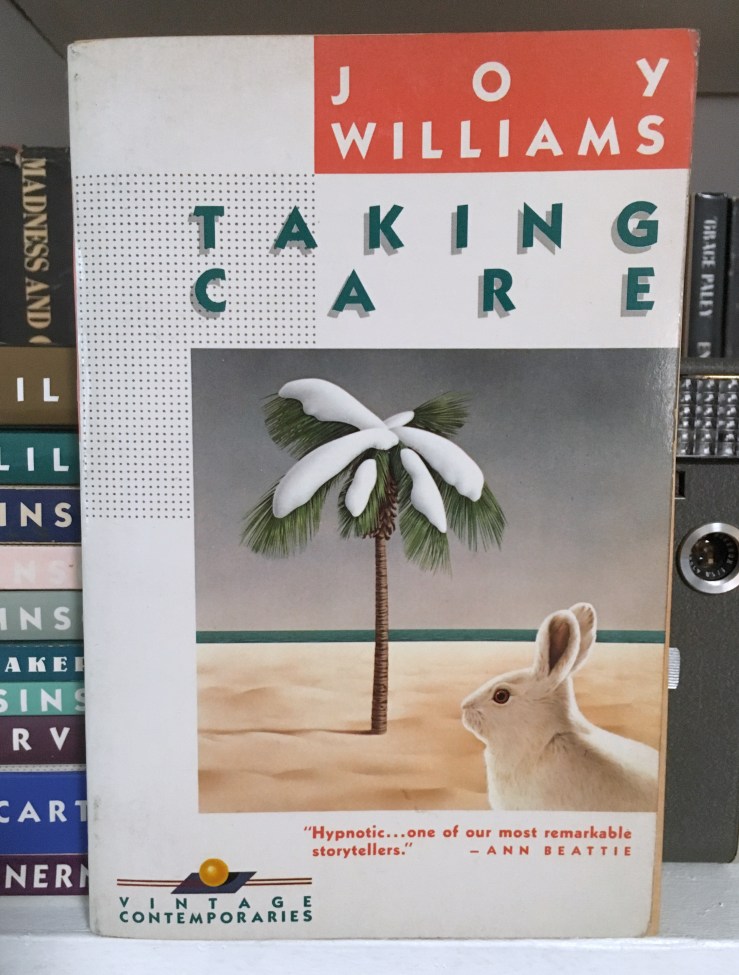
Caren Beilin’s Revenge of the Scapegoat is a funny, ludic novel about trauma and art

A book should be like a lot of spit. But who would publish me? Who publishes a person who’s sort of soaking in pain, who can’t always walk, employed only pretty much in name?

Did writing exist in books anyway these days? I thought perhaps defensively. Maybe it didn’t.

Writing does exist in books these days, despite what Iris, the narrator of a book of writing that exists, a book by Caren Beilin entitled Revenge of the Scapegoat, thinks perhaps defensively.

Iris, who will later transform into Vivitrix Marigold, thinks these defensive thoughts after receiving a package from her estranged father. The package contains two letters her father wrote to her when she was a teenager and a play she began but never finished composing when she was 17. The play had a title though: Billy the Id.

And why does Iris need defensive thoughts to defend her against this offensive package? Well, it turns out she was the designated scapegoat of her family, the atavistic locus for her father’s animus and her terminally-ill mother’s helplessness.

Mom’s dead now and Iris has escaped to Philadelphia, where she’s an underemployed adjunct teaching creative writing to overworked kids. She’s been “re-parented by the crucial cosmos, if poorly,” living in a house her mother left to her “like a moldy letter, black botches all over, and all over the counters.” Her mother had bought the house as an escape plan for Iris and her brother, but she never escaped (“She died of staying”). Iris lives in the moldy old house with her alcoholic husband. He lies about being a recovering alcoholic (“He told me that microdosing heroin was helping him in his recovery”). It’s clear that the marriage is failing.

But this isn’t a marriage story. It’s not her husband’s unremarkable departure, but rather the arrival of the packaged writing, that sparks Iris’s transformation. This transformation occurs over four distinct sections.

The first section is mostly a dialogue between Iris and her friend Ray, who is transitioning between genders. Like Iris, Ray was the designated scapegoat of their family, and the pair bonds and shares their trauma at a coffee shop called Good Karma. There’s a zaniness to Scapegoat that frequently veers into absurd humor and even outright surrealism (as when, for example, Iris punctuates her conversation with this observation: “The sun was going down. Holograms of dead parrots flopped in the road,” which I take to be Beilin’s oblique approximation of the old chestnut, “Somewhere in the distance a dog barked”). But the zaniness in Scapegoat is never precious or cloying; rather, the verbal quirks and eccentric images are anchored in the concrete pain and real trauma that Iris is trying to process.

Inspired by her conversation with Ray, Iris offers them her house in exchange for their boxy old Subaru. Iris drives and drives and drives, out into the New England countryside, repeatedly playing the same cassingle, one “SCAR” by Vivitrix Marigold. The poor Subaru, which “had more than 700,000 miles” on it, eventually gives out, and Iris finds herself stranded “out in the middle of a New England nowhere” — but not a poor nowhere, “No, this was all richie rich.”

It’s in this second section that Iris transforms into Vivitrix, and the narrative becomes even more surreal. It begins with our hero outside of an obscure art museum called The mARTin. There is a heart-stepping cow, of old Nazi stock, stepping on her heart. From there things get even weirder, and it would be a shame to spoil more of the plot. I don’t actually care about plot too much, but a lot of wild stuff: a curator who may or may not have murdered her husband, cowherding, a patricidal pervert, kale marmalade made from bull semen, castration conversation, a queasy dinner party (with a forced table reading of Billy the Id!) and more.

There’s also a very cathartic end, which I wasn’t anticipating. But it was lovely.

Perhaps ultimately the plot of Revenge of the Scapegoat is about transforming trauma into art, but as I write this sentence out, it seems like something Iris would tell her students not to do in their writing. Iris scatters her writing advice into the narrative and then breaks it: “Do not italicize foreign words”; “I told students there could be no rain or scenes on benches”; “Don’t write about food in an inventive way”. And my favorite: “Don’t make adult women reconcile or admit anything in your writing.”

In addition to this metatextual conceit, Beilin also employs the strange rhetorical device of turning Iris’s poor arthritic feet into Bouvard and Pécuchet, characters from Flaubert’s unfinished satire Bouvard et Pécuchet. At one point the pair bicker over which kind of precious metal or gem a witch might prefer. They are the not-quite-chorus of Revenge of the Scapegoat.

Beilen also lards her tale with similes that wonderfully strain credulity. On the first page, Iris compares the vegan leather of shoes to “a liquid you would press from a hot tampon you are pulling now, by the lamplight, out of a toad’s omnibus of Anaïs Nin.” Iris will often then puncture the artifice of the simile with rough reality: “I was shaking in the grass like an Etch-a-Sketch a higher power was trying to erase wholesale. Fuck that. I stopped shaking.” Or consider the surreal swell and bathetic pop in this passage, where Iris (now Vivitrix) compares her first encounter with The mARTin museum to the narrator of Poe’s “The Fall of the House of Usher” seeing the titular house for the first time:

Like that narrator, that man, so too I, Vivitrix, first looked at the reflective water rather than at a real building, weird, so I first saw The mARTin upside down. Its pink door stretched tall on morning’s mandible, as though it were flocked in flamingo leather, a pink surpassing the high heat of “hot,” a flamingo ultravinegar spilled all over something like a primed bookcover of a welcome new monograph on someone like Sade, or Wilde, someone such as Rimbaud or O’Hara, or Keats, men with honorary vaginas who castrated by love and the system, Flaubert, Adorno or Baldwin. It was a very pink door.

I’ve shared a taste of Beilin’s prose at length, and while I think it’s representative of the novel’s style, it can’t replace the feeling of how her sentences flow and build and ebb and swell. Initially, some of the verbal tics in Scapegoat irritated me, but it was the kind of irritation that makes you want to keep reading. And, a few pages after the lovely strange passage I’ve quoted above, our hungry hungry hero declares, “I needed some beef like you wouldn’t beleef.”

I laughed out loud and that initial irritation resolved into something like love. Highly recommended.

Revenge of the Scapegoat is available now from Dorothy.

[ed. — we first ran this review in June 2022.]

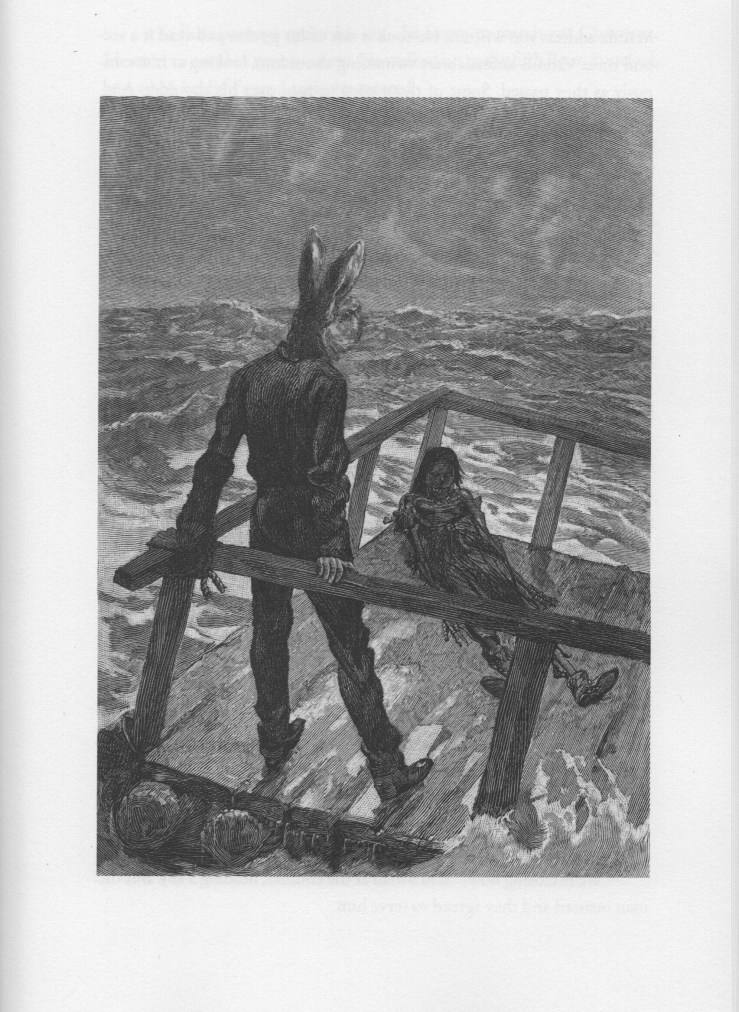
A review of Leonora Carrington’s surreal novel The Hearing Trumpet

Leonora Carrington’s novel The Hearing Trumpet begins with its nonagenarian narrator forced into a retirement home and ends in an ecstatic post-apocalyptic utopia “peopled with cats, werewolves, bees and goats.” In between all sorts of wild stuff happens. There’s a scheming New Age cult, a failed assassination attempt, a hunger strike, bee glade rituals, a witches sabbath, an angelic birth, a quest for the Holy Grail, and more, more, more.

Composed in the 1950s and first published in 1974, The Hearing Trumpet is new in print again for the first time in nearly two decades from NYRB. NYRB also published Carrington’s hallucinatory memoir Down Below a few years back, around the same time as Dorothy issued The Complete Stories of Leonora Carrington. Most people first come to know Carrington through her stunning, surreal paintings, which have been much more accessible (because of the internet) than her literature. However, Dorothy’s Complete Stories brought new attention to Carrington’s writing, a revival continued in this new edition of The Hearing Trumpet.

Readers familiar with Carrington’s surreal short stories might be surprised at the straightforward realism in the opening pages of The Hearing Trumpet. Ninety-two-year-old narrator Marian Leatherby lives a quiet life with her son and daughter-in-law and her tee-vee-loving grandson. They are English expatriates living in an unnamed Spanish-speaking country, and although the weather is pleasant, Marian dreams of the cold, “of going to Lapland to be drawn in a vehicle by dogs, woolly dogs.” She’s quite hard of hearing, but her sight is fine, and she sports “a short grey beard which conventional people would find repulsive.” Conventional people will soon be pushed to the margins in The Hearing Trumpet.

Marian’s life changes when her friend Carmella presents her with a hearing trumpet, a device “encrusted with silver and mother o’pearl motives and grandly curved like a buffalo’s horn.” At Carmella’s prompting, Marian uses the trumpet to spy on her son and daughter-in-law. To her horror, she learns they plan to send her to an old folks home. It’s not so much that she’ll miss her family—she directs the same nonchalance to them that she affords to even the most surreal events of the novel—it’s more the idea that she’ll have to conform to someone else’s rules (and, even worse, she may have to take part in organized sports!).

The old folks home is actually much, much stranger than Marian could have anticipated:

First impressions are never very clear, I can only say there seemed to be several courtyards , cloisters , stagnant fountains, trees, shrubs, lawns. The main building was in fact a castle, surrounded by various pavilions with incongruous shapes. Pixielike dwellings shaped like toadstools, Swiss chalets , railway carriages , one or two ordinary bungalows, something shaped like a boot, another like what I took to be an outsize Egyptian mummy. It was all so very strange that I for once doubted the accuracy of my observation.

The home’s rituals and procedures are even stranger. It is not a home for the aged; rather, it is “The Institute,” a cult-like operation founded on the principles of Dr. and Mrs. Gambit, two ridiculous and cruel villains who would not be out of place in a Roald Dahl novel. Dr. Gambit (possibly a parodic pastiche of George Gurdjieff and John Harvey Kellogg) represents all the avarice and hypocrisy of the twentieth century. His speech is a satire of the self-important and inflated language of commerce posing as philosophy, full of capitalized ideals: “Our Teaching,” “Inner Christianity,” “Self Remembering” and so on. Ultimately, it’s Gambit’s constricting and limited patriarchal view of psyche and spirit that the events in The Hearing Trumpet lambastes.

Marian soon finds herself entangled in the minor politics and scheming of the Institute, even as she remains something of an outsider on account of her deafness. She’s mostly concerned with getting an extra morsel of cauliflower at mealtimes—the Gambits keep the women undernourished. She eats her food quickly during the communal dinner, and obsesses over the portrait of a winking nun opposite her seat at the table:

Really it was strange how often the leering abbess occupied my thoughts. I even gave her a name, keeping it strictly to myself. I called her Doña Rosalinda Alvarez della Cueva, a nice long name, Spanish style. She was abbess, I imagined, of a huge Baroque convent on a lonely and barren mountain in Castile. The convent was called El Convento de Santa Barbara de Tartarus, the bearded patroness of Limbo said to play with unbaptised children in this nether region.

Marian’s creative invention of a “Doña Rosalinda Alvarez della Cueva” soon somehow passes into historical reality. First, she receives a letter from her trickster-aid Carmella, who has dreamed about a nun in a tower. “The winking nun could be no other than Doña Rosalinda Alvarez della Cueva,” remarks Marian. “How very mysterious that Carmella should have seen her telepathically.” Later, Christabel, another member/prisoner of the Institute helps usher Marian’s fantasy into reality. She confirms that Marian’s name for the nun is indeed true (kinda sorta): “‘That was her name during the eighteenth century,’ said Christabel. ‘But she has many many other names. She also enjoys different nationalities.'”

Christabel gives Marian a book entitled A True and Faithful Rendering of the Life of Rosalinda Alvarez and the next thirty-or-so pages gives way to this narrative. This text-within-a-text smuggles in other texts, including a lengthy letter from a bishop, as well as several ancient scrolls. There are conspiracies afoot, schemes to keep the Holy Grail out of the hands of the feminine power the Abbess embodies. There are magic potions and an immortal bard. There is cross-dressing and a strange monstrous pregnancy. There are the Knights Templar.

Carrington’s prose style in these texts-within-texts diverges considerably from the even, wry calm of Marian’s narration. In particular, there’s a sly control to the bishop’s letter, which reveals a bit-too-keen interest in teenage boys. These matryoshka sections showcase Carrington’s rhetorical range while also advancing the confounding plot. They recall The Courier’s Tragedy, the play nested in Thomas Pynchon’s 1965 novel The Crying of Lot 49. Both texts refer back to their metatexts, simultaneously explicating and confusing their audiences while advancing byzantine plot points and arcane themes.

Indeed, the tangled and surreal plot details of The Hearing Trumpet recall Pynchon’s oeuvre in general, but like Pynchon’s work, Carrington’s basic idea can be simplified to something like—Resistance to Them. Who is the Them? The patriarchy, the fascists, the killers. The liars, the cheaters, the ones who make war in the name of order. (One resister, the immortal traveling bard Taliesin, shows up in both the nested texts and later the metatext proper, where he arrives as a postman, recalling the Trystero of The Crying of Lot 49.)

The most overt voice of resistance is Marian’s best friend Carmella. Carmella initiates the novel by giving Marian the titular hearing trumpet, and she acts as a philosophical foil for her friend. Her constant warning that people under seventy and over seven should not be trusted becomes a refrain in the novel. Before Marian is shipped off to the Institution, Carmella already plans her escape, a scheme involving machine guns, rope, and other implements of adventure. Although she loves animals, Carmella is even willing to kill any police dogs that might guard the Institution and hamper their escape:

Police dogs are not properly speaking animals. Police dogs are perverted animals with no animal mentality. Policemen are not human beings so how can police dogs be animals?

Late in the novel, Carmella delivers perhaps the most straightforward thesis of The Hearing Trumpet:

It is impossible to understand how millions and millions of people all obey a sickly collection of gentlemen that call themselves ‘Government!’ The word, I expect, frightens people. It is a form of  planetary hypnosis, and very unhealthy. Men are very difficult to understand… Let’s hope they all freeze to death. I am sure it would be very pleasant and healthy for human beings to have no authority whatever. They would have to think for themselves, instead of always being told what to do and think by advertisements, cinemas, policemen and parliaments.

Carmella’s dream of an anarchic utopia comes to pass.

How?

Well, there’s a lot to it, and I’d hate to spoil the surrealist fun. Let’s just say that Marian’s Grail quest scores a big apocalyptic win for the Goddess, thanks to “an army of bees, wolves, seven old women, a postman, a Chinaman, a poet, an atom-driven Ark, and a werewoman.” No conventional normies who might find Marian’s beard repulsive here.

With its conspiracy theories within conspiracy theories and Templar tales, The Hearing Trumpet will likely remind many readers of Umberto Eco’s 1988 novel Foucault’s Pendulum (or one of its ripoffs). The Healing Trumpet’s surreal energy also recalls Angela Carter’s 1972 novel The Infernal Desire Machines of Doctor Hoffman. And of course, the highly-imagistic, ever-morphing language will recall Carrington’s own paintings, as well as those of her close friend Remedios Varo (who may have been the basis for Carmella), and their surrealist contemporaries (like Max Ernst) and forebears (like Hieronymus Bosch).

This new edition of The Hearing Trumpet includes an essay by the novelist Olga Tokarczuk (translated by Antonia Lloyd-Jones) which focuses on the novel as a feminist text. (Tokarczuk also mentions that she first read the novel without knowing who Carrington was). The new edition also includes black and white illustrations by Carrington’s son, Pablos Weisz Carrington (I’ve included a few in this review). As far as I can tell, these illustrations seem to be slightly different from the illustrations included in the 2004 edition of The Hearing Trumpet published by Exact Change. That 2004 edition has been out of print for ages and is somewhat hard (or really, expensive) to come by (I found a battered copy few years ago for forty bucks). NYRB’s new edition should reach the wider audience Carrington deserves.

Some readers will find the pacing of The Hearing Trumpet overwhelming, too frenetic. It moves like a snowball, gathering images, symbols, motifs into itself in an ever-growing, ever-speeding mass. Other readers may have difficulty with its ever-shifting plot. Nothing is stable in The Hearing Trumpet; everything is liable to mutate, morph, and transform. Those are my favorite kinds of novels though, and I loved The Hearing Trumpet—in particular, I loved its tone set against its imagery and plot. Marian’s narration is straightforward, occasionally wry, but hardly ever astonished or perplexed by the magical and wondrous events she takes part in. There’s a lot I likely missed in The Hearing Trouble—Carrington lards the novel with arcana, Jungian psychology, magical totems, and more more more—but I’m sure I’ll find more the next time I read it. Very highly recommended.

[Ed. note–Biblioklept first ran this review in December, 2020.]

Ann Quin’s novel Passages collapses hierarchies of center and margin

Ann Quin’s third novel Passages (1969) ostensibly tells the story of an unnamed woman and unnamed man traveling through an unnamed country in search of the woman’s brother, who may or may not be dead.

The adverb ostensibly is necessary in the previous sentence, because Passages does not actually tell that story—or it rather tells that story only glancingly, obliquely, and incompletely. Nevertheless, that is the apparent “plot” of Passages.

Quin is more interested in fractured/fracturing voices here. Passages pushes against the strictures of the traditional novel, eschewing character and plot development in favor of pure (and polluted) perceptions. There’s something schizophrenic about the voices in Passages. Interior monologues turn polyglossic or implode into elliptical fragments.

Quin repeatedly refuses to let her readers know where they stand. Indeed, we’re never quite sure of even the novel’s setting, which seems to be somewhere in the Mediterranean. It’s full of light and sea and sand and poverty, and the “political situation” is grim. (The woman’s brother’s disappearance may or may not have something to do with the region’s political instability.)

Passage’s content might be too slippery to stick to any traditional frame, but Quin employs a rhetorical conceit that teaches her reader how to read her novel. The book breaks into four unnamed chapters, each around twenty-five pages long. The first and third chapters find us loose in the woman’s stream of consciousness. The second and fourth chapters take the form of the man’s personal journal. These sections contain marginal annotations, which might be meant to represent actual physical annotations, or perhaps mental annotations–the man’s stream of consciousness while he rereads his journal.

Quin’s rhetorical strategy pays off, particularly in the book’s Sadean climax. This (literal) climax occurs at a carnivalesque party in a strange mansion on a small island. We see the events first through the woman’s perception, and then through the man’s. But I’ve gone too long without offering any representative language. Here’s a passage from the woman’s section, just a few paragraphs before the climax. To set the stage a bit, simply know that the woman plays voyeur to a bizarre threesome:

Mirrors faced each other. As the two turned, approached. Slower in movement in the centre, either side of him, turning back in the opposite direction to their first movement. Contours of their shadows indistinct. The first mirror reflected in the second. The second in the first. Images within images. Smaller than the last, one inside the other. She lay on the floor, wrists tied together. She bent back over the chair. He raised the whip, flung into space.

Later, the man’s perception of events at the party both clarify and cloud the woman’s account. As you can see in the excerpt above, the woman frequently refuses to qualify her pronouns in a way that might stabilize identities for her reader. Such obfuscation often happens in the course of a sentence or two:

I ran on, knowing I was being followed. She came to the edge, jumped into expanding blueness, ultra violet tilted as she went towards the beach. We walked in silence.

The woman’s becomes a She and then merges into a We. The other half of that We is a He, the follower (“He later threw the bottle against the rocks”), but we soon realize that this He is not the male protagonist, but simply another He that the woman has taken as a one-time lover.

The woman frequently takes off somewhere to have sex with another man. At times the sex seems to be part of her quest to find her brother; other times it’s simply part of the novel’s dark, erotic tone. The man is undisturbed by his lover’s faithlessness. He is passive, depressive, and analytical, while she is manic and exuberant. Late in the novel he analyzes himself:

How many hours I waste lying in bed thinking about getting up. I see myself get up, go out, move, drink, eat, smile, turn, pay attention, talk, go up, go down. I am absent from that part, yet participating at the same time. A voyeur in all senses, in my actions, non-actions. What a delight it might be actually to get up without thinking, and then when dressed look back and still see myself curled up fast asleep under the blankets.

The man longs for a kind of split persona, an active agent to walk the world who can also gaze back at himself dormant, passive.

This motif of perception and observation echoes throughout Passages. Consider one of the man’s journal entries from early in the book:

Above, I used an image instead of text to give a sense of what the journal entries and their annotations look like. Here, the man’s annotation is a form of self-observation, self-analysis.

Other annotations dwell on describing myths or artifacts (often Greek or Talmudic). In a “December” entry, the man’s annotation is far lengthier than the text proper. The main entry reads:

I am on the verge of discovering my own demoniac possibilities and because of this I am conscious I am not alone with myself.

Again, we see the fracturing of identity, consciousness as ceaseless self-perception. The annotation is far more colorful in contrast:

An ancient tribe of the Kouretes were sorcerers and magicians. They invented statuary and discovered metals, and they were amphibious and of strange varieties of shape, some like demons, some like men, some like fishes, some like serpents, and some had no hands, some no feet, some had webs between their fingers like gees. They were blue-eyed and black-tailed. They perished struck down by the thunder of Zeus or by the arrows of Apollo.

Quin’s annotations dare her reader to make meaning—to put the fragments together in a way that might satisfy the traditional expectations we bring to a novel. But the meaning is always deferred, always slips away. Passages collapses notions of center and margin. As its title suggests, this is a novel about liminal people, liminal places.

The results are wonderfully frustrating. Passages is abject, even lurid at times, but also rich and even dazzling in moments, particularly in the woman’s chapters, which read like pure perception, untethered by traditional narrative expectations like causation, sequence, and chronology.

As such, Passages will not be every reader’s cup of tea. It lacks the sharp, grotesque humor of Quin’s first novel, Berg, and seems dead set at every angle to confound and even depress its readers. And yet there’s a wild possibility in Passages. In her introduction to the new edition of Passages recently published by And Other Stories, Claire-Louise Bennett tries to capture the feeling of reading Quin’s novel:

It’s difficult to describe — it’s almost like the omnipotent curiosity one burns with as an adolescent — sexual, solipsistic, melancholic, fierce, hungry, languorous — and without limit.

Bennett, whose anti-novel Pond bears the stamp of Quin’s influence, employs the right adjectives here. We could also add disorienting, challengingabject and even distressing. While clearly influenced by Joyce and Beckett, Quin’s writing in Passages seems closer to William Burroughs’s ventriloquism and the hollowed-out alienation of Anna Kavan’s early work. Passages also points towards the writing of Kathy Acker, Alasdair Gray, and João Gilberto Noll, among others. But it’s ultimately its own weird thing, and half a century after its initial publication it still seems ahead of its time. Passages is clearly Not For Everyone but I loved it. Recommended.


[Ed. note–Biblioklept originally posted this review in May 2021.]

A review of Dinah Brooke’s excellent cult novel Lord Jim at Home

Dinah Brooke’s 1973 novel Lord Jim at Home had been out of print for five decades — and had never gotten a U.S. release — until McNally Editions republished in 2023 with a new foreword by the novelist Ottessa Moshfegh. I always save forewords until after I’ve finished a novel, so I missed Moshfegh’s implicit advice to go into Lord Jim at Home cold. She notes that the recommendation she received to read it “came with no introduction,” and that “I wouldn’t have wanted the effect of the novel to be mitigated in any way, so I’m reluctant to introduce it now.”

I am not reluctant to write about Brooke’s novel because I am so enthusiastic about it and I think those with tastes in literature similar to my own will find something fascinating in its plot and prose. However, l agree with Moshfegh’s advice that Lord Jim at Home is best experienced free from as much mitigating context as possible. I had never heard of the novel before lifting it from a bookseller’s shelf, attracted by the striking cover; I flipped it over to read a blurb parsed from Moshfegh’s foreword attesting that Brooke’s novel “was an instrument of torture. It’s that good.” The inside flap informed me that reviews upon its publication “described it as ‘squalid and startling,’ ‘nastily horrific,’ and a ‘monstrous parody’ of upper-middle class English life.” I was sold.

Lord Jim at Home is squalid and startling and nastily horrific. It is abject, lurid, violent, and dark. It is also sad, absurd, mythic, often very funny, and somehow very, very real for all its strangeness. The novels I would most liken Lord Jim at Home to, at least in terms of the aesthetic and emotional experience of reading it, are Ann Quin’s Berg, Anna Kavan’s Ice, Mervyn Peake’s Gormenghast novels, Virginia Woolf’s Mrs. Dalloway, and James Joyce’s Portrait (as well as bits of Ulysses). (I have not read Conrad’s Lord Jim, which Brooke has taken as something of a precursor text for Lord Jim at Home.)

After finishing Lord Jim at Home, I read it again by accident. At first I intended to take a few notes for a possible review, but after the first few pages I just kept reading. On a second reading, Brooke’s novel was just as strange—maybe even stranger—even if I was able to read it much more quickly, finding myself quicker to tune into the novel’s competing (and complementary) narrative registers. I found it far more precise, too, in the rhetorical development of its themes; Brooke’s styles and tones shift to capture the different ages of its hero. The novel begins in a mythical, archetypal mode and works its way through various registers, exploring the tropes of schoolboy novels, romances, war stories, adventure tales,  modernism, realism, and journalism. But despite its shifting modes, Lord Jim at Home is not a parodic pastiche. Rather, at its core, Lord Jim at Home skewers how aesthetic modes—primarily those derived from notions of class and manners—cover over abject cruelty. As Moshfegh puts it in her forward, Lord Jim at Home is “an accurate portrayal of how fucked-up people behave, artfully conveyed in a way that nice people are too polite to admit they understand.”

I’ve tried to be clear that I think it’s best to come to Lord Jim at Home without too much context—it’s best to just go with the novel’s strangeness. Below, however, I offer a more detailed discussion of the novel, its language, and some elements of the plot for those so inclined.

Answer, 2014 by Henrietta Harris

Continue reading “A review of Dinah Brooke’s excellent cult novel Lord Jim at Home”

And another Moby-Dick

Herman Melville’s 1851 novel Moby-Dick is probably my favorite book.

***

Years ago at an awful dinner party a man I didn’t know asked me What do you do?, by which he meant how I made money to live, or, maybe charitably, if I had a specific profession. When I told him it had something to do with literature and college students he followed up with a question no stranger should aim at another stranger-

-So what’s your favorite book then?

-Moby-Dick is my favorite book, I offered, this being my somewhat standard answer then.

-Oh no, I mean, what’s your real favorite booknot just the one you say to impress people?

Okay Gravity’s Rainbow is my favorite book.

-I haven’t read that one yet but I like Tom Clancy too. 

***

A dear friend at our house this weekend, under truly awful circumstances, circumstances that have no bearing on this riff, claimed to have counted “eighteen copies” of Moby-Dick around the house. As far as I could tell, there are only about thirteen, including a children’s pop up version and three comic book adaptations (I don’t know how he would’ve found the comic adaptations, as they are slim and I think in drawer or box). He asked for one; I offered him the UC Press edition illustrated by Barry Moser, the one I’d used the last time I reread Moby-Dick. He opted instead for the most recent Norton Critical Edition, which a rep sent me a few years ago.

***

The last time I reread Moby-Dick I used the UC Press edition illustrated by Barry Moser. This was in 2021. I ended up writing forty riffs on the novel, likely trying the patience of any regular readers of this blog.

***

If you’re not up for forty riffs, I wrote a very short riff on this very long book back in 2013.

***

The two preceding notes are my way of saying: Moby-Dick is probably my favorite novel; it’s fantastic and I’ve written about it in both short and long form, and I think anyone can read it and should–it’s funny, sad, thrilling, captivating, meditative, beguiling, baffling–a thing larger than its own frame, certainly larger than its author and his era. And so now–

***

I have another Moby-Dick. This one is designed and illustrated by Dmitry Samarov. It’s about 650 pages, and is a pleasing, squarish shape that rests easy in the hands (a contrast to the coffin-shaped Norton Critical Editions). The pages are not too bright (I hate bright white pages) nor too crisp; the spine is not so rigid that one seeks to break it before setting about the business of checking into the Spouter Inn. It is a very readable copy — relaxed, not too heavy and not too cramped, no precious footnotes. And there are Samarov’s sketches.

***

***

Rifling (or is it riffling? I can never remember) through this edition today, reading a few passages aloud even, just to feel myself go a little crazy and then get a small relief from that craze, the dominant sense I got from Samarov’s accompanying sketches is something like this: Someone riffing along to Ishmael’s ghost-voice, not competing with it nor trying to turn the mechanics of its verbs and nouns and adjectives into a mimetic representation of action or thought. I think the drawings, as a body, rather approximate something like an aesthetic ear tuned to Ishmael’s wail: scratchy ink lines tangle into and out of shapes in a discourse with the narrative. Others tuned to the voice might on any given page jot down a note or circle a phrase or even, dare, dream of a crowded footnote; Samarov offers a sketch. His love for the novel comes through.

***

If you haven’t read Moby-Dick, you should. Samarov’s edition is a worthy entry into the fold. Check it out.


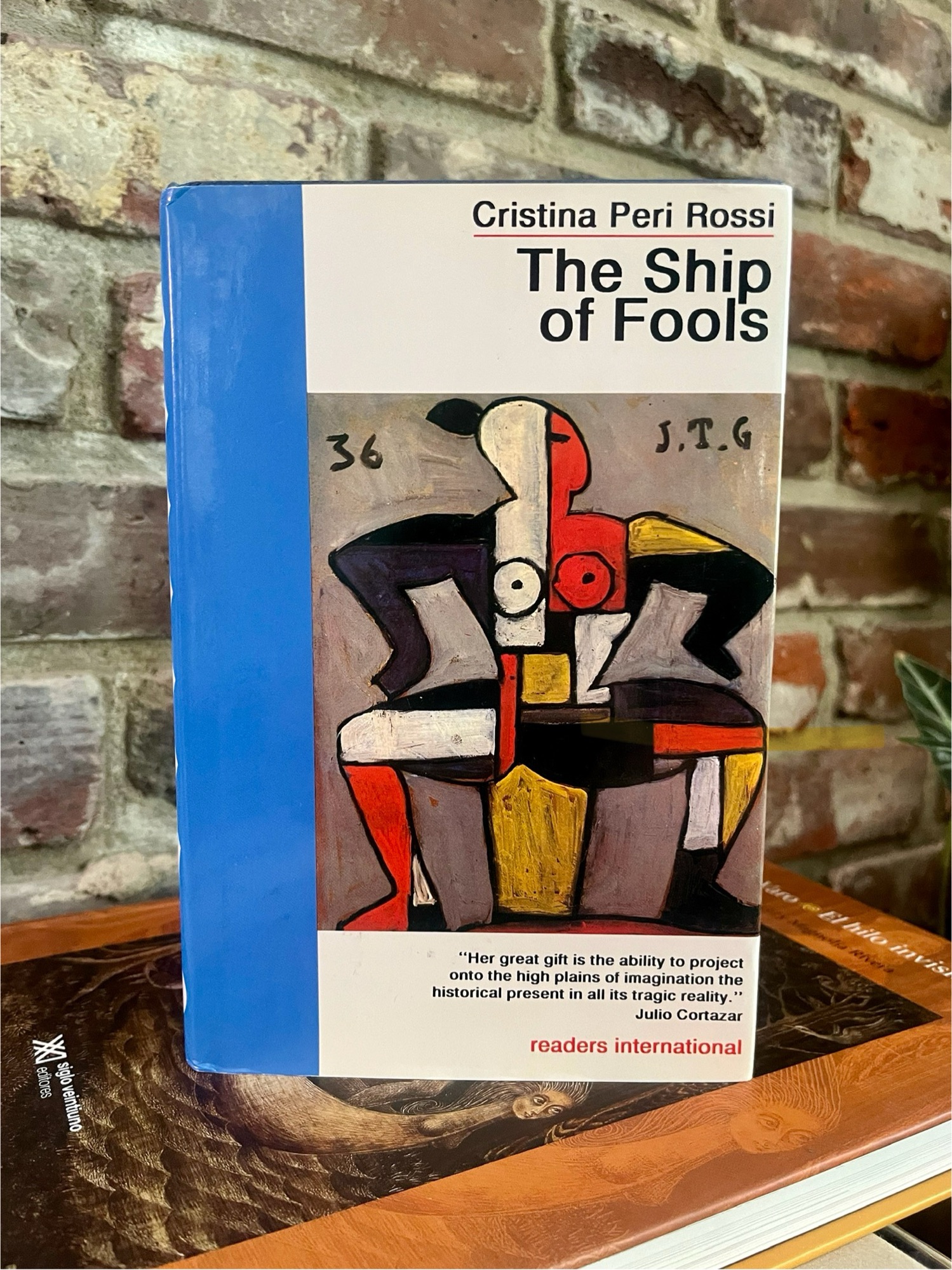
Cristina Peri Rossi’s The Ship of Fools is a surreal novel of exile and dislocation

The Ship of Fools by Cristina Peri Rossi, first published in 1984 and released in English translation by Psiche Hughes in 1989, is a novel of dislocation—political, psychological, and existential. Its protagonist, Ecks, drifts from place to place in a world that feels suspended between dream and memory, never quite solid: “He felt he was travelling not in space but backwards in time.” That sense of slippage—temporal, emotional, narrative—is central to the book’s effect.

Plot is secondary, if it exists at all. The novel drifts like a bottle at sea: beautiful, opaque, marked by the presence of something urgent inside—but sealed, floating, unmoored. Like Renata Adler’s Speedboat or Ann Quin’s Passsages, this is a novel that prefers jump cuts to journeys, broken signals to neat resolutions. It unfolds in fragments, circular musings, moments of stasis that shimmer with strange possibility. At one point, a character suggests that “conversation is more a question of style than ideas,” a description of the novel itself. Style is idea in The Ship of Fools. The syntax itself seems to think.

There are recurring characters, loose thematic arcs, and strange moments of connection, but the novel often seems to turn away from linearity. It’s what the book itself calls “a story without progress,” or perhaps a tapestry of passing encounters and unresolved longings. There’s a Bolañoesque sense of drift to it, too—a wandering narrator collecting impressions like scars, haunted by disappearances that resist explanation. At the same time, there’s something in the intensity of The Ship of Fools—its visceral depictions of trauma and social rupture—that evokes the furious lyricism of Fernanda Melchor’s Hurricane Season. Both authors understand that political horror isn’t always best addressed by realism—it seeps in more disturbingly through atmosphere, voice, and repetition.

Peri Rossi was herself an exile, having fled the civic-military dictatorship of Uruguay in 1972. She fled the regime, first to Barcelona and later Paris, and this personal history pulses quietly through every page. The Ship of Fools isn’t autobiographical in the conventional sense, but its texture is soaked with the disorienting logic of exile: the sense of being always elsewhere, never quite present, both seen and unseen.

One of the pleasures of The Ship of Fools is the way it captures fleeting impressions in striking, lyrical language. Descriptions of people and places often feel like fragments from a half-remembered dream. The narrator describes a girl “bursting with youth; with that radiant beauty which, more than a quality of feature or of line, is the result of organic perfection that only later would begin to fall apart, breaking its essential but precarious harmony.” Elsewhere, the sea is evoked with the precision of a surrealist painting: “Green eyes and wide sea, swinging hips and plunging necklines. The sea was rolling like the water in a glass. Or the ship was. The ship was a glass floating on the high tide.” It’s not hard to imagine Jodorowsky filming this image—bodies on a tilting horizon, symbolic without being decipherable.

Beneath the dreamlike surface runs a steady current of political urgency. Ecks is an exile, and many of the novel’s characters—some named, some merely sketched—are displaced or disappeared. “To disappear is no longer voluntary,” the narrator tells us, “but acquires passive form: ‘We are being disappeared.’” It’s a haunting line that collapses grammar and violence in a single breath. One character, laboring in a sinister “camp for the disappeared,” wonders “if there was still any point in measuring time by the clock, when it seemed like ten years to him and twenty to his friend suffering agonies about him.” These grim lines are delivered without sentimentality, but with unmistakable clarity. The book never lectures. It haunts instead.

The novel’s philosophical core is found in its reflections on art, memory, and identity. One of the longest and most striking passages describes the medieval Tapestry of Creation:

There the missing parts unfurl, fragments intimating the larger harmony of the universe. What we love in any structure is a vision of the world that gives order to chaos, an hypothesis which is comprehensible and restores our faith, atoning for our having fled and scattered before life’s brutal disorder. We value in art the exercise of mind and emotion that can make sense of the universe without reducing its complexity. Immersed in such art one could live one’s life, engaged in a perfectly rational discourse whose meaning cannot be questioned because it resides in an image containing the whole universe.

What surprises and will always surprise is the notion that a single mind could conceive of such a convincing and pleasing structure, moreover a happy one, a structure which as well as being a metaphor is also a reality.

This longing for order—however temporary or illusory—is deeply felt throughout the novel, even as its own structure resists resolution. The moment we seek meaning, it slips sideways. Identity, like narrative, fractures under pressure.

That same ambiguity runs through the book’s treatment of gender. Lucía, one of the more vivid figures in Ecks’s drifting life, is described as “dressed in men’s clothes,” her appearance perfectly androgynous. Ecks is both drawn to and overwhelmed by her. “He saw the unfolding of two parallel worlds… yet inseparably connected in such a way that the triumph of one would cause the death of both.” Later, another character remarks, “Don’t we all attribute ourselves a sex? And spend our lives proving it?” Gender is not a stable identity but a performative act—one repeated until it congeals into something that passes for truth.

Memory and history, too, are always in motion. “Ship captains and sailors of the past were those who best knew the universe,” the narrator reflects. Their journals once held the world’s accumulated knowledge: “One referred…to these journals” to understand distant plants, animals, and stars. But now, “they stopped writing and their main tasks became trade and war…Their journeys are now shorter and safer. But also less interesting.” It’s a quiet lament for a world that’s abandoned curiosity for control.

Ecks himself seems increasingly hollowed out by this world. “I stopped my work. Since then wheat and chaff have mixed. Under the grey sky the horizon is a smudge, and no voice answers.” His sense of loss—of self, of direction, of connection—is profound. “I shall lose,” he thought, and then: “I’ve already lost.” Like a Bolaño narrator spiraling through half-empty towns or an Ann Quin character trying to read meaning into chaos, he is less a man than a vessel for disappearance.

And yet, The Ship of Fools still finds a kind of poetry in this fragmentation:

Dreams have their own logic; only in the ambiguity of daylight do we need to reason and compare, to pin down the weft of things. Dreams are so persuasive, they need no argument.

Peri Rossi’s novel lives in that twilight logic, where estrangement becomes its own kind of truth. Exile, here, is not just a matter of borders—it is a way of seeing. “Those who live always in the same place… do not realize that to be a stranger is a temporary situation, one that can be altered; in fact they assume that some men are strangers and others not. They believe that one is born — and does not become — a stranger.” In The Ship of Fools, everyone becomes a stranger, even to themselves.

In the end, the novel is both deeply political and deeply personal. It captures what it feels like to live under systems that make life feel increasingly unreal, to grasp for meaning in a world of exiles and silence, to lose and keep losing—and yet keep imagining, keep remembering, keep writing. Our days, the novel suggests, “are no different from the past, except in the number of tyrants, their systematic methods and the cold logic with which they lead the world to madness.”

Although it is often bitterly funny, The Ship of Fools is not a cheerful book. But it lingers like a half-remembered dream, like the texture of a forgotten language, like a map you keep reading even after the landmarks have vanished. Very highly recommended.

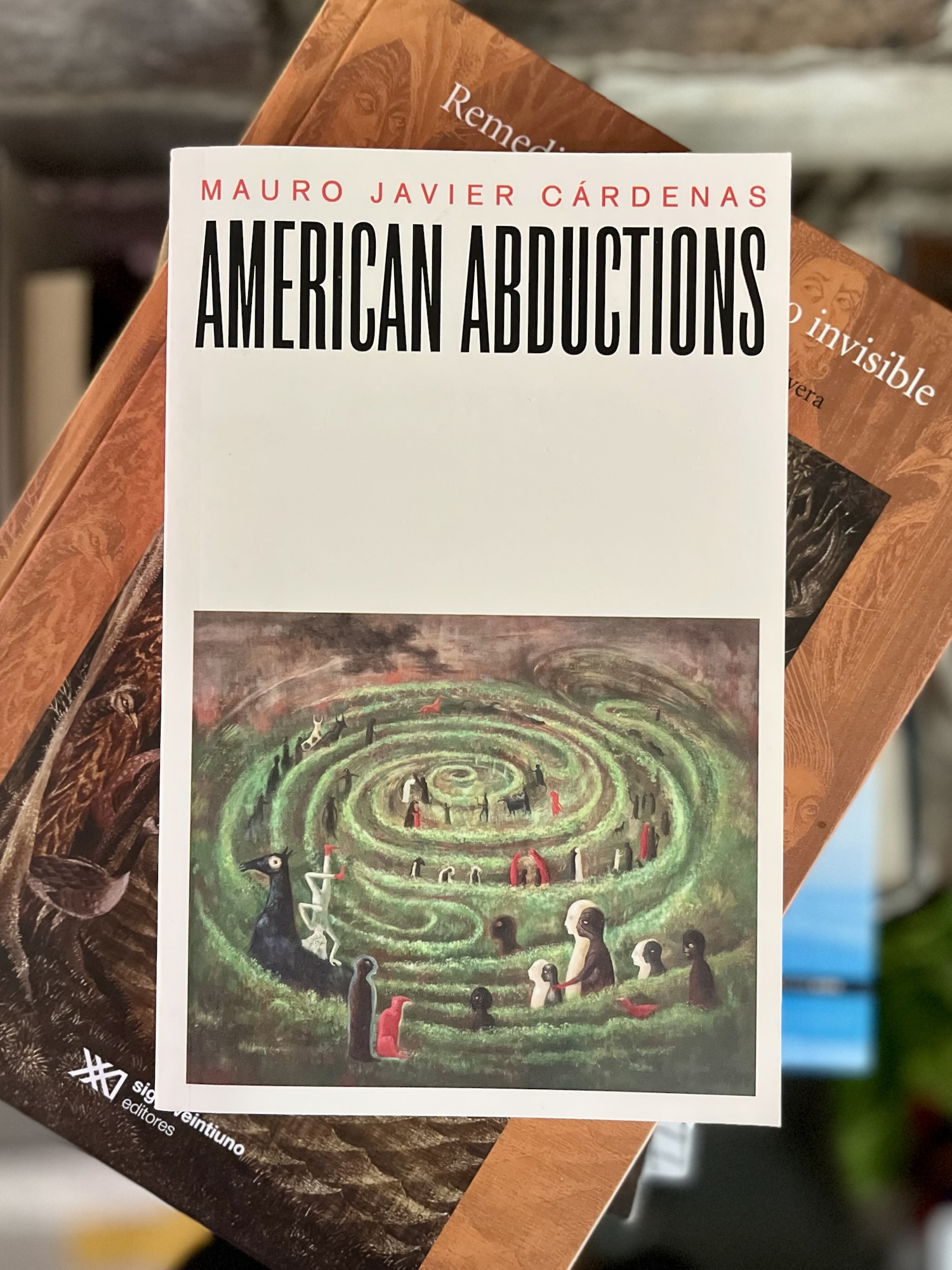
Statements of missingnessness | On Mauro Javier Cárdenas’s prescient novel American Abductions

Mauro Javier Cárdenas’s American Abductions is a novel of relentless, layered consciousness, its immersive, labyrinthine sentences pulling the reader into a fugue of voices, memories, and anxieties. American Abductions takes place in a proximal version of the United States, a digital carceral state where palefaced goons kidnap Latin Americans. Sometimes the abductees are deported; sometimes they are disappeared. Sometimes they tell stories.

The dystopia here is hardly a YA world-building exercise full of hope and heroics. Instead, the novel moves through fragmented, fevered perspectives, primarily those of sisters Ada and Eva their disappeared father, Antonio, a novelist abducted by the Pale Americans, the faceless bureaucratic enforcers of this new regime. The novel oscillates between Ada and Eva’s attempts to reconstruct what happened, Antonio’s own recursive, metafictional writing, and interjections from various other voices—family members, interrogators, digital surveillance logs—until the narrative itself becomes a reflection of the fragmented reality the characters are trapped within.

Yes, American Abductions is bleak, but it is not merely dystopian horror. Cárdenas builds his world through a dizzying interplay of language, wielding the long, unspooling sentence with the precision of Bernhard, Krasznahorkai, and Sebald. Each chapter is a single winding comma splice that careens from realism to surrealism. Cárdenas’s run-ons layer and loop back on themselves, rhetorically mirroring the characters’ attempts to make sense of their unraveling world.

The book moves forward with an absurdist energy that resists despair, its rhythms and repetitions building not just a critique of authoritarian power but something stranger, something more human—an exploration of consciousness itself, an attempt, perhaps, to make a grand “statement of missingnessness,” to borrow one of the character’s phrases.

The effect is hypnotic, dreamlike, sometimes nightmarish, but often, surprisingly, very funny. There is a dark, absurdist humor in the way bureaucratic jargon collides with intimate grief, in the way digital surveillance reports are laced with banal observations, in the way Antonio’s own metafictional writing seems to both clarify and obscure the truth of his disappearance. The novel is not just about authoritarian violence but about how language itself is manipulated under such regimes—how it obfuscates, justifies, betrays, resists. At times, American Abductions reads like a political thriller rewritten as a fever dream, at others, like a linguistic experiment that spirals into a meditation on memory, exile, and state terror.

American Abductions is not just unsettlingly prescient. Rather, it obliquely underscores the U.S. surveillance state’s direct lineage to Latin America’s Dirty Wars. Governments systematically disappeared those deemed threats to the state—intellectuals, activists, ordinary people unlucky enough to be caught in the wrong place at the wrong time. Cárdenas’s dystopia does not just critique contemporary American immigration policies; it situates them within a long history of state-sanctioned violence in the Americas.

The novel’s themes take on chilling immediacy when considered alongside the real-world abductions of those who speak truth to power, like Mahmoud Khalil and Rumeysa Ozturk. Indeed, the disturbing video footage of Ozturk’s kidnapping by masked men this week has gone viral, echoing the opening of American Abductions, wherein we learn that Ada has captured “that moment when the American abductors captured her father as he was driving her and her sister to school, which she recorded on her phone.” Ada’s video goes viral, mutates, becomes its own beast:

…and later, after her father had been captured and hundreds of thousands of people around the world were watching her video of her father asking what have I done, officer, the supervisory official probably watched it too and left an anonymous comment below it that said ice / ice baby great job ICE, illegal is illegal and wrong is wrong bye you forgot the crybaby in the backseat, for years Ada arguing in her mind with the thousands of messages berating her and her father, even after she discovered some of the comments had been manufactured by bots controlled by a Pale American in Salt Lake City — twelve million to go please continue to remove the illegal alien infestation — except the comments by Doctor Sueño, of course, which made no sense to anyone but her, just as it made no sense to anyone but her to feel, for no more than a few seconds, proud that the supervisory official of the supervisory official of the supervisory official in an agency building had taken time out of his busy schedule to focus on her father — if enough time passes, Doctor Sueño says, even the most preposterous possibilities will navigate the sea of your mind — cry like an eagle / to the sea — just as it made no sense to anyone but her to laugh at some of the videos her video had spawned for instance the video of her video but with sappy music instead of her sister politely asking the abductors where were they taking her father, as if someone figured hey no one’s going to feel sorry enough for you people let me add sad violin music to the video of your father saying I’ve done nothing wrong, officer, or how about the video from a self proclaimed irreverent news organization from China that, via computer animation as if from an obsolete video game, replicated the trajectory from her house to the sensitive location as if it were a car chase, the abductors rushing to drag her father out of the car as if it were a drug bust, the video game representation of Ada recording her father’s capture with her phone from the backseat of the car, waterfalls of tears surging from her eyes, no not waterfalls, more like someone’s comical representation of lawn sprinklers superimposed on the eyes of the video game representation of me…

Apologies if I’ve let the run-on run on too long — but you’ll have wanted a taste of Cárdenas’s style, no? His sentences, unbroken and unrelenting, mimic the inexorability of history itself—cycles of erasure, resistance, recovery, and repetition. American Abductions is not just a novel about the present; it is a novel that recognizes the past has never ended. Its characters, trapped in linguistic torrents of grief and absurdity, seem painfully aware that history is repeating itself. And yet, as despairing as that recognition might be, American Abductions refuses to be silent. It makes its “statement of missingnessness” loud, insistent, impossible to ignore, resisting erasure, demanding we listen. Very highly recommended.

Maggie Umber’s Chrysanthemum Under the Waves blends horror, surrealism, and poetic fragmentation into a haunting vision of the uncanny

Maggie Umber calls the nine pieces collected in Chrysanthemum Under the Waves “comics,” so I will call them comics too. The term “comics” has long encompassed a wide range of visual storytelling techniques, resisting attempts to confine it to rigid structures, and Chrysanthemum Under the Waves shows the form’s expansive potential, blending horror, surrealism, and poetic fragmentation to tap into the alienation, paranoia, and repression that lurks under the surface of everyday life.

The stories here resist conventional narrative logic, which will likely confound any reader expecting something traditional. Umber eschews the common building blocks of the medium: there are no speech bubbles, no thought balloons, no panels stacking up into a coherent sequence. In fact, the few pages that use multiple panels feel like an anomaly. Most of the work in Chrysanthemum is confined to single, expansive images. Yet, these full-page spreads do not recall the bombastic splash pages of Jack Kirby or other Golden Age comics. Instead, they underscore the inherent incompleteness of storytelling. No artwork, no story, can ever present a full picture of reality—there are always gaps, always gutters. And in these gaps, dread and unease fester.

Umber’s comics aren’t so much about exploring the fragmentation of storytelling; rather, they showcase it as an aesthetic choice. It’s a choice that generates a palpable tension, a constant refusal to return to any resolution. There is no resolving tonic chord here. The uncanny permeates these pages—not in the sense of something foreign intruding upon the familiar, but as if the familiar itself has been subtly warped. Maybe this horror is “real,” maybe it’s not—but what is certain is its presence. The world Umber paints is one of perpetual strangeness, captured in black-and-white, shaded with grays. Pen and ink, printmaking, and watercolor all blur together in a form that makes us feel the unease before we can even articulate it.

And while Umber’s work is refreshing in its uniqueness, it is by no means sui generis, but rather part of  a clear tradition. As Umber notes in her introduction, Chrysanthemum started as a one-off “adaptation” of Shirley Jackson’s 1949 story “The Tooth.” If you have read “The Tooth” (and if you haven’t, do yourself a favor and resolve that problem) — if you have read “The Tooth,” you will likely recognize the uncanny unease that permeates Chrysanthemum. In her intro, Umber identifies James Harris as the agent of this unease: “James Harris snuck up on me when I was distracted by other things.” James Harris is a strange character who wanders in and out of not only “The Tooth,” but several of the other stories in Jackson’s The Lottery. Indeed, the original subtitle of The Lottery was not and Other Stories, but rather The Adventures of James Harris. This is the James Harris of the 17th century ballad “The Daemon Lover”; he is also the oblique star of Chrysanthemum Under the Waves. Look and you will find him in each of Umber’s tales, sliding like a shadow in and out of panels and gaps.

You will find so much more there as well–there are direct allusions to Goya’s Caprichos and Black Paintings, as well as nods to Toulouse-Lautrec and Sylvia Plath. There’s also a strong echo of Jackson’s American Gothic precursors and successors: Nathaniel Hawthorne, Edgar Allan Poe, Emily Dickinson, David Lynch, Kathy Acker — and, far less famously, Jason Schwartz. Chrysanthemum Under the Waves most reminded me of Schwartz’s prose-poem John the Posthumous, so much so that I read it again to confirm my notion.

I’ve failed to remark so far on the apparent plots of the tales here. I found myself arrested by the ominous vibes in my first readings, and I still could not pin down a summary. At the same time, I feel that Umber clearly knows “what’s happening” in her stories, even if she keeps that information in the gaps and margins, out of the panel, but still, maybe, hidden in the pictures. The lead story, “Those Fucking Eyes,” is a collision of horror and beauty, twisting the artist’s gaze  into something self-possessed and austere. “Rine” plays with fragmentation and distortion while evoking a ghostly presence. We get a gentleman caller, a broken bridge, a bouquet of flowers that flickers between reality and illusion. “Intoxicated” takes on a Gothic Toulouse-Lautrec aesthetic, unraveling into surreal rage and rejection. “The Devil Is a Hell of a Dancer” retells the “James Harris” ballad; it’s the first time written language infiltrates one of the stories.

The title track, “Chrysanthemum” is a surreal noir fantasia punctured by a cup of coffee, with daemon lover James Harris hovering menacingly in the background. It seems to reinterpret Shirley Jackson as does the aforementioned “The Tooth” — itself a revision of Charlotte Perkins Gilman’s suffocating 1892 classic, “The Yellow Wall-Paper.” The shortest comic, “There Is Water” unfolds like a koan, enigmatic and meditative. Standout “The Witch” returns to Goya but also channels the American Gothic vein. The piece might be a nightmare one of Hawthorne’s characters endures. There are clouds, castles, dreams, doors, flickering horror. Is that a witch burning? And do the flames morph into a glimpse of Goya’s Saturn, only to resolve into the shadowed face of a woman? Shadows and erasures pulse through the imagery. It is both the strongest and longest piece in the collection. The book ends with “The Rock,” another riff on the the ballad “James Harris.” It’s a fitting end, conclusive but elusive. What remains rattles: unsettled, open, and always strange.
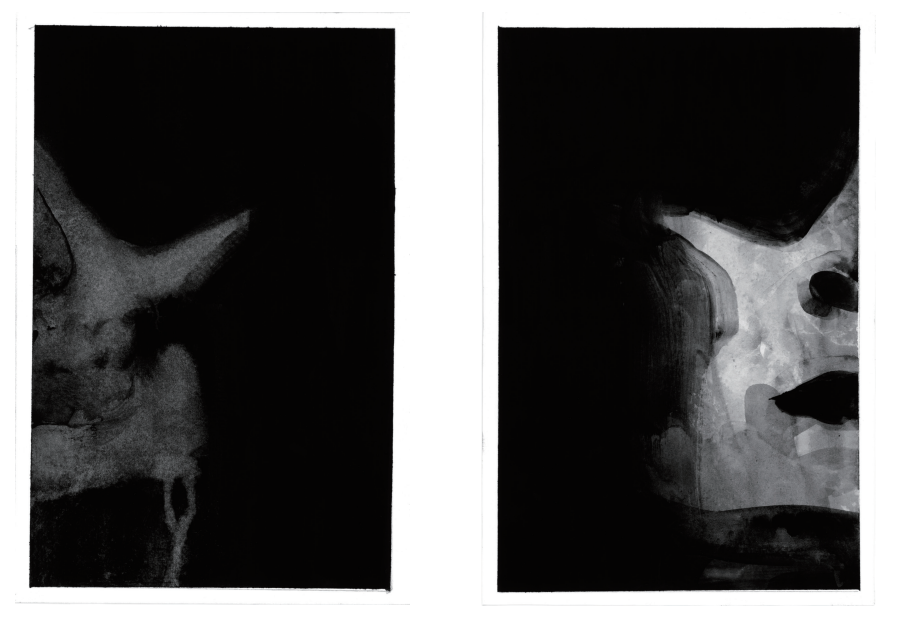
Chrysanthemum Under the Waves is a haunting, layered work that defies easy categorization. Umber’s pieces blend literary, artistic, and Gothic influences into a unique vision that expands the possibilities her chosen medium’s conventions. With its distinctive style and  careful attention to space and detail, Chrysanthemum Under the Waves is a compelling read. Highly recommended.

“Daily Reviewer-Haupt” — David Markson

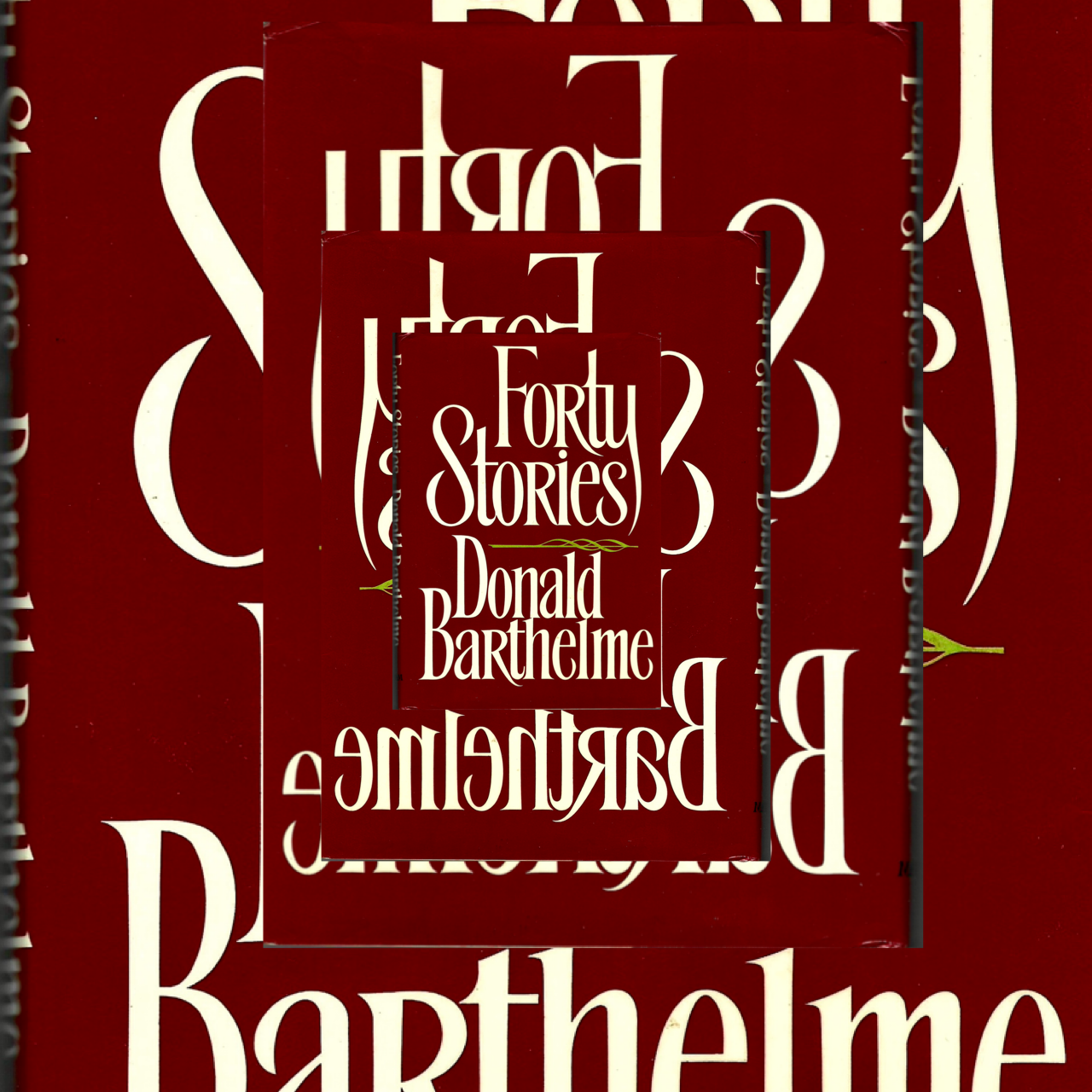
Donald Barthelme’s Forty Stories in reverse, Part III

Previously,

Stories 40-36

Stories 35-32

31. “Sakrete” (first published in The New Yorker, 25 Sep. 1983)

“Sakrete” is a silly little domestic riff about garbage can theft, rats, and an alcoholic trying to work with concrete. It’s not a very good story and I have no idea why it was included in Forty Stories. I do like that it shows a general respect for garbage cans and garbage collection (very interested parties should check out Stephen Dixon’s excellent novel Garbage). Here is the last paragraph, the highlight of the story:

 There are now no garbage cans on our street—no garbage cans left to steal. A committee of rats has joined with the Special Provisional committee in order to deal with the situation, which, the rats have made known, is attracting unwelcome rat elements from other areas of the city. Members of the two committees exchange secret grips, grips that I know not of. My wife drives groups of rats here and there in her yellow Pontiac convertible, attending important meetings. The crisis, she says, will be a long one. She has never been happier.

30. “Porcupines At The University” (Amateurs, 1976)

Another trifle—am I regretting this project, this rereading of Forty Stories? The stories in Sixty Stories are so, so much stronger—and those stories were organized chronologically. Going backwards through these is not really going backwards through time, through the artist’s anti-maturation, but rather just, like, making it more difficult to find one’s place in a book. “Porcupines” is a goof on academia that — and I say this as a compliment — at best reads like an alcoholic’s surrealist riff on a college film. Skip it!

29. “The Catechist” (Sadness , 1972)

This is a good story, “The Catechist.” But also a very Catholic one, without being, like, small-c catholic. There’s a bit of narrativizing here that Barthelme would eventually dispense with in his dialogues, the form that he would eventually settle on for his short stories. I say “settle on” but Barthelme died quite young, or, it seems to me, at 45, quite young—dying at 58. Barthelme died from throat cancer, probably a result of his alcoholism (pure conjecture on my part, this last clause):

The catechist reads from his book. “The candidate should be questioned as to his motives for becoming a Christian.”
I think: My motives?
He says: “Tell me about yourself.”
I say: “I’m forty. I have bad eyes. An enlarged liver.”
“That’s the alcohol,” he says.
“Yes,” I say.
“You’re very much like your father, there.”
“A shade more avid.”

28. “Lightning” (Overnight to Many Distant Cities, 1983)

This is a great story. Or at least a very good story, unexpectedly so, written a mode approaching near-realism or even near-dirty-realism. Was Barthelme flexing his muscles in the mirror after having read a story by Raymond Carver? Probably not, but I like to imagine it (I imagine his muscles beefier and musclier than they likely were). “Lightning” has a fairly straightforward ( and unBarthelemesque) plot:

Edward Connors, on assignment for Folks, set out to interview nine people who had been struck by lightning. “Nine?” he said to his editor, Penfield. “Nine, ten,” said Penfield, “doesn’t matter, but it has to be more than eight.” “Why?” asked Connors, and Penfield said that the layout was scheduled for five pages and they wanted at least two people who had been struck by lightning per page plus somebody pretty sensational for the opening page. “Slightly wonderful,” said Penfield, “nice body, I don’t have to tell you, somebody with a special face. Also, struck by lightning.”

The story is ultimately a romantic comedy, with reporter Edward finally finding his “face”:

People would dig slant wells for this woman, go out into a producing field with a tank truck in the dead of night and take off five thousand gallons of somebody else’s crude, write fanciful checks, establish Pyramid Clubs with tony marble-and-gold headquarters on Zurich’s Bahnhofstrasse. What did he have to offer?

He finds something to offer. This is probably the best one yet in Forty Stories (in reverse, anyway).

Charles Burns’ Final Cut explores the irreal reality of artistic ambition

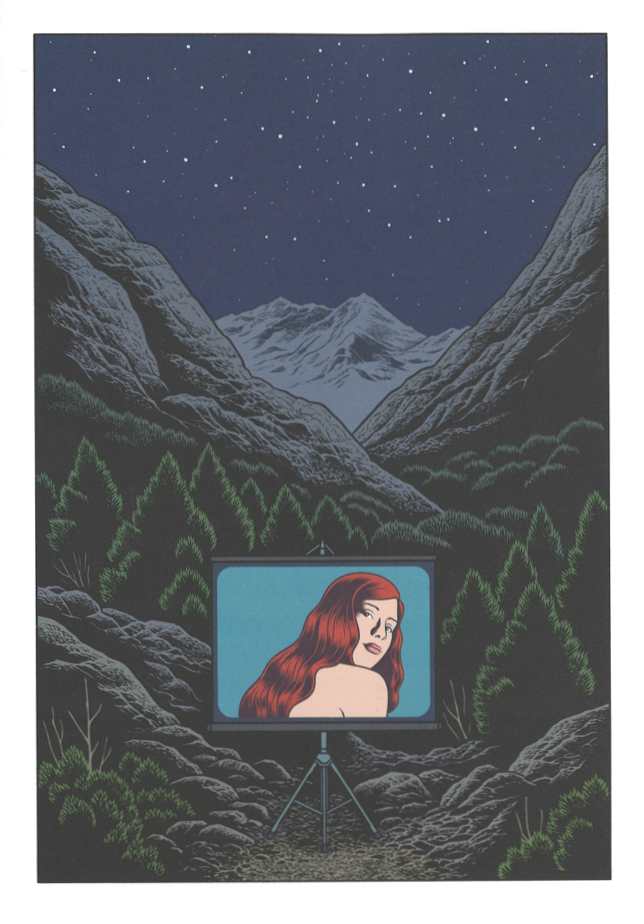
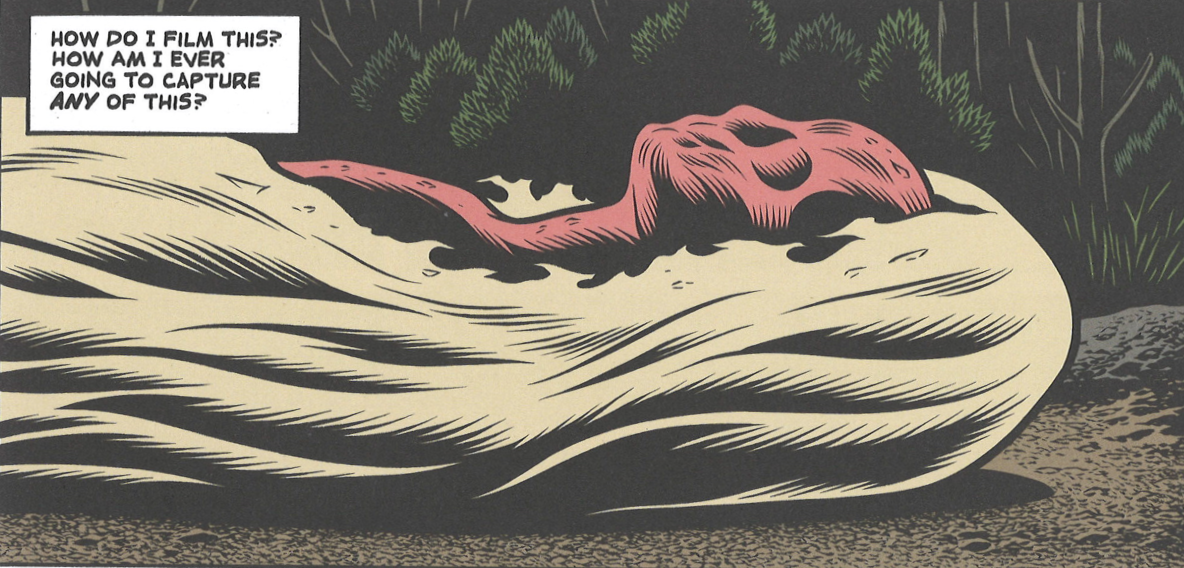
Charles Burns’ latest graphic novel Final Cut tells the story of Brian, an obsessive would-be auteur grappling with an unrealized film project. Brian hopes to assemble his film — also titled Final Cut — from footage he shoots with friends on a weekend camping trip, but the messiness of reality impinges the weird glories of his vibrant imagination. He cannot bring his vision to the screen. He cannot capture all the “fucked-up shit going on inside my head.”
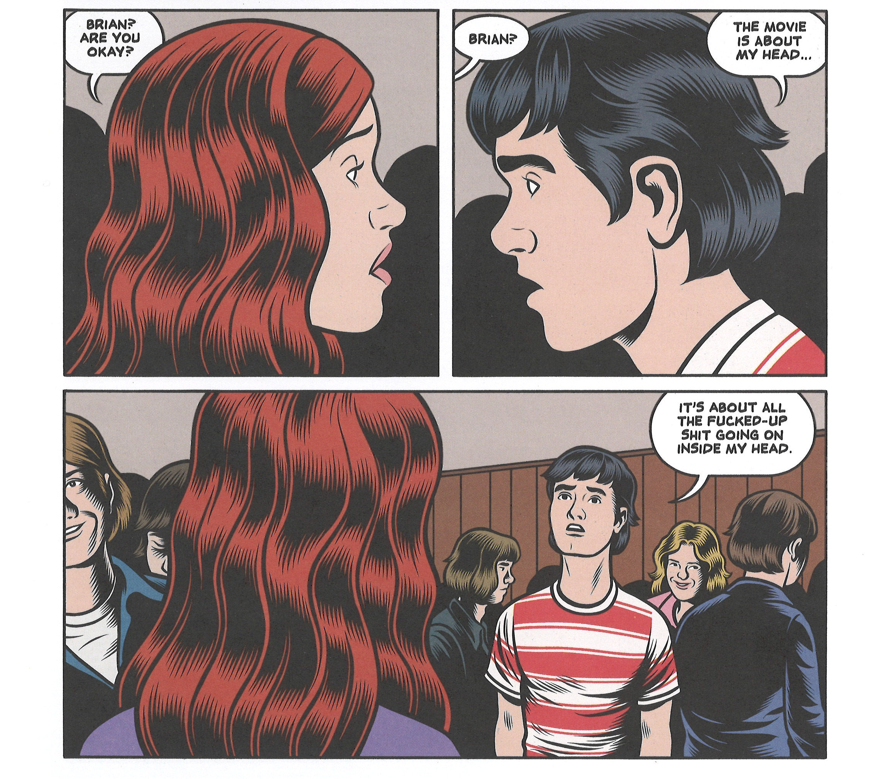
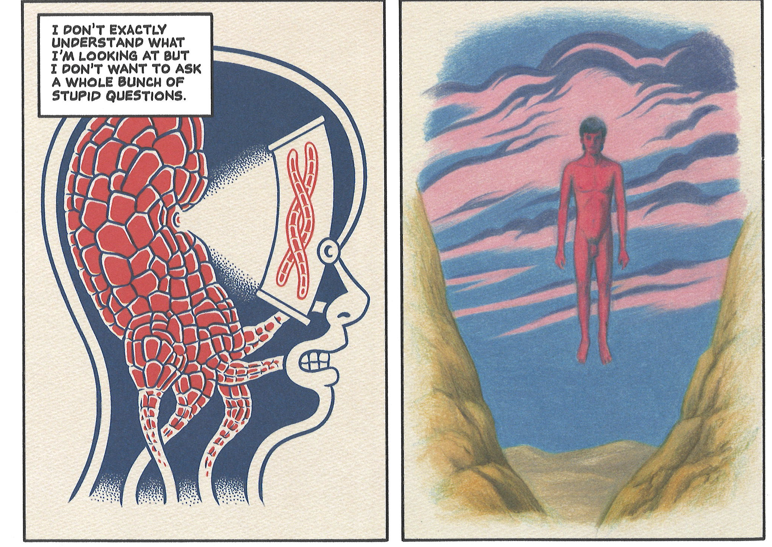
Capturing all the fucked-up shit going on inside my head is a neat encapsulation of the Artistic Problem in general. It’s not that Brian doesn’t try; if anything, he tries too hard. His best friend and erstwhile cameraman Chris is there to help him, along with his crush Laurie and their friend Tina—but ultimately, these are still kids at play. They indulge Brian’s artistic whims, but at a certain point they’d rather swim, drink, and smoke than shoot yet another scene they can’t comprehend.

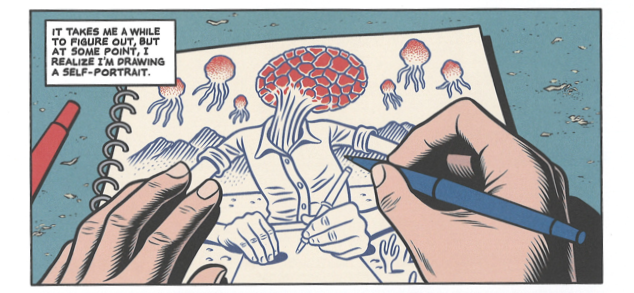
Eschewing straightforward narrative conventions, Final Cut unfolds in a blend of flashbacks, dreamscapes, and flights into Brian’s imagination. The book also gives over to Laurie’s consciousness, providing an essential ballast of realism to anchor Brian’s (and Burns’, I suppose) surrealism. Brian would have Laurie as his muse, trying to capture her in his sketchbook, in his film, and in the intense gaze of his mind’s eye. And while Laurie is fascinated by Brian’s visions, she doesn’t understand them.

The last member of Brian’s would-be acting troupe is Tina, an earthy, funny gal who drinks a bit too much. She plays foil to Brian’s ambitions; her animated spirit punctures the seriousness of his film shoot. Again, these are just kids in the woods with a camera and camping gear.

And the film itself? Well, it’s about kids camping in the woods. And an alien invasion. And pod people.

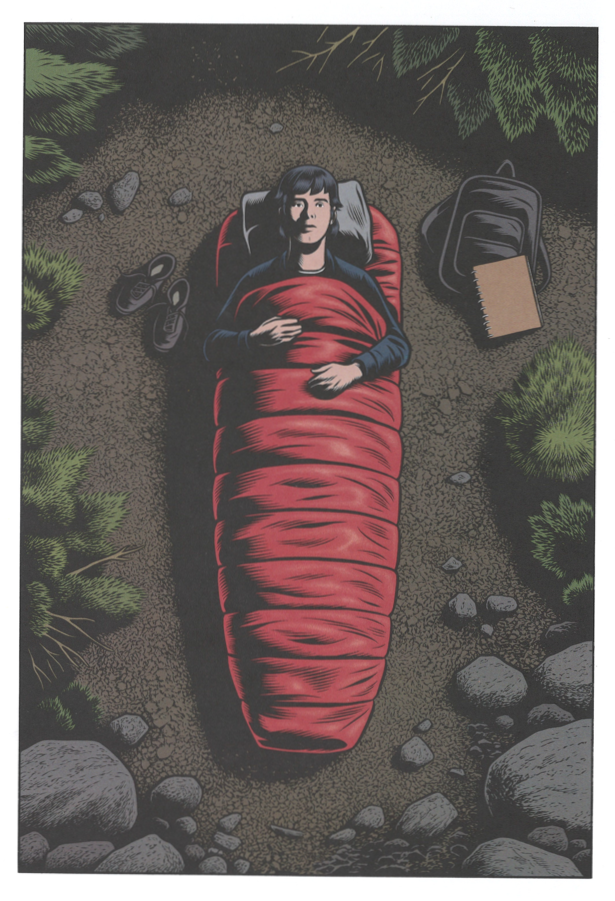
The pod-people motif dominates Final Cut. We get the teens in their larval sleeping bags, transformed into aliens in their cocoons (echoed again in Brian’s imagination and in his sketches). The motif looms larger: Can we really know who a person is? Could they be someone else entirely? Can we really ever know all the fucked-up shit going on inside their head?

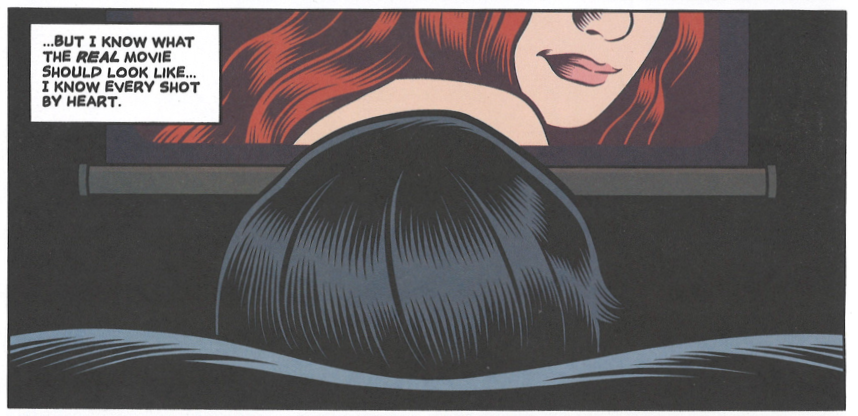
Indeed, Don Siegel’s 1956 film Invasion of the Body Snatchers is a major progenitor text for Final Cut. Brian even takes Laurie on a date to a screening of Invasion; he’s so mesmerized by the film that he weeps. Burns renders stills from the film in heavy chiaroscuro black and white, contrasting with the vibrant reds, maroons, and pinks that reverberate through the novel.

Burns recreates stills from another black and white film, Peter Bogdanovich’s 1971 coming-of-age heartbreaker The Last Picture Show. Again, Brian is obsessed with the film—or by the film, perhaps. In particular, he’s infatuated with Cybill Shepherd’s Jacy, whose character he imaginatively merges with his conception of Laurie.

While Invasion of the Body Snatchers is a science-fiction horror film, a deep sense of reality-soaked dread underpins it; The Last Picture Show is utterly real in its evocations of the emotional and physical lives of teenagers. Both films convey a maturity and balance of the fantastic with the real that Brian has not yet purchased via his own experiences, his own failures and heartbreaks. 

The maturity and balance that Brian can imagine but not execute in his Final Cut is precisely the maturity and balance that Burns achieves in his Final Cut. Simply put, Final Cut is the effort of a master performing at the heights of his power, rendered with inspired technical proficiency. It delivers on themes Burns has been exploring from the earliest days of his career.

There’s the paranoia and alienation of adolescence Burns crafted in Black Hole, here delivered in a more vibrant, cohesive, and frankly wiser book. There’s the hallucinatory trauma and repression he conveyed in the X’ed Out trilogy (collected a decade ago as Last Look, the title of which prefigures Final Cut). There’s also an absence of parental authority here, a trope that Burns has deployed since 1991’s Curse of the Molemen. (In Final Cut, Brian’s mentally-unstable mother is a dead-ringer for Mrs. Pinkster, the domestic abuse victim rescued by the child-hero of Curse of the Molemen). There’s all the sinister dread and awful beauty that anyone following Burns’ career would expect, synthesized into his most lucid exploration of the inherent problems of artistic expression.

Ultimately, in Final Cut Charles Burns crafts a portrait of the artist as a weird young man. Brian wrestles with the friction sparked from his vital imagination butting up against cold reality. His ambitious unfinished film mirrors his own incomplete journey as an artist, highlighting the clash between youthful creative fervor and the inevitable constraints of life, experience, and maturity. Burns’ themes of alienation and artistic ambition may be familiar, but Final Cut feels fresh and vibrant, the culmination of the artist’s own entanglements with the irreality of reality. Highly recommended.

Riff on some books I’m reading, have read, and should really review

Hurricane Milton passed far enough south last night to leave our city relatively untroubled. There were power outages here but not the expected flooding. Most of my anxiety was focused on my family in the Tampa Bay area, all of whom are safe; we’re just not sure about the material conditions of the things they left behind.

Milton seemed to suck the summer air out of Northeast Florida; when I got out of bed and went outside to investigate the loud THUNK that woke me up at four a.m., I was shocked at how cold the air felt. It was only about 66°, but all the humidity seemed gone, even in the cold sprinkling rain. (The THUNK was our portable basketball hoop toppling over.)

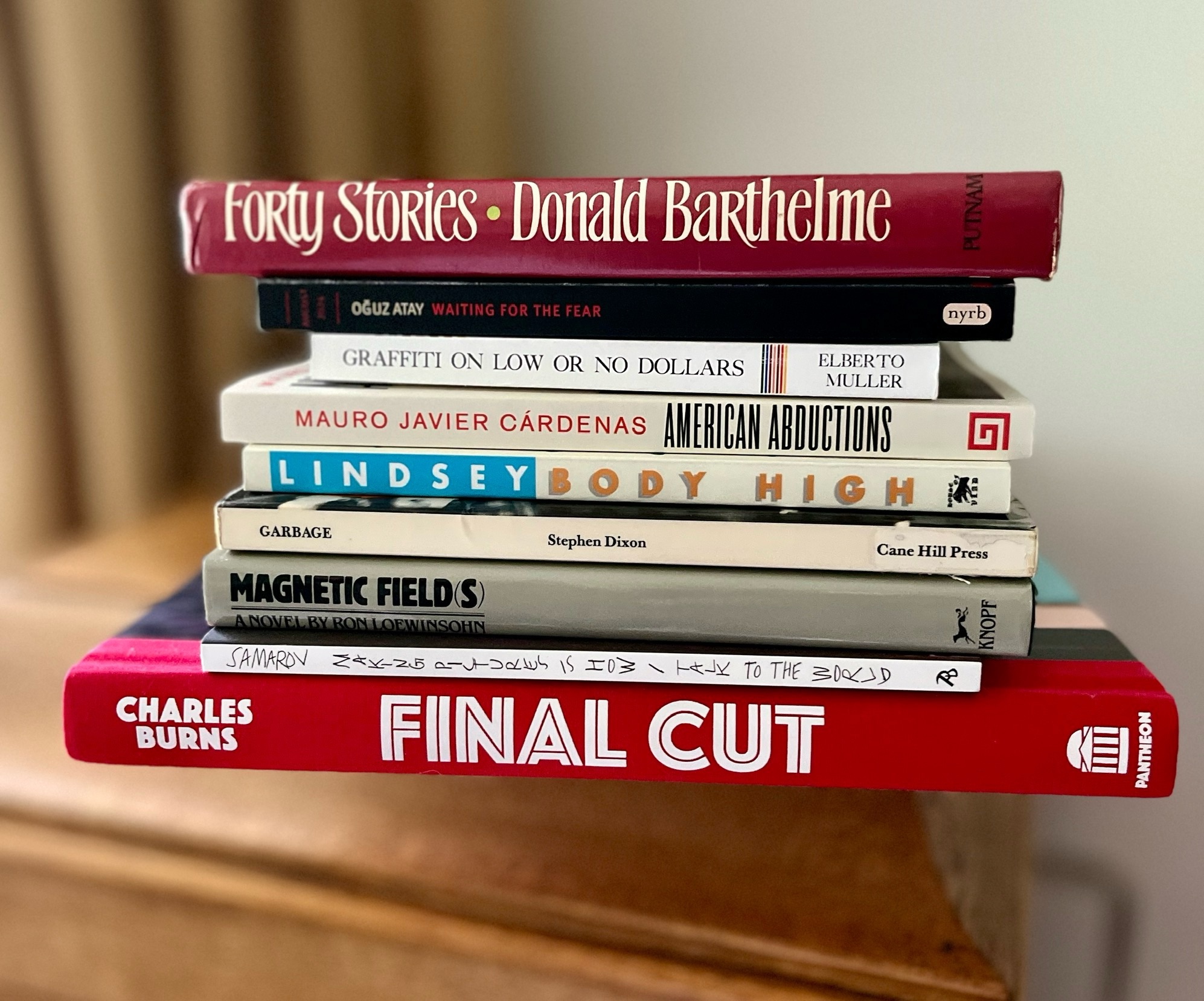
I thought I might try to knock out a review or a write-up of one of the many books I’ve finished that have stacked up as the summer has slowly transitioned to autumn. College classes have been canceled through to Tuesday. I have, ostensibly a “free” week; maybe some words, harder to cobble together for me these days, would come together, no? For the past few years I’ve focused more on reading literature with the attempt to suspend analysis in favor of, like, simply enjoying it. I realized I’d gotten into the habit of reading everything through the lens of this blog: What was I going to say about the book after reading it? I’ve been happier and read more sense freeing myself from the notion that I need to write about every fucking book I read. But the good books stack up (quite literally in a little place I have for such books); I find myself simply wanting to recommend, at some level, however facile, some of the stuff I’ve read. So forgive this lazy post, organized around a picture of a stack of books. From the top down:

Forty Stories, Donald Barthelme

A few years ago, I read Donald Barthelme’s collection Sixty Stories in reverse order. A few days ago, a commenter left me a short message on the final installment of that series of blogs: “Now do Forty Stories.” I think I have agreed–over the past week I’ve read stories forty through thirty-five in the collection. More to come.

Waiting for the Fear, Oğuz Atay; translation by Ralph Hubbell

A book of cramped, anxious stories. Atay, via Hubbell’s sticky translation, creates little worlds that seem a few reverberations off from reality. These are the kind of stories that one enjoys being allowed to leave, even if the protagonists are doomed to remain in the text (this is a compliment). Standouts include “Man in a White Overcoat,” “The Forgotten,” and “Letter to My Father.”

Graffiti on Low or No Dollars, Elberto Muller

Subtitled An Alternative Guide to Aesthetics and Grifting throughout the United States and Canada, Elberto Muller unfolds as a series of not-that-loosely connected vignettes, sketches, and fully-developed stories, each titled after the state or promise of their setting. The main character seems a loose approximation of Muller himself, a bohemian hobo hopping freights, scoring drugs, and working odd jobs—but mostly interacting with people. It kinda recalls Fuckhead at the end of Denis Johnson’s Jesus’ Son (a book Graffiti spiritually resembles) praising “All these weirdos, and me getting a little better every day right in the midst of them.” Muller’s storytelling chops are excellent—he’s economical, dry, sometimes sour, and most of all a gifted imagist.

American Abductions, Mauro Javier Cárdenas

If I were to tell you that Mauro Javier Cárdenas’s third novel is about Latin American families being separated by racist, government-mandated (and wholly fascist, really) mass deportations, you might think American Abductions is a dour, solemn read. And yes, Cárdenas conjures a horrifying dystopian surveillance in this novel, and yes, things are grim, but his labyrinthine layering of consciousnesses adds up to something more than just the novel’s horrific premise on its own. Like Bernhard, Krasznahorkao, and Sebald, Cárdenas uses the long sentence to great effect. Each chapter of American Abductions is a wieldy comma splice that terminates only when his chapter concludes—only each chapter sails into the next, or layers on it, really. It’s fugue-like, dreamlike, sometimes nightmarish. It’s also very funny. But most of all, it’s a fascinating exercise in consciousness and language—an attempt, perhaps, to borrow a phrase from one of its many characters, to make a grand “statement of missingnessness.”

Body High, Jon Lindsey

I liked Jon Lindsey’s debut Body High, a brief, even breezy drug novel that tries to do a bit too much too quickly, but is often very funny, gross, and abject. The narrator, who telegraphs his thoughts in short, clipped sentences (or fragments cobbled together) is a fuck-up whose main income derives from submitting to medical experiments. He dreams of scripting professional wrestling storylines though, perhaps one involving his almost-best friend/dealer/protector/enabler. When his underage-aunt shows up in his life, activating odd lusts, things get even more fucked up. Body High is at its best when it’s at its grimiest, and while it’s grimy, I wish it were grimier still.

Garbage, Stephen Dixon

I don’t know if Dixon’s Garbage is the best novel I’ve read so far this year, but it’s certainly the one that has most wrapped itself up in my brain pan, in my ear, throbbed a little behind my temple. The novel’s opening line sounds like an uninspired set up for a joke: “Two men come in and sit at the bar.” Everything that unfolds after is a brutal punchline, reminiscent of the Book of Job or pretty much any of Kafka’s major works. These two men come into Shaney’s bar—this is, or at least seems to be, NYC in the gritty seventies—and try to shake him down to switch up garbage collection services. A man of principle, Shaney rejects their “offer,” setting off an escalating nightmare, a world of shit, or, really, a world of garbage. I don’t think typing this description out does any justice to how engrossing and strange (and, strangely normalGarbage is. Dixon’s control of Shaney’s voice is precise and so utterly real that the effect is frankly cinematic, even though there are no spectacular pyrotechnics going on; hell, at times Dixon’s Shaney gives us only the barest visual details to a scene, and yet the book still throbs with uncanny lifeforce. I could’ve kept reading and reading and reading this short novel; it’s final line serves as the real ecstatic punchline. Fantastic stuff.

Magnetic Field(s), Ron Loewinsohn

I ate up Loewinshohn’s Magnetic Field(s) over a weekend. It’s a hypnotic triptych, a fugue, really, with phrases sliding across and through sections. We meet first a burglar breaking into a family’s home and learn that “Killing the animals was the hard”; then a composer, working with a filmmaker; then finally a novelist. Magnetic Field(s) posits crime and art as overlapping intimacies, and extends these intimacies through imagining another life as a taboo, too-intimate trespass.

Making Pictures Is How I Talk to the World, Dmitry Samarov

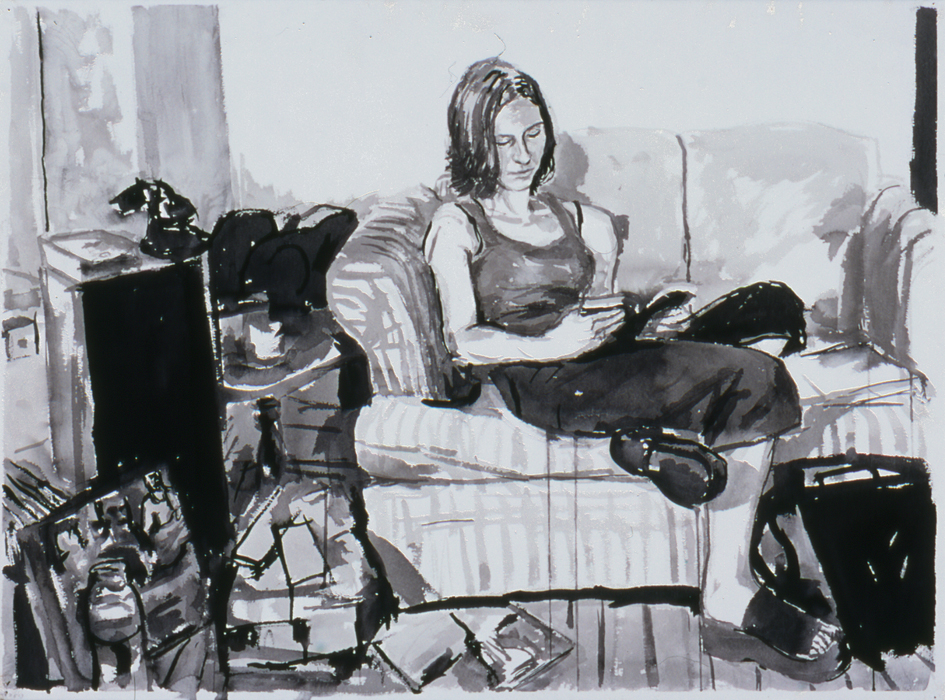
Making Pictures spans four decades of Samarov’s artistic career. Printed on high-quality color pages, the collection is thematically organized, showcasing Samarov’s different styles and genres. There are sketches, ink drawings, oils, charcoals, gouache, mixed media and more—but what most comes through is an intense narrativity. Samarov’s art is similar to his writing; there isn’t adornment so much as perspective. We get in Making Pictures a world of bars and coffee shops, cheap eateries and indie clubs. Samarov depicts his city Chicago with a thickness of life that is better seen than written about. Some of my favorite works include interiors of kitchens, portraits of women reading, and scribbly but energetic sketches of indie bands playing live. What I most appreciate about this collection though is that it showcases how outside of the so-called “art world” Samarov’s work is–and yet this is hardly the work of a so-called “outsider” artist. Samarov trained at the School of the Art Institute of Chicago, and yet through his career he has remained an independent, “not associated with an institution such as an art gallery, college, or museum,” as he writes in his book.

Beth, Dmitry Samarov, 2000

Final Cut, Charles Burns

I don’t know anything about Charles Burns’s upbringing, his youth, his personal life, and I don’t mean to speculate. However, it’s impossible not to approach Final Cut without pointing out that for several decades he’s been telling the same story over and over again—a sensitive, odd, artistic boy who is out of place even among others out of place. This is in no way a complaint—he tells the story with difference each time. And with more coherence. Final Cut is beautiful and sad and also weird enough to fit in neatly to Burns’s oeuvre. But it’s also more mature, a mature reflection on youth really, intense, still, but without the claustrophobia of Black Hole or the mania of his Last Look trilogy. There’s something melancholy here. It’s fitting that Burns employs the heartbreaking 1971 film The Last Picture Show as a significant motif in Final Cut.

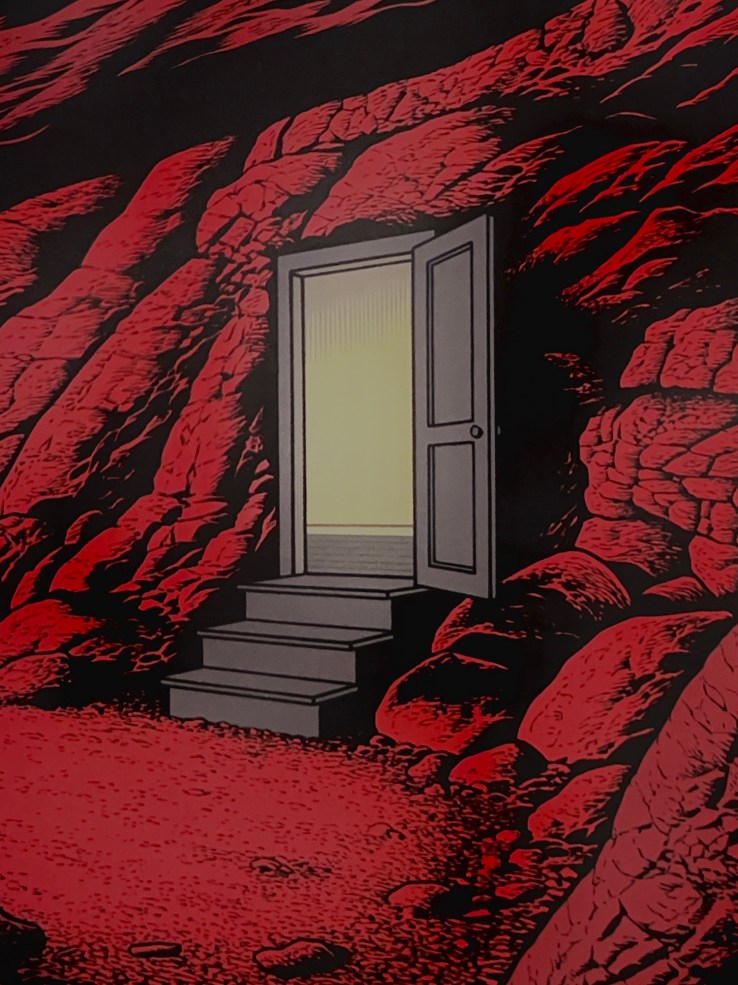
Image from Final Cut, Charles Burns, 2024

A review of Dinah Brooke’s excellent cult novel Lord Jim at Home

Dinah Brooke’s 1973 novel Lord Jim at Home had been out of print for five decades — and had never gotten a U.S. release — until McNally Editions republished in 2023 with a new foreword by the novelist Ottessa Moshfegh. I always save forewords until after I’ve finished a novel, so I missed Moshfegh’s implicit advice to go into Lord Jim at Home cold. She notes that the recommendation she received to read it “came with no introduction,” and that “I wouldn’t have wanted the effect of the novel to be mitigated in any way, so I’m reluctant to introduce it now.”

I am not reluctant to write about Brooke’s novel because I am so enthusiastic about it and I think those with tastes in literature similar to my own will find something fascinating in its plot and prose. However, l agree with Moshfegh’s advice that Lord Jim at Home is best experienced free from as much mitigating context as possible. I had never heard of the novel before lifting it from a bookseller’s shelf, attracted by the striking cover; I flipped it over to read a blurb parsed from Moshfegh’s foreword attesting that Brooke’s novel “was an instrument of torture. It’s that good.” The inside flap informed me that reviews upon its publication “described it as ‘squalid and startling,’ ‘nastily horrific,’ and a ‘monstrous parody’ of upper-middle class English life.” I was sold.

Lord Jim at Home is squalid and startling and nastily horrific. It is abject, lurid, violent, and dark. It is also sad, absurd, mythic, often very funny, and somehow very, very real for all its strangeness. The novels I would most liken Lord Jim at Home to, at least in terms of the aesthetic and emotional experience of reading it, are Ann Quin’s Berg, Anna Kavan’s Ice, Mervyn Peake’s Gormenghast novels, Virginia Woolf’s Mrs. Dalloway, and James Joyce’s Portrait (as well as bits of Ulysses). (I have not read Conrad’s Lord Jim, which Brooke has taken as something of a precursor text for Lord Jim at Home.)

After finishing Lord Jim at Home, I read it again by accident. At first I intended to take a few notes for a possible review, but after the first few pages I just kept reading. On a second reading, Brooke’s novel was just as strange—maybe even stranger—even if I was able to read it much more quickly, finding myself quicker to tune into the novel’s competing (and complementary) narrative registers. I found it far more precise, too, in the rhetorical development of its themes; Brooke’s styles and tones shift to capture the different ages of its hero. The novel begins in a mythical, archetypal mode and works its way through various registers, exploring the tropes of schoolboy novels, romances, war stories, adventure tales,  modernism, realism, and journalism. But despite its shifting modes, Lord Jim at Home is not a parodic pastiche. Rather, at its core, Lord Jim at Home skewers how aesthetic modes—primarily those derived from notions of class and manners—cover over abject cruelty. As Moshfegh puts it in her forward, Lord Jim at Home is “an accurate portrayal of how fucked-up people behave, artfully conveyed in a way that nice people are too polite to admit they understand.”

I’ve tried to be clear that I think it’s best to come to Lord Jim at Home without too much context—it’s best to just go with the novel’s strangeness. Below, however, I offer a more detailed discussion of the novel, its language, and some elements of the plot for those so inclined.

Answer, 2014 by Henrietta Harris

Continue reading “A review of Dinah Brooke’s excellent cult novel Lord Jim at Home”

A review of The Son of Man, Jean-Baptiste Del Amo’s novel of atavistic inter-generational violence

Jean-Baptiste Del Amo’s latest novel The Son of Man takes place almost entirely over a three seasons in a dilapidated manor somewhere in rural France, sometime near the end of the 20th century. The plot is deceptively simple: A father returns to his young wife and nine-year-old son after a six-year absence, only to immediately drag them away to his remote childhood home, a place in the mountains called Les Roches. The father desires to refurbish the ancestral manse and restore his family. Complicating matters is the mother’s new pregnancy and frequent migraines and the son’s ambivalence about his relationship with his long-absent father. As the slim novel progresses, the oppressive isolation the mother and son endure tips over into dread and then horror. The Son of Man is ultimately a novel about the atavistic transmission of violence from generation to generation.

Del Amo’s writing, conveyed in Frank Wynne’s limpid translation, is precise and cinematic. Del Amo gives us phenomena and response to that phenomena, but withholds the introspective logic of cause-and-effect or analysis that often dominates novels. Instead, he allows us to see what his characters see and to take from those sights our own interpretations. Consider the following simple passage, where, a few days after arriving at the crumbling old house, the father and mother argue:

The faint voices of the father and mother reach the boy as a confused murmur. He walks to the gable door and looks at the landscape below, at the slow, solemn, hypnotic swaying of the larches and the tall pines on the edge of the forest.

He sees the mother and father standing facing each other.

The mother stands, left hand gripping her right arm, right hand on her hip in a gesture of utter defiance. While the father is speaking, she is shaking her head as though refusing to listen to what he is saying or dismissing his words, while, for his part, the father is nodding in an attempt to convince her or make her see reason.

The father gestures wildly as he speaks, pointing to the house, the grasslands, the mountain peaks that rise into the impassive sky. When he turns towards him, the son suppresses a shudder. Blood drains from his hands, his fingers prickle with pins and needles; if the father sees him standing in the gable window, he might think he has been watching, spying on them, trying to make sense of the words carried on the wind in fits and snatches.

The son cannot fully read the signs and signals in front of him. He’s left with “fits and snatches” and gestures and movements that are, in a certain sense, part of the same material as everything else he can presently behold—the pines, the larches, the wind. And yet the boy intuits in his witnessing an “irrefutable proof of his [own] transgression, perhaps even of his [own] guilt.”

Del Amo conjures a dark, oppressive world where his titular son of man is born into a prelingual state of guilt, a strange inheritance that yields violence. We see much of the novel’s action through the son’s perspective–or not really his perspective, but rather we see the action as through a powerful invisible camera set close to the boy’s head, but never fully inside it. We see the son seeing his mother, whom he loves and understands, in his own way, and seeing his father, who is frightening and likely unknowable:

On the father’s left side, the son notices a scar tracing a line some twenty centimetres long across the skin slantwise towards the shoulder blade, as though the father had been stabbed and the blade had struck a bone and deviated its course. The scar tissue looks smooth, like the skin of a newborn baby or a burn victim.

Spellbound, the boy cannot tear his eyes away, and when the father stops to wipe his forehead with the back of his hand and light a cigarette, he sees the child staring at the scar but says nothing.

The accretion of concrete details coheres into slow burning dread. Del Amo shows us images and gives us details that allow us to infer an explanation for the father’s previous six-year absence that the son cannot yet comprehend. At the same time, we see the father and the mother each moving along separate poles of manic despair. The mother dreams of an impossible escape; the father dreams of an impossible inheritance. The father does not possess the material, tools, or skill to properly restore Les Roches: 

He seems to have decided to do battle with this plot of land whose obstructiveness is an affront, to remove anything and everything that would thwart his plan, or to give free rein, with every swing of the pickaxe, to a blind fury for reasons the child cannot fathom. …

He casts a strangely distended shadow, a vision of disproportionate limbs, an evil doppelgänger that emanates from him, dogging his steps, aping his every gesture, every swing of the axe, every throw of a stone, in a way that is monstrous and terrifying.

In time, through hints and implications, we come to understand that the father’s monomaniacal restoration project has resulted from his own terrible childhood. These hints and implications explode late in the book into a fifteen-page monologue from the father, a bitter screed like something out of a Thomas Bernhard novel. The monologue climaxes in the father’s realization that he has repeated his own awful father’s ways. He declares that buried memories are “simply waiting for someone to come and dredge them from their deep torpor, so that they can resurface and endlessly repeat the same failures, the same disasters.”

It’s true that The Son of Man emanates a startling claustrophobic horror. And yet it also glitters at times with moments of strong beauty. If Del Amo’s lucid, cinematic prose evokes something like Kubrick’s The Shining, it also is capable of something like Malick’s Days of Heaven. There are idyllic moments, such as when the boy and his mother bathe in the plunge pool under the weir of a waterfall, the rumbling of which, from a distance, the son had “first thought was the voice of the mountain.” The son also makes his own adventures into the forest, meeting a family of wild horses, one of which is missing an eye.

Through such encounters, the son achieves a brief moment of transcendence late in the novel. His fleeting epiphany balances his father’s bitter declaration that humans are “born with this void inside, this dizzying void they desperately strive to fill throughout their brief, inconsequential, pitiful time in this world, paralyzed as they are by their transience, their own absurdity, their own vanity…” For the father, this “dizzying void” is something that must be filled — “Just like you might try to fill a grave with a shovelful of earth.” 

Let us contrast the father’s dizzy void with the son’s epiphany:

He sits far away from the nimbus of soft light that radiates from the house, gazing at the inky vault where fires that existed before the world was world still shine, and feeling the presence of the earth, the vastness beneath him. Dizzily, he thinks of the lives simultaneously played out everywhere across its surface, knowing that somewhere a child is walking barefoot, another is falling asleep in a soft bed, that a dog lies dying in the dust in the shade of a sheet of metal, that a city in some far-flung country is shimmering in the darkness, that innumerable creatures are moving about, animated by this mysterious and insistent force that is life, which courses through each of them.

Puzzlingly, he can also feel the great movement – imperceptible yet vertiginous – that carries everything, including him, through time and space, all lives, human and animal, and with them the rocks, the trees, the blazing stars.

Of these moments, he will retain the memory of an epiphany, of being struck by the true nature of things, which no language, no words can communicate; but what lingers will be little more than the trace of a dream, the sense of something being granted and instantly revoked.

The beauty of the first two paragraphs sinks into the reality of the final paragraph. Epiphanies don’t last; we can catch the memories, maybe, but even then, what was granted was “instantly revoked.” We remain trapped in language, outside “the true nature of things.” Will the son then “endlessly repeat the same failures, the same disasters” as his father (and his father and his father and…)? The novel seems to suggest that this will likely be the case, even if it opens other, more optimistic avenues.

In this light, it’s difficult to interpret the novel’s mythic overture. The first fifteen pages of The Son of Man focus on a troop of prehistoric hunter-gatherers. The episode culminates in a hunt scene in which an adolescent son makes his first kill—a doe—and then seems to be fully initiated by his father, who marks him in the deer’s blood. The overture ends with the son fantasizing about “abandoning the group” and laying down in the humus to be swallowed up by the earth. This is, in a sense, a version of the same fantasy the contemporary son will have in the forest around Les Roches tens of thousands of years later. 

It’s unclear how Del Amo would have us read the prehistoric overture. On one hand, it suggests a time of idyllic balance–of humanity in, and not apart from, nature. And on the other hand, it concludes with the same desire to escape civilization that, millennia later, the father will inherit.

Perhaps a second reading of The Son of Man might yield a more conclusive answer, or a second reading of Frank Wynne’s translation of Del Amo’s previous novel, Animalia, a visceral, naturalistic, and very precise rendering of humans as animals that takes on an epic scope. English-only readers interested in Del Amo’s writing couldn’t go wrong with either of these novels, which, unless I’m mistaken, are the only two on the market in English translation. I look forward to reading more of Del Amo’s novels in the future. Until then, I highly recommend The Son of Man.

 Jean-Baptiste Del Amo’s The Son of Man is now available in the U.S. in translation by Frank Wynne from Grove Atlantic.

On Vladimir Sorokin’s Blue Lard, pp. 188-222 (black brows, white silk, silver belt, golden syringe)

Previously on Blue Lard…

pp. 1-47

pp. 48-110

pp. 111-61

pp. 162-87

The following discussion of Vladimir Sorokin’s novel Blue Lard (in translation by Max Lawton) is intended for those who have read or are reading the book. It contains significant spoilers; to be very clear, I strongly recommend entering Blue Lard cold.

We’d left off with the Earth-Fucker’s successfully sending an enormous frozen cherub with enormous frozen genitals backwards in time to land in the middle of the Bolshoi Theater in the Spring of 1954. The alarmed comrades in the audience are (momentarily) pacified by Joseph Stalin’s chief advisers who are in attendance, even if their Leader is not.

In our—which is to say our historical timeline as persons in this historical world, and not our timeline as in our timeline as readers of this novel—in our own timeline, both Stalin and Lavrentiy Beria, the head of his secret police, died in 1953. But the world of Blue Lard is quite different and Beria and Stalin are both quite alive.

Stalin is somehow extra-alive, ultravivid, a kind of holographic pop art caricature of himself whose bearing, attire, and aura seem to owe more to glam rock and Hollywood than drab Mao tunics. We first meet him as his lieutenants try to give him the news of the time-travelling ice cone. His private rooms are opulent pink marble, adorned with Chinese rugs, vases, and priceless art, and attended by “Uzbek governesses in silk Uzbek dresses, bloomers, and tubeteikas” — all guarded by Sisul, his “personal servant” who sleeps like a guard dog upon a carpet in front of Stalin’s rooms. And Dear Leader himself?

The leader was tall and well built with an open, intelligent face that looked as if it had been carved from ivory; his short-cropped black hair was streaked with gray, his tall forehead smoothly intersected with the beginnings of his baldness, and his beautiful, black brows smoothly arched up from his lively, penetratingly brown eyes….Stalin looked to be about fifty years old. He was dressed in a kosovorotka of white silk with a silver belt and tight pants of white velvet tucked into patent leather white ankle books lacquered boots with silver embroidery.

An aging rock star. But he still has the juice.

And no wonder Stalin is aging. When we first meet him, he is berating his sons Yakov and Vasily who are in full evening cross-dress:

A long evening dress of black velvet hugged Yakov’s thin, muscular figure; it was fastened with a diamond scorpion and emblazoned with white spots upon its wearer’s miserly bosom; his curly, chestnut-colored wig drowned in the dark-blue boa around his naked shoulders; black mesh gloves, one of which was torn, reached from his thin, feminine hands to his forearms; three rings of white gold with sapphires and emeralds and two platinum bracelets with the tiniest of diamonds decorated his hands and wrists; his thin face, with his father’s distinctive features, was covered in a thick layer of powder, which couldn’t disguise the swelling of his bruised right cheekbone; his eyes, made up with blue eyeliner, were fixed on the floor; he held a thin snakeskin handbag underneath his armpit. Vasily, short and very portly, was dressed in a beige crepe-de-chine dress with a standing collar and high shoulders cascading down to the floor in tiny ruffles and embroidered with peach-colored roses upon the bosom; a large pearl dangled from his neck along a long, thin chain; his chubby hands were squeezed into white kid gloves soiled with filth from the street; though his blond wig had lost its initial shape, there was still a mother-of-pearl comb stuck into it; his chubby neck was covered with ribbons of black silk; his puffy, painted face, with an abrasion on its chin and features that very much recalled his mother’s, also looked down at the floor; a white patent leather bag on a massive golden chain dangled down from the leader’s youngest son’s shoulder.

Perhaps I have over-quoted here–and I will do so, I fear, in a moment–but I am in love with Sorokin’s lush descriptions of opulent decadence in these scenes (captured in the blue warmth of Max Lawton’s translation). Sorokin’s not exactly crafting a satire or a parody in the alternate Soviet reality he’s ushering us through. Sure, there are satirical and parodical elements and devices, but Sorokin weaves them into something odder, something harder to recognize. It’s beautifully grotesque, and while the bruised cross-dressed half brothers’ attempts to get laid in a fine restaurant and ending up in a brawl is played for slapstick laughs, there’s also real pathos to the familial dynamic Sorokin establishes among the Stalins. And, as I promised to over-share, let me give a description of the rest of Stalin’s family when his second wife and his only daughter enter (giving the half brothers some reprieve):

Both spouse and daughter were dressed in the traditional Russian style. Alliluyeva was wearing an evening dress of apricot-colored silk with a sable fringe and a pearl necklace infiltrated by a large ruby at its lowest extremity; her beautifully styled dark-chestnut hair was fitted into a samshara cap covered in pearls; hanging from her ears shone diamonds on ruby pendants and on her chubby hands gleamed a heavy bracelet and two enchanting diamond rings that once belonged to the Empress Maria Feodorovna. Stalin’s daughter’s slim figure was beautifully enveloped in a tight whitish-grayish-lilac sundress embroidered with gold, silver, and pearl; Vesta’s head was ornamented by a pearl- and diamond-covered kokoshnik and coral threads were woven into her long black braid; dangling from her ears blued earrings of turquoise and pearl and her fingers glittered with emeralds and diamonds.

The lush decadence of the Stalin clan in the second half of Blue Lard mirrors the sordid partying of the BL-3 team way back in the future (?), in the book’s first section (perhaps the monastic Earth-Fuckers, chaste in the main, despite their moniker, mediate these depraved poles). Sorokin’s style is highly-cinematic, and the second half of Blue Lard is particularly filmic, recalling the glittery surrealism of Alejandro Jodorowsky’s The Holy Mountain. But if there’s a tinge of Jodorowsky, there’s also a big dose of Pasolini’s Salò. (Writing this now, I realize that maybe the happy (?!) medium or synthesis of this decadent filmic axis is the comedy/horror of Peter Greenaway’s The Cook, The Thief, His Wife, and Her Lover.)

Blue Lard’s Iosif Stalin exudes a glamorous depravity that’s both charismatic and menacing. Again, Sorikin crafts him into a heightened, pop art reinvention of his historical counterpart. Sorokin’s Stalin dons high-neck collars under bottle-green suits, pomades his thick black hair into a pompadour, and sports a thirty-karat emerald pendant. He’s also addicted to an unspecified substance, which he consumes in an elegant ritual involving a mobile marble column:

Atop the yellowed marble of the column, there was a thin, golden pencil case. Stalin picked it up, opened it, and took out a small golden syringe and a small ampoule. With a deft and laconic motion, he broke the ampoule, filled the syringe with the transparent liquid from the ampoule, opened his mouth, stuck the syringe under his tongue, and made an injection. He then put the syringe and the empty ampoule back into the pencil case and onto the column. This entire procedure, which had long been part of the leader’s life, described and elaborated thousands of times in dozens of world languages, captured by hundreds of film cameras, embodied in bronze and granite, painted with oil and watercolor, woven into carpets and tapestries, carved into ivory and onto the surface of a single grain of rice, glorified by poets, artists, scientists, and writers, sung in simple drinking songs by workers and peasants, was done by Stalin with such striking ease that all those present froze and lowered their eyes, as they had often done in the past.

Again, I didn’t mean to share so much of the language, but I felt myself rushing on the run of Sorokin’s long last sentence there. The decadence of Blue Lard is fun.

And Blue Lard’s fun decadence continues to ramp up as Stalin and his boys prepare for a sumptuous, sinister dinner to discuss the Earth-Fuckers’ time-travelling gift, which they bring into their dining area to observe thawing as they chow. (Meanwhile, elsewhere, Sorokin treats us (?!) to a not-quite-incestuous-but-still-disturbing-sex-scene.) Who is invited to Stalin’s special Earth-Fucker time-travelling ice-cone supper?

In addition to Molotov, Voroshilov, Beria, Mikoyan, Landau, and Sakharov, Stalin had invited Bulganin, Kaganovich, Malenkov, Prince Vasily, the sugar producer Gurinovich, the writers Tolstoy and Pavlenko, the composer Shostakovich, the painter Gerasimov, and the film director Eisenstein to dinner.

For such fine company, a fine meal must be set; again (I repeat again again), I perhaps overshare—but I’ll just lay out the appetizers here (noting that the main course Stalin’s crew will later enjoy a roast pig costumed to resemble “the Judas Trotsky”):

The table was gorgeous; Alexander I’s gold and silver tableware was laid out on a whitish-blue tablecloth, homespun in the Russian style; the abundant Russian appetizers were provocative in their variety: there was smoked eel and jellied sturgeon, venison pâté and stuffed grouse, simple sauerkraut, calf tongue and calf brain, salted mushrooms and jellied suckling pig with horseradish; a golden bear towered up in the middle of the table with a yoke over its shoulders, from which were hanging two silver buckets filled with the oily gleam of black beluga caviar and small, grayish sterlet caviar.

The dinner scene is comic and menacing, giving voices to the various Soviet luminaries and artists assembled. The filmic quality again recalls the aforementioned The Cook, The Thief, His Wife, and Her Lover, as well as the infamous dinner scene in De Palma’s The Untouchables. The violence here never reaches those limits, but it is still grotesque and climaxes in a (literal) punchline.

The night ends with the cone finally cracking, revealing “A frozen giant with monstrous genitals and a small suitcase in his lap was left sitting atop the pallet in the melted water and surrounded by chunks of ice.” Beria and Stalin share an amusing exchange about the creature’s enormous pecker (“How they must love their native soil,” Stalin muses of the Earth-Fuckers), before taking the briefcase and retiring for bed (to Beria’s apparent chagrin).

Next time on Blue Lard: The return of AAA aka Anna Akhmatova and the first appearance of Nikita Khrushchev, whose relations with Blue Lard’s version of Stalin led Russians to protest the book by throwing copies of it into a giant sculpture of a toilet—an abject pop art stunt worthy of a scene from Blue Lard itself.

A review of June-Alison Gibbons’ unsettling novel The Pepsi-Cola Addict

Fourteen-year-old Preston Wildey-King has a lot of problems. He’s on the outs with his girlfriend Peggy. His best friend Ryan always leers at him in a funny way, and Ryan’s older brothers want him to join their gang and do crimes. His older sister Erica accuses him of stealing from her. Preston’s failing at math, and his teacher might be trying to seduce him. His mother doesn’t know what to do with him.

And he’s addicted to Pepsi Cola.

This is, roughly, the premise of June-Alison Gibbons’ 1981 novel The Pepsi-Cola Addict, a raw and distressing young-adult novel that was actually written by a young adult. Gibbons was just sixteen-years-old when she wrote The Pepsi-Cola Addict and pooled her dole money with her twin sister Jennifer to have it published by a vanity press. Two years later, after a spree of petty crimes and then more serious crimes culminating in arson, Gibbons and her sister were committed to a psychiatric hospital and confined there for over a decade. The Gibbons twins’ story was detailed in a book by journalist Marjorie Wallace called The Silent Twins, later followed by a television documentary; in 2022, Wallace’s book was adapted into a feature film of the same name.

I knew nothing of the Gibbons’ sad early life when I picked up The Pepsi-Cola Addict at an indie bookstore, intrigued by the goofy title and bright pop art cover. The jacket copy informed me briefly of the Gibbon twins’ incarceration in Broadmoor psychiatric hospital and called the novel “one of the great works of twentieth-century outsider literature,” but I restrained myself from further exploring the author’s biography until after I’d read her novel (I’d recommend you do the same, reader).

It is difficult to explain how unnerving the world of The Pepsi-Cola Addict is. Gibbons grew up in Wales, the daughter of Barbadian immigrants, but she sets her novel in a version of Malibu Beach the creation of which seems informed primarily by picture postcards and pure fantasy. Preston lives in a shabby apartment in Malibu with his mother and sister. This ratty apartment is across from the beach, where he often wanders at night. He attends something called MALIBU STATE SCHOOL, which (contrary to U.S. school customs) runs year round, even in the (contrary to coastal California meteorological customs) sweltering summer heat.

Everything is more-than-slightly off in Gibbons’ setting. She anchors the plot in realistic visual detail, but the events, mediated via Preston’s bewildered consciousness, can’t square with their own apparent reality. The effect reminds one of the sinister dread the films of David Lynch often evoke from the most mundane of images—a lawn sprinkler, a Dumpster—or the fiction of Roberto Bolaño, which so frequently gnaws at the reader’s stomach, anxiously assuring him that everything could go to shit at any moment.

There’s a grittiness to Gibbons’ version of “Malibu” that belies its pop art contours, an essential griminess that finds its most repeated expression in Preston’s constantly sweating. Our hero sweats and sweats some more. And why shouldn’t he? Preston might be confronted with radical violence or unwanted sexual encounters at any time, and even if it’s not the twin axis of sex and violence coming at him, he’s always in danger of misinterpreting the language, faces, and intentions of every single person he interacts with. But he sweats nonetheless, addict that he is.

I haven’t really touched on Preston’s Pepsi addiction, although it’s definitely a problem, although no one can quite say why it’s a problem. (And, to be clear, he’s addicted to Pepsi, not Coca-Cola, as he makes very clear to Peggy during a date gone wrong (she tries to bring him a Coke)). Girlfriend Peggy has already left Preston once before because of his addiction. Preston’s sister Erica beats him up over the apparent theft of a five-dollar bill she’d saved, which she’s convinced he’s used to buy Pepsi. Preston’s mother is concerned that the Pepsi addiction prevents her boy from his studies—and indeed, he does skip class to surreptitiously sip the sweet nectar from a can he’s hidden in his gym locker.

The novel’s opening scene depicts Preston buying Pepsi in bulk, openly at a grocery store, during daylight, but as the story progresses, his purchases become more coded in furtive anxiety and sexual confusion. Consider this night scene, where a young liquor store clerk looks “somewhat lasciviously” at Preston while he purchases his cans:

He took three cans of pepsi and walked directly toward her. She looked about twenty; her large blue eyes seemed prominent from the rest of her face. Her white pinafore dress strained across her breasts as she turned to calculate money on the large till.

Preston glanced at her hands. Finding no ring on her finger, he looked closer at her. She looked back at him.

“That’ll be one dollar, two nickels please.” Feeling the touch of her hand as he handed her the money, Preston felt a quiver pass through him. He looked intently into her eyes, his excited passion aroused as he sensed a new look come about her. Immediately a hardening pain hit him between his eyes. Preston detached himself from his trance. Hot, speechless he turned and went through the open door, carrying his cans awkwardly.

By the novel’s climax, Preston’s craving for the soda has crossed into criminal territory. He helps a gang ransack a store, but only has eyes for the fizzy dark stuff:

He watched as they pulled down the shelves, scattering food onto the floor. He watched as they raided the store tills, pushing money into their pockets. Preston glanced around nervously. His eyes rested on a familiar stack standing in the corner of the store. With one move of his body Preston was over there, fighting desperately to free them from the cardboard box. His eyes dilated; he ripped off the ring, tilting the can to his lips, as the liquid ran down his chin. The pepsi cola, cool and tingling, entered his throat, like the spray of a fireman’s hose, killing the hotness of the fire.

Have I spoiled the plot’s trajectory by sharing that Preston takes part in the gang’s crime? I don’t think so. The Pepsi-Cola Addict is a picaresque novel, sure, but it also, perhaps paradoxically to the claim I made just a few words before, has clear, linear, and somewhat tragic plot.

And that plot—well, look, I have no idea whether or not Gibbons had read S.E. Hinton’s 1967 novel The Outsiders, a seminal work of American (so-called) “young adult” fiction—but it is the book that, at least in my narrow estimation, The Pepsi-Cola Addict has the most in common with. Like Hinton, Gibbons captures the ever-present anxiety of being a teenager, that time of amorphous body and amorphous mind, that time we find ourselves an outsider among outsiders. And like Hinton, Gibbons was also a teenager writing about teenagers—again, this is truly a “young adult” novel, and to read it is to be thrust into an alienating and alienated consciousness.

It is likely though that we do not immediately think of S.E. Hinton’s The Outsiders as the work of an “outsider artist,” although she likely fits the loosest definitions of that term. (The term’s originator, Roger Cardinal, didn’t really think much of the term; he wanted to use Art Brut for his book’s title, but the publisher made him go with something more “English.”) But The Outsiders was and remains controversial and still faces challenges in school libraries, even if its apparent grittiness has since been synthesized and integrated into the confines of the YA genre proper. In contrast, The Pepsi-Cola Addict truly is “outsider” (even if its author took a correspondence writing course)—the general vibe is closer to a Paul Morrissey or early John Waters film than it is the gentle realism of Francis Ford Coppola. Like Hinton’s teens, Gibbons’ adolescents have their own argot, but it is bewildering at times. Characters call frequently call each other “babe,” for example, no matter if their relationship warrants it or not. At one point, his sister demands to know where he got the “roorback” on her. Has any teen—any person, really—used the term “roorback” in slang?

I’ve neglected so much in this short book—Preston’s confused sexual/nonsexual relationships with his best friend Ryan and his teacher Ms. Rosenberg, in particular, are central to the themes of the book, and will no doubt be of great interest to many readers. I might also have made the book sound befuddling and unattractive, when, to be clear, I fucking loved it—The Pepsi-Cola Addict is odd and distressing, yes, but it’s also very well-written, somehow simultaneously naïve and sophisticated, raw and refined, resoundingly truthful and plainly artificial. It’s full of strange little flickers, images that creep into Preston’s view, never to be explored or explained, simply witnessed in a kind of anxious low-level terror. And while I’ve compared The Pepsi-Cola Addict to The Outsiders, the feeling of reading the book is much closer to, say, Ann Quin’s Berg or João Gilberto Noll’s Quiet Creature on the Corner or Kathy Acker’s Blood and Guts in High School. Obviously, this book Not For Everyone, but I think it will appeal to readers who enjoy a certain queasy, semi-surreal flavor. Finally, I think the novel can and should be enjoyed outside of any lurid interrogation of its author’s mental health and unusual background. Undoubtedly, there will be some readers drawn to Gibbons’ novel by the various Silent Twins stories out there—the film, the documentary, the book…but, to be clear, The Pepsi-Cola Addict is a strange and unsettling tale of teen angst that stands on its own as a small burning testament of adolescent creativity unspoiled by any intrusive “adult” editorial hand. Recommended.

On Vladimir Sorokin’s Blue Lard, pp. 162-87 (indigo pill, fecal culture, piss blood, ice cone)

Previously on Blue Lard…

pp. 1-47

pp. 48-110

pp. 111-61

The following discussion of Vladimir Sorokin’s novel Blue Lard (in translation by Max Lawton) is intended for those who have read or are reading the book. It contains significant spoilers; to be very clear, I strongly recommend entering Blue Lard cold.

We left off right before the gross abject center of Vladimir Sorokin’s novel Blue Lard (in gross abject translation by Max Lawton). The midpoint is a strange short story, “The Indigo Pill” (by one Nikolai Buryak, author of The Flood). “The Indigo Pill” is the textual tissue between Blue Lard’s warped lobes, a segue that marries opera and shit, champagne and piss. Buryak’s setting (which is to say, of course, Sorokin’s setting) is the Bolshoi Theater in Moscow sometime in an alternate 1950s—one that is, presumably, an alternate version of the alternate 1950s Moscow the second half of Blue Lard will deliver.

But “The Indigo Pill” is really about a romantic date. Our first-person narrator will escort his belle to Tchaikovsky’s opera Eugene Onegin. How might one dress for the Bolshoi?

I am wearing a lightweight ultramarine diving suit. The mask is shifted back on my head. Freshly fallen snow crunches beneath my lead soles.

Our country’s main theater is brightly illuminated. All around it are people in diving suits of every possible color and shape. I ascend the steps, stand to the left of the second and third columns, and look at my waterproof watch. 7:22. No Masha.

Don’t worry! Masha’s just a minute or two late. Our young (oldish) lovers will have plenty of time to enter the airlock and descend into the theater, the seat of post-war Soviet big-C Culture:

The hall of the Bolshoi Theater constitutes the primary sump of the Moscow sewage system. Those who are superficially familiar with fecal culture suppose the contents of a sewer system to be a thick, impenetrable mass of excrement. This is not even remotely the case. Excrement makes up only twenty percent of its contents. The rest is liquid. Though this liquid is murky, it is still possible to survey the entire hall with enough lighting––from the floor spread with carpets to the ceiling with its famous chandelier.

(By now you, sweet dear reader, know if the Blue Lard is your particular flavor or not, right?)

Sorokin’s Buryak’s “Indigo Pill” episode ends in textuality: “the Bolshoi opens like a fat book, letters running and jumping, I swallow my own head and wake up.” Again, Blue Lard is writing about writing, writing as a kind of living (or at least counter-history/future). This metatextuality evinces in one of the stranger paragraphs in a novel full of strange paragraphs—a very short paragraph, which begins right after “I swallow my own head and wake up”:

Night.

Must go piss blood. Then make myself a coffee. And disdainfully recall my own ordinary life.

The lines are presumably, at least in the text proper, the final words of Nikolai Buryak reading his story “The Indigo Pill” over a loudspeaker to the Earth-Fuckers. But might they also be an authorial intrusion from Sorokin himself who, even if he may not piss blood (or prepare coffee, for that matter), shows a disdain for “ordinary life” in his fiction? Or not.

We transition back to the Earth-Fuckers who, in a time-travel sequence worthy of the Golden Age of Looney Tunes, explode a giant-testicled babe to deliver a package of iced blue lard (and Blue Lard; and us, the readers) to Sexy Swingin’ Moscow in the Spring of 1954! We land at a “celebratory concert dedicated to the opening of the All-Russian House of Free Love” in the Bolshoi Theater.

In a novel full of twists and turns, the next few pages of Blue Lard are especially challenging. Sorokin offers up an alternate post-war USSR history radiating decadence. Of course he does not follow the “rules” of sci-fi, whereby we might be treated to exposition (or at least a brief overview) that explains the alternate timeline we are about to navigate. Instead, the transition into Blue Lard’s second half is alarming, vivid, and very funny.

A “great Russian bard” delivers a song to the Bolshoi audience from a massive pink granite bathtub “filled with a translucent jellylike substance” (he’s tub-bound from a “pathological softening of bone matter.” The audience is moved by the drama of the bard’s song, but it’s soon interrupted by the interposition of the Earth-Fuckers’ time traveling blue lard in the form of a “semi-transparent funnel about the size of a person.” Luckily Joseph Stalin’s top lieutenants are in attendance to calm the audience and take control of the situation.

The first time I read Blue Lard I went through it stunned and guffawing, jogging in places to keep up and not lingering too long for fear of getting left behind. I didn’t pick up on the significance of that year, 1954–a whole year after Stalin’s historical death in March of 1954. Rereading Blue Lard, I took the time to apply the paltry bits of Soviet history I recalled and to index the various Politburo members who show up in this section.

The predominant of these Politburo ministers is Lavrentiy Beria, chief of the NKVD, Stalin’s secret police. The historical Beria was responsible for purges and other crimes against humanity; some historians conjecture that Beria poisoned Stalin; Beria was executed in the summer of ’53 after Khruschev’s coup. He was also a serial rapist.

Beria explains the rude intrusion of the funnel to the aghast theatergoers:

“This is the so-called ice cone sent to us from the not-too-distant future by the Order of the Earth-Fuckers of Russia. The order will be formed from numerous smaller sects of Earth-Fuckers in 2012. In 2028, some members of the order will settle in Eastern Siberia, on Bald Mountain, in dungeons in which there is evidence of the settlements of Siberian Zoroastrians, descendants of a small sect that… it seems… fled from the great Achaemenid Empire to the north at the end of the sixth century BC. They slowly ended up in the taiga, between the two Tunguskas, then on to Bald Mountain, into the granite of which they successfully burrowed over the course of four centuries. Why? They were searching for the so-called Underground Sun, the rays of which, according to their belief system, would destroy the difference between good and evil and return the human race to a heavenly state. The Siberian Zoroastrians invented a time machine capable of sending small objects into the past. One of those objects is what you see here.”

Wait, didn’t I say this section of the novel eschewed exposition? Because that’s a lovely exposition dump there, friends!

Beria continues his exposition—if we believe it!—assuring his audience that the theater-crashing “ice cone” will likely be the last one: the Siberian Zoroastrians possessed but three time travel devices. These Earth-Fuckers blew their first load in “the summer of 1908 near Torzhok… Inside of it was a book bound in buckskin describing the history and structure of the Order. Nikolai II’s talentless government considered it to be a prank.” Again, in rereading Blue Lard more slowly and deliberately, I was attenuated enough to see the obvious cue here; namely, the Earth-Fuckers precipitated the Tunguska Event. (Blue Lard is a brother book then to Pynchon’s Against the Day.)

Beria’s audience demands to know what was in the second cone, which “destroyed a train going from Moscow to Vladivostok on July twenty-ninth, 1937.” Beria informs them the cargo “was the body of a half-human, half-animal being. A six-year-old boy with horns, hooves, and a tail. There was a tattoo on his forehead that said: ‘A Babe of the Whorish World.'” Beria helpfully adds that the corpse was pickled and then hidden. 

Beria’s audience then asks the question of Blue Lard’s second half “And where is Comrade Stalin?”

And where’s Stalin? We’ll meet him in a few pages. More to come.