Marusia in the Library — David Burliuk

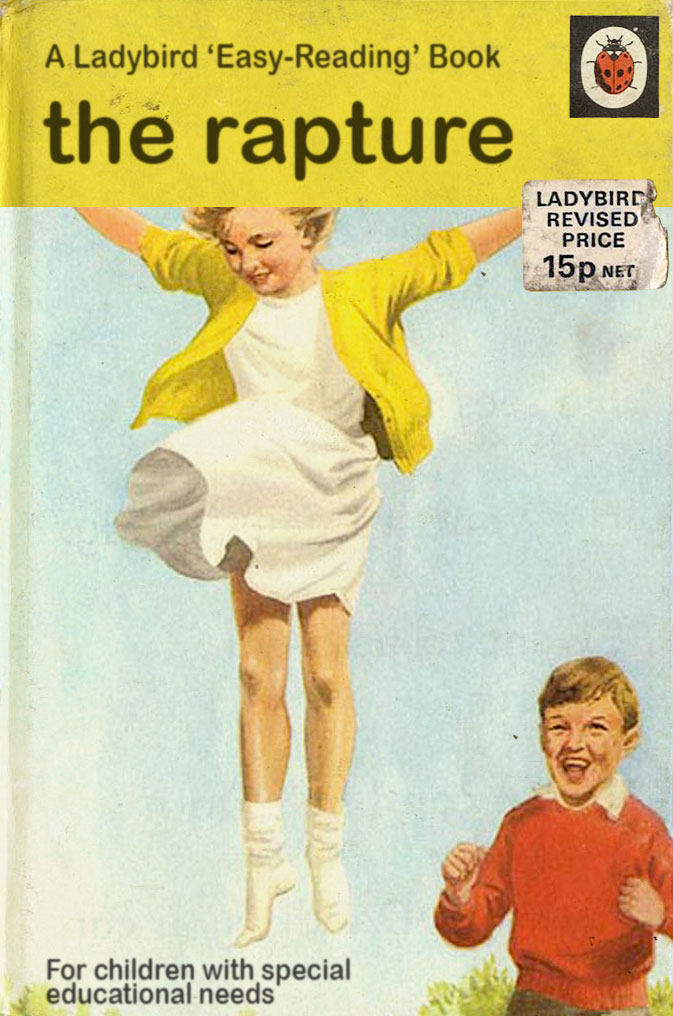
The Rapture — A Ladybird Easy-Reading Book for Children with Special Educational Needs

therapture

(From Scarfolk Council, a favorite new site).

“The Cupboard of the Yesterdays” — Saki

“The Cupboard of the Yesterdays” — Saki

“War is a cruelly destructive thing,” said the Wanderer, dropping his newspaper to the floor and staring reflectively into space.

“Ah, yes, indeed,” said the Merchant, responding readily to what seemed like a safe platitude; “when one thinks of the loss of life and limb, the desolated homesteads, the ruined—”

“I wasn’t thinking of anything of the sort,” said the Wanderer; “I was thinking of the tendency that modern war has to destroy and banish the very elements of picturesqueness and excitement that are its chief excuse and charm.  It is like a fire that flares up brilliantly for a while and then leaves everything blacker and bleaker than before.  After every important war in South-East Europe in recent times there has been a shrinking of the area of chronically disturbed territory, a stiffening of frontier lines, an intrusion of civilised monotony.  And imagine what may happen at the conclusion of this war if the Turk should really be driven out of Europe.”

“Well, it would be a gain to the cause of good government, I suppose,” said the Merchant.

“But have you counted the loss?” said the other.  “The Balkans have long been the last surviving shred of happy hunting-ground for the adventurous, a playground for passions that are fast becoming atrophied for want of exercise.  In old bygone days we had the wars in the Low Countries always at our doors, as it were; there was no need to go far afield into malaria-stricken wilds if one wanted a life of boot and saddle and licence to kill and be killed.  Those who wished to see life had a decent opportunity for seeing death at the same time.”

“It is scarcely right to talk of killing and bloodshed in that way,” said the Merchant reprovingly; “one must remember that all men are brothers.”

“One must also remember that a large percentage of them are younger brothers; instead of going into bankruptcy, which is the usual tendency of the younger brother nowadays, they gave their families a fair chance of going into mourning.  Every bullet finds a billet, according to a rather optimistic proverb, and you must admit that nowadays it is becoming increasingly difficult to find billets for a lot of young gentlemen who would have adorned, and probably thoroughly enjoyed, one of the old-time happy-go-lucky wars.  But that is not exactly the burden of my complaint.  The Balkan lands are especially interesting to us in these rapidly-moving days because they afford us the last remaining glimpse of a vanishing period of European history.  When I was a child one of the earliest events of the outside world that forced itself coherently under my notice was a war in the Balkans; I remember a sunburnt, soldierly man putting little pin-flags in a war-map, red flags for the Turkish forces and yellow flags for the Russians.  It seemed a magical region, with its mountain passes and frozen rivers and grim battlefields, its drifting snows, and prowling wolves; there was a great stretch of water that bore the sinister but engaging name of the Black Sea—nothing that I ever learned before or after in a geography lesson made the same impression on me as that strange-named inland sea, and I don’t think its magic has ever faded out of my imagination.  And there was a battle called Plevna that went on and on with varying fortunes for what seemed like a great part of a lifetime; I remember the day of wrath and mourning when the little red flag had to be taken away from Plevna—like other maturer judges, I was backing the wrong horse, at any rate the losing horse.  And now to-day we are putting little pin-flags again into maps of the Balkan region, and the passions are being turned loose once more in their playground.”

“The war will be localised,” said the Merchant vaguely; “at least every one hopes so.”

“It couldn’t wish for a better locality,” said the Wanderer; “there is a charm about those countries that you find nowhere else in Europe, the charm of uncertainty and landslide, and the little dramatic happenings that make all the difference between the ordinary and the desirable.”

“Life is held very cheap in those parts,” said the Merchant.

“To a certain extent, yes,” said the Wanderer.  “I remember a man at Sofia who used to teach me Bulgarian in a rather inefficient manner, interspersed with a lot of quite wearisome gossip.  I never knew what his personal history was, but that was only because I didn’t listen; he told it to me many times.  After I left Bulgaria he used to send me Sofia newspapers from time to time.  I felt that he would be rather tiresome if I ever went there again.  And then I heard afterwards that some men came in one day from Heaven knows where, just as things do happen in the Balkans, and murdered him in the open street, and went away as quietly as they had come.  You will not understand it, but to me there was something rather piquant in the idea of such a thing happening to such a man; after his dullness and his long-winded small-talk it seemed a sort of brilliant esprit d’esalier on his part to meet with an end of such ruthlessly planned and executed violence.”

The Merchant shook his head; the piquancy of the incident was not within striking distance of his comprehension.

“I should have been shocked at hearing such a thing about any one I had known,” he said.

“The present war,” continued his companion, without stopping to discuss two hopelessly divergent points of view, “may be the beginning of the end of much that has hitherto survived the resistless creeping-in of civilisation.  If the Balkan lands are to be finally parcelled out between the competing Christian Kingdoms and the haphazard rule of the Turk banished to beyond the Sea of Marmora, the old order, or disorder if you like, will have received its death-blow.  Something of its spirit will linger perhaps for a while in the old charmed regions where it bore sway; the Greek villagers will doubtless be restless and turbulent and unhappy where the Bulgars rule, and the Bulgars will certainly be restless and turbulent and unhappy under Greek administration, and the rival flocks of the Exarchate and Patriarchate will make themselves intensely disagreeable to one another wherever the opportunity offers; the habits of a lifetime, of several lifetimes, are not laid aside all at once.  And the Albanians, of course, we shall have with us still, a troubled Moslem pool left by the receding wave of Islam in Europe.  But the old atmosphere will have changed, the glamour will have gone; the dust of formality and bureaucratic neatness will slowly settle down over the time-honoured landmarks; the Sanjak of Novi Bazar, the Muersteg Agreement, the Komitadje bands, the Vilayet of Adrianople, all those familiar outlandish names and things and places, that we have known so long as part and parcel of the Balkan Question, will have passed away into the cupboard of yesterdays, as completely as the Hansa League and the wars of the Guises.

“They were the heritage that history handed down to us, spoiled and diminished no doubt, in comparison with yet earlier days that we never knew, but still something to thrill and enliven one little corner of our Continent, something to help us to conjure up in our imagination the days when the Turk was thundering at the gates of Vienna.  And what shall we have to hand down to our children?  Think of what their news from the Balkans will be in the course of another ten or fifteen years.  Socialist Congress at Uskub, election riot at Monastir, great dock strike at Salonika, visit of the Y.M.C.A. to Varna.  Varna—on the coast of that enchanted sea!  They will drive out to some suburb to tea, and write home about it as the Bexhill of the East.

“War is a wickedly destructive thing.”

“Still, you must admit—” began the Merchant.  But the Wanderer was not in the mood to admit anything.  He rose impatiently and walked to where the tape-machine was busy with the news from Adrianople.


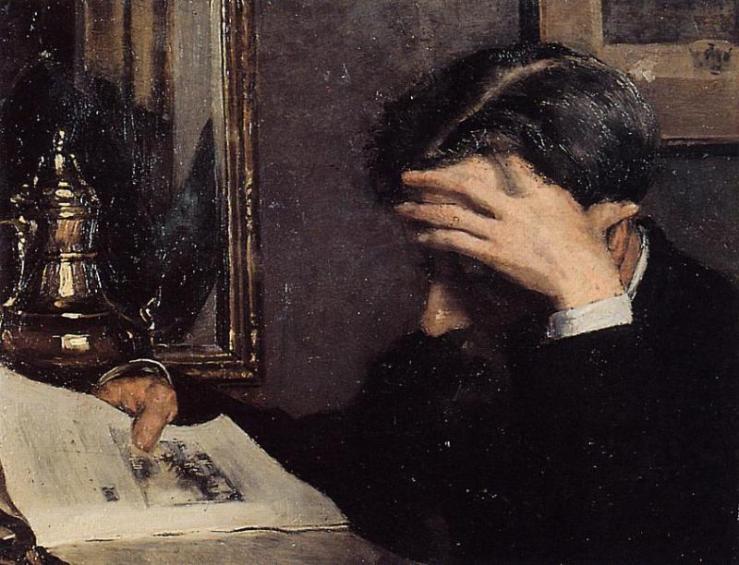
Man Reading — Georges Lemmen

man-reading

“On Freedom to Write” — Don DeLillo

freedom

“Excellent People” — Anton Chekhov

“Excellent People” by Anton Chekhov

ONCE upon a time there lived in Moscow a man called Vladimir Semyonitch Liadovsky. He took his degree at the university in the faculty of law and had a post on the board of management of some railway; but if you had asked him what his work was, he would look candidly and openly at you with his large bright eyes through his gold pincenez, and would answer in a soft, velvety, lisping baritone:

“My work is literature.”

After completing his course at the university, Vladimir Semyonitch had had a paragraph of theatrical criticism accepted by a newspaper. From this paragraph he passed on to reviewing, and a year later he had advanced to writing a weekly article on literary matters for the same paper. But it does not follow from these facts that he was an amateur, that his literary work was of an ephemeral, haphazard character. Whenever I saw his neat spare figure, his high forehead and long mane of hair, when I listened to his speeches, it always seemed to me that his writing, quite apart from what and how he wrote, was something organically part of him, like the beating of his heart, and that his whole literary programme must have been an integral part of his brain while he was a baby in his mother’s womb. Even in his walk, his gestures, his manner of shaking off the ash from his cigarette, I could read this whole programme from A to Z, with all its claptrap, dulness, and honourable sentiments. He was a literary man all over when with an inspired face he laid a wreath on the coffin of some celebrity, or with a grave and solemn face collected signatures for some address; his passion for making the acquaintance of distinguished literary men, his faculty for finding talent even where it was absent, his perpetual enthusiasm, his pulse that went at one hundred and twenty a minute, his ignorance of life, the genuinely feminine flutter with which he threw himself into concerts and literary evenings for the benefit of destitute students, the way in which he gravitated towards the young—all this would have created for him the reputation of a writer even if he had not written his articles.

He was one of those writers to whom phrases like, “We are but few,” or “What would life be without strife? Forward!” were pre-eminently becoming, though he never strove with any one and never did go forward. It did not even sound mawkish when he fell to discoursing of ideals. Every anniversary of the university, on St. Tatiana’s Day, he got drunk, chanted Gaudeamus out of tune, and his beaming and perspiring countenance seemed to say: “See, I’m drunk; I’m keeping it up!” But even that suited him. Continue reading ““Excellent People” — Anton Chekhov”

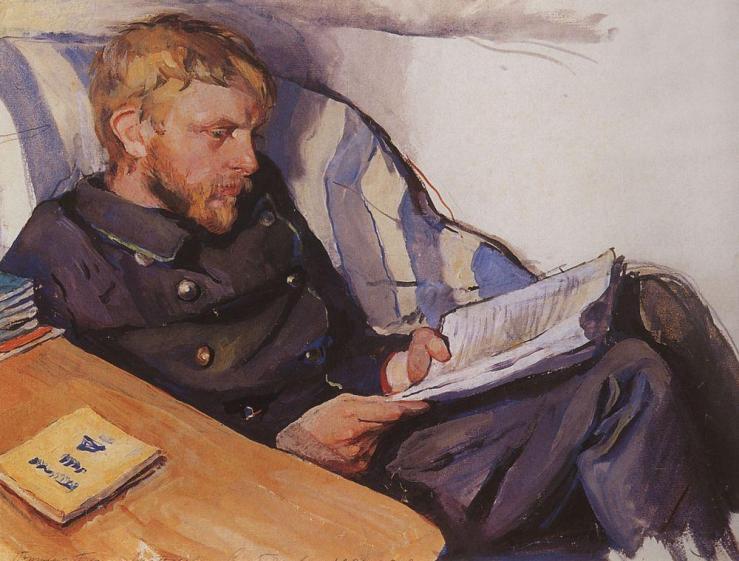
Portrait of Boris Serebryakov — Zinaida Serebriakova

portrait-of-boris-serebryakov-1908

Peanuts/Borges/mbv (Books and an LP Acquired, 3.19.2013)

20130319-175104.jpg

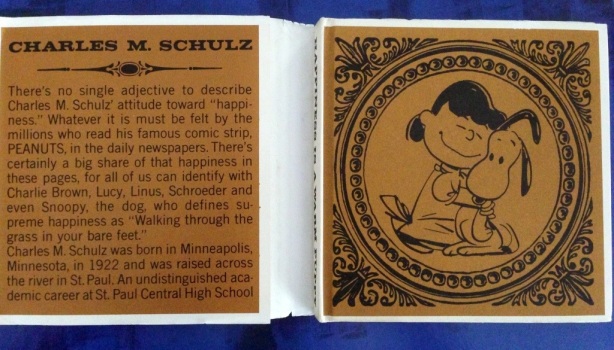
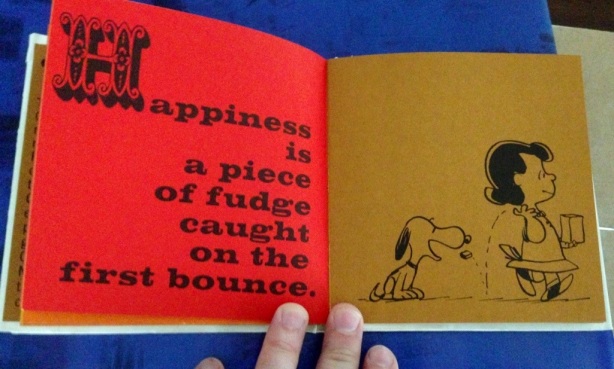
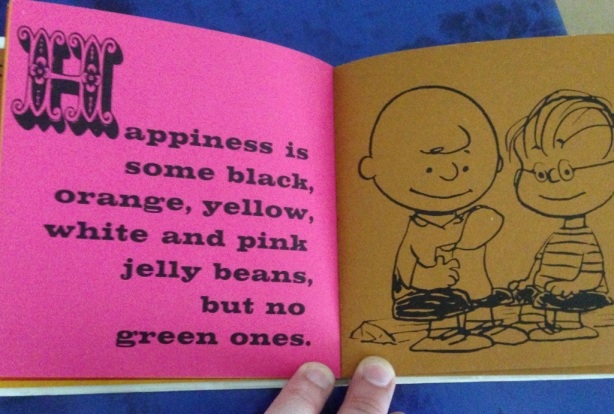
Found this hardback first edition of Charles M. Schulz’s Happiness Is a Warm Puppy, a kids book printed on heavy stock colored paper with bold litho images and letters. The cover is a bit rough but the book itself seems untouched. It’s a first edition from 1962.

20130319-175111.jpg

20130319-175122.jpg

20130319-175117.jpg

Also picked up this collection of short essays by Jorge Luis Borges:

20130319-175128.jpg

And came home to find the new My Bloody Valentine Record I bought six weeks ago (and likely paid too much for, including overseas shipping, but hey, I’ll shop smarter next time they put out an LP):

20130319-175134.jpg


“Bread and Butter Letter from a Chicago Gentleman” — F. Scott Fitgerald

Dear Marion,

I certainly enjoyed myself. The chow was all good, mostly, but the butter was rancid. The bed was hard but uncomfortable. The talk was over my head but there was some made sense—that part about my being a great guy for instance.
I got home sick at the stummuck but I do not blame you at all.
Will you tell the servents next time I like my soup hot and more of a sharp edge when they press my pants.
You said I only had to pay one buck for board but even that is too much when the service is not good. That black bean soup was rancid too, and mine had a beetle in it. Besides there wasn’t enough blankets and the only good one was stale like it had been used for a baby or something.
I liked all the people I met except that woman I had to slug at dinner. Tell her I hope she found her teeth in the tomato soup when they emptied it out. No gentleman should have done a thing like that but I cannot stand a warm stocking on my ankle under the table.
I’m sorry I shot the horse and dog but they kep me awake 1/2 the night and I come there for a rest. You will find a lot of cigar stubs in the refrigidaire as I did not know where to put them. I do not want them however so give them to one of the negro servants, you know the colored ones, not your uncle or aunt or anybody like that. The black ones.
I’ll tell you when I can come down again and we will have more of that fun in the dumb waiter—hey kid, you know? Only I’m sorry I left you between floors when I went to bed. I thot it would give you more time to cool off so you could get some sleep too.
All right kid and goodby and I know now you are not such a dumb cluck as you look like.

“Tick”

P.S. If you called that thing a cocktail then listerine is the Holy Grail.

From F. Scott Fitzgerald’s Notebooks.

Derrida Contemplates His Death on Film

“To Be or Not To Be” (Calvin and Hobbes)

CalvinHamlet

“Of Revenge” — Francis Bacon

“Of Revenge” by Francis Bacon

REVENGE is a kind of wild justice; which the more man’s nature runs to, the more ought law to weed it out. For as for the first wrong, it doth but offend the law; but the revenge of that wrong, putteth the law out of office. Certainly, in taking revenge, a man is but even with his enemy; but in passing it over, he is superior; for it is a prince’s part to pardon. And Solomon, I am sure, saith, It is the glory of a man, to pass by an offence. That which is past is gone, and irrevocable; and wise men have enough to do, with things present and to come; therefore they do but trifle with themselves, that labor in past matters. There is no man doth a wrong, for the wrong’s sake; but thereby to purchase himself profit, or pleasure, or honor, or the like. Therefore why should I be angry with a man, for loving himself better than me? And if any man should do wrong, merely out of ill-nature, why, yet it is but like the thorn or briar, which prick and scratch, because they can do no other. The most tolerable sort of revenge, is for those wrongs which there is no law to remedy; but then let a man take heed, the revenge be such as there is no law to punish; else a man’s enemy is still before hand, and it is two for one. Some, when they take revenge, are desirous, the party should know, whence it cometh. This is the more generous. For the delight seemeth to be, not so much in doing the hurt, as in making the party repent. But base and crafty cowards, are like the arrow that flieth in the dark. Cosmus, duke of Florence, had a desperate saying against perfidious or neglecting friends, as if those wrongs were unpardonable; You shall read (saith he) that we are commanded to forgive our enemies; but you never read, that we are commanded to forgive our friends. But yet the spirit of Job was in a better tune: Shall we (saith he) take good at God’s hands, and not be content to take evil also? And so of friends in a proportion. This is certain, that a man that studieth revenge, keeps his own wounds green, which otherwise would heal, and do well. Public revenges are for the most part fortunate; as that for the death of Caesar; for the death of Pertinax; for the death of Henry the Third of France; and many more. But in private revenges, it is not so. Nay rather, vindictive persons live the life of witches; who, as they are mischievous, so end they infortunate.


Portrait of the Artist’s Daughter, Julie Manet, at Gorey — Berthe Morisot

portrait-of-the-artist-s-daughter-julie-manet-at-gorey

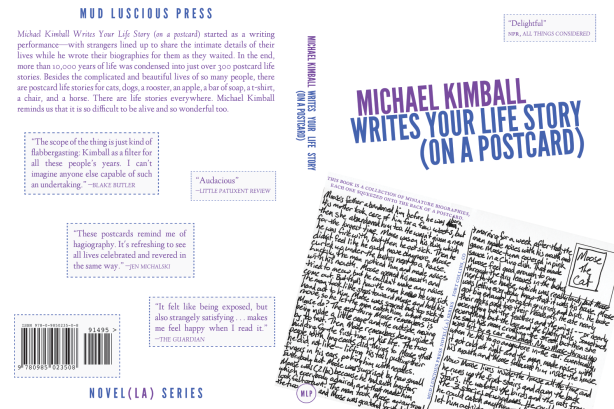
I Review Michael Kimball Writes Your Life Story (On a Postcard)

Kimball final cover copy

“I never expected strangers to tell me so much about themselves, so many things they have never told anybody else, but I found an unexpected intimacy in the postcard life story project,” writes Michael Kimball in the introduction to his new book, the aptly titled Michael Kimball Writes Your Life Story (On a Postcard). Kimball continues: “It tapped into something human and humane. I was continually amazed by what people told me.”

Kimball’s respect for the people whose stories he is telling comes through in his spare but descriptive prose, an economical rhetoric undoubtedly necessitated by the confines of his small canvasses. When I interviewed Kimball about the project, he told me:

There are difficult things at different stages of the process. The first difficult thing is asking the right questions for the particular participant. The second difficult thing is being representative when condensing what I’ve been told. The third difficult thing is writing small enough to squeeze six hundred words or so onto a single postcard.

Through that asking, condensing, and squeezing, Kimball distills his subject’s lives into compact but moving stories.

Michael Kimball Writes Your Life Story (On a Postcard) began as a performance piece at the Transmodern Performance Festival and then continued as a blog. Kimball eventually wrote over three hundred postcards; over fifty of these are collected in the new book. A not-insubstantial number of these are devoted to the biographies of contemporary writers, including folks like Tao Lin, Matt Bell, and Blake Butler:

By 4 years old, Blake was performing considered monologues, crazy dances, music videos, and both sides of talk shows. It’s all on video (his mother will show you, if you want). Despite these performances, Blake was a fat child by the 4th grade. He liked comic books and video games. By 10th grade, he weighed 250 pounds and felt disregarded. His bedroom walls were covered with pictures of women that he tore out of magazines at the grocery store and took home.

There’s also a first-person POV bio of Edgar Allan Poe, the last few paragraphs of which I can’t help sharing:

In 1831, my foster father and I had a terrible disagreement, after which I was court-martialed and kicked out of West Point. In 1834, my foster father died and did not leave me any of his money. To console myself, I married my 14-year-old cousin, Virginia Clemm.

For years, I published poems and stories and criticism, but it did not make me happy or money. In 1837, I was fired from a newspaper job for drinking. After that, I published a novel, but that didn’t help much either. Readers are sick. That’s why Virginia got tuberculosis and died in 1847. I was so lonely and so cold. I could not stop drinking.

It was 1849 when I stopped in Baltimore. I remember going down in the street, and, later, two hazy men taking me someplace white. I don’t remember dying, but I was glad I didn’t have to keep trying.

The mix of empathy and humor we see here resonates throughout the collection, whether Kimball is telling the life story of a U.S. President, or an ex-crack addict who met his wife at an all-you-can-eat buffet, or a rooster. Kimball handles his subjects with an intense honesty appropriate to the often tragic trajectory these tales take—even a piece like “Red Delicious Apple,” which takes metaphysical license of a sort, leads to a sad end:

The first thing Red Delicious Apple remembered was being a flower and the way the birds sounded in the trees. Later, Apple remembered the wind and losing his petals. Apple wanted to jump down after them, but stayed on the branch, in the tree. … Not long after that, Hand delivered Apple to the teeth. Apple could feel the teeth cutting through his skin and into his meat, what was left of his insides turning brown. Afterward, he sickened, softened. The last thing Apple remembered was the trashcan, the lid, the rotting darkness.

Or the fate of “Chair”:Chair thought, Wood and glue.

Chair thought, Next time, I’m letting go.
Chair cracked. He broke one of his legs and then his back.
Chair thought, That didn’t even hurt.

Update : Chair was thrown into a dumpster.

But perhaps I bring up “Chair” and “Red Delicious Apple” because their tragic contours are easier to allude to quickly than many of the biographies here, which often involve missing parents,  mental illness, and suicidal thoughts, all delivered in the spare, striking prose that the confines of Kimball’s project necessitate. The stories are sometimes shocking and sometimes sad and usually very moving. As the titular anonym of “G” suggests, “tragedy can be beautiful.”

Michael Kimball Writes Your Life Story (On a Postcard) is new from Mud Luscious Press.

“Sredni Vashtar” — Saki

“Sredni Vashtar” by Saki

Conradin was ten years old, and the doctor had pronounced his professional opinion that the boy would not live another five years. The doctor was silky and effete, and counted for little, but his opinion was endorsed by Mrs. de Ropp, who counted for nearly everything. Mrs. De Ropp was Conradin’s cousin and guardian, and in his eyes she represented those three-fifths of the world that are necessary and disagreeable and real; the other two-fifths, in perpetual antagonism to the foregoing, were summed up in himself and his imagination. One of these days Conradin supposed he would succumb to the mastering pressure of wearisome necessary things—such as illnesses and coddling restrictions and drawn-out dullness. Without his imagination, which was rampant under the spur of loneliness, he would have succumbed long ago.

Mrs. de Ropp would never, in her honestest moments, have confessed to herself that she disliked Conradin, though she might have been dimly aware that thwarting him “for his good” was a duty which she did not find particularly irksome. Conradin hated her with a desperate sincerity which he was perfectly able to mask. Such few pleasures as he could contrive for himself gained an added relish from the likelihood that they would be displeasing to his guardian, and from the realm of his imagination she was locked out–an unclean thing, which should find no entrance. Continue reading ““Sredni Vashtar” — Saki”

Death of Orpheus — Albrecht Durer

Read “The Piper and the Puca,” an Irish Fairy Tale

“The Piper and the Puca” — Translated literally from the Irish of the Leabhar Sgeulaigheachta by Douglas Hyde.

In the old times, there was a half fool living in Dunmore, in the county Galway, and although he was excessively fond of music, he was unable to learn more than one tune, and that was the “Black Rogue.” He used to get a good deal of money from the gentlemen, for they used to get sport out of him. One night the piper was coming home from a house where there had been a dance, and he half drunk. When he came to a little bridge that was up by his mother’s house, he squeezed the pipes on, and began playing the “Black Rogue” (an rógaire dubh). The Púca came behind him, and flung him up on his own back. There were long horns on the Púca, and the piper got a good grip of them, and then he said——

“Destruction on you, you nasty beast, let me home. I have a ten-penny piece in my pocket for my mother, and she wants snuff.”

“Never mind your mother,” said the Púca, “but keep your hold. If you fall, you will break your neck and your pipes.” Then the Púca said to him, “Play up for me the ‘Shan Van Vocht’ (an t-seann-bhean bhocht).”

“I don’t know it,” said the piper.

“Never mind whether you do or you don’t,” said the Púca. “Play up, and I’ll make you know.”

The piper put wind in his bag, and he played such music as made himself wonder.

“Upon my word, you’re a fine music-master,” says the piper then; “but tell me where you’re for bringing me.”

“There’s a great feast in the house of the Banshee, on the top of Croagh Patric to-night,” says the Púca, “and I’m for bringing you there to play music, and, take my word, you’ll get the price of your trouble.”

“By my word, you’ll save me a journey, then,” says the piper, “for Father William put a journey to Croagh Patric on me, because I stole the white gander from him last Martinmas.”

The Púca rushed him across hills and bogs and rough places, till he brought him to the top of Croagh Patric. Then the Púca struck three blows with his foot, and a great door opened, and they passed in together, into a fine room.

The piper saw a golden table in the middle of the room, and hundreds of old women (cailleacha) sitting round about it. The old women rose up, and said, “A hundred thousand welcomes to you, you Púca of November (na Samhna). Who is this you have with you?”

“The best piper in Ireland,” says the Púca.

One of the old women struck a blow on the ground, and a door opened in the side of the wall, and what should the piper see coming out but the white gander which he had stolen from Father William.

“By my conscience, then,” says the piper, “myself and my mother ate every taste of that gander, only one wing, and I gave that to Moy-rua (Red Mary), and it’s she told the priest I stole his gander.”

The gander cleaned the table, and carried it away, and the Púca said, “Play up music for these ladies.”

The piper played up, and the old women began dancing, and they were dancing till they were tired. Then the Púca said to pay the piper, and every old woman drew out a gold piece, and gave it to him.

“By the tooth of Patric,” said he, “I’m as rich as the son of a lord.”

“Come with me,” says the Púca, “and I’ll bring you home.”

They went out then, and just as he was going to ride on the Púca, the gander came up to him, and gave him a new set of pipes. The Púca was not long until he brought him to Dunmore, and he threw the piper off at the little bridge, and then he told him to go home, and says to him, “You have two things now that you never had before—you have sense and music (ciall agus ceól).”

The piper went home, and he knocked at his mother’s door, saying, “Let me in, I’m as rich as a lord, and I’m the best piper in Ireland.”

“You’re drunk,” said the mother.

“No, indeed,” says the piper, “I haven’t drunk a drop.”

The mother let him in, and he gave her the gold pieces, and, “Wait now,” says he, “till you hear the music I’ll play.”

He buckled on the pipes, but instead of music, there came a sound as if all the geese and ganders in Ireland were screeching together. He wakened the neighbours, and they were all mocking him, until he put on the old pipes, and then he played melodious music for them; and after that he told them all he had gone through that night.

The next morning, when his mother went to look at the gold pieces, there was nothing there but the leaves of a plant.

The piper went to the priest, and told him his story, but the priest would not believe a word from him, until he put the pipes on him, and then the screeching of the ganders and geese began.

“Leave my sight, you thief,” says the priest.

But nothing would do the piper till he would put the old pipes on him to show the priest that his story was true.

He buckled on the old pipes, and he played melodious music, and from that day till the day of his death, there was never a piper in the county Galway was as good as he was.