

Category: Books
McSweeney’s #4 (Box of Books Acquired 6.14.2012)

The novelist John Warner (The Funny Man), in an act of incredible kindness, sent me a copy of McSweeney’s #4, which he helped to put out years ago. In one of our emails, John offers the following:
It could be the best issue ever, a kind of platonic ideal of the McSweeney’s aesthetic before people started saying that things had a McSweeney’s aesthetic, a more innocent time if you will. My memory is that we were selling them at a live event at the Ethiopian Diamond restaurant in Chicago that we set up to help promote Neal Pollack’s book, and somehow the leftovers wound up in my trunk and I’ve been hauling them place to place ever since. . .
It’s a sort of fun artifact of the early/carefree days of McSweeney’s before Dave was DAVE, and the whole thing was still very haphazard.
It’s difficult to overstate the range of writers here: Lydia Davis, Jonathan Lethem, George Saunders, Rick Moody, Haruki Murakami, a three-act play by Denis Johnson, and much, much more:

There are also many short stories, including “On the Set” by John Warner, his second published story:
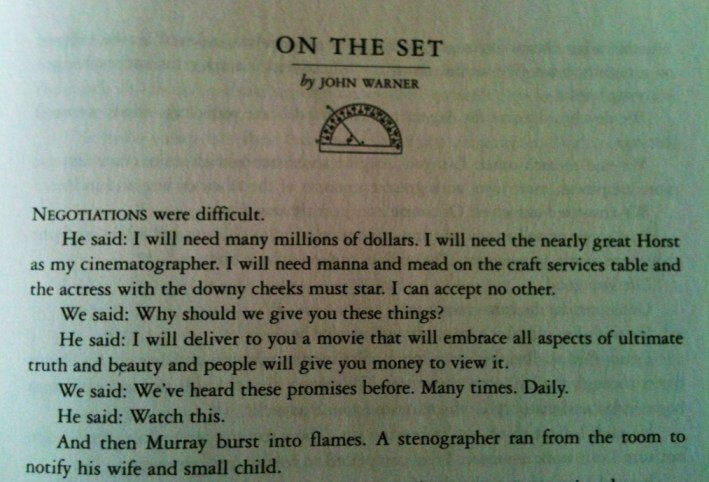
It’s wonderfully absurd.
To read something hilarious and absurd and ultimately kind of touching, read John’s interview with critic Kevin Morris, who hated The Funny Man.
Summer Morning — Konstantin Somov

This Certainly Is Reading — Francisco Goya

Summer — Giuseppe Arcimboldo

Some Annotations on the First Sentence of William Gaddis’s Last Novel, Agapē Agape
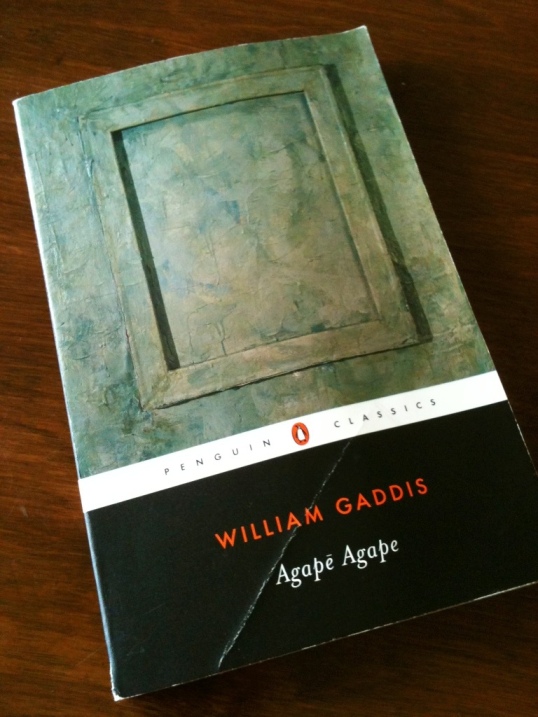
1. Let’s start with the what:
Agapē Agape is the last novel by William Gaddis, that underread titan who gave us The Recognitions and J R. Agapē Agape was published in 2002, four years after Gaddis’s death. Agapē Agape is 96 pages in my Penguin Classics edition (the font is rather large, too)—almost exactly one-tenth the length of The Recognitions in my Penguin Classics edition, which is 956 pages (and in a smaller font).
2. And why?
Let’s say I’ve struggled with this review, perhaps more than I struggled with writing about J R (which I did here and here) or The Recognitions (which I did here and here), which seems nonsensical because those books are so big and this one is so short. But that’s a surface argument.
See, Agapē Agape is dense. It seems to compact and condense all of Gaddis’s themes and ideas and motifs into this little book that’s uranium heavy, too dense to allow for line breaks or paragraph breaks or indentations, let alone chapters. It’s one big block of text.
3. And so—
After reading the book twice I’ve marked every page (which is exactly like marking no pages), and at this point the only way that I can find to discuss it (I know there must be others) is to annotate the opening paragraph, its first sentence, really—which of course isn’t really a paragraph or a sentence in the traditional grammatical sense—I mean, there are a set of clauses, some fused sentences, perhaps a comma splice or two—but what marks it as a discrete sentence is that it’s punctuated by a question mark, a tiny caesura before the next onslaught of words. (Some of Agapē Agape’s sentences go on for pages).
4. The style of Agapē Agape recalls Thomas Bernhard, who Gaddis’s narrator accuses of having plagiarized the book that the narrator has yet to write. The accusation (ironic, purposefully, of course) points to Agapē Agape’s concern for synthesis, for transmitting some clear thesis statement out of the muddle of Western culture. Agapē Agape tries to suss out that muddle and as such is larded with discussions of Plato, Nietzsche, Melville, Hawthorne, Byron, Freud (“Sigi”!), Bach, Caesar, Joyce, Pulitzer, Tolstoy, Frankenstein, Huizinga, Pound, Philo T. Farnsworth, player-pianos . . . It overwhelms the narrator; it overwhelms the reader. But enough dithering—
5. —here is the opening sentence:
No but you see I’ve got to explain all this because I don’t, we don’t know how much time there is left and I have to work on the, to finish this work of mine while I, why I’ve brought in this whole pile of books notes pages clippings and God knows what, get it all sorted and organized when I get this property divided up and the business and worries that go with it while they keep me here to be cut up and scraped and stapled and cut up again my damn leg look at it, layered with staples like that old suit of Japanese armour in the dining hall feel like I’m being dismantled piece by piece, houses, cottages, stables orchards and all the damn decisions and distractions I’ve got the papers land surveys deeds and all of it right in this heap somewhere, get it cleared up and settled before everything collapses and it’s all swallowed up by lawyers and taxes like everything else because that’s what it’s about, that’s what my work is about, the collapse of everything, of meaning, of values, of art, disorder and dislocation wherever you look, entropy drowning everything in sight, entertainment and technology and every four year old with a computer, everybody his own artist where the whole thing came from, the binary system and the computer where technology came from in the first place, you see?
6. “No but you see I’ve got to explain all this because I don’t, we don’t know how much time there is left and I have to work on the, to finish this work of mine while I,”
Ulysses ends with a “Yes”; Agapē Agape begins with a “No.” This is a deeply negative book, cruel almost, bitter, caustic, acidic, but also erudite, funny, and even charming. We see right away the narrator—surely a version of Gaddis himself—concerned with the ancient problem of communication, the problem that occupied Plato and every philosopher since: “I’ve got to explain all this.” We also see here the same stream-of-consciousness technique here that Joyce used so frequently in Ulysses (putting aside Gaddis’s denials of a Joyce influence)—the suspended referent, the unnamed (the unnameable?): “I have to work on the, to finish this work of mine while I”—while I what? Still can? Still live? From the outset, Agapē Agape is a contest against time, death, and entropy.
7. “why I’ve brought in this whole pile of books notes pages clippings and God knows what, get it all sorted and organized”
Synthesis, synthesis, synthesis. Making books out of other books. Plugging literature into other literature. I am quite content to go down to posterity as a scissors-and-paste man, said someone once. And then others said it again. And then I cited it here, now.
I’m reminded here of a list that Gibbs (erstwhile Gaddis stand-in in J R) keeps in his pocket, a scrap paper crammed with ideas, fragments, citations:

Is it possible to get it sorted?
Recall now Gaddis’s hero Ezra Pound. From Tom McCarthy’s essay on synthesis, “Transmission and the Individual Remix”:
With the Cantos, he kept up this furious enterprise for five whole decades, ramping its intensity up and up until the overload destroyed him, blew his mind to pieces, leaving him to murmur, right toward the end: “I cannot make it cohere.”
It is the reader’s job to make Agapē Agape cohere.
8. “when I get this property divided up and the business and worries that go with it”
Agapē Agape may be said to have a few formalizing plots beyond its object of synthesizing Western culture vis-à-vis art and entertainment.
One of these formalizing elements is the idea of an old man divvying up his property to his daughters. Oh, hey, King Lear anyone? What’s most interesting to me about this plot (okay, more of a motif really) is that it’s the only allusive device that the narrator doesn’t remark upon. We have a narrator who’s trying to control all these notes and clippings, all these scraps of culture, a narrator with a sharp (if distracted intelligence) who nevertheless fails to remark upon the fact that his personal circumstances echo the great dismal swan song of English literature. King Lear: madness, unraveling, degeneracy, death, entropy.
9. “while they keep me here to be cut up and scraped and stapled and cut up again my damn leg look at it, layered with staples like that old suit of Japanese armour in the dining hall feel like I’m being dismantled piece by piece,”
Another formalizing element in Agapē Agape are the health issues the narrator faces, presumably a series of surgeries that involve at least one of his legs. The motif of surgeries, of transplants, and implants runs throughout The Recognitions and J R as well. In The Recognitions we get poor Stanley’s mother’s amputated leg, another strange reliquary trace floating through the text. In J R, we get Cates prepped for a heart transplant, yet another organ transferral for this massive man. There’s the idea here of borrowed parts, that humans might not be “natural,” cohesive entities but rather a collection of parts that may be swapped out. Again, synthesis in the face of break down; the surgeon as entropy repairman.
10. “houses, cottages, stables orchards and all the damn decisions and distractions I’ve got the papers land surveys deeds and all of it right in this heap somewhere, get it cleared up and settled before everything collapses and it’s all swallowed up by lawyers and taxes like everything else because that’s what it’s about,”
Here, the personal, the concrete, the immediate, and the real tips into what Gaddis took to be the grand subject of his corpus—collapse, chaos, entropy. Spelled out clearly in the next line:
11. “that’s what my work is about, the collapse of everything, of meaning, of values, of art, disorder and dislocation wherever you look, entropy drowning everything in sight,”
I don’t think commentary from me is necessary here. Instead, let me share a quote from Gibbs in J R, ranting to his young students:
Before we go any further here, has it ever occurred to any of you that all this is simply one grand misunderstanding? Since you’re not here to learn anything, but to be taught so you can pass these tests, knowledge has to be organized so it can be taught, and it has to be reduced to information so it can be organized do you follow that? In other words this leads you to assume that organization is an inherent property of the knowledge itself, and that disorder and chaos are simply irrelevant forces that threaten it from the outside. In fact it’s the opposite. Order is simply a thin, perilous condition we try to impose on the basic reality of chaos . . .
12. “entertainment and technology and every four year old with a computer, everybody his own artist where the whole thing came from, the binary system and the computer where technology came from in the first place, you see?”
The age of the amateur. Paint-by-numbers. Everyone wants to write a novel but no one wants to read one. Etc. When the narrator grumbles “where technology came from in the first place,” he means entertainment. That’s one thesis in Agapē Agape: that the technological progress we so value, that so underwrites the march of our grand civilization has its roots in toymaking and child’s play.
13. The novel that follows this addled, rattled opening line is remarkable for its brilliance, its cruelty, but most of all its sheer verbal force. Gaddis showed a mastery of voice in J R, a heteroglossic novel of speech, speech, speech, a grand dare to any reader, I suppose. Agapē Agape is even more stripped down, the monologue of a dying voice, a voice that’s been too-long ignored and under-appreciated. I don’t know if something so sad, so personally sad can be called perfect, but I can’t think of a more appropriate or fitting final statement from Gaddis.
Woman Reading (1935) — Pablo Picasso

Occupy Gaddis (A William Gaddis Resource Page)
The Gaddis Annotations is, like, the source
Biblioklept reviews J R (part 1)
Biblioklept reviews J R (part 2)
“Trickle-Up Economics: JR Goes to Washington” (1987 sequel to J R)
“Fire the Bastards!”: Jack Green’s wonderful rant against the critics who panned The Recognitions
Biblioklept reviews The Recognitions
William Gaddis fiction-to-music entelechy transducer
Gaddis’s interview with The Paris Review
Julian Schnabel’s Gaddis portrait:

Gaddis interview at The Dalkey Archive
Biblioklept reviews Agapē Agape
“A well-meaning, sincere hypocrite” : Gaddis on his title character, JR (and capitalism)
“Authenticity’s wiped out” — A passage from Agapē Agape
“Recognizing Gaddis” (1987 NYT article)
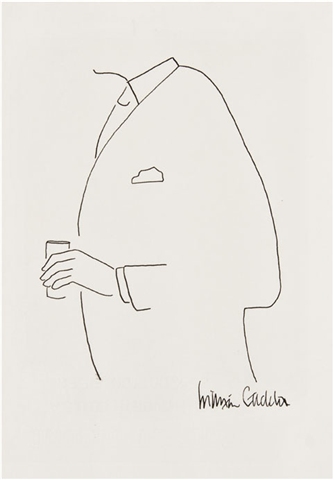
William Gaddis’s self-portrait:
William Gaddis on the Pulitzer Prize: “The Ultimate Seal of Mediocrity”
“Mr. Difficult” (Jonathan Franzen whines about Gaddis)
The Guardian review of Agapē Agape
Cynthia Ozick’s review of Carpenter’s Gothic
The Flood — Hans Baldung

I Review Tom McCarthy’s Essay “Transmission and the Individual Remix”

In an interview published back in 2010 (coinciding roughly with the release of his excellent novel C), Tom McCarthy evaluated his work:
I see what I’m doing as simply plugging literature into other literature. For me, that’s what literature’s always done. If Shakespeare finds a good speech in an older version of Macbeth or Pliny, he just rips it and mixes it. It’s like DJing.
McCarthy’s new essay “Transmission and the Individual Remix” explores the idea of artist as DJ, as remixer, as synthesizer. It’s a brief, fun read—28 pages on paper the publicity materials claim, but it’s only available as an etext, so its length is hard to measure in terms of pages. It took me less than an hour to read it on my Kindle Fire. Then I read it again. Although publisher Vintage kindly sent me a copy, I’d argue that it’s well worth the two bucks they’re asking.
“Transmission” is playful and discursive, as befits its subject. The essay is not nearly as pretentious as its subtitle (“How Literature Works”) might suggest. McCarthy riffs on a few subjects to illustrate his thesis: Kraftwerk, the Orpheus myth (and its many, many retellings and interpretations), Rilke, Alexander Graham Bell, “Blanchot, Barthes, or any other dubious French character whose names starts with B,” Ulysses, Kafka, Beckett, etc. But what is his thesis? What does he want? He tells us:
My aim here, in this essay, is not to tell you something, but to make you listen: not to me, nor Beckett and Kafka, but to a set of signals that have been repeating, pulsing, modulating in the airspace of the novel, poem, play—in their lines, between them and around them—since each of these forms began. I want to make you listen to them, in the hope not that they’ll deliver up some hidden and decisive message, but rather that they’ll help attune your ear to the very pitch and frequency of its own activity—in other words, that they’ll help attune your ear to the very pitch and frequency of its own activity—in other words, that they’ll enable you to listen in on listening itself.
McCarthy’s concern here is to point out that nothing is original, that all creation is necessarily an act of synthesis. To read a novel is to read through the novel, to read the novelist’s sources (or, to use McCarthy’s metaphor, to listen through). McCarthy’s insights here are hardly new, of course—Ecclesiastes 1:19 gives us the idea over 2000 years ago, and surely it’s just another transmitter passing on a signal. What makes “Transmission” such a pleasure is its frankness, its clarity. Unlike so much postmodern criticism, McCarthy doesn’t trip over jargon or take flights of fancy into obscure metaphor. And even when he does get a bit flighty, he manages to clarify so many ideas of basic deconstructive theory:
This is it, in a nutshell: how writing works. The scattering, the loss; the charge coming from somewhere else, some point forever beyond reach or even designation, across a space of longing; the surge; coherence that’s only made possible by incoherence; the receiving which is replay, repetition—backward, forward, inside out or upside down, it doesn’t matter. The twentieth century’s best novelist understood this perfectly. That’s why Ulysses’s Stephen Dedalus—a writer in a gestational state of permanent becoming—paces the beach at Sandymount mutating, through their modulating repetition, air- and wave-borne phrases he’s picked up from elsewhere, his own cheeks and jaw transformed into a rubbery receiver . . .
Amazingly, the name Derrida doesn’t show up in “Transmission,” even as McCarthy gives us such a clear outline of that philosopher’s major ideas, as in the above riff’s explication of différance and iterability (with twist of Lacanian lack to boot). Or here, where McCarthy deconstructs the notion of a stable self:
All writing is conceptual; it’s just that it’s usually founded on bad concepts. When an author tells you that they’re not beholden to any theory, what they usually mean is that their thinking and their work defaults, without even realizing it, to a narrow liberal humanism and its underlying—and always reactionary—notions of the (always “natural” and preexisting, rather than constructed self, that self’s command of language, language as vehicle for “expression,” and a whole host of fallacies so admirably debunked almost fifty years ago by the novelist Alain Robbe-Grillet.
So I read Derrida through McCarthy’s reading of Robbe-Grillet. This is all transmission, writing as remix, but also reading as remix.
I could go on, but I fear that I’ll simply start citing big chunks of McCarthy’s essay, which is supremely citable, wonderfully iterable. Recommended.
Drawing of a Flood — Leonardo da Vinci

Titus Reading — Rembrandt

Tom McCarthy: “All Writing Is Conceptual”
From Tom McCarthy’s essay “Transmission and the Individual Remix”:
All writing is conceptual; it’s just that it’s usually founded on bad concepts. When an author tells you that they’re not beholden to any theory, what they usually mean is that their thinking and their work defaults, without even realizing it, to a narrow liberal humanism and its underlying—and always reactionary—notions of the (always) “natural” and preexisting, rather than constructed self, that self’s command of language, language as vehicle for “expression,” and a whole host of fallacies so admirably debunked almost fifty years ago by the novelist Alain Robbe-Grillet.
“This Is What All Good Writers Are Doing” — Tom McCarthy on Library as Source Code
A passage from Tom McCarthy’s essay “Transmission and the Individual Remix”:
This is what all good writers are doing, and always have been. Here I’d part company even with Robbe-Grillet: there is nothing “new” about this. Shakespeare was remixing Ovid, Plutarch, Holinshed, not to mention the authors of the King Leirs and Hamlets already in circulation when he penned his versions. Cervantes was remixing Montalvo, Ariosto, Apuleius, and any number of picaresque authors—and doing this with such delirious selfconcsiousness that at one point he even makes the characters of Don Quixote pause to take stock of the library, the engine room behind their mad associate’s reenactments, perusing it as though it were some kind of source code—which it is. Pound was remixing Villon, Daniel, and Sordello; De Mailla, Marco Polo, and Malatesta; Jefferson, Adams, and Jackson, merging all these feed together as he wound them through his typewriter, splicing them in with fragments of newsprint, shards of radio transmissions—merging them yet in a manner that made no attempt to mask their fragmentary, collated character, to “naturalise” them. With the Cantos, he kept up this furious enterprise for five whole decades, ramping its intensity up and up until the overload destroyed him, blew his mind to pieces, leaving him to murmur, right toward the end: “I cannot make it cohere.”
Woman Reading — Camille Corot

Wind Fallen Trees (1880) — Ivan Shishkin

I Audit Hilary Mantel’s Bring Up the Bodies (Part 2 — In Which I Make Some Game of Thrones Comparisons and Share a Van Gogh Sketch)
1. For context/overview/summary/brief review, read part one.
2. I’m about three-quarters of the way through Bring Up the Bodies, and have thoroughly enjoyed it so far. Rich and detailed, full of ideas and keen perceptions. Mantel posits protagonist Thomas Cromwell as one of the first English Renaissance figures—pre-Elizabeth, pre-Shakespeare. The big payoff of this reading is to see the machinations of a character whose grand task is to make the rest of the world’s ideals (and illusions of those ideals) fit with his own emerging plans for a more egalitarian and democratic world. This isn’t to say that Cromwell is always a nice guy—he can’t be, he has to keep spoiled King Henry happy—but he’s generally sympathetic.
3. Mantel’s Cromwell recalls to me Tyrion Lannister, my favorite character of George R. R. Martin’s A Song of Ice and Fire epic (I enjoyed the first three books very much). In his role as Hand of the King (chronicled this season on the HBO adaptation Game of Thrones), Tyrion faces the thankless task of protecting the people (common and royal) of King’s Landing through a difficult time. Like Cromwell, Tyrion is seriously misunderstood and even hated; he does great good for the “small folk,” yet they will never understand or credit him with these efforts.
Tyrion is also extremely shrewd and cynical, yet also honorable—just like Cromwell. Both characters must play the game of thrones (a game, Martin’s characters remind us and Cromwell equally understands, that you either win or die), but they do not play solely for their own gain. Sure, Cromwell is making boatloads of money from his gig as Henry’s chief minister, but he ultimately has the good of his family and the good of the English people at heart. He and Tyrion want the best for average, common people, and these characters’ humble origins have ensured that they actually understand the needs and wants of average, common people.
4. Why am I belaboring a Game of Thrones comparison? I don’t know. It’s just what’s running through my head as I audit the Bring Up the Bodies audiobook. I guess I think a lot of Martin fans would dig Bring Up the Bodies (and vice versa). Mantel and Martin both do an excellent job at showing the plotting and the scheming, the crafty intrigue that underwrites politics. Both writers have a keen ear for sharp, ironic dialogue, and both writers know not to tip their hands too much to the reader, instead letting the reader puzzle out the shady circumstances for himself.
5. Perhaps off track: Here’s a sketch by Vincent van Gogh of Austin Friars, where Cromwell lived:

6. The thread of language that links Mantel and Martin in my reading is undoubtedly their sources: I am sure that when my ears perk to certain shared phrases (terms of heraldry, descriptions of a plague, “bedwarmer”), what’s really happening is that I’m reading through them, reading their origin texts.
7. Martin handles female perspectives in a patriarchal world with savage aplomb. His women transcend their limited circumstances (as well as the stock conventions that can beleaguer genre fiction). Mantel provides her own subtle critique of patriarchy in Bring Up the Bodies without tripping on historical reality. There’s a remarkable moment when one character—I don’t recall exactly who, but probably a member of Henry’s Privy Council—questions why God didn’t make women’s bellies transparent so that the important matters of succession, inheritance, and paternity might be made, well, clear to all. And while Anne Boleyn is hardly a sympathetic character in Bodies, keep in mind that we’re limited to Cromwell’s perspective. In Wolf Hall, Cromwell showed great concern for Thomas More’s wife and daughters, who were punished for (perceived) crimes that they had no possible agency in abetting. In Bodies, Cromwell shares similar concern for Jane Parker (among other women), wife of George Boleyn (Anne’s brother). Of course, Jane is going to help seal the case against Anne Boleyn for—
8. —brother/sister incest.
9. And yes, bro-sis incest may be lurid (lurid enough, I’ll admit, to get its own tidy spot on this list)—but it’s to Mantel’s credit that she never exploits the lurid attraction of historical reality (see: Showtime’s The Tudors); she doesn’t have to. That’s not Cromwell’s bag and it’s not necessary anyway. (Here is an obligatory sentence pointing out that one of the major plot points of Game of Thrones rests on brother-sister incest: One of the major plot points of Game of Thrones rests on brother-sister incest ).
10. I’ll end by sticking to Bring Up the Bodies but obliquely suggesting that everything I say about Mantel’s book could apply to Martin’s books, but I’m not going to belabor this post through example (we can chat in the comments section, should you care to, gentle reader). Here’s that ending:
11. Some of my favorite passages in Bring Up the Bodies have to do with Thomas Cromwell’s imaginative capacity,which Mantel channels with fierce brilliance. Cromwell taps into his past in order to shape the present into the future he envisions (an episode with an aging Portuguese knight is especially entertaining). In a few wonderful scenes (perhaps coming to fruition at game’s end?) he imagines a dinner he’ll host with all the courtiers he’s pushing around like pawns; the way he imagines their interactions at table helps him to determine his course of action (or inaction). But the most chilly episodes of imaginative capacity involve Cromwell’s own understanding that his unnatural death is probably a foregone conclusion. He’s too perspicacious to not see that eventually his favor with Henry can only eventually fail. But that’s for the future—for Mantel’s last book in this trilogy, I’m sure, The Mirror and the Light.
 Biblioklept