We Will Never Forget (And Neither Will You, Kids)

kirkspocksept11.jpg

So, I work at a high school, and every year, around September 11th, I get some kind of memo from my boss–the school’s principal–reminding the teachers to “talk to the kids about 9/11.” Each year I get roughly the same version of a 9/11 narrative from the kids. The following phrases are pulled from actual past narratives, and are chosen because they represent the basic thrust of most of the writings. Occasionally a narrative will be of some interest–maybe a kid from New York or D.C., or a particularly thoughtful or sensitive kid–but on the whole, the following is pretty standard:

“They turned on the TV. My teacher was crying. I didn’t know what was going on. I was in middle school [ed. note–in the past couple of years, depending on the grade I teach of course, the kids tend to be in elementary school–this years batch were about ten years old in 2001]. I was scared, but then I was happy because I got to go home. It didn’t really effect me. I didn’t really care. We should get school off every 9/11.”

The memo this year likened 9/11 to life-changing “I remember where I was when _____” events like the bombing of Pearl Harbor, the Apollo moon landing, the JFK assassination, and (no kidding) the 2004 World Championship of the Boston Red Sox.

On one hand, I have no problem with this: I will never forget where I was on the morning of 9/11 (asleep and hungover in my brother’s old bed in my parents’ house) or what I was doing (nothing; I was unemployed; I was supposed to move to Tokyo the following week) or how I felt (shocked and scared and weirded out and secretly selfishly ashamedly worried that my international plans were now in jeopardy). I add my own experiences parenthetically, because the are of no importance; still, the spectacular disaster of 9/11–no matter what your take on the whole thing is (how it happened and who did it and why it was done, etc.)–the spectacular disaster of 9/11 exists as an ideological construct demarcating a social shift: hence the term post-9/11 and all things post-9/11, etc. etc. etc.

And so well this is my problem: what are we doing when we mark the day to these children; specifically, what am I–a teacher–doing when I affirm the ideological significance of 9/11 to my students, despite the fact that they clearly–repeatedly–have no interest beyond self-interest in the whole thing (“We should get the day off school”)? This is not a rhetorical question; this is an earnest and most sincere question, one that I don’t have an answer for. My students display the same distanced ambivalence toward 9/11 that I might hold for, say, the U.S. exit from Saigon or the bombing of Pearl Harbor. It’s something that I’ve been told I should care about for a range of historical reasons beyond my personal control or personal range of power; somehow, it should inform my identity (“American”) and my ideology (“good American”). I accept these ideological markers as “historical facts” and neglect the margins of history in favor of a much easier story to follow.

I’m not railing against the “importance” of 9/11 or whether or not 9/11 is important: I go back to my question in the previous paragraph: what am I doing when I affirm the ideological significance of 9/11 to my students? Exactly what ideology is being affirmed? Why is 9/11 like the Apollo moon landing or the JFK assassination? By transitive property of its I-remember-where-I-wasness? Clearly this has to be a public where-I-wasness, a shared where-I-wasness; nobody is going around comparing 9/11 to the day they lost their virginity or the day their child was born (although undoubtedly people got laid for the first time and children were born on 9/11/01). But this need to make sure our children recognize 9/11 as an ideological marker cannot simply be rooted in a shared where-I-wasness, can it?

My gut feeling is that the post-9/11 ideology may seem vague and amorphous, and may seem to be as-yet-undefined and up for grabs and still under debate, but in reality, there are forces at work shaping this ideology: the grand spectacle of 9/11 insured a public where-I-wasness that has honestly marked me. Now that mark, that trace, is something that I am expected to re-mark on, to pass on, to send down into my students. Only I’m not sure exactly what the mark means, and their vacant eyes affirm what I think I fear: my personal experience of where-I-wasness is just a symptom of acute exposure to spectacle, and nothing these kids really care about. And should they care?
Biblioklept: Big Blog Birthday, Unabashed Book Buying, and Nabokov at a Bargain

So today Biblioklept turns a healthy one year old. When I wrote that very first post about A Raisin in the Sun, I had no inkling of the vast riches on my horizon. Ahhh…simple youth. Them were the days, etc. etc. etc.

I’ll celebrate this momentous occasion by recounting my recent trip to my favorite used book sellers, where I loaded up on more than I can possibly read in 2007. Eidetic readers may recall my last book buying spree: I’m happy to report I read 5.5 out of 7 of the books bought on that trip (I’m only counting half of The Portable Faulkner): that’s almost 79%! Not bad. Because that’s what reading’s all about: percentages and stats. Like baseball.

The goods:

Finnegans Wake, James Joyce

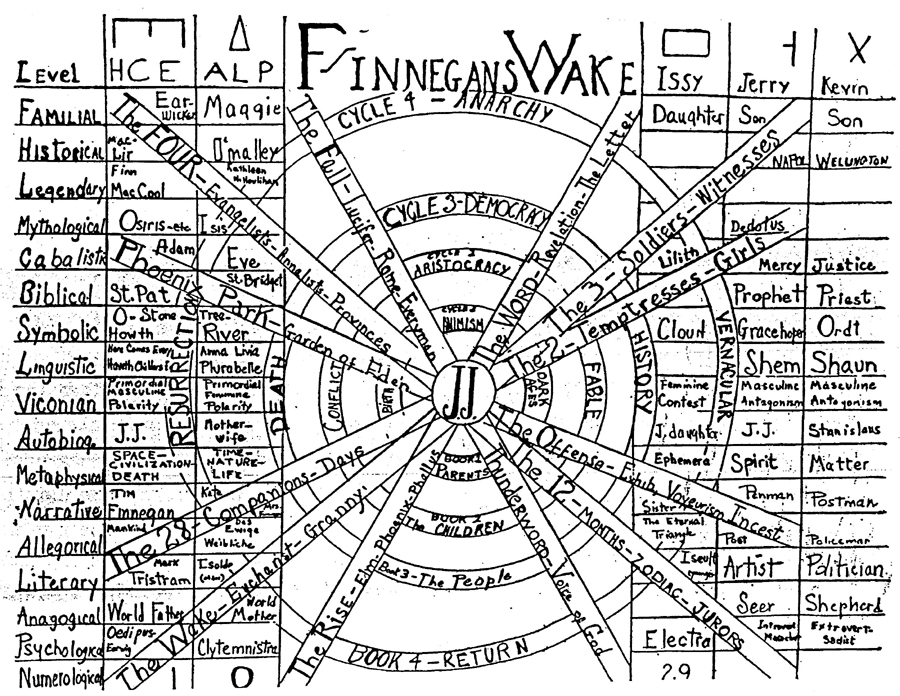
I’ve been dipping into the select chapters of FW included in The Portable Joyce for a few years now. I’m currently enrolled in a Joyce seminar but we won’t be reading more than a sentence or two of the book. My professor described it as a “vortex, a black hole from which no one returns.” He said this with a smile and meant it in good humor but maybe he has a point. The book is possibly probably incomprehensible unless you’re someone like, say, Terrence McKenna or L. Moholy-Nagy (whose graphic organizer for FW appears below) or Joseph Campbell.


moholy.jpg

I recently listened to a series of lectures given by Joseph Campbell on Joyce; Campbell suggests that FW is the dream that happens after Molly and Leopold Bloom fall asleep at the end of Ulysses. Campbell also posits that Joyce has a final book planned that would finish the four book cycle that began with Portrait; he thinks that the book would be very simple and clear and probably short, and would be thematically based on the mother-as-ocean. Campbell’s lectures are brilliant, beautiful, human, and humorous, and best of all, they are enlightening. Besides explicating the book as a whole, he also guides his audience through select sentences of FW in ways that make you go “!!!” Brilliant stuff.

You and I both know that I will probably never read this book in its entirety. That’s okay. It’s a vortex of fun.

The Amazing Adventures of Kavalier and Clay, Michael Chabon

kav-500pi.jpg

I almost bought this book in the central train station in Rome two summers ago; I bought Eugenides’s somewhat disappointing novel Middlesex instead, because my wife had more interest in it. I’ve actually started the book already (despite having a ton of Joyce and Joyce-related academic crap to read); it’s pretty good. I’ll probably finish it if I can keep up this pace.

Gun, With Occasional Music, Jonathan Lethem

gunmusic.jpg

It’s no secret that we’re big fans of Mr. Lethem around the ‘klept. This is supposed to be a mystery novel involving memory-annihilating drugs and thug kangaroos. My plan is to read this over the Thanksgiving break.

Vanished Splendors: A Memoir, Balthus (with Alan Vircondolet)

balthus.jpg

As with most of the books that I end up buying in labyrinthine used books stores, I found this by mistake. For some reason it was mixed in with children’s hardback picture books. Balthus is one of my favorite painters of all time, so of course I had to buy his memoir. The chapters are short, vague, and achronological, making this a book that you can just pick up and read at random (kinda like Finnegan’s Wake).

Nightfall: Country Lake, David Cunningham and Whistling Thorn, Helen Cowcher

If I wasn’t so lazy I’d go heat up the ole scanner and show you some of the beautiful images in these “children’s books.” I find that lots of children’s “picture” books tend to be condescending or just plain stupid, and finding good ones is not easy. I spent over 40 minutes plumbing through dusty boxes before coming across these two. David Cunningham’s gentle and dark-hued watercolor depictions of a lake at night are deep and soothing, as is the simple text that accompanies the illustrations. Cowcher’s Whistling Thorn details the evolution of acacia, giraffes, and rhinos. Lovely stuff.

Slow Century, Pavement (DVD)

I never look at the used DVDs; I have a Netflix account, library card, and a program called DVDShrink, so if I want to own a DVD it’s a pretty simple operation. Still, there are rare cases where I want the packaging, usually music films like Sonic Youth’s Corporate Ghost DVD. Like the Balthus book, I happened across this two-disc Pavement film among the children’s books. I’d seen it before: the hour long documentary is really good, and the videos are excellent. The concerts…well, I dunno. I’m not really into that kind of thing, unless Martin Scorsese and The Band are involved.

From said documentary: Pavement destroys Lollapalooza in West Virginia:

I think that’s it for this recent trip.

Now, I would be remiss if I didn’t include a book theft in our birthday edition, so here goes.

There really isn’t much to this story, and I’m actually deeply ashamed of this one. No irony, no joke. Most of the book thefts I discuss on this site are books that I’ve borrowed and never returned or books that I’ve purloined that no one was going to read anyway. This one is a straight-up theft from an indie book store. Ouch.

When I was a young stupid college freshman (note the defensive tone)–it was my first semester in fact–I had to go to a certain Gainesville book store to buy my course texts. They seemed outrageously overpriced and I was outraged, despite the stipend the state of Florida was giving me as part of my scholarship to buy books (I thought of this as beer money). In order to “get even” with these high prices, I not-so-subtly swiped a copy of Nabokov’s Laughter in the Dark: I simply picked it up after I’d paid for my course texts, walked out of the store with it, got on my bicycle, road home, and never read it. That was about ten years ago. Mea culpa. I’ve never done anything like that since, and, like I said, I feel bad about it now, so bad that every time I pick up the book to give it a shot, a small shudder of shame creeps through me and I put it down.

So there you go: new books and a book theft. Here’s to another year of cranky commentary with elitist overtones.

How to Write a Review for Pitchfork

1. Brainstorm: Good writing always starts by brainstorming. You need to figure out the Official Editorial Position Pitchfork will be taking on the artist being reviewed: are they an old favorite trying something new? Are they an old favorite that are not doing something new? Were they once-loved but now no one’s sure how to feel about them? Figure out how your audience should feel about the album ahead of time, as this will make it easier to review the album when you actually listen to it. Remember, millions of kids are reading the site everyday; they need to know who to think is cool and who to think is washed-up and who to never give a chance to at all (it might be worth pointing out that the Official Editorial Position should be neatly summed up in the album’s 0.0-10 “score,” making it easier for the semi-literate to quickly figure out how they should feel about the album).

2. Research: Okay, you can go ahead and listen to the album now that you know how to feel about it. While you’re killing time, troll the internet for any juicy or salacious info on the artist in question that might come in handy: is there a gimmick or an angle to the artist? Are they fat? Black? Brother-sister team? Crazy? People nowadays want more from their indie music than just good tunes. Figure it out (conversely, maybe the fact that the artist is “trad” indie–four-on-the-floor white guys–could be your angle. Just sayin’).

3. Outline: If you don’t outline your writing, you’ll end up with an amorphous blob of a review. You probably have less than 800 words, and you don’t want to waste them on peripheral and superfluous info, like a description of the music or the lyrics. If you need help developing your outline, refer to the steps below.

4. Introduction: Normally when one writes, it’s a good idea to introduce the subject with a thesis right away, so that the reader knows what’s going on. However, Pitchfork’s Editorial Staff clearly sees itself as continuing the tradition of the Lester Bangs school of music criticism; therefore, it’s a good idea to start off your review with a tedious personal anecdote or seemingly unnecessary condensation of the band’s history up until now. You can even wax pseudo-intellectual on some of that deconstruction shit you learned in college, especially if you’re reviewing superior music that no one can understand because it’s so superior and odd and seemingly unmusical to those who just don’t get it (noise music, f’r’instance). You need to contextualize the Official Editorial Position right away. This is where that research will come in handy. It’s also good to be cryptic and vague about your position on the actual music–that’s what the album’s score is for, after all.

5. Body: Again, normally when one writes, the body of the essay should contain specific evidence that supports the thesis proposed in the introduction. However, if you’ve written your introduction properly, you shouldn’t have a clear thesis and therefore you don’t have to worry about supporting it. This frees you up to riff on whatever you feel like–social trends that are bugging you, a movie you recently saw, girl trouble, politics–whatever. It’s important to come off as cool and hip and authoritative here. If you get around to it, you can talk about a song or two, and even some of the lyrics or music. Just be careful not to go overboard describing the way the music sounds (which shouldn’t be too difficult, because describing music in words is actually not so easy).

6. Conclusion: Is it even possible to write a real conclusion in this post-modern world? Challenge your readers by finally giving them a thesis of some kind. This will insure that they’ll have to go back through the review to figure out what you were trying to say (as if that Official Editorial Position album score wasn’t enough). Or, better yet, leave them hanging–give them a question to chew on, or a quote or something. That’s some deep shit, man.

7. Diction: Remember, you’re writing for a hip internet site and your vocabulary needs to reflect that. Whenever possible use verbs that “pop”–don’t worry about how inappropriate or unfitting they may seem, if they invoke a strange action, especially one that doesn’t seem to go with listening to music, go with it. Also, don’t waste your time describing the musicality of the album when Pitchfork has already created its own lexicon to help you. Using vague adjectives like “sun-kissed” and “art-damaged” will lend authenticity to your review and make your readers nod their heads knowingly.

8. Score: As I mentioned, Pitchfork reviews score the album on a 0.0-10 scale. Although no one really understands this sliding scale, it’s important to note that most people won’t really read your review: they’ll look at the score and skim it (hence the need for all that diction that “pops”). Still, it seems like any score below a 7.0 is not passing; 8.5 or higher is reserved for the cream of the crop. Special cases may call for a 0.0, like the review of the Flaming Lips’ album Zaireeka, an album that must be played on four CD players at once (of course this album warranted a 0.0; who could possibly take the time to find three friends with CD players, share the communal experience of quadrophonic sound the Lips intended–actually listen to the album–and write a review in time for a deadline? Not possible). Save 0.0s for Big Editorial Statements (I’m reminded of the “we don’t love you anymore” message sent to Sonic Youth after NYC Ghosts & Flowers). Similarly, really high scores should be reserved for Grand Artistic Statements by new bands that no one will care about next year.

9. Parting Thoughts: Remember, have fun with it, but not too much fun–after all you’re writing for the hippest music site there is, one that even has it’s own weekend festival dealie now. So just remain calm, cool, and collected–you have the weight of the Official Editorial Position behind you, so you’re allowed to let a nasty, hipper-than-thou attitude seep into your criticism. Finally, as was elaborated repeatedly above, whatever you do, don’t focus too much on the music at hand. Got it? Now you too can earn the fame, fortune, and crazy free sex that every aspiring Pitchfork writer deserves.

John Steinbeck: An Appreciation

I read John Steinbeck’s The Red Pony in the eighth grade and didn’t think much of it. I was more interested in Vonnegut and Kerouac and Kafka and HS Thompson at the time, all of whom seemed more substantial and just plain cooler. The boyhood adventures recounted in The Red Pony seemed hokey to me, and perhaps because of the title, I came to conflate Steinbeck’s novella with Marjorie Kinnan Rawlings’s Where the Red Fern Grows (ed. note: as gentle reader jd points out in the comments below, this is an error on Biblioklept’s part: it was actually Wilson Rawls who wrote Where the Red Fern Grows, Rawlings wrote The Yearling), which we also read that year, and which I also thought was interminably silly. Somehow, I managed to make it through both high school and college never reading anything by Steinbeck, and on the way, I also somehow managed to pick up the idea that he was an inferior or unimportant writer, unequal to Twain or Fitzgerald or Hemingway or Salinger, and certainly more boring than my beloved PK Dick and William Burroughs.

Fortunately, this ignorance was corrected the first year I started teaching high school. A more experienced teacher recommended that I read Of Mice and Men with my ninth graders. I probably wrinkled my nose at the idea (prejudiced as I was), but desperate to find a text that would engage them (as she swore up and down Of Mice and Men would), I gave it a shot.

The story of the child-like Lennie and his brother-keeper George hooked me from the first few paragraphs, and I, along with the students, became entranced, hooked on the book, unable to wait for the next day to read more. The next semester a new group of ninth graders and I worked our way through the book; a little more savvy now, I utilized Gary Sinise’s reading on audio book, possibly the best audio version of a book I’ve ever heard. He also directed and starred in a film version, with John Malkovich’s portrayal of mentally handicapped Lennie translating with realistic warmth and pathos. Sinise’s movie version is nearly perfect. By the fourth time I went through OMAM with the kids, I had introduced all kinds of different approaches to the text: gender readings, readings that focused on the disabled body, readings that troped against the book of Genesis and so on. I found that no matter how many times I read the text, I was never bored, and I always found something new in Steinbeck’s spare language. And it was–and is–Steinbeck’s measured and controlled prose that so impressed (impresses) me. Like Hemingway, Steinbeck eliminates everything extraneous, loading each word and sentence with significance; unlike Hemingway, Steinbeck’s writing shows a keen sensitivity toward persons besides macho white males.

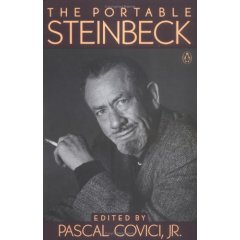
I don’t teach ninth grade anymore, but I always slip a few Steinbeck readings into my AP Language and Composition course. Over the past few years, I’ve read a good deal of The Portable Steinbeck; if you want to boast a decent library of great American literature, this book is essential. Not only does it contain the whole of Of Mice and Men and The Red Pony, it also has carefully-chosen chapters from The Grapes of Wrath that manage to stand on their own (a testament to both editor Pascal Covici, Jr. as well as Steinbeck’s writing). Plus, look at that cover–very cool (I have a class set of these, and one student added a speech bubble to Steinbeck’s image with the text: “I’m a pimp”)

stein.jpg

What prompted this post? Well, I have one tenth-grade section right now–World Literature–and I usually introduce some of the themes I like to cover over the course of the year–colonialism, cultural clash, etc. (we’ll read Achebe’s Things Fall Apart next)–with Steinbeck’s novella The Pearl, a beautiful and sad book that is often overlooked as a lesser work, childhood fare like The Red Pony (admittedly a lesser work). This morning, starting a new reading (sixth? seventh?) with a group of young kids all engaged in a story they didn’t think they wanted to read, I realized that I wanted to say this: Steinbeck is great. Steinbeck is great and that’s something I had to find out from a bunch of kids. Steinbeck is great and I almost didn’t know it because my prejudice prompted me overlook him. Steinbeck is great and I want you to read him. Go for it. You can find a used copy of Of Mice and Men anywhere. It’s about a hundred pages long. If you read a chapter a night, you’ll be done in less than a week. Take the Biblioklept challenge. If you don’t like it, let me know.

Back to School, Wm Gibson, Promises, Promises, and General Malaise

Bleh.

After three months of summer vacation, I had to go back to work on Monday. Yet even as I write this, the immortal classic Back to School airs on Comedy Central, reminding me of my commitment to education. Any moment now, Kurt Vonnegut will show up to help Thornton Melon pass Dr. Turner’s English class (weird convergence: ten years after Back to School, Keith Gordon–Jason Melon, the diver, Rodney’s kid–directed a version of Vonnegut’s Mother Night. My college roommate and I watched it when it came out, but I don’t really remember any of it).

back.jpg

Anyway, I promise to recover and get back to the semi-daily blogging (any semi-day now): I’ve been reading Joyce’s Ulysses; I’ve also read a couple of graphic novels; I’m hoping to get around to watching Inland Empire and letting you know what I think. So there’s that.

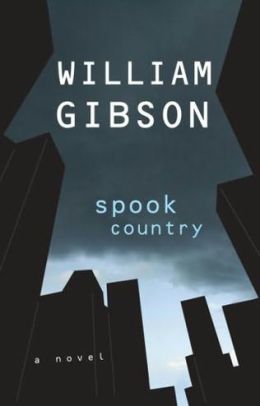
For now, AV Club has a pretty good interview with ‘klept favorite William Gibson up today. We forgive him for All Tomorrow’s Parties. And Idoru. And even the Johnny Mnemonic movie. Who knows–maybe his upcoming novel Spook Country won’t be half bad.

spook.jpg

How Bluegrass Music Destroyed My Life–John Fahey

dc124.gif

As astute reader Nicky Longlunch pointed out in a comment on my last post on 50 Great Guitarists, John Fahey was not only a fantastic guitarist, he was also a published author. Fahey wrote three books–1970’s Charley Patton, a biography of that great blues guitarist (out of print now unless you buy the Charley Patton box set); 2000’s How Bluegrass Music Destroyed My Life, a collection of mostly humorous anecdotes and stories; and the posthumously published Vampire Vultures, a collection of Fahey’s letters, limericks, and interviews. HBMDML and VV are both still in print from Drag City (you can also read a PDF extract from HBMDML there).

I remember enjoying How Bluegrass Music Destroyed My Life back when it was first published, when Mr. Longlunch was kind enough to let me borrow it (I returned it folks!). I recall it as being funny, insightful, and Bukowski-spare; I recall it also exhibiting the same raw pathos that Bukowski infused in his work, but with none of the vulgar meanness. The best parts of the book detail Fahey’s young years in Maryland. I can’t really remember much else. I’d love to read it again, but I can’t really shell out $20 for a paperback right now. And unfortunately, I can’t just borrow it from Longlunch again, because he is no longer in possession.

In his comment, Longlunch griped at me to “Focus!” and he’s right–this blog is supposed to be focused on stolen books, and, poor guy, his copy of HBMDML is (I’m guessing) somewhere in Texas. Or he’s just misplaced it for the past seven years. Or he’s lying about it being MIA because he doesn’t want to loan it out. Which is fair, I guess.

Before I leave, I should also point out that Fahey isn’t the only author I overlooked in yesterday’s post. For years now, Pete Townshend has been doing “research” for his as-yet-unpublished autobiography. So we have that to look forward to.

We’re Ready for You, Mr. Grodin

charles-grodin.jpg

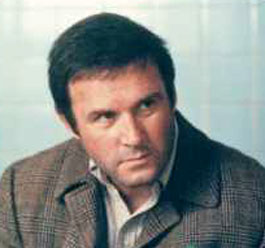
A post over at RP a few days back reminded me of a long-forgotten chestnut by Charles Grodin, We’re Ready for You, Mr. Grodin, a memoir of the curmudgeon’s odyssey through TV land’s myriad talk shows. For readers too young to recall, Charles Grodin used to go on late-night talk shows and play a misanthropic git, provoking David Letterman or Johnny Carson with mean-spirited jibes. Of course, it was all an act; a kind of toned-down Andy Kaufman bit, perhaps. He even had his own talk show for a couple of years on CNBC; it was pretty all right decent okay (I think he does the Andy Rooney bit on 60 Minutes II now, but I’m not really sure because I won’t watch anything on CBS except Sunday Morning).

Well so and anyway, I remember the book as being pretty good, but obviously this is the sort of thing for Grodin fans only (and I must admit I love Grodin–and not just the Grodin of Seems Like Old Times or Midnight Run, but also the Grodin of Beethoven’s 2nd (superior in many ways to the original) (Grodin also had a cameo in Rosemary’s Baby, you may recall–a film I had a mild obsession with in my college years)).Sadly, I lent this book out and it never came home (hey, come to think of it, I haven’t written about a stolen book in a really long time. Slackin’). I’m not sure who I gave it to, but I have a suspicion a funny-looking redheaded kid might be the culprit. Now if only Michael Keaton would write a book…

Exterminate All Rational Thought: Burroughs at the Movies

naked-lunch1.jpg

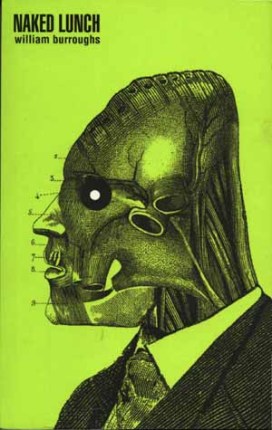
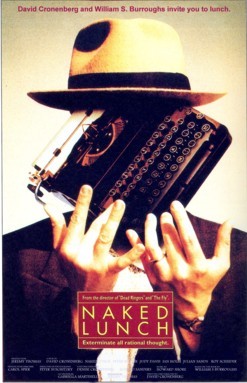
I love Naked Lunch. I love David Cronenberg. Theoretically, I should love David Cronenberg’s film adaptation of William Burrough’s psychosurreal classic. But hey, that’s rational thought for you, right? I didn’t love it in ’93 or ’94, the first time I saw it. Maybe I was too young. Maybe I just didn’t get it (but if that was the case then why did I love the book so much..?) So I watched it again as an undergrad; this was maybe ’99 or ’00. Nope. In fact, I remember thinking “Wow. This is actually pretty bad.” At that point, I was a big Cronenberg fan too. eXistenZ had just come out. eXistenZ is easily my favorite Cronenberg film, and a favorite film in general, and Naked Lunch didn’t hold up well against it or my re-reading of the Burrough’s book. But yet and still, ever the glutton for disappointment, I gave the Naked Lunch movie another shot this weekend, as part of the Biblioklept Summer of Cronenberg Film Festival. Guess what? It’s not a very good movie.

The fault of Cronenberg’s movie is not in failing to adapt the content of Burrough’s book, which is pretty much untranslatable as a narrative movie. Instead, Cronenberg attempts to weld some of the images of Naked Lunch–along with elements of other Burroughs novels such as Nova Express, The Soft Machine, and The Ticket that Exploded–into a cohesive thread using Burroughs’s biography as the overarching frame story. Burroughs’s life story is fascinating–the guy shot his wife in the head, for chrissakes–and lit junkies will love to see characters based on Kerouac and Ginsberg and Paul Bowles–but the end results simply don’t achieve or reflect the spirit of the novel. The bitter, caustic satire of Naked Lunch is almost wholly absent, replaced by wry one-liners from Peter Weller (who woodenly portrays Burroughs’s alter-ego, William Lee (an alter-ego who doesn’t appear in the novel of Naked Lunch at all, incidentally)). Cronenberg seems to underestimate his audience’s capacity for a nonlinear story, taking the loose collection of riffs, routines, and episodes that comprise Naked Lunch, and turning them into a pretty dull meditation on the nature of creativity and the suffering and alienation of the outsider-artist. Worst of all, the audience is asked to identify and sympathize with William Lee–again, this seems to be a negation of the original text.

naked_lunch.jpg

In the end, Cronenberg’s Naked Lunch is just another bad Cronenberg film (see also: his mish-mashed adaptation of J.G. Ballard’s Crash, his boring adaptation of Stephen King’s The Dead Zone). In Naked Lunch, we get the usual Cronenbergian tropes: mechanical objects that become hideously organic, bodily invasion, constant “is this real or is this a dream?” moments, and general dark creepiness. However, they simply don’t work here: Cronenberg is attempting Burroughs-icky resulting only in Cronenberg-icky. Cronenberg’s entire oeuvre is littered with flawed films, but I tend to enjoy them more for their flaws. This one was a no-go though, and I gave it three shots. But, in a way, I believe that Cronenberg deserved three viewings. You never know. Still, I doubt I’ll watch this one again.

If you haven’t seen a Cronenberg film, I suggest starting with Videodrome, A History of Violence, or eXistenZ. He also has a new movie coming out later this year, Eastern Promises starring Naomi Watts. If you haven’t read Burroughs, I suggest starting with Junkie or Queer (or just go ahead and jump into Naked Lunch).

I end with a far better review of Naked Lunch than I’ve provided here, courtesy of The Simpsons. Do you remember that episode where Bart makes a fake driver license (not the one where he’s awarded a real driver license courtesy Mayor Quimby)? And he takes Milhouse and Nelson and Martin on a road trip to the World’s Fair in Knoxville? Well, along the way the boys decide to sneak into an R-rated movie. They leave the theater disappointed; the shot reveals that they’ve just left Naked Lunch. Nelson remarks: “There’s at least two things wrong with that title.” I’ll leave it at that.

Hieroglyphick Bibles and other Marvelous Oddities

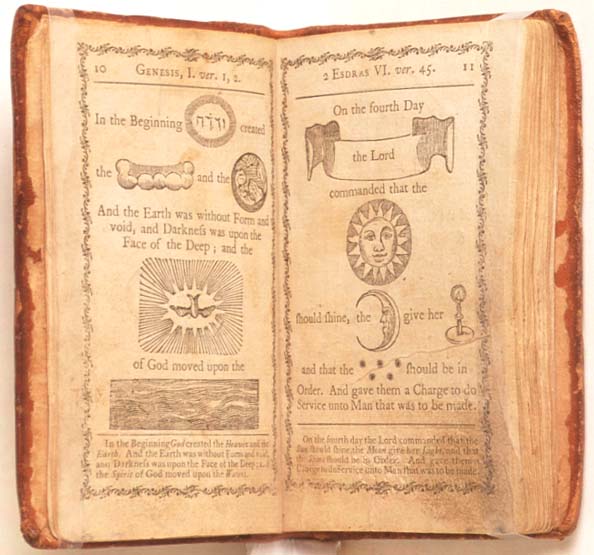
I’ve really been enjoying going through the Library of Congress American Treasures Collection. I came across this Hieroglyphick Bible (1788) the other day and thought it was pretty cool.

hieroglyph.jpg

Of course, I’m a big fan of the graphic novel (as well as the Old Testament) so this was right up my alley. More evidence supporting Scott McCloud‘s argument that the comics form is one of the oldest forms on earth (of course he goes way further back than the eighteenth century, contending that Egyptian hieroglyphs fall into his definition of comics art). Either way, check out LOC’s collection–fun for book nerds and history geeks alike.

Journey into Mohawk Country–Van den Bogaert and O’Connor


mohawk.jpg

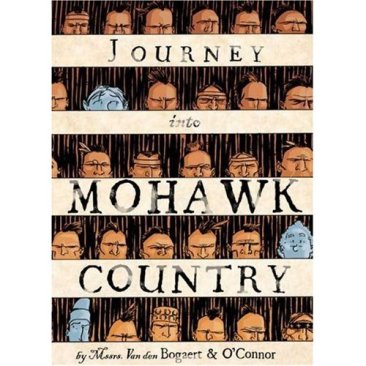
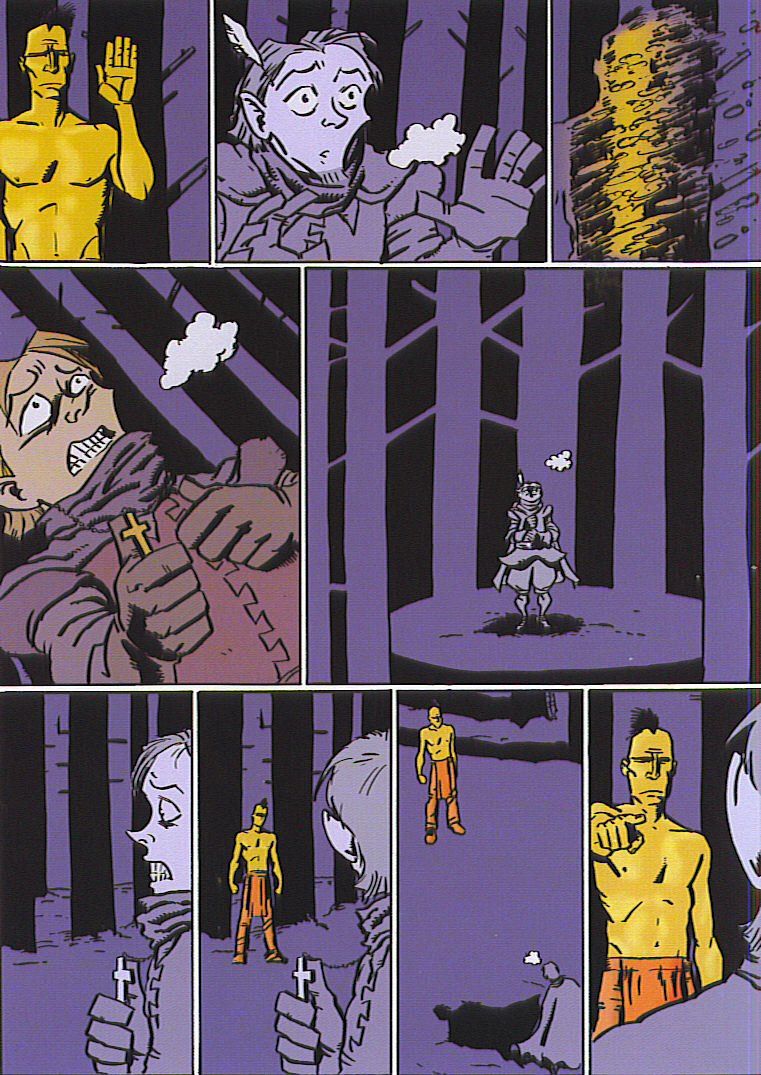
Journey into Mohawk Country is George O’Connor’s adaptation of Harmen Meyndertsz Van den Bogaert’s diary, an historical document detailing the young Dutch explorer’s 1634 journey out west of New Amsterdam to make contact with Indian villages for trade. O’Connor uses Van den Bogaert’s words verbatim, but his graphic novel format allows him extraordinary liberties with the journal’s account. Vague descriptions are literally fleshed out; O’Connor finds innuendo in even the simplest of Van den Bogaert’s entries, illustrating a between-the-lines reading of the Dutchman’s diary. O’Connor even manages to stick a strange epiphanic mystical revelation scene in there. The story itself is pretty simple: Van den Bogaert and his two companions head out into Mohawk country, meet and trade with Indians, eat bear, learn about some alien customs (including a sequence where some Indians show Van den Bogaert how to heal the sick by vomiting on them), and go back to Fort Orange. It’s really the little interpretive scenes around the text-proper, courtesy of O’Connor’s cartoony pictures, that make Journey into Mohawk Country such a pleasure to read. O’Connor’s work here illustrates the first-person narrative’s slippery claims on truth and the limited viability of a “true” historical account. Good stuff.

mohawk2.jpg

No Country for Old Men–Cormac McCarthy

no-country.jpg

Didn’t we write about No Country for Old Men a week or two ago? Yeah, but that was for the upcoming Coen brothers movie; this post is a review of the audiobook, and I’m not creative enough to think of a different title.

So we listened to the entirety of Cormac McCarthy’s No Country for Old Men over the course of two drives: from Jacksonville to St. Pete Beach and back. First off, as far as books-on-CD goes, this one was pretty good. Native Texan Tom Stechshulte manages to get all of the male characters spot on (the women in the novel sound kind of ridiculous though), and the action-filled plot, tight pacing, and simple sentences make for an easy-to-follow-while-driving listening experience (this is my number one criterion for an audiobook–you have to be able to follow the plot while navigating a road littered with truckers and asshole teenagers. F’r’instance, Faulkner’s short stories are almost impossible to follow in audiobook format).

Set in 1980, No Country for Old Men is the story of Llewellyn Moss, a Vietnam vet who stumbles across the aftermath of a drug deal gone bad and a suitcase with 2.4 million dollars in it. Of course, he takes the money and runs. Assassin Chigurh is hot on his heels to collect the drug money, leaving a bloody wake of murder and chaos. Sheriff Bell, a WWII vet who first-person narrates the beginning of each section of the book, is also on the case, trying to track down Llewellyn before he gets himself killed.

The first five discs (of seven) of the book were excellent–an exercise in genre fiction–the crime-suspense novel–that transcends the limits of the genre’s tropes. McCarthy’s spare prose moves at just the right pace, with just the right amount of “literary” interjection. However, the end of the novel morphs (evolves or devolves?) into a meditation on war and the changing nature of America and the American people. McCarthy’s symbols and metaphors seem heavy-handed and downright clunky at times, and in the end, the book becomes something of a reflection on personal failures and regrets, and how these personal failures add up to national failures.

Perhaps because I was driving, and because I had been so involved with characters over the course of five compact discs who suddenly disappeared in the narrative, I was disappointed in the end. Perhaps if I had read the book instead of listening to it on compact disc while driving, I would have found the ending more profound, or even enjoyable. Who knows–reading books vs. listening to them is probably a subject for another post. I do think that the Coen brothers will make a fantastic movie out of this story–potentially on par with Fargo. We’ll see.

Alphabet Soup: I

1831s.jpg

I is for Ishmael, narrator of Herman Melville’s Moby-Dick, a story about whaling/wailing. Ishmael’s narrative is an attempt to transform his pain and loss into some kind of meaningful human connection–to try to measure the incomprehensible and to put the ineffable into words. He’s a lovable guy, something of an eccentric in his time, who makes good friends with his strange bedfellow Queequeg. Of course, the whole thing ends in disaster, a disaster that Ishmael alone bears witness to, like one of Job’s servants returning to the master.

Also, I think that the great white whale, Moby Dick, is like a symbol or something.

infinitejest.jpg

I is also for Incandenza, Hal, the would-be tennis prodigy, secret stoner, and eidetically gifted prescriptive grammarian who is–along with Don Gately (somehow unjustly skipped over in installments D and G)–the protagonist of David Foster Wallace’s mammoth novel Infinite Jest. Hal is a sensitive kid, the son of a mad scientist filmmaker/tennis academy founder, who kinda sorta haunts both the novel as well as the Enfield Tennis Academy. Writing this makes me wish for a free month (i.e. no grad school) to re-read IJ, just so that I could take another crack at why Hal comes down with the howling fantods. Plenty of theories here.

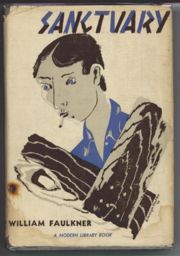
Sanctuary–William Faulkner

sanctuary.jpg

So I’ve been reading William Faulkner’s Sanctuary over the past few days. This was Faulkner’s breakthrough novel, the one that made him famous when it was published in 1931. He claimed that it was pot-boiler pulp fiction, written purely to make money, but who knows. I mean, we’re talking about a guy who chose to start spelling his name with a ‘u’ for some obscure reason–an author who worked from day one at creating the myth of himself as author. So who knows–maybe he actually thought he was writing a great piece of literature when he produced this lurid drivel.

Sanctuary is most famous for the rape of Southern debutante Temple Drake. She is raped with a corn cob. There you go. That’s pretty much all you need to know about this book. However, if you’re into elliptical and confusing depictions of violence, drunken debauchery, creepy voyeurism, and post-lynching sodomy, Sanctuary just might be the book for you.

There are two film adaptations of Sanctuary–1933’s The Story of Temple Drake, and 1961’s Sanctuary. Neither are readily available on VHS or DVD, and for good reason. They’re both pretty terrible. Still, the early sixties take on Sanctuary manages to capture the backwoods grotesque that saturates the novel. Actually, David Lynch could make a pretty decent film out of this.

My final analysis: I’m very very happy that I only have one more novel of Faulkner’s to read–Intruder in the Dust. Sanctuary did nothing but help consolidate my prejudice against Faulkner and my belief that the notion of Faulkner as an American Great is nothing but a scam.

How to Write a Lazy Post

1. Begin with some kind of excuse or explanation for why your post is so lazy. Remember to be earnest and emphatic.

Example: Sorry this post is so lazy! It’s Monday! I was swamped all weekend with school work and reading!

2. Link to somebody else’s work, preferably work that’s more creative and interesting than your own, but still within the realm of your blog’s subject.

Example: For a humorous take on the prose styles of some of our favorite authors, check out “The American Canon of the Choose-Your-Own-Adventure, Volume II” at McSweeney’s. Funny stuff.

3. If possible, link to some past post of your own that may or may not be tangentially related to the link to more-creative stuff above (of course, this older post of your may contain numerous links to other people’s more-creative-than-your-own stuff). Linking to your own previous work may help present your lazy post as something other than lethargic hackwork. Or not.

Example: Then check out our own post from last year on the Choose-Your-Own-Adventure series.

4. Then, so your readers don’t feel totally cheated (remember, they’re only really reading your blog to kill time at “work” anyway), post a completely unrelated mp3 or video.

Example A: On a completely unrelated note, my little baby two month old daughter just loves this song:

YMCK–“Magical 8bit Tour”

Example B: On a completely unrelated note, I recently saw the 1961 version of Sanctuary (adapted from a combination of two Faulkner books–Sanctuary and Requiem for a Nun). The film featured a standout performance from blues singer Odetta, which reminded me of this killer footage from that Bob Dylan movie Scorcese made:

5. Finally, apologize again for your lazy post and make an unsubstantiated promise to post more meaningful, more original content in the near future.

Example: Again, sorry for the lazy post folks, but look forward to upcoming posts on canceled TV shows, books-on-tape, a graphic novel about Mohawks (the people, not the hairstyle), and more griping about Faulkner.

No Country for Old Men

I’ve been reading a lot of Faulkner lately. This has nothing to do with me liking Faulkner (I don’t) or thinking that he’s an American master (at this point, I’m convinced that he’s not. Rather, it seems that a few critics–notably Malcolm Cowley and Cleanth Brooks–decided either that a. Faulkner is really great and/or b. America needs a new master of literary fiction, and it might as well be Faulkner. It seems amazing to me that these two critics conned a whole generation into believing that someone whose books were so unbelievably poorly written was actually, like, a totally awesome and important writer). I’m taking a class that requires me to read Faulkner.

Anyway, over the course of my reading, I got to thinking that the Coen brothers, two guys that have made some of the best American films ever (masterful films, certainly) are fond of Faulkner: the flood in O Brother Where Art Thou? hearkens to Faulkner’s novella Old Man (as does the whole milieu of that film really), the slow southern grotesque of Blood Simple is pure Faulknerian, ditto the gloomy doom of The Man Who Wasn’t There, and the failed screenwriter W.P. Mayhew in Barton Fink is essentially a caricature of Faulkner during his days in Hollywood.

So well and anyway, the Coens have a new movie coming out, No Country for Old Men, based on the Cormac McCarthy novel of the same name. Cormac McCarthy is often compared to Faulkner, though I have no idea why. They’re American? That’s it. They’re American. Like I said though, No Country for Old Men. Early reviews suggest that this is a return to form for the Coens, who have either been stumbling or just lazily cashing in lately (see: Intolerable Cruelty; The Ladykillers)–but we’ll have to wait until November to find out. For now, check out the trailer:

The Road–Cormac McCarthy

114930__road_l.jpg

At this point, I don’t know if it does any good to anyone for me to throw in my two cents regarding Cormac McCarthy’s latest novel The Road. This book won all sorts of awards and critical praise, topped The Believer‘s 2006 readers’ poll, and even became an Oprah’s Book Club selection. In fact, Cormac McCarthy gave his first ever television interview last month on The Oprah Winfrey Show, and I actually watched the damn thing. I was in the hospital; my daughter had just been born. Anyway, like I was saying, after the publication of The Road, everyone in the field of arts and letters and criticism seems to have simultaneously decided to confer “living master” status on Mr. McCarthy, most noting that he is an American writer. This is something we’re desperate for in American literature–masters of the art. And, if you cannot tell already, I have a somewhat cynical attitude toward this desperation, and a wary if not pessimistic approach to anything so unanimously lauded. So when my mother-in-law gave me a copy of The Road as a belated birthday gift–only a few days after the Oprah interview, in fact–I felt a mixture of intrigue and hesitation. I was reading The Children’s Hospital at the time (#3 on The Believer list, incidentally) which gave me some time and distance from the Oprah interview and some of the hype. When I finally finished The Children’s Hospital, I gave myself a little more distance, reading a few Faulkner short stories and a few magazine articles. Finally, I picked up The Road; I read about half of it in one sitting on a Friday night, finishing the rest of it over that weekend. I had to slow down in the end, because I knew that this book was a tragedy; I knew that (more) bad things were going to happen, and I loved the little boy and the man–the protagonists of the novel–and simply put, I put off reading as a way of putting off their deaths (I did the same with the end of The Children’s Hospital; also, just to get it out of the way, both novels are post-apocalyptic. Done with comparisons).

The premise of The Road will remind you of any number of other post-apocalyptic stories you’ve read or seen: the world is over and everything has gone to shit. However, McCarthy is unrelenting in his refusal to provide an explanation or even description for the epic disaster that precedes the events of the novel. Where most stories in the end-of-the-world genre delight in some sort of mythology, The Road eschews any fantastic back story. Instead, we get fragments, glimpses, the briefest hints. The overall effect of this lack of a reason is a stunning, awesome loneliness. This is an abandoned world, desolate, dead, cold, covered in ash. Nothing can live. Besides, the real story of The Road is the touching relationship between a nameless father and son. These are “the good guys” who “carry the fire”–this is the only mythology of the novel, the father’s only lessons to the son. The pair travels south, although their purpose is simply to stay alive, to not die. A large amount of the text is devoted to the simple day-to-day scavenging that is necessary to live, with occasional encounters with other living people being rare, unexpected, and ultimately meaningless. In a world where living people equal a good source of protein, no one can really help these two; all other people are threats–“the bad guys.” And as the novel progresses, the young boy begins to realize that the world is not so simple, that there may not be such a thing as “good guys” and “bad guys.”

The bond between the father and son, so beautifully expressed in McCarthy’s spartan prose, genuinely moved me. Their relationship propels a narrative absent of all but the dimmest kernel of hope; indeed, it doesn’t seem like there can be any future for these two at all in a world where nothing–no plants, no animals–can live. Which brings me to the last few pages of the book. I have a problem with this. First, I guess I should give a spoiler warning. Honestly, I believe that you can know the end of the book and not have it spoiled for you, but in the interest of etiquette: SPOILER WARNING! SPOILER WARNING! SPOILER WARNING! There. May we continue?

So yes, from the beginning of this book, it’s evident that either the father or the boy or both will die by the end of the book. And yes, the father does die, in a scene so moving that I actually cried. Unbelievably, however, McCarthy cops out in the last few pages of the book, and provides a deus ex machina in the form of a loving surrogate family to protect the boy. I mean, the new father figure comes literally out of nowhere and more or less says: “Okay, you’ll be safe now. Don’t worry readers, the kid is gonna make it!” This improbable resolution seems to contradict the 283 pages or so of the novel that preceded it. It seems far more likely in the world and vision that McCarthy crafted that the boy would be left alone to fend for himself. It’s almost as if McCarthy loved the boy too much to see him on his own, unattended to. And of course, a lot of his readers probably felt the same way–I certainly did. I really did. I wanted to see that kid make it, but at the same time the logic of the narrative does not support the ending that McCarthy wrote. Still, this really is a fantastic book–perhaps a bit overrated, but excellent nonetheless. Highly recommended.

Harry Potter Sex Romp

OK. My post’s title is solely for the sake of titillation (I have also been drinking lots of sangria and watching the first HP movie on TV, and the idea of a Harry Potter sex romp is making me giggle. Twenty points from Gryffindor). Still. Just so you’re not too disappointed, check out Shags the Dustmop’s collection of erotic Harry Potter fan fiction. A half-hearted endorsement, at best. Weird and creepy.

Now, for something truly great…

Fans of if…. will no doubt be familiar with “Sanctus,” the beautiful piece of music that haunts the film. If this recording is not the same as the one in the film, it’s very close. Either way, a sublime rendition–

Sanctus” (from the Missa Luba)

All the sangria and erotica and Congolese choral interpretations of Catholic masses have for some reason brought to mind the paintings of Wilfredo Lam (longtime pal of one of our favorite writers, Lydia Cabrera).

black081.jpg

A decent enough collections of his vibrant paintings can be found here (and you can always google for more, you lazy bastard).

Finally, it is always something special when a new blog is born. Check out Falcon Hawksome. Despite the author claiming that he “can’t stand” Van Morrison’s (or Them’s, if you want to be overly technical, geek) “Gloria,” please take my word that he is something of an arbiter of taste.

OK. Back to my sangria.