Three Books (On Ferrante, Knausgaard, irony, and covers good and bad)

img_2420

My Struggle, Book 1 by Karl Ove Knausgaard. English translation by Don Bartlett. First edition trade paperback by FS&G, 2013. Cover design by Charlotte Strick and Bill Zindel, with cover art by Bill Zindel.

I couldn’t really get past page 80 of My Struggle, but I like Zindel’s zany design for the first volume enough to hold on to it. Kinda reminds me of those Vintage Contemporaries I so adore.

A lot of people didn’t like the design though, and FS&G didn’t end up publishing the rest of Zindel’s designs, which would’ve looked pretty neat as a complete set. As literary critic Scott Esposito put it at the time “the market has spoken, and it hates the original paperback.”

Instead, FS&G went with variations on this—

img_2421

My Struggle, Book 2 by Karl Ove Knausgaard. English translation by Don Bartlett. First edition trade paperback by FS&G, 2014. Cover design by Charlotte Strick; photograph by Andreas Eikseth Nygjerd.

Look at our boy Knausgaard, smokin’ away! This cover is boring but not Bad, which makes it far less interesting than the Bad Knausgaard cover which is actually very Good. The Book 2 cover (and subsequent covers in the series) are safe and “stylish”—and when I write “stylish,” I use it in the way many writers use it—thoughtlessly, blankly—stylish as a word that points vaguely to the idea of style, the zeitgeistiness of style. Etc. (Again—I encourage you to check out Zindel’s vision for the whole series).

img_2419

My Brilliant Friend by Elena FerranteEnglish translation by Ann Goldstein. Fifteenth printing, Europa Editions, 2015. Book design by Emanuele Ragnisco; cover photo by Anthony Boccaccio.

My Brilliant Friend is brilliant, my friend.

Its cover is awful, and the subsequent covers in the so-called Neapolitan Novels quartet are somehow worse.

A good friend who’s never steered me wrong with a reading recommendation told me to read Ferrante last year, but I didn’t—it wasn’t the hype that put me off (although the hype put me off), but the covers. I finally acquiesced to an audiobook version, and after getting a few chapters in, wanted the text. So I caved.

But my god, the cover—why?

The publisher and art director(s) claim that the Ferrante covers are bad on purpose.

An article in Quartz that I found simply by googling “Ferrante covers awful” yields this nugget:

…Sandro Ferri, Europa Editions’ publisher, says the covers were not an accident of too many cooks in the design kitchen, but rather a conscious choice. Writes Ferri in an email to Quartz, “The ‘vulgarity’ is our intention. We don’t want to make the typical ‘literary’ cover designed for an audience of ultra-sophisticated readers. … Ferrante’s novels are a mix of popular literature and highbrow, intellectual writing. We want to communicate this though our covers as well.”

And in a Slate interview, EE co-founder/publisher Sandra Ozzola again asserts that the decision for tacky covers was, um, purposeful:

From the time of our first conversation with Elena Ferrante about her intention to write this novel, we knew the book’s title and that it would be the story of a long friendship between women—and that it would conclude with a scene of a very vulgar Neapolitan wedding. The wedding and Elena’s impression of it … is an extremely important moment in the book. That’s why I intentionally searched for a photo that was “kitsch.” This design choice continued in the subsequent books, because vulgarity is an important aspect of the books, of all that Elena wants to distance herself from.

If we take a book’s cover to be where the book “begins,” where we first start to read the text, then EE’s awful kitschy crappy ugly covers signal postmodern irony—a joke on perception, the marketplace, high-low aesthetics, etc. The covers work as a kind of metatextual critique, then, as Ozzola seems to suggest above—a critique that relies on the reader’s understanding of the novel’s central character’s aesthetic viewpoint.

Well so then: Are the covers indeed ironic critiques of book-cover-aesthetics? Are we to take these covers as pop art parodies of books that traffic in romantic aspirations, that are, like, marketed to women?

Or are these covers simply designed to appeal to the very market that they would claim to ironically mock?

The have-your-cake-and-eat-it-too postmodern answer to these questions is, of course, “Yes.”

To fully appreciate the aesthetic irony of the Ferrante novels of course requires reading the Ferrante novels. And undoubtedly, many people are put off reading these books because of the covers. So much so that Ferrante’s novels got new covers for their Australian release. The new covers were designed by W.H. Chong:

Mr Chong told The New Daily it can be dangerous to try irony on a book’s cover – especially if the joke isn’t clear to readers.

“You have to signal the irony really clearly otherwise the recipient doesn’t realise the irony,” Mr Chong said.

“You have to signal the irony really clearly” — okay, sure. But the finest satire never announces itself as such.

Chong’s new covers feature simple black-and-white photographs, and they have received praise. But in a sense, the Australian covers seem, at least to me, to echo those Knausgaard updates—safe, boring even. But I’d much rather be seen reading one of those, than, say, the original EE edition of The Story of the Lost Child, which has maybe the worst cover I’ve ever seen.

Europa Editions’ forthcoming Ferrante collection, Frantumaglia, has a great cover, by the way.

New Villalobos (Book acquired, 5.24.2016)

img_2411

Juan Pablo Villalobos’s I’ll Sell You a Dog is forthcoming (this August) from And Other Books. English translation by Rosalind Harvey. Publisher’s blurb:

Long before he was the taco seller whose ‘Gringo Dog’ recipe made him famous throughout Mexico City, our hero was an aspiring artist: an artist, that is, till his would-be girlfriend was stolen by Diego Rivera, and his dreams snuffed out by his hypochondriac mother. Now our hero is resident in a retirement home, where fending off boredom is far more gruelling than making tacos. Plagued by the literary salon that bumps about his building’s lobby and haunted by the self-pitying ghost of a neglected artist, Villalobos’s old man can’t help but misbehave.

He antagonises his neighbours, tortures American missionaries with passages from Adorno, flirts with the revolutionary greengrocer, and in short does everything that can be done to fend off the boredom of retirement and old age . . . while still holding a beer.

A delicious take-down of pretensions to cultural posterity, I’ll Sell You a Dog is a comic novel whose absurd inventions, scurrilous antics and oddball characters are vintage Villalobos.

Selections from One-Star Amazon Reviews of Elena Ferrante’s My Brilliant Friend

[Editorial note: The following citations come from one-star Amazon reviews Elena Ferrante’s novel My Brilliant FriendI’ve preserved the reviewers’ original punctuation and spelling. I love Ferrante’s novel, by the way. More one-star Amazon reviews].


ugh

Odd book

too wordy

so violent

so bummed

Depressing

It’s a series

stupid critics

Maybe terrific

I was so board

Did outline it all

I loved this book

It simply ended!!

So many characters

Too many characters

Not so Good this time

like Twitter on steroids

angst-filled adolescence

I’m an uncultured swine

Everyone in our book club

reading it for my book club

the ending was a dirty trick

there are over 40 characters

Riddled with punctuation errors

Chick lit with no plot or substance

This book is an exercise in despair

I was looking forward to this trilogy

by far the worst book I have every read

Of course it’s a matter of personal taste

the characters were not very nice people

I consider family sagas my favorite genre

endless clusters of names, names, names

Italian names that are difficult to remember

the characters are unlikable (and confusing)

we finished it only because it was Book Club

I damned near tore out what’s left of my hair

too many characters none of whom are likable

a story of domestic violence and male dominance

This book could not have been written by a woman

the main characters are interdependent in a very sick way

Boring and couldn’t Finnish it despite raves from others.?

Just couldn’t get past the violence and disrespect of people

found myself having to look back to figure out who was who

the two central characters may have been intended to be complex and interesting (and may be across the series) they were boorish and flat

the narrator was dryly describing events, as opposed to us being shown what happens through her interaction with characters and the world around her

the struggle of two smart intelligent girls to escape their poor brutal neighborhood in vain

basically a long list of long Italian names and stereotypes

one of my favorite books is The Brothers Karamazov

Just one self-absorbed observation after another

This book could not have been written by a man

WAY too many characters to keep track of

One of the best books I have ever read!

discussing it at my book club this week

an indulgent description of characters

the words did not flow in an easy way

If there were a zero stars rating

I read a lot in a variety if genres

her prose is dry and impersonal

meandering, fancy Chick Lit

it is the first part of a series

I am an English teacher

the characters are dark

what a very long book

choppy and uneven

too many charactors

more of a YA book

tooooo long !!!’n

laborious at best

like a soap opera

wonderful book

my book club

dix no finish

pure drivel

Pure trash

Party Wall/Bad Things Happen (Books acquired, 05.10.2016)

Two new ones from Biblioasis.

Party Wall is a novel by Catherine Leroux (English translation by Lazer Lederhendler). The blurb:

Catherine Leroux’s The Party Wall shifts between and ties together stories about pairs joined in surprising ways. A woman learns that she may not be the biological mother of her own son despite having given birth to him; a brother and sister unite, as their mother dies, to search for their long-lost father; two young sisters take a detour home, unaware of the tragedy that awaits; and a political couple—when the husband accedes to power in a post-apocalyptic future state—is shaken by the revelation of their own shared, if equally unknown, history.

Lyrical, intelligent, and profound, The Party Wall is luminously human, a surreally unforgettable journey through the barriers that can both separate us and bring us together.


And Bad Things Happen, a story collection by Kris Bertin. The blurb:

The characters in Bad Things Happen—professors, janitors, webcam models, small-time criminals—are between things. Between jobs and marriages, states of sobriety, joy and anguish; between who they are and who they want to be. Kris Bertin’s unforgettable debut introduces us to people at the tenuous moment before everything in their lives change, for better or worse.

Three Books

img_2089

Their Familyby Warren Fine. 1972 first edition hardback from Knopf. Cover illustration by James Grashow; cover design by R.D. Scudellari. I’ll admit I had to have this because of the cover alone, although its subject matter–an American frontier journey–is also a point of interest

img_2388

Star Maker by Olaf Stapledon. 1973 Penguin paperback. Cover design by David Pelham. I first read Star Maker when I was maybe 12 or 13—in the middle of what I now think of as a massive gorging of sci-fi and fantasy novels, a kind of rushed reading I’ll maybe never be able to return to. I haven’t read it since then but would like to revisit it later this summer.

img_2390

The Franchiser by Stanley Elkin. 1988 trade paperback by Nonparelil Books. Cover illustration by Joan Elkin; cover design by Louise Fili. After a few false starts I finally got into The Franchiser. I’m about half way through. It’s fucking great—a funny but scathing critique of America that seems utterly prescient (in the same way that Gaddis’s J R is a predictor novel, not just a zeitgeist novel).


Tiny Splendor’s Box of Books Vol IX (Books acquired, 5.14.2016)

My friend gave me Tiny Splendor’s Box of Books, Vol. IX last weekend.

Here’s the tracklist:

img_2367

I was initially trying to limit myself to looking at one a day but then stopped trying to limit myself to looking at one a day and now I’ve looked at all of them. (Is “look” the right verb? Not sure. “Book” may not be the right noun, either. These book pamphlet art zine comic things are fun though).

This is what a few of the books look like out of the box:

img_2369

Jeffrey Cheung’s book cracked me up.

img_2371

And I really really dig Danny Shimodaa’s contribution:

img_2372 img_2373

And I’ll end the post with positive vibes from Cahill Wesson:img_2374


No possibility of transcendence (Elena Ferrante)

I’m always surprised when someone points out as a flaw the fact that my stories contain no possibility of transcendence. Here I’d like to move on to a statement of principle: since the age of fifteen, I haven’t believed in the kingdom of any God, in Heaven or on Earth—in fact, wherever you place it, it seems dangerous to me. On the other hand, I share the opinion that most of the concepts we work with have a theological origin. Theology helps us understand the origins of the dregs we even now resort to. As for the rest, I don’t know what to tell you. I’m comforted by stories that emerge through horror to a turning point, stories in which someone is redeemed as confirmation that peace and happiness are possible, or that one can return to a private or public Eden. But I tried to write a story like that, long ago, and I discovered that I didn’t believe in it. I’m drawn, rather, to images of crisis, to seals that are broken. When shapes lose their contours, we see what most terrifies us, as in Ovid’s “Metamorphoses,” Kafka’s “Metamorphosis,” and Clarice Lispector’s extraordinary “Passion According to G.H.” You don’t go beyond that; you have to take a step back and, to survive, reënter some good fiction. I don’t believe, however, that every fiction we orchestrate is good. I cling to those that are painful, those that arise from a profound crisis of all our illusions. I love unreal things when they show signs of firsthand knowledge of the terror, and hence an awareness that they are unreal, that they will not hold up for long against the collisions. Human beings are extremely violent animals, and the violence they are always ready to use in order to impose their own eternal, salvific life vest, while shattering those of others, is frightening.

Elena Ferrante in conversation with novelist Nicola Lagioia. English translation by Ann Goldstein. The full exchange between Lagioia and Ferrante will be published in Frantumaglia: An Author’s Journey Told Through Letters, Interviews, and Occasional Writings this fall. Read a longer (and fascinating) excerpt at The New Yorker. 

leis: track, footprint, furrow.

img_2356

From Joseph T. Shipley’s The Origin of English Words: A Discursive Dictionary of Indo-European Roots.

Despite our Ballardian present, the High-Rise film adaptation is a nostalgia piece

high-rise-poster

  1. Our present is utterly Ballardian.
  2. Our present is so utterly Ballardian that our present is actually our (unevenly distributed) future.
  3. Like, what is the 2016 U.S. presidential election but a short story Ballard might have written in 1983 (and hopefully thrown in the trash)?
  4. Ballard’s 1975 novel High-Rise is particularly concerned with this present-future condition: the phrase to come (as in a future to come) repeats throughout the novel, a key dissonant note.
  5. Near the end of the novel, Ballard’s free indirect style drifts into the mind of protagonist Robert Laing:

    ...he found it difficult not to believe that they were living in a future that had already taken place, and was now exhausted.

  6. A version of this line shows up in the first minutes of director Ben Wheatley’s 2015 film adaptation of High-Rise.
  7. While Ballard’s satire evokes the post-future’s psychological (ir)reality, Wheatley’s film adaptation feels like a nostalgic period piece for a future that came and skedaddled. Perhaps he (and his fellow filmmakers—screenwriter Amy Jump, the editor, the set designers and costumers, etc.) found it impossible to do more than stylistically recapitulate the Modernist contours that Ballard transcended.
  8. Critic Tasha Robinson lays it out neatly in her proper review at The Verge:

    The retro cars, suits, and architecture all put High-Rise more in a quaint, remote past than a dystopian future. They also add to the sense of otherworldliness that hangs over the film.

    And so does the sense that High-Rise is driven more by Wheatley’s poster-ready striking images —€” a suicide falling from a high balcony in ultra slow motion, Laing expressionless and spattered with paint — than by any sort of human drives.

  9. (I modify “review” in the above with “proper” because Robinson wrote a real review; I’m not doing that here. I think her take on the film is far more detailed and broad than what I’m doing here, and certainly attends more to the, like, plot of the film—even as she acknowledges that the plot basically gets put on the back-burner for long stretches).
  10. So probably my biggest quibble with the High-Rise film adaptation is its nostalgia, its obsession with midcentury modernism and Brutalism and style—by which I mean the idea of style—over, like, ideas. 
  11. Those ideas: Ballard’s central critiques of capitalism, consumerism, and class do come through in the film, but Wheatley and his team resist giving them any air to breathe, let alone room to stretch their legs. (My god. Forgive me these metaphors, this terrible personification).
  12. There are very, very few scenes in the film where people exchange ideas.
  13. Instead, ideas are wedged in, often in snippets lifted directly from the book, crammed quickly into a frame that will surely veer back into the film’s main technique: Montage!
  14. The first chapter of Ballard’s novel is titled “Critical Mass.” As I pointed out in my review of the novel, “Ballard dispenses with any simmering in his tale of depraved debauchery,” and gets his pot boiling in a hurry.
  15. In contrast, Wheatley’s film gets a slower—but strong—start. (The first 50 or so minutes are actually pretty great).
  16. At its midway point though, the High-Rise film tries to pick up the pace—dramatically. The solution is montage after montage.
  17. Indeed, the final hour of the film slips into a state of near-constant montage. The big set piece scenes (y’know—dance parties and food riots and orgies and the like) dissolve into the film’s frenetic technique. It often feels as if Wheatley is more interested in making a bunch of cool music videos than a film. While this jumpy method might have been the filmmakers’ intention—y’know, to evoke paranoia, anxiety, exhaustion, claustrophobia, etc.—the result, at least for me, was a kind of paradoxical lethargy, a creeping dullness.
  18. Key moments, like the first encounter between Wilder and Royal for example, fly by in rushed blips. It’s as if Wheatley was afraid that if he let two people talk on-screen for more than 30 seconds the viewers would not, y’know, pick up on the fact that we are witnessing the thin veneer of society crack open revealing an abject tumult of sex and violence underneath.
  19. (Wilder—the Id man! Royal the Superego. So much of Ballard’s psychological stuff gets lost in the film, which foregrounds class hierarchy instead of synthesizing the two. But that’s a separate quibble).
  20. What were likely great performances (and much potential for humor) get lost in all the short cuts and montage.
  21. Still:  Sienna Miller is great as Charlotte Melville, and Tom Hiddleston is charming enough.
  22. But best in the film—at least for me—is Elizabeth Moss as Wilder’s pregnant wife Helen.
  23. Still, the filmmakers insist on mining her pregnancy for cheap nostalgic jokes—she’s always smoking, always finishing a drink or pouring a new one.
  24. Which brings me back to: Why a period piece? Why not update High-Rise—or, even better take it outside of time completely?
  25. (It will be interesting to look at the film in twenty years: Oh! These were the aesthetic obsessions of the 2010’s, these were the nostalgic totems of that silly decade).
  26. (And while I’m wedging points in parenthetically in a rush: The ending. I read the novel’s conclusion ironically—the high-rise is a phallic failure, and as its patriarchy devolves into chaos and death, a matriarchy arises (or maybe coalesces is the verb I want). But the film concludes more ambiguously—sure, it points to the idea of a matriarchy (or harem)—but it leaves Laing in the kind of alpha male position that the novel had sought to ironize).
  27. And, to return to point 24: Did the filmmakers underestimate the currency of Ballard’s satire? We live in an era of radical wealth inequality, where the richest in our society are rapidly establishing their own private greenzones away from the plebeians. High-Rise is more timely now than ever.
  28. (A short list of (non-)adaptations of J.G. Ballard’s High-Rise: Pete Travis’s Dredd (2012), Matteo Garrone’s Gomorra (2008), and George Romero’s Land of the Dead (2005)).
  29. (And re: point 27 w/r/t adaptations—in a sense, Ballard adapted/revised the novel himself in his 2003 novel Millennium People).
  30. Reading back over this riff, briefly, I see that there’s so much I left out—on stuff the filmmakers left out (why change the key plot point of Laing’s sister?)—on stuff I should’ve praised more (great soundtrack; good cinematography)—but most of all, what doesn’t come through is my admiration that the filmmakers tried. And they tried hard, successfully evoking a Ballardian style. But while the High-Rise adaptation delivers Ballardian style, that Ballardian style only points at itself, and not at our Ballardian present, our Ballardian future.

In American Candide, Mahendra Singh reboots Voltaire’s classic satire

tumblr_o71467dk931s4y9aso1_1280

About halfway through Mahendra Singh’s American Candide, our omniscientish (yet beguiled) narrator slows down for a moment to offer an internal critique (and useful summary) of the novel thus far:

If Candide could address the reader right now, he would probably apologize for both the breakneck pace and pixelated tenor of his adventures so far. Modern literature evolved beyond that sort of thing long ago, and an easy-to-swallow plot enlivened with a soupçon of ironic handwringing is all the rage today. The idea of a fictional hero running afoul of angry fathers, jihadi terrorists, secret police, corporate mercenaries, a cable TV network, and a secret cabal of global warmers simply boggles the reader’s mind, an authorial fate worse than death.

And yet of course many readers enjoy a good mind boggling every now and then.

I do, anyway.

Our narrator’s little condensation of the novel thus far reminds us that stylistically and formally, American Candide is a true heir to Voltaire’s Candide. Both novels offer a “breakneck pace and pixelated tenor”; both novels pulse with picaresque energy; both novels drip with delightfully venomous satiric acid; both novels are basically one-damn-thing-happening-after-another. Both novels are funny as fuck all.

Our narrator’s quick summary also jabs at the limitations of contemporary socially-conscious-realistic fiction—you know, “serious literature”—which limitations American Candide dispenses with in favor of frenzied fun. Instead of a soupçon of ironic handwringing, we get full-blown glorious agitation.

What’s all the agitation over?

American Candide’s full title is American Candide; or Neo-Optimism, a direct nod to Voltaire’s full title, Candide; or Optimism. But Singh’s subtitular prefix points to other connotations: Neoliberalism, neoconservatism—hell, neofascism—but most of all, the irony that very little of human nature really has changed in three centuries. The big ideals of the Enlightenment continue to radiate too radically for some folks.

tumblr_o6f5s07t9a1s4y9aso1_1280

To wit, American Candide carves sharply into the last two decades, synthesizing the dangerous follies of the Bush Gang (and the subsequent fallout of their crimes) into a kind of mythical transposition. Singh offers a cruel fun satire of the neo-optimism that underwrites blind belief in “the better-than-best of all possible worlds, 21st-century America”. The novel’s satirical sting is simultaneously sweetened by intense humor and painfully amplified by the cruel realism underneath Singh’s zany hyperbole. Tell all the truth but tell it slant, as the poet advised.

And so American Candide is terribly terribly funny but also terribly terribly sad.

For example, Singh’s take on Hurricane Katrina shows American Candide’s capacity to condense historical critique into sharp moments that bristle with anger leavened in caustic humor:

The offending hurricane was clearly an act of god, and the Freedonian government prided itself on its special relationship with god.

Another snippet (“Hooterville” is New Orleans’s Freedonian stunt double):

The winds howled, the clouds unleashed a torrential rain, and the fetid waters of an entire ocean climbed over the heads of those surviving Hootervillains too patently lazy to live on higher ground.

Just a page or two later, Candide and Pangloss mistake armed and uniformed authorities for civil peacekeepers:

Rah! Ooh! We’re better than best police! … We’re Tender-Mercynaries® from Baron Incorporated, booyah, and this is a federally-restricted emergency disaster area, yoot-yoot rah booh!

Instead of helping our heroes, the mercenaries abduct, torture, and interrogate them. Candide and Pangloss find themselves in black hoods at a black site, and even though our young hero “had been lightly sodomized and beaten and even urinated upon…his innermost Freedonian convictions had not been too badly shaken.”

It’s the reader who shakes, in a mix of laughter and rage. The world of American Candide is simply our own world dressed up in a satirical frock that somehow reveals, rather than covers over, our society’s garish ugliness, our addictions to binding illusions. Man is born free, and everywhere he is in chains, commented Rousseau (Voltaire hated Rousseau).

tumblr_o70wqo1hoq1s4y9aso1_1280

American Candide’s  blurb warns that, “College-boy sissies will call it a Juvenalian satire upon America’s penchant for mindless optimism and casual racism.” Hooray for college-boy sissies! But no, really, I think that’s a fair assessment—as is Singh’s Candide’s assessment from the aforementioned blurb: “rage against the rage, Voltaire-dude!”

But it’s not just rage: Laughter—laughter in the all-seeing eye of absurdity—it’s laughter that undergirds American Candide.

img_1468

In a review of Lowell Blair’s translation of Voltaire’s Candide, I suggested:

The book’s longevity might easily be attributed to its prescience, for Voltaire’s uncanny ability to swiftly and expertly assassinate all the rhetorical and philosophical veils by which civilization hides its inclinations to predation and evil. But it’s more than that. Pointing out that humanity is ugly and nasty and hypocritical is perhaps easy enough, but few writers can do this in a way that is as entertaining as what we find in Candide.

Singh’s update-reboot-translation of Candide fittingly answers Voltaire’s pessimistic prescience with not just bitter affirmations of contemporary predation and evil, but also with an eye toward entertainment—to the affirmations of laughter.

[Note: All the illustrations in this review are by Mahendra Singh, and are part of American Candide].

Three Books

img_2325-1

How Bluegrass Music Destroyed My Life by John Fahey. Third edition paperback from Drag City (DC 124). No designer credited.

I first read Fahey’s collection in 2000 or 2001, when it first came out—a good friend lent it to me and I returned it. Later, he loaned it to another friend who did not return it. I bought the book last summer while visiting the first friend (he took me to the Spoonbill & Sugartown bookshop in Brooklyn). Fahey’s book is sorta memoir, sorta fiction (at times), all weird and good. There’s a wonderful chapter about Fahey’s work on Michaelangelo Antonioni’s film Zabriskie Point that culminates in Fahey and Antonioni getting into a fistfight.

img_2320

Will Oldham on Bonnie “Prince” Billy by Will Oldham and Alan Licht. First edition trade paperback from W.W. Norton. Cover design by Faber using a painting (of Oldham) by Becky Blair.

The friend who lent me the Fahey book insisted for months that I pick up Will Oldham on Bonnie “Prince” Billy; when I kept neglecting to find it, he eventually just sent it to me. The book is basically the edited transcripts of discussions between Oldham and Licht. While there’s a heavy focus on Oldham’s music (and his acting career), the book is ultimately about creation and the artistic process. It is one of the better books about music that I’ve ever read. (A “Cosmological Timeline” at the end of the book begins in 1778 with Captain James Cook’s discovery of the “the Hawaiian tradition of surfing” and ends in 2011 with Jennifer Herrema changing RTX into Black Bananas).

img_2322

Sign ‘O’ the Times by Michaelangelo Matos. A 33 1/3 book from Continuum, 2004. No designer credited.

I bought this at a Friends of the Library sale maybe 10 years ago. Matos’s take on Prince’s 1987 double album weaves music history and music criticism into personal memoir. The book ends with Prince seeing Matos seeing Prince at an Ohio Players’ show in 1997.

From this darkness packs of mad dogs will emerge, vipers, scorpions, enormous sea serpents (From Ferrante’s The Story of a New Name)

I made the dark descent. Now the moon was visible amid scattered pale-edged clouds; the evening was very fragrant, and you could hear the hypnotic rhythm of the waves. On the beach I took off my shoes, the sand was cold, a gray-blue light extended as far as the sea and then spread over its tremulous expanse. I thought: yes, Lila is right, the beauty of things is a trick, the sky is the throne of fear; I’m alive, now, here, ten steps from the water, and it is not at all beautiful, it’s terrifying; along with this beach, the sea, the swarm of animal forms, I am part of the universal terror; at this moment I’m the infinitesimal particle through which the fear of every thing becomes conscious of itself; I; I who listen to the sound of the sea, who feel the dampness and the cold sand; I who imagine all Ischia, the entwined bodies of Nino and Lila, Stefano sleeping by himself in the new house that is increasingly not so new, the furies who indulge the happiness of today to feed the violence of tomorrow. Ah, it’s true, my fear is too great and so I hope that everything will end soon, that the figures of the nightmares will consume my soul. I hope that from this darkness packs of mad dogs will emerge, vipers, scorpions, enormous sea serpents. I hope that while I’m sitting here, on the edge of the sea, assassins will arrive out of the night and torture my body. Yes, yes, let me be punished for my insufficiency, let the worst happen, something so devastating that it will prevent me from facing tonight, tomorrow, the hours and days to come, reminding me with always more crushing evidence of my unsuitable constitution. Thoughts like that I had, the frenzied thoughts of girlish discouragement. I gave myself up to them, for I don’t know how long.

From Elena Ferrante’s 2012 novel The Story of a New Name. English translation by Ann Goldstein.

Crews/DeLillo/Gardner/Murdoch (Books acquired, 5.12.2016)

img_2315

Moby Dick — Hieronimus Fromm

img_2273

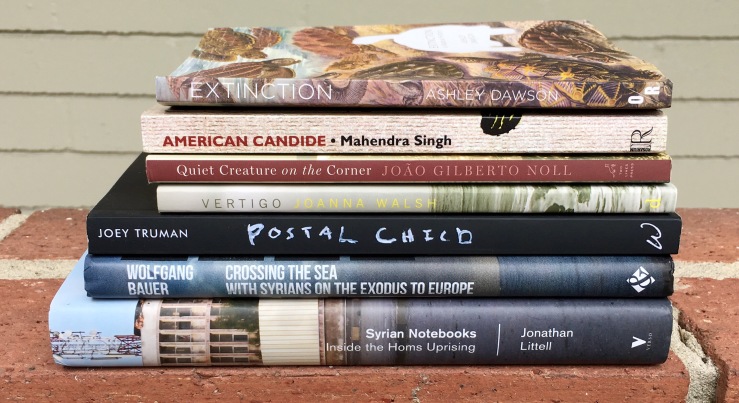
Postal Child / Queer and Alone (Books acquired, 05.05.2016)

img_2181

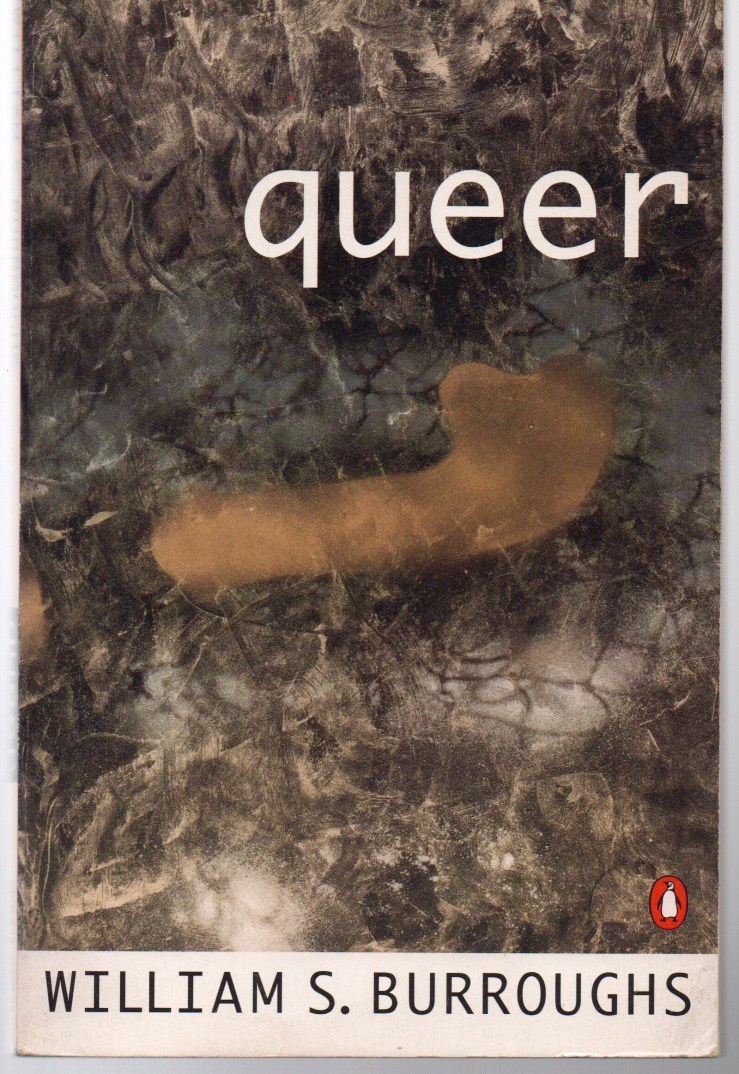
I love the covers of these two new titles from new indie Whisk(e)y Tit.

Here’s the not-blurb for Joey Truman’s Postal Child:

Whitey Whitlock had an ear for the birds. He could whistle their songs as well as they could. He did so on his route. He talked to the birds.The birds talked back.

Whitey was a black man. He was called Whitey because the index finger on his left hand was white. A birthmark. His first name was Esmerelda. Middle name Torno. His last name was Whitlock because his mom’s last name was Whitlock.

His mom was high when Whitey was born. She was also high when she named him. Esmerelda was the name of her sister, the only person in the world who ever treated her decently, and Torno was short for tornado, because that’s how it felt when Whitey came out.

Whitey’s mom had a penchant for the cocaine.

She was a good mom though. Albeit an inconsistent mom.Whitey learned how to deal with her mood swings and her ever-present hangovers. By the time he was three he could make his own breakfasts. By the time he was eight he could get himself to school. By the time he was ten he was doing all the shopping and housework. By the time he was twelve he could do all the paperwork that allowed him and his mom not to starve or be homeless. On one of the pubescent days leading up to his thirteenth birthday he woke up to find his mom dead on the couch.

And the blurb-blurb for James Strah’s Queer and Alone (which about, by the way, Whisk(e)y Tit publisher Miette threatens/offers to “tattoo the entire text to your torso while smoking clove cigarettes” (not sure who’s doing the smoking there)):

Monrovia. Bali. Bombay. Cayman Islands. Hollywood. The names of faraway places dot the pages of Queer and Alone like thousands of islands in a deep blue sea. Indeed, the hero – or is he an ironic anti-hero? – of this novel is a man literally at sea. He is Desmond Farrquahr who boards a steamer bound for Hong Kong by way of the Cape of Good Hope. Looking for experience, taking in the sights, hoping. For what?

Queer and Alone is a wildly exuberant travelogue as monologue, an eccentric American’s view of tourism. One might call it a “scatalogical romance,” with a story and a girl in every port. “It’s all part of the novel experience of being there,” Farrquahr wordplays with the reader. As narrator of the novel he shows off incredibly sly linguistic gifts that turn even the slightest image or sound into the dazzling rhythms of word magic.

Whether it’s describing racial fantasy films in Africa, investigating murder in Bombay, or seducing stately women in staterooms, Farrquahr manages to have the most ingenious takes on culture. In one of the most funny scenes in the novel the narrator is seen eating several (dis)courses of a chopstick dinner that makes the ideologies of both East and West seem like entangled sesame noodles. Tourism moves closer to zany anthopology whenever Farrquahr acts as guide.

Desmond Farrquahr is a very queer fellow if judged by any conventional standards. But isn’t the world itself a queer place these days?

William T. Vollmann talks sex and death; reads from Last Stories and Other Stories

Three Books (that are good starting points for reading Thomas Pynchon)

Today is Pynchon in Public Day, so today’s Three Books blog offers three books that I think may make good entry points for those interested in, but perhaps unnecessarily daunted by, Thomas Pynchon. My intuition is that many readers’ first experiences reading Pynchon may have been like mine: I read The Crying of Lot 49 as a college assignment, found it bewildering and baffling, and despite understanding almost none of it, I then attempted Gravity’s Rainbow (the key word is attempted (failed will also do in a pinch)).

Many readers start with The Crying of Lot 49 because it’s short. While I like the novel (I wrote about it here), it’s also extraordinarily dense, a box so crammed with jokes and japes that some fail to spring out at full force. Lot 49 is a much better reading experience after you’ve read more of Pynchon.

Lots of readers new to Pynchon plunge into Gravity’s Rainbow, probably because it’s famous. I love love love Gravity’s Rainbow, but along with Mason & Dixon (which may be my favorite Pynchon novel), I do not think it is a good starting place for Pynchon. Gravity’s Rainbow is a rich, ringing vortex, a seven-hundred-and-something pager that almost necessitates that its reader immediately reread it. Gravity’s Rainbow is a very funny and very tragic book, and I think it is the work of genius that its reputation suggests—but it’s also one of the few books I can think of that get put on lists of Big Difficult Novels that is, actually, Difficult.

So here are my suggestions for starting places for Pynchon.

img_2195

Against the Day by Thomas Pynchon. First edition Penguin hardback, 2006. Jacket design my Michael Ian Kaye.

Okay. So maybe you’re saying, Waitisn’t that one, like, really long? Reader, you’re correct. At 1,085 pages Against the Day is Pynchon’s longest novel to date. But it’s also one of his most accessible, and, most importantly, it offers a condensation of Pynchon’s Big Ideas and Big Themes. (I wrote a list of 101 possible descriptors for Against the Day, if you’re interested in a short take; I also riffed on the book at some length in a series of posts).

img_2194

V. by Thomas Pynchon. Vintage UK trade paperback edition (1995). Cover by Paul Burgess.

V. is Thomas Pynchon’s first novel. It’s also the first Pynchon novel I read and loved and (possibly) understood. Like Against the DayV. lays out many of the themes and styles (and even a character or two) that appear elsewhere Pynchon’s oeuvre. In a loose sense, V. feels like a dress rehearsal for Gravity’s Rainbow. Oh, it’s also pretty discursive—in fact, you can read chunks of it almost as short stories. In fact, here’s a good way to break into Pynchon: Get V., and read Ch. 9–it stands on its own as a long short story, the tale of Kurt Mondaugen—and colonialism, siege paranoia, dark dread, etc.

img_2197

Inherent Vice by Thomas Pynchon. First edition hardback, Penguin, 2009. Jacket design by Tal Goretsky and Darren Haggar; image credited to Darshan Zenith and Cruiser Art.

I’ve heard Inherent Vice dismissed as “Pynchon lite,” which may be true—I’ve read the book twice now and if its shaggy threads connect, I can’t see it (unlike, say, Gravity’s Rainbow, which resolves like a complicated math problem). Still, Inherent Vice makes a nice gateway drug to Pynchon—it’s funny and loose, and even though it rambles through an enormous cast of characters and settings, it’s ultimately far, far more contained than sprawling novels like Mason & Dixon and Gravity’s Rainbow. Paul Thomas Anderson’s film adaptation also makes an interesting visual counterpart to the novel—which it somehow simultaneously condenses and expands. Inherent Vice—the novel—also seems to me a kind of bookend or sequel to The Crying of Lot 49. (I wrote a bit about that here).

Last thought: Ignore my suggestions. Pick any novel that interests you by Pynchon and dive in. Don’t get too frustrated if you’re not sure what’s going on. A lot of the time, that’s the point of it all. Enjoy it.