If civilization has an opposite, it is war (Ursula K. Le Guin)

Tibe spoke on the radio a good deal. Estraven when in power had never done so, and it was not in the Karhidish vein: their government was not a public performance, normally; it was covert and indirect. Tibe, however, orated. Hearing his voice on the air I saw again the long-toothed smile and the face masked with a net of fine wrinkles. His speeches were long and loud: praises of Karhide, disparagements of Orgoreyn vilifications of “disloyal factions,” discussions of the “integrity of the Kingdom’s borders,” lectures in history and ethics and economics, all in a ranting, canting, emotional tone that went shrill with vituperation or adulation. He talked much about pride of country and love of the parentland, but little about shifgrethor, personal pride or prestige. Had Karhide lost so much prestige in the Sinoth Valley business that the subject could not be brought up? No; for he often talked about the Sinoth Valley. I decided that he was deliberately avoiding talk of shifgrethor because he wished to rouse emotions of a more elemental, uncontrollable kind. He wanted to stir up something which the whole shifgrethor-pattern was a refinement upon, a sublimation of. He wanted his hearers to be frightened and angry. His themes were not pride and love at all, though he used the words perpetually; as he used them they meant self-praise and hate. He talked a great deal about Truth also, for he was, he said, “cutting down beneath the veneer of civilization.”

It is a durable, ubiquitous, specious metaphor, that one about veneer (or paint, or pliofilm, or whatever) hiding the nobler reality beneath. It can conceal a dozen fallacies at once. One of the most dangerous is the implication that civilization, being artificial, is unnatural: that it is the opposite of primitiveness… Of course there is no veneer, the process is one of growth, and primitiveness and civilization are degrees of the same thing. If civilization has an opposite, it is war. Of those two things, you have either one, or the other. Not both. It seemed to me as I listened to Tibe’s dull fierce speeches that what he sought to do by fear and by persuasion was to force his people to change a choice they had made before their history began, the choice between those opposites.

From Ursula Le Guin’s 1969 novel The Left Hand of Darkness. The bold emphases are mine—mea culpa, I couldn’t help it.

Frankie Styne and the Silver Man (Book acquired, 12.09.2015)

img_1013

Kathy Page’s 1992 novel Frankie Styne and the Silver Man is getting a North American debut thanks to publisher Biblioasis. Blurb from the author’s website:

Frankie Styne, the successful author of a series of gruesome killer novels,  has lived  at 125 Onley Street for many years. Meticulous and obsessive, he lives a life of isolation, managing to keep both future and past at bay.

Next door, live Liz Meredith and her new baby, Jim. Liz has been told by her social worker Mrs Purvis that Jim has a rare disorder, and will never be like other children. But Mrs Purvis can’t see, as Liz can, that Jim already knows things no ordinary person could. Besides, Liz doesn’t want any help from the social services or from Tom and Alice, the couple at number 129. She wants to be left in peace so that she can imagine her way out of how things are.

When Frank’s solitary anonymity is threatened, he hatches a real-life plot which, as he begins to enact it, unexpectedly changes not only his own life, but also those of Liz and Jim. Sifting through our collective nightmares, Kathy Page has written a novel that is powerful, humorous, tragic and thoroughly surprising.

A Mason & Dixon Christmastide (Thomas Pynchon)

They discharge the Hands and leave off for the Winter. At Christmastide, the Tavern down the Road from Harlands’ opens its doors, and soon ev’ryone has come inside. Candles beam ev’rywhere. The Surveyors, knowing this year they’ll soon again be heading off in different Directions into America, stand nodding at each other across a Punch-bowl as big as a Bathing-Tub. The Punch is a secret Receipt of the Landlord, including but not limited to peach brandy, locally distill’d Whiskey, and milk. A raft of long Icicles broken from the Eaves floats upon the pale contents of the great rustick Monteith. Everyone’s been exchanging gifts. Somewhere in the coming and going one of the Children is learning to play a metal whistle. Best gowns rustle along the board walls. Adults hold Babies aloft, exclaiming, “The little Sausage!” and pretending to eat them. There are popp’d Corn, green Tomato Mince Pies, pickl’d Oysters, Chestnut Soup, and Kidney Pudding. Mason gives Dixon a Hat, with a metallick Aqua Feather, which Dixon is wearing. Dixon gives Mason a Claret Jug of silver, crafted in Philadelphia. There are Conestoga Cigars for Mr. Harland and a Length of contraband Osnabrigs for Mrs. H. The Children get Sweets from a Philadelphia English-shop, both adults being drawn into prolong’d Negotiations with their Juniors, as to who shall have which of. Mrs. Harland comes over to embrace both Surveyors at once. “Thanks for simmering down this Year. I know it ain’t easy.”
“What a year, Lass,” sighs Dixon.
“Poh. Like eating a Bun,” declares Mason.”

The last paragraphs of Ch. 52 of Thomas Pynchon’s novel Mason & Dixon.

Three Books

img_1191

Homesick: New & Selected Stories by Lucia Berlin. Lovely Black Sparrow trade edition, 1990; design by Barbara Martin. An amazing book, a revelation to me. I picked it up looking for the posthumous collection A Manual for Cleaning Women (that track is collected here) based on, well, the hype. But the hype was more than right, and I feel simultaneously abashed that I didn’t know Berlin before and grateful to know her writing now.

img_1190

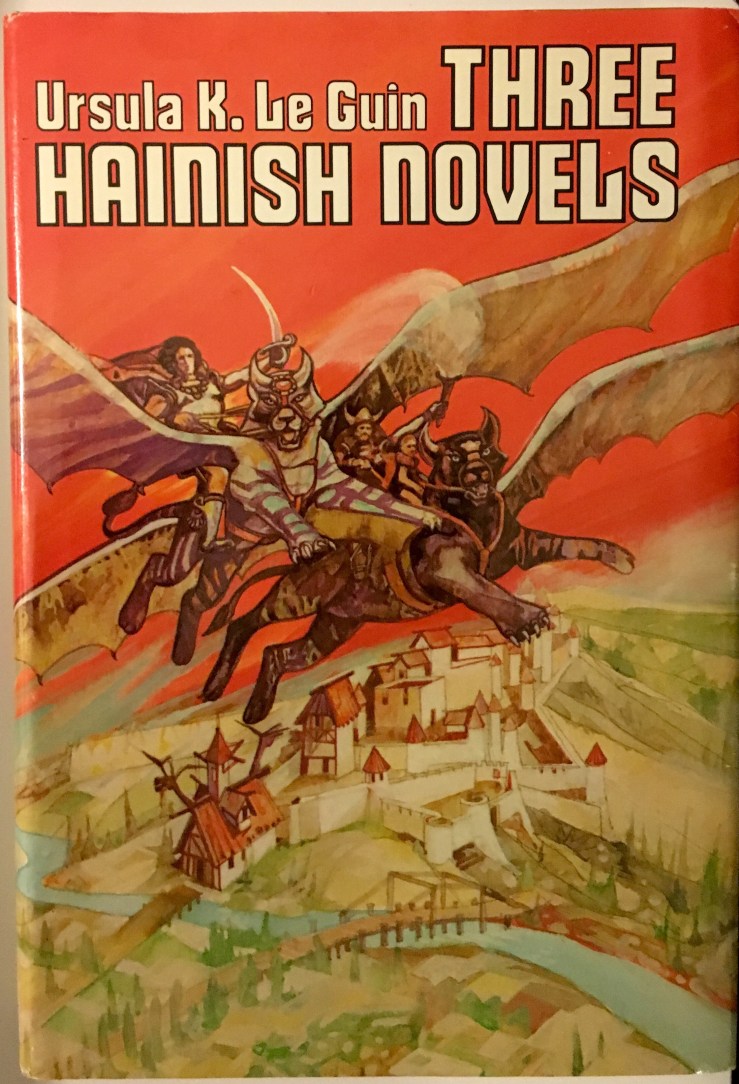
Three Hainish Novels by Ursula K. Le Guin. An omnibus collecting Rocannon’s World, Planet of Exile, and City of Illusions. 1967 hardcover by Nelson Doubleday. Jacket design by John Lisco; cover illustration by Jack Woolhiser. I finished City of Illusions this weekend—probably the most accomplished of her earliest (non-)trilogy, synthesizing high adventure into a philosophical exploration of truth and lie. A reread of The Left Hand of Darkness is next.img_1187

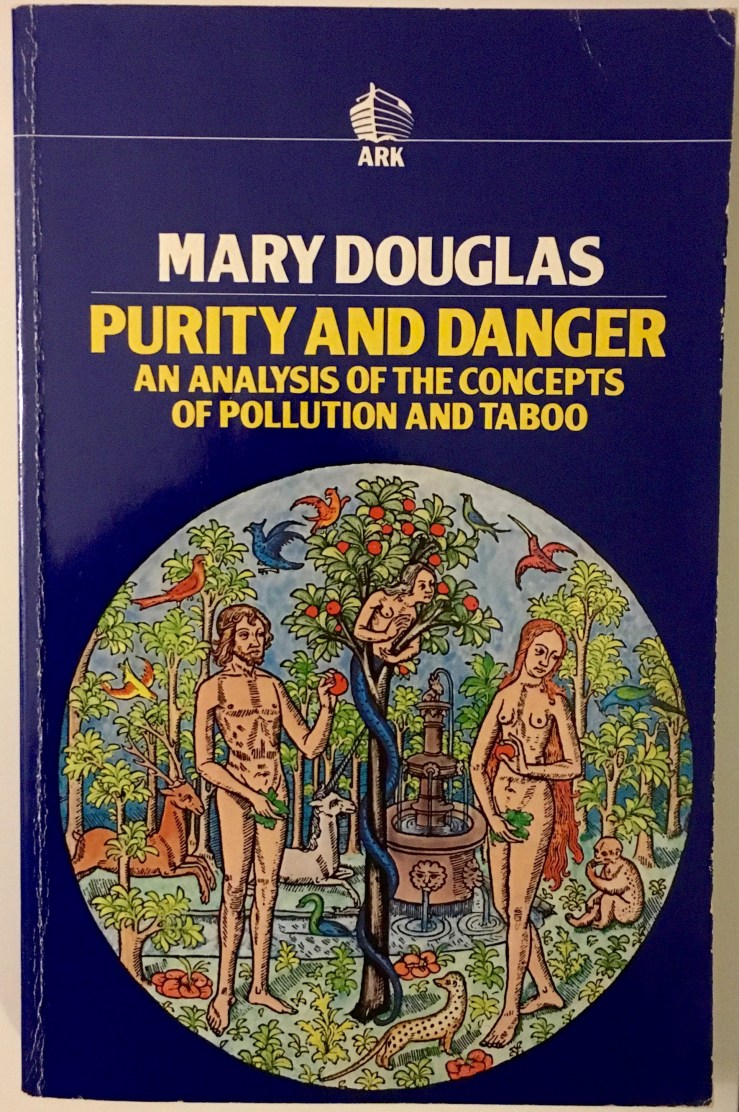
Purity and Danger by Mary Douglas. 1988 trade paperback by ARK. No designer or cover artist credited. I dug this out at some point in my big Le Guin read/re-read, and it’s been hanging around since. Can’t remember why.

William S. Burroughs and his friends

I find it difficult to believe in Father Christmas (A.A. Milne)

“A Doubtful Character”

by

A.A. Milne


I find it difficult to believe in Father Christmas. If he is the jolly old gentleman he is always said to be, why doesn’t he behave as such? How is it that the presents go so often to the wrong people?

This is no personal complaint; I speak for the world. The rich people get the rich presents, and the poor people get the poor ones. That may not be the fault of Father Christmas; he may be under contract for a billion years to deliver all presents just as they are addressed; but how can he go on smiling? He must long to alter all that. There is Miss Priscilla A—— who gets five guineas worth of the best every year from Mr. Cyril B—— who hopes to be her heir. Mustn’t that make Father Christmas mad? Yet he goes down the chimney with it just the same. When his contract is over, and he has a free hand, he’ll arrange something about THAT, I’m sure. If he is the jolly old gentleman of the pictures his sense of humour must trouble him. He must be itching to have jokes with the parcels. “Only just this once,” he would plead. “Let me give Mrs. Brown the safety-razor, and Mr. Brown the night-dress case; I swear I won’t touch any of the others.” Of course that wouldn’t be a very subtle joke; but jolly old gentlemen with white beards aren’t very subtle in their humour. They lean to the broader effects—the practical joke and the pun. I can imagine Father Christmas making his annual pun on the word “reindeer,” and the eldest reindeer making a feeble attempt to smile. The younger ones wouldn’t so much as try. Yet he would make it so gaily that you would love him even if you couldn’t laugh. Continue reading “I find it difficult to believe in Father Christmas (A.A. Milne)” →

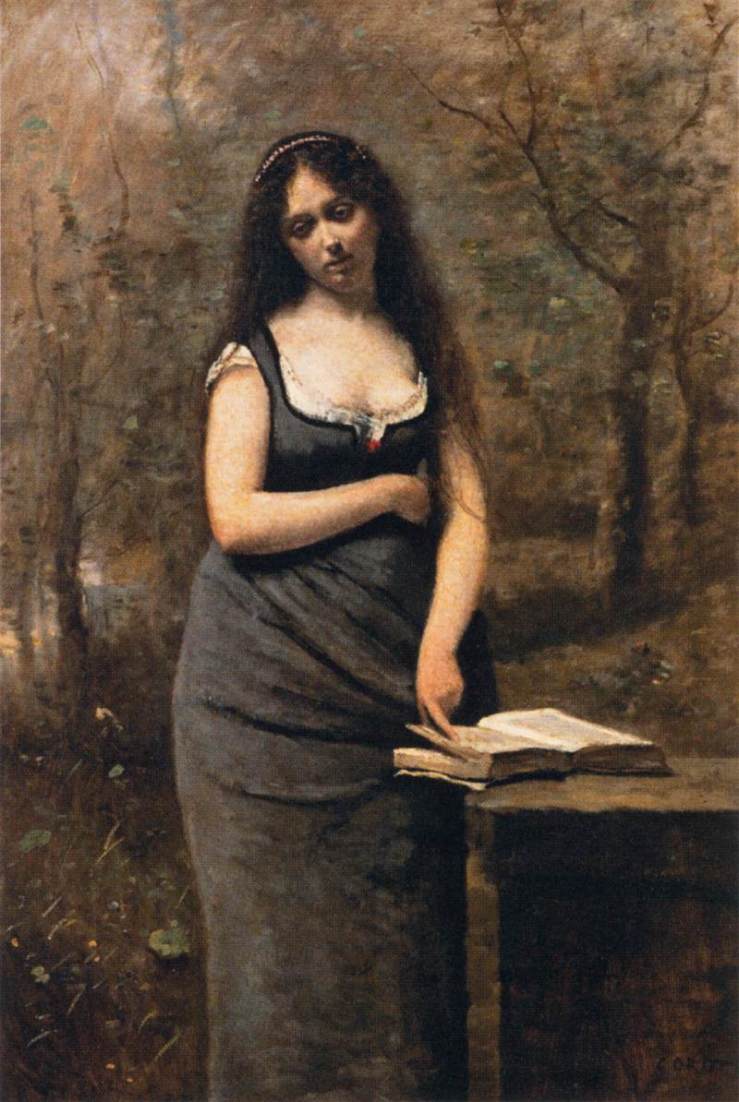
Valléda — Camille Corot

corot19

On Christmas Eve the little pig is secretly killed (Frazer’s The Golden Bough)

 On Christmas Eve in some parts of the Esthonian island of Oesel they bake a long cake with the two ends turned up. It is called the Christmas Boar, and stands on the table till the morning of New Year’s Day, when it is distributed among the cattle. In other parts of the island the Christmas Boar is not a cake but a little pig born in March, which the housewife fattens secretly, often without the knowledge of the other members of the family. On Christmas Eve the little pig is secretly killed, then roasted in the oven, and set on the table standing on all fours, where it remains in this posture for several days. In other parts of the island, again, though the Christmas cake has neither the name nor the shape of a boar, it is kept till the New Year, when half of it is divided among all the members and all the quadrupeds of the family. The other half of the cake is kept till sowing-time comes round, when it is similarly distributed in the morning among human beings and beasts. In other parts of Esthonia, again, the Christmas Boar, as it is called, is baked of the first rye cut at harvest; it has a conical shape and a cross is impressed on it with a pig’s bone or a key, or three dints are made in it with a buckle or a piece of charcoal. It stands with a light beside it on the table all through the festal season. On New Year’s Day and Epiphany, before sunrise, a little of the cake is crumbled with salt and given to the cattle. The rest is kept till the day when the cattle are driven out to pasture for the first time in spring. It is then put in the herdsman’s bag, and at evening is divided among the cattle to guard them from magic and harm. In some places the Christmas Boar is partaken of by farm-servants and cattle at the time of the barley sowing, for the purpose of thereby producing a heavier crop.

From Sir James George Frazer’s The Golden Bough.

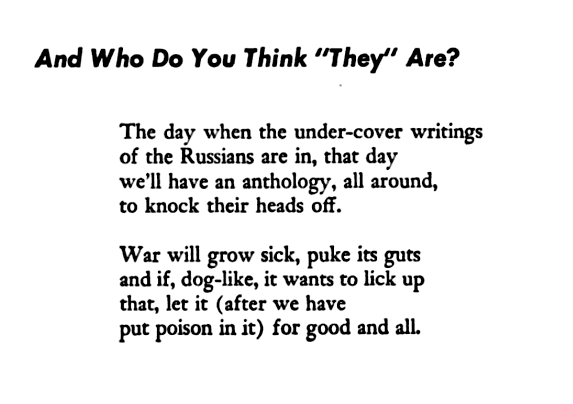
“And Who Do You Think ‘They’ Are?” — William Carlos Williams

wcw

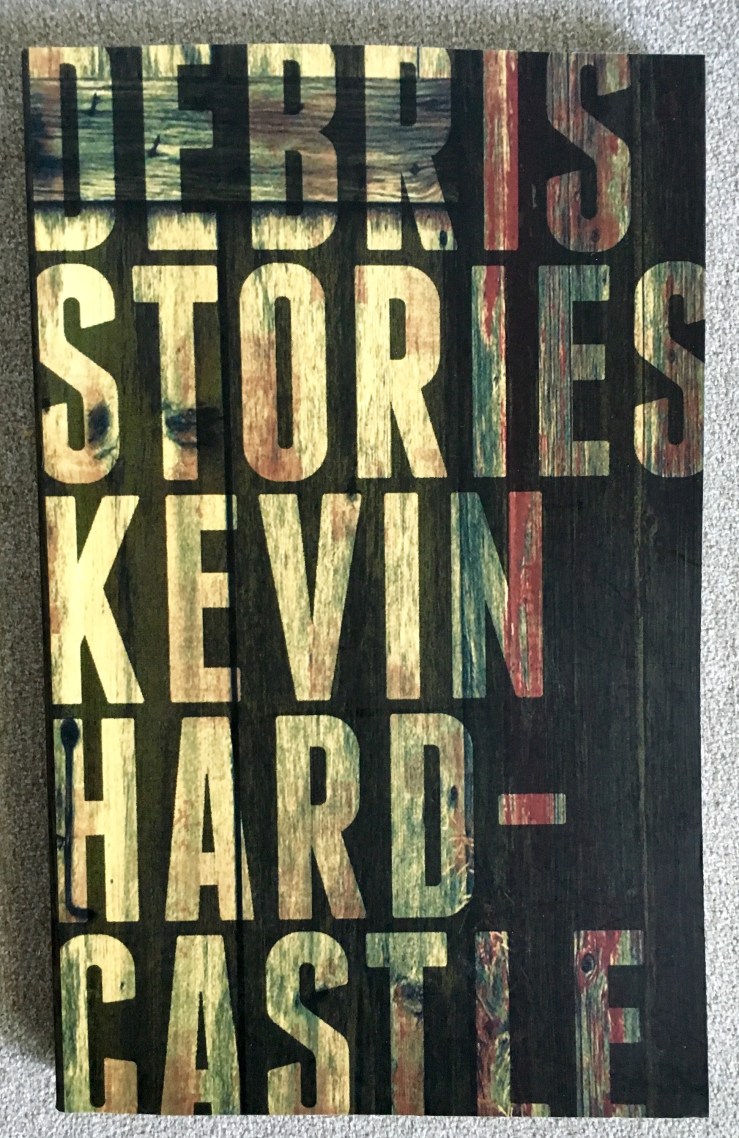
Debris Stories (Book acquired, 12.09.2015)

IMG_1014

Kevin Hardcastle’s collection Debris Stories is new this month from Biblioasis. Their blurb:

The eleven remarkable stories in Kevin Hardcastle’s debut Debris introduce an authentic new voice. Written in a lean and muscular style and brimming with both violence and compassion, these stories unflinchingly explore the lives of those—MMA fighters, the institutionalized, small-town criminals—who exist on the fringes of society, unveiling the blood and guts and beauty of life in our flyover regions

Join us at the High-Rise

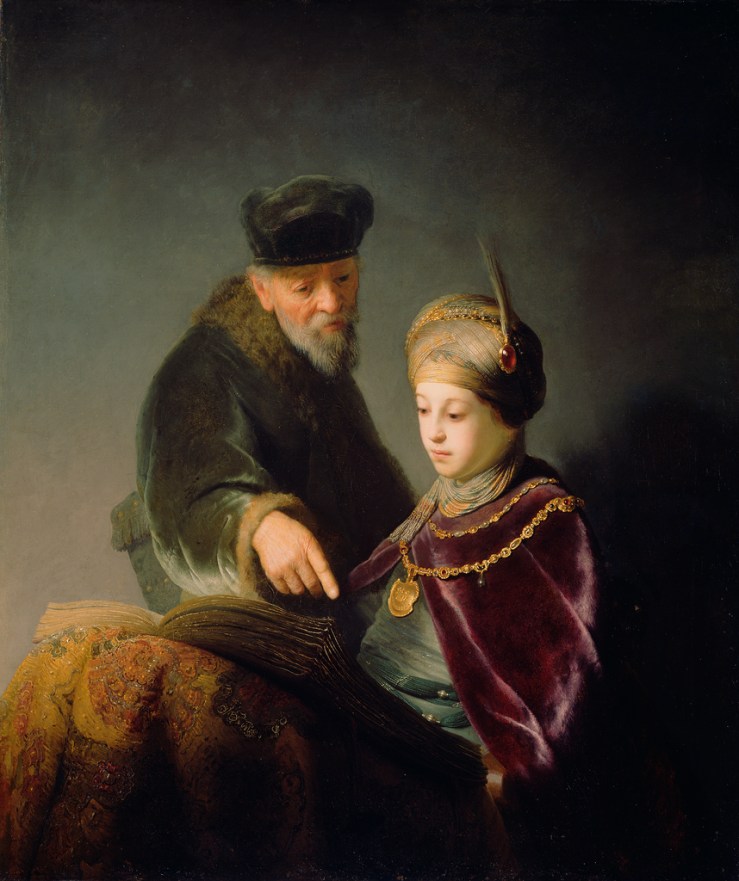
A Young Scholar and His Tutor — Rembrandt

00086201.jpg

The tyrant ties tongues in knots (William H. Gass)

The tyrant ties tongues in knots. Speech is so easy it takes more than snow to slow its course. The tyrant must frighten people from their freedom; beat the soles of their feet till they mince their step in time to his goose-wide stride. Stagger after me; the best is yet to be. The tyrant can make men line up as though they were made of tin or lead to tip over for this week’s war, because pain is a great big persuader, and their lead-headed patriotism is petty and made of hatred; because, after all, though a war may topple their obedient rows, the tyrant can, in any case, melt them down, these tin-lead men, mold them anew, and paint their britches pretty. He can encourage kids to tattle on their folks; he can set friend against friend, family against family; for the fear of punishment and the promise of reward do for men what they do for the donkey. Be fruitful, multiply, the tyrant says benignly. I must have a larger army.

From William H. Gass’s essay “What Freedom of Expression Means, Especially in Times Like These.” Collected in Life Sentences.

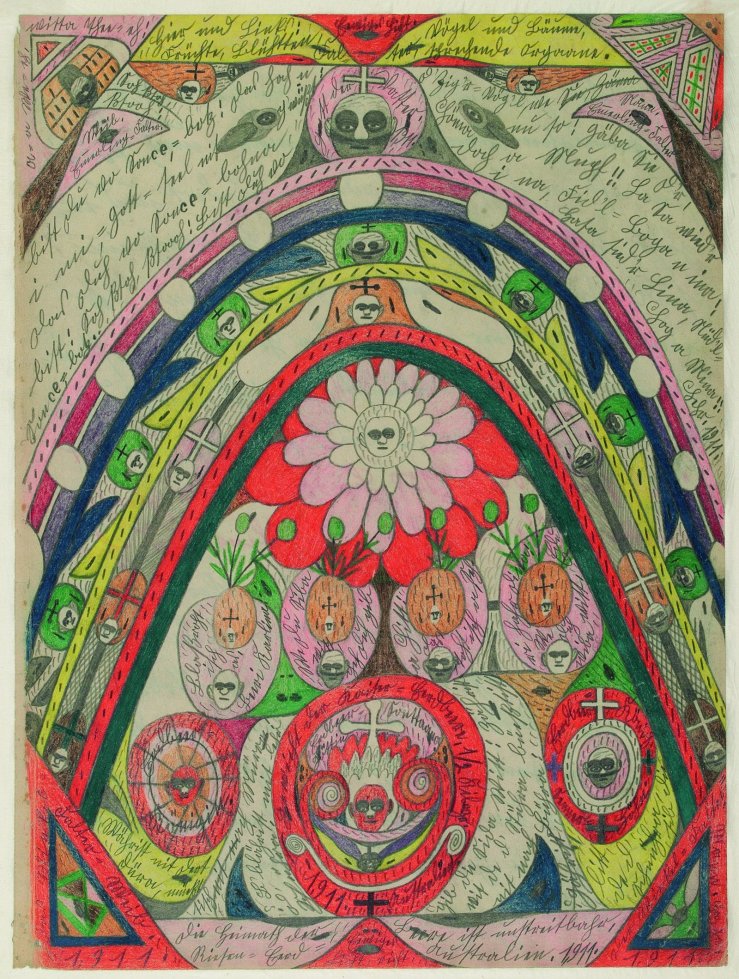
Australia is without Doubt the Habitat of the Giant Strawberry — Adolf Wölfli

big_A9243-54.jpg

Three Books

IMG_1041

Masquerade and Other Stories by Robert Walser. English translation by Susan Bernofsky. 1990 trade paperback published by The Johns Hopkins UP. Cover design and lettering by Ann Walston. The illustration is a detail from Adolf Wölfli’s 1917 Arnica Flower. This was the first Walser I read.IMG_1042 IMG_1043

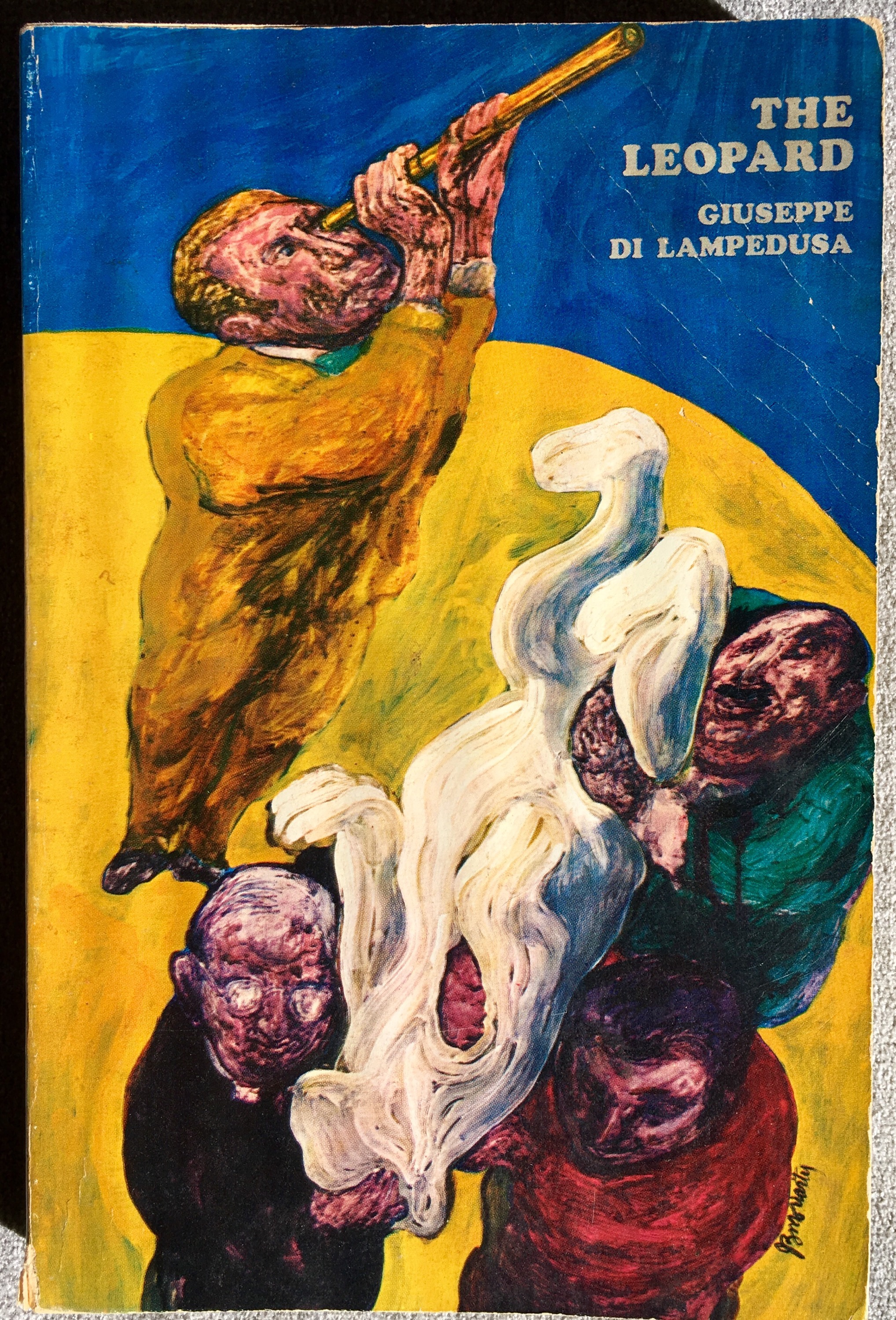
The Leopard by Giuseppe di Lampedusa. English translation by Archibald Colqhoun. A 1966 trade paperback from Time Life Books. Cover design by Jerome Moriarty. I’m not sure why, but I just love the design of this book—I love that there’s no blurb on the back too.IMG_1017

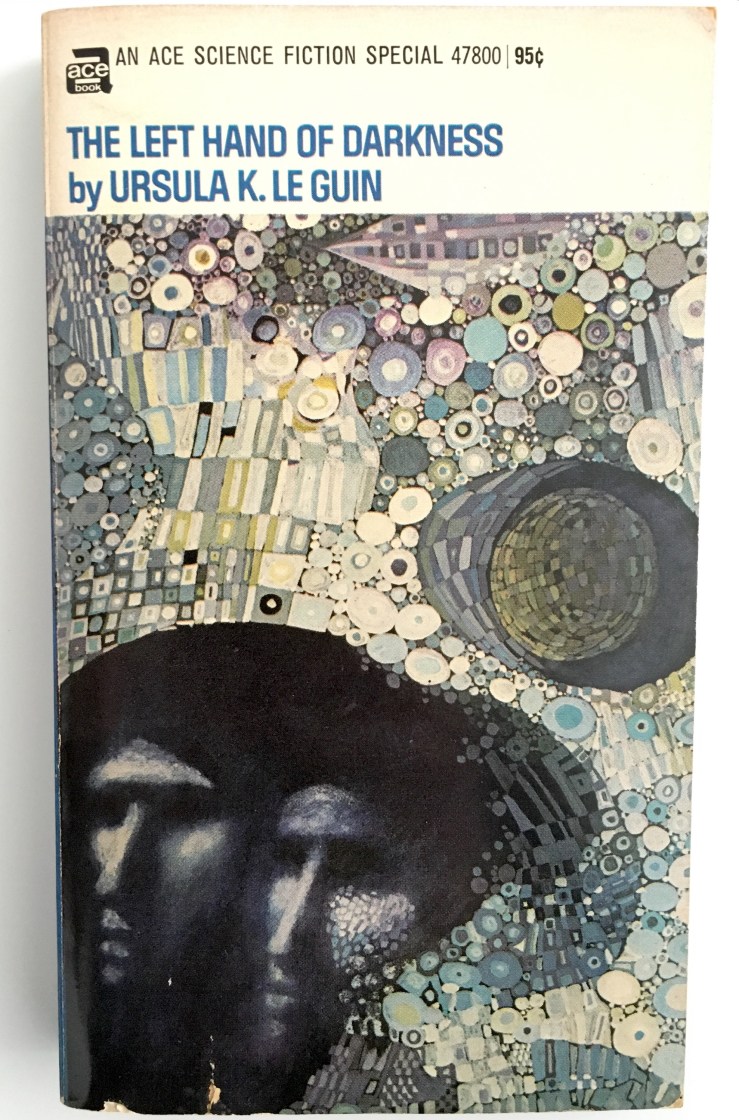
The Left Hand of Darkness by Ursula K. Le Guin. First printing of an Ace Books mass market paperback. No designer is credited, but the cover art, reminiscent of Gustav Klimt, is by Leo and Diane Dillon.

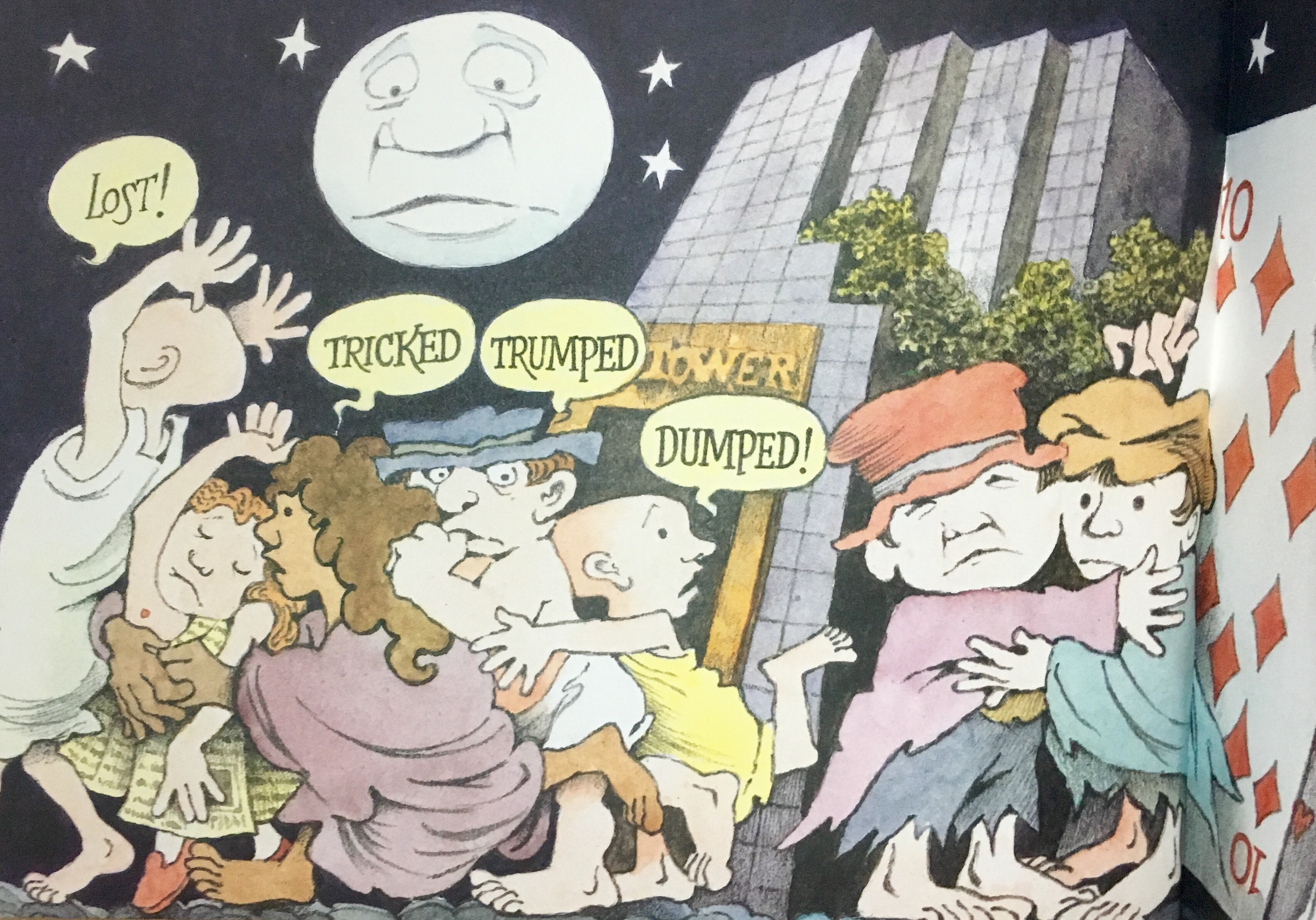
Lost! Tricked / Trumped / Dumped! (Maurice Sendak)

IMG_1038

From Maurice Sendak’s We Are All Down in the Dumps with Jack and Guy, which seems to me a more important book than ever.

Entries under “G” from Captain Grose’s Dictionary of the Vulgar Tongue (1811)

The following definitions are from the “G” section of Captain Grose’s Dictionary of the Vulgar Tongue (1811).

GAB, or GOB. The mouth. Gift of the gab; a facility of speech, nimble tongued eloquence. To blow the gab; to confess, or peach.

GAB, or GOB, STRING. A bridle.

GABBY. A foolish fellow.

GAD-SO. An exclamation said to be derived from the
Italian word cazzo.

GAFF. A fair. The drop coves maced the joskins at the
gaff; the ring-droppers cheated the countryman at the fair.

TO GAFF. To game by tossing up halfpence.

GAG. An instrument used chiefly by housebreakers and thieves, for propping open the mouth of a person robbed, thereby to prevent his calling out for assistance.

GAGE. A quart pot, or a pint; also a pipe. CANT.

GAGE, or FOGUS. A pipe of tobacco.

GAGGERS. High and Low. Cheats, who by sham pretences, and wonderful stories of their sufferings, impose on the credulity of well meaning people. See RUM GAGGER.

GALIMAUFREY. A hodgepodge made up of the remnants
and scraps of the larder.

GALL. His gall is not yet broken; a saying used in prisons
of a man just brought in, who appears dejected.

GALLEY. Building the galley; a game formerly used at sea, in order to put a trick upon a landsman, or fresh-water sailor. It being agreed to play at that game, one sailor personates the builder, and another the merchant or contractor: the builder first begins by laying the keel, which consists of a number of men laid all along on their backs, one after another, that is, head to foot; he next puts in the ribs or knees, by making a number of men sit feet to feet, at right angles to, and on each side of, the keel: he now fixing on the person intended to be the object of the joke, observes he is a fierce-looking fellow, and fit for the lion; he accordingly places him at the head, his arms being held or locked in by the two persons next to him, representing the ribs. After several other dispositions, the builder delivers over the galley to the contractor as complete: but he, among other faults and objections, observes the lion is not gilt, on which the builder or one of his assistants, runs to the head, and dipping a mop in the excrement, thrusts it into the face of the lion.

GALLEY FOIST. A city barge, used formerly on the lord
mayor’s day, when he was sworn in at Westminster.

GALLIED. Hurried, vexed, over-fatigued, perhaps like a
galley slave.

GALLIGASKINS. Breeches. Continue reading “Entries under “G” from Captain Grose’s Dictionary of the Vulgar Tongue (1811)” →