
Category: Books
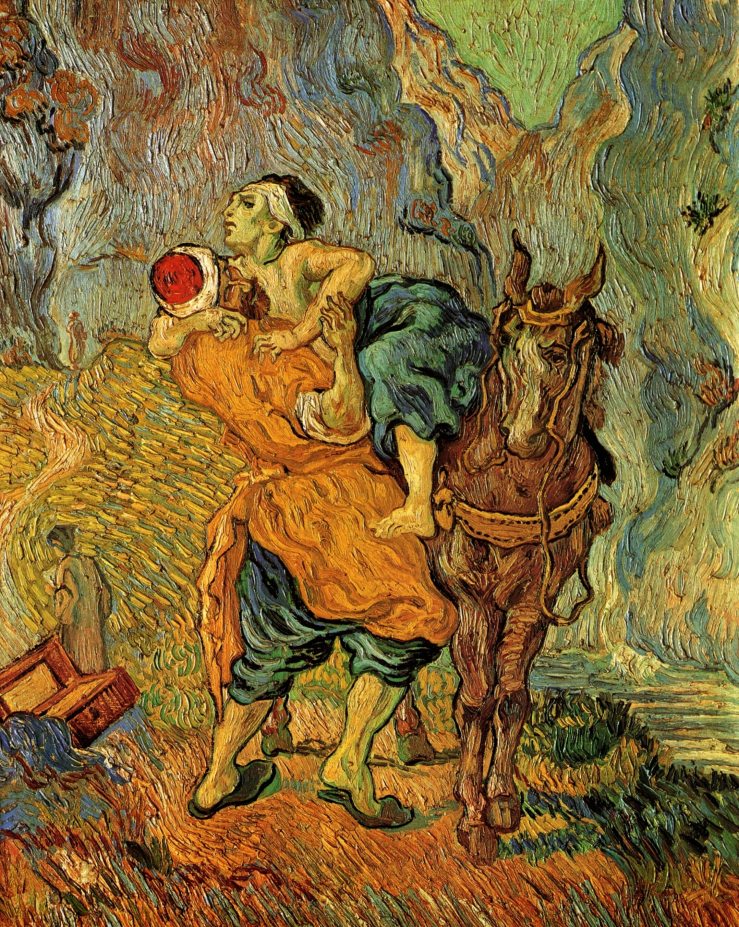
The Good Samaritan (After Delacroix) — Vincent van Gogh
Waiting on the good times now
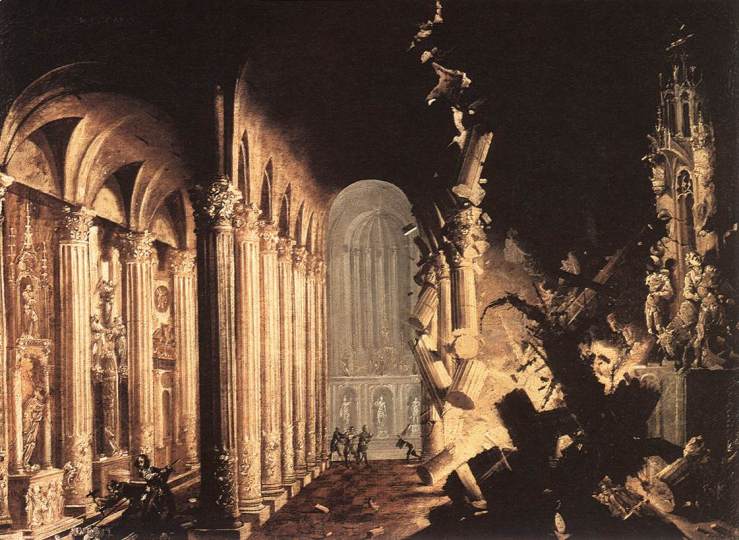
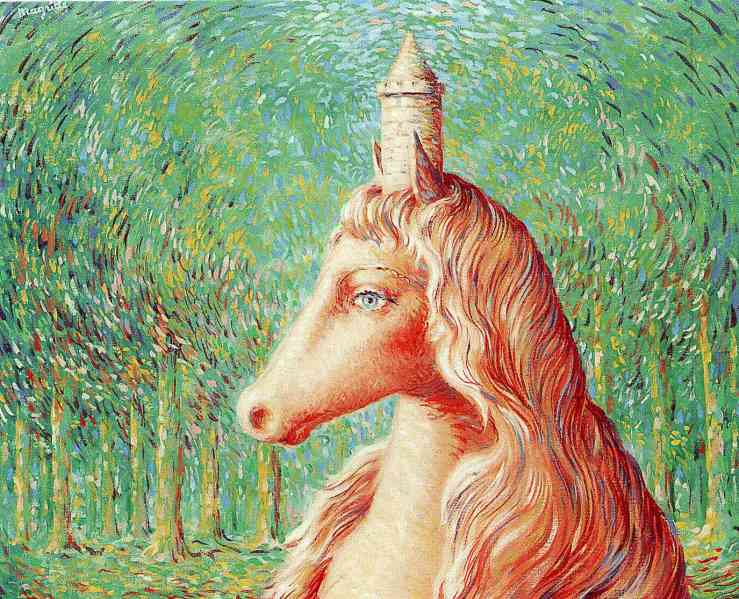
The Fine Idea — Rene Magritte
The idea is like grass (Ursula K. Le Guin)
It is of the nature of idea to be communicated: written, spoken, done. The idea is like grass. It craves light, likes crowds, thrives on crossbreeding, grows better for being stepped on.
From Ursula K. Le Guin’s 1974 novel The Dispossessed.
Three Books
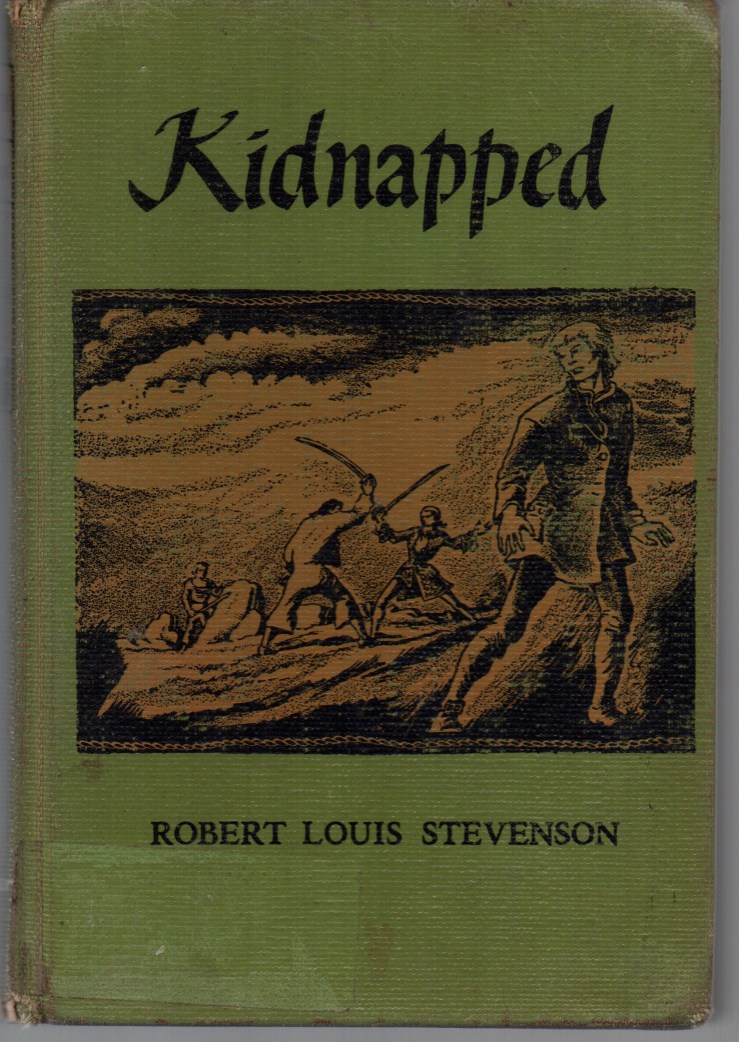
Kidnapped by Robert Louis Stevenson. 1948 Grosset & Dunlop hardback. The designer credit goes to Oscar Ogg, but the dark and often violent images (many in full color) are by Lynd Ward.
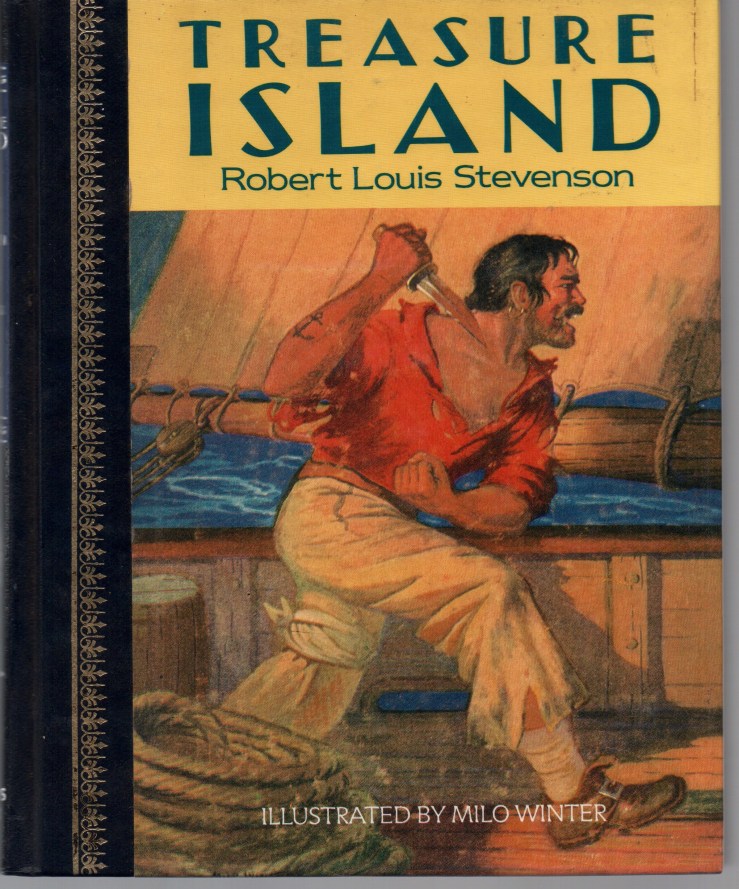
Treasure Island by Robert Louis Stevenson. A 1986 oversized hardback edition from dilithium Press. No designer credited, but he illustrations are by Milo Winter (from a 1915 edition, actually).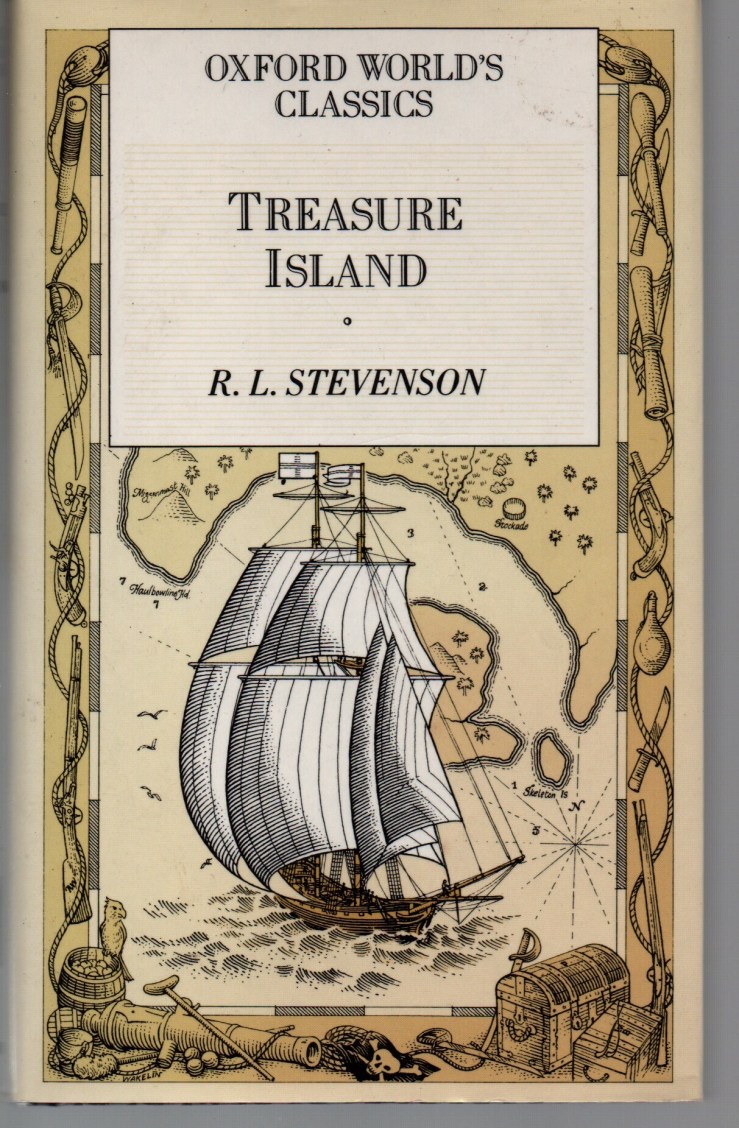
Treasure Island by Robert Louis Stevenson. A tiny little pocket hardback edition by Hamlyn Publishing/ Chancellor Press (1987). No designer credited, but the cover illustration is by Arthur Wakelin. There’s an inscription on the first page from my grandparents, who gave me the book in 1989.
Two graphic novels about Paris reviewed: 750 Years in Paris and The Spectators
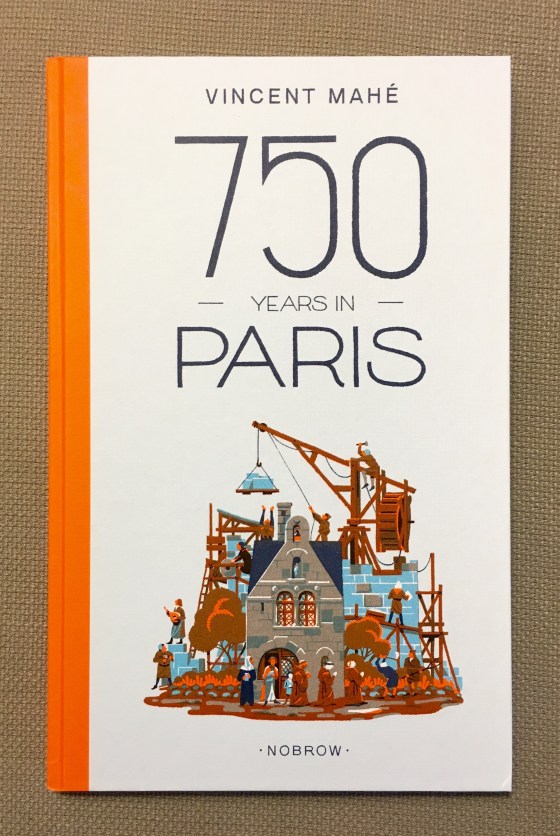
Two new(ish) graphic novels from Nobrow, Vincent Mahé’s 750 Years in Paris and Victor Hussenot’s The Spectators, showcase Paris as an enduring site of progression, turbulence, and renewal, both in culture and consciousness. Mahé’s 750 Years in Paris is a time-machine, putting its viewer in a stationary position to observe the dramatic changes in one building—and French society and culture—over the course of nearly a millennium. Hussenot’s The Spectators is a dream-machine, shuttling its characters through different skins, faces, and eyes. The titular spectators transcend not only time and space, but mind. Both books attest to the power of transformation while subtly noting the various forces that shape identity.
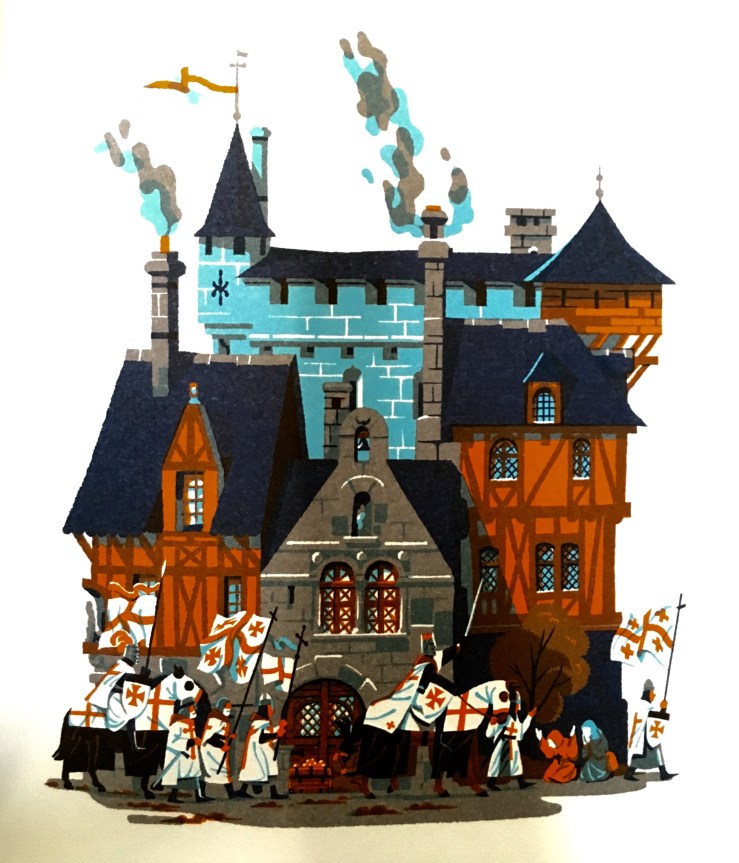
Vincent Mahé’s 750 Years in Paris begins in 1265 and moves its viewer through time to 2015. The book takes us through the Black Death Plague and the 100 Years War, the reigns of Louis XIV and IV, the storming of the Bastille and the Reign of Terror, Napoleon and Hausmann, a grand Metro and a terrible Flood. The second shot in this chronology shows us a Knights Templar procession in 1270. The crusaders remind us that Western history is inextricably bound in violence, religion, and territorial expansion—but also in the exchange of ideas, information, and knowledge. We get to May 1968 with a strong visual context for France’s history of intellectual turbulence.
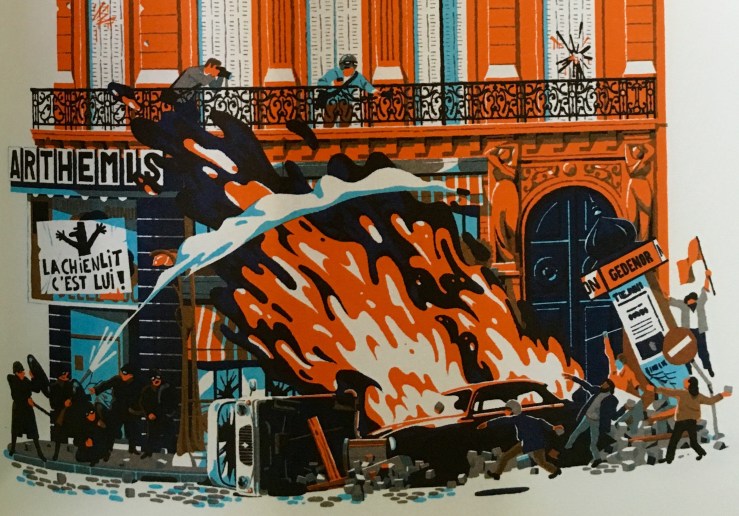 The book ends in 2015; I’ll let Mahé’s image speak for itself:

750 Years in Paris shows us that Paris not only survives drastic change, but progresses in the face of violence. When we see, for example, that a winch has been used to hang a Protestant during the St. Bartholomew’s Day Massacre of 1572—
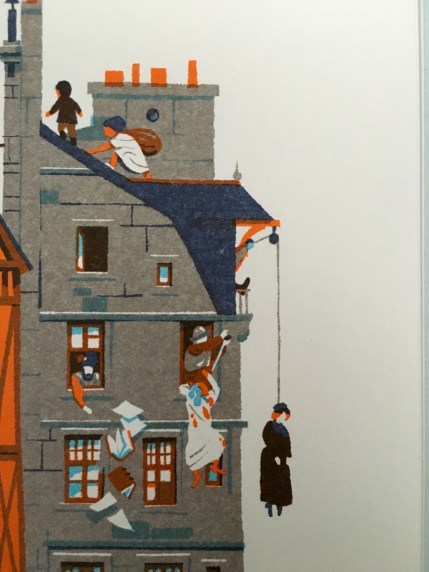
—it’s worth noting that on the next page, neighbors help each other during a terrible fire. The winch remains in the picture, a visual motif of progress, of building up.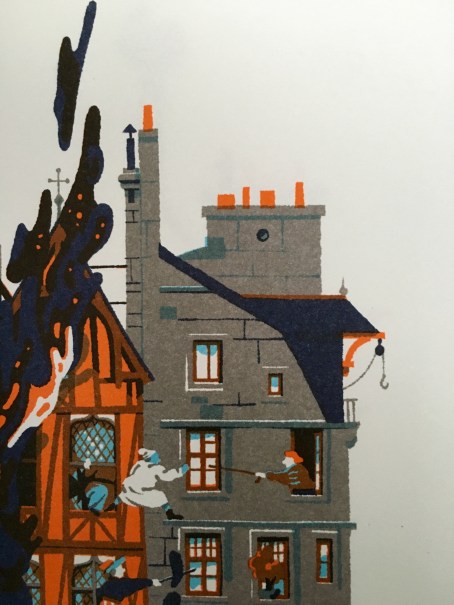
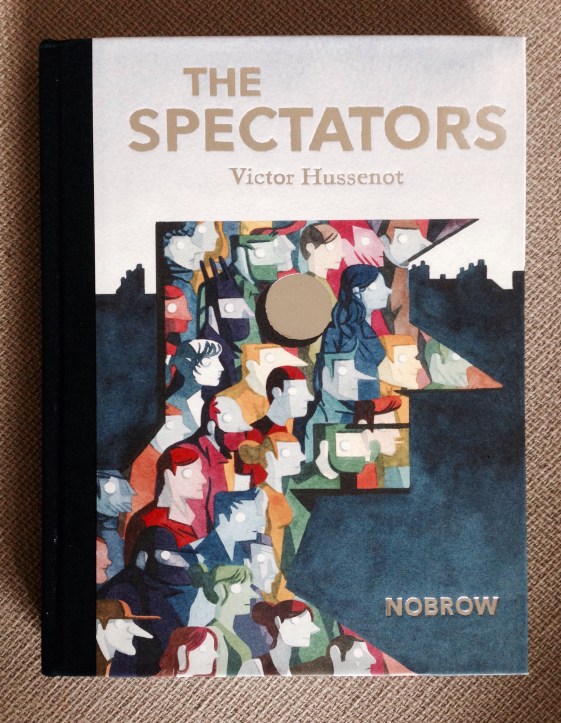
Like every Nobrow title I’ve read, Victor Hussenot’s The Spectators is better experienced than described. Its aesthetic is its narrative and its narrative is its aesthetic, flowing from a lovely dream-logic of identity shifts. Who shall I be today?, the book asks.
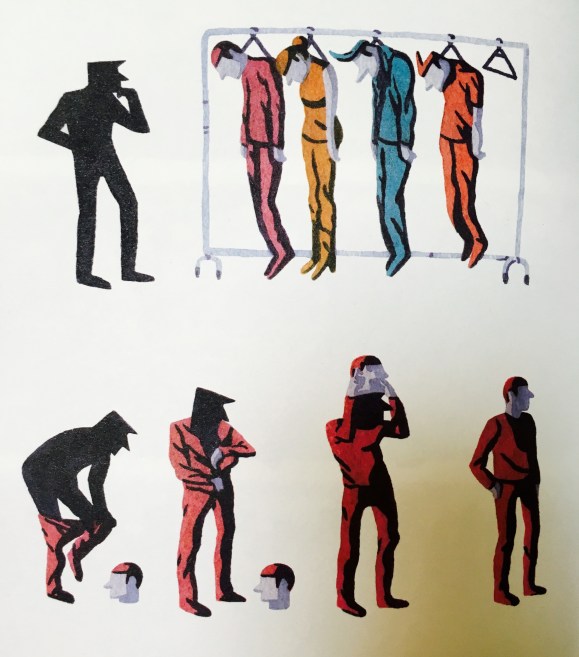
The titular spectators try on different skins, wear different hats, look through different eyes. Paris’s metro becomes a labyrinth dream-lab, where the spectators create the world anew by synthesizing known with unknown: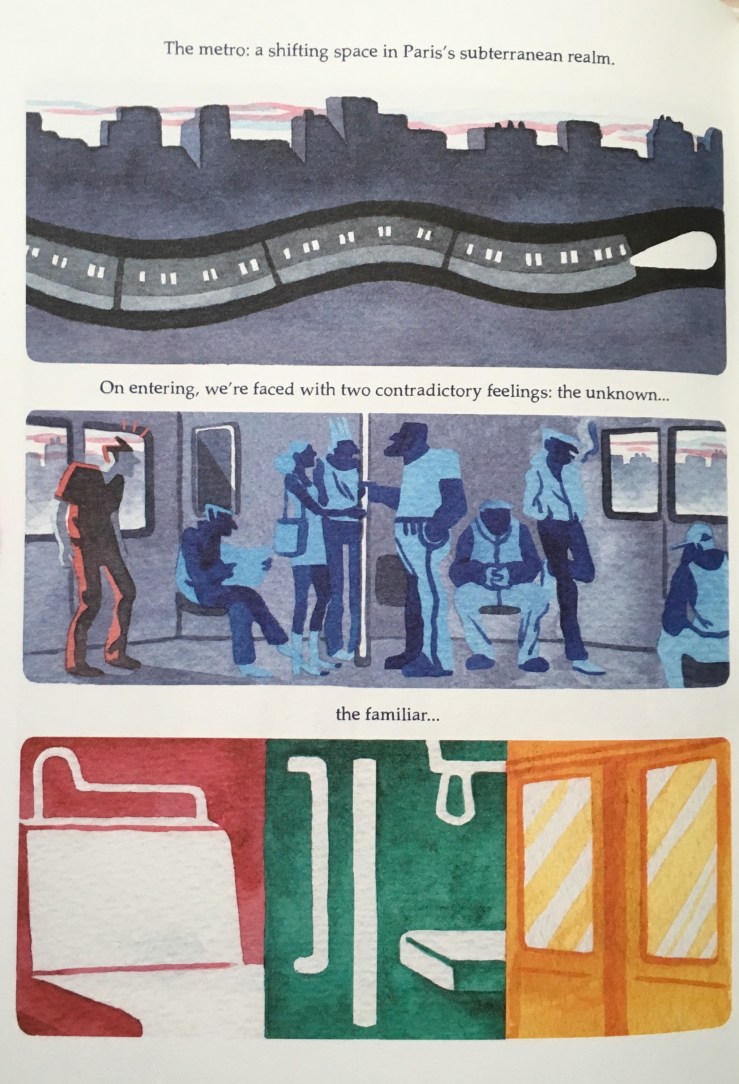
This vision of synthesis carries the narrative through a poetic examination of individuality and society. How much of me is me? Hussenot frames his characters in the geometry of picture puzzles, only to blur the borders that would constrain them.
It’s possible to imagine the spectators of Hussenot’s book gazing on Mahé’s ever-changing Paris building. Or, conversely, we can take Mahé’s building as one of Hussenot’s spectators—another shapeshifter in a city of shapeshifters.
I’ll close with an image from The Spectators that points towards a dream of synthesis, of infinite perspective, of unity. We have here not just a dream, but a vision of progress:

Le Guin, Stapledon, and the Brothers Strugatski (Books acquired, 11.13.2015)
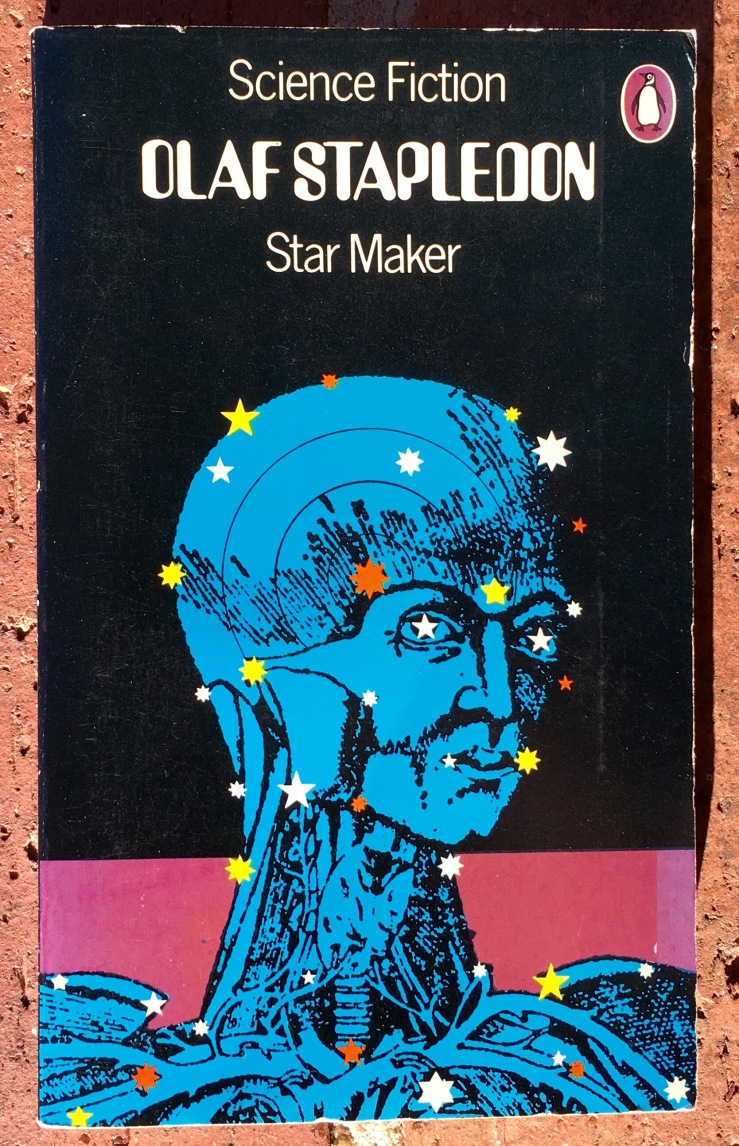
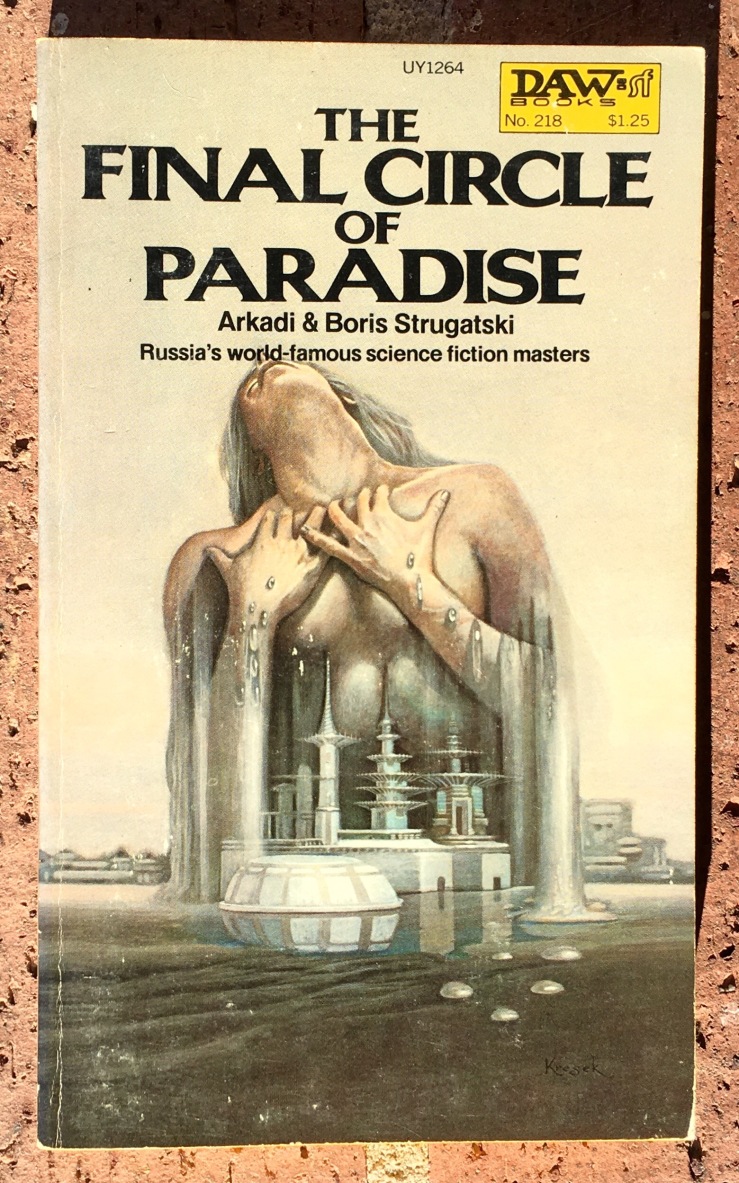
I like to think I know my way around the labyrinthine used bookstore I frequently frequent, but I somehow missed the “Ls” of the Sci-Fi/Fantasy section and wound up in Misc S. I was headed to the “Ls” to pick up another Ursula K. Le Guin novel, after having finished Rocannon’s World this afternoon. (I was looking not-so-specifically for The Word for World Is Forest, which my bookshop somehow didn’t have). Anyway, my eye was drawn to the Penguin edition of Olaf Stapledon’s Star Maker (above), which was one of those yeah, I know, I need to read it books. I also saw another one by the Strugatski bros, which I picked up, even though I still haven’t read Hard to Be a God.
I couldn’t resist this hardback edition of Three Hainish Novels, an Ursula K. Le Guin omnibus, which collects Rocannon’s World with Planet of Exile and City of Illusion. I haven’t read the other two, but I’ll get to them after a rereading of The Dispossessed. 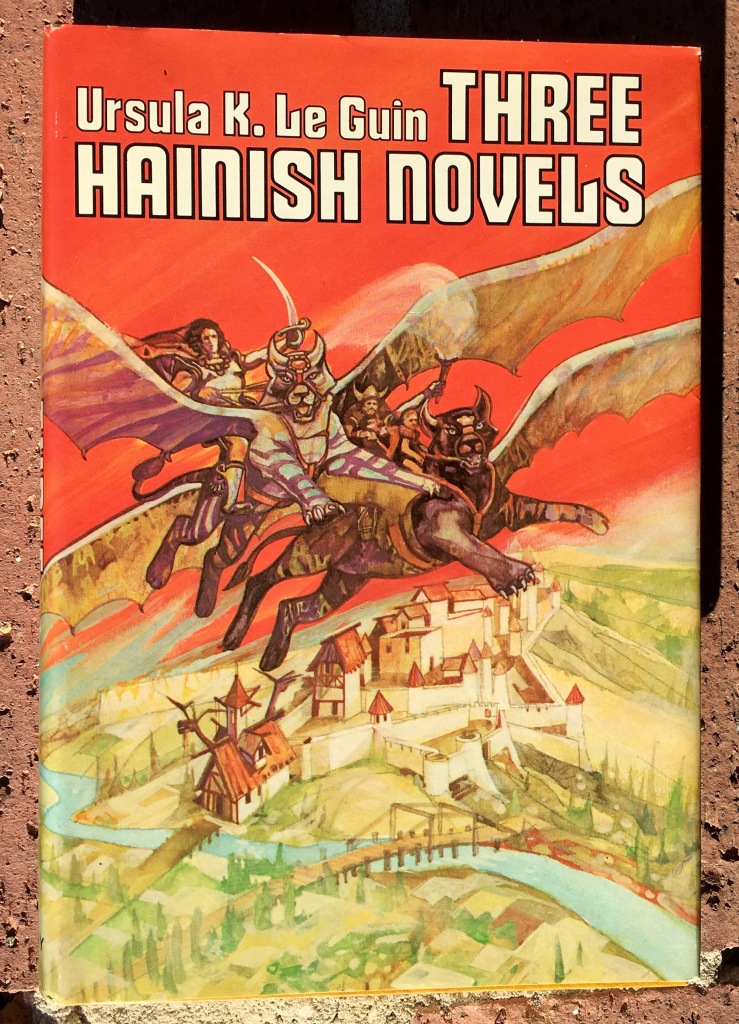
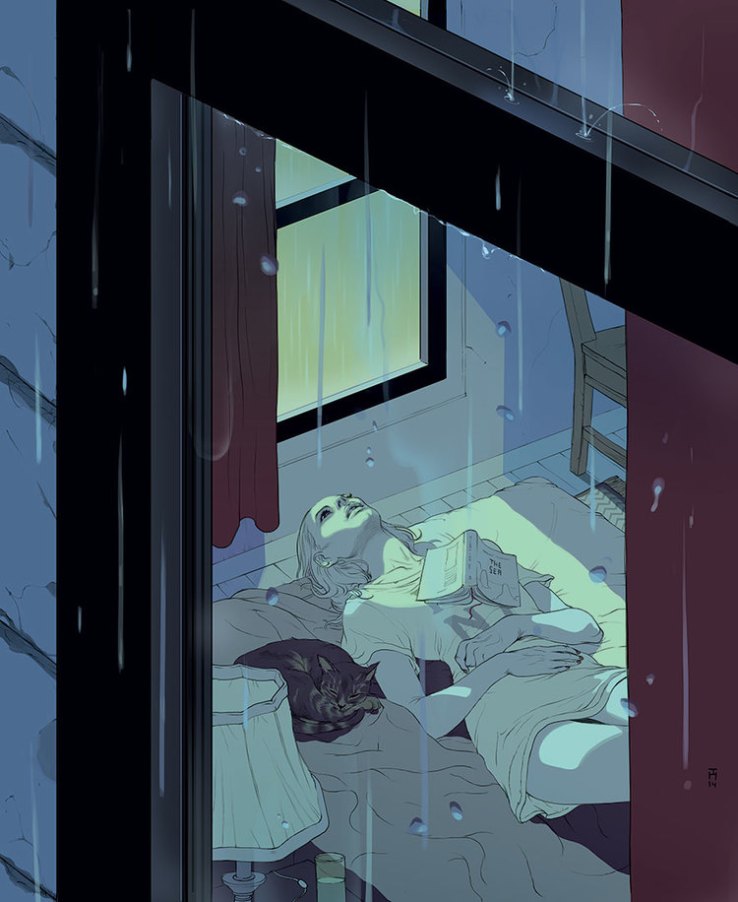
The Sea — Tomer Hanuka
The reader is dreaming (Robert Walser/Karl Walser/Lydia Davis)
A young lady, a girl of perhaps twenty, is sitting in a chair and reading a book. Or she has just been diligently reading, and now she is reflecting on what she has read. This often happens, that someone who is reading must pause, because all sorts of ideas having to do with the book keenly engage him. The reader is dreaming; perhaps she is comparing the subject matter of the book to her own experiences hitherto; she is thinking about the hero of the book, while she fancies herself almost its heroine.
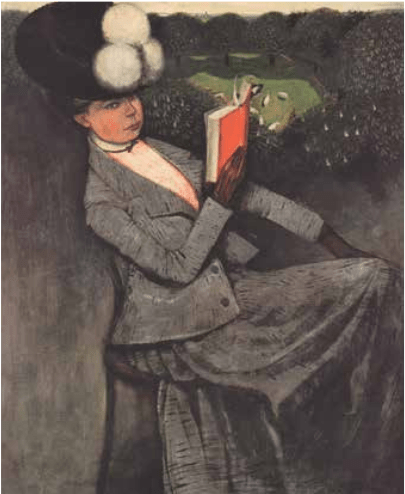
Read the rest of Robert Walser’s microessay “Portrait of a Lady” (trans. by Lydia Davis) at The Offing. The painting–Portrait of a Lady—is by Karl Walser, Robert’s older brother.
Entries under “E” from Captain Grose’s Dictionary of the Vulgar Tongue (1811)
The following definitions are from the “E” section of Captain Grose’s Dictionary of the Vulgar Tongue (1811).
EARNEST. A deposit in part of payment, to bind a bargain.
EARTH BATH. A Grave.
EASY. Make the cull easy or quiet; gag or kill him. As easy as pissing the bed.
EASY VIRTUE. A lady of easy virtue: an impure or prostitute.
EAT. To eat like a beggar man, and wag his under jaw; a jocular reproach to a proud man. To eat one’s words; to retract what one has said.
TO EDGE. To excite, stimulate, or provoke; or as it is vulgarly called, to egg a man on. Fall back, fall edge; i.e. let what will happen. Some derive to egg on, from the Latin word, AGE, AGE.
EIGHT EYES. I will knock out two of your eight eyes; a common Billingsgate threat from one fish nymph to another: every woman, according to the naturalists of that society, having eight eyes; viz. two seeing eyes, two bub-eyes, a bell-eye, two pope’s eyes, and a ***-eye. He has fallen down and trod upon his eye; said of one who has a black eye.
ELBOW GREASE. Labour. Elbow grease will make an oak
table shine.
ELBOW ROOM. Sufficient space to act in. Out at elbows;
said of an estate that is mortgaged.
ELBOW SHAKER. A gamester, one who rattles Saint Hugh’s
bones, i.e. the dice.
ELLENBOROUGH LODGE. The King’s Bench Prison. Lord
Ellenborough’s teeth; the chevaux de frize round the top
of the wall of that prison.
ELF. A fairy or hobgoblin, a little man or woman.
EMPEROR. Drunk as an emperor, i.e. ten times as drunk as a lord.
ENGLISH BURGUNDY. Porter.
ENSIGN BEARER. A drunken man, who looks red in the face, or hoists his colours in his drink.
EQUIPT. Rich; also, having new clothes. Well equipt; full of money, or well dressed. The cull equipped me with a brace of meggs; the gentleman furnished me with. a couple of guineas.
ESSEX LION. A calf; Essex being famous for calves, and
chiefly supplying the London markets.
ESSEX STILE. A ditch; a great part of Essex is low marshy
ground, in which there are more ditches than Stiles.
ETERNITY Box. A coffin.
EVES. Hen roosts.
EVE’S CUSTOM-HOUSE, where Adam made his first entry.
The monosyllable.
EVES DROPPER. One that lurks about to rob hen-roosts; also a listener at doors and windows, to hear private conversation.
EVIL. A halter. Cant, Also a wife.
EWE. A white ewe; a beautiful woman. An old ewe, drest lamb fashion; an old woman, drest like a young girl.
EXECUTION DAY. Washing day.
EXPENDED. Killed: alluding to the gunner’s accounts, wherein the articles consumed are charged under the title of expended. Sea phrase.
EYE. It’s all my eye and Betty Martin. It’s all nonsense, all mere stuff.
EYE-SORE. A disagreeable object. It will be an eye-sore as long as she lives, said by a limn whose wife was cut for a fistula in ano.
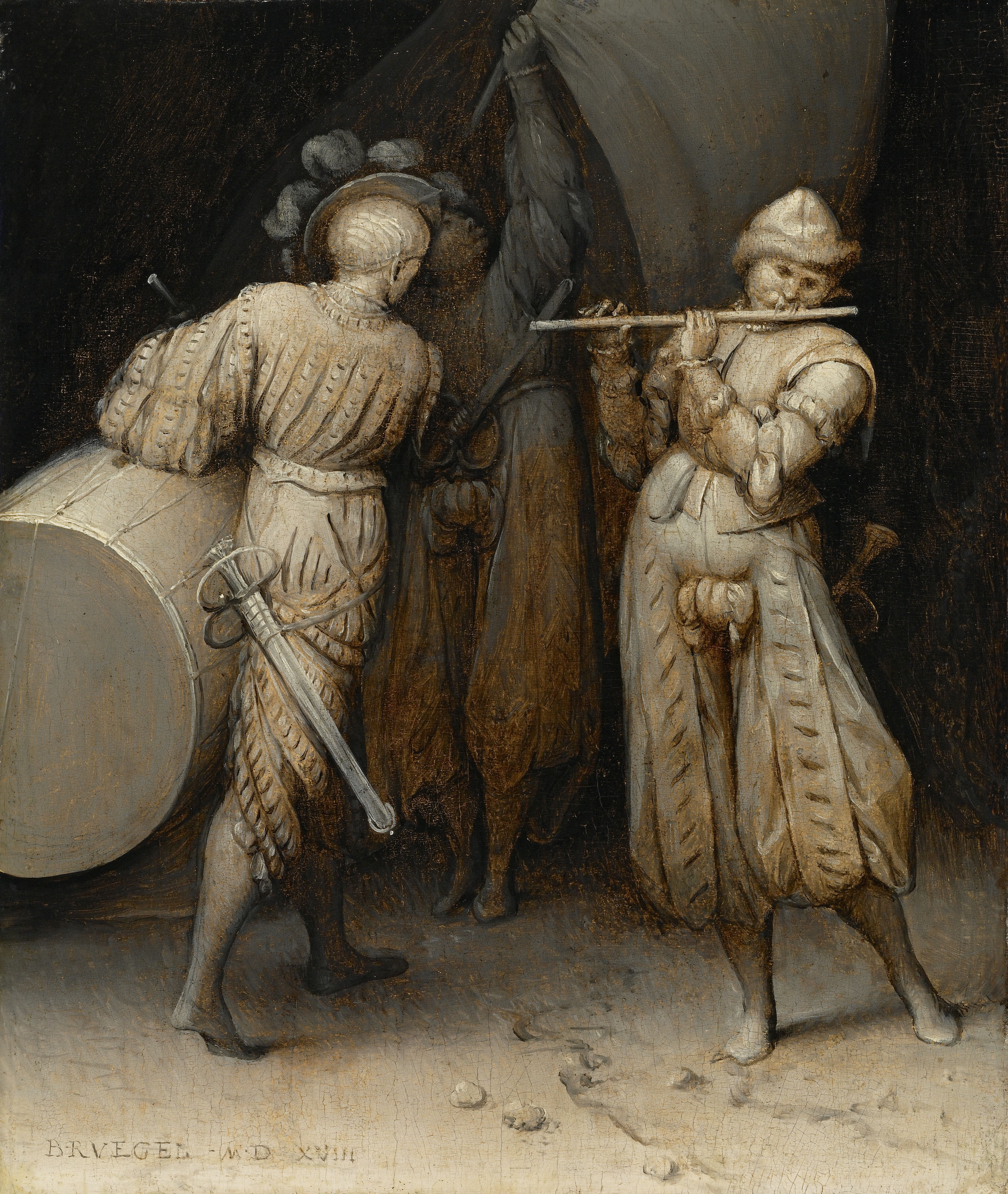
Three Soldiers — Pieter Bruegel the Elder
Selections from One-Star Amazon Reviews of Virginia Woolf’s Mrs. Dalloway
[Editorial note: The following citations come from one-star Amazon reviews Virginia Woolf’s novel Mrs. Dalloway. I’ve preserved the reviewers’ original punctuation and spelling. More one-star Amazon reviews.].
I had been warned about Woolf
written, I believe, to impress rather than to relate.
I don’t appreciate her writing and keep coming back for more
I may not be giving it a fair review since I only made it to page 65
pages and pages of surreal metaphors that go on for 10 paragraphs
Woolf had a huge obsession with semi-colons
The book just does not make any sense
I really liked the movie “the Hours”
nonsensical semi-flashbacks
Groundbreaking prose?
I tried, I really did
describing nothing
Written by a lesbian
Kind of like F. Scott Fitzgerald’s works
DO read “The Hours”, you will be impressed
I kept losing track of which character was musing about nothing
I suppose Woolf is considered a genius since she was apparently a cavalier writer of her generation
Let us listen to an old farty woman stream her consciousness to us to hear, pointless thoughts that go nowhere
I’m grateful that contemporary writers can at least string together 2 sentences that follow one another in a logical sequence
Lets burn every sentence she ever penned to end all the unneccesary suffering that curious readers have to go through when they first pick up “Mrs. Dalloway.”
My suggestion: just watch The Hours – you’ll get all the beauty and none of the confusion
the person responsible, Virginia Wolf, has been dead for quite some time now
i have no interest in reading about that lifestyle
am stuck in her growling semicolons
slower than a tortoise
ramblings of a lunatic
As bad as Faulkner
So much language
dreadfully boring
run-on sentences
“literary” drivel
terribly written
so many words
and never getting to a plot
Stream of conscience you say?
I normally enjoy stream of consciousness
The narrative reads like the inner thoughts of a sugar crazed autistic kid with ADD in the middle of a carnival
everyone i know who likes this book only does so because he or she was told by some professor that it’s supposed to be good and can provide no evidence to confirm it
This book certainly shows the depravity of man and a self-centered life and the meaningless found amongst those who think of none but themselves.
The absence of spacing to differentiate between each character’s thought process makes for unnecessary confusion
I really liked the idea of the story taking place over the course of one day
THIS BOOK IS WORSE THAN AIDS!
meandering and repetetive
will suffice as kindling
The party! The party!
VW was mentally-ill
“Dense”
put me off
definitley not a fun read
pretty gross hair and stuff on it/ in it
I had had to read it, or was supposed to
haven’t been able to get past the first chapter
lovely idea, virginia and i applaud you for your creativity
I felt like I was reading some writing student’s homework assignment
The Hours is better, despite its inspiration
this story line is too depressing for me
Descriptions were beaten to death
Not one thing uplifting
I am an avid reader!
the book failed
hyphens
Ezra Pound wondered which should be sovereign, the verb or the noun (William H. Gass)
It is too easy—the name game—in this case.
Christened “Pound, Ezra Loomis.” If used as a verb, “pound” means to beat. If used as a noun, “pound” signifies a unit of weight, a measure of money, pressure of air, or physical force. From time to time, apropos poetry, Pound wondered which should be sovereign, the verb or the noun, and concluded, if his practice may be entered as evidence, that the verb was most noticed when knocked off the sentence like a phallus from a kouros—“Spiretop alevel the well curb”—and when effects were hammered back into their causes with naillike hyphens—“Seal sport in the spray-whited circles of cliff-wash”—hence into a compaction like a headache … splitting.
As location, a pound sequesters sick animals and strays. “Places of confinement for lawbreakers” is the definition that immediately precedes Pound’s name in The American Heritage Dictionary, after which we encounter the listing for “pound of flesh” and read of “a debt harshly insisted upon.” Certainly a pound is a large bite by any standard, yet it resembles, in being Shylock’s payment, the neschek of the Jews: money for the rent of money; not a gnaw but, in the way it feels coming due, not a nibble either. It is a tax on use, this thinning of the dime, as if money would otherwise be free of entropy; although to put the bite on someone has come to mean to beg for a loan, possibly as a return of favor, where the request is clearly not intended to invite the interest of the loan’s own teeth. So one meaning of “pound” has a relative called “blood money.” It suggests racial forfeiture.
On the other hand, the pound of flesh we subtract from the flank of a steer may increase our girth and relieve many a primordial anxiety. We call it “putting our money to work.” Wear and repair, profit or loss, depends upon your point of view, the angle of the bank and the direction of the bounce. Our poet depended without protest, for much of his life, upon funds supplied by the family of his wife.
The first few paragraphs of William H. Gass’s essay “Ezra Pound.” Collected in Finding a Form.
Ursula K. Le Guin’s novel Rocannon’s World (Book acquired, 11.07.2015)
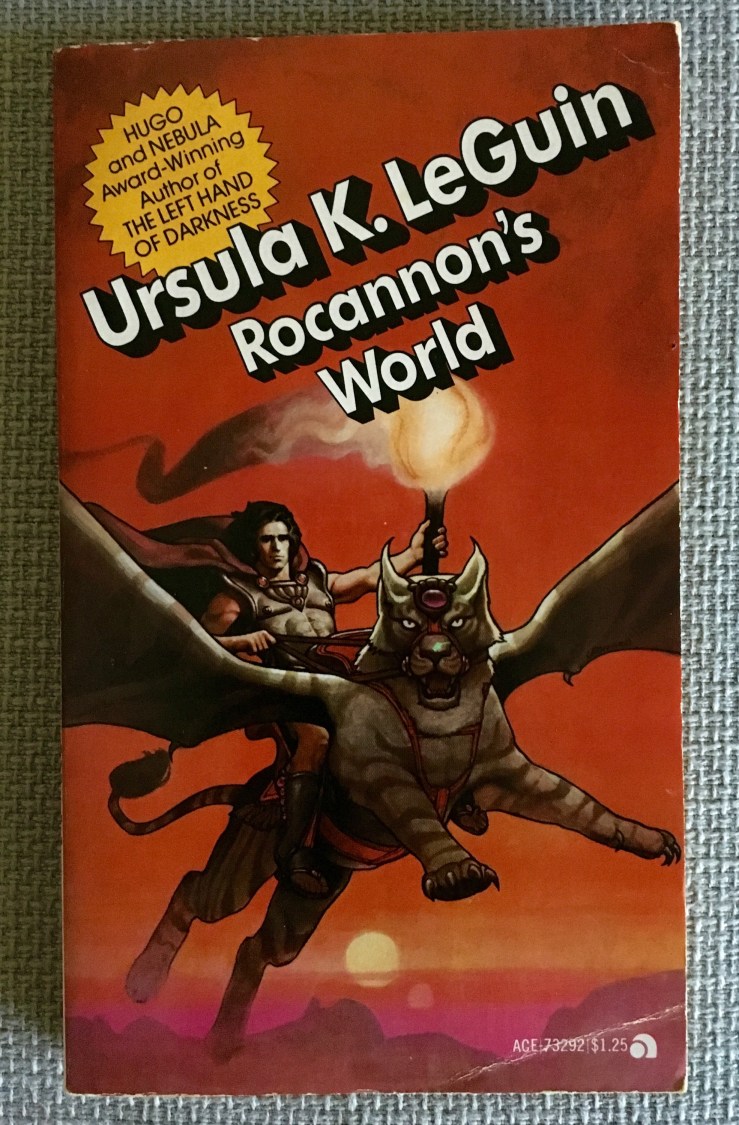
I just picked up Ursula K. Le Guin’s first novel Rocannon’s World on novelist Adam Novy’s recommendation. (Have you read Novy’s novel The Avian Gospels? It’s great).

Like 60 seconds of that film adaptation of JG Ballard’s High-Rise
How could one tell where the American dream ended and the Faustian nightmare began
But why, one is driven to ask, why has the tale of terror so special an appeal to Americans? Surely its success must be derived in part from the failure of love in our fiction; the death of love left a vacuum at the affective heart of the American novel into which there rushed the love of death. The triumph of the genteel sentimental incapacitated even our most talented writers, left them incapable of dealing with the relations of men and women as subtly and convincingly as the prose writers in the great novelistic tradition of France. Our novelists, deprived of the subject that sustained Stendhal or Constant, Flaubert or Proust, that seemed indeed to them the subject of the novel, turned to fables of loneliness and terror.
Moreover, in the United States, certain special guilts awaited projection in the gothic form. A dream of innocence had sent Europeans across the ocean to build a new society immune to the compounded evil of the past from which no one else in Europe could ever feel himself free. But the slaughter of the Indians, who would not yield their lands to the carriers of utopia, and the abominations of the slave trade, in which the black man, rum, and money were inextricably entwined in a knot of guilt, provided new evidence that evil did not remain with the world that had been left behind—but stayed alive in the human heart, which had come the long way to America only to confront the horrifying image of itself. Finally, there was the myth of Faust and of the diabolic bargain, which, though not yet isolated from gothic themes of lesser importance (that isolation was to be the word of American writers!), came quite soon to seem identical with the American myth itself.
How could one tell where the American dream ended and the Faustian nightmare began; they held in common the hope of breaking through all limits and restraints, of reaching a place of total freedom where one could with impunity deny the Fall, live as if innocence rather than guilt were the birthright of all men. In Huck’s blithe assertion, “All right, I’ll go to Hell,” is betrayed a significant undermeaning of the Faustian amor fati, at least in its “boyish” American form: the secret belief that damnation is not all it is cracked up to be.
From Leslie Fiedler’s Love and Death in the American Novel (1960).
 Biblioklept