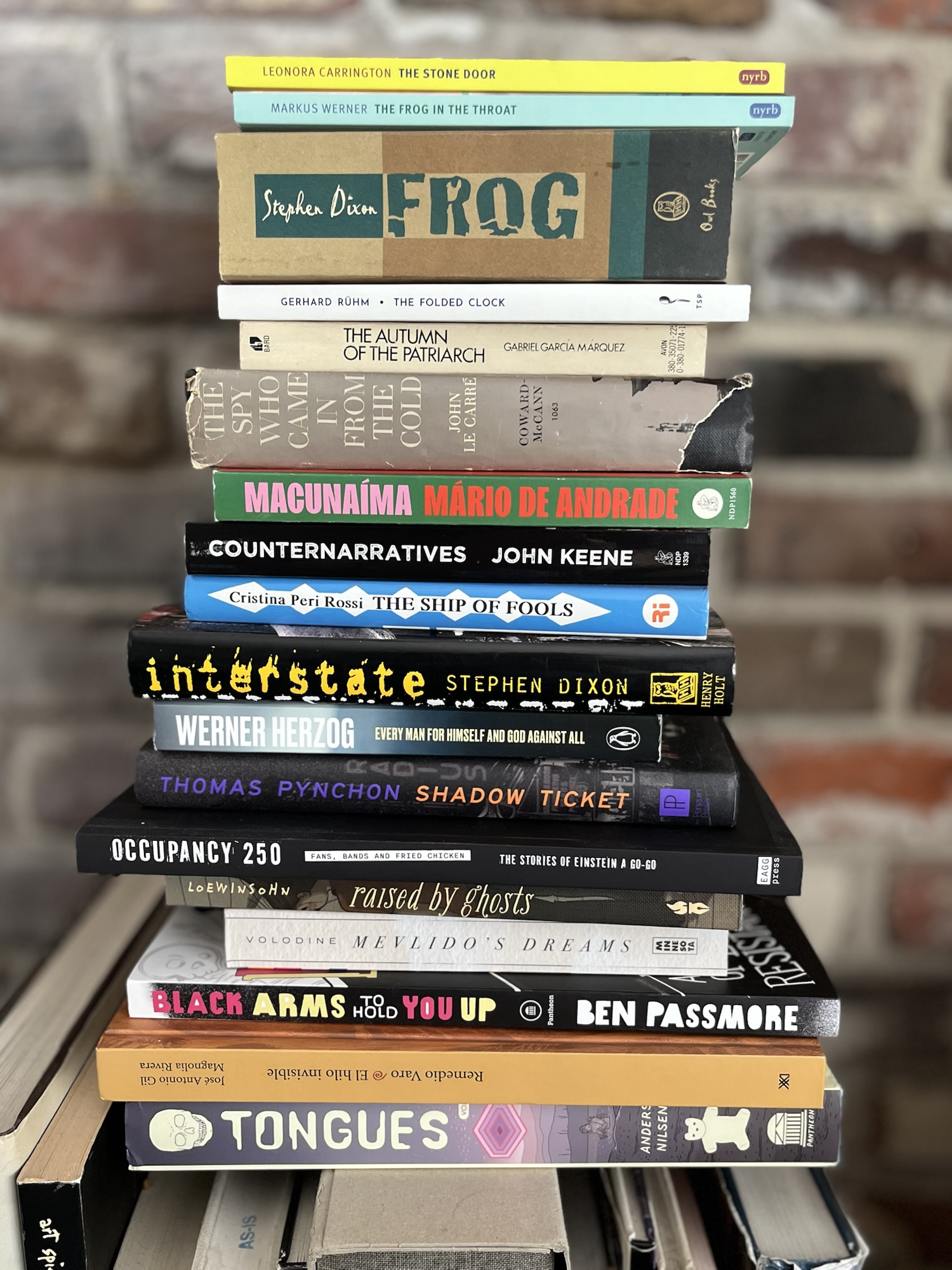
FIRST LINE: “A SCREAMING COMES ACROSS THE SKY.” NICE FIRST LINE.
LONG — 760 PAGES IN HARD-COVER.
BUZZWORDS: PIGS, PARANOIA, B MOVIES, SEX, NAZIS.
PUBLISHED 1973; EVERYONE WENT CRAZY.
NATIONAL BOOK AWARD, OF COURSE. PULITZER JUDGES LOVED IT, PULITZER TRUSTEES THOUGHT OBSCENE. ALSO INCOMPREHENSIBLE. NO PULITZER PRIZE. SOMETHING LIKE ULYSSES THAT WAY. A FREQUENT COMPARISON.
INSIDERS CALL IT RAINBOW. INSIDERS ARE INSIDERS BECAUSE THEY LOVE THE IDEA THAT
SOME RECLUSE (A CORNELL GRAD?) WROTE A 760-PAGE BOOK ABOUT PIGS AND PARANOIA. ALSO BECAUSE THEY KNOW SOME VERY EXTRAORDINARY WORDS FROM RAINBOW, LIKE THE ONES IN THE GLOSSARY BELOW (FROM THE HARD-COVER EDITION).
BOOK 1
Beyond the Zero
NARODNIK [p. 11]
From Russian narod, “people.” Intellectual trying to metamorphose peasant into revolutionaries. The Narodniki flourished in the late 1860s. In the late 1960s Student Nonviolent Coordinating Committee activists were referred to as narodoniks. By show-offs.
PRETERITION, PRETERITE
[p. 15 and throughout]
A passing over. Preterition is the Fluke Cosmic, the doctrine that God in John Calvin’s breast (cf. the Jampere-phrenia in Alien) decreed that you and you and you are heavenbound no questions asked but We’re going to have to think about the rest of you — don’t get your hopes up.
MAFFICK [p. 17]
The founder of the Boy Scouts defended the garrison at Mafeking against the Boers for two hundred seventeen days. When the siege was raised, on May 17, 1900, London went crazy, and the jubilant celebratory maffick — it’s a verb! — was born. Here, part of Lieutenant Oliver “Tantivy” Mucker-Maffick’s moniker.
TANTIVY [p. 17]
Mucker-Maffick’s nickname. Means to gallop along, or a blast on a horn, or that headlong gallop itself.
LOVE-IN-IDLENESS [p. 22]
The perfect word for violet. Pynchon’s choice is dazzling. First, on a map of London there’s a star for each of Slothrop’s women, Slothrop “having evidently the time, in his travels among places of death, to devote to girl-chasing.” Second, the many stars are of many colors. Third, Slothrop gets the idea that the stars look like flowers. Now Viola tricolor, the flower in question, turns out to be a violet with yellow, white, and purple petals and several country names. The name our author finally selects enables him to pull off a genuine rampage-prose triple play: “and all over the place, purple and yellow as hickeys, a prevalence of love-in-idleness.” Continue reading “A partial glossary for Thomas Pynchon’s Gravity’s Rainbow”→
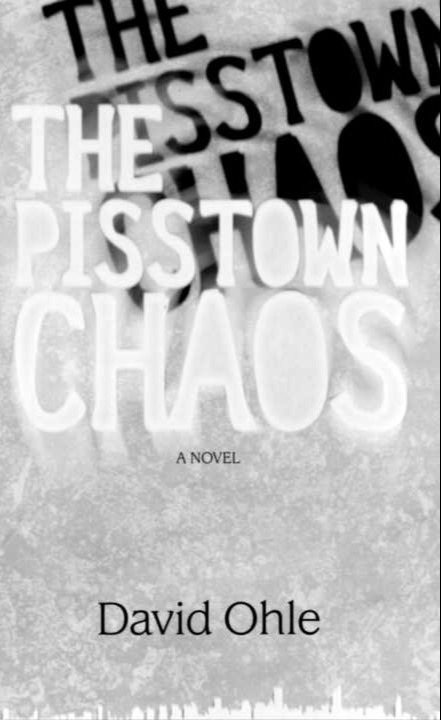
Let’s get the obvious out of the way first: The Pisstown Chaos is an improbably perfect and beautiful name for a novel. If you don’t like the title, The Pisstown Chaos isn’t for you. It is a foul, abject, hilarious, zany vaudeville act, a satire of post-apocalyptic literature, an extended riff on American hucksterism. It’s very funny and will make most readers queasy.
The author of The Pisstown Chaos is David Ohle. The novel was published in 2008; it is the second of three “sequels” to Ohle’s 1972 cult classic Motorman. You do not have to have read Motorman or The Age of Sinatra (2004) to “understand” The Pisstown Chaos. (But you’ll probably want to dig into those if you dig The Pisstown Chaos’s uh pungent urinous ammonia bouquet)
Moldenke, hero of Motorman, is a bit player in The Pisstown Chaos, a walk on, a song-and-dance man with no songs or dances. A storyteller. He’s a zombie, too — a “stinker” in the novel’s parlance — adorned in “black rags and a wide-brimmed white hat,” sporting “an inch-long tube of flesh protruding from just below his ear [which] had the general appearance and shape of an infant’s finger, but lacked a nail. In the end of the tube, a small hole leaked a clear, gelatinous fluid.”
Moldenke, we are to infer, is one of the “Victims of the Pisstown parasite…thought of as dead, but not enough to bury. Gray haggard, poorly dressed, they lay in gutters, sat rigidly on public benches, floated along canals and drank from rain-filled gutters.” He may or may not be centuries old.
It’s not clear how far into the future we are in the Ohleverse (it doesn’t really matter). After “the Great Forgetting,” and multiple and ongoing Chaoses, the world has regressed, or progressed, or really mutated, into a dusty, wet, gross, nasty post-infrastructure reality. You might read The Pisstown Chaos as a slapstick zombie Western.
The Reverend Hooker presides over this wonderfully abject world. Hooker’s loose theocratic federation revolves elliptically around a “shifting” scheme. Nothing is permanent, everything is moving, plates spinning on poles. Folks receive their shifting papers and must relocate from, say, a cozy cottage to a prison camp. Or they might end up paired with a new concubine or some such.
That’s the fate of Mildred Balls, née Mildred Vink, who meets Jacob Balls on the road to Witchy Toe. The pair meet cute and get on famously. (And who wouldn’t; after all, suave Jacob Balls was the inventor of the “finely-grained, yellow-tinged powder” known as “Jake” — a kind of post-apocalyptic Bud Light.) Optimistic Jacob is optimistically optimistic of all the shifting, attesting his belief that “in any culture, when boredom and apathy take hold, the currency is debased and the decline is irreversible…What could be more of a tonic than a random redistribution of the populace?” Mildred is less convinced: “The whole scheme is idiotic.”
The Pisstown Chaos focuses on the Balls clan — primarily an older Mildred and her young adult grandkids, Roe and Ophelia. There are stinkers and imps, shifting folk consuming urpflanz, willy, and Jake on their way via Q-ped to Indian Apple or Bum Bay. Reverend Hooker is always lurking in the margins, too, before taking over the narrative’s final pages in a mock apotheosis that brought a stupid smile to my face.
Ohle’s narrative isn’t exactly a picaresque, but it runs on the same energy. Each chapter opens with a series of frank excerpts from the Pisstown rag, the City Moon. Here’s one update of news you need:
A fondness for pickled lips has led to the arrest of a Kootie Fiyo, a stinker known to be a trader in tooth gold and a vicious biter. Fiyo was just leaving the impeteria in South Pisstown when two Guards entered. The proprietor said, “That stink can eat more imp lips than I can heap in front of him. “
The City Moon is not just a source for the goods on a stinker’s glimpse of pickled imps’ lips, but also a gloss on the undead (or un-undead’s) physiology:
What then is a final-stage stinker’s life like? It has been described by scientists as showing a poverty of sensation and a low body temperature. In their nostrils is the persistent odor of urpmilk. The membrane which lines their mouth is extremely tough and is covered with thick scales. They like to touch fur and drink their own urine. Because they have been known to go without food for as long as eighteen years, we can assume that their sense of time passing is also very different from our own.
The Stinker Problem is likely the signature event of whatever century we are in. There’s probably an icky metaphor or allegory somewhere in there, but I find myself disinterested in that end of the novel. But still: Consider Mildred–who wants to find a “cure” for stinkerism–in charge of a crew of stinkers who, after their daily labors, commit “to walking in circles and searching the ground.” But these are not geologists peering into the navel of the world: “‘No, Miss,’ Spanish Johnny said, ‘We like to get dizzy and faint. It’s the way we have fun.'” We’ve all been there.
Mildred’s granddaughter Ophelia commands much of the narrative, shifting about her stations in life. Her domestic comedy with servants Red and Peters is a class-conscious comic delight. Our Miss Madame goes through a series of abject slapstick routines with the Help (including an enema gag that uh, gag me yeah). Here’s a foul episode in the life of Ophelia Balls:
She walked carefully from slippery stone to slippery stone until she got to the potting shed, then blew out the candle. She tried the door and found it locked. Wiping the dirty door-glass, she looked in at Peters, lying on the peat pile with his pants pulled down, fanning his rear with a handful of straw. Red, sitting beside him in Mildred Balls’s underwear, combed Peters’s coarse hair with a tortoise-shell comb. Peters’s cheeks were flushed, his eyes half-closed. When Ophelia entered, the scene seemed all the more lurid for the dim lantern and its flicker.
“I hope you don’t take any offense,” Red said, “but I’ve just mated with Peters here.”
Peters sat up. “I was quietly potting geraniums when that idiot stepped out of a dark corner and made advances, clumsy, lewd advances, with his big willy sticking out. I tried, but I couldn’t resist him.”
“Is that true, Red, that he put up resistance?”
“He lies like a rug. He clearly indicated he wanted me to sex him good and sex him hard.”
Ophelia saw the pointlessness of going any further with the inquiry. “All is forgiven. Let’s move past this.”
“I’ll serve the swan,” Red said.
If I’ll serve the swan isn’t your kinda punchline, The Pisstown Chaos ain’t your cup of Jake. It’s a rich, smelly, gross novel, fun, funny, fueled with 19th-century inventions viewed through piss-colored glasses, aimed at the apocalyptic future. It’s smoked imp-meat served with urpsmoke, a vaudeville buzz against the zombies in the gutter. When I was a kid we held our breath when we passed cemeteries. There are other ceremonies, other totems, but warding off the dead remains a concern.
I have neglected the Balls scion, young Roe, who eventually finds himself attending the Reverend Hooker. Late in the novel, Roe Balls prepares an enema for the theocrat; Hooker then delivers a sermon:
“I’ll warm up the bathroom right away, sir, and get the enema bag ready.”
Once Roe had firmly inserted the hose, the Reverend sat on the pot and closed his eyes. “There, that’s it, Roe. It’s in well enough.”
“Shall I leave you alone now, sir?”
“No. Don’t leave. Let me sermonize a little. I’ll tell you a story, a story with a lesson. In the days when all men were good, they had miraculous power. Lions, mountains, whales, jellyfish, hagfish, birds, rocks, clouds, seas, moved quietly from place to place, just as men ordered them at their whim and fancy. But the human race at last lost its miraculous powers through the laziness of a single man. He was a woodman in the Fertile Crescent. One morning he went into the forest to cut firewood for his master’s hearth. He sawed and split all day, until he had a considerable stack of hickory and oak. Then he stood before the pile and said, ‘Now, march off home!’ The great bundle of wood at once got up and began to walk, and the woodman tramped on behind it. But he was a very lazy man. Now, why shouldn’t I ride instead of galloping along this dusty road, he said to himself, and jumped up on the bundle of wood as it was walking in front of him and sat down on top of it. As soon as he did, the wood refused to go. The woodman got angry and began to strike it fiercely with his axe, all in vain. Still the wood refused to go. And from that time the human race had lost its power.”
The punchlines accumulate after the Rev. Hooker’s fable — young Roe’s deadpan line “That certainly explains everything I’ve ever wondered about, sir” made me laugh aloud when I read it, and the following asswipe line is too much — but I think we have here in the fable a key to the novel. Not the key, but a key.
In the Rev’s woodman’s fable, humans once wielded Promethean power over the world. But that power’s contingent; it exists only when humans move with the world, attentive to its rhythms and limits. When the woodman attempts to ride the wood and make it a convenience instead of walking alongside it, cooperation collapses. S’all she wrote.
Ohle’s chaotic, grotesque world echoes his some-time collaborator William Burroughs’ alien abjection. It will also be comfortingly/nauseatingly familiar (familiar?!) with anyone who digs David Cronenberg’s corporeal horrors. The Pisstown Chronicles will also appeal to weirdos who dig the abject fictions of Vladmir Sorokin, José Donoso, and Antoine Volodine.
The Pisstown Chaos is not a novel for everyone, but there’s a certain type of reader who will love wading through its abject humor, grotesque imagery, and absurdist chaos. Ohle’s post-convenience world grunts and howls; it’s dark, vivid, gross, and hilarious. That scent will linger. Highly recommended.
TURKEY REMAINS AND HOW TO INTER THEM WITH NUMEROUS SCARCE RECIPES
At this post holiday season the refrigerators of the nation are overstuffed with large masses of turkey, the sight of which is calculated to give an adult an attack of dizziness. It seems, therefore, an appropriate time to give the owners the benefit of my experience as an old gourmet, in using this surplus material. Some of the recipes have been in my family for generations. (This usually occurs when rigor mortis sets in.) They were collected over years, from old cook books, yellowed diaries of the Pilgrim Fathers, mail order catalogues, golfbags and trash cans. Not one but has been tried and proven—there are headstones all over America to testify to the fact.
Very well then: Here goes:
1. Turkey Cocktail
To one large turkey add one gallon of vermouth and a demijohn of angostura bitters. Shake.
2. Turkey at la Francais.
Take a large ripe turkey, prepare as for basting and stuff with old watches and chains and monkey meat. Proceed as with cottage-pudding.
3. Turkey and Water
Take one turkey and one pan of water. Heat the latter to the boiling point and then put in the refrigerator When it has jelled drown the turkey in it. Eat. In preparing this recipe it is best to have a few ham sandwiches around in case things go wrong.
4. Turkey Mongole
Take three butts of salami and a large turkey skeleton from which the feathers and natural stuffing have been removed. Lay them out on the table and call up some Mongole in the neighborhood to tell you how to proceed from there.
5. Turkey Mousee
Seed a large prone turkey, being careful to remove the bones, flesh, fins, gravy, etc. Blow up with a bicycle pump. Mount in becoming style and hang in the front hall.
6. Stolen Turkey
Walk quickly from the market and if accosted remark with a laugh that it had just flown into your arms and you hadn’t noticed it. Then drop the turkey with the white of one egg-well, anyhow, beat it.
7. Turkey a la Creme.
Prepare the creme a day in advance, or even a year in advance. Deluge the turkey with it and cook for six days over a blast furnace. Wrap in fly paper and serve.
8. Turkey Hash
This is the delight of all connoisseurs of the holiday beast, but few understand how really to prepare it. Like a lobster it must be plunged alive into boiling water, until it becomes bright red or purple or something, and then before the color fades, placed quickly in a washing machine and allowed to stew in its own gore as it is whirled around.
Only then is it ready for hash. To hash, take a large sharp tool like a nail-file or if none is handy, a bayonet will serve the purpose—and then get at it! Hash it well! Bind the remains with dental floss and serve.
And now we come to the true aristocrat of turkey dishes:
9. Feathered Turkey.
To prepare this a turkey is necessary and a one pounder cannon to compell anyone to eat it. Broil the feathers and stuff with sage brush, old clothes, almost anything you can dig up. Then sit down and simmer. The feathers are to be eaten like artichokes (and this is not to be confused with the old Roman custom of tickling the throat).
10. Turkey at la Maryland
Take a plump turkey to a barber’s and have him shaved, or if a female bird, given a facial and a water wave. Then before killing him stuff with with old newspapers and put him to roost. He can then be served hot or raw, usually with a thick gravy of mineral oil and rubbing alcohol. (Note: This recipe was given me by an old black mammy.)
11. Turkey Remnant
This is one of the most useful recipes for, though not, “chic”, it tells what to do with the turkey after the holiday, and extract the most value from it.
Take the remants, or if they have been consumed, take the various plates on which the turkey or its parts have rested and stew them for two hours in milk of magnesia. Stuff with moth-balls.
12. Turkey with Whiskey Sauce.
This recipe is for a party of four. Obtain a gallon of whiskey, and allow it to age for several hours. Then serve, allowing one quart for each guest.
The next day the turkey should be added, little by little, constantly stirring and basting.
13. For Weddings or Funerals. Obtain a gross of small white boxes such as are used for bride’s cake. Cut the turkey into small squares, roast, stuff, kill, boil, bake and allow to skewer. Now we are ready to begin. Fill each box with a quantity of soup stock and pile in a handy place. As the liquid elapses, the prepared turkey is added until the guests arrive. The boxes delicately tied with white ribbons are then placed in the handbags of the ladies, or in the men’s side pockets.
There I guess that’s enough turkey to talk. I hope I’ll never see or hear of another until—well, until next year.
Dr. Vitus Werdegast, Bela Lugosi’s character in The Black Cat, gives this line to mystery novelist Peter Alison (portrayed by David Manners). Here is the scene:
The epigraph for Shadow Ticket highlights a concern with the metaphysical that Pynchon has shown throughout his novels. The epigraph encapsulates this concern, ties it to the talkies, the American Gothic tradition, and wedges in a slice of absurd (and drily-delivered) humor early on.
Chapter 1; the novel’s first line:
“When trouble comes to town, it usually takes the North Shore Line.”
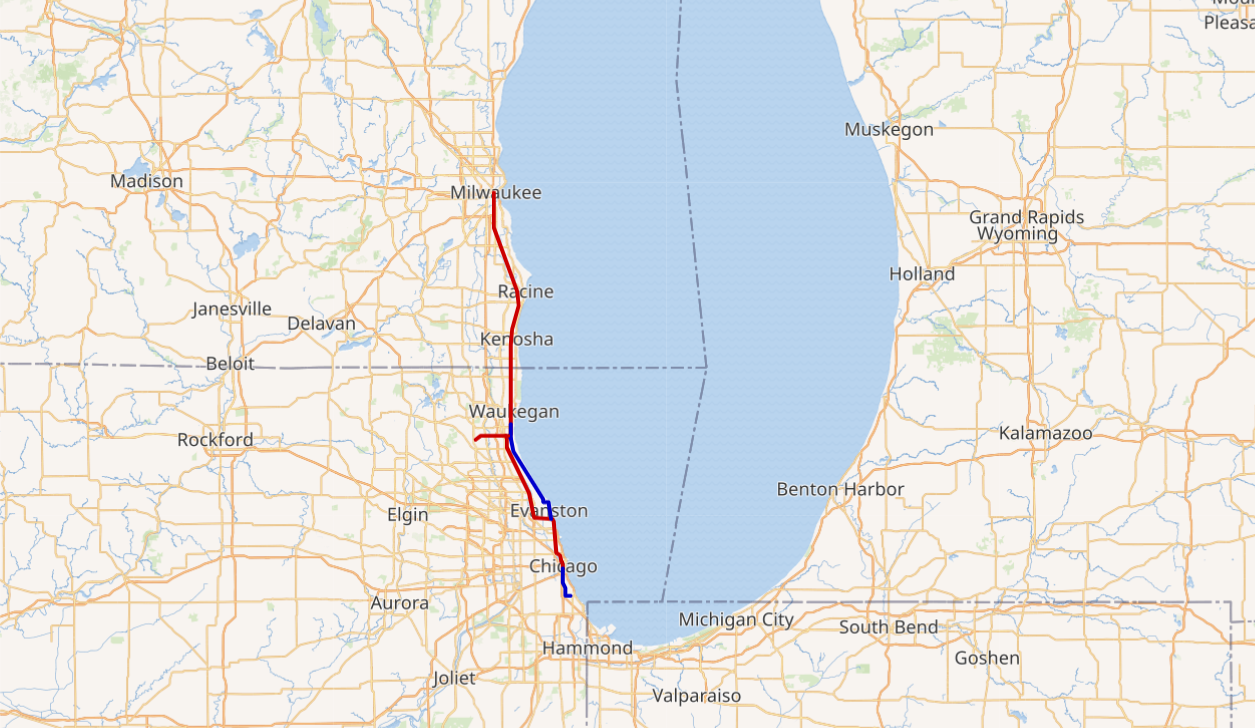
Shadow Ticket is set, thus far and for the most part, in Milwaukee Wisconsin in early 1931. For about half a century, The Chicago North Shore and Milwaukee Railroad ran from Chicago to Milwaukee, roughly a long the coast of Lake Michigan. It ceased operations in early 1963.
(Even went through Kenosha, kid.)
The opening paragraphs introduce us to Shadow Ticket’s hero Hicks McTaggart and establish a snappy, hardboiled style reminiscent of films of the thirties and forties (or films of the Coen Brothers that pay homage to those films).
“Everybody is looking at everybody else like they’re all in on something. Beyond familiarity or indifference, some deep mischief is at work.”
These lines append the postprandial scene of a noontime explosion. We get paranoia and a whiff of the supernatural — that “deep mischief…at work.”
“Pineapples come and pineapples go,” declares Hicks’s boss Boynt Crosstown, dismissing the explosion. (Perhaps the name Boynt Crosstown evokes “Burnt Cross Town”?)
Pineapples, slang for grenades specifically or explosives more generally, pops up repeatedly early on in Shadow Ticket.
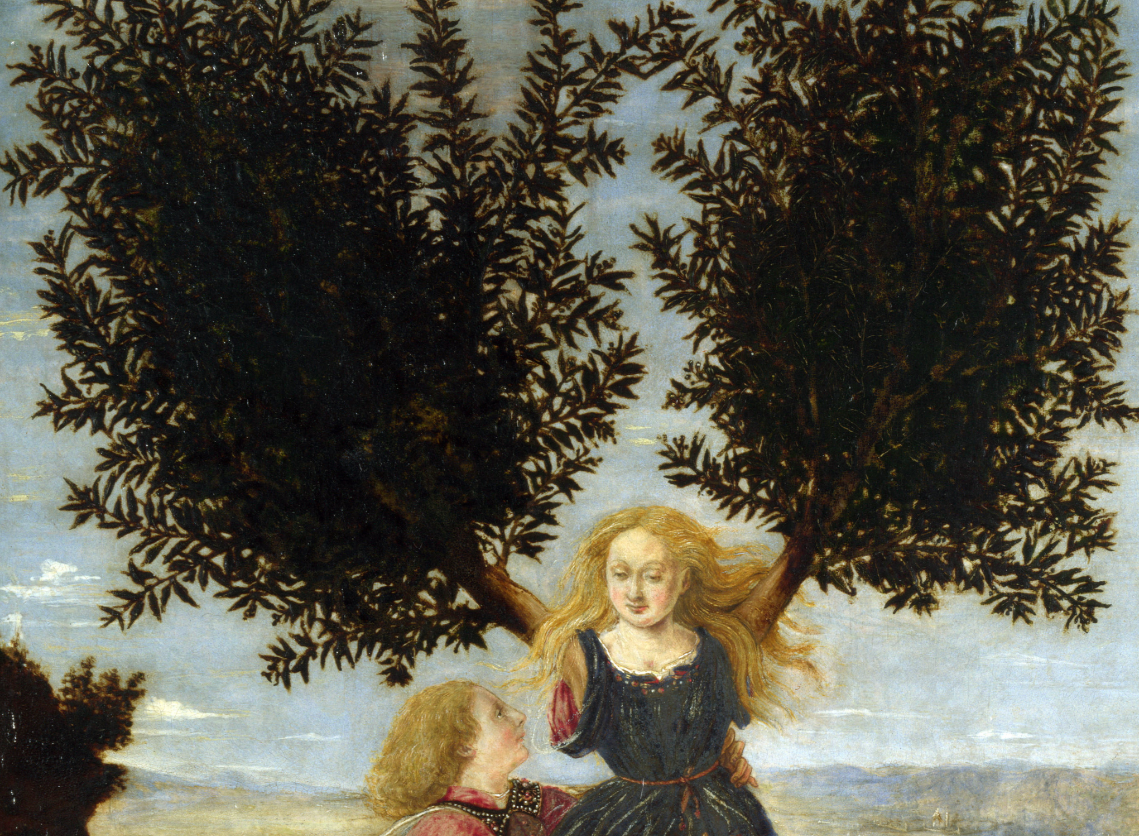
“…local multimillionaire Bruno Airmont, known throughout the dairy industry as the Al Capone of Cheese in Exile…this one’s more about his daughter Daphne…Seems your old romance has just run off with a clarinet player in a swing band.”
Daphne Airmont, Runaway Cheese Heiress: an early MacGuffin or possible red herring to look out for. One of many, many of Pynchon’s female characters on the run.
Detail from Apollo and Daphne by Pollaiuolo, c. 1470–1480
(Parenthetically, I suppose, because it’s of such minor note, but there’s a mention of one “Zbig Dubinsky” — surely, Shirley, a minor character? — but the name seems to echo the Coens’ film The Big Lebowski.)
A warning from Hicks to his protege Skeet Wheeler, a “flyweight juvenile in a porkpie hat.” We’ll see more of Skeet’s apparent sentimentality when he pockets a ball bearing from an exploded REO Speed Wagon. The line would be a throwaway for me, except that it is the first instance of the word kid in the novel. We see it pop up frequently in several forms, including kidding and kiddies. In Ch. 1, Skeet refers to his “snub nose service .32″ pistol as a “Kids’ Special.” We learn that Skeet is tapped into the “kid underworld—drifters, truants, and guttersnipes, newsboys at every corner and streetcar stop—who in turn have antennas of their own out.” The system of littler kids reporting to bigger kids, etc., reports Skeet to bigger kid Hicks, is “like Mussolini.” (Hitler will show up soon.)
“‘…New watch, I see.’
‘Hamilton, glows in the dark too.'”
The first of (by my count) four specific references to things that glow in the dark. I’ll remark on them in turn, but the other three are Hicks’s hair gel (Ch. 3), a jello salad served at the Velocity Lunch diner (Ch. 5), and a pair of novelty vampire fangs (Ch. 7).
In Pynchon’s books, and in particular in Against the Day and Mason & Dixon, there is a concern with the invisible world, which might be taken as the metaphysical world, or, the supernatural-but-not-baloney world. Perhaps these novelties that glow in the dark point in that direction?
Chapter 2 begins at the crime scene, the scene of an exploded bootlegger’s hoochwagon (the aforementioned REO Speed Wagon).
The “kid” motif develops with references to “Federal kiddies that nobody’s ever heard of,”“Chicago Latin kids,“ and “German storm kiddies.“ A page or two later soda jerk Hoagie Hivnak (of a certain “adenoidal brashness”) laments that his Ideal Pharmacy “was no place for kids, the words ‘soda fountain’ would send mothers all over town into fits, worse than ‘opium den.'” No more coke in the sodas for the “Leapers and sleigh riders” to enjoy.
Hoagie moves the plot forward, telling Hicks to “Track down Bruno Airmont wherever he’s got to.”
Chapter 3: We meet Hicks’s special lady, April Randazzo. She’s a femme fatale, folks, a singer-dancer making the late night speakeasy scene. Hicks and April seem like a suave match, but we learn that she has a fetish for married men: “A gold-accented ring finger has the same effect on April as a jigging spoon on a Lake trout, especially when kept on while kidding around, good as a framed copy of a marriage license hanging up on a love-nest wall.”
Note the kidding around there; perhaps Pynchon teases kidness as the illusion of a romanticized time of faux-innocence, an idealized (and ironized) notion of primeval purity. “Any town but this one / Couldn’t we be kids again” croons April in “what’s gotten to be her trademark ballad, backed by a minor-key semi-Cuban arrangement for accordion, saxes, banjo-uke, melancholically muted trumpet.”
Oh and before I forget, our glow-in-the dark fetish for this episode is delivered from Hicks’s “hip flask from which he pours not hooch but some slow green liquid, rubs it between his hands, runs both hands through his hair as an intensely herbal aroma fills the room…” (21). Hicks attests that his hair jelly “Lasts for days, glows in the dark” (21).
(Parenthetically–we get our first two Pynchon songs in this chapter, one from Hicks and one from April (as cited above.) The chapter ends with Hicks getting nudged again, this time to visit his Uncle Lefty, a retired cop.)
Chapter 4 starts at Uncle Lefty and Aunt Peony’s house. They, sorta, raised Hicks; like his protege Skeet (and every other hero), Hicks is an orphan.
Uncle Lefty has prepared a special “Surprise Casserole [in which] Hicks can detect sport peppers, canned pineapple,almost-familiar pork parts marinated in Uncle Lefty’s private cure, based on wildcat beer from a glazed-crock studio just across the Viaduct.” Here, a pineapple is a pineapple. But it can still be part of a surprise.
Uncle Lefty’s name is a bit ironic. He opines: “Der Führer,” gently, “is der future, Hicks. Just the other day the Journal calls him ‘that intelligent young German Fascist.’ ”
Aunt Peony is more sympathetic. We learn that her words have taken on an edge as her marriage advanced, “as if some maidenly spirit, searching and pious, has set out on a trip Peony has no plans herself to make, toward a destiny quietly lifted away from her when she wasn’t looking.” Unlike Daphne (and April?), Peony failed to make her escape in good time.
We learn of Hicks’s fresh-out-of-school job as a strikebreaker. This job would generally make him on the wrong side in Pynchonian terms, but the novel extends some heartstrings his way, pulling him over to the light. Hicks, it seems, would not turn a Pinkerton villain the likes of which Pynchon castigated in Against the Day. His road to Damascus moment happens when his “lead-filled beavertail sap” disappears before he can decimate a striking “truculent little Bolshevik.” The metaphysics of this disappearing object has a profound effect on our hero.
A bit later in the chapter, Boynt offers a through-a-glass-darkly description of Milwaukee, Cream City USA, evoking, “Hitler kiddies, Sicilian mob, secret hallways and exit tunnels, smoke too thick to see through, half a dozen different languages, any lowlife thinks they can turn a nickel always after you for somethin, there’s your wholesome Cream City, kid, mental hygiene paradise but underneath running off of a heartbeat crazy as hell, that’s if it had a heart which it don’t.”
There’s the invisible world, but it might sometimes glow in the dark.
Chapter 4 segues into Chapter 5; Uncle Lefty tells Hicks to talk to ex-vaudeville mentalist Thessalie Wayward. They meet at Velocity Lunch, a cafe where “Today’s Special [is] a vivid green salad centerpiece the size and shape of a human brain, molded in lime Jell-O, versions of which have actually been observed to glow.” Hicks is hoping to learn more about the metaphysical disappearance of his beavertail sap–what divine hand intervened to prevent his killing another person?
Thessalie teaches him about ass and app: “Asported. When something disappears suddenly off to someplace else, in the business that’s called an asport. Coming in at you the other way, appearing out of nowhere, that’s an ‘apport.’ Happens in séances a lot, kind of side effect. Ass and app, as we say.”
After some speculation on this “unnamed force,” Thessalie sends Hicks out again, this time to “Talk to Lew.”
That Lew, as we see in Chapter 6, is none other than Lew Basnight, one of the many heroes of Pynchon’s opus Against the Day (which, so far, Shadow Ticket feels very much akin to). Lew’s chapter is beautiful, short and sweet, a kind of elegy for Western phantasia. He was already late to the Manifest Destiny goldrush: “Didn’t even get out there till late in life, after years of dancin the Pinkertonian around what only a couple of old-timers were still callin the Wild West anymore. Hell, I’m ready to go back…”
Pynchon then extends Lew’s fantasy of returning to a mythical Old West via “lucid dreaming… flown in from strange suburban distances, past radio antennas and skyscrapers, down the gloomy city canyons, skimming echo to echo, banking into the Dearborn station, flown invisible, ticketless, right onto the Santa Fe Chief. And away. Away, so easy…” An escape from the Modern world. Invisible, ticketless–that’s the fantasy.
Lew’s episode ends with a warning to Hicks not to become “another one of these metaphysical detectives, out looking for Revelation.”
In Chapter 7, Hicks takes his (his?) gal April to Chicago to see Dracula. April’s smitten by Bela Lugosi, and “Soon she is sending away to Johnson Smith down in Racine for a set of Glow-in-the-Dark Vampire Choppers, 35¢ postpaid.”
A paragraph later our hero is getting some bad news about his (his..?) gal April and one Don Peppino Infernacci. “April Randazzo is in fact the promised bride of evil,” we learn; Infernacci (good golly that name, Pynchon, chill) is “lord of the underworld.”
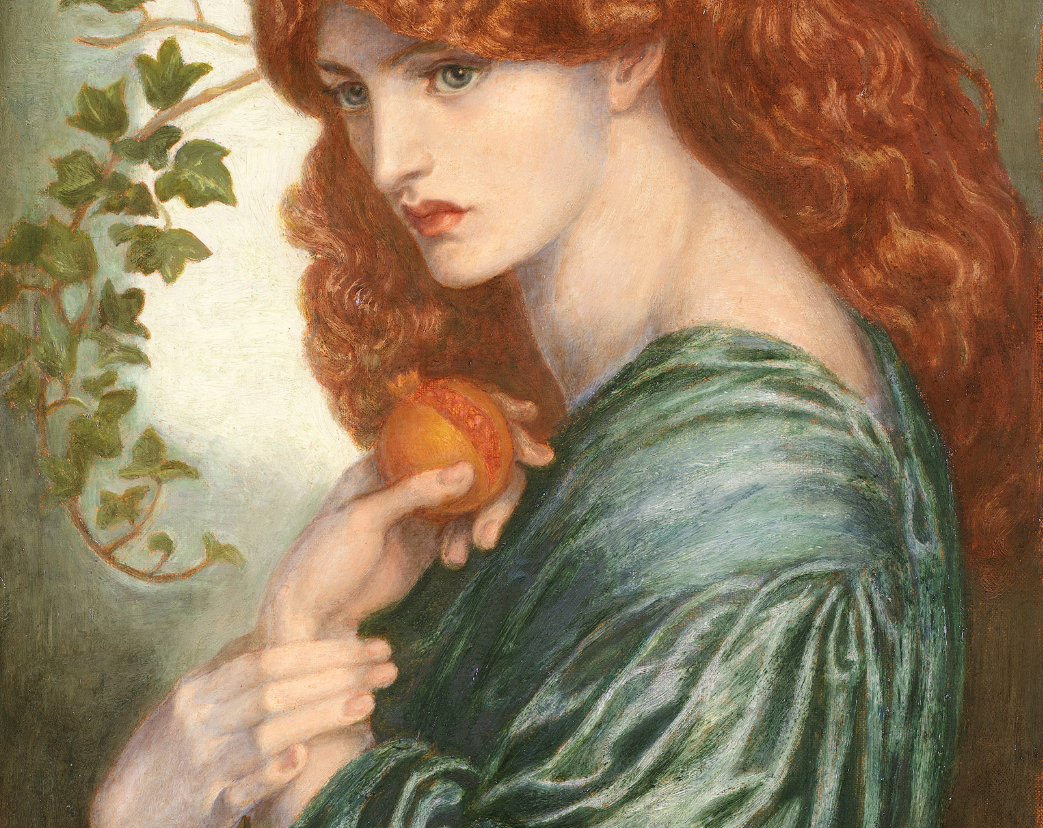
Infernacci could be Hades, but April doesn’t strike me as a Persephone. But we’ll see.
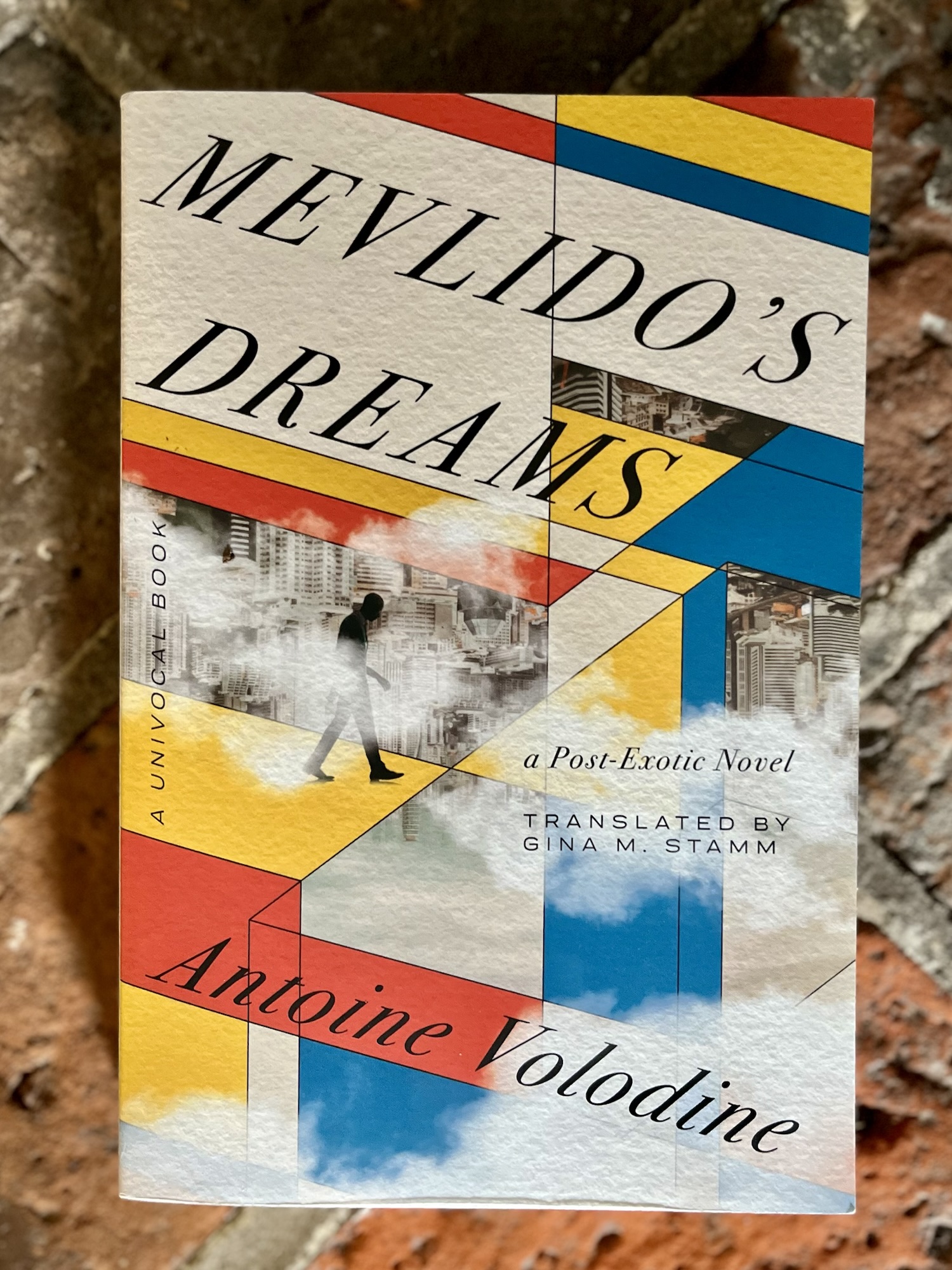
Antoine Volodine’s 2007 novel Mevlido’s Dreams is a bleak, dystopian noir novel set several centuries in the future in the ruined city-state of Oulang-Oulane. Here, weary revolutionary Mevlido lives in a decaying ghetto called Henhouse Four, an eerie quarter inhabited by indigents, junkies, and other remnants of failed uprisings who must contend with the giant mutated birds who terrorize the borough.
Once a soldier of the revolution, Mevlido now serves as a policeman, yet he may also be a double or even triple agent, a sleeper sent through time from a kind of liminal afterlife, a bardo between death and rebirth. The novel drifts between waking and dream states, war memories and spectral futures, as Mevlido’s fragmented consciousness becomes a vessel for Volodine’s haunting post-exotic vision of history, language, and apocalypse.
About halfway through the novel, Mevlido’s bardo boss offers a handy summary of the apocalypse:
They’ve become an inexplicable species. They are just getting out of multiple wars of extermination, but a new conflict is already in sight. The population has decreased by a hundredfold, even more. Entire continents are currently uninhabitable. Those who have survived remain socially organized, but they no longer believe in themselves, or in society. They’ve inherited political systems to which they’ve lost the keys; for them ideology is a prayer devoid of meaning. The ruling classes have become criminalized, the poor obey them. Both classes act as if they were already dead. And as if, on top of that, they don’t even care. … Something in them has changed. You’d think that they no longer have the ability to differentiate between life, dreams, and death.
Our hero will be reborn into this turmoil, his consciousness a roiling mess of anxious irreality. “Even if I’m dreaming, I’m in reality,” he concludes at one point, as if to anchor himself in his mission. What that mission is, exactly, is never fully clear to Mevlido or the reader. Or perhaps the mission is very clear; as translator Gina M. Stamm puts it in her introduction, the plot of Mevlido’s Dreams “has the elements of a fairly classic tragic romance: man and woman are in love, the world prevents their being together, man descends into tragic circumstances.” This motif repeats in dreamlike iterations in the novel; Mevlido drifts through a post-exotic wasteland following orders no one remembers giving, haunted by his dead wife Verena Becker, whose presence threads through his days like a recurring dream or a flickering film reel.
We come to learn that Verena Becker died cruelly, murdered by the “child soldiers” who were pressed in to service by agents of the exploitative upper class. In Mevlido’s present time (or, more specifically one of Mevlido’s present times), the child soldiers are now “ex-child soldiers,” reviled refugees who hide under new identities, hoping to avoid the vengeance of people like Mevlido. The vengeance is not aimed just at these foot soldiers though; one of the novel’s heroes, Sonia Wolguelane, plots the assassination of the upper-echelon genociders who, now absolved of their war crimes, continue to rule the city-state with their one-time political foes. Here is Volodine’s description of one of the men Wolguelane assassinates:
Toni Müller, forty-nine years old, delegate to the Office of Fuel, policy officer during the final project of pacification of the remaining zones, initiator of the so-called controlled genocide practice, threatened with legal action after the disappearance of the Wongres, the Spanish, and the Myrzes, sued for not having been able to provide an explanation for the mysterious annihilation of the inhabitants of the Philippines. Amnestied. Director of the petroleum trusts in the remaining zones, billionaire, numerous books of economics published in his name, numerous honorific titles. During his last self-criticism, he admitted having constantly hidden from the masses the fact that he didn’t share the household chores with his wife.
While the apocalyptic stakes here are swollen to hyperbolic levels, Volodine’s critique of how the ruling class wields power nevertheless applies neatly to our own 21st-century blues. Henry Kissinger, for example, died fat and happy. I’m reminded too here of Thomas Pynchon’s critique of power, particularly in Gravity’s Rainbow, where the narrator laments that the Nazi war criminal Weissmann will not be punished but rather elevated, set to sit “among the successful academics, the Presidential advisers, the token intellectuals who sit on boards of directors. He is almost certainly there. Look high, not low.” Look low for the preterite heroes of Mevlido’s Dreams though. They are the “faded zombies, probably candidates for another hallucinatory expedition, left-behinds who imagine they will be able to leave again.”
I am making the novel sound too grim. It is rich, and much of that richness comes from a bureaucratic, deadpan humor, the laughter of exhausted ideologues trapped in their own paperwork. But what happens to faith in any ideology when it is sundered from observable reality? Consider this exchange, in which a lost Mevlido tries to communicate with a band of men who fail to recognize him as a human being:
“Incredible,” says one of the normal ones, “it’s still talking.”
“And what is it talking about?” asks the red cap.
“About the night,” says the fat one.
“It’s talking about the night?” the bare-chested one asks, surprised.
“Yes, it must still believe in night,” says one of the normal ones.
“Incredible,” says the other normal one, “it still believes in night.”
And beneath the satire, there’s love. Volodine writes love as a metaphysical condition, a persistence that outlasts ideology, memory, and even death. The tenderness between Mevlido and Verena gives the novel its pulse. It’s the one human rhythm left in a mechanical world. Stamm’s translation conveys this rhythm in clipped, moody sentences, wounded and precise.
Like Volodine’s 2014 novel Radiant Terminus, Mevlido’s Dreams operates in the twilight between horror and tenderness. But Mevlido’s Dreams is quieter, more interior—a story of a single man’s dissolution told in flickering vignettes. It reads like the afterimage of a life projected on a cracked wall.
That light, dim and trembling, is what Volodine and Stamm preserve. Mevlido’s Dreams reads not like a film script but like a film itself: shadowy scenes unfolding in silence, broken by bursts of deadpan dialogue and ghostly humor. You can see the ash swirling, hear the echo of curses in an alley haunted by mutant birds.
Oulang-Oulane feels shot through a grim lens, intense, ugly, beautiful, like something from Tarkovsky’s Stalker or a Béla Tarr film, with scenes of desolation punctuated by tenderness. Volodine isn’t cinematic because he borrows film tropes, but because he composes through atmosphere and rhythm. His sentences drift like a camera through fog and memory.
That line above—“it still believes in night”—could be the novel’s credo. Dreaming isn’t retreat; it’s resistance. Writing, too. Mevlido’s Dreams works as both a political fable and a séance for the lost, a way of keeping consciousness flickering in the dark. Highly recommended.
Paul Thomas Anderson’s One Battle After Another takes Thomas Pynchon’s 1990 novel Vineland and sets it ablaze, reshaping its abstract paranoia and fractured narrative into something both deliriously immediate and ominously timeless.
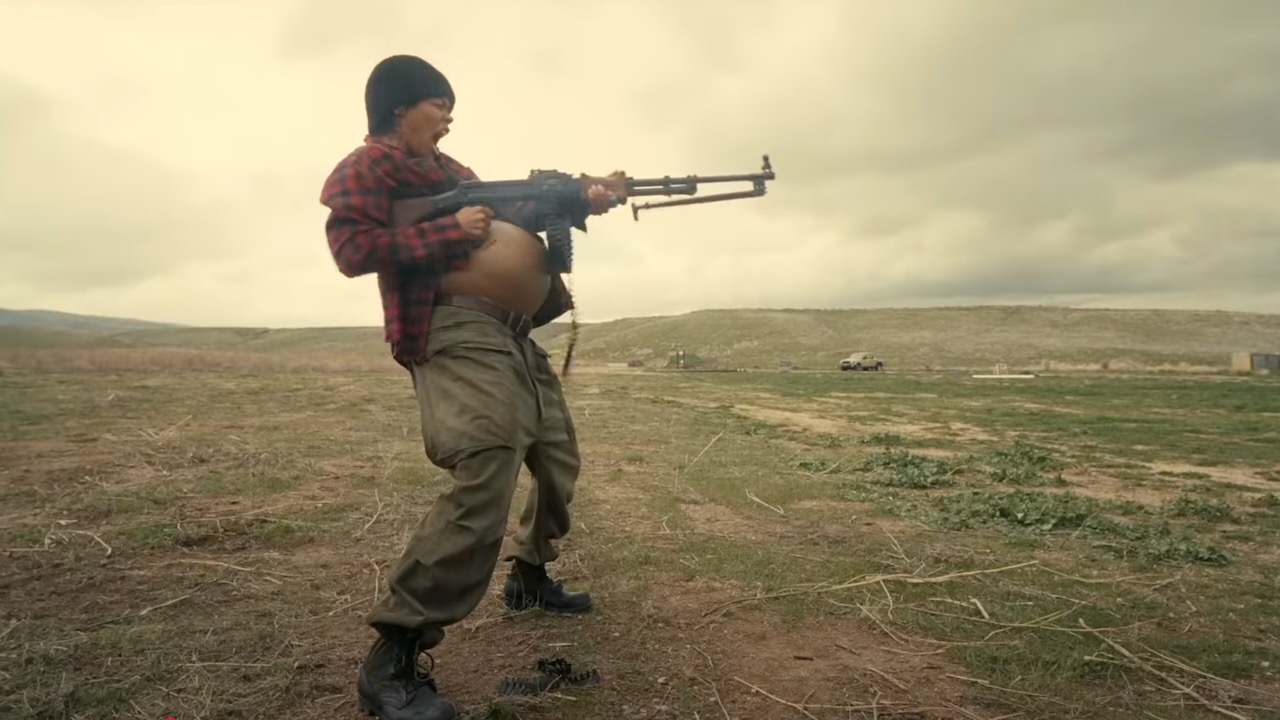
The bones of Pynchon’s original are still present: a family broken by state violence; a daughter growing up without a mother; a father caught between shame and reluctant resistance. In PTA’s feverish recasting of Vineland, Zoyd Wheeler becomes Bob Ferguson (Leonardo DiCaprio), a former “Rocket Man” revolutionary burning out the past in a haze of weed smoke. Frenesi Gates is reimagined as Perfidia Beverly Hills (Teyana Taylor), a revolutionary addicted to the sexual thrill of power. Prairie Wheeler morphs into Willa (Chase Infiniti — and like wow jeez that’s a Pynchonian name the young actress has there, isn’t it?). And villainous Brock Vond is warped into Colonel Lockjaw (Sean Penn), a grotesque embodiment of authoritarian menace. Timelines collapse into themselves, Reagan-era dread transposes into our own disturbed now. Vineland is set in 1984; in One Battle After Another, PTA shows that we’ve never really moved on from that dystopian year. PTA condenses Vineland’s sprawling flashbacks and absurd digressions into an action-forward narrative that’s far more linear yet equally dizzying. The result is enthralling.
The film’s plot might be distilled simply from its title. One Battle After Another follows the trajectory of most of Pynchon’s fiction: individual resistance to authoritarian evil. In PTA’s film, that resistance takes the form of the French 75, a loose clandestine revolutionary group to which Bob and his partner Perfidia once belonged. There’s really no retiring for French 75 agents though, and soon Willa is tangled in the same web her parents sought to sunder in their radical actions. Penn’s maniacal Colonel Lockjaw hunts her down. She’s on the run, and so is papa Bob.
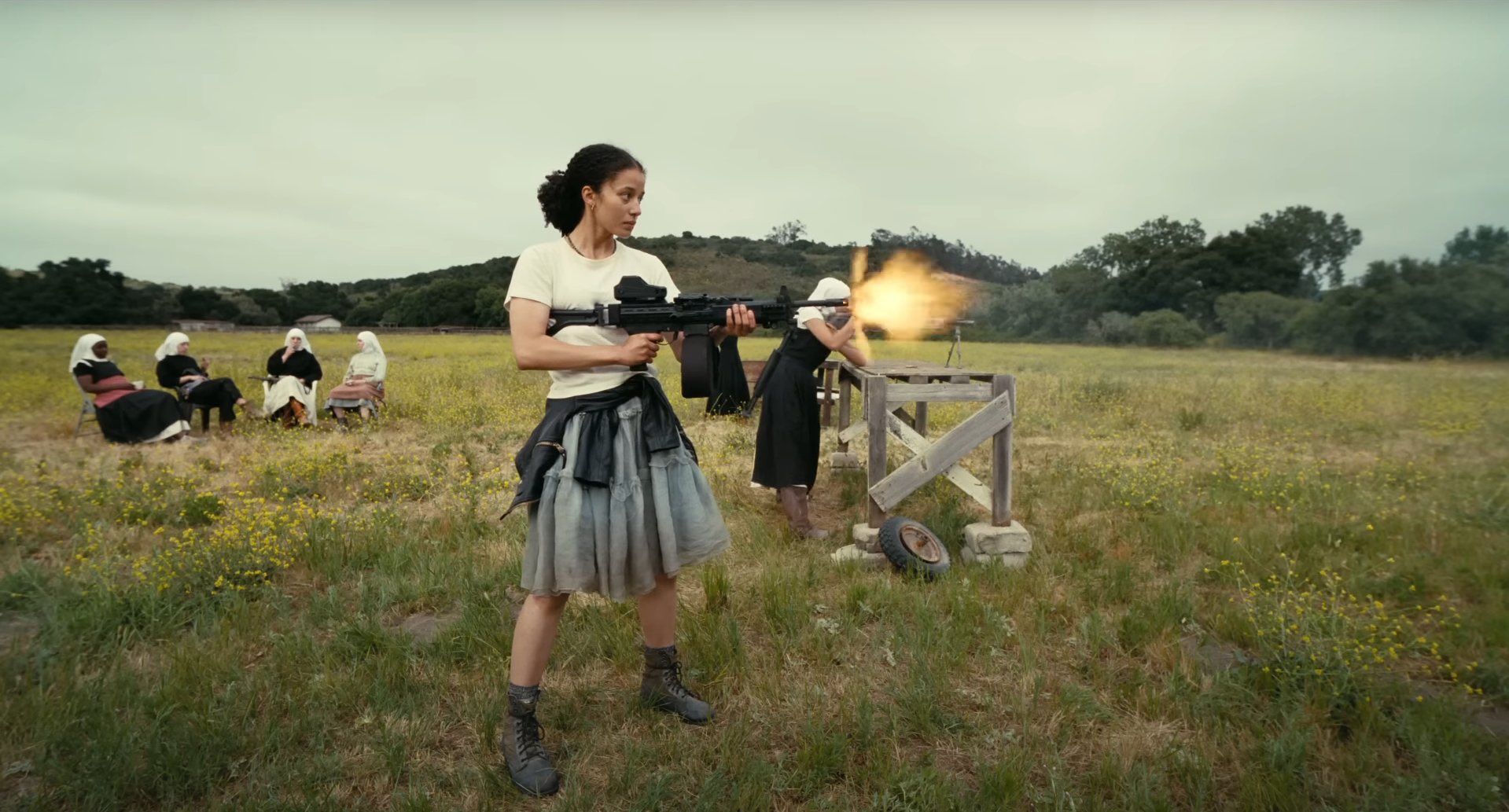
Pynchon’s novels frequently contrast Us vs Them systems — preterite vs. elect; misfits vs. authoritarians; freaks vs. the Man. And like Pynchon’s work, One Battle After Another shows the invisible overlapping and hierarchical confusions these Us/Them systems engender. The French 75’s sympathies directly correlate with the values of the immigrant community in Baktan Cross, the fictional sanctuary city Bob and Willa take refuge in. The de facto leader of these immigrants, Francisco (Benicio Del Toro), aids Bob in his fevered search for Willa. Francisco’s zen calm offers a counterbalance to Bob’s mania. Another Us group are the Sisters of the Brave Beaver (One Battle After another is crammed with Pynchonian vagina jokes), weed-growing nuns who offer Willa a brief safe harbor.
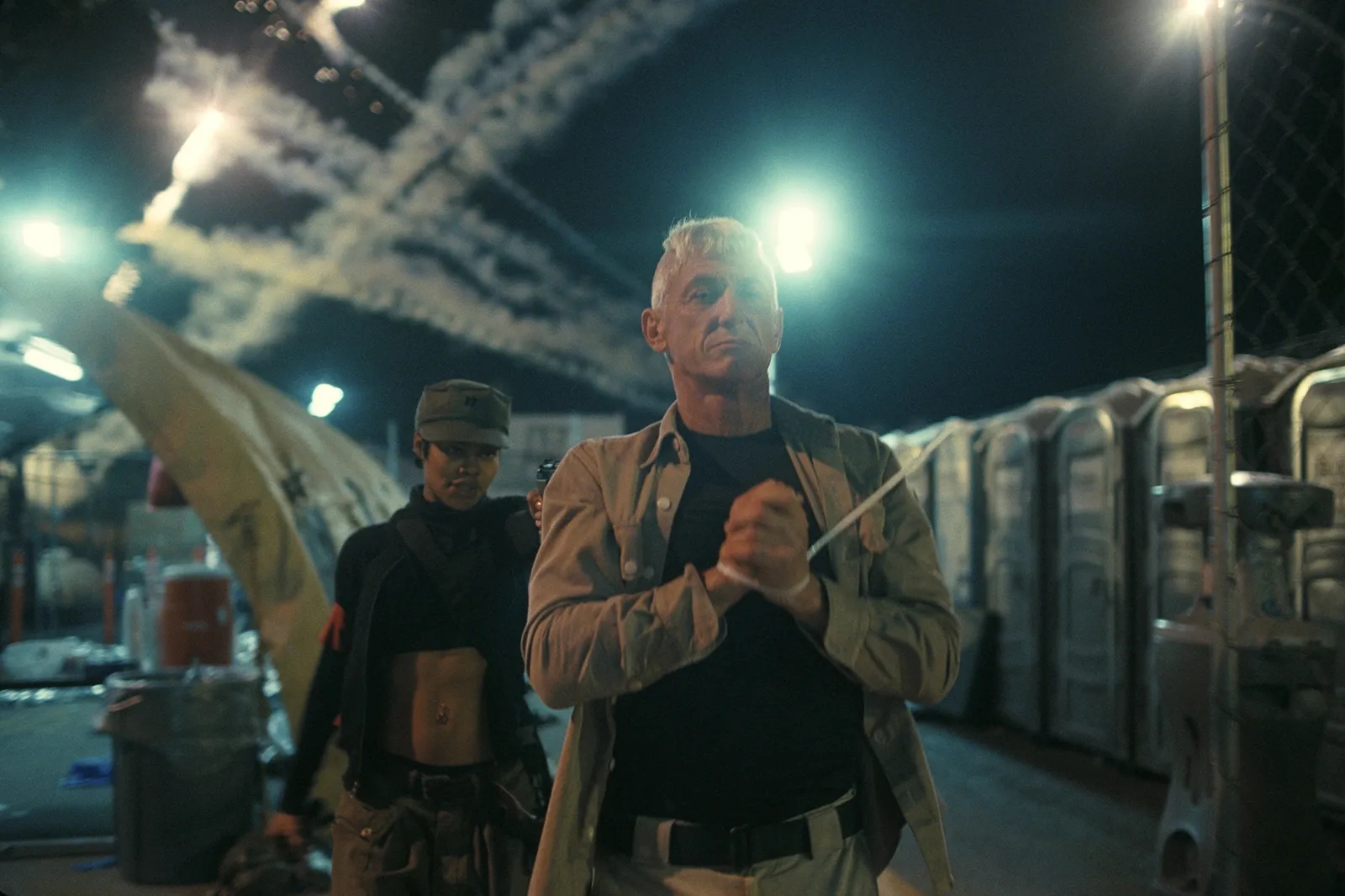
These disparate pockets of rebellion resist the tyranny of the modern racist capitalist system, embodied by Colonel Lockjaw and the military forces he commands (seemingly without any government oversight). We first meet Lockjaw running a migrant detention center — one of many timely PTA updates to Vineland — and his weird, forced, masochistic machismo plays out on the screen with a mix of menace and despair. For all his power and evil though, there’s yet another Them he isn’t part of. That would be the Christmas Adventurers Club, a shadowy cabal of elites on a racist mission to rid the world of “freaks.” Lockjaw would do quite literally anything to become a member of this club; his drive to to become even more Them propels the narrative while showing that Us-Them systems rely on hierarchies to perpetuate oppression.
One Battle After Another zigzags through a whirlwind of absurdity, suffocating paranoia, and frantic action. The film balances chaotic humor with a darker exploration of the emotional impulses that underlie power and attraction. Colonel Lockjaw’s obsessive fixation on Perfidia (arguably the film’s closest connection to Vineland) underscores the irrational power dynamics of obsession and control. PTA frames their relationship—along with Lockjaw’s obsession with Willa—as a twisted mirror reflecting the power imbalances that define both the personal and the political in Us-Them systems. PTA’s films have always explored systems of exploitation that grind people down and the outsiders who try to navigate them; One Battle After Another is, thus far, his most sustained, howling effort in this vein.
The film is gorgeous, too, as fans would expect from PTA. Michael Bauman’s cinematography conveys frenzied energy without sacrificing cohesion or clarity. There are several outstanding set pieces, including a beautiful sequence in which Bob does his best to keep up with a trio of skateboarders traversing rooftops at night, their figures silhouetted against the flames of a riot below. The film’s climactic three-car chase scene is particularly magnificent, its every twist and turn symbolizing not just physical pursuit, but deeper spirals of control, conflict, and paranoia. It made me physical ill. (That’s high praise.)
And while, yes, One Battle After Another is a bona fide action film, it’s still larded with strange little morsels that we’d expect from a PTA film — the image of Lockjaw licking his comb before taking it to his hair, his face contorted in anxious hope, or Bob, in his threadworn bathrobe, shoplifting a pair of cheap sunglasses. (Parenthetically, while the bathrobe is on my mind — Battle plays as a sinister inversion to The Big Lebowski. I will file the pair away for a future double feature.) One of the film’s funniest moments comes from Willa, who, despite being apparently subjugated by Lockjaw, nevertheless delivers the kind of crushing blow that can only come from a teen: “Why is your shirt so tight?” Indeed, Chase Infiniti’s portrayal of Willa is a revelation. In a movie crammed with paranoia and plot twists, she imbues in Willa a kind of moral force. She’s not an anchor exactly, because nothing is steady here. But maybe she’s the string you follow through the labyrinth.
One Battle After Another is almost three hours long, but it never drags, thanks to the tight direction and enthralling plot. Long-time PTA collaborator Jonny Greenwood’s score also keeps the film moving at a quick pace. The score is ever-present — something that usually irritates me in a film — but here the music provides emotional cohesion. It’s also just really fucking pretty. Frenetic drumming and altered pianos meet up with swelling strings that suggest sirens, banshees. Take “Mean Alley,” for example, which initially greets the ear as if the guitar is out of tune, but then coheres into beautiful dissonance. And although Greenwood’s wall-to-wall score leaves little room for the needle drops we might expect from a PTA joint, the film deploys Tom Petty’s “American Girl” in a moment of transcendent bliss that brought a tear to my eye.
Pynchon has always soundtracked his novels. Pynchonwiki gives close to 400 musical references for Vineland, but I don’t think any of these tracks ended up in One Battle After Another. My giving this data is a weak way of transitioning to the sentence, This is a film inspired by Vineland, not an adaptation of it. And while PTA captures the soul of the book, the vibe, or spirit, or whatever you like to call it, is decidedly different: darker, edgier, uglier. He captures the same strange humor and frustration of Vineland, but it’s amplified here with a chaotic energy that matches our current moment.
It’s also instructive to compare One Battle After Another to PTA’s earlier Pynchon adaptation, Inherent Vice. While Inherent Vice was a hazy sunsoaked journey through the disorienting aftereffects of the muddled sixties, One Battle After Another feels darker, more urgent, as if the timeline of history has compressed itself into an unyielding present. Both films deal with the fracturing of the American dream, but One Battle After Another does so with a sharper edge, drawing clearer political parallels. In some ways, PTA’s Inherent Vice is closer to Pynchon’s Vineland in tone and theme, less angular, more forgiving.
With both of his Pynchon films, PTA foregrounds a sweet final note, a belief in love as a sustaining force against Them. To borrow my favorite lines from Pynchon’s opus Gravity’s Rainbow: “They are in love. Fuck the war.” In his adaptation of Inherent Vice, PTA pulled a loose thread from the novel to neatly weave back into a prettier picture. He allows Doc Sportello to restore the heroin-addicted musician Coy to his family. One Battle offers a similarly fractured, imperfect restoration of family, a rewriting of rat-sins answered on the ghost of radio waves. He cleans up Pynchon’s messiness, but doesn’t sacrifice the deep danger that underwrites radical love.
One Battle After Another feels dangerously prescient, or, more accurately, a diagnosis of the big ugly now. In PTA’s Inherent Vice, there was an underlying fractured partnership between Us and Them; weirdo Doc Sportello tried to find some kind of brotherhood of man with The Man, Detective Bigfoot. No humanity can be extended to Lockjaw — not even from the club that will refuse him. They are unforgiving of any perceived impurity. The themes of mass surveillance, state violence, and detention resonate deeply in today’s climate. The recent death of Assata Shakur—possibly one inspiration for Perfidia Beverly Hills—adds a haunting layer to the film’s exploration of systemic oppression, the ways in which the state seeks to control and erase voices of resistance. The political urgency is palpable, and will undoubtedly alienate a large section of the genpop normies that Warner Brothers has heavily advertised the film to. Some folks will always root for Them.
But fuck Them. One Battle After Another is a triumph, a dizzying, chaotic masterpiece that never loses its grip on the present—one battle after another, all too real, all too important. See it on the biggest screen you can.
Our perceptual relationship with the world works because we trust prior stories. We could not fully perceive a tree if we did not know (because others have told us) that it is the product of a long growth process and that it does not grow overnight. This certainty is part of our “understanding” that a tree is a tree, and not a flower. We accept a story that our ancestors have handed down to us as being true, even though today we call these ancestors scientists.
No one lives in the immediate present; we link things and events thanks to the adhesive function of memory, both personal and collective (history and myth). We rely upon a previous tale when, in saying “I,” we do not question that we are the natural continuation of an individual who (according to our parents or the registry office) was born at that precise time, on that precise day, in that precise year, and in that precise place. Living with two memories (our individual memory, which enables us to relate what we did yesterday, and the collective memory, which tells us when and where our mother was born), we often tend to confuse them, as if we had witnessed the birth of our mother (and also Julius Caesar’s) in the same way we “witnessed” the scenes of our own past experiences.
This tangle of individual and collective memory prolongs our life, by extending it back through time, and appears to us as a promise of immortality. When we partake of this collective memory (through the tales of our elders or through books), we are like Borges gazing at the magical Aleph—the point that contains the entire universe: in the course of our lifetime we can, in a way, shiver along with Napoleon as a sudden gust of cold wind sweeps over Saint Helena, rejoice with Henry V over the victory at Agincourt, and suffer with Caesar as a result of Brutus’ betrayal.
And so it is easy to understand why fiction fascinates us so. It offers us the opportunity to employ limitlessly our faculties for perceiving the world and reconstructing the past. Fiction has the same function that games have. In playing, children learn to live, because they simulate situations in which they may find themselves as adults. And it is through fiction that we adults train our ability to structure our past and present experience.
From Umberto Eco’s lecture “Fictional Protocols,” part of Six Walks in the Fictional Woods.
“Togetherness,” by Thomas Pynchon was published in the vol. 16, no. 12 issue of Aerospace Safety in December 1960. The byline reads “Thomas H. Pynchon” (for Huggles, presumably).
I can’t remember which particular Surrealist I was googling when I learned about Gisèle Prassinos. I do know that it was just a few weeks ago, and I’ve had an interest in Surrealist art and literature since I was a kid, so I was a bit stunned that I’d never heard of her before now—strange, given the origin of her first publication. In 1934, when she was 14, Prassinos was “discovered” by André Breton, and the Surrealists delighted in what they called her “automatic writing.” (Prassinos would later reject that label, and go as far as to declare that she had never been a surrealist). Her first book, La Sauterelle arthritique (The Arthritic Grasshopper) was published just a year later.
Prassinos reading her work to the Surrealists; photograph by Man Ray
I somehow found a .pdf of one of her stories, “A Nice Family,” a bizarre little tale that runs on its own surreal mythology. The story struck me as simultaneously grandiose and miniature, dense but also skeletal. It was impossible. Surreal. I wanted more.
Luckily, just this spring Wakefield Press released The Arthritic Grasshopper: Collected Stories, 1934-1944, a new English translation of a 1976 compendium of Prassinos’s tales, Trouver sans checher. The translation is by Henry Vale and Bonnie Ruberg, whose introduction to the volume is a better review and overview than I can muster here. Ruberg offers a miniature biography, and shares details from her letters and visits with Prassinos. She situates Prassinos within the Surrealists’ gender biases: “For a young writer such as Prassinos, being involved with the surrealists would have meant gaining access to resources like publishers, but it also would have meant being fetishized and marginalized.” Ruberg characterizes Prassinos’s tales eloquently and accurately—no simple feat given the material’s utter strangeness:
Taken collectively, their effect is a piercing cackle, a complete disorientation, rather than an ethical lesson. The politics of these stories are absurdist. They upend the world by making children dangerous, by reanimating the dead, by letting the carefully tended domestic deform, foam, and melt. No social structure holds power in the world of these stories—not on the basis of gender, or nationality, or class. The force that reigns is chaos.
Let’s look at that reigning chaos.
In “The Sensitivity of Others,” one of the earliest tales in the volume, we get the sparest narrative action seemingly possible: A speaker walks forward. And yet dream-nightmare touches impinge on all sides and on all senses. The opening line shows a world that is never stable, and if monsters and other dangers lurk just on the margins of our narrator’s shifting path, so do wonders and the promise of strange knowledge. Here’s the tale in full:
I still have no idea what to make of the punchline there at the end, but those final images—a father, a faulty library, a power failure—hang heavy against the narrator’s trembling walk.
Many of Prassinos’s anti-fables conclude with such apparent non sequiturs, and yet the final lines can also cast a weird light back over the previous sentences. In “Photogenic Quality,” a dream-tale about the act of writing itself, the final line at first appears as sheer absurdity. A man receives a pencil from a child, whittles it into powder, blots the powder on paper, and throws the paper in the river (more things happen, too). The tale concludes with the man declaring, “Brass is made from copper and tin.” It’s possible to enjoy the absurdity here on its own; however, I think we can also read the last line as a kind of Abracadabra!, magic words that describe an almost alchemical synthesis—a synthesis much like the absurd modes of transformative writing that “Photogenic Quality” outlines.
You’ll see above one of Allan Kausch’s illustrations for The Arthritic Grasshopper. Kausch’s collages pointedly recall Max Ernst’s surreal 1934 graphic novel Une semaine de bonté (A Week of Kindness). Kausch’s work walks a weird line between horror and whimsy; images from old children’s books and magazines become chimerical figures, sometimes cute, sometimes horrific, and sometimes both. They’re lovely.
Surreal figures shift throughout the book—monks and kings, daughters and mothers, deep sea divers and knights and salesmen and talking horses—all slightly out of place, or, rather, all making new places. Even when Prassinos establishes a traditional space we might think we recognize—often a fairy trope—she warps its contours, shaping it into something else. “A Marriage Proposal,” with its unsuspecting title, opens with “Once upon a time” — but we are soon dwelling in impossibility: “the garter snake appeared in the doorway, arm in arm with the snail, who was slobbering with happiness.” Other stories, like “Tragic Fanaticism,” immediately condense fairy tales into pure images, leaving the reader to suss out connections. Here is that story’s opening line: “A black hole, a little old woman, animals.” At five pages, “Tragic Fanaticism” is one of the collection’s longer stories. It ends with a four line poem, sung by five red cats to the old woman: “Go home and burn / Darling / You’re the only one we’ll love / Trash Bin.”
I still have a number of stories to read in The Arthritic Grasshopper. I’ve enjoyed its tales most when taken as intermezzos between sterner (or compulsory) reading. There’s something refreshing in Prassinos’s illogic. In longer stretches, I find that I tire, get lazy—Prassinos’s imagery shifts quickly—there’s something even picaresque to the stories—and keeping up with its veering rhythms for tale after tale can be taxing. Better not to gobble it all up at once. In this sense, The Arthritic Grasshopper reminds me strongly of another recently-published volume of surreal, imagistic stories that I’ve been slowly consuming this year: The Complete Stories of Leonora Carrington. In their finest moments, both of these writers can offer new ways of looking at art, at narrative, at the world itself.
I described Prassinos’s tales as “anti-fables” above—a description that I think is accurate enough, as literary descriptions go—but that doesn’t mean there isn’t something that we can learn from them (although, to be very clear, I do not think literature has to offer us anything to learn). What Prassinos’s anti-fables do best is open up strange impossible spaces—there’s a kind of radical, amorphous openness here, one that might be neatly expressed in the original title to this newly-translated volume—Trouver sans checher—To Find without Seeking.
In her preface (titled “To Find without Seeking”) Prassinos begins with the question, “To find what?” Here is a question that many of us have been taught we must direct to all the literature we read—to interrogate it so that it yields moral instruction. Prassinos answers: “The spot where innocence rejoices, trembling as it first meets fear. The spot where innocence unleashes its ferocity and its monsters.” She goes on to describe a “true and complete world” where the “earth and water have no borders and each us can live there if we choose, in just the same way, without changing our names.” Her preface concludes by repeating “To find what?”, and then answering the question in the most perfectly (im)possible way: “In the end, the mind that doesn’t know what it knows: the free astonishing voice that speaks, faceless, in the night.” Prassinos’s anti-fables offer ways of reading a mind that doesn’t know what it knows, of singing along with the free faceless astonishing voice. Highly recommended.
[Ed. note–Biblioklept originally ran this review in August of 2017.]
Ann Quin’s third novel Passages (1969) ostensibly tells the story of an unnamed woman and unnamed man traveling through an unnamed country in search of the woman’s brother, who may or may not be dead.
The adverb ostensibly is necessary in the previous sentence, because Passages does not actually tell that story—or it rather tells that story only glancingly, obliquely, and incompletely. Nevertheless, that is the apparent “plot” of Passages.
Quin is more interested in fractured/fracturing voices here. Passages pushes against the strictures of the traditional novel, eschewing character and plot development in favor of pure (and polluted) perceptions. There’s something schizophrenic about the voices in Passages. Interior monologues turn polyglossic or implode into elliptical fragments.
Quin repeatedly refuses to let her readers know where they stand. Indeed, we’re never quite sure of even the novel’s setting, which seems to be somewhere in the Mediterranean. It’s full of light and sea and sand and poverty, and the “political situation” is grim. (The woman’s brother’s disappearance may or may not have something to do with the region’s political instability.)
Passage’s content might be too slippery to stick to any traditional frame, but Quin employs a rhetorical conceit that teaches her reader how to read her novel. The book breaks into four unnamed chapters, each around twenty-five pages long. The first and third chapters find us loose in the woman’s stream of consciousness. The second and fourth chapters take the form of the man’s personal journal. These sections contain marginal annotations, which might be meant to represent actual physical annotations, or perhaps mental annotations–the man’s stream of consciousness while he rereads his journal.
Quin’s rhetorical strategy pays off, particularly in the book’s Sadean climax. This (literal) climax occurs at a carnivalesque party in a strange mansion on a small island. We see the events first through the woman’s perception, and then through the man’s. But I’ve gone too long without offering any representative language. Here’s a passage from the woman’s section, just a few paragraphs before the climax. To set the stage a bit, simply know that the woman plays voyeur to a bizarre threesome:
Mirrors faced each other. As the two turned, approached. Slower in movement in the centre, either side of him, turning back in the opposite direction to their first movement. Contours of their shadows indistinct. The first mirror reflected in the second. The second in the first. Images within images. Smaller than the last, one inside the other. She lay on the floor, wrists tied together. She bent back over the chair. He raised the whip, flung into space.
Later, the man’s perception of events at the party both clarify and cloud the woman’s account. As you can see in the excerpt above, the woman frequently refuses to qualify her pronouns in a way that might stabilize identities for her reader. Such obfuscation often happens in the course of a sentence or two:
I ran on, knowing I was being followed. She came to the edge, jumped into expanding blueness, ultra violet tilted as she went towards the beach. We walked in silence.
The woman’s I becomes a She and then merges into a We. The other half of that We is a He, the follower (“He later threw the bottle against the rocks”), but we soon realize that this He is not the male protagonist, but simply another He that the woman has taken as a one-time lover.
The woman frequently takes off somewhere to have sex with another man. At times the sex seems to be part of her quest to find her brother; other times it’s simply part of the novel’s dark, erotic tone. The man is undisturbed by his lover’s faithlessness. He is passive, depressive, and analytical, while she is manic and exuberant. Late in the novel he analyzes himself:
How many hours I waste lying in bed thinking about getting up. I see myself get up, go out, move, drink, eat, smile, turn, pay attention, talk, go up, go down. I am absent from that part, yet participating at the same time. A voyeur in all senses, in my actions, non-actions. What a delight it might be actually to get up without thinking, and then when dressed look back and still see myself curled up fast asleep under the blankets.
The man longs for a kind of split persona, an active agent to walk the world who can also gaze back at himself dormant, passive.
This motif of perception and observation echoes throughout Passages. Consider one of the man’s journal entries from early in the book:
Above, I used an image instead of text to give a sense of what the journal entries and their annotations look like. Here, the man’s annotation is a form of self-observation, self-analysis.
Other annotations dwell on describing myths or artifacts (often Greek or Talmudic). In a “December” entry, the man’s annotation is far lengthier than the text proper. The main entry reads:
I am on the verge of discovering my own demoniac possibilities and because of this I am conscious I am not alone with myself.
Again, we see the fracturing of identity, consciousness as ceaseless self-perception. The annotation is far more colorful in contrast:
An ancient tribe of the Kouretes were sorcerers and magicians. They invented statuary and discovered metals, and they were amphibious and of strange varieties of shape, some like demons, some like men, some like fishes, some like serpents, and some had no hands, some no feet, some had webs between their fingers like gees. They were blue-eyed and black-tailed. They perished struck down by the thunder of Zeus or by the arrows of Apollo.
Quin’s annotations dare her reader to make meaning—to put the fragments together in a way that might satisfy the traditional expectations we bring to a novel. But the meaning is always deferred, always slips away. Passages collapses notions of center and margin. As its title suggests, this is a novel about liminal people, liminal places.
The results are wonderfully frustrating. Passages is abject, even lurid at times, but also rich and even dazzling in moments, particularly in the woman’s chapters, which read like pure perception, untethered by traditional narrative expectations like causation, sequence, and chronology.
As such, Passages will not be every reader’s cup of tea. It lacks the sharp, grotesque humor of Quin’s first novel, Berg, and seems dead set at every angle to confound and even depress its readers. And yet there’s a wild possibility in Passages. In her introduction to the new edition of Passages recently published by And Other Stories, Claire-Louise Bennett tries to capture the feeling of reading Quin’s novel:
It’s difficult to describe — it’s almost like the omnipotent curiosity one burns with as an adolescent — sexual, solipsistic, melancholic, fierce, hungry, languorous — and without limit.
Bennett, whose anti-novel Pond bears the stamp of Quin’s influence, employs the right adjectives here. We could also add disorienting, challenging, abject and even distressing. While clearly influenced by Joyce and Beckett, Quin’s writing in Passages seems closer to William Burroughs’s ventriloquism and the hollowed-out alienation of Anna Kavan’s early work. Passages also points towards the writing of Kathy Acker, Alasdair Gray, and João Gilberto Noll, among others. But it’s ultimately its own weird thing, and half a century after its initial publication it still seems ahead of its time. Passages is clearly Not For Everyone but I loved it. Recommended.
[Ed. note–Biblioklept originally posted this review in May 2021.]
At the Uffizi, in Florence, is this odd painting by Titian. For a while, no one knew who the artist was. First the work was attributed to Leonardo and then to Sebastiano del Piombo. Though there’s still no absolute proof, today the critics are inclined to credit it to Titian. In the painting we see a man, still young, with long dark curly hair and a beard and mustache perhaps slightly tinged with red, who, as he poses, gazes off toward the right, probably toward a window that we can’t see, but still a window that somehow one imagines is closed, yet with curtains open or parted enough to allow a yellow light to filter into the room, a light that in time will become indistinguishable from the varnish on the painting.
The young man’s face is beautiful and deeply thoughtful. He’s looking toward the window, if he’s looking anywhere, though probably all he sees is what’s happening inside his head. But he’s not contemplating escape. Perhaps Titian told him to turn like that, to turn his face into the light, and the young man is simply obeying him. At the same time, one might say that all the time in the world stretches out before him. By this I don’t mean that the young man thinks he’s immortal. On the contrary. The young man knows that life renews itself and that the art of renewal is often death. Intelligence is visible in his face and his eyes, and his lips are turned down in an expression of sadness, or maybe it’s something else, maybe apathy, none of which excludes the possibility that at some point he might feel himself to be master of all the time in the world, because true as it is that man is a creature of time, theoretically (or artistically, if I can put it that way) time is also a creature of man.
In fact, in this painting, time — sketched in invisible strokes — is a kitten perched on the young man’s hands, his gloved hands, or rather his gloved right hand which rests on a book: and this right hand is the perfect measure of the sick man, more than his coat with a fur collar, more than his loose shirt, perhaps of silk, more than his pose for the painter and for posterity (or fragile memory), which the book promises or sells. I don’t know where his left hand is.
How would a medieval painter have painted this sick man? How would a non-figurative artist of the twentieth century have painted this sick man? Probably howling or wailing in fear. Judged under the eye of an incomprehensible God or trapped in the labyrinth of an incomprehensible society. But Titian gives him to us, the spectators of the future, clothed in the garb of compassion and understanding. That young man might be God or he might be me. The laughter of a few drunks might be my laughter or my poem. That sweet Virgin is my friend. That sad-faced Virgin is the long march of my people. The boy who runs with his eyes closed through a lonely garden is us.
Tea heads are not like junkies. A junkie hands you the money, takes his junk and cuts. But tea heads don’t do things that way. They expect the peddler to light them up and sit around talking for half an hour to sell two dollars’ worth of weed. If you come right to the point, they say you are a “bring down.” In fact, a peddler should not come right out and say he is a peddler. No, he just scores for a few good “cats” and “chicks” because he is viperish. Everyone knows that he himself is the connection, but it is bad form to say so. God knows why. To me, tea heads are unfathomable.
There are a lot of trade secrets in the tea business, and tea heads guard these supposed secrets with imbecilic slyness. For example, tea must be cured, or it is green and rasps the throat. But ask a tea head how to cure weed and he will give you a sly, stupid look and come-on with some double-talk. Perhaps weed does affect the brain with constant use, or maybe tea heads are naturally silly.
The tea I had was green so I put it in a double boiler and set the boiler in the oven until the tea got the greenish-brown look it should have. This is the secret of curing tea, or at least one way to do it.
Tea heads are gregarious, they are sensitive, and they are paranoiac. If you get to be known as a “drag” or a “bring down,” you can’t do business with them. I soon found out I couldn’t get along with these characters and I was glad to find someone to take the tea off my hands at cost. I decided right then I would never push any more tea.
In 1937, weed was placed under the Harrison Narcotics Act. Narcotics authorities claim it is a habit-forming drug, that its use is injurious to mind and body, and that it causes the people who use it to commit crimes. Here are the facts: Weed is positively not habit-forming. You can smoke weed for years and you will experience no discomfort if your supply is suddenly cut off. I have seen tea heads in jail and none of them showed withdrawal symptoms. I have smoked weed myself off and on for fifteen years, and never missed it when I ran out. There is less habit to weed than there is to tobacco. Weed does not harm the general health. In fact, most users claim it gives you an appetite and acts as a tonic to the system. I do not know of any other agent that gives as definite a boot
to the appetite. I can smoke a stick of tea and enjoy a glass of California sherry and a hash house meal.
I once kicked a junk habit with weed. The second day off junk I sat down and ate a full meal. Ordinarily, I can’t eat for eight days after kicking a habit.
Weed does not inspire anyone to commit crimes. I have never seen anyone get nasty under the influence of weed. Tea heads are a sociable lot. Too sociable for my liking. I cannot understand why the people who claim weed causes crime do not follow through and demand the outlawing of alcohol. Every day, crimes are committed by drunks who would not have committed the crime sober.
There has been a lot said about the aphrodisiac effect of weed. For some reason, scientists dislike to admit that there is such a thing as an aphrodisiac, so most pharmacologists say there is “no evidence to support the popular idea that weed possesses aphrodisiac properties.” I can say definitely that weed is an aphrodisiac and that sex is more enjoyable under the influence of weed than without it. Anyone who has used good weed will verify this statement.
You hear that people go insane from using weed. There is, in fact, a form of insanity caused by excessive use of weed. The condition is characterized by ideas of reference. The weed available in the U.S. is evidently not strong enough to blow your top on and weed psychosis is rare in the States. In the Near East, it is said to be common. Weed psychosis corresponds more or less to delirium tremens and quickly disappears when the drug is withdrawn. Someone who smokes a few cigarettes a day is no more likely to go insane than a man who takes a few cocktails before dinner is likely to come down with the D.T.’s.
One thing about weed. A man under the influence of weed is completely unfit to drive a car. Weed disturbs your sense of time and consequently your sense of spatial relations. Once, in New Orleans, I had to pull over to the side of a road and wait until the weed wore off. I could not tell how far away anything was or when to turn or put on the brakes for an intersection.
On another distant December when the house was inaugurated, he had seen from that terrace the line of the hallucinated isles of the Antilles which someone pointed out to him in the showcase of the sea, he had seen the perfumed volcano of Martinique, over there general, he had seen the tuberculosis hospital, the gigantic black man with a lace blouse selling bouquets of gardenias to governors’ wives on the church steps, he had seen the infernal market of Paramaribo, there general, the crabs that came out of the sea and up through the toilets, climbing up onto the tables of ice cream parlors, the diamonds embedded in the teeth of black grandmothers who sold heads of Indians and ginger roots sitting on their safe buttocks under the drenching rain, he had see the solid gold cows on Tanaguarena beach general, the blind visionary of La Guayra who charged two reals to scare off the blandishments of death with a one-string violin, he had seen Trinidad’s burning August, automobiles going the wrong way, the green Hindus who shat in the middle of the street in front of their shops with genuine silkworm shirts and mandarins carved from the whole tusk of an elephant, he had seen Haiti’s nightmare, its blue dogs, the oxcart that collected the dead off the streets at dawn, he had seen the rebirth of Dutch tulips in the gasoline drums of Curacao, the windmill houses with roofs built for snow, the mysterious ocean liner that passed through the center of the city among the hotel kitchens, he had seen the stone enclosure of Cartagena de Indias, its bay closed off by a chain, the light lingering on the balconies, the filthy horses of the hacks who still yawned for the viceroys’ fodder, its smell of shit general sir, how marvelous, tell me, isn’t the world large, and it was, really, and not just large but insidious, because if he went up to the house on the reefs in December it was not to pass the time with those refugees whom he detested as much as his own image in the mirror of misfortune but to be there at the moment of miracles when the December light came out, mother—true and he could see once more the whole universe of the Antilles from Barbados to Veracruz, and then he would forget who had the double-three piece and go to the overlook to contemplate the line of islands as lunatic as sleeping crocodiles in the cistern of the sea, and contemplating the islands he evoked again and relived that historic October Friday when he left his room at dawn and discovered that everybody in the presidential palace was wearing a red biretta, that the new concubines were sweeping the parlors and changing the water in the cages wearing red birettas, that the milkers in the stables, the sentries in their boxes, the cripples on the stairs and the lepers in the rose beds were going about with the red birettas of a carnival Sunday, so he began to look into what had happened to the world while he was sleeping for the people in his house and the inhabitants of the city to be going around wearing red birettas and dragging a string of jingle bells everywhere, and finally he found someone to tell him the truth general sir, that some strangers had arrived who gabbled in funny old talk because they made the word for sea feminine and not masculine, they called macaws poll parrots, canoes rafts, harpoons javelins, and when they saw us going out to greet them and swim around their ships they climbed up onto the yardarms and shouted to each other look there how well-formed, of beauteous body and fine face, and thick-haired and almost like horsehair silk, and when they saw that we were painted so as not to get sunburned they got all excited like wet little parrots and shouted look there how they daub themselves gray, and they are the hue of canary birds, not white nor yet black, and what there be of them, and we didn’t understand why the hell they were making so much fun of us general sir since we were just as normal as the day our mothers bore us and on the other hand they were decked out like the jack of clubs in all that heat, which they made feminine the way Dutch smugglers do, and they wore their hair like women even though they were all men and they shouted that they didn’t understand us in Christian tongue when they were the ones who couldn’t understand what we were shouting, and then they came toward us in their canoes which they called rafts, as we said before, and they were amazed that our harpoons had a shad bone for a tip which they called a fishy tooth, and we traded everything we had for these red birettas and these strings of glass beads that we hung around our necks to please them, and also for these brass bells that can’t be worth more than a penny and for chamber pots and eyeglasses and other goods from Flanders, of the cheapest sort general sir, and since we saw that they were good people and men of good will we went on leading them to the beach without their realizing it, but the trouble was that among the I’ll swap you this for that and that for the other a wild motherfucking trade grew up and after a while everybody was swapping his parrots, his tobacco, his wads of chocolate, his iguana eggs, everything God ever created, because they took and gave everything willingly, and they even wanted to trade a velvet doublet for one of us to show off in Europeland, just imagine general, what a wild affair, but he was so confused that he could not decide whether that lunatic business came within the incumbency of his government, so he went back to his bedroom, opened the window that looked out onto the sea so that perhaps he might discover some new light to shed on the mix-up they had told him about, and he saw the usual battleship that the marines had left behind at the dock, and beyond the battleship, anchored in the shadowy sea, he saw the three caravels.
From Gabriel García Márquez’s The Autumn of the Patriarch in translation by Gregory Rabassa.
translated by Donald Gardner and Suzanne Jill Levine with collaboration by Infante
I remember when I was my husband’s fiancée. No, I’m lying, I wasn’t engaged yet, but he used to come and invite me out to the movies or take a walk and the day came when he invited me home to meet his family. It was Christmas Eve and it was already late, about eight o’clock, when he came to pick me up, and I was already beginning to think he wouldn’t come and everybody in the building rushed to their balconies to see us and my mother didn’t go to the balcony, because she knew they were all looking and she was very proud of me because my fiancé was rich and because he’d come to pick me up in a convertible to take me to dinner in his home and she told me, “Everybody in the neighborhood has seen him, child. He’ll have to marry you now. See that you don’t disappoint us” and I remember how disgusted I felt with my mother. It was Christmas Eve but it was very hot and I felt very distracted because I had put on the only presentable dress I had, a very summery one, and to show I had put it on for a purpose I said to my fiancé as soon as I got to the car, “It’s really hot, Ricardo,” and he said, “Yes, extremely. Would you like the top down?” He was very considerate and courteous and so kind.
When we got to his house I felt very good, because everyone was dressed informally, although the house was a very snazzy one in the Country Club and his father was delighted to have me and wanted to teach me to play golf the next day and we decided to eat in the garden though we drank our cocktails indoors. I felt very good with Arturo too, that’s Ricardo’s brother who was studying medicine, and with their mother who was very young and beautiful, a bit like a Cuban Myrna Loy, very distinguished-looking, and with Ricardo’s father who was tall and handsome and never stopped looking at me the whole evening. I had had a little to drink and we were sitting in the living room, talking and waiting for the turkey to be golden roasted, and Ricardo’s father invited me to go on a tour of the kitchen. I remember I didn’t feel well and that Ricardo’s father gripped me tightly by the arm as we went to the kitchen and as the house was half in darkness because of the Christmas tree the brilliant, almost white, light of the kitchen bothered me. I went and looked at the turkey and then I saw the girl who had brought us our drinks and who helped the chef (they were very rich and had a chef instead of a woman to cook for them) and then I saw she wasn’t old and I remembered that Ricardo’s mother had said something about her not being very experienced and I saw her in the light of the kitchen, as she was moving between the table and the sink and the refrigerator with the salads and she never once looked at us and I thought that her face was familiar and I saw that she was quite young and it was then that I realized she was a girl who had been at school with me in my pueblo before I came with my family to Havana and whom I hadn’t seen for ten years. She was so old, doctor, so worn out and she was the same age as me, exactly the same age and we had played together when we were girls and we were very good friends and both of us had a crush on Jorge Negrete and Gregory Peck and we used to sit out at night on the steps of my house and make plans for when we were grown up and I felt so uncomfortable that I couldn’t say hello to her, because it would make her feel so bad, and I had to leave the kitchen. Then, when I was in the living room again, I just about went back to the kitchen to say hello, because I thought I hadn’t said hello to her because I was afraid Ricardo’s family would see that I was from the country and had been very poor. But I didn’t go.
The meal took a very long time coming, I don’t know how long: something had happened to the turkey and we went on drinking and then Ricardo’s brother wanted to show me all around the house and first of all I went to see Ricardo’s room and then his brother’s room and I don’t know why but I went into the bathroom and the curtain of the shower was drawn and Ricardo’s brother said, “Don’t look,” and I was so curious I opened the curtain and looked and there in the shower, drenched in dirty water, was a skeleton that still had bits of flesh on it, a human skeleton, and Ricardo’s brother said, “I’m cleaning it!” I don’t know how I managed to get out of the bathroom nor how I went down the stairs nor how I managed to sit at the table in the patio to eat. All I remember is that Ricardo’s brother took me by the hand and kissed me and I kissed him and then he helped me across the dark room.
In the patio everything was very pretty, very green because of the lawn and beautifully lit up and the table was very well arranged with a very expensive tablecloth and they served me first because Ricardo’s mother insisted on it. And what I did was to look at the meat, the pieces of turkey, very well cooked, almost burnt-looking in the brown gravy, and put my knife and fork across my plate, lower my hands and start crying. I spoiled their Christmas for them, these people who were so kind and friendly, and I returned home worn out and so sad and quiet that not even my mother heard me come in.