“This Schedule In Effect July 5th, 1922” — The Great Gatsby’s House Guests

In Chapter 4 of F. Scott Fitzgerald’s The Great Gatsby, narrator Nick Carraway recounts the names of the rich, shallow, parasitic guests who attended Gatsby’s parties. Nick tells us the list comes from “an old time-table” of names he originally recorded in July 5th—significantly, the day after Independence Day: the day after the hopes and dreams of a new country. From the chapter—-

Once I wrote down on the empty spaces of a time-table the names of those who came to Gatsby’s house that summer. It is an old time-table now, disintegrating at its folds, and headed “This schedule in effect July 5th, 1922.” But I can still read the gray names, and they will give you a better impression than my generalities of those who accepted Gatsby’s hospitality and paid him the subtle tribute of knowing nothing whatever about him.

From East Egg, then, came the Chester Beckers and the Leeches, and a man named Bunsen, whom I knew at Yale, and Doctor Webster Civet, who was drowned last summer up in Maine. And the Hornbeams and the Willie Voltaires, and a whole clan named Blackbuck, who always gathered in a corner and flipped up their noses like goats at whosoever came near. And the Ismays and the Chrysties (or rather Hubert Auerbach and Mr. Chrystie’s wife), and Edgar Beaver, whose hair, they say, turned cotton-white one winter afternoon for no good reason at all.

Clarence Endive was from East Egg, as I remember. He came only once, in white knickerbockers, and had a fight with a bum named Etty in the garden. From farther out on the Island came the Cheadles and the O. R. P. Schraeders, and the Stonewall Jackson Abrams of Georgia, and the Fishguards and the Ripley Snells. Snell was there three days before he went to the penitentiary, so drunk out on the gravel drive that Mrs. Ulysses Swett’s automobile ran over his right hand. The Dancies came, too, and S. B. Whitebait, who was well over sixty, and Maurice A. Flink, and the Hammerheads, and Beluga the tobacco importer, and Beluga’s girls.

From West Egg came the Poles and the Mulreadys and Cecil Roebuck and Cecil Schoen and Gulick the state senator and Newton Orchid, who controlled Films Par Excellence, and Eckhaust and Clyde Cohen and Don S. Schwartze (the son) and Arthur McCarty, all connected with the movies in one way or another. And the Catlips and the Bembergs and G. Earl Muldoon, brother to that Muldoon who afterward strangled his wife. Da Fontano the promoter came there, and Ed Legros and James B. (“Rot-Gut.”) Ferret and the De Jongs and Ernest Lilly — they came to gamble, and when Ferret wandered into the garden it meant he was cleaned out and Associated Traction would have to fluctuate profitably next day.

A man named Klipspringer was there so often and so long that he became known as “the boarder.”— I doubt if he had any other home. Of theatrical people there were Gus Waize and Horace O’donavan and Lester Meyer and George Duckweed and Francis Bull. Also from New York were the Chromes and the Backhyssons and the Dennickers and Russel Betty and the Corrigans and the Kellehers and the Dewars and the Scullys and S. W. Belcher and the Smirkes and the young Quinns, divorced now, and Henry L. Palmetto, who killed himself by jumping in front of a subway train in Times Square.

Benny McClenahan arrived always with four girls. They were never quite the same ones in physical person, but they were so identical one with another that it inevitably seemed they had been there before. I have forgotten their names — Jaqueline, I think, or else Consuela, or Gloria or Judy or June, and their last names were either the melodious names of flowers and months or the sterner ones of the great American capitalists whose cousins, if pressed, they would confess themselves to be.

In addition to all these I can remember that Faustina O’brien came there at least once and the Baedeker girls and young Brewer, who had his nose shot off in the war, and Mr. Albrucksburger and Miss Haag, his fiancee, and Ardita Fitz-Peters and Mr. P. Jewett, once head of the American Legion, and Miss Claudia Hip, with a man reputed to be her chauffeur, and a prince of something, whom we called Duke, and whose name, if I ever knew it, I have forgotten.

All these people came to Gatsby’s house in the summer.

Great American Nude — Tom Wesselmann

Mark Twain’s Fourth of July Speech in Keokuk, Iowa July 3, 1886

Mark Twain’s Fourth of July speech, delivered in Keokuk, Iowa, 1886—

Ladies and gentlemen: I little thought that when the boys woke me with their noise this morning that I should be called upon to add to their noise. But I promise not to keep you long. You have heard all there is to hear on the subject, the evidence is all in and all I have to do is to sum up the evidence and deliver the verdict. You have heard the declaration of independence with its majestic ending, which is worthy to live forever, which has been hurled at the bones of a fossilized monarch, old King George the III, who has been dead these many years, and which will continue to be hurled at him annually as long as this republic lives. You have heard the history of the nation from the first to the last–from the beginning of the revolutionary was, past the days of its great general, Grant, told in eloquent language by the orator of the day. All I have to do is to add the verdict, which is all that can be added, and that is, ‘It is a successful day.’ I thank the officers of the day that I am enabled to once more stand face to face with the citizens that I met thirty years ago, when I was a citizen of Iowa, and also those of a later generation. In the address to-day, I have not heard much mention made of the progress of these last few years–of the telegraph, telephone, phonograph, and other great inventions. A poet has said, ‘Better fifty years of England than all the cycles of Cathay,’ but I say ‘Better this decade than the 900 years of Methuselah.’ There is more done in one year now than Methuselah ever saw in all his life. He was probably asleep all those 900 years. When I was here thirty years ago there were 3,000 people here and they drank 3,000 barrels of whisky a day, and they drank it in public then. I know that the man who makes the last speech on an occasion like this has the best of the other speakers, as he has the last word to say, which falls like a balm on the audience–though this audience has not been bored to-day–and though I can’t say that last word, I will do the next best thing I can, and that is to sit down.

(More).

Girl Reading — Camille Corot

Roberto Bolaño’s Powers of Horror

    Scenes of Rape and Murder, Francisco Goya
  • In Powers of Horror philosopher Julia Kristeva describes the idea with which she’s most closely identified, the abject, the intense horror our subjective psychology—and our bodies—experience when faced with corporeal reality: the edges of our body: filth, vomit, shit, blood, death: the me that is not me. Breakdown of subject and object: abject.
  • Julia Kristeva shows up as a character, a phantom from a photograph in Roberto Bolaño’s story “Labyrinth,” collected in The Secret of Evil, new from New Directions.
  • (Can there be a more Bolañoesque title than “Labyrinth”?)
  • This is ostensibly a review of that Bolaño collection, but I’ll be riffing on some other things.
  • Bolaño created his own genre. His oeuvre, piecemeal and posthumous at times, is nevertheless a complete fiction or discourse of its own. Think of the Bolañoverse like Middle Earth, like Yoknapatawpha County, like dark Narnia with no Aslan to redeem it.
  • The Bolañoverse is abject. Consider the pile of bodies that heap like rubbish in “The Part About the Crimes,” the cruel center of 2666—has ever a book repeated the phrase “vaginally and anally raped” so many times?
  • Kristeva, in Powers of Horror:

The corpse, seen without God and outside of science, is the utmost of abjection. It is death infecting life. Abject. It is something rejected from which one does not part, from which one does not protect oneself as from an object. Imaginary uncanninness and real threat, it beckons to us and ends up engulfing us.

It is thus not lack of cleanliness or health that causes abjection but what disturbs identity, system, order. What does not respect borders, positions, rules. The in-between, the ambiguous, the composite. The traitor, the liar, the criminal with a good conscience, the shameless rapist, the killer who claims he is a savior . . .  Any crime, because it draws attention to the fragility of the law, is abject, but premeditated crime, cunning murder, hypocritical revenge are even more so because they heighten the display of such fragility.

    Sex Murder, Otto Dix
  • But I promised to remark upon The Secret of Evil; I used the term “review” even.

A few things:

It’s a beautiful book (I mean the physical book itself; the cover, the design). The name is perfect.

Much of what’s collected here is perhaps unfinished—-scraps, riffs, bits of tales, sketches.

But also:

Much of what’s here is finished, or, more to the point, much of what’s here—scratch that, all of what’s collected in The Secret of Evil—fits into the Bolañoverse, fleshes it out, or stretches it, or condenses it maybe (let me have my paradoxes, will you?).

  •  Bolaño’s friend (and literary executor) Ignacio Echevarría puts it aptly in his introduction to The Secret of Evil:

 Bolaño’s work as a whole remains suspended over the abysses that it dares to sound. All his narratives, not just The Secret of Evil, seem to be governed by a poetics of inconclusiveness. The eruption of horror seems to determine the interruption of the storytelling; or perhaps it is the other way around: the interruption of the telling suggests the imminence of horror.

  • I have been slowly, slowly rereading my way through 2666, edging my way into it in the latest of hours. I’m nearing the end, or the end of “The Part About Archimboldi,” and what I find most remarkable upon rereading is how precise, how tight it seems this time, how each book seems to answer to the other. (Take, for instance the female politician who, at the end of “The Part About the Crimes,” seems to peer through a strange mirror into the future (past?) to see the English critic Norton, who, in “The Part About the Critics,” in turn gazes into (the same?) mirror at a woman—not herself but surely the politician. Or take another instance: The visitations to madhouses made by peripheral characters to even more peripheral characters: artists, suspects, lovers, poets, teachers. Or take all the abysses. Or the labyrinths. Or mirrors. Or dreams. Or murders. Maybe I’m tipping into a simple recitation of motifs and themes now).
  • But no, what I want to remark on is how The Secret of Evil is part and parcel of the  Bolañoverse, how it answers backward and forward and throughout  Bolaño’s “poetics of inconclusiveness,” his “eruption[s] of horror.” Fragments like “The Secret of Evil” and “Crimes,” with their journalist heroes and noir lighting seem to dance around the same central mysteries that pulse through 2666. The strange literary criticism of “Vagaries of the Literature of Doom” and “Scholars of Sodom” answers not only to “The Part About the Critics,” but to the entire course of  Bolaño’s work as well. And continuing—
  • Of course Arturo Belano appears in The Secret of Evil, as does his erstwhile partner Ulisses Lima. How could they not? They roam the Bolañoverse beyond their own narrative proper, The Savage Detectives (that is what detectives do), even popping up (unnamed) in 2666 where they father (both of them figuratively and one of them literally) that other savage detective, Lalo Cura.
  • And then (back to The Secret of Evil) there’s “The Colonel’s Son,” a sketch of a zombie film, a B-movie, shades of Robert Rodriguez’s Planet Terror (recall that Rodriguez is given a vague credit for a surreal porno horror film that plays in “The Part About Fate” in 2666). “The Colonel’s Son” shows  Bolaño’s poetics of inconclusiveness at their sharpest. Our narrator describes a terrible film he sees on late night TV, only he misses the beginning, so we are without context, without rationale or reason for the awful onslaught that happens. There’s a labyrinth, 0f course, a dark twisting complex of passageways that hide secrets under a military facility, and then a twin labyrinth, a sewer system. There’s love, familial and romantic. There are Kristevan bodies, zombies, corpses infected with life (or is it the other way around). There’s horrific indeterminancy.
  • I remarked on Bolaño’s powers of horror back in the spring, making a bizarre argument that 2666 was somehow a werewolf story. 2666 and the Bolañoverse in general is crawling with all kinds of monsters though.

    The Murderer, Franz Stuck
  • I’ve used the word Lynchian repeatedly when writing about Bolaño, in reference to the American film director David Lynch—whose name is in fact directly evoked in 2666, in “The Part About Fate.” In his essay “David Lynch Keeps His Head,” David Foster Wallace provides a succinct description of David Lynch’s powers of horror, a description that I believe applies to Bolaño as well:

Characters are not themselves evil in Lynch movies—evil wears them. This point is worth emphasizing. Lynch’s movies are not about monsters (i.e. people whose intrinsic natures are evil) but about hauntings, about evil as environment, possibility, force. This helps explain Lynch’s constant deployment of noirish lighting and eerie sound-carpets and grotesque figurants: in his movies’ world, a kind of ambient spiritual antimatter hangs just overhead. It also explains why Lynch’s villains seem not merely wicked or sick but ecstatic, transported: they are, literally, possessed.

  • The Bolañoverse is darkly haunted, comically haunted, savagely haunted, haunted by history and the present as well. The crimes of the Nazis, maddeningly, expertly elided in “The Part About Archimboldi” extend in “The Part About the Crimes” to Santa Teresa, fictional stand-in to real-life murder capital Juarez—and Nazism percolates out into neo-fascism, into the horrific confessions in By Night in Chile or the art-terror of Distant Star, or to the absurdity of Nazi Literature of the Americas. Throughout it all though, Bolaño crafts his powers of horror not so much through evil individuals (although they are easy to find there) but through, to use Wallace’s term, “evil as environment.”
  • How often do the characters in 2666 look out on the desert in a horror approaching madness?
  • And then madness, too, madness as a type of possession, but also madness as a kind of inescapable outcome, or madness as even a type of salvation, the sense that we might end up mad or dead (murder or suicide).
  • Let me try to connect these last few points in a citation from late in “The Part About the Crimes,” a few lines from our female politician trying to find justice for her friend Kelly who soon learns about the extensive victimization of women in Santa Teresa:

As I learned about other cases, however, as I heard other voices, my rage began to assume what you might call mass stature, my rage became collective or the expression of something collective, my rage, when it allowed itself to show, saw itself as the instrument of vengeance of thousands of victims. Honestly, I think I was losing my mind. Those voices I heard (voices, never faces or shapes) came from the desert. In the desert, I roamed with a knife in my hand. My face was reflected in the blade. I had white hair and sunken cheeks covered with tiny scars. Each scar was a little story that I tried and failed to recall. I ended up taking pills for my nerves.

We see here the descent into madness, the rage of it all, the violence of the landscape, the great ventriloquist act of insanity.

  • Bolaño, master ventriloquist, authors the heteroglossic Bolañoverse with an abyssal void at its invisible center. His characters wish to speak some kind of truth or name or answer to this void, but it exists outside of the realm of language, of possibility, accessible instead only in dreams or nightmares or mirrors or strange transmissions, psychic or otherwise. It’s terrifying, of course.
  • But it’s a mistake to cast Bolaño as some kind of malevolent puppet master, confounding his ventriloquized characters and driving them mad (not to mention his poor readers!). Perhaps it’s instructive to dip into Kristeva again, who gives us the deject to go with her abject. From Powers of Horror:

The one by whom the abject exists is thus a deject who places (himself), separates (himself), situates (himself), and therefore strays, instead of getting his bearings, desiring, belonging, or refusing. Situationist in a sense, and not without laughter—since laughing is a way of placing or displacing abjection.

. . . wishing to know his abjections is not at all unaware of them. Often, moreover, he includes himself among them, casting within himself the scalpel that carries out his separations. . . the space that engrosses the deject, the excluded, is never one, nor homogeneous, nor totalizable, but essentially divisible, foldable, and catastrophic. A deviser of territories, languages, works, the deject never stops demarcating his universe whose fluid confines—for they are constituted of a nonobject, the abject–constantly questions his solidity and impel him to start afresh. A tireless builder, the deject is in short a stray.

  • Bolaño the exile. Bolaño the stray.
  • This riff has swollen now, ballooned up, mutated; I can no longer wrangle the rest of my outline into cohesion at this point. Save it for later.
  • I’ll try to end more sensibly, or at least more practically. The Secret of Evil is not some grand intertextual key that unlocks the secret of the Bolañoverse; the “secret” in the title is not a revelation but a synonym for “mystery”. Fans will find some sharp moments here, but it’s not a good starting place for those unfamiliar with his writing (try Last Evenings on Earth or Distant Star). For completists only—but completists will find dark joy here.

Woman Reading (1920) — Pablo Picasso

I Audit Hilary Mantel’s Bring Up the Bodies (Part 3 of 3)

Portrait of Thomas Cromwell, Hans Holbein the Younger

(Parts one and two for those who care).

I suppose one sign of a great book is that it leaves you wanting more, and as Bring Up the Bodies arrived smoothly and precisely to its end, I found myself wanting more—more of those impeccable period details, more shots of London crowds gathering to ogle corpses, more of Henry VIII’s pretzel logic—but most of all, more time in Thomas Cromwell’s mind, which is the supreme pleasure of the book. Mantel’s restraint pays off, although a glance at Bring Up the Bodies hardly seems restrained: it’s 432 pages in hardback, or 24 hours in the audiobook version I listened to. I usually shudder when a review copy of 400 pages shows up at Biblioklept World Headquarters. It seems to me that most books of 400 pages could be improved dramatically if the author cut 200 pages—or added 600 more. And surely Mantel could have added 600 or 700 pages to the story of Henry’s offing the Boleyn siblings. The material is just that rich. But Mantel knows what she’s doing here, and the book she delivers is balanced and thorough and engaging and, as I said, leaves the reader wanting more, leaves us anticipating the trilogy’s conclusion, The Mirror and the Light.

Mantel’s ability to express Cromwell’s keen intelligence reanimates the Tudor saga, which I frankly could give a rat’s ass about on its own. Okay, the plot is fascinating, but much of history fascinates. What’s remarkable is the manner by which Mantel channel’s Cromwell’s mind. His brain is always at work, and Mantel shows us that brain at work. It would be a mistake to suggest that Bring Up the Bodies has no prose style, but it’s difficult to describe the style—Mantel elides authorial intrusion; her free indirect style stays close to Cromwell’s perceptions, but she knows when to move her camera out, knows when to show her audience a shot of his face or a gesture of his hand when he receives some piece of information or imparts some command. She rarely tells us what Cromwell is thinking, instead allowing us to go through the cognitive process with him.

And that cognitive process never rests. There’s a remarkable passage near the end of the book that ties together so many of the book’s themes and images. I would quote in full but I listened to the audio, so I’ll have to paraphrase (forgiveness, please). Cromwell is busy making arrangements for the executions of Boleyn and the men accused of sleeping with her, and his mind turns somehow to imagery of gristle and bone and fat—and he wonders what the ancient Greek pagans and Hebrews of the bible did with the meat from their sacrifices—Surely they didn’t waste the meat, surely they gave it to the poor, he thinks. Cromwell figures Boleyn as a sacrifice and then converts that sacrifice into a concern for the common people of the commonwealth.

Of course, it’s a mistake to see Cromwell’s motivations as absolutely pure. The revenge plot of Bring Up the Bodies unfolds so smoothly that the reader (okay, this reader) is slow to catch on, to see how delicately and expertly Cromwell snares those who brought down his beloved mentor Cardinal Wolsey. His control is so precise (Mantel’s control is so precise) that he refuses to tip his hand to himself, let alone the schemers around him, let alone the reader.

Still, Bring Up the Bodies concludes with an uneasy Cromwell, a man already looking for solace in grandchildren, in some kind of futurity, in a life (in a rare metatextual gesture on Mantel’s part) on paper, a figure marked in ink and words. He’s too perceptive—too sharp a reader—not to see the writing on the wall, even if that wall is some years out, even if that writing is still malleable and undefined. Cromwell has controlled the myriad political, familial, and personal circumstances that surround the wishes of his prince, King Henry, but he knows that it’s only a matter of time before his favor falls.

Bring Up the Bodies is a fantastic sequel to Wolf Hall, picking up the reins in media res, yet never resting on that first book’s tropes (“Choose your prince”; “Arrange your face”), but rather absorbing them and then adding to them. Mantel has given those of us not particularly interested in historical fiction a great reason to read some, although dithering about genre seems silly here. Ultimately, she gives us a powerful, character-driven story, a story that we think we already know, but understand anew in her retelling. Recommended.

Lydia Reading on a Divan — Mary Cassatt

“The Solider Who Sold His Soul to God” — An Excerpt from Roberto Bolaño’s Novel 2666

A standalone excerpt from Roberto Bolaño’s novel 2666. This is from the final section, “The Part About Archimboldi”:

During the train trip Hans heard an odd story about a soldier of the 79th who had gotten lost in the tunnels of the Maginot Line. The section of tunnel he was lost in, as far as the soldier could tell, was called the Charles Sector. The soldier, of course, had nerves of steel, or so it was told, and he kept searching for a way to the surface. After walking some five hundred yards underground he came to the Catherine Sector. The Catherine Sector, it goes without saying, was in no way different from the Charles Sector, except for the signs. After walking half a mile, he got to the Jules Sector. By now the soldier was nervous and his imagination had begun to wander. He imagined himself imprisoned forever in those underground passageways, with no comrade coming to his aid. He wanted to yell, and although at first he restrained himself, for fear of alerting any French soldiers still hiding nearby, at last he gave in to the urge and began to shout at the top of his lungs. But no one answered and he kept walking, in the hope that at some point he’d find the way out. He left behind the Jules Sector and entered the Claudine Sector. Then came the Emile Sector, the Marie Sector, the Jean-Pierre Sector, the Berenice Sector, the Andre Sector, the Sylvie Sector. When he got to the Sylvie Sector, the soldier made a discovery (which anyone else would’ve made much sooner). He noticed the curious neatness of the nearly immaculate passageways. Then he began to think about the usefulness of the passageways, that is their military usefulness, and he came to the conclusion that they were of absolutely no use and there had probably never been soldiers here.

At this point the soldier thought he’d gone mad or, even worse, that he’d died and this was his private hell. Tired and hopeless, he lay down on the floor and slept. He dreamed of God in human form. The soldier was asleep under an apple tree, in the Alsatian countryside, and a country squire came up to him and woke him with a gentle knock on the legs with his staff. I’m God, he said, and if you sell me your soul, which already belongs to me anyway, I’ll get you out of the tunnels. Let me sleep, said the soldier, and he tried to go back to sleep. I said your soul already belongs to me, he heard the voice of God say, so please don’t be a fool, and accept my offer.

Then the soldier awoke and looked at God and asked where he had to sign. Here, said God, pulling a paper out of the air. The soldier tried to read the contract, but it was written in some other language, not German or English or French, of that he was certain. What do I sign with? asked the soldier. With your blood, as is only proper, God answered. Immediately the soldier took out a penknife and made a cut in the palm of his left hand, then he dipped the tip of his index finger in the blood and signed.

“All right, now you can go back to sleep,” God said.

“I’d like to get out of the tunnels soon,” the soldier pleaded.

“All will proceed as ordained,” said God, and he turned and started down a little dirt path toward a valley where there was a village of houses painted green and white and light brown.

The soldier thought it might be wise to say a prayer. He joined his hands and raised his eyes to the heavens. Then he saw that all the apples on the tree had dried up. Now they looked like raisins, or prunes. At the same time he heard a noise that sounded vaguely metallic.

“What is this?” he exclaimed.

From the valley rose long plumes of black smoke that hung in the air when they reached a certain height. A hand grabbed him by the shoulder and shook him. It was soldiers from a company that had come down the tunnel into the Berenice Sector. The soldier began to weep with joy, not much, but enough to find relief.

That night, as he ate, he told his best friend about the dream he’d had in the tunnels. His friend told him it was normal to dream nonsense when one found oneself in such situations.

“It wasn’t nonsense,” the soldier answered, “I saw God in my dreams, I was rescued, I’m back among friends again, but I can’t quite be easy.”

Then, in a calmer voice, he corrected himself:

“I can’t quite feel safe.”

To which his friend responded that in war no one could feel entirely safe. The friend went to sleep. Silence fell over the town. The sentinels lit cigarettes. Four days later, the soldier who had sold his soul to God was walking along the street when he was hit by a German car and killed.

The Virgin and Child Reading — Jan van Eyck

McSweeney’s #4 (Box of Books Acquired 6.14.2012)

20120626-095248.jpg

The novelist John Warner (The Funny Man), in an act of incredible kindness, sent me a copy of McSweeney’s #4, which he helped to put out years ago. In one of our emails, John offers the following:

It could be the best issue ever, a kind of platonic ideal of the McSweeney’s aesthetic before people started saying that things had a McSweeney’s aesthetic, a more innocent time if you will. My memory is that we were selling them at a live event at the Ethiopian Diamond restaurant in Chicago that we set up to help promote Neal Pollack’s book, and somehow the leftovers wound up in my trunk and I’ve been hauling them place to place ever since. . .

It’s a sort of fun artifact of the early/carefree days of McSweeney’s before Dave was DAVE, and the whole thing was still very haphazard.

It’s difficult to overstate the range of writers here: Lydia Davis, Jonathan Lethem, George Saunders, Rick Moody, Haruki Murakami, a three-act play by Denis Johnson, and much, much more:

20120626-100530.jpg

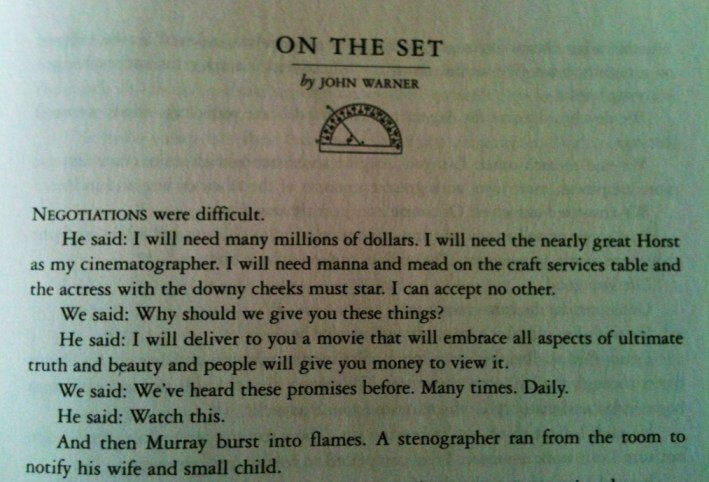
 There are also many short stories, including “On the Set” by John Warner, his second published story:

20120626-100545.jpg

It’s wonderfully absurd.

To read something hilarious and absurd and ultimately kind of touching, read John’s interview with critic Kevin Morris, who hated The Funny Man.

This Certainly Is Reading — Francisco Goya

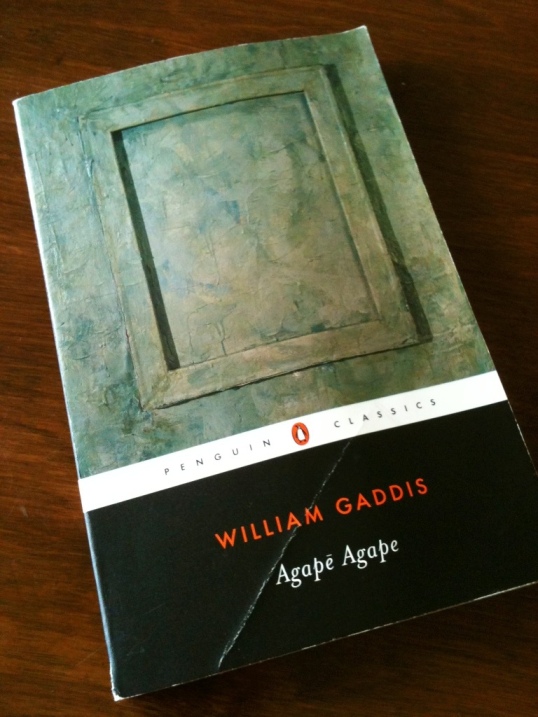
Some Annotations on the First Sentence of William Gaddis’s Last Novel, Agapē Agape

20120627-145321.jpg

1. Let’s start with the what:

Agapē Agape is the last novel by William Gaddis, that underread titan who gave us The Recognitions and J R. Agapē Agape was published in 2002, four years after Gaddis’s death. Agapē Agape is 96 pages in my Penguin Classics edition (the font is rather large, too)—almost exactly one-tenth the length of The Recognitions in my Penguin Classics edition, which is 956 pages (and in a smaller font).

2. And why?

Let’s say I’ve struggled with this review, perhaps more than I struggled with writing about J R (which I did here and here) or The Recognitions (which I did here and here), which seems nonsensical because those books are so big and this one is so short. But that’s a surface argument.

See, Agapē Agape is dense. It seems to compact and condense all of Gaddis’s themes and ideas and motifs into this little book that’s uranium heavy, too dense to allow for line breaks or paragraph breaks or indentations, let alone chapters. It’s one big block of text.

3. And so—

After reading the book twice I’ve marked every page (which is exactly like marking no pages), and at this point the only way that I can find to discuss it (I know there must be others) is to annotate the opening paragraph, its first sentence, really—which of course isn’t really a paragraph or a sentence in the traditional grammatical sense—I mean, there are a set of clauses, some fused sentences, perhaps a comma splice or two—but what marks it as a discrete sentence is that it’s punctuated by a question mark, a tiny caesura before the next onslaught of words. (Some of Agapē Agape’s sentences go on for pages).

4. The style of Agapē Agape recalls Thomas Bernhard, who Gaddis’s narrator accuses of having plagiarized the book that the narrator has yet to write. The accusation (ironic, purposefully, of course) points to Agapē Agape’s concern for synthesis, for transmitting some clear thesis statement out of the muddle of Western culture. Agapē Agape tries to suss out that muddle and as such is larded with discussions of Plato, Nietzsche, Melville, Hawthorne, Byron, Freud (“Sigi”!), Bach, Caesar, Joyce, Pulitzer, Tolstoy, Frankenstein, Huizinga, Pound, Philo T. Farnsworth, player-pianos . . . It overwhelms the narrator; it overwhelms the reader. But enough dithering—

5. —here is the opening sentence:

No but you see I’ve got to explain all this because I don’t, we don’t know how much time there is left and I have to work on the, to finish this work of mine while I, why I’ve brought in this whole pile of books notes pages clippings and God knows what, get it all sorted and organized when I get this property divided up and the business and worries that go with it while they keep me here to be cut up and scraped and stapled and cut up again my damn leg look at it, layered with staples like that old suit of Japanese armour in the dining hall feel like I’m being dismantled piece by piece, houses, cottages, stables orchards and all the damn decisions and distractions I’ve got the papers land surveys deeds and all of it right in this heap somewhere, get it cleared up and settled before everything collapses and it’s all swallowed up by lawyers and taxes like everything else because that’s what it’s about, that’s what my work is about, the collapse of everything, of meaning, of values, of art, disorder and dislocation wherever you look, entropy drowning everything in sight, entertainment and technology and every four year old with a computer, everybody his own artist where the whole thing came from, the binary system and the computer where technology came from in the first place, you see?

6. “No but you see I’ve got to explain all this because I don’t, we don’t know how much time there is left and I have to work on the, to finish this work of mine while I,”

Ulysses ends with a “Yes”; Agapē Agape begins with a “No.” This is a deeply negative book, cruel almost, bitter, caustic, acidic, but also erudite, funny, and even charming. We see right away the narrator—surely a version of Gaddis himself—concerned with the ancient problem of communication, the problem that occupied Plato and every philosopher since: “I’ve got to explain all this.” We also see here the same stream-of-consciousness technique here that Joyce used so frequently in Ulysses (putting aside Gaddis’s denials of a Joyce influence)—the suspended referent, the unnamed (the unnameable?): “I have to work on the, to finish this work of mine while I”—while I what? Still can? Still live? From the outset, Agapē Agape is a contest against time, death, and entropy.

7. “why I’ve brought in this whole pile of books notes pages clippings and God knows what, get it all sorted and organized”

Synthesis, synthesis, synthesis. Making books out of other books. Plugging literature into other literature. I am quite content to go down to posterity as a scissors-and-paste man, said someone once. And then others said it again. And then I cited it here, now.

I’m reminded here of a list that Gibbs (erstwhile Gaddis stand-in in J R) keeps in his pocket, a scrap paper crammed with ideas, fragments, citations:

Is it possible to get it sorted?

Recall now Gaddis’s hero Ezra Pound. From Tom McCarthy’s essay on synthesis, “Transmission and the Individual Remix”:

With the Cantos, he kept up this furious enterprise for five whole decades, ramping its intensity up and up until the overload destroyed him, blew his mind to pieces, leaving him to murmur, right toward the end: “I cannot make it cohere.”

It is the reader’s job to make Agapē Agape cohere.

8. “when I get this property divided up and the business and worries that go with it”

Agapē Agape may be said to have a few formalizing plots beyond its object of synthesizing Western culture vis-à-vis art and entertainment.

One of these formalizing elements is the idea of an old man divvying up his property to his daughters. Oh, hey, King Lear anyone? What’s most interesting to me about this plot (okay, more of a motif really) is that it’s the only allusive device that the narrator doesn’t remark upon. We have a narrator who’s trying to control all these notes and clippings, all these scraps of culture, a narrator with a sharp (if distracted intelligence) who nevertheless fails to remark upon the fact that his personal circumstances echo the great dismal swan song of English literature. King Lear: madness, unraveling, degeneracy, death, entropy.

9. “while they keep me here to be cut up and scraped and stapled and cut up again my damn leg look at it, layered with staples like that old suit of Japanese armour in the dining hall feel like I’m being dismantled piece by piece,”

Another formalizing element in Agapē Agape are the health issues the narrator faces, presumably a series of surgeries that involve at least one of his legs. The motif of surgeries, of transplants, and implants runs throughout The Recognitions and J R as well. In The Recognitions we get poor Stanley’s mother’s amputated leg, another strange reliquary trace floating through the text. In J R, we get Cates prepped for a heart transplant, yet another organ transferral for this massive man. There’s the idea here of borrowed parts, that humans might not be “natural,” cohesive entities but rather a collection of parts that may be swapped out. Again, synthesis in the face of break down; the surgeon as entropy repairman.

10. “houses, cottages, stables orchards and all the damn decisions and distractions I’ve got the papers land surveys deeds and all of it right in this heap somewhere, get it cleared up and settled before everything collapses and it’s all swallowed up by lawyers and taxes like everything else because that’s what it’s about,”

Here, the personal, the concrete, the immediate, and the real tips into what Gaddis took to be the grand subject of his corpus—collapse, chaos, entropy. Spelled out clearly in the next line:

11. “that’s what my work is about, the collapse of everything, of meaning, of values, of art, disorder and dislocation wherever you look, entropy drowning everything in sight,”

I don’t think commentary from me is necessary here. Instead, let me share a quote from Gibbs in J R, ranting to his young students:

Before we go any further here, has it ever occurred to any of you that all this is simply one grand misunderstanding? Since you’re not here to learn anything, but to be taught so you can pass these tests, knowledge has to be organized so it can be taught, and it has to be reduced to information so it can be organized do you follow that? In other words this leads you to assume that organization is an inherent property of the knowledge itself, and that disorder and chaos are simply irrelevant forces that threaten it from the outside. In fact it’s the opposite. Order is simply a thin, perilous condition we try to impose on the basic reality of chaos . . .

12. “entertainment and technology and every four year old with a computer, everybody his own artist where the whole thing came from, the binary system and the computer where technology came from in the first place, you see?”

The age of the amateur. Paint-by-numbers. Everyone wants to write a novel but no one wants to read one. Etc. When the narrator grumbles “where technology came from in the first place,” he means entertainment. That’s one thesis in Agapē Agape: that the technological progress we so value, that so underwrites the march of our grand civilization has its roots in toymaking and child’s play.

13. The novel that follows this addled, rattled opening line is remarkable for its brilliance, its cruelty, but most of all its sheer verbal force. Gaddis showed a mastery of voice in J R, a heteroglossic novel of speech, speech, speech, a grand dare to any reader, I suppose. Agapē Agape is even more stripped down, the monologue of a dying voice, a voice that’s been too-long ignored and under-appreciated. I don’t know if something so sad, so personally sad can be called perfect, but I can’t think of a more appropriate or fitting final statement from Gaddis.

Woman Reading (1935) — Pablo Picasso

Occupy Gaddis (A William Gaddis Resource Page)

Why Occupy Gaddis?

 The Gaddis Annotations is, like, the source

Biblioklept reviews J R (part 1)

Biblioklept reviews J R (part 2)

“Trickle-Up Economics: JR Goes to Washington” (1987 sequel to J R)

“Fire the Bastards!”: Jack Green’s wonderful rant against the critics who panned The Recognitions

Biblioklept reviews The Recognitions

William Gaddis fiction-to-music entelechy transducer

Gaddis’s interview with The Paris Review

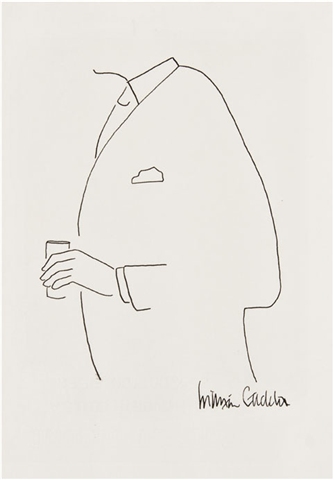
Julian Schnabel’s Gaddis portrait:

Gaddis interview at The Dalkey Archive

Why did Gaddis write J R?

Biblioklept reviews Agapē Agape

“A well-meaning, sincere hypocrite” : Gaddis on his title character, JR (and capitalism)

“Authenticity’s wiped out” — A passage from Agapē Agape

“Recognizing Gaddis” (1987 NYT article)

William Gaddis’s self-portrait:

William Gaddis on the Pulitzer Prize: “The Ultimate Seal of Mediocrity”

Gaddis on hipsters

“Mr. Difficult” (Jonathan Franzen whines about Gaddis)

William Gaddis on James Joyce

The State of Gaddis

The Guardian review of Agapē Agape

Cynthia Ozick’s review of Carpenter’s Gothic

Gaddis annotates Thomas Bernhard

The failure of Gaddis

LRB review of Agapē Agape/The Rush for Second Place

I Review Tom McCarthy’s Essay “Transmission and the Individual Remix”

Telephone Picture EM 3 — Laszlo Moholy-Nagy

In an interview published back in 2010 (coinciding roughly with the release of his excellent novel C), Tom McCarthy evaluated his work:

I see what I’m doing as simply plugging literature into other literature. For me, that’s what literature’s always done. If Shakespeare finds a good speech in an older version of Macbeth or Pliny, he just rips it and mixes it. It’s like DJing.

McCarthy’s new essay “Transmission and the Individual Remix” explores the idea of artist as DJ, as remixer, as synthesizer. It’s a brief, fun read—28 pages on paper the publicity materials claim, but it’s only available as an etext, so its length is hard to measure in terms of pages. It took me less than an hour to read it on my Kindle Fire. Then I read it again. Although publisher Vintage kindly sent me a copy, I’d argue that it’s well worth the two bucks they’re asking.

“Transmission” is playful and discursive, as befits its subject. The essay is not nearly as pretentious as its subtitle (“How Literature Works”) might suggest. McCarthy riffs on a few subjects to illustrate his thesis: Kraftwerk, the Orpheus myth (and its many, many retellings and interpretations), Rilke, Alexander Graham Bell, “Blanchot, Barthes, or any other dubious French character whose names starts with B,” Ulysses, Kafka, Beckett, etc. But what is his thesis? What does he want? He tells us:

My aim here, in this essay, is not to tell you something, but to make you listen: not to me, nor Beckett and Kafka, but to a set of signals that have been repeating, pulsing, modulating in the airspace of the novel, poem, play—in their lines, between them and around them—since each of these forms began. I want to make you listen to them, in the hope not that they’ll deliver up some hidden and decisive message, but rather that they’ll help attune your ear to the very pitch and frequency of its own activity—in other words, that they’ll help attune your ear to the very pitch and frequency of its own activity—in other words, that they’ll enable you to listen in on listening itself.

McCarthy’s concern here is to point out that nothing is original, that all creation is necessarily an act of synthesis. To read a novel is to read through the novel, to read the novelist’s sources (or, to use McCarthy’s metaphor, to listen through). McCarthy’s insights here are hardly new, of course—Ecclesiastes 1:19 gives us the idea over 2000 years ago, and surely it’s just another transmitter passing on a signal. What makes “Transmission” such a pleasure is its frankness, its clarity. Unlike so much postmodern criticism, McCarthy doesn’t trip over jargon or take flights of fancy into obscure metaphor. And even when he does get a bit flighty, he manages to clarify so many ideas of basic deconstructive theory:

This is it, in a nutshell: how writing works. The scattering, the loss; the charge coming from somewhere else, some point forever beyond reach or even designation, across a space of longing; the surge; coherence that’s only made possible by incoherence; the receiving which is replay, repetition—backward, forward, inside out or upside down, it doesn’t matter. The twentieth century’s best novelist understood this perfectly. That’s why Ulysses’s Stephen Dedalus—a writer in a gestational state of permanent becoming—paces the beach at Sandymount mutating, through their modulating repetition, air- and wave-borne phrases he’s picked up from elsewhere, his own cheeks and jaw transformed into a rubbery receiver . . .

Amazingly, the name Derrida doesn’t show up in “Transmission,” even as McCarthy gives us such a clear outline of that philosopher’s major ideas, as in the above riff’s explication of différance and iterability (with twist of Lacanian lack to boot). Or here, where McCarthy deconstructs the notion of a stable self:

All writing is conceptual; it’s just that it’s usually founded on bad concepts. When an author tells you that they’re not beholden to any theory, what they usually mean is that their thinking and their work defaults, without even realizing it, to a narrow liberal humanism and its underlying—and always reactionary—notions of the (always “natural” and preexisting, rather than constructed self, that self’s command of language, language as vehicle for “expression,” and a whole host of fallacies so admirably debunked almost fifty years ago by the novelist Alain Robbe-Grillet.

So I read Derrida through McCarthy’s reading of Robbe-Grillet. This is all transmission, writing as remix, but also reading as remix.

I could go on, but I fear that I’ll simply start citing big chunks of McCarthy’s essay, which is supremely citable, wonderfully iterable. Recommended.

Tom McCarthy: “All Writing Is Conceptual”

From Tom McCarthy’s essay “Transmission and the Individual Remix”:

All writing is conceptual; it’s just that it’s usually founded on bad concepts. When an author tells you that they’re not beholden to any theory, what they usually mean is that their thinking and their work defaults, without even realizing it, to a narrow liberal humanism and its underlying—and always reactionary—notions of the (always) “natural” and preexisting, rather than constructed self, that self’s command of language, language as vehicle for “expression,” and a whole host of fallacies so admirably debunked almost fifty years ago by the novelist Alain Robbe-Grillet.