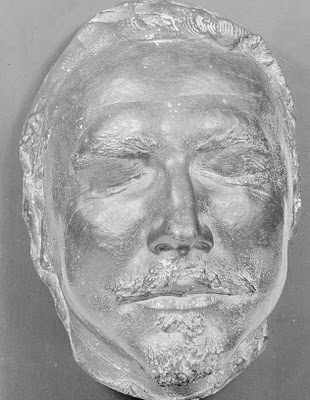
(Yes, yes; we know it’s a life mask. We use the term “death mask” for editorial reasons).
(Yes, yes; we know it’s a life mask. We use the term “death mask” for editorial reasons).
The following passage from Michel Houellebecq’s novel The Elementary Particles is part of a dialog between half brothers Michel and Bruno. Otherwise, context unimportant:
When Bruno arrived at about nine o’clock, he had already had a couple of drinks and was eager to talk philosophy. “I’ve always been struck by how accurate Huxley was in Brave New World,” he began before he’d even sat down. “It’s phenomenal when you think he wrote it in 1932. Everything that’s happened since simply brings Western society closer to the social model he described. Control of reproduction is more precise and eventually will be completely disassociated from sex altogether, and procreation will take place in tightly guarded laboratories where perfect genetic conditions are ensured. Once that happens, any sense of family, of father-son bonds, will disappear. Pharmaceutical companies will break down the distinction between youth and old age. In Huxley’s world, a sixty-year-old man is as healthy as a man of twenty, looks as young and has the same desires. When we get to the point that life can’t be prolonged any further, we’ll be killed off by voluntary euthanasia; quick, discreet, emotionless. The society Huxley describes in Brave New World is happy; tragedy and extremes of human emotion have disappeared. Sexual liberation is total—nothing stands in the way of instant gratification. Oh, there are little moments of depression, of sadness or doubt, but they’re easily dealt with using advances in anti-depressants and tranquilizers. ‘Once cubic centimeter cures ten gloomy sentiments.’ This is exactly the sort of world we’re trying to create, the world we want to live in.
“Oh, I know, I know,” Bruno went on, waving his hand as if to dismiss an objection Michel had not voiced. “Everyone says Brave New World is supposed to be a totalitarian nightmare, a vicious indictment of society, but that’s hypocritical bullshit. Brave New World is our idea of heaven: genetic manipulation, sexual liberation, the war against aging, the leisure society. This is precisely the world that we have tried—and so far failed—to create.”
From Ralph Ellison’s Invisible Man, a shocking, weird, gross, Christmasy reference near the end of the book. The context is that, in 1950s America, Sibyl, a white woman, wants the narrator, a black man, to fulfill her rape fantasy. Page 522 of my edition–

“Winter-Time,” a poem by Robert Louis Stevenson:
Late lies the wintry sun a-bed,
A frosty, fiery sleepy-head;
Blinks but an hour or two; and then,
A blood-red orange, sets again.Before the stars have left the skies,
At morning in the dark I rise;
And shivering in my nakedness,
By the cold candle, bathe and dress.Close by the jolly fire I sit
To warm my frozen bones a bit;
Or with a reindeer-sled, explore
The colder countries round the door.When to go out, my nurse doth wrap
Me in my comforter and cap;
The cold wind burns my face, and blows
Its frosty pepper up my nose.Black are my steps on silver sod;
Thick blows my frosty breath abroad;
And tree and house, and hill and lake,
Are frosted like a wedding cake.
Cormac McCarthy’s seminal anti-Western Blood Meridian isn’t exactly known for visions of peace on earth and good will to man. Still, there’s a strange scene in the book’s final third that subtly recalls (and somehow inverts) the Christmas story. The scene takes place at the end of Chapter 15. The kid, erstwhile protagonist of Blood Meridian, has just reunited with the rampaging Glanton gang after getting lost in the desert and, in a vision-quest of sorts, has witnessed “a lone tree burning on the desert” (a scene I have argued is the novel’s moral core).
Glanton’s marauders, tired and hungry, find temporary refuge from the winter cold in the town of Santa Cruz where they are fed by Mexicans and then permitted to stay the night in a barn. McCarthy offers a date at the beginning of the chapter — December 5th — and it’s reasonable to assume, based on the narrative action, that the night the gang spends in the manger is probably Christmas Eve. Here is the scene, which picks up as the gang — “they” — are led into the manger by a boy–
The shed held a mare with a suckling colt and the boy would would have put her out but they called to him to leave her. They carried straw from a stall and pitched it down and he held the lamp for them while they spread their bedding. The barn smelled of clay and straw and manure and in the soiled yellow light of the lamp their breath rolled smoking through the cold. When they had arranged their blankets the boy lowered the lamp and stepped into the yard and pulled the door shut behind, leaving them in profound and absolute darkness.
No one moved. In that cold stable the shutting of the door may have evoked in some hearts other hostels and not of their choosing. The mare sniffed uneasily and the young colt stepped about. Then one by one they began to divest themselves of their outer clothes, the hide slickers and raw wool serapes and vests, and one by one they propagated about themselves a great crackling of sparks and each man was seen to wear a shroud of palest fire. Their arms aloft pulling at their clothes were luminous and each obscure soul was enveloped in audible shapes of light as if it had always been so. The mare at the far end of the stable snorted and shied at this luminosity in beings so endarkened and the little horse turned and hid his face in the web of his dam’s flank.
The “shroud of palest fire” made of sparks is a strange image that seems almost supernatural upon first reading. The phenomena that McCarthy is describing is simply visible static electricity, which is not uncommon in a cold, dry atmosphere–particularly if one is removing wool clothing. Still, the imagery invests the men with a kind of profound, bizarre significance that is not easily explainable. It is almost as if these savage men, naked in the dark, are forced to wear something of their soul on the outside. Tellingly, this spectacle upsets both the mare and her colt, substitutions for Mary and Christ child, which makes sense. After all, these brutes are not wise men.
[Ed. note — Yes, this post is recycled (regifted?) from last year].
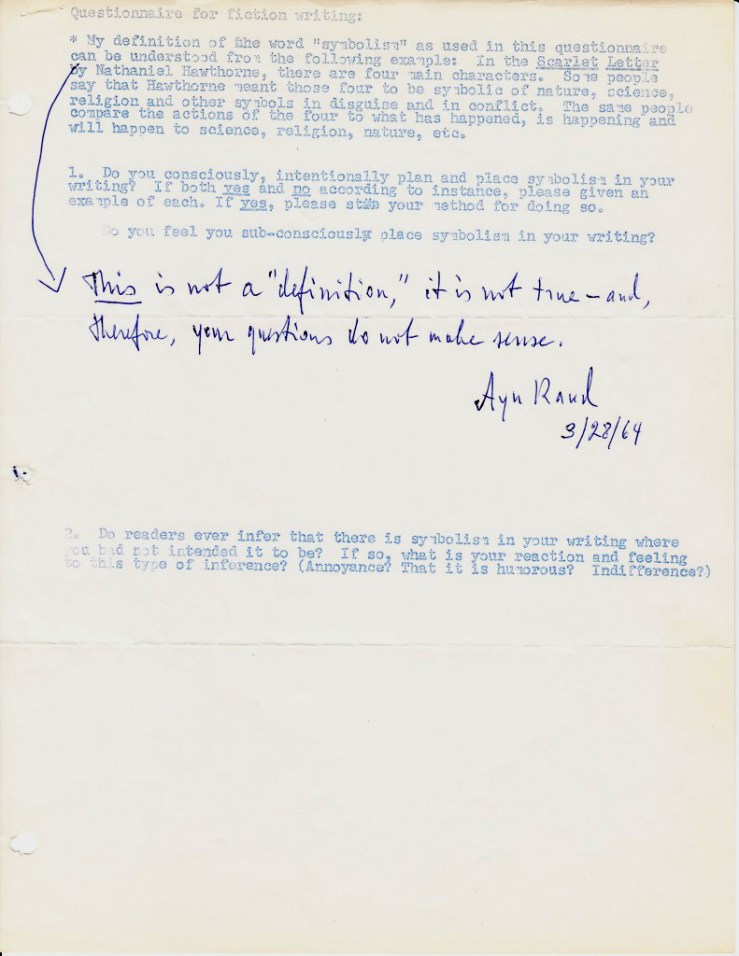
Part of a great write-up at The Paris Review. Some context (from the article):
In 1963, a sixteen-year-old San Diego high school student named Bruce McAllister sent a four-question mimeographed survey to 150 well-known authors of literary, commercial, and science fiction. Did they consciously plant symbols in their work? he asked. Who noticed symbols appearing from their subconscious, and who saw them arrive in their text, unbidden, created in the minds of their readers? When this happened, did the authors mind?
Hans Christian Andersen’s “The Fir-Tree,” a depressing story about a Christmas tree—
Far down in the forest, where the warm sun and the fresh air made a sweet resting-place, grew a pretty little fir-tree; and yet it was not happy, it wished so much to be tall like its companions— the pines and firs which grew around it. The sun shone, and the soft air fluttered its leaves, and the little peasant children passed by, prattling merrily, but the fir-tree heeded them not. Sometimes the children would bring a large basket of raspberries or strawberries, wreathed on a straw, and seat themselves near the fir-tree, and say, “Is it not a pretty little tree?” which made it feel more unhappy than before. And yet all this while the tree grew a notch or joint taller every year; for by the number of joints in the stem of a fir-tree we can discover its age. Still, as it grew, it complained, “Oh! how I wish I were as tall as the other trees, then I would spread out my branches on every side, and my top would over-look the wide world. I should have the birds building their nests on my boughs, and when the wind blew, I should bow with stately dignity like my tall companions.” The tree was so discontented, that it took no pleasure in the warm sunshine, the birds, or the rosy clouds that floated over it morning and evening. Sometimes, in winter, when the snow lay white and glittering on the ground, a hare would come springing along, and jump right over the little tree; and then how mortified it would feel! Two winters passed, and when the third arrived, the tree had grown so tall that the hare was obliged to run round it. Yet it remained unsatisfied, and would exclaim, “Oh, if I could but keep on growing tall and old! There is nothing else worth caring for in the world!” In the autumn, as usual, the wood-cutters came and cut down several of the tallest trees, and the young fir-tree, which was now grown to its full height, shuddered as the noble trees fell to the earth with a crash. After the branches were lopped off, the trunks looked so slender and bare, that they could scarcely be recognized. Then they were placed upon wagons, and drawn by horses out of the forest. “Where were they going? What would become of them?” The young fir-tree wished very much to know; so in the spring, when the swallows and the storks came, it asked, “Do you know where those trees were taken? Did you meet them?”
Best Books I Read in 2011 That Were Published in 2011 (Or Close Enough to 2011)
MetaMaus, Art Spiegelman
The Third Reich, Roberto Bolaño
Humiliation, Wayne Koestenbaum
The Pale King, David Foster Wallace
Between Parentheses, Roberto Bolaño
***
Best Books I Read in 2011 That Were Published Before 2011
The Elementary Particles, Michel Houellebecq
Wittgenstein’s Mistress, David Markson
Expelled from Eden: A William Vollmann Reader
Trans-Atlantyk, Witold Gombrowicz
The Garden of Eden, Ernest Hemingway
Light in August, William Faulkner
First Love and Other Sorrows, Harold Brodkey
Speedboat, Renata Adler
Under the Volcano, Malcolm Lowry
***
Best Rereading
***
Best Audiobook of 2011
The Collected Fictions of Gordon Lish, read by Gordon Lish
***
Best Film of 2011
***
Most Charming Film of 2011
***
Most Overhyped Book of 2011
The Art of Fielding, Chad Harbach
***
Best Book Cover of 2011

***
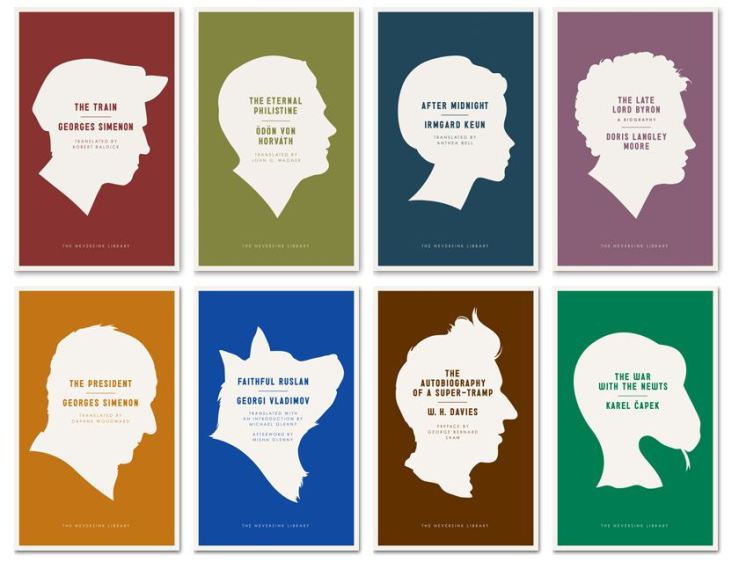
Best Book Series Design
Melville House’s Neversink Imprint
***
Weirdest (Yet Nevertheless Moving) Novel of 2011
How to Keep Your Volkswagen Alive, Chris Boucher
***
Book I Read in 2011 That Still Confounds and Haunts Me
The Kindly Ones, Jonathan Littell
***
Saddest Book I Read in 2011
Tie: Under the Volcano, Malcolm Lowry; The Stories of Breece D’J Pancake, Breece D’J Pancake
***
Best Essay (Print)
“Some Notes on Translation and on Madame Bovary,” Lydia Davis (The Paris Review)
***
Best Essay (Online)
“Nude in Your Hot Tub, Facing the Abyss (A Literary Manifesto After the End of Literature and Manifestos),” Lars Iyer (White Review)
***
Worst Literary Trend of 2011
Tie: Lame “literary fiction” novels; Articles that link everything to David Foster Wallace
***
Best Literary Trend of 2011
Plagiarism!
***
Most Obvious Disclaimer
I did not read or see or hear every book or essay or audiobook or film or TV show or record or video that came out in 2011. Also, there are some days left in the year. These are all, just like, opinions man.
 Adam Novy’s debut novel The Avian Gospels is one of the best novels I’ve read this year, and one of the best contemporary novels I’ve read in ages. It’s a surreal dystopian magical romance set against the backdrop of political and cultural repression, violent rebellion, torture, family, and birds. Lots and lots of birds. (Read my review).
Adam was kind enough to talk to me about his work over a month-long series of email exchanges; the interview presented below reveals much of his generous, creative energy.
Adam currently teaches writing at Scripps College, Pasadena City College, Long Beach City College and Orange Coast College.
The Avian Gospels is available now from Hobart.
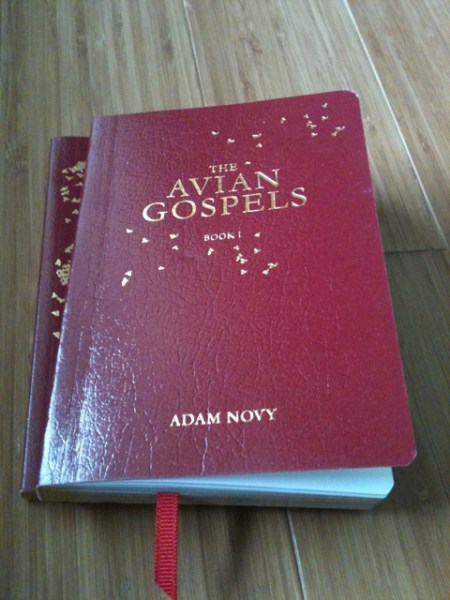
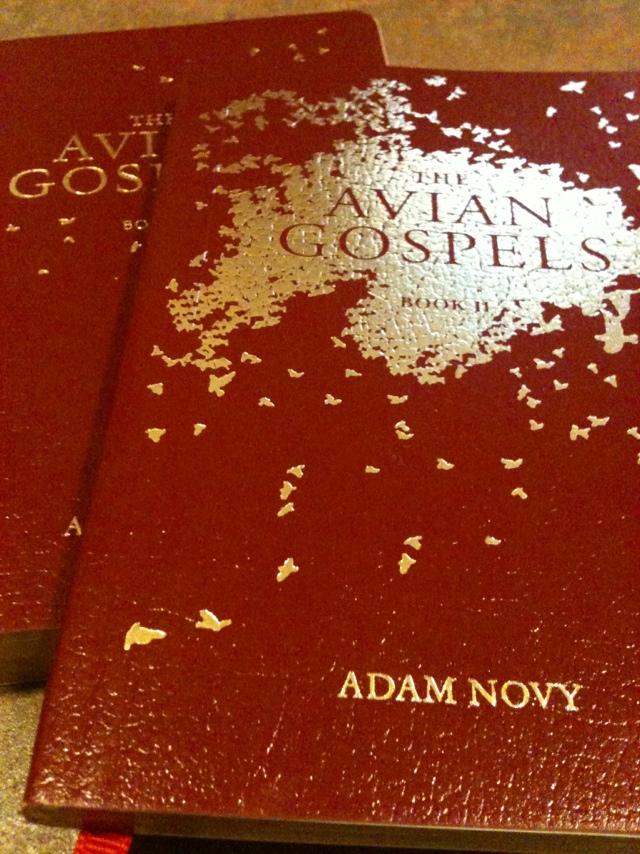
Biblioklept: I have a lot I want to ask you about what’s in your novel, but I have to start by asking about the physical book itself. The Avian Gospels is a lovely little two volume pocket-sized monograph—textured oxblood covers, gilded pages with line numbers, inset bookmarks. Visually, it recalls a Gideon bible, I guess, only not, I don’t know, chintzy. Where did the design idea come from?
Adam Novy: My editor at Hobart, Aaron Burch, had the idea of making the book look like a Bible. He’s an excellent designer and does a wonderful job with Hobart. Some boheemith press in New York City should really snap him up.
Biblioklept: How did the idea for The Avian Gospels come about? When did you start drafting the book? How long did it take to write?
AN: After 9/11, there was a moment where I felt like all Americans were on the same team. Now I wonder if we’ll ever feel that way again. Pardon me for living in the moment, but this country is just so completely fucked. This sensation of being American swiftly curdled into panic, but by then, the coordinates of my work had all been changed. I wanted to find a voice with room for both the historical and the intimate, which led me to a kind of first-person plural officialese. It ended up creating this echo-chamber effect where the personal and political identities of each character were different, and nobody could quite be who they were supposed to be, or wanted to be.
It took months of screwing around to figure this out, and most of it, of course, was accidental. The Lord of the Rings was on TV a lot at the time, and sometimes I thought I wanted to sound like Gandalf if Gandalf was full of shit and, like, a genocider who felt sorry for himself, but still was Gandalf, all mystical and officious, bossing everyone around. I understood the characters right away, except for Jane, who was always hard to deal with. She gets in arguments a lot and she’s usually right. I think I have hard time writing characters who are right. I myself am never right, so I had trouble relating to her. Of course, now she’s my second-favorite character in the book, after Mike.
I started the book in spring of 2002 and finished it in fall of 2005. In 2006, I found an agent and Hobart took the book in 2008. I went through five apartments, three different cities, three computers, one personal trainer and three therapists in that time. And nine adjunct faculty positions.
 Biblioklept: It’s interesting that you mention the LOTR movies as a kind of ambient influence, because they were pretty ubiquitous in the last decade—and there’s so much of the last decade’s zeitgeist in your book: torture, despotism, political and cultural repression, the plight of a refugee class, the idea of “green zones,” etc. You foreground these themes by crafting Gospels as a kind of dystopian novel with elements of magical realism, but it’s also very much a novel about family, and even a love story. (By sheer coincidence I watched the restored edit of Metropolis in the same time frame that I was reading Gospels, and saw so many echoes there). How conscious were you of genre conventions? I’m curious because your book sometimes blends genre tropes, sometimes blurs them, and sometimes straight-up explodes them . . .
AN: The book is quite deliberately a mash-up. I think it’s normal in conversation to try out different ways of seeing things—a fussy way of saying this might be “experiment with different hermeneutics.” For example, one might reference the NBA, The Wire, Shakespeare and Dazed and Confused in a discussion about Obama. I wanted the book to enact this kind of embeddedness, this flailing for a context that makes sense, and I wanted the narrator to sound as though its vernacular was ornate and obsolete, like it trafficked in a pleasure that justified itself as satisfaction while remaining an inadequate moral lens. That’s why I write violence like I do: I want it to be horrifying and beautiful. Unfortunately, violence is cool. I’m not immune—I always watch Kill Bill and Scarface when they’re on cable. It’s disturbing. Everyone knows that torture doesn’t work as an intelligence-gathering method, but our country did it anyway because it simply couldn’t stop. It was a kind of jacking off, the only kind that certain political parties seem to approve of.
Whenever we write about power, we should always defend the powerless, even if they’re just as bad as those in power. I think I saw that in Cioran, and did you know Cioran was a Nazi sympathizer? I just read that Gertrude Stein was, too. I don’t know what kind of paradigm can reckon with this world.
Biblioklept: I had no idea about Stein or Cioran’s Nazi sympathies, but I guess many artists and writers and intellectuals were attracted to the power of fascism, particularly in the modernists’ day (I suppose Ezra Pound and GB Shaw stand out as easy examples, and Heidegger was a member of the Nazi party). Although in our own age, I suppose we also see intellectuals and writers support terrible causes—I think of Christopher Hitchens’s aggressive support of the Iraq War and Bush administration’s policies, for, example.
I don’t want to drop spoilers, but your novel traces an arc that shows how those who are powerless might, given power, recapitulate the aggressive violence that they themselves were once subjected to. In turn, you also reveal how characters who seemed to occupy a clear power position (I’m thinking of Mike here, specifically) are perhaps doomed as well to a life without agency. I found my sympathies shift dramatically throughout the novel. How important are sympathetic characters?
AN: Every writer, including me, wants the reader to cathect to their book with their whole heart. I want my readers to utterly and helplessly engrossed. But sympathy is a means to an end and not the end itself. Technically speaking, it’s just not that hard to accomplish. It’s a skill, like dribbling in basketball is a skill, but it’s not the whole game.
In The Avian Gospels, the character named Mike Giggs is seen in only one scenario—exerting power in the manner of his father—for the first two hundred pages, so he comes off like a jerk until he encounters someone who actually loves him: Chico the band leader. Suddenly, Mike discovers a love of life, a sensitivity and a feeling of camaraderie for his fellows. Not only is he is capable of compassion, he is governed by it. This leaves him ruined in certain ways, but allows him to discover who he can be, and makes him (hopefully) sympathetic.
Meanwhile, on the other end of the book, the character named Zvominir, who was whimperingly sweet for longer than Mike was mean, is meaner than Mike. Novels are fantasies of powerlessness and power—among the zillion other things they are—and I feel like we should at least be conscious of what’s happening to our minds as we are reading. How we deal with power is a serious moral question; counting how many times that we go awwww is not. We have cats on the internet for that. Still, Chad Harbach was probably right when he said that the books that get the best reception are simply “affable.” In desperate times, a nation of New York critic types are turning to . . . Mitt Romney? Or like, Cheever without the psychosexual guilt?
I don’t mean to single out Chad Harbach, whose work I haven’t read, except for his piece on Grantland about the Brewers, which I liked. But what he said is accurate. These days, people seem to feel that art should be uplifting, like art owes it to them, in a customer-service type-way. Have you been to Kinko’s, or excuse me, FedEx Office, lately? It is not a happy place. Novels used to to give the reader the truth in ways no other social narratives would. I’m pretty sure I’m not just being sentimental. There used to be a social lie which said the world was making progress and ascending, but this reversed like fifteen years ago and now we all feel doomed. We need books to tell us how we got here, not to lie about how meaningful our journeys are or however we say it these days. Of course our lives are meaningful, but such a narrow focus on making folks feel better is superficial and disempowering. Our emptiness and dread are trying to tell us something.
Biblioklept: I think you point toward a distinction between art and entertainment here. We want entertainment to comfort us, to ease our worries. In contrast, art challenges us with what we don’t want to see, or can’t see, or can’t see that we can’t see. And yeah, there’s a kind of “literature of comfort” out there, books that simply reconfirm the tropes and tricks and forms of “literary fiction” — so that, even if the protagonists suffer, that suffering is is part and parcel of some greater telos — and not just in terms of the plot, but also in the structure of the novel itself. (Lee Siegel called this camp “Nice Writing” a decade ago, pointing to its “violent affability,” its “deadly sweetness”).
At the risk of asking one of those questions an interviewer is never supposed to ask (but, hey, I really want to know the answer and I think our readers would too), what books move you as a reader?
AN: I think I’m moved by pretty standard stuff. The Portrait of a Lady. Charlotte’s Web. To My Twenties, by Kenneth Koch. On Seeing the Elgin Marbles, by Keats. Places to Look For Your Mind, by Lorrie Moore. Testimony of Pilot and Return to Return by Barry Hannah. Antony and Cleopatra. Stone Arabia, by Dana Spiotta, which is the best new book I’ve read in 2011. Chopin in Winter by Stuart Dybek. The last paragraph of CivilWarLand In Bad Decline. The scene in American Tabloid where Ward steals the pension fund books. The Widow Aphrodissia by Marguerite Yourcenar. There must be fifty different scenes in Buffy that make me cry, and five in Battlestar Galactica. Certain scenes in Lost. This is such a conventional list, I feel like I need to start a fight. FRIDAY NIGHT LIGHTS SUCKS AND YOU ARE ALL A BUNCH OF SAPS. I should also say I’m moved by spectacles of massive human folly. The image of Slim Pickens riding the bomb and waving his hat in Dr. Strangelove and the scene where Kramer and his intern throw the ball of oil out the window are somehow very moving to me.
Biblioklept: I’d love to hear your thoughts on the Occupy Wall Street movement—The Avian Gospels taps into and explores this idea of civil unrest, of disenfranchised voices, of a paramilitary state coping with a populist uprising. You’ve indicated that your novel is in some ways a response to 9/11, but it also seems predictive of the fallout we’re seeing a decade after the fact.
AN: A massive, indescribable injustice was inflicted on our world by the likes of Goldman Sachs and we seem to have no recourse. Law enforcement could not possibly care less, and seeing how they cleared Zucotti Park, they seem jealous of the impunity of Wall Street. In his review of Ron Suskind’s book, Ezra Klein suggests that Washington just did not have the will to pass a stimulus that was big enough. Slavoj Žižek is right when he says this moment is a challenge to our imagination. I think that what happened at Penn State may be a better lens for the recession than Occupy Wall Street. A massive patriarchal network mobilized their resources to preserve an ongoing atrocity. No one will admit that they were wrong, especially the figurehead, Joe Paterno. The community just does not seem to give a shit. They keep telling out-of-towners we don’t get it and rioted in self-pity. I guess this is just how power acts.
Biblioklept: What’s next? What are you working on now?
AN: I’m writing a novel about the life and times of Medusa. It’s called The Gore and the Splatter.
Biblioklept: Have you ever stolen a book?
AN: I think the only book I ever stole was an anthology of world literature, which had a really coherent definition of French symbolist poetry. I can’t find this book now, so someone probably stole it from me. Serves me right.
Adam Novy’s novel The Avian Gospels synthesizes dystopian themes with magical realism to tell the story of an unnamed city, in an unnamed time, afflicted by plagues of birds and bands of Gypsies. The novel is marvelous, surreal and very strange, disorienting in its tones and unnerving in its subjects; it’s at once a confounding allegory of torture, suppression, and rebellion, and at the same time a study in intrafamily relationships.
There are two families at the heart of The Avian Gospels. The aristocratic Giggs are led by the Judge, a ruthless patriarch who is both inheritor and perpetrator of endless war. Judge Giggs controls the city through fear, torture, and his fascist personal guard, the RedBlacks. While Judge Giggs seems to hold illimitable power in the city, it isn’t enough to retain the love or even respect of his family. His wife veers into a manic depressive breakdown, brought on in large part by the death of her elder son, who was killed during the last (foolish) war. His second son, Mike, is a loutish ne’er-do-well, a bully who fails to win his father’s approval. The Judge’s daughter Katherine is the apple of his eye, but as she matures in her adolescence, she begins to perceive the violent disconnect between her privileged life and the suppression and poverty forced on the city’s Gypsy population.
The other family (perhaps more of a duo, really) comprises Zvominir, an immigrant claiming to hail from Sweden, and his son Morgan, a petulant teen of an age with Katherine. Routinely beaten bloody by Mike Giggs and his RedBlack goons, Morgan develops a visceral hatred of the Judge’s regime, one that leads the lad to repeatedly (and rashly) lash out against the violent injustice he perceives around him. Zvominir and Morgan live in sad, motherless squalor, separated not only from the suburban greenzoned upper-class, but also from the Gypsies; Zvominir, who leads most of his life genuflecting to or cowering from power, will not even allow his son the joy of partaking in the Gypsies vibrant customs (like rowdy ska music and barbecues).
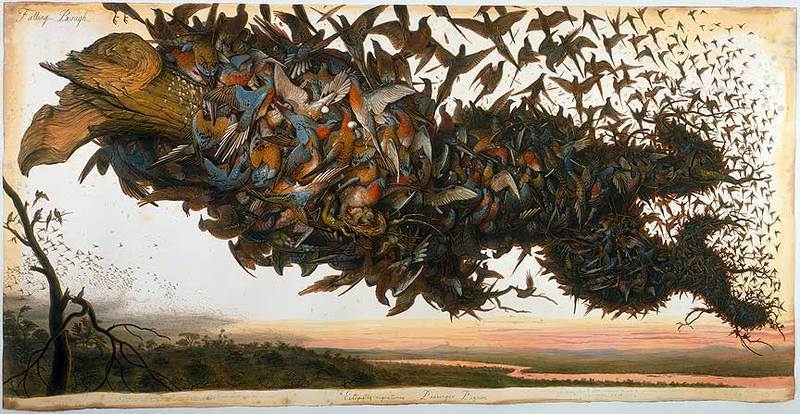
Most of all, Zvominir tries to contain his son’s bizarre power, a power that he shares with the boy: they can telepathically control the birds. This gift becomes both blessing and curse as the city is overrun by flocks of birds that block out the sun and make roads unnavigable. Zvominir, always kowtowing to power, agrees to employ his gift to “sweep” the city (particularly the area where the rich folks live) of the bird hordes; Morgan agrees to help, but only under the condition that he be allowed to show off his talent in the public square, where eager crowds (of Gypsies and suburbanites alike) gather to marvel at the spectacle of his “birdshows.” In time, Morgan begins writing dissent into his performances:
Birdshows were generally narrative, and featured a bird-made Morgan being chased through the streets by a soldier who was torn to bits by swans, though the swans were made of pigeons, and the soldier of flesh-colored plovers, his uniform of cardinals and crows. Swans would also be pursued through ghetto canyons by flying tigers made of orioles. These were his intentions for the birdshows, at any rate, but Zvominir would censor when the images betrayed but a hint of dangerous content, obscuring Morgan’s work with birdclouds, or worse, laughing babies made of birds. The audience found these touches psychedelic, and weren’t pacified so much as confused, so their passion turned to mumbles. The elder’s power over birds was superior, and Morgan couldn’t stop his father from suppressing the transgressive. It infuriated him.
Zvominir isn’t the only authority figure prone to parental censorship; as the poor old man tries to keep his son safe by “suppressing the transgressive,” the Judge in turn does all in his power to keep his precious daughter Katherine blind and ignorant to the violence and inequality that has purchased her material comfort. However, Katherine meets and becomes fascinated by Morgan, just as the young man’s rebellious attitude comes to find definition and ideology thanks to the Gypsy rebel Jane. Jane harnesses Morgan’s raw anger, turning him into the figurehead of a Gypsy resistance against the Judge’s terrible regime. She literally ushers him into the Gypsy underworld, a surreal setting of nightplants and black markets and ecstatic ska music and donkeys, sprawling in a labyrinthine network of caves and caverns and tunnels under the unnamed city. From this subterranean site, Jane becomes mastermind of a terrorist plot to overthrow the fascist Judge:
They—we—were helpless, and we knew it. She would do to us what Hungary had done, but with stealth; this terror stuff is easy, she mused. Who needs armies? She was poor, and lived in sewers, so nothing could be taken but her life, while we had homes, jobs, children, hopes, dreams and possessions we adored, which all gave meaning to our lives. There was no end to that of which she could deprive us. Our privilege made us vulnerable.
Now seems as reasonable a time as any to remark upon the narrator of The Avian Gospels, as its pronouns color much of the passage I just cited. A first-person plural “we” tells the story, a “we” whose contours and guts alike become more evident as the book unfolds. Much of the joy (and bewilderment and occasional frustration) I felt reading The Avian Gospels came from puzzling out just who this “we” is. As the book progresses, it becomes clear that, like the collective first plural person who narrates, say, William Faulkner’s “A Rose for Emily,” the narrator is part and parcel of the story—is the story, perhaps—and that Novy’s dystopian vision is realized not just in the book’s content, but also in the telling of that content. Calling the narrator unreliable is beside the point; the narrator is the ideology itself that Novy critiques. Rebel Jane provides a very real ideological anesthesia to the narrator’s methods, the Judge’s power, and Morgan’s artistic ambitions:
. . . Jane felt suspicious of beauty, which trafficked in desire, not in justice, and left you lonelier and sadder. It made you feel worse in the guise of feeling better, and left you hungry for more beauty. Further. It enfeebled you politically, by pointing at some hypothetical catharsis, a transcendence that could not be achieved, for who could really say they had communed with a non-religious paradise of aesthetics? The beauty effect: a crescendo of nothing. Beauty distracted from things that were important—the rights of disadvantaged people—in the name of something it claimed was more important, and which didn’t actually exist. It was a cognitive conspiracy, a con that disempowered.
If Jane seems a bit shrewish—and what zealot isn’t?—it’s worth pointing out that her ideas might be the novel’s thesis, a thesis ironically couched in the very beauty that Jane would make us wary of. She’s the cold conscience in a book filled with passions. And she’s a terrorist.
While The Avian Gospels surpasses any allegorical schema we might try to impose upon it, it’s still very much a response to America’s post-9/11 zeitgeist. Novy’s Judge is a figure of malevolence glossed in benevolence. If he’s a sicko who takes dull delight in torturing Gypsies in his Boom Boom Room, he’s also a family man with problems that most of us can relate to. He’s an authoritarian who maintains order in a fractured society through violence and suppression—but he delivers what the suburban greenzoners want from a leader. So what if security comes at the expense of justice, and on the backs of a displaced population to boot?
The Gypsies, refugees from countless wars afflicting the world of The Avian Gospels, aren’t the only displaced persons in the narrative. Novy displaces the readers as well. The Avian Gospels erupts with uncanny moments where the material of our recognizable world overlaps with the crumbled reality of the narrative. Social structures, attitudes, cultural norms and ideals—these remain, more or less. But how to puzzle out a world where China, Bolivia, Angloa, and Oklahoma are among the nations that surround the unnamed city? Or where technology has regressed to the point that the automobile is a thing of the past? (Guns remain). And, uh, the birds, of course.
Novy’s dystopian novel skews more fantasy (or, more properly, magical realism) than sci-fi, but it’s the novel’s strange, shifting tones that most likely will paradoxically estrange and engage most readers. There’s a violent zaniness to The Avian Gospels, but the zaniness is never tinted with even a hint of whimsy. The first-person plural “we” that narrates the text juxtaposes dense, poetic images against the teenspeak of the street. At times, the narrator staggers into a mordant lament, only to retreat into cruel, blackly ironic prose. The effect is disorienting and compelling. Novy’s writing moves rhythmically with a complex energy that I’m faltering to describe. You should probably just read the book.
I’ve neglected thus far to comment on the actual physical books that comprise The Avian Gospels. They are beautiful, compact, oxblood volumes with gilded edges and bookmarks, reminiscent of Gideon bibles, I suppose, but more lovely. They’re also very small, the sort of thing that fits easily into a pocket or a purse. I love books like that.
The Avian Gospels deserves a place on the shelf (or in the pocket) of any fan of cult or dystopian novels. It’s a story about cyclical violence, power and powerlessness, and political and cultural repression. It’s also a story about family and parent-child relationships and what it means to love another person in the face of radical danger, a novel that foregrounds the very real stakes of rebellion, both Oedipal and political. It’s a strange book, one that offers little comfort to its readers and certainly proffers no simple answers. Deeply moving and highly original, I strongly recommend this book.
The Avian Gospels is available now from Hobart. Read my interview with Adam Novy.
 Irrepressible, Leslie Brody’s new biography of Jessica Mitford, is a fascinating study in divergent attitudes about class, politics, and what it might mean to dissent from one’s own family. Jessica Mitford — “Decca” to her friends — was born into English aristocracy, which she promptly tried to escape. Brody offers a succinct outline in the opening pages (“Little D.” is young Decca, of course)—
What was Little D. running away from? The usual: parental rules and regulations, hothouse sibling rivalries, boredom; the more arcane: country estates, nannies, governesses, secret cupboards, and secret languages: conservatism and elitism in her relations; and fascism, in the body politic. Where was she running to? At first, she longed to go to school and, later, to the East End of London to live in a bedsit and be a Communist. To readers of the British press, the Mitfords were the subject of gossip and scrutiny for the fashions they wore and the odd things they did. Anyone not related to her seemed infinitely more fascinating to Decca.
For Decca, experiences with “Anyone not related to her” became her form of school, which her mother forbade her to attend (although, to be fair, brother Tom did hip her to a crash course of Western canonical lit). As the passage above suggests, the trajectory of Decca’s life would be defined and drawn against the conservative values of her family. In an especially instructive scene near the end of her teen years, Decca and her sister “Unity etched symbols of their political affiliations into the window of the room they shared at the top of the house—Unity drew a swastika; Decca a hammer and sickle.” What did these kids use to draw their sigils? A diamond ring.
Brody (thankfully) doesn’t dwell on the psychological motivations that might have led Decca to a life and ideology so dramatically diametrically opposed to her aristocratic, fascist-leaning family, perhaps in part because Decca’s progressive convictions seem, in retrospect, so clearly to have come down on the “right side of history.” As Brody’s biography reveals, however, Decca was not simply some rich kid slumming for a few years; indeed, we find in Jessica Mitford a soul clearly committed to the ideals of equality and democracy throughout her entire life.
And what a strange, wonderful, and often tragic life it was. In a sharp, reportorial style (one that frequently employs primary sources), Brody relates Decca’s tumultuous life, beginning with her early, scandalous marriage with a cousin, Esmond Romilly, their involvement in the Spanish Civil War, and his death in WWII. Soon after Esmond’s death, Decca married Bob Treuhaft, an American civil rights lawyer. The pair moved to Oakland and had children, although Decca doesn’t seem to have been much of a mother (her heavy drinking might have gotten in the way when political obligations like testifying before HUAC didn’t). The bulk of Brody’s narrative covers Decca’s intense involvement in the Civil Rights movement, from its earliest inception right through the Vietnam era and beyond. Decca wrote articles, facilitated meetings, and generally served as a nexus point for creative and political energies devoted to free, progressive thought. Decca went on to author books investigating the funeral home practices, the Vietnam War draft, and the American prison system, but it is likely that her memoirs will be of the greatest interest to readers today.
Brody’s biography seems more relevant than ever as the Occupy movement (particularly in Decca’s adopted Oakland) sheds greater light on the disparity between the rich and poor in America and calls into question the very ground that pioneers like Jessica Mitford fought for. At the same time, Brody’s book is never didactic, nor is it overtly and unnecessarily juicy (which surely must have been a great temptation, considering that Decca’s entire life was something of a scandal). Instead, Brody offers us a tightly drawn, well-researched portrait that is sure to fascinate.
Irrepressible is available in hardback from Counterpoint Press.
Happy Thanksgiving! Enjoy Turkey Day with Biblioklept’s menu of literary recipes:
F. Scott Fitzgerald’s Turkey Twelve Ways
Zora Neale Hurston’s Mulatto Rice
James Joyce’s Burnt Kidney Breakfast
Herman Melville’s Whale Steaks
Ernest Heminway’s Absinthe Cocktail, Death in the Afternoon
Vladimir Nabokov’s Eggs à la Nabocoque
Thomas Pynchon’s Banana Breakfast
Robert Crumb’s Macaroni Casserole
Christmas Bonus: George Orwell’s Recipes for Plum Cake and Christmas Pudding
Another literary recipe to celebrate Thanksgiving—
In Cormac McCarthy’s novel Suttree, an Indian named Michael prepares a turtle soup for Suttree. First, catch the turtle. Then, kill the turtle, making sure to discard its head–
The Indian braced his feet and swung it up dripping from the river and onto the rocks and it squatted there watching them, its baleful pig’s eyes blinking. It was tied through the lower jaw with a section of wire and the Indian took hold of the wire and tugged at it. The turtle bated and hissed, its jaws gasped. The Indian had out his pocketknife and now he opened it and he pulled the turtle’s obscene neck out taut and with a quick upward motion of the blade severed the head. Suttree involuntarily drew back. The turtle’s craggy head swung from the wire and what lay between the braced forefeet was a black and wrinkled dog’s cunt slowly pumping gouts of near black blood. The blood ran down over the stones and dripped in the water and the turtle shifted slowly on the rock and started toward the river. The Indian undid the wire and flung the head into the river . . .
Appetizing, no? Now that you’ve thrown the bloody head in the river (or your garbage can or wherever you throw turtle heads), it’s time to dress the beast–
Suttree laid the turtle on the rock and the Indian scouted about him until he came up with a goodsized stone.
Watch out, he said.
Suttree stepped back.
The Indian raised the stone and brought it down upon the turtle’s back. The shell collapsed with a pulpy buckling sound.
I never saw a turtle dressed before, said Suttree. But the Indian had knelt and was cutting away the broken plates of shell with his pocketknife and pitching them into the river. He pulled the turtle’s meat up off the plastron and gouged away the scant bowels with his thumb. He skinned out the feet. What hung headless in his grip as he raised it aloft was a wet gray foetal mass, a dim atavism limp and dripping.
Plenty of meat there, said the Indian. He laid it out on the rock and bent and swished the blade of his knife in the river.
Okay. Now that you’ve removed the shell and gouged away the scant bowels with your thumbs, it’s time to prepare the wet gray foetal mass.
Put him in a pot and cook him slow. Lots of vegetables. Lots of onions. I got my own things I put in.
Got it? Lots of onions. Slow cook that dim, limp, dripping atavism. The fact that the Indian has his “own things” that he puts in implies a call to the reader to experiment with the recipe. And how did Suttree like his turtle?
He spooned up a piece of the meat and cradled it in his mouth to cool it. He chewed it. It was succulent and rich, a flavor like no other.
Another literary recipe to celebrate Thanksgiving—
Vladimir Nabokov’s recipe for eggs à la Nabocoque —
Boil water in a saucepan (bubbles mean it is boiling!). Take two eggs (for one person) out of the refrigerator. Hold them under the hot tap water to make them ready for what awaits them.
Place each in a pan, one after the other, and let them slip soundlessly into the (boiling) water. Consult your wristwatch. Stand over them with a spoon preventing them (they are apt to roll) from knocking against the damned side of the pan.
If, however, an egg cracks in the water (now bubbling like mad) and starts to disgorge a cloud of white stuff like a medium in an oldfashioned seance, fish it out and throw it away. Take another and be more careful.
After 200 seconds have passed, or, say, 240 (taking interruptions into account), start scooping the eggs out. Place them, round end up, in two egg cups. With a small spoon tap-tap in a circle and hen pry open the lid of the shell. Have some salt and buttered bread (white) ready. Eat.
V.N.
November 18, 1972
Another literary recipe to celebrate Thanksgiving—
At the beginning of Thomas Pynchon’s massive tome Gravity‘s Rainbow, Captain Geoffrey “Pirate” Prentice cooks up a bodacious banana breakfast for a bunch of hung over army officers—
Routine: plug in American blending machine won from some Yank last summer, some poker game, table stakes, B.O.Q. somewhere in the north, never remember now….Chop several bananas into pieces. Make coffee in urn. Get can of milk from cooler. Puree ‘nanas in milk. Lovely. I would coat all the booze-corroded stomachs of England. . . . Bit of marge, still smells all right, melt in the skillet. Peel more bananas, slice lengthwise. Marge sizzling, in go long slices. Light oven whoomp blow us all up someday oh, ha, ha, yes. Peeled whole bananas to go on broiler grill soon as it heats. Find marshmallows. . . .
Here’s how it all turns out–
With a clattering of chairs, upended shell cases, benches, and ottomans, Pirate’s mob gather at the shores of the great refectory table, a southern island well across a tropic or two from chill Corydon Throsp’s mediaeval fantasies, crowded now over the swirling dark grain of its walnut uplands with banana omelets, banana sandwiches, banana casseroles, mashed bananas molded into the shape of a British lion rampant, blended with eggs into batter for French toast, squeezed out a pastry nozzle across the quivering creamy reaches of a banana blancmange to spell out the words C’est magnifique, mais ce n’est pas la guerre (attributed to a French observer during the Charge of the Light Brigade) which Pirate has appropriated as his motto . . . tall cruets of pale banana syrup to pour oozing over banana waffles, a giant glazed crock where diced bananas have been fermenting since the summer with wild honey and muscat raisins, up out of which, this winter morning, one now dips foam mugsfull of banana mead . . . banana croissants and banana kreplach, and banana oatmeal and banana jam and banana bread, and bananas flamed in ancient brandy Pirate brought back last year from a cellar in the Pyrenees also containing a clandestine radio transmitter. . . .
Another entry in our ongoing series of literary recipes to celebrate Thanksgiving.
Leopold Bloom, hero of James Joyce’s Ulysses likes kidneys for breakfast. In fact–
Mr Leopold Bloom ate with relish the inner organs of beasts and fowls. He liked thick giblet soup, nutty gizzards, a stuffed roast heart, liverslices fried with crustcrumbs, fried hencods’ roes. Most of all he liked grilled mutton kidneys which gave to his palate a fine tang of faintly scented urine.
Okay, so there’s not much to this recipe. First, you’ve gotta buy the kidney–
A kidney oozed bloodgouts on the willowpatterned dish: the last. He stood by the nextdoor girl at the counter. Would she buy it too, calling the items from a slip in her hand? Chapped: washingsoda. And a pound and a half of Denny’s sausages.
Then you cook it with some butter in a frying pan (don’t forget to share with the cat, and don’t forget the pepper)–
While he unwrapped the kidney the cat mewed hungrily against him. Give her too much meat she won’t mouse. Say they won’t eat pork. Kosher. Here. He let the bloodsmeared paper fall to her and dropped the kidney amid the sizzling butter sauce. Pepper. He sprinkled it through his fingers ringwise from the chipped eggcup.
Then take your lazy adulterous wife her breakfast that you’ve lovingly prepared for her (she’ll need her strength for later). Oh, and don’t forget about the kidney that’s still cooking for you (unless you’re making some kind of subconscious symbolic burnt offering or something)–
—There’s a smell of burn, she said. Did you leave anything on the fire?
—The kidney! he cried suddenly.
He fitted the book roughly into his inner pocket and, stubbing his toes against the broken commode, hurried out towards the smell, stepping hastily down the stairs with a flurried stork’s legs. Pungent smoke shot up in an angry jet from a side of the pan. By prodding a prong of the fork under the kidney he detached it and turned it turtle on its back. Only a little burnt. He tossed it off the pan on to a plate and let the scanty brown gravy trickle over it.
Enjoy with gravy, toast, and a cup of tea–
Cup of tea now. He sat down, cut and buttered a slice of the loaf. He shore away the burnt flesh and flung it to the cat. Then he put a forkful into his mouth, chewing with discernment the toothsome pliant meat. Done to a turn. A mouthful of tea. Then he cut away dies of bread, sopped one in the gravy and put it in his mouth. What was that about some young student and a picnic? He creased out the letter at his side, reading it slowly as he chewed, sopping another die of bread in the gravy and raising it to his mouth.
He sopped other dies of bread in the gravy and ate piece after piece of kidney.
Another entry in our ongoing series of literary recipes to celebrate Thanksgiving.
In Chapter LXIV of Herman Melville’s Moby-Dick, Stubb, second mate of the Pequod, demands whale steaks for dinner. He’s not happy with how the cook has prepared the steaks though, complaining they are too tender and overdone — his taste is closer to the sharks who are making a racket outside the ship–
“Cook,” said Stubb, rapidly lifting a rather reddish morsel to his mouth, ” don’t you think this steak is rather overdone? You’ve been beating this steak too much, cook; it’s too tender. Don’t I always say that to be good, a whalesteak must be tough? There are those sharks now over the side, don’t you see they prefer it tough and rare? What a shindy they are kicking up! Cook, go and talk to ’em; tell ’em they are welcome to help themselves civilly, and in moderation, but they must keep quiet. Blast me, if I can hear my own voice. Away, cook, and deliver my message. Here, take this lantern,” snatching one from his sideboard; ” now, then, go and preach to ’em! “
Stubb then instructs the cook on the best way to prepare whale steaks, a process involving a hot live coal. Oh, and he likes his fins pickled and his flukes soused–
“Well then, cook, you see this whale-steak of yours was so very bad, that I have put it out of sight as soon as possible; you see that, don’t you? Well, for the future, when you cook another whale-steak for my private table here, the capstan, I’ll tell you what to do so as not to spoil it by overdoing. Hold the steak in one hand, and show a live coal to it with the other; that done, dish it; d’ye hear? And now to-morrow, cook, when we are cutting in the fish, be sure you stand by to get the tips of his fins; have them put in pickle. As for the ends of the flukes, have them soused, cook. There, now ye may go.”

