The Yiddish Policemen’s Union–Michael Chabon

chabon.jpg

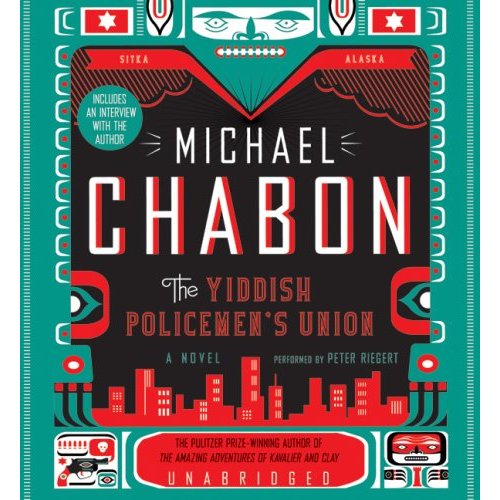
Yesterday afternoon, I finished listening to the audiobook version of Michael Chabon’s much heralded 2007 novel, The Yiddish Policemen’s Union, read quite competently by Peter Riegert.

I like audiobooks. They give me a chance to catch up with a lot of stuff that I otherwise wouldn’t have the time to read. Some people have a problem with audiobooks; apparently no one ever read a story to them. Or they’re just uptight. But that’s not what this is about. See, before I start picking at TYPU, I just want to preempt any Chabon fans saying: “Well, if you actually read the book, you would’ve liked it better.” No. I’m really good at listening to books on CD. Like, I can even make mental annotations. And I’ve enjoyed plenty of audiobooks in the past. This one, however? Nah.

I’m sure that many of you out there are staunch defenders of Chabon, and I won’t deny that he’s a “literary” writer, and one who, like one of my faves Jonathan Lethem, uses genre tropes and styles to great rhetorical effect. That said: this “detective story” is a completely overwritten, self-conscious barrage of hyperboles that rarely engaged me; worst of all,  the book leads nowhere. In Chabon’s alternate reality, the Jewish diaspora continues into the Alaskan frontier. On the eve of the Yiddish settlement of Sitka’s Reversion–and the attendant displacement of the Jews–Detective Landsman investigates the murder of a young man, the son of an Orthodox gangster, who may or may not have been the messiah. There are all sorts of other problems, too, of course. Lots of problems=good writing, right?

In short, Chabon takes a cool premise–(what he believes to be) a Chandleresque detective story set in an alternate universe (à la PK Dicks’ The Man in the High Tower)–and crams in far too many tertiary plots, red herrings, and awkward symbols. Although Chabon’s prose is often funny and sometimes moving, in TYPU, his love for his own exaggerated metaphors and overstuffed similes distracts from the pacing and rhythm in what should be a gripping murder-mystery full of intrigue and suspense. Instead, I found TYPU to be clunky, and at times down right dull, but I kept listening: this book had gotten rave reviews, right? It was at the end of the book, when Chabon suddenly shifts perspective and lazily dumps an entire plot-essential back story on the reader, that I began to realize that this book was not the detective story it was claiming to be. No, the detective story was, like, a ruse, a trope, a form for Chabon to utilize in telling a story of Jewish identity, loss (infanticide lurks at the heart of this novel), and the metaphysical significance of chess. Chabon doesn’t really care about telling a good detective story (compare to Lethem’s lovelier and leaner Motherless Brooklyn, a detective novel that succeeds in telling a good mystery story and being all deep and shit). Instead, Chabon is happy to deadpan pseudophilosophy and use dippy conspiracy theories to help resolve his dangling plot threads. Not recommended.
We Who Are Not as Others–Daniel P. Mannix

we1.jpg

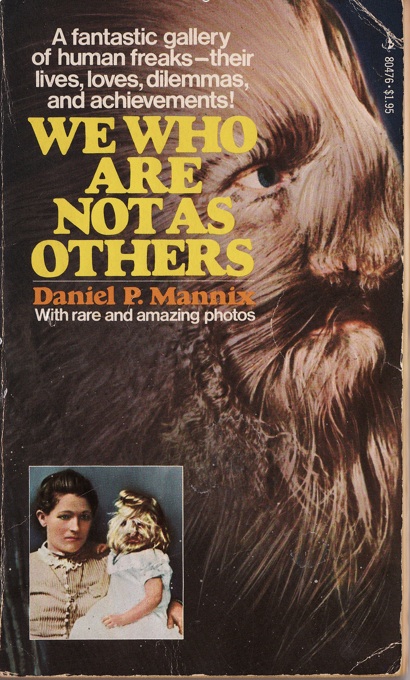
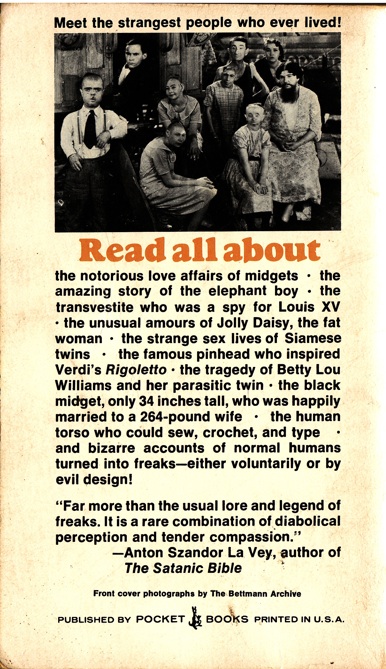
I’m not exactly sure if I stole Daniel P. Mannix’s immortal classic We Who Are Not as Others or if it was in a box of free books. I was in the eighth grade; it was the tail-end of a class trip to colonial Williamsburg, and I guess we had some time to kill, because they (they being the adults in charge) took us to a huge outdoor flea market. This was 1991 and Spike Lee’s Malcolm X had initiated a fad of wearing ball caps with a large solitary X emblazoned upon said cap. Some jokers at the flea market were selling hats emblazoned with a large solitary O, which the nimrod jocks in our class really thought was funny. They all bought the O hats; the counter-fad lasted about a fortnight after the Virginia trip. My love for We Who Are Not as Others, however, is immortal. My friend Tilford was rooting through a box of books: he claimed that the books were all free, although there was really nothing to indicate this. The mercenary setting of the flea market I now recall doesn’t seem to support Tilford’s assessment of the box. Nevertheless, we each wound up with a copy of We Who Are Not as Others. I read this book every year at some point. I implore you to read the back cover:

we2.jpg

Look, I can’t top that, and I’m not going to even try. The blurb is wholly accurate. Anton LaVey’s assessment (and the fact that the leader of the Church of Satan endorses the book also attests to its literary merit) is spot on: this is a tender, tender piece of literature. Although We Who Are Not as Others was withdrawn only a month after its initial 1976 publication, it was fortunately reprinted in 2000 by Juno books, and is still available.

we41.jpg

“[…] only one anus between them”–you must admire Mannix’s attention to detail. Good stuff.

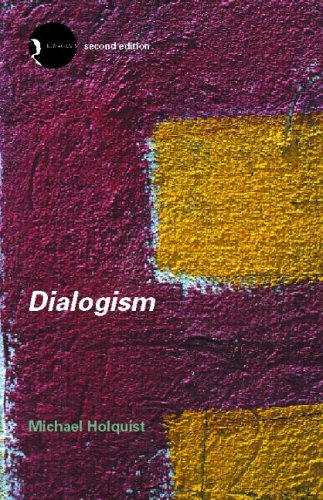
Dialogism–Michael Holquist

dialogism.jpg

Michael Holquist’s Dialogism, a highly approachable introduction to the theory of Mikhail Bakhtin, is the most enjoyable book of literary theory I’ve wrapped my head around in quite a while. Bakhtin’s dialogism is–and I’m drastically paraphrasing here–a way of interpreting texts in terms of the way that they “speak” to other texts. In Bakhtinian dialogism, language exists in an endless play of call and response, of modulation and echo of all language that has come before and all language that is to come after. Written in short, concise bursts of information, Holquist’s Dialogism illuminates Bakhtin’s complex ideas; additionally, Holquist reads Bakhtin against heavyweights like Roman Jakobson, Kant, Saussure, and, uh, Albert Einstein. Most useful and enlightening of all are Holquist’s own dialogical readings, particularly his reading of Shelley’s Frankenstein. Dialogism is an essential introduction to an important philosopher, and, more importantly, a pretty good read.

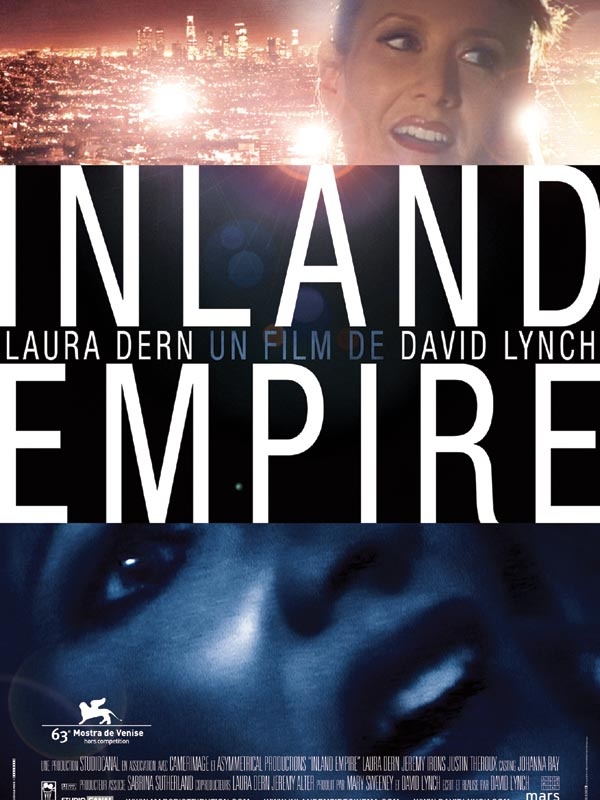
INLAND EMPIRE–David Lynch

inland-empire.jpg

There’s so much going on in David Lynch’s INLAND EMPIRE that I’ll give you the quick review up front: if you like David Lynch films (I do), you’ll love this film (I did)–it’s arguably his most ambitious to date and belongs in the canon of great Lynch films along with Blue Velvet and Mulholland Dr. Get a hold of it and watch it right away. If you don’t like David Lynch films, you won’t like INLAND EMPIRE–but you already knew that, didn’t you?

Contrary to some of the internet rumors and poorly conceived reviews out there, INLAND EMPIRE actually does have a plot, complete with an honest-to-goodness resolution full of redemption and love. However, the fragmentary and elliptical nature of the film will no doubt confound anyone who tries to actively resist it: like Mulholland Dr. before it, this is one you need to just let happen to you. Attempts to impose your own system of narrative logic will probably result in headaches and frustration. You see, INLAND EMPIRE is really a time-travel movie, and time-travel movies–the good ones–are always resistant to narrative logic (see the Grandfather Paradox, etc.).

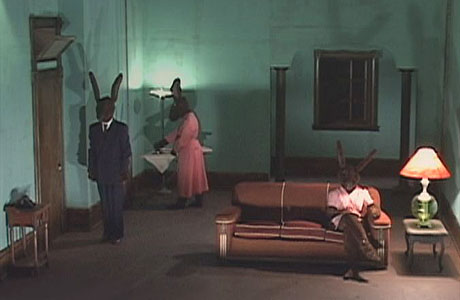
The story begins with a gypsy-witch’s curse: she visits actress Nikki Grace (played by Laura Dern who appears in almost every scene of the movie, and is truly fantastic) and warns her about the coveted film role she’s about to land. It turns out that the film, On High in Blue Tomorrows, is a remake of a Polish film called 49 that was never finished because the two leads were murdered. “If it was tomorrow,” the gypsy croaks, pointing across the room, “you would be sitting over there. Do you see?” And Nikki does see: the rest of the film may or may not be a vision prompted by the gypsy. However, my phrase “The story begins” at the beginning of this paragraph was not entirely accurate: before we even meet Dern’s character, we see a light projection and a phonograph needle, a weeping woman trapped in a room watching a chilling sitcom starring bunny people (INLAND EMPIRE thus gets to go on a special list of movies featuring scary rabbits, including favorites Donny Darko and Sexy Beast), and a strange scene with a Polish prostitute.

inland460.jpg

So there are plenty of frames to this frame-tale, and the narrative only continues inland as the movie progresses, exploring a multiplicity of spaces and times. Dern’s Nikki morphs into new and different characters–housewives and hookers–even as she passively stands on the wall, a frightened voyeur robbed of all agency. And in many ways this is the major theme of the movie: how to find agency and self-determination in a world where time and place–context–are the main components and constituents of identity. INLAND EMPIRE breaks down the lines between actors and prostitutes and really any other job, suggesting that perhaps we all have some identity as a whore, an identity thrust on us by location and time, an identity that we are always struggling against.

But this is really just one of many themes in the movie. The usual Lynch tropes are here: pop nostalgia with a sinister tinge, stilted dialog, lush red curtains, characters that seem of vital importance who never show up again, cryptic symbols that may or may not be symbols at all, etc. etc. etc. Despite its three hour running time, INLAND EMPIRE never lags or sags, in large part because so much weird stuff is going on, but also because in many ways this movie is a distillation of every other Lynch film: we get the murder mystery of Twin Peaks, the abuse-of-women theme inherent in Blue Velvet, the Wizard of Oz riffing from Wild at Heart, the voyeur-terror of Lost Highway, the Haunted Hollywood and doppelganger mindfuck of Mulholland Dr., and the general creepy weirdness that’s underscored every Lynch film since Eraserhead.

gross_lynch.jpg

INLAND EMPIRE is shot entirely on digital video, a format that Lynch swears is the future of cinema. I’m not sure about that–although his movie is a beautiful masterpiece of textured light and composition, not all directors are painters like Lynch; in someone else’s less-gifted hands this movie could’ve been, visually speaking, a muddled mess. Still, it seems for now Lynch is determined to continue shooting on DV.

A couple of days before I saw INLAND EMPIRE, I heard most of an interview with Lynch on NPR’s Talk of the Nation. Neil Conan asked him what the last great movie he saw in the theaters was, and, to my surprise, he said that it was The Bourne Ultimatum, a movie he touted as being “excellent” or “perfect” or something like that. At first this struck me as odd–Lynch going to see a pretty straightforward–albeit smart–action movie? But on further reflection there’s nothing odd about this. I think that Lynch sees his films not as outsider films or art films per se, but as something more akin to the Hollywood tradition–I’m sure he’s not deceived that his films are as accessible as the Bourne films, but I do believe that he is a pop artist (or Pop Artist, if you prefer)–he had a huge hit television show, didn’t he? And INLAND EMPIRE not only fits in with Lynch’s growing pop art legacy, it could be the masterpiece of his oeuvre. Let’s hope that that legacy continues to grow; INLAND EMPIRE suggests an artist in his prime who will continue making great films.

How Bluegrass Music Destroyed My Life–John Fahey

dc124.gif

As astute reader Nicky Longlunch pointed out in a comment on my last post on 50 Great Guitarists, John Fahey was not only a fantastic guitarist, he was also a published author. Fahey wrote three books–1970’s Charley Patton, a biography of that great blues guitarist (out of print now unless you buy the Charley Patton box set); 2000’s How Bluegrass Music Destroyed My Life, a collection of mostly humorous anecdotes and stories; and the posthumously published Vampire Vultures, a collection of Fahey’s letters, limericks, and interviews. HBMDML and VV are both still in print from Drag City (you can also read a PDF extract from HBMDML there).

I remember enjoying How Bluegrass Music Destroyed My Life back when it was first published, when Mr. Longlunch was kind enough to let me borrow it (I returned it folks!). I recall it as being funny, insightful, and Bukowski-spare; I recall it also exhibiting the same raw pathos that Bukowski infused in his work, but with none of the vulgar meanness. The best parts of the book detail Fahey’s young years in Maryland. I can’t really remember much else. I’d love to read it again, but I can’t really shell out $20 for a paperback right now. And unfortunately, I can’t just borrow it from Longlunch again, because he is no longer in possession.

In his comment, Longlunch griped at me to “Focus!” and he’s right–this blog is supposed to be focused on stolen books, and, poor guy, his copy of HBMDML is (I’m guessing) somewhere in Texas. Or he’s just misplaced it for the past seven years. Or he’s lying about it being MIA because he doesn’t want to loan it out. Which is fair, I guess.

Before I leave, I should also point out that Fahey isn’t the only author I overlooked in yesterday’s post. For years now, Pete Townshend has been doing “research” for his as-yet-unpublished autobiography. So we have that to look forward to.

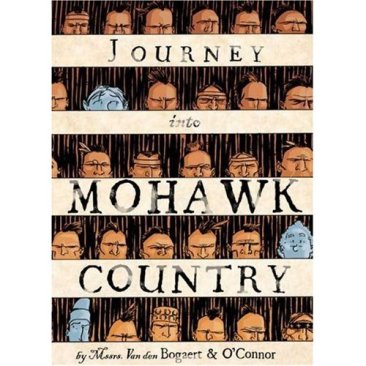
Journey into Mohawk Country–Van den Bogaert and O’Connor


mohawk.jpg

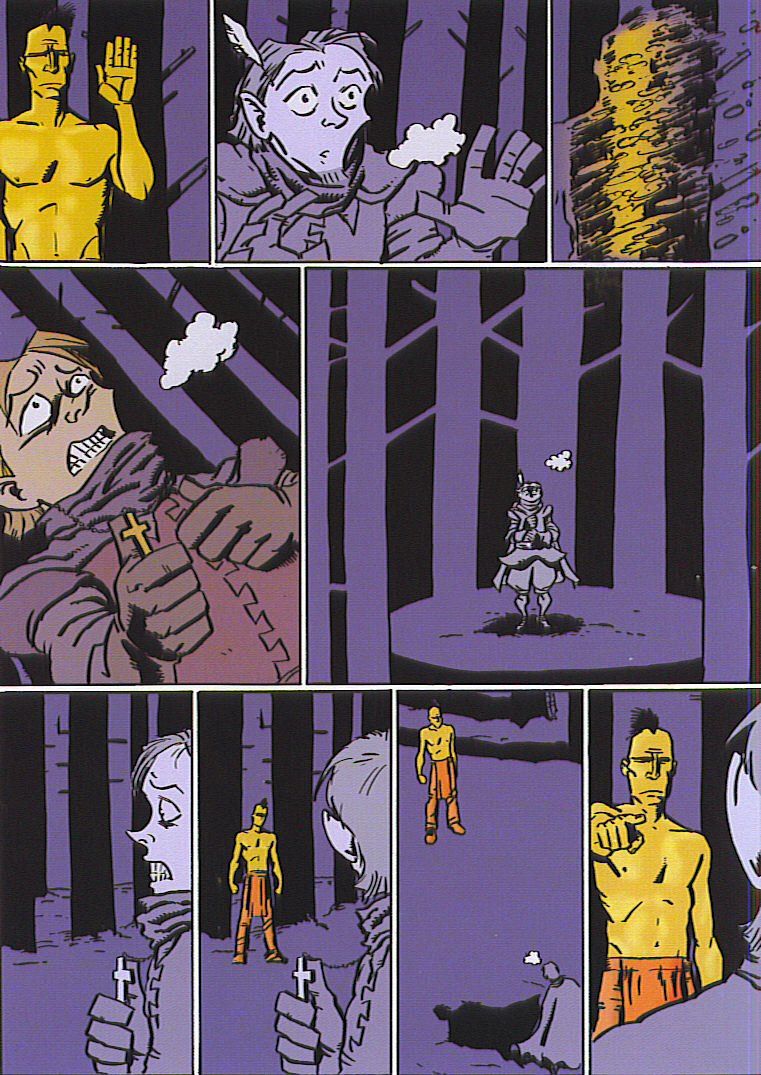
Journey into Mohawk Country is George O’Connor’s adaptation of Harmen Meyndertsz Van den Bogaert’s diary, an historical document detailing the young Dutch explorer’s 1634 journey out west of New Amsterdam to make contact with Indian villages for trade. O’Connor uses Van den Bogaert’s words verbatim, but his graphic novel format allows him extraordinary liberties with the journal’s account. Vague descriptions are literally fleshed out; O’Connor finds innuendo in even the simplest of Van den Bogaert’s entries, illustrating a between-the-lines reading of the Dutchman’s diary. O’Connor even manages to stick a strange epiphanic mystical revelation scene in there. The story itself is pretty simple: Van den Bogaert and his two companions head out into Mohawk country, meet and trade with Indians, eat bear, learn about some alien customs (including a sequence where some Indians show Van den Bogaert how to heal the sick by vomiting on them), and go back to Fort Orange. It’s really the little interpretive scenes around the text-proper, courtesy of O’Connor’s cartoony pictures, that make Journey into Mohawk Country such a pleasure to read. O’Connor’s work here illustrates the first-person narrative’s slippery claims on truth and the limited viability of a “true” historical account. Good stuff.

mohawk2.jpg

No Country for Old Men–Cormac McCarthy

no-country.jpg

Didn’t we write about No Country for Old Men a week or two ago? Yeah, but that was for the upcoming Coen brothers movie; this post is a review of the audiobook, and I’m not creative enough to think of a different title.

So we listened to the entirety of Cormac McCarthy’s No Country for Old Men over the course of two drives: from Jacksonville to St. Pete Beach and back. First off, as far as books-on-CD goes, this one was pretty good. Native Texan Tom Stechshulte manages to get all of the male characters spot on (the women in the novel sound kind of ridiculous though), and the action-filled plot, tight pacing, and simple sentences make for an easy-to-follow-while-driving listening experience (this is my number one criterion for an audiobook–you have to be able to follow the plot while navigating a road littered with truckers and asshole teenagers. F’r’instance, Faulkner’s short stories are almost impossible to follow in audiobook format).

Set in 1980, No Country for Old Men is the story of Llewellyn Moss, a Vietnam vet who stumbles across the aftermath of a drug deal gone bad and a suitcase with 2.4 million dollars in it. Of course, he takes the money and runs. Assassin Chigurh is hot on his heels to collect the drug money, leaving a bloody wake of murder and chaos. Sheriff Bell, a WWII vet who first-person narrates the beginning of each section of the book, is also on the case, trying to track down Llewellyn before he gets himself killed.

The first five discs (of seven) of the book were excellent–an exercise in genre fiction–the crime-suspense novel–that transcends the limits of the genre’s tropes. McCarthy’s spare prose moves at just the right pace, with just the right amount of “literary” interjection. However, the end of the novel morphs (evolves or devolves?) into a meditation on war and the changing nature of America and the American people. McCarthy’s symbols and metaphors seem heavy-handed and downright clunky at times, and in the end, the book becomes something of a reflection on personal failures and regrets, and how these personal failures add up to national failures.

Perhaps because I was driving, and because I had been so involved with characters over the course of five compact discs who suddenly disappeared in the narrative, I was disappointed in the end. Perhaps if I had read the book instead of listening to it on compact disc while driving, I would have found the ending more profound, or even enjoyable. Who knows–reading books vs. listening to them is probably a subject for another post. I do think that the Coen brothers will make a fantastic movie out of this story–potentially on par with Fargo. We’ll see.

Rescue Dawn–Werner Herzog

rescuedawn2.jpg

So my uncle and I went to see Rescue Dawn, the new Werner Herzog film. Rescue Dawn is the true story of Dieter Dengler (not a porn name), an Air Force pilot who crashed his plane during a mission over Laos in 1966. Dengler was captured, held as a POW, and tortured by his captors. Dengler organized and executed a daring escape, leading the other prisoners out of the camp. In 1997 Herzog made a documentary about Dengler’s story called Little Dieter Needs to Fly. I have not seen that film.

My expectations for Rescue Dawn were high–I love Herzog’s films, which mix high adventure with a sense of naturalistic realism and psychological surrealism–and I love Christian Bale, he of American Psycho fame, who plays Dengler. I suppose my expectations were too high, because Rescue Dawn wasn’t nearly as good as I thought it would be. My uncle was also slightly disappointed. It was by no means bad, but it wasn’t nearly as good as its reviews would make it seem; additionally, it’s practically a Hollywood action movie (complete with the big happy ending in front of an assembled audience of cheering extras)–something I wouldn’t have expected from Herzog. Bale is excellent though, as is co-star Steve Zahn, and the setting and pacing of the film make for an exciting afternoon. Then again, so does Missing in Action.

I may be going a little rough on Rescue Dawn–it’s better than 99% of the schlock out there, and in a summer crowded with franchise sequels, I think that moviegoers (i.e. people who go to the movies every week) should go check it out. Chalk my disappointment up to high expectations. Netflix addicted hermits like myself should probably just wait for the DVD.

Sanctuary–William Faulkner

sanctuary.jpg

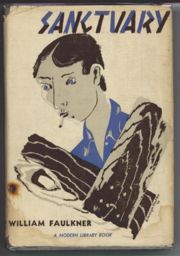
So I’ve been reading William Faulkner’s Sanctuary over the past few days. This was Faulkner’s breakthrough novel, the one that made him famous when it was published in 1931. He claimed that it was pot-boiler pulp fiction, written purely to make money, but who knows. I mean, we’re talking about a guy who chose to start spelling his name with a ‘u’ for some obscure reason–an author who worked from day one at creating the myth of himself as author. So who knows–maybe he actually thought he was writing a great piece of literature when he produced this lurid drivel.

Sanctuary is most famous for the rape of Southern debutante Temple Drake. She is raped with a corn cob. There you go. That’s pretty much all you need to know about this book. However, if you’re into elliptical and confusing depictions of violence, drunken debauchery, creepy voyeurism, and post-lynching sodomy, Sanctuary just might be the book for you.

There are two film adaptations of Sanctuary–1933’s The Story of Temple Drake, and 1961’s Sanctuary. Neither are readily available on VHS or DVD, and for good reason. They’re both pretty terrible. Still, the early sixties take on Sanctuary manages to capture the backwoods grotesque that saturates the novel. Actually, David Lynch could make a pretty decent film out of this.

My final analysis: I’m very very happy that I only have one more novel of Faulkner’s to read–Intruder in the Dust. Sanctuary did nothing but help consolidate my prejudice against Faulkner and my belief that the notion of Faulkner as an American Great is nothing but a scam.

The Road–Cormac McCarthy

114930__road_l.jpg

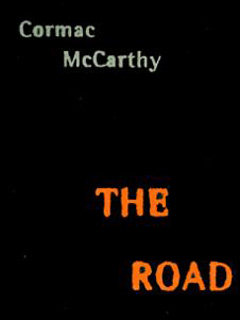
At this point, I don’t know if it does any good to anyone for me to throw in my two cents regarding Cormac McCarthy’s latest novel The Road. This book won all sorts of awards and critical praise, topped The Believer‘s 2006 readers’ poll, and even became an Oprah’s Book Club selection. In fact, Cormac McCarthy gave his first ever television interview last month on The Oprah Winfrey Show, and I actually watched the damn thing. I was in the hospital; my daughter had just been born. Anyway, like I was saying, after the publication of The Road, everyone in the field of arts and letters and criticism seems to have simultaneously decided to confer “living master” status on Mr. McCarthy, most noting that he is an American writer. This is something we’re desperate for in American literature–masters of the art. And, if you cannot tell already, I have a somewhat cynical attitude toward this desperation, and a wary if not pessimistic approach to anything so unanimously lauded. So when my mother-in-law gave me a copy of The Road as a belated birthday gift–only a few days after the Oprah interview, in fact–I felt a mixture of intrigue and hesitation. I was reading The Children’s Hospital at the time (#3 on The Believer list, incidentally) which gave me some time and distance from the Oprah interview and some of the hype. When I finally finished The Children’s Hospital, I gave myself a little more distance, reading a few Faulkner short stories and a few magazine articles. Finally, I picked up The Road; I read about half of it in one sitting on a Friday night, finishing the rest of it over that weekend. I had to slow down in the end, because I knew that this book was a tragedy; I knew that (more) bad things were going to happen, and I loved the little boy and the man–the protagonists of the novel–and simply put, I put off reading as a way of putting off their deaths (I did the same with the end of The Children’s Hospital; also, just to get it out of the way, both novels are post-apocalyptic. Done with comparisons).

The premise of The Road will remind you of any number of other post-apocalyptic stories you’ve read or seen: the world is over and everything has gone to shit. However, McCarthy is unrelenting in his refusal to provide an explanation or even description for the epic disaster that precedes the events of the novel. Where most stories in the end-of-the-world genre delight in some sort of mythology, The Road eschews any fantastic back story. Instead, we get fragments, glimpses, the briefest hints. The overall effect of this lack of a reason is a stunning, awesome loneliness. This is an abandoned world, desolate, dead, cold, covered in ash. Nothing can live. Besides, the real story of The Road is the touching relationship between a nameless father and son. These are “the good guys” who “carry the fire”–this is the only mythology of the novel, the father’s only lessons to the son. The pair travels south, although their purpose is simply to stay alive, to not die. A large amount of the text is devoted to the simple day-to-day scavenging that is necessary to live, with occasional encounters with other living people being rare, unexpected, and ultimately meaningless. In a world where living people equal a good source of protein, no one can really help these two; all other people are threats–“the bad guys.” And as the novel progresses, the young boy begins to realize that the world is not so simple, that there may not be such a thing as “good guys” and “bad guys.”

The bond between the father and son, so beautifully expressed in McCarthy’s spartan prose, genuinely moved me. Their relationship propels a narrative absent of all but the dimmest kernel of hope; indeed, it doesn’t seem like there can be any future for these two at all in a world where nothing–no plants, no animals–can live. Which brings me to the last few pages of the book. I have a problem with this. First, I guess I should give a spoiler warning. Honestly, I believe that you can know the end of the book and not have it spoiled for you, but in the interest of etiquette: SPOILER WARNING! SPOILER WARNING! SPOILER WARNING! There. May we continue?

So yes, from the beginning of this book, it’s evident that either the father or the boy or both will die by the end of the book. And yes, the father does die, in a scene so moving that I actually cried. Unbelievably, however, McCarthy cops out in the last few pages of the book, and provides a deus ex machina in the form of a loving surrogate family to protect the boy. I mean, the new father figure comes literally out of nowhere and more or less says: “Okay, you’ll be safe now. Don’t worry readers, the kid is gonna make it!” This improbable resolution seems to contradict the 283 pages or so of the novel that preceded it. It seems far more likely in the world and vision that McCarthy crafted that the boy would be left alone to fend for himself. It’s almost as if McCarthy loved the boy too much to see him on his own, unattended to. And of course, a lot of his readers probably felt the same way–I certainly did. I really did. I wanted to see that kid make it, but at the same time the logic of the narrative does not support the ending that McCarthy wrote. Still, this really is a fantastic book–perhaps a bit overrated, but excellent nonetheless. Highly recommended.

The Children’s Hospital — Chris Adrian

childrenshospital.jpg

“The book started out a lot more like a big happy Love Boat episode, then 9/11 (and all that followed) happened and blew it in a new direction.”–Chris Adrian (McSweeney’s interview)

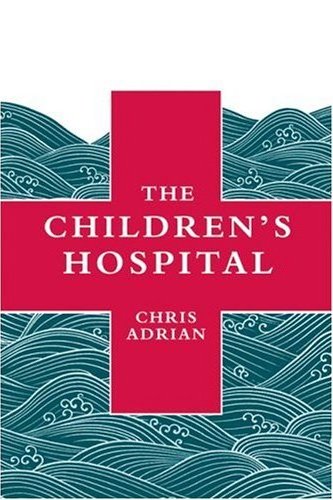
Chris Adrian’s 2006 novel The Children’s Hospital begins with the end of the world. A flood of (excuse me) biblical proportions drowns every living thing on earth with the exception of a children’s hospital which has been specially engineered with the aid of an angel to withstand both the flood as well as life at sea. The residents of the newly nautical hospital–doctors, med students, specialists, nurses, some 699 sick children, portions of their families and sundry others–must navigate an uncertain future drenched in despair and loss. Their mission of helping the ill is the only thing that sustains them–initially.

Central to the story is Jemma Claflin, a mediocre third-year med student with a haunted past. Years before the deluge, each member of her family and her long-term boyfriend died in a horrific way, leaving Jemma unable to love, let alone believe in a positive future. However, as the book progresses, it becomes apparent that Jemma will have to best her fear and become the hero of this epic novel.

I really, really enjoyed The Children’s Hospital. Adrian’s writing communicates a stirring mix of immediacy and pathos, tempered in a cynical humor that sharply bites at any hint of sentimentality. Despite its 615 pages, epic scale, and use of multiple narrative viewpoints, The Children’s Hospital never sprawls into logorrhea–Adrian holds the plot reins tightly at all times, sparingly measuring details which accrue neatly to an affecting payoff. The middle 200 page section of this book is easily the best thing I’ve read in the past few years. I actually had to stand up to read it–the highest Biblioklept endorsement there is. Yes folks–if you have to stand up to read it, it’s truly excellent stuff.

You can read the entirety of Chris Adrian’s short story “A Better Angel” here.

if…. — Lindsay Anderson

41ahznwegjl_ss500_.jpg

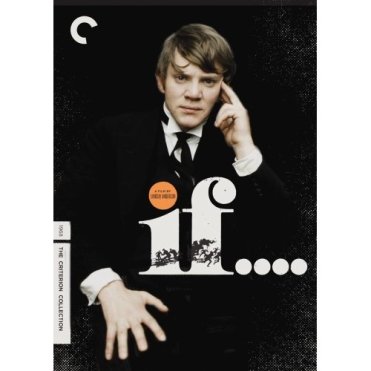
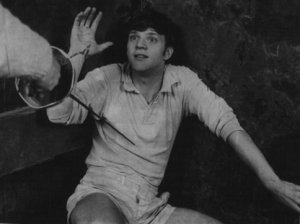
Criterion has finally given Lindsay Anderson‘s 1968 classic if…. a proper DVD release. if…. is one of my all time favorite films. Mick Travis (played with savage aplomb by a very young Malcolm McDowell) leads “The Crusaders,” a band of rebels who defy “The Whips,” the cruel upperclassmen who mete out harsh punishments at their stringent English boarding school. “What I want to know is when do we live?” asks restless Mick. However, the life of individual freedom that he wants to live is so suppressed by the cruel and dominating hierarchy of his school (a microcosm of British society) that he must take liberty by force. In one scene, the Crusaders playfully fence with each other, declaring “Death to all tyrants!” The playfulness quickly slips into violence, as the repressed urges of these would-be revolutionaries flare up. When Mick is cut, he shows his wounded hand and declares with pride “Blood! Real blood!”

if1.jpg

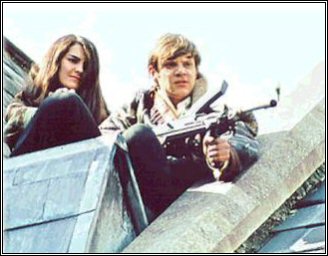
Anderson loads if…. with myriad revolutionary images that foreshadow the film’s shocking ending, at the same time tempering if…. with a surrealist sense of humor that satirizes the inherent dangers in institutionalized education and groupthink in general. if…. is bitingly funny, oddly sexy, and unlike any other film I’ve ever seen. The new edition looks great (much better than my VHS dub) and sounds great, and the commentary track provided by Malcolm McDowell and film critic David Robinson is insightful and surely a must for fans of the film. But who am I kidding, if you’re a fan of this film you’ve already seen the release and listened to the commentary–right?

if.jpg

U.S.!–Chris Bachelder

us.jpg

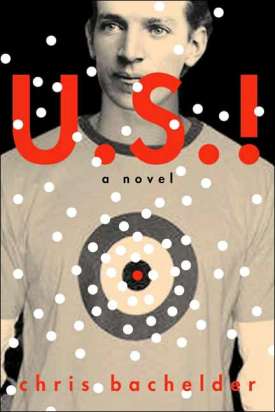
Chris Bachelder‘s superb novel U.S.! portrays an alternate (and somewhat hyperbolic) United States where the Left (big-L) keeps bringing Upton Sinclair (that guy who wrote The Jungle (maybe you read it in high school (I didn’t))) back to life. These would-be revolutionaries try to keep Sinclair (and hope) alive in spite of the fact that right-wing reactionary populist heroes keep assassinating him. In fact, in U.S.!, Upton Sinclair assassination is its own cottage industry.

Bachelder uses a dazzling range of approaches in the first 200 pages of the novel, employing everything from folk song lyrics to Amazon reviews to talk show transcripts in order to flesh out his alternate universe. The first part of U.S.! essentially sets up the last third of the novel, a relatively straight-forward third-person omniscient account of a Fourth of July book-burning in a Southern state. I won’t reveal any more of the plot, because I’m lazy and you should read this book for yourself.

Bachelder’s writing crackles with wit and surprising warmth, especially in the character of Sinclair, who comes across as a (literally) dusty out-of-touch relic, an idealist as equally unable to effect any change in the modern world as he was able to in his own era. Sinclair and the would-be revolutionaries who resuscitate him serve as Bachelder’s critique on America’s stale, impotent left (or is it Left?). Bachelder also savagely criticizes Sinclair’s rhetoric; one of the funniest sections of the first part of the book involves an analysis of exclamation points (and their overuse) in Sinclair’s novels. Toward the end of the novel, Bachelder employs a meta-critical strategy of adding more and more exclamation points to his own writing; the exaggerated gestures comically highlight the cartoonishly grotesque world of U.S.!, at the same time counterbalancing the understated but profound sadness of the novel.

My only gripe with U.S.! would be Bachelder’s rare lapse into what I like to call “workshop fiction”–fiction that seems the contrived and overwritten product of MFA work-shopping (did I mention that Bachelder got his MFA at my alma mater, the University of Florida at Gainesville? (other great writers associated with this glorious institution include Padgett Powell and Harry Crews)). As I noted though, these instances are rare and mostly notable because the majority of the novel is so fresh, original, and readable. This book is funny, poignant, and you should read it.

Never Break the Chain–Cath Carroll on Fleetwood Mac

neverbreakthechain.jpg

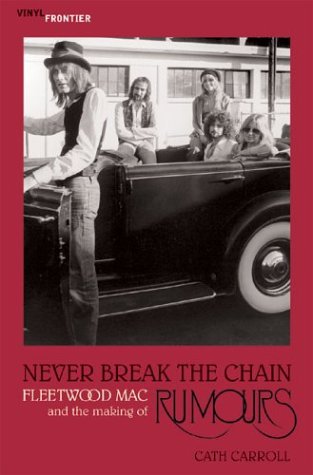
Never Break the Chain: Fleetwood Mac and the Making of Rumours by Cath Carroll (yes, that Cath Carroll) provides an excellent overview of the long, strange career of Mick Fleetwood and company. Like many of you (I’m guessing), I was introduced to Fleetwood Mac via my parents, who played Rumours ad infinitum. It was one of the first albums I “owned”–from the vinyl, I recorded a cassette copy that I played on my Sony Walkman repeatedly. I believe Born on the USA was on the other side. As the years passed, Fleetwood Mac somehow became very uncool to my ears (i.e., they did not rap, there was a paucity of shredding metallic guitar overtures, etc), then slightly cooler, then totally uncool (i.e. the Clintons, the reunion tour), then very very cool (thank you college, thank you Tusk).

Never Break the Chain is organized chronologically, making it easy for readers such as myself to skip around to sections of greater interest. The majority of Carroll’s research comes from previously published articles from magazines like Creem and Rolling Stone, as well as a few interviews. Carroll navigates the Mac’s bizarre history, detailing the numerous personnel changes. Mick Fleetwood is the book’s undisputed hero, the rock(er) who kept the band together through the tumultuous tempest of three decades. It’s fascinating to see how the band transforms from a British blues rock group from the John Mayall school of rock, to the melodic songwriting team that recorded the utterly-Western masterpiece Rumours.

As the title suggests, the making of Rumours becomes the focal point of the book. Carroll explores the bizarre love quadrangles that erupted within the band during that time, although for my taste there wasn’t quite enough VH1’s Behind the Music trashiness to her analysis. Ditto for the legendary cocaine use that supposedly fueled the FM’s late seventies output, which is largely glossed over.  However, gearheads who can’t get enough descriptions of studio equipment, instrumentation, and production techniques will love this book. Carroll goes into very detailed accounts of how FM approached songwriting–some of the most interesting passages recount how the band arrived at the album sequences. Plenty of in-fighting, plenty of fights with the studio, and a whole chapter devoted to Tusk. On the whole not bad. However, no substitution for actually listening to the albums.

Infinite Infanticide (Aldous Huxley’s Ape and Essence)

A few weeks ago, I saw (and loved) Children of Men, and it reminded me of one of my favorite books of all time, Ape and Essence by Alduous Huxley.

Ape and Essence

If you’ve only read one book by Huxley, chances are it was Brave New World, an incredibly prescient novel that really “got it right” so to speak–especially when compared to George Orwell’s vision of a dystopian future, 1984. In 1984, Orwell assumes that a totalitarian regime will hide and distort information from a suppressed public, that a Big Brother will watch our every move. Huxley’s BNW posits a future where the public could care less about information at all, a public that willingly cedes an antiquated ideal of “privacy.” In 1984, books are banned; in BNW no one wants to read (and who would want to read when a trip to the feelies provides a total synesthetic experience?)
But where was I…

So. Yes. Hmmm. Ape and Essence. This is a fantastic book, thoroughly entertaining–blackly sardonic, acidic and biting, yet funny and moving, full of pathos and dread and the possibility of loss, extinction, the end of beauty. I have forced this book on just about everyone I know, to the point that it is now Duck-taped together. Ape and Essence is a frame tale of sorts: it begins (significantly, on the day of Gandhi’s assassination) with two Hollywood types discovering the screenplay for an unmade movie called Ape and Essence. Intrigued by the strange story, the two head out to the desert to meet the writer, only to find that he’s recently died. The surreal and imagistic screenplay is then presented uncut as the remainder of the book. Ape and Essence presents an illiterate, post-apocalyptic world where grave-robbing is the primary profession. The hero of the story is one Dr. Poole, a scientist from New Zealand (New Zealand was isolated enough to resist nuclear holocaust) who arrives with a team of scientists to the West Coast of America. Poole is quickly separated from the other scientists and forced into slave labor, excavating graves. He finds a world where people worship the satanic god Belial, who they believe, in his anger, is responsible for the high numbers of genetically deformed children. These children are ritualistically slaughtered in purification rites that frame the social discourse of this New America. Additionally, procreation is proscribed to a two week ritual-orgy; other than this fortnight of lust and blood, sex and love are completely forbidden. The rest of the book details Poole’s infatuation with a woman named Loola, and their plan to escape to a rumored colony of “hots,” outsiders who don’t accept Belial and orgies and book burning and so on.


bosch-trittico-carro-fieno-3-inferno-2-bassa_jpg.jpg

Like Children of Men, Ape and Essence presents infanticide as the ultimate negation of progress. In both stories, people are both root and agent of their own destruction. But playing against this self-destructive death drive is the drive for life, for beauty, for sex. Neither story is willing–or able, perhaps–to make a definitive statement on which drive will prevail. Both stories resist “happy endings,” or can only be said to have “happy” endings in the simplest of senses. Ultimately, the endings are inconclusive, unsure, tentative at best. Will the human race die out? Are simple gestures of human fellowship, of poetry, of love, are these enough to conquer the infinite infanticide recapitulated within the narrative framework? We leave the theater feeling some hope, we close the book praying (to who?) that the characters will make it to a (never) Promised Land, but somewhere in the margins of our consciousness lurks the possibility of extinction–the predicate of loss that drives any story worth telling.

Nursing Gorilla


Mythologies–Roland Barthes

“Myth is a language”–Roland Barthes

Everyone should own a copy of Roland BarthesMythologies. Published over 50 years ago, the book seems more relevant than ever. Barthes wields his sense of ironic humor like a scalpel, dissecting the ideological abuse of the post-war spectacle society. In this collection of short essays, Barthes examines the ways in which societies create, use and mediate myths–particularly the way that the “elite,” monied crust of society create new myths–whole systems of myths, really–to control cultural perceptions of “reality.” Barthes uses the language and tools of linguistics in his meditations to examine the malleable space between the signifier and the signified.  Barthes analyzes a range of disparate topics: amateur wrestling, plastic, advertisements for milk and wine, the face of Greta Garbo, children’s toys, and modern film’s conception of the ancient Roman haircut are all considered in relation to how these “everyday” things support the dominant cultural/economic ideology. The methods put forth in  Mythologies are certainly a precursor to what we now call popular culture studies; Barthes is certainly one of the first writers I can think of to dissect mass-mediated, popular culture. And even though it was published half a century ago, Barthes’ keenly ironic style and short-essay format comes across as thoroughly contemporary.

In the final essay of the collection, “Myth Today,” Barthes warns us that the myths we uphold to protect our culture can ultimately destroy the culture. What are the contemporary myth-systems of the United States? What ideology do these myths uphold? Do these myths hold the potential to harm the culture of our great country?

In the Shadow of No Towers–Art Spiegelman

Art Spiegelman’s Maus, released as a graphic novel over twenty years ago, did more to legitimize the comic as an art form than any other work I can think of. It won a Pullitzer Prize Special Award in 1992 (the Pullitzer committee found it hard to classify…perhaps they didn’t want to admit that they were giving a prestigious award to a comic book!), and today Maus is a standard on many college English syllabi.

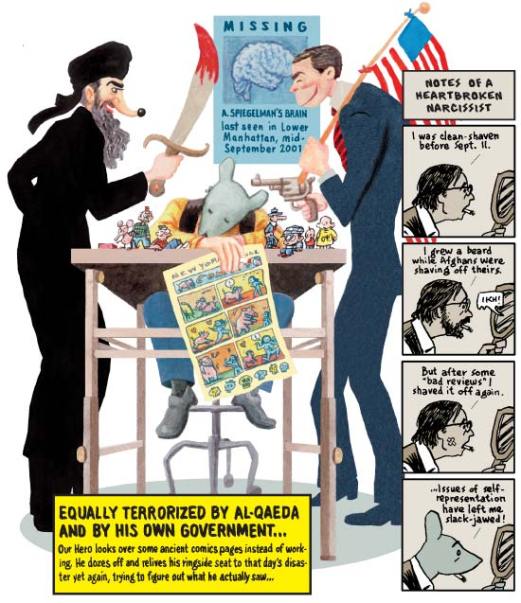
After Maus, Spiegelman worked for The New Yorker for over ten years, quitting in early 2002 after the September 11th attacks to work on a series of broadsheets entitled In the Shadow of No Towers. These broadsheets were collected in 2004 in an unwieldy 15″ x 10″ book.

spiegelman_02_550×637.jpg

Spiegelman lived in downtown Manhattan, right by the towers; his daughter attended school a few blocks away. He saw the towers collapse in person, fleeing for his life with his family. Spiegelman attempts to capture this raw, unmediated, and very personal experience in In the Shadow of No Towers (Sonic Youth’s 2002 album Murray Street works to the same end–only much more abstractly): the narrative is discontiguous, fluctuating from bitter satire to earnest inquiry. Spiegelman’s choice of the broadsheet as his medium (the broadsheets were published monthly by different newspapers as Spiegelman produced them) is tremendously affective: just like the 9/11 attacks, the broadsheets are larger than life, hard to grasp, hyperbolically resisting easy, singular readings. Spiegelman balances bitter attacks against the conformist mentality spurred by the Bush administration with pathos and humor; In the Shadow of No Towers recalls the good-natured satire of broadsheet comics from a hundred years ago, bittersweetening the content. The 2004 collection wisely contextualizes Spiegelman’s work by reprinting broadsheets of “The Yellow Kid” and “The Katzenjammer Kids.”

Like Maus, In the Shadow of No Towers is a fascinating exploration of how disaster confronts and transforms identity. And reflecting its heinous subject, In the Shadow of No Towers ends without concluding: as the foolish Iraq war begins, Spiegelman can no longer shape any meaning or sense from his work. This isn’t a graphic novel–don’t look for a cohesive narrative structure here; instead, In the Shadow of No Towers explores the loose ends, the detritus, the psychic remnants of disaster.