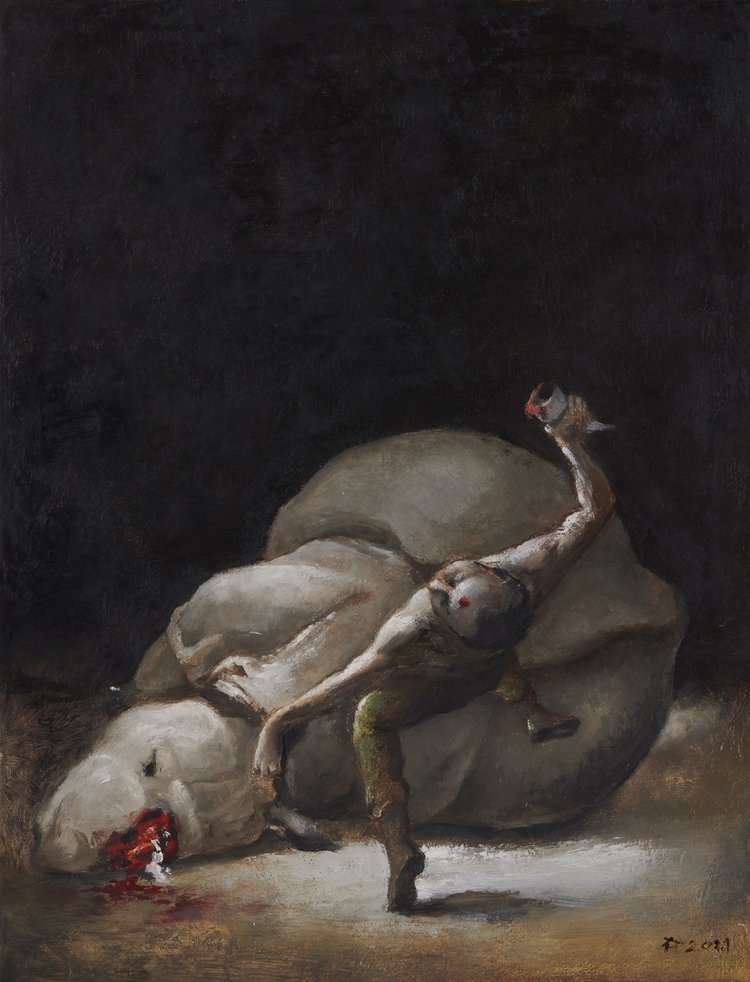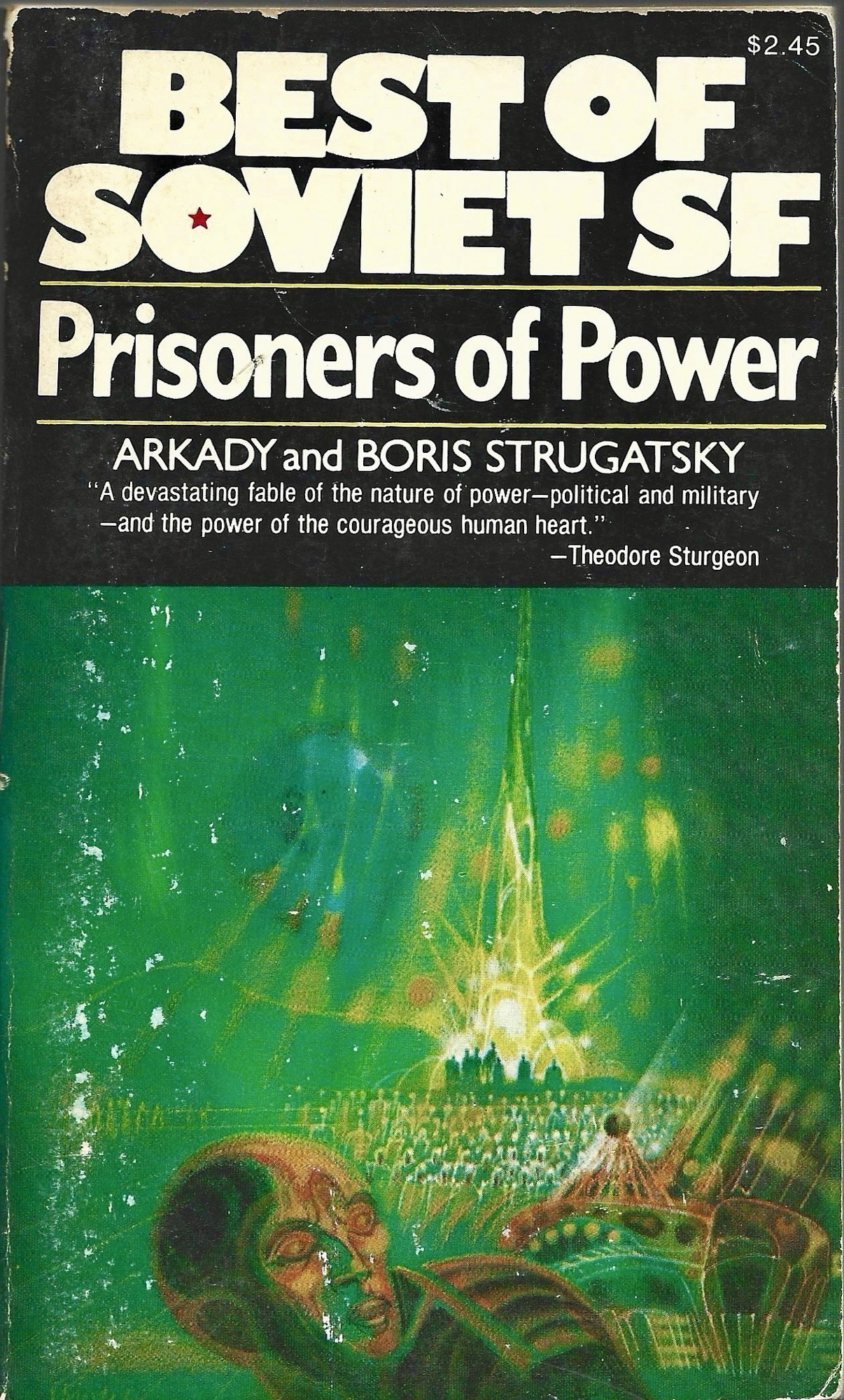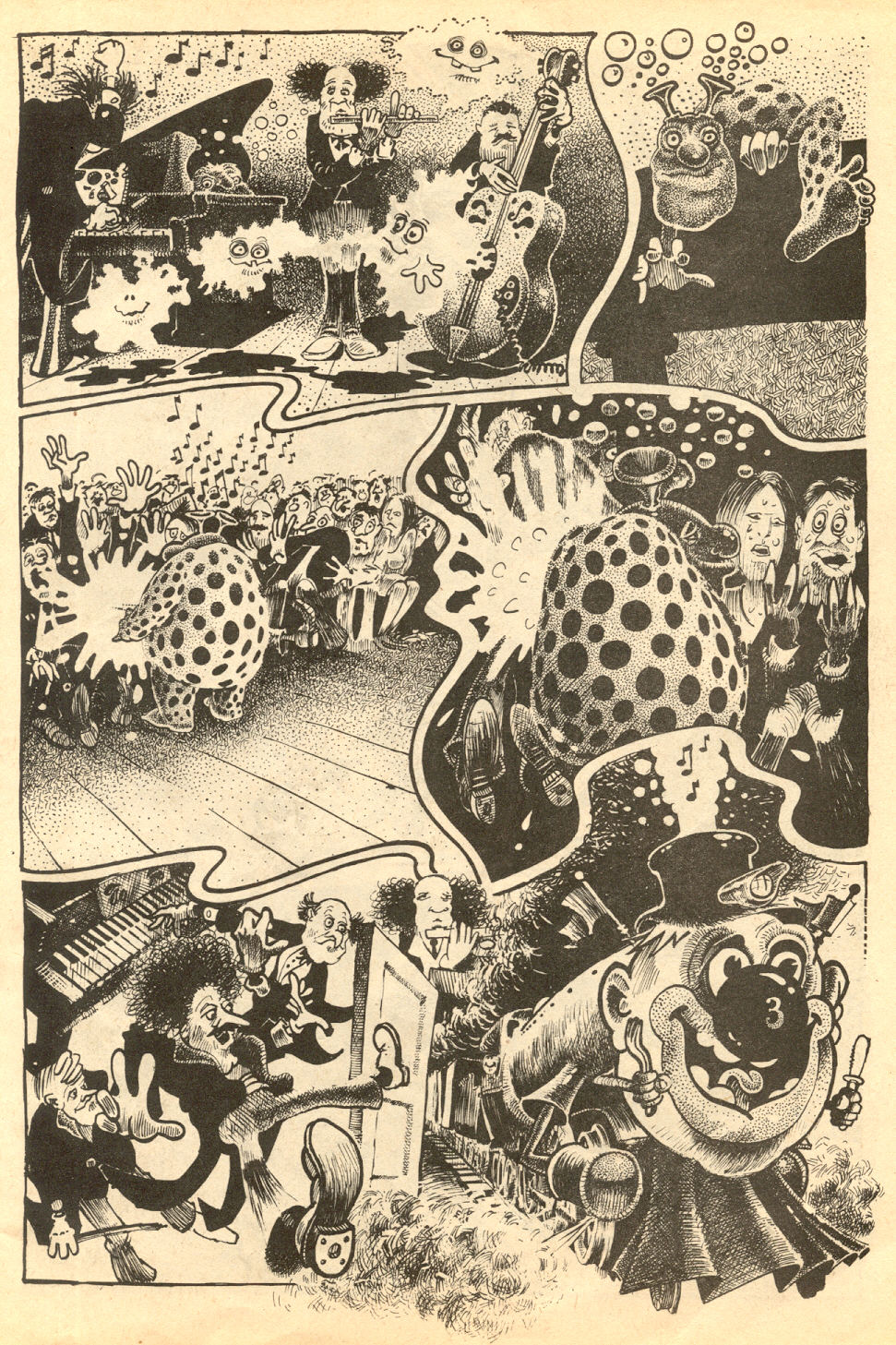
Statements of missingnessness | On Mauro Javier Cárdenas’s prescient novel American Abductions

Mauro Javier Cárdenas’s American Abductions is a novel of relentless, layered consciousness, its immersive, labyrinthine sentences pulling the reader into a fugue of voices, memories, and anxieties. American Abductions takes place in a proximal version of the United States, a digital carceral state where palefaced goons kidnap Latin Americans. Sometimes the abductees are deported; sometimes they are disappeared. Sometimes they tell stories.

The dystopia here is hardly a YA world-building exercise full of hope and heroics. Instead, the novel moves through fragmented, fevered perspectives, primarily those of sisters Ada and Eva their disappeared father, Antonio, a novelist abducted by the Pale Americans, the faceless bureaucratic enforcers of this new regime. The novel oscillates between Ada and Eva’s attempts to reconstruct what happened, Antonio’s own recursive, metafictional writing, and interjections from various other voices—family members, interrogators, digital surveillance logs—until the narrative itself becomes a reflection of the fragmented reality the characters are trapped within.

Yes, American Abductions is bleak, but it is not merely dystopian horror. Cárdenas builds his world through a dizzying interplay of language, wielding the long, unspooling sentence with the precision of Bernhard, Krasznahorkai, and Sebald. Each chapter is a single winding comma splice that careens from realism to surrealism. Cárdenas’s run-ons layer and loop back on themselves, rhetorically mirroring the characters’ attempts to make sense of their unraveling world.

The book moves forward with an absurdist energy that resists despair, its rhythms and repetitions building not just a critique of authoritarian power but something stranger, something more human—an exploration of consciousness itself, an attempt, perhaps, to make a grand “statement of missingnessness,” to borrow one of the character’s phrases.

The effect is hypnotic, dreamlike, sometimes nightmarish, but often, surprisingly, very funny. There is a dark, absurdist humor in the way bureaucratic jargon collides with intimate grief, in the way digital surveillance reports are laced with banal observations, in the way Antonio’s own metafictional writing seems to both clarify and obscure the truth of his disappearance. The novel is not just about authoritarian violence but about how language itself is manipulated under such regimes—how it obfuscates, justifies, betrays, resists. At times, American Abductions reads like a political thriller rewritten as a fever dream, at others, like a linguistic experiment that spirals into a meditation on memory, exile, and state terror.

American Abductions is not just unsettlingly prescient. Rather, it obliquely underscores the U.S. surveillance state’s direct lineage to Latin America’s Dirty Wars. Governments systematically disappeared those deemed threats to the state—intellectuals, activists, ordinary people unlucky enough to be caught in the wrong place at the wrong time. Cárdenas’s dystopia does not just critique contemporary American immigration policies; it situates them within a long history of state-sanctioned violence in the Americas.

The novel’s themes take on chilling immediacy when considered alongside the real-world abductions of those who speak truth to power, like Mahmoud Khalil and Rumeysa Ozturk. Indeed, the disturbing video footage of Ozturk’s kidnapping by masked men this week has gone viral, echoing the opening of American Abductions, wherein we learn that Ada has captured “that moment when the American abductors captured her father as he was driving her and her sister to school, which she recorded on her phone.” Ada’s video goes viral, mutates, becomes its own beast:

…and later, after her father had been captured and hundreds of thousands of people around the world were watching her video of her father asking what have I done, officer, the supervisory official probably watched it too and left an anonymous comment below it that said ice / ice baby great job ICE, illegal is illegal and wrong is wrong bye you forgot the crybaby in the backseat, for years Ada arguing in her mind with the thousands of messages berating her and her father, even after she discovered some of the comments had been manufactured by bots controlled by a Pale American in Salt Lake City — twelve million to go please continue to remove the illegal alien infestation — except the comments by Doctor Sueño, of course, which made no sense to anyone but her, just as it made no sense to anyone but her to feel, for no more than a few seconds, proud that the supervisory official of the supervisory official of the supervisory official in an agency building had taken time out of his busy schedule to focus on her father — if enough time passes, Doctor Sueño says, even the most preposterous possibilities will navigate the sea of your mind — cry like an eagle / to the sea — just as it made no sense to anyone but her to laugh at some of the videos her video had spawned for instance the video of her video but with sappy music instead of her sister politely asking the abductors where were they taking her father, as if someone figured hey no one’s going to feel sorry enough for you people let me add sad violin music to the video of your father saying I’ve done nothing wrong, officer, or how about the video from a self proclaimed irreverent news organization from China that, via computer animation as if from an obsolete video game, replicated the trajectory from her house to the sensitive location as if it were a car chase, the abductors rushing to drag her father out of the car as if it were a drug bust, the video game representation of Ada recording her father’s capture with her phone from the backseat of the car, waterfalls of tears surging from her eyes, no not waterfalls, more like someone’s comical representation of lawn sprinklers superimposed on the eyes of the video game representation of me…

Apologies if I’ve let the run-on run on too long — but you’ll have wanted a taste of Cárdenas’s style, no? His sentences, unbroken and unrelenting, mimic the inexorability of history itself—cycles of erasure, resistance, recovery, and repetition. American Abductions is not just a novel about the present; it is a novel that recognizes the past has never ended. Its characters, trapped in linguistic torrents of grief and absurdity, seem painfully aware that history is repeating itself. And yet, as despairing as that recognition might be, American Abductions refuses to be silent. It makes its “statement of missingnessness” loud, insistent, impossible to ignore, resisting erasure, demanding we listen. Very highly recommended.

Marquis de Sade’s Stories, Tales, & Fables (Book acquired, mid-March 2025)

I’m excited about this one — R.J. Dent’s translation of the Marquis de Sade’s short work from Contra Mundum. Their blurb:

Written in his Bastille cell in the years between 120 Days of Sodom and Justine, this is the first English translation of Marquis de Sade’s collection of short works, Stories, Tales, and Fables.

Essential reading for all Sade devotees, Stories, Tales, and Fables is an introduction for those who are not yet familiar with the work of this controversial French literary innovator. The short works in this collection range from the dramatic novella, Dorci, to comic tales such as The Duped Judge. Whether he is writing bawdy, exuberant comedies, supernatural tales, or human tragedies, Sade is essentially a moralist, and his exploration of the darker side of human nature remains as relevant to our society as it was to his own.

Psychologically perceptive and defiantly unconventional, Stories, Tales, and Fables reveals the compelling force of Sade’s narrative powers. An accomplished and artful fiction writer, Sade, like all great writers, asks penetrating questions about society, life, and humanity. This collection also includes a selection of Sade’s non-fiction, ranging from his insightful survey of the novelist’s art, Some Thoughts on the Novel, to his Last Will and Testament, as well as several essays about Sade’s work by renowned authors including Apollinaire, Heine, Masson, Anatole France and Paul Ėluard.


To Study the Numbers — Leonora Carrington

To Study the Numbers, 1941 by Leonora Carrington (1917 – 2011)


Paul Griffiths’ let me tell you/let me go on (Book acquired, 24 March 2025)

Paul Griffiths’ Ophelia novels are collected in one volume from NYRB for a US release:

“So: now I come to speak.” With this line, Shakespeare’s Ophelia starts telling her story. In let me tell you, this newly revealed woman uses exactly the same words Shakespeare gave her in Hamlet, shifted as in a kaleidoscope to create a very different voice: her own. We hear her personal narrative from childhood to the moments before the start of the play, when she knows she has a fateful decision to make. Along the way, we discover whole new angles on her father, her brother, the prince, and other characters who come out from behind the curtain.

In let me go on, her decision made, she refashions herself. Emerging from her old world, she explores a new one, of magical variety yet coherent. As she goes in search of what she may still become, she meets a new cast of characters, some poignant, some hilarious. Paul Griffiths gives this remarkable protagonist—and us—a play-full of humor, poignancy, passion, adventure, and a great many surprises.

“The Last Contract,” a longish profile on William T. Vollmann’s difficult journey getting his novel A Table for Fortune published

“The Last Contract: William T. Vollmann’s Battle to Publish an American Epic” is a nice long essay by Alexander Sorondo. First few paragraphs:

A few years ago, the novelist William T. Vollmann was diagnosed with colon cancer. The prognosis wasn’t great but he went ahead with the treatment. A length of intestine drawn out and snipped. It was awful but it worked. The cancer went into remission.

Then his daughter died.

Then he got dropped by his publisher.

Then he got hit by a car.

Then he got a pulmonary embolism.

But things are looking up.


William T. Vollmann spent “twelve or fifteen years” researching and writing a novel about the CIA called A Table for Fortune; as of this writing it has a few back-channel blurbs from editors and assistants who’ve caught glimpses and say it might be his masterpiece, or at the very least a new sort of achievement for him. But when he finished it, in 2022, he turned it over to his publisher, the final installment of a multi-book contract (although even that part gets complicated), and that’s when, to use Vollmann’s words, “Viking fired me.”

His publisher of thirty years.

It’s more complicated than that.

For starters, when he first turned it in, A Table for Fortune was 3,000 pages.

Read the rest of “The Last Contract: William T. Vollmann’s Battle to Publish an American Epic.”

Mass-market Monday | Tadeusz Konwicki’s A Dreambook for Our Time

A Dreambook for Our Time, 1963, Tadeusz Konwicki. Translation by David Welsh. Penguin Books (1976). Cover illustration by Christopher Davis; cover design by Walter Brooks. 282 pages.

Blog about some recent reading, books acquired, a mini-review of The Hard Quartet live, etc.

I’ve been lucky over the last decade or so that my little college’s spring break almost always coincides with my children’s spring break. We aimed again this year at Georgia, spending a few days in a cabin outside the unfortunately named Whitesburg. Spring had not yet really sprung there yet. There was very little green about, but the hikes along and around Snake Creek through 20th century ruins were pleasant enough, and the kids enjoyed ziplining and aerial obstacle courses. In one of their sessions, I sneaked away to Harvey’s House of Books.

Harvey’s is, as far as I can tell, a Friends of the Library venture run by volunteers. I didn’t expect much, but the fiction section was surprisingly well populated. For around five bucks I picked up Charles Johnson’s Middle Passage, Mario Vargas Llosa’s The Feast of the Goat, and two by Cristina Peri Rossi — The Ship of Fools and Dostoevsky’s Last Night.

I was happy and surprised to find Rossi’s The Ship of Fools (in translation by Psiche Hughes); I’ve had it on a mental list for a few months now. I started it that night and it’s really odd–reminds me a bit of Ann Quin’s stuff, very odd but fun. More thoughts to come.

The Ship of Fools proved a nice antidote to the books I’d brought with me, Paul Valéry’s Monsieur Teste, (in translation by Charlotte Mandell) and a Dino Buzzati collection translated by Lawrence Venuti, called The Bewitched Bourgeois. I’ve enjoyed the Buzzati stories, but piled up there’s a sameness here that cries for interruption. I love Borgesian riffs on “Before the Law” as much as the next nerd, but too many in a row (six, in my case this week) feels, I dunno, like, I get it. But to be clear, I’ve really liked most of The Bewitched Bourgeois. I think it’s better parceled out though. Monsieur Teste on the other hand…look, I don’t know, maybe I misunderstood the book entirely, but I really kinda sorta hated it. Was I supposed to hate the central persona, Mister Teste, who aims for precision in language but comes off as a bore? At least it was short.

While I didn’t have the time in Atlanta to hit multiple bookstores (like in past trips), I made a point to hit up A Capella Books, a well stocked indie joint with a great used collection. I didn’t score anything there, although I was thrilled to see Anders Nilsen’s Tongues prominently featured in the graphic novel section. The book is great — I got a review copy right before we left. Some asshole named Edwin Turner landed a blurb on the back under his hero Charles Burns’s much shorter, pithier, better blurb:

Our spring break culminated Saturday night at the Variety Playhouse in Little Five Points, where we saw the so-called indie supergroup The Hard Quartet play all of their songs. I really dig The Hard Quartet’s self-titled debut, and dragged my wife and son along. (My daughter declined but played taxi driver.) Some interesting looking children were exiting the theater (really more of a club, let’s be honest) as we were entering, assuring the concerned security guard that they’d be right back, they just needed to get some Gatorade at a corner store. These were Sharp Pins, or The Sharp Pins, or Thee Sharp Pins, a Chicago power pop trio fronted by a kid named Kai Slater. They played a tight thirty minute set (including a Byrds cover); young Slater knows how to tuck away middle eight. The band’s youth invigorated the crowd of indie oldheads, and if Sharp Pins were occasionally a little out of tune or a step behind on the count, what came through was a true joy for the pop song. My son went bananas from them, saying something like, I know that they aren’t as good at playing their instruments as the Hard Quartet guys, but I liked their songs more. He bought their album and their t-shirt.

I liked The Hard Quartet’s live show very much — these are some old, or let’s just say older guys — look, pretty much everyone at the show was old, older, etc., except the Sharp Pins, my son, and some other teens there with their folks — these guys, the HQ, are veterans of disorder, coming up in club shows and theaters and big stages and big big stages and so on. They seemed very comfortable in the quasi-theater club. It was a joy to watch and listen to them.

They are, as I mentioned before, a so-called “supergroup.” Stephen Malkmus was the sideman for David Berman in The Silver Jews; Matt Sweeney, a popular YouTube influencer, was a member of another infamous supergroup — David Pajo’s short-lived side project Zwan; Emmett Kelly is a former gang member and circus performer; Jim White is the best drummer I’ve ever seen live (I have no stupid joke here; he is amazing and I listened to Ocean Songs every night for two years in a row when I was 22 and that’s not an exaggeration.)

The Hard Quartet are clearly a “real” band and not anyone’s side project. Sonics live were richer, fuller, more expansive than on disc. Emmett Kelly sang his new song, which, as far as I can tell, is the only update to their setlist in the past year — basically the record played straight through — but they seemed to never remember who was playing bass on which song when. No one used a pick, ever, as far as I could tell. Sweeney broke a string and then claimed he’d never broken a string on stage, ever. (Dubious.) Malkmus said he was thinking about “The Devil Went Down to Georgia,” but, what if it was, like, “The Devil Went Down on George.” Sweeney jokingly referred to Charlie Daniels as Chuck Daniels and at least two Atlanta audience members hissed foolish rejoinders. (Could’ve been those big beers, bald boys!) Jim White is both a gentle percussionist and a rawk gawd drummer. Malkmus’s, Kelly’s, and Sweeney’s singing in unison were some of the finest moments of the night, as in “Rio’s Song” and “Heel Highway.” The band’s weathered implementation of silence and space was also delicious and judicious in numbers like “Six Deaf Rats,” “Action for the Military Boys,” and “Hey.” Skronk and noodling were measured but never mannered. (Or the manners were there but they weren’t bad, unless they were meant to be bad.) Matt Sweeney’s left foot was the boss of the band, the bandleader, the clapper clopping down the count in a leopard print.

The Hard Quartet finished before eleven, having played all their songs. I think we all had a good time.

Jim White
Matt Sweeney
Stephen “SM” Malkmus
Emmett Kelly

Read “Report on Heaven and Hell,” a very short story by Silvina Ocampo

“Report on Heaven and Hell”

by

Silvina Ocampo

translation by Edith Grossman


Heaven and Hell, like the great auction galleries, have heaps of objects accumulated in their passageways, objects that will not surprise anyone because they are the same things usually found in the galleries of this world. But it is not enough to speak only of objects; there are also cities, towns, gardens, mountains, valleys, suns, moons, winds, seas, stars, reflections, temperatures, tastes, perfumes, sounds, for Eternity provides us with every kind of sensation and spectacle.

If it seems to you that the wind roars like a tiger and if in the glance of the heavenly dove you see the eyes of a hyena, if the well-dressed man who crosses the street is wearing shameless tatters, if the prize-winning rose offered to you is a faded rag as drab as a sparrow, if your wife’s face is dulled, raw, and angry-your eyes, and not God, have made them that way.

When you die the demons and the angels (they are equally intent and know that you are sleeping halfway between this world and some other one) will come to your bed in disguise and, stroking your head, will permit you to select the things you preferred during your lifetime. At first, in a kind of sample display, they will show you nutural objects. If they show you the sun, the moon, or the stars, you will see them in a painted crystal ball and you will think that the crystal sphere is the world; if they show you the sea or the mountains, you will see them in a stone and you will think that the stone is the sea and the mountains; if they show you a horse it will be a miniature, but you will think that the horse is real. The angels and the demons will distract your spirit with pictures of flowers, shining fruits, and candies; making you think that you are still a child, they will sit you in a kind of sedan chair, called the queen’s chair or the chair af gold, and they will carry you, their hands intertwined, down those corridors to the center of your life where your preferences dwell.

Be careful. If you select more things from Hell than from Heaven, you may go to Heaven; on the other hand, if you select more things from Heaven than from Hell, you run the risk of going to Hell since your love for celestial things will imply mere greed.

The laws of Heaven and Hell are capricious. Whether you go to one place or the other depends on the most insignificant detail. I know of people who have gone to Hell because of a broken key or a wicker cage and of others who have gone to Heaven because of a sheet of newspaper or a cup of milk.

The Temptation of Saint Anthony (Detail) — Pieter Breughel the Younger

Detail from The Temptation of Saint Anthony, с. 1625 by Pieter Breughel the Younger (1564- 1637/1638)

Posted in Art

Mass-market Mondays | Flann O’Brien’s Stories and Plays

Stories and Plays, collected 1974, Flann O’Brien. Penguin Books (1977). Cover design by Neil Stuart. 208 pages.

From “A Bash in the Tunnel”

James Joyce was an artist. He has said so himself. His was a case of Ars gratia Artist. He declared that he would pursue his artistic mission even if the penalty was as long as eternity itself. This seems to be an affirmation of belief in Hell, therefore of belief in Heaven and God.

“James Joyce was an artist. He said so himself.” | Flann O’Brien’s “A Bash in the Tunnel” (Or, “Was Joyce Mad?” by Hamlet Prince of Denmark)

“A Bash in the Tunnel”

by

Flann O’Brien


James Joyce was an artist. He has said so himself. His was a case of Ars gratia Artist. He declared that he would pursue his artistic mission even if the penalty was as long as eternity itself. This seems to be an affirmation of belief in Hell, therefore of belief in Heaven and God.

A better title of this piece might be: Was Joyce Mad? by Hamlet, Prince of Denmark. Yet there is a reason for the present title.

Some thinkers-all Irish, all Catholic, some unlay—have confessed to discerning a resemblance between Joyce and Satan. True, resemblances there are. Both had other names, the one Stephen Dedalus, the other Lucifer; the latter name, meaning ‘Maker of Light’, was to attract later the ironical gloss ‘Prince of Darkness’! Both started off very well under unfaultable teachers, both were very proud, both had a fall. But they differed on one big, critical issue. Satan never denied the existence of the Almighty; indeed he acknowledged it by challenging merely His primacy. Joyce said there was no God, proving this by uttering various blasphemies and obscenities and not being instantly struck dead.

A man once said to me that he hated blasphemy, but on purely rational grounds. If there is no God, he said, the thing is stupid and unnecessary. If there is, it’s dangerous. Anatole France says this better. He relates how, one morning, a notorious agnostic called on a friend who was a devout Catholic. The devout Catholic was drunk and began to pour forth appalling blasphemies. Pale and shocked, the agnostic rushed from the house. Later, a third party challenged him on this incident.

‘You have been saying for years that there is no God. Why then should you be so frightened at somebody else insulting this God who doesn’t exist?’ ‘I still say there is no God. But that fellow thinks there is. Suppose a thunderbolt was sent down to strike him dead. How did I know I wouldn’t get killed as well? Wasn’t I standing beside him?’ Another blasphemy, perhaps-doubting the Almighty’s aim. Yet it is still true that all true blasphemers must be believers.

What is the position of the artist in Ireland? Just after the editors had asked me to try to assemble material for this issue of Envoy, I went into the Scotch House in Dublin to drink a bottle of stout and do some solitary thinking. Before any considerable thought had formed itself, a man-—then a complete stranger-came, accompanied by his drink, and stood beside me: addressing me by name, he said he was surprised to see a man like myselt drinking in a pub. My pub radar screen showed up the word ‘TOUCHER’. I was instantly on my guard. Continue reading ““James Joyce was an artist. He said so himself.” | Flann O’Brien’s “A Bash in the Tunnel” (Or, “Was Joyce Mad?” by Hamlet Prince of Denmark)”

A run-on sentence on Gabriel García Márquez’s delirious novel The Autumn of the Patriarch

Gabriel García Márquez’s The Autumn of the Patriarch isn’t so much a novel as it is a delirium, a swamp fever, a sun-bleached hallucination stretched across centuries, a beast that coils and uncoils, bloated with its own rot, a thing that does not begin or end but only festers, looping back on itself in great, heaving tides of unpunctuated or undepunctuated or mispunctuated thought, García Márquez dragging us under, drowning us in the mind or minds of the titular dictator, a paranoid consciousness so swollen with its own power that it warps reality itself, a man who reigns forever and is always dying, whose past rewrites itself with every breath, whose power is infinite and yet always slipping, slipping, slipping through his fingers like the stolen sea, parceled off and shipped to Arizona, because why not, because what is truth if not what he declares it to be, because when you have lived for centuries, when your general is served up at a Thyestean feast, when your nation’s children are disappeared to an island, never to return, when the cattle are branded with your mark, when the very hour itself is subject to your whim, then nothing is real, nothing but the fear, the violence, the rape, the predation, the endless grinding machinery of power that must sustain itself, and so we cycle, we spiral, we convulse through six sections, six deaths, six endless iterations of his reign, six grotesque confirmations that absolute power is an ouroboros swallowing its own tail, devouring itself, erasing itself, until nothing is left but the silence of his ruin, the empty palace where his corpse will be found again and again, where his legacy is nothing but absence, and translator Gregory Rabassa—mad saint, linguistic necromancer—renders it all in English without breaking the spell, his translation a relentless incantation that doesn’t just mimic the novel’s crushing, hypnotic cadence but becomes it, suffocating, pressing, forcing you to inhabit the mind of this eternal, rotting god-tyrant, this cosmic mistake, this doomed and doom-dealing beast whose power, no matter how total, will crumble, will fade, will rot, will vanish into nothing, just like everything else.

Stephen Dixon’s Frog (Book acquired, 7 March 2025 — thanks Tilford!)

A big thank you to one of my oldest friends, P. Tilford, for sending me a copy of Stephen Dixon’s Frog.

From “Frog in Prague”:

They stand still. “And Kafka?” Howard says.

“Kafka is not buried here.”

“No? Because I thought—what I mean is the lady at my hotel’s tourist information desk—the Intercontinental over there—and also the one who sold me the ticket now, both told me—”

The man’s shaking his head, looks at him straight-faced. It’s up to you, his look says, if you’re going to give me anything for this tour. I won’t ask. I won’t embarrass you if you don’t give me a crown. But I’m not going to stand here all day waiting for it.

“Here, I want to give you something for all this.” He looks in his wallet. Smallest is a fifty note. Even if he got three-to-one on the black market, it’s still too much. He feels the change in his pocket. Only small coins. This guy’s done this routine with plenty of people, that’s for sure, and he’d really like not to give him anything.

Maggie Umber’s Chrysanthemum Under the Waves blends horror, surrealism, and poetic fragmentation into a haunting vision of the uncanny

Maggie Umber calls the nine pieces collected in Chrysanthemum Under the Waves “comics,” so I will call them comics too. The term “comics” has long encompassed a wide range of visual storytelling techniques, resisting attempts to confine it to rigid structures, and Chrysanthemum Under the Waves shows the form’s expansive potential, blending horror, surrealism, and poetic fragmentation to tap into the alienation, paranoia, and repression that lurks under the surface of everyday life.

The stories here resist conventional narrative logic, which will likely confound any reader expecting something traditional. Umber eschews the common building blocks of the medium: there are no speech bubbles, no thought balloons, no panels stacking up into a coherent sequence. In fact, the few pages that use multiple panels feel like an anomaly. Most of the work in Chrysanthemum is confined to single, expansive images. Yet, these full-page spreads do not recall the bombastic splash pages of Jack Kirby or other Golden Age comics. Instead, they underscore the inherent incompleteness of storytelling. No artwork, no story, can ever present a full picture of reality—there are always gaps, always gutters. And in these gaps, dread and unease fester.

Umber’s comics aren’t so much about exploring the fragmentation of storytelling; rather, they showcase it as an aesthetic choice. It’s a choice that generates a palpable tension, a constant refusal to return to any resolution. There is no resolving tonic chord here. The uncanny permeates these pages—not in the sense of something foreign intruding upon the familiar, but as if the familiar itself has been subtly warped. Maybe this horror is “real,” maybe it’s not—but what is certain is its presence. The world Umber paints is one of perpetual strangeness, captured in black-and-white, shaded with grays. Pen and ink, printmaking, and watercolor all blur together in a form that makes us feel the unease before we can even articulate it.

And while Umber’s work is refreshing in its uniqueness, it is by no means sui generis, but rather part of  a clear tradition. As Umber notes in her introduction, Chrysanthemum started as a one-off “adaptation” of Shirley Jackson’s 1949 story “The Tooth.” If you have read “The Tooth” (and if you haven’t, do yourself a favor and resolve that problem) — if you have read “The Tooth,” you will likely recognize the uncanny unease that permeates Chrysanthemum. In her intro, Umber identifies James Harris as the agent of this unease: “James Harris snuck up on me when I was distracted by other things.” James Harris is a strange character who wanders in and out of not only “The Tooth,” but several of the other stories in Jackson’s The Lottery. Indeed, the original subtitle of The Lottery was not and Other Stories, but rather The Adventures of James Harris. This is the James Harris of the 17th century ballad “The Daemon Lover”; he is also the oblique star of Chrysanthemum Under the Waves. Look and you will find him in each of Umber’s tales, sliding like a shadow in and out of panels and gaps.

You will find so much more there as well–there are direct allusions to Goya’s Caprichos and Black Paintings, as well as nods to Toulouse-Lautrec and Sylvia Plath. There’s also a strong echo of Jackson’s American Gothic precursors and successors: Nathaniel Hawthorne, Edgar Allan Poe, Emily Dickinson, David Lynch, Kathy Acker — and, far less famously, Jason Schwartz. Chrysanthemum Under the Waves most reminded me of Schwartz’s prose-poem John the Posthumous, so much so that I read it again to confirm my notion.

I’ve failed to remark so far on the apparent plots of the tales here. I found myself arrested by the ominous vibes in my first readings, and I still could not pin down a summary. At the same time, I feel that Umber clearly knows “what’s happening” in her stories, even if she keeps that information in the gaps and margins, out of the panel, but still, maybe, hidden in the pictures. The lead story, “Those Fucking Eyes,” is a collision of horror and beauty, twisting the artist’s gaze  into something self-possessed and austere. “Rine” plays with fragmentation and distortion while evoking a ghostly presence. We get a gentleman caller, a broken bridge, a bouquet of flowers that flickers between reality and illusion. “Intoxicated” takes on a Gothic Toulouse-Lautrec aesthetic, unraveling into surreal rage and rejection. “The Devil Is a Hell of a Dancer” retells the “James Harris” ballad; it’s the first time written language infiltrates one of the stories.

The title track, “Chrysanthemum” is a surreal noir fantasia punctured by a cup of coffee, with daemon lover James Harris hovering menacingly in the background. It seems to reinterpret Shirley Jackson as does the aforementioned “The Tooth” — itself a revision of Charlotte Perkins Gilman’s suffocating 1892 classic, “The Yellow Wall-Paper.” The shortest comic, “There Is Water” unfolds like a koan, enigmatic and meditative. Standout “The Witch” returns to Goya but also channels the American Gothic vein. The piece might be a nightmare one of Hawthorne’s characters endures. There are clouds, castles, dreams, doors, flickering horror. Is that a witch burning? And do the flames morph into a glimpse of Goya’s Saturn, only to resolve into the shadowed face of a woman? Shadows and erasures pulse through the imagery. It is both the strongest and longest piece in the collection. The book ends with “The Rock,” another riff on the the ballad “James Harris.” It’s a fitting end, conclusive but elusive. What remains rattles: unsettled, open, and always strange.

Chrysanthemum Under the Waves is a haunting, layered work that defies easy categorization. Umber’s pieces blend literary, artistic, and Gothic influences into a unique vision that expands the possibilities her chosen medium’s conventions. With its distinctive style and  careful attention to space and detail, Chrysanthemum Under the Waves is a compelling read. Highly recommended.

Margie Sarsfield’s Beta Vulgaris (Book (and some beet seeds) acquired, 2 Feb. 2025)

I got a review copy of Margie Sarsfield’s debut novel Beta Vulgaris the other week. It came with a little packet of beet seeds.

Publisher Norton’s blurb:

Elise and her boyfriend, Tom, set off for Minnesota, hoping the paycheck from the sugar beet harvest will cover the rent on their Brooklyn apartment. Amidst the grueling work and familiar anxieties about her finances, Elise starts noticing strange things: threatening phone calls, a mysterious rash, and snatches of an ominous voice coming from the beet pile.

When Tom and other coworkers begin to vanish, Elise is left alone to confront the weight of her past, the horrors of her uncertain future, and the menacing but enticing siren song of the beets. Biting, eerie, and confidently told, Beta Vulgaris harnesses a distinct voice and audacious premise to undermine straightforward narratives of class, trauma, consumption, and redemption.

I missed my window to plant beets here in north Florida.

Mass-market Monday | J.G. Ballard’s Hello America

Hello America, 1981, J.G. Ballard. Triad Grenada (1983). Cover illustration by Tim White. 236 pages.

Today’s mass-market Monday selection was inspired by last night’s rewatch of David Cronenberg’s 1975 film Shivers. Shivers’ first fortyish minutes play as one of the more persuasive Ballardian commitments to film—more Ballardian than Cronenberg’s Crash (2016) or Ben Wheatley’s High-Rise (2015). Indeed, Shivers is an aesthetic foster twin to Ballard’s novel High-Rise, born the same year. High-Rise is far superior to Hello America, but I think Hello America is probably better than it comes off in my short review from 2022:

You’d think a novel where President Manson wants to make America great Again would feel more prescient, but Ballard’s so in love here with the sparkle and pop of Pop Art America that he fails to attend to the dirt, grease, and grime that make the machine run. A fun novel, but its contemporary currency is squashed not so much by historical reality as the weight of Ballard’s oeuvre before it.

Megalomaniacs — Bridget Tichenor

The image is a surreal painting depicting a dreamlike landscape with multiple horses in a desert-like environment. In the foreground, two prominent horses are featured, one adorned with a vibrant, multicolored patchwork covering and the other draped in a translucent white fabric that flows behind it resembling a gown. The background reveals a series of undulating hills and mountains under a dramatically clouded sky. To the left, more horses can be seen at a distance, their forms melded into the earth-toned environment, enhancing the painting's mystical atmosphere. The composition is rich in texture and warm colors, with a range of browns, greens, and blues creating depth and movement.

Megalomaniacs, 1967 by Bridget Tichenor (1917-1990)