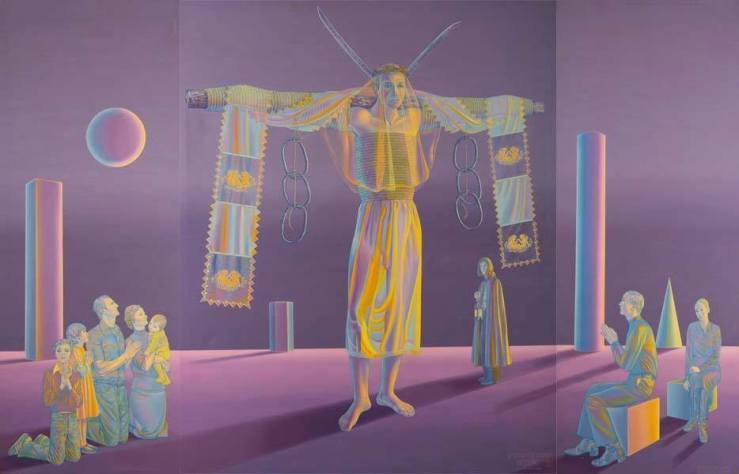
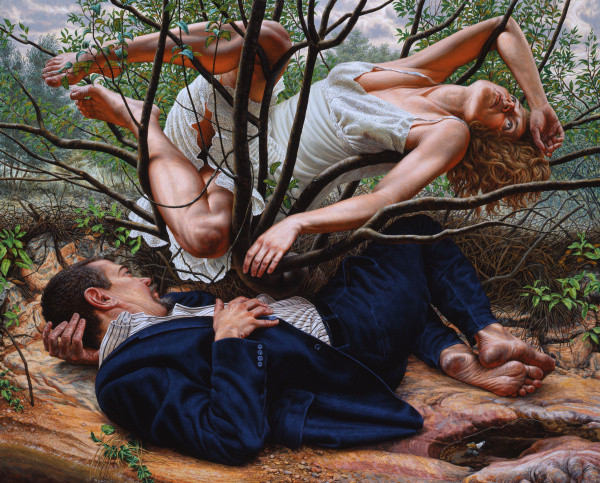
The Penitent of Valverde de la Vera — Margaret Modlin

tumblr_p9po7t4GlQ1qi6pt1o1_1280

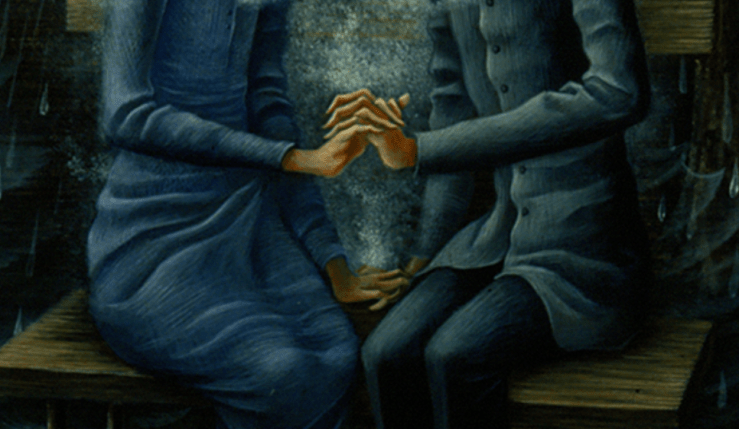
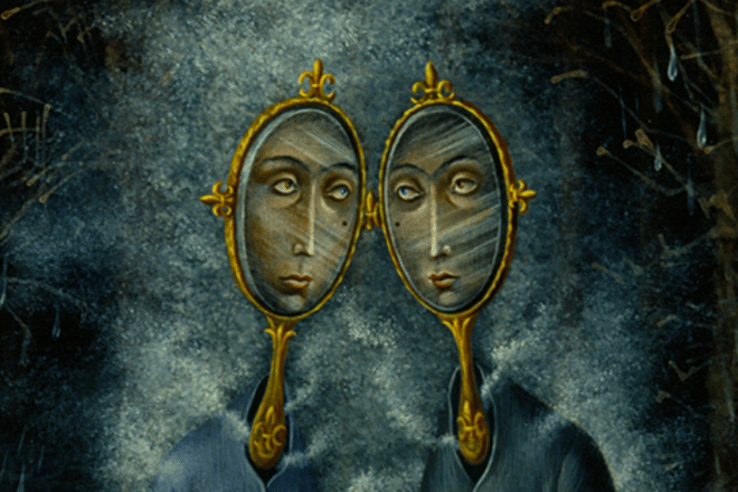
The Penitent of Valverde de la Vera by Margaret Modlin (1927–1998)

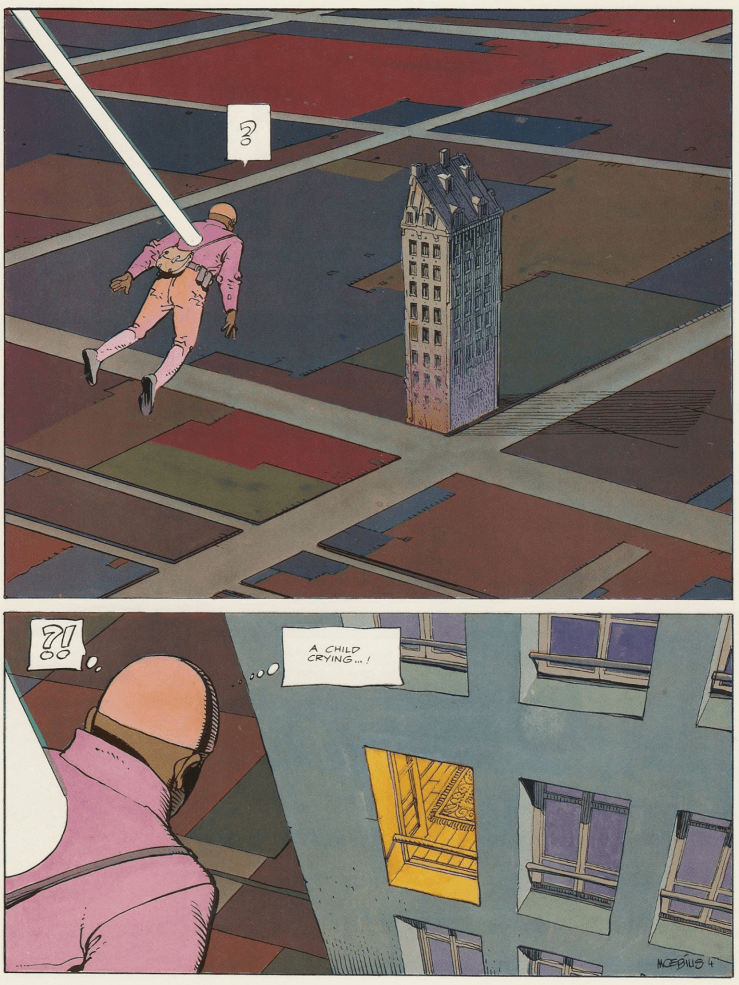
“A child crying…!” — Moebius

img_0637

From “The Repairmen” (part of Upon a Star) by Moebius

A review of Ishmael Reed’s Christmas satire, The Terrible Twos

Christmas approaches, so let me recommend a Christmas novel for you: Ishmael Reed’s The Terrible Twos (1982). I read it back in unChristmasy August and dipped into it a bit again today, looking for a passage or two to share. Maybe the bit where Santa Claus starts an anti-capitalist riot in Times Square?, or where the First Lady is electrocuted while lighting the White House Christmas tree?, or where the idiot U.S. President meets Harry Truman in A Christmas Carol tour of hell? I scrounged for a big fat citation that works on its own, but I kept wanting to build a frame, set a stage, and ended up with this instead, a “review,” a recommendation. A stage setting.  Of course, Ishmael Reed’s novels create their own stages, their own contexts and rhythms, and each paragraph, each sentence, each note fits into that context, blaring or humming or blasting the reader. Reed’s satire is simultaneously bitter and salty and sweet and sharp sharp sharp, the sort of strange rich dish you gobble up too fast and then, Hell!, it gives you weird dreams. For months.

But nice fat slices of Reed’s prose can be served on their own, as John Leonard’s 1982 NYT  review of The Terrible Twos shows. Leonard’s review is ten paragraphs long and he quotes Reed in full for two of those paragraphs, including this one, the longest paragraph in the piece:

Two-year-olds are what the id would look like if the id could ride a tricycle. That’s the innocent side of 2, but the terrible side as well. A terrible world the world of 2-year-olds. The world of the witch’s door you knock on when your mother told you not to go near the forest in the first place. Pigs building houses of straw. Vain and egotistic gingerbread men who end up riding on the nose of a fox. Nightmares in the closet. Someone is constantly trying to eat them up. The gods of winter crave them – the gods of winter who, some say, are represented by the white horse that St. Nicholas, or St. Nick, rides as he enters Amsterdam, his blackamoor servant, Peter, following with his bag of switches and candy. Two-year-olds are constantly looking over their shoulders for the man in the shadows carrying the bag. Black Peter used to carry them across the border into Spain.

Leonard (who describes the paragraph as “a kind of jive transcendence”— I’ll settle for “transcendence”) offers up this nugget as a condensation of Reed’s themes and mythologies. The paragraph neatly conveys the central idea of Reed’s novel, that American capitalism refuses to allow its subjects to Grow Up. It’s a tidyish paragraph. Tidyish. Reed always sprawls into some new mumbo jumbo. The anarchic energy of his prose digs up old mythologies, boots skeletons out closets, and makes all the old ghosts of Western history sing and dance.

So there’s a lot going in The Terrible Twos’ not-quite 200 pages. Should I take a stab at unjumbling the plot? Okay, so: Reagan is elected president. Things are bad. Rough for, like, the people. Fast forward a few terms, to the early/mid-nineties (Reed’s future…this is a sci-fi fantasy). Former fashion model Dean Clift ascends to the Presidency. Only he’s just a puppet for his cabinet, a cabal of war-profiteering zealots secretly planning a genocidal operation that would not only destroy a nuclear-armed African nation, but also “rid America of surplus people.” Surplus = poor. After Clift’s wife dies in a freak (not-really-freak) Christmas-tree-lighting accident, his life changes, and Saint Nicholas (like, the real Santa) comes to visit him. Santa takes the President on a Dantean-cum-Dickensian trip through the hell of American past. The poor dumb idiot President transforms his soul. Hearing Truman lament the bombing of Hiroshima might do that (not that that’s the only horror that haunts this novel—but a nuclear winter is not a winter wonderland, and Reed’s characters, despite their verve, are all suffering from Cold War Blues). Clift goes on TV and advocates a Christmas Change—but too late. The conspiracy cabinet hits him with the 25th Amendment to the United States Constitution. Reed gives a history lesson to the highest office of the land, changes the man’s life, and then imprisons him in a sanatorium. Satire at its cruelest.

But hell, what am I doing here, foregrounding President Clift? Or even Santa? There’s so much more going on in The Terrible Twos: the secret sect of Nicolites who worship Saint Nick; devotees of Black Peter (a version of the Dutch tradition of “Zwarte Piet”); the North Pole syndicate; secret agents, thugs, and sundry assassins; punk rioters; a rasta dwarf (um, Black Peter). And somehow I’ve left out the novel’s semi-hapless hero, Nance Saturday…

Look, the plot—the picaresque, mumbo-jumbo, always-mutating plot of The Terrible Twos is, yes, fun—but it’s the prose, the energy, the commentary, and, yes, the prescience of the novel that makes it so engrossing and fun and terrifying. This is a book that begins: “By Christmas, 1980, the earth had had enough and was beginning to send out hints,” a book that has the American President meeting with the American Nazi Party in the Oval Office, a book that has one character comment to another, on the election of Reagan, that “It feels good to be a white man again with him in office.” The satire’s prescience is painful, but Reed’s wisdom—the ballast of this ever-shifting picaresque—anchors the commentary in a deeper condemnation: It has always been this way. Ishmael Reed seems so prescient because we keep failing the past. Same as it ever was. Thus The Terrible Twos plays out in a series of plots and schemes, retaliations and riots—but also wry comments and righteous resistance. And so if Reed’s analysis of American history is unbearably heavy, it also points towards a negation of that heavy history, towards a vision of something better.

I shall give the last words to Reed’s Santa:

Two years old, that’s what we are, emotionally—America, always wanting someone to hand us some ice cream, always complaining, Santa didn’t bring me this and why didn’t Santa bring me that…Nobody can reason with us. Nobody can tell us anything. Millions of people are staggering about and passing out in the snow and we say that’s tough. We say too bad to the children who don’t have milk….I say it’s time to pull these naughty people off their high chairs and get them to clean up their own shit. Let’s hit them where it hurts, ladies and gentlemen. In their pockets. Let’s stop buying their war toys, their teddy bears, their dolls, tractors, wagons, their video games, their trees. Trees belong in the forest.

A riot ensues.

Very highly recommended.

[Editorial note: Biblioklept ran a version of this review in December, 2017].

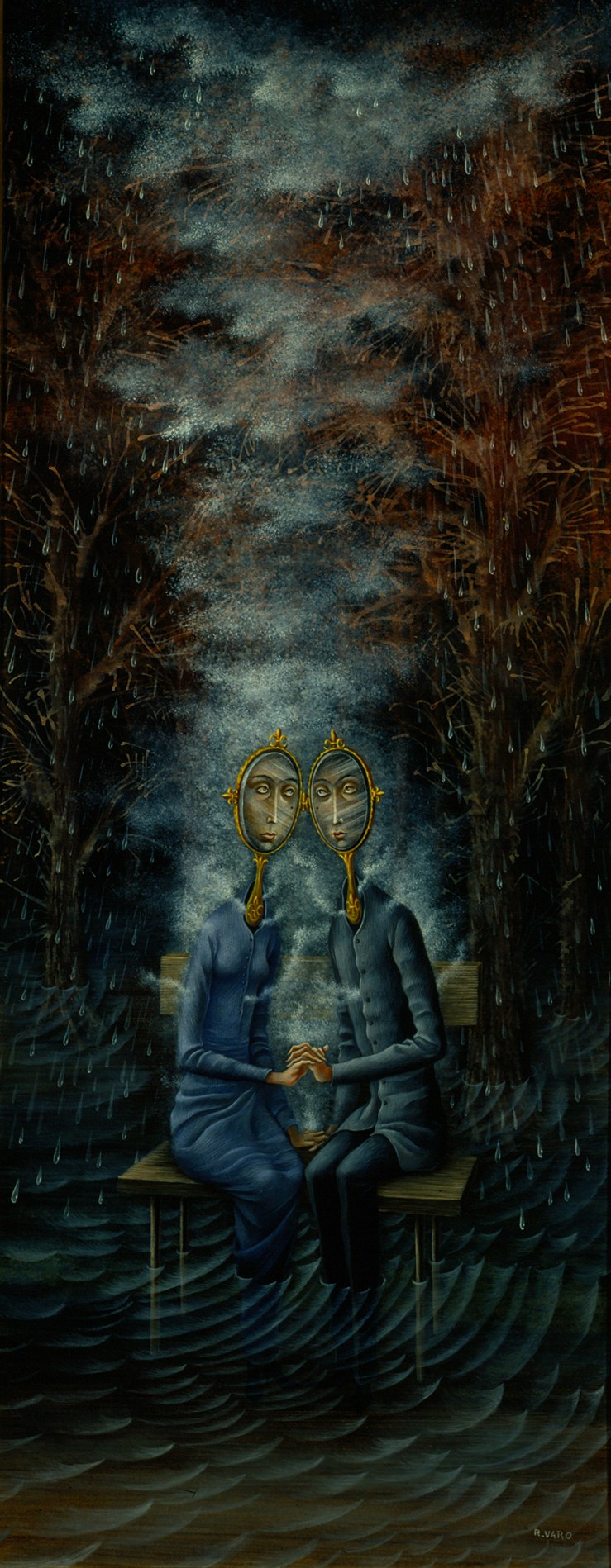
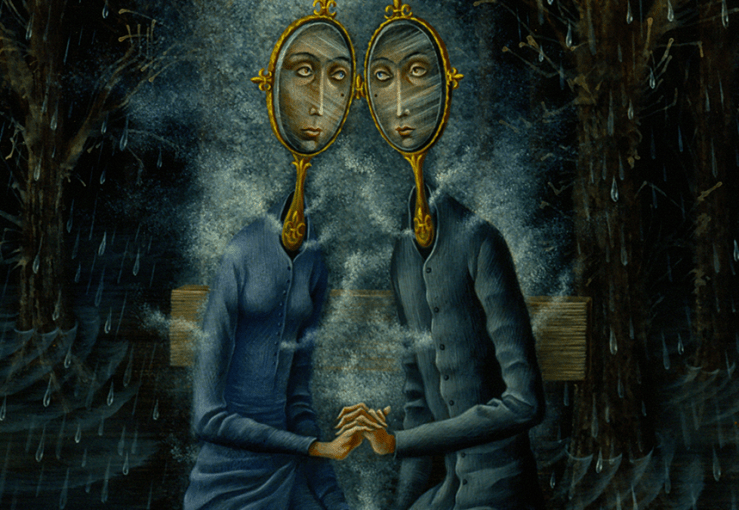
The Lovers — Remedios Varo

Cat.356-Los-Amantes-1963

The Lovers, 1963 by Remedios Varo (1908-1963)

Screenshot 2018-12-16 at 6.41.23 PM

Screenshot 2018-12-16 at 6.42.07 PM

Screenshot 2018-12-16 at 6.41.42 PM

Aello — Francis Picabia

9.20Aello

Aello, 1930 by Francis Picabia (1879-1953)

“A Chapter on Dreams” — Robert Louis Stevenson

“A Chapter on Dreams”

by

Robert Louis Stevenson

from

Across the Plains (1915)


The past is all of one texture—whether feigned or suffered—whether acted out in three dimensions, or only witnessed in that small theatre of the brain which we keep brightly lighted all night long, after the jets are down, and darkness and sleep reign undisturbed in the remainder of the body.  There is no distinction on the face of our experiences; one is vivid indeed, and one dull, and one pleasant, and another agonising to remember; but which of them is what we call true, and which a dream, there is not one hair to prove.  The past stands on a precarious footing; another straw split in the field of metaphysic, and behold us robbed of it.  There is scarce a family that can count four generations but lays a claim to some dormant title or some castle and estate: a claim not prosecutable in any court of law, but flattering to the fancy and a great alleviation of idle hours.  A man’s claim to his own past is yet less valid.  A paper might turn up (in proper story-book fashion) in the secret drawer of an old ebony secretary, and restore your family to its ancient honours, and reinstate mine in a certain West Indian islet (not far from St. Kitt’s, as beloved tradition hummed in my young ears) which was once ours, and is now unjustly some one else’s, and for that matter (in the state of the sugar trade) is not worth anything to anybody.  I do not say that these revolutions are likely; only no man can deny that they are possible; and the past, on the other baud, is, lost for ever: our old days and deeds, our old selves, too, and the very world in which these scenes were acted, all brought down to the same faint residuum as a last night’s dream, to some incontinuous images, and an echo in the chambers of the brain.  Not an hour, not a mood, not a glance of the eye, can we revoke; it is all gone, past conjuring.  And yet conceive us robbed of it, conceive that little thread of memory that we trail behind us broken at the pocket’s edge; and in what naked nullity should we be left! for we only guide ourselves, and only know ourselves, by these air-painted pictures of the past.

Upon these grounds, there are some among us who claim to have lived longer and more richly than their neighbours; when they lay asleep they claim they were still active; and among the treasures of memory that all men review for their amusement, these count in no second place the harvests of their dreams.  There is one of this kind whom I have in my eye, and whose case is perhaps unusual enough to be described.  He was from a child an ardent and uncomfortable dreamer.  When he had a touch of fever at night, and the room swelled and shrank, and his clothes, hanging on a nail, now loomed up instant to the bigness of a church, and now drew away into a horror of infinite distance and infinite littleness, the poor soul was very well aware of what must follow, and struggled hard against the approaches of that slumber which was the beginning of sorrows.

But his struggles were in vain; sooner or later the night-hag would have him by the throat, and pluck him strangling and screaming, from his sleep.  His dreams were at times commonplace enough, at times very strange, at times they were almost formless: he would be haunted, for instance, by nothing more definite than a certain hue of brown, which he did not mind in the least while he was awake, but feared and loathed while he was dreaming; at times, again, they took on every detail of circumstance, as when once he supposed he must swallow the populous world, and awoke screaming with the horror of the thought.  The two chief troubles of his very narrow existence—the practical and everyday trouble of school tasks and the ultimate and airy one of hell and judgment—were often confounded together into one appalling nightmare.  He seemed to himself to stand before the Great White Throne; he was called on, poor little devil, to recite some form of words, on which his destiny depended; his tongue stuck, his memory was blank, hell gaped for him; and he would awake, clinging to the curtain-rod with his knees to his chin. Continue reading ““A Chapter on Dreams” — Robert Louis Stevenson”

Gorgon — Ithell Colquhoun

img190

Gorgon, 1945 by Ithell Colquhoun (1906–1988)

“All art constantly aspires towards the condition of music”

Crane in Waves — Utagawa Hiroshige

crane-in-waves-1835

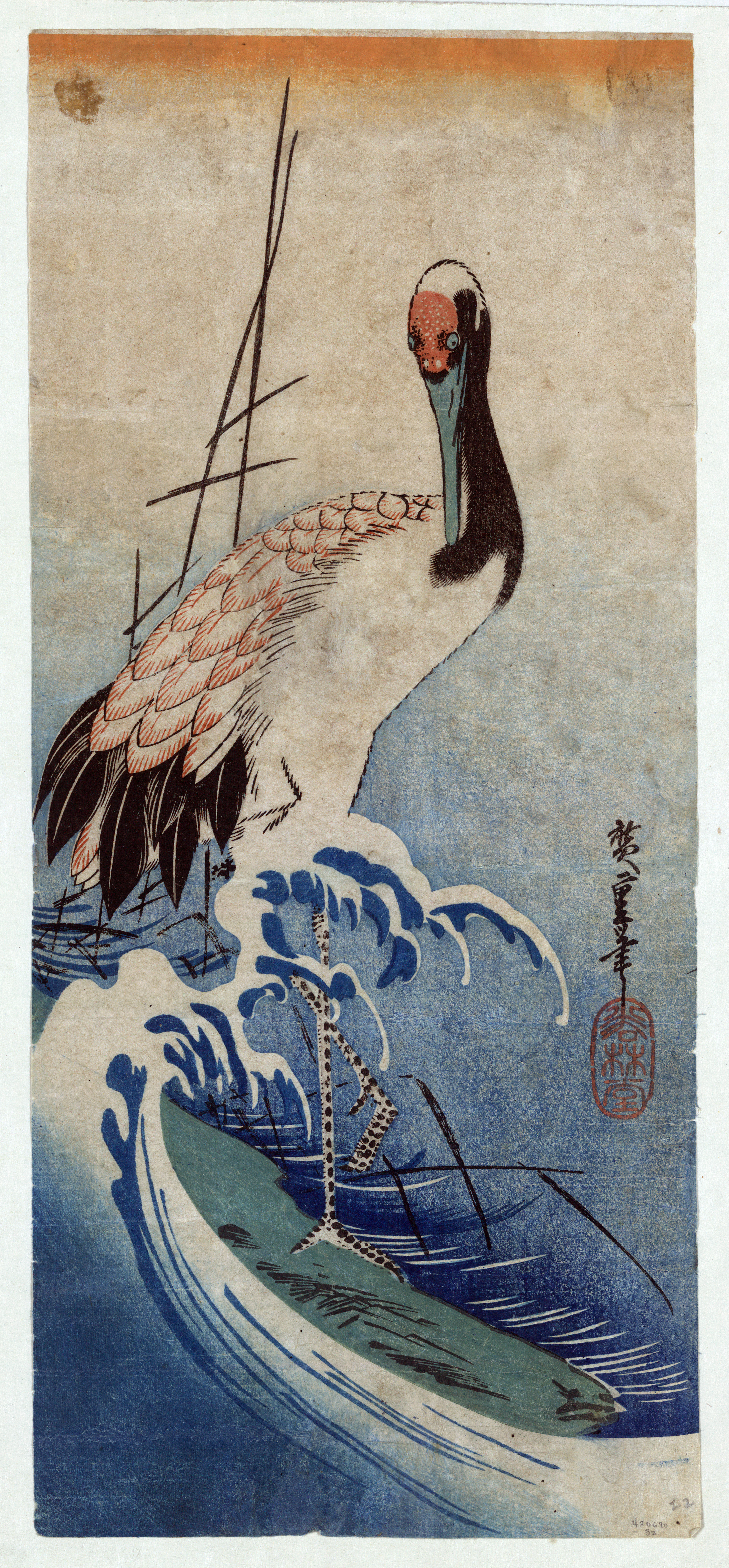
Crane in Waves, c. 1835 by Utagawa Hiroshige (1797-1858)

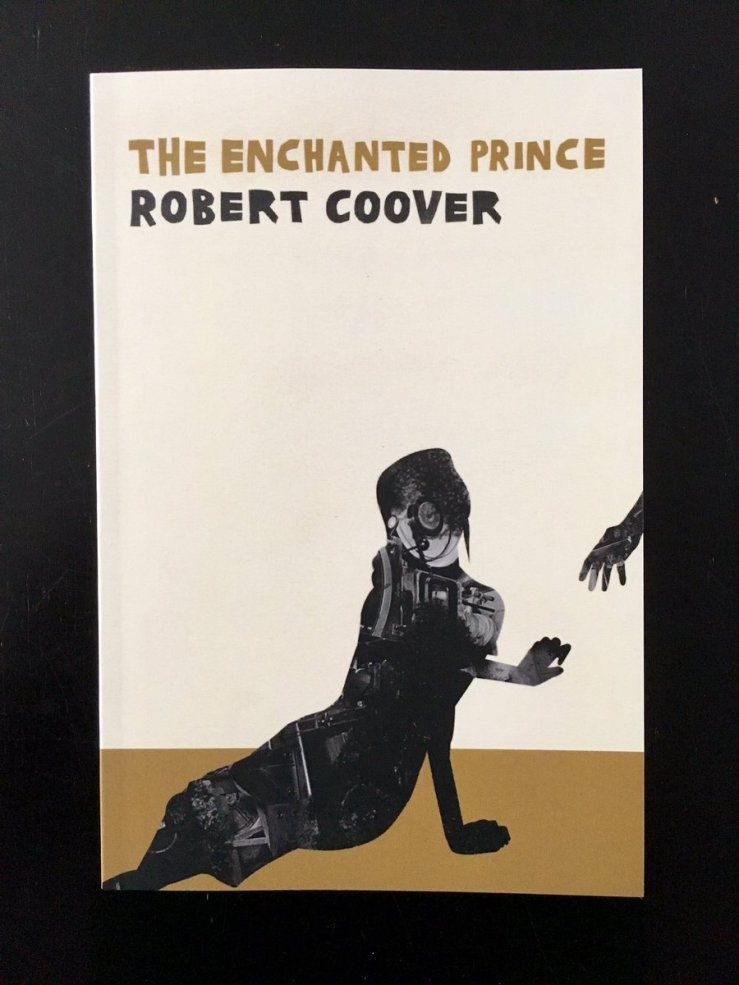
Robert Coover’s The Enchanted Prince (Book acquired, 11 Dec. 2018, read 13 Dec. 2018)

DuJ5a5XWoAAyuRS

Robert Coover’s not-quite-novella The Enchanted Prince (or is it “The Enchanted Prince”?) was first published last year in The Evergreen Review’s Winter 2017 issue. Foxrock Books and OR Books have collaborated to release a cute little volume of the story/stories/metastory/etc. I read the book the other day during an occasion where my attention was supposed to be elsewhere; I slipped it easily into some other papers. It’s a good read to slyly read on the sly. The Enchanted Prince is a postmodern fantasy riff on film and filmmaking techniques, as well as desire and drive. The basic moves here could fit into Coover’s 1987 collection A Night at the Movie’s horny postmodernism, only with some new technological updates—as well as a more pronounced theme of aging.  As always, Coover offers meta-line after meta-line of self-description, including this parenthetical nugget, which maybe kinda yeah surely describes Coover in action: “(stimulation and frustration, fort and da: it’s only the dailies, but the old metacineast is at it again).” Here’s the publisher’s more thorough blurb, which also contains a Cooverian self-description from the novel (the B-movie bit):

Literary grandmaster Robert Coover has long been obsessed with myth, decay, sex and narrative, time and technology: and these themes come together in this short, dark fable that centers around the once-grand, now-aged Princess. Years ago a star of the classic film “The Enchanted Prince,” she has become a cult figure—with mind intact but body failing, she remains a figure of cinematic royalty, but one who cannot turn away from the persistent demands of the camera and the ever-present director, himself a flabby iteration of the wunderkind-that-was, who is filming the last remake (in a long series of remakes) of the classic that made the Princess a star.

“The world is a bad B-movie,” he says. “We try to make better ones, but it probably can’t be done. Still, we go on cranking them out. Nothing else to do.”

Coover’s sardonic, biting humor—and his deep sympathy for the players in his game, all both manipulators and manipulated—has never been more clearly on display than in this brief, intense dose of verbal subterfuge about film within film within the book, itself a two-dimensional “film.” “The book is an essentially realistic tale about two ancient survivors of the New Wave (I had in mind people like Jean Seberg, Jean-Luc Godard) in the digital age,” writes the author about this novella. “The more fanciful elements are torturous parodies of fairytale movies.”

And a sample paragraph:

The movie’s plot was a folktale cliché. Until the box office tallies came in, critics treated it as a joke. A Prince on a knightly quest to liberate an oppressed and bewitched people comes on a runaway Princess of the corrupt kingdom and they fall in love on the spot. The Queen has died and her father the King, under a spell, has been trapped in marriage by an old harpy with brutish unshaven sons who grunt like hogs. The Prince whisks the Princess back to his place, but on her wedding day she’s abducted by her badboy stepbrothers, with black-magic assistance from their mother, and forced to work in the scullery. She’s eventually rescued by the Prince, and they fall into a forever-after kiss at their wedding.

Riverbed — F. Scott Hess

n19s73-b781258863z.120140219165436000gtj1ijbm8.1

Riverbed, 2004 by F. Scott Hess (b. 1955)

The Prayers — Bo Bartlett

EDD

The Prayers, 2004 by Bo Bartlett (b. 1955)

Gaddis Contra Carnegie | How to Win Friends and Influence People in The Recognitions

img_1858

The second episode of Part II, Ch. 5 of William Gaddis’s 1955 novel The Recognitions returns to the consciousness of sadsack everyman Mr. Pivner. Through milquetoast Mr. Pivner (the long-lost father of poseur-supreme Otto), Gaddis critiques the banal emptiness and rank venality of post-war life in America. In this particular section of The Recognitions, Gaddis reinforces one of his novel’s central themes: modern commerce has supplanted culture in contemporary America. Indeed, commerce is culture in America.

The episode begins as Papa Pivner prepares to meet Otto for the first time (their estrangement has not yet been explained in the narrative). They arrange to meet in a hotel restaurant, their recognition of each other secured in a promise to wear matching green scarves. Gaddis weaves this father-son plot into the schemes of the counterfeiter Frank Sinisterra, who plans to offload his oh-so-artistic fraudulent currency to “a spreader” who will disseminate “the queer” bills. Ever the conman, Sinisterra disguises himself before heading to the meetup, which is to be held in a hotel restaurant. He dons a green scarf, by which his contact will recognize him. You get it: Sinisterra misrecognizes Otto for the spreader, Otto misrecognizes Sinisterra for his long-lost father, tragicomedy ensues, and Gaddis multiplies the strands of deferred and displaced father figures threaded through his bigass too-big too-long novel. This paternity motif is underlined even more when we remember Otto’s competition with Sinisterra’s son Chaby for the affections of Esme. But such deferrals and displacements are the material for a different riff. Let us shift back to Papa Pivner, sad soul, Gaddis’s little manikin-symbol-thing of paternal cultural authority cuckolded by commercial masscult modernity.

As he preps to meet his boy Otto, Mr. Pivner skims through Dale Carnegie’s 1936 utlrabestseller How to Win Friends and Influence People, a self-help book that Gaddis beats up for nearly ten straight pages in The Recognitions(Not incidentally, Gaddis had his students at Bard College read Carnegie’s book as part of a class he taught called “The Theme of Failure in American Literature”). Carnegie’s book is the AntiRecognitions, and Gaddis delights in savaging its self-help hucksterism by setting How to Win Friends against the Western canon:

Mr. Pivner sat staring through rimless glasses at a kindly book-jacket face which returned his amorphous gaze. He was preparing to meet his son, to win him as a friend, and influence him as a person. As Odysseus had Mentor, Jesus John the Baptist, Cesare Borgia Machiavelli, Faust Mephistopheles, Descartes Father Dinet, Schopenhauer’s dog Schopenhauer, and Schiller his drawerful of rotten apples, Mr. Pivner had Dale Carnegie: he and four million other individuals, that is…

The passage’s bathos exemplifies Gaddis’s techniques in the Pivner episodes. Gaddis inflates the rhetoric with rich allusion and haughty parallelism, only to puncture the verbal balloon with the banality of middlebrow midcentury American values. For Gaddis, Carnegie’s book represented a signal synthesis of these venal values. How to Win Friends and Influence People cannibalized millennia of writings on wisdom, philosophy, ethics—and the strange mystery vibrating underneath these disciplines—and distilled it all into a self-help book centered on selling yourself to others. The contempt is palpable in another bathetic passage:

True, Mr. Pivner might have read Descartes; and, with tutelage, understood from that energetic fellow, well educated in Jesuit acrobatics (cogitans, ergo sum-ing), that everything not one’s self was an IT, and to be treated so. But Descartes, retiring from life to settle down and prove his own existence, was as ephemeral as some Roger Bacon settling down to construct geometrical proofs of God: for Mr. Pivner, a potential buyer (on page 95) who was head of the Hotel Greeters of America (and president of the International Greeters too!) was far more real.

Cribbing and re-appropriating Carnegie’s own words, Gaddis’s narrator notes that How to Win Friends “was not a book of thought, or thoughts, or ideas, but an action book.” Gaddis then ironically resituates the value of such a book:

An action book; and herein lay the admirable quality of this work: it decreed virtue not for virtue’s sake (as weary Stoics had it); nor courtesy for courtesy (an attribute of human dignity, as civilized culture would have it); nor love for love (as Christ had it); nor a faith which is its own explanation and its own justification (as any faith has it); but all of these excellences oriented toward the market place.

Gaddis posits How to Win Friends as the cynical, terminal destination for the radical transcendental values of the previous century. The values of self-determination, self-reliance, and self-making upheld by Henry David Thoreau, whose writings are alluded to in The Recognitions, are converted into self-improvement, which translates into self-selling. Art and philosophy are simply commodities. Gaddis intuits the ways that capitalism glosses its venality over with the promises of culture and transcendence. Consider this passage, which begins with a quote from Carnegie:

“Let me repeat: the principles taught in this book will work only when they come from the heart. I am not advocating a bag of tricks. I am talking about a new way of life.” That was the wonderful thing about this book [. . .] if at first its approach seemed fraught with guile, subterfuge, duplicity, sophistry, and insidious artifice, that feeling soon disappeared, and one had . . . “Ah yes, you are attempting a new way of life.”

The litany of the huckster’s “bag of tricks” — “guile, subterfuge, duplicity, sophistry, and insidious artifice” — doubles back to The Recognitions’ motif of counterfeiting and also bites viciously into Carnegie’s core disingenuousness.

Gaddis not only attacks the content of Carnegie’s book, but also the form and style of the book. Carnegie’s hucksterism evinces in its very rhetoric. Gaddis seems to propose his own novel as the opposite of How to Win Friends and Influence People in both content (searching quest for meaning and authenticity in a degraded commercial world) and form (an unwieldy and often abstruse polyglossic beast of a book). In the following remarkable passage he decidedly (if obliquely) situates The Recognitions as a work contra Carnegie:

Here was no promise of anything so absurd as a void where nothing was, nor so delusive as a chimerical kingdom of heaven: in short, it reconciled those virtues he had been taught as a child to the motives and practices of the man, the elixir which exchanged the things worth being for the things worth having. It was written with reassuring felicity. There were no abstrusely long sentences, no confounding long words, no bewildering metaphors in an obfuscated system such as he feared finding in simply bound books of thoughts and ideas. No dictionary was necessary to understand its message; no reason to know what Kapila saw when he looked heavenward, and of what the Athenians accused Anaxagoras, or to know the secret name of Jahveh, or who cleft the Gordian knot, the meaning of 666. There was, finally, very little need to know anything at all, except how to “deal with people.”

Poor Pivner. He’s really just wanting to win the friendship of the son he’s only just learned he has. Gaddis uses Pivner to indict American culture’s commercially cruel contours, where any entity might be misappropriated and misused in the market place of ideas:

Here were Barnum and the Bible, Charles Schwab, Dutch Schultz and Shakespeare, two Napoleons, Pola Negri, and the National Credit Men’s Association, Capone, Chrysler, Two-Gun Crowley, and Jesus Christ, each in his own way posting the way to the market place. Even Jehovah appeared, if only in brief reversal…

The repeated bathos in II.5 of The Recognitions is wonderfully mean humor, but Pivner doesn’t seem like Gaddis’s main mark—rather, Gaddis shows us that Pivner is Carnegie’s mark. And for all the bathos here, there’s pathos too. We can find a certain sympathy in Pivner’s mild and foiled quest to meet with his progeny. A diabetic (like Chaby Sinisterra, he too uses needles), Pivner waits too long to take his insulin and conks out in the hotel lobby. He is briefly arrested and of course fails to meet Otto.

The next chapter, II.6 is set on Christmas Eve. Pivner receives a Christmas present from Otto, a beautiful and expensive robe (Otto is now flush with plenty of the counterfeit cash). Pivner is deeply moved by the gift, and elects to head back to the hotel to try to meet Otto again. The moment he dons the robe is rendered with disarming pathos. Gaddis’s narrator describes Pivner as a man “whose world was a series of disconnected images, his life a procession of faces reflecting his own anonymity in the street, and faces sharing moments of severe intimacy in the press.” If Pivner is prey to a conman like Carnegie, it is because Pivner is lonely and alienated. The modern condition is one of anxious anonymity, where “intimacy” boils down to reading the same gruesome news that others read. Human connection is mediated through mass media.

When Pivner returns to the hotel, he actually does encounter Otto. They stand next to each other, pissing into urinals in the hotel lobby men’s room, staring straight ahead at the obscene graffiti scrawled on the wall. A pornographic drawing so alarms Pivner that he turns and lowers his head, catching a glimpse of a green scarf poking from the proximal pisser’s pocket. The recognition remains incomplete though: Otto turns his “bloodshot eyes in a desolation of contempt” upon the older man and departs into the night. Pivner is unable to find confirmation of the younger man’s identity, and retreats to the bar to drink orange juice.

The final image of the chapter resonates with sympathetic and lonely despair. It is like something from an Edward Hopper painting. On one end of the bar sits a blonde; next to her Pivner; to his right, a newly-disguised Mr. Sinisterra, hoping too to catch Otto. When the blonde pays for her drink with one of his fake bills, Sinisterra gasps in a moment of recognition. The gasp draws Pivner’s attention and he looks to Sinisterra whose

sharp eyes gleamed at something beyond him, and with such intensity that his own were drawn in a reflex to look to where the blonde paid for her drink. But all Mr. Pivner saw, in the dim light, was a crisp twenty-dollar bill exchange hands: or so it looked to him, moonblind in the tinted gloom of that landscape where the three of them hung, asunder in their similarity, images hopelessly expectant of the appearance of figures, or a figure, of less transient material than their own.

In those final words and images we see the dream behind The Recognitions—the dream of recognizing the metaphysical, the original thing itself comprised of “less transient material” than our own. The final image seems to emanate from Pivner’s consciousness, and to emanate in a moment freed from the ironic bathos the narrator dragged him through before. There’s an emergent if subdued rejection of the market place figures that Dale Carnegie blithely promises his marks can attain, replaced, if fleetingly, for a longing after something more, something mysterious and unnameable. Gaddis conjures a small moment of strange, hopeless expectation—the wish for transcendent recognition.
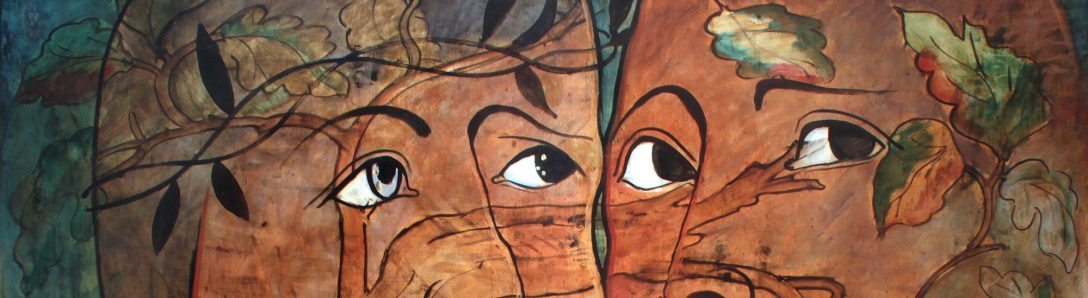
Read an excerpt from Antoine Volodine’s novel Lisbon, Last Frontier

5

The latest issue of The Evergreen Review features a long excerpt from Antoine Volodine’s novel Lisbon, Last FrontierThe excerpt is translated by Andrew Wilson and features some pretty cool art by Billy Jacobs. Here are the first six paragraphs:

On the Rua do Arsenal, in Lisbon, gallows abound.

“What?” he asked, startled. “What did you say?”
“Gallows,” she confirmed, with a provocative movement of her shoulder.
And: I’ve always wanted to start my novel that way, with a sentence that slaps them in the face. And him: Your novel? You aren’t seriously going to write it? And anyway who is slapping whom? And her: It just hauls off and slaps them, all of them, the overfed slaves of Europe, pudgy little slaves and their tie wearing masters, and all the managers, militarized by America, and the employers’ serfs and all those pathetic types, subjugated by everyone, and the social-traitors and their bulldogs, and you as well, my bulldog, you as well.

He sensed she was drifting, on the verge of hysteria again, and if that happened she was liable to lose the fundamental sense of things, attracting the not necessarily indulgent attention of the passers-by, and creating a scene and, in the wake of that scene, a disaster; for herself certainly, but also for him, for he was up to his neck in this affair. “A slap to the snout of the Western pig,” she hissed playfully. “Please don’t tell me you’re going to ruin everything by writing a book riddled with information,” he countered, “where anyone who cares in the German police will find all he needs to pluck you from your hiding-place, not to mention plucking me from my not so hiding-place and breaking me, dismantling in turn what’s left of your network of nutjobs? Don’t forget I’m up to my neck in this thing.” And her: Would you get a hold of yourself, my brave bulldog, I’d never rat on you. I wouldn’t rat on you for anything in the world. And him: Again happy. And her: Nevertheless, my novel will open with a vision of gallows. And him: That’s absurd. Don’t write anything. And her: I remind you that we are in fact on the Rua do Arsenal, in Lisbon, and gallows do abound. As throughout Europe, I might add. And him: Darling, let me just say: you’re fucking nuts.

He hastily examined the messages being sent by her pupils, diving immediately for the shadows and light, which conveyed, from the other end of this tunnel, her intellect. She’d turned toward him, her sunglasses perched atop her head, as if to hold back abundant curls, but for the past two weeks she’d worn her hair short; it was the face of a young woman sunning, only tormented and hard; her features ravished by passions, hatreds and fear. An arid veil was morphing the transparent blue-green of her eyes; darkening the silver glints, until recently so bright: a wind carrying charred dust across an age-old steppe, where presently everything alive was tempted to rave. She’s going mad, he thought. Despondency rose in him. Her mind is fading, she’s drowning. A cynical mistrust had sunk its claws into him, and already he was drawing up contingency plans, already he was preparing emergency measures, sirens wailing. Their joint survival rested on a ruse. If Ingrid were to crack, she would take him down with her. And he, Kurt, had no intention of stumbling into the void just to keep her company.

As he stared her down, she reigned in her smile, and then broke free, joyous. She nodded with her chin towards the clumps of dried cod hanging in front of the markets.

And: You see, I’m not lying, all around us it’s nothing but disfigured corpses. And him: I’m sorry, I misunderstood. I thought you were sinking into madness. And her: Oh don’t worry I sank ages ago, now I’m just pretending. My bulldog was the only one to realize, such a clever bloodhound. And him: Forget about writing this book. The trail will be too visible. And what’s the point of leaving clues? Forget about literature. And her: First I give up my machine gun, and now black ink; is that how it is, my bulldog?

Read the rest of the excerpt at The Evergreen Review (the last paragraph is, uh, really something).

Woman at a Window, Waving at a Girl — Jacobus Vrel

jacobus-vrel_woman-at-a-window-waving-at-a-girl_ca1655-fritslugtcollection-fondationcustodiaparis

Woman at a Window, Waving at a Girl, c. 1650 by Jacobus Vrel (active 1654 – 1662)

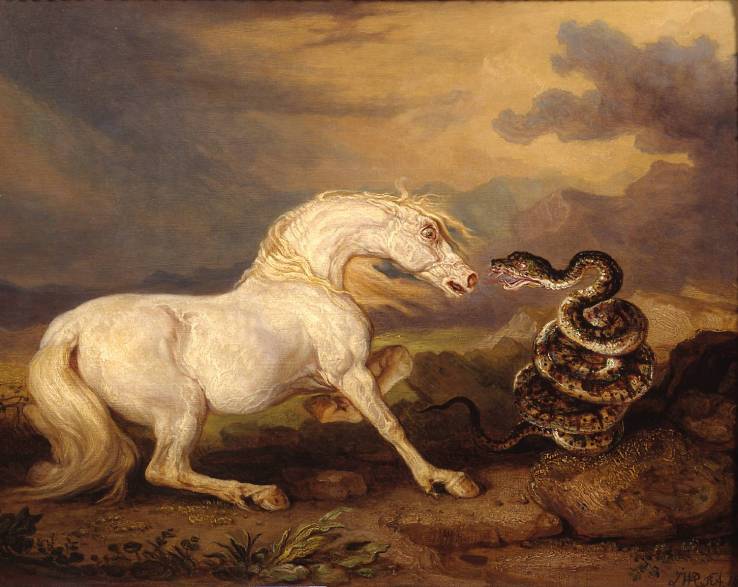
The Moment — James Ward

The Moment 1831 by James Ward 1769-1859

The Moment, 1831 by James Ward (1769–1859)

Shooting Barry Lyndon