“I am alive—I guess” — Emily Dickinson

“I am alive—I guess”
by
Emily Dickinson

I am alive—I guess—
The Branches on my Hand
Are full of Morning Glory—
And at my finger’s end—

The Carmine—tingles warm—
And if I hold a Glass
Across my Mouth—it blurs it—
Physician’s—proof of Breath—

I am alive—because
I am not in a Room—
The Parlor—Commonly—it is—
So Visitors may come—

And lean—and view it sidewise—
And add “How cold—it grew”—
And “Was it conscious—when it stepped
In Immortality?”

I am alive—because
I do not own a House—
Entitled to myself—precise—
And fitting no one else—

And marked my Girlhood’s name—
So Visitors may know
Which Door is mine—and not mistake—
And try another key—

How good—to be alive!
How infinite—to be
Alive—two-fold—the birth I had—
And this—besides, in Thee!

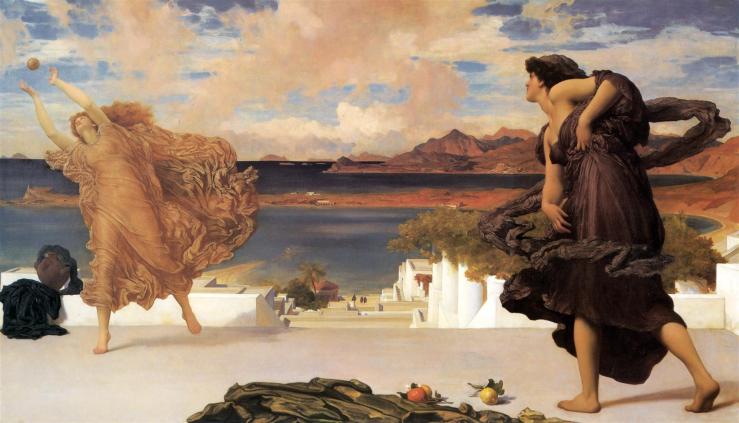
Greek Girls Playing at Ball — Frederic Leighton

greek-girls-playing-at-ballhd

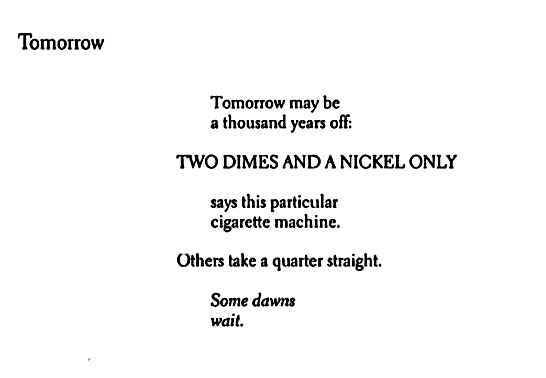
“Tomorrow” — Langston Hughes

Screenshot 2015-12-09 at 3

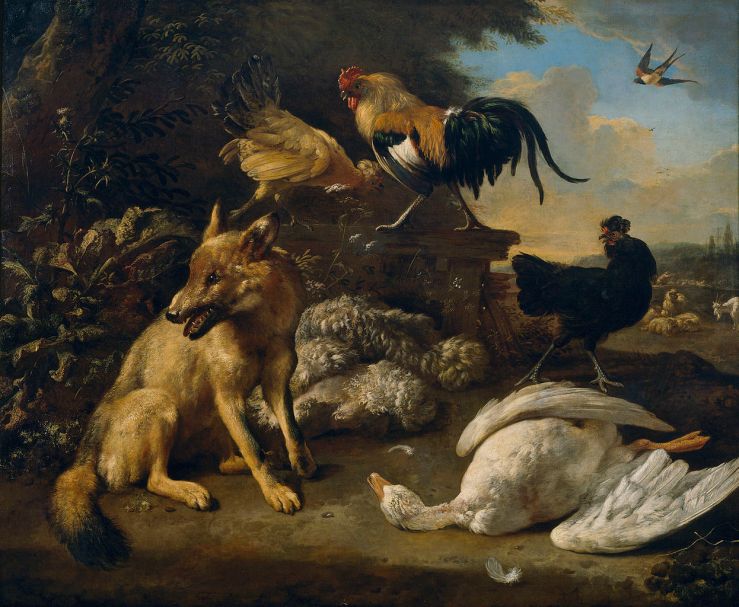
Still Life with Animals — Melchior d’Hondecoeter

still-life-with-animals-1690

“A Psychological Shipwreck,” a story by Ambrose Bierce

“A Psychological Shipwreck”

by Ambrose Bierce


In the summer of 1874 I was in Liverpool, whither I had gone on business for the mercantile house of Bronson & Jarrett, New York.  I am William Jarrett; my partner was Zenas Bronson.  The firm failed last year, and unable to endure the fall from affluence to poverty he died.

Having finished my business, and feeling the lassitude and exhaustion incident to its dispatch, I felt that a protracted sea voyage would be both agreeable and beneficial, so instead of embarking for my return on one of the many fine passenger steamers I booked for New York on the sailing vessel Morrow, upon which I had shipped a large and valuable invoice of the goods I had bought.  The Morrow was an English ship with, of course, but little accommodation for passengers, of whom there were only myself, a young woman and her servant, who was a middle-aged negress.  I thought it singular that a traveling English girl should be so attended, but she afterward explained to me that the woman had been left with her family by a man and his wife from South Carolina, both of whom had died on the same day at the house of the young lady’s father in Devonshire – a circumstance in itself sufficiently uncommon to remain rather distinctly in my memory, even had it not afterward transpired in conversation with the young lady that the name of the man was William Jarrett, the same as my own.  I knew that a branch of my family had settled in South Carolina, but of them and their history I was ignorant.
Continue reading ““A Psychological Shipwreck,” a story by Ambrose Bierce”

A review of Paul Kirchner’s surreal sequel, The Bus 2

couv-1

Paul Kirchner’s cult classic comic strip The Bus originally ran in Heavy Metal from 1979-1985. The (anti-)story of “a hapless commuter and a demonic bus” (as Kichner put it himself in a recent memoir at The Boston Globe), The Bus, at its finest moments, transcends our expectations for what a comic strip can and should do. Sure, Kirchner delivers the set-ups, gags, japes, and jests we expect from a cartoon—but more often than not The Bus surpasses the confines of its form and medium. Its protagonist The Commuter is an allegorical everyman, a passenger tripping through an absurd world. Kirchner’s strip often shows us ways to see that absurd world—which is of course our own absurd world—with fresh eyes.

Thanks in part to the internet (and, in particular, an album of scans posted at Imgur), Kirchner’s comic has found a new audience. Over the past few years, Kirchner’s produced more than 40 new strips, which are now collected in one handsome volume as The Bus 2 (or the bus 2 if you like) from French publisher Tanibis EditionsTanibis also has collected the original run of The Bus in an edition that’s more complete (and polished) than the Imgur album. These books are fantastic stuff.

The Bus 2 picks up in full satirical mode with an intro that informs us that “the studio that produced ‘The Bus’ was forced to shut down” in 1985; “Its closing left over 70 talented employees jobless.” The intro unwinds over a few pages—we’re told the bus itself and the “commuter’s iconic overcoat” are now in museums, and that the role of the commuter in this sequel will be played by the son of the actor who played the original commuter. From the outset, Kirchner uses irony to draw our attention to the artificiality of his strip, highlighting The Bus as a performance, an entertainment focused on the utterly mundane topic of a daily commute. And even though the intro unfolds over four pages, Kirchner keeps it true to form—literally: Six equal black and white panels.

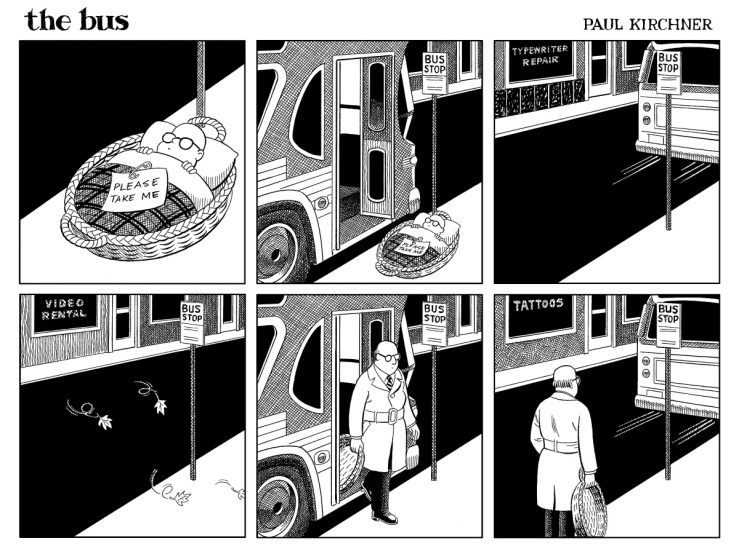
The first strip in the new collection positions The Commuter as an ironic hero, a foundling in a basket like Moses or Superman (note the signs that Kirchner employs to show the passage of time):
01 Continue reading “A review of Paul Kirchner’s surreal sequel, The Bus 2”

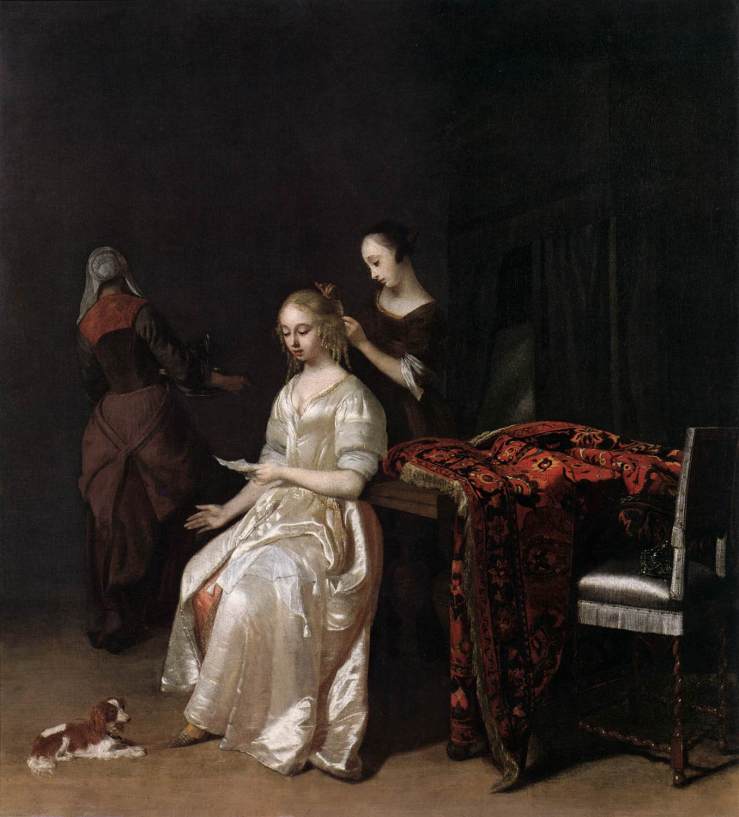
The Love Letter — Jacob Ochtervelt

lovelett

Hegel on Pooping from “The Philosophy of Nature”


The animal, because it behaves as actively different, in so doing becomes different within itself. In other words, because the animal is involved in a struggle with the outer world, its relation to the latter is untrue, since this outer world has already been transformed in principle (an sich) by the power of the animal lymph; the animal therefore in turning against this food, fails to recognize its own self. But the immediate result of this is simply that when the animal comes to itself and recognizes itself as this power, it is angry with itself for getting involved with external powers and it now turns against itself and its false opinion; but in doing so it throws off its outward-turned activity and returns into itself.


The dispossessed (From Richard Hofstadter’s essay “The Paranoid Style in American Politics”)

If, after our historically discontinuous examples of the paranoid style, we now take the long jump to the contemporary right wing, we find some rather important differences from the nineteenth-century movements. The spokesmen of those earlier movements felt that they stood for causes and personal types that were still in possession of their country—that they were fending off threats to a still established way of life. But the modern right wing…feels dispossessed: America has been largely taken away from them and their kind, though they are determined to try to repossess it and to prevent the final destructive act of subversion. The old American virtues have already been eaten away by cosmopolitans and intellectuals; the old competitive capitalism has been gradually undermined by socialistic and communistic schemers; the old national security and independence have been destroyed by treasonous plots, having as their most powerful agents not merely outsiders and foreigners as of old but major statesmen who are at the very centers of American power. Their predecessors had discovered conspiracies; the modern radical right finds conspiracy to be betrayal from on high.

From Richard Hofstadter’s 1964 essay “The Paranoid Style in American Politics.”

Retina

Bernard Sumner’s memoir, Chapter and Verse (Book acquired sometime in November of 2015)

IMG_0971

This afternoon, I finally got into Bernard Sumner’s memoir Chapter and Verse: New Order, Joy Division and Me. Actually, I obviously flicked through it when it showed up, looking at the glossy pictures, dabbling here and there (somehow read not one but two anecdotes about Seal (?)), and then reading the book’s first appendix, a transcript of a recording of Sumner’s hypnotizing Ian Curtis (excuse that mangled clause). The book has a U.S. Hardcover release from Thomas Dunne; their blurb:

Founding member and guitarist of Joy Division and the lead singer of New Order, Bernard Sumner has been famous over the years for his reticence. Until now . . .

An integral part of the Manchester, UK, music scene since the late 1970s, his is the definitive version of the events that created two of the most influential bands of all time.

Chapter and Verse includes a vivid and illuminating account of Bernard Sumner’s childhood, the early days of Joy Division, the band’s enormous critical and popular success, and the subsequent tragic death of Ian Curtis. Sumner describes the formation of New Order, takes us behind the scenes at the birth of classics such as “Blue Monday,” and gives his firsthand account of the ecstasy and the agony of the Haçienda days.

Sometimes moving, often hilarious, and occasionally completely out of control, this is a tale populated by some of the most colorful and creative characters in music history, such as Ian Curtis, Tony Wilson, Rob Gretton, and Martin Hannett. Others have told parts of the story, in film and book form. Now, for the first time, Bernard Sumner gives you chapter and verse.

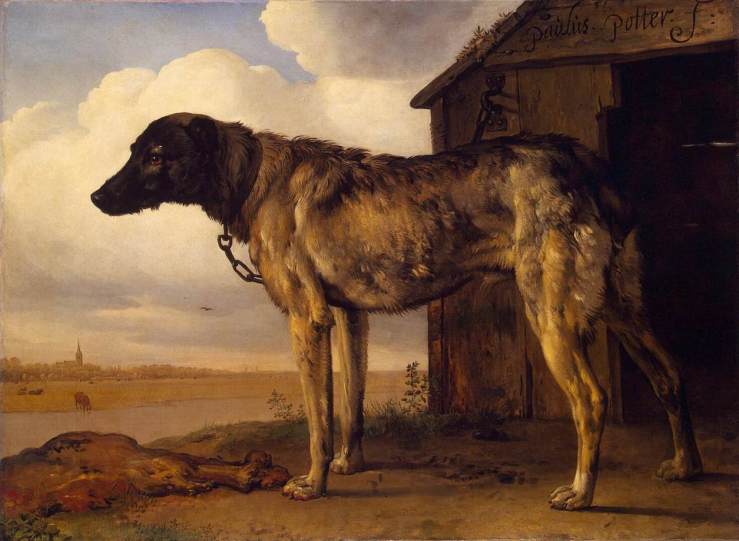
Wolf-Hound — Paulus Potter

wolfhoun.jpg

Around the Moon — Émile-Antoine Bayard and Alphonse de Neuville

tumblr_na6dmatLlu1rtynt1o1_1280.jpg

Three Books

IMG_0950

Speedboat by Renata Adler. 1988 trade paperback edition by Perennial Fiction Library (Harper & Row). No designer credited, but the cover illustration is by Steve Guarnaccia. A strange and funny (anti-)novel.

IMG_0953

The Uses of Literature by Italo Calvino (trans. Patrick Creagh). 1986 trade paperback by Harvest/HBJ. Design by Kaelin Chappell, with a cover illustration by Saul Steinberg. A book to never finish.


IMG_0951

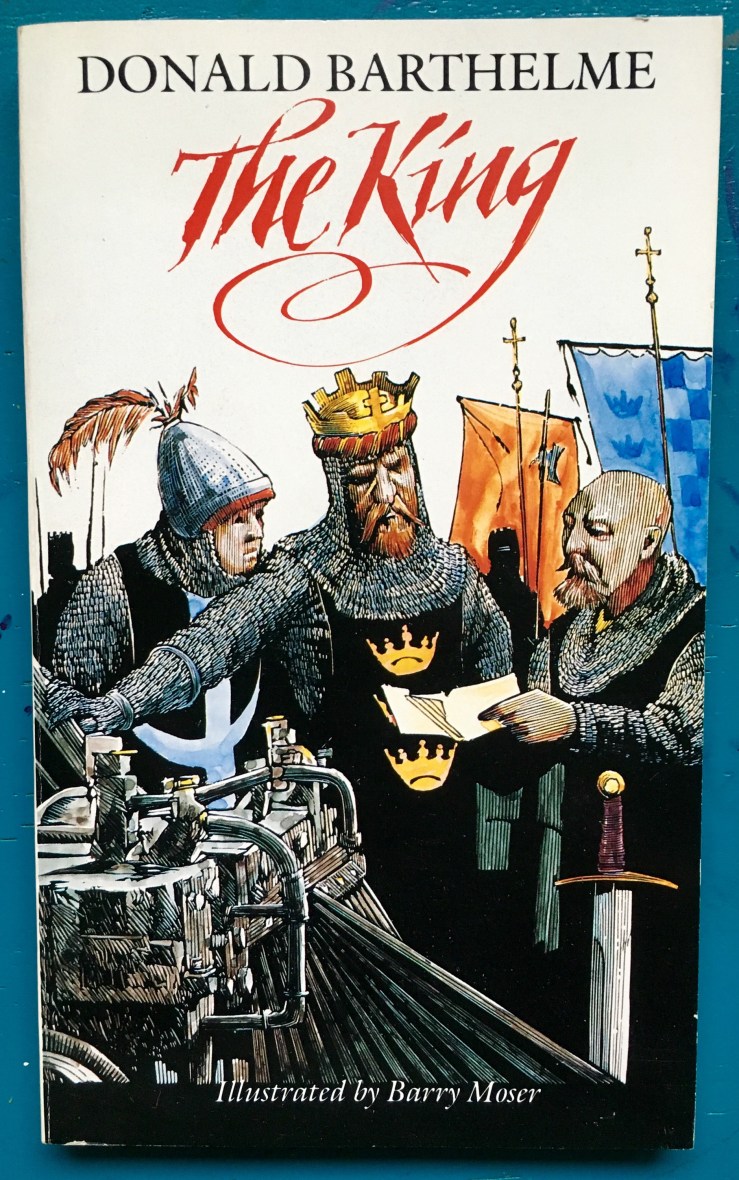
The King by Donald Barthelme. Features wood engravings by Barry Moser. 1990 trade paperback by Harper and Row. No designer credited, but surely Moser had a hand, no? This is the only Barthelme novel I haven’t read. Every time I pick it up I think, But then there will be no more. Fool. One can always reread.