Werner Herzog: At night, when it gets really cold, at three or four o’clock in the morning, there are people in New York City who live like Neanderthals—they come out at three o’clock, when it gets so cold they can no longer bear it. People gather in an empty, totally deserted street and set the trash cans on fire just to warm themselves, and they do so without saying a word. That’s how it is there, only nobody sees it.
Kraft Wetzel: So all these years had little to do with globetrotting and wanderlust?
Werner Herzog: It’s really like a desperate search for . . . well, for some place I can exist. By existence I mean something different from life. I’ve become increasingly more aware that there’s a big difference between life and existence, and that it’s important to even have an existence. There are many people for whom life and existence diverge and apparently have nothing to do with each other. It’s easier to say it in biographical terms: Take [Franz] Kafka or Robert Walser. Kafka was just an employee of an insurance company. I also think there’s something like a modern tendency for life and existence to deviate more and more. That happened earlier as well, but on a much smaller scale than it does now. Now you have people without existence—that is, they have lives but no existence. Let me put it this way: I was recently in Brittany, where they have big old farm houses, each with just a single room, where the family and the cattle all live together. There are many legends and poems, which they sang, that come from there. I can imagine that for someone who lived back then in such a family community, there was no such thing as life and existence, but rather something that constituted them together and without separation.
Photography by Chris Buck and Brian Hamill; art by Nick Van Der Grinten
It’s been half a day and no one has taken a hit of anything stronger than the vodka and Coke Burroughs is nursing. These days, at seventy-seven and post-triple bypass, Burroughs is taking a break from the opiates. The conversation, however, is free to range where Burroughs no longer does.
It takes a brave man to try and trade drug stories toe-to-toe with William Burroughs, and Cronenberg makes only a perfunctory attempt. “I tried opium once, in Turkey, and there I felt like I had a hideous flu, you know? It was like I was sick.”
“You probably were! It can be very nauseating. You had just taken more than you could assimilate.”
“I did take LSD once,” Cronenberg responds. “It was a great trip. It was a very revealing experience to me, because I had intuited that what we consider to be reality is just a construct of our senses. It shows you, in no uncertain terms, that there are any number of realities that you could live, and you could change them and control them. It’s very real, the effects it left.”
Burroughs nods patronizingly, although he was more of an opiate man.
Talk then shifts to over-the-counter drugs one could abuse, which included the availability of codeine in Canada, opium cold-and-flu tablets in France, and “in England,” says Burroughs, “they used to sell Dr. Brown’s Chlorodine. It was morphine, opium, and chloroform. I used to boil out the chloroform.”
“I was chloroformed once,” says Cronenberg, “as a kid, when they took out my tonsils. I still remember what happened when they put this mask over my face. I saw rockets shooting. Streamers of flame, rockets. . . . I can still see it. And that sickly smell.” He makes a face. After discussing insects, gunshot wounds, and snake bites all day, were finally onto something that can gross out Cronenberg.
“I hate general anesthesia,” says Burroughs. “Scares the hell out me. I had to have it when they did the bypass, but I knew where I was. I knew I was in the hospital having an operation, and there was this gas coming into my face like a gray fog. When I cracked my hip, they put a pin in with a local. A spinal. Of course, it ran out and I started screaming.”
“I was in a motorcycle accident where I separated my shoulder,” says Cronenberg. “They took me into the operating room and gave me a shot of Demerol.”
“Demerol,” says Burroughs, brightening a bit. “Did it help?”
“I loved it. It was wonderful.”
“It helps. I had a shot of morphine up here somewhere,” he says, pointing to the top of his shoulder near his neck, “from my bypass operation. She said, ‘This is morphine.’ And I said, ‘Fine!’ ” Burroughs drags out the word in a sigh of bliss. He closes his eyes in an expression of rapt anticipation. “Shoot it in, my dear, shoot it in.” I ask Burroughs if the doctors and nurses at the hospital knew who he was. “Certainly,” he drawls. “The doctor wrote on my chart, ‘Give Mr. Burroughs as much morphine as he wants.’”
‘And because time in itselfe…can receive no alteration, the hallowing…must consist in the shape or countenance which we put upon the affaires that are incident in these days.‘
—Richard Hooker
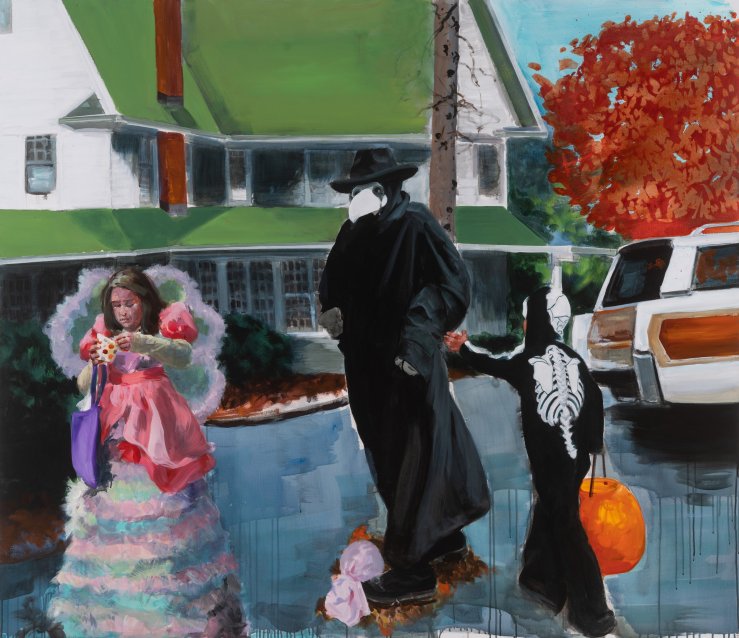
It was about half-past three on an August afternoon when I found myself for the first time looking down upon All Hallows. And at glimpse of it, fatigue and vexation passed away. I stood ‘at gaze’, as the old phrase goes—like the two children of Israel sent in to spy out the Promised Land. How often the imagined transcends the real. Not so All Hallows. Having at last reached the end of my journey—flies, dust, heat, wind—having at last come limping out upon the green sea-bluff beneath which lay its walls—I confess the actuality excelled my feeble dreams of it.
What most astonished me, perhaps, was the sense not so much of its age, its austerity, or even its solitude, but its air of abandonment. It lay couched there as if in hiding in its narrow sea-bay. Not a sound was in the air; not a jackdaw clapped its wings among its turrets. No other roof, not even a chimney, was in sight; only the dark-blue arch of the sky; the narrow snowline of the ebbing tide; and that gaunt coast fading away into the haze of a west over which were already gathering the veils of sunset.
We had met, then, at an appropriate hour and season. And yet—I wonder. For it was certainly not the ‘beauty’ of All Hallows, lulled as if into a dream in this serenity of air and heavens, which was to leave the sharpest impression upon me. And what kind of first showing would it have made, I speculated, if an autumnal gale had been shrilling and trumpeting across its narrow bay—clots of wind-borne spume floating among its dusky pinnacles—and the roar of the sea echoing against its walls! Imagine it frozen stark in winter, icy hoar-frost edging its every boss, moulding, finial, crocket, cusp!
Indeed, are there not works of man, legacies of a half-forgotten past, scattered across this human world of ours from China to Peru, which seem to daunt the imagination with their incomprehensibility? Incomprehensible, I mean, in the sense that the passion that inspired and conceived them is incomprehensible. Viewed in the light of the passing day, they might be the monuments of a race of demi-gods. And yet, if we could but free ourselves from our timidities, and follies, we might realize that even we ourselves have an obligation to leave behind us similar memorials—testaments to the creative and faithful genius not so much of the individual as of Humanity itself.
However that may be, it was my own personal fortune to see All Hallows for the first time in the heat of the Dog Days, after a journey which could hardly be justified except by its end. At this moment of the afternoon the great church almost cheated one into the belief that it was possessed of a life of its own. It lay, as I say, couched in its natural hollow, basking under the dark dome of the heavens like some half-fossilized monster that might at any moment stir and awaken out of the swoon to which the wand of the enchanter had committed it. And with every inch of the sun’s descending journey it changed its appearance.
That is the charm of such things. Man himself, says the philosopher, is the sport of change. His life and the life around him are but the flotsam of a perpetual flux. Yet, haunted by ideals, egged on by impossibilities, he builds his vision of the changeless; and time diversifies it with its colours and its ‘effects’ at leisure. It was drawing near to harvest now; the summer was nearly over; the corn would soon be in stook; the season of silence had come, not even the robins had yet begun to practice their autumnal lament. I should have come earlier. Continue reading “Read “All Hallows,” a spooky short story by Walter de la Mare”→
I picked up Thurston Moore’s mammoth memoir Sonic Life yesterday afternoon, started reading it, and kept reading it. I was a huge Sonic Youth fan in my youth, introduced to the band in 1991 via a decent soundtrack to a mediocre film called Pump Up the Volume. Throughout the nineties and early 2000s, I bought all the Sonic Youth records I could get my hands on, and repeatedly watched their 1991 tour diary film The Year Punk Broke more times than I could count. Thurston Moore was a goofy avant hipster, ebullient, verbose, annoying, and endearing, the nexus of a band that were themselves a nexus of nascent bands and artists. (In his chapter on Sonic Youth in his 2001 history Our Band Could Be Your Life, Michael Azerrad repeatedly argues that DGC Records signed the band so that they would reel in the indie groups that majors wanted so badly after Nirvana et al. exploded.) When Thurston Moore and his wife and bandmate Kim Gordon separated in 2011, essentially ending Sonic Youth, I recall being strangely emotionally impacted, like my punk god parents were getting divorced. While I didn’t expect or want dishy answers from Gordon’s 2015 memoir Girl in a Band, I was still disappointed in the book, finding it cold and ultimately dull. So far, Moore’s memoir is richer, denser, sprawls more. It’s written in an electric rapid fire style loaded with phrasing that wouldn’t be out of place in the lyrics of an old SY track. I ended up reading the first 150 or so of the pages last night and this morning, soaking up Moore’s detailed account of the end of the New York punk rock scene and the subsequent birth of No Wave. Moore’s intense love of music is what comes through most strongly. Chapter titles take their names from song titles or song lyrics, and I’ve started to put together a playlist, which I’ll add to as I read:
The volume includes a critical preface by Paul Bourge and an introduction by Robert Arnot, but fails to credit a translator.
May 8. What a lovely day! I have spent all the morning lying on the grass in front of my house, under the enormous plantain tree which covers and shades and shelters the whole of it. I like this part of the country; I am fond of living here because I am attached to it by deep roots, the profound and delicate roots which attach a man to the soil on which his ancestors were born and died, to their traditions, their usages, their food, the local expressions, the peculiar language of the peasants, the smell of the soil, the hamlets, and to the atmosphere itself.
I love the house in which I grew up. From my windows I can see the Seine, which flows by the side of my garden, on the other side of the road, almost through my grounds, the great and wide Seine, which goes to Rouen and Havre, and which is covered with boats passing to and fro.
On the left, down yonder, lies Rouen, populous Rouen with its blue roofs massing under pointed, Gothic towers. Innumerable are they, delicate or broad, dominated by the spire of the cathedral, full of bells which sound through the blue air on fine mornings, sending their sweet and distant iron clang to me, their metallic sounds, now stronger and now weaker, according as the wind is strong or light.
What a delicious morning it was! About eleven o’clock, a long line of boats drawn by a steam-tug, as big a fly, and which scarcely puffed while emitting its thick smoke, passed my gate.
After two English schooners, whose red flags fluttered toward the sky, there came a magnificent Brazilian three-master; it was perfectly white and wonderfully clean and shining. I saluted it, I hardly know why, except that the sight of the vessel gave me great pleasure.
May 12. I have had a slight feverish attack for the last few days, and I feel ill, or rather I feel low-spirited.
Whence come those mysterious influences which change our happiness into discouragement, and our self-confidence into diffidence? One might almost say that the air, the invisible air, is full of unknowable Forces, whose mysterious presence we have to endure. I wake up in the best of spirits, with an inclination to sing in my heart. Why? I go down by the side of the water, and suddenly, after walking a short distance, I return home wretched, as if some misfortune were awaiting me there. Why? Is it a cold shiver which, passing over my skin, has upset my nerves and given me a fit of low spirits? Is it the form of the clouds, or the tints of the sky, or the colors of the surrounding objects which are so change-able, which have troubled my thoughts as they passed before my eyes? Who can tell? Everything that surrounds us, everything that we see without looking at it, everything that we touch without knowing it, everything that we handle without feeling it, everything that we meet without clearly distinguishing it, has a rapid, surprising, and inexplicable effect upon us and upon our organs, and through them on our ideas and on our being itself.
How profound that mystery of the Invisible is! We cannot fathom it with our miserable senses: our eyes are unable to perceive what is either too small or too great, too near to or too far from us; we can see neither the inhabitants of a star nor of a drop of water; our ears deceive us, for they transmit to us the vibrations of the air in sonorous notes. Our senses are fairies who work the miracle of changing that movement into noise, and by that metamorphosis give birth to music, which makes the mute agitation of nature a harmony. So with our sense of smell, which is weaker than that of a dog, and so with our sense of taste, which can scarcely distinguish the age of a wine!
Oh! If we only had other organs which could work other miracles in our favor, what a number of fresh things we might discover around us!
May 16. I am ill, decidedly! I was so well last month! I am feverish, horribly feverish, or rather I am in a state of feverish enervation, which makes my mind suffer as much as my body. I have without ceasing the horrible sensation of some danger threatening me, the apprehension of some coming misfortune or of approaching death, a presentiment which is no doubt, an attack of some illness still unnamed, which germinates in the flesh and in the blood.
May 18. I have just come from consulting my medical man, for I can no longer get any sleep. He found that my pulse was high, my eyes dilated, my nerves highly strung, but no alarming symptoms. I must have a course of shower baths and of bromide of potassium.
May 25. No change! My state is really very peculiar. As the evening comes on, an incomprehensible feeling of disquietude seizes me, just as if night concealed some terrible menace toward me. I dine quickly, and then try to read, but I do not understand the words, and can scarcely distinguish the letters. Then I walk up and down my drawing-room, oppressed by a feeling of confused and irresistible fear, a fear of sleep and a fear of my bed. Continue reading “Read “The Horla,” a psychological horror story by Guy de Maupassant”→





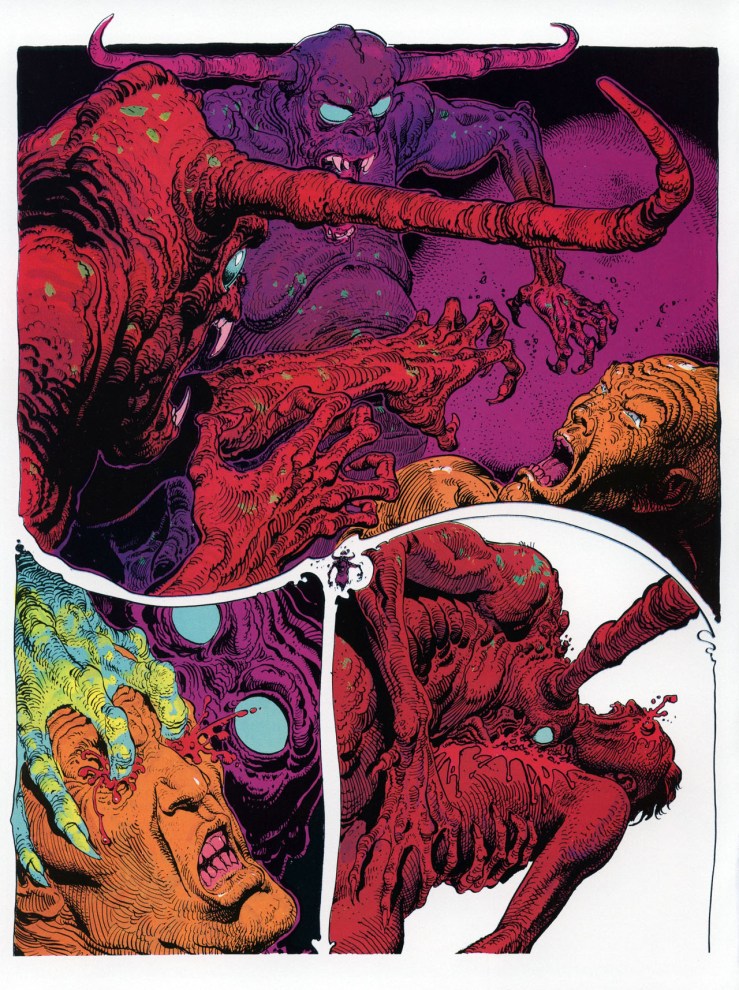 A page from Approaching Centauri by Moebius (Jean Giraud, 1938–2012)
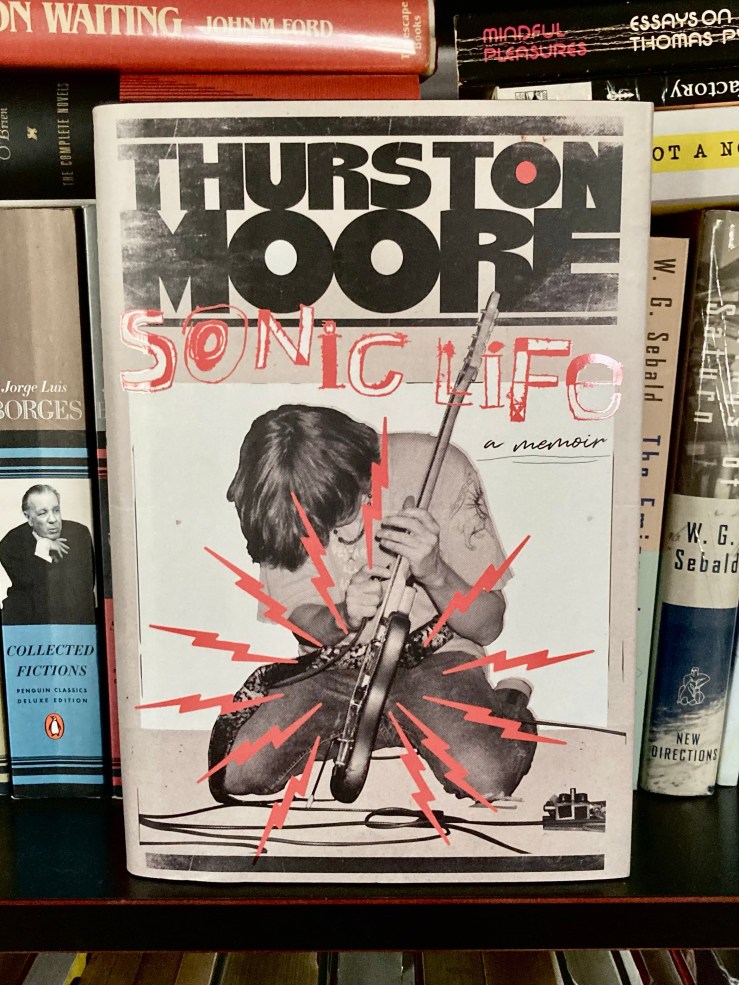 I picked up Thurston Moore’s mammoth memoir Sonic Life yesterday afternoon, started reading it, and kept reading it. I was a huge Sonic Youth fan in my youth, introduced to the band in 1991 via a decent soundtrack to a mediocre film called Pump Up the Volume. Throughout the nineties and early 2000s, I bought all the Sonic Youth records I could get my hands on, and repeatedly watched their 1991 tour diary film The Year Punk Broke more times than I could count. Thurston Moore was a goofy avant hipster, ebullient, verbose, annoying, and endearing, the nexus of a band that were themselves a nexus of nascent bands and artists. (In his chapter on Sonic Youth in his 2001 history Our Band Could Be Your Life, Michael Azerrad repeatedly argues that DGC Records signed the band so that they would reel in the indie groups that majors wanted so badly after Nirvana et al. exploded.) When Thurston Moore and his wife and bandmate Kim Gordon separated in 2011, essentially ending Sonic Youth, I recall being strangely emotionally impacted, like my punk god parents were getting divorced. While I didn’t expect or want dishy answers from Gordon’s 2015 memoir Girl in a Band, I was still disappointed in the book, finding it cold and ultimately dull. So far, Moore’s memoir is richer, denser, sprawls more. It’s written in an electric rapid fire style loaded with phrasing that wouldn’t be out of place in the lyrics of an old SY track. I ended up reading the first 150 or so of the pages last night and this morning, soaking up Moore’s detailed account of the end of the New York punk rock scene and the subsequent birth of No Wave. Moore’s intense love of music is what comes through most strongly. Chapter titles take their names from song titles or song lyrics, and I’ve started to put together a playlist, which I’ll add to as I read: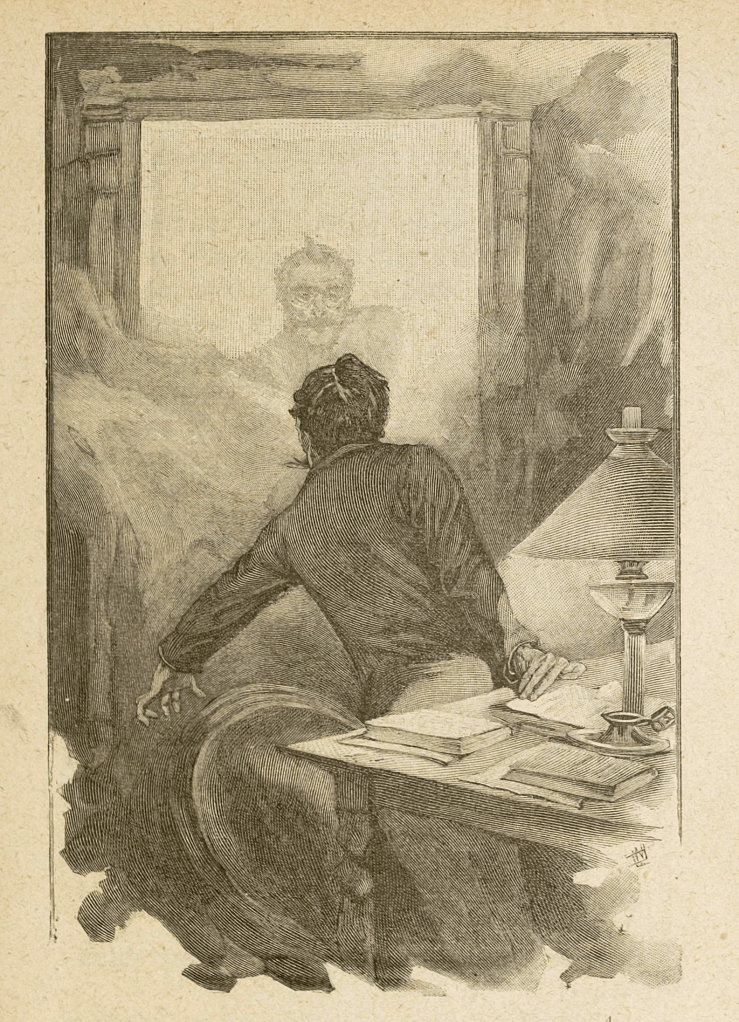
 Biblioklept