I should probably start with a confession: I’m not a big Haruki Murakami fan.
I’ve tried.
I’ve probably abandoned The Wind-Up Bird Chronicle more than any other book (save maybe Proust). I lost interest somewhere in the first 100 pages of Kafka on the Shore, despite finding the premise intriguing. I’ve enjoyed a few of Murakami’s short stories over the years—or maybe found them technically impressive—but none more than the first one I read back in 2001 or 2002 in an issue of Harper’s (I was living in Tokyo at the time, and the main character took the same train I did everyday, the Marunouchi Line).
I want—or rather at one point I really tried—to like Murakami’s fiction, but I just don’t. It leaves me cold.
Which is odd, I think, because the themes and tones—dark ambiguity, strange disappearances, unresolved mysteries, etc.—these are the themes I enjoy most in fiction.
 When the kind folks at Audible offered me a review opportunity, I thought I’d take another shot at Murakami. His new novel Colorless Tsukuru Tazaki and His Years of Pilgrimage is short enough, I reasoned, for me to, y’know, not abandon it. So I listened to Random House Audio’s production (10 hours, unabridged), reading sections against a copy of the book I checked out from the library. (English translation is by frequent Muarkami translator Philip Gabriel).
There were some fine, creepy moments, but on the whole, I was left cold. The novel is technically impressive (did I already use that term?—What I mean is that Murakami is masterful at activating the sensuous strokes that make the words real for the reader—the book is stuffed with the tiny details that are, y’know, mimetic, and these mimetic details bring vitality to Murakami’s frequent metaphysical digressions—when Tsukuru feels a pain in his back, for instance, this physical sensation is not merely a placeholder for a psychological or spiritual hurt, but the very locus of metaphysical disjunction that Murakami wants to explore in the novel—but hang on, I seem to be riffing unfocused in a parenthetical aside, before I have even addressed that basic question review readers want satisfied up front: What is the book about?).
What is the book about?
Before I get to that, I have to address the performance in the audiobook by Bruce Locke, who reads the dialogue (and Tsukuru’s inner-monologues) with a mild Japanese accent. This accent clashes with the affectless intonation that Locke uses to read the exposition. It makes no logical sense at all why Japanese characters would speak to each other in this way. The audience is smart enough to realize that they are reading a book in translation—why make the characters speak to each other in stereotypical accents? The choice is unfortunate, problematic and distracting.
Okay, but:
What is the book about?
Reader, in the acme of laziness—a laziness I will attribute to my lack of enthusiasm to the novel—here is a synopsis of Colorless Tsukuru that I jacked from Wikipedia:
In this Bildungsroman of the realist kind (hints of the author’s magical realism are left to dreams and tales), the third-person narrative follows the past and present of Tsukuru Tazaki, a man who wants to understand why his life was derailed sixteen years ago.
In the early 1990s in his home town of Nagoya, the young Tsukuru was a fan of train stations. In high school, the two boys and two girls that were his four best friends all had a color as part of their surnames, leaving him the “colorless” one of their “orderly, harmonious community”. But one day in 1995, during his second year in college, his friends abruptly cut all relationships with him. That never-explained, Kafkaesque ostracism left him feeling suicidal then guilty “as an empty person, lacking in color and identity”; and when his only college friend vanished the next semester, he felt “fated to always be alone”.
Now in 2011’s Tokyo, the 36-year-old engineer Tazaki works for a railroad company and builds stations. His new girlfriend Sara spurs him “to come face-to-face with the past, not as some naive, easily wounded boy, but as a grown-up” and seek his former friends to mend the relationships and find out why they rejected him, because she won’t commit to him unless he can move past that issue. And so he will visit them one by one, first back in Nagoya, then in rural Finland, on a quest for truth and a pilgrimage for happiness.
That’s actually a pretty nice little summary—hey, there’s even some analytic commentary! Kafkaesque indeed!
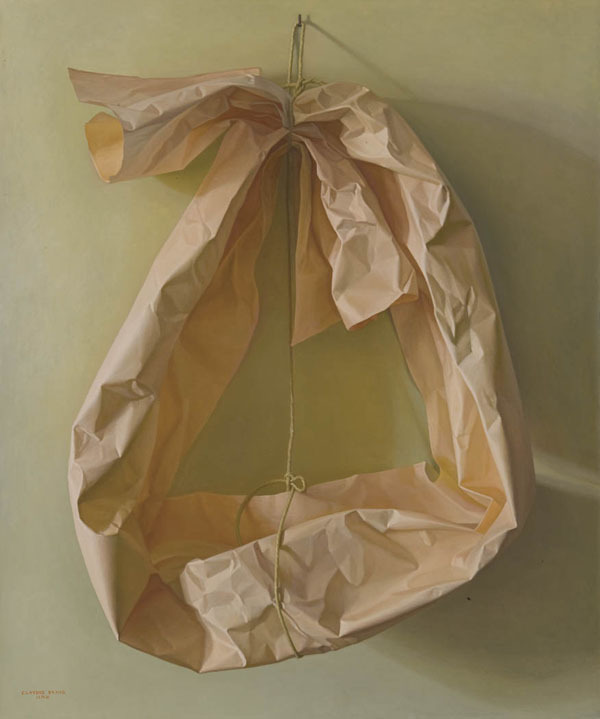
What’s missing from the summary—besides the seemingly-endless metaphorically-overdetermined scenes of Tsukuru swimming that Murakami insists on inserting—what’s missing from the summary is what I take to be a key scene, a story-within-a-story that Tsukuru’s college friend tells him about a pianist who travels around with a bag (which may or may not contain human fingers). The pianist explains to his audience-of-one (Tsukuru’s college friend’s father, if that matters) that he has chosen to die in the place of another person. This metaphysical conceit haunts the rest of the novel, but remains unresolved. (The theme of death and the specter of severed fingers returns again in the novel’s most compelling passage, an extended grotesque vignette featuring fingers floating in formaldehyde).
Much of Colorless Tsukuru remains unresolved. I’d be fine with that if it worked, but I don’t think it does here. (I’m reminded of a joke I read on Twitter years ago: That we know it’s literary fiction if at the end the character is waiting for something). The prose, while brilliant at times in its mimesis, is often clunky and almost always repetitive. This is a repetitive novel. This novel repeats its scenes repetitively. There’s a lot of repetition here.
But you just don’t get Murakami, man, you may reply, dear reader, and that may be true. (Although I do have a penchant for ambiguous, morbid, sinister fiction in translation). I try to assess a novel on what the writer is trying to do, and Murakami—here and elsewhere—feels like a writer supremely adept at creating what Jonathan Lethem called the “furniture” of the novel, the mimetic space in which the characters can come to life. And yet the life force of the characters—their spirit, if I may—seems tepid, clichéd—boring. In the end, I just don’t care. I guess I just don’t get Murakami, man.






 Biblioklept