“Two Friends” — Guy de Maupassant

“Two Friends” — Guy de Maupassant

Besieged Paris was in the throes of famine. Even the sparrows on the roofs and the rats in the sewers were growing scarce. People were eating anything they could get.

As Monsieur Morissot, watchmaker by profession and idler for the nonce, was strolling along the boulevard one bright January morning, his hands in his trousers pockets and stomach empty, he suddenly came face to face with an acquaintance—Monsieur Sauvage, a fishing chum.

Before the war broke out Morissot had been in the habit, every Sunday morning, of setting forth with a bamboo rod in his hand and a tin box on his back. He took the Argenteuil train, got out at Colombes, and walked thence to the Ile Marante. The moment he arrived at this place of his dreams he began fishing, and fished till nightfall.

Every Sunday he met in this very spot Monsieur Sauvage, a stout, jolly, little man, a draper in the Rue Notre Dame de Lorette, and also an ardent fisherman. They often spent half the day side by side, rod in hand and feet dangling over the water, and a warm friendship had sprung up between the two.

Some days they did not speak; at other times they chatted; but they understood each other perfectly without the aid of words, having similar tastes and feelings.

In the spring, about ten o’clock in the morning, when the early sun caused a light mist to float on the water and gently warmed the backs of the two enthusiastic anglers, Morissot would occasionally remark to his neighbor:

“My, but it’s pleasant here.”

To which the other would reply:

“I can’t imagine anything better!”

And these few words sufficed to make them understand and appreciate each other.

In the autumn, toward the close of day, when the setting sun shed a blood-red glow over the western sky, and the reflection of the crimson clouds tinged the whole river with red, brought a glow to the faces of the two friends, and gilded the trees, whose leaves were already turning at the first chill touch of winter, Monsieur Sauvage would sometimes smile at Morissot, and say:

“What a glorious spectacle!”

And Morissot would answer, without taking his eyes from his float:

“This is much better than the boulevard, isn’t it?”

As soon as they recognized each other they shook hands cordially, affected at the thought of meeting under such changed circumstances.

Monsieur Sauvage, with a sigh, murmured:

“These are sad times!”

Morissot shook his head mournfully.

“And such weather! This is the first fine day of the year.”

The sky was, in fact, of a bright, cloudless blue.

They walked along, side by side, reflective and sad.

“And to think of the fishing!” said Morissot. “What good times we used to have!”

“When shall we be able to fish again?” asked Monsieur Sauvage.

They entered a small cafe and took an absinthe together, then resumed their walk along the pavement.

Morissot stopped suddenly.

“Shall we have another absinthe?” he said.

“If you like,” agreed Monsieur Sauvage.

And they entered another wine shop. Continue reading ““Two Friends” — Guy de Maupassant”

The Child’s Brain — Giorgio de Chirico

(This Is Known As) The Blues Scale — Outtakes from 1991: The Year Punk Broke

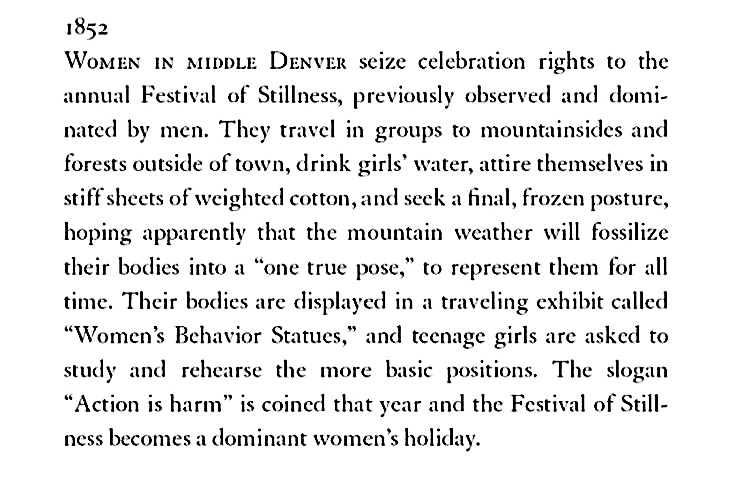
“1852” — Ben Marcus

Capture

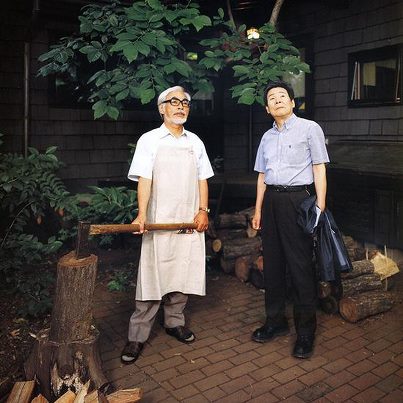
Hayao Miyazaki, Holding an Axe

625517_10151784700199569_14228483_n

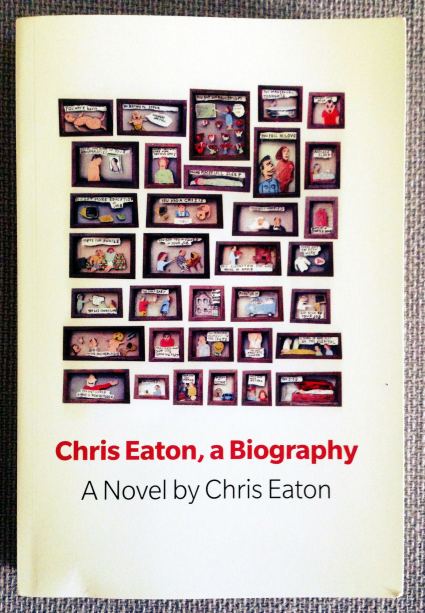
Chris Eaton, a Biography: A Novel by Chris Eaton (Book Acquired, 4.18.2013)

IMG_5190

Chris Eaton’s novel Chris Eaton, A Biography showed up last week.  I haven’t made time to get into it yet—even though it looks pretty cool—mostly because I’m reading too many books right now and it’s the end of the term and all that nonsense. Anyway, this looks like a weird one. Publisher Book Thug’s blurb:

Chris Eaton, A Biography is a novel that arises from the idea that we have all been driven, at some point, to Google ourselves. And if you did, what did you find? That there are people out there who seem to have something in common with you? Dates, places, interests? How coincidental are these connections? And what are the factors that define a human life? We are the sum of our stories: Anecdotal constructs. We remember moments in our pasts the way we remember television episodes. In pieces. And we realize that our own memories are no more valid in the construction of our identities than stories we’ve heard from others. Chris Eaton, A Biography constructs a life by using, as building blocks, the lives of dozens of other people who share nothing more than a name, identities that blur into each other with the idea that, in the end, we all live the same life, deal with the same hopes and fears, experience the same joys and tragedies. Only the specifics are different. From birth to death and everything in between, the narratives we share bring us closer to a truth about what it means to be alive. To be you.


Orestes Pursued by the Furies — John Singer Sargent

“The Princess with the Lily-white Feet” — Ludmila Petrushevskaya

“The Princess with the Lily-white Feet” by Ludmila Petrushevskaya

Once upon a time there lived a Youngest Princess, and everybody loved her. She had tiny little hands like rose petals, and her tiny white feet were like lily petals. On the one hand, this was pretty, but on the other hand, the Youngest Princess was almost too delicate and sensitive – she’d cry at the slightest provocation. She wasn’t exactly reprimanded for it, but the family certainly didn’t condone such behaviour, either. “You can’t let yourself fall apart like that!” her Mama, Papa, Grandma, and King-granddaddy used to say. “You have to keep yourself in hand. You’re a big girl now.”

This would only hurt her feelings even more, and the Youngest Princess would take to crying again.

Nevertheless, there came a time when a Prince came to woo the Princess, which is the way it’s meant to be.

The Prince was tall, handsome, and gentle. “A fine pair!” everybody in the kingdom agreed.

The Prince and the Princess went on lots of walks, they danced together, and the Princess – and for her this was totally unheard of – wove flower garlands on the meadow for the Prince and for herself, garlands of cornflowers every bit as blue as the Prince’s eyes.

The Prince and the Princess were betrothed, which is the way it was meant to be – that is, they were declared fiancé and fiancée. Then the Prince rode back to his own kingdom.

The Youngest Princess stayed home and started crying. Everyone disapproved of such behaviour; they even called the doctor. The doctor talked a bit with the Princess and unexpectedly prescribed not sedatives, which is the way it’s meant to be, but pain pills. Because it turned out that the Youngest Princess had overexerted herself with all that dancing and walking and chafed her tender little hands and feet till they were sore and bleeding.

Time passed, the wedding grew near, but the bride kept crying, sitting in bed and favouring her bandaged hands and feet. She couldn’t walk or hold a cup of tea in her hands: she was fed by her old nurse, who held her cup for her, too.

The doctor, however, optimistically predicted that everything would heal up before the wedding, and said the Youngest Princess was simply too delicate and too sensitive, a crybaby with no self-discipline, and that was the fruit of her improper upbringing in the family, but as soon as the Prince returned she would get up and dance and move her hands just the way she used to. “It’s all psychological,” said the doctor, and kept feeding the Princess pain pills.

Then the old nurse gathered together some photos of the Youngest Princess and set off to see a sorcerer. She brought back an enigmatic answer: “He who loves, carries in his arms.”

This phrase soon became legendary with absolutely everybody who had loved the Princess so much since she was a baby, when she used to smile blissfully, showing her first four tiny teeth and the two little dimples in her cheeks, when her little ringlets were like golden silk, and her little eyes like forget-me-nots. Continue reading ““The Princess with the Lily-white Feet” — Ludmila Petrushevskaya”

Embroidering the Earth’s Mantle — Remedios Varo

Shakespeare at Dusk — Edward Hopper

“Just mix up a mixture of theolologicophilolological” — Stephen Dedalus on Shakespeare

From Stephen Dedalus’s strange thesis on Shakespeare in episode 9 of James Joyce’s Ulysses–

— And the sense of property, Stephen said. He drew Shylock out of his own long pocket. The son of a maltjobber and moneylender he was himself a cornjobber and moneylender, with ten tods of corn hoarded in the famine riots. His borrowers are no doubt those divers of worship mentioned by Chettle Falstaff who reported his uprightness of dealing. He sued a fellowplayer for the price of a few bags of malt and exacted his pound of flesh in interest for every money lent. How else could Aubrey’s ostler and callboy get rich quick? All events brought grist to his mill. Shylock chimes with the jewbaiting that followed the hanging and quartering of the queen’s leech Lopez, his jew’s heart being plucked forth while the sheeny was yet alive: Hamlet and Macbeth with the coming to the throne of a Scotch philosophaster with a turn for witchroasting. The lost armada is his jeer in Love’s Labour Lost. His pageants, the histories, sail fullbellied on a tide of Mafeking enthusiasm. Warwickshire jesuits are tried and we have a porter’s theory of equivocation. The Sea Venture comes home from Bermudas and the play Renan admired is written with Patsy Caliban, our American cousin. The sugared sonnets follow Sidney’s. As for fay Elizabeth, otherwise carrotty Bess, the gross virgin who inspired The Merry Wives of Windsor, let some meinherr from Almany grope his life long for deephid meanings in the depths of the buckbasket.

I think you’re getting on very nicely. Just mix up a mixture of theolologicophilolological. Mingo, minxi, mictum, mingere.

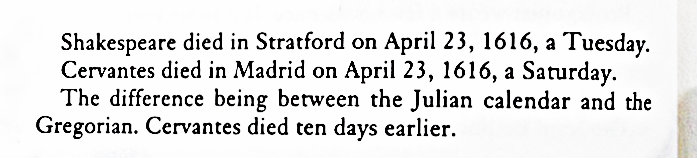
April 23, 1616 (David Markson)

dm


Spectrum Appearance of Banquo — Gustave Doré

Cordelia’s Portion — Ford Madox Brown

Novels That Will Be Considered the Most Important Literary Works of the Twentieth Century in the Year 2100 (According to Dalkey Archive)

Novels That Will Be Considered the Most Important Literary Works of the Twentieth Century in the Year 2100

Nightwood, Djuna Barnes
Malone Dies, Samuel Beckett
Molloy, Samuel Beckett
The Unnamable, Samuel Beckett
The Lime Works, Thomas Bernhard
Nostromo, Joseph Conrad
JR, William Gaddis
The Recognitions, William Gaddis
Ulysses, James Joyce
One Hundred Years of Solitude, Gabriel Garcia Marquez
At Swim-Two-Birds, Flann O’Brien
The Inquisitory, Robert Pinget
Remembrance of Things Past, Marcel Proust
Gravity’s Rainbow, Thomas Pynchon
Mulligan Stew, Gilbert Sorrentino

Speculative list from the Dalkey Archive (from an issue of their journal Context; compiled from responses  of “advisors at universities and bookstores”). I’m sure the fact that they publish several of these titles has nothing to do with these books’ inclusion. I’ve read all of seven of these, some of five of these, and none of three of these.

Ideal Portrait of Shakespeare — Angelica Kauffman

“The Bottle Imp” — Robert Louis Stevenson

“The Bottle Imp” by Robert Louis Stevenson

There was a man of the Island of Hawaii, whom I shall call Keawe; for the truth is, he still lives, and his name must be kept secret; but the place of his birth was not far from Honaunau, where the bones of Keawe the Great lie hidden in a cave.  This man was poor, brave, and active; he could read and write like a schoolmaster; he was a first-rate mariner besides, sailed for some time in the island steamers, and steered a whaleboat on the Hamakua coast.  At length it came in Keawe’s mind to have a sight of the great world and foreign cities, and he shipped on a vessel bound to San Francisco.

This is a fine town, with a fine harbour, and rich people uncountable; and, in particular, there is one hill which is covered with palaces.  Upon this hill Keawe was one day taking a walk with his pocket full of money, viewing the great houses upon either hand with pleasure, “What fine houses these are!” he was thinking, “and how happy must those people be who dwell in them, and take no care for the morrow!”  The thought was in his mind when he came abreast of a house that was smaller than some others, but all finished and beautified like a toy; the steps of that house shone like silver, and the borders of the garden bloomed like garlands, and the windows were bright like diamond; and Keawe stopped and wondered at the excellence of all he saw.  So stopping, he was aware of a man that looked forth upon him through a window so clear that Keawe could see him as you see a fish in a pool upon the reef.  The man was elderly, with a bald head and a black beard; and his face was heavy with sorrow, and he bitterly sighed.  And the truth of it is, that as Keawe looked in upon the man, and the man looked out upon Keawe, each envied the other.

All of a sudden, the man smiled and nodded, and beckoned Keawe to enter, and met him at the door of the house.

“This is a fine house of mine,” said the man, and bitterly sighed.  “Would you not care to view the chambers?”

So he led Keawe all over it, from the cellar to the roof, and there was nothing there that was not perfect of its kind, and Keawe was astonished.

“Truly,” said Keawe, “this is a beautiful house; if I lived in the like of it, I should be laughing all day long.  How comes it, then, that you should be sighing?”

“There is no reason,” said the man, “why you should not have a house in all points similar to this, and finer, if you wish.  You have some money, I suppose?”

“I have fifty dollars,” said Keawe; “but a house like this will cost more than fifty dollars.”

The man made a computation.  “I am sorry you have no more,” said he, “for it may raise you trouble in the future; but it shall be yours at fifty dollars.”

“The house?” asked Keawe. Continue reading ““The Bottle Imp” — Robert Louis Stevenson”