Half/whole (Hesiod)

hesiod

Leland Palmer Lip-syncs Beach House’s “Wishes” from the Comfort of His Satin Baseball Jacket

Watch Return to Oz, the Bizarre 1985 Sequel to The Wizard of Oz (Also: A Riff)

1. Ah, 1985. I was just a kid. A young kid. And my folks took me to see Walter Murch’s Return to Oz, an unofficial sequel to The Wizard of Oz.

Return to Oz is a film so bleak and dark and bizarre that its imagery still lives in the nooks of my nightmares.

2. Not that I didn’t enjoy Return to Oz—to be clear, I did. But it horrified me in ways that surpassed the deep horror I’d experienced viewing the 1939 film The Wizard of Oz.

3. (The green Wicked Witch cackling “I’ll get you my pretty” in The Wizard of Oz being something of a founding moment of horrific horror, a horror amplified by my mother’s tendency to act out the line at weird moments as she tickled me or chased me or picked me up from school).

4. But Return to Oz: this movie is dark. It’s fucked up.

Dorothy gets institutionalized and treated with electroshock therapy. Then she goes to Oz, where she’s pursued by Wheelers, these things that roll around on rollerskate hands and feet, which, you know, should be whimsical, but are instead horrific. Then there’s this cabinet of detached heads, which could have been handled playfully, but no, instead it’s like something out of Hieronymus Bosch. Even Dorothy’s friends are these weird, off-putting versions that don’t match up to the original trio of Scarecrow, Tinman, and Lion. Instead we get Tik-Tok, an android who looks like a swollen pot-bellied C3PO, and Jack Pumpkinhead, a guy with a pumpkin for a head. These friends don’t look human at all (because they aren’t). There’s a quest; they cross a desert; they save the day, etc.

It ends with Dorothy returned, not exactly safely, to aunt and uncle.

5. So Disney made another unofficial sequel, Oz the Great and Powerful, this time from director Sam Raimi (Return’s Murch never directed another film, by the way). Despite his franchise work on the first trilogy of Spider-Man films, Raimi is an auteur who gave us cult classics like Darkman and the Evil Dead trilogy. I loved his last film Drag Me to Hell, which mixed humor with noir and genuine horror.

6. Oz the Great and Powerful is of course doomed, no matter how much money it makes. It’s doomed in the way that The Two Jakes was doomed, or Godfather III was doomed, or Citizen Kane 2: Electric Boogaloo was doomed: There’s no way that it can surpass, let alone stand up next to, the strength of the prototype.

7. Still, I think that if Raimi has brought enough of his own weirdness to the film, we might get a fascinating artifact. My real hope is that there will be a strong streak of Evil Dead 2 in Raimi’s Disney, a streak of bizarre dark weirdness to baffle and disturb a new generation. Hell, maybe I’ll take my kids.

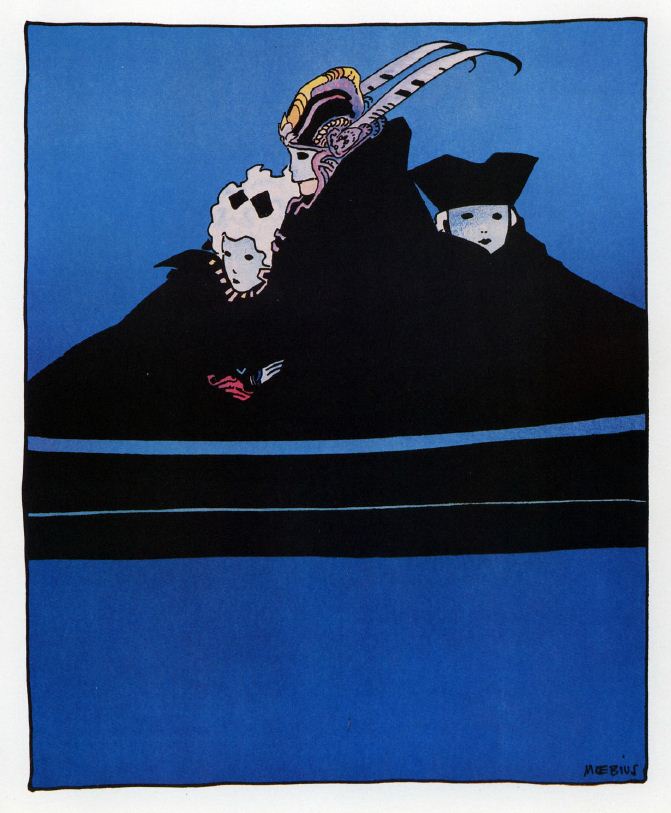
Venetian Carnival — Moebius

venetian moebius

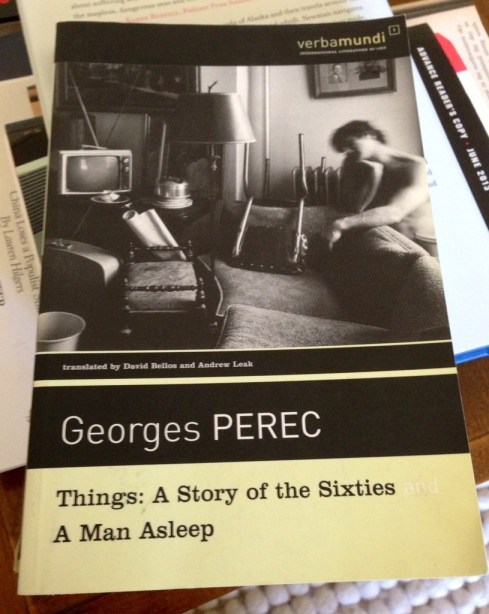
Georges Perec (Books Acquired, Some Time Last Week)

20130304-154911.jpg

I picked up Georges Perec’s twofer Things and A Man Asleep last Friday at the used bookstore. I was there looking for something else. The Perec was not even shelved under “P.” I found it laid on a table. The good people at Melville House also sent me a copy of Perec’s La Boutique Obscure last week, which I do not photograph here because it is an ebook. I read a big chunk of Obscure this week and will do some kind of write-up sometime soon, but here’s David Auerbach’s review at the LA Review of Books in the meantime.

“Chippings with a Chisel” — Nathaniel Hawthorne

“Chippings with a Chisel” by Nathaniel Hawthorne

Passing a summer several years since at Edgartown, on the island of Martha’s Vineyard, I became acquainted with a certain carver of tombstones who had travelled and voyaged thither from the interior of Massachusetts in search of professional employment. The speculation had turned out so successful that my friend expected to transmute slate and marble into silver and gold to the amount of at least a thousand dollars during the few months of his sojourn at Nantucket and the Vineyard. The secluded life and the simple and primitive spirit which still characterizes the inhabitants of those islands, especially of Martha’s Vineyard, insure their dead friends a longer and dearer remembrance than the daily novelty and revolving bustle of the world can elsewhere afford to beings of the past. Yet, while every family is anxious to erect a memorial to its departed members, the untainted breath of Ocean bestows such health and length of days upon the people of the isles as would cause a melancholy dearth of business to a resident artist in that line. His own monument, recording his decease by starvation, would probably be an early specimen of his skill. Gravestones, therefore, have generally been an article of imported merchandise.

In my walks through the burial-ground of Edgartown—where the dead have lain so long that the soil, once enriched by their decay, has returned to its original barrenness—in that ancient burial-ground I noticed much variety of monumental sculpture. The elder stones, dated a century back or more, have borders elaborately carved with flowers and are adorned with a multiplicity of death’s-heads, crossbones, scythes, hour-glasses, and other lugubrious emblems of mortality, with here and there a winged cherub to direct the mourner’s spirit upward. These productions of Gothic taste must have been quite beyond the colonial skill of the day, and were probably carved in London and brought across the ocean to commemorate the defunct worthies of this lonely isle. The more recent monuments are mere slabs of slate in the ordinary style, without any superfluous flourishes to set off the bald inscriptions. But others—and those far the most impressive both to my taste and feelings—were roughly hewn from the gray rocks of the island, evidently by the unskilled hands of surviving friends and relatives. On some there were merely the initials of a name; some were inscribed with misspelt prose or rhyme, in deep letters which the moss and wintry rain of many years had not been able to obliterate. These, these were graves where loved ones slept. It is an old theme of satire, the falsehood and vanity of monumental eulogies; but when affection and sorrow grave the letters with their own painful labor, then we may be sure that they copy from the record on their hearts. Continue reading ““Chippings with a Chisel” — Nathaniel Hawthorne”

Portrait of Harriet — Jonathan Adams Bartlett

TERRA_DB_103997200

Scott and Zelda Fitzgerald Apply for a Passport

f-scott-fitzgerald

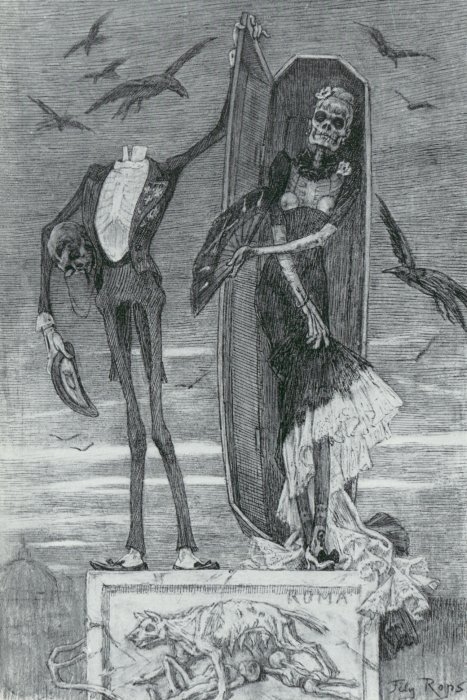
The Supreme Vice — Felicien Rops

the-supreme-vice

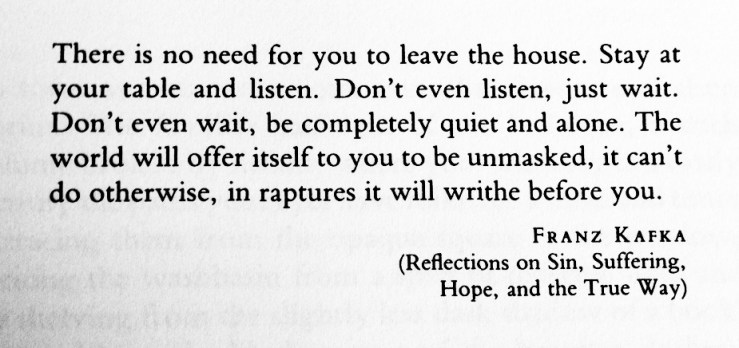
No Need (Kafka)

kafka

Dream #7 — David Lynch (Very Short Film)

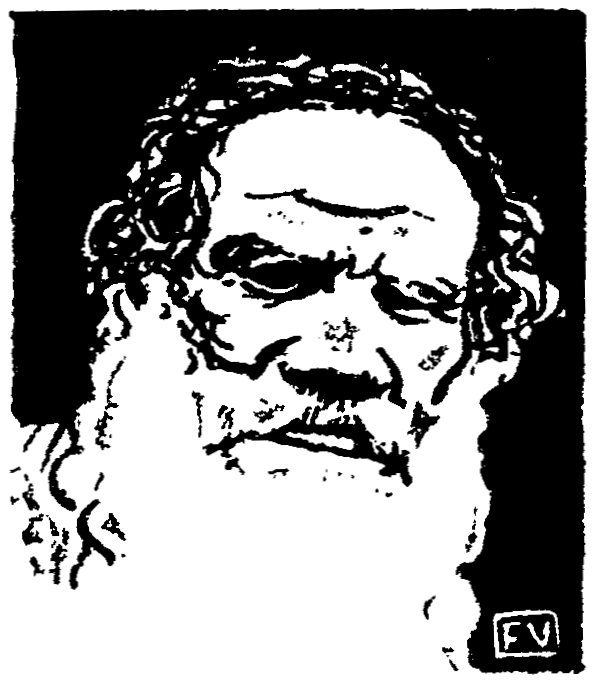
Leo Tolstoy — Felix Vallotton

leo-tolstoy-1895

“A Defence of Ugly Things” — G.K. Chesterton

“A Defence of Ugly Things” by G.K. Chesterton

There are some people who state that the exterior, sex, or physique of another person is indifferent to them, that they care only for the communion of mind with mind; but these people need not detain us. There are some statements that no one ever thinks of believing, however often they are made.

But while nothing in this world would persuade us that a great friend of Mr. Forbes Robertson, let us say, would experience no surprise or discomfort at seeing him enter the room in the bodily form of Mr. Chaplin, there is a confusion constantly made between being attracted by exterior, which is natural and universal, and being attracted by what is called physical beauty, which is not entirely natural and not in the least universal. Or rather, to speak more strictly, the conception of physical beauty has been narrowed to mean a certain kind of physical beauty which no more exhausts the possibilities of external attractiveness than the respectability of a Clapham builder exhausts the possibilities of moral attractiveness.

The tyrants and deceivers of mankind in this matter have been the Greeks. All their splendid work for civilization ought not to have wholly blinded us to the fact of their great and terrible sin against the variety of life. It is a remarkable fact that while the Jews have long ago been rebelled against and accused of blighting the world with a stringent and one-sided ethical standard, nobody has noticed that the Greeks have committed us to an infinitely more horrible asceticism—an asceticism of the fancy, a worship of one aesthetic type alone. Jewish severity had at least common-sense as its basis; it recognised that men lived in a world of fact, and that if a man married within the degrees of blood certain consequences might follow. But they did not starve their instinct for contrasts and combinations; their prophets gave two wings to the ox and any number of eyes to the cherubim with all the riotous ingenuity of Lewis Carroll. But the Greeks carried their police regulation into elfland; they vetoed not the actual adulteries of the earth but the wild weddings of ideas, and forbade the banns of thought.

It is extraordinary to watch the gradual emasculation of the monsters of Greek myth under the pestilent influence of the Apollo Belvedere. The chimaera was a creature of whom any healthy-minded people would have been proud; but when we see it in Greek pictures we feel inclined to tie a ribbon round its neck and give it a saucer of milk. Who ever feels that the giants in Greek art and poetry were really big—big as some folk-lore giants have been? In some Scandinavian story a hero walks for miles along a mountain ridge, which eventually turns out to be the bridge of the giant’s nose. That is what we should call, with a calm conscience, a large giant. But this earthquake fancy terrified the Greeks, and their terror has terrified all mankind out of their natural love of size, vitality, variety, energy, ugliness. Nature intended every human face, so long as it was forcible, individual, and expressive, to be regarded as distinct from all others, as a poplar is distinct from an oak, and an apple-tree from a willow. But what the Dutch gardeners did for trees the Greeks did for the human form; they lopped away its living and sprawling features to give it a certain academic shape; they hacked off noses and pared down chins with a ghastly horticultural calm. And they have really succeeded so far as to make us call some of the most powerful and endearing faces ugly, and some of the most silly and repulsive faces beautiful. This disgraceful via media, this pitiful sense of dignity, has bitten far deeper into the soul of modern civilization than the external and practical Puritanism of Israel. The Jew at the worst told a man to dance in fetters; the Greek put an exquisite vase upon his head and told him not to move. Continue reading ““A Defence of Ugly Things” — G.K. Chesterton”

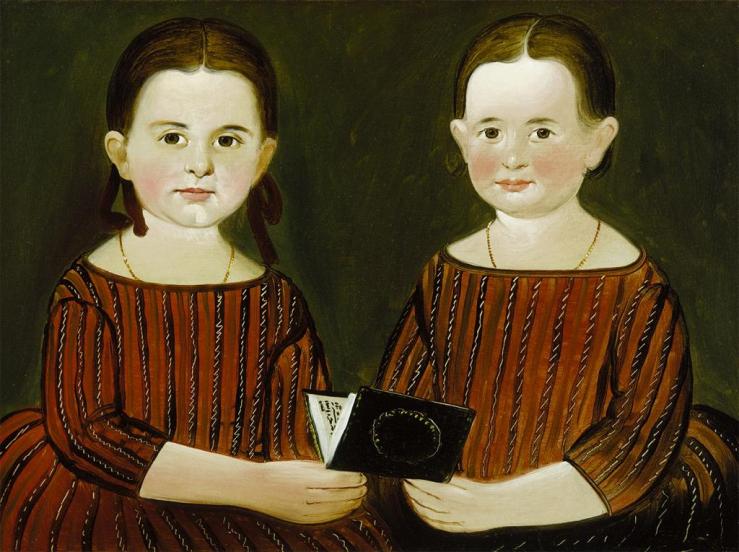
Two Girls Sharing a Book — William Matthew Prior

TERRA_DB_103997185

The Dreamer — Caspar David Friedrich

Videodrome — David Cronenberg (Full Film)

“There are in English often long trains of words allied by their meaning and derivation” (Samuel Johnson)

There are in English often long trains of words allied by their meaning and derivation; as, to beata batbatoona battlea beetlea battledoreto batterbatter, a kind of glutinous composition for food, made by beating different bodies into one mass. All these are of similar signification, and perhaps derived from the Latin batuo. Thus taketouchtickletacktackle; all imply a local conjunction from the Latin tangotetigitactum.

From two are formed twaintwicetwentytwelvetwinstwinetwisttwirltwigtwitchtwingebetweenbetwixttwilighttwibil.

The following remarks, extracted from Wallis, are ingenious but of more subtlety than solidity, and such as perhaps might in every language be enlarged without end.

Sn usually imply the nose, and what relates to it. From the Latin nasus are derived the French nez and the English nose; and nesse, a promontory, as projecting like a nose. But as if from the consonants ns taken from nasus, and transposed that they may the better correspond, sn denote nasus; and thence are derived many words that relate to the nose, as snoutsneezesnoresnort,snearsnickersnotsnivelsnitesnuffsnufflesnafflesnarlsnudge.

There is another sn which may perhaps be derived from the Latin sinuo, as snakesneaksnailsnare; so likewise snap and snatchsnibsnubBl imply a blast; as blowblastto blastto blight, and, metaphorically, to blast one’s reputation;bleatbleak, a bleak place, to look bleak, or weather-beaten, blackblaybleachblusterblurtblisterblabbladderblewblabber lip’tblubber-cheek’tblotedblote-herringsblastblazeto blow, that is, blossombloom; and perhapsblood and blush.

In the native words of our tongue is to be found a great agreement between the letters and the thing signified; and therefore the sounds of the letters smaller, sharper, louder, closer, softer, stronger, clearer, more obscure, and more stridulous, do very often intimate the like effects in the things signified.

Thus words that begin with str intimate the force and effect of the thing signified, as if probably derived from στρωννυμι, or strenuous; as strongstrengthstrewstrikestreakstrokestripestrivestrifestrugglestroutstrutstretchstrait,strictstreight, that is, narrow, distrainstressdistressstringstrapstreamstreamerstrandstripstraystrugglestrangestridestradale.

St in like manner imply strength, but in a less degree, so much only as is sufficient to preserve what has been already communicated, rather than acquire any new degree; as if it were derived from the Latin sto; for example, standstay, that is, to remain, or to prop; staffstay, that is, to oppose; stopto stuffstifleto stay, that is, to stop; a stay, that is, an obstacle; stickstutstutterstammerstaggersticklestickstake, a sharp, pale, and any thing deposited at play; stockstem,stingto stingstinkstitchstudstuncheonstubstubble, to stub up, stump, whence stumblestalkto stalkstepto stamp with the feet, whence to stamp, that is, to make an impression and a stamp; stowto stowto bestowsteward, orstowardsteadsteadystedfaststablea stablea stallto stallstoolstallstillstallstallagestagestill, adjective, and still, adverb: stalestoutsturdysteadstoatstallionstiffstark-deadto starve with hunger or cold; stonesteel,sternstanchto stanch blood, to staresteepsteeplestairstandard, a stated measure, stately. In all these, and perhaps some others, st denote something firm and fixed.

Thr imply a more violent degree of motion, as throwthrustthrongthrobthroughthreatthreatenthrallthrows.

Wr imply some sort of obliquity or distortion, as wryto wreathewrestwrestlewringwrongwrinchwrenchwranglewrinklewrathwreakwrackwretchwristwrap.

Sw imply a silent agitation, or a softer kind of lateral motion; as swayswagto swayswaggerswervesweatsweepswillswimswingswiftsweetswitchswinge.

Nor is there much difference of sm in smoothsmugsmilesmirksmite; which signifies the same as to strike, but is a softer word; smallsmellsmacksmothersmart, a smart blow properly signifies such a kind of stroke as with an originally silent motion, implied in sm, proceeds to a quick violence, denoted by ar suddenly ended, as is shown by t.

Cl denote a kind of adhesion or tenacity, as in cleaveclayclingclimbclamberclammyclaspto claspto clipto clinchcloakclogcloseto closea cloda clot, as a clot of blood, clouted cream, a cluttera cluster.

Sp imply a kind of dissipation or expansion, especially a quick one, particularly if there be an r, as if it were from spargo or separo: for example, spreadspringsprigsproutsprinklesplitsplinterspillspitsputterspatter.

Sl denote a kind of silent fall, or a less observable motion; as in slimeslideslipslipperslysleightslitslowslackslightslingslap.

And so likewise ash, in crashrashgashflashclashlashslashplashtrash, indicate something acting more nimbly and sharply. But ush, in crushrushgushflushblushbrushhushpush, imply something as acting more obtusely and dully. Yet in both there is indicated a swift and sudden motion not instantaneous, but gradual, by the continued sound, sh.

Thus in flingslingdingswingclingsingwringsting, the tingling of the termination ng, and the sharpness of the vowel i, imply the continuation of a very slender motion or tremor, at length indeed vanishing, but not suddenly interrupted. [31]But in tinkwinksinkclinkchinkthink, that end in a mute consonant, there is also indicated a sudden ending.

If there be an l, as in jingletingletinkleminglesprinkletwinkle, there is implied a frequency, or iteration of small acts. And the same frequency of acts, but less subtile by reason of the clearer vowel a, is indicated in jangletangle,spanglemanglewranglebrangledangle; as also in mumblegrumblejumble. But at the same time the close u implies something obscure or obtunded; and a congeries of consonants mbl, denotes a confused kind of rolling or tumbling, as in ramblescamblescramblewambleamble; but in these there is something acute.

In nimble, the acuteness of the vowel denotes celerity. In sparklesp denotes dissipation, ar an acute crackling, k a sudden interruption, l a frequent iteration; and in like manner in sprinkle, unless in may imply the subtilty of the dissipated guttules. Thick and thin differ in that the former ends with an obtuse consonant, and the latter with an acute.

In like manner, in squeeksqueaksquealsquallbrawlwraulyaulspaulscreekshriekshrillsharpshrivelwrinklecrackcrashclashgnashplashcrushhushhisse,  fisse,  whistsoft,  jar,  hurl,  curl,  whirl,  buz,  bustlespindledwindletwinetwist, and in many more, we may observe the agreement of such sort of sounds with the things signified; and this so frequently happens, that scarce any language which I know can be compared with ours. So that one monosyllable word, of which kind are almost all ours, emphatically expresses what in other languages can scarce be explained but by compounds, or decompounds, or sometimes a tedious circumlocution.

(From Samuel Johnson’s A Grammar of the English Tongue).