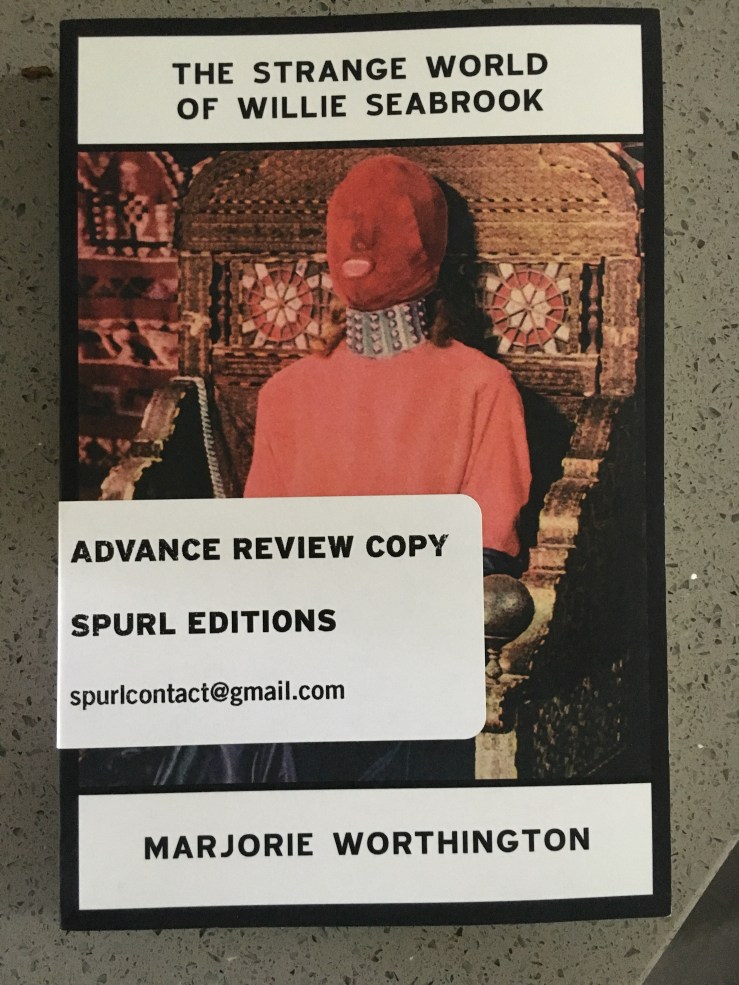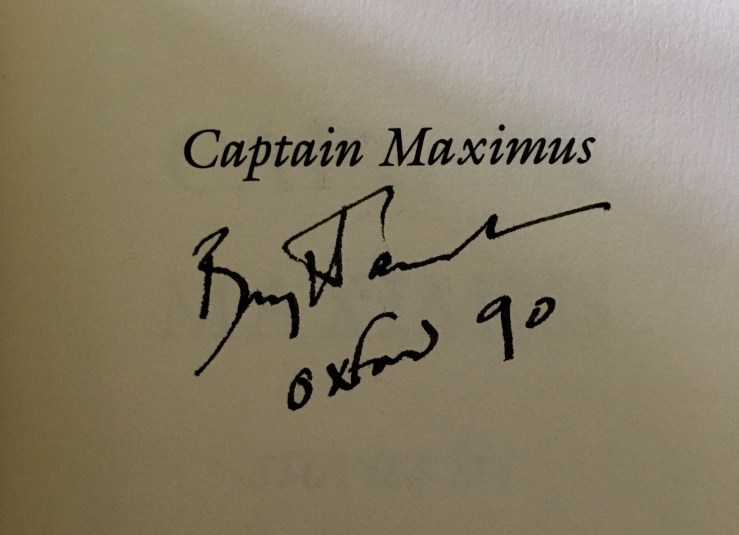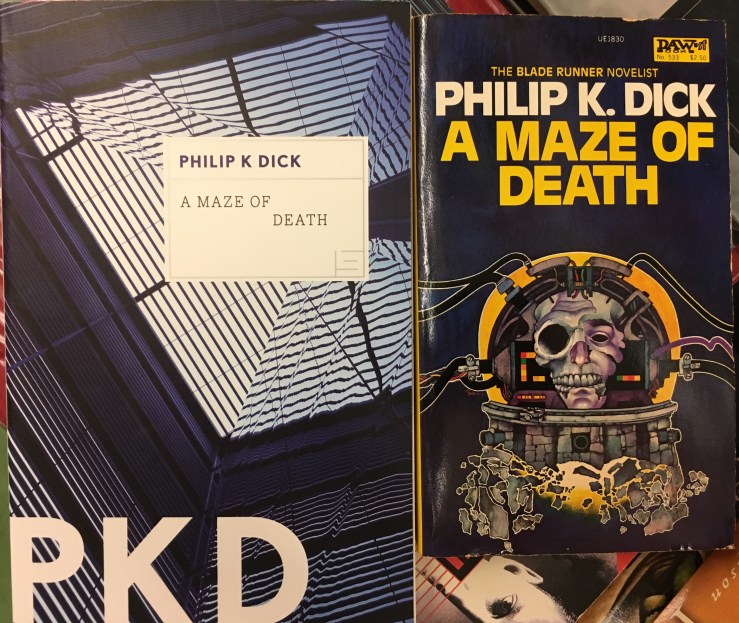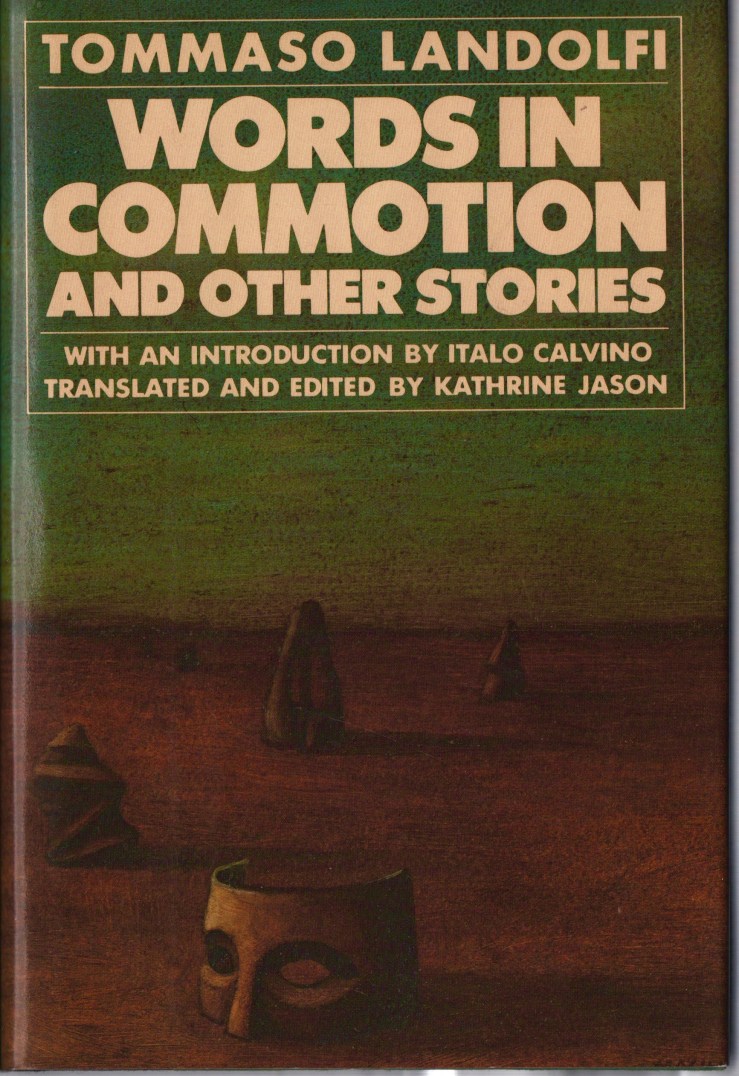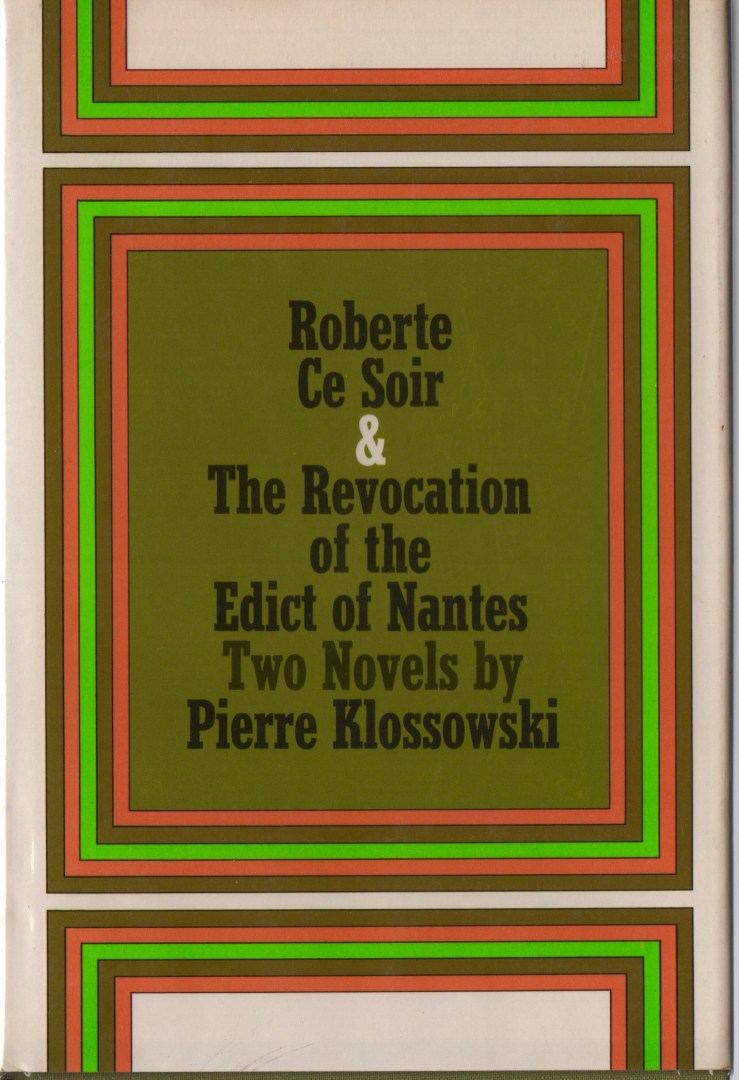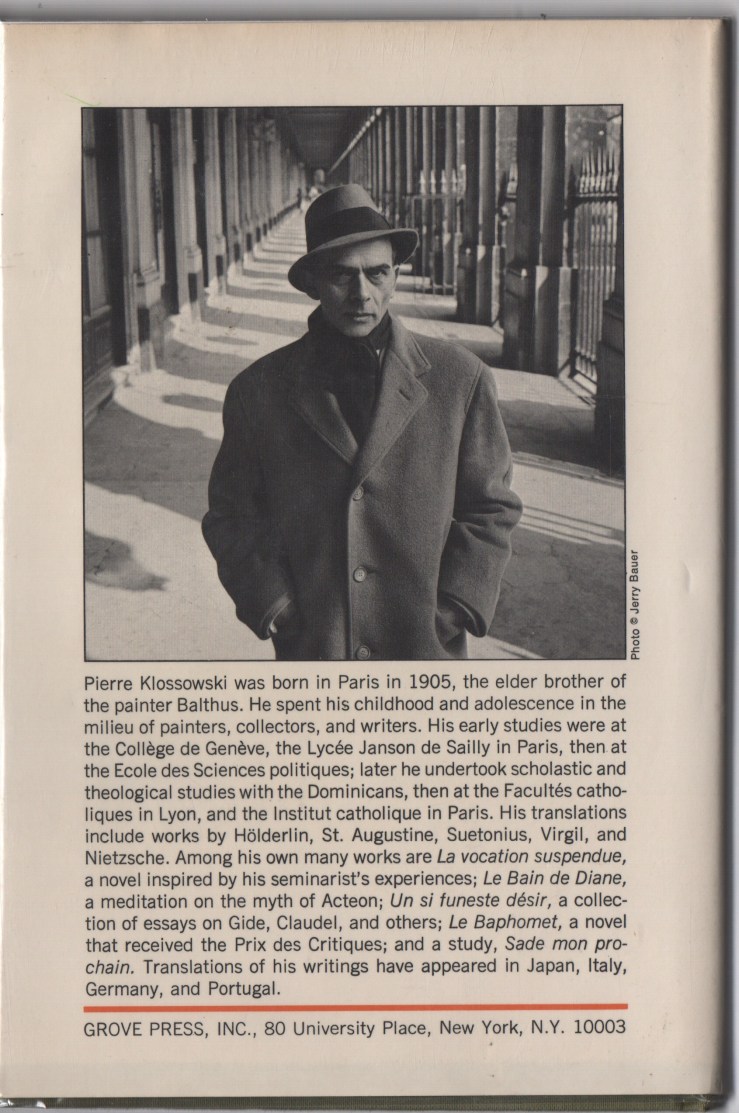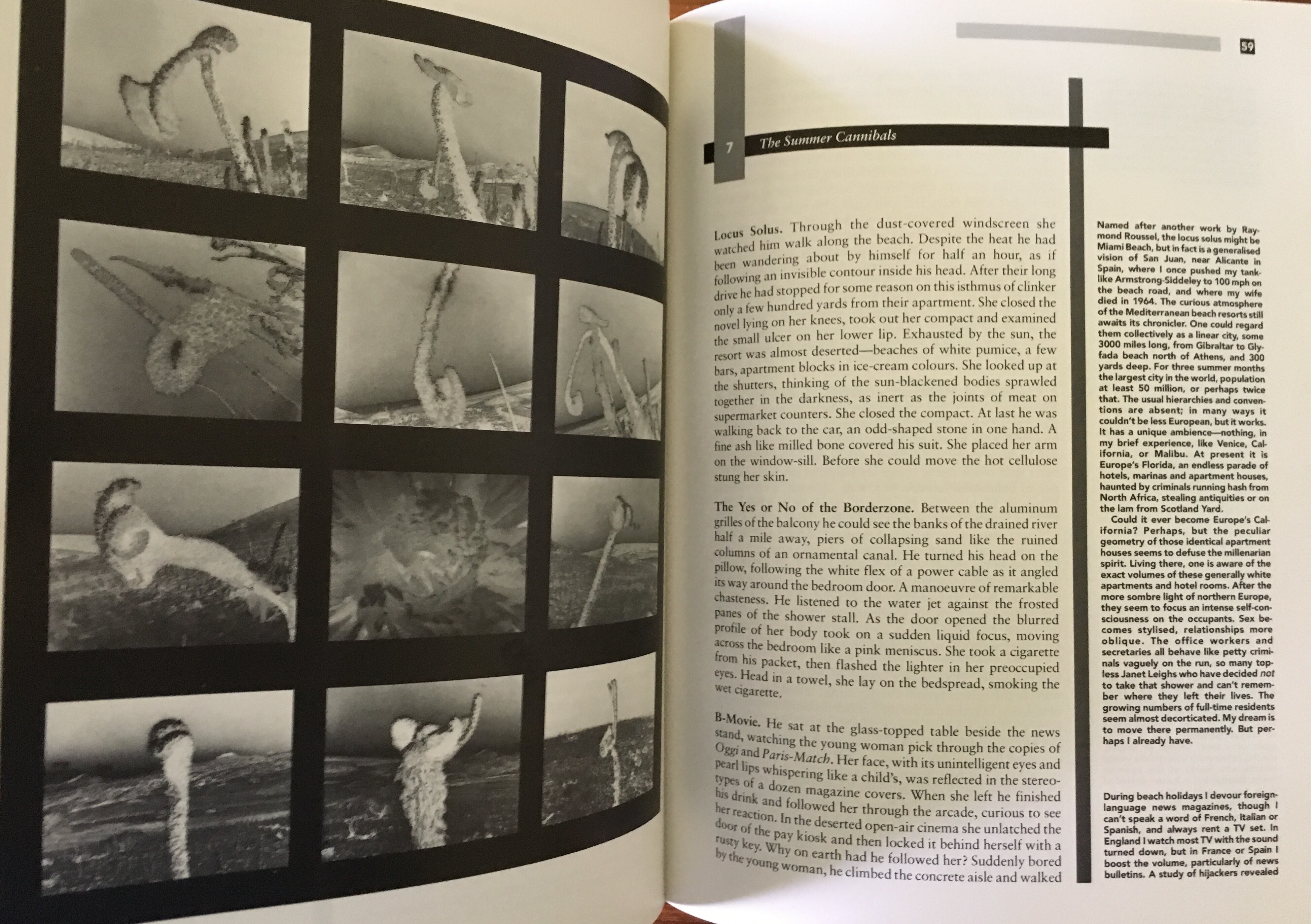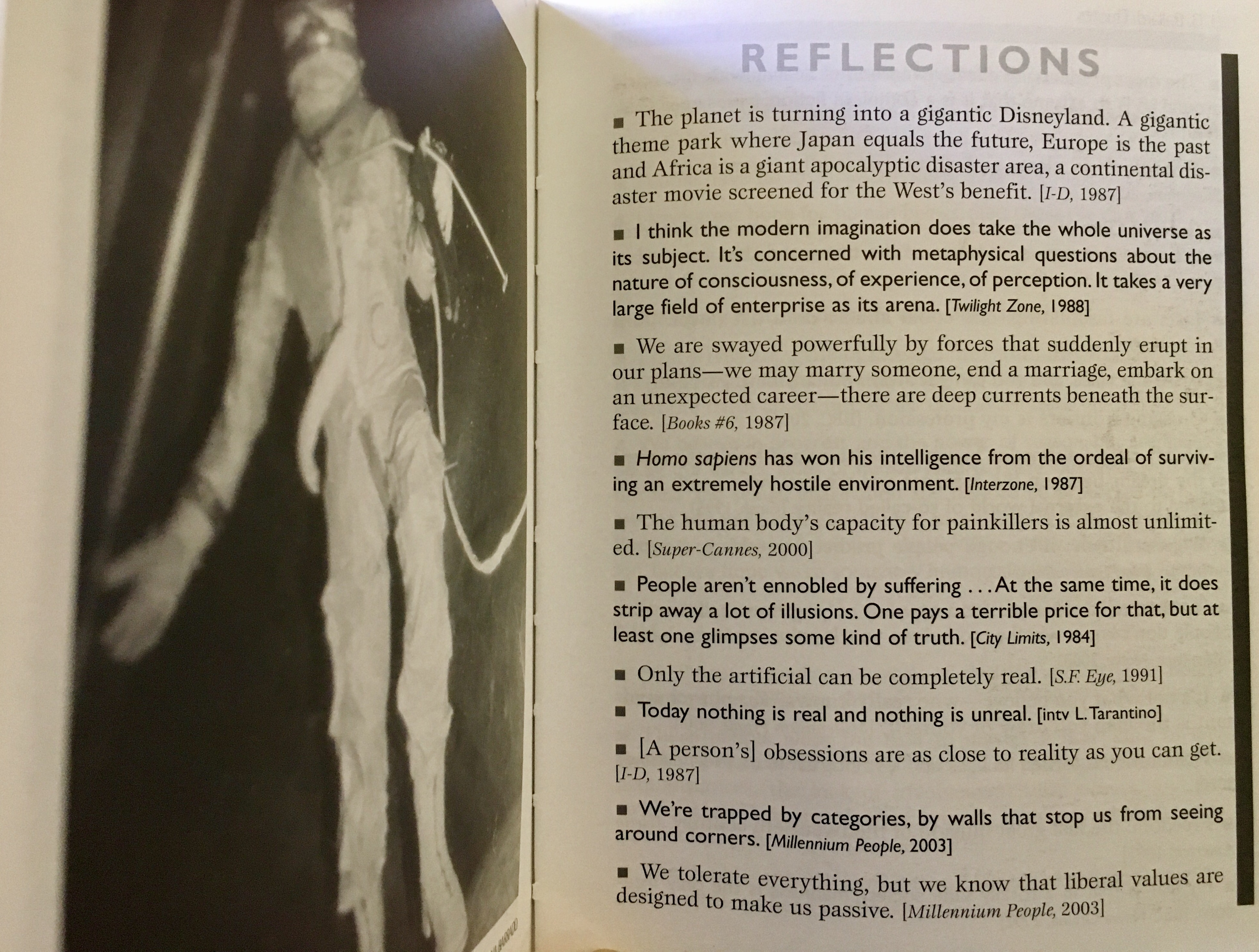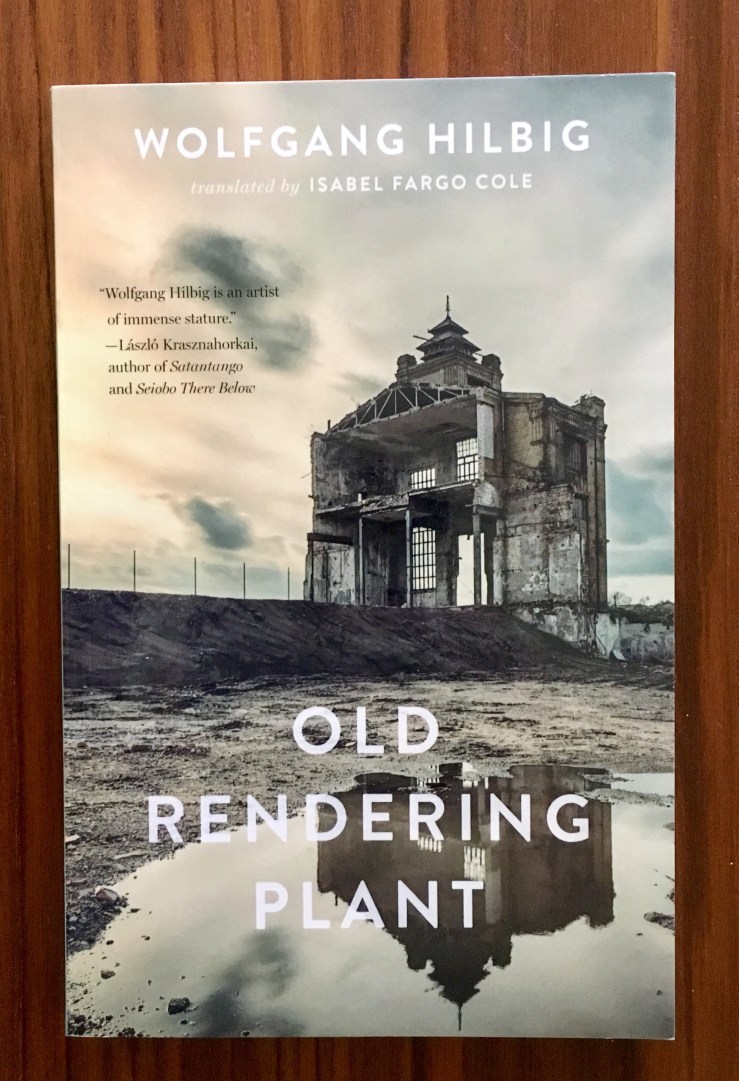
Hilbig’s Old Rendering Plant (Book acquired sometime at the end of June, 2017)

img_7443

Wolfgang Hilbig’s novella Old Rendering Plant (translated from German by Isabel Fargo Cole) is new from Two Lines Press. It looks pretty cool—a blurb from the NYT comparing him to Sebald and that quote on the cover from Krasznahorkai don’t hurt either. Here’s TLP’s blurb:

What falsehoods do we believe as children? And what happens when we realize they are lies—possibly heinous ones? In Old Rendering Plant Wolfgang Hilbig turns his febrile, hypnotic prose to the intersection of identity, language, and history’s darkest chapters, immersing readers in the odors and oozings of a butchery that has for years dumped biological waste into a river. It starts when a young boy becomes obsessed with an empty and decayed coal plant, coming to believe that it is tied to mysterious disappearances throughout the countryside. But as a young man, with the building now turned into an abattoir processing dead animals, he revisits this place and his memories of it, realizing just how much he has missed. Plumbing memory’s mysteries while evoking historic horrors, Hilbig gives us a gothic testament for the silenced and the speechless. With a tone worthy of Poe and a syntax descended from Joyce, this suggestive, menacing tale refracts the lost innocence of youth through the heavy burdens of maturity.

Suggestive and menacing? Poe and Joyce? This one’s next on my list. I was hoping to dig into it over the July 4th weekend(ish), but I was a bit crosseyed from Bloody Marys and other good spirits, and got almost no reading done for five days in a row.

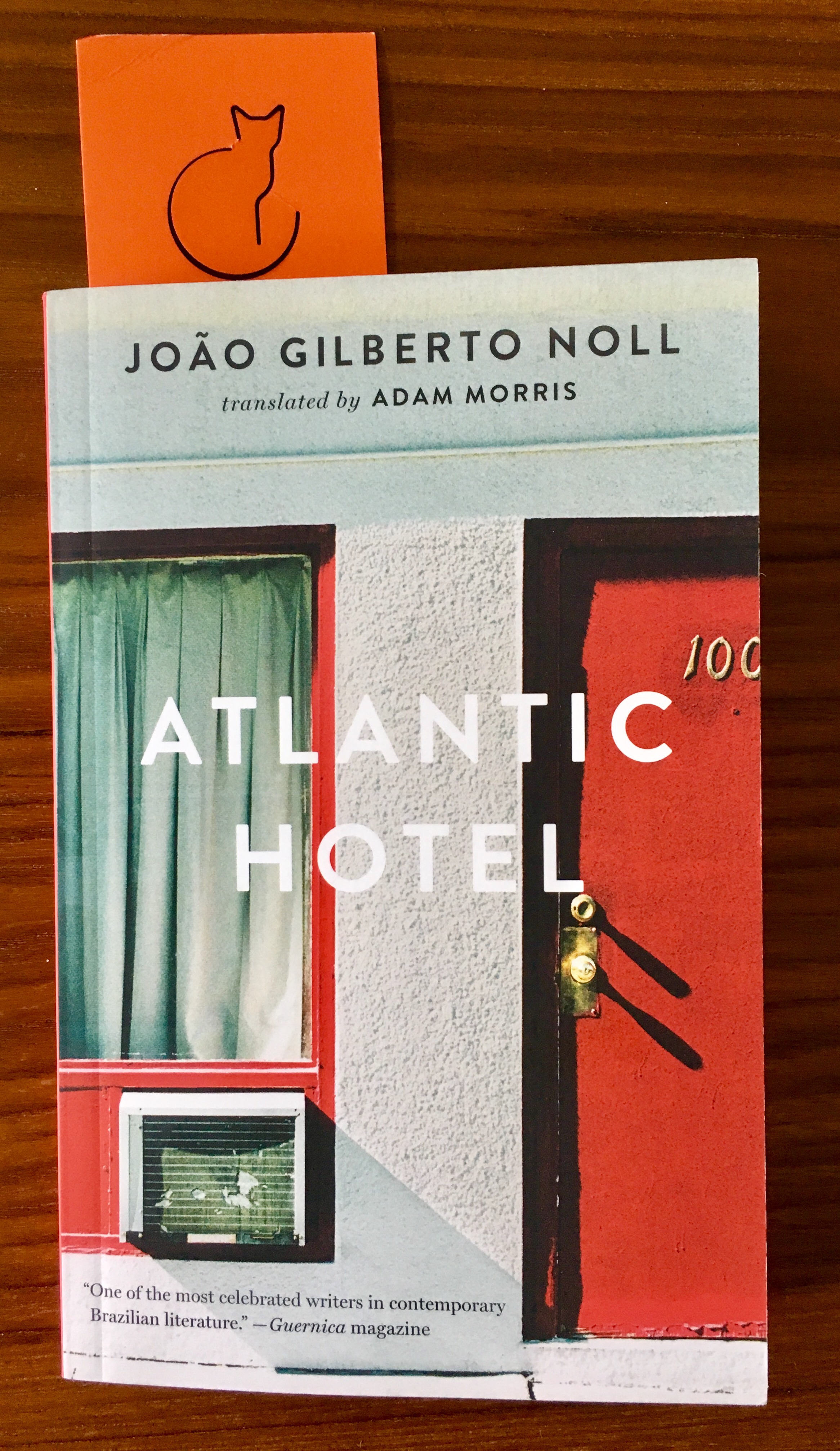
I loved the last novella I read from Two Lines, by the way—João Gilberto Noll’s Quiet Creature on the Corner.

Books acquired in a dead mall, 26 June 2017

img_6855

I had been awake for almost twenty hours when I walked out of the Warner Center Marriott’s arctic AC into the concrete heat of the San Fernando Valley. My wife had to work for a few hours, so I was looking for a bar or something—something other than the hotel lobby (or LA traffic).

There was an enormous mall across the street, the Westfield Promenade. I entered by the AMC Theatre, one of the only five businesses remaining in the sprawling two-storied mall (it’s over half a million square feet). It was over 100 degrees outside in the Valley’s afternoon heat, and the mall was unairconditioned, stale, expansive but somehow stifling. The place appeared entirely empty except for a stray bored AMC employee scrolling through her phone. (Later, I’d see a man sleeping on a table and an inattentive security guard). A sad scatter of arcade games defined a loose threshold between the AMC’s going concern and the rest of the mall, which was clearly dead.

There’s something wonderfully Ballardian about dead malls—their vastness, the traces and ghosts of commerce stamped on them, echoes of a lost vibrancy that simultaneously suggest new and even unimagined future possibilities.

I love dead malls. I was born in 1979, and these kind of malls–the kind best summed up in their vitality in a film like Fast Times at Ridgemont High—helped to define my youth (even if I defined myself in part against the mall and mall culture): I bought the Breeders’ album Last Splash on tape at Camelot Music; I suffered through Stone’s Natural Born Killers; I ate at the weird cafeteria, cornbread squares and Jell-O squares wobbling on ugly green plastic trays.

Once, I saw Glenn Danzig browsing at the B. Dalton book store.

Of the half dozen remaining stores in the Westfield Promenade, only one is a retail space—oddly enough, a bookstore—Crown Books, a large spot that looked like it once sold new books but now seems to only sell old  books, many of them Christian. Half of the space also seems to double as a Halloween store. The power went out twice while I was in there.

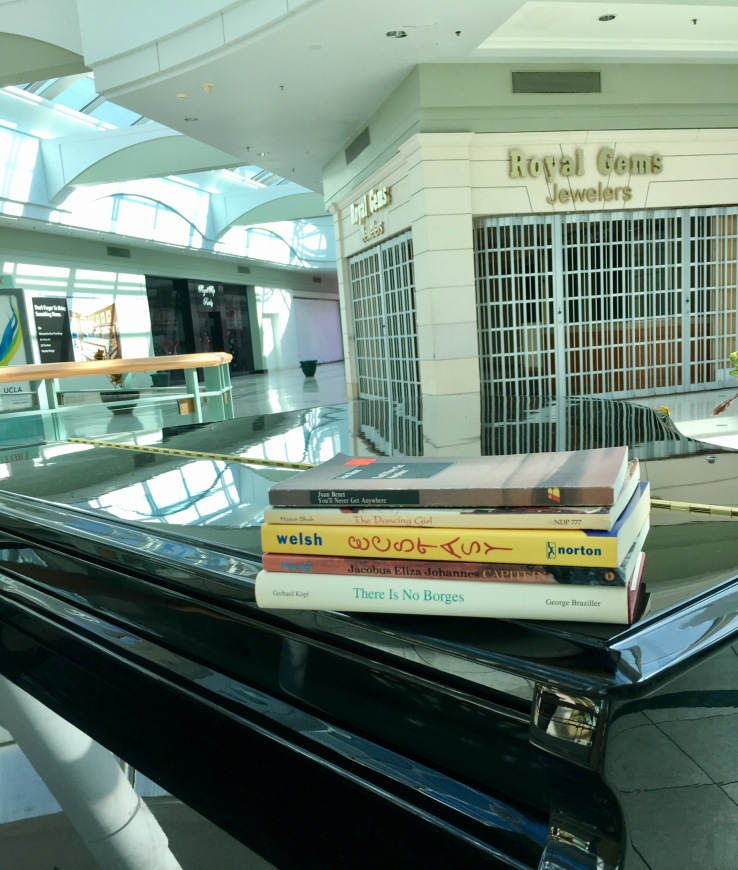
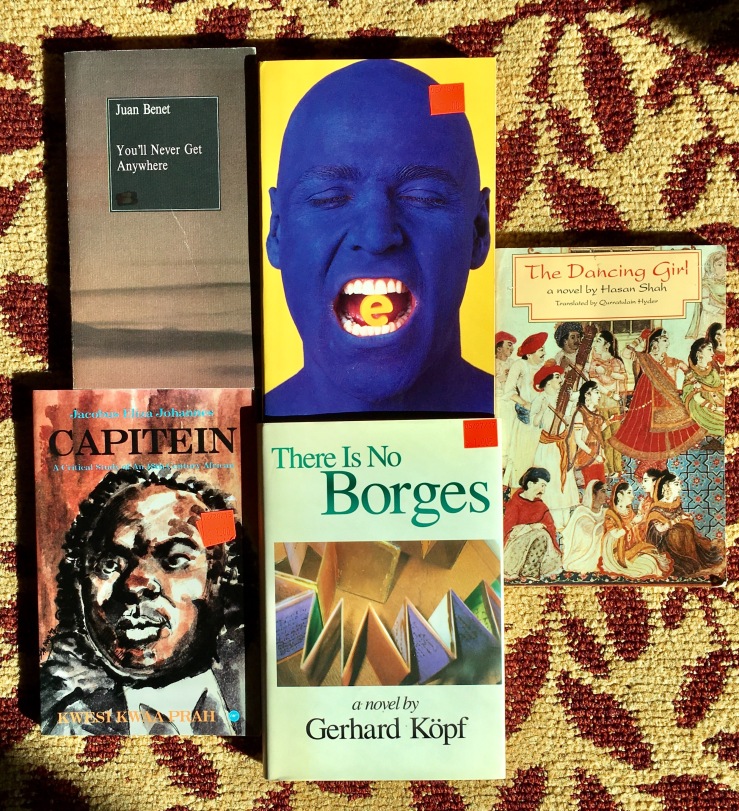
The hardbacked spine of Gerhard Kopf’s novel There Is No Borges caught my attention. It was part of a large section of “clearance” books (although everything in the store seemed to be on clearance). These books were a dollar each or five for a dollar, a mathematics that screams, Please haul these away for us. (Earlier that day at the Charlotte airport, I’d paid three dollars for 16 ounces of bottled water).

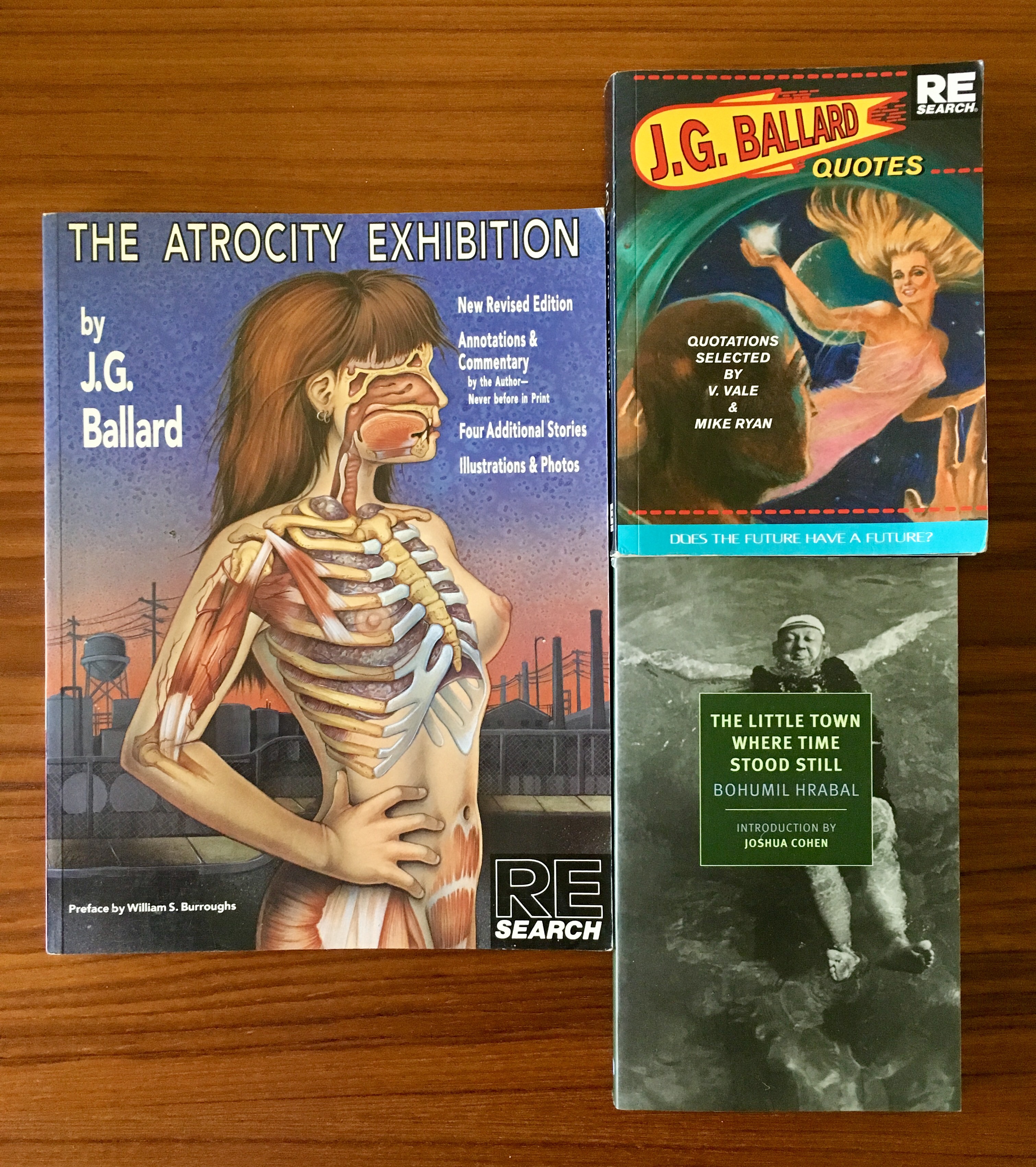
Here are the covers of the books I paid not quite 22 U.S. cents for (after taxes). Please excuse the horrid hotel carpet in the background:
img_6894

(Later that night my wife and I walked a few blocks past the dead mall to the live mall—an outdoor mall, vibrant, green, bustling with children and their adults and pets, music, water, chain stores, and boutiques, and crowded restaurants. There wasn’t a bookstore there).


Bowles/Oyono/Reed (Books acquired, 30 May 2017)

img_6303

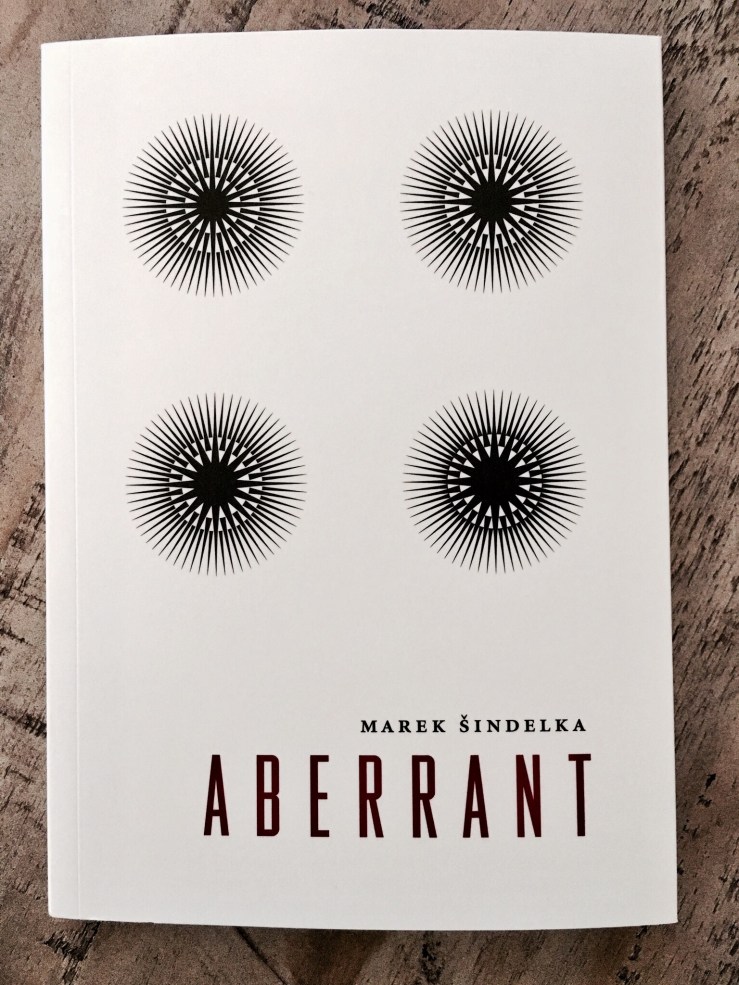
Aberrant by Marek Šindelka (Book acquired, 25 May 2017)

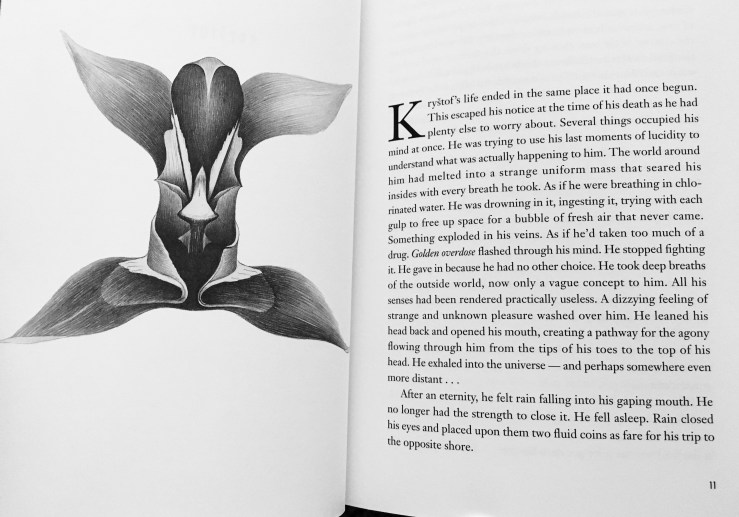
Aberrant is the début novel by Czech author Marek Šindelka. It’s new in English translation by Nathan Fields from Twisted Spoon Press, and features artwork by Petr Nikl. It’s pretty far out stuff. First pages:

Twisted Spoon’s blurb:

The remarkable debut novel from Marek Šindelka, already the recipient of his country’s major literary awards for poetry (Jiří Orten Prize) and prose (Magnesia Litera), Aberrant is a multifaceted work that mixes and mashes together a variety of genres and styles to create a heady concoction of crime story, horror story (inspired by the Japanese tradition of kaidan), ecological revenge fantasy, and Siberian shamanism. Nothing is what it seems. What appears to be human is actually a shell occupied by an alien spirit, or demon, and what appears to be an unassuming plant is an aggressive parasite that harbors a poisonous substance within, or manifests itself as an assassin, a phantom with no real substance who pursues his victims across Europe and through a post-apocalyptic Prague ravaged by floods. The blind see, and the seeing are blind. Plants behave like animals, and animals are symbionts with plants. Through these devices, Šindelka weaves a tale of three childhood friends, the errant paths their lives take, and the world of rare plant smuggling — and the consequences of taking the wrong plant — to show the rickety foundation of illusions on which our relationship to the environment, and to one another, rests. It is a world of aberrations, anomalies, and mistake

Army of Shadows (Book acquired 16 May 2017)

img_6205-1

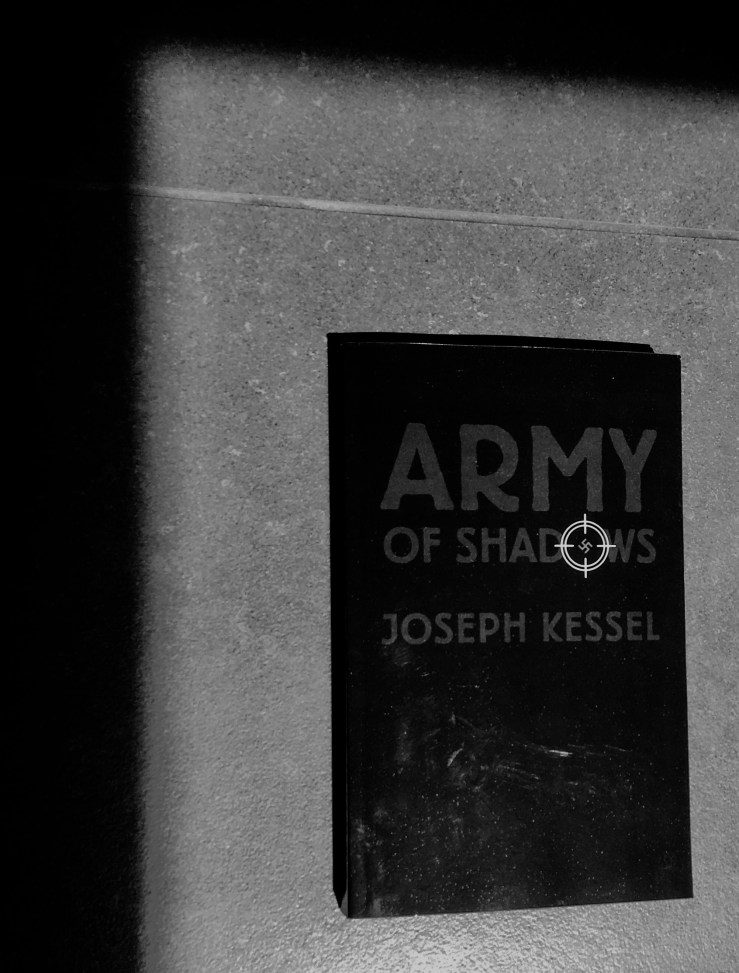
I first saw Jean-Pierre Melville’s 1969 film Army of Shadows about a decade ago, when a friend brought over the Criterion Collection release and insisted we watch it. I watched it again with my uncle, a fan of French cinema and  WWII films in general (and the guy who made me watch both Paths of Glory and Belle de Jour when I was like 14).

Anyway, Contra Mundum is releasing a new translation of Joseph Kessel’s 1943 novel Army of Shadows, which Melville based his film on. The translation is by Rainer J. Hanshe. (I recently talked to Rainer about his translation of Baudelaire’s notebook My Heart Laid Bare).
Here’s Contra Mundum’s blurb:

Originally published in Algiers in 1943, Joseph Kessel’s Army of Shadows is one of the first books to have been written about the French Resistance. Now available in paperback, Contra Mundum Press is proud to present the first new translation in over 70 years, and the first edition since Jean-Pierre Melville’s iconic 1969 film.“What, then, when it comes to recounting the story of France, an obscure, secret France, which is new to its friends, its enemies, and new especially to itself? France no longer has bread, wine, fire. But mainly it no longer has any laws. Civil disobedience, individual or organized rebellion, have become duties to the fatherland. The national hero is the clandestine man, the outlaw.

Nothing about the order imposed by the enemy and by the Marshal is valid. Nothing counts. Nothing is true any more.


One changes home, name, every day. Officials and police officers are helping insurgents. One finds accomplices even in ministries. Prisons, getaways, tortures, bombings, scuffles. One dies and kills as if it’s natural. France lives, bleeds, in all its depths. It is toward the shadow that its true and unknown face is turned.In the catacombs of revolt, people create their own light and find their own law. Never has France waged a nobler and more beautiful war than in the basements where it prints its free newspapers, in its nocturnal lands, and in its secret coves where it received its free friends and from where its children set out, in torture cells where, despite tongs, red-hot pins, and crushed bones, the French died as free men.”

Atticus Lish’s Preparation for the Next Life (Book acquired, 9 May 2017)

img_6089

The things that compelled my interest in Atticus Lish’s debut novel Preparation for the Next Life were the same things that made me initially wary. First, the book got a lot of buzz when it was published in 2014. Second, and bigger, Lish’s father Gordon Lish is a literary hero of mine. Indeed, Lish the Elder recommends his son’s talents in his (Gordon’s) last “novel,” Cess:

Atticus is, a, you know, a writer by Christ—is a novelist, by Christ, is indeed, if I, by Keerist, may say so myself, ever so proudly so, ever so rivalrously so, a novelist of nothing less than of rank.

Lish the Elder has impeccable taste, but, you know, c’mon. We all tend to think our kids are great at everything.

Anyway, I picked up a copy of Preparation for the Next Life a few days ago. I wasn’t looking for it; I was looking for another “L” novelist, but the spine popped out. I took it home and read the first few paragraphs. Then I just kept reading, consuming the first third in hungry gulps.

Lish’s prose is amazingly concrete. He renders New York City (and the other settings) with seemingly effortless thoroughness; the evocation of place is vivid and refined in its attention to detail, but reads raw somehow. There’s a flavor of prime Denis Johnson or Don DeLillo here, but these comparisons aren’t fair: Lish is original—the prose reads thoroughly real, real to and from the author. The novel so far strikes me as one of the most authentic “post-9/11” novels I’ve read. There’s almost something sci-fi to Preparation—Lish shows us our world through alien eyes that suck in every detail. I wish I’d read it sooner.

Here’s publisher Tyrant Books’ blurb:

Skinner hitchhikes to New York, newly returned from Iraq, hoping to exorcise his demons. Zou Lei, an undocumented immigrant from Central Asia, catches a bus into the city, searching for a way to get by—or at least stay out of jail. Their unlikely love story becomes the heart of one of the most compelling and widely acclaimed novels in years.

A clear-eyed illustration of life in New York City’s margins, Preparation For the Next Life evokes the unsettling realities of the American Dream for U.S. immigrants and unsupported veterans in stark, vivid detail. At once a nightmare and a love letter to New York City (a place one loves partly for its host of nightmares), Lish’s prose is disciplined yet always alive and taut with danger, rendered with the voice of a new and natural talent.

Twelve Stories of Russia: A Novel, I Guess (Book acquired, April 2017)

img_5956

The review copy I got of Cow Eye Press’s Twelve Stories of Russia: A Novel, I Guess doesn’t bear author A.J. Perry’s name anywhere on the cover, spine, or back cover. His name does appear on the title page though. A.J. Perry is probably Adrian Jones Pearson, author of Cow Country, also published by Cow Eye. Adrian Jones Pearson is probably not Thomas Pynchon. Here’s Cow Eye’s blurb:

When an eager American moves to Moscow to teach Russians the difference between the and a, he begins what will ultimately become a six-and-a-half-year descent into the murky entrails of language, culture, and the world’s greatest metro system. Part surrealistic travelogue, part historical serendipity, Twelve Stories is at its most enduring as a fanciful rumination on the elusiveness of words.

Twelve Stories of Russia was originally published in Moscow by the independent publisher GLAS, where it quietly gained a following among expats and locals alike. Unique in its appeal to both sides of the linguistic and cultural divide, the work has remained largely unknown beyond Russia. Now, almost a generation after its narrator’s lively quest for the word that changes and is changed, this emphatic “novel, I guess” is being released to a wider audience for the first time, its subject matter as universal and its themes as timely as ever.

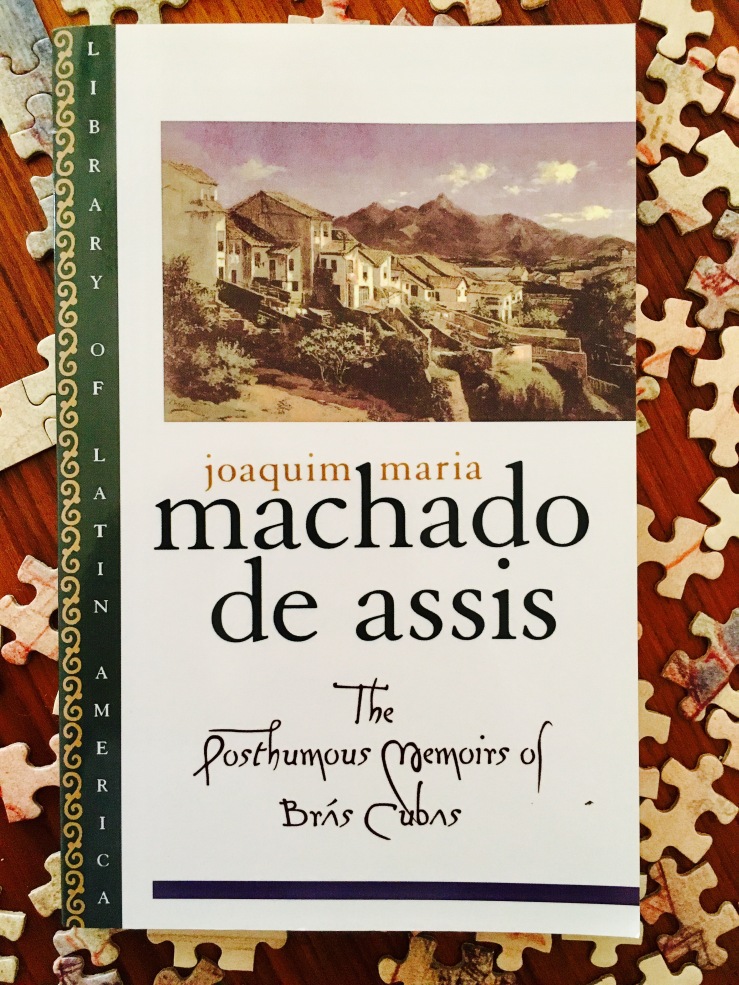
The Posthumous Memoirs of Brás Cubas (Book acquired 29 April 2017)

img_5991

I picked up Brazilian author  Joaquim Maria Machado de Assis’s 1881 novel The Posthumous Memoirs of Brás Cubas today. I picked it up because of an oblique recommendation via Twitter a few weeks ago when I was raving about Antonio di Benedetto’s novel Zama

I got Gregory Rabassa’s translation (I dipped my toe into his translation of Miguel Ángel Asturias’s 1963 novel Mulata a few weeks ago).

Brás Cubas reminds me a lot of Tristram Shandy so far—short sharp funny chapters that bop forward and backward. The 1881 novel anticipates anticipates a style and form that we now describe as “postmodern.” I’ll share a few excerpts in the future, but for now, here’s the Wikipedia summary (lazy, I know, but I think it’s a bit better than this Oxford UP edition’s blurb):

The novel is narrated by the dead protagonist Brás Cubas, who tells his own life story from beyond the grave, noting his mistakes and failed romances.

The fact of being already deceased allows Brás Cubas to sharply criticize the Brazilian society and reflect on his own disillusionment, with no sign of remorse or fear of retaliation. Brás Cubas dedicates his book to the first worm that gnawed his cold body: “To the worm who first gnawed on the cold flesh of my corpse, I dedicate with fond remembrance these Posthumous Memoirs” (Portuguese: Ao verme que primeiro roeu as frias carnes do meu cadáver dedico com saudosa lembrança estas Memórias Póstumas). Cubas decides to tell his story starting from the end (the passage of his death, caused by pneumonia), then taking “the greatest leap in this story”, proceeding to tell the story of his life since his childhood.

The novel is also connected to another Machado de Assis work, Quincas Borba, which features a character from the Memoirs (as a secondary character, despite the novel’s name), but other works of the author are hinted in chapter titles. It is a novel recalled as a major influence by many post-modern writers, such as John Barth or Donald Barthelme, as well as Brazilian writers in the 20th century

Miguel Ángel Asturias’s weird novel Mulata (Book acquired, 14 April 2017)

img_5940

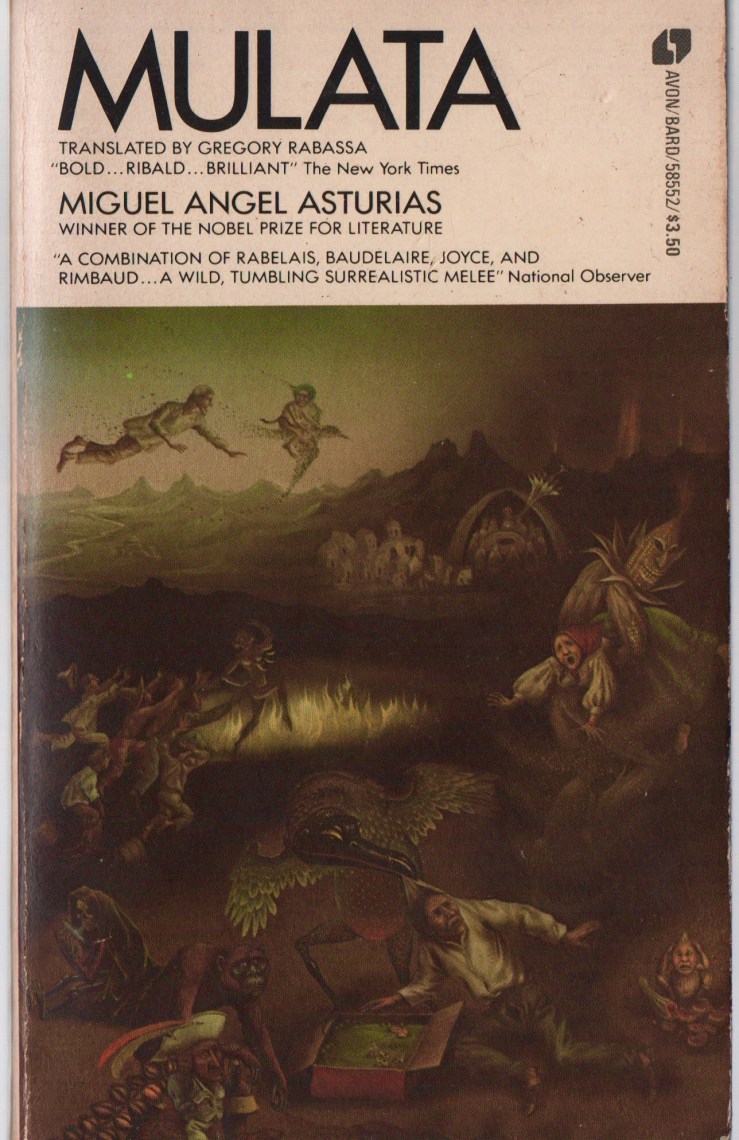
I admit that I picked up Miguel Ángel Asturias’s 1963 novel Mulata de Tal because of the cover and blurb alone. This 1982 translation is by Gregory Rabassa, and part of a series of Latin American authors that Avon/Bard put out in really cool attractive mass market paperbacks in the 1980s. The titles can be hit or miss, but I like the energy of the first two chapters of Mulata. Back cover blurb:

img_5941

Little Magazine, World Form (Book acquired, 5 April 2017)

img_5662

Eric Bulson’s Little Magazine, World Form is new from Columbia University Press. It looks pretty cool. Their blurb:

Little magazines made modernism. These unconventional, noncommercial publications may have brought writers such as James Joyce, T. S. Eliot, Ezra Pound, Marianne Moore, Mina Loy, and Wallace Stevens to the world but, as Eric Bulson shows in Little Magazine, World Form, their reach and importance extended far beyond Europe and the United States. By investigating the global and transnational itineraries of the little-magazine form, Bulson uncovers a worldwide network that influenced the development of literature and criticism in Africa, the West Indies, the Pacific Rim, and South America.

In addition to identifying how these circulations and exchanges worked, Bulson also addresses equally formative moments of disconnection and immobility. British and American writers who fled to Europe to escape Anglo-American provincialism, refugees from fascism, wandering surrealists, and displaced communists all contributed to the proliferation of print. Yet the little magazine was equally crucial to literary production and consumption in the postcolonial world, where it helped connect newly independent African nations. Bulson concludes with reflections on the digitization of these defunct little magazines and what it means for our ongoing desire to understand modernism’s global dimensions in the past and its digital afterlife.

Bulgakov, Bowles, Gass (Books acquired 31 March 2017)

I like to shuffle around my favorite used bookstore on Fridays if I have a loose hour. This afternoon, I picked up three: A first-ed. U.S. hardback Bulgakov, an Ecco-Press-imitating-Black-Sparrow-Press Paul Bowles, and a stately-but-too-stately-too-prestigish-(as-opposed-to-“prestigious”) copy of William H. Gass’s In the Heart of the Heart of the Country. 

I read the devastating  “The Pedersen Kid,” the first novella in the In the Heart of the Heart of the Country collection of collected novellas a few years ago when I checked this book out of the library. Some helpful joker inscribed a map in this copy:

img_5637

Said joker also appended three ball pen inked cursive notes to the end of the tale:

“Coming-of age

Christ / resurrection

Oedipal”

I think I read the next story (it’s much shorter), “Mrs. Mean,” but I confess I can’t recall it right now. I do remember returning the book to the library though.

The design of the Paul Bowles Ecco Press edition of The Spider’s House kinda sorta matches the design of In the Heart of the Heart of the Heart of the Heart (Nonpareil Books, btw). I recently finished Up Above the World (after reading and being slightly-disappointed in the more-lauded debut The Sheltering Sky). I liked Up Above the World’s sinister slow-burn. My understanding is that The Spider’s House is considered superior, so we’ll see. (2017 is turning into The Year I Finally Read Paul Bowles).

Mikhail Bulgakov’s samizdat Soviet-era novel Master and Margarita has improved in my memory; reviewing my review of it a few years ago, I find that I remember it fondly, and stronger. (I wrote that it “sags at times”; I don’t remember the saggy bits, but I recall its fun effervescent evil bits).

Anyway, I couldn’t pass up on this first-edition U.S. copy (1968 Harcourt, Brace & World) of Bulgakov’s novel The Heart of a Dog (English translation by Michael Glenny, with jacket design by Applebaum & Curtis, Inc.).

I also took note of this cover for Edges, a 1980 sci-fi anthology edited by Ursula K. Le Guin and Virginia Kidd (and featuring authors like Thomas Disch and Gene Wolfe)—but I didn’t pick it up, mostly because I didn’t particularly have any desire to read it, even though a much younger version of me out there would’ve loved to read it. I mean, I was thinking about that younger version of me out there; maybe that version—a different version of course—will find it.

img_5630

Tell Me How This Ends Well (Book acquired some time in March, 2017)

img_5470

David Samuel Levinson’s novel Tell Me How This Ends Well is forthcoming in hardback from Penguin Random House. Their blurb:

Daniel Borzutzky poems (Books acquired, 9 March 2017)

Big thanks to BLCKDGRD for sending me two books of poetry by Daniel Borzutzky. I’d never read Borzutzky before, but I dig it so far. These poems are abject—stuff about what it means to have a body, to have some horror at having a body, etc.

A bit from “The Blazing Cities of Your Rotten Carcass Mouth,” collected in The Performance of Becoming Human:

Baudelaire’s notebook of aphorisms and maxims, My Heart Laid Bare (Book acquired, 27 Feb. 2017)

I’m a big fan of writers’ note-books (and maxims and aphorisms in general), and I’ve been enjoying Rainer J. Hashe’s new translation of Charles Baudelaire’s My Heart Laid Bare, which also collects Baudelaire’s “Flares” and “Consoling Maxims on Love,” and other fragments and notes and even illustrations—like this self-portrait:

From publisher Contra Mundum’s blurb:

In My Heart Laid Bare, an apodictic work of aphorism, maxim, note, and extended reflection, we encounter a fierce dandy who revolts against utilitarianism: to be useful, Baudelaire gibes, is to be hideous. Yet, contrarily, it is not dissolution that this poète maudit praises or celebrates. Although he rejects Progress, he prizes what he calls true progress, for him moral, the work of the individual alone. The dandy is not disaffected, but a rigorous spectator that burrows into the heart of reality itself; situated at the center of the world, yet hidden from it, this incognito figure tears back the flesh of humanity like a devilish surgeon. Through this act of absorption, observation, and analysis, like Rimbaud’s Supreme Scientist, Baudelaire’s dandy acquires “a subtle understanding of the entire moral mechanism of this world.” Here we have the poet as philosopher king and transvaluator of values; here we have the disciplined flâneur. Baudelaire the keen symptomatologist who escapes “the nightmare of Time” via Pleasure or Work. If Pleasure is consumptive for him, Work is fortifying, that is, not the work of a profession, — curséd thing, — but the work of poiesis. A kind of poetic Marcus Aurelius forging his inner citadel, Baudelaire’s dandy-flâneur does not retreat into a monastic cell,
but situates himself amidst society: poet as vast mirror, poet as thinking kaleidoscope. To Nietzsche, My Heart Laid Bare contains “invaluable psychological observations relating to decadence of the kind in which Schopenhauer’s and Byron’s case has been burned.”

Michel Leiris’s Nights as Day, Days as Night (Book acquired, 27 Feb. 2017)

Michel Leiris’s book of dream fragments, Nights as Day, Days as Night is new from Spurl Editions. Their blurb:

Translated from French by Richard Sieburth, with a foreword by Maurice Blanchot. Hailed as an “important literary document and contemporary pleasure” by Lydia Davis, Nights as Day, Days as Night is a chronicle of Michel Leiris’s dreams. But it is also an exceptional autobiography, a distorted vision of twentieth-century France, a surrealist collage, a collection of prose poems. Leiris, author of the seminal autobiography Manhood, here disrupts the line between being asleep and awake, between being and non-being. He captures the profound strangeness of the dreamer’s identity: that anonymous creature who stirs awake at night to experience a warped version of waking life.

Whatever the setting (from circus shows to brothels, from the streets of Paris to Hollywood silent films), Leiris concentrates on estranging the familiar, on unsettling the commonplace. Beautifully translated by Richard Sieburth, these dream records often read like an outsider’s view of Leiris’s life and epoch. This outsider is the dreamer, Leiris’s nocturnal double, whose incisors grow as large as a street, who describes the terror he feels at being executed by the Nazis, and who can say in all seriousness, “I am dead.” It is an alternate life, with its own logic, its own paradoxes, and its own horrors, which becomes alienating and intimate at once. With hints of Kafka, Pirandello, and Nerval, Nights as Day, Days as Night is one of Leiris’s finest works of self-portraiture.

Michel Leiris (1901–1990) was an author, ethnographer, art critic, and former surrealist who pioneered a unique form of autobiographical writing. Praised by Susan Sontag, Maurice Blanchot, and Claude Lévi-Strauss, he made powerful contributions to modern French literature. His autobiographical works include Manhood, The Rules of the Game, and Nights as Day, Days as Night.

I’ve nibbled a little bit—something like microfictions, or unfinished fables, Leiris’ fragments are often funny and often unsettling.

An erotic(ish) one:

Spurl also enclosed some nice postcards.

I like postcards.

They make lovely bookmarks.

Map of Days (Beautiful book acquired, 2.04.2017)

img_5002

Robert Hunter’s graphic novel Map of Days is new from Nobrow. It’s gorgeous.

img_5004

I’ll write a proper review soon, but for now, here’s Nobrow’s blurb:

Richard can’t stop thinking about the clock. He lies in bed each night listening to its tick-tocking, to the pendulum’s heavy swing. Why does his grandfather open its old doors in secret and walk into the darkness beyond?

One night, too inquisitive to sleep, Richard tiptoes from his bed, opens the cherry wood door of the grandfather clock, and steps inside. There, in a strange twilight, he sees the Face the Earth, locked forever in a simulated world, where green things seem to grow in the semblance of trees and plants, from unreal soil…

img_5003img_5001

PK Dick’s Martian Time-Slip/Kafka regret (Books acquired and not acquired, 12.28.2016)

Two bucks.

Cover art by Darrell Sweet.

Here’s my riff on Philip K. Dick’s Martian Time-Slip.

I regret not picking up this edition of Kafka’s Amerika that same day:

img_4639

I reviewed Schocken’s latest translation of Amerika (not the one above) on Biblioklept like over eight years ago. I still have the black hardback, but I’d maybe exchange it for this beauty.