Tutte — Jen Mazza

sdtutte

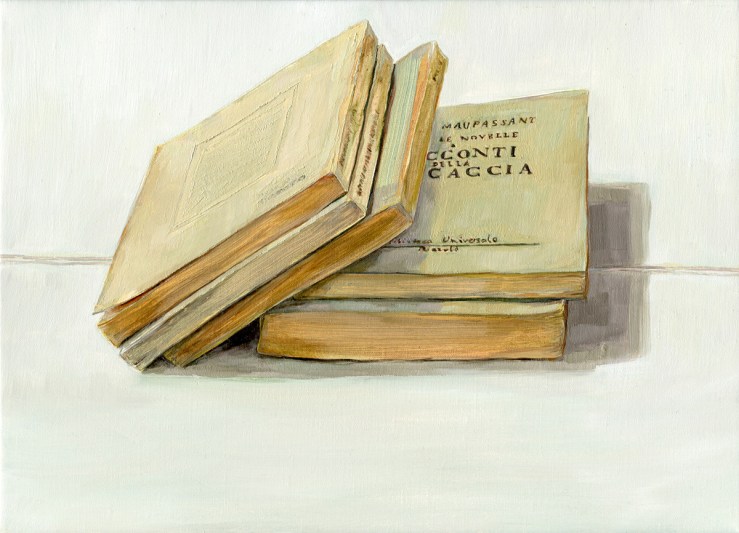
Tutte, 2009 by Jen Mazza (b. 1972)

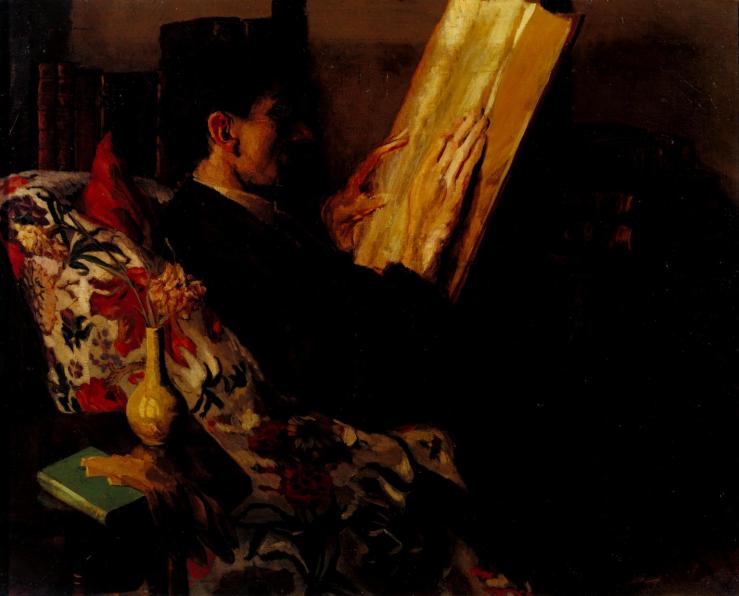
Edith Sitwell — Wyndham Lewis

Edith Sitwell 1923-35 by Wyndham Lewis 1882-1957

Edith Sitwell, 1923–35 by Wyndham Lewis (1882–1957)

Book Club — Greg Burak

bookclubnew

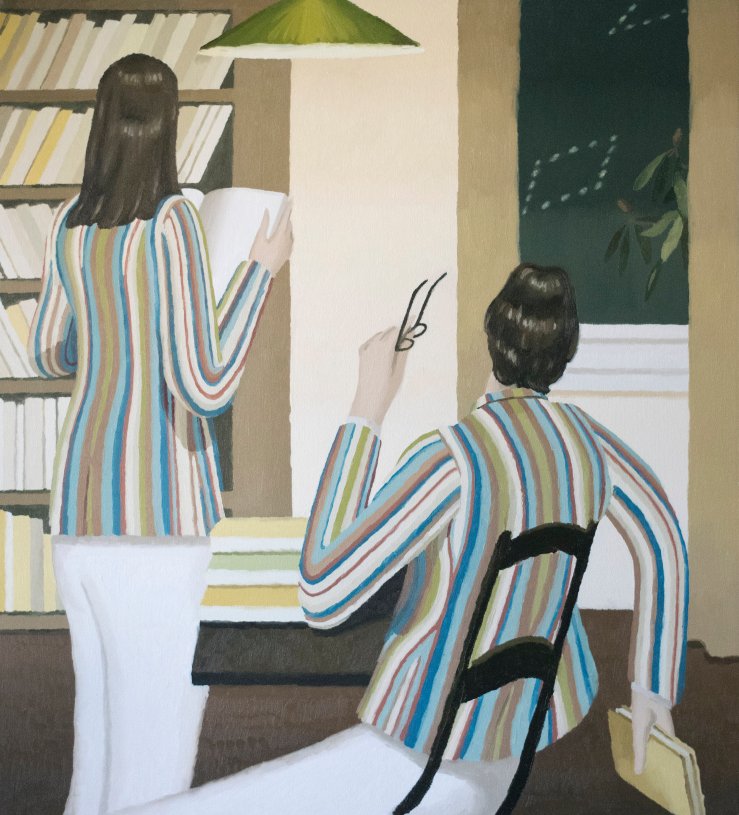
Book Club, 2018 by Greg Burak (b. 1986)

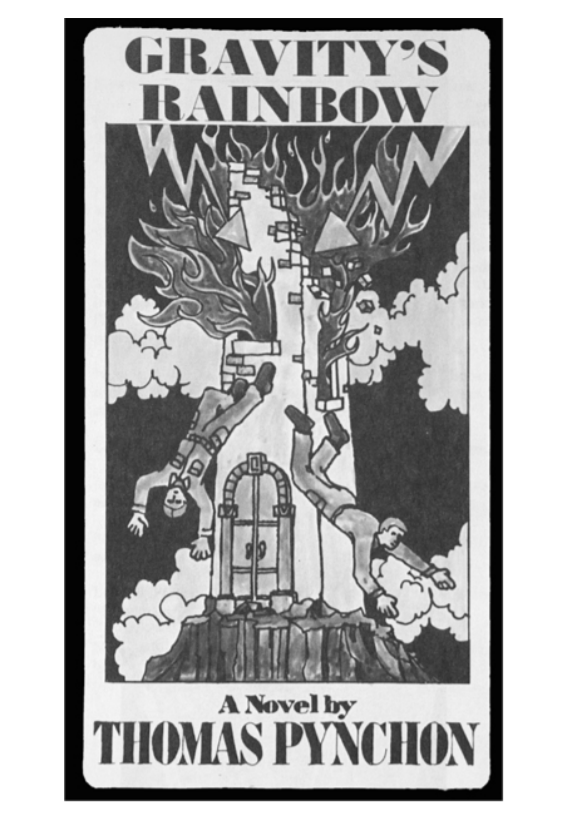
Trial cover art for Gravity’s Rainbow

trial art for gr

This trial cover for Thomas Pynchon’s novel Gravity’s Rainbow is included in Luc Herman and Steven Weisenburger’s book Gravity’s Rainbow, Domination, and Freedom (University of Georgia Press, 2013).

Herman and Weisenburger note the existence of an even earlier version with Pynchon’s working title Mindless Pleasures. I found it quickly at Pynchon Wiki, which notes:

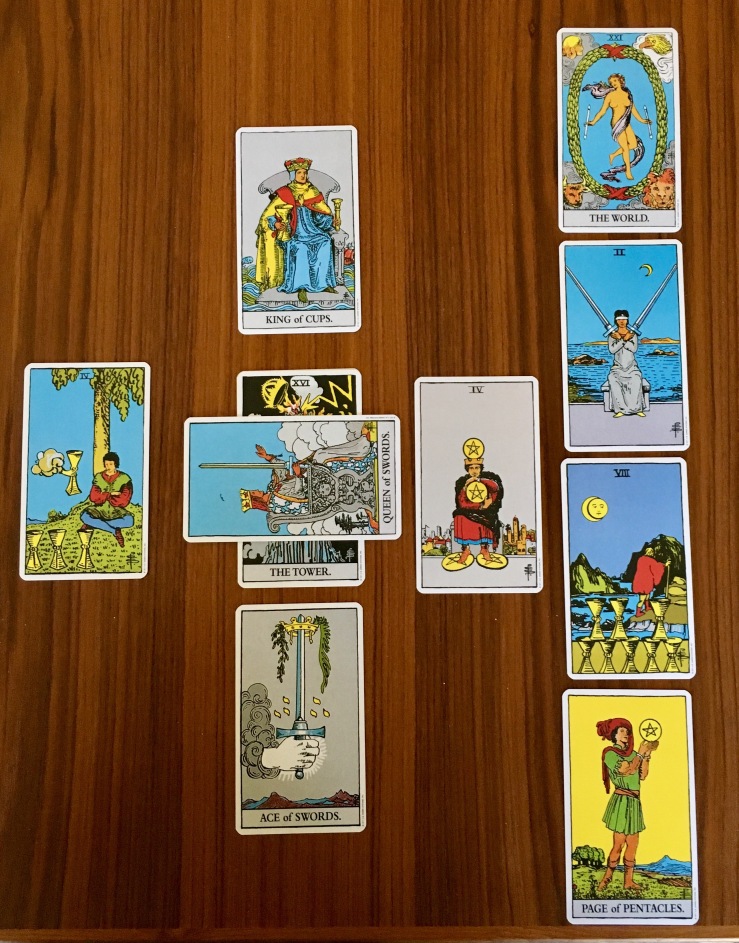
how the image is based on the Tarot card The Tower, which – as we learn in Weissmann’s Tarot (p. 746-47) – represents “any System which cannot tolerate heresy: a system which, by its nature, must sooner or later fall. We know by now that it is also the Rocket.”

mindless-pleasures

Here are Herman and Weisenburger on that first title, Mindless Pleasures:

…Pynchon’s, or perhaps the Viking editors’, extraction of that phrase [“mindless pleasures”] for the book title, although scotched, surely indexed some shared sense of thematic relevance. An early trial cover put the title “Mindless Pleasures” over a cleverly stylized version of the Tower, a key card in Weissmann/Blicero’s tarot reading. A second trial cover, also scotched, put “Gravity’s Rainbow” over the same image. The Tower gathers several interpretations, most notably (says our narrator) that of “a Gnostic or Cathar symbol for the Church of Rome, and this is generalized to mean any system which cannot tolerate heresy: a system which, by its nature, must sooner or later fall. We know by now that it is also the Rocket.” The notion of tolerance and intolerance is catchy and may also link to Marcuse on repression…. One reading of this cover would be that mindless pleasures bring down the system, are anathema to it. The common gloss of “mindless” is that it refers to the contrary of normativity, or not a mentality conditioned or “defined within rigid societal parameters”…. This contrariness presumes a hierarchy, an established order elevated above a variety of upstart alternatives, many of them popular, carnivalesque, of the body. And the arts are among them…

Weissmann’s tarot:

img_4289-1

Herman and Weisenburger cite Clifford Mead’s Thomas Pynchon: A Bibliography of Primary and Secondary Materials (Dalkey, 1989) as their source for the trial cover.

As far as I can find, no cover designer is credited.

Canto XX — Tom Phillips

Canto XX: [no title] 1982 by Tom Phillips born 1937

Canto XX, 1982 by Tom Phillips (b. 1937). From the Dante’s Inferno series.

Christian Retreat — Eric Fischl

80_035

Christian Retreat, 1980 by Eric Fischl (b. 1948)

Thomas Pynchon beats J.G. Ballard to win the 2020 Tournament of Zeitgeisty Writers

2020-03-31_183554

Thomas Pynchon beat out J.G. Ballard, earning 61% of 337 votes of my totally-scientific and not-at-all arbitrary twitter poll to become the Champion of the 2020 Tournament of Zeitgeisty Writers. Mr. Pynchon’s trophy is at Biblioklept World Headquarters here in Florida. After this whole quarantine business is over I’m sure he’ll arrange to pick it up.

My gut feeling is that the people who follow me on twitter are skewed toward Pynchon more than Ballard. Either of the pair could have taken the prize and I’d have been happy.

FG2744-3-14a

J.G. Ballard described the late twentieth century as good as anyone, and anticipated almost every aspect of our zeitgeist. The dude not only understood the intersection of commerce and politics and sex and art, but he could convey it in wild (and wildly-entertaining, forgive the cliche) stories and novels of the blackest and bleakest humor. There are any number of great starting places for Ballard, but if you haven’t read him yet, I’d recommend High-Rise or Concrete Island before jumping into the more challenging Crash. Then: The Atrocity Exhibition, the earlier novels (1962’s The Drowned World is particularly prescient) and the early stories of Vermilion Sands. Actually, if you can get a hold of The Complete Short Stories of J.G. Ballard, go for it. (I riffed on reading all the stories back in 2014.) I don’t recommend starting with the later novels—Ballard’s descriptions are so prescient that there’s this weird drop off in quality when reality catches up to him. In the meantime, why not read “The Secret Autobiography of  J G B”? (It was composed in 1981 but published in 2009; it took autofiction a few decades to catch up with the Notorious JGB.) Ballard is great.

Thomas Pynchon’s novels are famously byzantine, shaggy, esoteric, and paranoid. He captures both the zaniness and the menace of our zeitgeist. His protagonists are often straight figures who go crooked, insiders pushed to the outside through maladventure and adventure alike. Pynchon places a premium on the underdog who resists the Them—the technocracy, the war machine, the military-industrial-entertainment complex. His most famous (and probably best) novel Gravity’s Rainbow is an indictment of war and capitalism; although it’s set in WW2, it also addresses itself, ultimately, to that war’s hangover and the Nixonian evil contemporary with its publication. Pynchon’s loose California trilogy—The Crying of Lot 49, Vineland, and Inherent Vice—document, describe, and deconstruct the myth of the American cultural revolution of the 1960s. Pynchon’s “historical novels,” Mason & Dixon and Against the Day are probably my favorites. Both analyze American history as a series of strange mistakes, big blunders, and minor foibles. His longest (and strangely, most accessible) novel Against the Day is also his clearest attack on the nebulous Them who oppose freedom, progress, and, ultimately, love. The humor and intelligence of Pynchon’s writing often softens the core anger of his work, an anger directed at the invisible forces that cry out, to steal from the Dead Kennedys, “Give me convenience or give me death!” He is a national treasure and I hope he lives forever—which he will, through his works.

Finally: I hope that everyone who participated in this thing had (at least the tiniest of sliver of) fun. I don’t think pitting writers against each other has anything to do with literature. I missed college basketball in March, so this is what I did. It also helped me drift off into other places for a while. Ballard is gone but I would love to read his quarantine novel. And I’ll read anything else we get from Pynchon.

Peace to all.


Canto X — Tom Phillips

Canto X: [no title] 1982 by Tom Phillips born 1937

Canto X, 1982 by Tom Phillips (b. 1937). From the Dante’s Inferno series.

Banned Book No. 2 — Liu Ye

sw08435banned_book2_copy0

Banned Book 2, 2008 by Liu Ye (b. 1964)

Charles Wright/Steve Erickson (Books acquired, 18 March 2020)

img_5192

A couple of days ago I took my daughter to the bookstore for what I imagine will be the last time for a while. She browsed the “Teen” section, which is new for both of us, and picked out a few books.

I picked up The Complete Novels of Charles Wright, which collects The Messenger, The Wig, and Absolutely Nothing to Get Alarmed About. I’m generally not a fan of omnibus editions, but I’m not sure how easy it is to get a hold of The Messenger or Absolutely Nothing (the bookstore had another copy of The Wig, which makes me think it’s in wider circulation). This Harper Perennial edition has no introduction, and I’m not crazy about the no-contrast cover, but it’s got a nice texture to it.

I also picked up Steve Erickson’s debut novel Days Between Stations, in part because Thomas Pynchon blurbed it (even though I wasn’t wild about the last novel I read because Pynchon blurbed it, Wurlitzer’s Nog), and also in part because I’m a sucker for Vintage Contemporaries editions, especially ones with covers illustrated by Rick Lovell.

Here’s Pynchon’s blurb:


img_5194

Steve Erickson has that rare and luminous gift for reporting back from the nocturnal side of reality, along with an engagingly romantic attitude and the fierce imaginative energy of a born storyteller. It is good news when any of these qualities appear in a writer– to find them all together in a first novelist is reason to break out the champagne and hors-d’oeuvres.

Pynchon also blurbed Jim Dodge’s novel Stone Junction (or wrote an introduction for it rather), which I’ve been looking for unsuccessfully for a while now—not because Pynchon blurbed it (which I only found out recently), but because I’ve heard it compared to Charles Portis. I was unsuccessful again this time.

I hope I’ll be able to get out of the house soon, but in the meantime I have more than enough reading material.

Bad trip | Blog about Rudolph Wurlitzer’s cult novel Nog

img_5165

I don’t know man.

I think I should have loved Nog, Rudolph Wurlitzer’s 1969 cult novel.

Nog is druggy, abject, gross, and shot-through with surreal despair, a Beat ride across the USA. Wurlitzter’s debut novel is told in a first-person I that constantly deconstructs itself, then reconstructs itself, then wanders out into a situation that atomizes that self again.

Nog reads like a hallucinatory accounting of the American literature before it, starting with a narrator who aims for transcendentalism, but is “wrenched out of two months of calm” by the sight of a young woman walking the beach:

There was something about her large breasts under her faded blue tee shirt, the quick way she bent down, her firm legs in their rolled-up white jeans, her thin ankles – it was her feet, actually; they seemed for a brief, painful moment to be elegant.

Right in the first paragraph, Wurlitzer announces themes of travel (feet) and weird oedipal angles (those “large breasts”) that will pulsate throughout the novel. The image of the young lady zaps our narrator:

I had to pull out, I thought, I was beginning to notice things, lists were forming, comparisons were on the way. And now I don’t have the octopus.

Nog is larded with comparisons and lists and octopuses (or octopi, if you prefer—our (un-)helpful narrator points out both are acceptable). The narrator lists beaches, lakes, and rivers, a motif of travel and horizons that underscores the novel’s surreal critique of Manifest Destiny. The octopuses fit more neatly with Nog’s pscyhosphere of bodies wrangling bodies, possessed limbs wriggling willy-nilly, groping, prodding, promising. Wurlitzer uses similes and metaphors that repeatedly compare both people and situations to squid or octopuses, and also evokes the image without naming it in imagery (including a really gross menage a trois).

I have not described the plot of Nog yet. Describing the plot would not be impossible, I guess, but it would involve typing out most of the novel. Nog is a surreal picaresque fueled on All Of The Drugs and All Of The Sex, both a product and critique of the End Of The Sixties that birthed it. (Forgive all that capitalization.) Here is the slim blurb from indie Two Dollar Radio, which republished the novel a decade ago:

In Wurlitzer’s signature hypnotic and haunting voice, Nog tells the tale of a man adrift through the American West, armed with nothing more than his own three pencil-thin memories and an octopus in a bathysphere.

Nog is certainly a surreal Western, one organized around three memories that Our Hero keeps reinventing (memories often anchored by an octopus).

There are characters, of course, but the characterization is vague, hazy, slip-sliding. Wurlitzer sticks to Narrator and his foils Meridith and Lockett for the most part. The pair are Ur-Parents and Ur-Partners who his narrator fucks, fucks over, and gets fucked over by. At times, the narrator—who may or may not be Nog his damnself—even becomes iterations of Meridith or Lockett. In an effort to share Wurlitzer’s prose style in Nog, here is a paragraph from late in the novel that comes close to summarizing it, but not really summarizing it, due to its surreal aporia:

I’m not cold or warm. I might be approaching both. I don’t remember when I’ve last fallen asleep. I’m not asleep or awake. I first met Meridith over a jar of artichoke hearts. But it’s Lockett now… There’s no possibility of an erection. The supermarket was crowded. The colors were warm. Lockett’s hands moved easily over the frozen-meat packages, slipping them into his army overcoat. We discovered each other stealing. I had four jars of artichoke hearts in my pocket. Lockett kept me from being busted. He straightened me out. He sold me a doctor’s bag and gave me connections.

“There’s no possibility of an erection” ! — of course Thomas Pynchon blurbed Nog. Wurlitzer’s novel is an unmediated riff on Manifest Destiny’s ugly horniness (or is it hornyness — Wurlitzer and other authorities won’t sing on this matter). There are buffalo shoots, rapes, and all that westward expansion. But by the Space Age Nineteen-Sixties, where were the borders? As the narrator comments/laments:

Nothing for it but to plunge on to the manufactured end. The Pacific is gone.

No place to go but into the surreal.

But Nog also exemplifies everything wrong with the late sixties—a kind of self-indulgent, (literally-)masturbatory psychoromp that frequently tests the patience of its audience. (By “its audience” I mean “me.”)

Nog is dark and foul, poisonous, an indictment of the End Of A Big Dream (forgive my capitalization). It’s not fun, nor did I find it funny—maybe because I read it right after Charles Wright’s much funnier novel The Wig (1966), a novel that collapses the horror and humor of the Dream Of The Sixties (eh, capitalization) into something far sharper, funnier, surrealer, and ecstaicer (or is it ecstackier—authorities diverge on this matter).

Or maybe I didn’t dig Nog the way I wanted to because I read it during The Weirdest Spring Break Of My Life, in the quarantine that we’re all going through, uncomforted by its abject digressions, its plasticity, its refusal to mean in a healthy, wholesome, unvirused way.

Maybe I should read it again, in Healthier Times.

Nog for now reads a bit-too-disturbing, which I guess is actually Good, according to the traditional rubric that I’ve used to measure novels—the whole disturb the comfortable model, right? Maybe I’m disturbed, anxious, agoraphobic, hypochondriac. But this is a Bad Trip.

Nog reads like a bad trip right to its end. Near the novel’s end, our narrator (who may-or-may-not-be Nog, or Lockett — or locket or lock it) takes a bad trip on a ship to “the manufactured end” — to Manifest Destiny Done Run Out. Here’s the authoritarian captain:

“The main thing,” he says, “is to be obedient for a long time, and in one and the same direction. Keep to the same space. Don’t try to go to new ports. Eight hundred Chinese were imported to build a railroad alongside the Canal. They committed suicide when they were deprived of their opium. They strangled or hanged themselves or sat down on the beach and waited for the tide to drown them. Let that be a lesson to you. Be kind to her.”

I have no idea what to make of the captain’s advice to the narrator. On one hand, it seems antithetical to the spirit of the novel—of movement, of going in new directions and mooring in new ports. At the same time, it highlights the cruelty of the American Project of Manifest Destiny (goddamn dude, all those Capital Letters!) as a kind of murder-suicide.

Or maybe I just want to end on those words:

Be kind to her.



Lytton Strachey. Verso: Crime and Punishment — Duncan Grant

Lytton Strachey. Verso: Crime and Punishment c.1909 by Duncan Grant 1885-1978

Lytton Strachey. Verso: Crime and Punishment, c. 1909 by Duncan Grant (1885–1978)

Walter Kempowski’s Marrow and Bone (Book acquired, sometime in February 2020)

img_5060

Walter Kempowski’s Marrow and Bone is new from NYRB in English translation by Charlotte Collins. NYRB’s blurb:

West Germany, 1988, just before the fall of the Berlin Wall: Jonathan Fabrizius, a middle-aged erstwhile journalist, has a comfortable existence in Hamburg, bankrolled by his furniture-manufacturing uncle. He lives with his girlfriend Ulla in a grand, decrepit prewar house that just by chance escaped annihilation by the Allied bombers. One day Jonathan receives a package in the mail from the Santubara Company, a luxury car company, commissioning him to travel in their newest V8 model through the People’s Republic of Poland and to write about the route for a car rally. Little does the company know that their choice location is Jonathan’s birthplace, for Jonathan is a war orphan from former East Prussia, whose mother breathed her last fleeing the Russians and whose father, a Nazi soldier, was killed on the Baltic coast. At first Jonathan has no interest in the job, or in dredging up ancient family history, but as his relationship with Ulla starts to wane, the idea of a return to his birthplace, and the money to be made from the gig, becomes more appealing. What follows is a darkly comic road trip, a queasy misadventure of West German tourists in Communist Poland, and a reckoning that is by turns subtle, satiric, and genuine. Marrow and Bone is an uncomfortably funny and revelatory odyssey by one of the most talented and nuanced writers of postwar Germany.

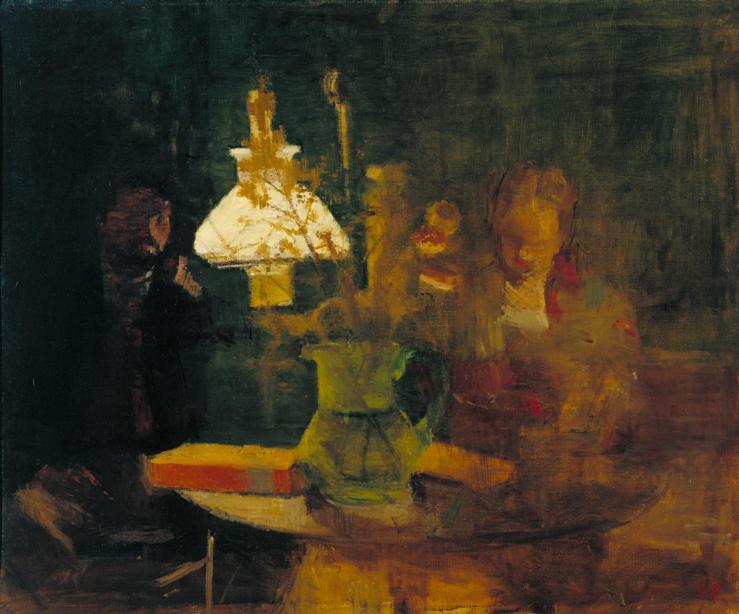
Lamplight — Victor Pasmore

Lamplight 1941 by Victor Pasmore 1908-1998

Lamplight, 1941 by Victor Pasmore (1908–1998)

Blog about some books acquired, 13 March 2020

img_5049

After one week of abstinence I drove the mile or so to the used bookstore I go to too often and browsed.

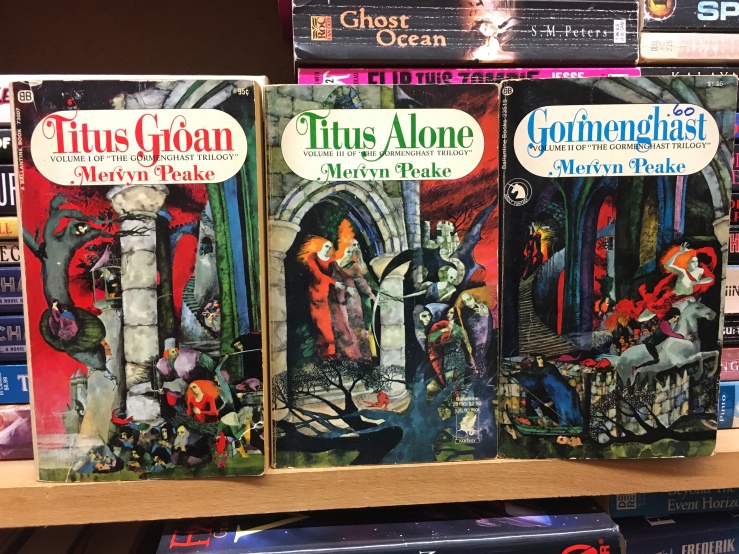
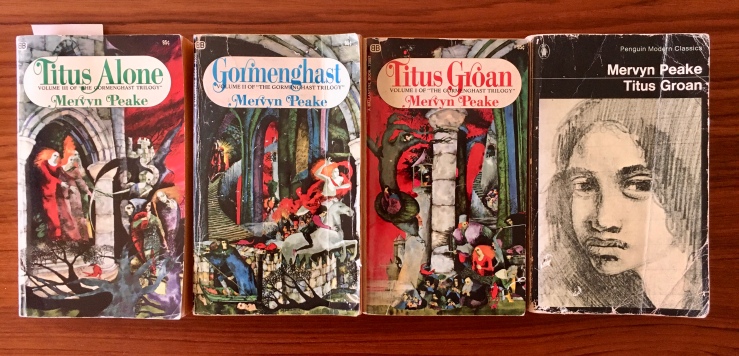
I was specifically looking for the other Gormenghast books by Mervyn Peake, the 1956 novella Boy in Darkness, and the unfinished Titus Awakes, completed by Peake’s wife Maeve after his death. I’m in the last few pages of Titus Alone, and I guess I don’t want to exit his proseworld just yet. Anyway, I went to this bookstore almost every week of February looking for Peake books with no luck after having picked up Gormenghast there on a lark a while back. I ended up buying the first and third of the Gormenghast trilogy online, because I couldn’t find them there, but today I found the complete trilogy in matching Ballantine editions. I did not find the other Gormenghast books though.

img_5048

As much as I hated to break up the triplets pictured above, I picked up the Ballantine Titus Groan and adopted it to fit my other Ballantine editions. There is a specific student I have in mind whom I think will love the Penguin edition of Titus Groan I’ll give him next week (even though my dog bit it).

img_5050

I’m obviously a sucker for covers, as any one who’s followed this blog for a while probably knows, and the Ballantine covers are better, I think—the Penguin editions of Peake’s trilogy are great, but they shy away from the bizarre nature of the narratives, tilting toward respectability.

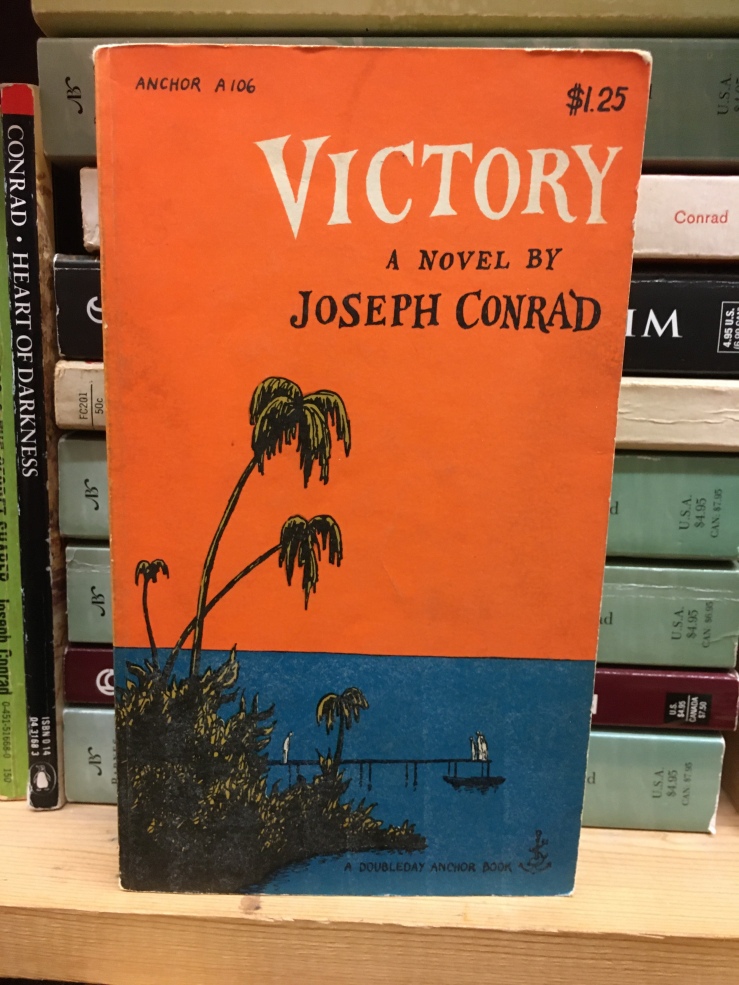
Indeed, I like browsing in large part because I like the aesthetics of books, particularly older books. I absolutely loved this Edward Gorey cover for a 1957 edition of Joseph Conrad’s Victory—but I settled for a picture. I mean, I doubt I’ll read lesser-known Conrad at this point. But I love the orange and the blue, and Gorey’s handlettering:

img_5045

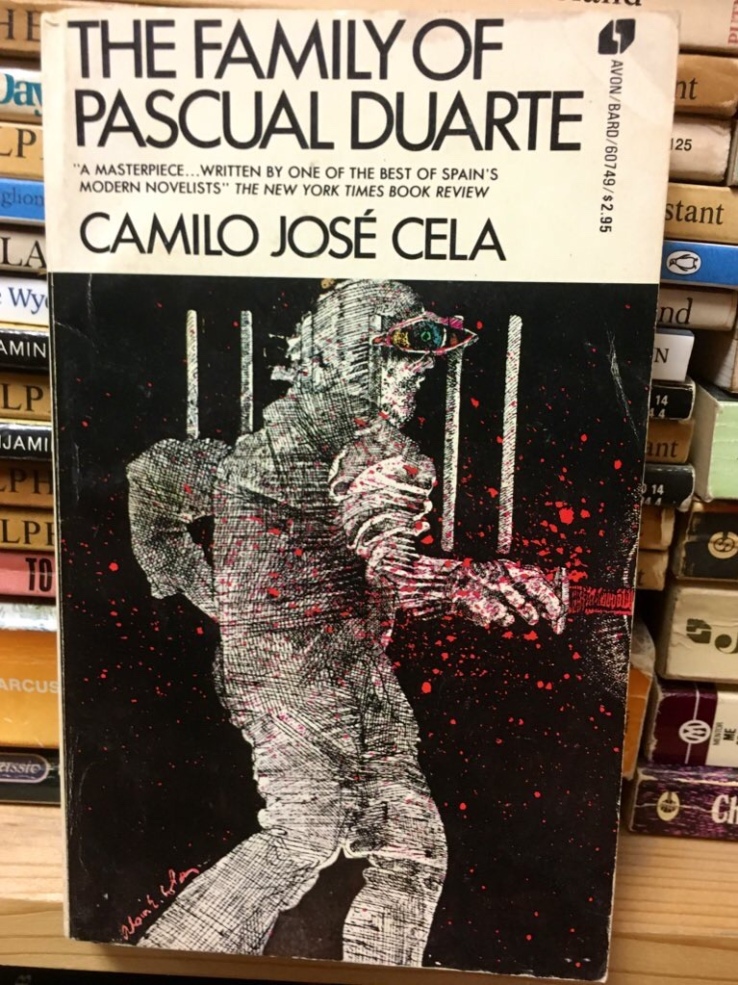
I often settle for just a snapshot of a beautiful cover, like this bizarre one for The Family of Pascual Duarte by Camilo José Cela. I didn’t pick it up a few weeks ago, but then wished I had.

img_5004

I had left it on the shelf like this, face outward. It wasn’t there today, and I wished that I had picked it up. Apparently it is brutal and was banned for a few years in its native Spain.

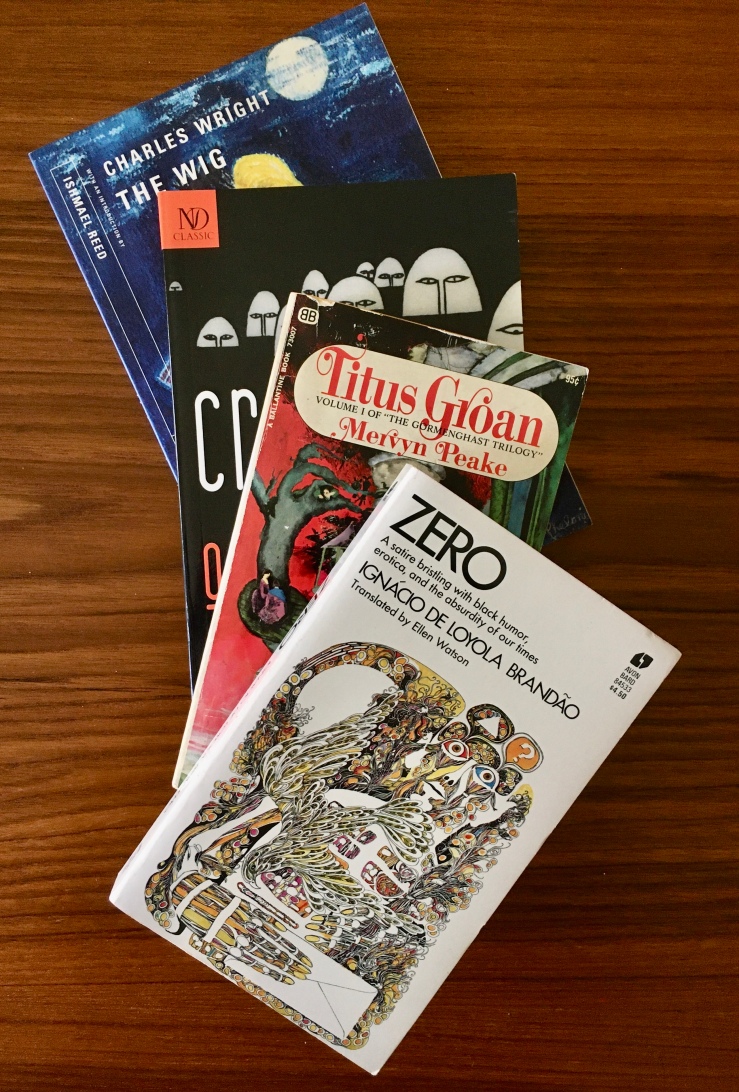
So well and anyway when I spied another Avon-Bard spine with a strange title I pulled it out, wowed at the cover, and dove in. Brazilian author Ignácio de Loyola Brandão’s Zero instantly struck a chord with me. The book is typographically all over the place, with text offset in boxes or laid out in columns. There are diagrams, enormous fonts, glypsh, citations, footnotes, etc. The book is a dystopian satire that seems to be written in its own idiom. The translation is by Ellen Watson. The wonderful cover art is uncredited (as far as I can tell).

2020-03-06_151902

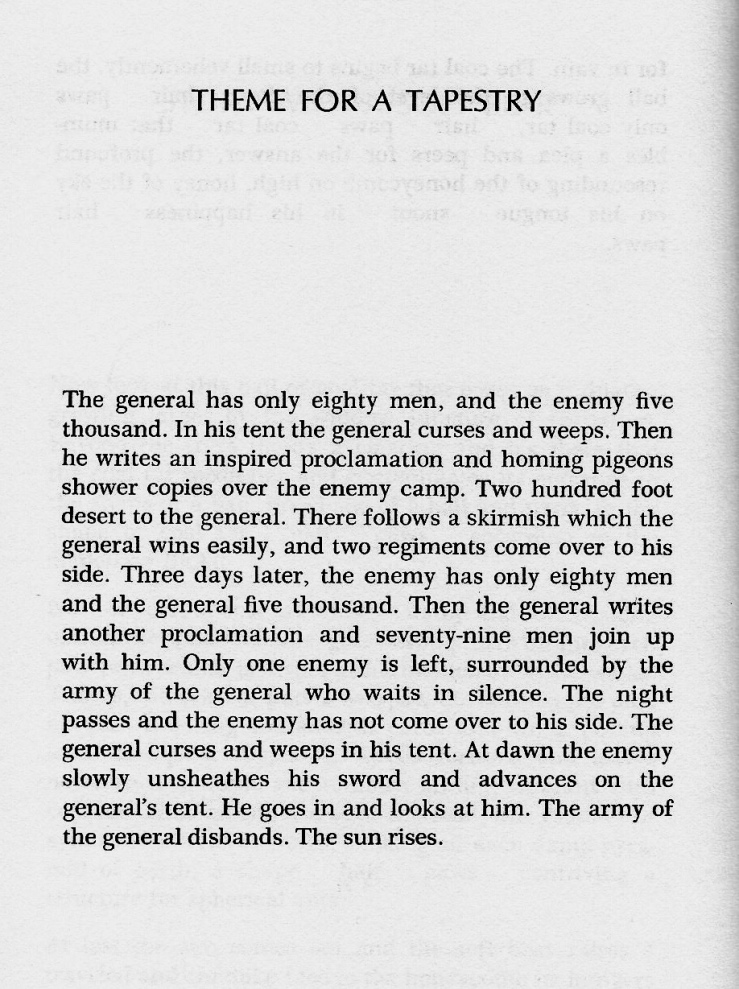
I’ve never been able to get through Julio Cortázar’s famous book Hopscotch (despite many attempts), but I liked the short stories by him that I’ve read. I’m also a sucker for anything supershort, so when I saw his collection Cronopios and Famas (translated by Paul Blackburn), I was intrigued. I love a book in slices and morsels that I can snack on for a while (I’m really digging Gary Lutz’s The Complete Gary Lutz for the same reason). Most of the stuff in here is under three pages; much of it is much shorter too, like “Theme for a Tapestry”:

2020-03-06_151902_5

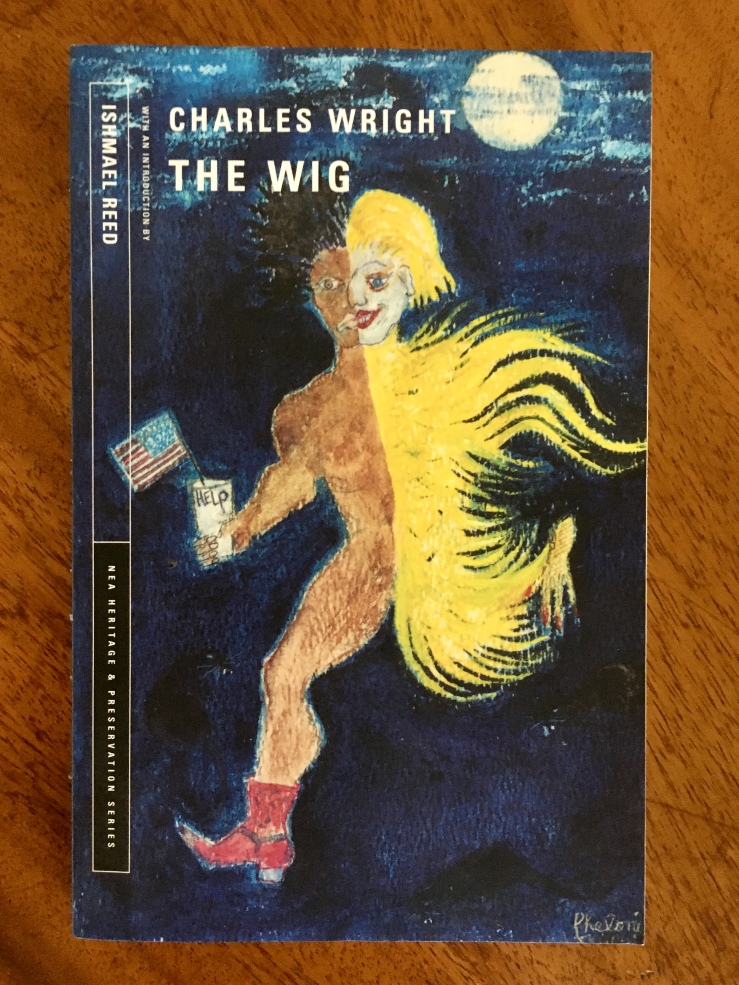
While scanning for anything by Rudolph Wurlitzer (no dice), I spied the spine of Charles Wright’s The Wig. Wright has been on my radar for a while now, mostly due to Ishmael Reed’s consistent endorsement of him (in both fiction and nonfiction alike), and when I pulled the volume to reveal its beautiful cover, I saw Reed’s name on the margin (and on the blurb on the back), and had to have it. The cover art is by Phelonise Willie; design by Scott di Giolamo:

img_5057

The Immigrant — Walid Ebeid

3628567-nuzxnmcg-7

The Immigrant by Walid Ebeid (b. 1970)

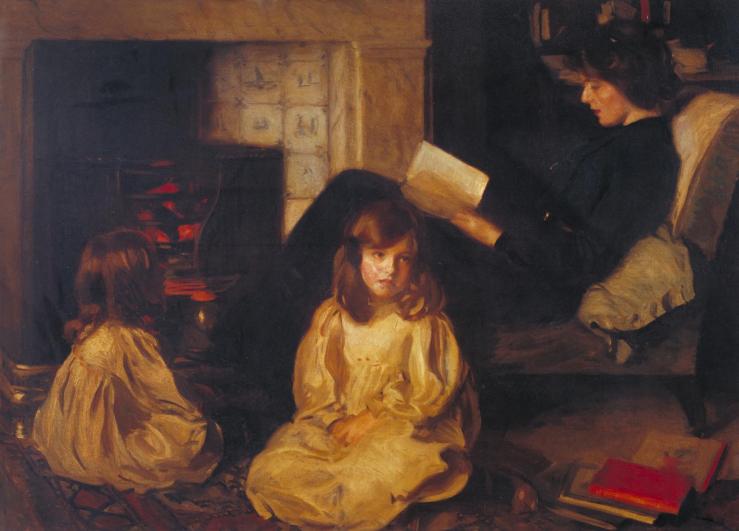
The Fairy Tale — Harrington Mann

The Fairy Tale 1902 by Harrington Mann 1864-1937

The Fairy Tale, 1902 by Harrington Mann (1864–1937)