Reading Chris Ware’s Building Stories / September 23rd, 2000

20121101-205324.jpg

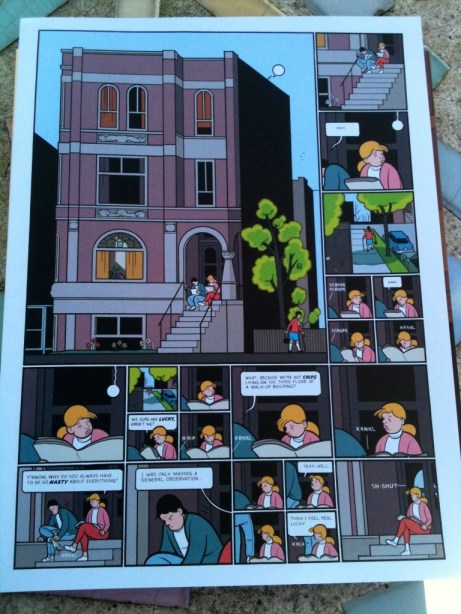
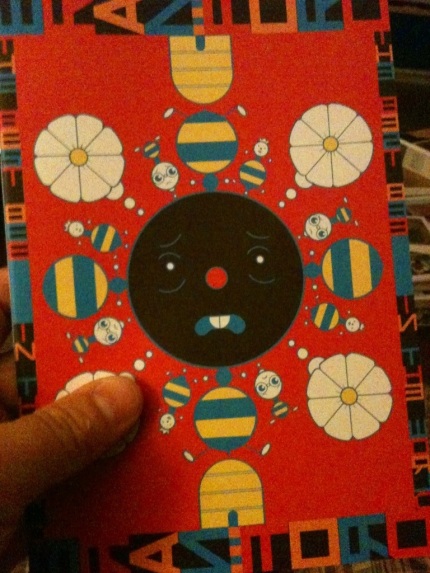
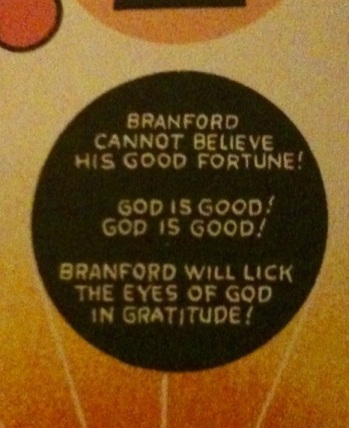
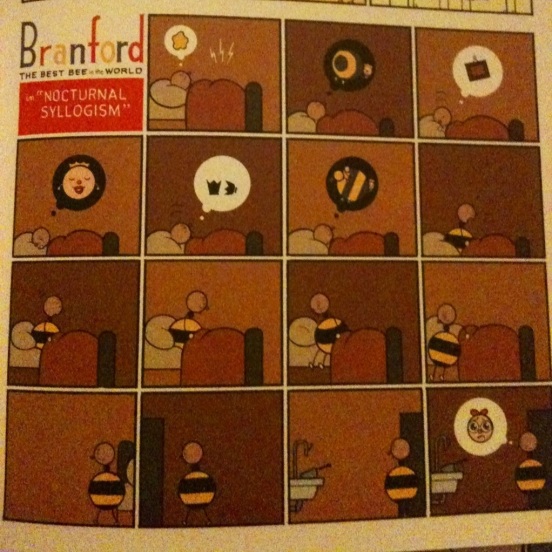
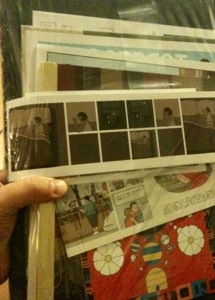
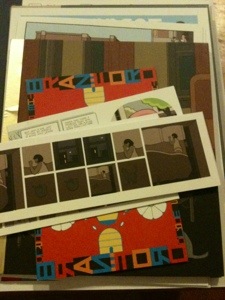
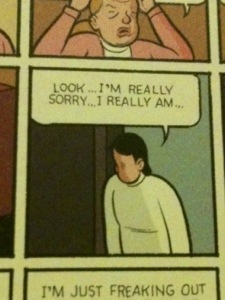
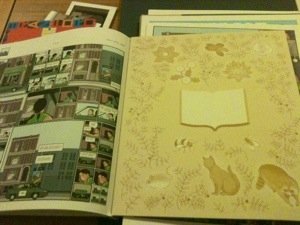
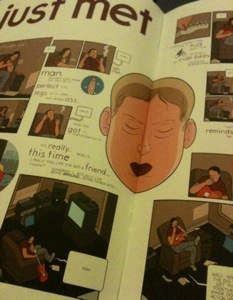
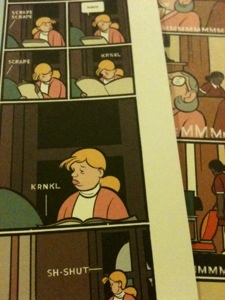
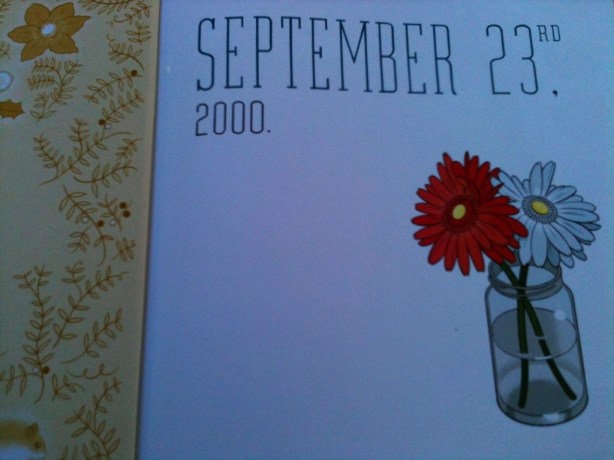
September 23rd, 2000 is one of the longer pieces in Chris Ware’s box set, Building Stories. Part of the joy and frustration of Building Stories is its free form—the possibility of reading one piece before another, of getting one tale or perspective before another. I started with Branford, which seems in retrospective a fairly neutral opening—it introduces many of the themes that develop in Building Stories but none of the major characters. I then read I just met, which introduces a couple suffering a sour relationship.

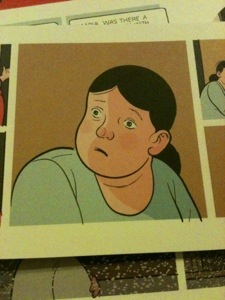
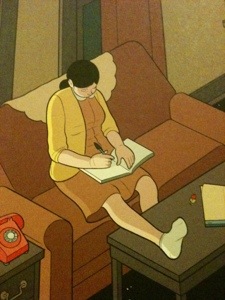
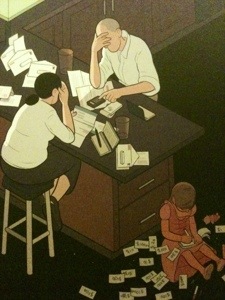
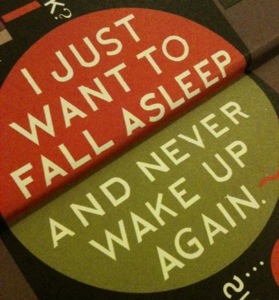
September introduces (to me, anyway), two major “new” (again, “new” to me; these characters appear central in other books and pamphlets of the collection and obliquely in others): The “lonely girl,” a would-be artist sporting a prosthetic leg, and the “old lady,” landlord of the building. Most of September takes the form of lonely girl’s diary entries.
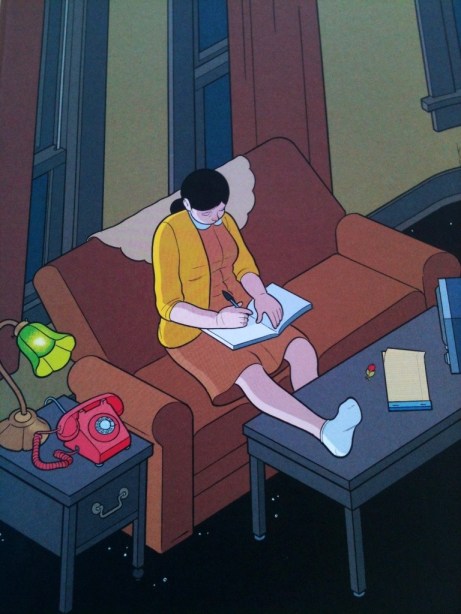
20121101-205339.jpg

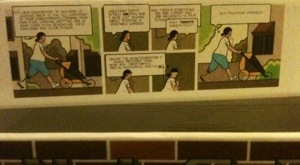
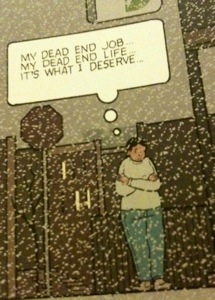
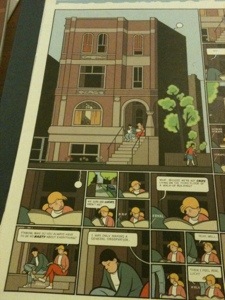
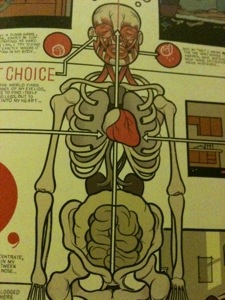
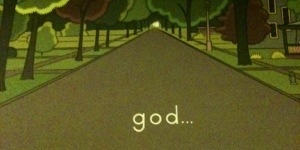
I noted two characters (again, new to me), but the building itself also gets a voice and prominent role in September; its thoughts and memories frame the narrative:
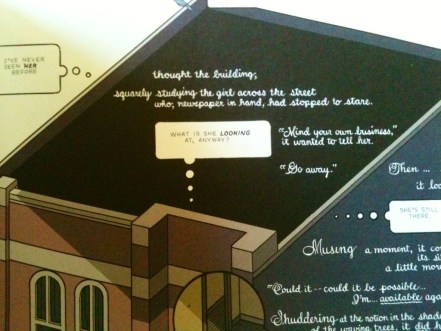
20121101-205351.jpg

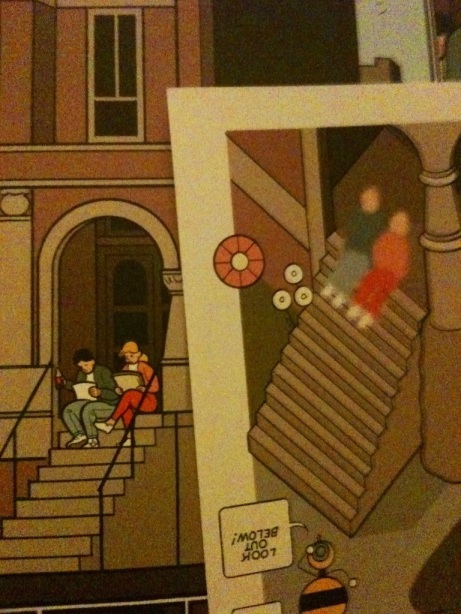
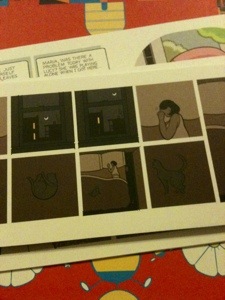
September frames the repetitions, the loops, the patterns that undoubtedly will resurface throughout Building Stories. We get access to the characters dreams, which seem to overlap and echo each other—and then repeat in real life, albeit in other forms. The landlady, recalling her youth, seems to echo the loneliness and despair of the lonely girl, as well as the pain of the woman in the sour relationship. We see that the building has in fact been a kind of prison for her, preventing her from forming real relationships:
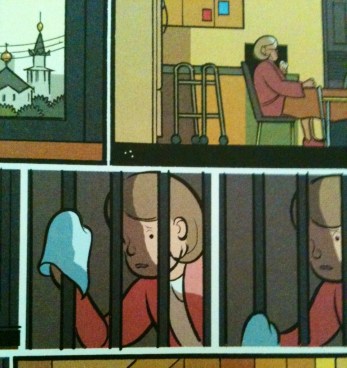
20121101-205408.jpg

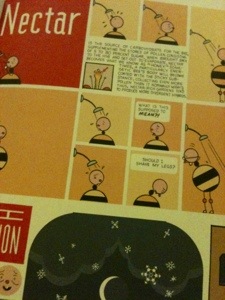
Other echoes are more subtle—a close up of a bee, for instance, either foreshadows or calls back to (or both, of course) Branford, the Best Bee in the World.

20121101-205429.jpg

We can see the Branford episode again, here in the tiny detail of a soda can, a major setting for that episode. I was more fascinated by the newspaper though, particularly the colorful squares of a comics section, a reference Ware’s medium and perhaps a visual suggestion of Building Stories itself. The detail is tiny, but meaningful:
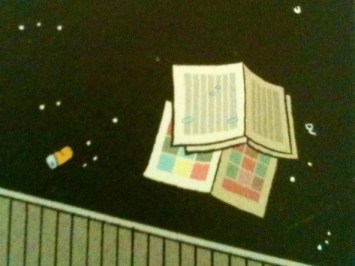
20121101-205421.jpg

In a later part of September, we see a direct reference to the end of I just met:
20121101-205436.jpg

I imagine that there were other references, call backs, and echoes in September that I won’t get until later.

The story—well, it’s beautiful, a perfect short story, self-contained but thematically resonant with the larger project. The ending is so damn sweet and perfect that it brought a little tear to my eye. And yet: Was that the ending? Of course not. The sense of rhetorical resolution—that is to say the so-called happy ending—will almost surely be punctured, deflated, or otherwise complicated by one of the next texts I read. More to come.

Charles Burns’s The Hive (Book Acquired 10.15.2012)

20121030-155650.jpg

For some reason—some reason founded on no reason at all but rather superstitious suspicion—I didn’t believe Charles Burns would follow up X’ed Out, the first chapter of a proposed trilogy. I suppose X’ed Out had unresolved cult classic written all over it (written metaphorically, of course).

X’ed Out was one of my favorite books of 2010. From my review:

In Black Hole, Burns established himself as a master illustrator and a gifted storyteller, using severe black and white contrast to evoke that tale’s terrible pain and pathos. X’ed Out appropriately brings rich, complex color to Burns’s method, and the book’s oversized dimensions showcase the art beautifully. This is a gorgeous book, both attractive and repulsive (much like Freud’s concept of “the uncanny,” which is very much at work in Burns’s plot). Like I said at the top, fans of Burns’s comix likely already know they want to read X’ed Out; weirdos who love Burroughs and Ballard and other great ghastly fiction will also wish to take note. Highly recommended.

20121030-155702.jpg

So, of course I was stoked when Burns’s sequel The Hive showed up a few weeks ago—in fact, the only thing that got in the way of me reading it immediately was that it showed up in a package along with Chris Ware’s Building Stories (this is, without question, the best package I’ve received in six years of doing the blog).

20121030-155714.jpg

Anyway, I’ll be revisiting X’ed Out and then reviewing The Hive in the next week or so. For now, a few pics. Two from the interior above. And our hero Doug, in his alter-ego/costume Nitnit (inverse Tintin):

20121030-155722.jpg

I dig this panel in particular: A take on Roy Lichtenstein via Raymond Pettibon via the romance comics those pop artists were riffing on:

20121030-155729.jpg


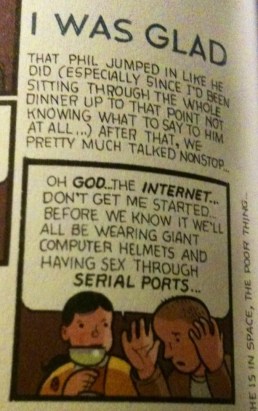
Reading Chris Ware’s Building Stories / I just met

Continuing kinda sorta where we left off

Not sure of the name of this episode, but I’ll refer to it as I just met, a phrase that repeats twice in a huge headlinish font that seems to suggest, y’know, title:

20121021-201130.jpg

I just met uses a few pages to tell the story of a deteriorating relationship—what happens when two twenty-somethings turn into two mid-to-late-thirtysomethings?

The comic opens with an establishing shot of what I take to be the building in Building Stories; we also get a glimpse of what I assume will be another character, the beehive, and a few other details that surely will attach themselves to these panels in future readings. We also get the general bitter tone of the couple’s relationship:

20121021-201139.jpg

He was one of those dudes who was once in a band; she was one of those chicks who thought guys in bands were cool.

The romance of their initial hookup is summed up neatly in the pic below; knowing Ware’s spare, precise style, the trash on the floor seems to scream symbolic detail!

20121021-201147.jpg

The hurt and disappointment in I just met unfolds over just a few painful pages—painful mostly in their concrete reality.

We know who these people are, even if we’re lucky enough not to be them.

Just as in  Branford, the Best Bee in the World , which I read earlier (although, to be clear again, there are no reading directions or prescriptions for Building Stories), there’s a theme of eternal recurrence, of mistakes playing out again and again in a painful, recursive loop.

Just when Ware threatens to overstate the mundane repetitions his principals suffer, he pulls off a daring and effective move, transposing his characters into the psychic collective memory of a future that’s in many ways already familiar. The effect is simultaneously jarring and oddly reassuring—the promise that our capacity for human connection and deep empathy will never buckle under the threat of drastic technological change, but also suggesting that the cost of maintaining this emotional constant is deep, ugly pain.

20121021-201154.jpg

Reading Chris Ware’s Building Stories / Branford, the Best Bee in the World

Chris Ware’s latest collection Building Stories comprises fourteen comics of different shapes, sizes, and formats. I wrote about opening the box a few days ago, and I’ll (try to) write about reading each of the pieces.

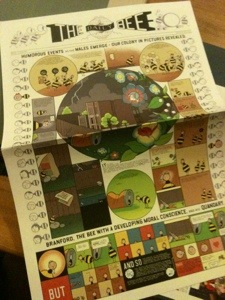
I started with Brandford, the Best Bee in the World, the tragicomic existential dilemma of a bee:

20121018-204455.jpg

In an opening segment freighted with peril, our hero Branford finds himself “trapped in a box of hard air,” in a predicament that makes “the water run fast out of the holes in the front of his face.” When he does find a way out, he takes at as a sign of redemption from the Almighty:

20121018-204549.jpg

Branford, now free to return home to his wife and family, promises God to quit lusting after the queen bee.

Easier said than done—even if his erotic dreams are interrupted with the domestic problems of crooked picture frames, broken vases, and burnt dinners:

20121018-204517.jpg

Branford solves his domestic trouble by going out into the world to provide pollen for his family, even if it means suffering an existential breakdown of identity, one that causes him to flashback to his beeblooded past.

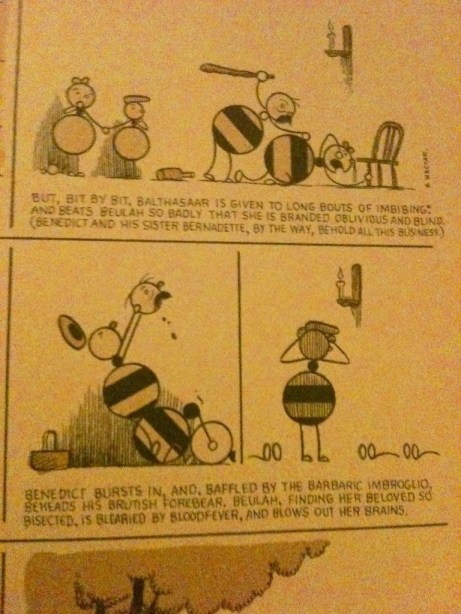
The flashback episode introduces heavy alliteration that continues throughout the rest of the narrative. Framed as a 19th century comic strip, it combines zany humor with horrific familial violence and suicidal despair, an unnerving, bizarre combination that carries over throughout the comic:

I won’t spoil anymore of Branford, other than pointing out that its narrative arcs in a strange loop. And even as its narrative doubles back into itself, it also points out, metatextually calling to another volume of Building Stories: here, see Branford to the right (and upside down) to a larger comic with no name.
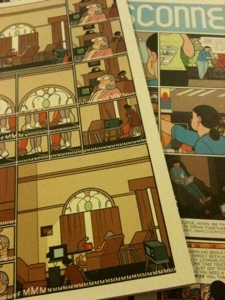
20121018-204502.jpg

I took the visual overlap as a prompt to read the comic on the left next. How did I start with Branford and not one of the other comics? It was on top.

I Open Chris Ware’s Building Stories, Share Some Photos, and Riff a Little (Book Acquired, 10.15.2012)

20121015-203618.jpg

Thrilled today to get Building Stories, Chris Ware’s latest.

Thrilled here is no hyperbole—I can’t remember being so excited to open a book in quite some time.
But Building Stories isn’t really a book.
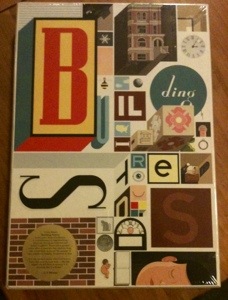
First, it comes in this big box—like a board game.

Here:

20121015-203630.jpg

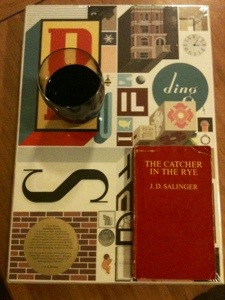
I show it set against The Catcher in the Rye in mass market paperback and a glass of red.

(The Catcher in the Rye + glass of red is the international standard for items used to show relative dimensions of size).

(Also, don’t worry about the wine ring—still shrinkwrapped at this point).

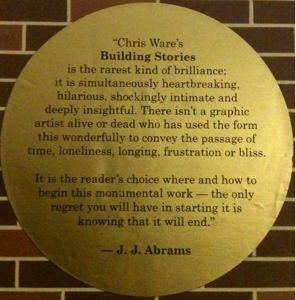
And on that shrinkwrap blazons a blurb by some guy named J.J. Abrams:

20121015-203639.jpg

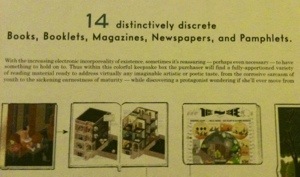
A description of the formal elements of Building Stories from the back of the box:

20121015-203649.jpg

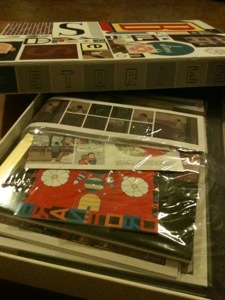
I open the box:

20121015-203659.jpg

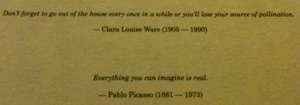
From the inside of the top of the box:

Not sure if that second quote shows here, but:

Pablo Picasso suggests that, Everything you can imagine is real.

20121015-203710.jpg

The package:

20121015-203722.jpg

Strips and papers and books.

Shots as I go through it:

20121015-203734.jpg

Stack: The shorter/smaller stuff is on top—a suggestion to read it first? / Probably not.

Probably more a packing issue.

20121015-203744.jpg

I remember a professor in grad school musing about where a book begins.

The title page?

The cover?

20121015-203813.jpg

How and where does a book begin?

20121015-203824.jpg

Chris Ware’s Building Stories: a kind of Möbius strip,

20121015-203834.jpg

crammed with ideas,

20121015-203843.jpg

illustrations,

20121015-203852.jpg

writing,

20121015-203900.jpg

stories . . .

20121015-203920.jpg

Little golden book

20121015-203929.jpg

. . . and broadside.

20121015-203937.jpg

. . . so many faces . . .

20121015-203946.jpg

. . . layers . . .

20121015-203954.jpg

. . . and layers . . .

20121015-204003.jpg

Ware’s transitions:

20121015-204011.jpg

(They always remind me of David Foster Wallace, who I know Ware read).

20121015-204017.jpg

And thus so well . . .

20121015-204023.jpg

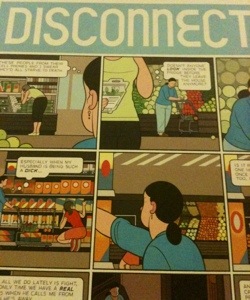
Disconnect?

20121015-204032.jpg

Boom!

20121015-204039.jpg

I should’ve busted out the wine glass or the Salinger here to show the scale of this marvelous painting, better than anything I’ve seen in contemporary art in ages. It tells all the story. (Wait, you (maybe) say, have you actually read the story yet?)

20121015-204045.jpg

No.

But who hasn’t felt:

20121015-204054.jpg

And

20121015-204100.jpg

Thus

20121015-204107.jpg

So

20121015-204114.jpg

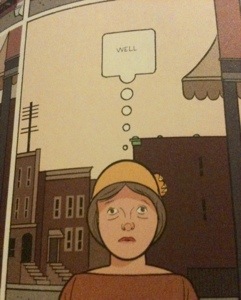
Well . . .

20121015-204123.jpg

[Insert ideas about malleability of form, sequence, narrative, idea—riff on discursive-novel-as-future-novel, etc.]

End riff/now look, read, absorb.

Chris Ware on DFW’s Novel The Pale King

Crippled Robot painting by Chris Ware

Cartoonist/graphic novelist/chronicler of shame and despair Chris Ware wrote about his favorite books for Foyles bookstore. The list includes UlyssesMoby-Dick, and works by cartoonists like Lynda Barry and Ivan Brunetti. Here’s what Ware wrote about David Foster Wallace’s posthumous novel The Pale King:

The first great novel of the 21st century uses the sinister beauty of the American Tax Code as a springboard from which to launch into a genuinely serious discussion of the origins and importance of civic responsibility amidst the hazy, blurred stupidity of a country in quick decline. Contrary to many reviews, I don’t think it’s about boredom, and it’s certainly not boring. Another posthumous editor-to-manuscript resuscitation, the book hangs heavy with the clotted spectre of Wallace’s suicide, which makes the writing glow all the more painfully through it.

Book Shelves #38, 9.16.2012

20120916-133140.jpg

Book shelves series #38, thirty-eighth Sunday of 2012

The final entry on this corner piece.

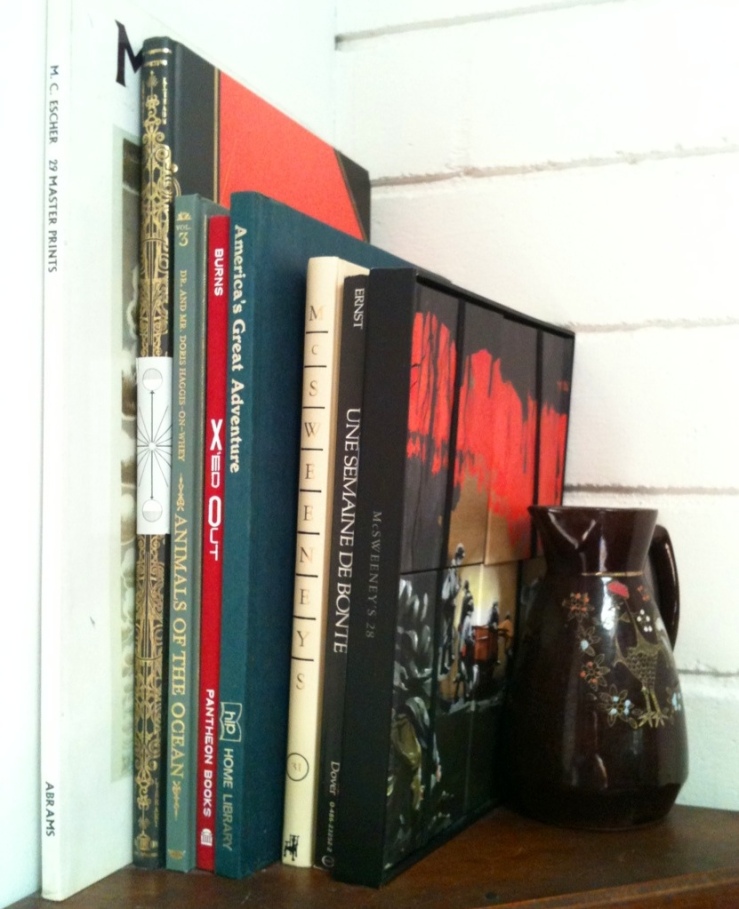
What have these volumes in common? They are all aesthetically pleasing.

They are all too tall to fit elsewhere comfortably.

Several issues of McSweeney’s, some art books, and some graphic novels:

20120916-133146.jpg

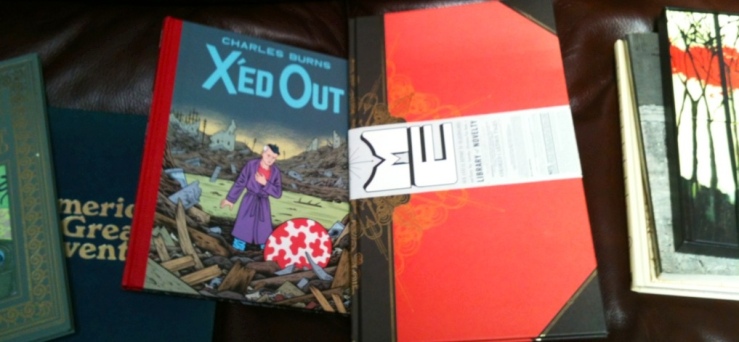
I’ve already expressed my strong enthusiasm for Charles Burns’s X’ed Out. The Acme Library pictured is part of Chris Ware’s series, and is beautiful and claustrophobic.

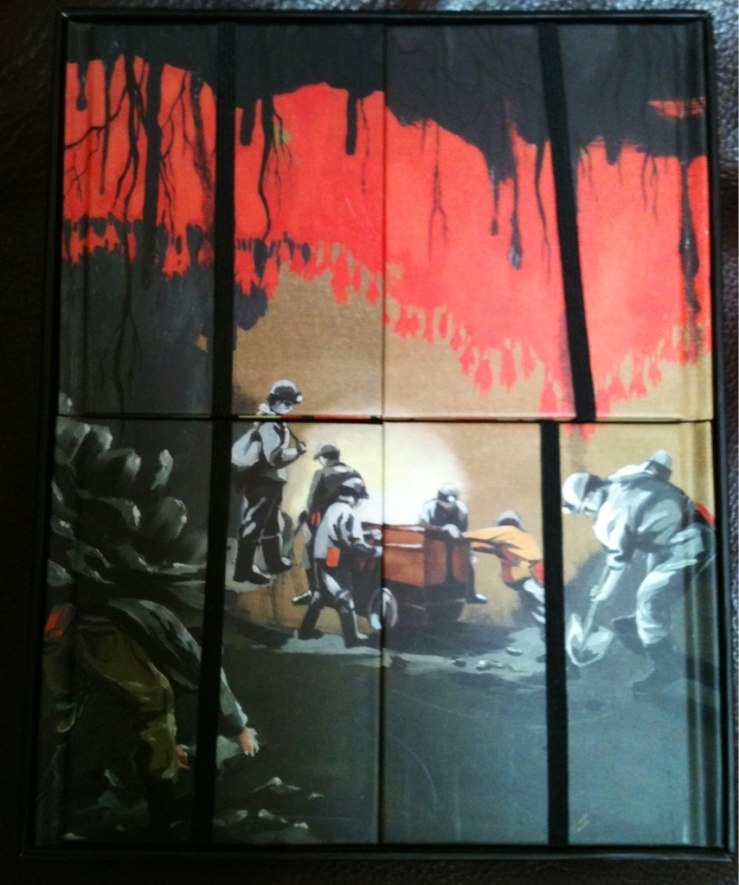
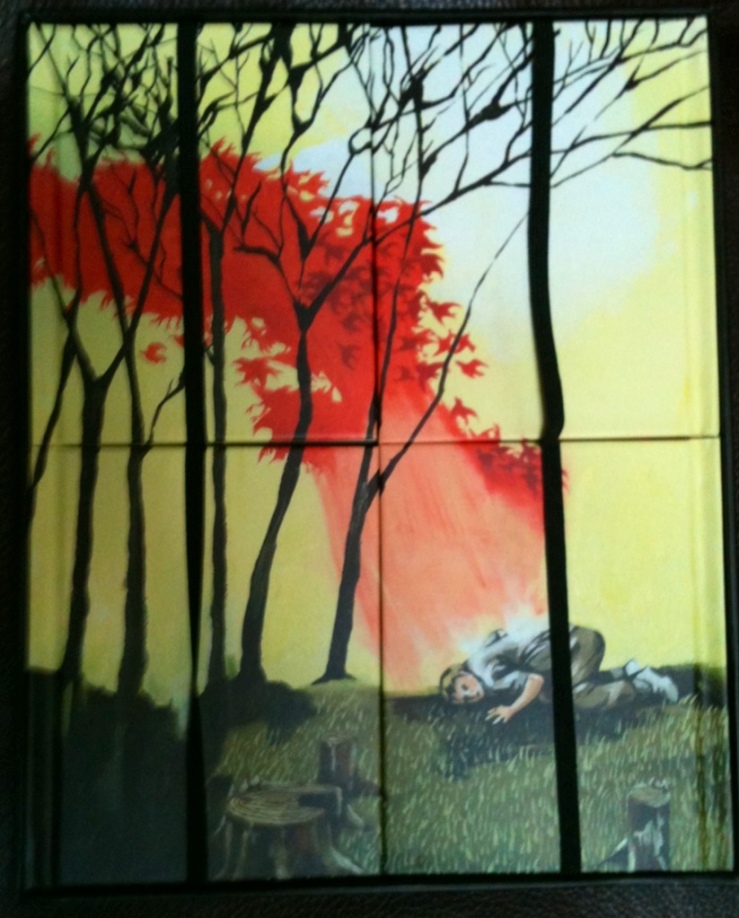
McSweeney’s #28 comprises eight little hardbacked fables that arrange into two “puzzle” covers:

20120916-133153.jpg

20120916-133200.jpg

20120916-133207.jpg

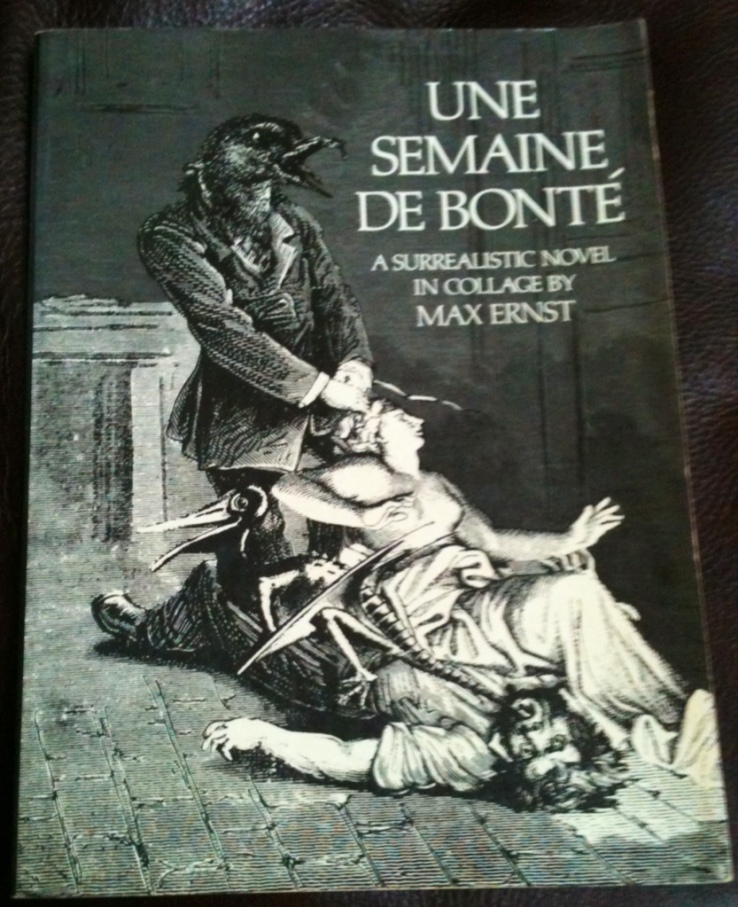
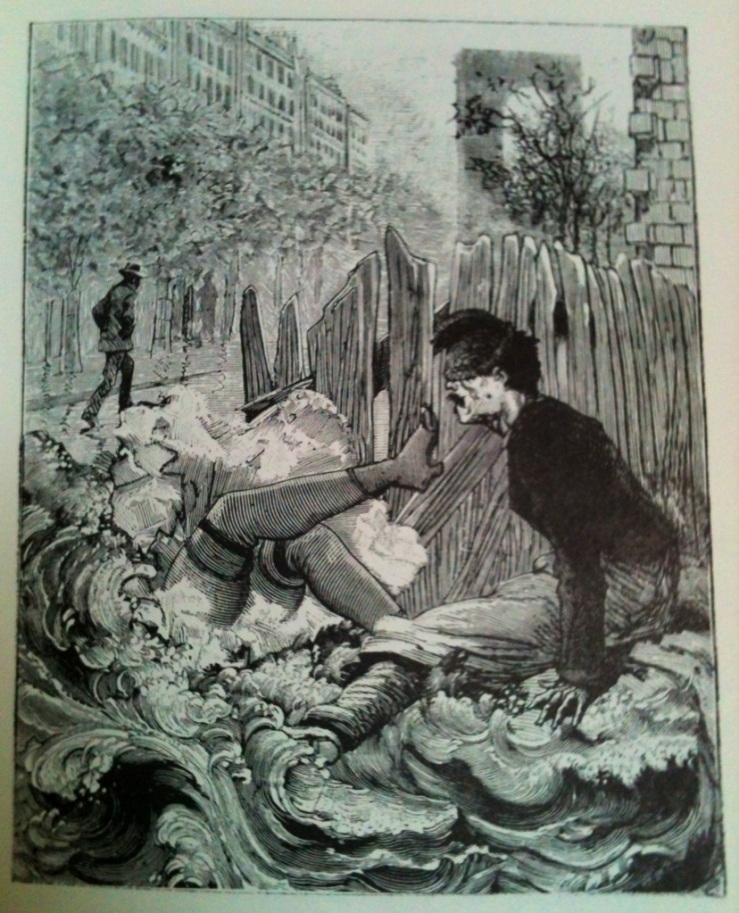
I’ve also written enthusiastically about Max Ernst’s surreal graphic novel, Une Semaine de Bonte:

20120916-133214.jpg

20120916-133221.jpg

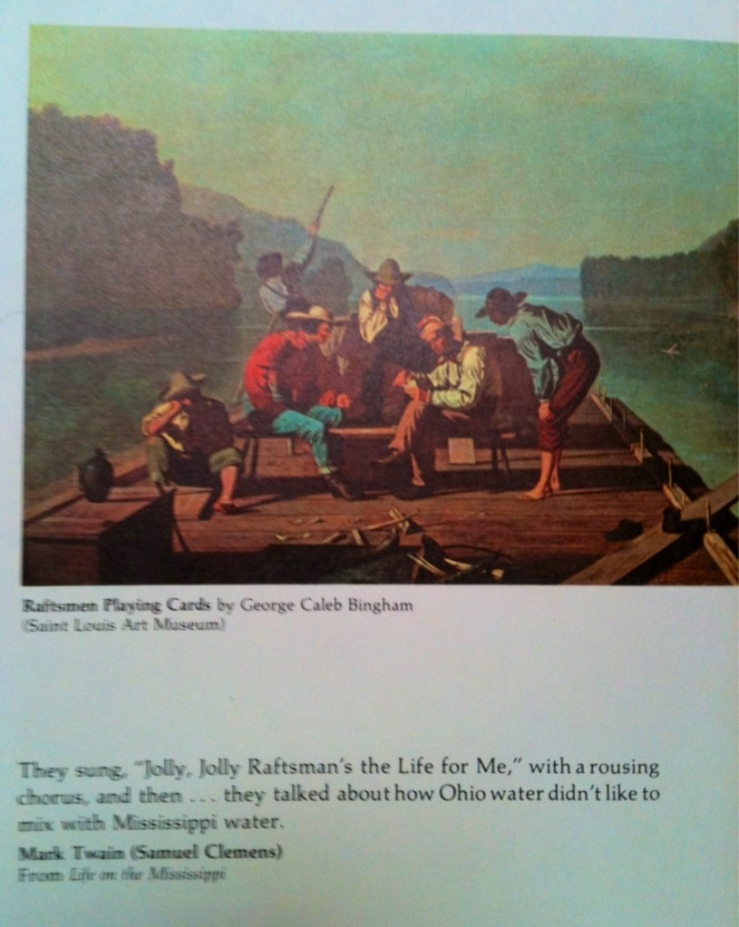
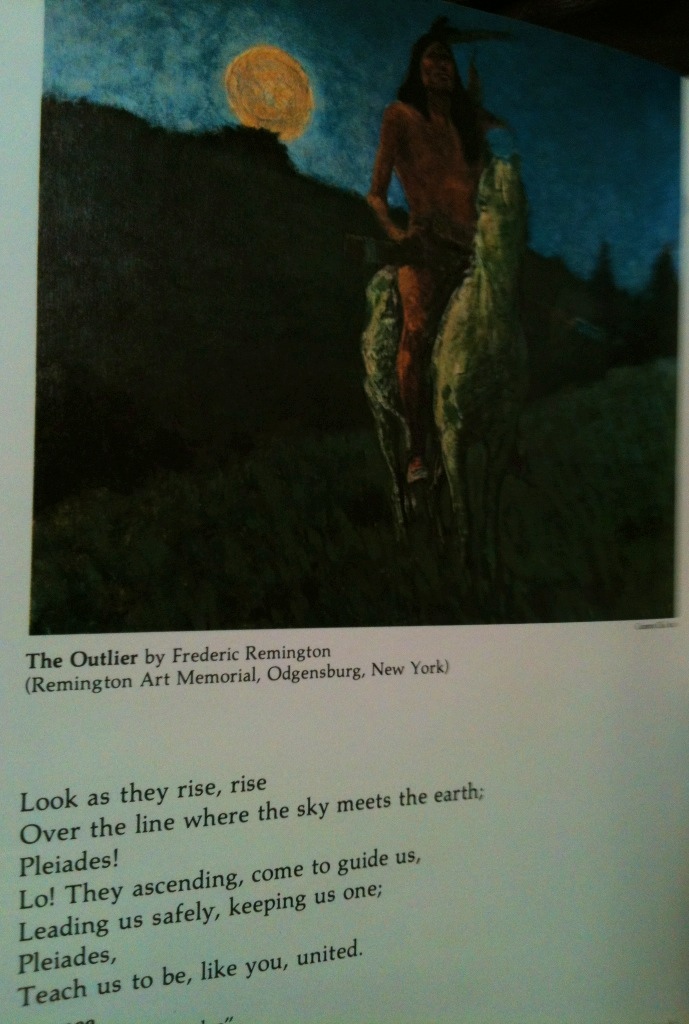
America’s Great Adventure is this wonderful book that pairs American writing (poems, songs, excerpts from novels and journals) with American paintings to tell a version of American history:

20120916-133230.jpg

20120916-133238.jpg

20120916-133244.jpg

It probably deserves its own review. Short review: It’s a wonderful book if you can find it.

Book Shelves #24, 6.10.2012

20120610-104319.jpg

Book shelves series #24, twenty-fourth Sunday of 2012: In which we glance at canonical comics.

So we’ve hit the last shelf in a series of triplets; next week: new room.

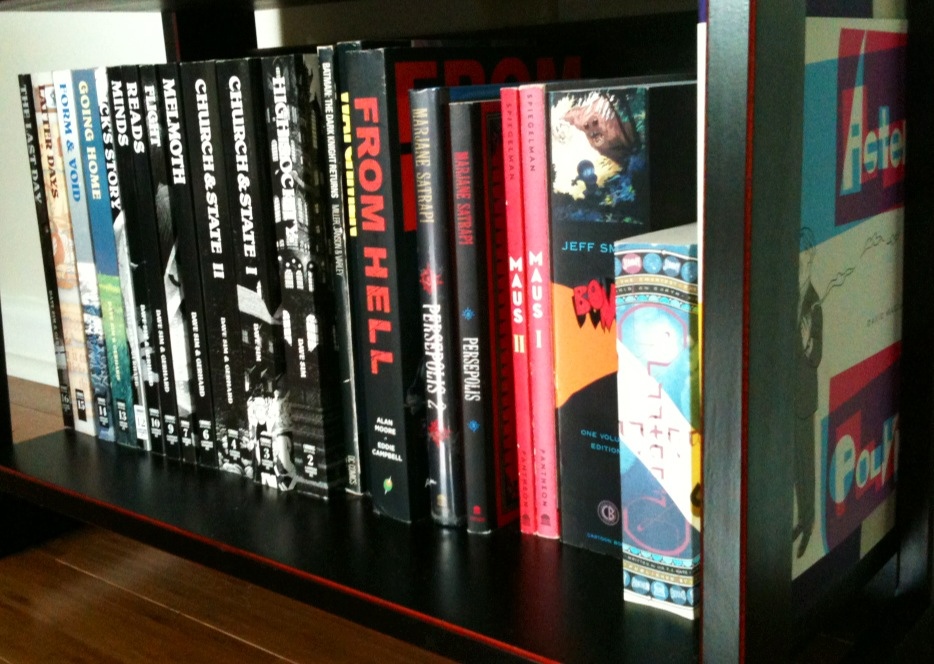
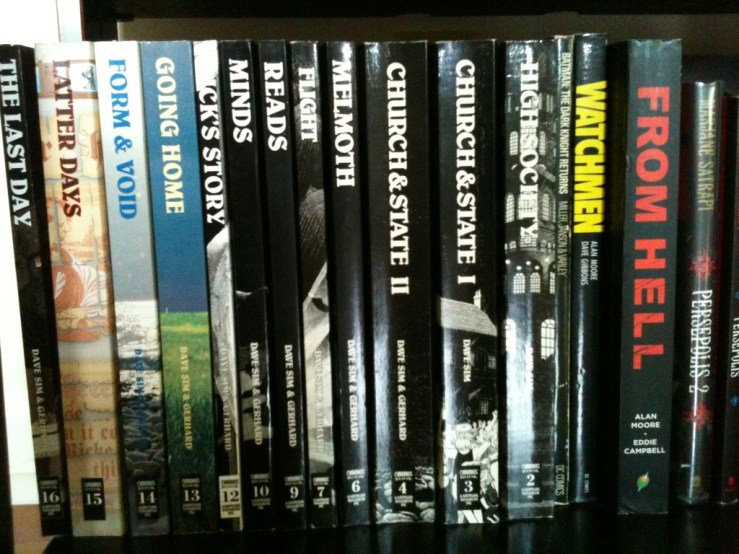
This shelf holds graphic novels, including stuff by Alan Moore, Marjane Satrapi, David Mazzucchelli, Jeff Smith, Art Spiegelman, and Chris Ware. There’s also most of Dave Sim’s epic series Cerebus here.

20120610-104325.jpg

I wrote about Dave Sim and Cerebus back in week 6 of this project, when I looked at the actual comic books I owned in the series. From that post:

 I bought issues of Cerebus intermittently for years at a time, usually getting frustrated and then waiting for the “phone book” graphic novel editions of the series. Sim, along with background artist Gerhard, produced 300 issues of Cerebus over 25 years. The issues from the early ’80s to the early ’90s are brilliant; eventually Sim cracked though and went on an insane, reactionary (and arguably deeply misogynistic) bent. He created his own religion, a mix of hardline Judaism, Islam, and Christianity, and the later books in the series suffered greatly, as the book detoured to chronicle projects that seemed far outside its original scope (including strange, long satires of Hemingway and Fitzgerald).

These are the phone books I referenced. Looking over them again, I keep reminding myself to try and reread the last two books to see if I missed anything.

Somewhat at random, I opened Reads, the novel that signaled the beginning of Sim’s estrangement from sanity. It opened to this page, part of a climactic scene between Cerebus and Cirin, leader of the matriarchy that will rule Iest (don’t ask):

20120610-104334.jpg

Book Shelves #18, 4.29.2012

20120429-131113.jpg

Book shelves series #18, eighteenth Sunday of 2012.

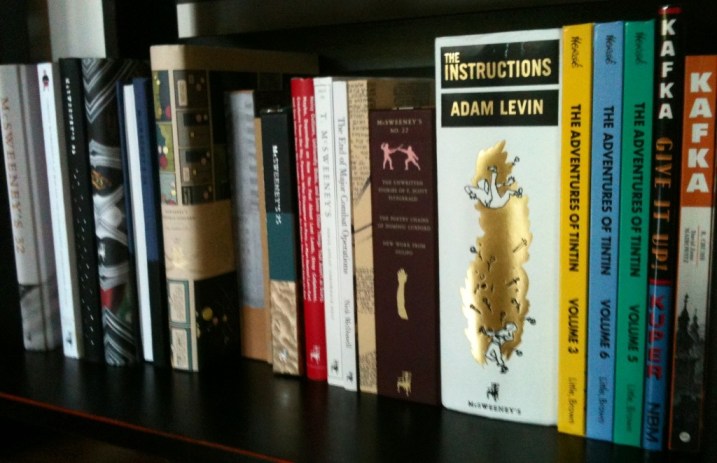
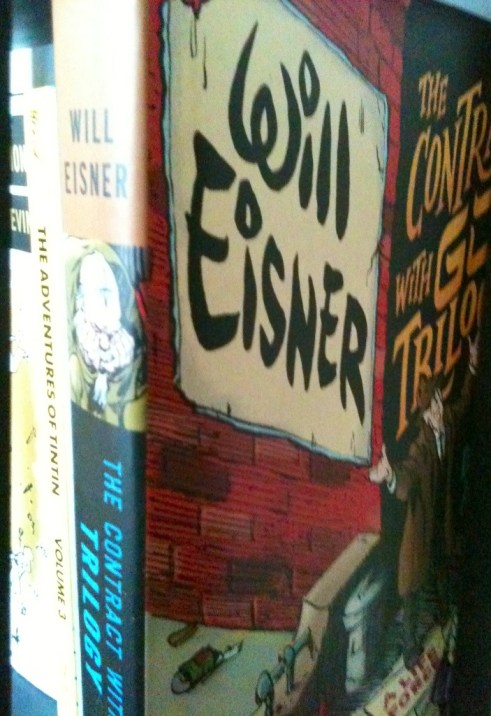
Lots of issues of McSweeney’s on this shelf. I abandoned The InstructionsSome Tintin omnibuses. Crumb-illustrated Kafka bio. Bookended by Will Eisner’s masterwork A Contract with God:

20120429-131124.jpg

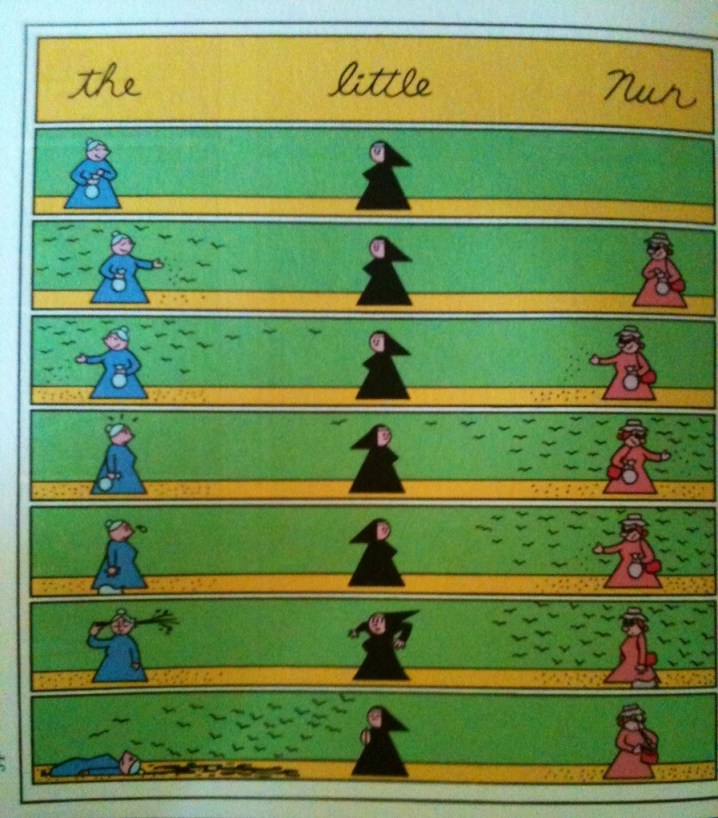
A Chris Ware comic from McSweeney’s #13:

20120429-131132.jpg

Chris Ware’s Rejected Fortune Cover

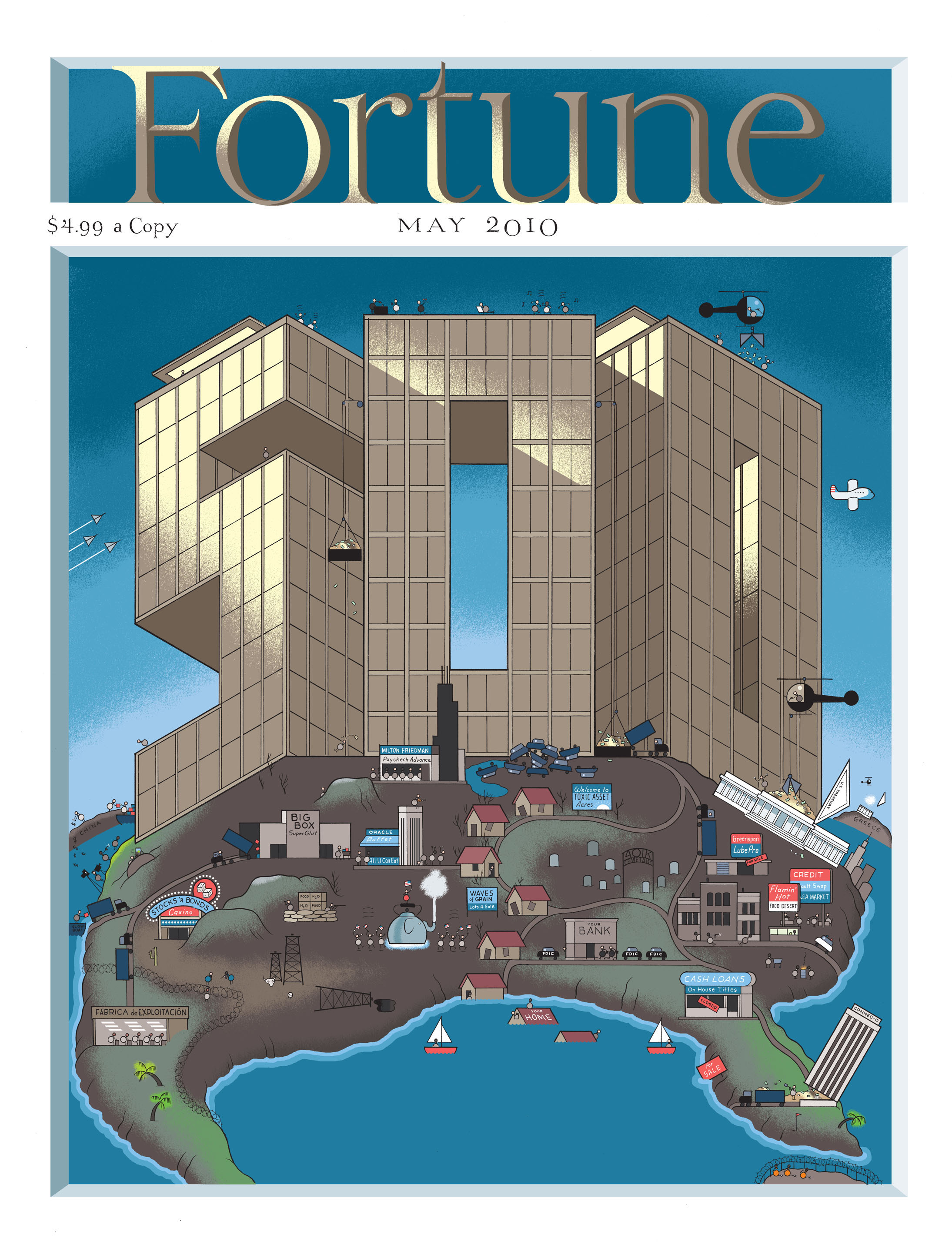
Cartoonist Chris Ware’s rejected cover for Fortune magazine. Guess his satire was too sharp. Via RW730:

Comic Book Artists and Criminals

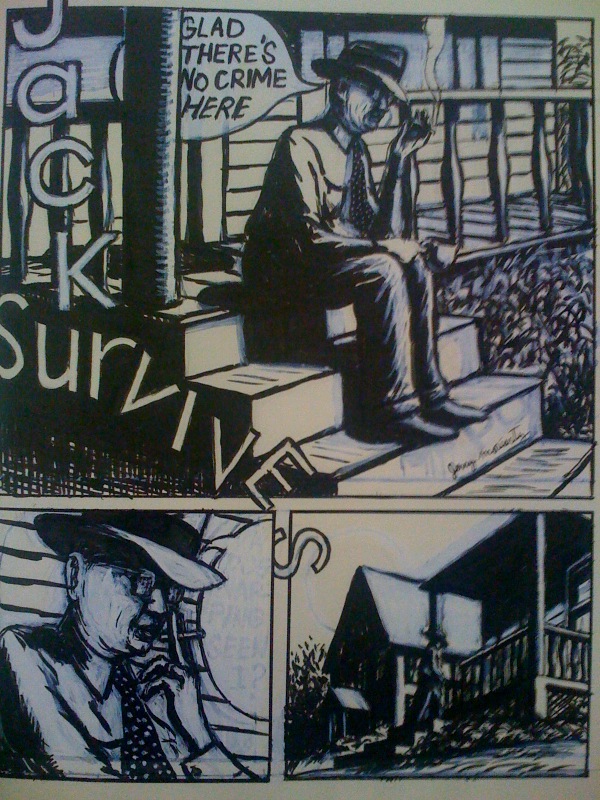
The Beilever’s 2009 Art Issue came in the mail today. It’s got cool interview between Chris Ware and Jerry Moriarty. A large poster of one of Moriarty’s painting comes with issue, which also prints several of the “paintoonist’s” works. But not this one:

Jerry Moriarty
Jerry Moriarty

Image via Molossus, where you can read an insightful review of Moriarty’s collection, The Complete Jack Survives.

The new Believer also features an interview with Aline Kominsky-Crumb, as well as some of her images. But not this one:

need_more_loveWB
Aline Kominsky-Crumb

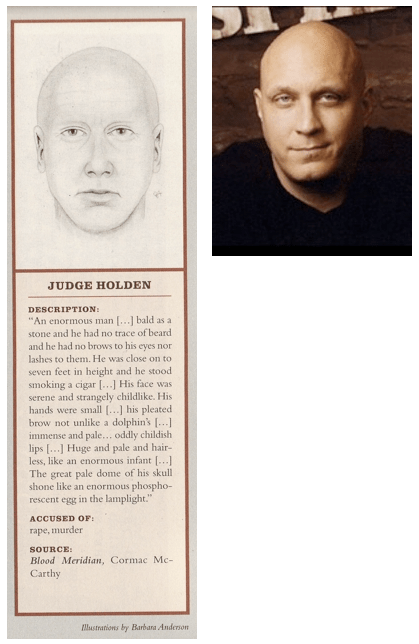
There’s also a pretty cool rogue’s gallery of of famous literary criminals. Forensic artist (y’know, a police sketch-artist) Barbara Anderson recreates eight criminals based solely on literary description. The list includes Oliver Twist’s Fagin, who looks like some dark-elf pedophile, Crime and Punishment’s Raskolnikov, that irascible pedophile Humbert Humbert, and, surprisingly, master forger Wyatt Gwyon, erstwhile hero of William Gaddis’s The Recognitions. One of our all-time favorite baddies is also there, although we really didn’t imagine Blood Meridian‘s Judge Holden would look look like Steve from The Jerry Springer Show:

Picture 2


Summer Reading List: Anthologies to Know and Love

No summer reading is complete without imbibing the variegated prose of an anthology. The following are the literary equivalents of skillfully-detailed mixtapes, made by a friend who wishes to communicate only that he or she has your best interest at heart.

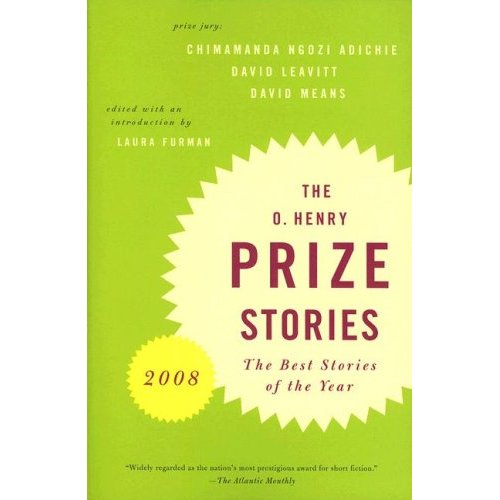
The 2008 O. Henry Prize Stories anthology is a great way to play catch up on all of the reading you missed last year. Culled from publications like Zoetrope, Harper’s, Granta, and Tin House, this anthology features established masters like William Gass and Alice Munro along with newer voices. There are plenty of highlights and no duds. Sharon Cain’s “The Necessities of Certain Behaviors” explores an amorphous world of gender-bending, while Stephen Millhauser’s “A Change in Fashion” imagines a new mode where women cover every inch of their flesh from the gaze of men. Lore Segal’s “Other People’s Deaths” perfectly captures the painful awkwardness and shame we experience when encountering, um, other people’s deaths. Similarly, the title of Tony Tulathimutte’s “Scenes from the Life of the Only Girl in Water Shield, Alaska” is spot-on, and Gass’s contribution, “A Little History of Modern Music,” is the funniest monologue we’ve read all year. But our favorite in the collection has to be Edward P. Jones’s “Bad Neighbors,” which examines the changing fortunes of an African-American neighborhood in Washington, D.C. A great collection, and if a story disappoints you, there’ll be three to make up for it.

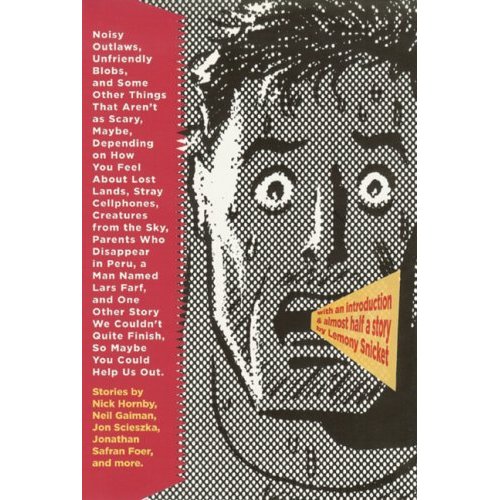
In the ultimate in lazy reviewing, we will let the title of McSweeney’s kids anthology Noisy Outlaws, Unfriendly Blobs, and Some Other Things That Aren’t as Scary, Maybe, Depending on How You Feel About Lost Lands, Stray Cellphones, Creatures from the Sky, Parents Who Disappear in Peru, a Man Named Lars Farf, and One Other Story We Couldn’t Quite Finish, So Maybe You Could Help Us Out stand as its own summary. However, this is a beautiful book with lots of lovely pictures, and the collection is worth it for Nick Hornby’s story alone. Good stuff.

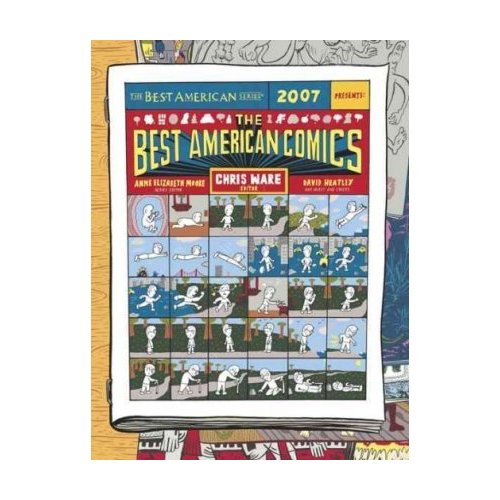
Edited by superstar Chris Ware, The Best American Comics 2007 serves as a delicious tasting menu of some of the best comix published in the past few years. Although hardcore comix fans will no doubt have already read the selections from Charles Burns’s Black Hole and Adrian Tomine’s Optic Nerve, there’s plenty here for aficionados and newbies alike.

Chances are you’ve read a number of the canonical texts in 50 Great Short Stories, but it’s also likely you haven’t read them in years. We’ve had this book for years, and have revisited often to indulge in old favorites for new inspiration. Classics like Shirley Jackson’s “The Lottery” and Hemingway’s “The Three-Day Blow” nestle up against lesser-reads like Edmund Wilson’s “The Man Who Shot Snapping Turtles” and Francis Steegmuller’s “The Foreigner.” And have you read Flannery O’Connor’s “A Good Man is Hard to Find” since high school? No? Shame on you! What about Carson McCuller’s “The Jockey”? Dorothy Parker? Kipling? Consider it a light crash course in great literature.