“What in water did Bloom, waterlover, drawer of water, watercarrier, returning to the range, admire?” (Ulysses)

What in water did Bloom, waterlover, drawer of water, watercarrier, returning to the range, admire?

Its universality: its democratic equality and constancy to its nature in seeking its own level: its vastness in the ocean of Mercator’s projection: its unplumbed profundity in the Sundam trench of the Pacific exceeding 8000 fathoms: the restlessness of its waves and surface particles visiting in turn all points of its seaboard: the independence of its units: the variability of states of sea: its hydrostatic quiescence in calm: its hydrokinetic turgidity in neap and spring tides: its subsidence after devastation: its sterility in the circumpolar icecaps, arctic and antarctic: its climatic and commercial significance: its preponderance of 3 to 1 over the dry land of the globe: its indisputable hegemony extending in square leagues over all the region below the subequatorial tropic of Capricorn: the multisecular stability of its primeval basin: its luteofulvous bed: its capacity to dissolve and hold in solution all soluble substances including millions of tons of the most precious metals: its slow erosions of peninsulas and islands, its persistent formation of homothetic islands, peninsulas and downwardtending promontories: its alluvial deposits: its weight and volume and density: its imperturbability in lagoons and highland tarns: its gradation of colours in the torrid and temperate and frigid zones: its vehicular ramifications in continental lakecontained streams and confluent oceanflowing rivers with their tributaries and transoceanic currents, gulfstream, north and south equatorial courses: its violence in seaquakes, waterspouts, Artesian wells, eruptions, torrents, eddies, freshets, spates, groundswells, watersheds, waterpartings, geysers, cataracts, whirlpools, maelstroms, inundations, deluges, cloudbursts: its vast circumterrestrial ahorizontal curve: its secrecy in springs and latent humidity, revealed by rhabdomantic or hygrometric instruments and exemplified by the well by the hole in the wall at Ashtown gate, saturation of air, distillation of dew: the simplicity of its composition, two constituent parts of hydrogen with one constituent part of oxygen: its healing virtues: its buoyancy in the waters of the Dead Sea: its persevering penetrativeness in runnels, gullies, inadequate dams, leaks on shipboard: its properties for cleansing, quenching thirst and fire, nourishing vegetation: its infallibility as paradigm and paragon: its metamorphoses as vapour, mist, cloud, rain, sleet, snow, hail: its strength in rigid hydrants: its variety of forms in loughs and bays and gulfs and bights and guts and lagoons and atolls and archipelagos and sounds and fjords and minches and tidal estuaries and arms of sea: its solidity in glaciers, icebergs, icefloes: its docility in working hydraulic millwheels, turbines, dynamos, electric power stations, bleachworks, tanneries, scutchmills: its utility in canals, rivers, if navigable, floating and graving docks: its potentiality derivable from harnessed tides or watercourses falling from level to level: its submarine fauna and flora (anacoustic, photophobe), numerically, if not literally, the inhabitants of the globe: its ubiquity as constituting 90 percent of the human body: the noxiousness of its effluvia in lacustrine marshes, pestilential fens, faded flowerwater, stagnant pools in the waning moon.

From the penultimate episode of James Joyce’s Ulysses.

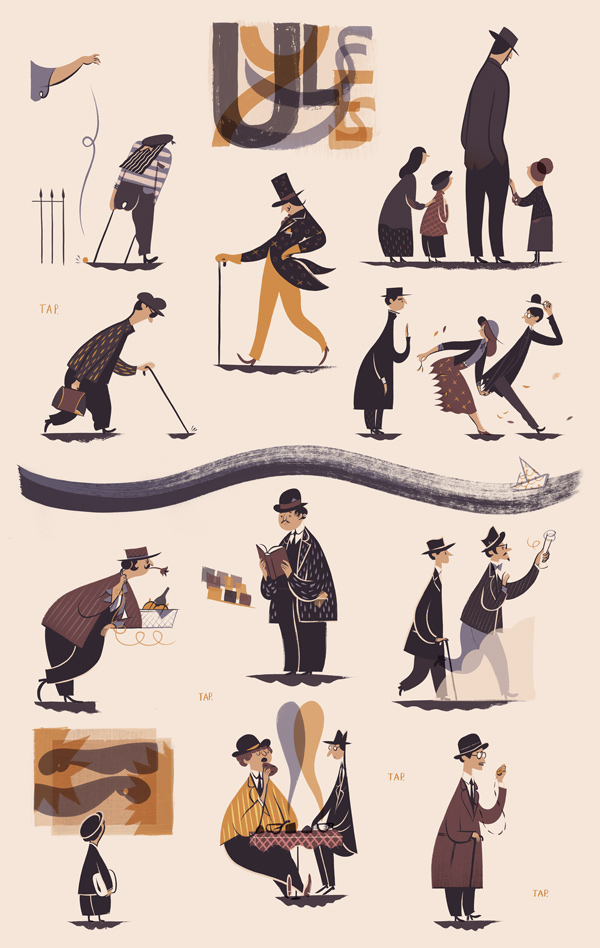
Partial Cast List, Ulysses

(He hurries out through the hall. The whores point. Florry follows, spilling water from her tilted tumbler. On the doorstep all the whores clustered talk volubly, pointing to the right where the fog has cleared off. From the left arrives a jingling hackney car. It slows to in front of the house. Bloom at the halldoor perceives Corny Kelleher who is about to dismount from the car with two silent lechers. He averts his face. Bella from within the hall urges on her whores. They blow ickylickysticky yumyum kisses. Corny Kelleher replies with a ghastly lewd smile. The silent lechers turn to pay the jarvey. Zoe and Kitty still point right. Bloom, parting them swiftly, draws his caliph’s hood and poncho and hurries down the steps with sideways face. Incog Haroun al Raschid he flits behind the silent lechers and hastens on by the railings with fleet step of a pard strewing the drag behind him, torn envelopes drenched in aniseed. The ashplant marks his stride. A pack of bloodhounds, led by Hornblower of Trinity brandishing a dogwhip in tallyho cap and an old pair of grey trousers, follow from fir, picking up the scent, nearer, baying, panting, at fault, breaking away, throwing their tongues, biting his heels, leaping at his tail. He walks, runs, zigzags, gallops, lugs laid back. He is pelted with gravel, cabbagestumps, biscuitboxes, eggs, potatoes, dead codfish, woman’s slipperslappers. After him freshfound the hue and cry zigzag gallops in hot pursuit of follow my leader: 65 C, 66 C, night watch, John Henry Menton, Wisdom Hely, V. B. Dillon, Councillor Nannetti, Alexander Keyes, Larry O’rourke, Joe Cuffe Mrs O’dowd, Pisser Burke, The Nameless One, Mrs Riordan, The Citizen, Garryowen, Whodoyoucallhim, Strangeface, Fellowthatsolike, Sawhimbefore, Chapwithawen, Chris Callinan, Sir Charles Cameron, Benjamin Dollard, Lenehan, Bartell d’Arcy, Joe Hynes, red Murray, editor Brayden, T. M. Healy, Mr Justice Fitzgibbon, John Howard Parnell, the reverend Tinned Salmon, Professor Joly, Mrs Breen, Denis Breen, Theodore Purefoy, Mina Purefoy, the Westland Row postmistress, C. P. M’Coy, friend of Lyons, Hoppy Holohan, maninthestreet, othermaninthestreet, Footballboots, pugnosed driver, rich protestant lady, Davy Byrne, Mrs Ellen M’Guinness, Mrs Joe Gallaher, George Lidwell, Jimmy Henry on corns, Superintendent Laracy, Father Cowley, Crofton out of the Collector-general’s, Dan Dawson, dental surgeon Bloom with tweezers, Mrs Bob Doran, Mrs Kennefick, Mrs Wyse Nolan, John Wyse Nolan, handsomemarriedwomanrubbedagainstwide behindinClonskeatram, the bookseller of Sweets of Sin, Miss Dubedatandshedidbedad, Mesdames Gerald and Stanislaus Moran of Roebuck, the managing clerk of Drimmie’s, Wetherup, colonel Hayes, Mastiansky, Citron, Penrose, Aaron Figatner, Moses Herzog, Michael E Geraghty, Inspector Troy, Mrs Galbraith, the constable off Eccles Street corner, old doctor Brady with stethoscope, the mystery man on the beach, a retriever, Mrs Miriam Dandrade and all her lovers.)


“A Mother” — James Joyce

“A Mother” by James Joyce

MR HOLOHAN, assistant secretary of the Eire Abu Society, had been walking up and down Dublin for nearly a month, with his hands and pockets full of dirty pieces of paper, arranging about the series of concerts. He had a game leg and for this his friends called him Hoppy Holohan. He walked up and down constantly, stood by the hour at street corners arguing the point and made notes; but in the end it was Mrs. Kearney who arranged everything.

Miss Devlin had become Mrs. Kearney out of spite. She had been educated in a high-class convent, where she had learned French and music. As she was naturally pale and unbending in manner she made few friends at school. When she came to the age of marriage she was sent out to many houses where her playing and ivory manners were much admired. She sat amid the chilly circle of her accomplishments, waiting for some suitor to brave it and offer her a brilliant life. But the young men whom she met were ordinary and she gave them no encouragement, trying to console her romantic desires by eating a great deal of Turkish Delight in secret. However, when she drew near the limit and her friends began to loosen their tongues about her, she silenced them by marrying Mr. Kearney, who was a bootmaker on Ormond Quay.

He was much older than she. His conversation, which was serious, took place at intervals in his great brown beard. After the first year of married life, Mrs. Kearney perceived that such a man would wear better than a romantic person, but she never put her own romantic ideas away. He was sober, thrifty and pious; he went to the altar every first Friday, sometimes with her, oftener by himself. But she never weakened in her religion and was a good wife to him. At some party in a strange house when she lifted her eyebrow ever so slightly he stood up to take his leave and, when his cough troubled him, she put the eider-down quilt over his feet and made a strong rum punch. For his part, he was a model father. By paying a small sum every week into a society, he ensured for both his daughters a dowry of one hundred pounds each when they came to the age of twenty-four. He sent the older daughter, Kathleen, to a good convent, where she learned French and music, and afterward paid her fees at the Academy. Every year in the month of July Mrs. Kearney found occasion to say to some friend:

“My good man is packing us off to Skerries for a few weeks.”

If it was not Skerries it was Howth or Greystones.
Continue reading ““A Mother” — James Joyce”

“Grace” — James Joyce

“Grace” by James Joyce

TWO GENTLEMEN who were in the lavatory at the time tried to lift him up: but he was quite helpless. He lay curled up at the foot of the stairs down which he had fallen. They succeeded in turning him over. His hat had rolled a few yards away and his clothes were smeared with the filth and ooze of the floor on which he had lain, face downwards. His eyes were closed and he breathed with a grunting noise. A thin stream of blood trickled from the corner of his mouth.

These two gentlemen and one of the curates carried him up the stairs and laid him down again on the floor of the bar. In two minutes he was surrounded by a ring of men. The manager of the bar asked everyone who he was and who was with him. No one knew who he was but one of the curates said he had served the gentleman with a small rum.

“Was he by himself?” asked the manager.

“No, sir. There was two gentlemen with him.”

“And where are they?”

No one knew; a voice said:

“Give him air. He’s fainted.”

The ring of onlookers distended and closed again elastically. A dark medal of blood had formed itself near the man’s head on the tessellated floor. The manager, alarmed by the grey pallor of the man’s face, sent for a policeman.

His collar was unfastened and his necktie undone. He opened eyes for an instant, sighed and closed them again. One of gentlemen who had carried him upstairs held a dinged silk hat in his hand. The manager asked repeatedly did no one know who the injured man was or where had his friends gone. The door of the bar opened and an immense constable entered. A crowd which had followed him down the laneway collected outside the door, struggling to look in through the glass panels.

The manager at once began to narrate what he knew. The constable, a young man with thick immobile features, listened. He moved his head slowly to right and left and from the manager to the person on the floor, as if he feared to be the victim of some delusion. Then he drew off his glove, produced a small book from his waist, licked the lead of his pencil and made ready to indite. He asked in a suspicious provincial accent:

“Who is the man? What’s his name and address?”

A young man in a cycling-suit cleared his way through the ring of bystanders. He knelt down promptly beside the injured man and called for water. The constable knelt down also to help. The young man washed the blood from the injured man’s mouth and then called for some brandy. The constable repeated the order in an authoritative voice until a curate came running with the glass. The brandy was forced down the man’s throat. In a few seconds he opened his eyes and looked about him. He looked at the circle of faces and then, understanding, strove to rise to his feet. Continue reading ““Grace” — James Joyce”

“Just mix up a mixture of theolologicophilolological” — Stephen Dedalus on Shakespeare

From Stephen Dedalus’s strange thesis on Shakespeare in episode 9 of James Joyce’s Ulysses–

— And the sense of property, Stephen said. He drew Shylock out of his own long pocket. The son of a maltjobber and moneylender he was himself a cornjobber and moneylender, with ten tods of corn hoarded in the famine riots. His borrowers are no doubt those divers of worship mentioned by Chettle Falstaff who reported his uprightness of dealing. He sued a fellowplayer for the price of a few bags of malt and exacted his pound of flesh in interest for every money lent. How else could Aubrey’s ostler and callboy get rich quick? All events brought grist to his mill. Shylock chimes with the jewbaiting that followed the hanging and quartering of the queen’s leech Lopez, his jew’s heart being plucked forth while the sheeny was yet alive: Hamlet and Macbeth with the coming to the throne of a Scotch philosophaster with a turn for witchroasting. The lost armada is his jeer in Love’s Labour Lost. His pageants, the histories, sail fullbellied on a tide of Mafeking enthusiasm. Warwickshire jesuits are tried and we have a porter’s theory of equivocation. The Sea Venture comes home from Bermudas and the play Renan admired is written with Patsy Caliban, our American cousin. The sugared sonnets follow Sidney’s. As for fay Elizabeth, otherwise carrotty Bess, the gross virgin who inspired The Merry Wives of Windsor, let some meinherr from Almany grope his life long for deephid meanings in the depths of the buckbasket.

I think you’re getting on very nicely. Just mix up a mixture of theolologicophilolological. Mingo, minxi, mictum, mingere.

Novels That Will Be Considered the Most Important Literary Works of the Twentieth Century in the Year 2100 (According to Dalkey Archive)

Novels That Will Be Considered the Most Important Literary Works of the Twentieth Century in the Year 2100

Nightwood, Djuna Barnes
Malone Dies, Samuel Beckett
Molloy, Samuel Beckett
The Unnamable, Samuel Beckett
The Lime Works, Thomas Bernhard
Nostromo, Joseph Conrad
JR, William Gaddis
The Recognitions, William Gaddis
Ulysses, James Joyce
One Hundred Years of Solitude, Gabriel Garcia Marquez
At Swim-Two-Birds, Flann O’Brien
The Inquisitory, Robert Pinget
Remembrance of Things Past, Marcel Proust
Gravity’s Rainbow, Thomas Pynchon
Mulligan Stew, Gilbert Sorrentino

Speculative list from the Dalkey Archive (from an issue of their journal Context; compiled from responses  of “advisors at universities and bookstores”). I’m sure the fact that they publish several of these titles has nothing to do with these books’ inclusion. I’ve read all of seven of these, some of five of these, and none of three of these.

Raymond Pettibon: “I read as I write, write as I read”

Read a 1999 interview with Raymond Pettibon in BOMB. Excerpt:

I read as I write, write as I read. If it used to take me five minutes to read the whole newspaper, now, my mind wanders, and then five minutes later I wonder, Gee, did I read that? I used to take notes, and I have notebooks full of drawings and notes that were partly quotations, and I’ve done a lot of marginalia, writing in books. I’m usually reading a number of books at a time, and whether I get through an individual one is probably unlikely. I’ve lost interest in narrative. (sigh) At least in the sense of seeing how a story comes out at the end. There’s a type of reading where you get lost in the narrative and you become part of the story and you’re compelled to finish. I don’t really have any interest in that. For me, reading has become more microscopic, more about dissecting the work. It may start on the level of the novel, then go down to theme or style, then to a paragraph, and finally a sentence. Or the sentence itself becomes about structure, or the words in it. Probably the most obvious example of that kind of reading is James Joyce. It becomes a kind of disease. Every text becomes related to another one, even in a different language, down to each individual word, which then becomes a clue into the etymology of the word, and then that etymological tree. A different context, a different language…you’re just making these associations from one thing to another. I used to start out with a simple drawing that would begin as an idea, and then my writing would make some associations with something else. And then, you know, a day later, or a year later, or whenever, the whole page would be covered with small, finely written text. And it would become a lot of things that were meant to be just in one drawing, expanded into this while still part of my notes. Voluminous notes. You do actually get lost in that morass of associations.


“A Little Cloud” — James Joyce

“A Little Cloud” by James Joyce

EIGHT years before he had seen his friend off at the North Wall and wished him godspeed. Gallaher had got on. You could tell that at once by his travelled air, his well-cut tweed suit, and fearless accent. Few fellows had talents like his and fewer still could remain unspoiled by such success. Gallaher’s heart was in the right place and he had deserved to win. It was something to have a friend like that.

Little Chandler’s thoughts ever since lunch-time had been of his meeting with Gallaher, of Gallaher’s invitation and of the great city London where Gallaher lived. He was called Little Chandler because, though he was but slightly under the average stature, he gave one the idea of being a little man. His hands were white and small, his frame was fragile, his voice was quiet and his manners were refined. He took the greatest care of his fair silken hair and moustache and used perfume discreetly on his handkerchief. The half-moons of his nails were perfect and when he smiled you caught a glimpse of a row of childish white teeth.

As he sat at his desk in the King’s Inns he thought what changes those eight years had brought. The friend whom he had known under a shabby and necessitous guise had become a brilliant figure on the London Press. He turned often from his tiresome writing to gaze out of the office window. The glow of a late autumn sunset covered the grass plots and walks. It cast a shower of kindly golden dust on the untidy nurses and decrepit old men who drowsed on the benches; it flickered upon all the moving figures—on the children who ran screaming along the gravel paths and on everyone who passed through the gardens. He watched the scene and thought of life; and (as always happened when he thought of life) he became sad. A gentle melancholy took possession of him. He felt how useless it was to struggle against fortune, this being the burden of wisdom which the ages had bequeathed to him. Continue reading ““A Little Cloud” — James Joyce”

Image of James Joyce — Louis Le Brocquy

Image of James Joyce 1977 by Louis Le Brocquy born 1916

(Via).

Ulysses (1967 Film Adaptation)

Ulysses — Roman Muradov

ulysses

(Roman Muradov’s wonderful illustration to the Wandering Rocks episode of Joyce’s Ulysses; lots more great stuff at Roman’s site and blog).

Portrait of James Joyce — Djuna Barnes

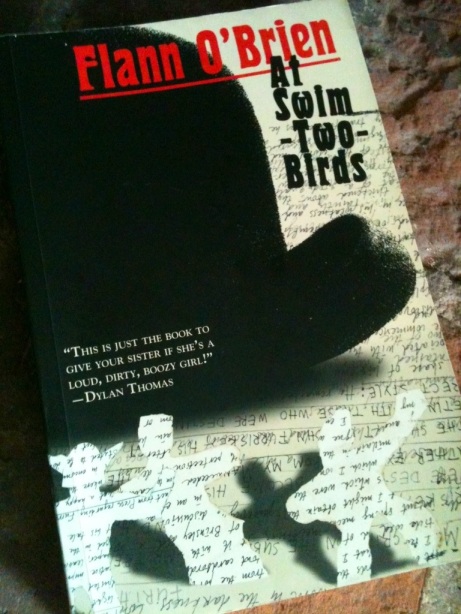
Flann O’Brien’s Novel At Swim-Two-Birds Is a Postmodernist Masterpiece of Comic Storytelling

20130210-161617.jpg

The vibrant force of storytelling in Flann O’Brien’s excellent first novel At Swim-Two-Birds threatens to overwhelm reader and narrator alike—and what a strange joy it is to be overwhelmed. This novel overflows with stories; its plot threads twist into each other, break out of each other, erupt into new ideas, characters, riffs, sketches. First published in 1939—the same year as James Joyce’s Finnegans WakeAt Swim-Two-Birds seems light years ahead of its time—indeed, this is a book that is still ahead of its time.

Summarizing At Swim-Two-Birds is difficult but worth attempting. We have an unnamed narrator, a student living with his uncle who doesn’t think much of how his nephew spends his time. Our narrator likes to imbibe large quantities of porter and wax philosophical with his friends about his literary projects. These projects, our narrator’s riffs and scribblings, begin to take on lives of their own: they intersect, overlap, intermarry, degenerate and regenerate.

The book’s opening paragraph announces the novel’s intention to disregard the classical unities of action, place, and time:

Having placed in my mouth sufficient bread for three minutes’ chewing, I withdrew my powers of sensual perception and retired into the privacy of my mind, my eyes and face assuming a vacant and preoccupied expression. I reflected on the subject of my spare-time literary activities. One beginning and one ending for a book was a thing I did not agree with. A good book may have three openings entirely dissimilar and inter-related only in the prescience of the author, or for that matter one hundred times as many endings.

First, we meet “Pooka MacPhellimey, a member of the devil class,” a hobgoblin of Irish folklore (he turns out to be a thoughtful and polite fellow). Then, there’s John Furriskey, who “was born at the age of twenty-five and entered the world with a memory but without a personal experience to account for it.” Furriskey is the literary creation of another of the narrator’s literary creations, one Dermot Trellis, a grumpy old man who writes Westerns; Trellis (an author, it’s worth reiterating) is the eventual antagonist of the novel, the target for all of the other characters’ vengeance. The third opening offers up Finn Mac Cool, “a legendary hero of old Ireland.”

Much of the early part of At Swim-Two-Birds features Finn Mac Cool holding forth on all matters Irish in wonderfully baroque and hyperbolic passages. Here’s a snippet (a long one!), featuring Finn on the ideal man:

When pursued by a host, he must stick a spear in the world and hide behind it and vanish in its narrow shelter or he is not taken for want of sorcery. Likewise he must hide beneath a twig, or behind a dried leaf, or under a red stone, or vanish at full speed into the seat of his hempen drawers without changing his course or abating his pace or angering the men of Erin. Two young fosterlings he must carry under the armpits to his jacket through the whole of Erin, and six arm-bearing warriors in his seat together. If he be delivered of a warrior or a blue spear, he is not taken. One hundred head of cattle he must accommodate with wisdom about his person when walking all Erin, the half about his armpits and the half about his trews, his mouth never halting from the discoursing of sweet poetry. One thousand rams he must sequester about his trunks with no offence to the men of Erin, or he is unknown to Finn. He must swiftly milk a fat cow and carry milk-pail and cow for twenty years in the seat of his drawers. When pursued in a chariot by the men of Erin he must dismount, place horse and chariot in the slack of his seat and hide behind his spear, the same being stuck upright in Erin. Unless he accomplishes these feats, he is not wanted of Finn. But if he do them all and be skillful, he is of Finn’s people.

It’s hard not to feel something of Joyce in the passage (I’m particularly reminded of the Cyclops episode of Ulysses), and O’Brien’s narrator name-checks Joyce (along with Aldous Huxley) in the first few pages of the book. The narrator’s comically mechanical and precise descriptions also recall Joyce. Joyce and O’Brien drew from the same well of mythology, but O’Brien more keenly attunes his focus on Irish legend and folklore in At Swim-Two-Birds, while Joyce’s project skews to archetypes. Similarities and divergences aside, there’s something strangely fitting about O’Brien’s Finn Mac Cool dreaming his way into other characters’ lives in At Swim-Two-Birds, as if this Finn is the psychic twin of Joyce’s Finn.

Indeed, such a reading would fit neatly into our young narrator’s ideas about the function of character in literature:

Characters should be interchangeable as between one book and another. The entire corpus of existing literature should be regarded as a limbo from which discerning authors could draw their characters as required, creating only when they failed to find a suitable existing puppet. The modern novel should be largely a work of reference. Most authors spend their time saying what has been said before – usually said much better. A wealth of references to existing works would acquaint the reader instantaneously with the nature of each character, would obviate tiresome explanations and would effectively preclude mountebanks, upstarts, thimble-riggers and persons of inferior education from an understanding of contemporary literature.

This decree strikes me as wonderfully post-postmodernist. That the “modern novel should be largely a work of reference” finds its suitable echo over half a century later in the note-card novels of David Markson (and other reality smugglers). The citation above serves as a metatextual description of At Swim-Two-Birds itself: O’Brien’s narrator framing the various tales that erupt in the novel, but also undoing the frames, allowing his characters to converge, to tell their own stories (and within those stories characters tell other stories…).

In its finest moments (of which there are many), At Swim-Two-Birds operates on an ad hoc logic that it creates and describes in motion, a kind of improvised dream response pattern. Most books, particularly postmodern books, teach the reader how to read them—that is, most novels provide keys, hints, and reading rules early enough in the text to allow perceptive readers to interpret (subjectively, of course) what the novel is doing. O’Brien’s novel in toto, with its discontinuities, gaps, eruptions, and juxtapositions, paradoxically is its own discrete, unified key.

But I seem to be getting bogged down in a bit of literary theory, which is not my intent at all.

Instead, let me draw attention to a wonderful extended jaunt in the middle of At Swim-Two-Birds where the Pooka MacPhellimey enters into an ersatz quest with the Good Fairy, two cowboyish thugs (or thuggish cowboys) named Slug and Shorty, the poet Jem Casey, and the mad King Sweeny. This ragtag band sets out to bequeath gifts to the forthcoming child of Miss Lamont (the creation of a creation of a creation). These episodes unfold in comic bravado, their slapstick rhythms recalling the manic but precise energy of Buster Keaton and Charlie Chaplin and the linguistic brio of the Marx brothers. This miniature picaresque is tempered in sweet pathos for poor crazy Sweeny who must be plied forward with the promise of a feast. The poor man, broken, starving, and living solely on watercress, falls into despair. What eventually moves him? The force of language:

And getting around the invalid in a jabbering ring, they rubbed him and cajoled and coaxed, and plied him with honey-talk and long sweet-lilted sentences full of fine words, and promised him metheglin and mugs of viscous tarblack mead thickened with white yeast and the spoils from hives of mountain-bees, and corn-coarse nourishing farls of wheaten bread dipped in musk-scented liquors and sodden with Belgian sherry, an orchard and a swarm of furry honey-glutted bees and a bin of sun-bronzed grain from the granaries of the Orient in every drop as it dripped at the lifting of the hand to the mouth, and inky quids of strong-smoked tabacca with cherrywood pipes, hubble-bubbles, duidins, meerschaums, clays, hickory hookahs and steel-stemmed pipes with enamel bowls, the lot of them laid side by side in a cradle of lustrous blue plush, a huge pipe-case and pipe-rack ingeniously combined and circumscribed with a durable quality of black imitation leather over a framework of stout cedarwood dovetailed and intricately worked and made to last, the whole being handsomely finished and untouched by hand and packed in good-quality transparent cellophane, a present calculated to warm the cockles of the heart of any smoker. They also did not hesitate to promise him sides of hairy bacon, the mainstay and the staff of life of the country classes, and lamb-chops still succulent with young blood, autumn-heavy yarns from venerable stooping trees, bracelets and garlands of browned sausages and two baskets of peerless eggs fresh-collected, a waiting hand under the hen’s bottom. They beguiled him with the mention of salads and crome custards and the grainy disorder of pulpy boiled rhubarb, matchless as a physic for the bowels, olives and acorns and rabbit-pie, and venison roasted on a smoky spit, and mulatto thick-tipped delphy cups of black-strong tea. They foreshadowed the felicity of billowy beds of swansdown carefully laid crosswise on springy rushes and sequestered with a canopy of bearskins and generous goatspelts, a couch for a king with fleshly delectations and fifteen hundred olive-mellow concubines in constant attendance against the hour of desire. Chariots they talked about and duncrusted pies exuberant with a sweat of crimson juice, and tall crocks full of eddying foam-washed stout, and wailing prisoners in chains on their knees for mercy, humbled enemies crouching in sackcloth with their upturned eye-whites suppliant. They mentioned the leap of a fire on a cold night, long sleeps in the shadows and leaden-eyed forgetfulness hour on hour – princely oblivion. And as they talked, they threaded through the twilight and the sudden sun-pools of the wild country.

I’ve perhaps overshared here, let our characters babble on too long—but the verbal dexterity of the passage above illustrates O’Brien’s rhetorical force, the force he lends his characters in order that they should move their insane and desperate friend forward. There’s a sublime alchemy at work here, where imagination turns into words and words turn into food and drink.

I also fear these big chunks of text I’ve pulled from At Swim-Two-Birds don’t highlight O’Brien’s extraordinary talent at rendering speech. The dialogue in this novel is hilarious but nuanced, its ironies rarely if ever remarked upon by intrusive attributions. That O’Brien’s narrator’s characters (and their characters…) speak through the layers of texts adds to the book’s juxtapositions.

These juxtapositions will perhaps confuse or even alienate many readers. At Swim-Two-Birds can be read as an attack on the classical unities of action, place, and time. O’Brien’s novel is a send-up of stability, order, and tradition. Some of the novel’s best moments are its strangest indulgences, as when O’Brien (or his narrator) gives the novel over to citations from imaginary antique texts, or allows his characters to indulge in a seemingly endless recitation of obscure facts, or satirizes the moral dangers of tea-tasting. These moments seem to erupt from nowhere, bizarre, wonderful, joyous.

At Swim-Two-Birds lacks the cohesion of theme and voice that characterizes O’Brien’s other masterpiece, The Third Policeman, but this is hardly a deficiency. At Swim-Two-Birds is one of those rare books that actually deserves to be called dazzling, a critic’s crutch-word that mars too many blurbs. Its dazzle derives from its rhetorical force, its humor, and its openness to experiment with not just the novelistic form, but the form of storytelling itself. And it’s here that O’Brien’s novel is most real—he captures the strangeness of storytelling, its mutability, its crazy rhythms. Ultimately, this is a novel unconcerned with providing pat answers and clear solutions. I loved this book, loved reading it—and then immediately rereading it. I’ll let O’Brien get the last word:

Answers do not matter so much as questions, said the Good Fairy. A good question is very hard to answer. The better the question the harder the answer. There is no answer at all to a very good question.

“Two Gallants” — James Joyce

“Two Gallants” by James Joyce

The grey warm evening of August had descended upon the city and a mild warm air, a memory of summer, circulated in the streets. The streets, shuttered for the repose of Sunday, swarmed with a gaily coloured crowd. Like illumined pearls the lamps shone from the summits of their tall poles upon the living texture below which, changing shape and hue unceasingly, sent up into the warm grey evening air an unchanging unceasing murmur.

Two young men came down the hill of Rutland Square. One of them was just bringing a long monologue to a close. The other, who walked on the verge of the path and was at times obliged to step on to the road, owing to his companion’s rudeness, wore an amused listening face. He was squat and ruddy. A yachting cap was shoved far back from his forehead and the narrative to which he listened made constant waves of expression break forth over his face from the corners of his nose and eyes and mouth. Little jets of wheezing laughter followed one another out of his convulsed body. His eyes, twinkling with cunning enjoyment, glanced at every moment towards his companion’s face. Once or twice he rearranged the light waterproof which he had slung over one shoulder in toreador fashion. His breeches, his white rubber shoes and his jauntily slung waterproof expressed youth. But his figure fell into rotundity at the waist, his hair was scant and grey and his face, when the waves of expression had passed over it, had a ravaged look.

When he was quite sure that the narrative had ended he laughed noiselessly for fully half a minute. Then he said:

“Well!… That takes the biscuit!”

His voice seemed winnowed of vigour; and to enforce his words he added with humour:

“That takes the solitary, unique, and, if I may so call it, recherche biscuit!” Continue reading ““Two Gallants” — James Joyce”

Selections from One-Star Amazon Reviews of Joyce’s Ulysses

[Ed. note: The following citations come from one-star Amazon reviews of James Joyce’s Ulysses. To be very clear, I think Ulysses is a marvelous, rewarding read (more on that here). Today, February 2nd, is Joyce’s birthday—let’s celebrate by enjoying the observations of some readers who were unimpressed by his masterpiece. While one or two of the reviews are tongue-in-cheek, most one-star reviews of the book are from very, very angry readers who feel duped]

I can sum this book up in two words: “Ass Beating”.

What an awful book this is?

I bought this having been a huge fan of the cartoon series, but Mr Joyce has taken a winning formula and produced a prize turkey. After 20 pages not only had Ulysses failed to even board his spaceship, but I had no idea at all what on earth was going on. Verdict: Rubbish.

When an English/American writer try to explain his/her ideas about life(I mention ideas about meaning,purpose and philosophy of life)and when he/she try to do this with complicated ideas and long sentences(or like very short ones especially in this particular book);what his/her work become to is:A tremendous nonsense!!!

Thi’ got to be the worst, I- I – I mean the worst ever written book ever. Know why? ‘Cause he’ such a showoff, know what I MEAN? He’s ingenious I’ll giv’ ’em that, but ingenuity my friends tire and enervate. Get to the point and stick to it ‘s my motto.

This is one of those books that “smart” people like to “read.”

The grammar is so disjointed as to make it nearly impossible to read.

Ulysses is basically an unbridled attack on the very ideas of heroism, romantic love and sexual fulfillment, and objective literary expression.

What’s with all the foreign languages?

It has no real meaning.

It is a blasphemy that it ever was published.

Anyone who tells you they’ve read this so-called book all the way through is probably lying through their teeth.It is impossible to endure this torture.

A babbling, senseless tome upheld by “literary luminaries” who fear being cast into the tasteless bourgeois darkness for dissent? Yes, that’s the gist.

I discovered that the novel was not what I though it would be.

Joyce is an aesthetic bother of Marcel Duchamp (known for The Fountain, a urinal, now a museum piece) and John Cage (the composer of pieces for prepared piano, where the piano’s strings are mangled with trash.

Two positive things I can say about James Joyce is that he has a great sounding name and he gives wonderful titles to his works.

Ask yourself – are you going to enjoy a book that neccesitates your literature teacher lie next to you and explain its ‘sophistication’ to you ?

It’s the worst book which has ever been written.

Unless you really hate yourself, do not attempt to read this book.

The truth is this book stinks. For one thing it is vulgar, which, I hate to disappoint anyone, requires no talent at all. This is a talent any six year-old boy possesses.

The book is not so good, it is boring, it is a colection of words and a continuous experimentation of styles that, unhappily, do not mean anything to the meaning of the story; that is, the book’s language is snobbish and useless. Those who say that “love” such a writing are to be thought about as non-readers or as victims of a literary abnormality.

…the single most destructive piece of Literature ever written…

I’m all for challenging reads, but not for gibberish which academics persist in labeling erudition.

This book is extremely dull!!! My book club decided to read this book after one of the members visited the James Joyce tower in Ireland, which the author supposedly wrote part of the book in.

Ulysses is a failed novel because Joyce was a bad writer (shown by his other works).

In conclusion, Don’t read the book. Burn it hard. Do not let your children read the book—it will mutilate their brain cells.

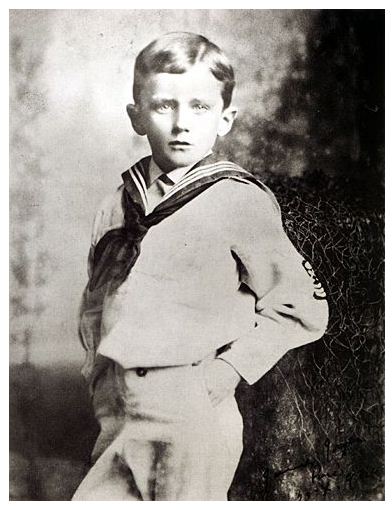
James Joyce, Six Years Old, Rockin’ a Sailor Suit

six year old james joyce

Download RTÉ’s Superb Audio Production of James Joyce’s Ulysses

patch2James Joyce’s Ulysses might seem like a prohibitively difficult book, but it’s not as hard to read as its reputation suggests. There are any number of strategies for tackling the great tome (although enjoying or experiencing are more fitting verbs here), but one that many readers might overlook is listening to an audio recording.

I’ve tried a few audio versions of Ulysses, and none can hold a candle to RTÉ’s 1982 full cast production. I reviewed it a few years ago, and wrote:

I listened to, absorbed, choked up at, guffawed about, cackled around, and generally loved RTÉ’s 1982 dramatized, soundtracked, sound-effected, lovingly detailed recording of Ulysses, a work crammed with voices to match (if perhaps not equal) Joyce’s big fat work. This recording is not as widely available as LibriVox’s (free) full cast production or Jim Norton’s Naxos reading, but, after sampling both, I’d argue that it’s better. The Irish players bring sensitivity and humor to their roles, but beyond that pathos, the energy of RTÉ’s troupe is what really makes the book sing. Leopold Bloom gets his own voice, as does Stephen Dedalus and Molly (and all the characters). This innovation propels the narrative forward with dramatic power, and clarifies the oh-so indirectness of Joyce’s free indirect style, making the plot’s pitfalls and pratfalls more distinct and defined. There are songs (and dances) and music (and musing) and humming (and hemming and hawing and reverb). There is chanting and chawing and brouhaha. There is chaos and calamity and confusion. There is brilliance and peace and transcendence. It’s all very good, great, wonderful.

You can listen to and/or download the production here (big thanks to reader Eve for sending the link in!).