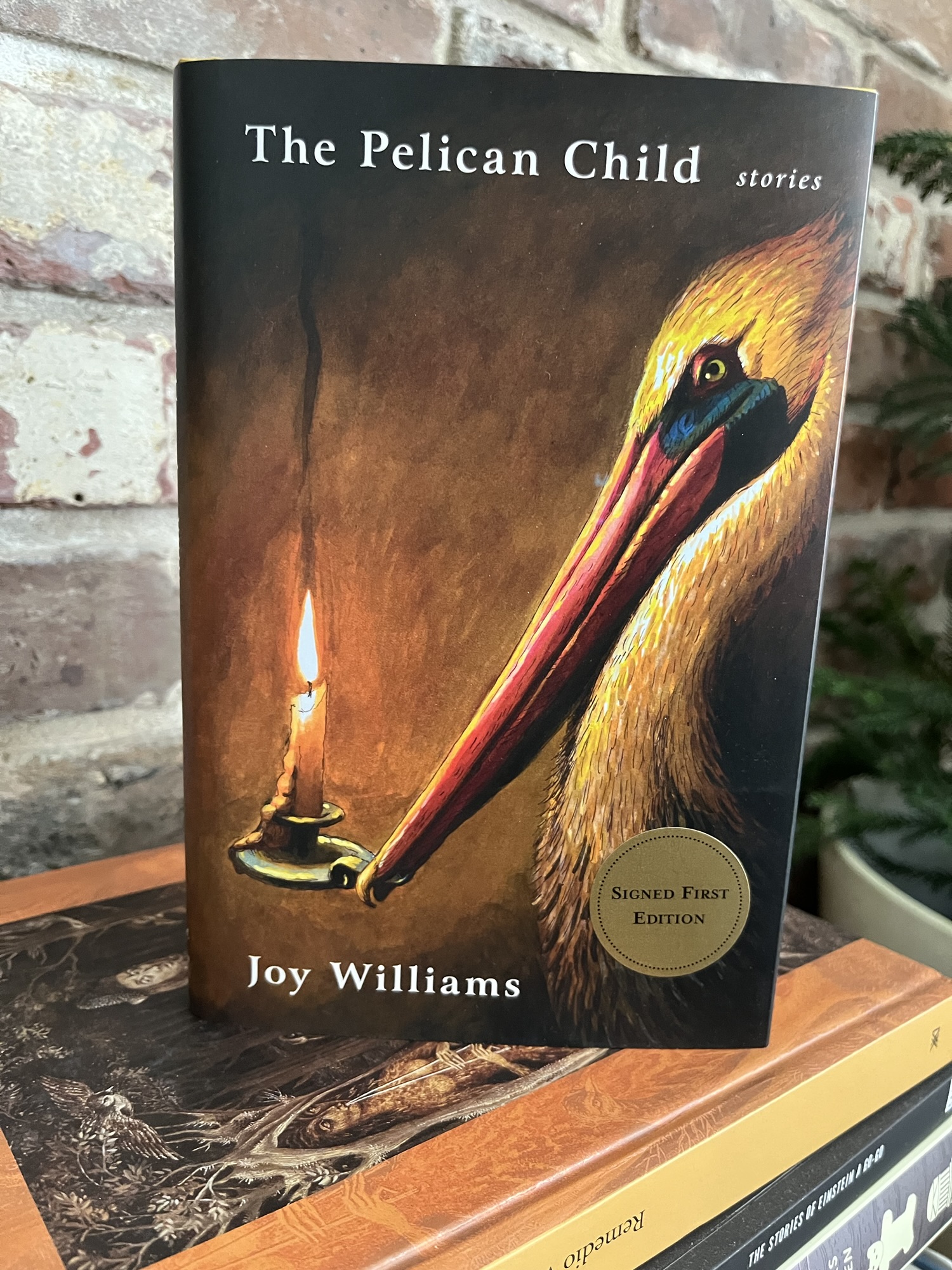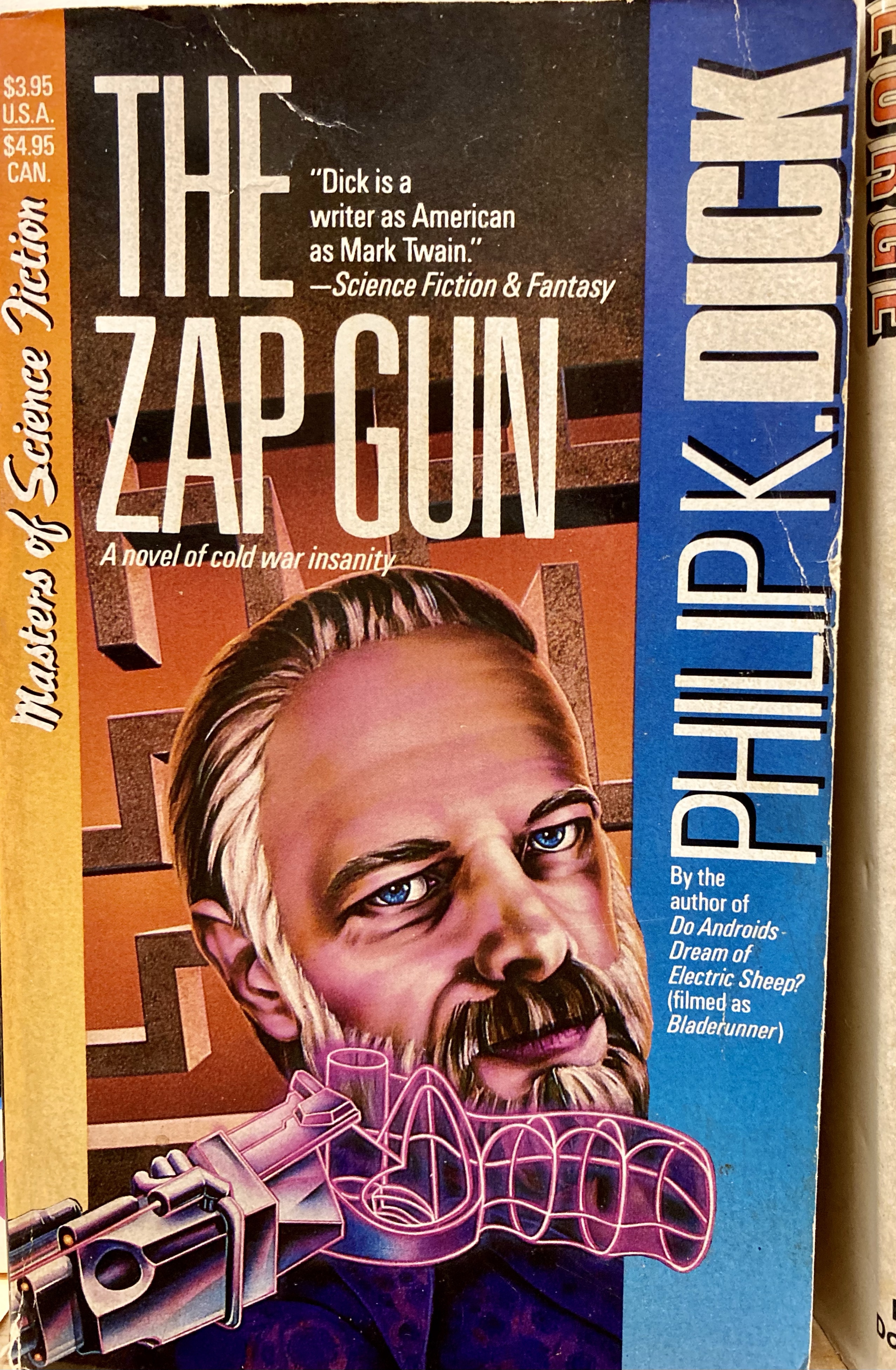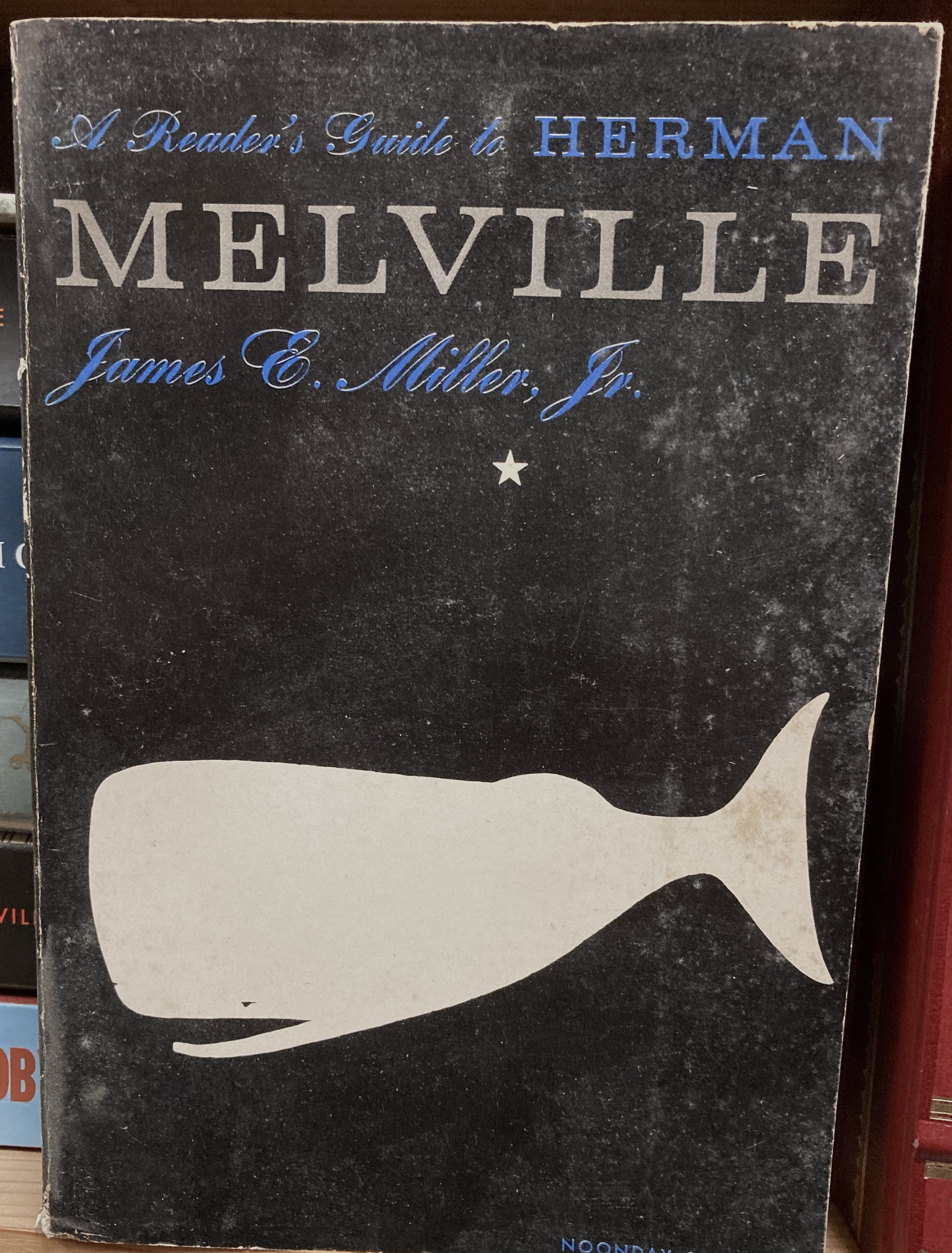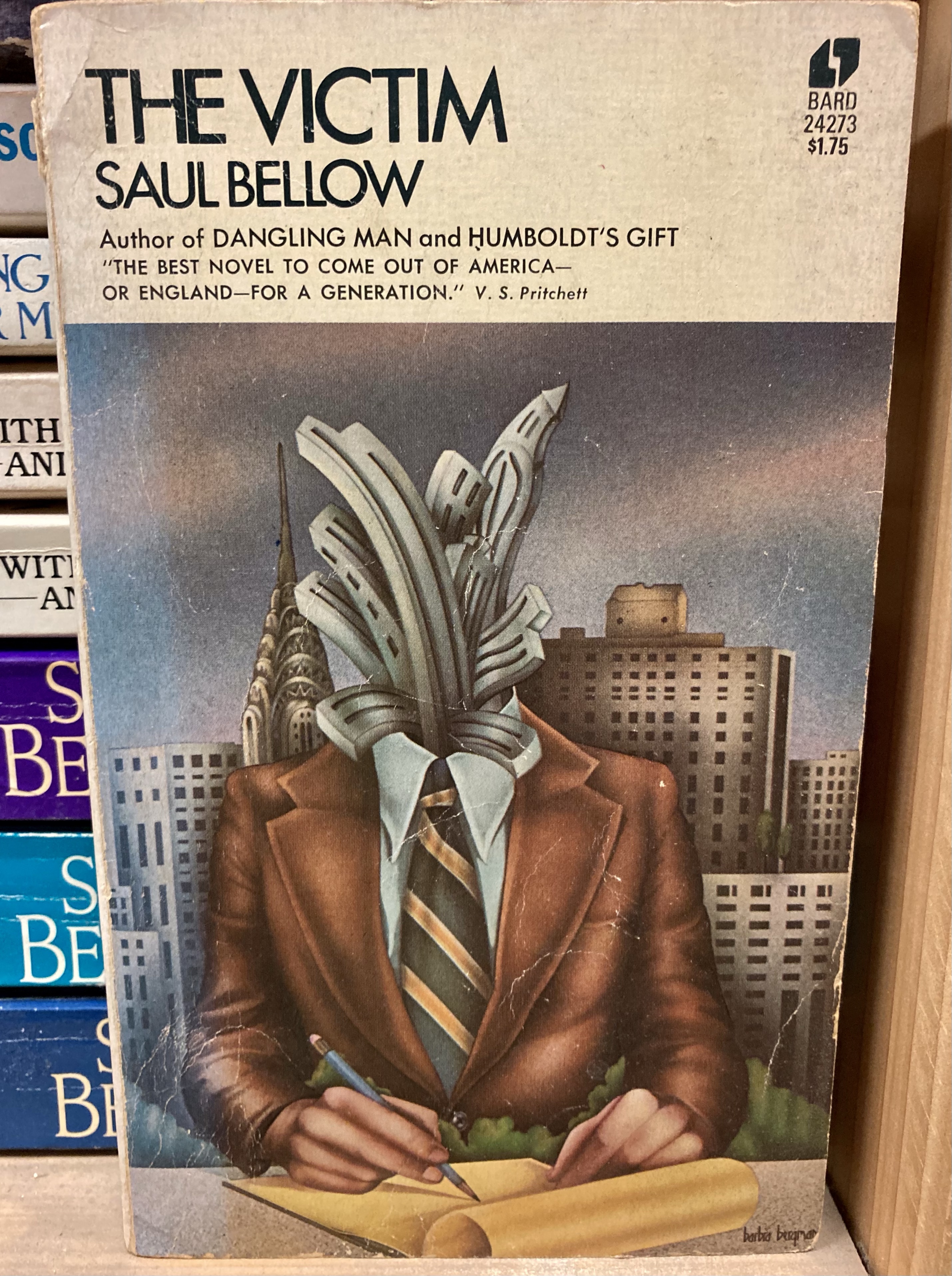
Joy Williams’ The Pelican Child (Book acquired, 27 Dec. 2025)

I finally made it to The Lynx bookstore this weekend while visiting some old friends in Gainesville, FL. The Lynx was opened by novelist Lauren Groff and her husband Clay Kallman last year; its inventory emphasizes challenged and banned books, BIPOC and LGBTQ authors, and Florida writers. There was a nice selection of graphic novels, children’s books, and even some zines. A fair bit of the store’s inventory seemed to be given over to the kind of YAified fiction that sells well, along with a lot of books on contemporary social issues. A lot of those titles tended to skew towards what I think of as “in this house” politics — this ain’t your local anarchist bookstore — but it’s pretty well stocked.

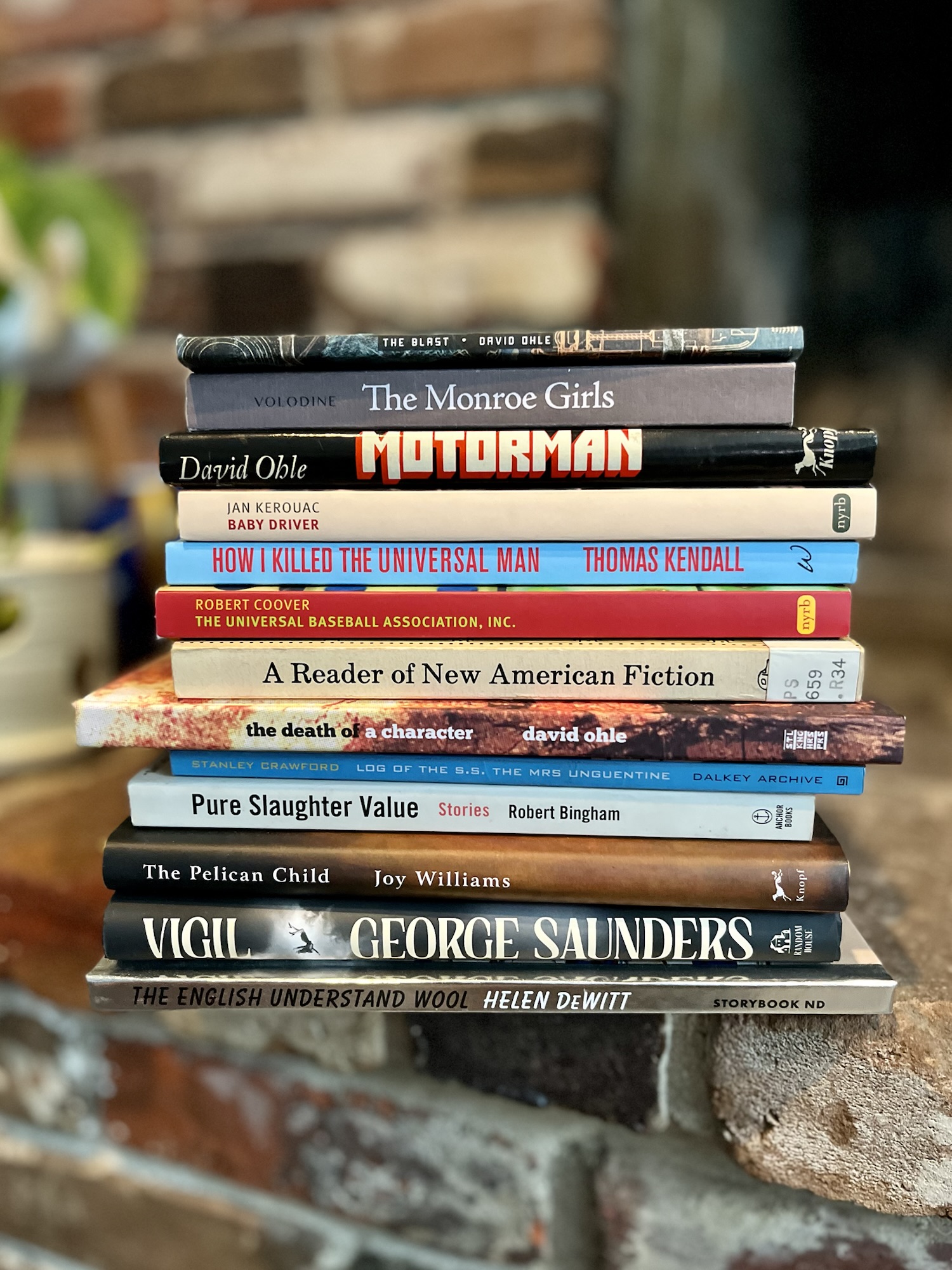
I picked up Joy Williams’ latest collection, The Pelican Child, as well as copy of Williams’ history/guidebook The Florida Keys to give to my hosts, who spend six weeks in the Keys every summer. My wife also got the newest Alison Roman cookbook.

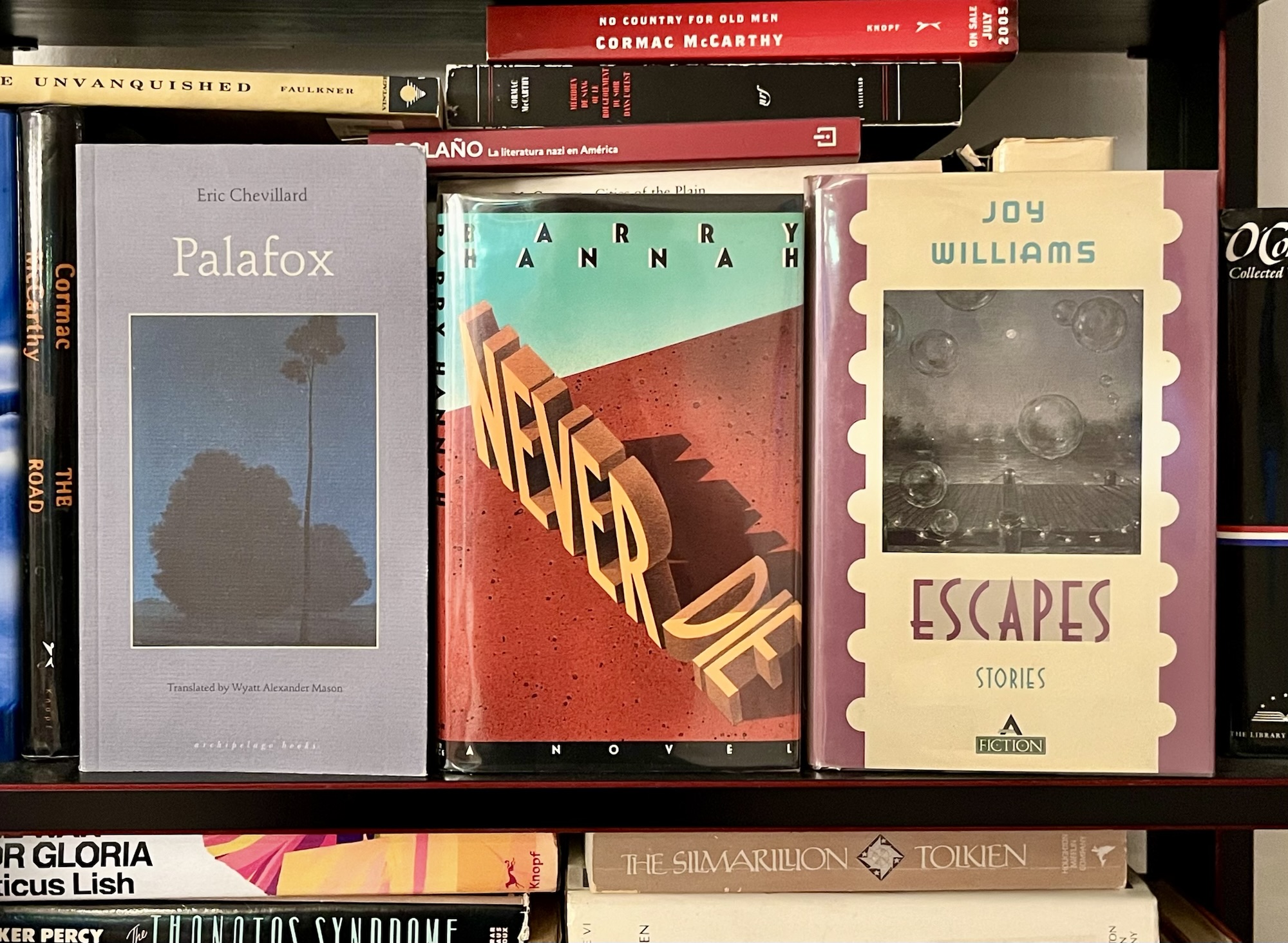
Chevillard/Hannah/Williams (Books acquired, 2 May 2025)

I dropped off a few books for trade credit and wound up with hardback first editions of Barry Hannah’s Never Die and Joy Williams’ 1990 collection Escapes. I also couldn’t pass up on Éric Chevillard’s Palafox in translation by Wyatt Mason. (I really dug Chris Clarke’s translation of Chevillard’s short novel The Posthumous Works of Thomas Pilaster.)

If you feel like feeling a little depressed and feeling a little amused in a way that creates a new, not-so-little feeling, you can read the title track of Joy Williams’ Escapes, “Escapes” (by Joy Williams) at Granta. From the story:

My mother was a drinker. Because my father left us, I assumed he was not a drinker, but this may not have been the case. My mother loved me and was always kind to me. We spent a great deal of time together, my mother and I. This was before I knew how to read. I suspected there was a trick to reading, but I did not know the trick. Written words were something between me and a place I could not go. My mother went back and forth to that place all the time, but couldn’t explain to me exactly what it was like there. I imagined it to be a different place.

As a very young child, my mother had seen the magician Houdini. Houdini had made an elephant disappear. He had also made an orange tree grow from a seed right on the stage. Bright oranges hung from the tree and he had picked them and thrown them out into the audience. People could eat the oranges or take them home, whatever they wanted.

How did he make the elephant disappear, I asked.

‘He disappeared in a puff of smoke,’ my mother said. ‘Houdini said that even the elephant didn’t know how it was done.’

Was it a baby elephant, I asked.

My mother sipped her drink. She said that Houdini was more than a magician, he was an escape artist. She said that he could escape from handcuffs and chains and ropes.

‘They put him in straitjackets and locked him in trunks and threw him in swimming pools and rivers and oceans and he escaped,’ my mother said. ‘He escaped from water-filled vaults. He escaped from coffins.’

I said that I wanted to see Houdini.

‘Oh, Houdini’s dead, Lizzie,’ my mother said. ‘He died a long time ago. A man punched him in the stomach three times and he died.’

Dead. I asked if he couldn’t get out of being dead.

‘He met his match there,’ my mother said.

Walton Ford’s illustration for Joy Williams’ story “The Last Generation”

Walton Ford’s illustration for Joy Williams’ story “The Last Generation.” The story appeared in the 1 April 1989 issue of Esquire.

“Marabou” — Joy Williams

“Marabou”

by

Joy Williams


The funeral of Anne’s son, Harry, had not gone smoothly. Other burials were taking place at the same hour, including that of a popular singer several hundred yards away whose mourner fans carried on loudly under a lurid striped tent. Still more fans pressed against the cemetery’s wrought-iron gates, screaming and eating potato chips. Anne had been distracted. She gazed at the other service in disbelief, thinking of the singer’s songs that she had heard now and then on the radio.

Her own group, Harry’s friends, was subdued. They were pale, young, and all wore sunglasses. Most of them were classmates from the prep school he had graduated from two years before, and all were addicts, or former addicts of some sort. Anne couldn’t tell the difference between those who were recovering and those who were still hard at it. She was sure there was a difference, of course, and it only appeared there wasn’t. They all had a manner. There were about twenty of them, boys and girls, strikingly alike in black. Later she took them all out to a restaurant. “Death … by none art thou understood,” one boy kept saying. “Henry Vaughan.”

They were all bright enough, Anne supposed. After a while he stopped saying it. They had calamari, duck, champagne, everything. They were on the second floor of the restaurant and had the place to themselves. They stayed for hours. By the time they left, one girl was saying earnestly, “You know a word I like is interplanetary.” Continue reading ““Marabou” — Joy Williams”

“Neglect” — Joy Williams

“Neglect”

by

Joy Williams

from 99 Stories of God


The Lord was asked if He believed in reincarnation.

I do, He said. It explains so much.

What does it explain, Sir? someone asked.

On your last Fourth of July festivities, I was invited to observe an annual hot-dog-eating contest, the Lord said, and it was the stupidest thing I’ve ever witnessed.

NEGLECT

“Wet” — Joy Williams

“Wet”

by

Joy Williams

from 99 Stories of God


The Lord was drinking some water out of a glass. There was nothing wrong with the glass, but the water tasted terrible.

This was in a white building on a vast wasteland. The engineers within wore white uniforms and booties on their shoes and gloves on their hands. The water had traveled many hundreds of miles through wide pipes to be here.

What have you done to my water? the Lord asked. My living water…

Oh, they said, we thought that was just a metaphor.

WET

Books acquired (First week of May, 2023)

My wife and I spent a lovely few days in Sunny Manhattan last week in celebration of a recent anniversary. We stayed in the venerable Hotel Chelsea, where we were lucky enough to get a brief visit to room 629, the former residence of the artist Vali Myers. The current resident, photographer Tony Notarberardino was hosting a party later, and the theatrical currents outside of his door, accompanied by ethereal music, attracted us to peer in as we were looking around the hotel. Tony graciously invited us for a brief peek before his party, and the rooms are simply otherworldy, covered in murals by Myers along with beautiful paintings, furniture, and other sundries. Among other books, he recommended Sherill Tippins’ history of the hotel, Inside the Dream Palace. The short tour was a highlight of our visit.

I wasn’t able to find Tippins’ book at any of the four bookstores I visited in NYC, but I found it at my trusty enormous used bookstore when I got home. I’m enjoying it very much so far—it’s really almost like a history of 20th c. modernism focused around one locale. I’m not quite halfway through, around the early 1960s, in a chapter focusing on Harry Smith (he of the Anthology of American Folk Music, and many other things), who was a one-time resident of the Chelsea.

Admittedly, I didn’t scour the history books at The Strand’s main store too closely, spending most of my time browsing fiction. I ended up with László Krasznahorkai’s Spadework for a Palace (trans. by John Batki) and a hardback copy of Joy Williams’ HarrowHarrow was one of my favorite books of last year. I listened to the audiobook twice and have had an eye out for a physical copy since then. Something I wrote on it in a 2022 round up:

Williams takes the “post-apocalyptic” quite literally–Harrow is about post-revelation, an uncovering, a delayed judgment from an idiot savant. It’s one of those books you immediately start again and see that what appeared to be baggy riffing was knotting so tight you couldn’t recognize it the first time through — the appropriate style for a novel that dramatizes Nietzsche’s eternal return as a mediation of preapocalyptic consciousness in a post-apocalyptic world.

There is a little tale about man’s fate, and this is the way it is put | Joy Williams

There is a little tale about man’s fate, and this is the way it is put. A man is being pursued by a raging elephant and takes refuge in a tree at the edge of a fearsome abyss. Two mice, one black and one white, are gnawing at the roots of the tree, and at the bottom of the abyss is a dragon with parted jaws. The man looks above and sees a little honey trickling down the tree, and he begins to lick it up and forgets his perilous situ- ation. But the mice gnaw through the tree and the man falls down and the elephant seizes him and hurls him over to the dragon. Now, that elephant is the image of death, which pur- sues men, and the tree is this transitory existence, and the mice are the days and the nights, and the honey is the sweetness of the passing world, and the savor of the passing world diverts mankind. So the days and nights are accomplished and death seizes him and the dragon swallows him down into hell and this is the life of man.

This little tale with its broad and beasty strokes seems to approximate man’s dilemma quite charmingly, with the caveat that it also applies to the ladies (“she” being “he” throughout here, the writer’s woes not limited by gender; like Flannery O’Connor’s Misfit, the writer knows there’s no enjoyment to be had in this life). This is the story, then, pretty much the story, with considerable latitude to be had in describing those mice, those terrifying mice. But it is not for the writer to have any part in providing the honey—the passing world does that. The writer can’t do better than that. What the writer wants to be is the consciousness of the story, he doesn’t want to be part of the distraction; to distract is ignoble, to distract is to admit defeat, to serve a lesser god. The story is not a simple one. It is syncretistic and strange and unhappy, and it all must be told beautifully, even the horrible parts, particularly the horrible parts. The telling of the story can never end, not because the writer doesn’t like the way it must end but because there is no end to the awareness of the story, which the writer has only the dimmest, most fragmentary knowledge of.

From Joy Williams’ essay “Why I Write.” Collected in Ill Nature.

“Actually” — Joy Williams

“Actually”

by

Joy Williams

from 99 Stories of God


The child wanted to name the rabbit Actually, and could not be dissuaded from this.

It was the first time one of our pets was named after an adverb.

It made us uncomfortable. We thought it to be bad luck.

But no ill befell any of us nor did any ill befall the people who visited our home.

Everything proceeded beautifully, in fact, until Actually died.

ACTUALLY

“Buried in Colorado All Alone” — Joy Williams

“Buried in Colorado All Alone”

by

Joy Williams

from 99 Stories of God


The girl from the pharmacy who delivered Darvon to Philip K. Dick, the science fiction writer, wore a golden fish necklace.

“What does that mean?” asked Dick.

She touched it and said, “This is a sign worn by the early Christians so that they would recognize one another.”

“In that instant,” Dick writes, “I suddenly experienced anamnesis, a Greek word meaning, literally, loss of forgetfulness.”

Anamnesis is brought on by the action of the Holy Spirit. The person remembers his true identity throughout all his lives. The person recognizes the world for what it is—his own prior thought formations—and this generates the flash. He now knows where he is.

BURIED IN COLORADO ALL ALONE

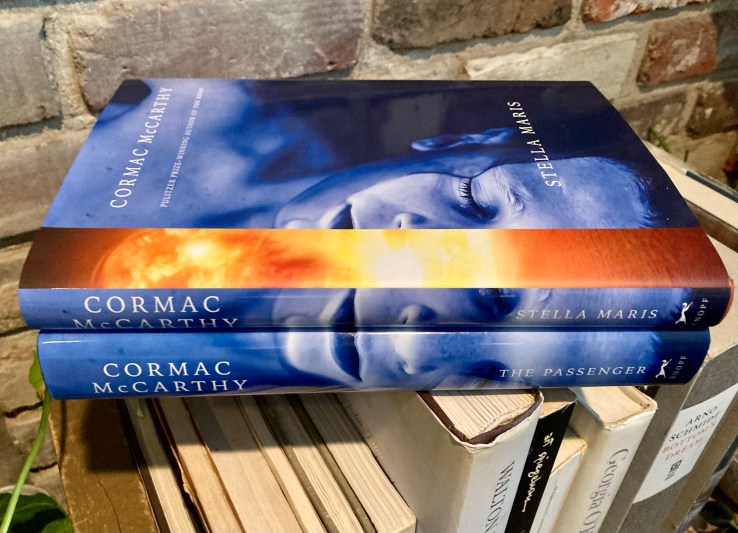
The freed and missing passenger | Joy Williams on Cormac McCarthy’s latest novels, The Passenger and Stella Maris

At Harper’s, novelist Joy Williams has a nice long essay on Cormac McCarthy’s novels The Passenger and Stella Maris. Williams begins with a concern that I think is fundamental to reading these novels: How do they talk to each other?

Cormac McCarthy’s latest offering—in that word’s fundamentally spiritual sense—is The Passenger and its coda or addendum, Stella Maris. One is prompted to read The Passenger first (it came out in October) and Stella Maris second (it came out in December). If, however, you dare to test the trickster and begin with Stella Maris—a 189-page conversation between a psychiatrist and his patient—it will seriously trouble your perception of The Passenger. If you read the books in order, you might find Stella Maris (Latin for Star of the Sea, a psychiatric hospital in Black River Falls, Wisconsin) coldly underwhelming despite, or perhaps because of, the erudition of the twenty-one-year-old, debatably schizophrenic, suicidal math genius Alice Western.

Williams focuses heavily on Stella Maris at the outset of her essay, offering a stable timeline for the two novels. If you’ve read The Passenger and Stella Maris, you know that McCarthy withholds a linear, chronological plot. Williams’ plot-making though foregrounds something that’s easy to miss in a first-reading of The Passenger: Bobby is in a coma, officially brain dead after a racing accident. Williams writes that,

The invention of brain death serves the timeline of The Passenger well, and traversing this twisting line, tracing and retracing it, contesting it, surrendering to it, is one of the great and pleasurable challenges of these books. Is there a narrative line? The Kid thinks it’s important to locate one even if, as he says, it doesn’t hold up in court. As for McCarthy, plot has always been irrelevant to his purposes.

What are those purposes?

McCarthy is not interested in the psychology of character. He probably never has been. He’s interested in the horror of every living creature’s situation.

–and–

Cormac McCarthy is interested in . . . the unconscious and in the distaste for language the unconscious harbors and the mystery of the evolution of language, which chose only one species to evolve in. He’s interested in the preposterous acceptance that one thing—a sound that becomes a word—can refer to another thing, mean another thing, replacing the world bit by bit with what can be said about it.

–and–

. . . the overwhelming subject is the soul. Where can it be found? By what means does it travel? Is it frightened when we take leave of it? Can it find rest in the darkness? Animula vagula blandula. The soul. The freed and missing passenger.

I could continue to cherrypick at Williams’ essay, but will instead simply recommend you read it yourself. There’s all kinds of insights there—McCarthy’s weakness in portraying women; the homelessness motif of The Passenger; a brief cataloging of his oeuvre to date.

For me, the most interesting idea in Williams’ essay–which she never directly states–is that Bobby is actually brain dead and that the events in his chapters of The Passenger take place in his unconscious mind.

Williams’ essay was the first (and so far only) review of McCarthy’s latest novels that I’ve read. Thanks to BLCKDGRD for sending a scan of his physical copy my way last week.

“Not His Best” — Joy Williams

“Not His Best”

by

Joy Williams

from 99 Stories of God


Franz Kafka once called his writing a form of prayer.

He also reprimanded the long-suffering Felice Bauer in a letter: “I did not say that writing ought to make everything clearer, but instead makes everything worse; what I said was that writing makes everything clearer and worse.”

He frequently fretted that he was not a human being and that what he bore on his body was not a human head. Once he dreamt that as he lay in bed, he began to jump out the open window continuously at quarter-hour intervals.

“Then trains came and one after another they ran over my body, outstretched on the tracks, deepening and widening the two cuts in my neck and legs.”

I didn’t give him that one, the Lord said.

NOT HIS BEST

“Geniuses were not fun, but Mr. Gaddis was fun” | Joy Williams reads a tribute to William Gaddis

The ecological crisis cannot be resolved by politics | Joy Williams

The ecological crisis cannot be resolved by politics. It cannot be resolved by science or technology. It is a crisis caused by culture and character, and a deep change in personal consciousness is needed. Your fundamental attitudes toward the earth have become twisted. You have made only brutal contact with Nature; you cannot comprehend its grace. You must change. Have few desires and simple pleasures. Honor nonhuman life. Control yourself, become more authentic. Live lightly upon the earth and treat it with respect. Redefine the word progress and dismiss the managers and masters. Grow inwardly and with knowledge become truly wiser. Think differently, behave differently. For this is essentially a moral issue we face, and moral decisions must be made.

From Joy Williams’ essay “Save the Whales, Screw the Shrimp.” Collected in Ill Nature.

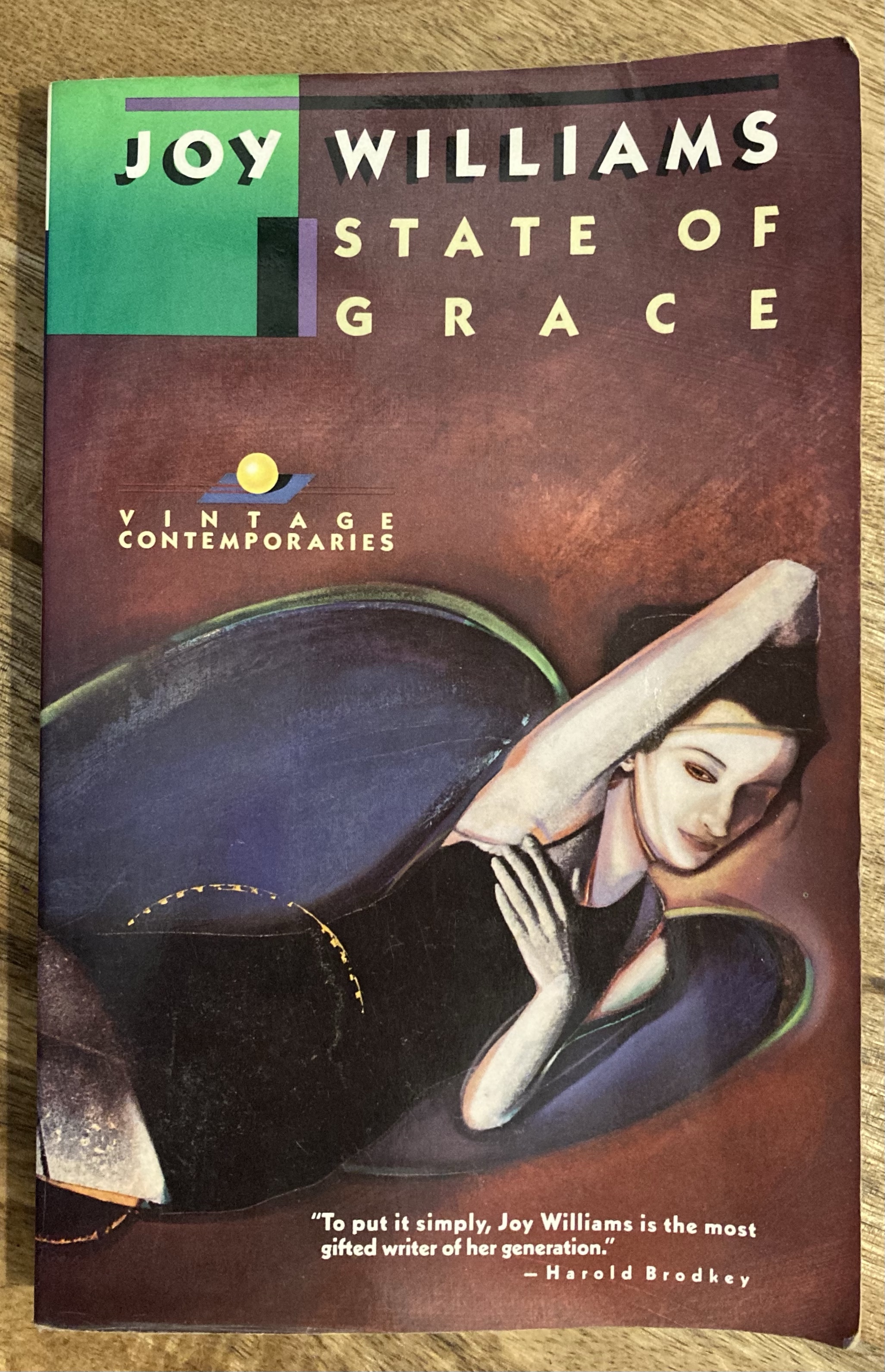
Joy Williams’s State of Grace (Book acquired, 22 Feb. 2021–and some covers of books unacquired)

I did a Big Clean a weekend or two past, including a thorough dusting of shelves. I always try to purge titles that I know I’ll never read, reread, or that I have no real attachment to. I filled a box with about 25 books, mostly novels, mostly paperbacks, and took it to my favorite used bookstore.

There, I found to my joy Joy Williams’s first novel State of Grace in my beloved preferred ugly Vintage Contemporaries edition. (I loved Williams’s collection Taking Care, which I read as a VC edition.) I’ve got a big stack of newly-published novels that I need to get to once I finish rereading Whale-Book, but who knows. Maybe I’ll get to it sometime before summer.

In the meantime, here’s the first graf of Gail Godwin’s 1973 NYT review:

The fated heroine of this bleak but beautifully‐crafted first novel may well be the final, perfected archetype of all the “sad ladies”: that formidably fashionable sorority which has impinged on the past decade or so of American fiction. But I’ll remember Kate Jackson; I’ll reread her stubbornly depressing story, picking out those cleverly‐hidden but ever‐present clues of grace. Kate is no simple “slice‐of‐despair” character; her sad story becomes, through the author’s skill and intention, transsubstantiated into significant myth. This book is neither a self‐indulgent journal of despair, nor journalism of despair. It is premeditated, articulate, artistic—a novel.

As always, I browsed. Here are some covers that caught my eye, but I did not leave with them–just these photos:

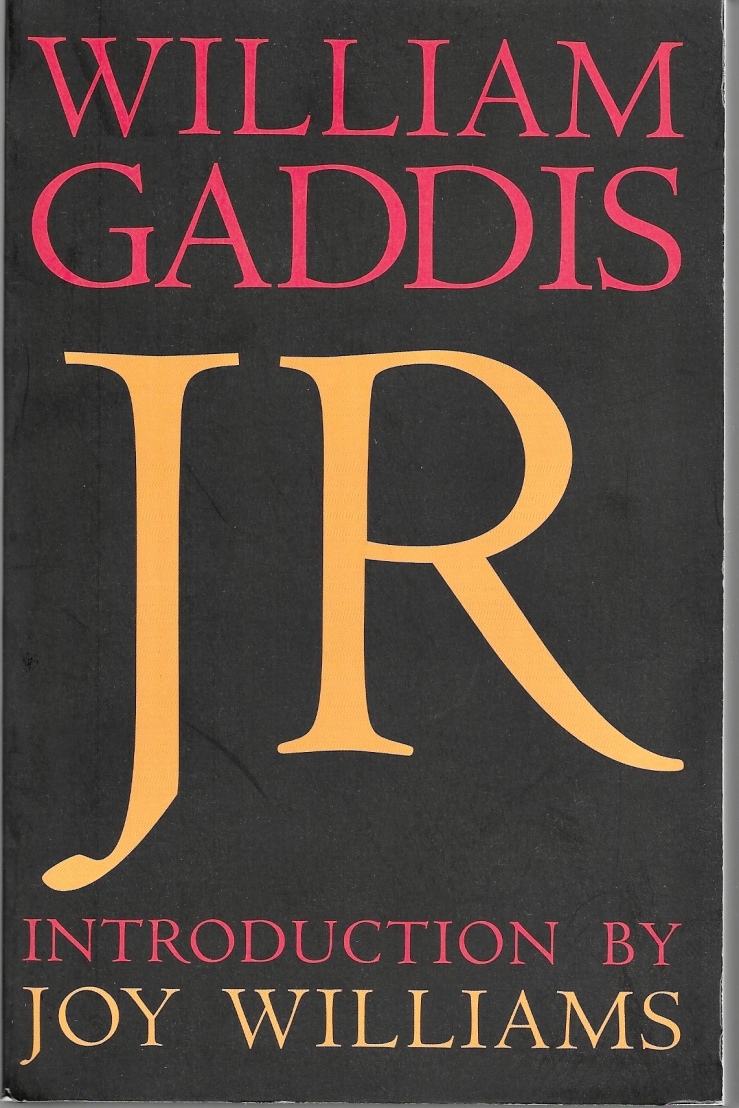
Joy Williams on William Gaddis’s novel J R

The Paris Review has published Joy Williams’s introduction to NYRB’s forthcoming edition of William Gaddis’s masterpiece satire of American capitalism, J R. Williams’s review is heavy on citation from Gaddis’s letters, William Gass’s essay “Mr. Gaddis and His Goddamn Books,” and J R itself. I like this bit:

In 1956, nineteen years before the publication of this second novel, Mr. Gaddis wrote a registered letter to himself to protect his idea for it from copyright infringement:

In very brief it is this; a young boy, ten or eleven or so years of age ‘goes into business’ and makes a business fortune by developing and following through the basically very simple procedures needed to assemble extensive financial interests, to build a ‘big business’ in a system of comparative free enterprise employing the numerous (again basically simply encouragements (as tax benefits &c) which are so prominent in the business world of America today …

This boy (named here ‘J.R’) employs as a ‘front man’ to handle matters, the press &c, a young man innocent in matters of money and business whose name (which I got in a dream) is Bast. Other characters include Bast’s two aunts, the heads of companies which JR takes over, his board of directors, figures in a syndicate which fights his company for control in a stockholder’s battle, charity heads to whom his company gives money, &c.

This book is projected as essentially a satire on business and money matters as they occur and are handled here in America today; and on the people who handle them; it is also a morality study of a straightforward boy reared in our culture, of a young man with an artist’s conscience, and of the figures who surround them in such a competitive and material economy as ours. The book just now is provisionally entitled ‘SENSATION’ and ‘J.R.’

What a surprisingly unpromising précis!

I hope to have something forthcoming on this new edition of J R. In the meantime, here’s a link to the last thing I wrote about it, back in 2016, and this excerpt from that thing:

Only a handful of novels are so perfectly simultaneously comic and tragic. Moby-Dick? Yes. Gravity’s Rainbow? Absolutely. (G R and J R, a duo published two years apart, spiritual twins, massive American novels that maybe America hardly deserves (or, rather: theses novels were/are totally the critique America deserves). I guess maybe what I’m saying is J  R is the Great American Novel to Come (The Recognitions is perhaps overpraised and certainly not Gaddis’s best novel; J R is. The zeitgeist has been caught up to J R, the culture should (will) catch up).

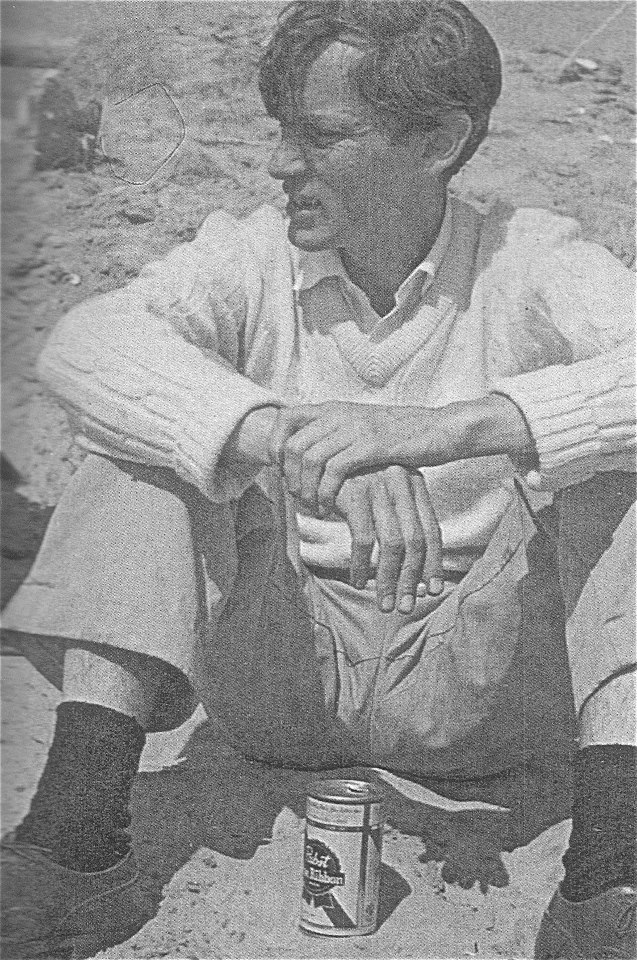
And here is my favorite picture of Gaddis:

gaddis-beach-pbr

Three Books

2019-10-20_185738_1

Taking Care by Joy Williams. 1985 trade paperback from Vintage Contemporaries. Cover design by Lorraine Louie. Cover illustration by Rick Lovell.

I read this book earlier this year. It’s really great. I reviewed it on this site, writing—

These are stories of domestic doom and incipient madness, alcoholism and lost pets. There’s humor here, but the humor is ice dry, and never applied as even a palliative to the central sadness of Taking Care. Williams’ humor is something closer to cosmic absurdity, a recognition of the ambiguity at the core of being human, of not knowing. It’s the humor of two girls eating chips on a beach, unable to decide if the people they are gazing at are drowning or just having a good time.

2019-10-20_185738_3

Norwood by Charles Portis. 1985 trade paperback by Vintage Contemporaries. Cover design by Lorraine Louie. Cover illustration by Rick Lovell.

Norwood isn’t the best book I’ve read so far this year but it is the book I most enjoyed reading, and after reading it, I sought everything else by Portis (consuming everything so far except the late novel Gringos, which I’m sort of holding onto as like…I dunno? A consolation prize at some point? Is that grim?). I picked Norwood up on a wonderful whim this summer, possibly simply because it was a Vintage Contemporaries edition (and slim). I’m so glad I did. Great read.

2019-10-20_185738_2

Cathedral by Raymond Carver. 1989 trade paperback from Vintage Contemporaries. Cover design by Lorraine Louie. Cover illustration by Garnet Henderson.

This was the first Vintage Contemporaries edition I ever bought. I bought it when I was maybe 17, sometime in the late nineties, I guess, and I was always vaguely embarrassed of the cover, especially when I used it in not one but two college courses at the end of that decade (Carver was still very cool in that era. He seems to have fallen out of favor. Good for him!) Henderson’s ultra-literal cover of the story “Cathedral” is…something. (I still prefer Lovell’s whimsical work, which is more, uh, I dunno, metaphysical (?)). I circled four short story titles on the table of contents for some reason: “A Small Good Thing,” “Where I’m Calling From,” “Vitamins,” and “Cathedral.” All great numbers. I also am fond of “Feathers” and “Chef’s House,” but I didn’t circle those titles. The rest of the stories I don’t remember, although I’m sure I read them at least once or twice.