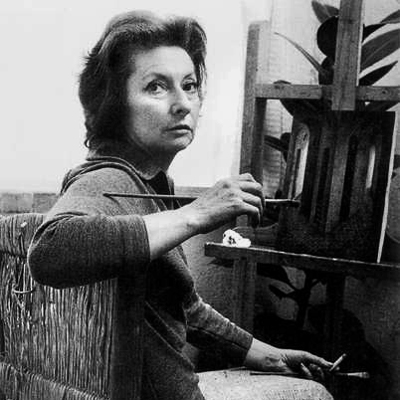
Mattia Filice’s Driver is new in English translation by Jacques Houis. Here’s NYRB’s blurb:
Driver is a book about a young man from the provinces who moves to Paris and studies to become a train driver. As he learns about trains and their intricate workings, he is transported into a world in constant motion, with its own laws and codes and specialized language, its own heroes and legends and manifold dangers. Written in a style as surprising and eclectic as a night on the rails—packed with inside jokes and allusions that extend from Arthur Rimbaud to hip-hop and beyond—Driver takes us deep into the world of the train, until it becomes, like the ship in Moby-Dick, a microcosm of the world at large.
Drawing on twenty years of experience driving trains, Mattia Filice writes memorably about solitude and sleepless nights in the cab, accidents and breakdowns, but also about the lives and personalities of his fellow workers and the conversations and solidarity they share, both on the job and on the picket line, in what is a continual struggle to improve the conditions of work.
Unsentimental yet full of feeling, Driver is both an unusual and formally adventurous novel about labor and life and a stirring ode to the power of the collective.
Surprisingly, NYRB’s blurb doesn’t mention the novel’s striking style; on the page, the episodes of Driver look like poems that sometimes coalesce into prose. The chapter titles and section titles also seem to cast the novel as a take on knight’s quest. Compelling stuff.
The hero of Markus Werner’s 1985 novel The Frog in the Throat is Franz Thalmann, a disgraced, divorced, defrocked clergyman, who lives ashamed and diminished, yet nevertheless resilient in a philosophical recalculation of his life. There’s a major complication to Franz’s reevaluation though: the memory (or ghost?) of his stern father Klement turns up as a literal (or is it just metaphorical?) frog in his throat. Klement presents as a tragicomic, pestering apparition who ventriloquizes his son—and the novel—with rural grumbles. He milks cows, rants against modernity, and accuses Franz of having betrayed the world he was born into. In Michael Hofmann’s translation, Werner’s prose is crisp, dryly mortified and quietly savage: intimate cruelty turned into a dark, pinprick comedy about guilt, family, and the stubbornness of provincial life.
The voices of son and father drive The Frog in the Throat. These voices collide in bursts that never find harmony. There are ten punchy chapters: Thalmann the Younger takes the odd chapters; Daddy Klement narrates the even ones. Franz’s chapters are philosophical, discursive, and given to a choppy, aphoristic rhythm. (Franz does, however, declare at one point, “Well. I’m not a philosopher, am I. I’m a put-upon frogman with too little oxygen.) Klement’s sections are denser and earthier, but, for all their ravings and rantings, somehow easier to digest. The voices prickle and stick, evoking that ancient tale, a failure to communicate. This is not a duet, not a dialogue.
Franz, helming the novel’s odd chapters, takes the lead. Here’s childhood, adolescence, nascent adulthood, distilled into fragments:
Obedience. Belief. Suffering. Instructions followed. Expectations fulfilled. Said yes and please and thank you and three bags full, sir. Controlled stray impulses. Cleaned teeth, ditto ears. Swilled elderberry syrup. Studied the Good Book. Knew mastery and eventually self-mastery. Did what was dinned into me, and eventually started doing some dinning of my own. Shoveled snow. Madonnified women. Got in shape. Fiddled. Suffered. Was afraid. Could barely stand Father’s glower. Rarely laughed. Prayed. Fed swine. Visited libraries. Mucked out the cowshed. Dogmas, apologias, ethics. Kissed Helen. Struggled for purity. Homiletics, catechesis, liturgy. Forswore eggs. Was afraid. Was good. Marriage. Ministry.
Franz betrays Helen not in a torrid tryst or a meaningful long-term affair with an extramarital soulmate. It’s a one-off, an almost comically ordinary lapse. It’s not a fling; it’s a thing that happens—and yet it detonates his life, initiating an existential crisis in Franz-as-preacher:
Once it’s been understood that our existential crisis is first and foremost a crisis of our senses, then in spite of metaphysical obfuscations we can see the therapy: The extension and promotion of sensuality. An expansion of the realm of the senses. Humanity will only have a future if we are successful in establishing a new Age of Tulips. The individual sets aside his gloom as soon as he feels his body is a house of joy. A precondition for this is moral enfeeblement, because morality has seen its role for thousands of years as an impediment to French kisses. To put it briefly: Traditional morality impedes sensuality.
Franz’s desire for sensuality is undercut by an intellectual airiness, a quippiness of the spirit. Our man is full of aphorisms:
Castrate the fathers, gag the mothers.
and
I say again, gladly: Happiness is remote.
and
Cleared out the attic, threw all the rubbish away. My concern: The head empty of rubbish and without level crossing attendant will produce badness.
and
Humor, though. Almost eludes description. Strangely adorable bastard child of love and wistfulness.
You can throw a small dart in this short book and find a nice line from Franz. (I plucked most of these from very early in the novel, before too much of the (non)plot develops.)
But back to our Franz’s claim that “Traditional morality impedes sensuality” and thus human joy requires “moral enfeeblement” — a problem for a one-time theologian.
In contrast, Franz’s father Klement expresses an earthy sensuality in each of his chapters; he milks his cows and reflects on their udders, their calfing, their literal breeding. His bovine reflections drift into memories of his family, sketching out the often painful history of his children. We also come to see that, like his son, Klement is an outsider. He doesn’t quite fit in at the local pub. The other patrons can’t comprehend his contempt for the modern world.
Some of the finest moments in The Frog in the Throat happen when Franz wanders into a theme that Klement, grumbling from the cowshed, will half-pick up on in the next chapter—less a conversation than a comic game of misheard telephone. These echoes and prefigurations create a thematic tone, however discordant. Take for instance middle-aged Franz, feeling as if he’ll never really mature:
I’ll be fifty soon and I wonder what being grown-up will feel like. Was I grown-up when I turned twenty-two? For a bet, then, I ate a coffee cup. No problem. My stomach was equal to the challenge. Today, I poke at my sauerkraut. An un-grown-up way of behaving, only confirming one’s suspicion that being grown-up, like everything else, is a passing condition.
And a chapter later, Klement confirms Franz’s intuition:
People remain a mystery, you can read a hundred books and you’ll be no closer to understanding them, that’s my view, and when I was younger, I always used to think: When I’m older, I’ll work it out. You see, when you’re young, you see old fellows with white hair, and you think: They may be old and knackered, but they have experience of life, they’re not floundering like us, and maybe they have wisdom. And suddenly you’re old and gray yourself, and you realize that’s all you are, old and gray and just as clueless as you ever were, and so I say: No one’s got the secret. I often think we should view everything from above, we should look down on the world from way up high, and who knows what we would see, what connections, what never-guessed bridges and linkages, or then again maybe not. What a tangled mess, what a confused jumble, I don’t know.
Perhaps the two preceding passages might give a prospective reader the incorrect impression that The Frog in the Throat is a dour novel; it is not. It is often quite funny and quite moving. It’s easy to identify with Franz’s groping questions, and as the book progresses, we come to see under Klement’s anger a wounded pathos. Perhaps the father’s name is not ultimately ironic; perhaps there is a mercy in his haunting his son. Maybe Franz sees the past with new eyes (or, rather ears) through his father’s visitation. But I’m inclined to agree with translator Michael Hofmann in his introduction, when he suggests that “reconciliation is out of the question, but equally there is no possibility of not laughing.”
Synthesis between father and son was never the goal of this novel, let alone a metaphysical coherence. Rather, Werner seems to express his own literary ambitions most directly near the end of the novel, when his antihero Franz declares his admiration for novels that
…are subversive, making clear that their authors, in writing them, did so to avoid doing something far worse…the books that crackle subtly, the semi-house-trained powder kegs of books, the incautious, unconsidered, and if you like erroneous ones…
I’m not sure that The Frog in the Throat is a powder keg, but it does crackle subtly.
I have perhaps overshared Werner’s prose in this review. The truth is I just really loved the way his sentences stack up. And I must again applaud translator Michael Hofmann’s work here; his new translation of Alfred Döblin’s 1929 novel Berlin Alexanderplatzwas one of my favorite reads in recent memory. So I’ll share one last stack of sentences, again from a Franz section. It’s a passage I dogeared, perhaps thinking it exemplary of the novel’s sharp pacing and shifts between pathos and dark humor:
In the morning I’m miserable, at night I’m scared, and during the day I am at pains not to attract attention, putting one foot in front of the other, forming sentences, combing my hair, leaving tips for the waitstaff and buying five tomatoes and answering the telephone in my best and brightest voice, reading this and that in the newspaper, not killing myself, showering regularly. And I give advice to people and listen to them and feel moved by their confidence in me. I sit around, I drink, I brood, I pat myself down for flaws and find many and each evening I say: Starting tomorrow I’m going to get a grip on myself.
—but really it’s that last clause there hanging from the colon that I most connect to. For tomorrow, I too will get a grip on myself.
I’m excited about Zuzana Brabcová’s novel Ceilings, in English translation by Tereza Novická. Here’s publisher Twisted Spoon’s blurb:
Kin to the work of Leonora Carrington and Unica Zürn, Ceilings is a polyphonic novel that takes place in a mental hospital in Prague where the “narrator” is undergoing detox treatment for substance abuse. As the borders blur between inner experience and the outer world, between reality and dream, as the walls and ceilings hemming in the desire for freedom fantastically break open as if into the unknown and gender fluidly shifts between brother and sister, who are one and the same, Brabcová’s flights of imagination portray how difficult it is to “come out of oneself” and to engage with the other in a multifarious world that demands it of us, no matter how ambivalently.
I’m excited about this one. I loved the previous Antonio Di Benedetto novels I read, Zama (1956) and The Silentiary (1964), both also translated by Esther Allen. (I reviewed Zama here and The Silentiary here.)
The Suicides will publish in February 2025 from NYRB. Their blurb:
A stymied reporter in his early thirties embarks on an investigation of three unconnected suicides. All he has to go on are photos of the faces of the dead. Other suicides begin to proliferate, while a colleague in the archives sends him historical justifications of self-murder by thinkers of all sorts: Diogenes, David Hume, Emile Durkheim, Margaret Mead. His investigation becomes an obsession, and he finds himself ever more attracted to its subject as it proceeds.
The Suicides is the third volume of Antonio Di Benedetto’s Trilogy of Expectation, a touchstone for Roberto Bolaño and deemed “one of the culminating moments of twentieth-century fiction” by Juan José Saer. Following Zama (set during the eighteenth century) and The Silentiary (set during the 1950s), this final work takes place in a provincial city in the late 1960s, as Argentina plummets toward the “Dirty War.”
So I finally made some time to dig into Augusto Monterroso’s lone novel, 1978’s The Rest Is Silence (trans. Aaron Kerner). It’s hardly a conventional novel (and seems very much of a piece with the other novel I’m reading right now, Cuban author Guillermo Cabrera Infante’s 1967 novel Tres tristes tigres (in its 1971 translation as Three Trapped Tigers by Donald Gardner and Suzanne Jill Levine). Both novels eschew traditional novelistic forms—no central narrator, no conventional plot, per se, polyglossia given rein over a controlling and unifying voice. I read the first fifty or so pages of The Rest Is Silence and look forward to digging in deeper.
From Dustin Illingworth’s introduction
Augusto Monterroso’s The Rest Is Silence, a fictional Festschrife for a provincial Mexican Intellectual, teems with invented texts, imaginary writers, dubious footnotes, possible pseudonyms, and unreliable memories. The novel’s constituent parts reveal the social, culeural, and literary life of one Eduardo Torres, a writer and elder statesman of the fictional town of San Blas, Mexico, Its four sec-tions— grouped loosely into tributes, selected writings, aphorisms, and “impromptu collaborations” —make a case for compilation as a natural handmaiden to farce. The opening remarks from friends and family are largely hatchet jobs born of petty jealousy or long acquain-tance. The selections from Torres’s oeuvre—incredible misreadings, all-are bathetic, anodyne, lacking in sense, and almost invariably wrong. Yet the vivisection is marked by compassion as much as it is by savagery. Ferried by the risible figure of Torres, avatar of vanity and misjudgment, Monterroso smuggles a pocket autobiography within his deflation of Mexico’s literati. In the process, he forges one of the sublime fools of literature, a man whose commitment to delusion is itself a kind of glorious art.
Two years after it was first published in Italy, Dino Buzzati’s 1960 novella Il grande ritratto got its first English translation by Henry Reed under the title Larger Than Life. This year, NRYB issued a new translation of Il granderitratto by Anne Milano Appel under the title The Singularity. This is the second new English translation of a Buzzati book from NYRB; last year saw the publication of Lawrence Venuti’s translation of Buzzati’s most famous novel, Il deserto dei Tartari, published as The Stronghold (in lieu of the more recognizable title The Tartar Steppe).
It makes sense, from both a cultural and a marketing stance, that Il grande ritratto would find new life as The Singularity, a term that refers to the hypothetical point where artificial intelligence surpasses human intelligence, which in turn triggers a dramatic existential change for humanity. AI slop abounds on the internet; misinformation replicates and mutates; we are told that the chatbots that frustrate us so frequently are an inevitable part of a future that no one seems to want. A sci-fi novel called The Singularity is pretty zeitgeisty.
The scant plot of The Singularity builds to the revelation of an artificial intelligence, part of a military science project perched high in the Italian Alps. I don’t think I’ve necessarily spoiled the grand reveal; both its title and its publisher’s blurb declare The Singularity “a startlingly prescient parable of artificial intelligence.”
Perhaps it’s this prescience that makes the central sci-fi conceit of The Singularity seem a bit dated. There’s a creakiness to Buzzati’s staging of his grand portrait of an artificial intelligence. The novella is more compelling in its initial chapters, which ignite a mood of slow-burning dread, the kind of Kafkaesque foreboding he served up in his superior novel Il deserto dei Tartari.
That slow-burn starts with a certain Professor Ismani, “who had always had an inferiority complex with respect to figures.” He and his much younger wife, the archetypal innocent Elisa (who “had not gone beyond middle school”) agree to undertake a mysterious journey up the mountain to “Experimental Camp of Military Zone 36,” where Ismani will join a scientific project he knows nothing about. As they zig and zag up the mountain, chauffeured by their military liaison, Ismani and Elisa (and the reader) gather crumbs about their destination. “So many mysteries,” a soldier tells them, at a penultimate stop. “If they at least told us what it is we’re guarding. I mean, let’s call it what it is, a kind of prison.”
In response to all this anxious foreboding, we are told that “Ismani felt the return of apprehension and dismay, the feeling of being insignificant in the face of immense, threatening things, a panic that he had once experienced in the war.” None of Ismani’s time in the war comes to bear on the narrative itself. Indeed, Ismani is thrown to the reader as a decoy; initially presented to the audience as the potential big-brain hero of a sci-fi thriller, he ends up a background ghost.
We eventually achieve the summit, where the natural splendor is overrun by the enormous complex that houses the titular singularity:
But the cliffs were no longer visible, nor could any vegetation be seen, or land, or flowing waters. Everything had been invaded and overwhelmed by a tangled succession of buildings similar to silos, towers, mastabas, retaining walls, slender bridges, barbicans, fortifications, blockhouses, and bastions, which plunged in dizzying geometries. As though a city had crashed down the sides of a ravine.
But there was an exceedingly abnormal element that gave those structures an air of enigma. There were no windows. Everything seemed hermetically sealed and blank.
From this moment, more or less, the best bits of The Singularity come not from sci-fi plotting but rather philosophical asides that add weight to the pulp narrative. Most of these are delivered by the handful of scientists who haunt the experimental camp. One of these scientists repeats the mantra, “Language is the worst enemy of mental clarity.” In their attempt to author an artificial consciousness, these scientists decreed that their singularity would have “No language,” for “Every language is a trap for the mind.”
Here in their “little kingdom, hermetically closed off and apart from the rest of the world,” the scientists have created a “machine made in our likeness” which “will read our thoughts, create masterpieces, reveal the most hidden mysteries.” Through hints, intimations, weird noises, and other creaky trappings of pulp horror, we come to learn that the singularity might not be, like, sane. As one of our (maybe not like exactly sane either) scientists declares, “before we knew it we had lost the reins, and all that was left for us to do was to record the machine’s behavior.”
In a move that would surprise no one familiar with the tropes of Gothic romance, we come to learn that the singularity’s consciousness is based on a beautiful dead woman. The whole operation is powered by a mysterious glowing egg. Indeed, The Singularity is perhaps most interesting if approached through a feminist lens. As it rushes to its climax, Elisa the innocent takes over the role of hero. She somehow learns to speak the strange “language” of the pre-lingual singularity, and through conversation, comes to understand that the singularity views herself as a desiring machine. The singularity wants a body; specifically a female body; specifically a body that can be desired by a male body and bear offspring.
Ultimately, The Singularity feels less like a novella than it does a short story stretched a bit too thin. Buzzati adroitly crafts an atmosphere of suspense and foreboding, but the characters are underdeveloped. Like a lot of pulp fiction, Buzzati’s book often reads as if it were written very quickly (and written expressly for money). Still, Buzzati’s intellect gives the book a philosophical heft, even if it sometimes comes through awkwardly in forced dialogue. Anne Milano Appel’s translation is smooth and nimble; it’s a page turner, for sure, and if it seems like I’ve been a bit rough on it in this paragraph in particular, I should be clear: I enjoyed The Singularity.
Like many of the modernist writers of the twentieth century, Buzzati intuited a future in which technology would become increasingly self-propelled, mutating unchecked in the notion of a progress wholly divorced from the needs of the human spirit. In our own era, we see con artists and hucksters banging the drum for “artificial intelligences” to “read our thoughts, create masterpieces, reveal the most hidden mysteries” for us. The results have been utter shit. Buzzati’s mad scientist isn’t so much prescient as he is simply describing the human condition then, when he declares that “man is doomed to torment himself, he doesn’t see the consolations offered to him, right there, within reach, he has to constantly fabricate new agonies for himself.” We can fabricate the agonies, but we can fight them too.
Antoine Volodine’s novel Radiant Terminus is a 500-page post-apocalyptic, post-modernist, post-exotic epic that destabilizes notions of life and death itself. Radiant Terminus is somehow simultaneously fat and bare, vibrant and etiolated, cunning and naive. The prose, in Jeffrey Zuckerman’s English translation, shifts from lucid, plain syntax to poetical flights of invention. Volodine’s novel is likely unlike anything you’ve read before—unless you’ve read Volodine.
Radiant Terminus begins with its hero Kronauer fleeing into an irradiated wasteland. Kronauer and two of his comrades are escaping from the Orbise, the capital of the Second Soviet Union, which has been invaded by dog-headed fascists. World-wide Marxism-Leninism has fallen, and the stability of nuclear-powered self-sufficiency has collapsed into the apocalyptic promise of a “world that nuclear accidents had made unlivable for ten millennia to come.” The world is indeed increasingly unlivable, but it also has become, we will find, a place for the undying as well. “Hell is on the surface, it’s here,” one character flatly remarks, adding, “No need to dive into the core.”
But Kronauer will have to dive into the core, at least metaphorically. When one of his comrades, succumbing to radiation poison, can no longer move, Kronauer seeks help, crossing the steppe and bravely venturing into the dark forest. Born in the sanctity of the Orbise, Kronauer had been schooled to focus “on the future of Communes for workers and countrymen. His view of the world was illuminated by proletarian morality: self-sacrifice, altruism, and confrontation.” He is driven to save his comrade, but we know from the outset that hopes are slim.
What matters here is Kronauer’s essential idealism. By the end of the novel, Kronauer will suffer, wondering if he will eventually abandon the principles that underwrite his sense of self. He worries that he will eventually slip into a “total regression to primitive hunting, intelligence sidelined for instincts, and, especially, deep down, an irrepressible desire to kill, to slaughter, and to hurt, even if he couldn’t remember anymore what had brought about this nightmare.”
We enter Radiant Terminus in the midst of a nightmare that somehow only intensifies. Kronauer finds his way to what might be the prospect of aid for his comrade, the titular Radiant Terminus, a collective farm that is somehow self-sustaining despite the ever-present specter of irradiated death. Not only is Radiant Terminus out of sync with the physical reality of the post-apocalyptic world, its principles don’t fully square with the tenets of the Second Soviet Union that have guided Kronauer’s mindset:
Radiant Terminus functioned on ideological principles that didn’t match up to the collectivist norms of the Orbise, but, as far as the allocation of goods went, the end result was the same. Disdain for property was, as had been the case throughout the Second Soviet Union, commonplace in the Levanidovo. It was a place where the Party had been extinguished, where the Party no longer existed, but where the idea of reestablishing capitalism and the bourgeoisie hadn’t occurred to anyone, and besides it had to be asked just what this thing called capitalism would have looked like at Radiant Terminus, and what bourgeoisie could be called upon to oppress the working class…
We come to understand, elliptically enough, that Radiant Terminus’s apparent prosperity (or at least sustainability) is purchased in large part via sacrifices made to the village’s old nuclear reactor core, which has melted down and is kept locked away. The core is a kind of doorway to hell. The citizens of Radiant Terminus offer it gifts from the old world:
Every month, indeed, the core was fed. The heavy cover for the well was opened, and some of the bric-a-brac collected over the last season or two was knocked over the edge; just to show that people weren’t panicking and weren’t afraid of pathetic radionuclides. Tables and chairs, television sets, the tarry carcasses of cows and cowherds, tractor motors, charred schoolteachers who had been forgotten in their classrooms during the critical period, computers, remains of phosphorescent crows, moles, does, wolves, squirrels, clothes that looked perfect but had only to be shaken to set off a haze of sparks, inflated toothpaste tubes filled with constantly simmering toothpaste, albino dogs and cats, clusters of iron that continued to rumble with an inner fire, new combine harvesters that hadn’t yet been broken in and which gleamed at midnight as if they were lying in full sunlight, garden forks, hoes, axes, debarkers, accordions that spat out more gamma rays than folkloric melodies, pinewood planks that looked like ebony planks, Stakhanovites in their Sunday best with their hands mummified around their diplomas, forgotten when the event halls were evacuated. The ledgers with their pages turning day and night. Cash-register money, the copper coins clinking and shifting without anyone nearby. These were the sorts of things thrown into the void.
The Gramma Udgul was the one to handle the maneuver
We come to understand the Gramma Udgul as priestess-witch archetype; “condemned to immortality from her first interactions with nuclear reactor cores” she is both immune to the ravages of radiation and cursed by it. The Gramma Udgul has her counterpoint in Solovyei, the dominant antagonist of Radiant Terminus.
Solovyei is the “president” of Radiant Terminus, but his role is something closer to an archduke synthesized with an insane wizard. Like the Gramma Udgul, Solovyei is immortal (indeed, a century earlier, the pair were husband and wife). Solovyei rules greedily over Radiant Terminus, and warns Kronauer to stay away from his three daughters. He is an inverted King Lear; mad, yes, but also deeply capable and cunning. Solovyei seems to find metaphysical sustenance in trips to Radiant Terminus’s nuclear core, emerging from time spent there “sizzling and blackened, weighed down with radiation and opaque poems.”
The development of Solovyei as a controlling intelligence—and Kronauer’s ideological resistance to his monomania as well as his three daughters’ battle against his invasive will—forms the main plot, such as it is, of Radiant Terminus. Solovyei is the author of the “horrors and oneiric aberrations” that haunt the characters and landscape that he is both collapsing center and impossible margin of. “It was hard to determine whether he was a mutant bird, a gigantic sorcerer, or a rich farmer from Soviet or Tolstoyan times,” the narrator declares at one point.
“This necromancer of the steppes,” Kronauer calls Solovyei, and then goes on to try to find language for the metaphysical:
This awful kolkhoz matchmaker, this reviver of cadavers, this horrible shadow, this giant impervious to radiation, this shamanic authority from nowhere, this president of nothing, this vampire in the form of a kulak, this strange man sitting on a stool, this abuser, this dominating man, this sleazy man, this unsettling man, this nuclear-reactor creature, this godless and lordless hypnotizer, this manipulator…
One of the key plot points of Radiant Terminus is that Solovyei can literally resurrect the dead, but cannot reanimate them back to what we would understand as true life:
….we all became bodies inhabited by Solovyei. Who knows whether this magic muzhik hasn’t taken advantage of us being dead, and if we aren’t all puppets within a theater where the manager, the actors, and the audience are all one and the same person
Some of Volodine’s chapters seem to inhabit Solovyei’s consciousness, a space that’s somehow both murky and sharp, an intelligence feasting on the agencies of other human beings:
Our best marionettes, I say. Him or me, doesn’t matter. When he’s stuck I keep going. Zombies, deep shadows, devoted servants. The dead stuck forever in the Bardo. Dead come from the dead. Wives come from unknown mothers. Henchmen. Best puppets and best dolls.
Every character who survives in the pages of Radiant Terminus seems to be susceptible to Solovyei’s oneiric horrors. He is the dream police, the puppet master — “Who’s he?” a minor character asks. The answer: “We don’t know…But we do know that he does with us whatever he wants. We’re in his hell.”
Solovyei’s daughters are the most sympathetic of his vampiric victims. These women, forced into the same unasked-for immortality as their father, find themselves repeatedly invaded by Solovyei, who haunts their dreams and walks around in their minds. One daughter sees herself “a creature imagined, possessed, and brought to life by Solovyei. A daughter of Solovyei, a daughter for Solovyei. A female annex in Solovyei’s life: nothing more than that.” They initiate their own eruptions of opposition: violence, suicidal rejection. Writing.
Near the end of Radiant Terminus, the narrator describes the novels of Hannko Vogulian, Solovyei’s eldest daughter:
In effect, they depicted the same twilit suffering of everyone, a magical but hopeless ordinariness, organic and political deterioration, infinite yet unwished-for resistance to death, perennial uncertainty about reality, or a penal progression of thought, penal, wounded, and insane.
We have here an internal description of the novel Radiant Terminus itself. Indeed, Radiant Terminus is always self-describing and always self-deconstructing: “Everything is in the same place, as in some kind of book, if you want to go to the trouble of thinking about it. That’s the ambiguity of ubiquity and achronia,” the narrator muses. When the narrator throws out the sentence, “These are complete works for no audience,” it almost feels like an inside joke. And Volodine can’t resist metanarrative descriptions of his own so-called post-exotic project:
If a post-exotic writer had been present at the scene, he would have certainly described it according to the techniques of magical socialist realism, with flights of lyricism, drops of sweat, and the proletarian exaltation that were part of the genre. It would have been a propagandist epic with reflections on the individual’s endurance in service to the collective.
Volodine’s Radiant Terminus works in all these modes while simultaneously subverting them. The result is an astounding novel, a work that will haunt any reader willing to tune into its strange vibrations and haunted frequencies. Very highly recommended.
Jean-Baptiste Del Amo’s latest novel The Son of Man takes place almost entirely over a three seasons in a dilapidated manor somewhere in rural France, sometime near the end of the 20th century. The plot is deceptively simple: A father returns to his young wife and nine-year-old son after a six-year absence, only to immediately drag them away to his remote childhood home, a place in the mountains called Les Roches. The father desires to refurbish the ancestral manse and restore his family. Complicating matters is the mother’s new pregnancy and frequent migraines and the son’s ambivalence about his relationship with his long-absent father. As the slim novel progresses, the oppressive isolation the mother and son endure tips over into dread and then horror. The Son of Man is ultimately a novel about the atavistic transmission of violence from generation to generation.
Del Amo’s writing, conveyed in Frank Wynne’s limpid translation, is precise and cinematic. Del Amo gives us phenomena and response to that phenomena, but withholds the introspective logic of cause-and-effect or analysis that often dominates novels. Instead, he allows us to see what his characters see and to take from those sights our own interpretations. Consider the following simple passage, where, a few days after arriving at the crumbling old house, the father and mother argue:
The faint voices of the father and mother reach the boy as a confused murmur. He walks to the gable door and looks at the landscape below, at the slow, solemn, hypnotic swaying of the larches and the tall pines on the edge of the forest.
He sees the mother and father standing facing each other.
The mother stands, left hand gripping her right arm, right hand on her hip in a gesture of utter defiance. While the father is speaking, she is shaking her head as though refusing to listen to what he is saying or dismissing his words, while, for his part, the father is nodding in an attempt to convince her or make her see reason.
The father gestures wildly as he speaks, pointing to the house, the grasslands, the mountain peaks that rise into the impassive sky. When he turns towards him, the son suppresses a shudder. Blood drains from his hands, his fingers prickle with pins and needles; if the father sees him standing in the gable window, he might think he has been watching, spying on them, trying to make sense of the words carried on the wind in fits and snatches.
The son cannot fully read the signs and signals in front of him. He’s left with “fits and snatches” and gestures and movements that are, in a certain sense, part of the same material as everything else he can presently behold—the pines, the larches, the wind. And yet the boy intuits in his witnessing an “irrefutable proof of his [own] transgression, perhaps even of his [own] guilt.”
Del Amo conjures a dark, oppressive world where his titular son of man is born into a prelingual state of guilt, a strange inheritance that yields violence. We see much of the novel’s action through the son’s perspective–or not really his perspective, but rather we see the action as through a powerful invisible camera set close to the boy’s head, but never fully inside it. We see the son seeing his mother, whom he loves and understands, in his own way, and seeing his father, who is frightening and likely unknowable:
On the father’s left side, the son notices a scar tracing a line some twenty centimetres long across the skin slantwise towards the shoulder blade, as though the father had been stabbed and the blade had struck a bone and deviated its course. The scar tissue looks smooth, like the skin of a newborn baby or a burn victim.
Spellbound, the boy cannot tear his eyes away, and when the father stops to wipe his forehead with the back of his hand and light a cigarette, he sees the child staring at the scar but says nothing.
The accretion of concrete details coheres into slow burning dread. Del Amo shows us images and gives us details that allow us to infer an explanation for the father’s previous six-year absence that the son cannot yet comprehend. At the same time, we see the father and the mother each moving along separate poles of manic despair. The mother dreams of an impossible escape; the father dreams of an impossible inheritance. The father does not possess the material, tools, or skill to properly restore Les Roches:
He seems to have decided to do battle with this plot of land whose obstructiveness is an affront, to remove anything and everything that would thwart his plan, or to give free rein, with every swing of the pickaxe, to a blind fury for reasons the child cannot fathom. …
He casts a strangely distended shadow, a vision of disproportionate limbs, an evil doppelgänger that emanates from him, dogging his steps, aping his every gesture, every swing of the axe, every throw of a stone, in a way that is monstrous and terrifying.
In time, through hints and implications, we come to understand that the father’s monomaniacal restoration project has resulted from his own terrible childhood. These hints and implications explode late in the book into a fifteen-page monologue from the father, a bitter screed like something out of a Thomas Bernhard novel. The monologue climaxes in the father’s realization that he has repeated his own awful father’s ways. He declares that buried memories are “simply waiting for someone to come and dredge them from their deep torpor, so that they can resurface and endlessly repeat the same failures, the same disasters.”
It’s true that The Son of Man emanates a startling claustrophobic horror. And yet it also glitters at times with moments of strong beauty. If Del Amo’s lucid, cinematic prose evokes something like Kubrick’s The Shining, it also is capable of something like Malick’s Days of Heaven. There are idyllic moments, such as when the boy and his mother bathe in the plunge pool under the weir of a waterfall, the rumbling of which, from a distance, the son had “first thought was the voice of the mountain.” The son also makes his own adventures into the forest, meeting a family of wild horses, one of which is missing an eye.
Through such encounters, the son achieves a brief moment of transcendence late in the novel. His fleeting epiphany balances his father’s bitter declaration that humans are “born with this void inside, this dizzying void they desperately strive to fill throughout their brief, inconsequential, pitiful time in this world, paralyzed as they are by their transience, their own absurdity, their own vanity…” For the father, this “dizzying void” is something that must be filled — “Just like you might try to fill a grave with a shovelful of earth.”
Let us contrast the father’s dizzy void with the son’s epiphany:
He sits far away from the nimbus of soft light that radiates from the house, gazing at the inky vault where fires that existed before the world was world still shine, and feeling the presence of the earth, the vastness beneath him. Dizzily, he thinks of the lives simultaneously played out everywhere across its surface, knowing that somewhere a child is walking barefoot, another is falling asleep in a soft bed, that a dog lies dying in the dust in the shade of a sheet of metal, that a city in some far-flung country is shimmering in the darkness, that innumerable creatures are moving about, animated by this mysterious and insistent force that is life, which courses through each of them.
Puzzlingly, he can also feel the great movement – imperceptible yet vertiginous – that carries everything, including him, through time and space, all lives, human and animal, and with them the rocks, the trees, the blazing stars.
Of these moments, he will retain the memory of an epiphany, of being struck by the true nature of things, which no language, no words can communicate; but what lingers will be little more than the trace of a dream, the sense of something being granted and instantly revoked.
The beauty of the first two paragraphs sinks into the reality of the final paragraph. Epiphanies don’t last; we can catch the memories, maybe, but even then, what was granted was “instantly revoked.” We remain trapped in language, outside “the true nature of things.” Will the son then “endlessly repeat the same failures, the same disasters” as his father (and his father and his father and…)? The novel seems to suggest that this will likely be the case, even if it opens other, more optimistic avenues.
In this light, it’s difficult to interpret the novel’s mythic overture. The first fifteen pages of The Son of Man focus on a troop of prehistoric hunter-gatherers. The episode culminates in a hunt scene in which an adolescent son makes his first kill—a doe—and then seems to be fully initiated by his father, who marks him in the deer’s blood. The overture ends with the son fantasizing about “abandoning the group” and laying down in the humus to be swallowed up by the earth. This is, in a sense, a version of the same fantasy the contemporary son will have in the forest around Les Roches tens of thousands of years later.
It’s unclear how Del Amo would have us read the prehistoric overture. On one hand, it suggests a time of idyllic balance–of humanity in, and not apart from, nature. And on the other hand, it concludes with the same desire to escape civilization that, millennia later, the father will inherit.
Perhaps a second reading of The Son of Man might yield a more conclusive answer, or a second reading of Frank Wynne’s translation of Del Amo’s previous novel, Animalia, a visceral, naturalistic, and very precise rendering of humans as animals that takes on an epic scope. English-only readers interested in Del Amo’s writing couldn’t go wrong with either of these novels, which, unless I’m mistaken, are the only two on the market in English translation. I look forward to reading more of Del Amo’s novels in the future. Until then, I highly recommend The Son of Man.
Five years ago, I was fortunate enough to interview Margaret Carson about her translation of a collection of the artist Remedios Varo’s written work. Margaret has since expanded on that collection, adding new material from her dive into Varo’s archives, resulting in On Homo rodans and Other Writings, new this summer from Wakefield Press.On Homo rodans and Other Writings offers readers a fascinating trip through Varo’s imagination. Brimming with impossible images, surreal jokes, and dreamy fragments, the work is more than just an addendum to Varo’s career as an artist. I highly recommend it to those interested in surrealist writing in general. Margaret was kind (and patient!) enough to talk with me again over the course of a few weeks via email. I am grateful for her generosity and for her work in bringing Varo’s words to monoglots such as myself.
In addition to her Varo books, Margaret Carson’s translations include Sergio Chejfec’s Baroni, A Journeyand My Two Worlds. She is Associate Professor in the Modern Languages Department at Borough of Manhattan Community College, The City University of New York.
Photograph of Margaret Carson by Beowulf Sheehan.
Biblioklept: Margaret, congratulations on the publication of On Homo rodans and Other Writings, the expanded edition of your English translation of Remedios Varo’s writings! Many of our readers might be familiar with Varo’s wonderful paintings but not know about her writing. How would you characterize the prose collected in On Homo rodans and Other Writings?
Margaret Carson: Thanks, it’s great to have the translation back in print! It’s mainly writings found after Remedios Varo’s death in notebooks and on loose pages. The writings are quite varied: several odd and delightful stories (three of them new to this edition), a fairy tale, letters to friends and strangers, her famous recipe “To Provoke Erotic Dreams,” a poem that invokes the moon, dream narratives, and a few other gems, such as the title piece, “On Homo rodans,” a faux anthropological treatise that accompanied her sculpture of a human-like torso on a giant wheel, made out of chicken, turkey and fish bones.
Homo rodans sculpture in its glass case. Photograph by Margaret Carson.
Varo’s extraordinary creativity and weird sense of humor come across just as much in her writings as in her paintings. I think readers fascinated by Varo, the artist, will also be won over by her gifts as a writer. Simply put, she’s as clever a writer as she is a painter.
Biblioklept: So, let’s get into the stories and other material new to this edition and how you came to translate it into English. Some of this material hasn’t been published before, even in Spanish. If my understanding is correct, Walter Gruen, Varo’s last life partner, donated a significant collection of her works to the Museo de Arte Moderno in Mexico City in 2000. In 2018—after the publication of your translated collection Letters, Dreams & Other Writings—the Varo estate bequeathed more of Varo’s writings to the Museo de Arte Moderno. Is that right?
MC: Yes. In the early 2000s Walter Gruen and his wife Anna Alexandra Varsoviano (a friend of Varo’s who he married after the artist’s death) donated about thirty-eight of her works to the Museo de Arte Moderno (MAM), making it the largest repository of paintings by Varo in the world. Walter Gruen died in 2008, and Anna Alexandra Varsoviano in 2015. (I was lucky enough to meet them both in person: Walter Gruen in 2000 and Anna Alexandra Varsoviano some years later.) In her will, Anna Alexandra bequeathed a trove of Varo’s notebooks, letters, preparatory drawings, photos, and other items to MAM, many of which were displayed in 2018 in an exhibition celebrating the donation: Adictos A Remedios Varo: Nuevo Legado 2018. It was at that exhibition that I first saw Varo’s notebooks, open to pages containing narratives, letters and other pieces, in Varo’s own handwriting. I could instantly recognize them because I’d translated the same texts for Letters, Dreams and Other Writings, except for that book I used a collection of Varo’s writings published in Mexico in the 1990s, Cartas, sueños y otros textos, edited by the Spanish scholar Isabel Castells.
Because the new Wakefield edition mostly uses archival materials as its source, and isn’t a direct translation of texts from an existing book, the estate requested that we give it a new title. So, thinking about Varo’s tour-de-force anthropological spoof, we renamed it On Homo rodans and Other Writings.
A page from the Homo rodans manuscript. Photograph by Margaret Carson.
Biblioklept: What kind of access did the museum give you to the manuscript materials?
MC: When I requested an appointment to consult the archive at MAM, I indicated my area of interest: Varo’s notebooks and any stray papers relating to her writings. So when I visited for a few days in July 2022, an archivist assisted me by bringing out her notebooks one at a time as well as folders containing loose papers. You can’t imagine how excited I was not only to see but to touch these old, faded composition books and to turn their pages to discover what Varo had written or drawn on them. There are about a dozen notebooks in all, mostly school composition books for children. I was snapping photos right and left! I’m very grateful to the Museo and to their archivists for guiding me through the notebooks and for their interest in the project.
Cover of one of Varo’s notebooks. Photograph by Margaret Carson.
Biblioklept: Varo was born in Spain, and her painting career sparked in earnest in France, but she really flourished as a painter in Mexico. Her work seems to find a growing audience in the USA; do you have a sense of her reputation in Mexico?
MC: Remedios Varo came into her own as an artist in Mexico City; when she began to exhibit, she was an immediate success. Her first solo show, in 1956 at the Galería Diana, was a sell-out, as was a subsequent solo show in 1961. Sadly, Varo suddenly died in 1963. Her posthumous reputation is in large part due to Walter Gruen and his efforts to keep her in the public eye. The first catalog of her work, whose publication was overseen by Gruen and funded by Varo’s friend and patron Eva Sulzer, came out just three years after her death, in 1966, with contributions by some heavy hitters: the poet Octavio Paz, the French intellectual Roger Caillois, and the Mexican philosopher Juliana González, a personal friend of Varo’s. Since then, four editions of Varo’s catalogue raisonné have been published in Mexico, the last in 2008. (Alas, all are now out of print but available in many research libraries.) People are deeply fascinated by Varo’s paintings. Special exhibitions of her work at the Museo de Arte Moderno always draw record crowds (as they do in other cities as well, for example, the recent Remedios Varo: Science Fictions exhibition in Chicago, which was one of their best attended shows ever).
Biblioklept: Gruen seems to have led a fascinating life.
MC: Yes, but not without its tragedies. The little I know comes from Janet Kaplan’s biography of Varo, his obituary in the Mexican daily La Jornada, and from the Adictos a Remedios Varo catalog. Like Varo, he was fortunate to get out of war-torn Europe, but only after he experienced the worst. He was born in Austria, started medical school in the 1930s, got kicked out because he was Jewish, was arrested by the Gestapo and sent to Dachau and then Buchenwald. After liberation, he made his way to Mexico City with his wife Klari Willner and it was there that he met Varo and others in the European refugee community. His wife died in Mexico in a drowning accident in the late 1940s, while Varo was living in Venezuela. It was some time after Varo’s return to Mexico that she and Gruen got together. Gruen had established his record store by then, the Sala Margolín, which for decades was the essential go-to place for classical music fans in Mexico City.
A year after Varo’s death, in 1964, Gruen organized an exhibition of her work at the Palacio de Bellas Artes, and it’s at that show that Thomas Pynchon, on a trip to Mexico City, saw Embroidering the Earth’s Mantle /Bordando el manto terrestre, which was immortalized in the novel The Crying of Lot 49. Together with Anna Alexandra Varsoviano, Gruen worked to secure Varo’s legacy as an artist and to safeguard what she left behind. From the perspective of Varo’s writings, it was crucial that her notebooks and papers remain as a single cache of documents and not dispersed. After Varsoviano’s death, the entire archive including this collection of writings passed to the Museo de Arte Moderno.
Embroidering the Earth’s Mantle, 1961, Remedios Varo
Biblioklept: This new edition of Varo’s writings includes three stories that were previously unpublished, even in Spanish. Do you know why they weren’t published before now?
MC: No, I don’t know why. The stories are unquestionably in Varo’s handwriting, and they’re marvelous. It would be a good question to ask Walter Gruen or Anna Alexandra.
Biblioklept: Speaking of her handwriting—did you revise any of the material you’d already translated after seeing it in her manuscript?
MC: To some extent, yes. As I mentioned before, for Letters, Dreams …. (2018), I used as my source text a collection that had already been published in Mexico. As I was translating, I’d occasionally come across bracketed ellipses [. . .], and I wasn’t sure what was being signaled. Had a word or sentence in the original been cut, or was it illegible at that point? I found no editorial explanation, so I simply carried over the bracketed ellipses into the English.
In preparing this new edition, I made sure to look for those same bracketed passages in the manuscripts to see if I could discover what Varo had actually written. I found some wonderful things. All the ellipses in the Mistress Thrompston story, for example, were places where Varo had drawn weird mathematical formulas meant to be read as proper names. So now, instead of “[. . .] Magazine,” you’ll see that its name is “WTrons – X√yl Magazine.” The Marquis of Ornitobello’s daughter, whose name had been dropped completely, returns to the story: she’s called √Ax8. These are the little touches where you see Varo being Varo. She loved playing with math. In Disobedient Plant/Planta insumisashe even painted mathematical formulas into the hair of the scientist and into the tendrils of the plants. Happily, Wakefield Press was able to incorporate Varo’s mathematical doodles and other hand-drawn whimsies into the published book.
Disobedient Plant, 1958, Remedios Varo
Another kind of revision I made after seeing the manuscripts may seem trivial, but in all instances Varo wrote “etc.” not “et cetera,” so I restored “etc.” And in “On Homo rodans” she used the ligature “æ” in her invented Latin, so I restored that as well.
Something that surprised me on reading the original manuscripts was that Varo often wrote super-long sentences—what writing instructors would call “comma splices” or “run-ons.” I initially wanted to restore these sentences to their original length because in their raw state there’s a kind of fast-forward momentum. You get pulled along as she adds one thing after another to her narratives, almost breathlessly. But in the end, for the sake of readability, I normalized the punctuation a bit by breaking up some of the enormously long sentences.
There were maybe only one or two times when I changed the translation of a word after seeing that Varo had written something different from what the editor of the previous volume had transcribed. Nothing major. Of course, like all translators, I’m an obsessive reviser, so in preparing this new edition I couldn’t help but look over the previous translation to polish and tweak. I didn’t need the manuscripts for that. As they say, a translation is never finished….
Biblioklept: I’m curious if your “editor’s voice” clashed at all with your “translator’s voice” when it came to revising Varo’s comma splices and fused sentences. And were there clashes elsewhere, when it came to, say, new word choices?
MC: Hmm, I haven’t thought of the two roles clashing before. I think we worked pretty harmoniously together. The editor would have probably liked more time to revise the introduction and endnotes, and to think about the best way to order the texts within the book, while the translator, eager to get the translation back into print, was more like, “Let’s wrap up!”
Biblioklept: One section new to this edition are a handful of brief poemish texts collected as “Images in Words.” A few of these word-image-poem-texts (?!) contain strikethroughs and doodles, as you mentioned before. Many of these pieces feature phrases that correspond to motifs we see in Varo’s visual art (trees, pulleys, stars, knitters, etc.). To your knowledge, do these image fragments correspond to any of Varo’s paintings? Do you have a sense that these were “plans” for paintings–pieces of visual art that started in language first?
MC: It’s difficult to know with any certainty, but they do seem like plans for paintings that started off in language first. They could be Varo’s earliest ideas: flashes of images, possibly from dreams, that she developed as preliminary drawings and eventually, fully fleshed out in paintings.
When Varo was once asked if she was a writer as well as a painter, she replied, “I sometimes write as if I were making a sketch” (“A veces escribo como si trazase un boceto”).A lot has been made of that one sentence because it’s the only time we know of that Varo speaks of her writing. I used to think she was very modestly describing her writing as a whole, including her creative writing, but now I believe she was referring specifically to these poem-like fragments, these sketches in words. When an idea came to her, I imagine her grabbing her notebook and opening it to a blank page, sometimes to make a quick sketch, other times to jot down a few words. Sometimes she did both on the same page.
Do the fragments correspond to any paintings? Yes, if you’re familiar with her work, you can immediately make connections. For example, from the bottom of p. 131:
character from peeling wall participating in something with another character who is real
Metamorphosis
Mimicry
The abandoned room, someone inside the table, inside the armchair
as well, perhaps inside the wall — — — —
The first two lines seem to describe the painting Harmony / Armonía, in which there’s an ethereal figure emerging from a peeled-back wall to play with an object on a musical staff (a snail?). The other “real” character sits at a table across from the apparition and plays with a polyhedron-like object on the staff. Why did Varo cross the lines out? Walter Gruen speculated that it was because she had finished the painting.
Harmony, 1956, Remedios Varo
The next two lines refer to the well-known painting Mimesis / Mimetismo, in which she depicts a woman undergoing a metamorphosis – she’s taking on the characteristics of the chair she’s sitting in. (Side note: Varo’s catalogue raisonné translates the title of this painting as Mimesis, which isn’t wrong, but it makes me think more of the Erich Auerbach book and literary mimesis. I believe a better English translation would be “Mimicry,” as in insect mimicry, a phenomenon of particular interest to the surrealists. See Roger Caillois’s 1935 essay “Mimétisme et psychasthénie légendaire,” in the surrealist journal Minotaure).
They represent just one moment in the evolution of an artist’s idea. It’s said that Varo was very private in her studio practice. No one knows for sure, but it’s likely she used her notebooks (which also doubled as sketchbooks) at the earliest stages of a painting, when her ideas were hatching.
Biblioklept: Can you expand on how Varo was private in the studio?
MC: I can only talk about her studio in a limited way, from clues provided in photos and in a few accounts. I also talked a bit about Varo’s apartment-studio with Xabier Lizarraga Cruchaga, her godson, who as a boy used to visit Varo in her studio quite often (so she didn’t completely exclude visitors). Her studio was a room on the top floor of the building she lived in, accessible by a private flight of stairs. A wide doorway in the studio opened to a small, north-facing terrace where she kept plenty of plants. You can see the studio in a series of photos Kati Horna took of Varo for a magazine article that appeared in 1960. In the article, two photos show Varo at work, one at a drafting table and the other at her easel. The painting on the easel is Farewell /La despedida, with only the architectural elements of the painting in place (she would later add the departing lovers, their shadows, and the cat that looks on). Observe the white lump on the left side of the easel. That’s a piece of quartz. She apparently used quartz to incise fine lines into her paintings to expose the gesso underneath. Quartz comes up a few times in her writings as well. Let’s say she had an affinity for quartz and its mysterious qualities.
She also mentions her studio in one of her dream narratives, which begins like this:
“I dreamed I was asleep in my bedroom and a loud noise woke me up. The noise came from upstairs, from the studio, and it was as if someone were dragging a chair. I thought that this meant someone was trying to get in from the terrace and was pushing the armchair that was against the door.” (p. 100)
She goes on to narrate a terrifying dream, but note that she’s indirectly giving the basic layout of her apartment-studio.
As to her practices while at work in her studio, more and more is being written in English. In fact, for the first time ever, an in-depth investigation of her paintings by art conservators was done in connection with the recent Remedios Varo: Science Fictionsexhibition at the Art institute of Chicago. For an excellent overview of Varo’s approaches as an artist, and for descriptions of some of her techniques, check out this blog post by members of the AIC curatorial team.
Biblioklept: Varo didn’t strongly pursue exhibiting her art, and she didn’t publish any of her writing in her lifetime, right? Why do you think that was?
MC About her artwork, that’s not true. Varo was totally out there as an artist and very much interested throughout her career in exhibiting her work. As an emerging artist in the 1930s, she didn’t sit back and wait for things to happen. In the 1930s she moves to Barcelona, the home of the avant-garde in Spain, and joins artists who were radically breaking with whatever the conventions were back then. She’s on the map as an artist of note as early as 1936, when her paintings are included in the landmark Exposició Logicofobista in Barcelona. Later, after the Spanish Civil War breaks out and she moves to Paris, she’s in the 1938 Exposition Internationale du Surréalisme and images of her work are published in important Surrealist journals such as Minotaure and Trajectoire du rêve. After the Nazi invasion of France, she flees Europe for Mexico City in 1941 and there’s a pause in her exhibitions (she turned to commercial art to make a living) until 1955, when she exhibits new paintings in a group show of women artists that includes Leonora Carrington and Alice Rahon.
Announcement for “Seis pintoras.” Photograph by Margaret Carson.
This is Varo’s breakthrough show in Mexico City. The following year she is offered her first solo show, which is a great success, leading to new commissions and to (among other things) the magazine article I mentioned above with photos by Kati Horna. In no way did she have a secret life as a painter.
Remedios Varo Wearing a Mask by Leonora Carrington, 1957. Photograph by Kati Horna.
We don’t know as much about her ambitions as a writer, but she wasn’t secretive about that, either. She definitely collaborated with Leonora Carrington on some writings—for example, they have a collaborative play, El santo cuerpo grasoso, not translated yet into English. In this new edition there’s Varo’s part of what I believe was an exquisite corpse novel written with Carrington. Another “public” writing is the title piece of the collection, On Homo rodans. It’s a handwritten manuscript that was never published in the marketplace sense of the word. But Varo certainly intended for others to read it, if only a small audience of friends. (After her death On Homo rodans would be published in a small facsimile edition of 250 copies, put out by a small press in Mexico City in 1970.)
The surprise is that Varo’s excellence as a writer and storyteller still goes unmentioned. It’s a small body of writings, but some of these stories are remarkable. For example, the first three: “In a field in the state of Morelos…,” “Dear friend, I believe it’s necessary to tell you…” “One day when Maria was coming back from school…” (They have no titles, so they’re identified by their opening lines.) I was astounded, amused, captivated when I first read them….talk about the pleasures of the text! Who knew she was such a talented writer? I’m hoping that people who are passionate about Varo, the artist, will be curious about her writings and will find some powerful connections there to her art—and that they’ll also stay with her for her writing alone.
A new translation of Oğuz Atay’s story collection Waiting for the Fear by Ralph Hubbell is forthcoming later this year from NYRB. Their blurb:
Adored in Turkey for his post-modern fiction and regarded internationally as one of Turkey’s greatest writers, Oğuz Atay remains largely untranslated into English. First published in 1975, Waiting for the Fear is Atay’s only collection of short stories, a book that is routinely praised in Turkey, by, among others, the Nobel Prize winner Orhan Pamuk, for having transformed the art of short fiction.
The eight stories that the book contains, all of them focused on characters living on the margins of society, are dramatic and even tragic, while also being shot through with irony and a humor. In the title story, a nameless young man, of a thoughtful and misanthropic turn of mind, returns to his home on the outskirts of an enormous nameless city to find waiting for him a letter in a foreign language of which he has no knowledge at all, and from this anomalous, if seemingly trivial, turn of events, one thing after another unfolds with stark inevitablity. Another story nods to Gogol’s “The Overcoat”: its hero is a speechless beggar wandering around the back streets of Istanbul dressed in a woman’s fur coat who will end up stuck in a shop window like a manikin. Elsewhere, a professional story peddler lives in a hut beside a train station in a country that is at war—unless it isn’t. He can’t remember. What do such life and death realities matter, however, so long as there are stories to tell? Atay’s stories are full of a vivid sense of life’s absurdities while also being psychologically true to life; his characters, oddballs and losers all, are also utterly individual with distinctive voices of their own, now plainspoken, wistful, womanly, now sophisticated and acerbic, with a dangerous swagger. And if Atay is a brilliant examiner of the inner life, he is no less aware of the flawed social world in which his people struggle to make their way.
Waiting for the Fear is a book that, page by beguiling page, holds the reader’s attention from beginning to end, the rare collection of short stories that not only reflects a unique authorial vision but reads like a page-turner. Ralph Hubbell’s new translation will introduce readers of English to a still insufficiently known giant of modern Turkish and world literature.
The following discussion of Vladimir Sorokin’s novel Blue Lard (in translation by Max Lawton) is intended for those who have read or are reading the book. It contains significant spoilers; to be very clear, I strongly recommend entering Blue Lard cold.
The first hundred or so pages of Sorokin’s Blue Lard switch between Boris Gloger’s letters to his lover and the narratives of seven cloned Russian writers (the clone-narratives are, textually speaking, included in Boris’s letters).
The shifts between these layered texts are initially quite disarming. Boris’s letters are filled with invented futurese, neologisms, and Chinese slang; the clone-narratives each impose their own linguistic taxes (and rewards) on the reader.
However, these first hundred pages do establish some of the baselines one might expect of a traditional novel: setting (a futuristic laboratory in frozen northeast Siberia), characters (scientists with a military guard—and seven clones), and a basic mission (cloning Russian writers who, in writing their compositions, produce an enigmatic substance called blue lard).
That mission is a clear success by the time we get to Boris’s last letter (dated 8 April for those keeping track), and our team, “the arbiters of the BL-3 Project, have total L-rights to relax.” So they decide to throw a cocktail party. (“It’s sometimes necessary to drink cocktails all day. Not, of course, for L-harmony, rips ni ma de, but JUST ‘CAUSE,” bold Boris boasts boldly.)
As in some of the previous scenes of hard-drinking downtime, the BL-3 Project’s futuristic cocktail party feels like something from a pop sci-fi film. Much of the dialogue seems inscrutable in a first run through the novel, but the jargon and bickering and bantering over political and cultural circumstances alien to the reader are simply texture–verbal adornment to fill out the scene.
Sorokin does bolster his futurese with occasional asides of historical analysis though:
Everything is working out for the Chinese now, just as it did for the Americans in the twentieth century, the French in the nineteenth century, the English in the eighteenth century, the Germans in the seventeenth century, the Italians in the sixteenth century, the Russians in the fifteenth century, the Italians in the fourteenth century, and the Jews in the first (I think) century.
That “I” is Boris, although the style of the party section has subtly but significantly shifted from the flirtatious and gossipy tone of his love letters home.
But enough with style! Back to the party!
There is drinking and dancing and drinking and drinking and drinking. The ol’ fashioned colonel whips up a batch of whiskey sours (“A drink for lonely men who test AEROSEX once a month and prefer books to holo-bubbles,” a geneticist opines), and from there, the BL-3 Project crew goes to town in inventing ever-more daring cocktails.
Here is the recipe for Fan Fei’s CHINA 21:
5 measures of tomato juice
3 measures of spiritus vini
2 measures of red ants
1 measure of salty ice
1 pod of red pepper
Our party is in full drunken swing, abject sweat flung from the dancefloor, another round of cocktails called for, when all of a sudden the novel’s perspective upends itself (again).
The disruptive narrative event here would, again, not be out of place in a sci-fi actioner. A band of rebels (the “Brothers,” as they refer to themselves) breach the laboratory’s bunker, exchange gunshots with the soldiers, and kill everyone but our heretofore main character, Boris.
But the stylistic shift is intense—we go from the strange comfort of Boris’s letters to a new style, one utterly outside of Boris’s consciousness. Indeed, it’s through the eyes of these invading “Brothers” that we actually see Boris for the first time: The Brothers-centered narrator informs us he is “rail-thin… His face was narrow and swarthy skin clung to the bones of his skull. Metal plates in complicated shapes were visible beneath the skin of his temples.” He is the last living witness to the BL-3 Project—but not for long.
Again, the scene plays out as a cinematic trope, the scientist interrogated before his death. Boris isn’t much use explaining just what the blue lard is for or how it works. But he does tell us there’s
something called the MINOBO Project. I don’t know the details… [but] they’re building a reactor on the moon, a constant-energy reactor. They’re building it in the shape of pyramids… pyramids made of fifth-generation superconductors and blue lard… layers… layers and layers of it… and that allows them to plus-directly solve the problem of perpetual energy.
Our one-time narrator is then summarily executed, his brains ironically sprayed over a safety placard.
We are now firmly in the narrative purview of the Brothers. They harvest the blue lard from the bodies of the clones and head back to their lair, mumbling about their poor diet and their ever-constant war with “the whorish” who populate the surface of the earth. They are of the Earth-Fuckers, a bizarre monastic sect dwelling in a strange hierarchical series of underground caverns that seem to descend infinitely into the earth.
The narrative too moves with these earth-fucking brothers, as does the blue lard, a vibrant constant in a constantly-changing scene. Along the way we are treated to ever-stranger rituals and routines. Sorokin, in Lawton’s deft translation, gives us a surreal but limpid portrait of this subterrestrial monastery, where sacred cloister gives way to another sacred cloister:
The descent was quick––the staircase led into a large, dusky hall with a marble floor and marble walls. In the hall, there were ten marble desks, at which bald men in black suits were sitting. Green lamps were burning atop their desks. On the wall, a sigil made of rock crystal, jasper, and granite was illuminated in green light: a man copulating with the earth.
The blue lard slowly makes its way down to “the magister” who informs the reader that when he looks at his hands, he sees tiny golden children’s hands on his wrist. These tiny golden children’s hands speak to him through a language based on wrist rotations. He has transcribed some of these communications, including something called “The Swim,” a very short story about a group of military swimmers who hold torches aloft to create a constellation of language. They are swimming raft of lighted language, passing by crowds who read from afar the quotations they have created—quotations that the swimmers themselves cannot rightly read. They are, quite literally, marks. The story “The Swim” is actually a version of an older Sorokin short story, underscoring the intertextual nature of Blue Lard’s internal and external composition. This is a novel about writing; or, a novel about writing writing.
The Earth-Fuckers section of Blue Lard is probably where, on first reading, I truly gave into the novel’s strange wave and just went with it. After all, my dear epistolarian Boris Gloger was now deceased and I found myself far from the false stability of the BL-3 Project’s base. The section plays out as a series of wonderful deferrals, stories that descend into new stories as one Earth-Fucker descends to a new level of their strange subterranean labyrinth. There’s the infanticidal Nadelina, who gives birth to a child by a different father every year–twenty-six children in total in Max’s translation (one for each letter of the English-language alphabet?). She sacrifices the children so that she might always be able to “water the earth with her milk.” There are three mischievous “babes” — devilishly horny little cherubs who float around in what could be the set of a nightmarish technicolor Hollywood musical. There’s the history lesson of the great schism between the Northern and Southern Earth-Fuckers. There are enormous genitals.
The Earth-Fuckers section is larded with surreal episodes (all anchored in precise, clear imagery), but a re-read reveals that Sorokin is not solely interested in throwing bizarre satirical scenarios at his reader. Traditional novel-making elements are in play here, even if it’s easy to miss them in a dazzled first read. As Sorokin prepares to transition to a new sequence, he offers his readers a recap of the story so far, a blunt summary from an Earth-Fucker’s perspective. After declaring the blue lard an “eternal substance” that will never burn or freeze but “shall forever be exactly as warm as the blood of man,” we get this exchange:
And how did the whorish manage to produce this substance?
By accident, oh my father. They were doing whorish experiments restoring and regrowing people from the memories in their bones. These were people of various professions. But only those people who had at some point written down their fantasies on paper turned out to be capable of producing blue lard.
Again, Blue Lard is writing about writing (about writing about writing…). And, soon, another writer will enter the text and deliver the textual tissue between Blue Lard’s lobes: “The Indigo Pill.”
The following discussion of Vladimir Sorokin’s novel Blue Lard (in translation by Max Lawton) is intended for those who have read or are reading the book. It contains significant spoilers; to be very clear, I strongly recommend entering Blue Lard cold.
Previously on Blue Lard…We enjoyed the first of our clone narratives, Dostoevsky-2’s “Count Reshetovsky” (our dear correspondent Boris brag’s that the tale’s composition will yield “up to 6 kg. of blue lard”).
It is now Akhmatova-2’s turn to whip up some blue lard. Boris reports that “During the script-process, the object didn’t become at all deformed. Just heavy bleeding: vaginal and nasal.” Sorokin mixes abjection with creation. The Anna Akhmatova clone composes the song-poem “Three Nights.” I confess much of my idea of Ann Akhmatova’s poetry is informed by her sympathetic characterization in William T. Vollmann’s novel Europe Central—I’ve read fewer than a dozen of her poems, I’d guess—but nevertheless I found “Three Nights” very, very funny. Sorokin skewers Akhmatova in his parodic evocation of her earnest declaiming, perhaps lovingly, perhaps not, but with a fine ear, as telegraphed in Max Lawton’s translation. The plaintive sincerity of Akhmatova-2’s poem culminates in a riff on the old “farmer’s daughters” joke:
They rubbed sheep’s fat over his hard plow,
So that he could better plow the girls,
The three kolkhoznitsas-in-arms stripped down to their skin,
They lay down next to Comrade Akhmat.
Oh my!
Comrade Akhmat plowed them all night,
Gaptieva––three times,
Gazmanova––three times,
Khabibulina––three times.
Oh my!
Oh my! (A few pages later we’re treated (treated?) to the image of Lenin’s “heavy balls…crimson balls…shaggy balls… his hunchbacked balls.)
The clone narratives take over the text proper of Blue Lard (at least for now) and Boris’s tender letters to his tender bastard dwindle in length. (Boris does note in a letter dated 15 January that he’s reading Romance of the Three Kingdoms (attributed to Luo Guanzhong); perhaps the 14th-century historical novel , with its real-life figures and its epic sweep, signals a precursor text for Blue Lard.)
Our next clone is Platonov-3. Of all the cloned writers, Andrei Platonov was the one with whom I was most unfamiliar. That didn’t stop me from enjoying the scenario the first time I encountered it. It’s an actioner, featuring fight scenes on a train—uh, excuse me, a proletarian lumpomotive. Our hero is Bubnov, a stoker, machinist, engineer (and fighter) who takes on a new mission. The passenger who gives him this mission has to yell these new orders over “the class roar of the furnace with his bourgeois voice.” Such satirical lines riddle Platonov-3’s episode; later after digging a mass grave (I suppose such a scene shouldn’t be so slapstick, but it is), Bubnov’s comrade “got ready to say something sentimental, but was only able to growl because of the poverty of a human language that had entirely dried up in revolutionary winds.” I won’t spoil the trick of Platonov-3’s story, but it’s of a piece with Snowpiercer or The Train to Busan; one can easily reimagine Sorokin’s cloned Platonov-3’s riff as a sci-fi horror flick.
Another letter from Boris to bastard transitions to our next clone narrative, a one-act play by Chekhov-3 called “The Burial of Attis” (I should clarify that Boris includes the clone compositions in his letters). On my first reading of Blue Lard, I tuned into the depravity and linguistic difficulty of Boris’s letters. In the letter of 16 January that precedes Chekhov-3’s story, for instance, he complains that the colonel makes a pass at him while they are both drunk, tempting him to “test” some drug called “3 plus Caroline.” Boris’s letters are filled with futurese along with Chinese slang (he describes the colonel as a “hangkong mujian,” for example). A reread reveals more straightforward plotting elements–the letter of the 19th reminds us that this isn’t just a science mission but a military operation; the base is loaded with soldiers. And guns!
But on to Chekhov-3’s play, “The Burial of Attis.” The titular character is a beloved borzoi, now deceased. Attis belonged to Viktor Nikolayevich Polozov, a young aristocrat who seems to be barely maintaining his ancestral estate. He’s aided Anton, an aging footman. A former lover shows up at the burial, but he shouts her away in disgust after she declares that unlike dead people, “Dead dogs look just like dogs that are alive.” Later, an alcoholic neighbor, Dr. Schtange comes by to tie one on; in his drunkenness he urges Polozov to sell the ancestral manse: “Sell everything, sell it all! And as soon as possible! All this junk, all this decay, all this graveside garbage. A Chinese vase, a stuffed shark, these crystal goblets, what the devil are they to you?!” He does recommend keeping the weapons collection though, including a certain Mexican throwing knife. Chekhov-3’s Mexican throwing knife? Again, no spoilers, but the monologue that Polozov delivers at the end of the play is something else. A selection:
All things correspond to their names. The Chinese vase was, is, and shall always be a Chinese vase. Crystal is crystal and shall be thus until the day the moon falls to earth. You stood amidst these dead things––a living, warm-blooded man––and you alone did not correspond to your name. It wasn’t to do with the properties of your soul, not because of your decency or your wickedness, your honesty or your deceitfulness, not because of the good or the evil that was inside of you. You simply did not have a name… A person cannot have a name… They’re mere titles. We have no name. And never shall.
“There’s something M-unpleasant in this script,” muses Boris, “But I can’t figure out just what.” Something to return to later?
Nabokov-7’s “Kardosso’s Way” is up next. The clone has composed this text “in blood,” which, as Boris archly notes, “the original [Nabokov] couldn’t quite manage.” The linguistic fussiness of Nabokov-7’s composition is soaked in some of the foulest culinary abjection since Roger Mexico and Pig Bodine served snot soup, vomit vichyssoise wart waffles in Gravity’s Rainbow. “I only eat white meat!” the golddigger Svetalana exclaims before digging into a “silver dish filled with the prostates of catamites baked in grated cheese and generously sprinkled with lemon juice.” Later, “having nepresnified herself,” Svetlana “immersed her feet in a vase filled with ferret pâté.” And what to order when dining out?
The spouses never betrayed their gastronomic preferences, as they always ordered an 1889 Tokay, a swamp grass salad, the roots of elderly proletarians’ wisdom teeth, marengo made from bolonkas, parchment with toad caviar, and the menisci of third league Belarussian football players under a pile of vomit. For dessert, Svetlana would have rock crystal with whipped bull saliva or “Lair.” Having eaten their fill, they would move on to the jointer-inlaid tabernacle, wipe the prisms and trample the hamsters for forty minutes, then slide down the larded chute into the cloakroom.
The diction above is obscure, to be sure, but it’s possible to figure out what a marengo made of bolonkas might look like (you might not want to imagine what it would taste like, natch). Beyond obscurantism though, Nabokov-7 lards his narrative with terms that seem utterly alien to any known language: geobnorobdy, sodictio, nepresenified, half-gronzezily… In his recent interview on this blog, translator Max Lawton stated that he “worked in a few of Nabokov’s pet words,” but I’m not sure if jebraifying was one of those.
“I’m sending this one without comment,” Boris begins his letter of 18 January, referring to Pasternak-1’s 13-stanza poem “Pussy.” “You know I can’t stand Russcenities. Because of this, I offer no commentary,” he appends. I too will withhold commentary on the Pasternak pastiche, but will note that Boris’s brief letter reminds us that their experiment is part of a military operation: a certain Sgt. Prut allows him to shoot off a Cyclops-238 MC, a “slaughtersome thing” that Boris notes “could easily hew a clearing into our taiga all the way to the ocean.”
The last of the clone narratives, Tolstoy-4’s, is my favorite of the group. We get three chapters from the middle of an unnamed novel set in what seems to be 17th-century Russia. In media res, we find out that, “Having spent the whole winter in Pospelov, the old prince Mikhail Savvich found out about Boris’s duel too late, after his son’s wound had already closed up, and, along with it, so too had the whole business of his quarrel with Nesvitsky closed up and scabbed over.” So prodigal Boris returns home, where he will relax by bear hunting with his father and his father’s retainers. These scenes are richly-detailed and wonderful to walk through. Sorokin doesn’t seem to parody or skewer Tolstoy, nor does he mimic or mock him (at least to my ear)—instead the Tolstoy-4 passages evoke what I sense is a tempered if contested respect for the old master. Of all the clones, this narrative points to Sorokin’s intertextual competition with Tolstoy, which Sorokin enters into not with barbed neologisms or depraved abjection (although there is a bit of that here!), but with strange pop-fantasy eruptions. Accompanying the aristocrats and their retinue on their hunt are three “crushers,” a bizarre Cerberus troop of beasts who also seem to be men. The crushers speak in cracked, harsh voices and possess hands, yet walk leashed and lick their master’s lardshined boots. (Tatyana Tolstoya’s 2000 novel The Slynx (in English translation by Jamey Gambrell) would expand on these “crushers,” reinventing them as “degenerators,” human hybrid slaves used as beasts of burden.) Later, as Boris recuperates in a bathhouse, the wound he received in the duel reopens and one of the crushers gently licks it clean. Sorokin weaves abjection and purity in this strange bathhouse tableaux. The wound/scabbing motif here at the end of Tolstoy-4’s narrative echoes a remarkable passage from the section’s outset:
How does an awakened person differ from one who is awakened a s i t w e r e ? An awakened individual, that is to say, an individual who has been awakened by their conscience once and for all, has shaken off the evil of indifference to the lives of other people, as if it were a scab strongly and tightly clinging to the body, which, like a shell or suit of armor, clings to the conscience of every contemporary person living in contemporary society, which is based on the lawful oppression of certain people, the weak and the poor, by other people, the strong and the rich; this awakened individual will always evaluate all his deeds and misdeeds based on his new, young conscience, which has just awoken from its slumber. A person who is awakened, a s i t w e r e, shall continue to evaluate his deeds and misdeeds based not on his conscience, but on the shape of the scab of socially legitimized deception that clings to his conscience, continuing to flatter himself as before.
I would read an entire novel by Tolstoy-4; at the same time, I love that we only get three chapters, reifying Blue Lard’s apparently discontinuous structure. The writing of the section is evocative enough that we can imagine our own befores and afters if we like.
The first six clone narratives included linguistic aberrations–mechanical repetitions, scatological eruptions, perverted interludes, abject impossibilities–but the only real syntactical tic throughout Tolstoy-4’s story are three iterations of a sentence that might best be understood as “Sonya, get the hammer out of the cupboard” — although we see those words recombined, repeated, and inverted. Is this the Sonya of War and Peace? A version of Sofiya Tostoya? Is this Sonya merely (merely!) the verbal tic of cloned version of a nineteenth-century Russian realist whose erregen object is a stuffed albino panther? Does it matter?
Ahead: cocktail hour, dance party, armed combat, earthfuckers, THE SWIM, THE INDIGO PILL…
Max Lawton is the translator of many, many works, including a number of books by the Russian writer Vladimir Sorokin. The recent publication of two of those translations, Blue Lard and Red Pyramid was the occasion for my email-based interview with Max. We began in earnest late last fall and finished up on Leap Day, 2024. While Blue Lard was our starting place, we meandered, discussing future translations of Sorokin’s work, like The Norm and Dispatches from the District Committee, as well as some of Max’s other translation projects, books like Michael Lentz’s Schattenfroh and Stefano D’Arrigo’s Horcynus Orca. We also got into Max’s own fiction, which I anticipate seeing in bookstores soon. I want to express my gratitude to Max for generously sharing his time in this interview, and more importantly, making more Good Weird Stuff available to monolingual slobs like me.
Biblioklept: Max! Congrats on the publication of Blue Lardand Red Pyramid. I want to start with Blue Lard, because I think it’s a big deal that it’s getting an English language publication. It’s also my favorite Vladimir Sorokin book that I’ve read, and I know that it’s one of yours as well. The novel is perhaps Sorokin’s most (in)famous one, and I think it’ll attract new readers. What can readers expect when approaching the novel?
Max Lawton: Like TELLURIA, BLUE LARD is all about textures: literary, historical, ideological… However, unlike TELLURIA, BLUE LARD has a telos to it—an endpoint. I am firmly of the belief that BLUE LARD is Vladimir’s best novel. He had taken a long break from prose (about 7 years) before writing it, so this text simply burst forth from him and ended up as a neat showcase of all of his aesthetic preoccupations, butheld together by an edifice that has proportions none too short of classically harmonious. What should readers expect… hmm… the first section is rather challenging. One needs to surf its wave and not expect full comprehension. There is a glossary of Chinese words and neologisms at the back of the book, but I’m not sure it’s worth consulting in the expectation of further understanding. The middle section of the book—characterized by a faux-archaic language—is also terribly strange, but with fewer neologisms. The last section of the book—an alternate iteration of Post-WWII Europe—is formally very smooth, but insanely transgressive in terms of content. And I haven’t even mentioned the rather unorthodox parodies of Russian classics in the novel’s first section! What should readers expect? In short: to have their minds blown!
Max Lawton, Hollywood, California. Photog. by Ecem Lawton.
Biblioklept: Yeah, Blue Lard zapped me in the wildest way, and you’re right when you suggest the reader should “surf its wave and not expect full comprehension.” The first section is disorienting, but I think it also orients the reader to the radical disorientation to come. And the parodies of Chekhov, Tolstoy, Akhmatova, et al. are fantastic; there’s something really joyful in these deviant mutant performances. Sorokin constantly shifts linguistic registers in his work, which I know poses challenges and opportunities for you as a translator. For example, you’ve stated that in translating the polyglossia of Telluria you tapped into a range of voices including Chaucer, Faulkner, and Mervyn Peake. I’m curious about your process in translating Sorokin’s Russian classics parodies in Blue Lard.
ML: This is a fantastic question. The fundamental issue, however, is that Vladimir isn’t really interested in parody. If the clone-texts were a neat pastiche of Russian greats, that would be one thing. But Vladimir describes them as “essence hunts.” Oftentimes, they do not read like the authors they are “imitating.” This is especially so for Nabokov and Pasternak. Tolstoy and Akhmatova are in the middle. Then Dostoevsky, Platonov, and Chekhov are right on the money; their essence seems to line up with their outer form––their noumena are no different from their phenomena. For Dostoevsky, Platonov, and Chekhov, I did appeal to previous translations of their work, as not to do so seemed like a grave error. But, for the others, I had to think more outside of the box. With Nabokov, the one thing I “added” to the translation was recommended by a couple of professors and approved by Vladimir: I worked in a few of Nabokov’s pet words in English, as he is actually more famous for his writing in English than in Russian. For this reason, the insanely bizarre Nabokov “essence-hunt” reads more like a parody in English than in Russian––not that it isn’t very alienating in both languages. The Dostoevsky parody was especially fun to translate, as it allowed me to indulge the worst instincts of a Dostoevsky translator. I leave it to you to figure out what that might mean. The fundamental question posed by these parodies and the way they both resemble the texts of the original authors and not is: what does it mean, aesthetically speaking, when phenomena do not align with noumena?
Biblioklept: That seems like a central thread of what I’ve read from Sorokin in general—this aesthetic disarrangement of what we know, or what we think we know, and what might actually, I don’t know, be. To go back to Blue Lard: it reads like the work of someone joyfully detonating and reinventing realities. The “plot” of the novel is a series of displacements that culminate in this fucked up and hilarious reinvention of Postwar Europe. But as you mention above, that section is composed in a really precise, lucid, “smooth” manner, which only serves to highlight its transgressive content. The tonal shift isn’t exactly jarring, because by this point the reader has been through a linguistic gauntlet—but it does imbue the “alternate history” at the end of Blue Lard with an uncanny tinge.
ML:I actually think that the second half of the novel was more difficult to translate than the first. There’s a specific rhythm of Russian speech that is pun-filled and, I guess you’d say, overripe. This is how Russians speak in a sophisticated milieu even now. And I think it comes across as if it were wearing a fedora, so to speak, when it’s translated too directly. For that reason, I went back to the rhythms of dialogue at play in Old Hollywood films to find something that felt stilted but didn’t simply register as dissonance to the Anglophone ear. Of course, translating the narration of the book’s second half was more a question of reduction—making it as transparent as possible so that the horrors at its bottom would be visible. This wasn’t difficult, but was a good exercise in Hemingwayesque (or Sadean) style—Vladimir loves Old Man Ham and doesn’t much like Sade. As somebody who has written a lot of screenplays, Vladimir does sometimes enter a mode of narrative prose that seems to owe a lot to the way that screenplays are composed. With reference to the first half of the book with its constant destabilizing, I would say that it can be easier to translate things that sound utterly deranged because the question of normalcy goes out the window. As you will see in 2025, this is why the Soviet rhythms of THE NORM were a particular pain to render… we simply don’t have that register!
Biblioklept: Okay, so the fact that you drew from Old Hollywood patter actually makes a lot of sense to my ear. There’s like a heightened artificiality to the section, but one grounded in “realism,” which, again, lends to this uncanny rhythm.
ML: Yes, exactly. I have made this comparison before, but it bears repeating: Sorokin is a bit like a Russian hybrid of David Lynch and Quentin Tarantino. I very much hope that the dialogue in my translations of his work falls onto the Tarantino side of that spectrum. It should be crisp patter––highly rhythmic. Not stilted and highly unreal like Lynch’s screenplays. But, as with Tarantino and Old Hollywood films, something in Sorokin’s crispness eventually begins to limp, cloy, gum up the works… to glitch!
Max Lawton and Vladimir Sorokin, NYC.
Biblioklept:The Norm is Sorokin’s first novel, right?
ML: THE NORM is more or less Sorokin’s first novel. Things are a bit complicated at the beginning because he was simply writing “into his desk” with no prospect of publication. So, the early novels were sort of composed alongside one another. THE NORM is a Soviet Disneyland of abject horror: eight rides, each representing a different aspect of the USSR’s shittiness. Everyone knows it’s the book in which people eat shit, but it actually goes way deeper than that. The section people most love in Russia is a deranged epistolatory one, in which the distant relation managing an intelligentsia family’s dacha loses his mind with rage at having been saddled with its maintenance. Part 5––the best.
Actually, here’s a fun spoiler-free preview of the book––this diagram-thing will be included in the edition coming out from NYRB Classics in 2025.
TRANSLATOR’S LINATI SCHEMA FOR THE NORM
I. Contemporary dialogue. For a Soviet person, the same shock an Irish person might have had upon reading Dubliners. No point foraging through the American ‘80s. Therefore: the NOW.
II. Critical exegesis. These are mere words. American slang when necessary––then to explain the original by way of scholarly apparatus.
III. A thesis: Russian’s rhythms are generally quite defined by rurality. The agrarian empire was industrialized too quickly––couldn’t do away with the rurality of speech. But, so as not to exaggerate, to make the dialogue in “The Scourge” sound like a film noir about louche characters. Again: contemporary speech when necessary (esp. with the editors interrupting the text). Pilfering phrases from Constance Garnett for the Anton frame-narrative.
IV. Making the poems as perfect as any poems can be in translation. Total metrical adequacy.
V. No contractions. A dash of Benjy Compson. Instead of rhyming insults, total obscenity (“dickass professor” instead of the more literal “dickessor”).
VI. The occasional need to make a slogan more grammatical in English than in Russian.
VII. Not perfect lines, but shattered fragments. A meta-commentary on the clunkiness of official poetry (of poetry an sich as well?). The main thing: that the reader feels the clunky, contorted poetry when it supplants the prose, but that I not give into Miltonic excess entirely. Impossible to translate these as perfect poems as in Part V.
VIII. To occasionally add syntax to the gibberish so that it scans. “Jabberwocky.”
Biblioklept: I’m about halfway through The Norm—haven’t gotten to Part 5, which I’ll read tonight. The first section was, uh, hard to swallow, but also very funny. And once it told me how to read it, I was quite taken with how even in some of his earliest stuff, Sorokin has already found this strange, mutating form, a kind of narrative hot potato (or “hot norm” if we’re feeling extra abject today). I loved the third section, especially the sinister shift it takes.
ML: THE NORM is a highly compressed preview of all the tendencies Sorokin would be working out in the first half of his career—all the way up until BLUE LARD. Of course, you have the binary bomb structure of the short stories, in which a highly ordinary situation that would typically make up the raw material of Soviet official prose is ruptured and gives way to something abject. This will be explored a great deal more in the short stories of DISPATCHES FROM THE DISTRICT COMMITTEE, coming out from Dalkey next year. ROMAN and MARINA’S THIRTIETH LOVE, also binary bombs, but novels rather than stories, belong to the NORM-universe as well. Sorokin’s imitation of the world of Russian classics in ROMAN is as precise as his immersion in Soviet shit. Indeed, in THE NORM, one cannot help but note the intense specificity of Sorokin’s engagement with the Soviet Life-World. His prose would not be quite as specific in and after BLUE LARD—it would be more imaginative and less grounded in any one reality. Perhaps what tortured Sorokin during the first half of his career was his inability to imagine a world other than the Soviet Union. In all books after THEIR FOUR HEARTS (so BLUE LARD AND all that follows), though he may be haunted by the Russian past, the worlds he imagines are light and free—defined by his own language alone. After BLUE LARD, it is only his short stories that are weighted down by the gritty details of Russianness.
Biblioklept: You mentioned Russians love the fifth section, the “deranged epistolatory.” I loved the section too—it’s a kind of linguistic unraveling, but a strangely sympathetic one. Why do you think this chapter resonates with Sorokin’s native audience? Can you tell us a bit about translating it—was it fun? Difficult?
ML: That part was only tricky when Soviet-houseware vocab would pop up—obviously not my area of expertise. But, beyond that, in the sections where Sorokin is exploring a very pronounced directionality, I find it somehow easier to ride along with him. Translation is more about translating intent than individual words, so when the intent is very legible, it makes the translator’s job easier. That section is so beloved because it depicts a Soviet archetype of resentment and envy—wasn’t all of that meant to have gone away? Isn’t this the Shining Future? Well, it turns out that people are still animated by precisely the same sorts of petty evil. The idea of this section is a lot like what Dostoevsky wants to convey with the Underground Man: human beings are immutably illogical, petty… From that perspective, there is something divine about the gibberish at the section’s end—as divine as Dostoevsky’s 2+2=5.
Biblioklept: I really enjoy the gibberish and jabberwocky that infiltrates The Norm (particularly the lulling but clunky rhyming in the seventh section). That polyglossic strand seems woven throughout Sorokin’s work but is more palpable in this early novel than his later stuff. (Not sure if novel is the right word for The Norm but I don’t really care.) In Blue Lard and other later works, Sorokin employs neologisms and a range of non-Russian-language terms, but these are deployed in a more narratively-coherent manner than what’s happening in The Norm. In your estimation, is this simply an evolution in style? Is it purposeful, or just a writer doing his thing? Is this a stupid question?
ML: THE NORM is what all of Sorokin’s later works emerge from. In that sense, it’s undoubtedly true that this “narrative experiment” (you’re also right that it’s not a novel in any real sense) is less laser-focused than books like BLUE LARD, in which tropes like gibberish or corporeal-mutilation-as-metaphor have been worked out to a precise science. Sorokin wrote the book when he was a young man, passing around pamphlets of each part to his friends in the Moscow Conceptualist Underground. They were over the moon about it. In fact, there’s no meaningful way in which THE NORM can be differentiated from MY FIRST WORKING SATURDAY (mostly collected in Dalkey Archive’s forthcoming DISPATCHES FROM THE DISTRICT COMMITTEE), ROMAN, or MARINA’S THIRTIETH LOVE. All these books are a singular meta-work that deconstructs the ideological and literary languages of the Soviet Union, during the period when Sorokin was coming of age as an artist.
Biblioklept: Can you tell us a little more about Dispatches from the District Committee? Also, if this is something you can get into, how do you go about placing Sorokin’s work with the U.S. publishers—is there a thought into which titles go to Dalkey and which go to NYRB?
ML: DISPATCHES FROM THE DISTRICT COMMITTEE is the dark Dale Cooper to the RED PYRAMID’s sweet pie-eating FBI man. Whereas the latter was structured in accordance with a certain sort of classical form (yes, it’s fucked, but its stories are fucked (and fuck) in a harmonious way, as it were), DISPATCHES is a collection of early binary bombs from Sorokin’s famous MY FIRST WORKING SATURDAY collection, along with a few bits of juvenilia and a few late-period stories. Without exception, these are woolly and insane tales, some of my favorite things Sorokin has ever written. And it is in this collection that we truly learn the meaning of the “binary bomb” of which he so often speaks: in such stories, the first half is the technically-accomplished outlining of a typical Soviet situation or Soviet literary mode, but, about halfway through the story, the pin of the grenade is pulled and all that which is “normal” about the tale we’ve been reading gives way to the abject and the obscene––to Joycean gibberish and Bataillean acts of violence. In a way, this collection is the ninth part of THE NORM, and I wouldn’t object to readers approaching it in that way.
The publishers themselves divided the books, but I do think there was a certain logic to how it shook out. The Dalkey books tend to be the cult-classic Sorokin novels that are particularly beloved by people in Russia: by his “cult readers.” And the NYRB books are the books foreign readers tend to come to first. This narrative might become a bit stranger in coming years with NIGHTINGALE GROVE and THE SUGAR KREMLIN, but I’d say that’s how the chips have fallen for the time being.
Art by artist Yaroslav Schwartzstein from ОПРИЧНАЯ КНИГА, a collaboration with Vladimir Sorokin
Biblioklept: Speaking of The Sugar Kremlin and different publishers: the manuscript I have includes wonderful color illustrations by Yaroslav Schwarzstein. If I understand correctly, these illustrations have appeared with other editions of the book? Is the plan to include the illustrations in a U.S. edition? The Dalkey edition of Their Four Hearts includes illustrations by Gregory Klassen—has he collaborated with Sorokin on other works? Can you give us some background on Sorokin’s relationship with visual artists?
ML: I’m not sure those illustrations are going to be in THE SUGAR KREMLIN, alas… But Greg Klassen’s wonderful frontispieces for DISPATCHES are going to be included. Sorokin was a visual artist before he was a writer, so his texts are profoundly visual. He also has a lot of love for illustrated editions of his novels and stories––especially the deluxe editions put out by ciconia, ciconia in Berlin. In the future, I would love to put out English editions of Sorokin’s illustrated works that are just as deluxe as the German ones. In a sense, Sorokin writes like a painter. When I read his books, I can always see exactly what’s happening on the page in my mind’s eye. But it’s funny to imagine an illustrated edition of something like BLUE LARD––his linguistic abilities outpace those of any theoretical artist. I am also working to get a couple of American film adaptations of Sorokin’s books and stories off the ground here in LA. Cinema is very dear to him––and he’s written quite a few scripts.
Sanke’s Love by Gregory Klassen. From Dispatches from the Central Committee.
Biblioklept: Yeah, Sorokin’s writing is very imagistic, photographic, cinematic—for all the wild unreal shit that happens, it’s anchored in highly visual, sensual prose. I think that imagistic quality is important to the storytelling, especially when he drops these “binary bombs” as you put it (or is that Sorokin’s term?). I think the term is appropriate; I also like how novelist Will Self describes this signature structure in his introduction to Red Pyramid: “Each of his stories is a sort of mutant Mobius strip, in which to follow the narrative is to experience the real and fantastic as simultaneously opposed and coextensive.” I’m curious how Self’s introduction came about—can you tell us a little bit about that process?
ML: The binary bomb is Sorokin’s term of art for his own early stories, not my own. In fact, the term in Russian is closer to “lil’ binary bomb”. Will’s introduction is just so beautifully written—Vladimir and I think it’s one of the best texts ever written about him. I’d met Will a long time ago—first when he did a reading from Shark at Columbia when I was doing my undergrad there, then when he debated Zizek in London when I was at Oxford (Will won the debate by a wide margin, you can still find it on YouTube). Will has always been one of my heroes—one of the writers whose books showed me a possible path forward with my own writing when I was starting high school. In fact, for contemporary English-language prose, one couldn’t do better than his “technology trilogy”—UMBRELLA, SHARK, and PHONE. Anyways… I’d emailed Will a few times about my writing and received polite replies, but, when I was in London on the eve of the release of THEIR FOUR HEARTS and TELLURIA, he tried to meet up with me, didn’t succeed, then we met up in NYC, where he was doing a bit of research for his new novel. We became fast friends and, just as Will has become a big fan of Sorokin, so too has he become a mentor to me. To my mind, Will represents all that which is glorious about the English literary tradition: its irreverence, wildness, erudition, biting wit… It means a great deal to both me and Vladimir to have him “coming out to meet the reader”—and doing such a damn fine job of introducing the book! To all those readers who haven’t yet touched Sorokin, I would recommend starting out your odyssey with Will’s intro to RED PYRAMID, then reading the collection itself, then reading BLUE LARD.
Biblioklept: You’ve touched on the timeline for publication for some of your Sorokin translations. Any news on when we might expect to see Roman or The Sugar Kremlin on anglophone shelves? What about your translation of Michael Lentz’s surreal opus, Schattenfroh?
ML: The Sorokin timeline is still a bit unclear. ROMAN and THE SUGAR KREMLIN will be coming out in the next two or three years, I would say. Actually, I take that back: THE SUGAR KREMLIN will be coming out in 2025, but ROMAN is a little bit more unclear. There is some discussion of ROMAN and MARINA’S THIRTIETH LOVE being released together in a slipcase.
SCHATTENFROH is the novel. I am most excited about having translated after BLUE LARD. It is such an incredible, strange masterpiece, and I really don’t think the Anglosphere is ready for it. That will be coming out in 2025 and in fact, my translation, or rather, the very final draft of my translation is due at the beginning of the fall, and my editor Matthias and I are thinking a lot about how much work that will be to get done.
Biblioklept: Who’s publishing Schattenfroh? I’m going to ask you an unfair and stupid question: What is Schattenfroh?
ML: I can’t reveal who will be publishing it, but a press release about all these books is coming within the month. In brief, SCHATTENFROH is about a man named Nobody, who, coincidentally, bears a great deal of resemblance to Michael Lentz, being forced to write a book called SCHATTENFROH by his father’s ghost, whose name is also Schattenfroh. The process of the book’s composition—the journeys undertaken during its composition and the technical elements of its assembly (and deconstruction)—are what it’s about. It also deals with family history, metaphysics, World War II, Hegel, the baroque, German urban planning, incest, the apocalypse, death, and much else. It is one of my favorite novels without question.
Biblioklept: Can you touch briefly on some of what went into translating Schattenfroh? The book is formally daunting; at times reading in it is like walking through a surreal nightmare; other times the prose is austere, even spare…
ML: In certain respects, I felt the inherent affinity to SCHATTENFROH I have felt to other texts I am deeply infatuated with as a translator (BLUE LARD, Antonio Moresco’s trilogy, Céline…). On the other hand, the technical vocabulary that crops up from time to time as a conceptual gag was absolutely brutal to work with and I am indebted to my editor Matthias Friedrich for the good work he’s done, of which there is still much to do. The printing press vocab will require a specialist in medieval printing technology to give it a rather intensive read, just as the section in which a museum guard quizzes the protagonist about a technical architecture article from an East German architecture journal will require an intensive edit by a perfectly bilingual scholar conversant in architecture and physics. Lentz has the luxury of using texts as found objects––we, alas, do not! Matthias has also been a great help with identifying quotes, which we then have to translate or find extant translations of. The latter option is preferable, as it safeguards the encyclopedic quality of the book––you see a quote, Google it, and dive deeper into the world of the novel. The most problematic translation question is what to do with historical quotes from Luther and others like him that have been translated into English, but into modern English, whereas the German is dense as hell and difficult to read due to its archaicism. Translations of Luther from the era he lived would be ideal, otherwise I’m left attempting to kitschify the English into an approximation of the archaic German.
Biblioklept: I expect Schattenfroh to become a cult novel for anglophones after your translation comes out. Do you know if it has a similar reputation in Germany?
ML: The fascinating thing about SCHATTENFROH is that it doesn’t have too much of an audience in Germany. It’s very much a cult novel. Its release in English will provide a new opportunity for more German readers to discover it. With that said, those German readers who have read the book have, for the most part, fallen in love with it. It’s the sort of novel one can’t believe is still being written. On the other hand, there’s a way in which SCHATTENFROH is the sort of book that might find an audience in America more readily than it has in Germany—this is just my suspicion.
ML: Yes, I’m very excited to dredge the depths of its pornographic scatology. It’s one of the most metaphysical projects I’ve ever encountered––moving from Moresco’s own lived experience as a monk and revolutionary to the most distant reaches of interstellar space in a frozen Steinian mode that is as gorgeous as it is infuriating. This trilogy is on the level of SCHATTENFROH and BLUE LARD and will be adored by all readers of 2666, THE 120 DAYS OF SODOM, and SOLENOID. The second book in the trilogy in particular, CANTI DEL CAOS, will be an event in English publishing that I hope will reach the heights of the reception to Bolaño’s masterpiece. I am also translating HORCYNUS ORCA and am still terrified of the Sicilian therein. The great writer and translator Francesco Pacifico will be editing these translations.
ML: It’s thanks to Andrei that I’m going to be translating SCHATTENFROH, Moresco’s trilogy, HORCYNUS ORCA, and, in a few years, Palol’s BOÖTES. He’s a great friend and mentor to me and there are few things in the world I appreciate as much as his taste and total aesthetic honesty. He is a source of great guidance to me, and I am deeply, deeply grateful that I stumbled on his blog and that he responded to me when I sent him the illustrated manuscript of THEIR FOUR HEARTS back in 2019. A true OG.
Biblioklept: Amazing. Andrei is a champion reader. Reading is such a private, internal process; it’s easy to overlook that great writers need great readers. And translators are clearly in the vanguard of great readers.
This is probably a really stupid question, but when you’re writing your own fiction, like your novel The Abode, are you in, like, a totally different zone than the translation sphere?
ML: Will Self always asks me about this and expresses concern that I’m being over-influenced by the fiction I translate, but, for whatever reason, I have found that translation is a self-contained system in my literary life. The words of the original enter me, then are flushed out like water turning into piss. I have the capacity to be influenced by texts, but the very fact of translating means that I also exorcise the influence. The commonality between my own prose and translation is the focus on style, but the difference is the question of what to write that must necessarily plague any original writer. That is the most difficult part of writing––ontological doubts. I have a good feeling that the Anglosphere will soon get to read my first novel PROGRESS, my short-story collection THE WORLD, and my second novel THE ABODE. These three books represent the first era of my writing. After I’m done with THE ABODE, the autofictional monstrosity I’m writing now, I’m going to stop writing for a while––just play black metal with my new band here in LA and read. Then see when I’m driven back to the blank page (though, to be honest, I’m half-lying: I already have two new novels planned out––they’re just very different from the first three books).
Biblioklept: To your parenthetical post-dash clause: When you write that your plans for these two new books differ from the first three, what do you mean? Style? Subject? Did this difference come from a conscious choice?
ML: Yeah, the first three are very selfish books in a sense. MAX LAWTON looms over them rather heavily. For the follow-ups, I’ve been thinking about certain American styles that are generous, biblical: Cormac McCarthy, Marilynne Robinson, etc. I want to write a few books from which I am utterly absent, and I want them to be shorter, with the sentences screwed in tight. In brief, I want to write grown-up books. These first three are my graphomaniacal youth-culture books––Bret Easton Ellis casts a long shadow over them too.
Here are links to a few of my short stories that have recently been published:
Biblioklept: There’s that line near the end of the prologue of The Abode, where the third-person narrator tells us that “Max wasn’t interested in the ups and downs of a typical Bildungsroman or campus novel”…
ML: Yeah, I’ve always wanted to write a massive slab of autofiction but am keenly aware of the clichés that dog the form. This is the sort of cheeky line that might get thrown out in further revisions of the text but represents my desire to combine disparate tendencies: the neuroticism of Proust, the hedonism of Bret Easton Ellis, and the metaphysics of William Blake. Though my German reader says it reminds him of THE CORRECTIONS… In a sense, THE ABODE is all about wanting my cake and eating it too.
Biblioklept: I liked the line, especially in its context, which I hope you don’t mind if I share here with some readers:
“Max wasn’t interested in the ups and downs of a typical Bildungsroman or campus novel, didn’t believe he’d ever end up with a single woman to whom he would pledge his affections––he was the plinks of the second synth coming in over the washes of the first and each click of the metronome showed him something else––something he was meant to see, something pure and visionary that had been vomited up from the very center of the earth.”
The synth metaphor is lovely.
ML: Thanks so much! I tried to make the language chewy and specific without losing the pellucid quality of 19th-century narrative prose. My first novel PROGRESS is very dense stylistically in a way I strived to move away from.
Biblioklept: The style of Progress seems to rhetorically approximate the narrator’s attempt to register the material world he is moving through with his sense of interiority, selfhood, whatever. (That inside/outside distinction manifests in a number of the book’s motifs, including all the pissing and shitting.) I don’t know if I think of the style as dense, necessarily. The clauses stack up, but they also flow and move. I mean, I think the book is quite readable; it’s not like, Oh fuck another giant paragraph! Maybe that’s because Progress is, at least in part, about, “Y’know, like, apocalyptic stuff,” to quote one character out of context.
ML: I wrote PROGRESS during Covid and the lack that seemed to inform it was my feeling that narrative prose had ceased to describe the world as it exists (I was also reading a lot of Heidegger at the time). The conceptual sci-fi narrative is an excuse to describe the freeways and all that exists around them as if it were a natural idyll. The book is a beach on which the detritus of our age washes up––I catalog it.
Ralph Hubbell and Max Lawton pose before the house where Atay wrote The Disconnected (photog. unknown)
Biblioklept: So, besides your novel Progress, your short story collection The World, your autofiction-in-progress The Abode, the Moresco trilogy, Horcynus Orca, Schattenfroh, and a slew of Sorokin–what other projects are you cooking up?
ML: There are a couple of others (as if I didn’t have enough on my plate!). First is my new translation of GUIGNOL’S BAND in a single volume––the previous translations of the book’s two parts were done by two translators and put out by two publishers. It is my contention that GUIGNOL’S BAND may be Céline’s greatest novel. The extremity of his style increased all throughout his career, but,by the time it reached its point of extremity, the content had, alas, curdled (here, I’m thinking of the final trilogy recounting his years spent as a Nazi). GUIGNOL’S BAND, on the other hand, is a showcase of the way Céline would blow up his own idiom, but in the context of a propulsive London novel with a lot of crime and capers. It is my hope that a new translation of GUIGNOL’S BAND will truly bring home to the Anglosphere the quiddity of Céline’s “musical orality.”
My friend Ralph Hubbell and I are also hoping to translate Oğuz Atay’s great novel THE DISCONNECTED, which has already been translated into English, but, speaking delicately, needs to be redone if it is to be published (Ralph and I have written a lot about this and gotten into hot water for what we’ve said). The book is akin to a mix of ULYSSES and CATCHER IN THE RYE. It’s the best novel ever written in Turkish, and I sincerely hope we get good news from Istanbul in the near future––the offer from the Anglophone publisher that wants the two of us to retranslate the book still stands.
Biblioklept: The last time I interviewed you, I ended with my standard last question, Have you ever stolen a book? and you admitted that you hadn’t. Any updates there?
ML: I still haven’t stolen any physical books, but I hope that my work continues to be another kind of theft: stealing great books out of the maw of Anglophone oblivion and putting them into the hands of readers eager for fiction that is dense, extreme, and difficult. I am of the sincere conviction that the demand for these books is high and, to any Anglophone publishers reading this, I say this: take a chance, publish something that pushes the envelope, and you might just be surprised by the reaction…
I first read Max Lawton’s translation of Vladimir Sorokin’s novel Blue Lard in the summer of 2022. It totally fucked me up. I was in the middle of a nice fat interview with Max at the time, ostensibly about his translation of Telluria. He sent his digital manuscript of Blue Lard and insisted I read it asap. To say it zapped me is an understatement. I’d loved the polyglossic twists and turns and the hypercolored surrealism of Telluria—and still do—but Blue Lard was something different. Reading it late into the night on my oldass iPad I’d sometimes find myself breaking into a weird sweat. Sometimes I’d disrupt my sweet wife’s sweet sleep when something Sorokin conjured made me get up out of the bed and walk around my house in the dark, agitated and anxious. I’d go back to the screen in morning’s light, maybe making a few notes, maybe reading some of its stranger passages aloud just to hear the sound Max had made from Sorokin’s prose.
By the time I got to the end, I was pretty sure I’d read a real masterpiece, some beast that had invented its own skeleton and scales, its own stripes, claws and tusks. A muscular beast distilling sci-fi tropes, Soviet history, nineteenth and twentieth-century Russian-language literature, and aesthetic taste in general into glowing pulp fiction, searing satire, something new. I was and am in love.
Max was kind enough to undertake a second interview with me; the occasion this time the red/blue NYRB publications of Blue Lard and his translation of a collection of Sorokin’s stories published under the name Red Pyramid. During that interview process, I was lucky enough again to sample some of Max’s forthcoming Sorokin translations (The Norm is particularly far out, while The Sugar Kremlin will appeal to anyone who dug Telluria). That interview needs a few edits, but it’ll run in a day or so. In it, Max suggests that when approaching Blue Lard, we should “surf its wave and not expect full comprehension.”
As a reading experience Blue Lard offers a hell of a wave: strange image after strange image; strange word after strange word; surreal sequences snaking into even more surreal sequences, often presented in the clearest of detail—pristine or sharp or ugly or beautiful, collapsing feelings and flavors and rhythms and registers. It coos and howls and jabs and tickles. It spits and prances.
When I started rereading Blue Lard—that is, reading the finished, printed NYRB edition of Max’s translation; that is reading, or rereading, in anticipation of reviewing or blogging about or riffing on or otherwise writing about Blue Lard—
—when I started rereading Blue Lard, I realized that not only am I not capable of distilling my thoughts (or maybe more accurately impressions, feelings) into a review or blog post, but also that I did not want to even approach the text in that way. There will be reviews in the proper places. I will keep Biblioklept messy.
In that spirit, I will be writing about Blue Lard in sections, none of these sections especially defined or neat or parceled out (unless that happens by chance), but rather when I am so moved or motivated to write. My goal is not to summarize, analyze, or explain Blue Lard, but rather to surf its wave, share some of its flavor, riff a little, blog a bit. And so—
Blue Lard is prefaced by two epigraphs: the first from Rabelais’ Gargantua and Pantagruel, the second from Nietzsche’s Twilight of the Idols. The epigraph from Rabelais (in Burton Raffel’s translation) finds Pantagruel tossing “handfuls of frozen words” to his companions as they travel the frozen northern sea. The words thaw and the crew can hear them—but they do not understand them. The epigraph from Nietzsche (in English translation by Kaufmann and Hollingdale) is brief enough to share in full: “There are more idols than realities in the world: that is my ‘evil eye’ upon this world; that is also my ‘evil ear.'”
Blue Lard proper is then underway. The first section might be summarized, which I said I wouldn’t be doing, as “letters n’ clones.” Pages 5-30 comprises seven letters from a certain “Boris” to his presumable lover, his “heavy little boy,” his “tender bastard,” his “divine and vile top-direct.” Not sure what the term “top-direct” might mean, nestled there in only the second sentence of the novel? Rips laowi, honey, don’t fret—fretting’s bad for your L-harmony. You don’t wanna get your M-balance out of whack (not to mention your BORBO-LIDE). If the verbiage confuses, don’t worry—I’m sure the helpful glossary in the back of the book will help you parse meaning.
Boris’s letters to his tender bastard might be encountered as a linguistic barrier to be hurdled, but again, and forgive my mixing metaphors–-surf the wave. The letters are funny, and we can quickly glean basic context from them if we just relax a little: setting (way way up there in northeast Siberia sometime in a future January–we’ll find out exactly when much later in the book, but for now, we’re several generations removed from now), characters (a cadre of scientists with a military escort), and a purpose (the cadre is harvesting a mysterious substance from a bunch of clones). But need we fuss too much with plot when Sorokin gives us such evocative imagery and characterization? Here’s our letter writer Boris describing some of the crew:
“The geneticists: Bochvar is a ruddy, prolix Russkiy with about a dozen marmalon plates around his lips, Witte is a gray German, Martha Karpenkoff is a corpulent woman with a history of TEO-Amazonianism who loves: horse-clones, old-hero-techno, aeroslalom, and conversations about M-balance.”
Do you too love horse-clones and aeroslalom?
Sorokin continues to parcel out the cloning motif in small doses. Sharing the daily dining details of their Siberian science base life, Boris reports that “Yesterday at lunch they served turkey-clone with red ants, which provoked a fit of violet nostalgia in me.” Is this food satisfactory? “The L-harmony coefficient of such a menu is between 52 and 58 units on the Gerashenko scale. Not bad, huh?” our hero informs us. A few paragraphs later he praises the sleepless clone-pigeon for its tenacity and ferocity.
And then: the clones: “There are seven objects: Tolstoy-4, Chekov-3, Nabokov-7, Pasternak-1, Dostoevsky-2, Akhmatova-2, and Platonov-3.” We will soon enjoy some of these clones blue-lard-producing narratives; Doestoevsky-2’s begins on p. 31, and hence falls into this riff—so let’s enjoy Boris’s description of our cloned author:
Dostoevsky-2.
An individual of indeterminate gender, medium height, with a pathology of the rib cage (it sticks out like a fin) and of the face (the temporal bone is fused with the nose in the shape of a saw handle). His felt cubicle is illuminated with soffit. His erregen-object is a jasper casket filled with diamond dust.
Oh! To have a jasper casket filled with diamond dust! I’m tempted to share some of the other clone’s erregen-objects, but, like: read the book. Enjoy Blue Lard’s highly-imagistic pop-art distortions. Its larder is full, crammed with improbable figments that nevertheless spring to life. It transmutes the old materials, casts the frozen words in a primal cauldron, sets them bubbling.
But before we get to the business of those marvelous clones and their drafts (let alone a “BL-business-trip,” as our Boris puts it—have I mentioned that he’s a “biophilologist,” some kind of linguist I suppose, studying that, uh, what did WS Burroughs call it?—virus from outer space was it?)—where was I?—
Before we get to the business of clones and their drafts (really, Dostoevsky-2 and his/its draft), there’s a bit of pop cinematic set piecing to attend to. Scientists and soldiers, off duty, do a bit of hard drinking in their cool arctic lair, bickering and bantering in Sorokin’s late-21st-century patois. The futurey room buzzes with Chinese slang and jabberwocky jargon. Such scenes recall the techno-militarist fantasies of late-twentieth century Hollywood films; one could mentally transpose such episodes through the lens of an imaginary James Cameron shooter, its dialogue and set design translated through Alejandro Jodorowsky’s frontal lobe.
But back to our Boris’s biophilological games—our letter writer informs us (and, uh, his “tender little boy”) that Dostoevsky-2 has successfully completed the “script-process” which should yield “up to 6 kg. of blue lard.” Hurrah! (Do not worry, surf the wave.)
We are then treated to “Count Reshetovsky,” a 14-page story by Dostoevsky-2. The clone’s tale begins with this paragraph:
At the very end of July, past two in the afternoon, during a spell of extremely rainy weather that was all too dank for summer, a shabby carriage with a removable roof, spattered in dirt from the road and harnessed to a pair of homely horses, rolled over A– Bridge and stopped on G– Street in front of the entrance to a gray, three-story home, and all of this was, to the point of extremity, as if by no means, sir, and about the chicken’s word about the chicken’s word already by no means good.
Notice those odd avian tics at the end? Fear not: our clone jerks and spins but doesn’t completely unravel. I won’t add more, except to offer up another nugget from my interview with Max: “The Dostoevsky parody was especially fun to translate, as it allowed me to indulge the worst instincts of a Dostoevsky translator. I leave it to you to figure out what that might mean.”
You don’t really have to figure it out to surf the wave. Lots more to come.
Last week I got physical copies of two forthcoming Vladimir Sorokin books, both translated by Max Lawton and both published by NYRB.
Sorokin’s 1999 novel Blue Lard is one of the strangest and most daring books I’ve ever read—simultaneously compelling and repulsive, confounding and rewarding, a novel that twists from scenario to scenario, occasionally looking back at its reader to holler, Hey, catch up! Its English-language translator Max Lawton was kind enough to share his manuscript for Blue Lard with me during a long and enjoyable interview we undertook in the summer of 2022 (around the time of the publication of his translation of Sorokin’s 2014 novel Telluria). While Max was, on one hand, trying to help me better understand Sorokin in context by sharing Blue Lard with me, on the other, I think he was mostly trying to share a really fucking great book with someone who might like it—which is the kind of love one could only hope for from a translator. From our first interview:
BIBLIOKLEPT: Blue Lard might benefit from a brief introduction, so I’ll offer my unasked-for services: “This shit is wild. Just go for it. Don’t try to make it do what you think a novel should be doing. Just go with it.”
ML: BLUE LARD is about that state of confusion—ontological and linguistic—as it unfurls. To introduce the text beyond something like your pithy statement above might be a disservice to the book. The reader should be confused and it should hurt—then feel fucking good ….when reading Sorokin, we’re fucking nostrils with forked dicks (or—getting our nostrils fucked by the same).
The book’s real introduction is the Nietzsche quote at the beginning.
Does FINNEGANS WAKE need an introduction? Is one even possible?
I loved BLUE LARD when I first read it precisely because I had no point of reference for understanding it
Hey but so well guess what! I have another interview with Max on deck! Here’s a bit of a teaser from that interview, again on Blue Lard:
Like TELLURIA, BLUE LARD is all about textures: literary, historical, ideological… However, unlike TELLURIA, BLUE LARD has a telos to it—an endpoint. I am firmly of the belief that BLUE LARD is Vladimir’s best novel. He had taken a long break from prose (about 7 years) before writing it, so this text simply burst forth from him and ended up as a neat showcase of all of his aesthetic preoccupations, but lorded over by an edifice that has proportions none too short of classically harmonious. What should readers expect… hmm.. the first section is rather challenging. One needs to surf its wave and not expect full comprehension. There is a glossary of Chinese words and neologisms at the back of the book, but I’m not sure it’s worth consulting in the expectation of further understanding. The middle section of the book—characterized by a faux-archaic language—is also terribly strange, but with fewer neologisms. The last section of the book—an alternate iteration of Post-WWII Europe—is formally very smooth, but insanely transgressive in terms of content. And I haven’t even mentioned the rather unorthodox parodies of Russian classics in the novel’s first section! What should readers expect? In short: to have their minds blown!
Red Pyramid offers an overview of Sorokin’s development as a writer, collecting stories composed between 1981 and 2018. From Will Self’s introduction:
Fundamental to the fiction of Vladimir Sorokin is not the pornography his detractors accuse him of producing but the paradoxical topologies his carefully spun tales evoke. Each of his stories is a sort of mutant Möbius strip, in which to follow the narrative is to experience the real and the fantastic as simultaneously opposed and coextensive. There comes a point—it may be early on; it may be comparatively late-when the strictures of orthodox plotting seem to overwhelm its author, such that idiom and plain speech converge even as events spiral ineluctably out of human control.
And here’s Joy Williams’ blurb:
Extravagant, remarkable, politically and socially devastating, the tone and style without precedent, the parables merciless, the nightmares beyond outrance, the violence unparalleled, these stories, translated with fearless agility by Max Lawton, showcase the great novelist Vladimir Sorokin at his divinely disturbing best.
(Williams deploys the word outrance here, which was new to me, and I think it fits.)
A little while after arriving in the city, and after he had built up a better than average practice and had acquired the reputation of a serious, careful, painstaking and well-endowed doctor, a local journal published his first story, a story half-way between fantasy and humor, without descriptive writing and without a moral. Two days later I found him very upset; when I asked the reason, he burst forth: “Do you think I’m going to be able to resist the overwhelming pressure of the idiocy prevailing here? Tell me, do you think so? It’s the same thing all over again, exactly the same as in my town, the very same! And just as happened there, I’ll end by becoming known as a madman. I, who am a marvel of calm! And my patients will gradually drop away, and I’ll lose my practice. Then the dismal days will come again. days filled with despair, disgust, and bad temper, and 1 will have to leave here just as I had to leave my own town!”
“But what has happened?” I was finally able to ask.
“What has happened? Simply that five people have already approached me to ask what I meant by writing the piece of fiction I just published, what I intended to say, and what bearing did it have. Idiots, idiots, and thrice idiots! They’re worse than children who break dolls to find out what’s inside. This town has no hope of salvation, my friend; it’s simply condemned to seriousness and silliness, two blood sisters. People here have the souls of school teachers. They believe no one could write except to prove some-thing, or defend or attack some proposition, or from an ulterior motive. One of these blockheads asked me the meaning of my story and by way of reply I asked him: ‘Did it amuse you?’ And he answered: ‘As far as that goes, it certainly did; as a matter of fact, I found it quite amusing; but…’ I left the last word in his mouth, because as soon as he reached this point in the conversation, I turned my back on him and walked away. That a piece of writing is amusing wasn’t enough for this monster. They have the souls of school teachers, the souls of school teachers!”
“But, now…” I ventured to take up the argument.
“Listen,” he interrupted, “don’t you come at me with any more ‘buts.’ Don’t bother. The infectious disease, the itch of our Spanish literature is the urge to preach. Everywhere a sermon, and a bad sermon at that. Every little Christ sets himself up to dispense advice, and does it with a poker-face. I remember picking up the Moral Epistle to Fabian and being unable to get beyond the first three verses; I simply couldn’t stomach it. This breed of men is totally devoid of imagination, and so all their madness is merely silly. An oyster-like breed—there’s no use of your denying it—; oysters, that’s what they are, nothing but oysters. Everything here savors of oyster beds, or ground-muck. I feel like I’m living among human tubers. And they don’t even break through the ground, or lift their heads up, like regular tubers.”
In any case, Dr. Montarco did not take heed, and he went and published another story, more satirical and fantastic than the first.
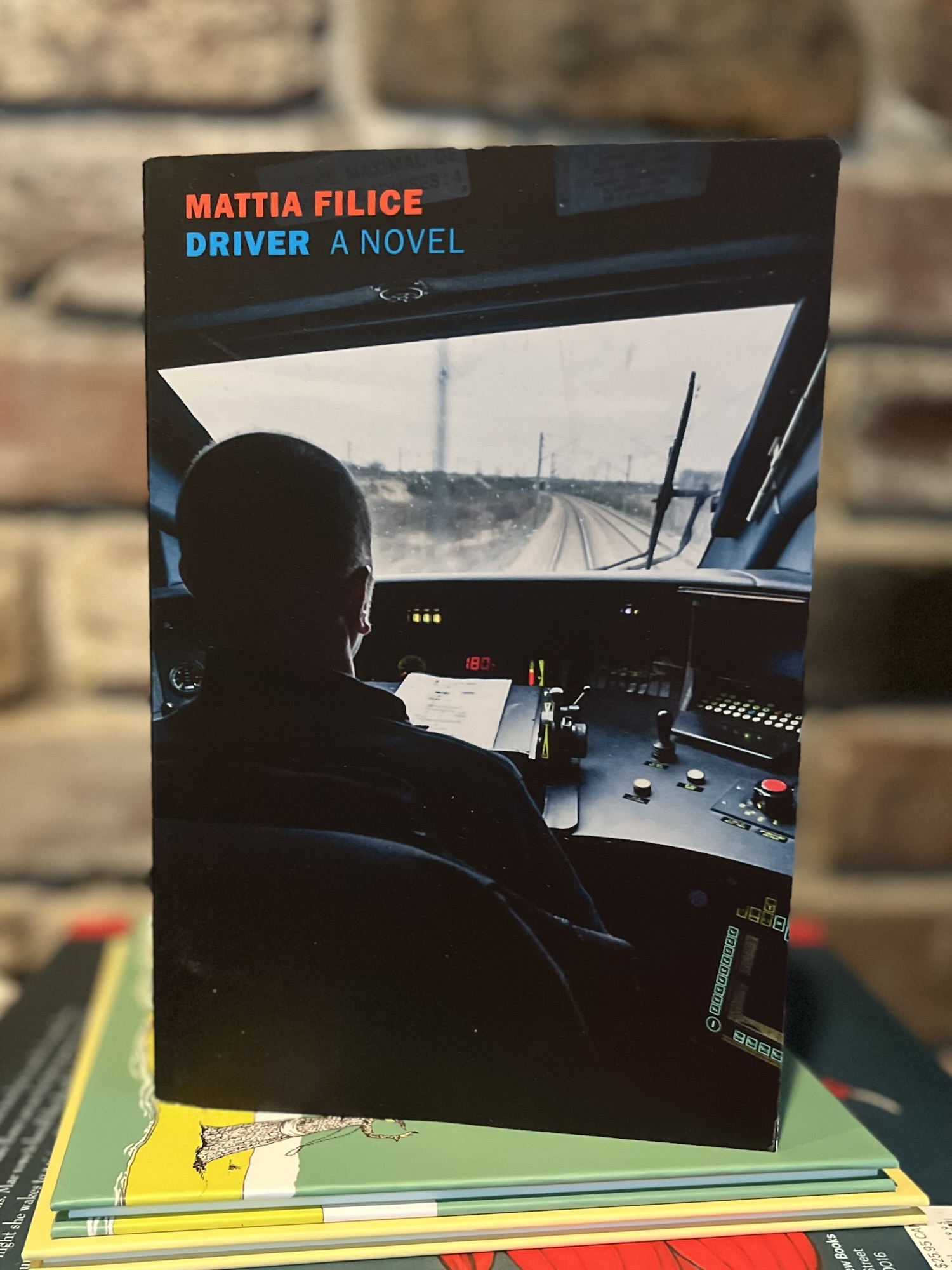
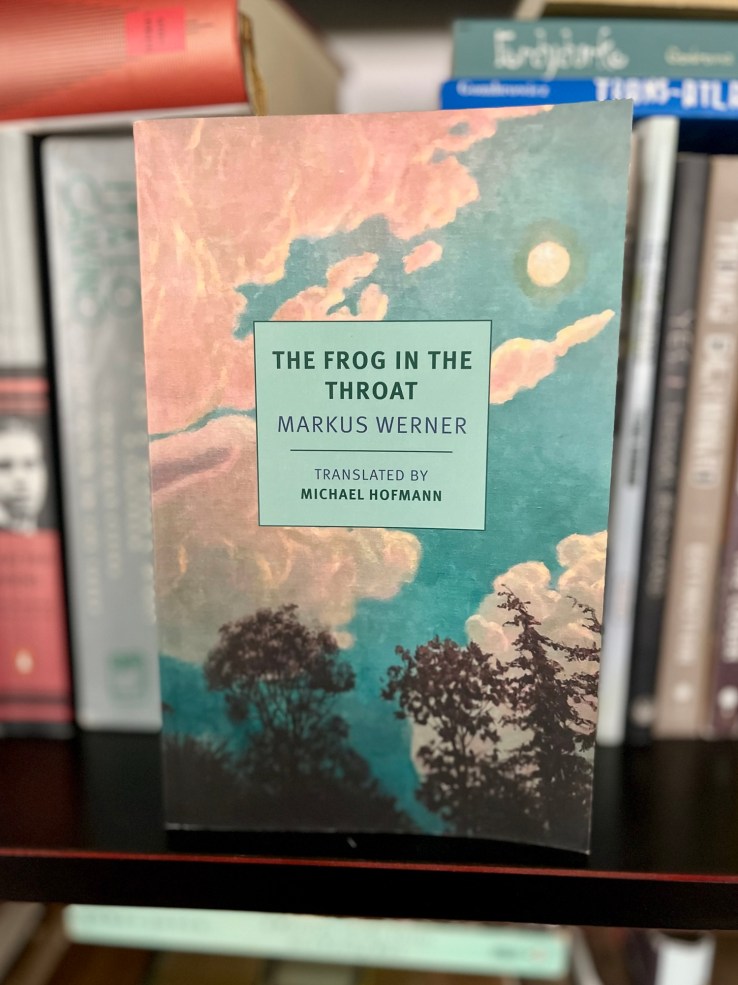


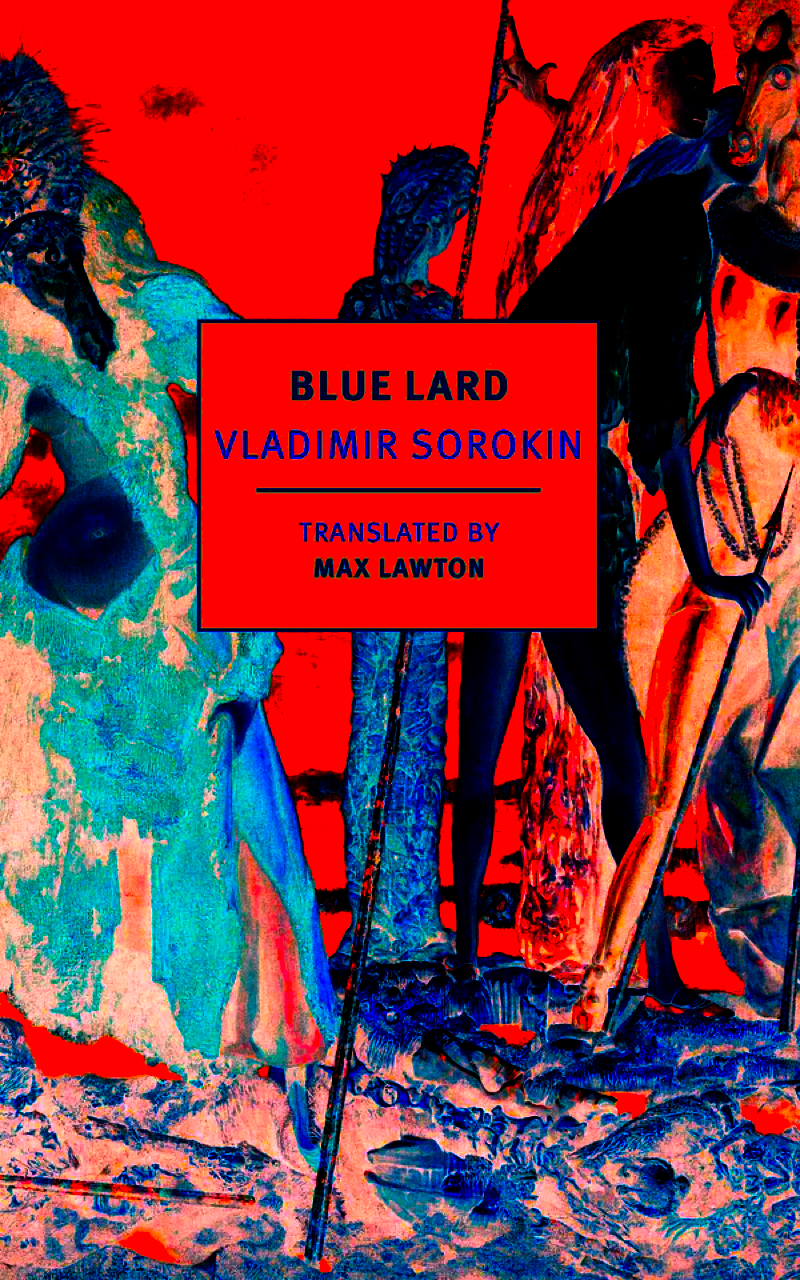


 Biblioklept