Three Books

img_2676

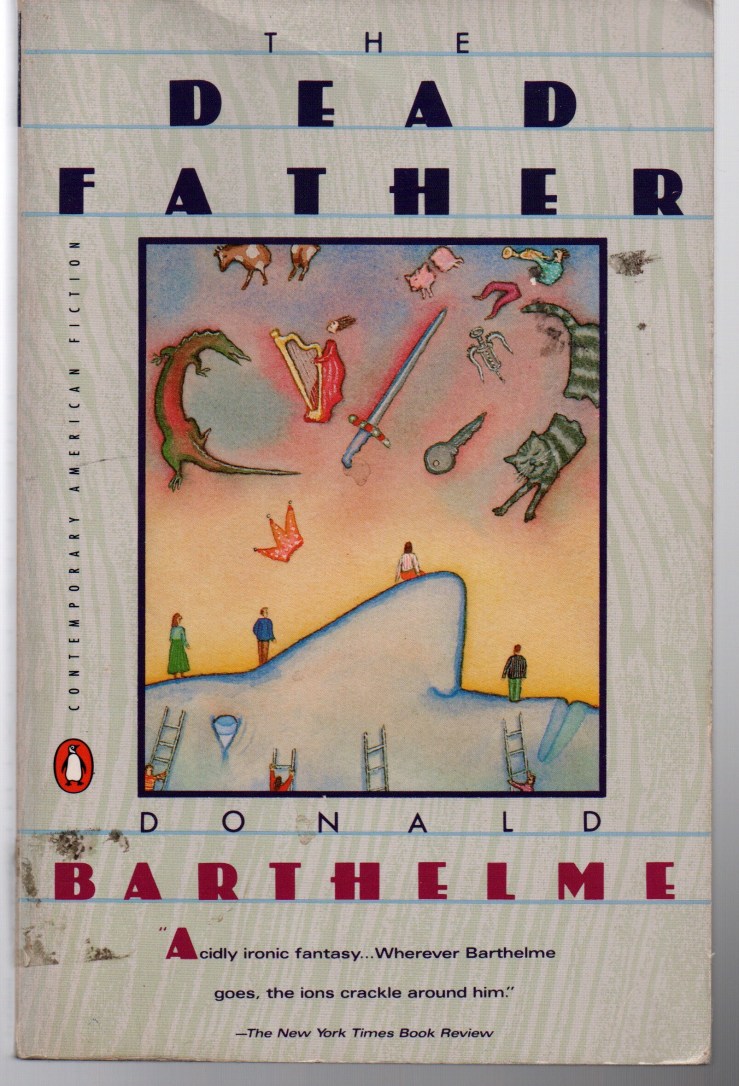
The Dead Father by Donald Barthleme. Penguin paperback, 1986. Cover design by Todd Radom; cover illustration by Lonnie Sue Johnson.

Saturn, Orpheus, Lear, Nobodaddy. A sleeping undead giant, a quest. Good angry fun. I’ll say it’s my favorite Barthelme today (answers will change in the future).

img_2674

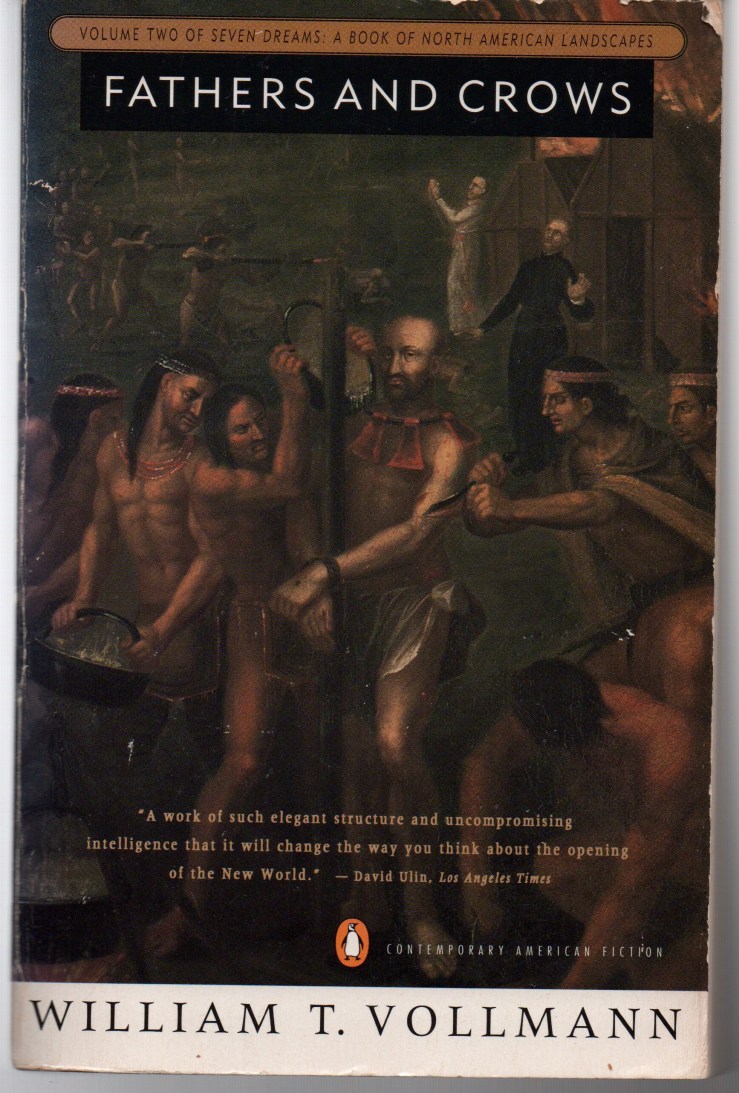
Fathers and Crows by William T. Vollmann. Penguin paperback, 1992. (An enormous paperback—990 pages—it flops slightly on the scanner, refuses to square up neatly). Cover design by Daniel Rembert employing a detail from a painting titled Le Martyrs des missionaires Jesuites (credited to “Anonymous”).

Different fathers, maybe, than the ones celebrated today, Father’s Day, the conceit I’ve lazily tied my Three Books post to…Jesuits. Or maybe they are the fathers. How many times have I tried all of this novel? If you’re interested in Vollmann’s Seven Dreams series, start with The Ice-Shirt or The Rifles instead.

img_2678

King Lear by William Shakespeare. Edited by R.A. Foakes. Arden, 1997. Cover design by Interbrand Newell and Sorrell; illustration by the Douglas Brothers.

Lear is maybe my favorite fictional father. I don’t know why. The man is a fool, but a pitiable one. Maybe I just love the play that much—its abjection, its darkness, its insanity. Out vile jelly, etc. Happy Father’s Day!


Three Books

img_2612

Queer by William S. Burroughs. Trade paperback by Penguin; copyrighted 1987 but no year of the actual printing, which I’m sure is sometime in the mid-nineties. Cover design by Daniel Rembert from a painting by Burroughs.

I bought Queer and Junkie at the Barnes & Noble where I spent too many Friday nights of my high school years. I was sophomore in high school, I think. My parents were concerned about the books, I recall, but in a vague, troubled way—a wrinkling of the temples, a look that I now know means, What does this mean? What are we supposed to do here? They asked me what the books were about and then told me not to do heroin.

img_2613

O Pioneers! by Willa Cather. Hardback and cloth by Houghtin Mifflin, 31st printing, 1961. No designer is credited; the book may have had a dust jacket at one point.

The dark marks are from a librarian’s tape job. She gave me this book, and dozens others, which were being remaindered. I reread the novel a few years ago, noting some of its themes, “including the divide between the New World and the Old, alienation, and the ways in which conformity and routine are antithetical to the pioneer spirit that Americans like to trick themselves into believing they are heir to.”

img_2615

My Sister’s Hand in Mine by Jane Bowles. Trade paperback by the Ecco Press, 7th printing, 1988. Cover design by Anna Demchick.

This collection includes the novel Two Serious Ladies, one of the best and strangest books I’ve read in years. I wrote about it last year on this blog, concluding:

The reading experience cannot be easily distilled. (Strike that adverb). Two Serious Ladies resists unfolding in the way we expect our narratives to unfold—to be about something—Bowles withholds exposition, clarification, and motivation—well, okay, not withholds, but rather hides, or obscures, or enshadows. (I don’t have the verbs for this book). I think of Harold Bloom’s rubric for canonical literature here. In The Western Canon, he  argues that strong literature exemplifies a “strangeness, a mode of originality that either cannot be assimilated, or that so assimilates us that we cease to see it as strange.” Nearly three-quarters of a century after its publication, Two Serious Ladies is still strange, still strong, still ahead of its time. Its vignettes flow (or jerk or shift or pitch wildly or dip or soar or sneak) into each other with a wonderfully dark comic force that simultaneously alienates and invites the reader, who, bewildered by its transpositions, is compelled to follow into strange new territory. Very highly recommended.

Three Books

img_2567

The Sacred and Profane Love Machine by Iris Murdoch. First edition hardback, 1975 by The Book Club (Foyles Group of Book Clubs). Jacket design by Angela Maddigan.

img_2565

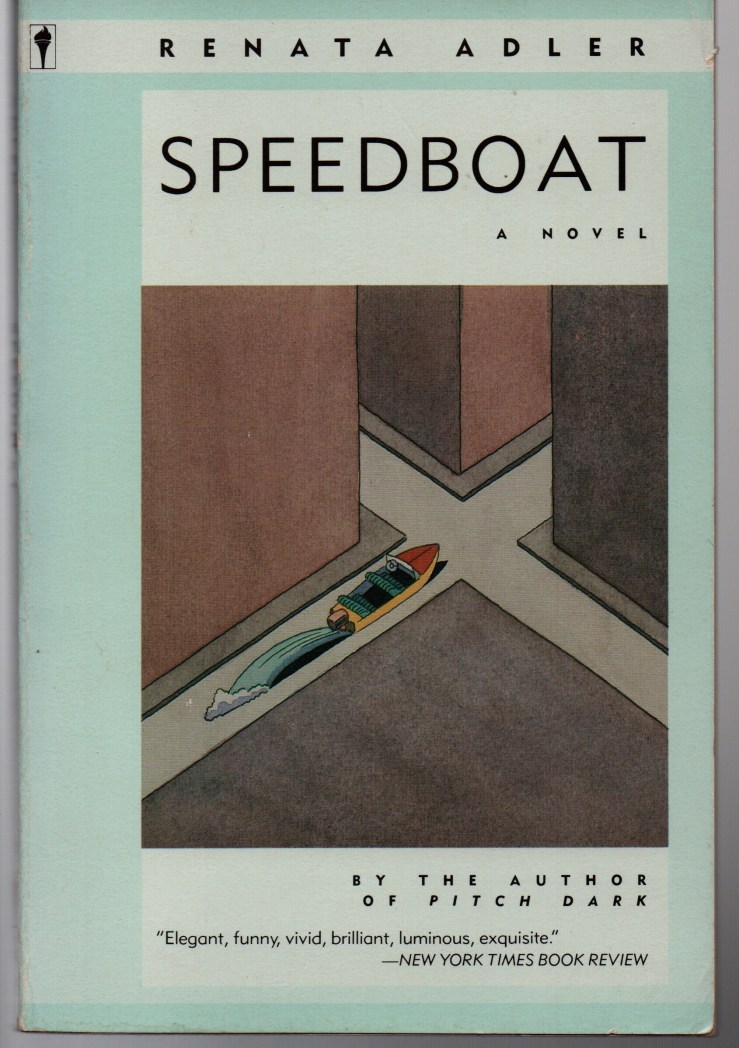
Speedboat by Renata Adler. First Perennial Library edition, 1988. Cover illustration by Steve Guarnaccia.

img_2564

Snow White by Donald Barthelme. Mass market paperback by Atheneum, 1986 (7th printing). Cover illustration by William Steig.

Three Books (On Ferrante, Knausgaard, irony, and covers good and bad)

img_2420

My Struggle, Book 1 by Karl Ove Knausgaard. English translation by Don Bartlett. First edition trade paperback by FS&G, 2013. Cover design by Charlotte Strick and Bill Zindel, with cover art by Bill Zindel.

I couldn’t really get past page 80 of My Struggle, but I like Zindel’s zany design for the first volume enough to hold on to it. Kinda reminds me of those Vintage Contemporaries I so adore.

A lot of people didn’t like the design though, and FS&G didn’t end up publishing the rest of Zindel’s designs, which would’ve looked pretty neat as a complete set. As literary critic Scott Esposito put it at the time “the market has spoken, and it hates the original paperback.”

Instead, FS&G went with variations on this—

img_2421

My Struggle, Book 2 by Karl Ove Knausgaard. English translation by Don Bartlett. First edition trade paperback by FS&G, 2014. Cover design by Charlotte Strick; photograph by Andreas Eikseth Nygjerd.

Look at our boy Knausgaard, smokin’ away! This cover is boring but not Bad, which makes it far less interesting than the Bad Knausgaard cover which is actually very Good. The Book 2 cover (and subsequent covers in the series) are safe and “stylish”—and when I write “stylish,” I use it in the way many writers use it—thoughtlessly, blankly—stylish as a word that points vaguely to the idea of style, the zeitgeistiness of style. Etc. (Again—I encourage you to check out Zindel’s vision for the whole series).
img_2419

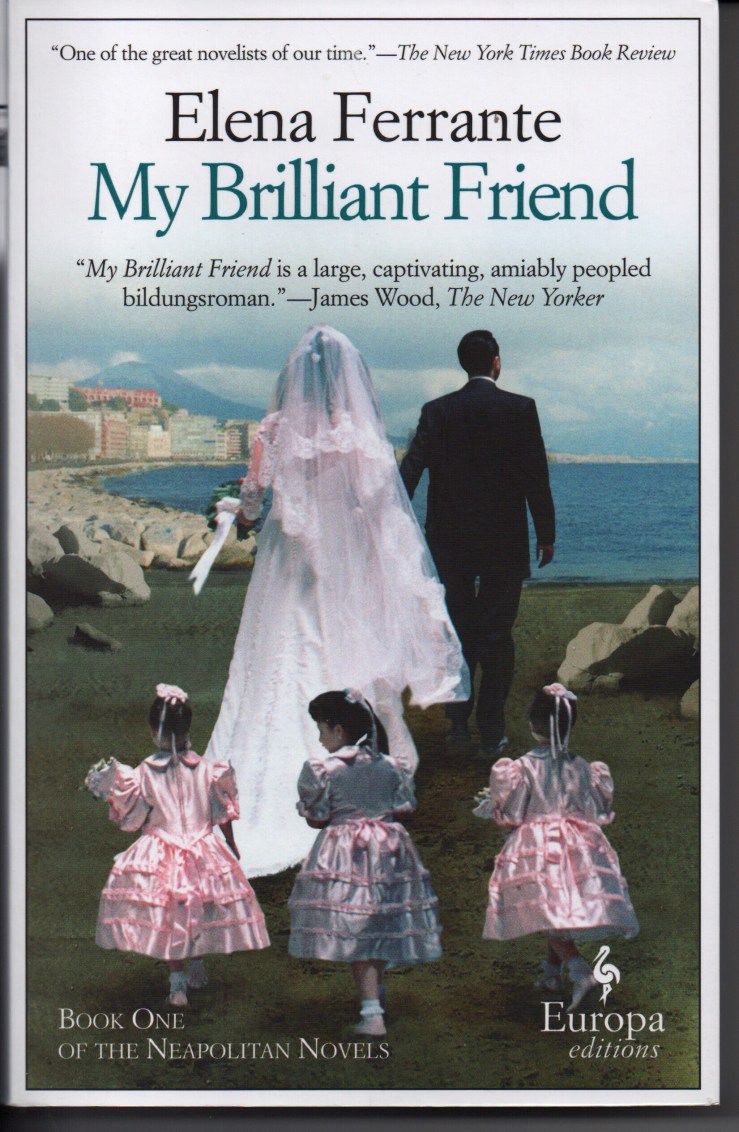
My Brilliant Friend by Elena FerranteEnglish translation by Ann Goldstein. Fifteenth printing, Europa Editions, 2015. Book design by Emanuele Ragnisco; cover photo by Anthony Boccaccio.

My Brilliant Friend is brilliant, my friend.

Its cover is awful, and the subsequent covers in the so-called Neapolitan Novels quartet are somehow worse.

A good friend who’s never steered me wrong with a reading recommendation told me to read Ferrante last year, but I didn’t—it wasn’t the hype that put me off (although the hype put me off), but the covers. I finally acquiesced to an audiobook version, and after getting a few chapters in, wanted the text. So I caved.

But my god, the cover—why?

The publisher and art director(s) claim that the Ferrante covers are bad on purpose.

An article in Quartz that I found simply by googling “Ferrante covers awful” yields this nugget:

…Sandro Ferri, Europa Editions’ publisher, says the covers were not an accident of too many cooks in the design kitchen, but rather a conscious choice. Writes Ferri in an email to Quartz, “The ‘vulgarity’ is our intention. We don’t want to make the typical ‘literary’ cover designed for an audience of ultra-sophisticated readers. … Ferrante’s novels are a mix of popular literature and highbrow, intellectual writing. We want to communicate this though our covers as well.”

And in a Slate interview, EE co-founder/publisher Sandra Ozzola again asserts that the decision for tacky covers was, um, purposeful:

From the time of our first conversation with Elena Ferrante about her intention to write this novel, we knew the book’s title and that it would be the story of a long friendship between women—and that it would conclude with a scene of a very vulgar Neapolitan wedding. The wedding and Elena’s impression of it … is an extremely important moment in the book. That’s why I intentionally searched for a photo that was “kitsch.” This design choice continued in the subsequent books, because vulgarity is an important aspect of the books, of all that Elena wants to distance herself from.

If we take a book’s cover to be where the book “begins,” where we first start to read the text, then EE’s awful kitschy crappy ugly covers signal postmodern irony—a joke on perception, the marketplace, high-low aesthetics, etc. The covers work as a kind of metatextual critique, then, as Ozzola seems to suggest above—a critique that relies on the reader’s understanding of the novel’s central character’s aesthetic viewpoint.

Well so then: Are the covers indeed ironic critiques of book-cover-aesthetics? Are we to take these covers as pop art parodies of books that traffic in romantic aspirations, that are, like, marketed to women?

Or are these covers simply designed to appeal to the very market that they would claim to ironically mock?

The have-your-cake-and-eat-it-too postmodern answer to these questions is, of course, “Yes.”

To fully appreciate the aesthetic irony of the Ferrante novels of course requires reading the Ferrante novels. And undoubtedly, many people are put off reading these books because of the covers. So much so that Ferrante’s novels got new covers for their Australian release. The new covers were designed by W.H. Chong:

Mr Chong told The New Daily it can be dangerous to try irony on a book’s cover – especially if the joke isn’t clear to readers.

“You have to signal the irony really clearly otherwise the recipient doesn’t realise the irony,” Mr Chong said.

“You have to signal the irony really clearly” — okay, sure. But the finest satire never announces itself as such.

Chong’s new covers feature simple black-and-white photographs, and they have received praise. But in a sense, the Australian covers seem, at least to me, to echo those Knausgaard updates—safe, boring even. But I’d much rather be seen reading one of those, than, say, the original EE edition of The Story of the Lost Child, which has maybe the worst cover I’ve ever seen.

Europa Editions’ forthcoming Ferrante collection, Frantumaglia, has a great cover, by the way.

Three Books

img_2089

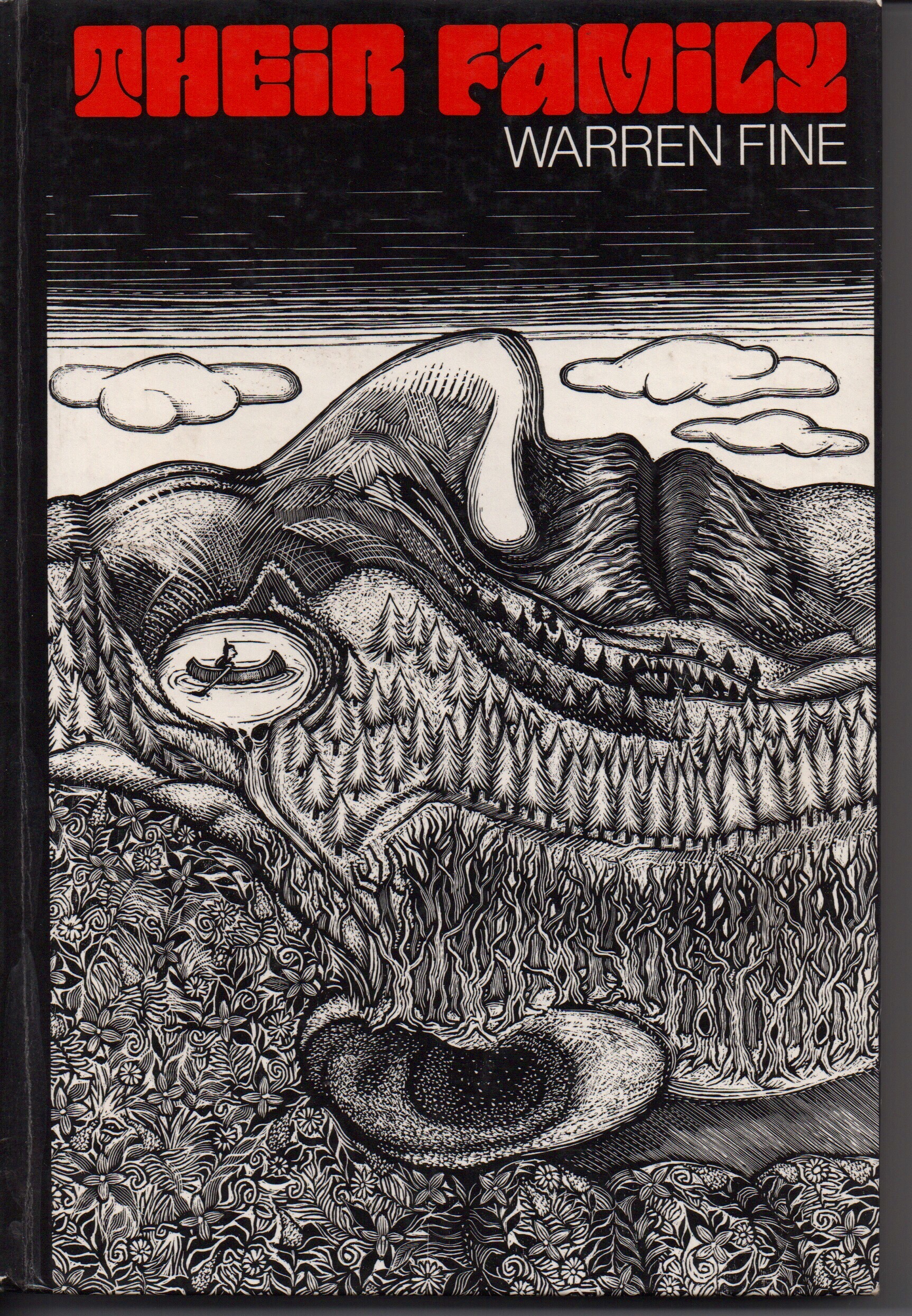
Their Familyby Warren Fine. 1972 first edition hardback from Knopf. Cover illustration by James Grashow; cover design by R.D. Scudellari. I’ll admit I had to have this because of the cover alone, although its subject matter–an American frontier journey–is also a point of interest

img_2388

Star Maker by Olaf Stapledon. 1973 Penguin paperback. Cover design by David Pelham. I first read Star Maker when I was maybe 12 or 13—in the middle of what I now think of as a massive gorging of sci-fi and fantasy novels, a kind of rushed reading I’ll maybe never be able to return to. I haven’t read it since then but would like to revisit it later this summer.

img_2390

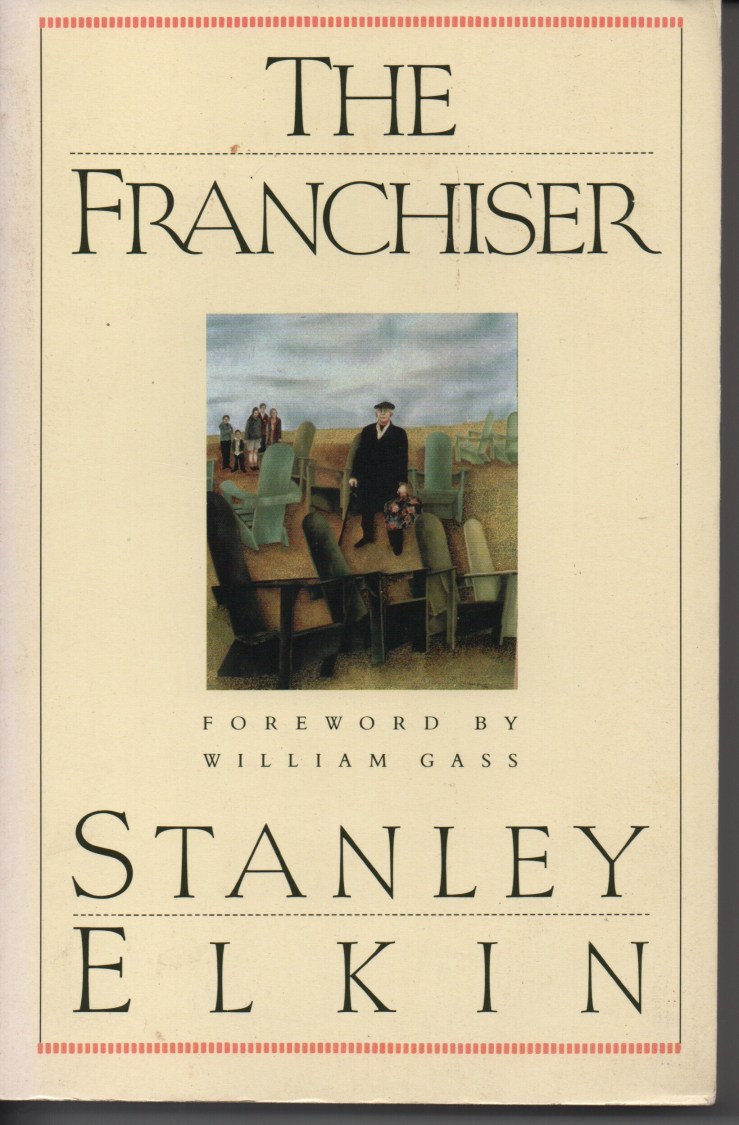
The Franchiser by Stanley Elkin. 1988 trade paperback by Nonparelil Books. Cover illustration by Joan Elkin; cover design by Louise Fili. After a few false starts I finally got into The Franchiser. I’m about half way through. It’s fucking great—a funny but scathing critique of America that seems utterly prescient (in the same way that Gaddis’s J R is a predictor novel, not just a zeitgeist novel).


Three Books

img_2325-1

How Bluegrass Music Destroyed My Life by John Fahey. Third edition paperback from Drag City (DC 124). No designer credited.

I first read Fahey’s collection in 2000 or 2001, when it first came out—a good friend lent it to me and I returned it. Later, he loaned it to another friend who did not return it. I bought the book last summer while visiting the first friend (he took me to the Spoonbill & Sugartown bookshop in Brooklyn). Fahey’s book is sorta memoir, sorta fiction (at times), all weird and good. There’s a wonderful chapter about Fahey’s work on Michaelangelo Antonioni’s film Zabriskie Point that culminates in Fahey and Antonioni getting into a fistfight.

img_2320

Will Oldham on Bonnie “Prince” Billy by Will Oldham and Alan Licht. First edition trade paperback from W.W. Norton. Cover design by Faber using a painting (of Oldham) by Becky Blair.

The friend who lent me the Fahey book insisted for months that I pick up Will Oldham on Bonnie “Prince” Billy; when I kept neglecting to find it, he eventually just sent it to me. The book is basically the edited transcripts of discussions between Oldham and Licht. While there’s a heavy focus on Oldham’s music (and his acting career), the book is ultimately about creation and the artistic process. It is one of the better books about music that I’ve ever read. (A “Cosmological Timeline” at the end of the book begins in 1778 with Captain James Cook’s discovery of the “the Hawaiian tradition of surfing” and ends in 2011 with Jennifer Herrema changing RTX into Black Bananas).

img_2322

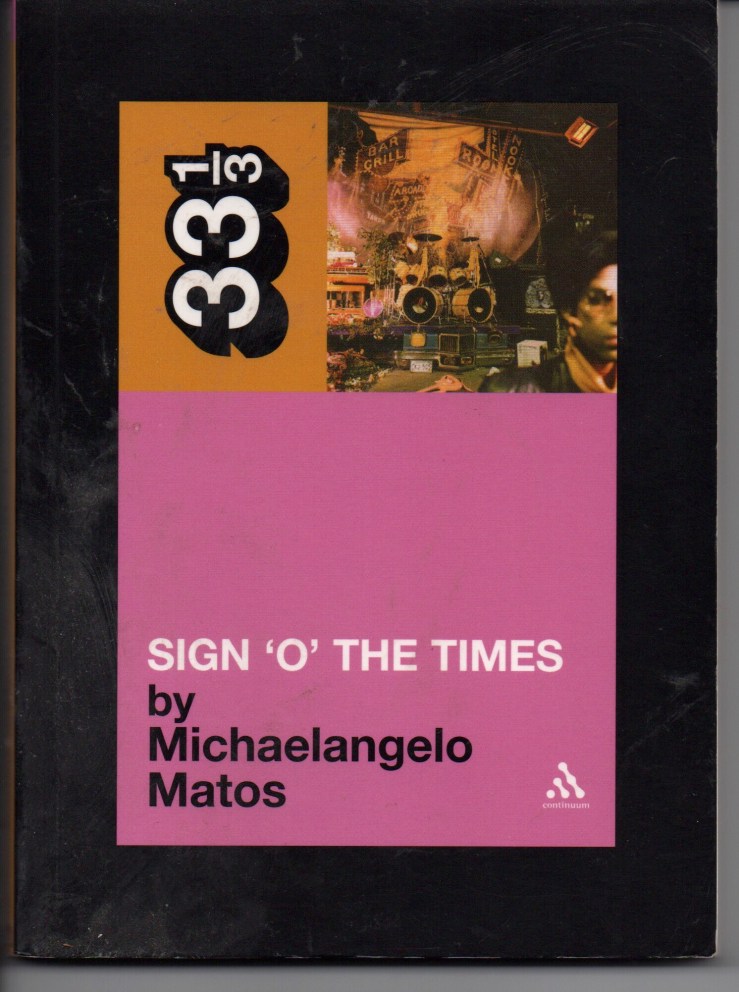
Sign ‘O’ the Times by Michaelangelo Matos. A 33 1/3 book from Continuum, 2004. No designer credited.

I bought this at a Friends of the Library sale maybe 10 years ago. Matos’s take on Prince’s 1987 double album weaves music history and music criticism into personal memoir. The book ends with Prince seeing Matos seeing Prince at an Ohio Players’ show in 1997.

Three Books (that are good starting points for reading Thomas Pynchon)

Today is Pynchon in Public Day, so today’s Three Books blog offers three books that I think may make good entry points for those interested in, but perhaps unnecessarily daunted by, Thomas Pynchon. My intuition is that many readers’ first experiences reading Pynchon may have been like mine: I read The Crying of Lot 49 as a college assignment, found it bewildering and baffling, and despite understanding almost none of it, I then attempted Gravity’s Rainbow (the key word is attempted (failed will also do in a pinch)).

Many readers start with The Crying of Lot 49 because it’s short. While I like the novel (I wrote about it here), it’s also extraordinarily dense, a box so crammed with jokes and japes that some fail to spring out at full force. Lot 49 is a much better reading experience after you’ve read more of Pynchon.

Lots of readers new to Pynchon plunge into Gravity’s Rainbow, probably because it’s famous. I love love love Gravity’s Rainbow, but along with Mason & Dixon (which may be my favorite Pynchon novel), I do not think it is a good starting place for Pynchon. Gravity’s Rainbow is a rich, ringing vortex, a seven-hundred-and-something pager that almost necessitates that its reader immediately reread it. Gravity’s Rainbow is a very funny and very tragic book, and I think it is the work of genius that its reputation suggests—but it’s also one of the few books I can think of that get put on lists of Big Difficult Novels that is, actually, Difficult.

So here are my suggestions for starting places for Pynchon.

img_2195

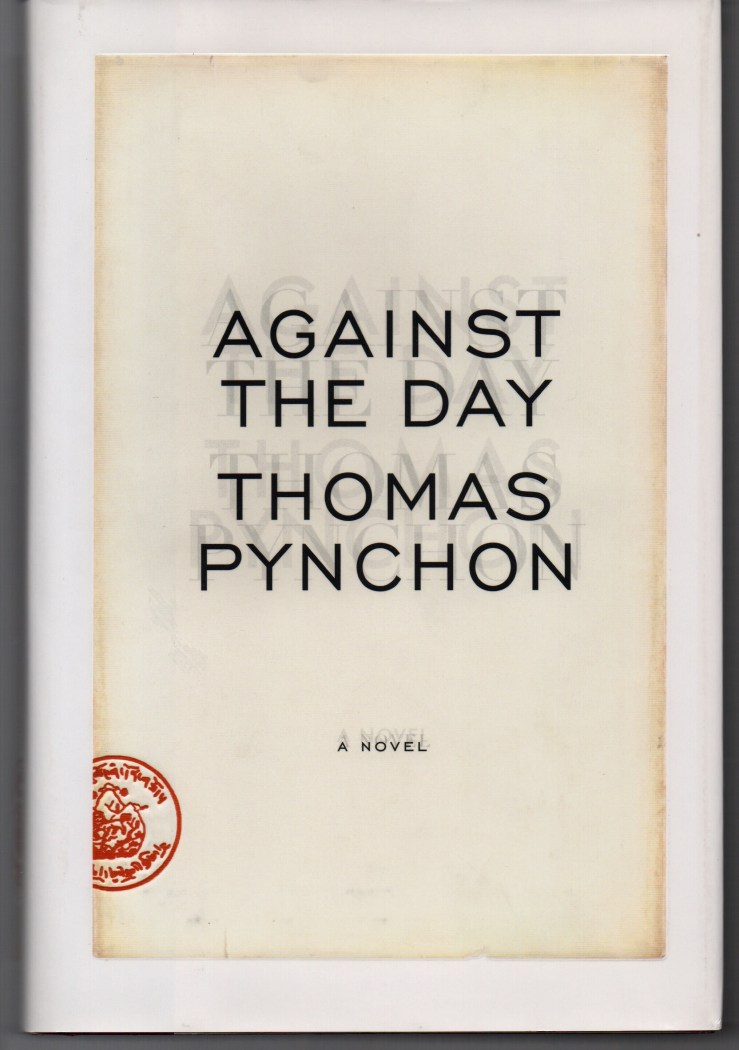
Against the Day by Thomas Pynchon. First edition Penguin hardback, 2006. Jacket design my Michael Ian Kaye.

Okay. So maybe you’re saying, Waitisn’t that one, like, really long? Reader, you’re correct. At 1,085 pages Against the Day is Pynchon’s longest novel to date. But it’s also one of his most accessible, and, most importantly, it offers a condensation of Pynchon’s Big Ideas and Big Themes. (I wrote a list of 101 possible descriptors for Against the Day, if you’re interested in a short take; I also riffed on the book at some length in a series of posts).

img_2194

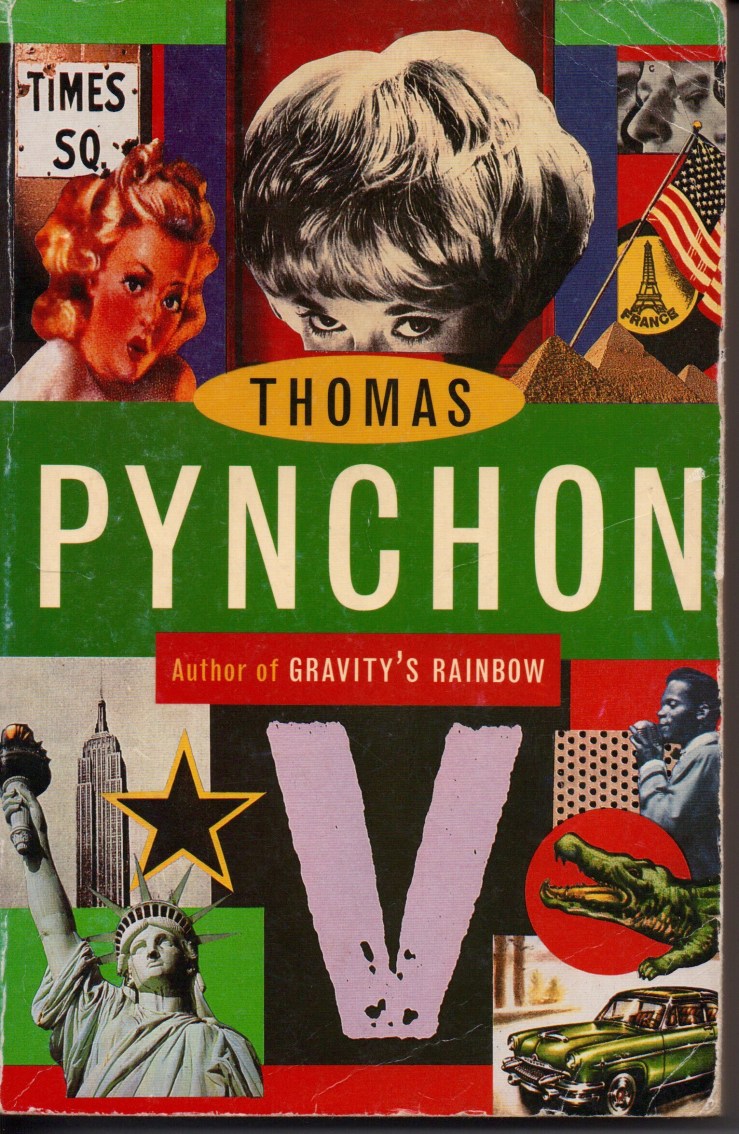
V. by Thomas Pynchon. Vintage UK trade paperback edition (1995). Cover by Paul Burgess.

V. is Thomas Pynchon’s first novel. It’s also the first Pynchon novel I read and loved and (possibly) understood. Like Against the DayV. lays out many of the themes and styles (and even a character or two) that appear elsewhere Pynchon’s oeuvre. In a loose sense, V. feels like a dress rehearsal for Gravity’s Rainbow. Oh, it’s also pretty discursive—in fact, you can read chunks of it almost as short stories. In fact, here’s a good way to break into Pynchon: Get V., and read Ch. 9–it stands on its own as a long short story, the tale of Kurt Mondaugen—and colonialism, siege paranoia, dark dread, etc.

img_2197

Inherent Vice by Thomas Pynchon. First edition hardback, Penguin, 2009. Jacket design by Tal Goretsky and Darren Haggar; image credited to Darshan Zenith and Cruiser Art.

I’ve heard Inherent Vice dismissed as “Pynchon lite,” which may be true—I’ve read the book twice now and if its shaggy threads connect, I can’t see it (unlike, say, Gravity’s Rainbow, which resolves like a complicated math problem). Still, Inherent Vice makes a nice gateway drug to Pynchon—it’s funny and loose, and even though it rambles through an enormous cast of characters and settings, it’s ultimately far, far more contained than sprawling novels like Mason & Dixon and Gravity’s Rainbow. Paul Thomas Anderson’s film adaptation also makes an interesting visual counterpart to the novel—which it somehow simultaneously condenses and expands. Inherent Vice—the novel—also seems to me a kind of bookend or sequel to The Crying of Lot 49. (I wrote a bit about that here).

Last thought: Ignore my suggestions. Pick any novel that interests you by Pynchon and dive in. Don’t get too frustrated if you’re not sure what’s going on. A lot of the time, that’s the point of it all. Enjoy it.

Three More Purple Books

Last week I crammed my thoughts about the death of Prince into one of these “Three Books” posts I’ve doing each Sunday for around 30 Sundays now (I plan to do 52, if anyone cares or counts). I grabbed a bunch of purple books and scanned them, and I still have the scans saved, so today’s Three Books are, I guess, books that I deemed not-quite-purple-enough for last week’s post. My thoughts on Prince remain the same: I’m still vaguely shocked at his death and shocked at my shock at his death. I tried to write a Thing on Prince’s sexy dystopian visions, but I failed.  Give me the electric chair 4 all my future crimes.

img_2144

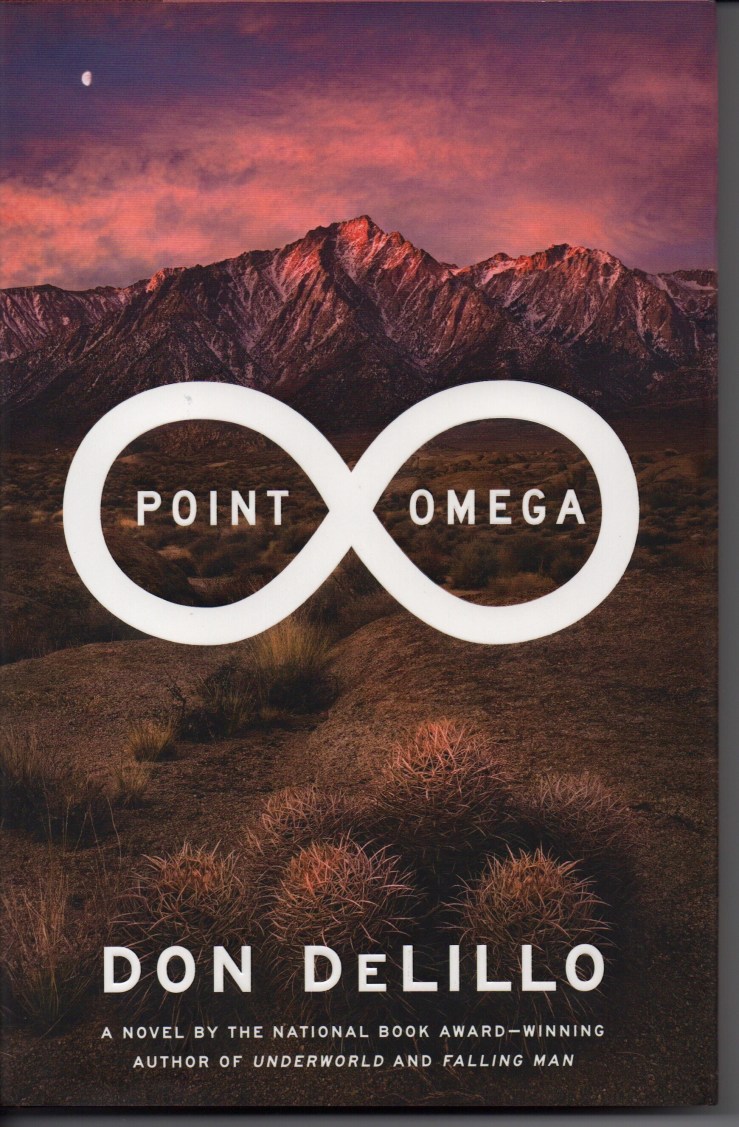
Point Omega by Don DeLillo. First edition hardback, Scribner, 2010. Jacket design by Rex Bonomelli using a photograph by Marc Adamus. I reviewed Point Omega when it came out, noting that it “is not a particularly fun book nor does it yield any direct answers, but it’s also a rewarding, engaging, and often challenging read.” The book got somewhat mixed reviews, but I think in retrospect it’s quite underrated. DeLillo wrote one of the earliest paraphrases of the Bush Wars here (without really writing a summation and without really writing a war novel), and I think about the book often—whenever I read a little digital clipping about Cheney or Wolfowitz or Rumsfeld or any  of the Old Neocon Gang—and the hacks and mouthpieces who supported them.

img_2147

Masscult and Midcult: Essays against the American Grain by Dwight Macdonald. Edited by John Summers. Published by NYRB, 2011. Cover design by Katy Homans; the cover image is a detail of Cedric Delsaux’s photograph 88, Las Vegas Casino 1. I reviewed Masscult a few years ago. The book has some perceptive essays, and its title essay is essential cultural criticism.

img_2146

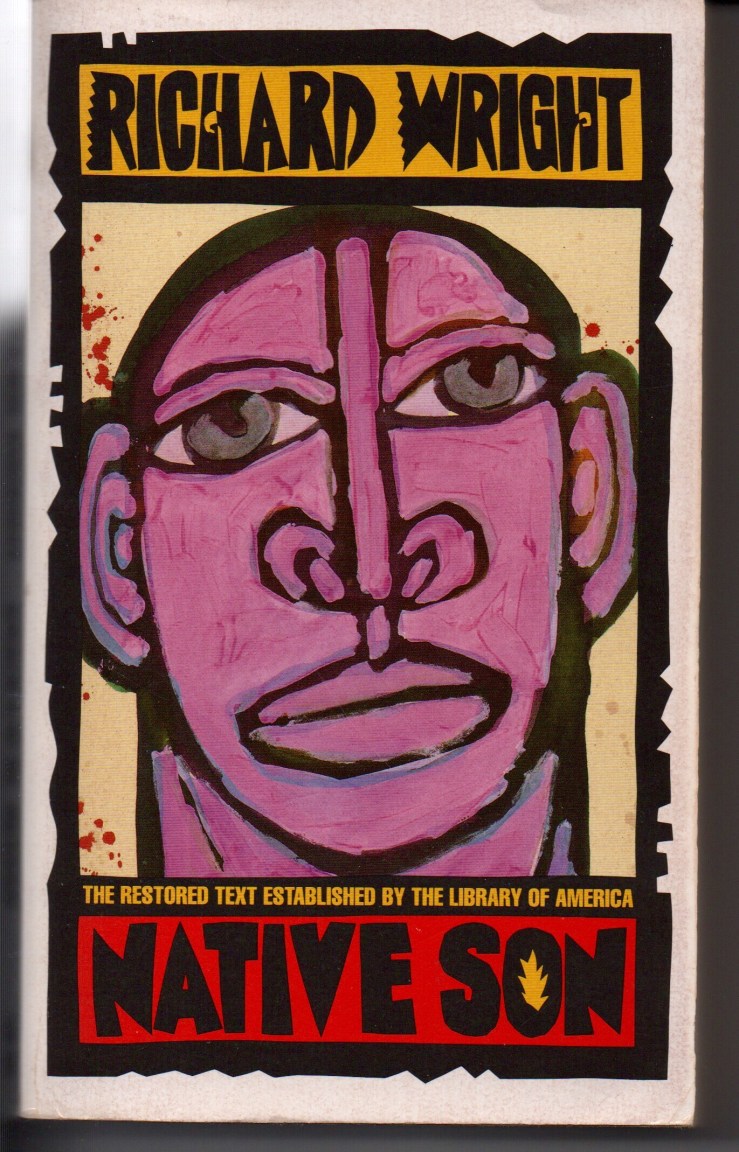
Native Son by Richard Wright. Mass market paperback edition by Harper Perennial, 1993. Cover design and illustration by David Diaz. This book was part of a class set I used years ago when I taught AP English Literature. It left with me when I left that job.

Three (Purple) Books

img_2050

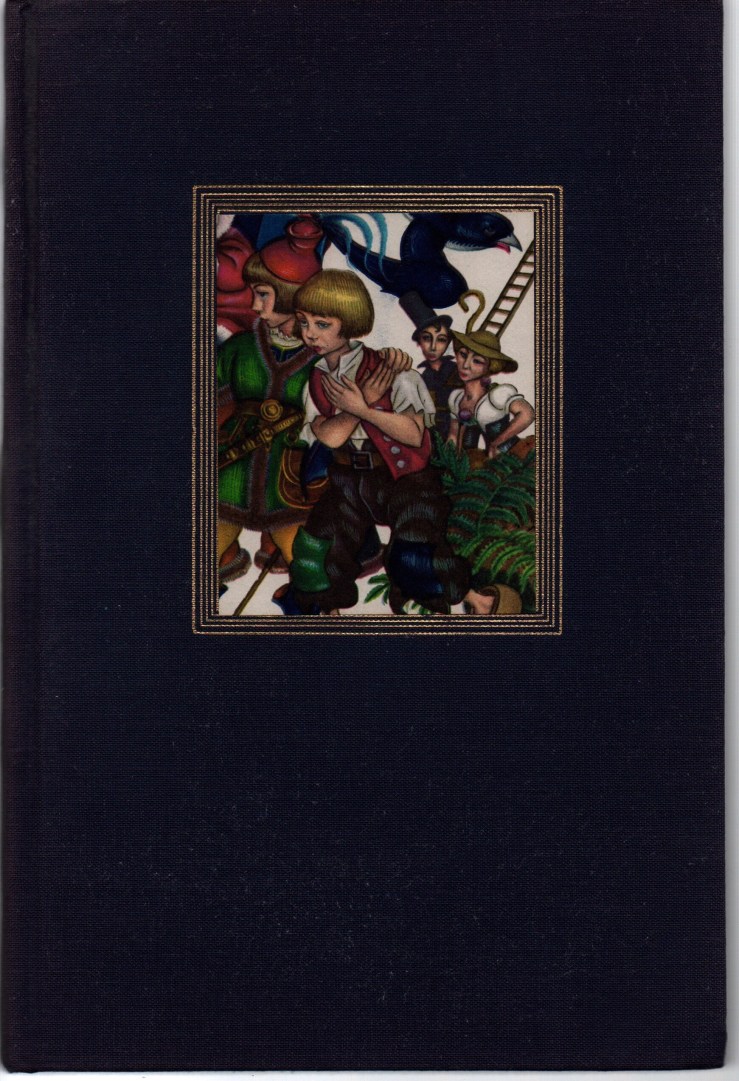
Andersen’s Fairy Tales translated by E.V. Lucas and H.B. Paull. Illustrations by Arthur Syzk. First edition cloth-bound hardback by Grosset & Dunlop, 1945. No designer credited, but the cover illustration is by Syzk. This was a gift from a former student.

img_2051

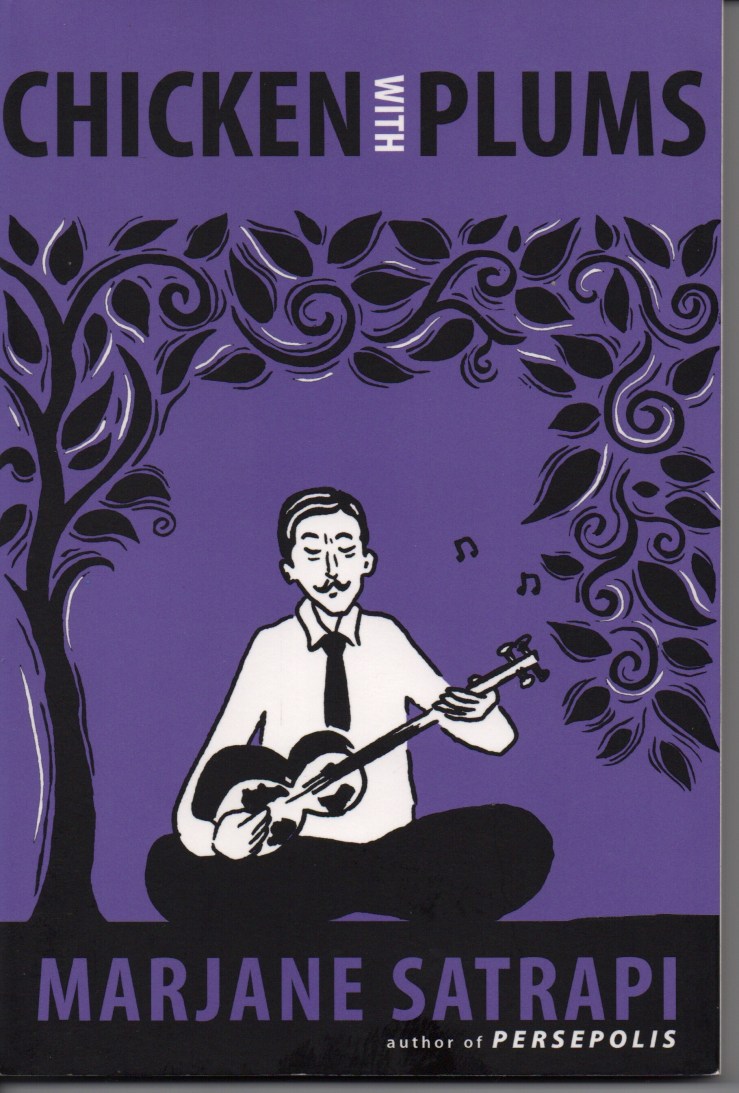
Chicken with Plums by Marjane Satrapi. English translation by Anjali Singh. First Pantheon paperback printing, 2009. Cover image by Satrapi; cover design credited to Brian Barth. I reviewed Plums some years back.

img_2052

The Transmigration of Bodies by Yuri Herrera. English translation by Lisa Dillman. 2016 paperback by And Other Stories. Cover design by Hannah Naughton from an image credited to iivangm. I wrote a bit about Bodies here; full review next month closer to its publish date.

I finished Herrera’s novella The Transmigration of Bodies a few days before Prince died. The book’s neon purple cover seemed to glare at me from my coffee table when I returned home on the afternoon of April 21, 2016, stunned—yes, stunned is the right word—at learning of the death of one of my heroes. Not just stunned—but stunned at how stunned I was, how sad I felt, how awful and sick Prince’s unexpected, uncalled for, fucking cosmically unjust death was and is. —Wait, I didn’t sign on for this, you protest, eh, dear reader? —No, I didn’t ask for another remembrance or whatever this is, especially not from some blog dude who never knew the guy; look, Biblioklept, the internet’s seams are burstin’ with other, more interesting folks’ thoughts and memories on Prince, you don’t need to—Well I know but I need to. I loved Prince—I loved his music, sure, 1999 and Purple Rain in particular, every song of those records grooved into my mental ear, I can call them up at will—but I loved Prince as an artist, as the Artist, as an aesthetic—which is what I think we, the Big We, all mourn when we mourn Prince. I could go through litany of personal anecdotes about Prince—tell you in detail about first seeing the video for “When Doves Cry” as a child and just totally losing my shit; I could tell you about buying the Batman soundtrack on tape (one of my first album purchases); I could tell you about the summer and fall of 1991, when I was an impressionable twelve years strong, when MTV dared to air Prince’s video for “Gett Off”—I could tell you about how that video accelerated my puberty (I see you plug your ears, reader); I could tell you about discovering that Prince and I shared the same birthday (we are Gemini!) and I could tell you that I always thought about Prince on our birthday, even after I learned that he didn’t celebrate his birthday; I could tell you that my high school band made an album and we named it Prince (it sounded nothing like Prince; nothing sounded like Prince); I could tell you about the year 1999, when I was a junior in college, and how we wore the apocalyptic vinyl thin; I could tell you about djing at a small coffee shop and playing “I Would Die 4 U” five times in one night because I fucking love that song; I could tell you about pulling over the car, late at night, to cry while I listened to “Purple Rain”; I could tell you about dancing to Prince songs at my wedding, at other weddings; I could tell you about how sad I now feel that I never got to go to a Prince concert but how happy I am that I got to see a few on TV, got to see him play and dance and sing; I could tell you I could tell you I could tell you…but I won’t tell you. Maybe you know—maybe you have your own details, your own I could tell yous (forgive me my rhetorical conceits; sometimes it seems that they are all that licenses me to write)—I think you know, I think you have your own I could tell yous. Prince was a fucking genius and he shared that with us (sometimes he shared his genius with us by withholding it from us). Prince was his own genre, his own aesthetic, his own art. How wonderful to have lived on the planet at the same time that he did.

Three Books

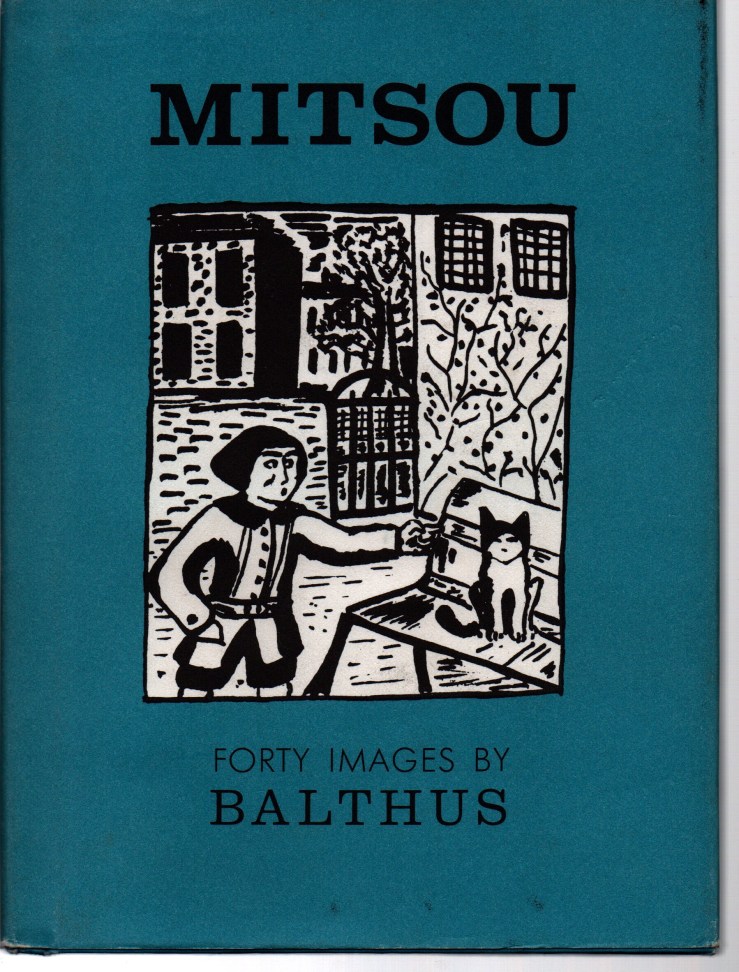
Mitsou by Balthus. Preface by Rainer Maria Rilke (English translation by Richard Miller).  Small first edition hardback published by The Metropolitan Museum of Art, 1984. Design credited to Peter Oldenburg; the cover illustration is by Balthus. Mitsou is Balthus’s story of loving (and losing) his titular pet cat. He was thirteen when he composed the story in 40 ink drawings (the drawings resemble woodblock prints, but aren’t). He gave the illustrations to his mother’s lover, Rainer Maria Rilke, who got them published. My wife gave me this book as a gift before we were married, and I love it. It’s sad.

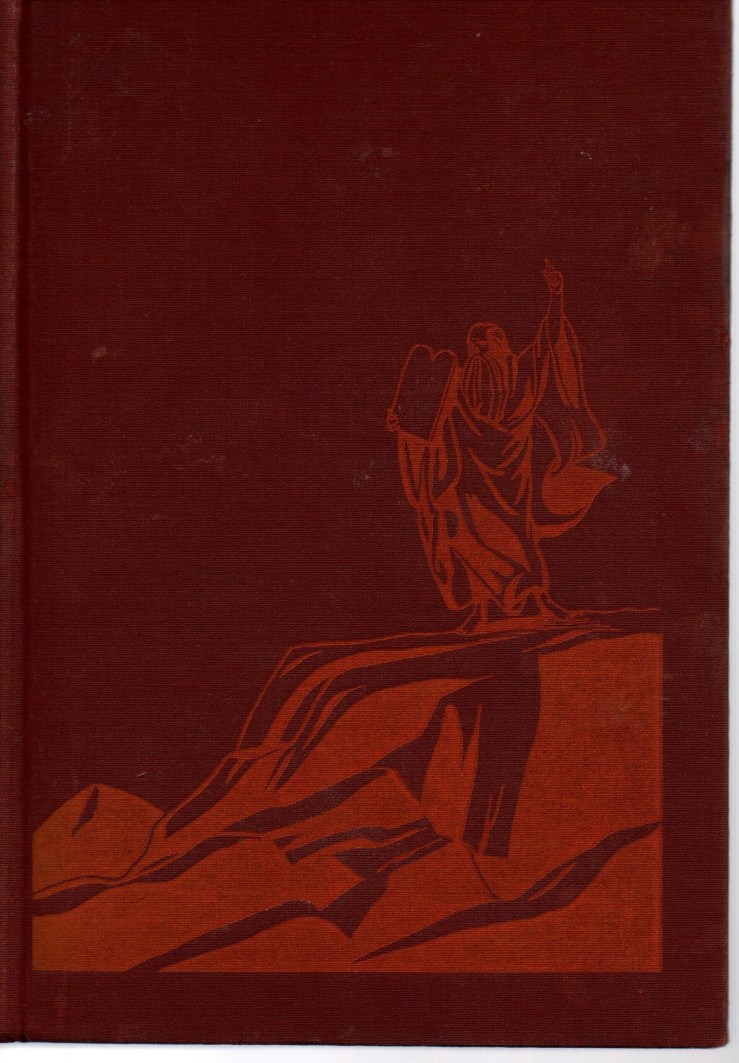
Moses, Man of the Mountain by Zora Neale Hurston. First edition hardback by J.B. Lippincott, 1939. No illustrator or designer credited, by my edition is missing the original jacket. A retelling of the Exodus story.

 Man after Man by Dougal Dixon with illustrations by Philip Hood. First edition hardback from St. Martin’s Press, 1990. Book design by Ben Cracknell; cover art by Philip Hood. It’s Hood’s illustrations that make Dixon’s “future anthropology” of the human race so fascinating. A discursive sci-fi novel of sorts, posing as a textbook.


Three Books

img_1947

Has Man a Future? by Bertrand Russell. 1961 Penugin U.S. paperback. Cover design by Richard Hollis, using a photo credited to USIS.

img_1949

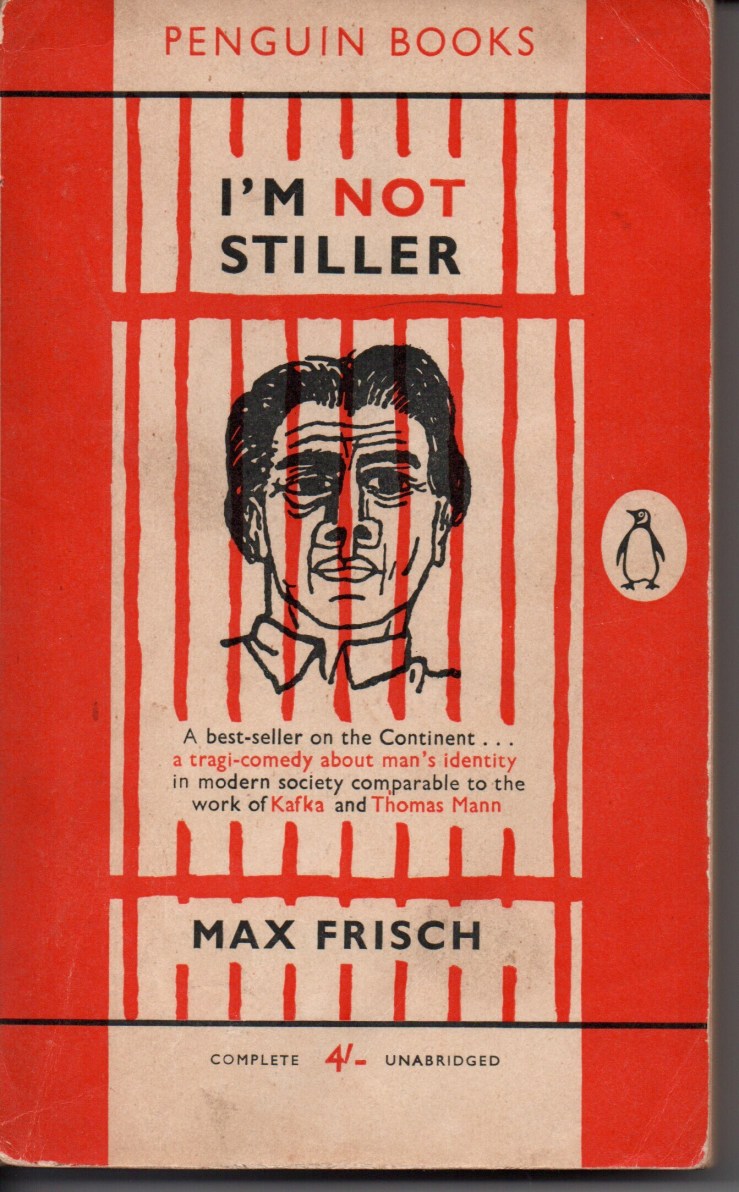
I’m Not Stiller by Max Frisch. English translation by Michael Bullock. 1961 Penguin paperback (Great Britain). Cover by John Griffiths.

img_1946

The Last Summer by Boris Pasternak. English translation by George Reavey. 1961 Penguin paperback (Great Britain). Cover illustration of the author by his father, Leonid Pasternak.

Three Books

img_1930

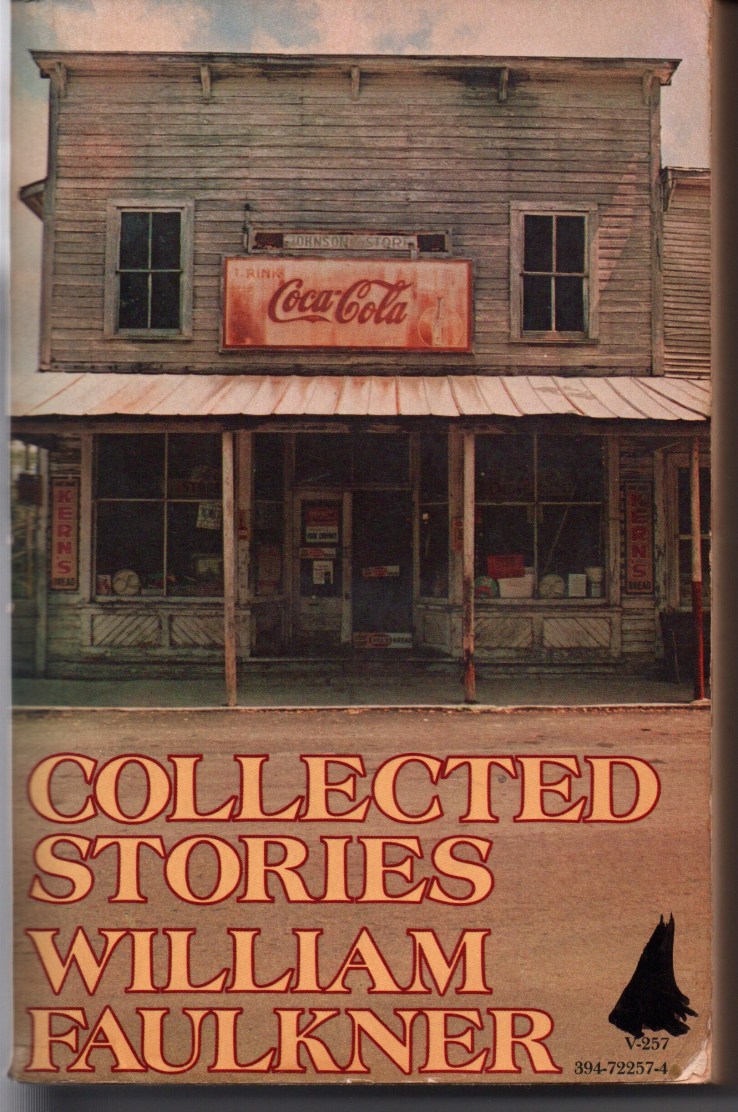
Collected Stories by William Faulkner. 1977 first edition trade paperback from Vintage. This book is 900 pages, exactly, not including the ancillary pages that detail publication dates and rights, as well as Vintage’s back catalog—and yet not one of those pages manages to credit the cover designer or photographer.

I’ve been reading/re-reading this very slowly, with the loose goal of finishing this year.

img_1929

Nausicaä of the Valley of the Wind, Vol. 4 by Hayao Miyazaki. English translation by David Lewis and Toren Smith. Studio Ghibli Library edition by Viz Media, 2010. No designer credited, but the cover is by Miyazaki and I imagine we can probably credit Studio Ghibli with the design.

I started rereading Nausicaä this week after revisiting Princess Mononoke this week. Then I got horribly ill, and the only stuff I can really read when I’m really sick are comics. I scanned Vol. 4 for this week’s Three Books post; I finished it pretty late last night. Vol 5-7 remain.

img_1931

Junkets on a Sad Planet by Tom Clark. First edition trade paperback by Black Sparrow Press, 1994. Cover design by Barbara Martin. The image is of Benjamin Robert Haydon’s life mask for John Keats (from a photo by Christopher Oxford).

I awoke around 1am in the middle of last week, and unable to sleep, I wandered to our den and randomly took this from the shelf to begin reading/rereading. The book (its title is a pun) is difficult to explain, a beautiful experience, rich. Here’s Clark’s own description: “…an extended reflection on the modern poet’s life, as Keats lived it. The book may be read by turns as poetic novel, biography in verse, allegorical masque, historical oratorio for several voices.”

Three Books

img_1894

Light in August by William Faulkner. Vintage International trade paperback. Design by Marc J. Cohen from a photograph by Marion Post Wolcott. I wrote about Light in August here. Joe Christmas is a Jesus Christ figure.

img_1895

The Grapes of Wrath by John Steinbeck. An oversized trade paperback edition with French flaps and deckle edges from Penguin. Cover design by Paul Buckley, using art by Andrew Davidson. This was part of a class set I used in a school where I used to teach; it left with me when I left. Jim Casy is a Jesus Christ figure.

img_1893

The Red Badge of Courage and Selected Short Fiction by Stephen Crane. A cheap trade paperback by Barnes & Nobles Classics. Cover design by Dutton & Sherman, using a detail from Winsolw Homer’s painting Drum and Bugle Corp, Civil War Encampment. Another class set copy that made its way to my home. Jim Conklin is a Jesus Christ figure.

Three Books

img_1820

Madness and Civilization by Michel Foucault. English translation by Richard Howard. Second edition Pantheon hardback, 1965. Cover design by Pan Visual, featuring a detail from Bosch’s Christ Carrying the Cross.

img_1819

Correction by Thomas Bernhard. English translation by Sophie Wilkins. 1983 first edition trade paperback by Aventura. Cover design by Keith Sheridan featuring an illustration by Marshall Arisman. I wrote about Correction here.

img_1818

The Tanners by Robert Walser. English translation by Susan Bernofsky. Irregular-sized trade paperback by New Directions, 2009. Cover design by Erik Rieselbach.

Three Books

img_1707

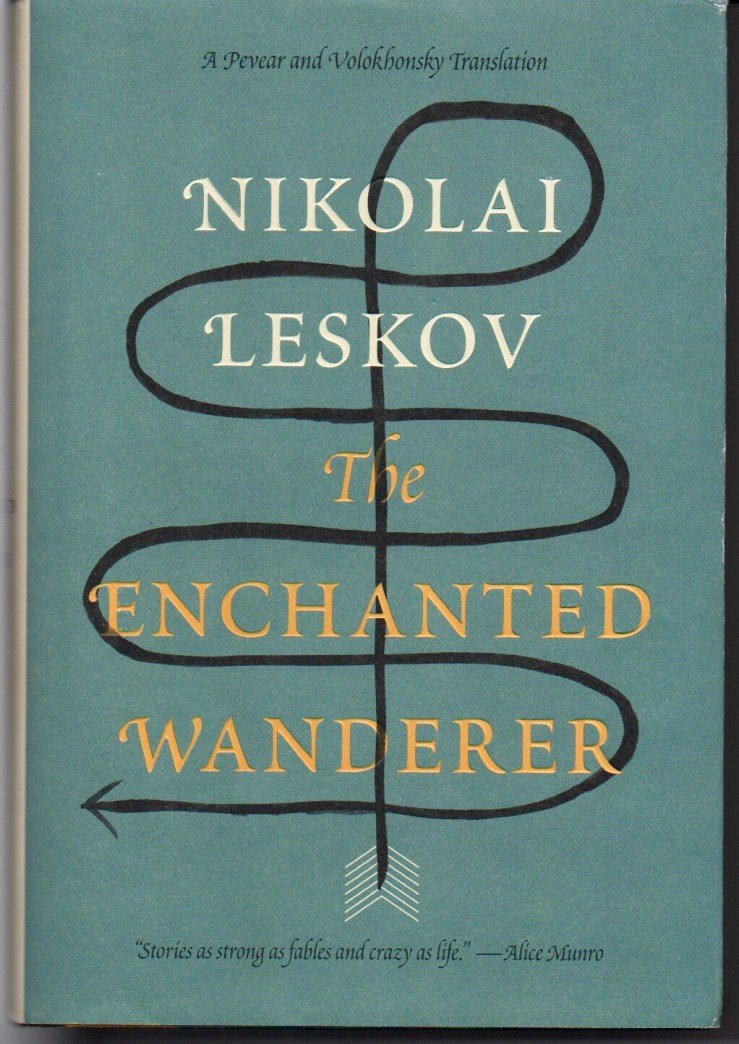
The Enchanted Wanderer and Other Stories by Nikolai Leskov. English translation by Richard Pevear and Larissa Volokhonsky. First edition hardback from Knopf’s Borzoi imprint. Jacket design by Peter Mendelsund. There are still a few tales in here that I haven’t read, most notably the titular novella.

img_1705

The Silmarillion by J.R.R. Tolkien (and arguably, Christopher Tolkien, whose edits gave the book shape and form). 1983 first American edition trade paperback by Houghton Mifflin. No designer credited, which is a damn shame because I love this book cover. This is maybe the first book I recall buying with my own money.

img_1706

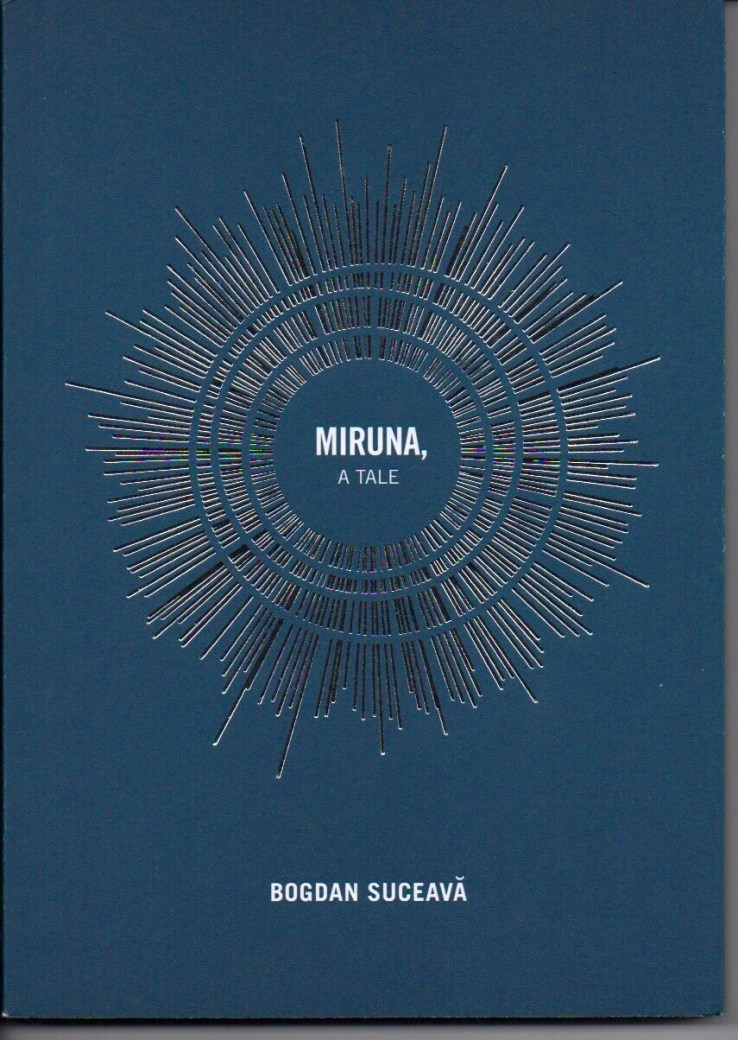
Miruna, A Tale by Bogdan Suceavă. Translated from the Romanian by Alistair Ian Blyth. 2014 trade paperback by Twisted Spoon Press. Cover design by Dan Myer. A strange and remarkable novella set in the Carpathians that moves time and history into fantasy storytelling.

Three Books

img_1668

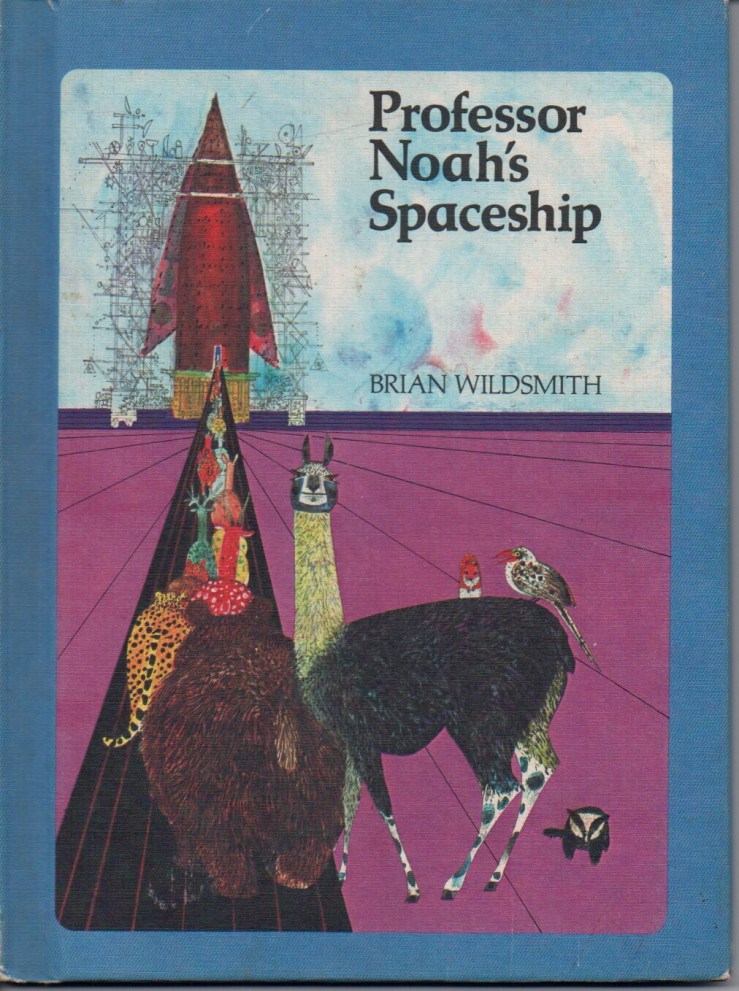
Professor Noah’s Spaceship by Brian Wilsdsmith. First edition hardback by Oxford University Press, 1980; distributed through Macmillan Book Clubs. Design, cover, and art by Brian Wildsmith. This book is too beautiful.

img_1666

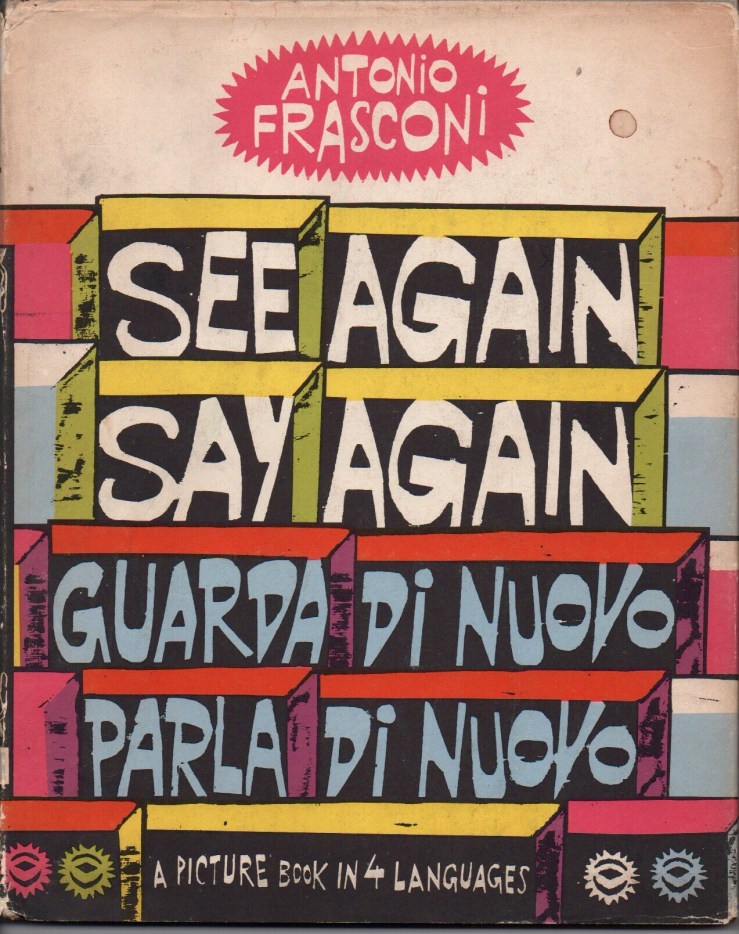
See Again, Say Again by Antonio Frasconi. First edition oversized hardback published by Hacourt, Brace and World, 1964. Cover design, fonts, and woodcuts by Antonio Frasconi.

img_1667

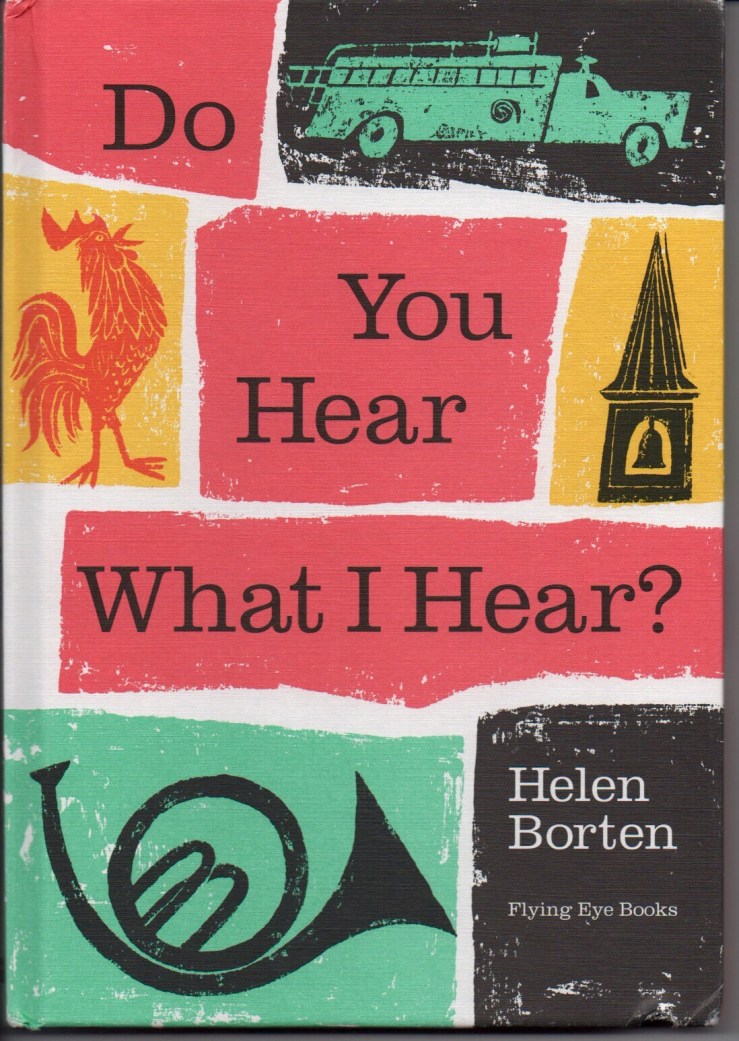
Do You Hear What I Hear? by Helen Borten. First edition hardback reprint by Flying Eye Books, a division of Nobrow; the book was originally published in 1960. Illustration and design by Helen Borten. Nowbrow kindly sent me a copy of Do You Hear What I Hear?—the book is beautiful, the text is lovely—Borten’s technique is to represent sound—or rather the feeling of sound (which is to say, the feeling of the feeling of sound) through language and art. Like any great children’s book, Do You Hear What I Hearis best read out loud, and my five-year-old son loved it so much that I had to read it again to him immediately after the first reading. We’ve read it a few times since then. Great stuff.

Three Books

img_1640

The Adventures of Huckleberry Finn by Mark Twain. Mass market paperback by Bantam, 10th ed., 1986. No designer credited, but the cover illustration is a 1981 painting by Doug Johnson, and it is the sole reason that I’ve held onto this copy for over a decade now, since I first used it as part of a class set for an eleventh grade English class I used to teach. Perhaps from a technical standpoint, I stole this book.

img_1642

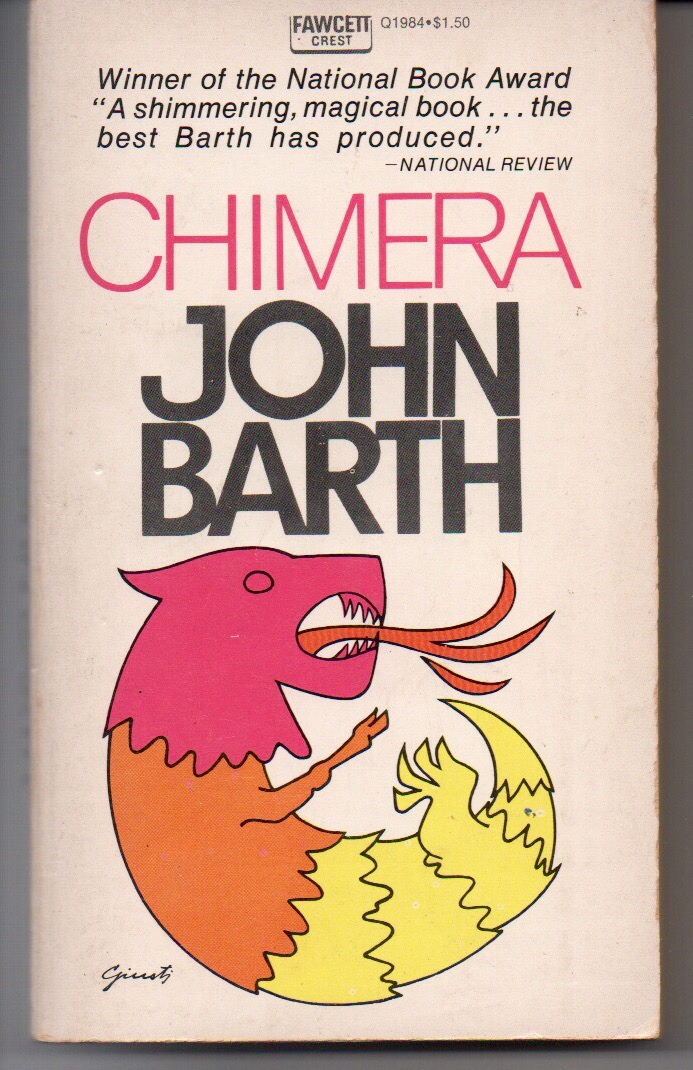
Chimera by John Barth. Mass market paperback by Fawcett Crest, 1973.  No designer credited, and the cover artist isn’t named in the colophon or on the back–but the cover is signed. Perhaps the original hardback, which shares this illustration, credited the artist. I read this book in the right place and at the right time—I was a junior or senior in college, obsessed with postmodernism as a technique (rather than postmodernism as a description), and Chimera’s intense gamesmanship enchanted me. I’m pretty sure I read it after Lost in the Funhouse, and that after Wallace’s Westward the Course of Empire Takes Its Way. I bought this copy eight or nine years ago (having read it first as a library book), and attempted a reread and was…less impressed. Still, it would be hard for me to overstate how much Chimera did for me—how much it showcased the possibilities of literature and storytelling.

img_1639

The Ballad of the Sad Cafe and Other Stories by Carson McCullers. Mass market paperback edition by Bantam. No designer or cover artist credited—which is too bad because I love the image. The most recent date on the colophon is 1971 but I am pretty sure the book was published in 1996. I bought it in 1997. It was assigned reading for a creative writing class, and that—along with Johnson’s Jesus’ Son—were the only good things to come out of that misery. (My instructor would not shut the fuck up about “craft,” and he singled out the simile I was most proud of in one of my stories as “a bit much”).

Today’s Three Books’ mass market paperbacks are part of a small cadre of a once-large selection, winnowed away over the years, usually given away to students, etc. (I have an extra copy of Adventures of Huckleberry Finn in my car, should you need one).