“The Return” — Joseph Conrad

“The Return” by Joseph Conrad

The inner circle train from the City rushed impetuously out of a black hole and pulled up with a discordant, grinding racket in the smirched twilight of a West-End station. A line of doors flew open and a lot of men stepped out headlong. They had high hats, healthy pale faces, dark overcoats and shiny boots; they held in their gloved hands thin umbrellas and hastily folded evening papers that resembled stiff, dirty rags of greenish, pinkish, or whitish colour. Alvan Hervey stepped out with the rest, a smouldering cigar between his teeth. A disregarded little woman in rusty black, with both arms full of parcels, ran along in distress, bolted suddenly into a third-class compartment and the train went on. The slamming of carriage doors burst out sharp and spiteful like a fusillade; an icy draught mingled with acrid fumes swept the whole length of the platform and made a tottering old man, wrapped up to his ears in a woollen comforter, stop short in the moving throng to cough violently over his stick. No one spared him a glance.

Alvan Hervey passed through the ticket gate. Between the bare walls of a sordid staircase men clambered rapidly; their backs appeared alike—almost as if they had been wearing a uniform; their indifferent faces were varied but somehow suggested kinship, like the faces of a band of brothers who through prudence, dignity, disgust, or foresight would resolutely ignore each other; and their eyes, quick or slow; their eyes gazing up the dusty steps; their eyes brown, black, gray, blue, had all the same stare, concentrated and empty, satisfied and unthinking.

Outside the big doorway of the street they scattered in all directions, walking away fast from one another with the hurried air of men fleeing from something compromising; from familiarity or confidences; from something suspected and concealed—like truth or pestilence. Alvan Hervey hesitated, standing alone in the doorway for a moment; then decided to walk home. Continue reading ““The Return” — Joseph Conrad”
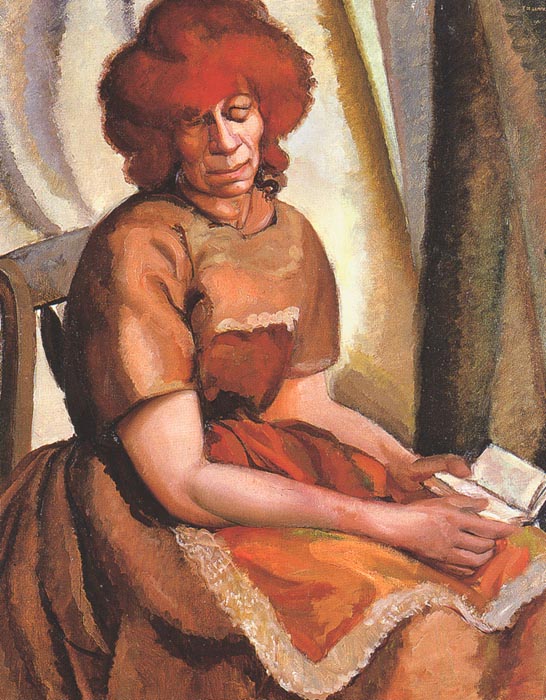
Redheaded Woman Reading — Tamara de Lempicka

redheaded-woman-reading-1922

See The Corner, David Simon’s Dress Rehearsal for The Wire

Continue reading “See The Corner, David Simon’s Dress Rehearsal for The Wire”

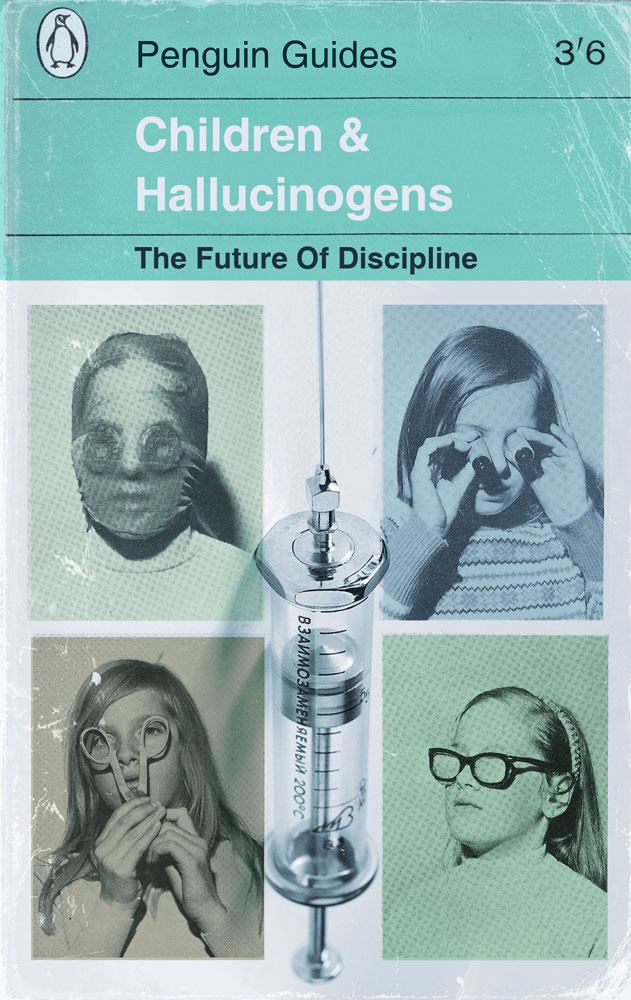
The Penguin Guide to Children and Hallucinogens

Children and hallucinogens

From Scarfolk Council, one of the finest sites I’ve seen in sometime. Their self-description:

Scarfolk is a town in North West England that did not progress beyond 1979. Instead, the entire decade of the 1970s loops ad infinitum. Here in Scarfolk, pagan rituals blend seamlessly with science; hauntology is a compulsory subject at school, and everyone must be in bed by 8pm because they are perpetually running a slight fever. “Visit Scarfolk today. Our number one priority is keeping rabies at bay.” For more information please reread.

The site’s got this wonderfully weird Wickerman / Ballard / Prisoner vibe to it. Very cool stuff.


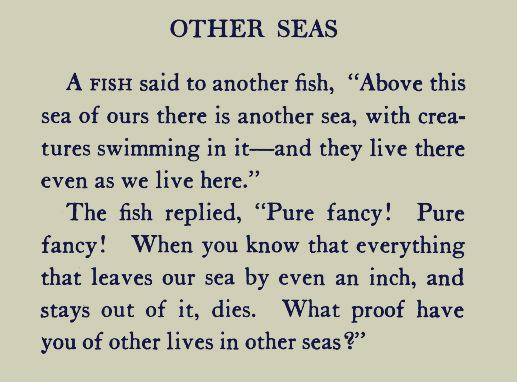
“Other Seas” — Kahlil Gibran

Capture

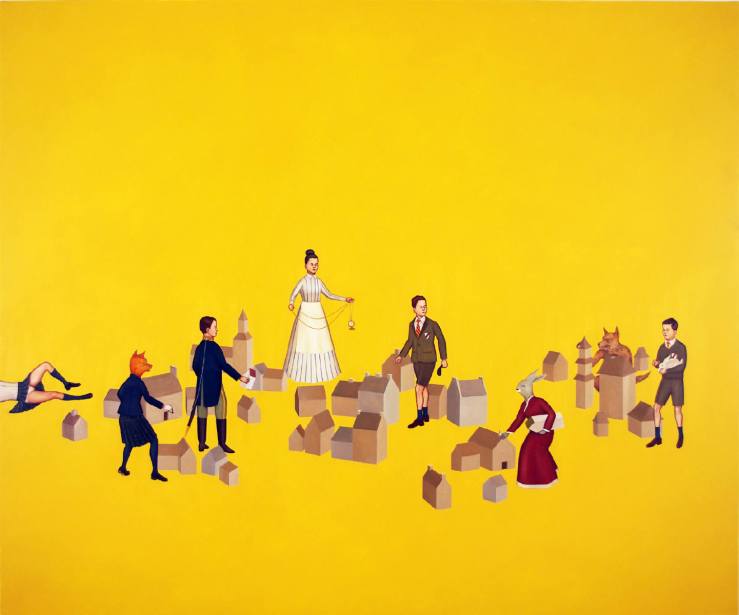
Civilization I — Edward del Rosario

Edward_del_Rosario_Civilization_I_2011_1836_412

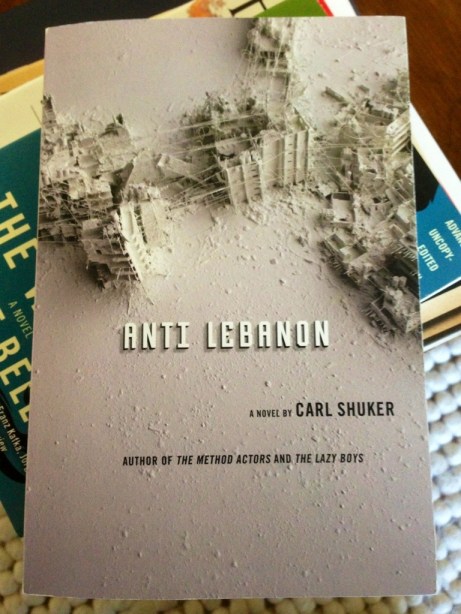
Anti Lebanon (Book Acquired, 3.07.2013)

20130308-110219.jpg

Dipped into this one this morning—first chapter—and so far so good: Carl Shuker’s Anti Lebanon is simultaneously weird and very readable, a mix that reminds me very much of William Gibson. Great cover too. Full review to come, but for now, here’s publisher Counterpoint Press’s blurb:

It is the Arab Spring and the fate of the Christians of the Middle East is uncertain. The many Christians of Lebanon are walking a knife-edge, their very survival in their ancestral refuge in doubt, as the Lebanese government becomes Hezbollah-dominated, while Syria convulses with warring religious factions. Anti Lebanon is a cross-genre political thriller and horror story embedded within these recent events, featuring a multiethnic Christian family living out the lingering after-effects of Lebanon’s civil war as it struggles to deal with its phantoms, its ghosts, and its vampires.

Leon Elias is a young and impoverished Lebanese man whose older sister had joined a Christian militia and has been killed. He becomes caught up in the recent “little war” in Beirut, when the Shi’a resistance/militia Hezbollah takes over most of the city. In this milieu—the emptied streets of Christian east Beirut, the old shell-scarred sandstone villas, the echoing gunfire—he becomes involved, only partly by choice, in the theft of a seriously valuable piece of artisanal jewelry, and is bitten—like a vampire—by its Armenian maker.

Events take a ghostly and mysterious turn as the factions jostling for power in Beirut begin to align against him and his family, and he is forced to flee the sullied beauty of that wonderful and pitiful country, in this story of love and loss, of the civil war and the Arabization of the “Switzerland of the Middle East,” and of contemporary vampires—beings addicted to violence, lies, and baser primal drives.

Carl Shuker is a remarkable writer. A storyteller in the tradition of Celine and J. G. Ballard, no one alive writes better sentences. Anti Lebanon will delight his fans and entrance anyone new to his fine work.


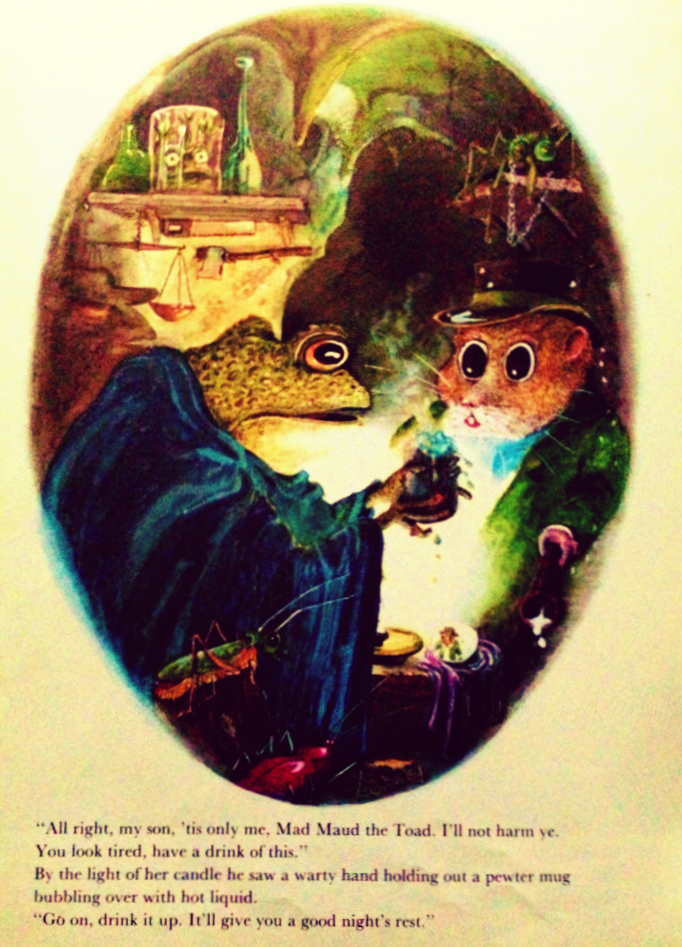
Mad Maud the Toad

20130306-180233

“Unhappiness” — Franz Kafka

“Unhappiness” by Franz Kafka

WHEN it was becoming unbearable – once toward evening in November – and I ran along the narrow strip of carpet in my room as on a racetrack, shrank from the sight of the lit-up street, then turning to the interior of the room found a new goal in the depths of the looking glass and screamed aloud, to hear only my own scream which met no answer nor anything that could draw its force away, so that it rose up without check and could not stop even when it ceased being audible, the door in the wall opened toward me, how swiftly, because swiftness was needed and even the cart horses down below on the paving stones were rising in the air like horses driven wild in a battle, their throats bare to the enemy.

Like a small ghost a child blew in from the pitch-dark corridor, where the lamp was not yet lit, and stood a-tiptoe on a floor board that quivered imperceptibly. At once dazzled by the twilight in my room she made to cover her face quickly with her hands, but contented herself unexpectedly with a glance at the window, where the mounting vapor of the street lighting had at last settled under its cover of darkness behind the crossbars. With her right elbow she supported herself against the wall in the open doorway and let the draught from outside play along her ankles, her throat, and her temples.

I gave her a brief glance, then said ‘Good day,’ and took my jacket from the hood of the stove, since I didn’t want to stand there half-undressed. For a little while I let my mouth hang open, so that my agitation could find a way out. I had a bad taste in my mouth, my eyelashes were fluttering on my cheeks, in short this visit, though I had expected it, was the one thing needful.

The child was still standing by the wall on the same spot, she had pressed her right hand against the plaster and was quite taken up with finding, her cheeks all pink, that the whitewashed walls had a rough surface and chafed her finger tips. I said: ‘Are you really looking for me? Isn’t there some mistake? Nothing easier than to make a mistake in this big building. I’m called So-and-so and I live on the third floor. Am I the person you want to find? Continue reading ““Unhappiness” — Franz Kafka”

Man Seated by a Window — Marcel Duchamp

man-seated-by-a-window-1907

List with No Name #19

  1. The part where Ahab says he’d strike at the sun if it insulted him.
  2. The fight at Ennet halfway house.
  3. When Bloom stands up to the cyclops.
  4. Judge Holden directing the men to make gunpowder.
  5. Pretty much all of “The Bear.”
  6. When Raskolnikov does the second murder.
  7. Janie kills Teacake.
  8. The chapter where Netley drives Gull around London and Gull extemporizes a lecture on history and crime.
  9. Those last twenty pages of Correction.
  10. Bast yelling in anger at little JR.
  11. That other underground man, the invisible one, escaping electroshock experiments in the hospital.
  12. Lear and his dead daughter Cordelia.


Half/whole (Hesiod)

hesiod

Leland Palmer Lip-syncs Beach House’s “Wishes” from the Comfort of His Satin Baseball Jacket

Watch Return to Oz, the Bizarre 1985 Sequel to The Wizard of Oz (Also: A Riff)

1. Ah, 1985. I was just a kid. A young kid. And my folks took me to see Walter Murch’s Return to Oz, an unofficial sequel to The Wizard of Oz.

Return to Oz is a film so bleak and dark and bizarre that its imagery still lives in the nooks of my nightmares.

2. Not that I didn’t enjoy Return to Oz—to be clear, I did. But it horrified me in ways that surpassed the deep horror I’d experienced viewing the 1939 film The Wizard of Oz.

3. (The green Wicked Witch cackling “I’ll get you my pretty” in The Wizard of Oz being something of a founding moment of horrific horror, a horror amplified by my mother’s tendency to act out the line at weird moments as she tickled me or chased me or picked me up from school).

4. But Return to Oz: this movie is dark. It’s fucked up.

Dorothy gets institutionalized and treated with electroshock therapy. Then she goes to Oz, where she’s pursued by Wheelers, these things that roll around on rollerskate hands and feet, which, you know, should be whimsical, but are instead horrific. Then there’s this cabinet of detached heads, which could have been handled playfully, but no, instead it’s like something out of Hieronymus Bosch. Even Dorothy’s friends are these weird, off-putting versions that don’t match up to the original trio of Scarecrow, Tinman, and Lion. Instead we get Tik-Tok, an android who looks like a swollen pot-bellied C3PO, and Jack Pumpkinhead, a guy with a pumpkin for a head. These friends don’t look human at all (because they aren’t). There’s a quest; they cross a desert; they save the day, etc.

It ends with Dorothy returned, not exactly safely, to aunt and uncle.

5. So Disney made another unofficial sequel, Oz the Great and Powerful, this time from director Sam Raimi (Return’s Murch never directed another film, by the way). Despite his franchise work on the first trilogy of Spider-Man films, Raimi is an auteur who gave us cult classics like Darkman and the Evil Dead trilogy. I loved his last film Drag Me to Hell, which mixed humor with noir and genuine horror.

6. Oz the Great and Powerful is of course doomed, no matter how much money it makes. It’s doomed in the way that The Two Jakes was doomed, or Godfather III was doomed, or Citizen Kane 2: Electric Boogaloo was doomed: There’s no way that it can surpass, let alone stand up next to, the strength of the prototype.

7. Still, I think that if Raimi has brought enough of his own weirdness to the film, we might get a fascinating artifact. My real hope is that there will be a strong streak of Evil Dead 2 in Raimi’s Disney, a streak of bizarre dark weirdness to baffle and disturb a new generation. Hell, maybe I’ll take my kids.

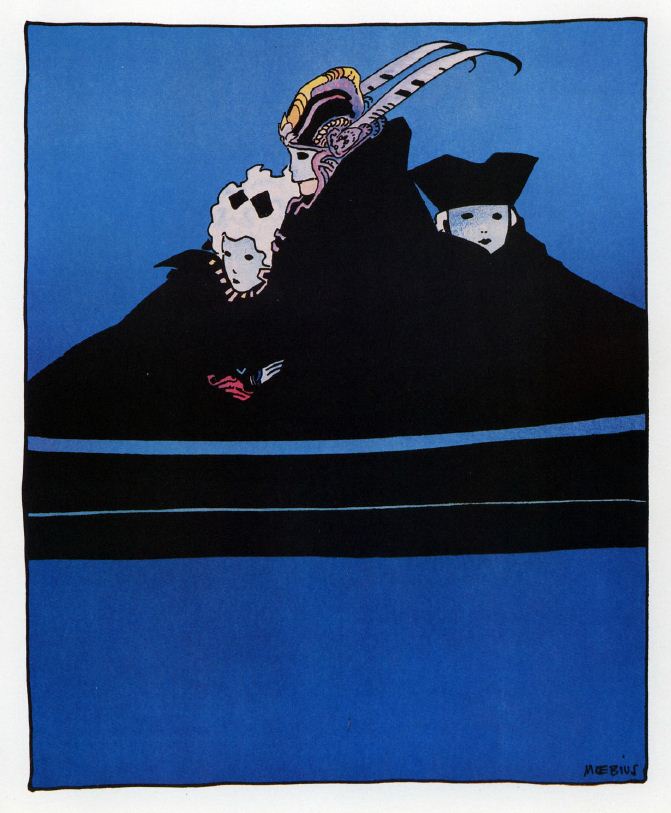
Venetian Carnival — Moebius

venetian moebius

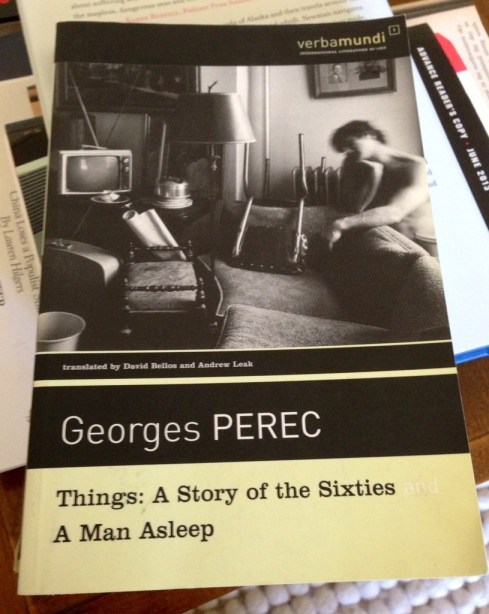
Georges Perec (Books Acquired, Some Time Last Week)

20130304-154911.jpg

I picked up Georges Perec’s twofer Things and A Man Asleep last Friday at the used bookstore. I was there looking for something else. The Perec was not even shelved under “P.” I found it laid on a table. The good people at Melville House also sent me a copy of Perec’s La Boutique Obscure last week, which I do not photograph here because it is an ebook. I read a big chunk of Obscure this week and will do some kind of write-up sometime soon, but here’s David Auerbach’s review at the LA Review of Books in the meantime.

“Chippings with a Chisel” — Nathaniel Hawthorne

“Chippings with a Chisel” by Nathaniel Hawthorne

Passing a summer several years since at Edgartown, on the island of Martha’s Vineyard, I became acquainted with a certain carver of tombstones who had travelled and voyaged thither from the interior of Massachusetts in search of professional employment. The speculation had turned out so successful that my friend expected to transmute slate and marble into silver and gold to the amount of at least a thousand dollars during the few months of his sojourn at Nantucket and the Vineyard. The secluded life and the simple and primitive spirit which still characterizes the inhabitants of those islands, especially of Martha’s Vineyard, insure their dead friends a longer and dearer remembrance than the daily novelty and revolving bustle of the world can elsewhere afford to beings of the past. Yet, while every family is anxious to erect a memorial to its departed members, the untainted breath of Ocean bestows such health and length of days upon the people of the isles as would cause a melancholy dearth of business to a resident artist in that line. His own monument, recording his decease by starvation, would probably be an early specimen of his skill. Gravestones, therefore, have generally been an article of imported merchandise.

In my walks through the burial-ground of Edgartown—where the dead have lain so long that the soil, once enriched by their decay, has returned to its original barrenness—in that ancient burial-ground I noticed much variety of monumental sculpture. The elder stones, dated a century back or more, have borders elaborately carved with flowers and are adorned with a multiplicity of death’s-heads, crossbones, scythes, hour-glasses, and other lugubrious emblems of mortality, with here and there a winged cherub to direct the mourner’s spirit upward. These productions of Gothic taste must have been quite beyond the colonial skill of the day, and were probably carved in London and brought across the ocean to commemorate the defunct worthies of this lonely isle. The more recent monuments are mere slabs of slate in the ordinary style, without any superfluous flourishes to set off the bald inscriptions. But others—and those far the most impressive both to my taste and feelings—were roughly hewn from the gray rocks of the island, evidently by the unskilled hands of surviving friends and relatives. On some there were merely the initials of a name; some were inscribed with misspelt prose or rhyme, in deep letters which the moss and wintry rain of many years had not been able to obliterate. These, these were graves where loved ones slept. It is an old theme of satire, the falsehood and vanity of monumental eulogies; but when affection and sorrow grave the letters with their own painful labor, then we may be sure that they copy from the record on their hearts. Continue reading ““Chippings with a Chisel” — Nathaniel Hawthorne”