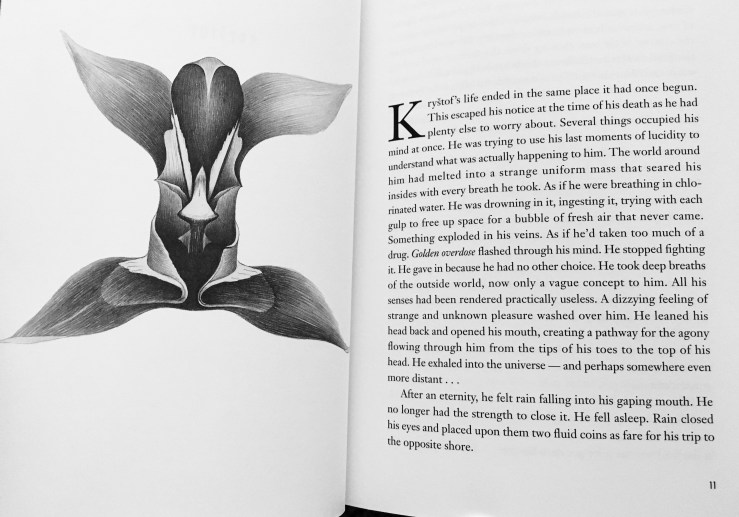
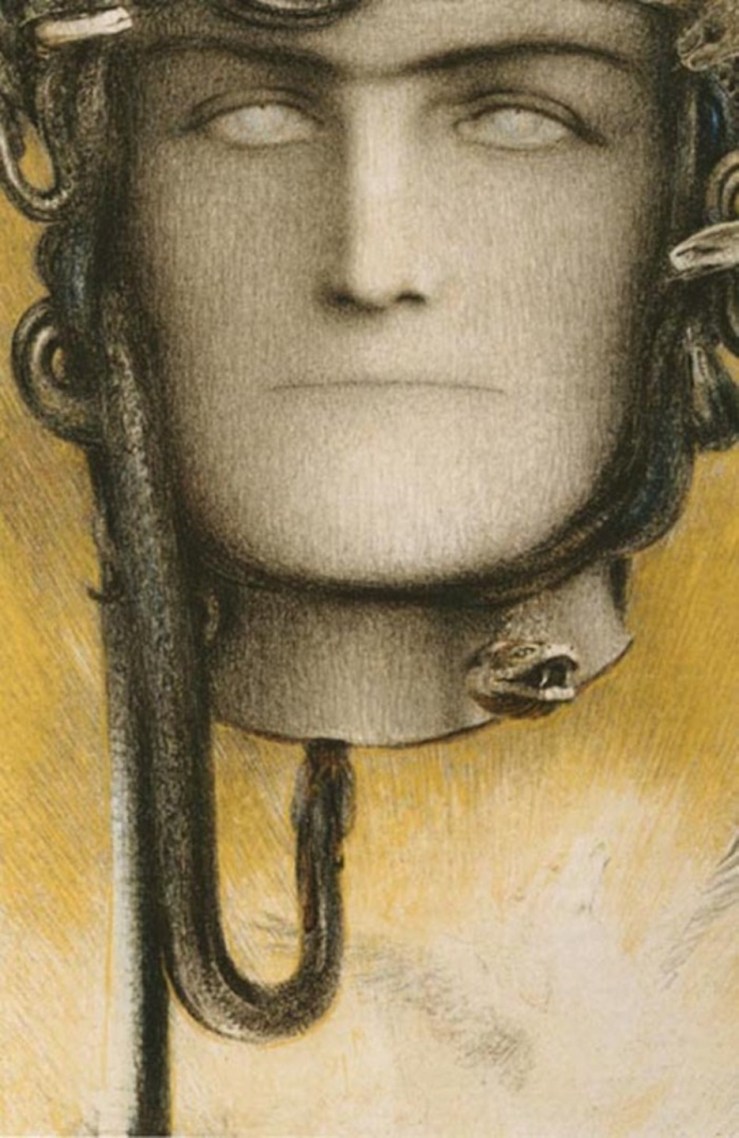
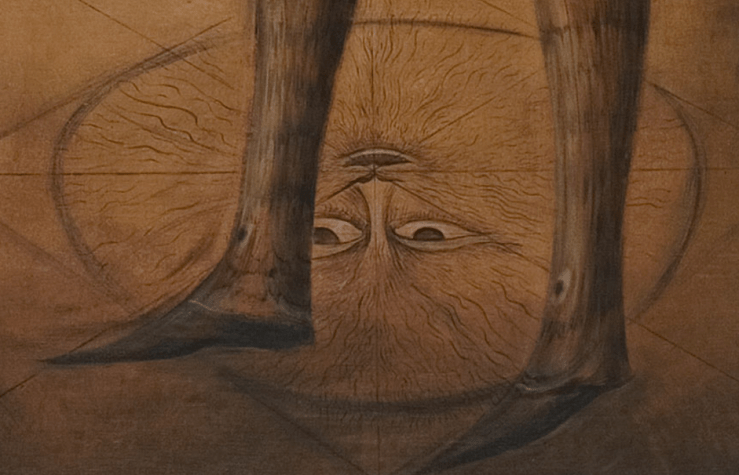
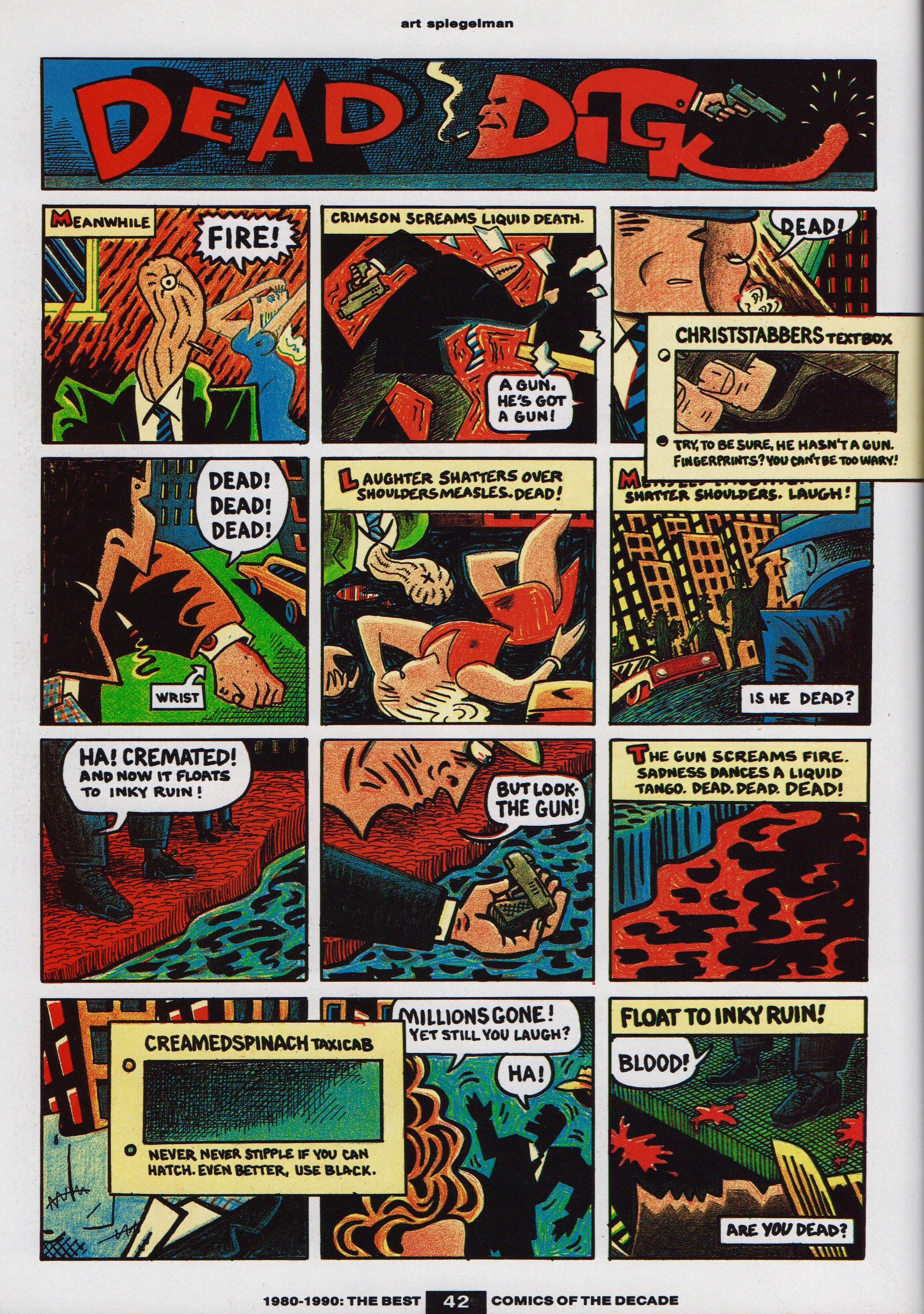
I couldn’t pass up this 1958 illustrated edition of Ambrose Bierce’s caustic classic The Devil’s Dictionary. It’s published by The Peter Pauper Press, with art by Joseph Low. I took the matching dust jacket off for the scan above. A sample of the innards:
Author: Biblioklept
Selections from One-Star Amazon Reviews of Margaret Atwood’s The Handmaid’s Tale
[Editorial note: The following citations come from one-star Amazon reviews of Margaret Atwood’s novel The Handmaid’s Tale. (For the record, I think The Handmaid’s Tale is pretty great).
I’ve preserved the reviewers’ original punctuation and spelling. More one-star Amazon reviews].
shrill
Strange
no hope
anti male story
boring and odd
Feminist dogma
anti-religious zeal
poorly researched
futuristic yet dated
no good verses evil
Political propaganda
socialist point of view
Too many adjectives!!
extremely depressing
It all-around too much
tries to be all futuristic
I’m not a Christian, but
Overuse of punctuation
Sorry but no one liked it
a lot of words were used
twisted grossness and blah
Not a feminist novel for sure
Actually, it is about infertility
Written by a 12-year-old shut in
It’s hard to glean what happened
Not realistic as a futuristic fantasy
pointless exercise in self-contempt
annoying stream-of-consciousness style
these fertile women aren’t treated badly
an academic’s paranoid bondage fantasy
a lot of sexual situations and foul language
The reader is always in a confused state of mind
The main character doesn’t grow or learn anything
The author created a lot of terms but didn’t explain them
literally fills the pages by talking about grocery shopping
obviously has an ax to grind with Judeo-Christian principle
There isn’t much focus on what women are not allowed to do
Mostly just someone running errands in an American dystopia
an author who obviously doesn’t understand the passages from the Bible
main character is weak, conviction less and incapable of making any exciting moves
I’m going to bury it in the ground and let the worms eat all those words unfit for human consumption
drones on and on about brick sidewalks and rays of sunlight and tulips and blue stripes on kitchen towels
Is this supposed to be 1984, Brave New World, or even Hunger Games? If you compare it to any of those books, it is utter fail.
Chair — Matthias Weischer
Chair, 2004 by Matthias Weischer (b. 1974)
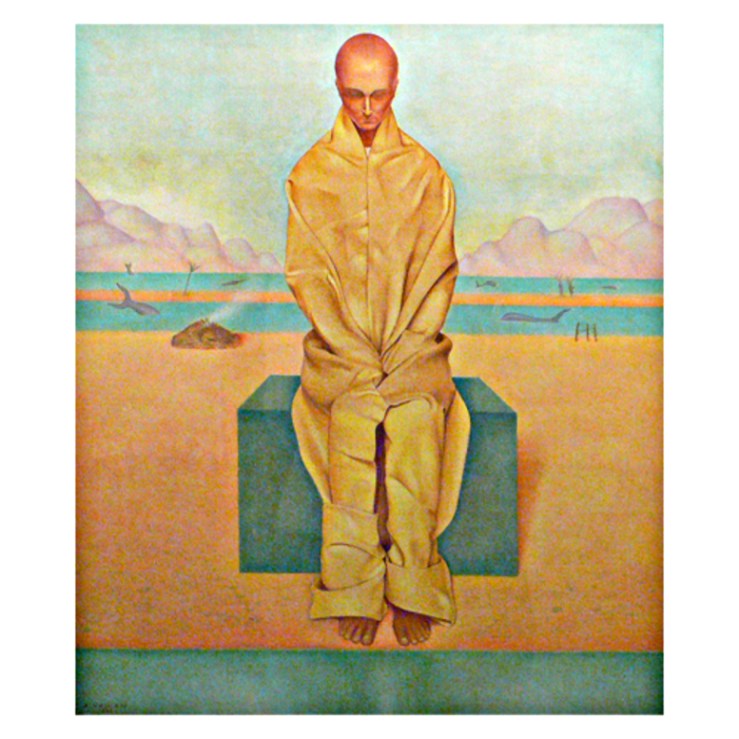
Shore for the Unmanned — Jean-Pierre Roy
Self Portrait as Great Scout Leader III — Julie Heffernan
Self Portrait as Great Scout Leader III, 2010 by Julie Heffernan (b. 1956)
A Chronicle of Drifting — Kansuke Yamamoto

A Chronicle of Drifting, 1949 by Kansuke Yamamoto (1914-87)
Dream — Lajos Gulácsy

Dream, 1903 by Lajos Gulácsy (1882-1932)
Miguel Ángel Asturias’s weird novel Mulata (Book acquired, 14 April 2017)

I admit that I picked up Miguel Ángel Asturias’s 1963 novel Mulata de Tal because of the cover and blurb alone. This 1982 translation is by Gregory Rabassa, and part of a series of Latin American authors that Avon/Bard put out in really cool attractive mass market paperbacks in the 1980s. The titles can be hit or miss, but I like the energy of the first two chapters of Mulata. Back cover blurb:

Sunday Comics
Pages and panels from “The Parliament of Trees,” Swamp Thing #47 (April, 1986) by Alan Moore with guest art by Stan Woch and Ron Randall and colors by Tatjana Wood. Seemed appropriate for Earth Day weekend (and I’m still burning through Moore’s run on Swamp Thing.
In this issue, Swamp Thing goes to South America via his death/resurrection power.
–and gets a new “costume”—
He meets other flora Elementals: There’s a cool splash page:
Cormac McCarthy’s essay “The Kekulé Problem,” a meditation on language and consciousness

The science magazine Nautilus has published Cormac McCarthy’s essay “The Kekulé Problem.” This is the first piece of nonfiction that McCarthy has published. It’s a fascinating essay that takes its name from a dream of Friedrich August Kekulé, “father of organic chemistry.” Kekulé dreamed of an ouroboros, an unconscious insight that led him to “discover” the ring-structure of the benzene molecule. (Thomas Pynchon writes about Kekulé’s dream in Gravity’s Rainbow, by the way). Anyway, it’s a nice piece on a complex subject, and it’s fun to watch McCarthy move from lucid, transparent, and direct prose into wry fragments that are, well, more McCarthyesque. From the essay––
The evolution of language would begin with the names of things. After that would come descriptions of these things and descriptions of what they do. The growth of languages into their present shape and form—their syntax and grammar—has a universality that suggests a common rule. The rule is that languages have followed their own requirements. The rule is that they are charged with describing the world. There is nothing else to describe.
All very quickly. There are no languages whose form is in a state of development. And their forms are all basically the same.
We dont know what the unconscious is or where it is or how it got there—wherever there might be. Recent animal brain studies showing outsized cerebellums in some pretty smart species are suggestive. That facts about the world are in themselves capable of shaping the brain is slowly becoming accepted. Does the unconscious only get these facts from us, or does it have the same access to our sensorium that we have? You can do whatever you like with the us and the our and the we. I did. At some point the mind must grammaticize facts and convert them to narratives. The facts of the world do not for the most part come in narrative form. We have to do that.
David Berman goes to Israel in the 2007 documentary Silver Jew
Edible (Ambrose Bierce)
Pity — William Blake


Pity, c. 1795 by William Blake (1757–1827)
The Expulsion from Eden — John Roddam Spencer Stanhope

The Expulsion from Eden, c. 1900 by John Roddam Spencer Stanhope (1829–1908)
Hospitalized for approaching perfection
Read “An Experiment in Misery,” a short story by Stephen Crane
“An Experiment in Misery”
by
Stephen Crane
It was late at night, and a fine rain was swirling softly down, causing the pavements to glisten with hue of steel and blue and yellow in the rays of the innumerable lights. A youth was trudging slowly, without enthusiasm, with his hands buried deep in his trouser’s pockets, towards the down-town places where beds can be hired for coppers. He was clothed in an aged and tattered suit, and his derby was a marvel of dust-covered crown and torn rim. He was going forth to eat as the wanderer may eat, and sleep as the homeless sleep. By the time he had reached City Hall Park he was so completely plastered with yells of “bum” and “hobo,” and with various unholy epithets that small boys had applied to him at intervals, that he was in a state of the most profound dejection. The sifting rain saturated the old velvet collar of his overcoat, and as the wet cloth pressed against his neck, he felt that there no longer could be pleasure in life. He looked about him searching for an outcast of highest degree that they too might share miseries, but the lights threw a quivering glare over rows and circles of deserted benches that glistened damply, showing patches of wet sod behind them. It seemed that their usual freights had fled on this night to better things. There were only squads of well-dressed Brooklyn people who swarmed towards the bridge.
The young man loitered about for a time and then went shuffling off down Park Row. In the sudden descent in style of the dress of the crowd he felt relief, and as if he were at last in his own country. He began to see tatters that matched his tatters. In Chatham Square there were aimless men strewn in front of saloons and lodging-houses, standing sadly, patiently, reminding one vaguely of the attitudes of chickens in a storm. He aligned himself with these men, and turned slowly to occupy himself with the flowing life of the great street.
Through the mists of the cold and storming night, the cable cars went in silent procession, great affairs shining with red and brass, moving with formidable power, calm and irresistible, dangerful and gloomy, breaking silence only by the loud fierce cry of the gong. Two rivers of people swarmed along the side walks, spattered with black mud, which made each shoe leave a scar-like impression. Overhead elevated trains with a shrill grinding of the wheels stopped at the station, which upon its leg-like pillars seemed to resemble some monstrous kind of crab squatting over the street. The quick fat puffings of the engines could be heard. Down an alley there were sombre curtains of purple and black, on which street lamps dully glittered like embroidered flowers. Continue reading “Read “An Experiment in Misery,” a short story by Stephen Crane”
Adam and Eve — Carlos Alonso


Adan y Eva (Adam and Eve), 1965 by Carlos Alonso (b. 1929)