October 17th.–Some of the oaks are now a deep brown red; others are changed to a light green, which, at a little distance, especially in the sunshine, looks like the green of early spring. In some trees, different masses of the foliage show each of these hues. Some of the walnut-trees have a yet more delicate green. Others are of a bright sunny yellow.
Mr.—- was married to Miss —- last Wednesday. Yesterday Mr. Brazer, preaching on the comet, observed that not one, probably, of all who heard him, would witness its reappearance. Mrs.—- shed tears. Poor soul! she would be contented to dwell in earthly love to all eternity!
Some treasure or other thing to be buried, and a tree planted directly over the spot, so as to embrace it with its roots.
A tree, tall and venerable, to be said by tradition to have been the staff of some famous man, who happened to thrust it into the ground, where it took root.
A fellow without money, having a hundred and seventy miles to go, fastened a chain and padlock to his legs, and lay down to sleep in a field. He was apprehended, and carried gratis to a jail in the town whither he desired to go.
An old volume in a large library,–every one to be afraid to unclasp and open it, because it was said to be a book of magic.
A ghost seen by moonlight; when the moon was out, it would shine and melt through the airy substance of the ghost, as through a cloud.
Prideaux, Bishop of Worcester, during the sway of the Parliament, was forced to support himself and his family by selling his household goods. A friend asked him, “How doth your lordship?” “Never better in my life,” said the Bishop, “only I have too great a stomach; for I have eaten that little plate which the sequestrators left me. I have eaten a great library of excellent books. I have eaten a great deal of linen, much of my brass, some of my pewter, and now I am come to eat iron; and what will come next I know not.”
A scold and a blockhead,–brimstone and wood,–a good match.
To make one’s own reflection in a mirror the subject of a story.
In a dream to wander to some place where may be heard the complaints of all the miserable on earth.
Some common quality or circumstance that should bring together people the most unlike in all other respects, and make a brotherhood and sisterhood of them,–the rich and the proud finding themselves in the same category with the mean and the despised.
A person to consider himself as the prime mover of certain remarkable events, but to discover that his actions have not contributed in the least thereto. Another person to be the cause, without suspecting it.
Author: Biblioklept
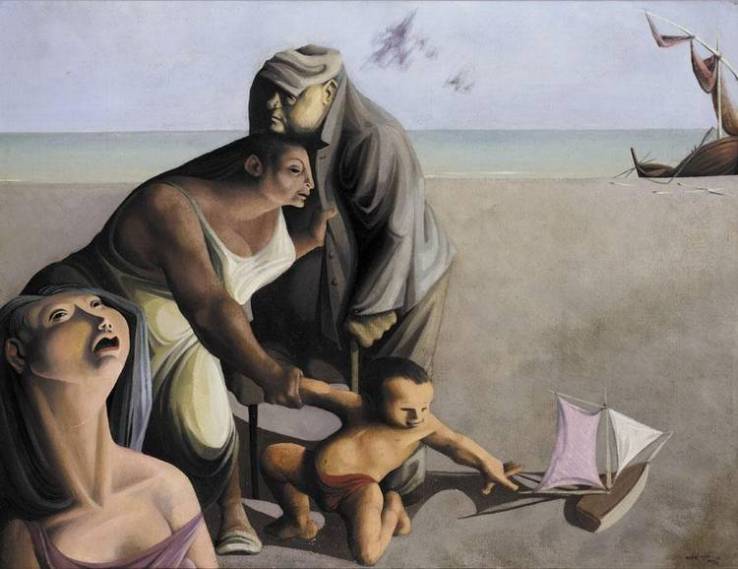
Thunder Approaching — Michael Ayrton
Sunday Comics
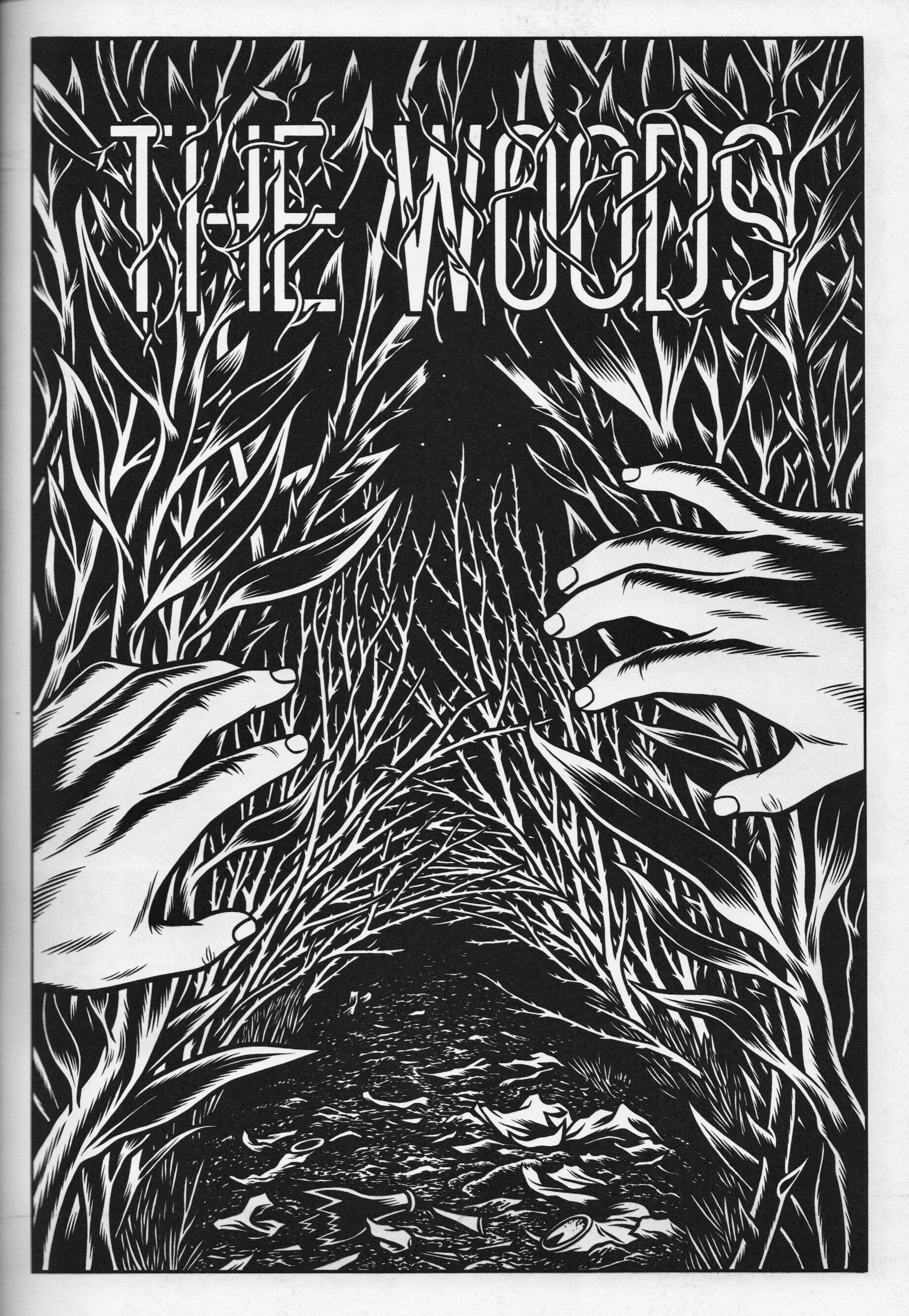


With Halloween approaching, here are three creepy full page panels from Charles Burns’s Black Hole (Pantheon, 2005).
List with No Name #57
- Amerika
- Billy Budd, Sailor
- The Castle
- Confessions of Felix Krull
- The Decembrists
- The First Man
- Fragment of a Novel
- The Garden of Eden
- The Last Tycoon
- The Mysterious Stranger
- The Mystery of Edwin Drood
- The Original of Laura
- The Pale King
- The Pink and the Green
- Stephen Hero
- The Trial
- Under the Hill
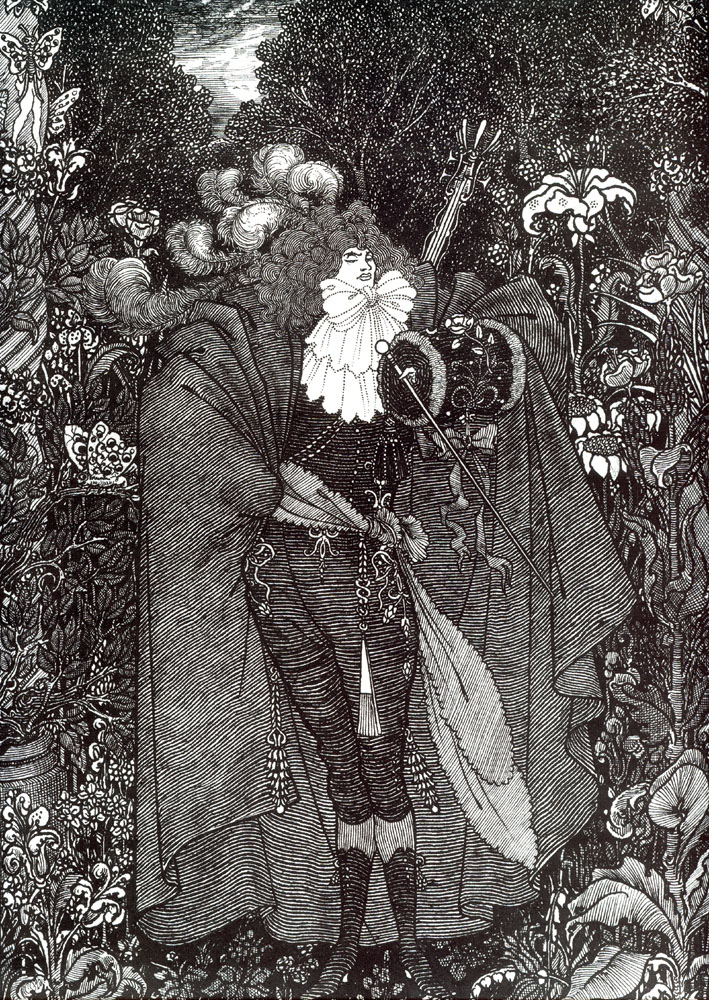
A Nightpiece — Aubrey Beardsley
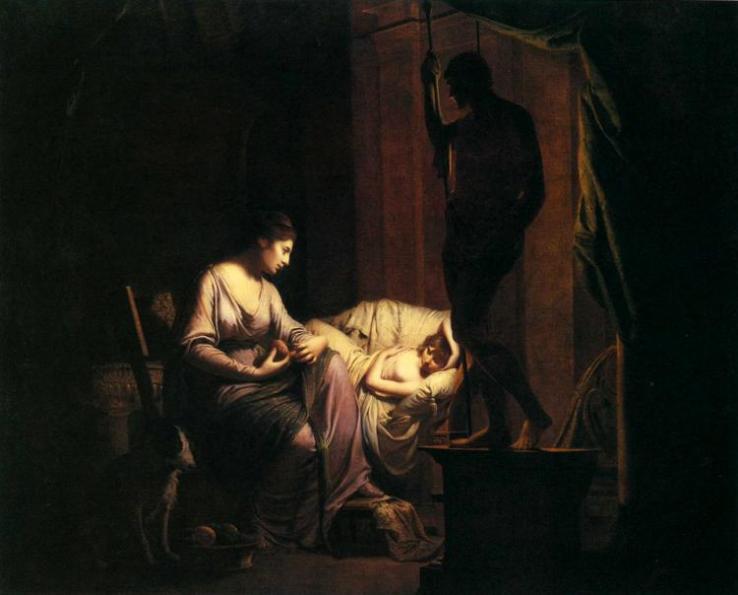
Penelope Unraveling Her Web — Joseph Wright of Derby
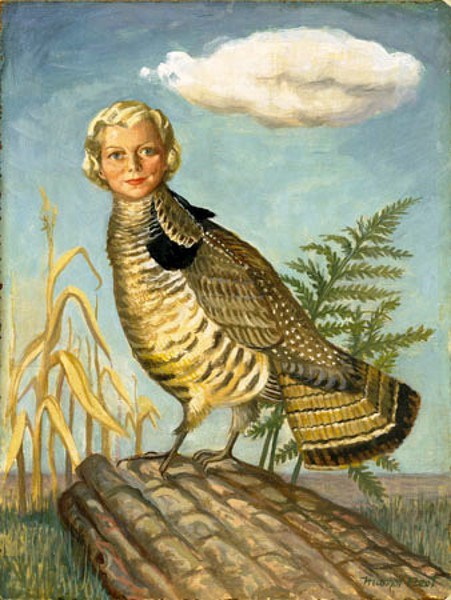
Prairie Chicken (Self-Portrait) — Margot Peet
Seven Self-Portraits — Armand Henrion


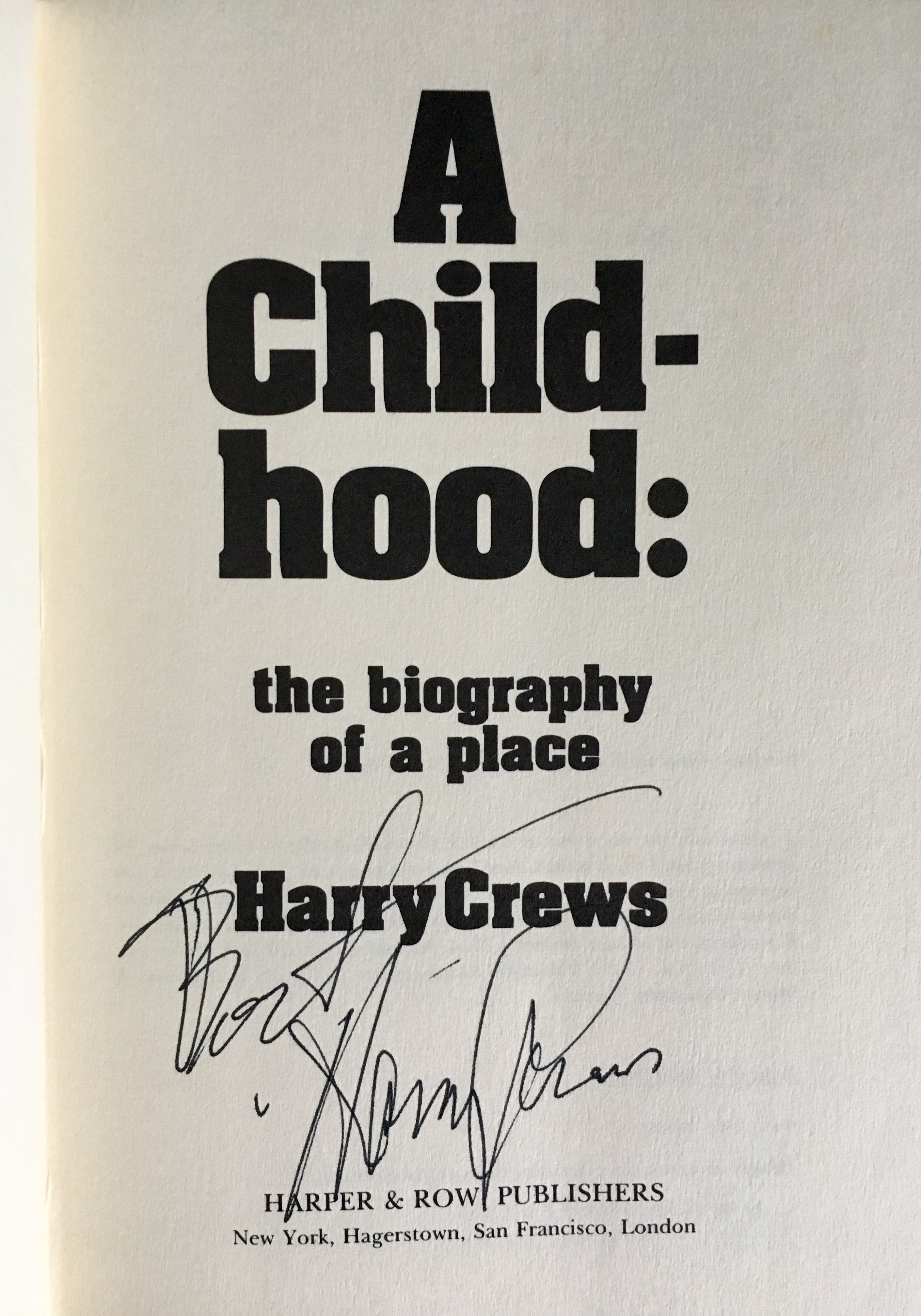
Harry Crews’s A Childhood (Book acquired, 9.20.2016)
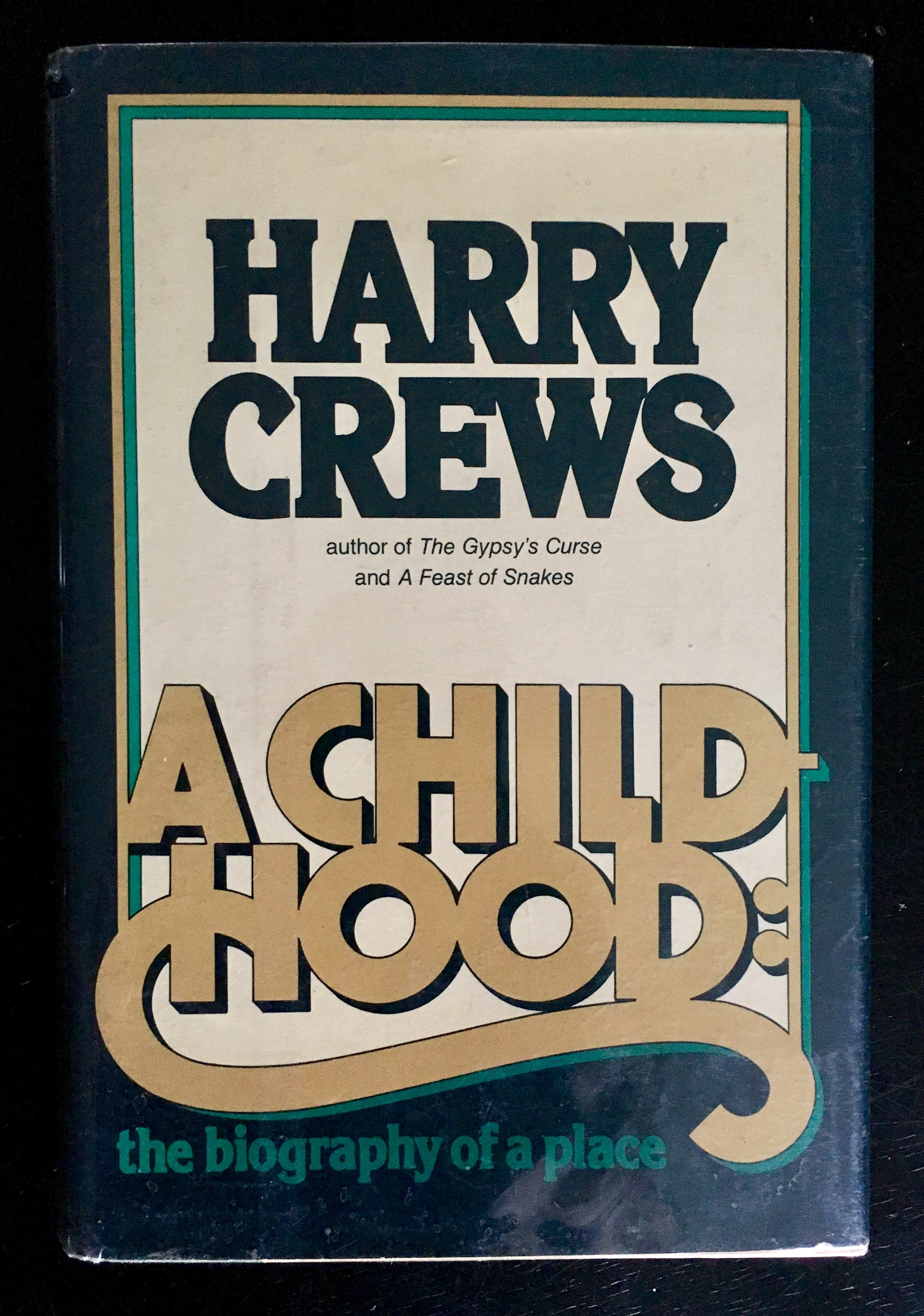
A couple of weeks back, I was looking for John Berryman’s biographical study of Stephen Crane. I did not find it, but I did find a signed hardback edition (not sure if it’s a first or second printing) of Harry Crews’s amazing memoir A Childhood.
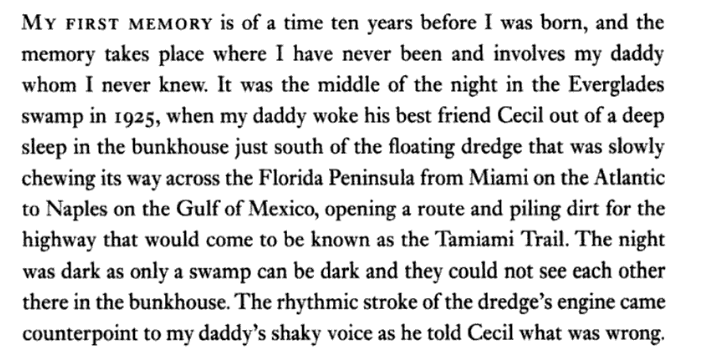
Here’s the opening paragraph:
I already have the book (it’s included in Classic Crews—the best starting place for Crews (you should start)), but I couldn’t pass up a signed copy. (It was like 8 bucks I think, and I have store credit out the wazoo).
Still looking for that Crane biography though.
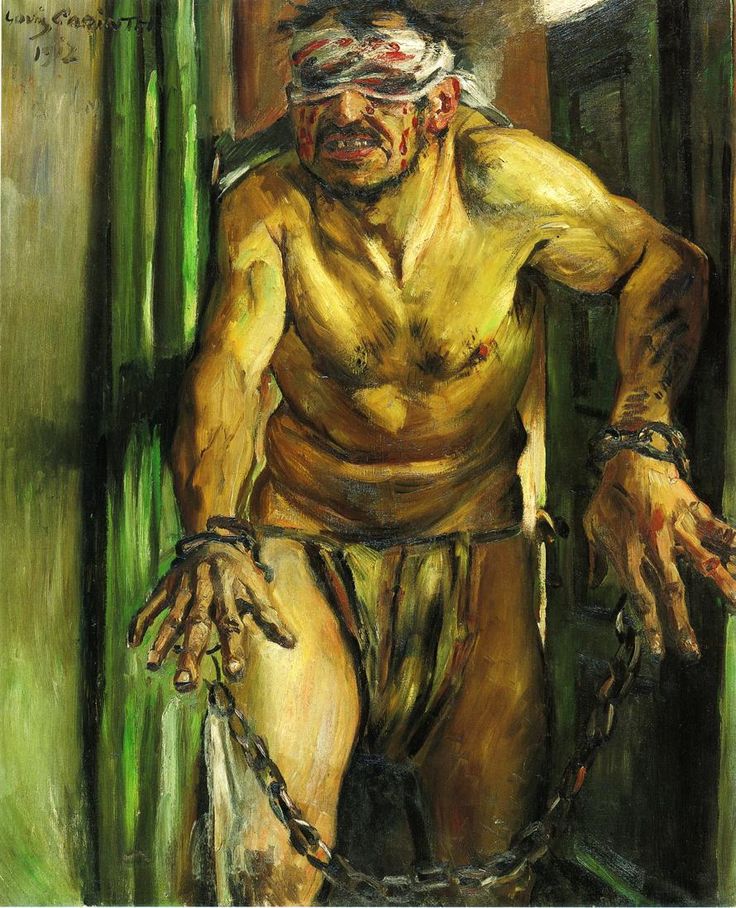
Samson Blinded — Lovis Corinth
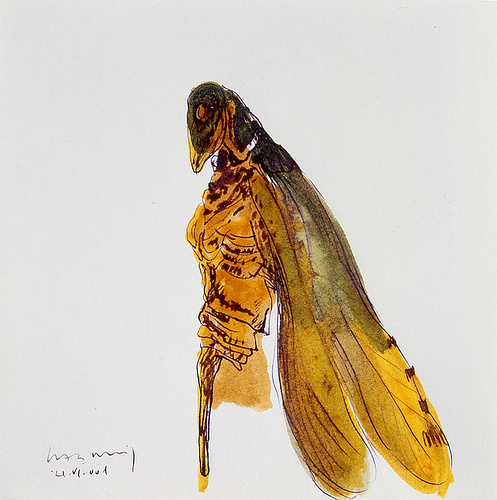
Metamorphoses II — Graca Morais
Portrait of Zora Neale Hurston — Carl Van Vechten

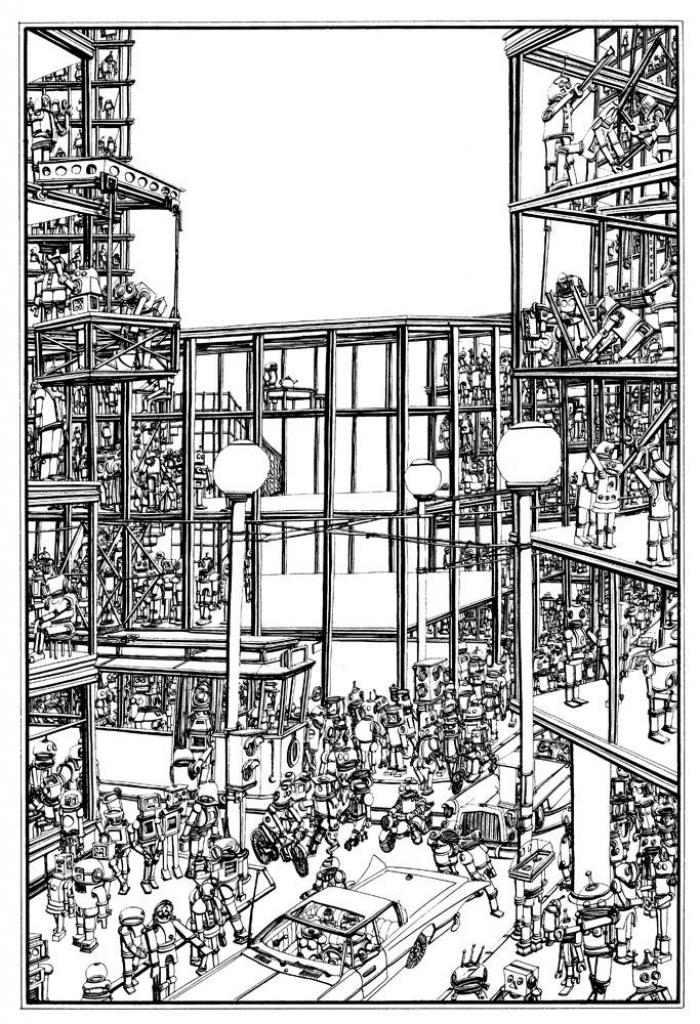
Robot Like You and Me — Hans Georg Rauch
Persefone Meta-statica — Agostino Arrivabene

Isabella and the Pot of Basil — William Holman Hunt
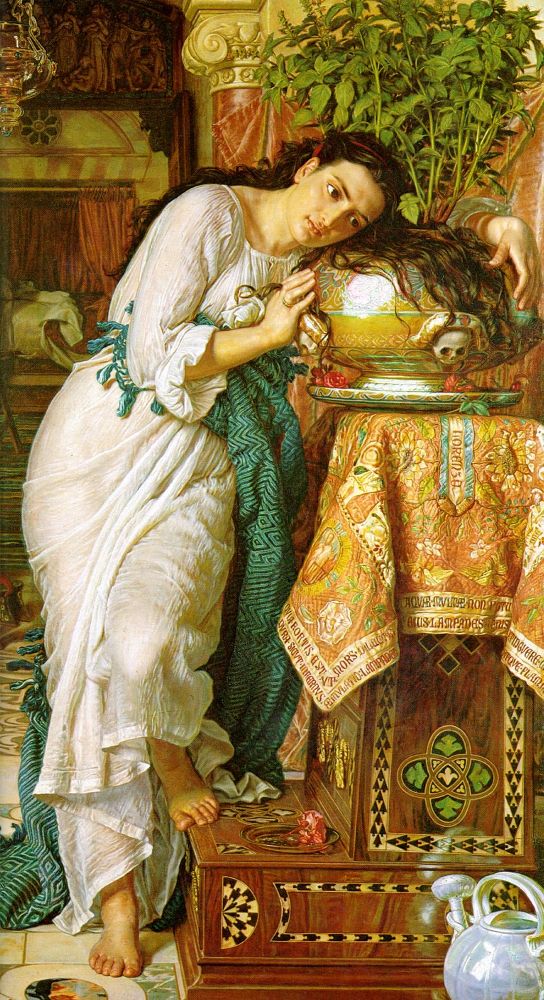
And she forgot the stars, the moon, and sun,
And she forgot the blue above the trees,
And she forgot the dells where waters run,
And she forgot the chilly autumn breeze;
She had no knowledge when the day was done,
And the new morn she saw not: but in peace
Hung over her sweet Basil evermore,
And moisten’d it with tears unto the core.
–John Keats, Isabella, or The Pot of Basil
The most effective method of dealing with the world around us is to assume that it is a complete fiction (J.G. Ballard)
In the past we have always assumed that the external world around us has represented reality, however confusing or uncertain, and that the inner world of our minds, its dreams, hopes, ambitions, represented the realm of fantasy and the imagination. These roles, it seems to me, have been reversed. The most prudent and effective method of dealing with the world around us is to assume that it is a complete fiction – conversely, the one small node of reality left to us is inside our own heads. Freud’s classic distinction between the latent and manifest content of the dream, between the apparent and the real, now needs to be applied to the external world of so-called reality.
From J.G. Ballard’s 1995 introduction to the Vintage reprint of his 1973 novel Crash.
The Loyal Retainers (detail) — Mu Pan