The Enchanted Fairy Tree — Richard Doyle

the_enchanted_fairy_tree_by_richard_doyle

Steven Soderbergh, Mira Nair, Spike Lee, and Julian Schnabel on The Battle of Algiers

The Rule of the Circle, the Rule of the Game — Geta Bratescu

the-rule-of-the-circle-the-rule-of-the-game-19857

Sunday Comics

img_3563

img_3560

img_3565-1

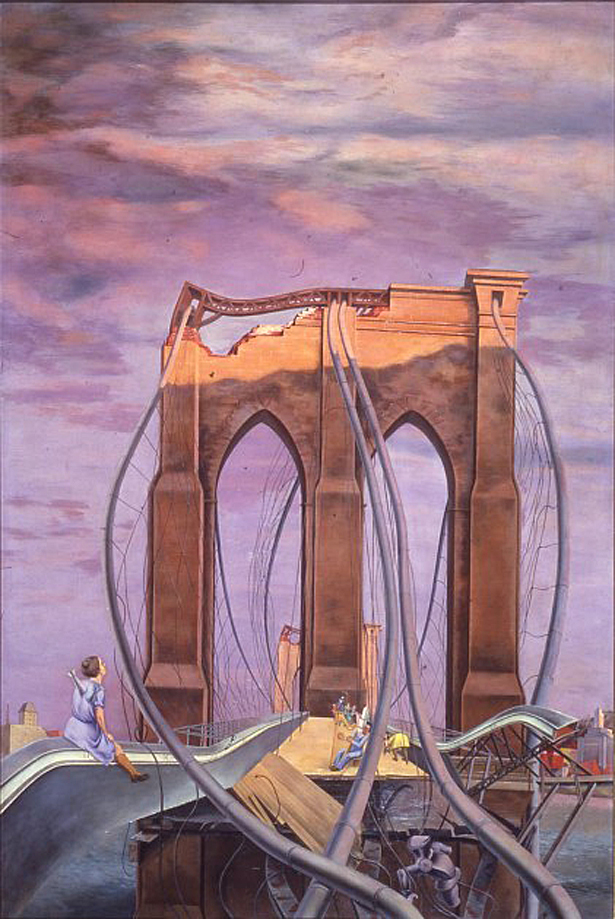
From In the Shadow of No Towers by Art Spiegelman, Pantheon, 2004.

Marian Engel’s Bear (Book acquired, 9.10.2016)

img_3514

I can’t remember where or how I read about Marian Engel’s 1976 novel Bear, but I was intrigued. In lieu of the blurb, here’s Sara Bynoe at Hazlitt on Bear:

The first thing you need to know about Marian Engel’s 1976 novel Bear is that it is about a woman who has sex with a giant bear. Not a metaphorical, figurative, concept-within-a-creature bear: a real, furry, wild brown bear. There’s more to it than that, but why bury the lead?

The second thing you need to know, however, is that this is not some fringe underground chapbook: it won the Governor General’s award—the highest Canadian honour for the literary arts—in a year in which the jury included Mordecai Richler, Margaret Laurence, and Alice Munro.

We’re talking about Bear right now, though, because someone recently posted its cover and some particularly raunchy sections of the book to Imgur under the title, “WHAT THE ACTUAL FUCK, CANADA?” There was even a little boost in e-book sales after the book’s cover—an illustration of a lithe, topless woman with flowing brunette locks being embraced from behind by a bear standing on its hind legs—went viral. It looks like a Harlequin romance novel: ursine Fabio and his eager human companion, lost together, alone in a world that will never understand the depths of their potentially life-threatening interspecies love.

Hazlitt also commissioned some alternate covers for Bear. I like the cover on the Nonpareil (2003) edition I got (a wood engraving by Wesley W. Bates)—but the original cover is a trashy doozy:

bearprimesma

Mental Complacency — Rene Magritte

tumblr_nc9o56aj4l1ts7it9o1_1280

Biblioklept is ten years old today, so ten sets of ten somethings

This blog is ten years old today. So here are ten sets of ten somethings.

Just a picture of ten random books, which in no way should be thought of as a real list, okay?:

img_3513

Ten great books I read in 2016:

  1. JR, William Gaddis–a reread that topped the list of nine books that I said I wanted to reread in the Biblioklept Ninth Anniversary Post Spectacular
  2. Collected Stories, William Faulkner
  3. A Temple of Texts, William Gass
  4. Quiet Creature on the Corner, João Gilberto Noll
  5. The Franchiser, Stanley Elkin
  6. The Dick Gibson Show, Stanley Elkin
  7. Marketa Lazarova, Vladislav Vančura
  8. A Manual for Cleaning Women, Lucia Berlin
  9. The Leopard, Giuseppe di Lampedusa
  10. Elena Ferrante’s Neapolitan Novel Quartet, which I guess actually counts as four novels, but whatever
the-ten-commandments
Ten Commandments, Lucas Cranach the Elder

Ten books I want to read soonish:

  1. There Is a Tree More Ancient Than Eden, Leon Forrest, a novel I’m actually reading now so I’m not sure if it counts
  2. Bear, Marian Engel
  3. The Tunnel, William Gass
  4. The Last Days of Louisiana Red, Ishmael Reed
  5. 99 Stories of God, Joy Williams
  6. Antigonick, Anne Carson
  7. Vineland, Thomas Pynchon
  8. The Lime Twig, John Hawkes
  9. The Magic Kingdom, Stanley Elkin
  10. The Passenger, Cormac McCarthy—drop the album, Cormac!
dp809135
Ten Bacchanal Scenes, Jean Philippe Guy Le Gentil

Ten reviews of books (perhaps underrated or under-remarked upon, at least–the books, I mean, not the reviews) by authors whose last names begin with B:

  1. U.S.!, Chris Bachelder
  2. Sandokan, Nanni Balestrini
  3. The Complete Short Stories of J.G. Ballard (specifically, “The Subliminal Man”) J.G. Ballard
  4. The Hospital Ship, Martin Bax
  5. Gargoyles, Thomas Bernhard
  6. 2666, Roberto Bolaño (hell yeah it’s underrated)
  7. Two Serious Ladies, Jane Bowles
  8. First Love and Other Sorrows, Harold Brodkey
  9. Lenz, Georg Büchner
  10. X’ed Out, Charles Burns
studies-on-a-great-picture-of-the-virgin-madonna-with-child-ten-saints-and-angels
Sketch with Ten Saints (etc.), Albrecht Durer
dp163170
Ten Panels of a Scholars Books, unidentified early 20th c. Korean artist

Ten books I aim to re-read sooner rather than later:

  1. Gravity’s Rainbow, Thomas Pynchon
  2. The Pale King, David Foster Wallace
  3. 2666, Roberto Bolaño
  4. Moby-Dick, Herman Melville
  5. The Confidence-Man, Herman Melville
  6. The House of Seven Gables, Nathaniel Hawthorne
  7. Autobiography of Red, Anne Carson
  8. Blood Meridian, Cormac McCarthy (2015 is the first time I didn’t reread it)
  9. Native Son, Richard Wright
  10. The Earthsea Cycle, Ursula K. Le Guin (hopefully with my daughter, who’s just a bit younger than this blog, and with whom I’ve been reading the Harry Potter books way.too.long.).
dp817251
Ten Cavaliers Forming a Circle, Stefano della Bella

Thanks for reading/viewing/etc.


A Crouching Woman — Koloman Moser

a-crouching-womanhd

Reading/Have Read/Should Write About

img_3502

The Leopard, Giusesspe Tomasi di Lampedusa

After a few years of false starts, I finally read Giuseppe Tomasi di Lampedusa’s 1958 novel The Leopard this August. Then I read it again, immediately (It’s one of only two novels I can recall rereading right away—the other two were Blood Meridian and Gravity’s Rainbow). The Leopard tells the story of Prince Fabrizio of Sicily, who witnesses the end of his era during the Risorgimento, the Italian reunification. Fabrizio is an enchanting character—by turns fiery and lascivious, intellectual and stoic—The Leopard takes us through his mind and through his times. He’s thoroughly complex, unknown even to himself, perhaps. The novel is impossibly rich, sad, electric, a meditation on death, sex, sensuality—pleasure and loss. More mood than plot, The Leopard glides on vibe, its action framed in rich set pieces—fancy balls and sumptuous dinners and games of pleasure in summer estates. But of course there is a plot—several strong plots, indeed (marriage plots and death plots, religious plots and political plots). Yet the narrative’s viewpoint characters keep the plots at bay, or mediate them, rather than propel them forward. Simply one of the better novels I’ve read in years, its final devastating images inked into my memory for as long as I have memory. (English translation by Archibald Colquhoun, by the way).

Dhalgren, Samuel Delany

I think The Leopard initially landed on my radar a few years ago after someone somewhere (where?) described it as a cult novel. Samuel Delany’s Dhalgren (1975) really is a cult novel. I’m about 200 pages into its 800 pages, and I’m ready to abandon the thing. Delany often evokes a fascinating vibe here, conjuring the post-apocalyptic city of Bellona, which is isolated from the rest of America after some unnamed (and perhaps unknown) disaster—there are “scorpions,” gangs who hide in holographic projections of dragons and insects; there is a daily newspaper that comes out dated with a different year each day; there are two moons (maybe). And yet Delany spends more time dwelling on the mundane—I’ve just endured page after page of the novel’s central protagonist, Kid, clearing furniture out of an apartment. I’m not kidding—a sizable chunk of the novel’s third chapter deals with moving furniture. (Perhaps Delany’s nodding obliquely to Poe here?)Dhalgren strives toward metafiction, with the Kid’s attempts to become a poet, but his poetry is so bad, and Delany’s prose is, well, often very, very bad too. Like embarrassingly bad in that early seventies hippy dippy way. If ever a novel were screaming to have every third or second sentence cut, it’s Dhalgren. I’m not sure how much longer I can hold out.

There Is a Tree More Ancient Than Eden, Leon Forrest

I had never heard of Forrest until a Twitter pal corrected that. I started Tree (1973) this weekend; its first chapter “The Lives” is a rush of time, memory, color, texture…religion and violence, history, blood…I’m not sure what’s happening and I don’t care (like Faulkner, it is—I mean, each sentence makes me want to go to the next sentence, into the big weird tangle of it all). Maybe let Ralph Ellison describe it. From his foreword:

As I began to get my bearings in the reeling world of There Is a Tree More Ancient Than Eden, I thought, What a tortured, history-wracked, anguished, Hound-of-Heaven-pursued, Ham-and-Oedipus-cursed, Blake-visioned, apocalypse-prone projection of the human predicament! Yet, simultaneously, I was thinking, Yes, but how furiously eloquent is this man Forrest’s prose, how zestful his jazz-like invention, his parody, his reference to the classics and commonplaces of literature, folklore, tall-tale and slum-street jive! How admirable the manner in which the great themes of life and literature are revealed in the black-white Americanness of his characters as dramatized in the cathedral-high and cloaca-low limits of his imaginative ranging.

Typing this out, I realize that I’m bound to put away Dhalgren and continue on into Forrest.

The Combinations, Louis Armand

I read the “Overture” to Armand’s enormous so-called “anti-novel” The Combinations (2016)…the rush of prose reminded me of any number of post-postmodern prose rushers—this isn’t a negative criticism, but I’ll admit a certain wariness with the book’s formal postmodernism—it looks (looks) like Vollmann—discursive, lots of different fonts and forms. I’ll leap in later.

What A Human Being Is — Hilma af Klint

what-a-human-being-is-1910

Imagine the long-dead woodman (Nathaniel Hawthorne’s journal entry for September 7th, 1850)

September 7th.–In a wood, a heap or pile of logs and sticks, that had been cut for firewood, and piled up square, in order to be carted away to the house when convenience served,–or, rather, to be sledded in sleighing time. But the moss had accumulated on them, and leaves falling over them from year to year and decaying, a kind of soil had quite covered them, although the softened outline of the woodpile was perceptible in the green mound. It was perhaps fifty years–perhaps more–since the woodman had cut and piled those logs and sticks, intending them for his winter fires. But he probably needs no fire now. There was something strangely interesting in this simple circumstance. Imagine the long-dead woodman, and his long-dead wife and family, and the old man who was a little child when the wood was cut, coming back from their graves, and trying to make a fire with this mossy fuel.

Nathaniel Hawthorne’s journal entry for September 7th, 1850. From Passages from the American Note-Books.

Netherlandish Proverbs (detail) — Pieter Bruegel the Elder

Screenshot 2016-06-26 at 11.01.18 AM

Netherlandish Proverbs (detail) — Pieter Bruegel the Elder

Screenshot 2016-06-26 at 11.18.52 AM

Crossbowman Assisted by a Milkmaid — Jacques de Gheyn II

18773218

Circe — Gustav-Adolf Mossa

tumblr_na9apljsa81qf8evxo1_1280

Pegasus Departing — Albert Pinkham Ryder

pegasus-departing-1901

And that is how I have come to discover that I am not pure (Clarice Lispector)

img_3493