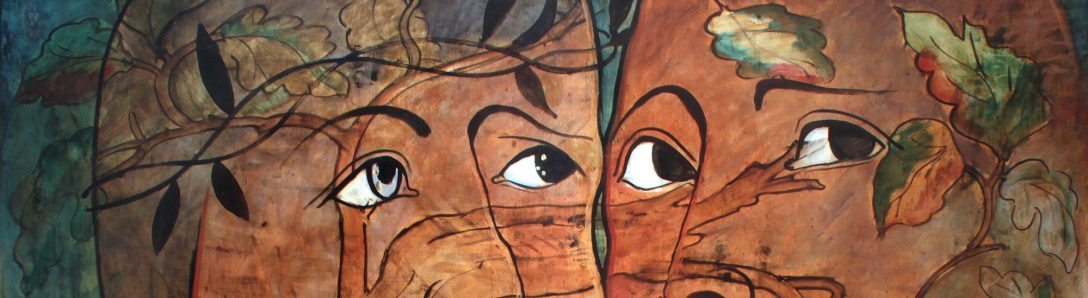
Read J.G. Ballard’s story “The Terminal Beach”

“The Terminal Beach”

by

J.G. Ballard


The Terminal Beach


At night, as he lay asleep on the floor of the ruined bunker, Traven heard the waves breaking along the shore of the lagoon, like the sounds of giant aircraft warming up at the ends of their runways. This memory of the great night raids against the Japanese mainland had filled his first months on the island with images of burning bombers falling through the air around him. Later, with the attacks of ben-ben, the nightmare passed and the waves began to remind him of the deep Atlantic rollers on the beach at Dakar, where he had been born, and of watching from the window in the evenings for his parents to drive home along the corniche road from the airport. Overcome by this long-forgotten memory, he woke uncertainly from the bed of old magazines on which he slept and went out to the dunes that screened the lagoon.


Through the cold night air he could see the abandoned Superfortresses lying among the palms beyond the perimeter of the emergency landing field three hundred yards away. Traven walked through the dark sand, already forgetting where the shore lay, although the atoll was little more than half a mile in width. Above him, along the crests of the dunes, the tall palms leaned into the dim air like the symbols of a cryptic alphabet. The landscape of the island was covered by strange ciphers.


Giving up the attempt to find the beach, Traven stumbled into a set of tracks left years earlier by a large caterpillar vehicle. The heat released by the weapons tests had fused the sand, and the double line of fossil imprints, uncovered by the evening air, wound its serpentine way among the hollows like the footfalls of an ancient saurian.


Too weak to walk any further, Traven sat down between the tracks. Hoping that they might lead him to the beach, he began to excavate the wedge-shaped grooves from a drift into which they disappeared. He returned to the bunker shortly before dawn, and slept through the hot silences of the following noon.


The Blocks


As usual on these enervating afternoons, when not even a breath of on-shore breeze disturbed the dust, Traven sat in the shadow of one of the blocks, lost somewhere within the centre of the maze. His back resting against the rough concrete surface, he gazed with a phlegmatic eye down the surrounding aisles and at the line of doors facing him. Each afternoon he left his cell in the abandoned camera bunker among the dunes and walked down into the blocks. For the first half an hour he restricted himself to the perimeter aisle, now and then trying one of the doors with the rusty key in his pocket – found among the litter of smashed bottles and cans in the isthmus of sand separating the testing ground from the air-strip – and then inevitably, with a sort of drugged stride, he set off into the centre of the blocks, breaking into a run and darting in and out of the corridors, as if trying to flush some invisible opponent from his hiding place. Soon he would be completely lost. Whatever his efforts to return to the perimeter, he always found himself once more in the centre.


Eventually he would abandon the task, and sit down in the dust, watching the shadows emerge from their crevices at the foot of the blocks. For some reason he invariably arranged to be trapped when the sun was at zenith – on Eniwetok, the thermonuclear noon.


One question in particular intrigued him: ‘What sort of people would inhabit this minimal concrete city?’

Continue reading “Read J.G. Ballard’s story “The Terminal Beach””
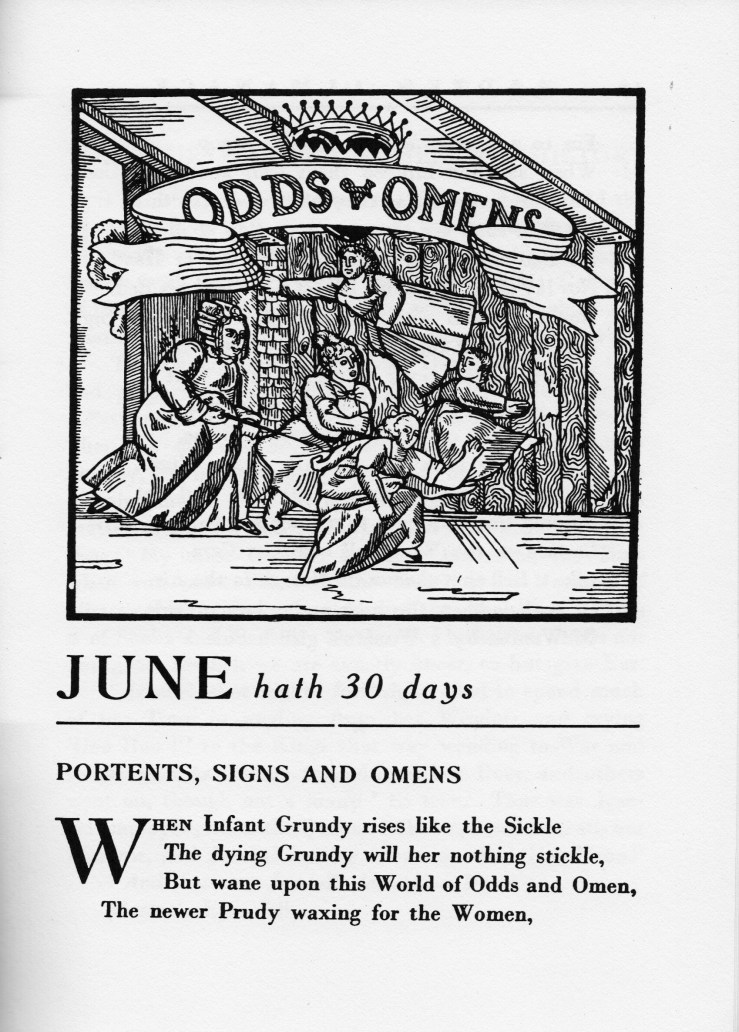
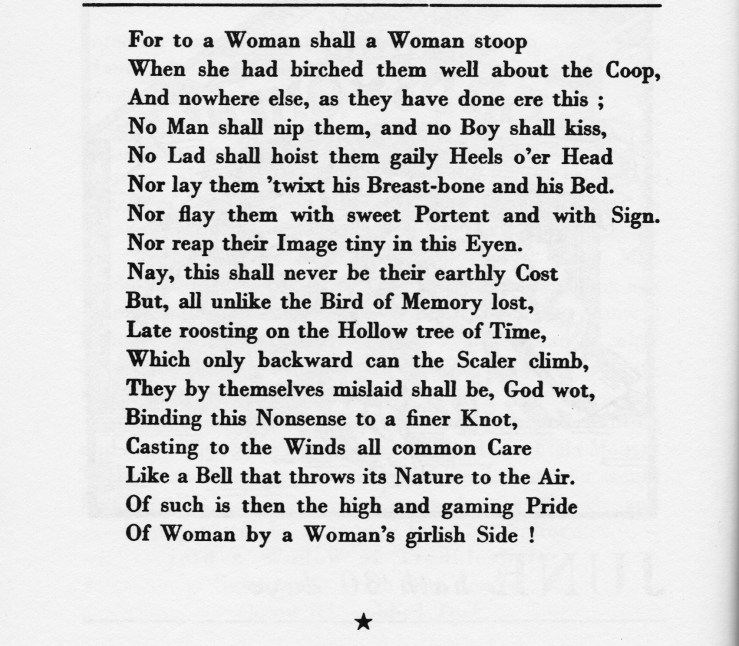
“June” — Djuna Barnes

image image

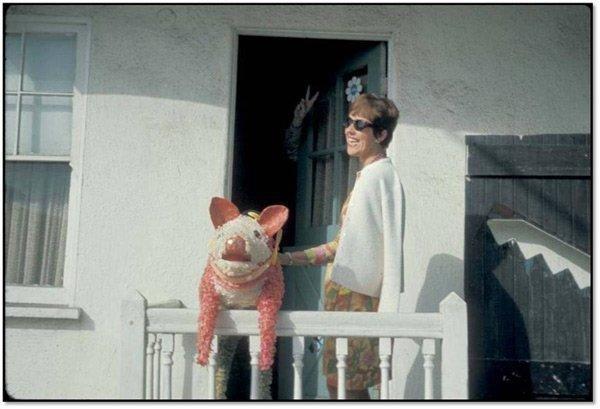
Possible photographic evidence of Thomas Pynchon’s hand (and a pig piñata)

6a00d8341c630a53ef014e88434d23970d

From an article in LAist:

A photograph on the back cover of a memoir by Phyllis Gebauer, a close friend of Pynchon’s, shows the author’s hand extending out of the door of his apartment giving a peace sign with a pig piñata named Claude and Gebauer in the foreground. In 2011, Gebauer donated her rare collection of signed Pynchon novels to UCLA.

I seem to recall mention of this pig piñata in A Journey into the Mind of P (but I could be wrong).

Big thanks to Doug Eklund for pointing the photo out to me.

Milton’s Mysterious Dream — William Blake

Reviews and riffs of May 2015 (and an unrelated owl)

Reviews and riffs, May 2015

In which I read Playboy for the Pynchon article.

This is not a review of Lydia Davis’s Can’t and Won’t.

What the hell is Pynchon in Public Day?

A review of Jim O’Rourke’s new record Simple Songs.

Han Kang’s The Vegetarian reviewed.

A somewhat contrarian take on Mad Max: Fury Road.

Mad Men’s cynical finale.

Gravity’s Rainbow and Disney’s Fantasia.

Unrelated owl by Durer:


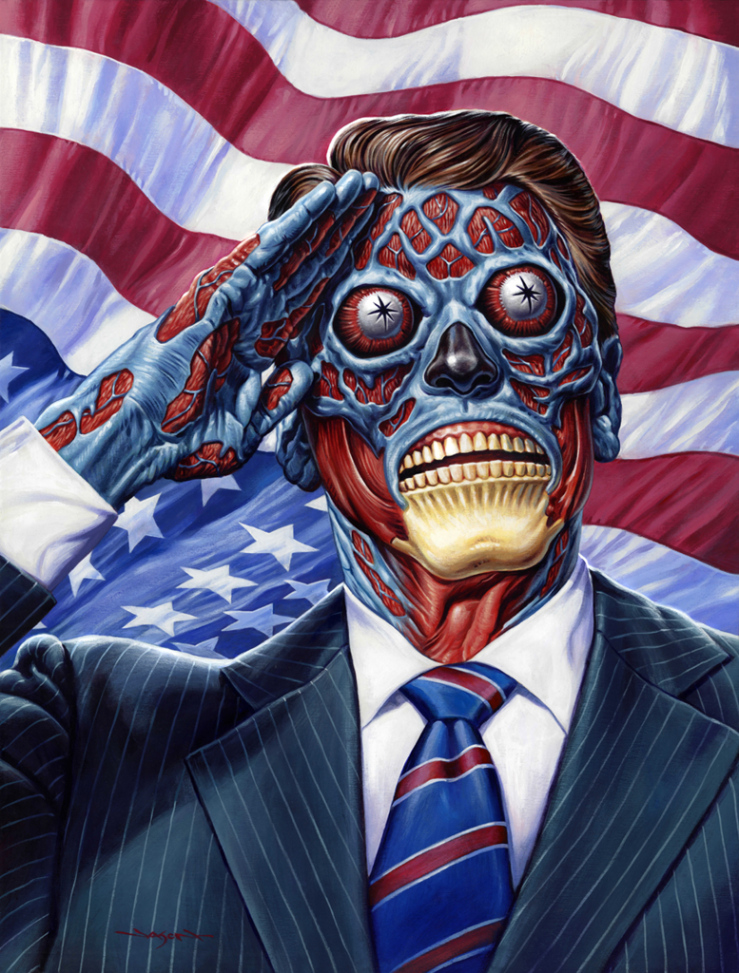
They Live — Jason Edmiston

They-Live-final

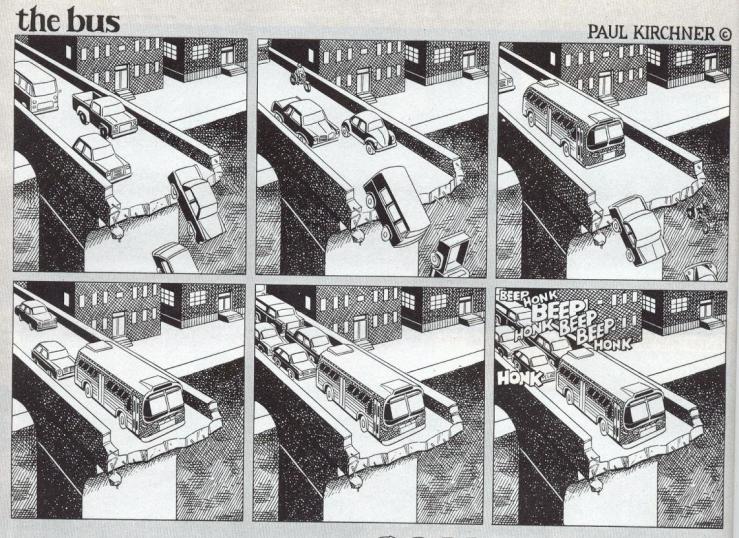
The Bus — Paul Kirchner

Bv6p36r - Imgur

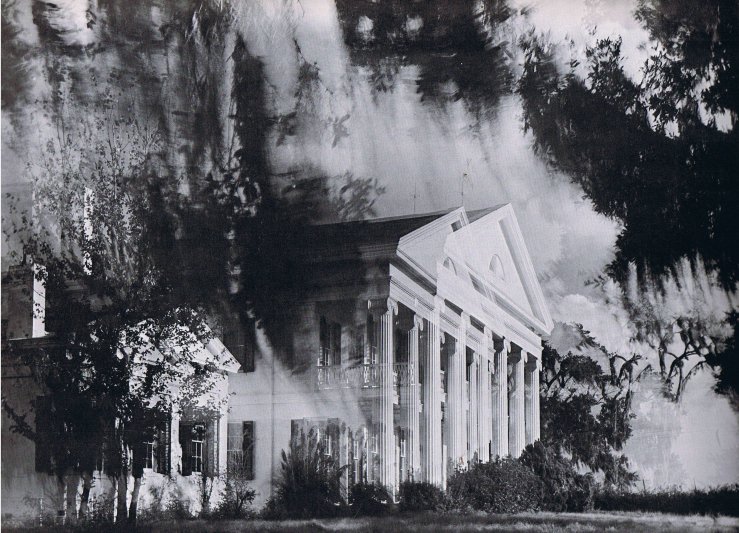
Ghosts along the Mississippi — Clarence John Laughlin

ccf10082010_00001

Orpheus and Eurydice — George Frederick Watts

“Gorse Is Not People,” a short story by Janet Frame

“Gorse Is Not People”

by

Janet Frame


Do you remember your twenty-first birthday? The party, the cake, and cutting a slice of it to put under your pillow that night, to make you dream of your future beloved; the giant key; the singing:

I’m twenty-one today!

Twenty-one today!

I’ve got the key of the door!

Never been twenty-one before!

Trivial, obvious words. Yet when the party was over and you lay in bed remembering the glinting key and the shamrock taste of the small glass of wine, and perhaps the taste of a sneaked last kiss in the dark, then the song seemed not trivial or obvious but a poetic statement of a temporal wonder. You had, as they say, attained your majority. You could vote in the elections; you could leave home against your parents’ wishes; you could marry in defiance of all opposition. You had crossed a legal border into a free country, and you now walked equipped with a giant tinsel key, a cardboard key covered with threepenny spangles.

Or perhaps your twenty-first birthday did not happen that way. Perhaps there was no party, no cake, no wine, and no kiss? I would like to tell you about Naida’s twenty-first birthday.

Naida was a dwarf, which is not really a rare thing. I suppose in our lifetime we see many dwarves—first, perhaps, at the circus, where they are advertised as the tiniest people in the world and we pay to watch them moving about in their almost walnut-shell or matchbox beds. Sometimes we pass them in the street and stare hard for a moment, then pretend we haven’t seen them, until they have passed us and we look back, saying, “It must be strange, how strange it must be, such tiny folk, and us out of reach, like tall trees!” Continue reading ““Gorse Is Not People,” a short story by Janet Frame”

Solitaire — Felix Vallotton

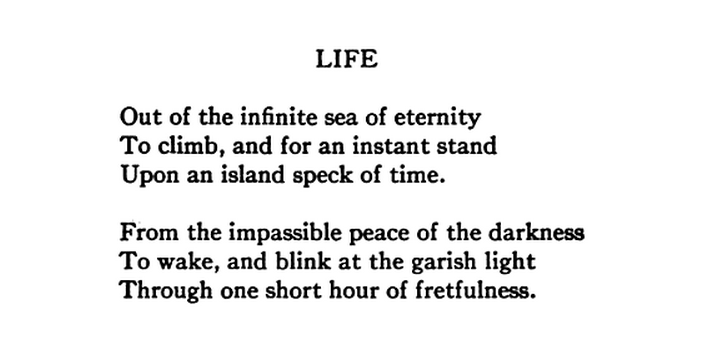
“Life” — James Weldon Johnson

Screenshot 2015-05-29 at 5.48.43 PM

Portrait of a Gentleman in His Study — Lorenzo Lotto

“A Geometric” — Sam Prekop

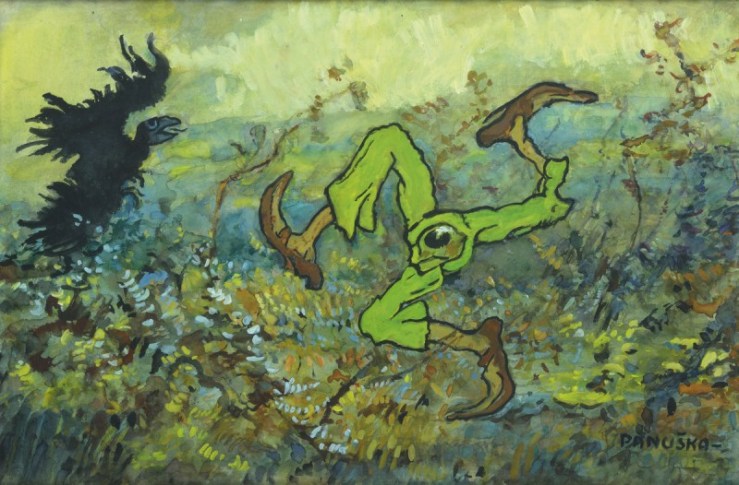
Triskelion — Jaroslav Panuška

jaroslav-panuska-triskelion-1908-1910-2014-04-15-800x526

“The devil suffered from ennui” | Read Maxim Gorky’s short tale “The Devil”

“The Devil”

by

Maxim Gorky

English translation by Leo Wiener


Life is a burden in the Fall,—the sad season of decay and death!

The grey days, the weeping, sunless sky, the dark nights, the growling, whining wind, the heavy, black autumn shadows—all that drives clouds of gloomy thoughts over the human soul, and fills it with a mysterious fear of life where nothing is permanent, all is in an eternal flux; things are born, decay, die … why? … for what purpose?…

Sometimes the strength fails us to battle against the tenebrous thoughts that enfold the soul late in the autumn, therefore those who want to assuage their bitterness ought to meet them half way. This is the only way by which they will escape from the chaos of despair and doubt, and will enter on the terra firma of self-confidence.

But it is a laborious path, it leads through thorny brambles that lacerate the living heart, and on that path the devil always lies in ambush. It is that best of all the devils, with whom the great Goethe has made us acquainted….

My story is about that devil.


The devil suffered from ennui.

He is too wise to ridicule everything.

He knows that there are phenomena of life which the devil himself is not able to rail at; for example, he has never applied the sharp scalpel of his irony to the majestic fact of his existence. To tell the truth, our favourite devil is more bold than clever, and if we were to look more closely at him, we might discover that, like ourselves, he wastes most of his time on trifles. But we had better leave that alone; we are not children that break their best toys in order to discover what is in them. Continue reading ““The devil suffered from ennui” | Read Maxim Gorky’s short tale “The Devil””