

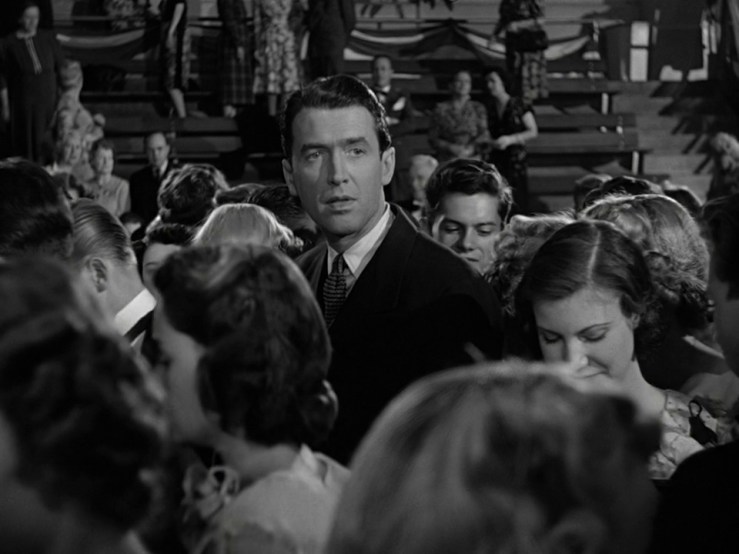

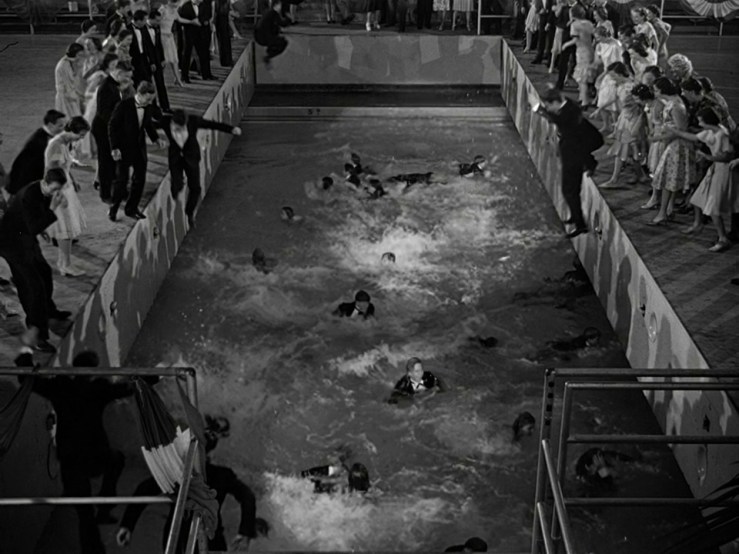
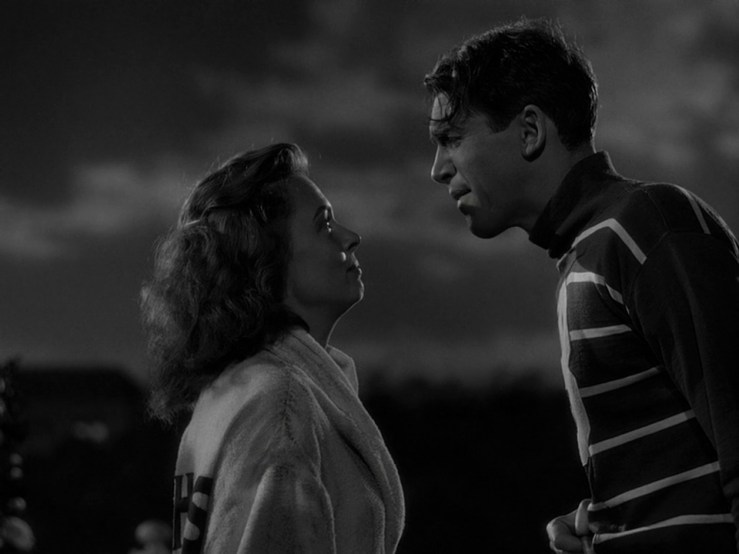
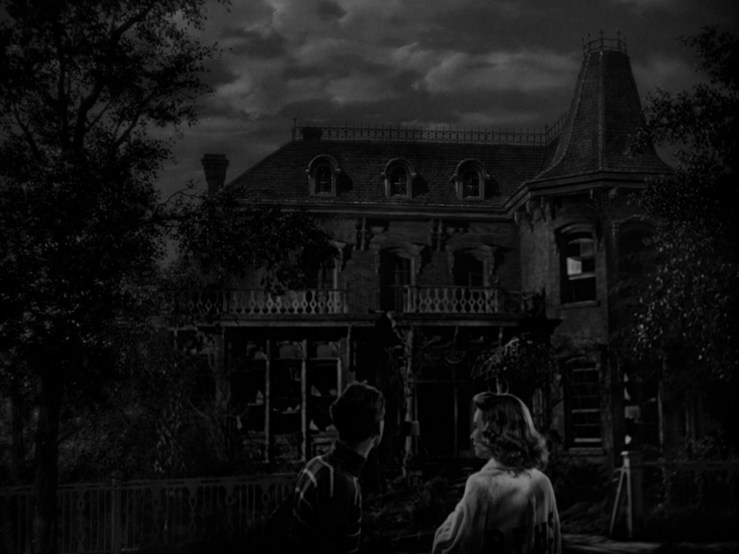
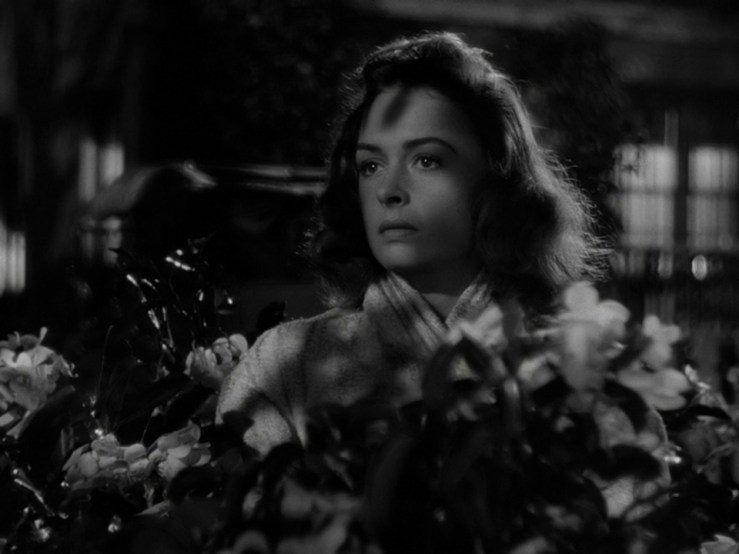
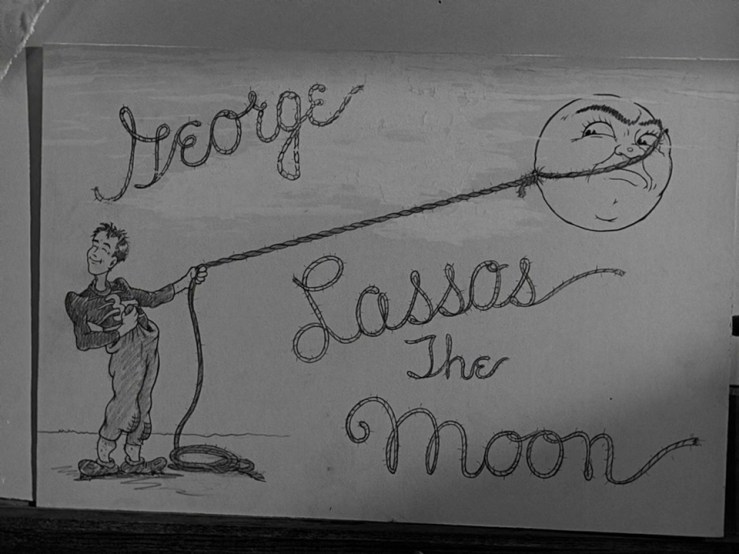
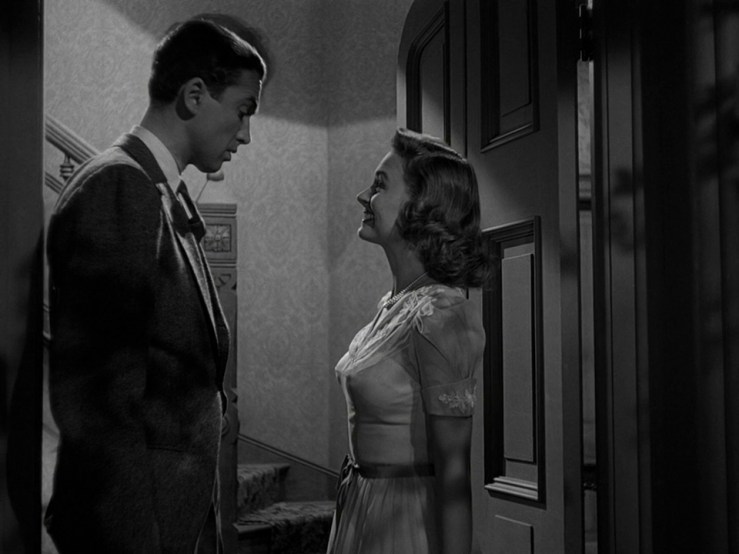
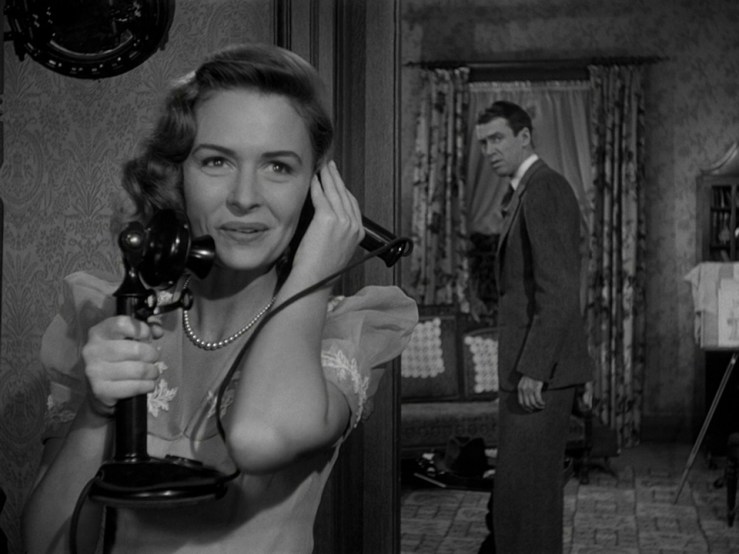
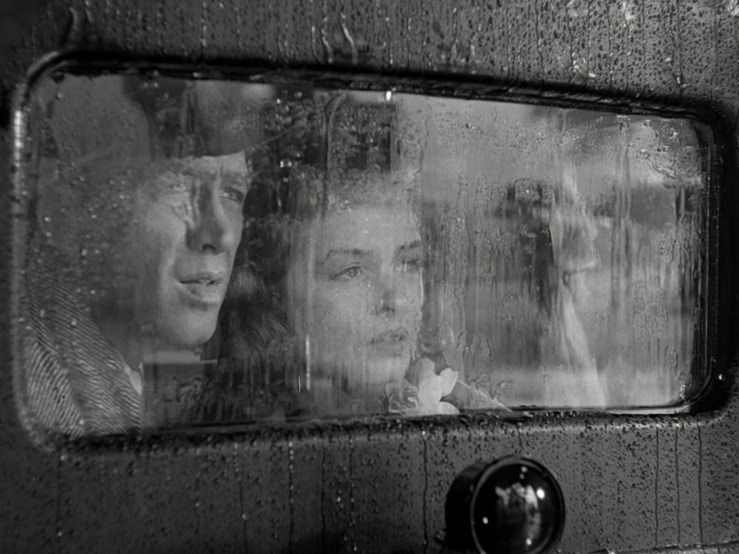
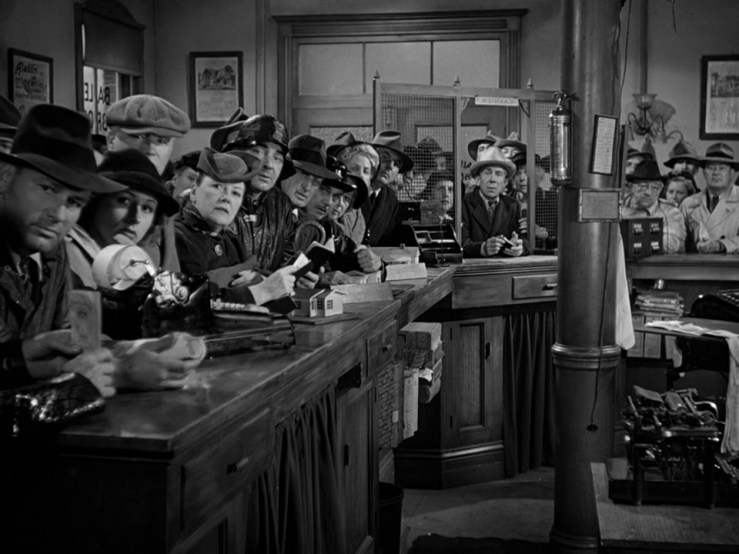
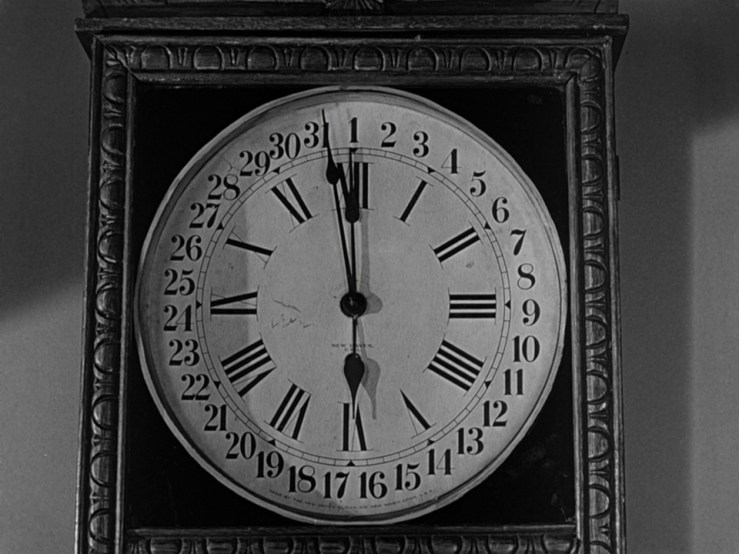
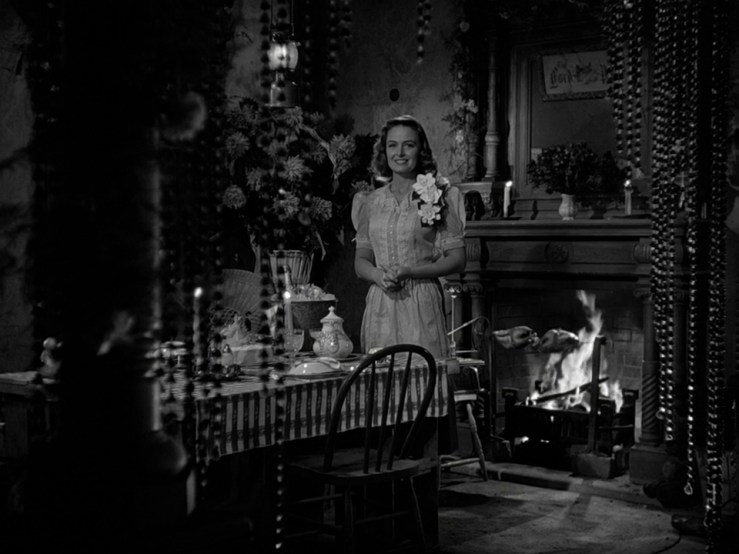
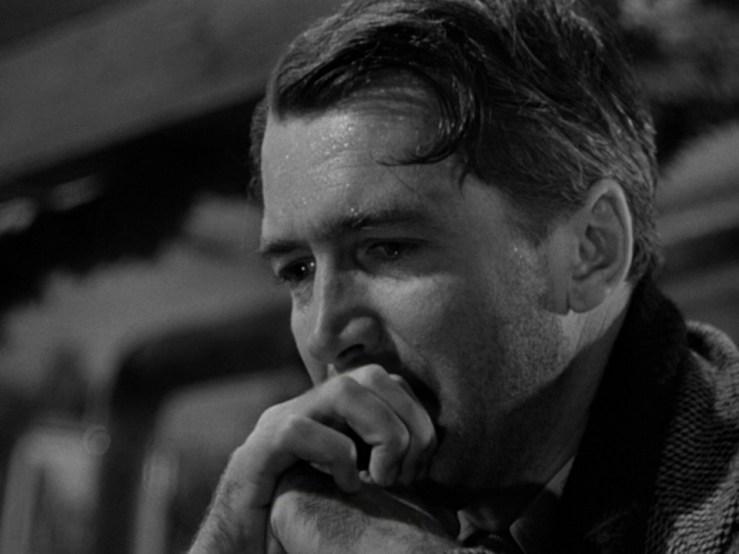
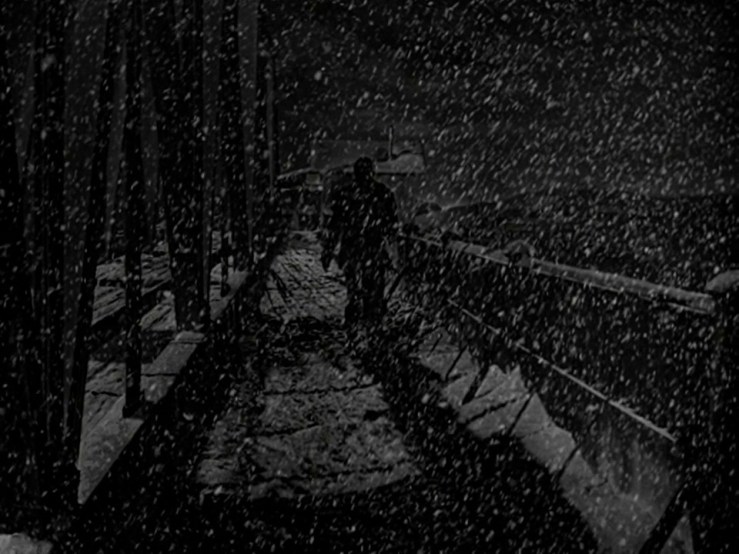
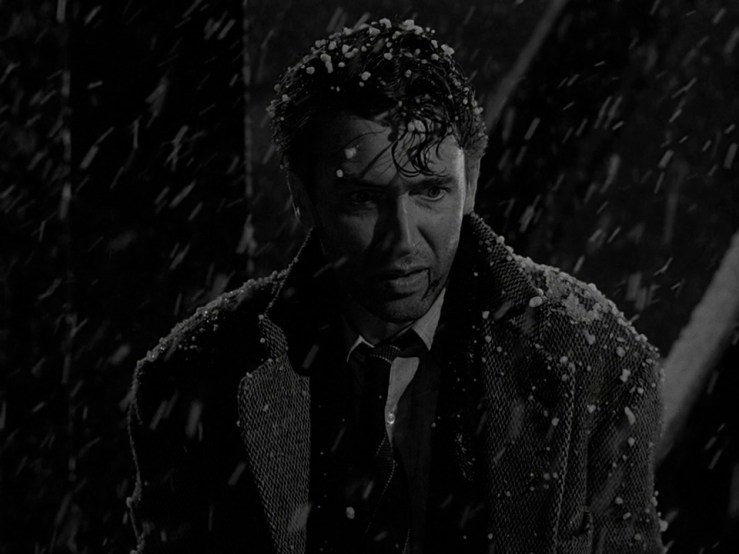
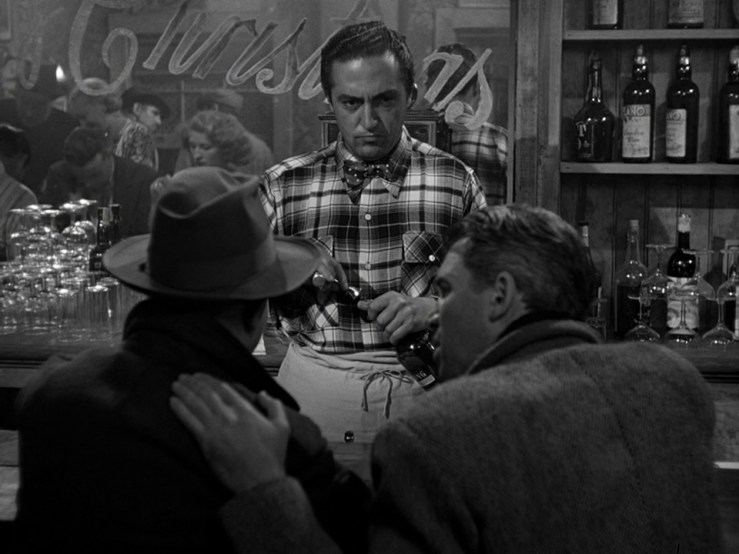
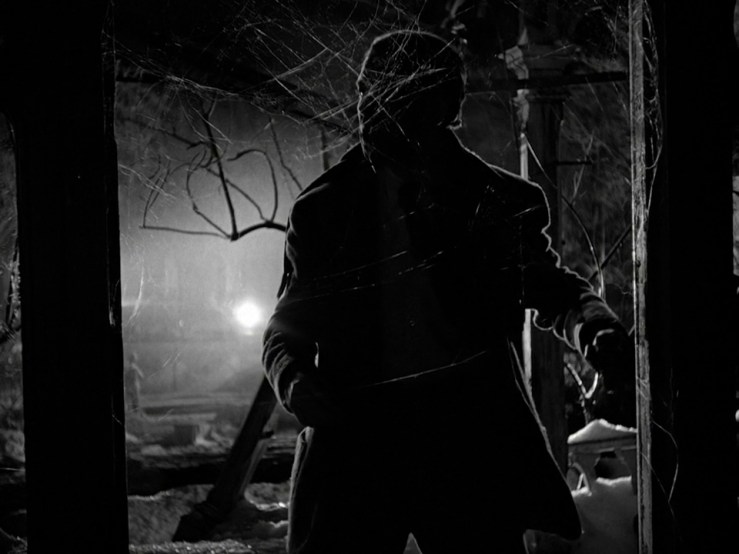
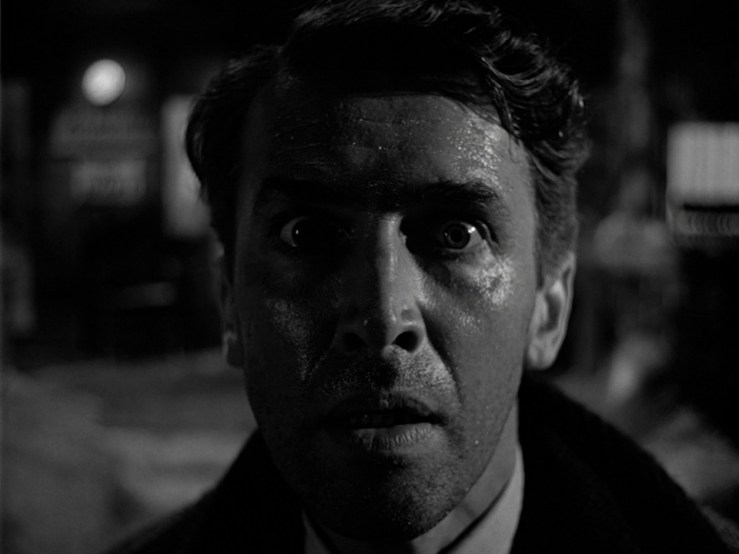
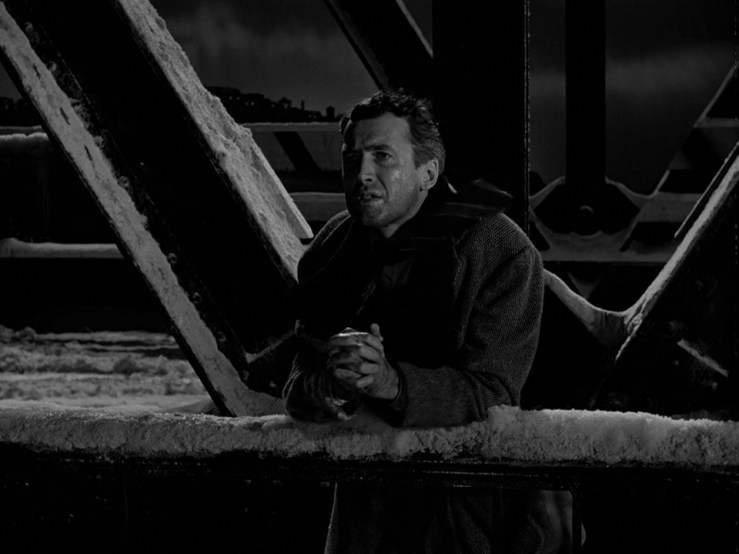
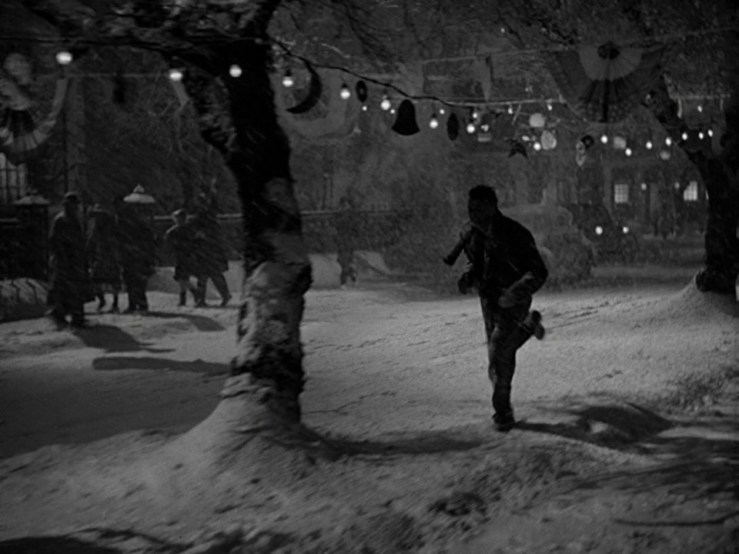
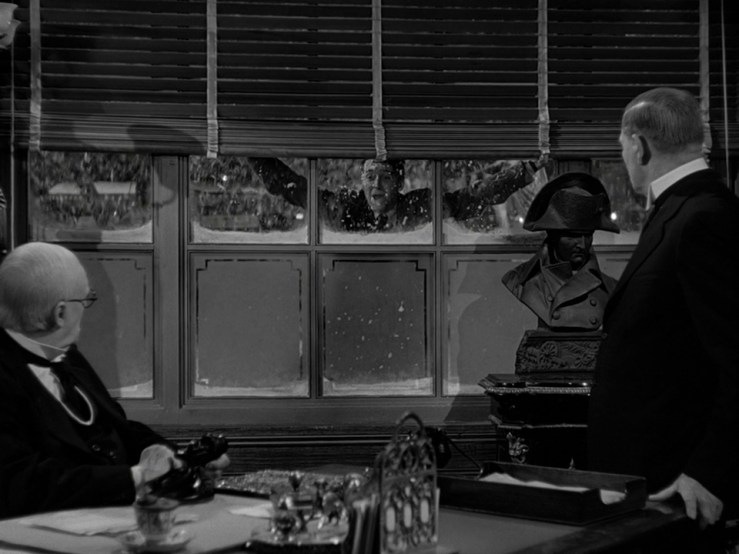
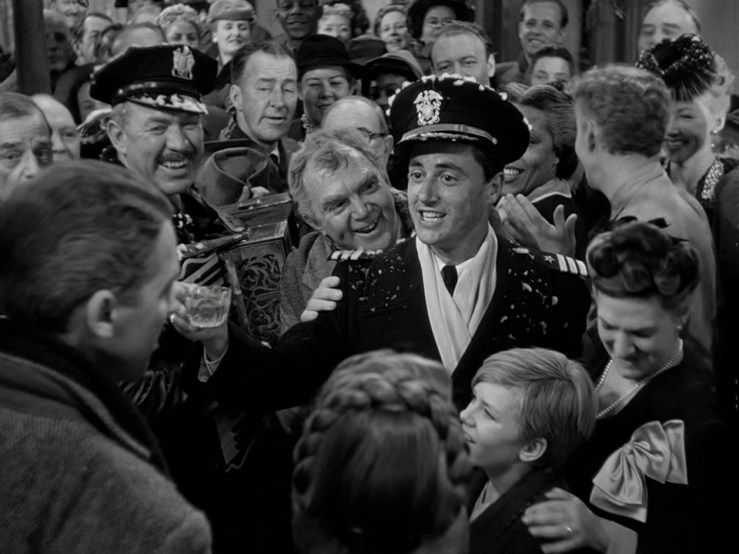
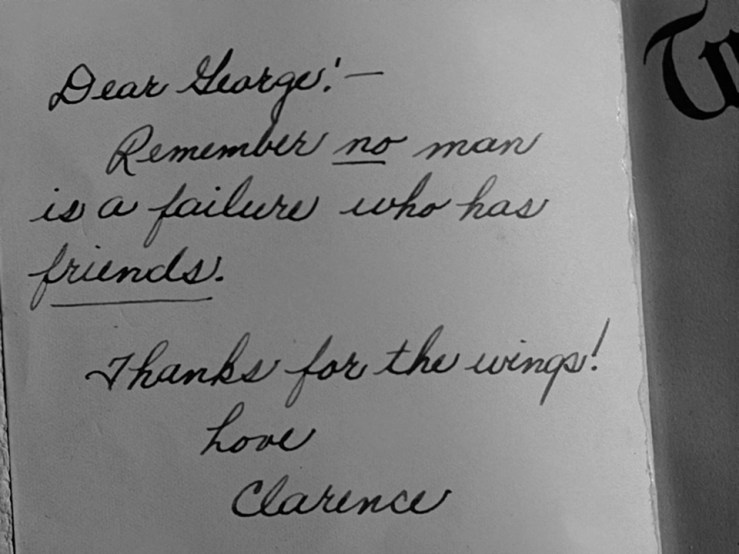

From It’s a Wonderful Life, 1946. Directed by Frank Capra; cinematography by Joseph Walker and Joseph Biroc. Via FilmGrab.

From It’s a Wonderful Life, 1946. Directed by Frank Capra; cinematography by Joseph Walker and Joseph Biroc. Via FilmGrab.

“”A Little Girl’s Xmas in Moderan”
by
David R. Bunch
from Moderan
IT WAS in Jingle-Bell weather that Little Sister came across the white yard, the snow between her toes all gray and packed and starting to ball up like the beginnings of two snowmen. For clothing she had nothing, her tiny rump sticking out red-cold, and blue-cold, and her little-jewel knees white almost as bones. She stuck up ten stiff fingers, and she said, “Daddy! Something is wrong at my place! Come see!” She lisped a little perhaps and did not say it all as precisely as grownups, because she was just past four.
He turned like a man in the bottom third of bad dreaming; he pointed two bored eyes at her. Damn the kid, he thought. “What the hell deal has Mox got us into now?” he said. And he sang the little rhyme that made the door come open. Then as she stepped toward him he saw the snowballs on her feet. They were melting now, making deep furrows in the green rug spread across his spacious thinking room. The tall nap, like flooded grass now along little canals bending away from her feet, was speckled white here and there with crumpled paper balls. His trial plans and formulas peeped out like golf balls.
Coming back across the iron fields of nightmare that always rose to confront him at such times, he struggled to make the present’s puzzling moment into sense. Damn the kid, he thought, didn’t wipe her feet. All flesh, as yet—her own—and bone and blood, and didn’t wipe her feet. The snow melts!
He motioned her to him. “Little Sister,” he began in that tired dull-tinny voice that was his now, and must be his, because his larynx was worked all in gold against cancer, “tell me slowly, Little Sister. Why don’t you stay in your plastic place more? Why don’t you use the iron Mox more? Why do you bother me at all? Tell me slowly.”
“Daddy!” she cried and started to jig up and down in the fits that he hated so, “come over to my place, you old boogie. Something needs fixing.”
So they went across the big white yard to her place, past Mother’s place, past Little Brother’s place, with her snow-hurt limping and naked, and him lumbering in strange stiff-jointedness, but snug in a fire-red snuggie suit of fine insulation with good black leather space high-tops. Arrived at her place he whistled at the door the three sharp notes. The door moved into the wall and Mox the iron one stood sliding the iron sections of his arms up into one another until he had only hands hanging from shoulders. It was his greeting way. He ogled with bulb eyes and flashed his greeting code. Continue reading ““A Little Girl’s Xmas in Moderan” — David R. Bunch”
If the fable of “The grasshopper and the ants” was amended so that the world ended before the turn of winter, then the grasshopper would have been wiser and the moral would have vindicated him. In a story, the location of the ending is very deliberate.
From David Berman’s December 1994 essay/poem/riff “Clip-On Tie,” which could be read as a Christmas story, if you like.
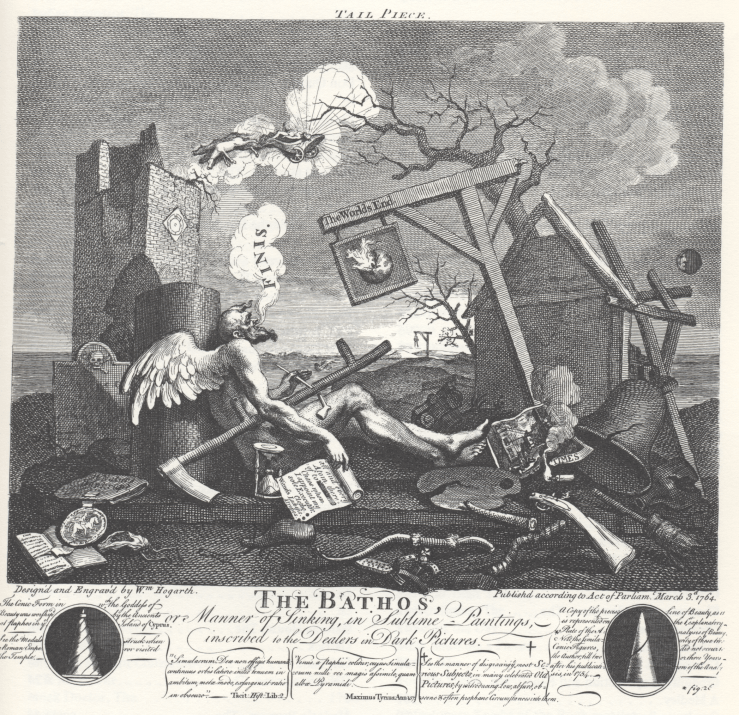
The Bathos, 1764 by William Hogarth (1697-1764)
“Pat Hobby’s Christmas Wish”
by
F. Scott Fitzgerald
It was Christmas Eve in the studio. By eleven o’clock in the morning, Santa Claus had called on most of the huge population according to each one’s deserts.
Sumptuous gifts from producers to stars, and from agents to producers arrived at offices and studio bungalows; on every stage one heard of the roguish gifts of casts to directors or directors to casts; champagne had gone out from publicity office to the press. And tips of fifties, tens and fives from producers, directors and writers fell like manna upon the white collar class.
In this sort of transaction there were exceptions. Pat Hobby, for example, who knew the game from twenty years’ experience, had had the idea of getting rid of his secretary the day before. They were sending over a new one any minute—but she would scarcely expect a present the first day.
Waiting for her, he walked the corridor, glancing into open offices for signs of life. He stopped to chat with Joe Hopper from the scenario department.
“Not like the old days,” he mourned, “Then there was a bottle on every desk.”
“There’re a few around.”
“Not many.” Pat sighed, “And afterwards we’d run a picture—made up out of cutting-room scraps.”
“I’ve heard. All the suppressed stuff,” said Hopper.
Pat nodded, his eyes glistening.
“Oh, it was juicy. You darned near ripped your guts laughing—”
He broke off as the sight of a woman, pad in hand, entering his office down the hall recalled him to the sorry present.
“Gooddorf has me working over the holiday,” he complained bitterly.
“I wouldn’t do it.”
“I wouldn’t either except my four weeks are up next Friday, and if I bucked him he wouldn’t extend me.”
Pat’s new secretary was about thirty-six, handsome, faded, tired, efficient. She went to the typewriter, examined it, sat down and burst into sobs.
As he turned away Hopper knew that Pat was not being extended anyhow. He had been hired to script an old-fashioned horse-opera and the boys who were “writing behind him”—that is working over his stuff—said that all of it was old and some didn’t make sense.
“I’m Miss Kagle,” said Pat’s new secretary. She was about thirty-six, handsome, faded, tired, efficient. She went to the typewriter, examined it, sat down and burst into sobs.
Pat started. Self-control, from below anyhow, was the rule around here. Wasn’t it bad enough to be working on Christmas Eve? Well—less bad than not working at all. He walked over and shut the door—someone might suspect him of insulting the girl.
“Cheer up,” he advised her. “This is Christmas.” Continue reading ““Pat Hobby’s Christmas Wish,” a short story by F. Scott Fitzgerald”
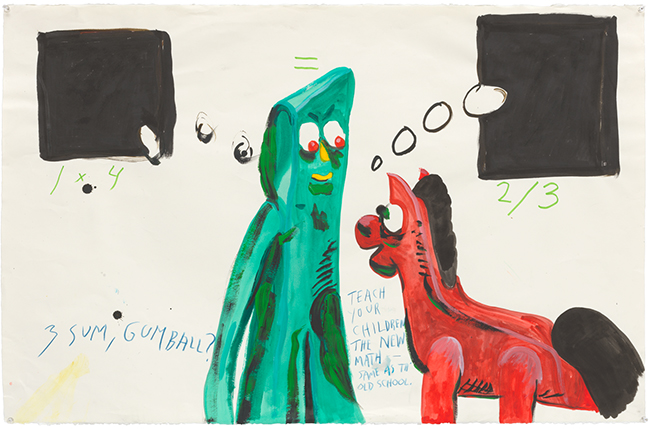
Untitled (3 Sum, Gumball?), 2019 by Raymond Pettibon (b. 1957)
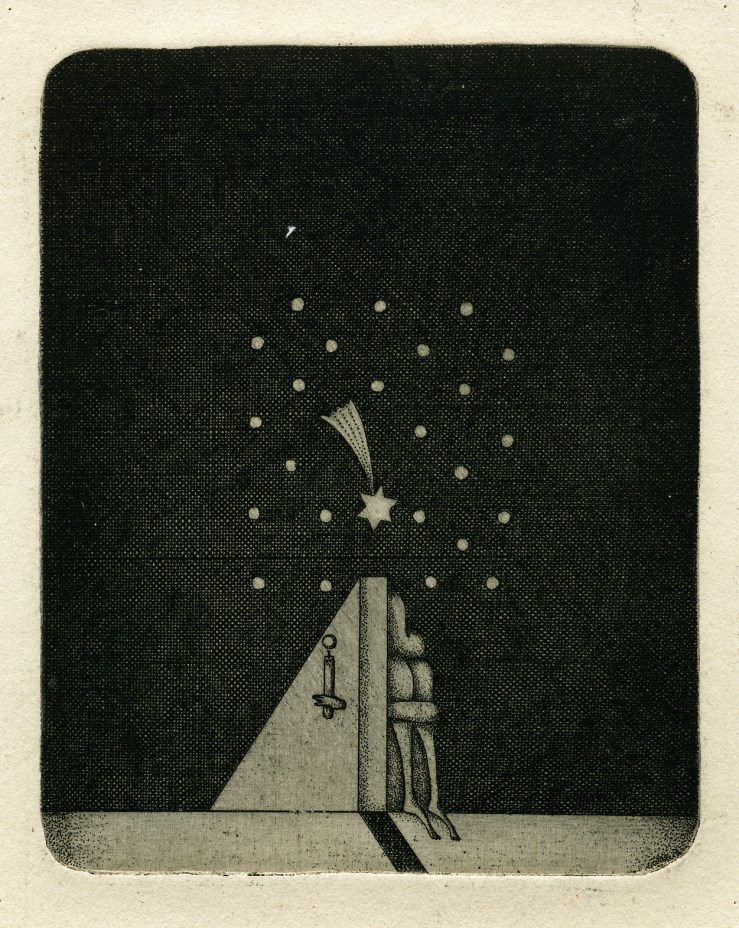
Christmas, 1983 by Alexander Aksinin (1949–1985)

Zora Neale Hurston’s hand-drawn Christmas card (1926). From Fannie Hurst’s papers at the Harry Ransom center in Austin, TX. Via the Ransom Center’s Instagram account.
“The Ghost Ships: A Christmas Story”
by
Angela Carter
Therefore that whosoever shall be found observing any such day as Christmas or the like, either by forebearing of labor, feasting, or any other way upon any such account aforesaid, every person so offending shall pay for every offense five shillings as a fine to the county.
Statute enacted by the General Court of
Massachusetts, May 1659, repealed 1681
‘Twas the night before Christmas. Silent night, holy night. The snow lay deep and crisp and even. Etc. etc. etc.; let these familiar words conjure up the traditional anticipatory magic of Christmas Eve, and then — forget it.
Forget it. Even if the white moon above Boston Bay ensures that all is calm, all is bright, there will be no Christmas as such in the village on the shore that now lies locked in a precarious winter dream.
(Dream, that uncensorable state. They would forbid it if they could.)
At that time, for we are talking about a long time ago, about three and a quarter hundred years ago, the newcomers had no more than scribbled their signatures on the blank page of the continent that was, as it lay under the snow, no whiter nor more pure than their intentions.
They plan to write more largely; they plan to inscribe thereon the name of God.
And that was why, because of their awesome piety, tomorrow, on Christmas Day, they will wake, pray and go about their business as if it were any other day.
For them, all days are holy but none are holidays.
New England is the new leaf they have just turned over; Old England is the dirty linen their brethren at home have just — did they not recently win the English Civil War? — washed in public.
Back home, for the sake of spiritual integrity, their brothers and sisters have broken the graven images in the churches, banned the playhouses where men dress up as women, chopped down the village Maypoles because they welcome in the spring in altogether too orgiastic a fashion.
Nothing particularly radical about that, given the Puritans’ basic premises. Anyone can see at a glance that a Maypole, proudly erect upon the village green as the sap is rising, is a godless instrument. The very thought of Cotton Mather, with blossom in his hair, dancing round the Maypole makes the imagination reel. No. The greatest genius of the Puritans lay in their ability to sniff out a pagan survival in, say, the custom of decorating a house with holly for the festive season; they were the stuff of which social anthropologists would be made!
And their distaste for the icon of the lovely lady with her bonny babe — Mariolatry, graven images! — is less subtle than their disgust at the very idea of the festive season itself. It was the festivity of it that irked them.
Nevertheless, it assuredly is a gross and heathenish practice, to welcome the birth of Our
Saviour with feasting, drunkenness, and lewd displays of mumming and masquerading.
We want none of that filth in this new place.
No, thank you.
As midnight approached, the cattle in the byres lumbered down upon their knees in homage, according to the well-established custom of over sixteen hundred English winters when they had mimicked the kneeling cattle in the Bethlehem stable; then, remembering where they were in the nick of time, they hastily refrained from idolatry and hauled themselves upright.
Boston Bay, calm as milk, black as ink, smooth as silk. And suddenly, at just the hour when the night spins on its spindle and starts to unravel its own darkness, at what one could call, elsewhere, the witching hour —
I saw three ships come sailing in,
Christmas Day, Christmas Day,
I saw three ships come sailing in
On Christmas Day in the morning.
Three ships, silent as ghost ships; ghost ships of Christmas past.
And what was in those ships all three? Continue reading ““The Ghost Ships: A Christmas Story” by Angela Carter”

Maybe an hour ago, browsing in a used bookstore, I opened a worn and some might say dirty copy of Iain Banks’s 1985 novel Walking on Glass. The very first page of this old book was inscribed with the following:
Have a weird Xmas ’90
John
This copy of Iain Banks’s 1985 novel Walking on Glass—a 1990 Abacus trade paperback printed in London, the embossing on its cover yellowed by wear on its cover and back near its spine—this particular copy was addressed to no named person, its inscription signed by a name so anonymous we apply it to unidentified cadavers and prostitute clients.
I take myself to be the unidentified person being addressed by the identified generic John, wishing me weird wellness, a ghost of Xmas past.
Earlier this year I made the tragic mistake of not pulling the trigger on first-edition hardbacks of Banks’s first two novels, The Wasp Factory and Walking on Glass. I hadn’t read Banks at that point, and my familiarity with his work came almost entirely of his proximity to the J.G. Ballard titles I routinely perused. I ended up reading and loving The Wasp Factory this summer (reviewed it here), and the blurb on the back of Walking on Glass promising further perversions intrigues me too, of course.

Today, I also came across a first-edition, first-U.S.-printing of Roberto Bolaño’s opus 2666. It was marked at a third of the original cover price and has never been read. I could not leave it behind.

I actually traded some books in today, including my trade paperback of Alasdair Gray’s Poor Things. I had recently reread the novel in anticipation of Yorgos Lanthimos’ film adaptation, and, during that reread, oddly came across an inexpensive pristine first edition of the novel while browsing for something else. Maybe a week or two after finding that hardback of Poor Things, I found a hardback first edition of Gray’s 1990 novel Something Leather. Unlike Poor Things, which features lots of art and typographic adventures, Something Leather is pretty standard (apart from a few chapter heading illustrations)—but it does have a lovely cover under its cover:

Maybe a week after that, I was browsing with my son, who wanted a collection of Harlan Ellison short stories. I was shocked that we couldn’t find any—I had given away two mass market collections to some students maybe seven or eight years ago in a purge. Apparently a lot of it is out of print, but a “greatest hits” collection is coming out this spring. Anyway, I ended up finding hardback editions of Robert Coover’s Whatever Happened to Gloomy Gus of the Chicago Bears? Denis Johnson’s novel Fiskadaro.
The Johnson is a British edition, Chatto & Windus, and while it’s hardly my favorite novel by him, I found its form too attractive to pass (and it was, like, cheaper than a beer in the same bookstore). I also picked up a book by Lewis Nordan, a slim collection of short stories called Welcome to the Arrow-Catcher Fair. I picked it up because I love those horrid lovely wonderful gross stylish Vintage Contemporaries editions, and then acquired it based on the blurb, which compared it to Flannery O’Connor, Ellen Gilchrist, and Harry Crews. Here it is next to my Vintage Contemporaries copy of Denis Johnson’ Fiskadaro:

I hope you have a weird Xmas. And I hope that John, wherever they are, has a weird Xmas too.
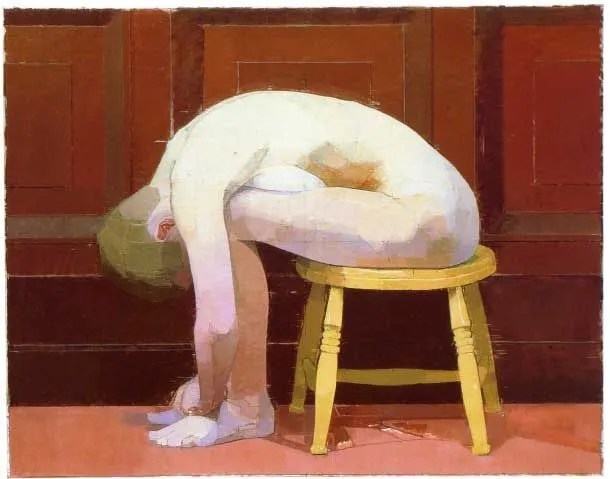
Curled Nude on a Stool, 1983, by Euan Uglow (1932-2000)


Helena, 2020 by Stefan Zsaitsits (b. 1981)
Somnolent city, cold and dolorous in the rain, the lights bleeding in the streets. Cutting through the alley off Commerce he saw a man huddled among the trash and he knelt to see about him. The face came up and the eyes closed. An oiled mask in black against the bricks.
Suttree took him by one arm. Ab, he said.
Can you get me home? A voice from the void, dead and flat and divested of every vanity. Suttree raised up one of the great arms and got it across his shoulder and braced his feet to rise. Sweat stood on his forehead. Ab, he said. Come on.
He opened his eyes and looked about. Are they huntin me? he said.
I dont know. Come on.
He lurched to his feet and stood there reeling while Suttree steadied him by one arm. Their shadows cast by the lamp at the end of the alley fell long and narrow to darkness. As they tottered out of the mouth of the alley a prowlcar passed. Ab sagged, swung back and slammed against the building.
Goddamnit Ab. Straighten up now. Ab.
The cruiser had stopped and was backing slowly. The spotlight came on and sliced about and pinned them against the wall.
Go on, Youngblood.
No.
I aint goin.
You’ll be all right in a minute.
With them I aint goin. Go on.
No damnit. Ab. I’ll talk to them.
But the black had begun to come erect with a strength and grace contrived out of absolute nothingness and Suttree said: Ab, and the black said: Go on.
All right, said the officer. What’s this?
I’m just getting him home, said Suttree. He’s all right.
Is that so? He dont look so all right to me. What are you doin with him? He your daddy?
Fuck you, said Ab.
What?
There were two of them now. Suttree could hear the steady guttering of the cruiser’s exhaust in the empty street.
What? said the officer.
The black turned to Suttree. Go on now, he said. Go on while ye can.
Officer this man’s sick, said Suttree.
He’s goin to be sicker, said the cop. He gestured with his nightstick. Get his ass in there.
Bullshit on that, said the other one. Let me call the wagon. That’s that big son of a bitch …
Jones lurched free and swung round the corner of the alley at a dead run. The two cops tore past Suttree and disappeared after him. The flat slap of their shoes died down the alley in a series of diminishing reports and then there was only the rough drone of the idling cruiser at the curb. Suttree stepped to the car, eased himself beneath the wheel and shut the door. He sat there for a moment, then he engaged the gearbox and pulled away.
He drove to Gay Street and turned south and onto the bridge. The radio crackled and a voice said: Car Seven. He turned left at the end of the bridge, past the abandoned roller rink, a rotting wooden arena that leaned like an old silo. He went down Island Home Pike toward the river. The radio fizzled and crackled. Calling any car in area B. Area B. Come in.
We’ve got a report of some kind of disturbance at Commerce and Market.
Suttree drove along the lamplit street. There was no traffic. The lights at Rose’s came up along his left and the lights from the packing company. The radio said: Car Nine. Car Nine. Suttree turned off down an old ferry road, going slowly, the car rocking and bumping over the grou
nd, out across a field, the headlights picking up a pair of rabbits that froze like plaster lawn figures. The dead and lightly coiling back of the river moving beyond the grass. The sparsely lit silhouette of the city above. The headlights failed somewhere out over the water in a gauzy smear. He brought the car to a stop and shifted it into neutral and stepped out into the wet grass. He pulled the hoodlatch under the dash and walked to the front of the cruiser and raised the hood. He came back to the car and sat in the seat and removed his shoelace. He looked out at the river and the city. One of the rabbits began to lope slowly through the light ground mist toward the dark of the trees.
The radio popped. Wagner? What’s the story down there?
Suttree got out and walked around to the front of the car and bent into the motor compartment and pulled back the throttle linkage. The motor rose to a howl and he tied the linkage back with the shoelace, fastening it to the fuel line where it entered the pump. Live flame was licking from the end of the tailpipe. He climbed in and pushed the clutch to the floor and shifted the lever hard up into second in a squawk of gearteeth. The rabbits were both gone. He eased off the seat and stood with one foot on the ground and the other on the clutch. Then he leaped back and slapped the door shut.
For a moment it didnt move. The tires cried in the grass and smoking clods went rifling off through the dark. Then it settled slightly sideways, dished back again, and in a shower of mud and grass moved out across the field. It went low and fast, the headlights rigid and tilting. It tore across the field and ripped through the willows at the river’s edge and went planing out over the water in two great wings of spray that seemed pure white and fanned upward twenty feet into the air. When it came to rest it was far out in the river. The headlights began to wheel about downstream. Then they went out. For a while he could see the dark hump of it in the river and then it slowly subsided and was gone. He squatted in the damp grass and looked out. There was no sound anywhere along the river. After a while he rose and started home.
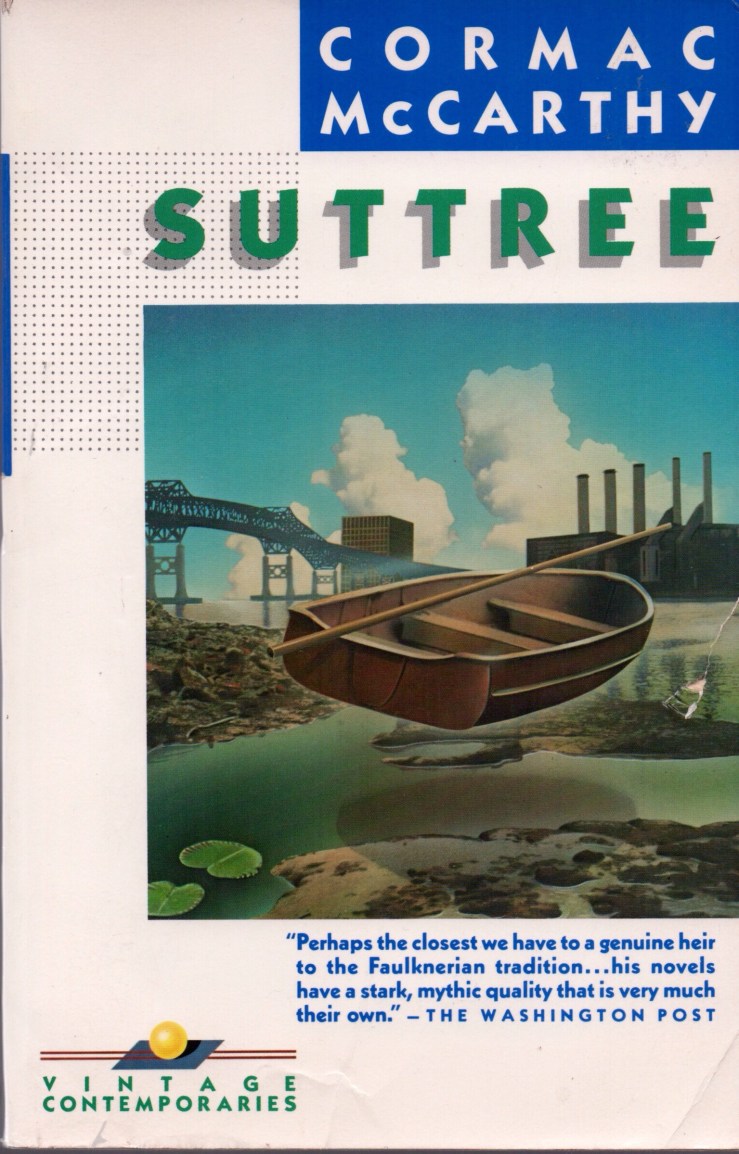
From Cormac McCarthy’s novel Suttree.

Walton Ford’s illustration for Joy Williams’ story “The Last Generation.” The story appeared in the 1 April 1989 issue of Esquire.
A clear night over south Knoxville. The lights of the bridge bobbed in the river among the small and darkly cobbled isomers of distant constellations. Tilting back in his chair he framed questions for the quaking ovoid of lamplight on the ceiling to pose to him: Supposing there be any soul to listen and you died tonight?
They’d listen to my death.
No final word?
Last words are only words.
You can tell me, paradigm of your own sinister genesis construed by a flame in a glass bell.
I’d say I was not unhappy.
You have nothing.
It may be the last shall be first.
Do you believe that?
No.
What do you believe?
I believe that the last and the first suffer equally. Pari passu.
Equally?
It is not alone in the dark of death that all souls are one soul.
Of what would you repent?
Nothing.
Nothing?
One thing. I spoke with bitterness about my life and I said that I would take my own part against the slander of oblivion and against the monstrous facelessness of it and that I would stand a stone in the very void where all would read my name. Of that vanity I recant all.
From Cormac McCarthy’s novel Suttree.
I first read Suttree around thirteen years ago. I’m not sure how many times I’ve waded into it since then. At least two more times in full, plus another two times on audiobook, via Richard Poe’s marvelous narration. I checked the audiobook out from my library again (via Hoopla, which has about everything Audible has, I reckon) a few weeks ago, and fell asleep to Buddy Suttree’s various McAnally misadventures, often not falling asleep as quickly as I planned to. The novel is incredibly rich and fertile, filled with pockets that seem to reverberate stronger from the past viewed through the strange glass of having read McCarthy’s final novel The Passenger late last year, a capstone novel, a novel of insane sobriety that answers to Suttree’s oversoul drunkenness. The Passenger is perhaps Suttree’s secret sequel. Poe’s Suttree narration dipped into my daytime hours—drives and chores, and then just listening and doing nothing else. I forgot so many things: How fucking funny the novel is (I knew this but forgot it, remembering all its bumbling and baffling tragedies); all the shenanigans Suttree and his boys get into (he, I suspect the deferred narrator of his own manic enterprises, always allows himself a measure of impartiality as a witness). I forgot how many of Suttree’s McAnally pals die. I forgot how sad the novel is. Anyway. I was finishing up some domestic chore—let’s call it squeezing the late fall lemons from the lemon tree into a concentrate to freeze, we’ve given all we can away, and they’ll spoil otherwise; or maybe I was finishing kneading a loaf of bread; or maybe something mundane as folding towels and rags hot from the dryer—anyway, I was finishing some or other chore when this passage floated through my ears, caught a bit of purchase, seemed worth sharing. Read Suttree!
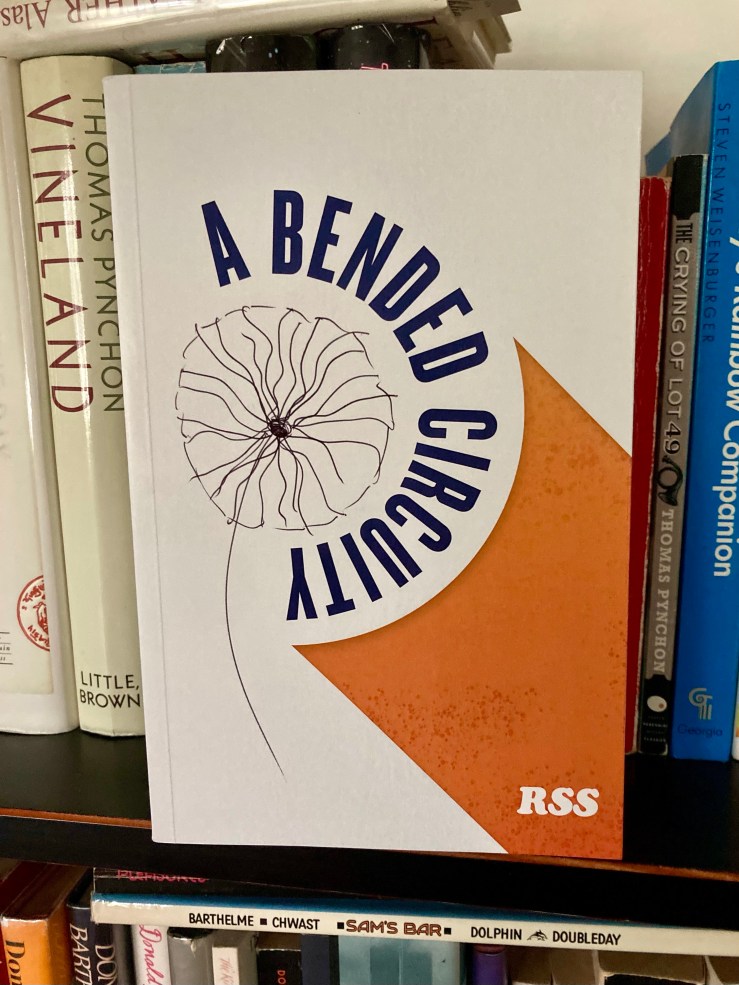
After hearing some positive murmurs praising its erudite maximalism and general zaniness, I caved and bought a copy of Robert S. Stickley’s 2020 novel A Bended Circuity. My copy arrived with a ballpoint flower and the front page signed with a scrawled “R S S.” I can’t really find anything about Big Box Publishing, the purported publisher of this edition, but I do know that the copies of the European reprint at Corona Samizdat sold out pretty quickly. (They have a second printing under way).
Here is the copy from the back of my edition:
There are screams in the night. Interlopers are afoot, have taken hold. Wildfires are burning the countryside and the gentry are running for cover. Fortunes are at stake. The South will not sleep.
A Bended Circuity opens on a midsummer’s afternoon with preparations being made for a soirée at the glamorous Hobcaw Barony. But not all goes according to plan. We soon find Charleston abruptly aroused from her slumber by the playful first smites of an unknown enemy waging a heinous prank war.
Calling his confederates to arms, one Bradley Pinçnit — heir to Marigold Manor and writer for revived southern mouthpiece, The Mercury — afternoon with preparations being made for a soirée at the glamorous Hobcaw Barony. But not all goes according to plan. We soon find Charleston abruptly aroused from her slumber by the playful first smites of an unknown enemy waging a heinous prank war.
Calling his confederates to arms, one Bradley Pinçnit — heir to Marigold Manor and writer for revived southern mouthpiece, The Mercury – organizes and helms a “Junto of Condign Men” then drives them to action. Offsetting her husband’s violent movement is Gabuirdine Lee, a housewife struggling to find her voice as the din of war encompasses her.
Ciphered into everything — the new roadways, the scars of the people, the tracts torn through ravaged plantations — there emerges one clear symbol: The Red Radical. Following the hints offered up by this cryptic motif, an army is mustered and pointed toward north so as to seek justice for the pernicious acts being committed upon an old way of life. But the army will first have to get out of its own way if it is to stand a chance of making it out of the South.
Read the W.A.S.T.E. Mailing List review of A Bended Circuity if you like.
 Biblioklept