Le Guin/Abish/Farber (Books 2.03.2017)

img_5054-1

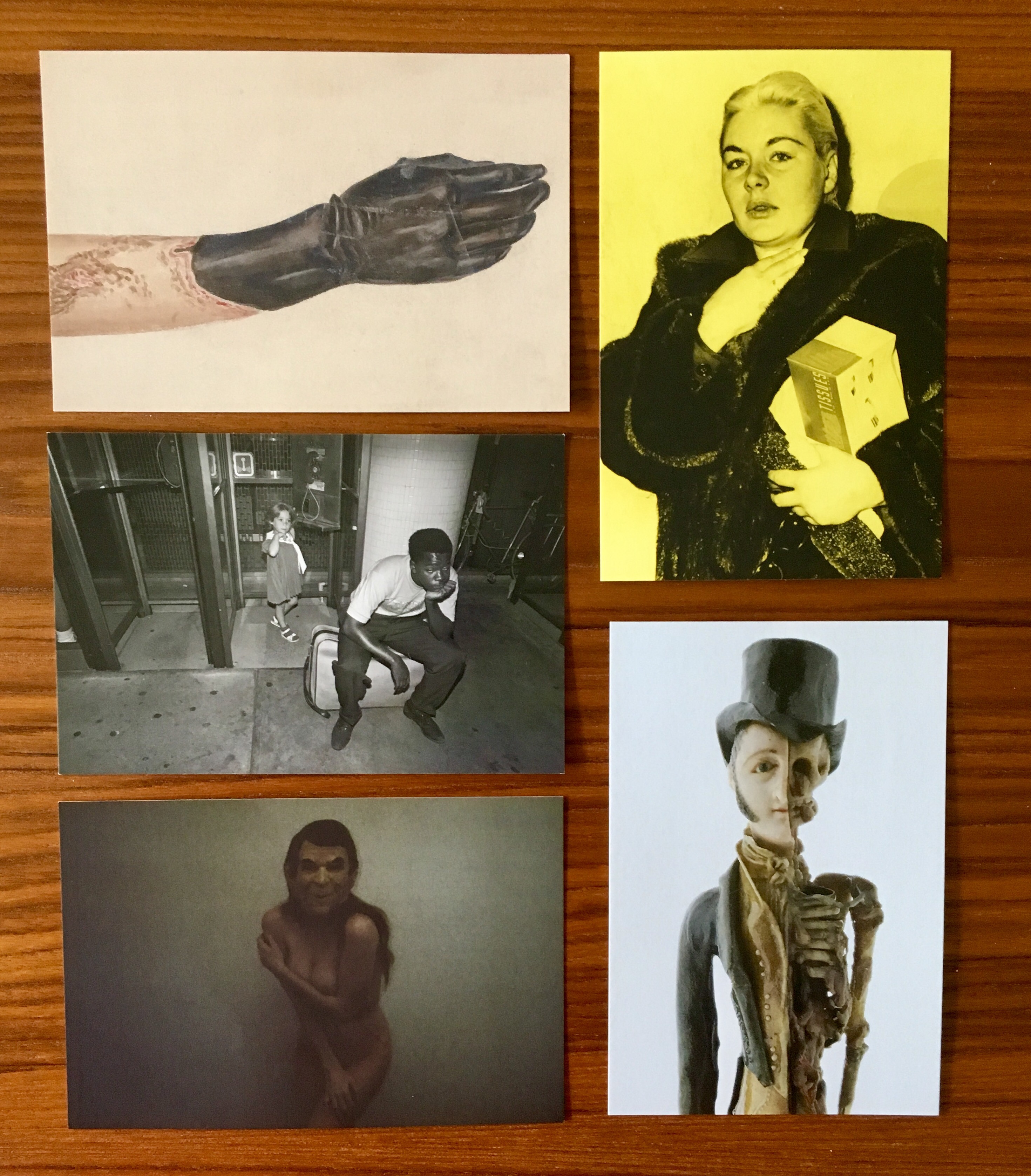
I picked up this handsome hardback collection of early Ursula K. LeGuin stories last Friday when I went to my local used bookshop. I was there looking for something else.

I wasn’t looking for stories by Walter Abish (and I can’t remember how or why I picked this up, but I read part of it in the store…I mean I can’t recall why I was in the “A’s” for Atwood or Abish):

img_5055-1

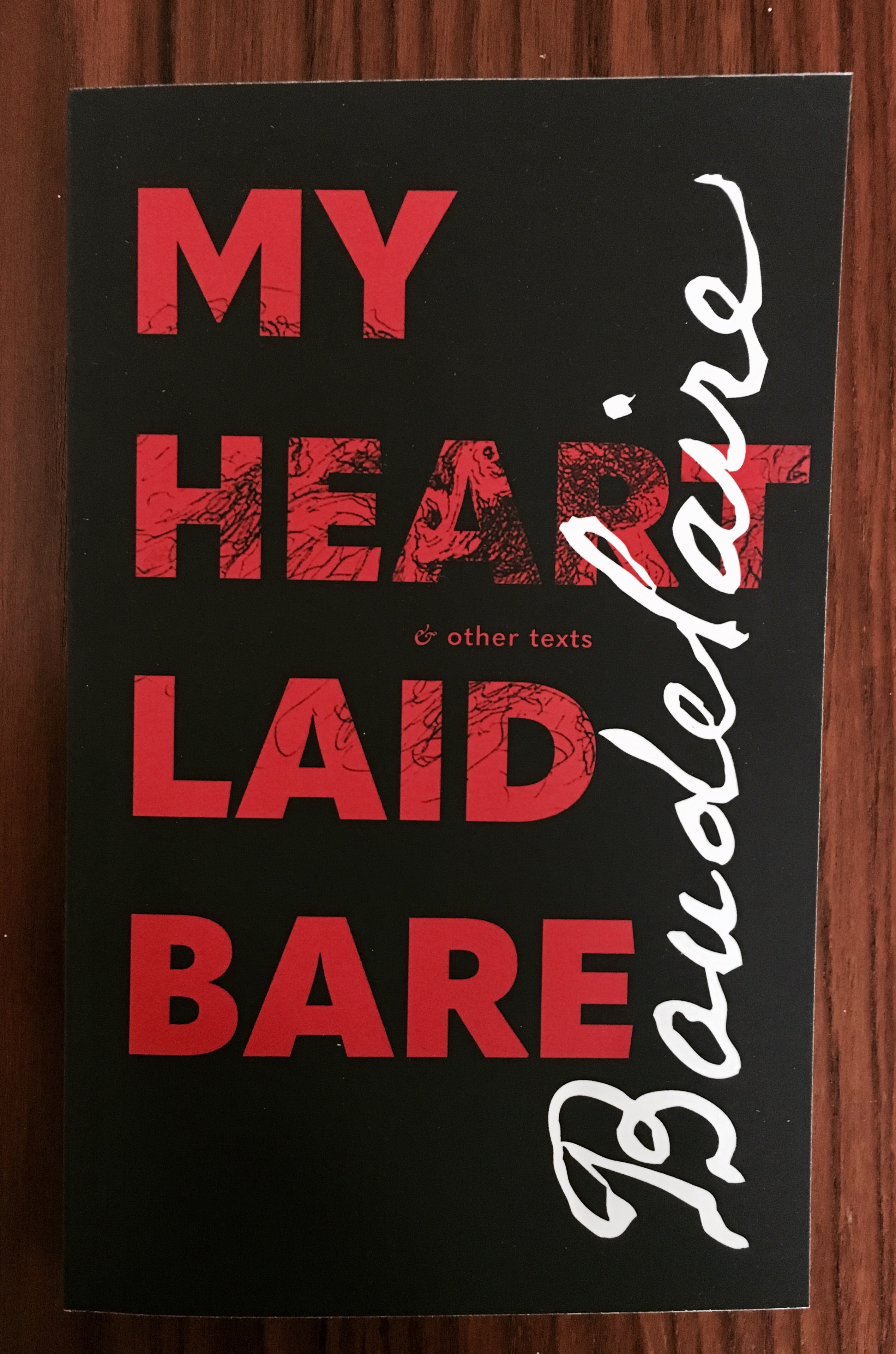
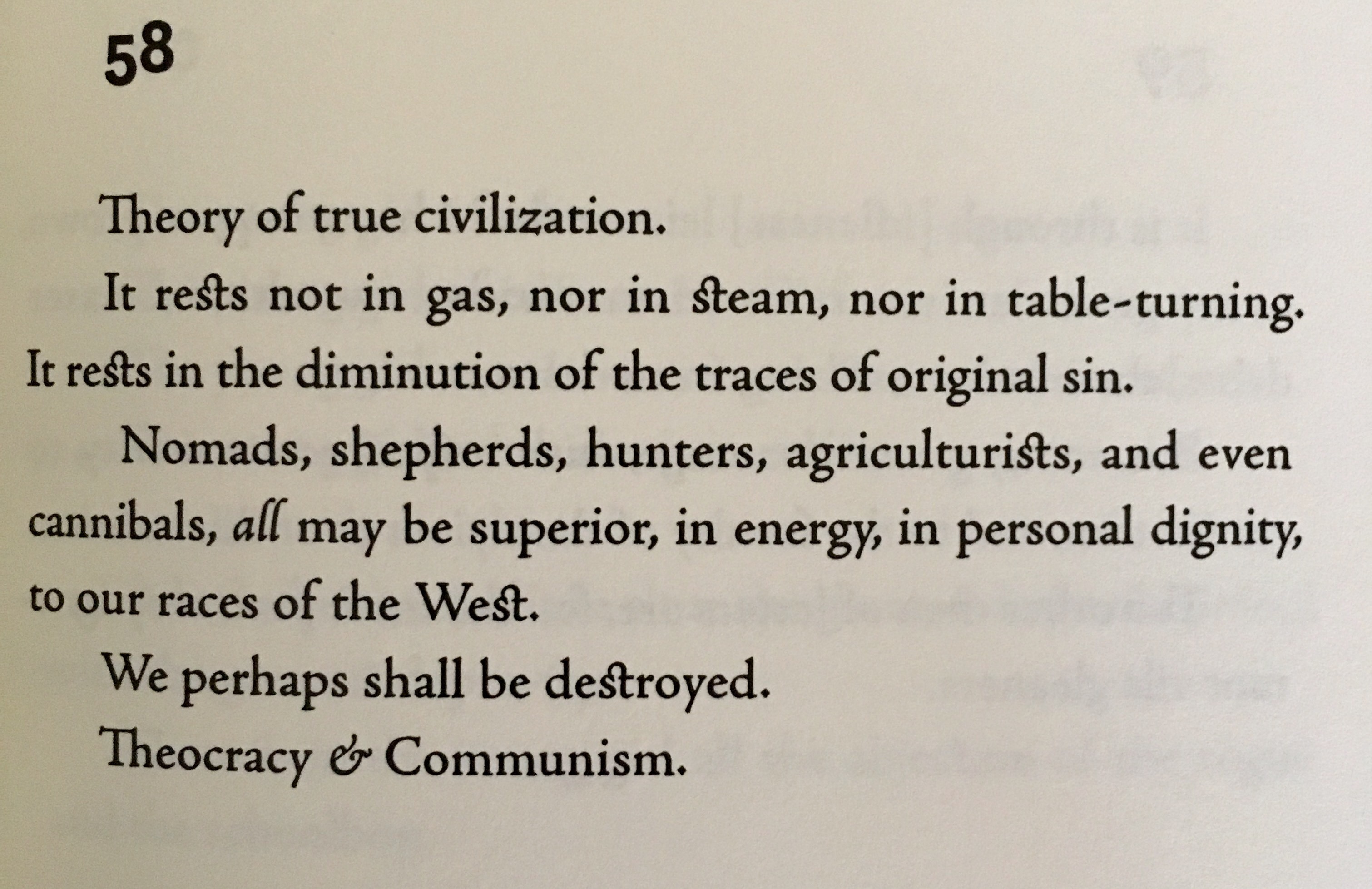
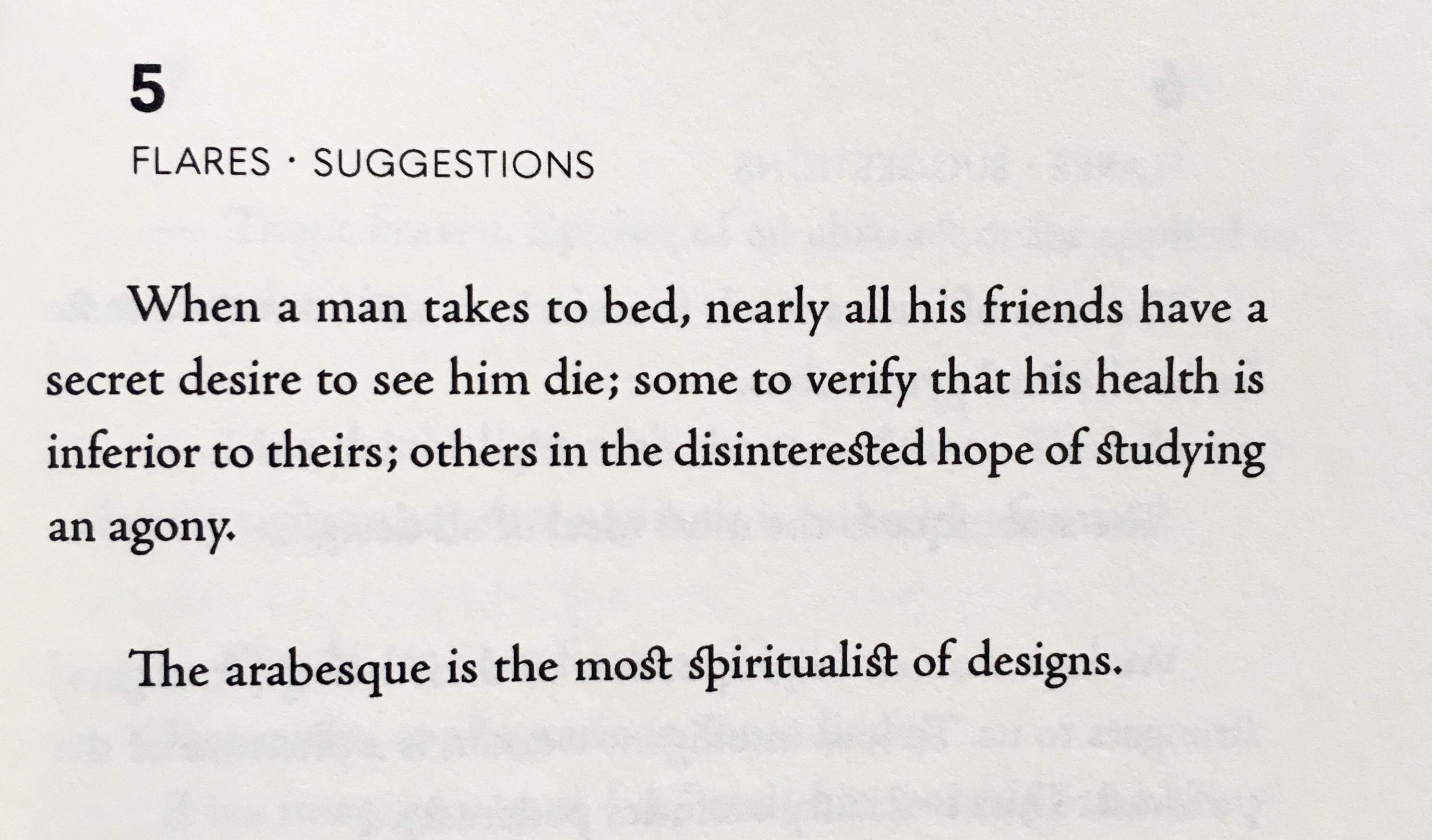
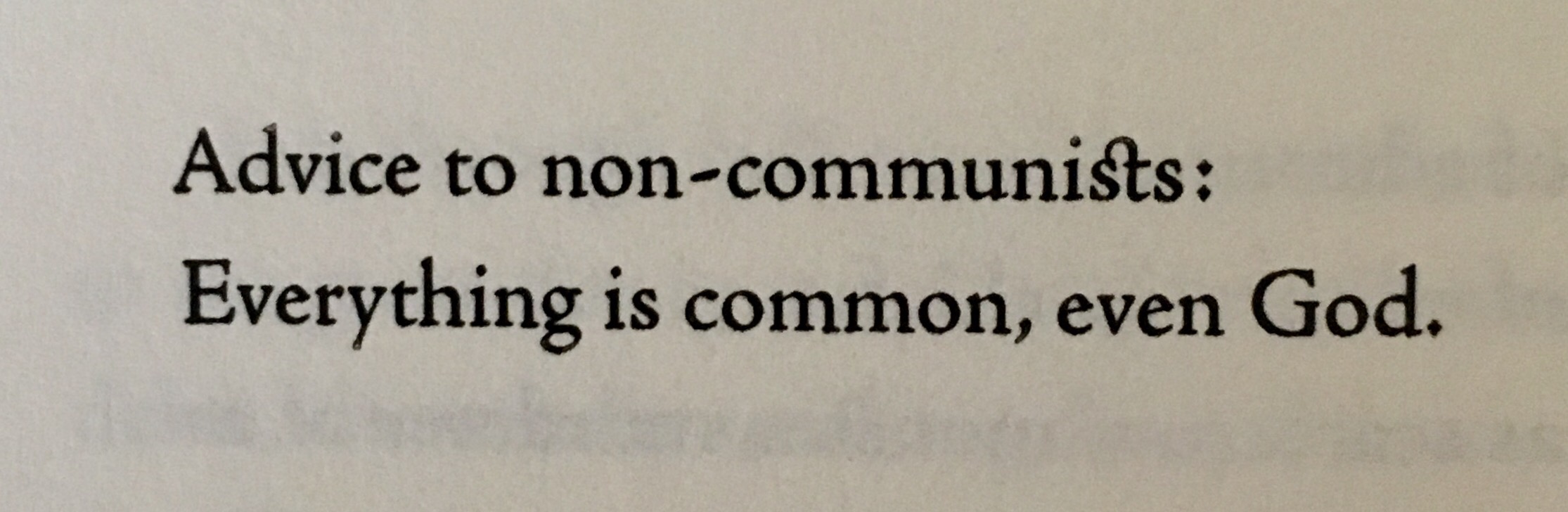
And I wasn’t looking for essays by Jerry Farber (this weird mass market paperback was crammed into a completely wrong section—misshelved as if someone was trying to hide it. The font on the spine prompted me to pull it out, and I knew that the guy had written “The Student as Nigger”….I started reading “Why People Love Capitalism” and decided to pick it up):

img_5056-1

What I was looking for was Paul Bowles’s novel The Sheltering Sky, which is prominent on my to-read list after devouring The Stories of Paul Bowles. But I simply couldn’t come to terms with these covers:

img_4987

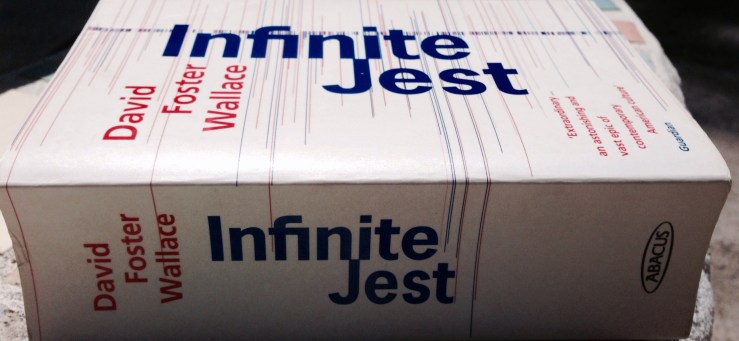
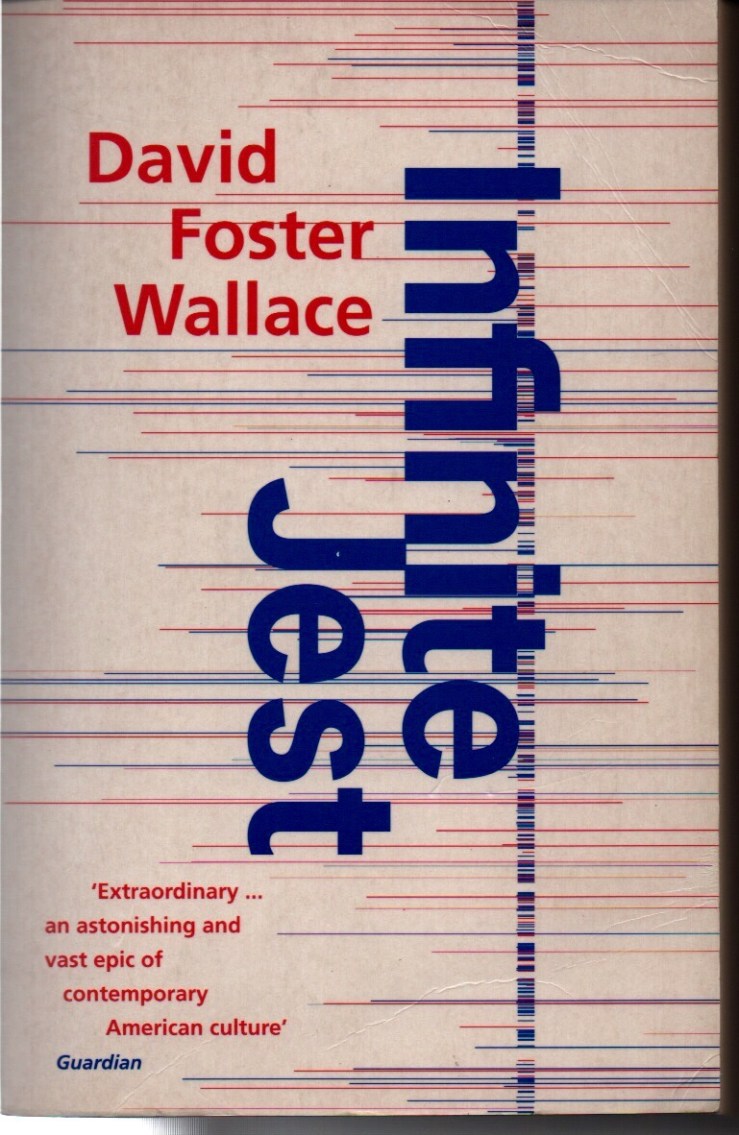
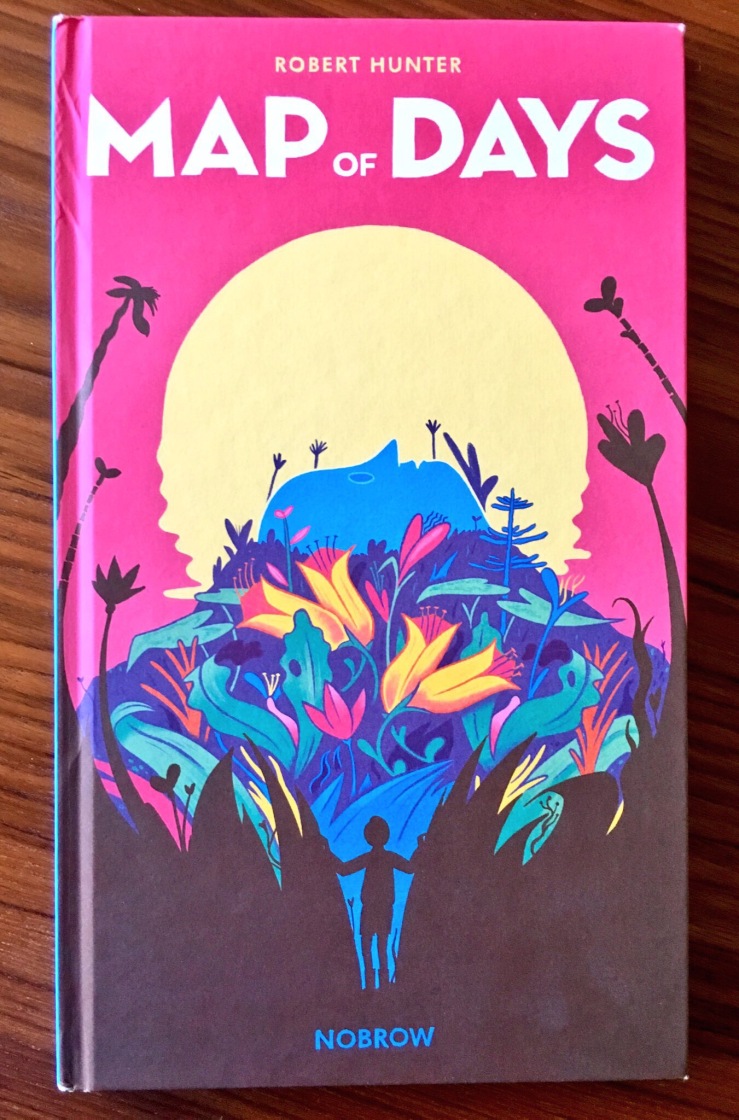
I mean, look, I know I shouldn’t care about the cover, but these are dreadful, and it this point if I’m going to own a paper book, it needs to have some aesthetic merit. Aesthetic merit like the cover for this collection:

img_4985-1

(I didn’t pick it up because the seven stories are in The Stories of Paul Bowles).

A last thought on covers:

“There’s quite a bit of schmaltz in Lincoln in the Bardo.”

Caleb Crain reviews George Saunders’s first novel Lincoln in the Bardo

First paragraph:

George Saunders’s new novel—his first, after four collections of short stories and a novella—takes place in the afterlife. Or rather, it takes place in the “bardo,” a term that Saunders has borrowed from Buddhism for what might be called the “justafterlife”—the interval between a ghost’s separation from its body and its departure for whatever comes next. As in The Sixth Sense and other movies and television shows, the ghosts imagined by Saunders linger in our world because they either don’t know they’re dead or aren’t yet resigned to leaving. “You are a wave that has crashed upon the shore,” they are told by browbeating angels who visit intermittently, but they refuse to listen.

Crain doesn’t exactly eviscerate Lincoln in the Bardo in his review (which also situates the novel in context with Saunders’s previous stories and essays), but he does make a strong case for passing on it.

A review of Robert Coover’s excellent new novel Huck Out West

img_4925

In the final lines of Mark Twain’s 1884 novel Adventures of Huckleberry Finn, our narrator-hero declares: “I reckon I got to light out for the Territory ahead of the rest, because Aunt Sally she’s going to adopt me and sivilize me and I can’t stand it. I been there before.”

We have here the signal trope of so much American literature—escape. Escape into the wild, the unknown, the expanse: the Territory. Ishmael goes to sea, Young Goodman Brown wanders into the woods, Rip Van Winkle retreats into the mountains. American literature loves to posit Transcendental escape, and with that escape, a utopian promise, a chance to reinvent “sivilization.” As the poet-critic Charles Olson puts it in the beginning of Call Me Ishmael, “I take SPACE to be the central fact to man born in America. I spell it large because it comes large here.”

The other side of the utopian facade is much darker: westward expansion, continentalism, war, violence, extinction agendas, and the exploitation of all things mineral, vegetable, animal, and human. Manifest Destiny. Olson noted that American space might be large, but it was “Large, and without mercy.” Manifest Destiny offered nineteenth-century Americans an illusion of mercy, a mimesis of meaning, a rhetorical gloss to cover over predation, violence, and genocide. Manifest Destiny was a story to stick to, a story with a purpose, good guys and bad guys, and an ethos to drive a narrative. Through such a narrative, Americans might come to see their nation allegorically maturing, coming of age, expanding freedom. Manifest Destiny offered a narrative of a nation growing, a narrative that made space for itself via the violent erasure of native peoples.

Robert Coover’s new novel Huck Out West is very much about storytelling and maturation–about how we attempt to give meaning to the passing of time. Sure, it’s a yarn, an adventure tale that answers happens to Huckleberry Finn after he’s lit out into the Territory. But it’s also a story of what it means to grow up, essentially asking whether such a thing is even possible. “It was almost like there was something wicked about growing up,” Huck remarks in the novel’s second chapter. Ever the misfit, Huck cannot square the evil around him with the dominant social narratives that would try to justify injustice. He can’t stick out a story. This is a character who has always preferred immediate truth.

Consider a few early lines:

Tom is always living in a story he’s read in a book so he knows what happens next, and sometimes it does. For me it ain’t like that. Something happens and then something else happens, and I’m in trouble again.

Like Twain’s original novel, Huck Out West is also a picaresque, albeit one in which the main character repeatedly wonders how to stitch together the seemingly random episodes of his life into a meaningful narrative. Huck’s life is essentially picaresque, and without Tom Sawyer around to rein the episodes together into a story, Huck’s left with “something happens and then something else happens.” Here’s a picaresque passage that summarizes Huck’s “adventures” in his new milieu:

I wrangled horses, rode shotgun on coaches and wagon trains, murdered some buffalos, worked with one or t’other army, fought some Indian wars, shooting and getting shot at, and didn’t think too much about any of it. I reckoned if I could earn some money, I could try to buy Jim’s freedom back, but I warn’t never nothing but stone broke. The war was still on, each side chasing and killing t’other at a brisk pace clean across the Territory, and they both needed a body like me to scout ahead for them, watch over their stock at night, pony messages to the far side of the fighting, clean their muddy boots and help bury the dead, of which there warn’t never no scarcity, nuther boots nor dead.

Variations of these scenarios, as well as flashbacks to earlier episodes mentioned here, play out as the early plot in Huck Out West; Huck’s only real aim is to “buy Jim’s freedom back.” Jim’s been cruelly sold as a slave to a tribe of Indians by Tom Sawyer. Tom Sawyer is a fucking asshole.

But Tom is Huck’s main partner, or “pard” in Coover’s Twain’s vernacular. And don’t worry, Jim (Huck’s other pard) ends up okay. We meet him again, along with other members of the old gang, including Becky Thatcher, who’s fallen on harder times, and Ben Rogers. Ben has graduated from his youthful playacting in Tom Sawyers’ Gang to armed robbery as a member of a real gang. Huck Finn accidentally joins up. The scene plays out as one of many dark repetitions of Adventures of Huckleberry Finn, and ends in violence.

Huck Out West is a violent novel, and reading it helps to foreground the violence of Twain’s original novel. In his 1960 study Love and Death in the American Novel, critic Leslie Fiedler highlighted the horror of Twain’s novel, horror which hides in plain sight:

Huckleberry Finn, that euphoric boys’ book, begins with its protagonist holding off at gun point his father driven half mad by the D.T.’s and ends (after a lynching, a disinterment, and a series of violent deaths relieved by such humorous incidents as soaking a dog in kerosene and setting him on fire) with the revelation of that father’s sordid death. Nothing is spared; Pap, horrible enough in life, is found murdered brutally, abandoned to float down the river in a decaying house scrawled with obscenities. But it is all “humor,” of course, a last desperate attempt to convince us of the innocence of violence, the good clean fun of horror.

In Huck Out West, no amount of humor can convince us—and, significantly poor Huckleberry—of the innocence of violence. There is no consolation in Manifest Destiny, only genocidal violence. Take the following passage, for example, in which Huck, conscripted by a malevolent general (well, colonel really—but who hasn’t told a stretcher every now and then?) to break horses for the U.S. Army, witnesses the massacre of an Indian tribe:

What happened a few minutes later come to be called a famous battle in the history books and the general he got a power of glory out of it, but a battle is what it exactly warn’t. Whilst me and Star watched over the spare horses, the soldier boys galloped howling through the burning tents and slaughtered more’n a hundred sleepers, which the general called warriors, but who was mostly wrinkled up old men, women, and little boys and girls. I seen eyes gouged out and ears tore off and bellies slit open with their innards spilling out like sausages.

The language of Huck Out West, here and elsewhere—full of missing scalps, ears, limbs, etc.—often veers closer to Cormac McCarthy’s Blood Meridian than Twain’s Adventures of Huckleberry Finn.

As ever, Huck’s sense of justice simply does not square with the narrative (“history books”… “power of glory”) that others will shape from the raw predation he’s witnessed. He’s unable to connect the letter of the law to its spirit—or rather, he plainly sees that the letter is used to gloss over an evil, evil spirit. He’s still the same kid who, in the moral climax of Adventures, elected to “go to hell” rather than see Jim enslaved again.

Anyone familiar with Adventures of Huckleberry Finn will also know that the novel’s ending is an incredibly problematic vaudeville of cruel comedy. Tom Sawyer pops back into the narrative, overwhelming whatever spirit of growth and maturity Huck achieved in the novel’s climax. The pair undertakes a series of cruel jokes on Jim. Their play is, to invert Fiedler’s terms above, a showcase for the violence of innocence, the horror of good clean fun. Critics over the years have either had to brush away the novel’s final chapters, or to try to reconcile them in some way. More germane is the viewpoint of one of Paul Bowles’s narrators (undoubtedly Bowles himself), who, in the short story “Unwelcome Words” laments: “I’ve often wished that someone would rewrite the end of Huckleberry Finn.” Coover provides a rewrite, in a sense: A fuller, more mature revision, one that takes Tom and Huck out of their adolescence into full-blown, inescapable adulthood—a revision that requires Huck resist the cruelty of both Tom and the “sivilization” he represents.

“The Amazing Tom Sawyer,” as various characters call him in Huck Out West is an awful evil instigator: a con-man, a fake-lawyer, a demagogue of the worst stripe. He’s always been this way, but we failed to notice, perhaps, enthralled by his confidence game. And what American doesn’t love a confidence trickster? Hell, Tom had kids lined up to pay him to whitewash a fence.

Tom pops in and out of Huck Out West with a jolting, picaresque force, and in some ways the central plot of the novel revolves around his partnership with Huck—a partnership that requires Huck buy into Tom’s nihilism. “Ain’t nothing fair, starting with getting born and having to die,” Tom scolds Huck. Huck is right though: It isn’t fair. In this case, Huck is protesting the “largest mass hanging in U.S. history,” the execution of over three dozen Sioux Indians in Minnesota in 1862.

Tom dresses up his core nihilism in any number of narratives. The great lie of all these narratives is, of course, the idea that Tom’s various predatory schemes are actually founded in justice, in some kind of manifestation of destiny. Tom sells the narrative to the people he’s conning. For him, maturation is nothing more than progressing, perfecting, and extending the long con on any rubes he can sucker. He dresses up the tribalist demagoguery he uses to sway the herd in romantic legalese, but at heart he’s a brute.

Huck’s maturation is more profound. He understands, spiritually if not intellectually, that he needs to get away from Tom Sawyer and his tribe “sivilzation.” Huck addresses Tom late in the book:

“Tribes,” I says. “They’re a powerful curse laid on you when you get born. They ruin you, but you can’t get away from them. They’re a nightmare a body’s got to live with in the daytime.”

Coover provides a salient contrast to Tom Sawyer in a character of his own invention, a young Lakota Huck calls Eeteh (he can’t pronounce the full name). Eeteh is a holy fool who tells (and perhaps invents) stories of Snake, Raven, and Coyote—trickster tales and origin stories. Eeteh’s storytelling seems to point in a different direction than Tom’s tall tales. Eeteh describes the trickster and hides a kernel of wisdom in his tales; Tom’s stories are tricks on fools, signifying nothing. Significantly, Eeteh is something of an outcast among the Lakota. He understands Huck in ways Huck doesn’t understand himself:

Eeteh says that both of us growed up too early and missed a lot, so really didn’t grow up at all, just only got older. I says that’s probably better’n growing up and Eeteh was of the same opinion.

Huck and Eeteh have both, through their unique early upbringings (or lack-there-of), missed the “sivilizing” influences that would bind them into a dominant social narrative. Coover’s insight here is that “growing up” doesn’t necessarily mean “growing wise,” and that the old often hide their foolishness and venality behind empty stories.

But Coover’s storytelling is marvelous, rich, full. He colors brightly Huck’s moments of epiphany. In one prominent example, Huck Finn the horsebreaker takes (what I’m pretty sure was) mescaline at the behest of the Lakota tribe that temporarily adopts him. He breaks a wild horse, his metaphorical trip literalized in a wild gallop through American history and geography:

We was pounding over a desert, but when I peeked again we was suddenly splashing through a river, then tromping a wheat field, and next on the grasslands, scattering herds a buffalos and yelping coyotes. I had to scrouch down when he run through a low forest, not to get scraped off, then pull my knees up as we raced through a narrow gorge. We hammered in and out a mining and cow towns, Indian camps and army forts.

Huck’s apotheosis is real—for him, anyway—but the Lakota still enjoy a laugh at his expense, just as they have with inside outsider Eeteh. Tribes of any stripe are a nightmare to try to escape from.

And hence the final moments of Huck Out West recapitulate the final lines of Adventures of Huckleberry Finn. Huck and Eeteh—do I give away too much, dear reader? Very well, I give away too much—Huck and Eeteh dream of new frontiers and new freedoms. On the eve of the American centennial anniversary, the pards venture to fresh Territory. As they set out, Eeteh spins a final tale. In this tale, Fox and Coyote create a new being with “two members” made from pre-existing elements:


So they made a new cretur out a parts borrowed from Whooping Crane, Prairie Dog, Mountain Goat, Rainbow Trout, Turkey Vulture, Jack Rabbit, and Porkypine.

“That must a been something to see!” I says. “A cretur with two members, joined up from a crane, prairie dog, goat and trout, plain stops me cold in my tracks, never mind the rest!”

Eeteh says he’s really glad he didn’t try to tell me about Coyote in the Land of the Dead.

“Ain’t that a story about afterlife soul creturs? I thought you don’t take no stock in souls.”

Eeteh sighed and says that’s just what he means.

The final moments of Huck Out West reinvent Huck’s dream of synthesis at the beginning of Twain’s Adventures: “In a barrel of odds and ends it is different; things get mixed up, and the juice kind of swaps around, and the things go better,” Huck tells us in that much older novel.

And even if Huck digs the swap and the flow of the new, he still can’t fully puzzle out Eeteh’s headscratcher. Our boy Huck never was one for narrative. “I was plumb lost,” he admits in the next line, before signaling the new Territory all storytelling opens: “I reckoned we could start over at the campfire tonight.” Tell the story again, tell it new.

So what does Eeteh’s story mean? Is there a rejection here of metaphysical meaning, of, like, a soul? I don’t know but I don’t think so. Perhaps Eeteh’s evoking here something closer to what Emerson called the Over-Soul (“We live in succession, in division, in parts, in particles…but the whole, of which these are shining parts, is the soul”).

But is “Over-Soul” just another simple gloss, a sturdy but rusty nail to hang a narrative on—like “Manifest Destiny”? Coover’s Huck ends his narrative by admitting, “I was lost again,” which seems like a more than fair metaphor for America, if that’s how we’re to take the novel. (There are plenty of other ways to take it: It’s very funny, and the prose is amazing—I mean, here’s a novel that could’ve fallen into the trap of becoming some bizarre bad fanfiction, but Coover’s too good. The novel is aesthetically marvelous. I hope I’ve shared enough samples here to convey that to you, reader).

If Huck is lost again, he has a few solutions, the first one being to “muddytate” on the problem (with some whiskey, some fish, and the company of his pard). And so Huck the escape artist recalls here at the end of his narrative the other paradigm of American literature: the lazing loafer, the shirker, the dreamer. And what is dreaming but the richest form of escape? I think of Walt Whitman leaning and loafing at his ease observing a spear of summer grass, Ishmael’s sea-dreams, Rip Van Winkle dozing through the Revolutionary War… If Huck Out West posits a utopian escape, it’s an escape through imagination, and it’s an escape utopian only in its rejection of all social order outside of a single “pard.”

But ultimately, I don’t think Huck Out West wants its readers to escape from history, from American history, from the ugly awful violence of Manifest Destiny. Rather, I think the novel calls its reader to look anew through the eyes of our naive experienced insider outsider paradox of a hero, Huckleberry Finn—to look afresh at the Big Narrative that has dominated our society, and to decide whether or not it’s something we want to recapitulate—or something we’d be better off reimagining. Huck and his one pard—there is no utopia outside of a pair, it seems—might get to escape into the sunset, but the rest of us are stuck here. Let us all muddytate and then do better.


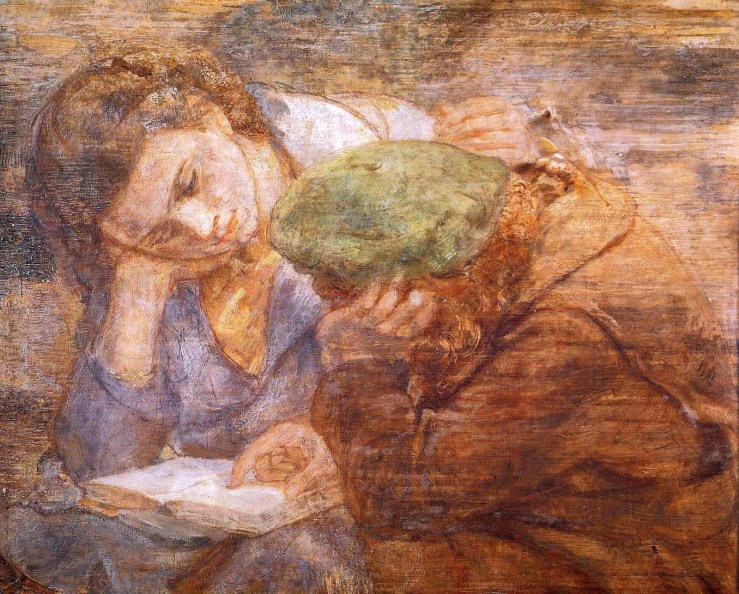
Girl Reading at Window — Henry Moore

Girl Reading at Window 1977-8 by Henry Moore OM, CH 1898-1986

Americans love being conned (Ishmael Reed)

img_0548

It was Bo Shmo and the neo-social realist gang. They rode to this spot from their hideout in the hills. Bo Shmo leaned in his saddle and scowled at Loop, whom he considered a deliberate attempt to be obscure. A buffoon an outsider and frequenter of sideshows.

Bo Shmo was dynamic and charismatic as they say. He made a big reputation in the thirties, not having much originality, by learning to play Hoagland Howard Carmichael’s “Buttermilk Sky” backwards. He banged the piano and even introduced some novel variations such as sliding his rump across the black and whites for that certain effect.

People went for it. It was an all the newspapers. He traveled from coast to coast exhibiting his ass and everything was fine until the real Hoagland Howard Carmichael (the real one) showed up and went for Bo Shmo’s goat. He called him a lowdown patent thief and railed him out of town. You would think that finding themselves duped, the impostor’s fans would demand his hide. Not so, Americans love being conned if you can do it in a style that is both grand and entertaining. Consider P.T. Barnum’s success, Semple McPherson and other notables. A guy who rigs aluminum prices can get himself introduced by Georgie Jessel at 100 dollars a plate but stealing a can of beer can get you iced.

So sympathetic Americans sent funds to Bo Shmo which he used to build one huge neo-social realist Institution in the Mountains. Wagon trains of neo-social realist composers writers and painters could be seen winding up its path.

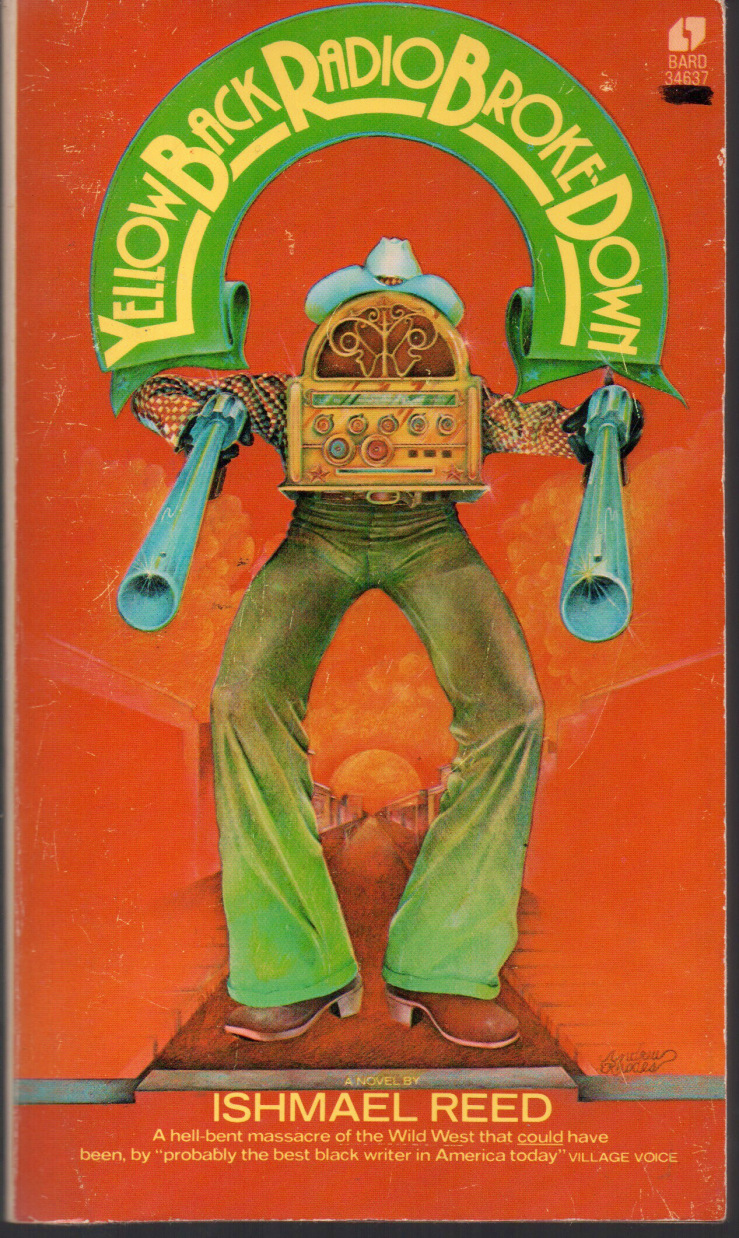
From Ishmael Reed’s 1969 novel Yellow Back Radio Broke-Down, which I am loving the hell out of.

Folks. This here is the story of the Loop Garoo Kid (Ishmael Reed)

img_0548

Folks. This here is the story of the Loop Garoo Kid. A cowboy so bad he made a working posse of spells phone in sick. A bullwhacker so unfeeling he left the print of winged mice on hides of crawling women. A desperado so onery he made the Pope cry and the most powerful of cattlemen shed his head to the Executioner’s swine.

A terrible cuss of a thousand shivs he was who wasted whole herds, made the fruit black and wormy, dried up the water holes and caused people’s eyes to grow from tiny black dots into slapjacks wherever his feet fell.

Now, he wasn’t always bad, trump over hearts diamonds and clubs. Once a wild joker he cut the fool before bemused Egyptians, dressed like Mortimer Snerd and spilled french fries in his lat at Las Vegas’ top of the strip.

Booted out of his father’s house after a quarrel, whores snapped his heels and trick dogs did the fandango on his belly. Me called him brother only to cop his coin and tell malicious stories about his cleft foot.

Born with a caul over his face and ghost lobes on his ears, he was a mean night tripper who moved from town to town quoting Thomas Jefferson and allowing bandits to build a flophouse around his genius.

A funny blue hippo who painted himself with water flowers only to be drummed out of each tribe dressed down publicly, his medals ripped off.

Finally he joined a small circus and happily performed with his fellow 86-D—a Juggler a dancing Bear a fast talking Barker and Zozo Labrique, charter member of the American Hoo-Doo Church.

Their fame spread throughout the frontier and bouquets of flowers greeted them in every town until they moved into that city which seemed a section of Hell chipped off and shipped upstairs, Yellow Back Radio, where even the sun was afraid to show its bottom.

The opening paragraphs of Ishmael Reed’s 1969 novel Yellow Back Radio Broke-Down.

Our tyrants always feel in need of excuses (William H. Gass)

Our tyrants always feel in need of excuses. Our enemies are always spying, undermining, arming, plotting, seizing the high ground, inventing new horrors, inventing flashier weapons. This mole, or that rat, is smarter than we ever”“imagined, and it is working day and night against us—cunning and conniving—out of sight, in secret—because beneath deep undergarments it holds a gun, a knife, a bomb, or a book full of dreadful ideas. We must monitor our phones, watch our neighbors—note, film, record, trace, follow, measure every movement, scrutinize every public meeting, overhear every private one, rifle records, ponder every purchase, search through garbage, twist dumb tongues till they scream with the pain of prying pliers.

Tyrannies do not come in ones or twos; tyrannies come in battalions: there is Mother’s heart you mustn’t break or Father’s hopes you dare not dash; there are the reprisals taken by society because you sniffed when you should have sneezed; there are all those looks delivered like blows from someone sitting on his high horse and wielding his scorn like a whip. It does not matter what the party motto is, what flag flies, what history pretends to teach, what rewards will be yours, what hurt feelings will follow; we need to be free to choose our own errors, our own myths, to furnish our souls as we see fit.

Of course, what we believe is important, but that we believe it freely, that we can speak of it openly, that we fear neither disapproval nor contradiction, is essential to the humanness of our being. This freedom—if it is to be freedom and not another fraud—comes at a cost. It is a cost that those who have rarely been free are often reluctant to pay, because they are as unused to the presence of liberty in others as they are of freedom when granted to themselves.

We can be real only when others are allowed to play their radios. It’s odd, but our liberty lies in the liberty of our neighbors. They will be rude; they will cross the street against the light; they will eat offal; they will entertain tyrants at tea; they will be tasteless; they will be other; they will be … That’s it … they will be. They will speak strangely, dress oddly, live quaintly, worship a deity they found in a dime store. Worse: they won’t like Bach or Henry James. Worse: they will live like gnats in annoying clouds. Worse: for us they will have no particular esteem. Worst: they will want us to be nice to them, share our rights, give them room. Worse than worst: they will deny us our desires if they can; they will blame us for their plights; they will give evidence, everywhere, of the same mean-spirited insecurities that have soiled our souls from our birth.

When we deny to others their interior life, we deny ourselves all knowledge of it.

From William H. Gass’s essay “What Freedom of Expression Means, Especially in Times Like These.” Collected in Life Sentences.

Tribes. They’re a powerful curse laid on you when you get born (From Coover’s Huck Out West)

“Palling around with injuns, Huck, is right down dangersome. You can’t trust ’em. Remember what happened to them poor emigrants we met when we first come out here. You’ll get your throat slit before you know it. And it ain’t right. There’s a war on.”“We made the war, not them,” I says, recollecting what Dan Harper said. “We been bullying in and taking away everything they s’posed was their’n. They’re only just defending theirselves.”

“Well, from where they set, Huck, they got a point. But we ain’t them. We got to stick with our own tribe, even if they ARE all lunatics. If we don’t, we’ll end up crazier’n any of them. You remember that poor preacher up in Minnysota? Even if he was maybe right, his rebel notions was turning him plumb loco, and in the end they probably got him lynched by his own congregation. These lands is become our lands, that’s the story now, and it’s only got just one ending. There ain’t nothing them hoss-tiles can do about it, nor not you nuther.”

“Tribes,” I says. “They’re a powerful curse laid on you when you get born. They ruin you, but you can’t get away from them. They’re a nightmare a body’s got to live with in the daytime.”

Dialogue between Huckleberry Finn and Tom Sawyer from Robert Coover’s 2017 novel Huck Out West.


Thomas Pynchon sends his regrets to Donald Barthelme for missing the Postmodern Dinner

screenshot-2017-01-18-at-8-36-27-pm

A 1983 letter from Thomas Pynchon to Donald Barthelme.

Superlibrarian Jessamyn West shared Pynchon’s letter to Barthelme on Twitter yesterday and then posted it on her wonderful Donald Barthelme appreciation page.

Pynchon here is ostensibly apologizing for missing Barthelme’s so-called “Postmodern Dinner” in New York.

In his 2009 Barthelme biography Hiding Man, Tracy Daugherty offers the following recollection from novelist Walter Abish:

Around this time — in the spring of 1983 — “Donald had this idea to make a dinner in SoHo,” says Water Abish. “A major dinner for a group of writers, and he planned it very, very carefully. It was a strange event. Amusing and intriguing. He invited…well, that was the thing of it. The list. I was astounded that he consulted me but he called and said, ‘Should we invite so-and-so?’ Naturally, I did the only decent thing and said ‘Absolutely’ to everyone he mentioned. I pushed for Gaddis. Gass was there, and Coover and Hawkes, Vonnegut and his wife, Jill Krementz, who took photographs, I think. Don’s agent, Lynn Nesbit, was there. She was always very friendly. Susan Sontag was the only woman writer invited.

Daugherty continues:

Pynchon couldn’t make it. He wrote Don to apologize. He said he was ‘between coasts, Arkansas or Lubbock or someplace like ‘at.”

Okay.

Abish recollects that the meal was at a very expensive restaurant, prefix, and the writers had to pay their own way. There were about 21 attendees, and Barthelme was “Very, very dour.”

Reading/Have Read/Should Write About (Paul Bowles, Robert Coover, Pierre Senges, Antonio di Benedetto)

img_4908

I’ve had a hard time reading much (let alone writing anything) since November 8th.

A Klimt puzzle has been soothing though.

And I’ve found audiobooks, which I’ve always loved, particularly wonderful lately. They have provided a kind of anti-noise, antidote, anti-?—against the NPR news and punditry I might normally adhere to in the car (and especially potent against my own thoughts at night before I fall asleep).

My pattern with audiobooks has long been to reread at night the chapters or passages I audited that day, or to audit after I had read—or to mix it all up, going back and forth. I like this method because it allows me, essentially, to reread.

I’ve been listening to The Stories of Paul Bowles, read by like a dozen different performers (not a full-cast group read, but rather different voices for different tales). Then (mostly at night but occasionally very early in the morning), I’ve been rereading some of the stories that are collected in Collected Stories. (My local bookshop had copies of the more-complete The Stories of, but hell, who can pass up a Black Sparrow Press edition? Plus—parenthetically—the BSP edition collects the more essential stories).

Anyway, I’m coming to the end of The Stories of Paul Bowles and I’m almost a bit sad about it. The sadness come partially from the fact that the stories are presented chronologically, and, simply put, the later tales are sadder than the earlier ones. Not in content, but in tone—Bowles’s later stuff grows more bitter, more resentful. The earlier tales are strange, sharp, and driven by weird nightmare alienation and sinister surrealism. But they also open into possibility, exploration, and radical newness. The later tales, composed in the 1980s, seem to me a closing off, not just in themes and tone, but also stylistically. They retreat into formalist modernism. There’s a palpable resistance to postmodernism in the later stories, an elegiac tone that romanticizes (even through multiple ironies) the post-War colonial past.

But my sadness is also the feeling of Oh I want more. (Plus like, the aforereferenced general post-election malaise). This is all easily remedied by my plan to listen to the first two-thirds of these stories again—but probably after I take a crack at his novels.

img_4924

I was too young the first time I took a crack at The Sheltering Sky—16 I think. I was reading a lot of Hemingway, Vonnegut, William Burroughs, et al. But I couldn’t click with Bowles, which makes sense to me two decades later. His stories are spare but sharp, wild but obscure. His fables refuse to square with our expectations. They are menacing, awful, loaded with strangers and travelers and outcasts. The characters do not know what is happening to them; they do not even know that they do not know what is happening to them. Often, the story’s narrator does not seem to know what is happening, and if the narrator does know what is happening, he’s not going to throw anything but the barest bones to the reader to piece together. Anyway, I’ll trek through again, for sure.

A late Bowles story, the epistolary “Unwelcome Words” (many of the later stories are epistolary affairs), offers me a neat transition to the audiobook I’ve been drifting off into unconsciousness the past few evenings with. Here’s Bowles’s narrator (a version of Bowles his-goddamn-self):

I’ve often wished that someone would rewrite the end of Huckleberry Finn, delivering it from the farcical closing scenes which Twain, probably embarrassed by the lyrical sweep of the nearly completed book, decided were necessary if the work were to be appreciated by American readers. It’s the great American novel, damaged beyond repair by its author’s senseless sabotage. I’d be interested to have your opinion, or do you feel that the book isn’t worth having an opinion about, since a botched masterpiece isn’t a masterpiece at all? Yet to counterfeit the style successfully, so that the break would be seamless and the prose following it a convincing continuation of what came before—that seems an impossible task. So I shan’t try it, myself.

Bowles here licenses my transition to Robert Coover’s latest, Huck Out West, a sorta-sequel to Twain’s problematic American masterpiece. Sure, Coover’s not rewriting the end of Huck Finn so much as he’s carrying out the mission of the novel’s final lines: “…I got to light out for the Territory ahead of the rest, because Aunt Sally she’s going to adopt me and sivilize me, and I can’t stand it. I been there before.” So Coover sets Huck out in the Territory, away from the maternal bodies that would otherwise sivilize him. I’ve gotten maybe two hours into the audiobook (it’s short, fewer than ten hours), but I keep launching in to different points, and only auditing late at night. I need a physical copy.

img_4925

Physical copies report:

I’m crawling through Pierre Senges’s The Major Refutation (Eng. trans. by Jacob Siefring), mostly because I have to look up names, look for images, get lost in early depictions of “The New World” (and, uh, the refutation of the New World). . So far, it reminds me of the kind of fantasy-based literary criticism that I love: Eco, Borges, Calvino. Excerpt here.

A friend loaned me his copy of Antonio di Benedetto’s first novel Zama (Eng. translation by Esther Allen) last week, insisting I read it, and informing me that Bolaño based the titular figure of his story “Sensini” on di Benedetto. I read the first four chapters this afternoon; they were very short and I want to keep reading. Short chapters are working for me right now.

I’ve often wished that someone would rewrite the end of Huckleberry Finn (Paul Bowles)

I’ve often wished that someone would rewrite the end of Huckleberry Finn, delivering it from the farcical closing scenes which Twain, probably embarrassed by the lyrical sweep of the nearly completed book, decided were necessary if the work were to be appreciated by American readers. It’s the great American novel, damaged beyond repair by its author’s senseless sabotage. I’d be interested to have your opinion, or do you feel that the book isn’t worth having an opinion about, since a botched masterpiece isn’t a masterpiece at all? Yet to counterfeit the style successfully, so that the break would be seamless and the prose following it a convincing continuation of what came before—that seems an impossible task. So I shan’t try it, myself.

From Paul Bowles’s short story “Unwelcome Words.”

Farce for farce, we could have been just as glad with a book | From Pierre Senges’s The Major Refutation

img_4568

To paint the portrait of this new territory, the mapmakers in their workshops are drawing free-hand sketches of coastlines that are not a whit newfangled, but for their way of appraising our world scornfully, as if from a foreign shore. Bringing islands into existence on paper is a heady game: I have taken it up myself in order to appreciate such intoxication as trumpery procures, that of an adventure on the high seas, at hardly any cost, drawn out in the meticulous outline of gulfs, hills natural harbours, headlands, capes, deltas, swamps, bone-heaps and rocks peopled with grey fowls; it sufficed to set some corsairs gamboling there. But the mapmakers go further: they invent the natives of these territories too, drawing their faces in the manner of the Guanches of the Canaries, or Ukrainians driven by force to Genoa; without inventing much they invent loincloths copied from Madeira, shoes copied from Ceylon, and sticks of incense copied from Bactria but placed in the mouth. As for the amorous rites of the natives, the clerks in Isabella’s workshops only had to leaf through the ledgers of the Old and New Inquisitions, but aslso the works of Tertullian where he denounces the excesses of the Gnostics & their collective mating practices, involving devorations, anthropophagy, child sacrifices, sodomies complicated by the age of the subjects and their numerousness. They plunge into these annals as if into the reservoir of all possible combinations, the imagination being for them but a principle of permutations, and nothing else. The Cathars, before they retracted, addressed their torturers with periphrases we find almost unchanged in the accounts of many impostors returned from the New Indies. We can see that the promoters of these lands under the horizon did not have to look very far for their lying words, which they simply cut from books, sometimes with their images, combining them freely with those old lullabies that our grandmothers recited now and then, no longer believing in them, but transmitting them all the same since one must talk of something if only to fill the day’s idle hours.

By reading these works, by plundering the archives, in other words by resurrecting these long dormant voices, each can see for himself that this world arbitrarily pulled out of the sea is neither a new idea, no an ingenious invention of our admirals, but rehashed legends, dressed up in drama and luxury to appeal to modern appetites, embellished sometimes with the help of parades of passive, nude savages, insinuated by the conquerors—the sole novelty these crude, chronically celibate men are capable of inventing to excite their fantasies, nay, the consummation of these fantasies in a tightly clenched fist, since love, discovery, and imagination are for them matters of force. No one can convince us that the Atlantic islands are an original idea, or that sailors from Lisbon or Genoa are telling for the first time of western archipelagoes adrift on the tenebrous sea. There are in our libraries so many allusions to Atlantis, to the voyages of St. Brendan, to the Seven Cities, to Ante Illa, and to the island of Brazil; so many now tattered books tell of the drifting of the Apostles of God toward the unbelievers and scorpions of the east and of the west, so many tattered books describe the walls of legendary cities and islands in the shape of tortoises: you would swear that the adventure of the new world were naught else than a hardly embellished copy of our old legends, a copy graven on the sea, instead of on paper: farce for farce, we could have been just as glad with a book.

From Pierre Senges’s novel The Major Refutation, new in English translation by Jacob Siefring from Contra Mundum Press.

The narrator is Antonio de Guevara, unsigned author of Refutatio major (c. 1517-25), an argument (?!) against the really real reality of The New World.

“The Hyena,” an ecstatic abject fable by Paul Bowles

“The Hyena”

by
Paul Bowles


A stork was passing over desert country on his way north. He was thirsty, and he began to look for water. When he came to the mountains of Khang el Ghar, he saw a pool at the bottom of a ravine. He flew down between the rocks and lighted at the edge of the water. Then he walked in and drank.

At that moment a hyena limped up and, seeing the stork standing in the water, said: “Have you come a long way?” The stork had never seen a hyena before. “So this is what a hyena is like,” he thought. And he stood looking at the hyena because he had been told that if the hyena can put a little of his urine on someone, that one will have to walk after the hyena to whatever place the hyena wants him to go.

“It will be summer soon,” said the stork. “I am on my way north.” At the same time, he walked further out into the pool, so as not to be so near the hyena. The water here was deeper, and he almost lost his balance and had to flap his wings to keep upright. The hyena walked to the other side of the pool and looked at him from there.

“I know what is in your head,” said the hyena. “You believe the story about me. You think I have that power? Perhaps long ago hyenas were like that. But now they are the same as everyone else. I could wet you from here with my urine if I wanted to. But what for? If you want to be unfriendly, go to the middle of the pool and stay there.”

The stork looked around at the pool and saw that there was no spot in it where he could stand and be out of reach of the hyena.

“I have finished drinking,” said the stork. He spread his wings and flapped out of the pool. At the edge he ran quickly ahead and rose into the air. He circled above the pool, looking down at the hyena.

“So you are the one they call the ogre,” he said. “The world is full of strange things.” Continue reading ““The Hyena,” an ecstatic abject fable by Paul Bowles”

Some books I’ll try to read in 2017 (Presented by The Good Intentions Paving Company)

img_4855

I’m in the middle of Paul Bowles’s stories right now, and loving the weird sinister menace of it all. I’ll probably take a crack at some of his novels this year too (The Sheltering Sky next? I’ll need to pick them up).

Senges’s The Major Refutation is also on deck.

Not pictured, because it’s not out yet, is Leonora Carrington’s The Complete Stories (forthcoming in the spring from Dorothy); I’m really looking forward to this one. The NYRB is also publishing Carrington’s memoir Down Below, which looks really cool. I’ve only read the collection The Oval Lady (and that through samizdat means), so I’m happy to see Carrington’s words in print.

The Expedition of Dr. Ramsbottom, Leonora Carrington, 1961

Also not pictured because its forthcoming (from Two Lines Press) is Atlantic Hotel by João Gilberto Noll (translated by Adam Morris). I’m anxious to read more from Noll after digging his novella Quiet Creature on the Corner.

Back to the stack in the picture: I loved Ishmael Reed’s Mumbo Jumbo and The Freelance Pallbearers (which strikes me as a really under-remarked upon novel), and I plan on getting to Yellow Back Radio Broke-Down at some point this year.

I’ve had a few false starts with Arno Schmidt’s The Egghead Republic, but maybe I can knock it out in a weekend.

I’ve taken multiple cracks at the novels by Gray, Murdoch, and Hawkes in the stack…so we’ll see.

I read Leon Forrest’s There Is a Tree More Ancient Than Eden in a blur; I’d like to reread it and the other Forrest novel I picked up last month, Two Wings to Veil My Face.

I’ve read enough Pynchon now to make a better effort with Vineland…but again, we’ll see (I’m actually kind of jonesing to reread Against the Day).

(And oh I didn’t make a list like this in 2016, but I was 4 for 8 in the one I did in 2015).

Good intentions.

The mind is a thing absolutely apart (Paul Bowles)

The only way to do anything is to have it so well rehearsed in one’s imagination that when the moment comes one does it automatically, as though for the hundredth time. Then it is all natural, and there is little likelihood of a slip-up. And there was no slip-up anywhere along the way. It was a heavy day, but not too hot because of the rain, which fell quietly as I walked down the road to the station. On the train I was not in the slightest degree perturbed: I knew there was no chance of any trouble. I kept marveling at the peculiar pleasure afforded by the knowledge that one has planned a thing so perfectly there can be no room for the possibility of failure, all the while being conscious that both the pleasure and the idea itself were completely childish, and that my conviction of success was, at the very least, ill-founded. But certain situations call forth certain emotions, and the mind is a thing entirely apart. I have cakes of soap that I bought twenty-five years ago, still in their wrappers, and I am saving them in the perfect confidence that the right day will come to unwrap each one and use it. And there are probably a hundred books downstairs in the library that I am eager to read, have been eager to read for years, yet refuse to read until the day comes, the day that says to me: This is the morning to start Villiers de L’Isle-Adam, or George Borrow, or Psichari, or someone else. Now, in my logical mind, I know quite well that these promised days are not likely ever to arrive: I shall never use those old cakes of soap that are stored in the linen closet, and I am reasonably sure of never reading Romany Rye, because it doesn’t interest me. But there is that other person, the ideal one that I ought to be, whom it does interest, and it comforts me to think that those things are there waiting for him. Certainly, the mind is a thing absolutely apart.

From Paul Bowles’s 1954 story “If I Should Open My Mouth.”

Illuminated Shadows — Chronis Botsoglou

assets_large_t_420_53463739

A review of John Berger’s Pig Earth

People exaggerate the changes in nature so as to make nature seem lighter. Nature resists change. If something changes, nature waits to see whether the change can continue, and it it can’t, it crushes it with all its weight!  Ten thousand years ago the trout in the stream would have been exactly the same as today.

Stasis and disruption and the relation between people and their natural and urban surroundings are the themes John Berger writes about in his 1979 collection of essays, poems and short stories, Pig Earth.  Having moved from England, where he enjoyed considerable renown as an art critic and fiction writer, to the peasant villages of the French Alps, Berger settled into his role as an active participant in rural life, not only turning hay but observing and documenting the disappearance of a way of a once-pervasive mode of life.  Pig Earth was one result of his labors, the first book of a trilogy that took some fifteen-odd years to complete, a moving but not uncritical account of humanity’s struggle to conquer nature by symbiosis.

Maybe symbiosis isn’t the proper term if we agree that humanity is part of nature’s whole, but Berger juxtaposes the frailty of humanity with the earth’s uncaring and often violent strength.  Survival for the family of the subsistence farmer depends upon that family’s ability to tend to the needs of the plant and animal world (as well as more than a little bit of luck).  In the collection’s first true story, “A Calf Remembered,” a baby cow is delivered on a dark winter’s night. Here, Berger stresses the protections that nature and man have designed to ensure the survival of a young, vulnerable animal:  mucus, barn, salt, and sense.  The human spends his night in the barn protecting his property because it provides him not only with sustenance in the forms of milk and meat, but also companionship and a sense of duty.  When daily living requires acts that might mean life or death, the conscious and the instinct converge.

He sat on a milking stool in the dark.  With his head in his hands, his breathing was indistinguishable from that of the cows. The stable itself was like the inside of an animal.  Breath, water, cud were entering it:  wind, piss, shit were leaving.

Pig Earth is a book worth studying as people attempt to make sense of a world transitioning from one type of living to another and fuss over the sources of their own limited strength and vitality. Berger may not have been looking to pioneer a slow-living locavore lifestyle, but his subjects worry about their increasing isolation from the circles of power and industry.  They fret over the pointlessness of passing their knowledge to their children who need entirely different skills to survive in the rapidly encroaching urban wage economy.  In “The Value of Money” a father refuses a tractor, branded “The Liberator” by the manufacturer, that his son has purchased for him because it will render his faithful work-horse obsolete.  This same farmer kidnaps local tax officials because they want to confiscate the products of his labor without compensation for value that he exclusively created.  Unable to make them understand their wrongdoing, he sets them free because “you can only take revenge on those who are your own.”

The final story, “The Three Lives of Lucy Cabrol,” is the lengthiest and perhaps most poignant narrative in the book. It follows the life of a bright, tenacious, physically stunted woman as she grows from young girl to town outcast.  While Berger admired much of the life in the peasant village, he would fail in his duty as critic and chronicler if he ignored its darker sides. Berger often sets the title character’s pluck against the resignation and superstition endemic to village life. When life requires struggle, most people choose to hoard.  When poor choices may lead to death or family hardship, capitulation to those in power, whether those rulers be the town’s big man or Nazi collaborators, can often seem the only obvious choice.  Lucy shows us that cowardice, no matter the circumstances, only seems easy. Pig Earth is highly recommended.
[Ed. note—Biblioklept originally published this review of Pig Earth in 2011. We run it again in appreciation of John Berger, who died today at the age of 90].